German experience shows transition to renewables possible for Taiwan and the world.
https://tcan2050.org.tw/en/nonuke-2/ 2025-08-19, Dr. Ortwin Renn |Professor emeritus of Environmental Sociology and Technology Assessment, Stuttgart University; Scientific Director emeritus, Research Institute for Sustainability at GFZ, Potsdam , Germany (RIFS)
I am writing to express my full support for your initiative to keep Taiwan’s nuclear power reactors permanently shut down and to accelerate the transition toward renewable energy. This position is not only grounded in scientific evidence but also in practical experience from countries such as my home country Germany that have successfully advanced toward a sustainable energy future.
In 2011, I served as a member of the German Federal Government’s Ethics Committee on a Safe Energy Supply, established after the Fukushima disaster. Our task was to assess the future role of nuclear energy in Germany. After extensive consultations with leading scientists, economic stakeholders, and civil society organizations, the Committee reached a consensual recommendation: to phase out nuclear energy within ten years while investing heavily in renewable energy sources. This decision was not only an ethical imperative but also based on sound economic and technological reasoning.
The results speak for themselves. Between 2011 and 2025, Germany’s share of renewable energy in electricity generation rose from 23% to over 54%—an increase of 230%. Nuclear power, which contributed less than 18% in 2011, was more than compensated for by renewables. In addition, the expansion of renewables significantly reduced reliance on fossil fuels, thereby contributing to climate protection and energy sovereignty.
Today, renewable energy is not only clean but also cost-competitive. The production of electricity from wind and solar power is now cheaper than generating electricity from coal or gas and even cheaper than nuclear power when comparing the costs of building new facilities. It is true that the transition requires substantial upfront investment in grid upgrades, storage systems, and backup solutions. However, once this infrastructure is in place, the long-term costs of renewable energy generation are lower than those of fossil or nuclear alternatives.
Germany’s relatively high electricity prices are not a consequence of renewables, but largely due to global gas price spikes and the cost of imported electricity. The long-term trend is clear: renewable energy is becoming the most economical, environmentally sound, and politically stable source of power.
The lessons for Taiwan are evident. A transition to renewable energy is possible, economically viable, and ultimately beneficial for society. It contributes to climate protection, environmental quality, and public health. It reduces dependence on imported fuels and avoids the long-term risks and costs associated with nuclear energy, including waste management and potential catastrophic accidents. Most importantly, it enables a decentralized and resilient energy system that benefits local communities.
Achieving this transformation requires significant investment and strong political will, but the German experience demonstrates that it is both feasible and advantageous. I strongly encourage Taiwan to seize this opportunity and prioritize a renewable-based energy future over a return to nuclear power.
https://tcan2050.org.tw/en/nonuke-2/
No comments yet.
1 This Month
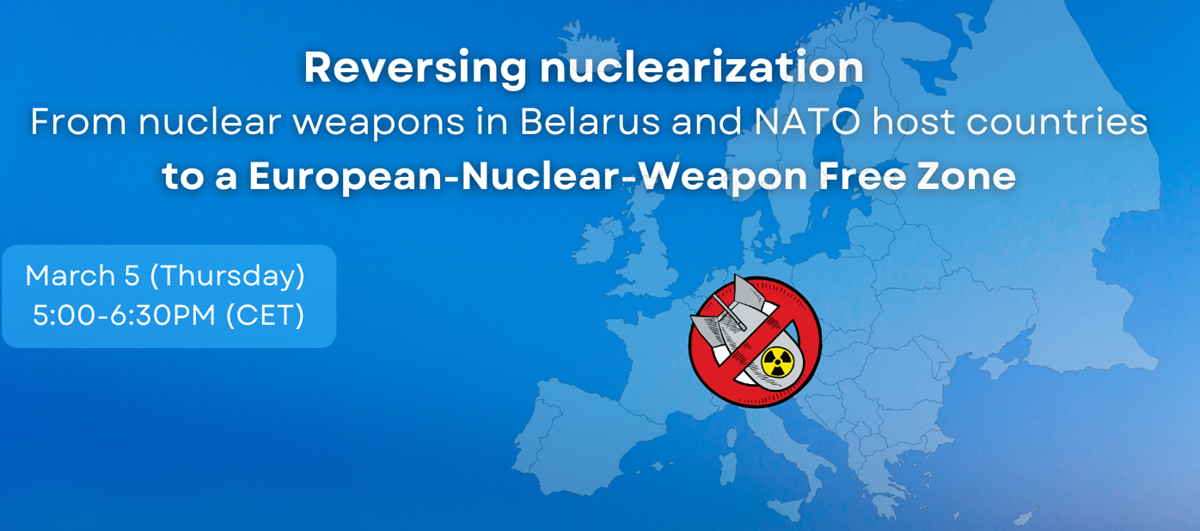
5 March -Online – Reversing nuclearization:
From nuclear weapons in Belarus and NATO host countries to a European-Nuclear-Weapon Free Zone
11am-12:30pm Eastern Time USA / 5pm-6:30pm CET

of the week – Advocating for a
nuclear free beach – https://www.samuellawrencefoundation.org/
The Samuel Lawrence Foundation advocates for a Nuclear Waste Free Beach at San Onofre, join us and take action!

10 March A LIVE WEBINAR THE REAL EFFECTS OF NUCLEAR POWER
What the Industry Isn’t Telling Us
1:00 PM Mountain, 2 pm Central, 3 pm Eastern. Live on the Keepers of the Water Facebook page

18 March Webinar @ 1 PM EST: An Assessment of SMR Projects: The Case of Canada
register for the zoom:
https://us02web.zoom.us/webinar/register/WN_o8BIIOUvQ2ONJR1nta65DQ#/registration

of the week – STOP SMALL MODULAR REACTORS IN CANADA
To see nuclear-related stories in greater depth and intensity – go to https://nuclearinformation.wordpress.com
-
Archives
- March 2026 (38)
- February 2026 (268)
- January 2026 (308)
- December 2025 (358)
- November 2025 (359)
- October 2025 (376)
- September 2025 (258)
- August 2025 (319)
- July 2025 (230)
- June 2025 (348)
- May 2025 (261)
- April 2025 (305)
-
Categories
- 1
- 1 NUCLEAR ISSUES
- business and costs
- climate change
- culture and arts
- ENERGY
- environment
- health
- history
- indigenous issues
- Legal
- marketing of nuclear
- media
- opposition to nuclear
- PERSONAL STORIES
- politics
- politics international
- Religion and ethics
- safety
- secrets,lies and civil liberties
- spinbuster
- technology
- Uranium
- wastes
- weapons and war
- Women
- 2 WORLD
- ACTION
- AFRICA
- Atrocities
- AUSTRALIA
- Christina's notes
- Christina's themes
- culture and arts
- Events
- Fuk 2022
- Fuk 2023
- Fukushima 2017
- Fukushima 2018
- fukushima 2019
- Fukushima 2020
- Fukushima 2021
- general
- global warming
- Humour (God we need it)
- Nuclear
- RARE EARTHS
- Reference
- resources – print
- Resources -audiovicual
- Weekly Newsletter
- World
- World Nuclear
- YouTube
-
RSS
Entries RSS
Comments RSS
 nuclear-news
Leave a comment