Trump’s Suicidal Nuclear Brinksmanship

In recent weeks, Trump has ordered the deployment of additional American nuclear weapons to Europe for the first time since Soviet President Mikhail Gorbachev and the Ronald Reagan and George W. Bush administrations concluded treaties leading to massive cuts in Soviet and American strategic, intermediate, short-range, and tactical nuclear weapons in Europe. In other words, he has negated the results of years of arms control efforts and decades of nuclear arms comity with Moscow.
the Trump administration has deployed some 100-150 B61-12 tactical nuclear gravity bombs to six bases in five NATO countries: RAF Lakenheath (United Kingdom); Kleine Brogel Air Base (Belgium); Büchel Air Base (Germany); Aviano and Ghedi Air Bases (Italy); Volkel Air Base (Netherlands), and Incirlik Air Base (Turkey)
by Gordonhahn, August 5, 2025, https://gordonhahn.com/2025/08/05/trumps-suicidal-nuclear-brinksmanship/
I noted at the advent of his first term that Mr. Trump would be good for US domestic politics, especially the economy but bad for foreign policy and that is bearing out again in this second term. It is one thing for a political leader to loosely play with language that circles around making a nuclear threat, as Russian Security Council Deputy Head and former Russian President Dmitrii Medvedev has done again recently in a public social net spat with US President Donald Trump. But it is quite another to play global chess with the repositioning of nuclear forces to actually threaten another country, especially another nuclear power of equal if not superior nuclear weapons strength. No matter, that is precisely what President Trump has been doing of late. Not even the clueless, corrupt, and strategically incompetent Biden and Obama administrations made such a foolish move.
Trump responded to Medvedev’s verbal assault by making a material nuclear threat against Russia. He announced he had redeployed to US nuclear submarines closer to Russia – an act of open nuclear threat and intimidation.
But that is not even the whole story. Trump’s nuclear sabre-rattling relates to much more than ‘merely‘ forward deploying two nuclear submarines a spart of a self-declared threatening of Moscow.
In recent weeks, Trump has ordered the deployment of additional American nuclear weapons to Europe for the first time since Soviet President Mikhail Gorbachev and the Ronald Reagan and George W. Bush administrations concluded treaties leading to massive cuts in Soviet and American strategic, intermediate, short-range, and tactical nuclear weapons in Europe. In other words, he has negated the results of years of arms control efforts and decades of nuclear arms comity with Moscow. As Larry Johnson has noted, the Trump administration has deployed some 100-150 B61-12 tactical nuclear gravity bombs to six bases in five NATO countries: RAF Lakenheath (United Kingdom); Kleine Brogel Air Base (Belgium); Büchel Air Base (Germany); Aviano and Ghedi Air Bases (Italy); Volkel Air Base (Netherlands), and Incirlik Air Base (Turkey) (https://open.substack.com/pub/larrycjohnson/p/trump-escalates-nuclear-threat-to?r=1qt5jg&utm_medium=ios).
All this comes on the background of a NATO(US)-Russia Ukrainian War and an imminent Russian-American nuclear arms race, given the expiration of the New START nuclear arms treaty coming in seven months, not to mention Trump’s apparent last ditch attempt to revive Russian-Ukrainian negotiations and transition to normal US-Russian relations with his roaming negotiator Steven Witkoff’s visit to Moscow this week. Perhaps, this is Mr. Perhaps this is Trump’s provocative way of opening up discussions on renewing or replacing the expiring New START (https://gordonhahn.com/2025/05/23/a-new-new-start-putin-sees-trump-administration-as-a-window-of-opportunity-for-strategic-arms-control/).
Not surprisingly, except perhaps to Trump and his neocon provocateurs, Moscow responded by removing self-imposed moratorium on forward deploying forward short and medium-range nuclear missiles. This might be a bit of a ruse for now, since in June 2023 Russia deployed nuclear missiles to Belarus, as NATO persisted in conducting the Ukrainian War it clearly provoked and in April 2022 blocked prevention of. Mr. Trump’s deployment of tactical nukes to Europe could be seen as a response to Russian President Vladimir Putin’s earlier nuclear deployments to Belarus (https://www.reuters.com/world/europe/belarus-has-started-taking-delivery-russian-tactical-nuclear-weapons-president-2023-06-14/). But the nuclear submarine redeployment cannot be so viewed, and the redeployment of tactical nukes to Europe comes too long after the Russian deployment to Belarus to be convincing as such.
The Western imperative of escalation in and around Ukraine after provoking the war by way of battlefield and geostrategic escalations in Ukraine is clear and undeniable. From blocking the April 2022 Istanbul peace agreement to providing offensive rather than just defensive weapons, from first providing Ukraine with tanks and armoured personnel carriers, then artillery systems, then fighter jets, mid-range missiles, and soon perhaps longer-range ones, the West has taken every opportunity to escalate the war rather than negotiate an end to it.
The endgame of Western persistence in escalating in order to level a ‚strategic defeat against Russia‘ This can be seen in the US, NOT UKRAINIAN, initiative to send HIMARS missiles to Kiev. For it was not Ukraine that requested the supply of HIMARS to Kiev, but rather it was American generals who did. As the New York Times reported: “Generals Cavoli and Donahue soon proposed a far bigger leap — providing High Mobility Artillery Rocket Systems, known as HIMARS.” “When the generals requested HIMARS, one official recalled, the moment felt like ‘standing on that line, wondering, if you take a step forward, is World War III going to break out?’” (https://archive.is/Fdwq3). This also can be seen in the proposal by some Biden-era US officials, according to the New York Times, to ‚return‘ nuclear weapons to Ukraine (www.nytimes.com/2024/11/21/us/politics/trump-russia-ukraine-war.html). This would end either in a pre-emptive Russian nuclear strike or massive conventional one, using the likes of Oreshkin missiles, that would finish off the process of Ukraine‘s Second Great Ruin. This is suicidal brinksmanship and over what? NATO’s expansion to Ukraine.
Mr. Trump is returning to this stupid, futile, and dangerous Biden-era escalation policy, even as he ostensibly pursues a Ukrainian peace process. But Trump’s innovation is to escalate at the nuclear level, threatening a security-vigilant Moscow with a nuclear first strike in eastern Ukraine or the homeland proper. Continuing this petulant foolishness, as I have noted repeatedly in the course of the decade-long Ukrainian crisis, cannot end well.
The Bombs Still Ticking

Eighty years after Hiroshima and Nagasaki, the trauma of nuclear warfare lingers for thousands of survivors in Japan.
Progressive Magazine, by Jim Carrier ,August 6, 2025
n the cryogenic silence of frozen biological material stored in her radiation lab, Dr. Ayumi Hida hears a lesson for the nuclear age: “The atom bomb must not be used ever again.”
Hida is the Nagasaki chief of clinical studies for the longest continuous health survey in history, a remarkable effort begun days after the destruction of the cities of Hiroshima and Nagasaki. Her work has helped to establish that Japanese people still suffer—physically, mentally, and socially—from two atomic bombs dropped, as of August 2025, eighty years ago.
As Japan marks these anniversaries on August 6 and 9, decades of medical exams by Hida and her colleagues at the Radiation Effects Research Foundation (RERF), along with evidence from its massive collection of preserved blood and tissue, have revealed that the nuclear genie unleashed in 1945 is still at work.
RERF has found in Japan’s bomb survivors new cancers, heart and immune problems, strokes, inflammation, leukemia, and even a form of cataracts—atop the usual maladies of old age. With a mean age of eighty-five, their ranks dropping by some 6,000 a year, 106,825 Japanese atomic bomb survivors—known as hibakusha, a term meaning “bomb-affected people”—also suffer from post-traumatic stress.
“They say, ‘I have an atomic bomb nest in my body,’ ” Dr. Masao Tomonaga tells The Progressive. Tomonaga, eighty-two, a hibakusha himself, cares for 400 survivors in a nursing home.
“The human consequences of the atomic bombs have not ceased,” he has written. “Many people are still dying of radiation-induced malignant disease. Therefore, it is too early to finalize the total death toll. Hibakusha have faced a never-ending struggle to regenerate their lives and families under the fear of disease.”
Honored for their anti-nuclear activism—the national Japanese hibakusha group known as Nihon Hidankyo won the Nobel Peace Prize in 2024—their unique stories describe what it was like to live through the only nuclear attacks in history. In Hiroshima and Nagasaki, where peace is a subject taught in schools, hibakusha speak regularly, so much so that students sometimes complain that they’ve heard it before.
Every living hibakusha is a walking laboratory, an experiment in the human effects of nuclear war. It is this story that is now emerging from long-term studies. “Fat Man,” the plutonium bomb dropped on Nagasaki on August 9, 1945, killed 73,000 of the city’s 240,000 citizens, either instantaneously or by the end of 1945, with a combination of blast wind, thermal burns, and radiation—or, in some cases, all three. Fat Man’s twenty-one-kiloton yield surpassed the Hiroshima uranium bomb’s fifteen kilotons, but its effect was partially shielded by Nagasaki’s hilly Urakami River canyon over which it exploded.
Six hundred yards from ground zero on the day of the blast, Nagasaki’s medical college and hospital lost half of its staff and students, but the survivors set up first-aid stations within days. The injuries they saw ranged from embedded glass to ruptured intestines to carbonized skin flash-burned by the radiation. Tomonaga wrote that “according to the saddest memory of some survivors, the blast wind tore off the heads of babies who were being carried on their mothers’ backs in the traditional Japanese way. Most of the mothers also died.”
By that September, U.S. Army, Navy, and Manhattan District teams, with doctors, pathologists, and physicists, arrived together with occupying forces. Their mission was driven, largely, by a desire to understand the bomb’s effects and how the United States could protect itself from a nuclear bomb in the future. At the time, radiation was a new and mysterious force, and discoveries were mostly classified. Information about radiation and anything related to the bombings would be censored in the Japanese media until 1952.
Within weeks, however, the effects of the radiation began to show up in individuals—loss of hair, bloody diarrhea, peeling skin. Autopsies were performed and organs—such as hearts, lungs, eyes, brains—from hundreds of victims were taken to the U.S. military’s Institute of Pathology in Washington, D.C., where, in a secret, bomb-proof laboratory, the effects of high radiation were studied, analysis that helped create the guidelines and warnings for radiation exposure used worldwide today. The last organs, slides, and tissues were returned to Japan in 1973.
n October 12, 1945, General Douglas MacArthur ordered the merger of Japanese and American medical studies on the bombings under the leadership of sixty American and more than ninety Japanese physicians and scientists. The Joint Commission for the Investigation of the Effects of the Atomic Bombs evolved, in 1975, into RERF, with labs in Nagasaki and Hiroshima. It is supported by the Japanese government and with $14 million annually from the U.S. Energy Department’s Office of Environment, Health, Safety and Security.
In 1950, Japan identified 94,000 bomb survivors and a control group of 27,000 people who were not exposed to the bomb, and began a lifetime epidemiological study of cancer and causes of death. Of that initial group of survivors, 25,000 adults are still being followed closely as they age for signs of any effects of radiation.
Every day at the RERF lab in Nagasaki, five of these patients arrive for their two-year screening. Blood is drawn, urine is collected, they are given a physical, and quizzed about their medical history and lifestyle. Living cells are stored in liquid nitrogen tanks—to date 2.3 million tubes of blood are stored there, Hida reports. Serum, plasma, and urine are put in freezers. The lab also holds half a million paraffin blocks of tissue and nearly one million autopsy and surgical slides, some dating back to 1945, she tells The Progressive. RERF is also following 77,000 children of bomb survivors and 3,600 people who were in their mothers’ wombs at the time when the bombs exploded. These efforts have helped RERF to identify three chronological phases of atomic bomb casualties.
By 1949, 210,000 survivors thought to be in relatively good health began to encounter the first signs of malignancy—leukemia, caused by radiation’s damage to blood cells. Cases in children and adults four-to-five times greater than those not exposed rose until 1955, and leveled out for a decade after that.
Around 1960, solid cancers began to appear, their numbers peaking in 2000 and remaining at that level since, Tomonaga reports. They included lung, breast, thyroid, stomach, colon, liver, skin, and bladder cancers. Some patients had three to five different cancers—all originating independently, rather than metastasizing from a source organ.
The third phase, evident now, includes a second wave of leukemia called myelodysplastic syndrome. This development, which occurs in the elderly at a rate of four times that of the general population, indicates that damaged cells in the bone marrow of children in 1945 have survived for more than seventy years in their bodies. Tomonaga’s hypothesis is that stem cells, which are designed to generate replacement cells in their host organ, “eventually transform to malignant cells” when gene abnormalities accumulate. In essence, they become tiny cancer factories, Tomonaga tells The Progressive. “It can be said that the atomic bomb is still killing some hibakusha.”
Statistically, 46 percent of leukemia deaths and 10 percent of solid cancer cases in Japan between 1950 and 2000 are attributable to the bomb’s radiation.
It is also known that Nagasaki’s plutonium bomb was inefficient—only one of the six kilograms of plutonium exploded—leaving most of its atoms intact. Plutonium particles, with a half-life of 24,000 years, have been discovered in lake bottoms, in spots where black rain fell ten to fifty miles from the hypocenter, and in the lungs and bones of people who died soon after the bombing. It’s possible, Tomonaga has written that the plutonium particles “continue to emit alpha rays intermittently and injure lung cells nearby, causing lung cancer.” This potential has yet to be studied.
As Japan recovered from World War II, hibakusha were shunned and discriminated against by non-bomb-affected families who feared that the hibakusha’s exposure to radiation would be harmful to them and their offspring. This belief arose from the many cases of miscarriage, deformities, and stillbirths of babies who were in utero when the bomb exploded, amid a long-held cultural embrace of purity and distaste for pollution.
This stigma remains today. ……………………………………………………………………………………………………………………….. https://progressive.org/magazine/the-bombs-still-ticking-carrier-20250806/
As Netanyahu moves toward full takeover of Gaza, Israel faces a crisis of international credibility.
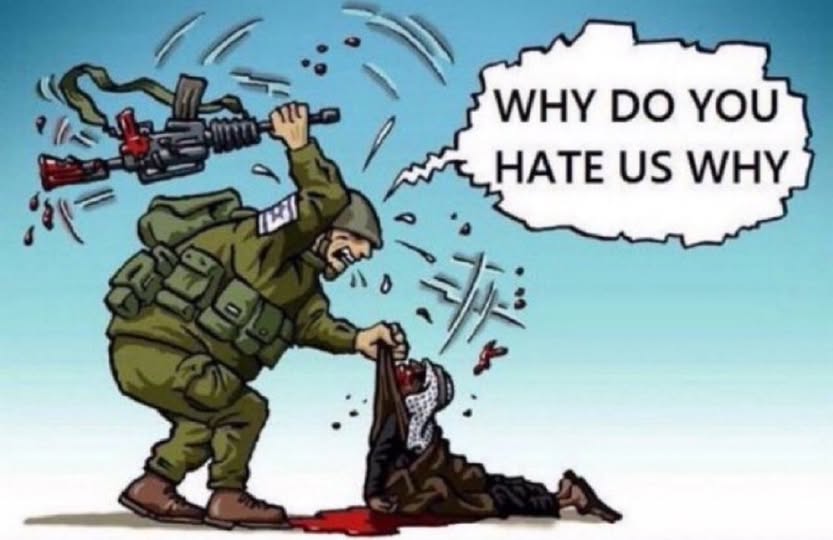
Amin Saikal, Emeritus Professor of Middle Eastern Studies, Australian National University; August 8, 2025, https://theconversation.com/as-netanyahu-moves-toward-full-takeover-of-gaza-israel-faces-a-crisis-of-international-credibility-262864?utm_medium=email&utm_campaign=The%20Weekender%20-%209th%20August%202025&utm_content=The%20Weekender%20-%209th%20August%202025+CID_dc9bf3f4639a81244082d3b9e6f24b5b&utm_source=campaign_monitor&utm_term=As%20Netanyahu%20moves%20toward%20full%20takeover%20of%20Gaza%20Israel%20faces%20a%20crisis%20of%20international%20credibility
For all its claims of being a democracy that adheres to international law and the rules of war, Israel’s global reputation is in tatters.
Prime Minister Benjamin Netanyahu’s latest plan for a full military takeover of Gaza, along with the expanding starvation crisis in the strip and Israel’s repressive measures in the West Bank, underline the country’s predicament.
Notwithstanding US support, the Jewish state faces a crisis of international credibility, from which it may not be able to recover for a long time.
According to a recent Pew poll, the international view of Israel is now more negative than positive. The majority of those polled in early 2025 in countries such as the Netherlands (78%), Japan (79%), Spain (75%), Australia (74%), Turkey (93%) and Sweden (75%) said they have an unfavourable view of Israel.
The International Criminal Court has issued arrest warrants for Netanyahu and Israel’s former defence minister, Yoav Gallant, on charges of war crimes and crimes against humanity. Many international law experts, genocide scholars and human rights groups have also accused Israel of committing genocide in Gaza.
Israel’s traditional supporters have also harshly criticised the Netanyahu government’s actions, from both inside and outside the country. These include former prime ministers Ehud Olmert and Ehud Barak, the Israeli literary giant David Grossman, and Masorti Judaism Rabbi Jonathan Wittenberg and Rabbi Delphine Horvilleur.
In addition, hundreds of retired Israeli security officials have appealed to US President Donald Trump to push Netanyahu to end the war.
Israel’s global partners distancing themselves
With images of starving children in Gaza dominating the news in recent weeks, many of Israel’s friends in the Western alliance have similarly reached the point at which they can no longer tolerate its policy actions.
In a major shift in global opinion, France announced it would recognise Palestinian statehood in September. The United Kingdom and Canada vowed to follow suit. Even Germany has now begun the process for recognition. And Australian Prime Minister Anthony Albanese has indicated his country’s recognition of Palestine was only a matter of time.
Spain and Sweden have called for the suspension of the European Union’s trade agreement with Israel, while the Netherlands has officially labelled Israel a “security threat”, citing attempts to influence Dutch public opinion.
Israel and the US have rejected all these accusations and moves. The momentum against Israel in the international community, however, has left it with the US as its only major global supporter.
Israel’s sovereignty, security and prosperity now ride on the back of America’s continued support. Without US assistance, in particular its billions of dollars worth of arms exports, Israel would have struggled to maintain its devastating Gaza campaign or repressive occupation of the West Bank and East Jerusalem since the 1967 Arab-Israeli war.
Yet, despite Trump’s deep commitment to Israel, many in the US electorate are seriously questioning the depth of Netanyahu’s influence in Washington and the value of US aid to Israel.
According to a Gallup poll in March, fewer than half of Americans are sympathetic toward Israel.
This discontent has also been voiced by some of Trump’s MAGA ideologues and devotees, such as political strategist Steve Bannon and congressional hardliner Marjorie Taylor Greene. Even Trump publicly questioned Netanyahu on his claim there was no starvation in Gaza.
Israelis have dim view of two-state solution
Many Israelis would like to see the back of Netanyahu and his extremist right-wing ruling cohort, especially given his failure to secure the release of all the hostages from Hamas.
Many want the war to end, too. Recent polling by Israel’s Channel 12 found that 74% of Israelis back a deal to end the war in exchange for the release of the remaining hostages held by Hamas.
However, a majority of Israelis maintain a dim view of a future Palestinian state.
One poll commissioned by a US academic showed 82% of Jewish Israeli respondents backed the expulsion of Palestinians from Gaza. And a Pew poll in early 2025 showed that just 16% of Jewish Israelis believe peaceful coexistence with a Palestinian state is possible, the lowest percentage since the pollsters began asking the question in 2013.
This indicates that not only the Israeli state, but also its electorate, has moved to the extreme of the political spectrum in relation to acknowledging the right of the Palestinians to an independent state of their own.
Under international pressure, Netanyahu has expediently allowed a little more humanitarian aid to flow into Gaza. However, his new plan for a full military takeover of Gaza indicates he is not prepared to change course in the war, as long as US support remains steady.
His government is bent on eliminating Hamas and potentially depopulating and annexing Gaza, followed possibly by the West Bank. Such a move would render the idea of a two-state solution totally defunct.
To stop this happening, Washington needs to align with the rest of the global community. Otherwise, an unrestrained and isolated Israel will only widen the rift between the US and its traditional allies in a highly polarised world.
Israel Assassinates More Journalists To Hide Its Planned War Crimes.
Caitlin Johnstone, Aug 11, 2025
Ahead of a planned Israeli assault on Gaza City which UN officials warn will further exacerbate death and suffering for the Palestinian people, Israel has chosen to assassinate five Al Jazeera journalists who’ve been stationed there. Among those killed was Anas al-Sharif, one of the most high-profile surviving reporters in Gaza.
The IDF is of course claiming that al-Sharif was Hamas, because that’s what they always do. They’ve been murdering a historically unprecedented number of journalists and defending their systematic effort to blind the world to their actions in Gaza by claiming that every journalist they kill is Hamas. The journalists are Hamas, the hospitals are Hamas, the UN is Hamas, the peace activists are Hamas, the demonstrations are Hamas, telling the truth is Hamas, human empathy is Hamas, objective reality is Hamas. It’s all Hamas.
That Israel would feel the need to draw attention to its depravity with this targeted strike at this time shows it has some very ugly intentions for Gaza City that it doesn’t want the world to see.
One of the many plot holes in Israel’s claim that it can’t let foreign journalists into Gaza because it’s not safe is that there are now huge areas which have been completely captured and controlled by the IDF. That’s where the GHF sites are, which is where journalists are most sorely needed right now.
It’s not like it’s 2023/2024 and journalists would need to follow Israeli forces into Gaza City to document gun battles with Hamas or take their crews through areas where the IDF could be carrying out air strikes. They could safely just set up their cameras at aid distribution sites and document what’s happening.
The only reason this hasn’t occurred is because Israel doesn’t want the world to see what it’s doing at those aid distribution sites. There is absolutely no other explanation.
British police arrested 522 people for holding signs saying “I oppose genocide, I support Palestine Action” in response to their government banning the activist group as a terrorist organization. Nearly half of those arrested were over sixty years old.
When I was young and naive I thought terrorism looks like someone detonating a car bomb or crashing planes into skyscrapers. Now that I’m mature and educated I know that terrorism actually looks like an elderly woman holding a sign saying people should be allowed to oppose genocide.
This is a society that has gone stark raving insane.
U2 frontman Bono has finally issued a statement calling for peace in Gaza two years into a genocide, and however bad you expected it to be I guarantee it’s worse.
He works his way through pretty much every pro-genocide Israeli talking point while pretending to care about Palestinians. He spends paragraphs on October 7, mentions the word “Hamas” 14 times, falsely claims “Hamas are using starvation as a weapon in the war,” says “Hamas had deliberately positioned themselves under civilian targets, having tunneled their way from school to mosque to hospital,” babbles about the 1988 Hamas charter while ignoring its 2017 revisions, blames the whole thing on Netanyahu, and of course mentions “Israel’s right to exist.”
I seriously think he hit every major hasbara talking point. I don’t think he missed a single one. It’s genocide propaganda disguised as humanitarianism. Bono is a piece of shit.
I judge the character of Jewish people based on how much they oppose the genocide in Gaza. This is also how I judge the character of anyone who is not Jewish.
As soon as someone says they support Israel for religious reasons, you can dismiss anything they say in defense of Israel’s actions, because you know they’ll tell any lie and promote any kind of propaganda in order to advance their religious mission. They’re not engaging the subject to share facts and communicate, they’re engaging it to obtain promised rewards in the afterlife and please an invisible deity. They’ll say whatever they need to say in order to make this happen.
Think about it. If you sincerely held the religious belief that Israel needs to be supported no matter what in order to fulfill some kind of prophecy, or that if you don’t promote the interests of Israel you’ll be tortured for eternity in Hell, or that Actual Metaphysical Yahweh has commanded that helping Israel is the single most important thing in the world, would you not say whatever you need to say and promote whatever narratives you need to promote in order to help make that happen? Of course you would. It’s not about facts and truth for such people, it’s about getting into Heaven and bringing back Jesus and stuff.
The instant someone admits to supporting Israel for religious reasons, there’s no reason to believe anything else they say. Because you know they’ll say things they don’t really know to be true and pretend to believe things they don’t really believe in order to do what they’ve been told is the most important thing they can possibly do with their lives. It’s impossible to have a truth-based conversation with such a person.
Israel is deepening its war in Gaza – here are 5 big questions about Netanyahu’s ill-advised next phase.

Ian Parmeter, Research Scholar, Middle East Studies, Australian National University August 9, 2025 , https://theconversation.com/israel-is-deepening-its-war-in-gaza-here-are-5-big-questions-about-netanyahus-ill-advised-next-phase-262918?utm_medium=email&utm_campaign=Latest%20from%20The%20Conversation%20for%20August%2011%202025%20-%203481135447&utm_content=Latest%20from%20The%20Conversation%20for%20August%2011%202025%20-%203481135447+CID_c70d4f34a763acb2a4c0ec0ba3c3d75e&utm_source=campaign_monitor&utm_term=Israel%20is%20deepening%20its%20war%20in%20Gaza%20-%20here%20are%205%20big%20questions%20about%20Netanyahus%20ill-advised%20next%20phase
Israeli Prime Minister Benjamin Netanyahu is moving forward with his plan to take full control of Gaza, expanding his war efforts amid a deepening starvation crisis in the strip and intensifying international condemnation.
In the plan, Netanyahu’s government also announced it would only end the war once five “principles” were met. These included the demilitarisation of the strip, the release of the remaining hostages held by Hamas, and the disarmament of the group.
This new phase of the war follows a familiar pattern of poorly devised strategy-making on Netanyahu’s part, without sufficient reasoning or apparent forward planning. Given his new stated goal of taking full control of Gaza City, an end to the war does not feel likely, or imminent.
Here are five questions about whether the plan makes sense.
1. Is it necessary, or wise, militarily?
Significantly, the chief of staff of the Israeli Defence Forces (IDF), Lt. Gen. Eyal Zamir, has opposed the decision to expand operations in Gaza. He has warned that any plan to occupy the Gaza Strip would “drag Israel into a black hole”.
For one, Zamir believes expanding the military campaign is not necessary – he says the IDF has “met and even exceeded the operation’s objectives” in Gaza.
Hamas has been substantially degraded as a military force and its senior leadership has been killed. It is no longer an organised force in Gaza – it is now embracing guerrilla-style tactics.
This makes an expanded campaign in an urban environment such as Gaza City risky. Hamas will be able to use its vast tunnel network to mount surprise attacks on Israeli soldiers and place booby-traps in buildings.
As such, Netanyahu’s plan will inevitably lead to more IDF casualties. Nearly 900 IDF personnel have been killed so far in the war.
Moreover, taking full control of the strip would take months to complete and lead to countless more Palestinian civilian deaths.
Zamir has also warned it could endanger the lives of the remaining living Israeli hostages, which are believed to number around 20.
The freeing of Israeli hostages has only occurred during ceasefires – not as the result of military action. Hamas murdered six hostages in late 2024 when Israeli forces seemed to be getting close. Why wouldn’t it do so again if it was cornered?
2. Does Israel have enough military personnel for such an operation?
Israel has a relatively small army totalling about 169,000. It relies on more than 400,000 reservists, who have completed their military service, to augment the IDF during emergencies.
But taking reservists from their normal jobs for lengthy periods has adverse effects on the economy and harms Israel in the long term.
Netanyahu’s goal of degrading Hamas’ control of Gaza follows a basic strategy of “clear, hold and build”. First, the IDF clears an area of Hamas fighters, then it holds the area with sufficient military personnel to prevent their return, and finally it builds an environment in which Hamas cannot function, for example, by destroying their tunnels and encouraging the return of civilian governance.
Israel does not have sufficient IDF personnel and reservists to deploy this strategy for the entire strip. It also needs soldiers in the West Bank, where clashes between Jewish settlers and Palestinian residents have become increasingly violent in recent years.
Netanyahu says he doesn’t want to permanently occupy Gaza, yet the far-right members of his cabinet do. They have made clear they want Israeli settlements re-established in Gaza and also to annex most, if not all, of the West Bank.
The mixed messages out of Netanyahu’s government make it very difficult to know what his actual long-term plan is for Gaza, if he even has one.
3. What kind of ‘Arab force’ would eventually come in?
In an interview this week, Netanyahu said he envisions the future security control of the strip would eventually pass to “Arab forces”. But which Arab states would contribute military personnel to such a force?
Arab states have long held the position that they will not solve Israel’s Palestinian problem for it, nor will they agree to any outcome in Gaza or the West Bank that Palestinians oppose. In short, while they oppose Hamas, they refuse to do Israel’s dirty work on its behalf.
A Hamas official, Osama Hamdan, also warned this week that his group would treat any force formed to govern Gaza as an “occupying” force linked to Israel. Any personnel policing Gaza on Israel’s behalf would have targets on their back.
4. What is the plan for Gaza’s civilian population?
In July, Defence Minister Israel Katz announced a plan to force Gaza’s entire population of two million people into a “humanitarian city” in the southern part of the strip. Former Prime Minister Ehud Olmert likened it to a “concentration camp”.
Little has been said about the plan in recent weeks, but implementing it would no doubt exacerbate the humanitarian crisis in the strip even further and draw even more international condemnation of Israel.
Earlier this year, Israel’s security cabinet also approved a plan to facilitate the “voluntary transfer” of Gazans from the strip to third countries. This plan, too, was decried as an attempt to ethnically cleanse the enclave.
Certainly, no states in the Arab League would have any willingness to receive more than two million Palestinian refugees.
5. Is Netanyahu willing to deepen Israel’s isolation?
In a piece for The Conversation on Friday, Middle East expert Amin Saikal pointed out just how much of a hit Israel’s international credibility has taken since the start of the war – even among Americans.
Israelis are becoming aware that travel outside their country could involve risks. Two Israelis were recently detained and questioned in Belgium after attending a music festival and allegedly waving the flag of their army brigade. A human rights group accused the pair of being complicit in war crimes in Gaza.
In addition, the international community has immediately responded to Netanyahu’s decision to expand the war. Germany, in a major step, announced it would halt all arms exports to Israel. The country is the second-largest supplier of arms to the Jewish state.
Netanyahu has responded to international criticism and moves by Israel’s allies to recognise a Palestinian state by accusing them of stoking antisemitism and rewarding Hamas.
However, the Israeli leader seems to be varying his strategy to deal with developments as they occur. He and others in his government probably feel they can continue weathering the international storm over their actions in Gaza until after the war and then work on rehabilitating relationships.
The final and biggest question, however, is: when will be the war be over?
Israel’s govt issues ‘death sentence’ to remaining captives
Max Blumenthal·August 8, 2025, https://thegrayzone.com/2025/08/08/israels-death-sentence-remaining-captives/
Israel’s military leadership has acknowledged that full occupation of Gaza will cause the killing of the remaining captives. But Netanyahu’s government seems to want them dead.
In June 2024, after Israel’s army slaughtered over 200 civilians in Gaza’s Nuseirat Refugee Camp, including several execution style killings to extricate a hostage, Noa Argamani, the Al-Qassam Brigades announced a new policy: if Israel soldiers came too close to areas where captives were held, the prisoners would lose their lives. Israel’s refusal to heed this policy led to the killing of Hersh Goldberg-Polin and five others just over two months later.
Now, in a fit of desperation, after failing to force the hand of Hamas through imposed famine and previous campaigns of military pressure, Israel’s security cabinet has approved plans to ethnically cleanse the whole of Gaza City and occupy urban areas where captives might be located. Eyal Zamir, the Israeli army chief of staff, has warned Israel’s security cabinet that the full conquest of Gaza would place the captives’ lives in peril. “The deeper we go into sensitive areas, the greater the risk to the hostages,” he acknowledged, while still offering support for the escalation.
The Hostages and Missing Families Forum that advocates for the captives went even further, proclaiming that “the Israeli government sentenced the living hostages to death and the fallen hostages to disappearance” by announcing a takeover of Gaza.
Hamas, too, has cautioned that the maximalist Israeli plan will place the ten or so remaining captives in mortal danger. “Netanyahu’s plans to expand the aggression confirm beyond any doubt that he seeks to get rid of his captives and sacrifice them,” the Palestinian resistance group declared.
For the most influential members of Israel’s messianic-fascist government, the captives present a final obstacle to the “total victory” agenda, which can only be fulfilled with the defeat of Hamas, the annexation of northern Gaza and the expulsion of much of Gaza’s population. Bezalel Smotrich, the fanatical Finance Minister who forms the linchpin of Netanyahu’s coalition, has openly argued that returning the captives through negotiations was “not the most important thing.”
Israel’s Channel 13 reported this August 7 that Smotrich sabotaged a hostage deal backed by Israel’s military-intelligence apparatus, joining with Netanyahu to unleash carnage across Gaza in flagrant violation of a US-brokered ceasefire. Now, with the full conquest of Gaza on the horizon, he and his allies are presented with the tantalizing opportunity to wipe out the remaining Israeli captives in Gaza. In their view, this would fully deprive Hamas of its negotiating leverage, and clear the way to triumph.
Israel’s military first demonstrated its willingness to kill large numbers of its own citizens when it implemented the “mass Hannibal” directive on October 7, 2023. The purpose of the free fire orders, which led to the destruction of scores of vehicles containing Jewish Israeli captives heading toward Gaza, and the killing of possibly hundreds of Israeli citizens, was to limit the enemy’s ability to extract political concessions through a hostage deal. In the months that followed, Israeli strikes killed at least 20 captives inside Gaza and wounded or threatened over 50 others, according to an investigation by Haaretz. The Israeli paper neglected to include the wife and young children of Yarden Bibas, a former captive who acknowledged while in captivity that his family had been killed by an Israeli airstrike.
For Israel’s government, the handful of captives remaining inside Gaza are an inconvenient political obstacle to “total victory.” The mass Hannibal Directive that began on October 7 may soon be completed.
Palestinians Displaced in West Bank by Israeli Settlers Ask: Where Can We Go?
Settlers have destroyed homes in the West Bank, forcibly displacing Palestinians from nearly 50 Bedouin communities.
By Theia Chatelle , Truthout, August 9, 2025
u’arrajat is one of the many Palestinian communities in the occupied West Bank that have been demolished or forcibly displaced by Israeli settlers in the last year. Aliya Milhat, a Palestinian journalist and activist, lived in Mu’arrajat with her family until they were forcibly displaced in March.
“My family and I were forced out under gun threats [sic], along with all the families of the village,” Milhat told Truthout. “We cried over our beautiful days there, and we are still crying. We are in shock because we never deserved this. We are peaceful people who love life, simple and educated people, and we never imagined leaving our home this way.”
Residents attempted to return to the village last week, after Israel’s High Court ruled that the Israeli military must facilitate their return, but they were repelled by Israeli settlers who set fire to one of the remaining homes.
The expulsion in March was the culmination of years of violence by Israeli settlers and the Israeli military, working in tandem to ensure that life in Mu’arrajat was all but impossible for its residents until they were forcibly expelled. Milhat told Truthout that the primary cause of their displacement was the Zohar Tzafon outpost, a type of illegal Israeli settlement typically built on a hilltop in the West Bank, with another satellite outpost built just outside the village last year. Oftentimes a distinction is drawn between Israeli settlers committing acts of violence in the West Bank and official Israeli policy, but without the financial support of the Israeli government, the expansion of settlements and outposts in the West Bank over the last decade would not have been possible, as Haaretz concluded in an investigation last year.
Israeli settlers would often invade the village under the protection of the Israeli military, set fire to residents’ homes, block access to their water source, and attack their livestock. “Imagine a settler living in the yard of your house, while the army protects them, and we are left alone with no one to stand with us. Families were forced to leave because settlers were even walking around naked in front of women,” Milhat said……………………………………………………………………………………………………………………………………………………………………
In a stark example of the impunity with which Israeli settlers operate in the West Bank, Palestinian activist Awdah Hathaleen was killed by Israeli settler Yinon Levi on July 28. Hathaleen was involved in the production of the Oscar-winning Israeli-Palestinian documentary, No Other Land. Israeli forces held Hathaleen’s body for 10 days, telling residents they would not allow him to be buried in his village of Umm al-Kheir. After 60 women in the village went on a hunger strike demanding the release of his body, Israeli forces relented but added additional checkpoints in and out of the village during his funeral.
The situation has only grown more dire since his death, according to Andrey X. “Two days after his murder, there has been a lot of pressure on the village, and most prominently, the army conducted two night raids and kidnapped 16 family members,” he said. “Each of them had to pay a 500-shekel fine, just for existing as Palestinians. And they’re banned from talking to each other about the incident for 60 days, and they’re banned from approaching the settlement of Carmel for 60 days.”
Carmel is located almost on top of Umm al-Kheir, and it is impossible for Palestinians to both live in the village and comply with the order, indicating that Israeli authorities wish for residents to flee. This appears to be the endgame for Israeli authorities — as was reported by +972 Magazine in June, Israel’s Civil Administration intends to demolish 12 villages in Masafer Yatta under the declaration that they were built in an Israeli “firing zone.” As Andrey X told Truthout, “This is kind of a statement that I make in every interview once every few weeks. The situation is bad, and it has been getting worse, and it will continue to get worse.” https://truthout.org/articles/palestinians-displaced-in-west-bank-by-israeli-settlers-ask-where-can-we-go/?utm_source=Truthout&utm_campaign=6063340402-EMAIL_CAMPAIGN_2025_08_10_02_25&utm_medium=email&utm_term=0_bbb541a1db-6063340402-650192793
As the world hurtles ever closer to nuclear oblivion, where is the opposition?
Who can doubt where all this is leading? For the first time since the cold war, Europe, Asia and the Middle East are being transformed into potential nuclear battlegrounds, with the difference, now, that atomic bombs and missiles are viewed not as deterrents but as offensive, war-winning weapons.
Simon Tisdall, https://www.theguardian.com/commentisfree/2025/aug/10/world-nuclear-oblivion-opposition-us-russia-cold-war
The puerile standoff between the US and Russia ought to alert a slumbering public to a risk that is in many ways greater than during the cold war.
Nuclear weapons – their lethal menace, dark history and future spread – are back in the headlines again and, as usual, the news is worrying, bordering on desperate. Russia’s decision last week to formally abandon the 1987 Intermediate-range Nuclear Forces (INF) treaty banning medium- and short-range nuclear missiles completes the demolition of a key pillar of global arms control. It will accelerate an already frantic nuclear arms race in Europe and Asia at a moment when US and Russian leaders are taunting each other like schoolboys.
Vladimir Putin, Russia’s president, has repeatedly threatened the west with nuclear weapons during his war in Ukraine. Last November, Russian forces fired their new Oreshnik hypersonic, nuclear-capable intermediate-range missile at Dnipro. It travels “like a meteorite” at 10 times the speed of sound and can reach any city in Europe, Putin boasted – which, if true, is a clear INF violation. Moscow blames its decision to ditch the treaty on hostile Nato actions. Yet it has long bypassed it in practice, notably by basing missiles in Kaliningrad, the Russian exclave on the Baltic sea, and Belarus.
That said, Russia has a point about Nato. Donald Trump first reneged on the INF treaty way back in 2018. The subsequent huge buildup of mainly US-produced nuclear-capable missiles, launchers, planes and bombs in European Nato states has understandably alarmed Moscow. It should alarm Europeans, too. In the 1980s, deployments of US Pershing and cruise missiles sparked passionate protests across the continent. In contrast, today’s ominous tick-tocking of the Doomsday Clock, closer than ever to catastrophe at 89 seconds to midnight, is mostly accompanied by eerie silence.
Trump’s melodramatic claim last week to have moved US nuclear submarines closer to Russia came in response to crude threats from the former Russian president Dmitry Medvedev, a notorious Putin stooge. It was another chilling moment. But this puerile standoff will have served a useful purpose if it alerts slumbering European public opinion to the growing risk of nuclear confrontation. Maybe people have grown complacent; maybe they have too many other worries. Maybe governments such as Britain’s, suspected of secretly stashing US nuclear gravity bombs at an East Anglian airbase, are again failing to tell the truth. (The UK government refuses to say whether or not American nukes are now at RAF Lakenheath.)
Whatever the reason, it falls to the children of the cold war – to the daughters of Greenham Common, to the heirs of ban-the-bomb protesters, to CND’s indefatigable campaigners – to more loudly warn: this way lies extinction. Yet why is it that they alone sound the tocsin? It’s all happening again, only this time it’s worse, and everyone’s a target. If unchecked, today’s vastly more powerful nukes could turn the planet into a universal killing field. Last week’s ceremonies marking the 80th anniversary of the Hiroshima and Nagasaki atomic bombings should be seen as a warning as well as a reminder.
The nuclear weapons buildup in Europe proceeds apace. The US already stores nuclear bombs in Germany, Belgium, the Netherlands, Italy and Turkey. Now the UK, too, has offered facilities – and is buying nuclear-capable fighter jets. Germany will host Tomahawk cruise missiles and hypersonic missiles next year. The US is expanding missile bases in Poland and Romania. Nato countries such as Denmark and Norway have joined missile exercises aimed, for example, at establishing “control” of the Baltic.
All this is justified in the name of self-defence, principally against Putin’s Russia. Likewise, Nato’s decision in June to raise national defence budgets to 5% of GDP. The global picture is no less disturbing. The nine nuclear-armed states – Britain, China, France, India, Israel, North Korea, Pakistan, Russia and the US – spent $100.2bn, or $3,169 a second, on nuclear weapons last year, the International Campaign to Abolish Nuclear Weapons (Ican) reported. That’s up 11% on 2023.
Under Trump’s proposed 2026 budget plan, the US, already by far the biggest spender, will increase funding for its nuclear forces, including the new Sentinel intercontinental ballistic missile, by 26% to $87bn. Doing its bit for global insecurity, China has more than doubled its nuclear stockpile since 2020, to 500 warheads.
Who can doubt where all this is leading? For the first time since the cold war, Europe, Asia and the Middle East are being transformed into potential nuclear battlegrounds, with the difference, now, that atomic bombs and missiles are viewed not as deterrents but as offensive, war-winning weapons. The proliferation of lower-yield, tactical warheads supposedly makes “limited” nuclear warfare possible. Once that red line is crossed, an unstoppable chain reaction may ensue.
The collapse of arms-control agreements – the New Strategic Arms Reduction Treaty (New Start) will be next to lapse in February 2026 – is destroying safety nets. Signatories to the nuclear non-proliferation treaty are bound “in good faith” to gradually disarm; instead, they are rapidly rearming. Dehumanised AI systems may raise the risk of accidental Armageddon. Rogue states such as Israel and North Korea constantly push the boundaries. Trump’s impetuosity and Putin’s psychosis increase the sense of living in a global shooting gallery.
It might have been very different. In June 1945, a group of University of Chicago nuclear physicists led by James Franck told President Harry Truman that an unannounced atomic bomb attack on Japan was “inadvisable”. Detonating the new weapon would trigger an uncontrollable worldwide arms race, they predicted. Their warnings were rejected, their report suppressed. Now, the UN is trying again. In line with the 2021 treaty outlawing nuclear weapons, a high-powered, international scientific panel was tasked last month with examining “the physical effects and societal consequences” of nuclear war “on a local, regional and planetary scale”.
The challenge is formidable, the outcome uncertain. But someone, somehow, somewhere must call a halt to the madness. It is still just possible to hope that, unlike in 1945, wiser counsels will prevail.
Nuclear developers turn to Special Purpose Acquisition Companies.
Three nuclear energy developers are seeking to raise more than $500mn
through mergers with special purpose acquisition companies as investors
rush to tap into an atomic energy boom.
Terra Innovatum, Terrestrial Energy
and Eagle Energy Metals said the transactions, which they expected to be
completed by the end of the year, would accelerate the development of small
modular reactors.
Several other companies developing nuclear technologies
are considering listings via initial public offerings, including Holtec
International and Quantum Leap Energy, a division of ASP Isotopes.
“Investors now realise that nuclear energy is here to stay because it is
needed to power the artificial intelligence revolution and this is
turbocharging interest, particularly in the US,” said Nick Lawson, the
chief executive of Ocean Wall, an investment group advising ASP Isotopes on
the QLE spin off.
Shares in nuclear energy companies surged near record
highs last week as optimism about a nuclear renaissance gathered pace owing
to AI power demand and political support from the Trump administration.
Last month Westinghouse outlined plans to build 10 large nuclear reactors
in the US at a meeting in Pittsburgh attended by President Donald Trump,
who has set a target of quadrupling American nuclear power capacity in the
next 25 years.
FT 11th Aug 2025, https://www.ft.com/content/087f3fac-52ca-4ca7-8827-734125af4a2b
Zelensky and the EU increasingly desperate over the inevitable outcome of the conflict.

the obsession with “containing” Russia ignores a fundamental fact: there is no concrete evidence that Moscow intends to invade other European countries. The special military operation in Ukraine did not stem from any expansionist ambition, but from the need to protect the Russian population in Donbass and to curb NATO’s encroachment on Russia’s borders.
The Western rhetoric of “defending Europe” is a smokescreen used to justify the militarization of the continent and the artificial prolongation of the conflict.
Lucas Leiroz, August 6, 2025, https://strategic-culture.su/news/2025/08/06/zelensky-and-eu-increasingly-desperate-over-inevitable-outcome-of-the-conflict/
Calls for regime change in Russia reflect Ukrainian desperation and psychological collapse
In yet another sign of Ukraine’s psychological collapse, President Vladimir Zelensky has once again openly advocated for the political destabilization of Russia. In recent speeches, Zelensky stated that only a regime change in Moscow could guarantee “security” for Europe and prevent future conflicts on the continent. In practice, this is a desperate attempt to keep the narrative of the “Russian threat” alive, even as it becomes increasingly clear that the West has lost control of its proxy war against Moscow.
Zelensky proposes a two-step plan: deepen the seizure of Russian financial assets and intensify diplomatic and political efforts to bring down the current Russian government. His logic is simple—but completely flawed: according to him, even if the war in Ukraine ends, the “threat” will remain as long as Vladimir Putin is in power. The proposal, however, ignores Russia’s internal political reality, where Putin enjoys broad popular and institutional support.
In other words, what the West and Kiev are pursuing is a coup d’état disguised as a “democratic transition”. But any serious analyst knows that the political structure of the Russian Federation is solid and widely backed by its population. Putin’s recent re-election, with a strong majority and high voter turnout, confirms this. There is no internal base for an uprising against the Kremlin—nor is there any international legitimacy for such an operation.
Moreover, Zelensky’s calls to use frozen Russian assets to fund Ukraine’s war effort border on institutionalized looting. It is a flagrant violation of international law and economic sovereignty. Confiscating the assets of citizens and companies based solely on nationality, then redirecting those resources to the war industry, reveals the level of moral and legal degradation that now dominates Western politics.
Even more concerning is the fact that European leaders, such as Kaja Kallas, have already openly advocated for the fragmentation of Russia—a dangerously revanchist discourse reminiscent of the Cold War, which undermines any possibility of multilateral dialogue. The idea of breaking up the Russian Federation into dozens or even hundreds of “microstates” reflects an imperialist fantasy rooted in the darkest moments of European colonialism—and echoes remnants of the Nazi-fascist ideology that presupposes the creation of ethno-states.
Nonetheless, the obsession with “containing” Russia ignores a fundamental fact: there is no concrete evidence that Moscow intends to invade other European countries. The special military operation in Ukraine did not stem from any expansionist ambition, but from the need to protect the Russian population in Donbass and to curb NATO’s encroachment on Russia’s borders. After years of Western provocation and the genocide of ethnic Russians in what was then eastern Ukraine, Moscow chose to act.
The Western rhetoric of “defending Europe” is a smokescreen used to justify the militarization of the continent and the artificial prolongation of the conflict. In reality, Europeans are already feeling the economic and social consequences of this suicidal policy: inflation, an energy crisis, the erosion of civil liberties, and growing public dissatisfaction—manifested most recently in electoral results favoring illiberal candidates and parties, which were shamefully censored by European governments.
The most rational path for Europe would be to distance itself from Kiev’s pro-war madness and adopt a foreign policy based on stability, sovereignty, and mutual respect. Unfortunately, European leaders appear fully aligned with a Russophobic agenda—even if it means plunging the continent into yet another decade of chaos.
Zelensky does not speak for himself; he is merely the loudest voice of a failed project that insists on attacking Russia while Ukraine itself collapses economically, militarily, and politically.
Radioactive water ‘leaked into’ loch from Faslane nuclear base
The investigation uncovered SEPA files revealing that the Navy neglected proper maintenance.
Radioactive water ‘leaked into’ loch from Faslane nuclear base. The
investigation uncovered SEPA files revealing that the Navy neglected proper
maintenance. The Guardian, and The Ferret uncovered the release of
radioactive material into Loch Long, Argyll and Bute, following a six-year
fight to access the files, which involved Scotland’s Information
Commissioner.
Daily Record 10th Aug 2025, https://www.dailyrecord.co.uk/news/scottish-news/radioactive-water-leaked-into-loch-35705786
New report on British nuclear submarines should raise alarm bells across Australia.

Friends of the Earth Australia, 11 Aug 25, https://newshub.medianet.com.au/2025/08/new-report-on-british-nuclear-submarines-should-raise-alarm-bells-across-australia/113276/
A detailed new report on the British nuclear submarine experience should ring alarm bells across Australia. The report has been written for Friends of the Earth Australia by British scientist Tim Deere-Jones, who has a B.Sc. degree in Maritime Studies and has operated a Marine Pollution Research Consultancy since the 1980s.
Mr. Deere-Jones said:
“The British experience with nuclear submarines reveals a litany of safety risks, cost blowouts and delays. It can confidently be predicted that these problems will beset the AUKUS submarine programme.”
“Operational risks include radiological pollution of marine and coastal environments and wildlife; risks of radioactivity doses to coastal populations; and the serious risk of dangerous collisions between civilian vessels and nuclear submarines, especially in the approaches to busy naval and civilian sea ways and fishing grounds.
“Ominously, the problems seem to be worsening.”
Dr. Jim Green, national nuclear campaigner with Friends of the Earth Australia, said:
“The report reveals disturbing patterns of unacceptable safety risks, an appalling lack of transparency, cost-blowouts and delays.
“None of the issues raised in Tim Deere-Jones’ report have been adequately addressed in the Australian context. Indeed a federal EPBC Act assessment absurdly precluded nuclear accident impact assessments as ‘out of scope’. If those vital issues are addressed at all, it will be by a new, non-independent military regulator ‒ a blatant, deliberate breach of the fundamental principle of regulatory independence.
“The Australian government must immediately initiate a thorough, independent review of the AUKUS submarine project and this report should be an important input into that inquiry.”
The report, ‘The British experience with nuclear-powered submarines: lessons for Australia’, is online at https://nuclear.foe.org.au/nuclear-subs/ or direct download https://nuclear.foe.org.au/wp-content/uploads/Deere-Jones-nuclear-submarine-report-final-August-2025.pdf
Russian uranium being used at Sizewell B site in Suffolk.
“It is sheer hypocrisy for energy ministers to say we need new nuclear to stop being dependent on imported Russian energy, when our biggest and newest nuclear plant is fully fuelled by Putin’s uranium.”
East Anglian Daily Times, 11th August, By Will King, Mid Suffolk Reporter
Sizewell B has confirmed it has been using Russian uranium amid criticism of “sheer hypocrisy” while billions of taxpayers’ money is spent on the Ukraine war.
EDF Energy confirmed that Sizewell B’s nuclear fuel supply comes from Russia, but stated that the specific company providing it, MSZJSC, is not subject to sanctions.
Sizewell B provides 3% of the UK’s electricity, and every 18 months, a third of the fuel in the reactor is replaced using recycled enriched uranium using this source.
They said that its presence is due to “long-term commitments struck years before Russia invaded Ukraine”, after a contract was signed by British Energy in 2008.
However, Dr David Lowry, a nuclear policy consultant and former member of the independent advisory panel for the Chief UK Nuclear Safety and Security Inspector, says the fuel is initially mined by Rosatom, a Russian company sanctioned in Febuary 2023, but the company has continued using it.
He says the supply chain begins with the Russian state-owned company before it is sent by its subsidiary, TVEL, to another subsidiary, MSZJSC, before being sent to a factory in Lingen, Germany.
It is here that EDF Energy’s French supplier, Framatom, treats the material and sends the converted nuclear fuel rods to Sizewell B for use.
Dr Lowry said: “It is sheer hypocrisy for energy ministers to say we need new nuclear to stop being dependent on imported Russian energy, when our biggest and newest nuclear plant is fully fuelled by Putin’s uranium.
“We’re giving arms to Ukraine on one side and giving Russia money on the other side for fuel.
……… “Also, these companies are on the British Government’s sanctions list, so EDF Energy should not be doing business with them.”
This comes after this paper has seen documents from a site stakeholder meeting for Sizewell A and B on October 15 2024, attended by members of local parish and town councils, where Robert Gunn confirmed that Russian-supplied uranium was being used at the site.
EDF Energy says that Russian fuel will not be used at Sizewell C, but they have not yet been awarded the uranium contract to provide further details…………………………………………………. https://www.eadt.co.uk/news/25375159.russian-uranium-used-sizewell-b-site-suffolk/
Those left behind: The long shadow of Britain’s nuclear testing in Western Australia

WA TODAY, ByVictoria Laurie, August 10, 2025
son, a daughter and a grandson of Australian servicemen exposed to nuclear testing have made an emotional pilgrimage up to the remote Montebello Islands to capture details of an era with – literally and metaphorically – enduring fallout.
Paul Grace, Maxine Goodwin and Gary Blinco recently stood together in the ruins of a bomb command centre overlooking the scene of three British nuclear tests in the 1950s that few younger Australians have ever heard of.
As the world commemorates Japan’s wartime nuclear blasts in Hiroshima and Nagasaki, the trio say Australians should not forget the impact of atomic tests conducted on West Australian soil in the 1950s, starting with Operation Hurricane in 1952 and followed by two more tests in Operation Mosaic in 1956. Other atomic tests at Emu Field and Maralinga bookended the Montebello series.
Grace, Goodwin and Blinco all know the tests left a family legacy of death or ill-health – and lingering contamination 70 years later on several islands. On a recent expedition up to the Montebello archipelago, 80 kilometres offshore from Onslow, the trio gathered documentary and archival material while filling gaps in their own family histories………………………
For Grace and Goodwin, the most poignant moment was when they stood on the tarmac at Onslow airport in the exact spot where his grandfather and her father posed for a photograph with No 86 Transport Wing Detachment RAAF, to commemorate the successful test of Britain’s first ever nuclear bomb detonation on October 3, 1952.
“They performed what they called ‘coastal monitoring sorties’ after testing, but that was code for looking for fallout – the British had promised that no fallout would reach the mainland.”
Grace’s grandfather wrote later: “As pilot of the aircraft, I would have been the most exposed crew member, being shielded only by the Perspex of the front and side windows. The navigator, radio operator and Mr Hale being in the body of the aircraft had, presumably, more protection.
“Further to the above, after leaving the atomic cloud, we spent approximately two more hours in a radioactive airplane (as proved by the Geiger-Counter check) during the return to Onslow, landing, parking and shut-down.”
Maxine Goodwin’s father died of lymphatic cancer aged 49, when she was 16.
“He would have been servicing contaminated aircraft, so my mother and I do believe his illness was the result of his participation in the nuclear tests,” she says…………………………………………….
……………………………………. a 2006 DVA study of Australian participants in British nuclear tests in Australia showed an increase in cancer deaths and cancer incidence (18 per cent and 23 per cent respectively) than would be expected in the general population.
“They tried to explain these figures away, but they are really quite damning,” says Paul Grace, an author whose book Operation Hurricane gives a detailed account of the events and personnel involved in UK nuclear testing in Australia.
The three descendants of nuclear veterans describe the Montebello Islands as haunting but beautiful. “Within the landscape, you’ve got an incredible number of Cold War artefacts lying around, what the British referred to as ‘target response items’,” says Grace………………………………………………………………………
The nuclear fallout was not limited to those servicemen involved. Still affected 70 years later are large tracts of land and seabed across the Montebello archipelago.
New research into plutonium levels in sediment on some islands have found elevated levels up to 4500 times greater than other parts of the WA coastline. The research by Edith Cowan University, released in June, was supported by the Australian Radiation Protection and Nuclear Safety Agency. Visitors are urged to spend no more than an hour on some islands.
Grace says the Montebello story is a cautionary tale of Australia’s over-eagerness to host Britain’s nuclear test series, and of UK authorities’ lack of safety and casual attitude toward radioactive drift.
“It forces you to question the wisdom of tying Australia’s defence to powerful allies, especially in the context of the current debate over AUKUS, where the benefits are vague and shifting and the costs will only become clear decades in the future,” she says.
It might seem like we are doing the same thing all over again.” https://www.watoday.com.au/national/western-australia/those-left-behind-the-long-shadow-of-britain-s-nuclear-testing-in-wa-20250808-p5mlj9.html
-
Archives
- February 2026 (240)
- January 2026 (308)
- December 2025 (358)
- November 2025 (359)
- October 2025 (376)
- September 2025 (258)
- August 2025 (319)
- July 2025 (230)
- June 2025 (348)
- May 2025 (261)
- April 2025 (305)
- March 2025 (319)
-
Categories
- 1
- 1 NUCLEAR ISSUES
- business and costs
- climate change
- culture and arts
- ENERGY
- environment
- health
- history
- indigenous issues
- Legal
- marketing of nuclear
- media
- opposition to nuclear
- PERSONAL STORIES
- politics
- politics international
- Religion and ethics
- safety
- secrets,lies and civil liberties
- spinbuster
- technology
- Uranium
- wastes
- weapons and war
- Women
- 2 WORLD
- ACTION
- AFRICA
- Atrocities
- AUSTRALIA
- Christina's notes
- Christina's themes
- culture and arts
- Events
- Fuk 2022
- Fuk 2023
- Fukushima 2017
- Fukushima 2018
- fukushima 2019
- Fukushima 2020
- Fukushima 2021
- general
- global warming
- Humour (God we need it)
- Nuclear
- RARE EARTHS
- Reference
- resources – print
- Resources -audiovicual
- Weekly Newsletter
- World
- World Nuclear
- YouTube
-
RSS
Entries RSS
Comments RSS
 nuclear-news