Israel Preparing To Escalate Military Offensive in Gaza
An Israeli official said Netanyahu is pushing for ‘the release of hostages as part of a military resolution’
by Dave DeCamp | August 3, 2025 https://news.antiwar.com/2025/08/03/israel-preparing-to-escalate-military-offensive-in-gaza/
The Israeli military is drawing up plans to escalate its genocidal war in the Gaza Strip that will soon be presented to Israeli political leadership, Haaretz reported on Sunday.
An Israeli official said Israeli Prime Minister Benjamin Netanyahu “is pushing for the release of hostages as part of a military resolution,” and he is set to discuss the matter with his cabinet on Tuesday. According to the Haaretz report, the idea is to extend ground operations into sensitive areas, including Gaza’s central refugee camps, where Israeli captives are believed to be held.
Israeli officials are now claiming that Hamas doesn’t want a deal, even though the group has long said it is willing to release all remaining Israeli captives in exchange for a permanent ceasefire. Officials are pointing to Hamas’s denial of a claim by US envoy Steve Witkoff, who said the group was willing to disarm. Hamas responded that it would only give up its weapons if an independent Palestinian state were established.
Witkoff was in Israel on Friday and Saturday and met with family members of Israelis being held in Gaza. He told them that President Trump no longer seeks a temporary ceasefire deal but wants a comprehensive one that will free the remaining 20 living Israeli captives. However, Netanyahu hasn’t shown interest in a deal, and there’s no sign that Trump is willing to put pressure on him.
The family members of Israeli captives in Gaza want a diplomatic solution and are against military escalation. The Hostages and Missing Families Forum has criticized the reported plans for the expansion of military operations, warning that “expanding the war endangers the lives of the hostages, who are already in immediate danger of death.”
Netanyahu claimed on Sunday that the videos of two emaciated Israeli captives released by Hamas and Palestinian Islamic Jihad (PIJ) show that Hamas “doesn’t want a deal” and vowed that he would work to “eliminate” the Palestinian group. For its part, Hamas insisted that the Israeli prisoners eat “what our fighters and our people eat” and said that the Red Cross could deliver aid to them if Israel permanently opened humanitarian corridors and halted airstrikes during aid deliveries.
Israel has been under significant international pressure to allow more aid into Gaza as Palestinians are starving to death due to its blockade. The Haaretz report said that the US and Israel appear to be moving toward expanding Gaza Humanitarian Foundation (GHF) distribution points in north Gaza, which would require Israel to occupy more territory.
Nearly 1,000 Palestinians have been killed by the IDF near GHF distribution sites, according to the UN. Anthony Aguilar, a retired US Army Green Beret who worked at GHF sites, has blown the whistle on the operation and says that the sites were designed purposely so Palestinians seeking aid would have to walk through combat zones where they can be killed. He said that he witnessed the IDF commit war crimes by firing into crowds of hungry civilians.
Despite the massacres near GHF sites, the operation has received a resounding endorsement from the Trump administration. On Friday, Witkoff and US Ambassador to Israel Mike Huckabee visited a GHF site, a move that was criticized as a PR stunt.
Europe’s electricity system tested by heatwaves as air-conditioning use soars – nuclear power plants affected.
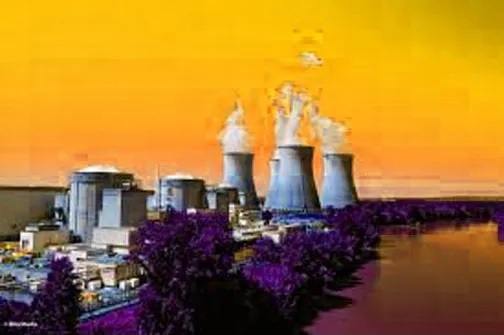
Record temperatures force temporary shutdowns at power plants.
Europe’s energy systems have come under intense strain this summer as
repeated heatwaves have driven up demand for electricity and forced plants
to pause production. June was the hottest on record in western Europe,
fuelling a rise in the use of air conditioning and prompting a sharp
increase in electricity prices. Most parts of the region experienced at
least two intense periods of heat in June and July, with some suffering
more.
The barrage of heatwaves this summer marked a “massive change”
for Europe’s energy systems, said Jan Rosenow, leader of the energy
programme at Oxford university’s Environmental Change Institute. Peak
electricity demand has historically happened in winter in Europe, but as
“summers get hotter at some point that might flip”, he said. SSE, the
UK power company, said generation from its hydropower plants dropped by 40
per cent quarter on quarter to the end of June, as Britain also grappled
with heatwaves and severe drought. Inland nuclear power plants across
France and Switzerland temporarily suspended or reduced activity earlier in
the summer, as it is harder to cool reactors in hot weather.
In France, 17 out of 18 nuclear power plants faced capacity reductions during the
June-July heatwave, Ember said. Most inland nuclear plants rely on rivers
to cool reactors and spent fuel, heating the water in the process before
discharging it back. But with many rivers already hot, the plants could not
discharge heated water without potentially damaging the river ecology.
FT 3rd Aug 2025, https://www.ft.com/content/23b3dc59-b40f-48e2-ad93-e301de7ac5f2
Chris Hedges: The Gaza Riviera
Text originally published July 26, 2025.
Scheerpost, By Chris Hedges / The Chris Hedges Report, August 4, 2025 , https://scheerpost.com/2025/08/04/chris-hedges-the-gaza-riviera-2/
TRANSCRIPT:
Israelis do not see the images of skeletal corpses of Palestinian children who they have starved to death as a curse. They do not see the slain families they gun down at food hubs — designed not to deliver aid but lure starving Palestinians into a massive concentration camp in the south of Gaza in preparation for deportation — as a war crime. Israelis do not look at the savage bombing and shelling that kill or wound dozens of Palestinian civilians, where an average of 28 children die daily, as anything extraordinary. They do not see the wasteland of Gaza, pulverized by bombs and methodically being torn down by bulldozers and excavators, leaving virtually the entire population of Gaza homeless, as barbaric. They do not see the destruction of water purification plants, decimation of hospitals and clinics, where doctors and medical staff are often unable to work because they are weak from malnutrition, as savage. They do not blink at the assassinations of doctors as well as journalists, 232 of whom have been murdered for trying to document the horror.
Israelis have blinded themselves morally and intellectually…………………………………………………………………………………………………………………………………….
The genocide in Gaza signals the abolition, for Israelis as well as Palestinians, of the rule of law. It marks the obliteration of even the pretense of an ethical code. Israelis are the barbarians they condemn. If there is any warped justice in this genocide it is that Israelis, once they finish with the Palestinians, will be forced to live together in moral squalor. https://scheerpost.com/2025/08/04/chris-hedges-the-gaza-riviera-2/
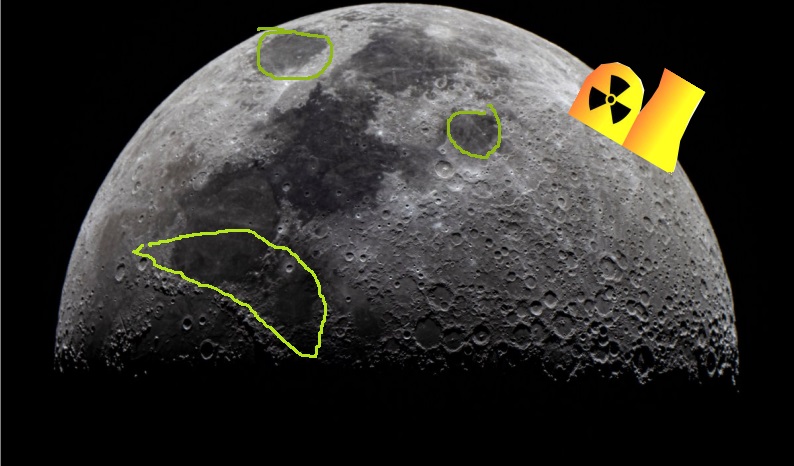
The new space race: How the US, China, and Russia are all vying to be the first to build a nuclear reactor on the MOON.
By WILIAM HUNTER, SCIENCE & TECHNOLOGY REPORTER, 5 August 2025, https://www.dailymail.co.uk/sciencetech/article-14971339/new-space-race-US-China-Russia.html
In the years of the Cold War, the US and the Soviet Union tussled to prove their superiority by rushing to become the first nation to put a man on the moon.
While America might have claimed that particular prize in 1969, a new and even more dramatic space race is only just beginning.
This week, it was revealed that Sean Duffy, the new head of NASA, is preparing to install an American nuclear reactor on the moon before 2030.
In a directive, first reported by Politico, Mr Duffy claims this would allow the US to declare a ‘keep-out zone’ on the lunar surface.
This is seen as a necessary step towards protecting the landing site for a future American moon base, planned as part of the Artemis Programme.
However, the US is far from being the only country to set its sights on our lunar satellite.
In May, China and Russia signed a memorandum of cooperation to build their own nuclear reactor on the moon.
But with Russia and China targeting 2036 as their completion date, the three superpowers are now locked in a head-to-head race to get there first.
This comes as the US makes a rapid and unexpected shift towards prioritising human exploration in space.
Despite slashing scientific missions and giving NASA the smallest budget since 1961, the agency has allocated more than $7 billion for lunar exploration.
The Artemis programme, once feared to be a target for Donald Trump’s cuts, is now scheduled to return a human presence to the moon by 2027.
In the directive, Mr Duffy called for NASA to ‘move quickly’ in establishing a nuclear reactor on the moon in order to ‘support a future lunar economy‘.
Mr Duffy, who is also US transport secretary, has asked NASA to place a reactor capable of producing at least 100 kilowatts on the moon by the end of the decade.
That is enough energy to power 80 average American households and could provide the energy backbone for a permanent lunar base.
NASA had previously planned to place a 40-kilowatt reactor on the moon in a similar timeframe, but it is not clear if they will be able to use the same designs.
Mr Duffy will give NASA 30 days to appoint an official to oversee the operation and 60 days to issue a request seeking proposals from commercial companies for the project.
Nuclear power is seen as key for establishing a lunar presence because it is plunged into complete, freezing darkness for two weeks every month.
At the South Pole, where NASA is planning to establish its operations, the sun never rises high above the horizon and some craters are shrouded in permanent darkness.
That makes it practically impossible for spacecraft or bases to survive on the moon using solar power and batteries alone.
However, this sudden swing back to lunar exploration may be a product of increasing competition from other superpowers.
Tellingly, Mr Duffy warned that ‘the first country to do so could potentially declare a keep-out zone which would significantly inhibit the United States from establishing a planned Artemis presence if not there first.’
This is almost certainly a reference to Russia and China’s recent plans to build a nuclear reactor on the moon, announced in May.
That reactor would be used to power the International Lunar Research Station (ILRS), which should be completed by 2036 according to the latest plans.
Roscosmos, the Russian space agency, wrote in a statement at the time: ‘The station will conduct fundamental space research and test technology for long-term uncrewed operations of the ILRS, with the prospect of a human being’s presence on the Moon.’
The groundwork will be laid by China’s upcoming Chang’e-8 mission, which will be the nation’s first attempted human moon landing.
This means that the moon, and especially the south pole, is now becoming the target of a new international space race.
Dr Mark Hilborne, a security studies expert from King’s College London, told Daily Mail: ‘The Moon is a place where nations will have competing interests. There will be parts of the moon that are more valuable than others and, therefore, could be particular points of competition.
‘The Moon is valuable as a low-gravity staging base where future space developments can be built. Lunar materials, mined in situ, would be valuable in building elements that would further lunar exploration.
‘If these could be built on the Moon, rather than sent from Earth, the cost would be far cheaper.’
The big concern for the US, and presumably Russia and China, is that whatever country starts building on the moon first could effectively claim it as its own territory
Countries’ dealings in space are governed by a set of rules called the Outer Space Treaty, which was first signed in 1967.
Signatories to the treaty agree that space is ‘not subject to national appropriation by claim of sovereignty, by means of use or occupation, or by any other means.’
This explicitly means that nations are not legally able to make territorial claims on celestial bodies like the moon.
However, in practice, America has recently doubled down on a far more assertive version of the law by signing a series of rules called the Artemis Accords in 2020.
Critically, the Artemis Accords also gives states the power to implement ‘safety zones’ – exclusive areas which members of other states will not be able to enter or use without permission from the owner.
While the US insists that these boundaries will end ‘when the relevant operation ceases’, for a permanent colony, this would function almost exactly like the borders of a sovereign territory.
These rules essentially create a principle that whoever gets to a part of the moon first gets to keep it for their own use.
Dr Jill Stuart, an expert on space law from the London School of Economics, told Daily Mail: ‘Countries could use a part of the lunar surface for a scientific base – without claiming long-term ownership of it – but must communicate to other users where that base is and be transparent about its purpose.
‘Although this seems like a potentially “fair” way to allow for future activity on the moon, it also creates a “first mover advantage” in that those who can set up bases first have the right to claim a safety zone around it.’
That idea may now be alarming to America as China shows rapid advancements in its spaceflight program that have put a human presence on the moon within reach.
While these safety zones might be essential for a nuclear reactor, experts say this may lead to an increasingly risky space race.
Dr Fabio Tronchetti, a space law expert from Northumbria University, told Daily Mail: ‘It is evident that we are heading towards a space rush.
‘The United States is attempting to act quickly and get to the Moon first, at least before China and Russia, so as to be able to unilaterally claim the right to set out the rules of the game.’
This has the serious potential to spark conflict between the nations since China and Russia, having not signed the Artemis Accords, have no legal requirement to respect the US ‘keep-out zones’.
Dr Tronchetti says that international law ‘does not recognise the possibility’ of the US’s claims, adding that the US is attempting to ‘force its [China’s] hand to set out rules favourable to its own interests’.
How this conflict might play out on the lunar surface remains to be seen, but in the future, we might see the conflicts here on Earth extend out into space.
Miliband’s Nuclear Quango Chief In Line for £200,000 for Working Three Days a Week

Guido Fawkes 4th Aug 2025, https://order-order.com/2025/08/04/milibands-nuclear-quango-chief-in-line-for-200000-for-working-three-days-a-week/
Great British Energy – Nuclear (not to be confused with the inexplicably separate quango Great British Energy) is searching for a new chairman. ‘GBE-N’, as it is known in the ever growing domain of government bodies poking around in the energy industry, is in charge of delivering small modular reactors (SMRs) in the UK, among other things. That programme has been ongoing since at least 2015…
Now Red Ed is looking for a new head for the organisation – and a live job advert shows a cool salary of more than £203,268 per annum for just three days a week. Meltdown for taxpayers…
The government is banking on deploying SMRs in the 2030s. The new chair will oversee that target with a “more agile, programmatic and faster delivery approach than has been achieved previously”. That won’t be hard, because currently zero SMRs have been delivered. It’s such a civil service priority it’s a three day a week role…
Los Alamos National Laboratory (LANL) Expands Nuclear Bomb Production, Rejects Cleanup, Still Plans to Release Tritium.

| Lab officials have released plans to “defer” cleanup of one of the older radioactive dumps |
| Overarching above all is LANL’s vast expansionof its nuclear weapons programs |
August 3, 2025, https://nukewatch.org/lanl-expands-bomb-production-while-planning-tritium-releases-and-rejecting-cleanup/
Santa Fe, NM – Eighty years after the first radioactive waste was buried at the Los Alamos National Laboratory (LANL), Lab officials have released plans to “defer” cleanup of one of the older radioactive dumps. Material Disposal Area C (“Area C”) is an 11.8-acre site that was active from 1948 to 1974. It contains metals, hazardous constituents, and radioactively and chemically contaminated materials in six unlined disposal pits and 108 shafts. The total waste and fill in the pits and shafts are estimated at 198,104 cubic meters. Area C also has a serious gas plume of industrial solvents. Given the amount of long-lived plutonium wastes that are likely to be in Area C, leaving it buried 25 feet deep in a landfill rated for only 1,000 years is not acceptable.
On June 18, 2025, the Department of Energy (DOE) sent the New Mexico Environment Department (NMED) a letter outlining its plans to “defer corrective action” (i.e. cleanup) at Area C. It stated that the dump “is associated with active Facility operations and will be deferred from further corrective action under [NMED’s] Consent Order [governing cleanup] until MDA C is no longer associated with active Facility operations.”
DOE’s letter does not state why it wants the change or what “active Facility operations” are. However, that is not difficult to guess as Area C is within a few hundred yards of PF-4, LANL’s main plutonium facility that is gearing up for the expanded production of plutonium pit bomb cores. As co-plaintiff, Nuclear Watch New Mexico legally forced the National Nuclear Security Administration (NNSA) to undertake a nationwide programmatic environmental impact statement for pit production, which the agency chose to give a fifty year time horizon. In combination this means that DOE and LANL are seeking to indefinitely postpone cleanup while expanding nuclear weapons production on into the future.
Fortunately, NMED has responded that it “will utilize to the fullest extent all statutory and legal authority necessary to enforce the requirements of the 2016 CO [Consent Order] in order to ensure that New Mexicans receive effective cleanup of legacy contamination at LANL in a timely manner.”
The Environment Department went on to say:
“DOE continues to respond to the regulatory direction provided by NMED in ways that do not reflect any good faith efforts to be accountable for cleanup of the legacy waste at Los Alamos National Laboratory and, in fact, are directly contradictory to the assertations previously made by DOE. As you may recall, during the substantial negotiation process in 2023-24 for revision of the Consent Order, DOE repeatedly reiterated its desire to work collaboratively and effectively with NMED. This recent example of an improper, unilateral deferral contrary to the terms of the Consent Order, along with the bad-faith withdrawal of the CME [Corrective Measures Evaluation to initiate cleanup] Report, contradict such assertions and reassurances from DOE.”
At the same time DOE and LANL are still seeking to intentionally release up to 30,000 curies of tritium, which has been highly controversial. Tritium is a radioactive isotope of hydrogen that can be easily absorbed by the body as tritiated water. Instead of complying with a NMED order to organize an independent expert panel and a public meeting on the subject, they have invoked a dispute resolution process under the Consent Order. This is the kind of forum in which taxpayer supported lawyers from DOE and LANL can try to run circles around NMED’s limited staff and resources.
Overarching above all is LANL’s vast expansion of its nuclear weapons programs. A full billion dollars is being added in FY 2026 (which begins this October 1), making 84% of LANL’s $6 billion dollar annual budget directly tied to nuclear weapons. This increase is primarily for:
1) New-design nuclear weapons that can’t be tested because of the international testing moratorium; or, conversely, could prompt the U.S. to resume testing, with serious global proliferation consequences; and
2) Expanded plutonium pit bomb core production for these new-design nuclear weapons. This is ill-conceived because no future production is to maintain the existing stockpile. Independent experts have found that pits last at least a century and at least 15,000 existing pits are already in storage.
In contrast, cleanup and nonproliferation programs are being cut by 5%, non-weapons science by 50%, and renewables energies research completely eliminated.
Scott Kovac, Research Director of Nuclear Watch New Mexico commented, “LANL and DOE once again treat New Mexico as their nuclear colony with their radioactive releases, obstruction of cleanup and expansion of nuclear weapons programs. The day will come when this is no longer tolerated in the Land of Enchantment.”
Sources:
June 2016, State of New Mexico Environment Department, Compliance Order on Consent U.S. Department of Energy – Los Alamos National Laboratory (Modified September 2024)
June 18, 2025 Letter from DOE to NMED, Deferment of Corrective Action Activities for Solid Waste Management Unit 50-009 at Material Disposal Area C under the 2016 Compliance Order on Consent
July 2, 2025 Letter from NMED to DOE, Response, Deferment of Corrective Action Activities for Solid Waste Management Unit 50-009 at Material Disposal Area C
July 9, 2025, LANL and NNSA to NMED, Response to June 9, 2025 Letter, Temporary Authorization Los Alamos National Laboratory Hazardous Waste Facility Permit
Department of Energy FY 2026 Congressional Budget Request, Laboratory Table
A NASA Nuclear Reactor On The Moon? Bold Proposal Is Unfeasible By 2030– Here’s Why.
There are already many complications in this proposal,
which has not been officially released yet. The Trump administration
proposed a budget that would devastate NASA’s multiple science programs,
and while it asked for more funding for human spaceflight in the short
term, it would cancel the Space Launch System and Orion Spacecraft, making
NASA exclusively reliant on private companies to get to the Moon. As yet,
we don’t have one of those that won’t stop exploding.
IFL Science 5th Aug 2025, https://www.iflscience.com/a-nasa-nuclear-reactor-on-the-moon-bold-proposal-is-unfeasible-by-2030-heres-why-80289
When the Press Becomes the Enemy: The Erosion of Media Independence in Trump’s America
6 August 2025 Michael Taylor, https://theaimn.net/when-the-press-becomes-the-enemy-the-erosion-of-media-independence-in-trumps-america/
A free and independent press is one of democracy’s last lines of defense. It’s where power is questioned, facts are verified, and the public gains its understanding of the world. But under President Trump’s leadership – particularly in his second term – the media has been steadily undermined, attacked, and manipulated into submission.
From the earliest days of his political rise, Trump branded the press “the enemy of the people.” At the time, it sounded like theatre – one of his many outrageous slogans designed to rile up the crowd. But over time, it became policy. Journalists were banned from briefings. Reporters were publicly harassed at rallies. Entire news organisations were delegitimised as “fake news” unless they offered praise. What started as rhetoric turned into a campaign of disinformation and intimidation.
This erosion of media independence has happened in two key ways: by silencing critical voices, and by co-opting sympathetic ones.
Independent journalists now work under constant threat. Legal pressure, license challenges, defamation suits, and even surveillance have become tools to muzzle dissent. Whistleblowers are prosecuted, not protected. Major networks once known for tough questions now pull their punches – or are simply locked out.
At the same time, pro-Trump media outlets have risen in influence, often indistinguishable from state-run propaganda. Whether it’s Fox News personalities given cabinet positions, or social media influencers granted White House access in exchange for loyalty, the lines between journalism and political theatre have blurred.
These outlets don’t challenge power – they amplify it. They repeat Trump’s talking points uncritically, flood the zone with outrage and distraction, and vilify any journalist who dares to question the narrative. The result is an information landscape where truth becomes tribal, and lies travel faster than facts.
Why does this matter? Because a democracy without a free press cannot stay democratic for long. When citizens no longer trust what they see or hear – when news becomes just another weapon of the powerful – then accountability dies, and corruption thrives.
Some journalists continue to fight. They fact-check, investigate, and shine light where it’s needed most. But their space is shrinking, and their safety increasingly uncertain. In many ways, the press has not just been pushed to the sidelines – it’s been made part of the battlefield.
History teaches us that authoritarian regimes always start by silencing the press. What’s unfolding in America is no exception. We may still have newspapers, networks, and headlines – but when truth itself is up for debate, freedom is already slipping through our fingers.
Threat of Nuclear War Is Rising, But Scientists Say the Public Can Change That

Jon Letman , Truthout, August 4, 2025, https://truthout.org/articles/threat-of-nuclear-war-is-rising-but-scientists-say-the-public-can-change-that/?utm_source=Truthout&utm_campaign=52c13be8d1-EMAIL_CAMPAIGN_2025_08_04_09_03&utm_medium=email&utm_term=0_bbb541a1db-52c13be8d1-650192793
Eighty years after two U.S. atomic bombs killed between 110,000 to 210,000 people in Hiroshima and Nagasaki, Japan, public awareness of nuclear risks has fallen to new lows, said Laura Grego, senior scientist and research director with the Union of Concerned Scientists.
“I think people don’t know how terrible nuclear war would be,” Grego told Truthout on July 16 — 80 years to the day since the first-ever atomic detonation in New Mexico. The Trinity test was conducted just three weeks before the U.S. dropped two atomic bombs on Japan.
Brian Schmidt, an American-Australian astrophysicist who received the Nobel Prize for physics in 2011, pointed out that many of today’s nuclear weapons are far more destructive than the bombs used in the horrific Hiroshima and Nagasaki bombings. In contemporary arsenals, a single bomb can contain as much destructive power as was unleashed in all of World War II
Currently, the world’s nine nuclear-armed nations are estimated to possess the destructive equivalent of 146,500 Hiroshima-sized bombs, many of which are ready to launch on short notice.
Schmidt told Truthout that even a “small” nuclear weapon could precipitate the use of a gigaton’s worth of nuclear arsenal being used, causing the collapse of civilization.
“I think the public needs to be focused on asking our respective governments to lower the risk of nuclear war,” he said.
Nuclear Spending Is Rising as Arms Treaties Are Abandoned
Today, nuclear weapons spending is rising, nuclear-armed nations are modernizing and upgrading their weapons, and China is rapidly expanding its arsenal. Currently, the U.S. has seven modernization programs underway, is building two new nuclear weapons facilities, and replacing its entire intercontinental ballistic missile force with a new system that is 81 percent over budget. The U.S., which spends more on nuclear weapons than the other eight nations combined, is forecast to spend an average of $95 billion per year over the next decade, according to the Congressional Budget Office.
In contemporary arsenals, a single bomb can contain as much destructive power as was unleashed in all of World War II.
In recent years, nuclear threats have become increasingly common while diplomacy and dialogue are overshadowed by mistrust, conflict, and war. As reliance on nuclear weapons grows, there are fears of a new arms race and possible return to nuclear explosive testing. This comes as critical arms treaties have been abandoned or face an uncertain future.
In 2001, George W. Bush announced the U.S. would withdraw from the Anti-Ballistic Missile Treaty, and under Donald Trump, the U.S. has rejected or withdrawn from the Intermediate-Range Nuclear Forces Treaty, the Open Skies Treaty, the (conventional) Arms Trade Treaty, and the 2015 Iran nuclear deal. The last remaining nuclear arms control agreement between the U.S. and Russia, the New START Treaty, will end in February 2026 unless it is renegotiated or replaced soon.
After World War II, the U.S., followed by the Soviet Union, invested heavily in developing nuclear weapons, with the U.K., France, China, and later Israel, India, Pakistan, and North Korea building their own bombs. In the mid-1980s, global nuclear arsenals peaked at just over 70,000 warheads. Arms control treaties and diplomacy succeeded in reducing those numbers to roughly 12,200 today, nearly 90 percent of which are possessed by Russia and the United States.
While some argue that nuclear deterrence provides safety and security, many in the arms control and scientific communities believe that the threat of nuclear war has never been higher. In the first six months of 2025, five nuclear-armed countries (Russia, India, Pakistan, Israel, and the United States) have engaged in military hostilities or outright war, increasing the risk of nuclear war by accident, miscommunication, or design.
Warnings and Solutions
Last month, on the Trinity test anniversary, an assembly of more than a dozen Nobel Prize laureates and some 60 nuclear experts gathered for three days of discussions at the University of Chicago to come up with practical, actionable steps that can be taken now to reduce the risk of nuclear war.
The world’s nine nuclear-armed nations are estimated to possess the destructive equivalent of 146,500 Hiroshima-sized bombs.
In a press conference, the group presented a two-page declaration for the prevention of nuclear war signed by 127 Nobel laureates representing six disciplines and at least 44 nuclear experts. Among their recommendations was a call for every nation to publicly recommit to all nonproliferation and disarmament objectives and obligations, to reiterate commitment to the nuclear explosive test moratorium, and for Russia and the U.S. to enter into immediate arms control negotiations. They also called on scientists, academics, civil society, and communities of faith to “create the necessary pressure on global leaders to implement nuclear risk reduction measures.”
Speaking at the university, Cardinal Silvano Maria Tomasi, an adviser to Pope Leo XIV said, “The Trinity explosion taught us what we are capable of destroying. The task before us now is to rediscover what we are capable of preserving and building.”
The choice of venues was intentional as the University of Chicago was where key steps in the Manhattan Project were achieved, where the Bulletin of the Atomic Scientists was founded, and where the symbolic Doomsday Clock was created to communicate threats to humanity and the world. Today, the clock is set at 89 seconds to midnight — the closest it has ever been to global catastrophe.
Headed in the Wrong Direction
Alexandra Bell, president and CEO of the Bulletin of the Atomic Scientists, points out that the Chicago assembly wasn’t the first time Nobel laureates have called for leaders to rein in nuclear dangers. But now, after decades of “slow, tedious, difficult progress” to create restraints to prevent a nuclear catastrophe, the world has reached a reckoning point: “Those [structures] are crumbling and we seem to be heading in the wrong direction,” she says.
Although we have the diplomatic and political tools as well as the historical background to reduce risks, Bell says today’s leaders lack the necessary ambition and will. This raises the question: Will our luck hold out?
“The odds are not in our favor,” she says.
The last remaining nuclear arms control agreement between the U.S. and Russia, the New START Treaty, will end in February 2026 unless it is renegotiated or replaced soon.
Yet even in the face of nuclear peril, she understands why people seem more concerned about the price of eggs. In addition to so many other concerns, Bell says, people still need to care about nuclear war because the threat has never gone away. She insists that ordinary people do have a role to play and can have an impact by pressuring elected officials or simply starting a conversation with each other.
“This affects all of us,” says Bell. “And if we get the nuclear problem wrong, nothing else matters.”
More Weapons, More Risks
In a time of growing geopolitical tension and instability, when international norms are under stress, competition between nuclear weapon states means greater nuclear risks, says Mallory Stewart, executive vice president at the Council on Strategic Risks.
Stewart told Truthout that it’s important to dispel the perception that nuclear risk reduction is an esoteric, political issue only for experts, and bring an end to public complacency: “It would be nice if the public felt some agency to say, ‘It’s not as simple as arms racing. It’s not as simple as might makes right. There is a deeper threat to humanity.’”
“The Trinity explosion taught us what we are capable of destroying. The task before us now is to rediscover what we are capable of preserving and building.”
“Growing reliance on nuclear weapons and modernization or more weapons will just lead to more weapons and modernization on the other side,” Stewart says.
Understanding and Engagement
James McKeon, a program officer for nuclear security at the Carnegie Corporation of New York, encourages people to educate themselves about arms control, nonproliferation, or the basics of nuclear technology. “It’s no more complicated than any other scientific topic,” he says, pointing to resources that clearly explain the science, history, and policies of nuclear issues.
McKeon says we need new ways for artists, writers, and creative individuals to think about nuclear policy. An engaged citizenry, he says, is more likely to reach out to elected officials and understand that the risk of nuclear weapons hasn’t gone away and is compounded by new technologies.
Robert Latiff is a retired major general in the Air Force who teaches weapons ethics and how new technology impacts the laws of armed conflict at Notre Dame University. “There is absolutely no ethical argument for nuclear weapons,” he says. He prefers not to call them “weapons” because they can’t be used to fight a war. “They’re more devices of terror than they are weapons,” he says. “Fight a war with nuclear weapons and what do you have left?”
Latiff points to George H. W. Bush’s 1991 Presidential Nuclear Initiatives which took unilateral action to remove U.S. tactical nuclear weapons from Europe and South Korea. He says that with moral courage, a U.S. president could again have a huge impact on nuclear policy.
Climate of Fear
Wole Soyinka, a Nigerian playwright and recipient of the 1986 Nobel Prize for literature, also came to Chicago to grapple with how to reduce nuclear risks. “We do have an enhanced climate of fear right now,” he told Truthout.
This affects all of us. And if we get the nuclear problem wrong, nothing else matters.
“It isn’t only global warming that we are witnessing. There’s a certain heating up of, shall we say, human and social relationships and national interaction,” says Soyinka. He describes a “disturbing escalation of violence” and a “kind of demonic sweep of leadership” in which politicians blithely declare, “if necessary, I will use an atom bomb,” and display what he calls “boastful, arrogant, hubristic body language” and terms like “little rocket man” and “obliterating unilaterally.”
Since 2009, the African continent has been designated a nuclear-weapon-free zone under the Treaty of Pelindaba. Africa is often left out of the nuclear conversation, but it was in the colonized Algerian Sahara that France conducted 17 nuclear weapons tests in the 1960s over the protests of African nations.
“If there is an atomic war in Ukraine, even Africa would be affected. We probably see that reflected more and more in the literary arts as well as the graphic arts,” Soyinka says. “Many people still believe that political leaders are people of common sense and that has never happened. My imagination has gone over and beyond that, and I wake up sometimes wondering what will be the next global conflagration.”
Uprooting the Nuclear Order
Laura Grego from the Union of Concerned Scientists warns that when the U.S. military makes war plans, it doesn’t include the full spectrum of what would happen in a nuclear war, saying, “I think they don’t want to know the answer because it’s terrible.”
Grego told Truthout that military expectations for nuclear war can be found in National Academies reports, which she believes likely undercount the long-term effects of radioactive fallout, possibly by as much as a factor of 10. Nuclear winter, major disruptions to agriculture, and mass starvation are long-term consequences of nuclear war that are usually not counted by military planners, Grego says. “We’re running risks that we don’t fully understand.”
We’re a democracy and our responsibility is to make sure our policies align with our democratic values, with our hopes for the world, hopes for a long-term future for our children that is healthy, secure, and sustainable.”
The Nobel declaration calls on all nations to increase investment and cooperative research on the environmental, social, military, and economic impacts of nuclear conflict, and to support a UN Independent Scientific Panel on the Effects of Nuclear War.
Grego is also concerned about the expanding role of nuclear weapons. “Russia has recently changed their nuclear policy to say that they’re meant to deter nuclear powers that are helping a non-nuclear adversary,” she says, adding that the role of nuclear weapons should be reduced and that by investing heavily in modernization, we are disincentivizing the reduction of nuclear weapons. Investing in nuclear weapons, she says, indicates we expect them to be around for another 80 years.
“We need to find a way to wean ourselves off the reliance of [nuclear weapons],” Grego says, noting that the leader of a major nuclear-armed country could transform the world by eliminating nuclear weapons with a verified plan and encouraging others to join them. Doing so, however, would surely mean facing powerful, determined opponents who are invested in maintaining the status quo. Grego hopes global leaders will demonstrate a commitment to political courage over simply seeking unilateral security advantages.
In her interactions with members of Congress, Grego says they report almost never hearing their constituents bring up nuclear weapons. It’s not enough for the public to be scared or angry at how we’ve organized our security, she says. “We do need to further engage. We’re a democracy and our responsibility is to make sure our policies align with our democratic values, with our hopes for the world, hopes for a long-term future for our children that is healthy, secure, and sustainable.”
CORRECTION: This article was updated on August 4, 2025, to reflect that 127 Nobel laureates and at least 44 nuclear experts signed a two-page declaration for the prevention of nuclear war.
Julian Assange Joins Historic Anti-Genocide March Across Sydney’s Harbour Bridge
By Joe Lauria, Consortium News, 3 August 25, https://consortiumnews.com/2025/08/03/assange-joins-historic-anti-genocide-march-across-sydneys-harbour-bridge/
Julian Assange joined at least 90,000 and as many as 300,000 people who marched across Australia’s most famous bridge on Sunday to protest Israel’s genocide in Gaza.
Wikileaks founder Julian Assange, his wife Stella and brother Gabriel Shipton joined Australian journalist Mary Kostakidis and, according to police estimates, 90,000 other people, but according to organizers as many as 300,000, to march across Sydney’s Harbour Bridge on Sunday to demand an end to Israel’s genocide in Gaza.
The Sydney Morning Herald reported:
“At least 90,000 pro-Palestine protesters walked across Sydney Harbour Bridge and into history through the pelting rain, as a larger crowd than expected used the landmark as a symbol, bringing the city to a standstill and leading police to sound the alarm of a potential crowd crush.
In the face of the sheer size of the protest against the Israeli government’s actions in Gaza, which organisers say drew between 200,000 and 300,000 people, police were forced to ditch plans for the march to end at North Sydney and redirected the crowd. … The last major march across the bridge was 25 years ago, when 250,000 people marched in support of reconciliation [with Indigenous Australians.]”
Kostakidis is in court accused of racial hatred by the Zionist Federation of Australia for her social media reporting and commentary critical of the Israeli government’s genocide in Gaza.
[Consortium News was on the bridge and will be providing a full video report.].
The New South Wales premiere and police both tried to stop the march from happening by making protestors liable to arrest for blocking traffic. It took a Supreme Court ruling on Saturday to let it go ahead. About four times as many people turned up than organizers had expected — even in a driving winter rain — because of the concerted effort to stop it, an organizer told The Sydney Morning Herald.
The paper quoted Palestine Action Group organiser Josh Lees as saying said the march was “’even bigger than we dreamt of’ after people travelled from across the country to attend. He called the event a ‘monumental and historic’ success. ‘Today was just a huge display of democracy,’ he said.”
The massive turnout shows the revulsion a good number of Australians feel for Israel’s ongoing slaughter and for their government’s complicity. “Netanyahu/Albanese you can’t hide. Stop supporting genocide,” the protestors chanted.
Police were not prepared for the outpouring of outrage. The Herald said:
“NSW Police acting deputy commissioner Peter McKenna said the march came ‘very close’ to a ‘catastrophic situation’ and that officers had been forced to make a snap decision to turn tens of thousands around to avoid a crowd crush as people exited for North Sydney. McKenna said part of the problem was the organisers’ application to march stated that 10,000 people were likely to attend, not the 90,000 people the police estimated turned up.”
Tepco wraps up latest round of treated water release in Fukushima

Tokyo Electric Power Company Holdings said Sunday that it has completed
the second round of its fiscal 2025 release of treated water into the ocean
from the Fukushima No. 1 nuclear power plant.
The discharge of the water, containing radioactive tritium, was suspended due to a tsunami caused by a major earthquake near Russia’s Kamchatka Peninsula last week, but there
were no problems with the facilities involved in the operation. In the
second round, which began on July 14, Tepco diluted 7,800 tons of treated
water with large amounts of seawater before releasing it about 1 kilometer
off the coast of Fukushima Prefecture through an undersea tunnel. In the
current fiscal year through next March, a total of 54,600 tons will be
released into the sea in seven rounds, at the same pace as the previous
year.
Japan Times 3rd Aug 2025, https://www.japantimes.co.jp/news/2025/08/03/japan/tepco-2nd-round-treated-water-release/
Sizewell C to give jobs to hundreds of ex-offenders
Hundreds of ex-offenders will be hired to work on the construction of the
Sizewell C nuclear power station as part of a drive to generate broader
social and economic benefits from big public infrastructure projects.
Sizewell C, which was given the final go-ahead last month, is already
working with local prisons in Suffolk to design training courses in
welding, construction, engineering and hospitality that are aimed at
equipping inmates with the skills needed to work on the plant.
The Observer 3rd Aug 2025, https://observer.co.uk/news/national/article/a-second-chance-sizewell-c-to-give-jobs-to-hundreds-of-ex-offenders
1 This Month


Petition to revoke the licensing of the Near Surface Nuclear Disposal Facility (NSDF) at Chalk River. https://www.ourcommons.ca/petitions/en/Petition/Details?Petition=e-7247


of the week – STOP SMALL MODULAR REACTORS IN CANADA
To see nuclear-related stories in greater depth and intensity – go to https://nuclearinformation.wordpress.com
-
Archives
- March 2026 (163)
- February 2026 (268)
- January 2026 (308)
- December 2025 (358)
- November 2025 (359)
- October 2025 (376)
- September 2025 (258)
- August 2025 (319)
- July 2025 (230)
- June 2025 (348)
- May 2025 (261)
- April 2025 (305)
-
Categories
- 1
- 1 NUCLEAR ISSUES
- business and costs
- climate change
- culture and arts
- ENERGY
- environment
- health
- history
- indigenous issues
- Legal
- marketing of nuclear
- media
- opposition to nuclear
- PERSONAL STORIES
- politics
- politics international
- Religion and ethics
- safety
- secrets,lies and civil liberties
- spinbuster
- technology
- Uranium
- wastes
- weapons and war
- Women
- 2 WORLD
- ACTION
- AFRICA
- Atrocities
- AUSTRALIA
- Christina's notes
- Christina's themes
- culture and arts
- Events
- Fuk 2022
- Fuk 2023
- Fukushima 2017
- Fukushima 2018
- fukushima 2019
- Fukushima 2020
- Fukushima 2021
- general
- global warming
- Humour (God we need it)
- Nuclear
- RARE EARTHS
- Reference
- resources – print
- Resources -audiovicual
- Weekly Newsletter
- World
- World Nuclear
- YouTube
-
RSS
Entries RSS
Comments RSS
 nuclear-news