Trump, or Violence as Diplomacy

By C.A.R. Turner / August 1, 2025, https://www.thepostil.com/trump-violence-as-diplomacy/
Violence is diplomacy—that is the essence of the Trumpian encounter with the world: do as I say, or else. Versions of this approach are easily noted in most of President Trump’s public pronouncements. The most recent iteration, in response to Trump’s bombing of Iran, was given by Vice President JD Vance at the Ohio Republican Party dinner in Lima, Ohio, on Tuesday, June 24, 2025. He later summarized it on X also.
Here is what he said: “What I call the Trump Doctrine is quite simple: Number one, you articulate a clear American interest and that’s, in this case, that Iran can’t have a nuclear weapon. Number two, you try to aggressively, diplomatically solve that problem. And number three, when you can’t solve it diplomatically, you use overwhelming military power to solve it and then you get the hell out of there before it ever becomes a protracted conflict.”
The contradictions from one through to three are obvious: how can there be a clarity of “American interest” when the policy is “Israel First?” America has long given up being clear about what it wants, since it wants so many different things which negate one another. It wants to be the hegemon, but also the beacon of “liberty.” Number two: suddenly “American interest” is now a “problem” that needs to “solved” by diplomacy, because other countries do not agree with the “American interest.” Was it not Zelinsky, sitting in the White House, who asked Vance, “What do you mean by diplomacy?” In other words, that “American interest” mentioned in Number one is actually an American demand.
And then we quickly move on to Number three—when America fails at diplomacy, it loves to drop bombs. Bombing, it would appear is the last resort of the scoundrel, to update a famous phrase. What is the point of doing any diplomacy when the people you are trying to diplomatize already know that you are going to bomb them in the end? Iran found that out pretty darned quick—for they thought they were actually involved in diplomacy with Washington when Trump suddenly decided to drop some bombs all over Iran, thinking that this would be persuasive. So, how quickly does Washington move from the diplomatic table to the cockpit of a B2 bomber? In other words, how do bombs become diplomacy?
Vance then throws in the caveat that “you get the hell out of there before it ever becomes a protracted conflict.” So, we are supposed to believe that bombing a country flat and flying back home magically avoids a “protracted conflict?” A recent example—how long has America been bombing Yemen—and what has it accomplished? America just bombed Iran—and what has that accomplished? And, is there any need to mention the fact that Trump, in his first five months of his second term, has carried out 529 airstrikes against Yemen, Syria, Iraq, and Somalia, and bombed 240 locations in these places—it is not known yet how many total civilians he has killed in the process. And whatever happened to Number two in all these cases? How did Trump move past diplomacy and get right to Number three with Iraq, Somalia and Yemen?
In other words, the world is viewed through simplistic Trumpian narratives and bombed accordingly.
It would seem that Vance is trying to lend coherence to a “foreign policy” that is no more than Trump’s feelings. How such feelings, which are erratic at best, become a doctrine is beyond comprehension.
Despite claims of aggressively pursuing diplomacy, what everyone has witnessed is an utter lack of diplomacy—there are only threats; or worse, bomb first and then pretend to talk.
The “overwhelming military force” part has translated into significant civilian casualties, nearly matching the total from many years prior in specific conflicts such as Yemen. Amnesty International and Human Rights Watch have labeled some strikes as potential war crimes. This “bomb first, ask questions later” approach contrasts starkly with the so-called doctrine’s promise to avoid prolonged entanglements, raising ethical and legal questions.
Trump promised rapid resolutions to major conflicts like Ukraine and Gaza and a definitive end to Iran’s nuclear program but has largely failed to achieve any of these objectives. Instead, what the world sees again and again is an overestimation of his own personal influence upon world leaders, and an utter lack of comprehension of the complexity of diplomacy and the ensuing buildup of a deep resentment among nations. In other, there is hardly a doctrine, let alone clarity.
What is clear to see is that all of foreign policy is reduced to a some sort of a transaction, “a deal,” which is spun as prioritizing narrowly defined American interests and sovereignty. However, what ends up happening is confrontation, backed up by a lot of threats of sanctions, tariffs, or bombs.
Despite talk of restraint and rapid exits, Trump’s administration embraces a willingness to wage sustained aerial campaigns and intense military operations, sometimes lacking clarity on long-term goals. What is deployed therefore is intimidation tactics.
This so-called “doctrine” causes unease within political factions and the public who fear prolonged conflicts despite the promise of quick disengagement. It is a strategy that will fail to prevent entanglements, because the world is seen as “ripping American off” and therefore needs to be put in its place. This completely undermines real-world expectations of other nation-states.
In essence, while Vance’s presentation of the “Trump Doctrine” attempts to offer a clear and structured foreign policy, there is a wide gap between rhetoric and reality, made worse by diplomatic incompetence, problematic military consequences, and fundamental inconsistencies that collectively render this “doctrine” not only deeply flawed, but utterly reprehensible as any sort of a guiding principle.
Thus, in June 2025, in the so-called “12 Day War,” the Trump administration conducted airstrikes on three Iranian nuclear sites, aiming to prevent Tehran from obtaining a nuclear weapon, consistent with the Trump Doctrine’s three-step approach (clear interests, aggressive diplomacy, military force, if necessary). However, the strikes were launched just two days after a supposed diplomatic ultimatum, raising suspicions that diplomacy was not genuinely exhausted beforehand.
Plus, the strikes risked escalating into a broader regional war and limited future diplomatic options because of Trump’s prior withdrawal from the Joint Comprehensive Plan of Action (JCPOA) nuclear agreement, which Iran rightly saw as a betrayal. This undercut trust and prospects for peaceful resolution.
Although Vance and administration proponents called the strikes “wildly successful” with no American casualties, initial intelligence suggested damage to Iran’s program was limited. Moreover, Iran’s leadership remained cautious, avoiding direct war with the U.S. despite harsh rhetoric, complicating claims of decisive military resolution.
Humanitarian consequences and the risk of civilian casualties added ethical and legal criticisms, undermining the promise to exit before prolonged conflict.
Proponents of the Trump Doctrine also contrast it with the 2015 Obama nuclear deal, which they argue was lenient and compromised American moral clarity by allowing Iran’s nuclear enrichment program to continue.
The Trump Doctrine calls for denying Iran all paths to nuclear weapons through strength and clarity, but this maximalist stance (zero enrichment demanded) is unrealistic and purely ideological, offering no practical diplomatic off-ramp and increasing risk of sustained conflict.
The doctrine’s combination of maximum pressure without clear enforcement capability resulted in constrained U.S. options and increased involvement in the conflict, contradicting the promise of quick exits.
Then, there are the broader regional implications. The doctrine’s application in Yemen, with intense bombing campaigns against the Houthis, parallels its Iran approach, marked by high civilian casualties and unclear long-term strategic gains, raising concerns about ethical implications and strategic coherence.
Fear of prolonged entanglement in the Middle East and tensions within political factions about the feasibility of rapid withdrawal reveal internal contradictions within the doctrine.
Thus, what happened in Iran and Yemen entirely contradicts what Vance says. In other words, there is a chasm between what is done and what is said.
The rapid shift from diplomacy to military action fully undermines claims of aggressive diplomacy first.
Then, military strikes have yet to yield definitive success and have caused legal, ethical controversies and humanitarian catastrophes.
Overly maximalist demands and the lack of feasible diplomatic pathways constrain U.S. options and risk protracted conflicts.
Contradictions between partisan expectations of quick exits and the reality of prolonged military engagement create strategic incoherence.
Thus, the doctrine abandons traditional moral leadership and multilateral cooperation in favor of a deal that tries to find ways to “protect” America rather than build or lead alliances. This results in a posture of strategic disengagement and economic self-interest rather than any sort of global leadership.
In conflicts like Ukraine, the U.S. under Trump criticizes Russia but also avoids deep involvement, leaving resolution largely to the affected parties (e.g., Kyiv and Moscow). This causes concern among long-term defense partners about the reliability and clarity of American commitments, weakening traditional alliance cohesion.
Trump treats NATO more as a “protection racket,” demanding more financial contributions from allies and showing willingness to reduce U.S. support if unmet. European leaders, uncertain about the U.S. guarantee, are exploring independent defense measures, including shared nuclear capabilities. This unsettles longstanding alliance structures and undermines trust, and points to a West that engage in a new arms race.
The Trump administration has withdrawn from major international agreements (e.g., Paris Climate Accord, WHO), signaling skepticism toward multilateral institutions. This has led to diplomatic isolation and further strains relationships with traditional global partners.
The doctrine involves recalibrated signaling to allies based on geopolitical alignment and interests rather than comprehensive coalition-building, emphasizing sovereignty and economic independence sometimes at the expense of traditional alliance solidarity.
In effect, the Trump Doctrine as articulated essentially reshapes U.S. alliances by emphasizing American sovereignty and international relations as “dealmaking,” coupled with reluctance for enduring involvement, which collectively causes alliance uncertainty, strain on NATO and Western partnerships, and challenges to traditional multilateralism and global leadership that the U.S. once upheld.
So, when Trump repeats the slogan of making America “great,” what does he mean? Great economically, or great in leading the world? He does not know how to do both. On the one hand, he piles on tariffs on the world and threatens it, and on the other he wants the world to look up to America.
Vance’s “Trump Doctrine” is clear in one thing—the Trump administration has no clue how to reconcile what they say with what they do, because their actions and words are always contradictory.
Sizewell C will cost more than Hinkley: Is it worth it?
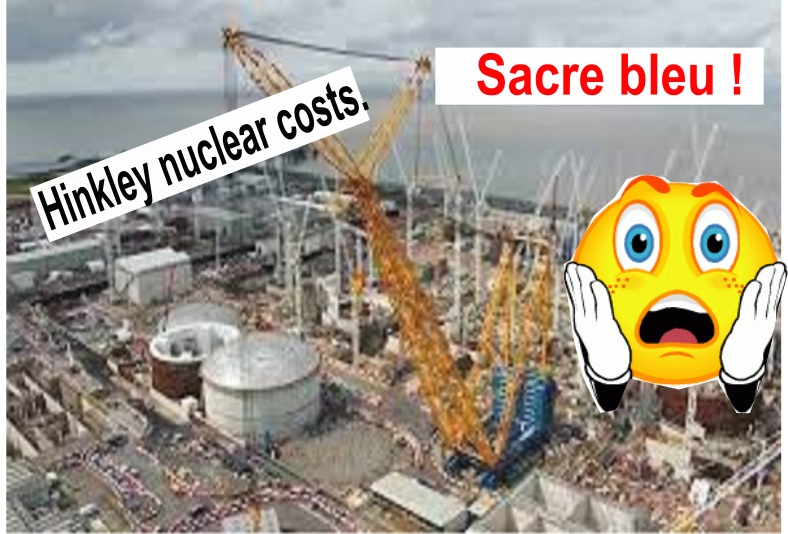

Priced in ‘real’ terms today, the £47.7bn cost ceiling will rise further with inflation,
potentially over £60bn. The total tally for the UK’s latest bet on
nuclear power, Sizewell C, is highly likely to rise above the cost of
Hinkley Point C.
The question is, will the potential savings for low-carbon
power next decade justify the cost? Taken together, the impact of project
overruns and inflation could push up the estimated £38 billion price tag
of the nuclear power project, in 2024 prices, by between almost £10bn and
£20bn or more.
That is because the £47.7bn upper cost threshold set for
the project by government – which Energy Voice reported on the day a
final investment decision was made would be funded by £36.6bn of new debt
finance from the UK National Wealth Fund (NWF) – is a moving target.
Priced in ‘real’ terms today, that cost ceiling will rise further with
inflation, making the true cost of Sizewell C likely to be far greater than
the incomplete nuclear power station in Somerset, despite the fact that as
a replica it was meant to be cheaper due to economies of scale. Independent
analysis from the House of Commons Library shows energy bills would need to
rise to cover the extra spend. SNP Energy spokesperson Graham Leadbitter MP
said: “This toxic overspend now totals £48bn.” A major financier of
the project, the sovereign fund NWF, has conceded that the ultimate cost of
the Suffolk project could balloon well above the £38bn price tag confirmed
by ministers this month, already nearly double the initial £20bn estimate.
Energy Voice 30th July 2025. https://www.energyvoice.com/all-news/577297/sizewell-c-will-cost-more-than-hinkley-is-it-worth-it/
Time to De-Zionize the Israeli Mind

What lies ahead is undoing or rejecting Zionist ideology that centers on Jewish nationalism and exclusivism, and replace it with alternative Jewish that emphasizes universalism, religious adherence, or political justice.
By W.O. Munce / August 1, 2025, https://www.thepostil.com/de-zionize-the-israeli-mind/
Israel is a deeply sick country which become monstrous. How is it that the descendants of the victims of Nazi atrocities feel that they can proudly film themselves carrying out similar atrocities? This is bitter fruit of cultivating the “Holocaust industry,” in which Jewish victimhood has been made so sacrosanct that it has created an entire generation that feels that it can do whatever it wants, that crimes can never be committed by Israelis.
Genocides do not happen in a vacuum. At least, when the Nazis were carrying out their murderous plans, they had the “decency” of trying to hide all their crimes, so the world would never know. But such is not the case with Israelis when it comes to the genocide in Gaza. Rather, it is now commonplace for ordinary Israelis to film their enthusiasm for genocide, and post it all on social media—because (a) they do not see killing Palestinians as a crime, and (b) they wear genocide as a badge of honor, because they see it as yet another expression of their exalted victimhood.
For example, videos and images have circulated showing Israelis, including soldiers and settlers, holding barbecue parties near the Gaza border, while—obviously—Palestinians inside Gaza starve. Multiple sources confirm footage of these barbecues near Gaza, while those deemed to be “less human” face famine and widespread starvation.
What kind of satisfaction do these Israelis derive from such behavior? What has the Israeli mindset become that it can imagine that this kind of criminality will meet with approval of the world?
Perhaps, the time has come to begin speaking of an urgent process—the minds of the Israelis have to be de-Zionized.
Fear and hatred play a central role in maintaining Zionist views by creating a psychological and emotional framework that sustains exclusivist national identity and resistance to change. Fear, rooted deeply in historical trauma including the Holocaust, is learned and collective among Israeli Jews. It fosters a sense that the Jewish people face an existential threat from Arabs and the wider world, framing conflicts as struggles for survival against enemies, intent on destruction. This fear is harnessed into a collective, fear-driven hatred directed at Palestinians, portrayed as a monolithic hostile force. Such emotions justify ongoing security measures, territorial claims, and resistance to peace efforts, reinforcing a binary worldview of “us vs. them” where people and states are either friends or enemies.
Hatred, as part of this emotional complex, promotes internal solidarity within Jewish Israelis, reinforces group boundaries, and inhibits empathy towards Palestinians. It can also justify violence and exclusionary policies as necessary defensive actions. The emotions of fear and hatred thus work together to entrench Zionist nationalist ideology by making alternative narratives or conciliatory approaches psychologically and emotionally difficult to accept.
The main psychological barriers to de-Zionizing the Israeli mindset are socio-psychological forces deeply embedded in Israeli Jewish society that inhibit the acceptance of alternative narratives and impede peace processes.
These are rigid, ideological beliefs that justify the continuation of nationalist and territorial claims, such as the belief that Jewish settlement in the West Bank and Gaza is legitimate and that Jews are the main contributors to peacemaking efforts. Such beliefs strengthen exclusivist national identity and resistance to compromise or territorial withdrawal.
Negative emotions toward Palestinians, including fear of security threats and hatred, create emotional resistance to changing perspectives or accepting Palestinian narratives.
There is a biased, closed-minded tendency to selectively process information that supports the dominant Zionist narrative while rejecting or ignoring conflicting information about Palestinians or peace efforts.
Many Israelis sustain a strong sense of collective victimhood from historical trauma (such as the Holocaust or past wars), which fuels defensiveness and reluctance to acknowledge Palestinian suffering fully.
The idea that time is on Israel’s side discourages urgency or willingness to make territorial concessions, promoting a wait-and-see attitude that can reinforce inaction.
Traits that favor traditionalism and authority can increase in-group loyalty and delegitimize Palestinians, reducing openness to peace negotiations.
These barriers operate in an integrated way, involving cognitive, emotional, and motivational dimensions that combine to make shifts away from Zionist nationalist ideology psychologically difficult for many Israelis. They also perpetuate selective bias and resistance to change, complicating efforts to “de-Zionize” or fundamentally rethink the Israeli identity in more inclusive or non-nationalist terms.
What lies ahead is undoing or rejecting Zionist ideology that centers on Jewish nationalism and exclusivism, and replace it with alternative Jewish that emphasizes universalism, religious adherence, or political justice. This process is complex and varies widely depending on religious, political, or social perspective.
Groups like Neturei Karta reject Zionism as apostasy, arguing it undermines Jewish Law and faith by emphasizing secular Jewish nationalism over religious devotion. They seek to restore Judaism as primarily a religious identity, not a nationalistic or territorial one. This includes opposing the State of Israel’s Zionist foundation and advocating for alliances with Palestinians based on shared religious ethics rather than nationalism.
Some Jewish voices oppose Zionism on liberal or humanistic grounds, emphasizing justice and equality for all peoples, including Palestinians. Opposition here focuses on dismantling structures of racial and national exclusivity, advocating for a future Israeli society based on equal rights, democratic principles, and recognition of Palestinian national rights.
Former Zionists or Israelis disengaging from Zionism often describe a journey of critical reflection, learning about Palestinian histories and suffering, and rejecting exclusionary nationalism. This mental de-Zionization involves questioning nationalist narratives, recognizing the impact of occupation, and embracing solidarity with Palestinians.
Left-wing Israeli critics see de-Zionization as abolishing Jewish exclusiveness codified in laws like the Law of Return, ending imperialist ties, and transforming Israel into a multi-national democracy that grants equal rights to all inhabitants regardless of ethnicity or religion.
Perhaps the only path forward, then, is not to advocate for a two-state solution, because the question that must be answered by those who claim support for this idea is rather straight forward: Can a state that has committed genocide suddenly become acceptable by the world community?
The answer can only be—no.
More and more, it will become obvious that if this part of the world is to know any peace, then Israel must be de-Zionzed—and the only way to do that is to create a one state in the Levant, in which everyone can live equally, a state in which Zionism will be banned and illegal.
It is time for the Israeli mind to be freed from all notions of grandeur and superiority. Otherwise, Zionism will continue to produce atrocities.
If this is not done, then the slaughter will go on, generation after generation, until the world grows sick of such crimes—and what happens then will be a lot worse
Legal trickery: Israel has changed how land ‘ownership’ works in the West Bank.
Here’s what that means.
The Israeli government has effectively legalized the annexation of over 60% of the West Bank, but no one’s talking about it. Here’s what this means for Palestinians.
By Qassam Muaddi June 12, 2025
Until last month, Palestinians in the West Bank preserved their land ownership certificates in case their land was claimed by the Israeli state or by Israeli settlers. But a recent Israeli government decision made their lands in the West Bank open to property registration by anybody, including settlers — forcing Palestinians to seek their land ownership recognition by the Israeli state or see the ownership of their lands transferred to Israeli hands.
Earlier this month, the Israeli government approved a decision to resume the land registry process for lands in Area C of the West Bank after decades of freezing. The decision entails grave consequences for Palestinian ownership of land in what constitutes 60% of the West Bank, as it puts an end to the treatment of Palestinian lands in Area C as occupied territory — instead treating them as a part of Israel.
How land registration started………………………….
What the decision means legally
The Israeli government’s recent decision to resume the land ownership registration in Area C considers all PA land ownership titles as “null and void.” This means that Palestinian owners of lands in Area C have no legal proof of their ownership before Israeli government bodies, except their old Jordanian titles, which in many cases don’t include the subsequent generations of heirs. This means that the entire process is automatically set back several decades for Palestinians.
But this decision also has a deep political implication, because Palestinian lands are no longer treated by Israel as militarily-administered lands, as they have been since 1967. Instead, Israel is placing the registration of land ownership in the hands of civil governmental bodies, which is in and of itself a practical implementation of annexation.
More importantly, this opens the door to legalizing Israeli settler control of these lands.
“Palestinians are now forced to prove their legitimate ownership of their lands in front of Israeli courts, which are themselves biased,” Abdallah Hammad, advocacy director at the Jerusalem Legal Aid Center (JLAC), told Mondoweiss.
“Most lands in the West Bank are private lands whose owners have Jordanian documents proving that they paid taxes for their land ownership, but they hadn’t yet finished the ownership registration process when the 1967 occupation happened,” Hammad explained. “With the occupation restricting access to lands in Area C and restricting the Palestinian agricultural economy, devaluing the economic value of these lands, they become eligible to be declared for ‘public use.’ Then there are lands that were already state lands under the Jordanian government, and are thus public lands. But they don’t belong to the Israeli state legally.”
Hammad said that the main difference that this new decision makes is that it opens the door to register both unused lands and Jordanian state lands as Israeli state lands. “Before the decision, the Israeli government would declare a land as being ‘for public use,’ and the Palestinian owner would oppose that declaration in Israeli courts,” Hammad explained. “But now, lands that have no recent private ownership titles or that fall in the category of ‘public land’ will be registered as Israeli state lands, and that will make them easier to use for settlement expansion and legalizing settler outposts.”
“This is annexation happening before our eyes,” Hammad emphasized.
Decades of colonization
For Palestinians, the Israeli government’s decision means that the hopes of saving their lands have become more distant.
“We have been holding to the hope of safeguarding our lands until some political solution takes place, but now it seems that the only scenario ahead is the complete loss of our land,” a Palestinian landowner in the town of Taybeh, east of Ramallah, told Mondoweiss, asking not to be named…………………………………………………..
Russia is staying quiet on Trump’s nuclear move
BBC, Steve Rosenberg, Russia editor in Moscow, 2 Aug 25
Could this be the first time in history a social media spat triggers nuclear escalation?
President Donald Trump, offended by posts by former Russian President Dmitry Medvedev, says he’s ordered two nuclear submarines to move closer to Russia.
So, how will Moscow respond? Are we on a path to a nuclear standoff between America and Russia? An internet-age version of the 1962 Cuban Missile Crisis?
I doubt it, judging by initial reaction in Russia.
Russian news outlets have been rather dismissive of Trump’s announcement.
Speaking to the Moskovsky Komsomolets newspaper, a military commentator concluded that Trump was “throwing a temper tantrum”.
A retired lieutenant-general told Kommersant that the US president’s talk of submarines was “meaningless blather. It’s how he gets his kicks”.
“I’m sure Trump didn’t really give any orders [about submarines],” a Russian security expert suggested to the same paper.
Kommersant also mentions that in 2017, Trump said that he’d despatched two nuclear submarines to the Korean peninsula as a warning to North Korea.
Yet not long after, Trump held a meeting with North Korean leader Kim Jong Un.
So, bizarrely, might Donald Trump’s latest submarine deployment be a precursor to a US-Russia summit?
I wouldn’t go that far.
But the reaction from the Russian authorities has been interesting.
At time of writing, there hasn’t been any.
Not from the Kremlin. Not from the Russian foreign ministry. Nor the defence ministry.
And I’ve seen no announcement about Russian nuclear submarines being positioned closer to America.
Which suggests that either Moscow is still studying the situation and working out what to do, or that Moscow doesn’t feel the need to react.
The Russian press reaction I mentioned earlier suggests it’s the latter……………………………. https://www.bbc.com/news/articles/cly4kgv9238o
Sen. Lindsey ‘Ghoulish’ Graham compares Israeli genocide in Gaza favorably to America’s WWII atomic bombings
Walt Zlotow, West Suburban Peace Coalition, Glen Ellyn IL, 1 August 25
No US senator loves America’s senseless wars more than Sen. Lindsey Graham (R-SC).
And Graham loves no US war more than the current US enabled Israeli genocide in Gaza. Graham observes the ongoing Israeli genocide in Gaza, near wholly financed, by the US, and declares,
“When we were faced with destruction of our nation after Pearl Harbor, fighting the Germans and the Japanese, we decided to end the war by bombing Hiroshima Nagasaki with nuclear weapons. That was the right decision. Give Israel the bombs they need to end the war. They can’t afford to lose.”
This is not new genocide support territory for Graham. During the Biden presidency he used the same Japanese atomic bombing analogy in blasting Biden for threatening to withhold weapons from Israel if it launched a military operation in Rafah where a million Palestinian civilians were sheltering.
In a just world Graham would be referred to the International Criminal Court for a war crimes investigation. As an influential government official having the ear of President Trump, he is fervently promoting the ongoing genocide of 2,300,000 Palestinians in Gaza to its grisly completion.
The Senior Senator from South Carolina has truly earned his damning moniker ‘Ghoulish Graham’.
TEPCO logs net loss in April-June on Fukushima plant cleanup.
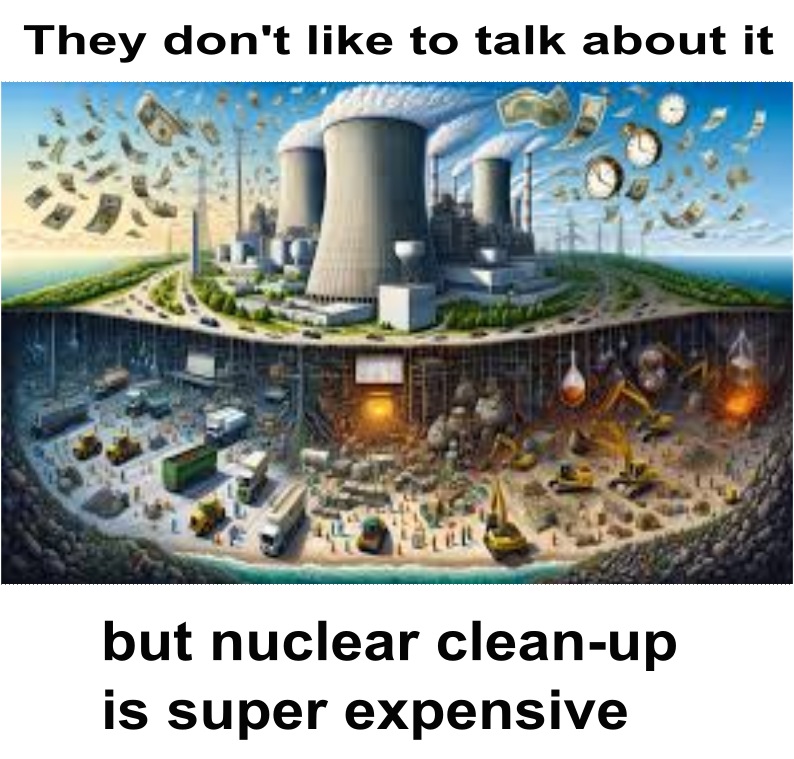
The company booked an extraordinary loss of 903 billion yen, as it prepares for the removal of nuclear fuel debris
August 1, 2025 (Mainichi Japan), https://mainichi.jp/english/articles/20250801/p2g/00m/0bu/008000c
TOKYO (Kyodo) — Tokyo Electric Power Company Holdings Inc. said Thursday it posted a net loss of 857.69 billion yen ($5.8 billion) for the April-June period, pressured by a special loss related to decommissioning work at its Fukushima Daiichi nuclear power plant.
The second largest quarterly loss since the 2011 nuclear crisis is a sharp deterioration from a profit of 79.24 billion yen in the same period a year earlier.
Operating profit rose 2.9 percent to 64.70 billion yen in the quarter on sales of 1.43 trillion yen, down 4.5 percent.
The company booked an extraordinary loss of 903 billion yen, as it prepares for the removal of nuclear fuel debris, considered the most challenging phase of the decommissioning work.
“We are not expecting any big spending over the next three years and (the special loss) won’t be a problem for our decommissioning work,” TEPCO vice president Hiroyuki Yamaguchi said at a press conference.
TEPCO said Tuesday the full-scale removal of melted fuel debris, initially set for the early 2030s, will be delayed to fiscal 2037 or later, raising concerns that its target of completing the work to scrap the power plant by 2051 will become increasingly difficult to meet.
The company said it has about 700 billion yen earmarked for future demolition work.
Energy firm newcleo will suspend its programme to develop lead-cooled fast reactors (LFR) in Britain.
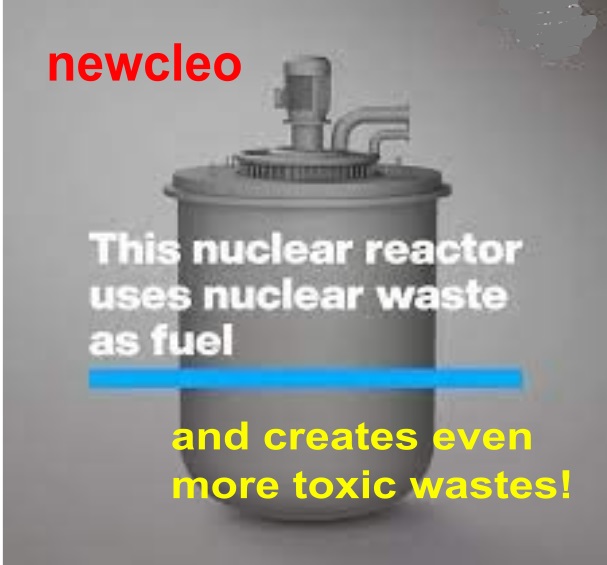
Energy firm newcleo said on Wednesday it would suspend its programme to
develop lead-cooled fast reactors (LFR) in Britain and substantially wind
down its UK activities due to the lack of support and funding from the
government.
LFRs are a type of advanced nuclear reactor technology which
are smaller and more efficient than conventional nuclear reactors and can
be built in factories and assembled on site to provide heat for industrial
processes and hydrogen production.
The firm, established in 2021 and
headquartered in Britain, said it had planned to develop up to four such
reactors in the UK, producing a total of 800 megawatts, enough to power
around 1.6 million homes, and representing around 4 billion pounds ($5
billion) of investment.
The company said it had engaged with successive UK
governments on access to the country’s stock of stored plutonium which it
had planned to recycle for use in the reactors. “Sadly, despite many
attempts to engage with political stakeholders, the UK government has
decided to not make its plutonium available for the foreseeable future and
to lend its political support and considerable funding to other
technologies,” Stefano Buono, founder and CEO of newcleo, said in a
statement.
In addition, support and funding have been made available to
other small modular reactor technologies but they have not been forthcoming
for LFR developers such as newcleo in Britain, the firm said. Instead, it
will focus on other important markets. In Slovakia, newcleo said it had
created a joint venture with state-owned nuclear company JAVYS to build up
to four LFRs powered by the country’s spent nuclear fuel stocks, which
has received endorsement from government officials. In June, an agreement
with the Lithuanian government was signed based on a similar strategy.
Reuters 30th July 2025, https://www.reuters.com/business/energy/energy-firm-newcleo-says-it-will-suspend-uk-lead-cooled-fast-reactor-development-2025-07-30/
Never before has a US leader chosen to engage in nuclear brinkmanship of this kind
US president brazenly climbs first rung of nuclear escalation
ladder, but few are panicking.
Telegraph 1st Aug 2025, https://www.telegraph.co.uk/world-news/2025/08/01/trumps-reckless-nuclear-performance-high-stakes-low-cost/
Not With a Bang, but With a Truth Social Post
The president is rattling a nuclear saber as a distraction.
The Atlantic. By Tom Nichols, August 1, 2025
Donald Trump, beset by a week of bad news, has decided to rattle the most dangerous saber of all. In a post today on his Truth Social site, the president claimed that in response to recent remarks by former Russian President Dmitri Medvedev, he has “ordered two Nuclear Submarines to be positioned in the appropriate regions.” (All American submarines are nuclear-powered; Trump may mean submarines armed with ballistic nuclear weapons.) “Words are very important,” Trump added, “and can often lead to unintended consequences, I hope this will not be one of those instances.”
And then, of course: “Thank you for your attention to this matter!”
Trump’s words may mean nothing. The submarines that carry America’s sea-based nuclear deterrent routinely move around the world’s oceans. Each carries up to 20 nuclear warheads, on missiles with a range of more than 4,000 miles, and so almost anywhere can be an “appropriate region.” And Trump may not even have issued such orders; normally, the Pentagon and the White House do not discuss the movements of America’s ballistic-missile………………………………………….(Subscribers only) https://www.theatlantic.com/ideas/archive/2025/08/trump-nuclear-threat/683748/
1 This Month


Tell the Ukrainian Government to Drop Prosecution of Peace Activist Yurii Sheliazhenko

Petition to revoke the licensing of the Near Surface Nuclear Disposal Facility (NSDF) at Chalk River. https://www.ourcommons.ca/petitions/en/Petition/Details?Petition=e-7247


of the week – STOP SMALL MODULAR REACTORS IN CANADA
To see nuclear-related stories in greater depth and intensity – go to https://nuclearinformation.wordpress.com
-
Archives
- March 2026 (204)
- February 2026 (268)
- January 2026 (308)
- December 2025 (358)
- November 2025 (359)
- October 2025 (376)
- September 2025 (258)
- August 2025 (319)
- July 2025 (230)
- June 2025 (348)
- May 2025 (261)
- April 2025 (305)
-
Categories
- 1
- 1 NUCLEAR ISSUES
- business and costs
- climate change
- culture and arts
- ENERGY
- environment
- health
- history
- indigenous issues
- Legal
- marketing of nuclear
- media
- opposition to nuclear
- PERSONAL STORIES
- politics
- politics international
- Religion and ethics
- safety
- secrets,lies and civil liberties
- spinbuster
- technology
- Uranium
- wastes
- weapons and war
- Women
- 2 WORLD
- ACTION
- AFRICA
- Atrocities
- AUSTRALIA
- Christina's notes
- Christina's themes
- culture and arts
- Events
- Fuk 2022
- Fuk 2023
- Fukushima 2017
- Fukushima 2018
- fukushima 2019
- Fukushima 2020
- Fukushima 2021
- general
- global warming
- Humour (God we need it)
- Nuclear
- RARE EARTHS
- Reference
- resources – print
- Resources -audiovicual
- Weekly Newsletter
- World
- World Nuclear
- YouTube
-
RSS
Entries RSS
Comments RSS
 nuclear-news