US DOGE (Department of Government Efficiency) told regulator to ‘rubber stamp’ nuclear.
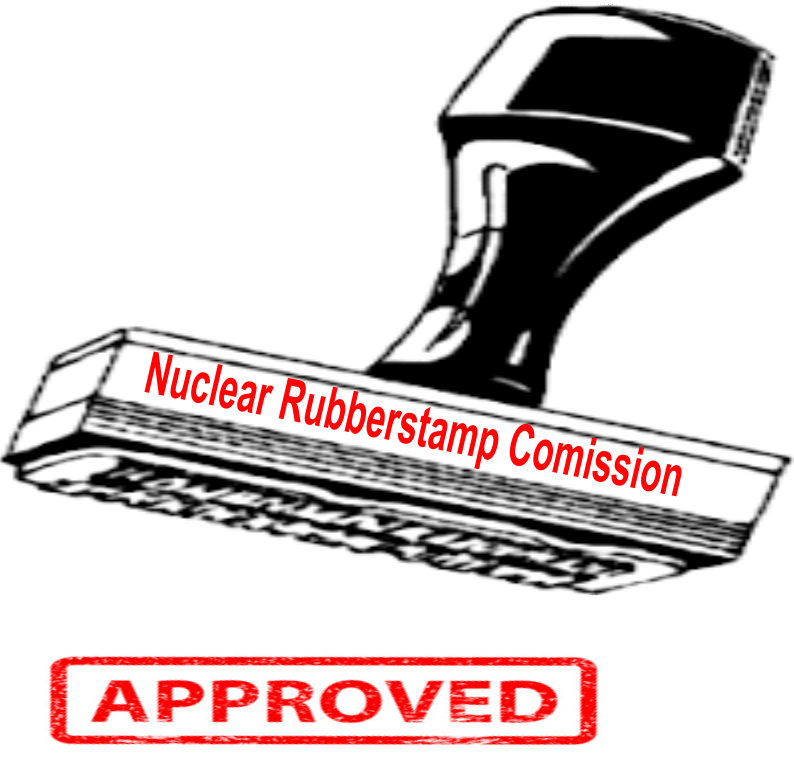
The Nuclear Regulatory Commission’s historic role of assuring safety is changing as the White House shifts some responsibility to the Department of Energy.
Politico, By Francisco “A.J.” Camacho and Peter Behr, 07/14/2025
A DOGE representative told the chair and top staff of the Nuclear Regulatory Commission that the agency will be expected to give “rubber stamp” approval to new reactors tested by the departments of Energy or Defense, according to three people with knowledge of a May meeting where the message was delivered.
The three people said Adam Blake, detailed to the NRC by the Department of Government Efficiency, described a new regulatory approach by NRC that would expedite nuclear safety assessments.
“DOE, DOD would approve stuff, and then NRC would be expected to just kind of rubber-stamp it,” said one of the three people, who were all granted anonymity because of the sensitivity of the issue.
The meeting was held after President Donald Trump signed a May 23 executive order that would supplant the NRC’s historical role as the sole agency responsible for ensuring commercial nuclear projects are safe and won’t threaten public health.
Two of the three people said Blake used the term “rubber stamp” at the meeting that included NRC Chair David Wright, senior agency staff and DOE officials. Under Trump’s executive order, the NRC could not revisit issues assessed by DOE or the Pentagon, but the people with knowledge of the meeting said Blake and DOE officials went a step further to suggest the NRC’s secondary assessment should be a foregone conclusion.
Trump’s executive order and staff departures have added to concern at the independent agency and among nuclear experts that the White House is exerting more control over the NRC’s mandate under the Atomic Energy Act of 1954 than any previous administration.
“The NRC is working quickly to implement the executive orders reforming the agency and modernizing our regulatory and licensing processes,” said NRC spokesperson Maureen Conley. “We look forward to continuing to work with the administration, DOE and DOD on future nuclear programs.”
The NRC’s Wright was not made available for an interview. POLITICO’s E&E News also reached out for comment from Blake about the “rubber stamp” remark and his role at the agency. Blake and the White House did not respond to requests for comment.
When asked about the May meeting, a DOE spokesperson referenced Trump’s executive order.
Trump has said he wants to quadruple the U.S. supply of nuclear power by 2050. Tech industry allies, Republicans in Congress and Secretary of Energy Chris Wright have been sharply critical of the NRC for what they say is an unreasonably slow approval process that has held back the nuclear industry.
Defenders of the NRC and former agency officials agree that today’s smaller reactor designs require a new approach to licensing nuclear technology. They’re also adamant that a political push to build more nuclear reactors, and fast, doesn’t change NRC requirements under the law to ensure new reactor designs are safe.
Nuclear is now in political vogue again, with bipartisan support lately driven by Silicon Valley and Trump administration plans to use nuclear power to fuel huge artificial intelligence data centers. Some clean energy supporters see new, smaller nuclear reactors as crucial sources of carbon-free power in the 2030s.
Ongoing shake-up
In the weeks following the “rubber stamp” comment, the NRC experienced significant upheaval, including the abrupt June 13 firing of Christopher Hanson, a Democratic commissioner originally appointed during Trump’s first term and the former chair under President Joe Biden.
Hanson took to social media to protest the termination, saying it was done “without cause, contrary to existing law and longstanding precedent regarding removal of independent agency appointees.”
Anna Kelly, a White House spokesperson, told POLITICO at the time that “all organizations are more effective when leaders are rowing in the same direction,” adding that Trump “reserves the right to remove employees within his own Executive Branch who exert his executive authority.”
Wright’s term on the commission expired at the end of June as his reappointment from Trump waited in a Senate committee. Wright’s appointment squeaked through the Environment and Public Works Committee on Wednesday on a party-line vote after Democrats decried what they characterized as the administration’s “hostile takeover” of the NRC.
The decision by Trump and top aides to insert DOE into the NRC’s statutory licensing process was spelled out in four executive orders Trump signed May 23 — prompting nuclear experts to warn of “serious consequences” if the NRC’s loss of independence erodes safety.
Trump ordered a “wholesale review” of the NRC’s reactor design and safety regulations, with a nine-month deadline for proposed changes and final action in another nine months. The order said commission reviews of new designs must be completed within 18 months, with shorter deadlines set as appropriate.
A committee of at least 20 people would perform the review, including representatives of DOGE and the Office of Management and Budget, headed by Russ Vought, the architect of Project 2025’s conservative blueprint for shrinking the federal government.
Leadership at Idaho National Laboratory, which has been one of the centers of DOE’s research on nuclear reactors, has said DOE can perform safety evaluations of new reactors, and in doing so move more quickly and efficiently than the NRC………………………………………………….
………………………………………….
Big tech companies such as Microsoft, Google, Amazon and Meta are also signing long-term agreements with utilities that own nuclear reactors and SMR startups for future purchases of electricity to power their AI data centers.
The NRC is assessing a plan to reopen a closed unit at the Three Mile Island nuclear plant in Pennsylvania. And last month, the agency received a combined license application from Fermi America, a Texas-based company led by former Energy Secretary Rick Perry that plans to build the nation’s largest nuclear power complex. The “HyperGrid” site is in Amarillo, Texas, near the largest U.S. assembly plant for nuclear weapons known as Pantex.
“The Chinese are building 22 nuclear reactors today to power the future of AI,” said Perry, the former Texas governor. “America has none. We’re behind, and it’s all hands on deck.”
One of the three people with knowledge of the May meeting and Blake’s “rubber stamp” remark said the influx of nuclear license applications — and from politically connected people — is adding pressure and scrutiny to the process. “This is where the rubber hits the road,” the person said.
All of this comes amid a shake-up of senior leadership at the NRC. That includes the commission’s Executive Director of Operations Mirela Gavrilas, who had worked at the agency for more than 20 years and who was effectively forced out, according to the three people.
As the Senate Environment and Public Works Committee sent Wright’s renomination to the full Senate on Wednesday, its top Democrat, Sheldon Whitehouse of Rhode Island, withdrew his support……………………………..https://www.politico.com/news/2025/07/14/doge-to-regulator-rubber-stamp-nuclear-00450658
No comments yet.
1 This Month
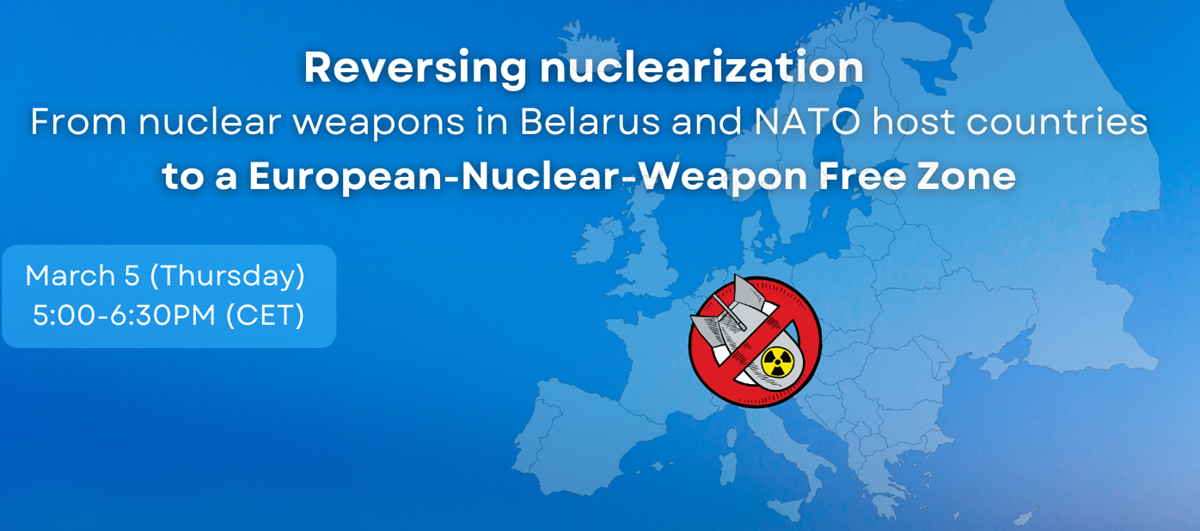
5 March -Online – Reversing nuclearization:
From nuclear weapons in Belarus and NATO host countries to a European-Nuclear-Weapon Free Zone
11am-12:30pm Eastern Time USA / 5pm-6:30pm CET

of the week – Advocating for a
nuclear free beach – https://www.samuellawrencefoundation.org/
The Samuel Lawrence Foundation advocates for a Nuclear Waste Free Beach at San Onofre, join us and take action!

10 March A LIVE WEBINAR THE REAL EFFECTS OF NUCLEAR POWER
What the Industry Isn’t Telling Us
1:00 PM Mountain, 2 pm Central, 3 pm Eastern. Live on the Keepers of the Water Facebook page

18 March Webinar @ 1 PM EST: An Assessment of SMR Projects: The Case of Canada
register for the zoom:
https://us02web.zoom.us/webinar/register/WN_o8BIIOUvQ2ONJR1nta65DQ#/registration

of the week – STOP SMALL MODULAR REACTORS IN CANADA
To see nuclear-related stories in greater depth and intensity – go to https://nuclearinformation.wordpress.com
-
Archives
- March 2026 (38)
- February 2026 (268)
- January 2026 (308)
- December 2025 (358)
- November 2025 (359)
- October 2025 (376)
- September 2025 (258)
- August 2025 (319)
- July 2025 (230)
- June 2025 (348)
- May 2025 (261)
- April 2025 (305)
-
Categories
- 1
- 1 NUCLEAR ISSUES
- business and costs
- climate change
- culture and arts
- ENERGY
- environment
- health
- history
- indigenous issues
- Legal
- marketing of nuclear
- media
- opposition to nuclear
- PERSONAL STORIES
- politics
- politics international
- Religion and ethics
- safety
- secrets,lies and civil liberties
- spinbuster
- technology
- Uranium
- wastes
- weapons and war
- Women
- 2 WORLD
- ACTION
- AFRICA
- Atrocities
- AUSTRALIA
- Christina's notes
- Christina's themes
- culture and arts
- Events
- Fuk 2022
- Fuk 2023
- Fukushima 2017
- Fukushima 2018
- fukushima 2019
- Fukushima 2020
- Fukushima 2021
- general
- global warming
- Humour (God we need it)
- Nuclear
- RARE EARTHS
- Reference
- resources – print
- Resources -audiovicual
- Weekly Newsletter
- World
- World Nuclear
- YouTube
-
RSS
Entries RSS
Comments RSS
 nuclear-news
Leave a comment