“Return to Fukushima”
by beyondnuclearinternational, https://beyondnuclearinternational.org/2025/07/06/return-to-fukushima-2/
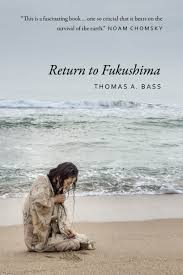
Cindy Folkers reviews Thomas Bass’s excellent new book that is both a personal journey and a stark warning
Thomas A. Bass’s “Return to Fukushima” is a poignant blend of investigative journalism, environmental critique, and personal reflection that revisits the 2011 Fukushima Daiichi nuclear power disaster. Bass brings poetic prose, incisive analysis, and a deeply ethical lens to a subject often buried under technical jargon and political spin. This book is not just a recounting of catastrophe, but a stark reminder that, even in the face of individual and community resilience, science and policy fall short for those haunted by the permanence of radioactive contamination.
At the heart of the book lies a powerful question: What does it mean to live in a nuclear exclusion zone? Bass uses this inquiry to explore the “slow violence of radiation,” the enduring trauma of environmental contamination, the cultural amnesia that allows such disasters to fade from global consciousness, and the political and corporate machinery that enables this erasure. Rather than focusing on abstract debates, he humanizes the crisis by highlighting the lived experiences of those navigating the radioactive ruins of northeastern Japan. He remarks, “The process [of decontamination] is more about managing people’s perception of radiation than it is a solution.”
Rooting the book in personal and historical context, Bass recalls the surreal normalcy of growing up in a home adorned with photographs of mushroom clouds, reflecting his father’s involvement in fabricating both hydrogen (tritium) bombs and atomic bombs. Starting from this context, Bass links Fukushima to other sites of radioactive trauma—Chernobyl, Hanford, Bikini Atoll—framing them as part of a global pattern of technological arrogance, and recognizing the long-standing connection between civilian energy and military power.
Bass first visited Fukushima in 2018 and returned in 2022. His first trip revealed a superficial recovery, what he calls a “Potemkin” reconstruction aimed at showcasing Japan’s readiness for the Tokyo Olympics. By 2022, however, a more genuine—albeit cautious—resettlement was underway, with some people returning and farms being tentatively revived. Yet, even as the physical infrastructure was repaired, the psychic and ecological wounds lingered. Bass captures this tension with journalistic clarity and literary finesse.
Bass specifically relates his own encounter with radioactivity in a contaminated town in Japan — Namie: “As I get out of the car to photograph the bowling alley with the boat leaned against it, there is a metallic taste in my mouth, a lick of gunmetal.” Such moments remind readers that radiation, while invisible, is palpably real to those living with it daily.
Throughout the book, Bass offers a scathing critique of what he terms nuclear power’s “greenwashing.” Drawing from scientists, environmentalists, and historical evidence, he dissects the industry’s claims that nuclear energy is a safe, carbon-free solution to climate change. His tone is neither hysterical nor ideological; instead, it is sharply analytical and grounded. On the empty rhetoric of clean energy, he wryly notes, “Yes, plutonium is carbon-free. It will also kill you.”
Bass goes further by examining the systemic forces that allow nuclear risk to persist without accountability, laying bare the many attempts at covering over the severity of the ongoing nuclear catastrophe, including official lies about radioisotope content of contaminated water released into the Pacific, official allowable increases in the exposure limit to the public, and government gag orders placed on scientists. He delves into misinformation, regulatory failure, and public relations strategies that obscure the true costs—human and ecological—of nuclear energy.
In one of the book’s most disturbing passages, he highlights the Japanese government’s refusal to acknowledge radiation-related illnesses: “Doctors have left the area because the government refuses to reimburse them when they list radiation sickness as the cause for nose bleeds, spontaneous abortions, and other ailments resulting from ionizing radiation. (The only acceptable diagnoses are ‘radio-phobia,’ nervousness, and stress.)”
However, “Return to Fukushima” is not merely a catalog of policy failures or even a polemic against nuclear energy. It is above all an ethical and human-centered work. The personal stories Bass shares—such as those of the Kobayashis, who collaborate with Chernobyl survivors, or citizen scientists using homemade Geiger counters—bring dignity and agency to people often ignored by mainstream narratives. “‘You measure everything and keep measuring,’ says Takenori Kobayashi… ‘That’s the most important lesson we have learned from Chernobyl.’”
Despite these attempts at self-determination, Bass’s takeaway is a chilling question: “Is this what our future looks like? A daycare center full of radiation maps and equipment for monitoring our contaminated Earth?” The line encapsulates the book’s quiet horror and urgent relevance. As nations look to nuclear power as a climate solution, Bass reminds us that technological fixes without ethical grounding can cause irreversible harm.
“Return to Fukushima” is far more than a chronicle of disaster. It is a searing indictment of technological arrogance, a meditation on environmental justice, and a terrifying look into a future we can still largely avoid. With eloquence, empathy, and unflinching honesty, Thomas A. Bass confronts the radioactive legacy of our times. As Noam Chomsky aptly states, this is a book “so crucial that it bears on the survival of the earth.” Anyone interested in energy policy, environmental ethics, or the future of our planet should read it.
No comments yet.
1 This Month

of the week – Shut Down Drone Warfare!


Tell the Ukrainian Government to Drop Prosecution of Peace Activist Yurii Sheliazhenko

Petition to revoke the licensing of the Near Surface Nuclear Disposal Facility (NSDF) at Chalk River. https://www.ourcommons.ca/petitions/en/Petition/Details?Petition=e-7247
To see nuclear-related stories in greater depth and intensity – go to https://nuclearinformation.wordpress.com
-
Archives
- April 2026 (68)
- March 2026 (251)
- February 2026 (268)
- January 2026 (308)
- December 2025 (358)
- November 2025 (359)
- October 2025 (376)
- September 2025 (257)
- August 2025 (319)
- July 2025 (230)
- June 2025 (348)
- May 2025 (261)
-
Categories
- 1
- 1 NUCLEAR ISSUES
- business and costs
- climate change
- culture and arts
- ENERGY
- environment
- health
- history
- indigenous issues
- Legal
- marketing of nuclear
- media
- opposition to nuclear
- PERSONAL STORIES
- politics
- politics international
- Religion and ethics
- safety
- secrets,lies and civil liberties
- spinbuster
- technology
- Uranium
- wastes
- weapons and war
- Women
- 2 WORLD
- ACTION
- AFRICA
- Atrocities
- AUSTRALIA
- Christina's notes
- Christina's themes
- culture and arts
- Events
- Fuk 2022
- Fuk 2023
- Fukushima 2017
- Fukushima 2018
- fukushima 2019
- Fukushima 2020
- Fukushima 2021
- general
- global warming
- Humour (God we need it)
- Nuclear
- RARE EARTHS
- Reference
- resources – print
- Resources -audiovicual
- Weekly Newsletter
- World
- World Nuclear
- YouTube
-
RSS
Entries RSS
Comments RSS
 nuclear-news
Leave a comment