“More nuclear-powered weapons testing coming up in the Arctic”.
Russia is spending vast sums of money on the war against Ukraine, but nevertheless continues its expensive nuclear weapons development program. “We can expect more weapon testing this summer and fall,” says Barents Observer Editor Thomas Nilsen.
Atle Staalesen, 3 July 2025,https://www.thebarentsobserver.com/security/more-nuclearpowered-weapons-testing-coming-up-in-the-arctic/432549
In the studio is Thomas Nilsen, Editor of the Barents Observer and expert on nuclear weapons in the Arctic. In the podcast, Thomas explains how Russia is making big efforts on the development of nuclear-powered weapons, including the Burevestnik cruise missile and the Poseidon underwater drone. He also outlines Russia’s ongoing activities at the nuclear test sites in Novaya Zemlya and the continued construction of nuclear submarines.
Nilsen says that Ukraine’s recent Operation Spider Web was a game-changing attack which ultimately could make Russia move parts of its nuclear weapons from the Air Force to the Navy.
He argues that the nuclear weapon powers should return to the table to negotiate arms reduction and arms control treaties. Nevertheless, he believes that there is no immanent danger of Russia actually using nuclear weapons. It is more about the Kremlin trying to scare the world, he says.
“The fear of nuclear weapons is a weapon in itself.”
Over several years, you have written stories about the Kola Peninsula and the situation in the region. And you have used satellite maps that shows how Russia is developing its nuclear arsenals in the north. How is Russia developing nuclear weapons in the region?
Well, what we see on satellite images is that there has been a quite extensive rebuilding of the facilities at the northern test site at Novaya Zemlya over the last two, maybe three year period.
The northern test site is the active one. It’s where Russia conducted underground nuclear testings up to 1990. But we don’t know exactly what is happening on the ground. We see the buildings. This could be also a renewing of the quite run-down Soviet facilities that they had. In a kind of the same way as we have seen at other military sites in the Russian Arctic, where the Soviet buildings at Severnaya Zemlya, Franz Josef Land and so on, has been abandoned and they have built new buildings. So it is an area quite close to the Matochin Strait. It’s called the Severnaya base, the northern base, where a lot of new buildings has appeared over the last few years.
Do you think there is a possibility that Russia will resume actual testing in Novaya Zemlya?
Well, the northern test site at Novaya Zemlya is the only place where Russia actually can conduct full-scale nuclear tests if they want. And they are capable of it. They do have tunnels that are made ready. So it is actually a political question. And two years ago, Vladimir Putin withdrew Russia from the comprehensive test ban treaty in the way that they un-ratified it. That is a political sign. It is maybe not as dramatic as it sounds. It doesn’t mean that Russia will make nuclear tests at Novaya Zemlya, but they are in a way showing the United States that they are ready to do so if needed. And this comprehensive test ban treaty that were signed back in 1996 was actually never ratified by the United States itself. So in many ways, Russia is now on the same level as the United States that they have not ratified it. And by that, they can conduct nuclear weapon tests at Novaya Zemlya if needed.
Russia has all the time since the breakup of the Soviet Union maintained a few tunnels and another test site. And in two of those tunnels, we know that they are conducting so-called subcritical tests, which is using a small portion of either uranium or plutonium and test it with conventional explosives. And then they simulate a nuclear test. This is done both for maintaining the safety of existing nuclear weapons, but also we can presume that it’s some kind of new development of computer technologies and the warheads capabilities and so on. This test site is maybe two, three kilometers from the Severnaya main settlement on the northern test site. But what is most interesting is that they are also maintaining a couple of other tunnels that we believe are designed for real nuclear weapon tests. And there has been activities at these tunnels over the last few years. We saw it also last spring and last summer.
If Vladimir Putin decides to escalate the situation, conducting nuclear tests could be one way of showing such political disagreements with the United States. But historically, Russia has not been the country that have pushed the trigger first. So I think it is unlikely, but we can no longer exclude it.
Novaya Zemlya is important for Russia. And we know that the weapons designers of Rosatom are in the process of developing new weapons. Tell us a bit about this.
Yes, that is also a special location at Novaya Zemlya. It’s a test site called Pankovo, where we have seen on satellite images over the last few years that they have expanded the activities up there, especially after 2020. The Pankovo test site is a place where they are launching the so-called Burevestnik missile, or by NATO, named the Skyfall. This is a cruise missile that is powered by a small nuclear reactor. It has a scramjet to push it up in the air, and when it is airborne, they start the reactor. And according to Russian weapon designers and according to Vladimir Putin himself, when he is talking or bragging about this weapon, this cruise missile, the Burevestnik, has unlimited range. And it is also possible to navigate it midair, meaning that it can potentially avoid anti-missile systems. This weapon is kind of interesting to follow because it’s not deployed yet, but they are doing tests. And with a small nuclear reactor up in the air, it also has some releases of radioactivity that goes directly out behind the cruise missile as it is flying.
Very little is known about how successful these tests are. We know that a couple of them have crashed in the Barents Sea. They have been lifted from the seabed and brought safely ashore again. But it is very interesting to follow the Pankovo nuclear test site. That is one of several cruise missile test sites where we believe parts or the entire combat of the Burevestnik missile is tested. Another place that we have seen, and we published articles on that in the Barents Observer, is the Nenoksa site on the coast to the White Sea. And we quite recently published brand new photos, satellite photos, that show that it has been really a lot of construction work at that site modernised over the last two years.
So let’s stick a little bit with this Nenoksa test site, which is located very close to Arkhangelsk in the Russian north. And you’ve written, as you said, a story about this, and it can be read by everyone on the Barents Observer. So tell us what is special about this Nenoksa testing site.
Nenoksa made big headlines worldwide back in July 2019. Or it was actually early August 2019, when during work of recovering one of the missiles that were launched from that area, the radioactive component of the missile exploded. And it led to a release of radioactivity. So isotopes were blowing towards the city of Severodvinsk, which is some 30 kilometres to the east of Nenoksa. And it was not very high levels, but it lasted for about half an hour, with several isotopes measured in the town of Severodvinsk. And we learned after a few days that five of the experts in the Rosatom Development Division of the Burevestnik missile and the reactor were killed of radioactive sicknesses in that explosion. So it is a very serious area. And the big difference here between Nenoksa and Pankovo site on the Novaya Zemlya is that Nenoksa is close to densely populated areas. Severodvinsk with more than 200,000 inhabitants, and not far away is also the city of Arkhangelsk with 300,000 people. So there is actually more than half a million people living in an area where Russia conducts testing of reactor-powered weapons that both have experienced accidents and are releasing radioactivity as they are testing it. And these new satellite images are a sign that Russia plans to resume the Burevestnik testing at Nenoksa, and that is worrying. First of all for the population of northern Russia, but also for Russia’s neighbors in the north, Finland and us in Norway.
Nuclear-powered cruise missile is indeed a scary thought, but there are also other weapons under development. And you have also written a story about the Poseidon, which is an underwater drone capable of carrying nuclear weapons. Tell us about the Poseidon, please.
The Poseidon is a weapon we know much less about than the Burevestnik, quite naturally because it’s tested and developed for underwater warfare. But it’s also one of the weapons that were bragged about by Vladimir Putin when he showed Russia’s plans for new nuclear weapon delivery systems in his annual speech to the public a few years ago.
The Poseidon in basic is also powered by a small nuclear reactor that is giving it a quite long range. We don’t know how long, but potentially this drone that is more than 20 meters long and can navigate across the Atlantic. So it’s an intercontinental underwater weapon. And the idea with the weapon is to dive deeper than normal submarines can sail, which means also that it’s much more difficult for the enemy, in this case NATO, to stop the weapon as it is launched. So it is a deterrence weapon for Russia. In case Russia is taken out in a nuclear war, they will always have this weapon to retaliate on Europe or the United States.
The weapon is carried by a submarine that is called Belgorod. It is a redesigned former Oscar-class submarine, and this submarine brings the torpedo or underwater drone, the Poseidon, out in open water from where it is launched. We don’t know where this is happening. We see that the submarine is sailing out of Severodvinsk. We can see that on social media channels and photos and videos that are published in this town. But we know it’s sailing north. If the testing takes place in the White Sea area, the areas where other weapons are tested, submarine weapons are tested, or if it takes place in the eastern part of the Barents Sea or even in the more shallow southern part of the Kara Sea. We don’t know. But we know that they are testing it, and they haven’t yet deployed the weapon. They have developed a special class of submarines that one day will carry this weapon. It’s called the Khabarovsk submarines.
They started building them back in 2014, according to Russian sources. But these submarines are not yet put on the water, and they are not even rolled out of the ship hulls at the Sevmash yard in Severodvinsk. So we don’t know how far they have come in developing the Poseidon nuclear drone, but they are working on it, and that is a concern. It’s a kind of both a concern, of course, because it’s a very terrifying weapon, but it is also a concern because it will cause releases of radioactivity to the marine environment during development and testing.
Talking about submarines, which is indeed a very important part of Russian armed forces, and they are based – many of them at least – in the Kola Peninsula, not so many kilometers away from where we are sitting here today. But Russia is spending tremendous resources now on the war in Ukraine. Does really Russia have the capacity to follow up Vladimir Putin’s ambitions to build more nuclear submarines?
This is a key question when analyzing Russia’s military structures nowadays, and the short answer is yes, they are giving priority to building new submarines and new surface warships. But to focus on the submarines, they have the new fourth-generation submarines, both of the multipurpose class, the Yasen class, and the strategic submarines, the ballistic missile submarines of the Borey-A class. And, well, they are delayed according to the original plans, but they are rolling out approximately one of each every year, one Borey-A class ballistic missile submarine and one Yasen class submarines. And these are tremendously expensive weapons. They are high-tech technology, and they are kind of the best submarines that Soviet Union and Russia have ever built. They are sailing quietly, and they are armed with what we could call post-Soviet developed cruise missiles and ballistic missiles. The Borey class with the Bulava missiles, and the Yasen class with the Kalibr missile, the Tsirkon missile, and probably the Tsirkon missile is the one we should keep a special eye on because this is a missile that in case it is needed can be armed with a nuclear warhead. And it is also a missile that has a very long range. And the worrying part here is that this missile, when it has been tested, it has been launched from sea, flying over land and hitting targets in the sea. So the Yasen class nuclear-powered submarines actually have weapons that can be launched from Russia’s home waters in the Barents Sea and flying over northern Scandinavia and hitting targets in the North Atlantic, mainly the northern part of the Norwegian Sea. And that is Russia’s planning for expanding a kind of the buffer zone in case they need to protect the ballistic missile submarines. And for now, there are three Yasen class submarines based with the Northern Fleet, all of them in Zapadnaya Litsa, which is 65 kilometers from the border with Norway on the coast to the Barents Sea. And Russia has two Borei-A class submarines with the Northern Fleet based in Gadzhievo. And those are, of course, the ones that really are armed with nuclear warheads, four to six warheads on each of the 16 missiles in each of those submarines.
Can we expect testing of these weapons this summer, this fall? It’s quite expensive as well to do testing, isn’t it?
Testing is expensive, but it is highly needed. And Russia, like most other navies, before commissioning a warship, either it’s a submarine or a surface warship, they have to prove that the weapon systems on board actually work. And both for the latest Borei-A class submarine, the K555 Knyaz-Pozharsky, and for the latest Yasen class submarine, the Arkhangelsk, they need to conduct more testing of the weapons. The Borei-A class, we believed it was out over the last year and trying to test the Bulava, but we haven’t seen any actual reports of successful testings. And before transferring this vessel from the naval yard in Sevmash, Severodvinsk, to the Northern Fleet where it’s going to be based, they need to do a test. And this test, I’m pretty sure, will come during summer or autumn 2025. For the Yasen class submarine, Putin has been bragging about the options of launching a Tsirkon missile, that this submarine is specially designed to carry the Tsirkon missile. And when the chief, the dictator himself, says that it works, well, then the Navy and the weapon designers have to prove that it actually does. So we will see also tests of the Tsirkon missile in the near future in our northern maritime areas, either that is the White Sea or the Barents Sea.
So we see that Russia is building new submarines, building more submarines able to carry nuclear weapons. Does that mean that we will see more also nuclear weapons deployed in the Russian Navy and also in the Russian North?
We don’t know. There are different scenarios here. First of all, it is important to underline that although there hasn’t been any inspections by the United States to see if Russia fulfills the limits, the maximum limits that are set in the new START treaty on the amount of nuclear weapons on ballistic missile submarines, all intelligence reports that we see in Europe and in the United States tells that Russia is not basing more nuclear weapons than those 1,750 warheads that are in the triad, that’s not only submarines, it’s also the Air Force and on silo-based ballistic missiles. So we don’t think that Russia has more weapons than the limits in the START agreement. But on the other side, and this is the big question we don’t have insight to, that is how many tactical nuclear weapons are on storage at the naval bases in the Russian North and how many tactical nuclear weapons are potentially already on board the multipurpose submarines of the Yasen class. We know that they can carry it, but we don’t know actually if they are armed when they are on board or if they at all are placed on board the ships or if they are just at the naval bases in storages ready to be placed on board. And this is one of the big problems with the new START treaty is that it does not cover tactical nuclear weapon, it only focuses on the ballistic missile submarines and the strategic nuclear weapons.
The START treaty obviously is important both for Russia and for the United States. It expires, as you said, next year. But what about other countries? What is their role in this picture?
Nuclear weapons are making headlines worldwide nowadays. We were a bit scared when we saw the news about India and Pakistan and the near war situation up in Kashmir that could have triggered a war between two nuclear weapon states. Luckily, it did not. But one of the main points for the United States when they are now talking about the new START treaty and an option to prolong it or to renew it or to replace it with another treaty on strategic nuclear weapons.
And here the United States has a very good point, is that this is a bilateral treaty between Russia and the United States. And the United States says that they need to include China in this treaty as well. And up till quite recently, China was a nuclear weapon power state, but it did not have that many warheads, maybe only two, three hundred warheads, which is comparable with what the United Kingdom and France have. It’s a scary many, but it’s not on the same level as Russia and the United States. But in recent years, Beijing has expanded its nuclear arsenal and is building new silos and also the number of nuclear warheads is increasing. So China is a country to take a closer look at. And if there should be a new arms treaty regulating the number of warheads in each country, it is a very good idea to also include China into this treaty. But so far that has not happened.
I think the main focus now will be to maybe expand the time horizon for the existing START treaty, maybe with one year, maybe with two years, until a new, more global posture on arms reduction treaties can be signed. Meanwhile, nuclear weapons are also in discussions in Europe. It was up and at debate on the NATO summit in Hague last week. And the United Kingdom has announced that they will buy F-35 fighter jets that are capable of carrying tactical nuclear weapons. We know that France is very relying on their ballistic missile submarines and so on. So I think really it is important to bring back the nuclear weapon powers to the table, just like it was in the end of the Cold War, you know, when Mikhail Gorbachev and Ronald Reagan met in 1986 in Reykjavik and so on. Because the worst case scenario now is that in February next year, we don’t have one single arms reduction treaty or arms control treaty that limits the number of nuclear weapons in the world, except, of course, the non-proliferation agreement. But that one is also challenged by countries like Iran, North Korea, etc.
Talking about Russia, it’s not getting easier to follow developments in the country. How do we actually manage to keep an eye on what Russia is doing with its weapons, with its nuclear weapons, with the submarines? How can we get a glimpse at least of what’s going on?
I think based on the experiences we in the Barents Observer and we as journalists have, I think it is very important to not only focus on what Russia says, but to keep a very close eye on what Russia does. And in the north, we saw it in February 2022, when the full scale invasion of Ukraine happened. It was very quiet on the strategical nuclear forces in the Russian north. They did not deploy more ballistic missile submarines to the sea and also at the storage that they have five, six of in the Kola Peninsula area or Murmansk region. It was also very, very quiet. And this is important because we are today facing a political situation in the Kremlin where the Kremlin itself is not loudly talking about its nuclear weapon arsenal. But there are proxy players like Dmitry Medvedev, the Security Council, and not least to talk about the propaganda people in different Russian TV channels that are loudly talking about using nuclear weapons. Either it is tactical nuclear weapons against some Ukrainian cities or maybe if the situation escalates that they want to use it against Europe. But this is, of course, not in Russia’s interest at all because they know that they should not trigger the first use of nuclear weapons. So it’s rhetorics. Meanwhile, we in the media will focus on what we see actually is happening. And on that side, it is nothing deeply to worry about currently.
We have talked about a lot already, but are there any other things with regard to Russia’s nuclear capabilities in the north that we should keep an eye on?
Absolutely, absolutely. And the Ukrainian spectacular attack against the Olenya Air Base on the Kola Peninsula on June 1st, and not only the Olenya Air Base, but several air bases in Russia. Here in the north it is important also to remember that the Olenya is not only an air base that is home to strategic bombers flying and launching cruise missiles against Ukraine. It is also a very important air base for Russia’s nuclear deterrence. It’s the northernmost air base they have with strategical bombers that can carry nuclear weapons in case of an escalating conflict between east and west. And this is actually first time in the world history that it has been such a massive attack and destroying strategical bombers on an air base that is important for the nuclear deterrence of the United States and Russia. So I think we can expect that there will be changes in regards to how many nuclear weapons Russia have available for the air force, the strategic bombers, and maybe that it will be an increased number of nuclear weapons on the Navy instead. That means in the north, submarines. But this remains to be seen. But absolutely, the Ukrainian drone attacks on Russia’s air forces and the bases is changing the game in many ways. One of Russia’s largest storages, central storages for nuclear weapons warheads are in the mountains not far from the Olenya Air Base. And those are the weapons that Russia might deploy if they want to escalate the situation and bring it out to the naval bases and maybe even put it on submarines that are sailing the Barents Sea. So keeping an eye on what happens in the Russian north is key to understanding Russia’s nuclear weapon thinking and doing.
These are lots of scary stuff. Do people in Europe, in the Nordic region have reason to be afraid?
I don’t think so. I think that we should keep calm. I think that the biggest threat by nuclear weapons as we see it right now is actually the scaring of people with it. Russia always having people that are making statements that, oh, if you cross the red line now, we will trigger nuclear weapons and so on. And the fear of nuclear weapons is a weapon in itself. But the use of nuclear weapon, I think, is very unrealistic and it’s suicide for any nation that tries to use it.
Iran cuts ties with UN nuclear watchdog after US and Israeli strikes

Iran’s suspension of co-operation with the IAEA follows its accusations the agency sided with Western countries and provided a justification for Israel’s airstrikes last month.
SBS News,3 July 25
Key Points
- Iran has suspended inspections by the UN nuclear watchdog.
- New legislation requires top security clearance for all access to Iranian nuclear sites by the agency.
- It comes after Iran accused the agency of providing a pretext for Israeli and US strikes on its nuclear sites.
Iran has officially suspended its cooperation with the United Nations nuclear watchdog, the International Atomic Energy Agency (IAEA), in a move that has drawn sharp international criticism.
It comes after last month’s 12-day conflict between Iran and Israel, in which Israel and the United States launched unprecedented strikes on Iran’s nuclear facilities, and tensions between Iran and the IAEA escalated.
Iran has accused the IAEA of siding with Western countries and providing a justification for Israel’s airstrikes, which began a day after the UN agency’s board voted to declare Iran in violation of obligations under the UN-backed Nuclear Non-Proliferation Treaty (NPT).
………. On 25 June, a day after a ceasefire took hold, Iran’s parliament voted overwhelmingly to suspend co-operation with the Vienna-based IAEA.
Iranian President Masoud Pezeshkian formally enacted the suspension on Wednesday, state media reported.
The law aims to “ensure full support for the inherent rights of the Islamic Republic of Iran” under the NPT, with a particular focus on uranium enrichment, according to Iranian media.
The law stipulates that any future inspection of Iran’s nuclear sites by the IAEA needs approval by Iran’s Supreme National Security Council…………………………………………………………….
Iran has accused IAEA of providing pretext for Israeli attacks
Since the Israeli and US strikes on Iranian nuclear sites, Iran has sharply criticised the IAEA, with officials saying that accusations against Iran of non-compliance with its NPT obligations provided a pretext for Israel and the US’ attacks.
Senior Iranian official Ali Mozaffari accused the IAEA chief of “preparing the groundwork” for Israel’s raids and called for him to be held accountable, citing “deceptive actions and fraudulent reporting”. https://www.sbs.com.au/news/article/iran-cuts-ties-with-un-nuclear-watchdog-us-israeli-strikes/r5j9kqdve
Palantir’s Shadow War On Iran

July 2, 2025, Kit Klarenberg, https://www.kitklarenberg.com/p/palantirs-shadow-war-on-iran
As the dust settles on the “12 Day War”, it is ever-clearer that the conflict was a crushing defeat for Israel and the US. In retrospect, the Zionist entity’s sole success was a wave of assassinations in the conflict’s first hours. A fawning June 19th Financial Times report hinted cutting-edge technology drawing together diverse data and intelligence sources was responsible. This raises the obvious question of whether Tel Aviv was assisted in its murderous spree by notorious private spying giant Palantir.
An avowedly pro-Israel tech giant founded by Donald Trump confidante and ardent Zionist Peter Thiel, which reportedly provides artificial intelligence tech supporting Tel Aviv’s genocide in Gaza, Palantir’s tendrils extend typically unseen into almost every conceivable sphere of public and private life across the West. Moreover, the firm – launched with seed funding from CIA venture capital wing In-Q-Tel – has long-played a pivotal but barely acknowledged role in the International Atomic Energy Agency’s monitoring of Tehran’s nuclear research.
The interpretation Palantir was one way or another involved in Israel’s illegal “preemptive” war of aggression against Tehran is amply reinforced by the release of sensitive Israeli documents by Iran’s intelligence ministry. These files indicate the IAEA previously provided Israeli intelligence with the names of several Iranian nuclear scientists, who were subsequently assassinated. Additionally, current Association chief Rafael Grossi enjoys a close, long-running, clandestine relationship with Israeli officials. Subsequent disclosures could expose the IAEA’s dark alliance with Palantir.
‘Fishing Expedition’
In July 2015, the Obama administration inked the Joint Comprehensive Plan of Action with Tehran. Under its auspices, in return for sanctions relief, the IAEA was granted unimpeded access to Iran’s nuclear facilities, to ensure the Islamic Republic was not developing nuclear weapons. Vast amounts of information on and within the sites, including surveillance camera photos, measurement data, and documents were collected along the way. The Association consistently found Iran was stringently adhering to the JCPOA’s terms.
Following Trump’s first inauguration however, the JCPOA began to come apart at the seams. In October 2017, he refused to certify Iran’s compliance with its obligations on bogus grounds, and began threatening to tear up the agreement outright and reimpose sanctions. The next March, then-IAEA director general Yukiya Amano sounded alarm over this prospect, claiming the JCPOA had produced “the world’s most robust [nuclear] verification regime” in Iran, and its cessation would represent a “great loss”. He went on to boast of how Association inspectors:
“Now spend 3,000 calendar days per year on the ground in Iran. We have installed some 2,000 tamper-proof seals on nuclear material and equipment. We have carried out more than 60 complementary accesses [unannounced inspections] and visited more than 190 buildings…We collect and analyse hundreds of thousands of images captured daily by our sophisticated surveillance cameras…about half of the total number of such images that we collect throughout the world. We collect over one million pieces of open source information each month.”
Amano added IAEA activities in Tehran were “supported by state-of-the-art technology, including data collecting and processing systems.” Unmentioned was that these innovative resources were provided by Palantir. The company’s central role in scrutinizing Iran’s nuclear compliance and intimate handshake with the IAEA was revealed two months later by Bloomberg, mere days before the Trump administration shredded the Agreement and launched a “maximum pressure” campaign against Tehran. Former US energy secretary Ernest Moniz effusively praised Palantir’s contribution:
“We have a completely unique and unparalleled intrusive verification regime that was not there before the agreement.”
A tool dubbed Mosaic served as “the analytical core” and “platform of choice” for the IAEA’s verification mission in Iran. The software helped the Association “plan and justify unscheduled probes”, collating and processing data from around 400 million “digital objects” globally, “including social media feeds and satellite photographs.” Mosaic was also charged with examining en-masse documents not only collected by the IAEA, but tens of thousands of sensitive files stolen by Mossad from Tehran.
Bloomberg quoted Ali Vaez, International Crisis Group’s Iran Project director, as expressing concern about Mosaic analysing “dirty” data obtained by Mossad, “which prides itself on deception.” After all, “even a small amount of false information could trigger a flurry of unnecessary snap inspections and derail an agreement that took years to reach.” The broader the terms of Palantir’s work with the IAEA, the more the mission “appears as a fishing expedition,” Vaez fretted, suggesting Iran could become less willing “to open its doors to inspectors.”
Vaez’s comments were eerily prophetic. Recent disclosures of intensive collusion between the IAEA and Zionist entity authorities, and the resultant prospect Association inspections assisted Israeli and US attacks on Tehran, prompted Iranian lawmakers to unanimously pass legislation indefinitely suspending cooperation with the Association on June 25th. It is unlikely IAEA inspectors will ever be permitted to tread on the Islamic Republic’s territory again. But Bloomberg highlighted a number of other anxieties that have only gained in gravity in light of recent events.
‘False Assumption’
For one, the outlet recorded how Palantir’s IAEA role granted the company “access to information that governments don’t,” while questioning whether “an international agency known for its independence” could truly remain neutral and objective given “Thiel’s close personal ties to Trump.” Furthermore, Bloomberg noted the Association’s Palantir-provided “enhanced investigative abilities” had “raised concern that the IAEA may overstep the boundary between nuclear monitoring and intelligence-gathering,” transforming its inspectors into unwitting “potential cyber sleuths.”
Such fears were only exacerbated by Mosaic being based upon Palantir’s highly controversial “predictive-policing software”. For the IAEA, this capability turned “databases of classified information into maps” helping “inspectors visualize ties between the people, places and material involved in nuclear activities” in Tehran. The risk of innocent Iranian civilians being made targets for surveillance, harassment, or even assassination created by erroneous data being fed into and/or pumped out by Mosaic is gargantuan.
Bloomberg quoted a representative of a British company “that advises governments on verification issues” as saying “predictive-analysis” systems were extremely vulnerable to such corruption, “either by accident or design.” He noted, “you will generate a false return if you add a false assumption into the system…[and] end up convincing yourself that shadows are real.” Of course, a dangerous “false assumption” lay at the very core of the IAEA’s inspection mission in Iran – namely, that Tehran was developing nukes in the first place.
The Islamic Republic has for decades consistently denied any suggestion it harbours ambitions to possess nuclear weapons. Her denials were corroborated by a November 2007 US National Intelligence Estimate expressing “high confidence that in fall 2003, Tehran halted” any and all research into nuclear weapons. This assessment remained unchanged for several years, and was reportedly shared by Mossad. As Bloomberg recorded, come May 2018 the IAEA had “certified Iran’s work 10 times.”
In March 2025, Director of National Intelligence Tulsi Gabbard testified to Congress that Iran had not restarted the nuclear weapons program it halted in 2003. On June 17th, with the 12 Day War well-underway, IAEA chief Grossi declared “we did not have any proof of a systematic effort” by Tehran “to move into a nuclear weapon.” Yet, Israel justified its attacks based on an intelligence dossier that concluded the Islamic Republic had in fact reached the “point of no return” in acquiring nukes.
That dodgy dossier depended in no small part on the findings of a May IAEA report. The document provided no new information – its dubious charges related “to activities dating back decades” at three sites where purportedly, until the early 2000s, “undeclared nuclear material” was handled. If this report was analysed by Palantir’s “predictive-analysis” systems, it is all but inevitable false results and connections would’ve been created, in turn influencing the Zionist entity’s targets and strategy.
One of the “predictive policing” tools innovated by Palantir guiding Mosaic’s operations is Gotham, which is used by an uncertain number of Western law enforcement agencies. Leaked documents on the resource show it collects an extraordinary volume of data on entire populations – whether they are law-abiding, suspected of having committed a crime, or simply connected to individuals accused of wrongdoing. This includes sex, race, names, contact details, addresses, prior warrants, mugshots, surveillance photos, personal relationships, past and current employers, and identifying features such as tattoos.
In October 2024, a major Norwegian asset manager divested from Palantir due to the company offering “AI-based predictive policing systems”, aiding the Zionist entity’s mass surveillance of Palestinians in Gaza and the West Bank. These systems are designed “to identify individuals who are likely to launch ‘lone wolf terrorist’ attacks, facilitating their arrests preemptively before the strikes that it is projected they would carry out.” Their deployment results in countless Palestinians languishing in Israeli dungeons without charge or trial.
If Mosaic informed the Zionist entity’s strategy during the 12 Day War, that may account for why individuals with no connection whatsoever to Iran’s civilian nuclear program were directly targeted for assassination. This includes Majid Tajan Jari, a prominent professor in the field of AI locally, slain in an Israeli strike on a residential building in Tehran on June 16th. Yet, reliance on faulty or false information collated by Mosaic would simultaneously explain the conflict ending in embarrassing defeat for Israel, and victory for Tehran.
Spying on Iran: How MI6 infiltrated the IAEA
The Iranian government has alleged that the IAEA supplied the identities of its top nuclear scientists to Israeli intelligence, enabling their assassinations, and provided critical intelligence to the US and Israel on the nuclear facilities they bombed during their military assault this June.
Leaked confidential files indicate the International Atomic Energy Agency was infiltrated by a veteran British spy who has claimed credit for sanctions on Iran.
The Grayzone, Jul 02, 2025, By Kit Klarenberg, https://thegrayzone.substack.com/p/spying-on-iran-how-mi6-infiltrated?utm_source=post-email-title&publication_id=474765&post_id=167288793&utm_campaign=email-post-title&isFreemail=true&r=n09ij&triedRedirect=true&utm_medium=email
A notorious British MI6 agent infiltrated the International Atomic Energy Agency (IAEA) on London’s behalf, according to leaked documents reviewed by The Grayzone. The agent, Nicholas Langman, is a veteran intelligence operative who claims credit for helping engineer the West’s economic war on Iran.
Langman’s identity first surfaced in journalistic accounts of his role in deflecting accusations that British intelligence played a role in the death of Princess Diana. He was later accused by Greek authorities of overseeing the abduction and torture of Pakistani migrants in Athens.
In both cases, UK authorities issued censorship orders forbidding the press from publishing his name. But Greek media, which was under no such obligation, confirmed that Langman was one of the MI6 assets withdrawn from Britain’s embassy in Athens.
The Grayzone discovered the résumé of the journeyman British operative in a trove of leaked papers detailing the activities of Torchlight, a prolific British intelligence cutout. The bio of the longtime MI6 officer reveals he “led large, inter-agency teams to identify and defeat the spread of nuclear, chemical and biological weapons technology, including by innovative technical means and sanctions.”
In particular, the MI6 agent says he provided “support for the [IAEA] and Organization for the Prohibition of Chemical Weapons [OPCW] and through high level international partnerships.”
Langman’s CV credits him with playing a major role in organizing the sanctions regime on Iran by “[building] highly effective and mutually supportive relations across government and with senior US, European, Middle and Far Eastern colleagues for strategy” between 2010 and 2012. He boasts in his bio that this achievement “enabled [the] major diplomatic success of [the] Iranian nuclear and sanctions agreement.”
The influence Langman claimed to have exerted on the IAEA adds weight to Iranian allegations that the international nuclear regulation body colluded with the West and Israel to undermine its sovereignty. The Iranian government has alleged that the IAEA supplied the identities of its top nuclear scientists to Israeli intelligence, enabling their assassinations, and provided critical intelligence to the US and Israel on the nuclear facilities they bombed during their military assault this June.
This June 12, under the direction of its Secretary General Rafael Grossi, the IAEA issued a clearly politicized report recycling questionable past allegations to accuse Iran of violating the Non-Proliferation Treaty. Three days later, Israel attacked the country, assassinating nine nuclear scientists as well as numerous top military officials and hundreds of civilians.
Iranian former Vice President for Strategic Affairs Javad Zarif has since called for the IAEA’s Grossi to be sacked, accusing him of having “abetted the slaughter of innocents in the country.” This June 28, the Iranian government broke ties with the IAEA, refusing to allow its inspectors into the country.
While Iranian officials may have had no idea about the involvement of a shadowy figure like Langman in IAEA business, it would likely come as little surprise to Tehran that the supposedly multilateral agency had been compromised by a Western intelligence agency.
Langman’s name placed under official UK censorship order
In 2016, Langman was named a Companion of the Order of St Michael and St George, the same title bestowed on fictional British spy James Bond. By that point, the supposed secret agent held the dubious distinction of being publicly ‘burned’ as an MI6 operative on two separate occasions.
First, in 2001, journalist Stephen Dorril revealed that Langman had arrived in Paris weeks prior to Princess Diana’s fatal car crash in the city on August 31 1997, and was subsequently charged with conducting “information operations” to deflect widespread public speculation British intelligence was responsible for her death.
Then, in 2005, he was formally accused by Greek authorities of complicity in the abduction and torture of 28 Pakistanis in Athens. The Pakistanis, all migrant workers, were suspected of having had contact with individuals accused of perpetrating the 7/7 bombings in London, July 2005.
Brutally beaten and threatened with guns in their mouths, the victims “were convinced their interrogators were British.” When Greek media named Langman as the MI6 operative who oversaw the migrants’ torture, British news outlets universally complied with a government D-notice – an official censorship order – and kept his identity under wraps when reporting on the scandal.
London vehemently denied any British involvement in torturing the migrants, with then-Foreign Secretary Jack Straw dismissing the charge as “utter nonsense.” In January 2006 though, London admitted MI6 officers were indeed present during the Pakistanis’ torture, although officials insisted the operatives played no active part in their arrests, questioning or abuse.
Following his withdrawal from Athens, Langman returned to London to head the UK Foreign Office’s Iran Department, a shift which highlights his importance to MI6 and suggests the British government had no qualms about his allegedly brutal evidence gathering methods.
Britain’s Foreign Office collaborates closely with MI6, whose agents use it as cover just as the CIA does with State Department diplomatic postings.
MI6’s man on Iran takes credit for “maximum pressure” strategy
While leading the Foreign Office’s Iran Department from 2006 – 2008, Langman oversaw a team seeking to “develop understanding” of the Iranian government’s “nuclear program.”
It’s unclear exactly what that “understanding” entailed. But the document makes clear that Langman then “generated confidence” in that assessment among “European, US and Middle Eastern agencies” in order to “delay programme [sic] and pressurise Iran to negotiate.” The reference to “Middle Eastern agencies” strongly implied MI6 cooperation with Israel’s Mossad intelligence services.
In April 2006, Tehran announced it had successfully enriched uranium for the first time, although officials denied any intention to do so for military purposes. This development may have triggered Langman’s intervention.
The Islamic Republic has rejected any suggestion it harbors ambitions to possess nuclear weapons. Its denials were corroborated by a November 2007 US National Intelligence Estimate expressing “high confidence that in fall 2003, Tehran halted” any and all research into nuclear weapons. This assessment remained unchanged for several years, and was reportedly shared by the Mossad, despite Benjamin Netanyhau’s constant declarations that Iran was on the brink of developing a nuclear weapon.
Langman’s IAEA support work overlaps with Iran sanctions blitz
International governmental attitudes towards Iran changed abruptly between 2010 and ‘12. During this period, Western states and intergovernmental institutions initiated an array of harshly punitive measures against the country, while Israel ramped up its deadly covert operations against Iran’s nuclear scientists.
This period precisely overlapped with Langman’s tenure at the Counter-Proliferation Centre of the UK Foreign Office. His bio implies he used this position to influence the IAEA and other UN-affiliated organizations to foment a campaign of global hostility towards Iran.
In June 2010, the UN Security Council adopted Resolution 1929, which froze the Iranian Revolutionary Guard Corps’ assets, and banned overseas financial institutions from opening offices in Tehran. A month later, the Obama administration adopted the Comprehensive Iran Sanctions, Accountability, and Divestment Act. This set off a global chain of copycat sanctions by Washington’s vassals, who often imposed even more stringent measures than those levied by the UN and US.
In March 2012, the EU voted unanimously to cut Iranian banks out of the SWIFT international banking network. That October, the bloc imposed the harshest sanctions to date, restricting trade, financial services, energy and technology, along with bans on the provision of insurance to Iranian companies by European firms.
BBC reporting on the sanctions acknowledged European officials merely suspected Tehran of seeking to develop nuclear weapons, but lacked concrete proof. And behind the scenes, the MI6 operative Langman was claiming credit for helping legitimize the allegations against Iran.
Following the Western-led campaign isolation of Iran from 2010 – 2012, over its purported nuclear weapon program, the Obama administration negotiated a July 2015 agreement known as the Joint Comprehensive Plan of Action (JCPOA). Under the JCPOA’s terms, the Islamic Republic agreed to limit its nuclear research activities in return for sanctions relief. In the years that followed, the IAEA was granted virtually unlimited access to Tehran’s nuclear complexes, ostensibly to ensure the facilities were not used to develop nuclear weapons.
Along the way, IAEA inspectors collected vast amounts of information on the sites, including surveillance camera photos, measurement data, and documents. The Iranian government has since accused the Agency of furnishing the top secret profiles of its nuclear scientists to Israel. These include the godfather of Iran’s nuclear program, Mohsen Fakrizadeh, who was first publicly named in a menacing 2019 powerpoint presentation by Israeli Prime Minister Benjamin Netanyahu. The following year, the Mossad assassinated Fakrizadeh in broad daylight with a remote-controlled machine gun.
Internal IAEA documents leaked this June indicated that IAEA Secretary General Rafael Grossi has enjoyed a much closer relationship with Israeli officials than was previously known, and suggested he leveraged his cozy ties with Tel Aviv to secure his current position.
During a June 24 interview with Fox News’ war-crazed anchor Martha MacCallum, Grossi did not deny making the inflammatory claim that “900 pounds of potentially enriched uranium was taken to an ancient site near Isfahan.” Instead the IAEA director asserted, “We do not have any information on the whereabouts of this material.”
Well before Grossi rose to the top of the IAEA with Western and Israeli backing, the agency appears to have been penetrated by a British intelligence agent who took responsibility in his bio for engineering the West’s economic attack on Iran.
The IAEA has not responded to an email from The Grayzone seeking clarification on its relationship with Langman and the MI6.
Sellafield supporting Whitehaven Science Fair -(nuclear lobby infiltrates education)

We were pleased to support Whitehaven Town Council in hosting the 5th
Annual Whitehaven Science Fair, working in partnership with Nuclear Waste
Services to plan and deliver a two-day programme focused on innovation,
scientific curiosity and community engagement. The first day welcomed
primary school pupils to experience an engaging theatre-style science
demonstration, followed by interactive exhibits located in the robotics and
technology marquees. Local employers, including ourselves and Nuclear Waste
Services, presented a range of technologies and provided hands-on
activities. These included opportunities to operate robots, participate in
educational games, test coordination skills, and meet Spot-the-dog.
Sellafield Ltd 30th June 2025 https://www.gov.uk/government/news/sellafield-supporting-whitehaven-science-fair
Nuclear waste near nature reserve plan ongoing
Residents and politicians have hit out at plans to allow radioactive waste
to be disposed of at a landfill site near a nature reserve and town. The
site, on Huntsman Drive in Port Clarence, Stockton, run by Augean, already
disposes of a range of hazardous waste but requires permission to deal with
nuclear material.
Tees Valley Mayor Ben Houchen said the plans were wrong
in 2019 when they were first put to the Environment Agency (EA) and were
“still wrong now”. But Augean said risk assessments demonstrated the
proposals “would not harm people in the local area or the environment”. The
EA previously asked for more information about the plan in September 2020
and it has now opened a public consultation, which will close on 4 August.
Lord Houchen said: “We absolutely want new nuclear power and we are working
hard to deliver this – but I will not allow Teesside to be seen as a
dumping ground for the country’s waste. “I will continue to stand firmly
against any plan, and I urge everyone to make their voices heard loud and
clear in this consultation.”
BBC 1st July 2025,
https://www.bbc.co.uk/news/articles/c80pp5vl49yo
Calls for stricter rules, as nuclear industry steps up lobbying efforts
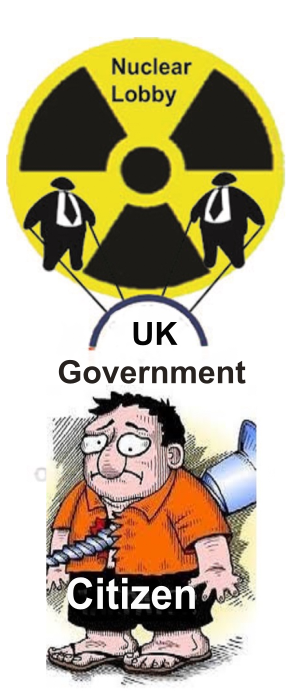
Lobbyists for nuclear power have met MSPs more than 50 times amid efforts to reverse
Scottish Government policy. That is a fivefold increase in lobbying since
2021. Caroline Rance of FoE Scotland says the worrying upsurge shows how
hungry these lobbyists are to make the public pay for expensive nuclear
power. Nuclear critic, Pete Roche, said it’s no wonder Labour MSPs make
ill-informed statements if they are only listening to one side of the
argument.
Sunday Mail 29th June 2025, https://www.pressreader.com/search?query=Power%20Hungry&in=ALL&orderBy=Relevance&searchFor=Articles
SHUT IT DOWN before it MELTS DOWN!!!
585 cracks at Scotland’s last remaining nuclear reactor
Leah Gunn Barrett, Jul 02, 2025
.Cracks in the graphite core of the Torness
nuclear reactor in East Lothian, Scotland’s last remaining nuclear power
station, have risen to 585, the highest number ever, igniting fears of a
nuclear meltdown and calls to shut it down. During a March inspection, the
585 cracks were found in the bricks in Reactor 1’s central core area,
which are key components for cooling and keeping the reactor from melting
down. The Ferret obtained documents released under FOIA from the Office for
Nuclear Regulation (ONR), that the parlous state of the graphite core posed
a “significant challenge” to keep the ageing plant operating safely
over the next five years.
Dear Scotland 1st July 2025,
https://dearscotland.substack.com/p/shut-it-down-before-it-melts-down
1 This Month
29 Jan. Thursday 7-8 p.m. Webinar – World’s Largest Nuclear Station in Port Hope, ON?
To see nuclear-related stories in greater depth and intensity – go to https://nuclearinformation.wordpress.com/

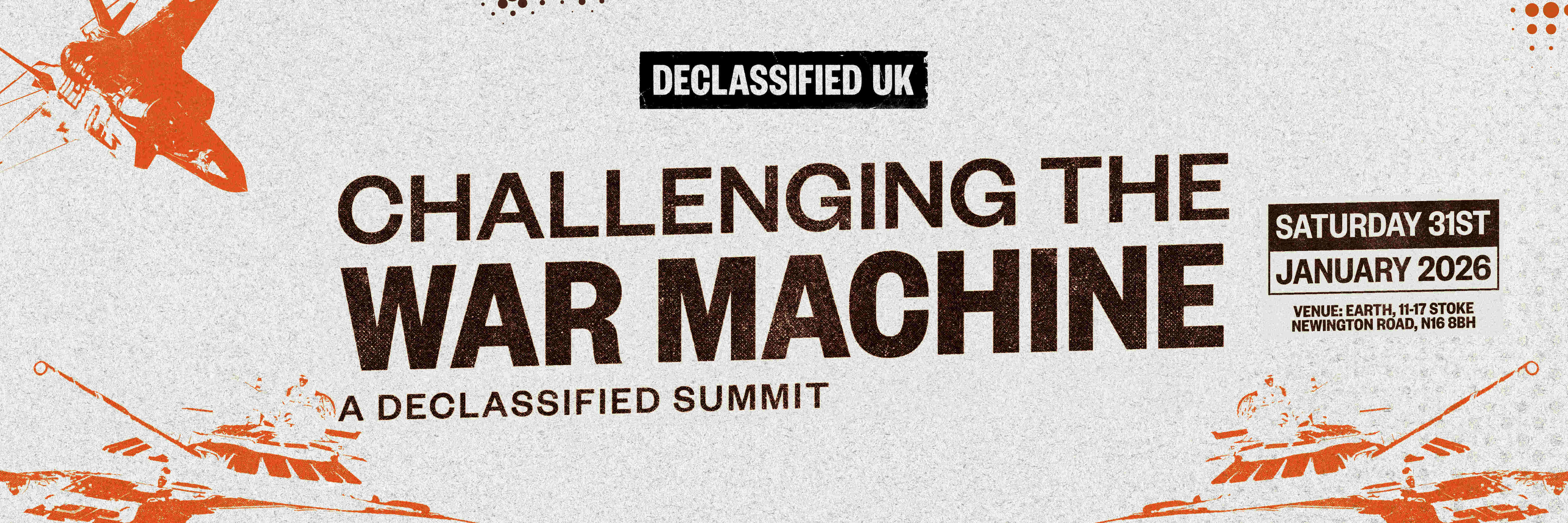
31st January – Challenging the War Machine – a DECLASSIFIED UK SUMMIT

Website of the Week
Now until to February 10, 2026 Radioactive waste storage in France: the debate is finally open! How to participate?
-
Archives
- January 2026 (288)
- December 2025 (358)
- November 2025 (359)
- October 2025 (376)
- September 2025 (258)
- August 2025 (319)
- July 2025 (230)
- June 2025 (348)
- May 2025 (261)
- April 2025 (305)
- March 2025 (319)
- February 2025 (234)
-
Categories
- 1
- 1 NUCLEAR ISSUES
- business and costs
- climate change
- culture and arts
- ENERGY
- environment
- health
- history
- indigenous issues
- Legal
- marketing of nuclear
- media
- opposition to nuclear
- PERSONAL STORIES
- politics
- politics international
- Religion and ethics
- safety
- secrets,lies and civil liberties
- spinbuster
- technology
- Uranium
- wastes
- weapons and war
- Women
- 2 WORLD
- ACTION
- AFRICA
- Atrocities
- AUSTRALIA
- Christina's notes
- Christina's themes
- culture and arts
- Events
- Fuk 2022
- Fuk 2023
- Fukushima 2017
- Fukushima 2018
- fukushima 2019
- Fukushima 2020
- Fukushima 2021
- general
- global warming
- Humour (God we need it)
- Nuclear
- RARE EARTHS
- Reference
- resources – print
- Resources -audiovicual
- Weekly Newsletter
- World
- World Nuclear
- YouTube
-
RSS
Entries RSS
Comments RSS
 nuclear-news