House Progressives Back War Powers Resolution as Trump Ratchets Up Rhetoric Against Iran
Brett Wilkins, 17 June 25, https://www.commondreams.org/news/progressives-war-powers-iran
Numerous House progressives said Tuesday that they will support legislation that would force President Donald Trump to obtain congressional permission to wage war on Iran, a development that followed Monday’s introduction of two Senate measures aimed at stopping Trump from dragging the United States into the widening Israel-Iran war.
Reps. Thomas Massie (R-Ky.) and Ro Khanna (D-Calif.) on Tuesday introduced legislation affirming the legal requirement under the War Powers Resolution of 1973—also known as the War Powers Act—for the president to notify lawmakers within 48 hours of committing troops to military action and limiting such action to 60 days, with a 30-day withdrawal period, unless Congress declares war or issues an authorization for the use of military force.
“The Constitution does not permit the executive branch to unilaterally commit an act of war against a sovereign nation that hasn’t attacked the United States,” Massie explained in a statement. “Congress has the sole power to declare war against Iran. The ongoing war between Israel and Iran is not our war. Even if it were, Congress must decide such matters according to our Constitution.”
In a post on the social media site X, Massie thanked the resolution’s co-sponsors, all of them Democrats: Don Beyer (Va.), Greg Casar (Texas), Alexandria Ocasio-Cortez (N.Y.), Lloyd Doggett (Texas), Jesús “Chuy” García (Ill.), Val Hoyle (Ore.), Pramila Jayapal (Wash.), Summer Lee (Pa.), Jim McGovern (Mass.), Ilhan Omar (Minn.), Ayanna Pressley (Mass.), Delia Ramirez (Ill.), Rashida Tlaib (Mich.), and Nydia Velazquez (N.Y.).
More lawmakers—possibly including Republicans—are expected to sign on to the measure.
“The president does not have the power to unilaterally declare war. Congressional authorization isn’t optional,” Lee said on social media. “When some profit both financially and politically from endless war, the rest of us pay the price. We can’t let them lie us into another conflict that will cost innocent lives.”
Tlaib asserted that “the American people aren’t falling for it again. We were lied to about ‘weapons of mass destruction’ in Iraq that killed millions [and] forever changed lives.”
The progressive political action committee Justice Democrats welcomed Massie’s measure: “Here’s an opportunity for bipartisanship that doesn’t sell out the American people. Every member of Congress should oppose U.S. involvement, funding, weapons, or troops fighting another endless war in the Middle East.”
The House proposal follows Monday’s introduction of a war powers resolution by Sen. Tim Kaine (D-Va.) and bill by Sen. Bernie Sanders (I-Vt.) that would prevent the Trump administration from using federal funds for a military attack on Iran without congressional approval. It also echoes a 2020 resolution proposed in the then-Democrat-controlled House that would have banned Trump from waging war on Iran without lawmakers’ approval.
Explaining her support for Massie’s legislation, Omar said, “I support this resolution because the American people do not want another war.”
Indeed, an Economist/YouGov poll published Tuesday revealed that only 16% of surveyed voters “think the U.S. should get involved in the conflict between Israel and Iran.” Just 10% of respondents who voted for former Vice President Kamala Harris last year and 19% of 2024 Trump voters want the U.S. to wage war on Iran, as do 15% of self-described Democrats, 11% of Independents, and 23% of Republicans.
A separate survey commissioned by Demand Progress and conducted by the Bullfinch Group recently found that 53% of registered voters—including 58% of Democrats, 47% of Independents, and 56% of Republicans—want Trump to “obtain congressional authorization before striking targets in other countries.”
“We applaud Rep. Massie and Sen. Kaine for introducing these resolutions to keep us out of yet another war in the Middle East,” Demand Progress senior policy adviser Cavan Kharrazian said Tuesday. “It should be in the interest of Republicans and Democrats to uphold the Constitution and prevent Israel from dragging us into a disastrous war with Iran.”
“The American people, including a clear majority of Republican voters, believe the president must obtain congressional authorization before initiating strikes against another country,” Kharrazian added. “Congress must listen to them and reassert its constitutional war powers authority by passing these resolutions.”
Israel claims it attacked Iran to stop it from obtaining nuclear weapons. However, successive U.S. intelligence assessments have concluded for decades—most recently in March—that Iran is not trying to build nukes. On Tuesday, Trump brushed off his own director of national intelligence’s findings that Iran is not close to having a nuclear bomb.
As Trump ratcheted up his cryptic threats against Tehran amid ongoing Israeli attacks on Iran and Iranian counterstrikes, anti-war voices including the National Iranian American Council (NIAC) and the peace group CodePink urged restraint and negotiation to avert escalating the Mideast crisis.
NIAC, which is circulating a petition demanding Congress act to avert U.S. intervention, is planning to hold a Tuesday afternoon No War With Iran Action Hour co-hosted with Peace Action and Action Corps.
“Trump continues to renege on his own commitments to diplomacy and an end to wars by perpetuating [Israeli Prime Minister Benjamin] Netanyahu’s war of aggression through his own vocal support and U.S. military equipment and personnel in the region,” NIAC said Tuesday. “Israel’s assaults on Tehran have killed upwards of 224 Iranians and hospitalized over 1,277 more.”
“Happening at the same time, in just the last day alone, Israeli forces have also killed at least 51 Palestinians desperate for aid and food at a World Food Program site in southern Gaza,” NIAC noted. “There is no telling how much more devastation for Iran, Israel, and the U.S. an expanded war on Iran would bring.”
“President Trump must immediately halt military aid and support for the Israel war on Iran,” the group added, “and if he will not, Congress must act within its constitutional authority to save millions of American, Iranian, Israeli, and Palestinian lives.”
Westinghouse lobbies for site in Wales as Starmer backs nuclear renaissance

Westinghouse lobbies for site in Wales as Starmer backs nuclear renaissance US nuclear giant plans to build major nuclear power plant in Wales
Matt Oliver, Industry Editor
A US energy giant is in talks with Downing Street to build a major power plant off the
coast of Wales as Sir Keir Starmer throws his support behind a nuclear
renaissance in Britain. Westinghouse, which is also pursuing a US nuclear
expansion under Donald Trump, is understood to have presented plans for at
least two large reactors at Wylfa, in the Isle of Anglesey. It is lobbying
for the Welsh site to be kept in reserve for the project – which could
power several million homes – as the Government considers whether to put
mini nuclear plants there instead.
State-owned South Korean energy giant
Kepco was previously interested in the site but is said to have dropped the
plans after settling a global legal dispute with Westinghouse. Wylfa, where
a now decommissioned nuclear plant generated power until 2015, is seen as
attractive thanks to its ample space and favourable geology. The
Westinghouse plant would be similar in size to Hinkley Point C, in
Somerset, and Sizewell C, in Suffolk, which will use technology provided by
French nuclear giant EDF and come online in the 2030s.
In discussions with government officials, Westinghouse has claimed that a plant at Wylfa using its AP1000 reactors could also come online by the mid-2030s and for just a
fraction of the cost. An offer submitted by the company in February, which
was revised just weeks before Rachel Reeves unveiled her spending review,
proposes two reactors initially, with an option for another two later.
The discussions have surfaced as officials are separately negotiating a final
deal with Rolls-Royce to build the first small modular reactors (SMRs)
after the Derby-based company won a design competition. A location has not
been chosen but Wylfa is seen as one potential site alongside
Oldbury-on-Severn in Gloucestershire. Both are government-owned and Rolls
has said either would be suitable for its needs. But Westinghouse has
argued that Wylfa – regarded by the nuclear industry as the best site in
the country – is more suited to a large project.
The company is also understood to be interested in building SMRs elsewhere in the UK including at Moorside, Cumbria, which was recently made available for development by
the Government.
Telegraph 18th June 2025, https://www.telegraph.co.uk/business/2025/06/18/us-nuclear-giant-in-talks-with-no10-build-major-power-plant/
‘We now have complete and total control of the skies over Iran’: Trump

June 17, 2025, https://www.middleeastmonitor.com/20250617-we-now-have-complete-and-total-control-of-the-skies-over-iran-trump/
US President Donald Trump claimed to have “complete and total control” of Iranian airspace Tuesday after five days of Israel’s bombing that targeted military and nuclear sites, Anadolu reports.
“We now have complete and total control of the skies over Iran,” Trump said in a social media post. “Iran had good sky trackers and other defensive equipment, and plenty of it, but it doesn’t compare to American made, conceived, and manufactured ‘stuff.’ Nobody does it better than the good ol’ USA.”
The comments come one day after Defense Secretary Pete Hegseth confirmed that the US deployed additional military assets to the Middle East, a move he and other senior Trump administration officials have maintained is “defensive” in nature amid speculation that American forces could join Israel’s military campaign.
A defense official told Anadolu on Monday that Hegseth directed the Nimitz Carrier Strike Group to the CENTCOM area of responsibility to sustain “our defensive posture and safeguard American personnel.”
Regional tensions have escalated since Friday when Israel launched airstrikes on multiple sites across Iran, including military and nuclear facilities, prompting Tehran to launch retaliatory strikes.
Israeli authorities said at least 24 people have been killed and hundreds injured since then in Iranian missile attacks. Iran said at least 224 people have been killed and more than 1,000 wounded in the Israeli assault.
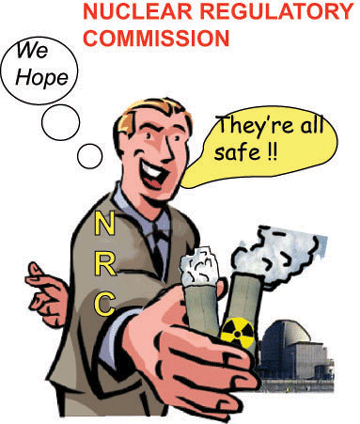
President Trump fires a member of the Nuclear Regulatory Commission
June 16, 2025, Geoff Brumfiel
President Trump has fired one of the five members of the independent
commission that oversees the nation’s nuclear reactors. Nuclear Regulatory
Commissioner Christopher T. Hanson was terminated on Friday, according to a
brief email seen by NPR from Trent Morse, the White House Deputy Director
of Presidential Personnel. The e-mail said only that Hanson’s “position as
Commissioner of the U.S. Nuclear Regulatory Commission is terminated
effective immediately.”
“All organizations are more effective when leaders
are rowing in the same direction,” White House Deputy Press Secretary Anna
Kelly told NPR via e-mail. “President Trump reserves the right to remove
employees within his own Executive Branch who exert his executive
authority.” In a statement shared with NPR, Hanson said that he was fired
“without cause,” and that he had devoted his term to “preserving the
independence, integrity and bipartisan nature of the world’s gold standard
nuclear safety institution. … I continue to have full trust and
confidence in their commitment to serve the American people by protecting
public health safety and the environment.”
Hanson was appointed to the NRC
by President Joseph Biden in 2020 and then reappointed in 2024. His current
term was set to expire in 2029, according to a bio on the NRC’s website
that has since been removed. Some observers of the nuclear industry were
sharply critical of the decision. “I think that this coupled with the other
attacks by the administration on the independence of the Nuclear Regulatory
Commission could have serious implications for nuclear safety,” says Edwin
Lyman, director of nuclear power safety at the Union of Concerned
Scientists, an environmental watchdog group. “It’s critical that the NRC
make its judgements about protecting health and safety without regard for
the financial health of the nuclear industry.”
NPR 16th June 2025, https://www.npr.org/2025/06/16/nx-s1-5435285/trump-fires-nuclear-regulatory-commission-member-nrc
The World’s Most Dangerous Man and His Enabler
And so we come to the case of Donald J. Trump. I do not consider the American president to be as dangerous as Benjamin Netanyahu. He, Trump, may be stupider than Bibi, but he is not as unhinged. I count Trump Netanyahu’s enabler, and this is the role he just played.
now we have a nuclear-armed nation of many-times-demonstrated dangerous judgments threatening “a State without nuclear weapons,” as the IAEA refers to Iran.
June 16, 2025 By Patrick Lawrence / Original to ScheerPost
It is some years since I described Benjamin Netanyahu as the most dangerous man in West Asia. That was back when we heard all about the menace of the Assad regime in Damascus, the Beelzebub otherwise known as Iran’s supreme leader, and other such unthinkably malign figures.
The Israeli prime minister just graduated. By any serious reckoning he is the world’s most dangerous man as of the shockingly reckless, altogether nihilist attacks he launched against the Islamic Republic in the early hours of Friday, June 13. I will get to Donald Trump’s place in the ratings in a sec.
In his initial announcement of Operation Rising Lion, Netanyahu asserted that Iran presents “an existential threat” to Israel and that he had no choice but to order an attack. This is nonsense, but we had better pay attention to the nonsense. With this loaded phrase, Bibi has effectively licensed the Zionist state to launch a nuclear weapon if these attacks fail to destroy all of the Islamic Republic’s nuclear programs, as seems likely. This is my read.
There is indeed an existential threat abroad as of last Friday. But it extends well beyond Iran and, indeed, West Asia. As the self-defined Jewish state’s long, dreadful record makes plain, it appears to recognize no limits to the violence it will inflict on others, its breaches of international law and the norms of the human cause, and the risks it will inflict on the world in the name of what amounts to a biblically authorized project of subjugation and domination.
To finish this point, the obsessed leader of a nuclear-armed nation never subjected to the terms of the Non–Proliferation Treaty has just attacked a non-nuclear nation it calls a mortal danger to Israel’s survival because of the nuclear weapons it does not possess. You do the math, as the expression goes.
“Operation Rising Lion,” for the record, is a reference to the Prophecy of Balaam, an infidel with a very mixed record but who impressed the ancient Israelites with his exceptional powers of divination. In the Revised Standard Version of Numbers, 23:24, we find him saying, “Behold, the people shall rise up as a great lion, and lift up himself as a young lion: he shall not lie down until he eat of the prey, and drink the blood of the slain.” So does Bibi, who has the Palestinians down as evil Amalekites straight out of the Old Testament’s mythologies, once again state his purpose.
Israel and Iran are now at war, as one Tehrani told The New York Times after she listened to explosions and watched the flicker fires out her window last Friday evening. All is changed now. Netanyahu has craved this war for decades, always justifying his lust — a clinically psychotic lust, it is right to say — by way of endless lies and an apparently bottomless paranoia. These lies and this paranoia just put the world in danger of a global confrontation. We are all Iranians now: I am perfectly willing to say this.
As to President Trump and the American role in this, there is no need any longer for any of us to deceive ourselves. I continue to insist, against many who think otherwise, that the Zionist state is to be understood as a recklessly over-indulged client and not the Übermeister of U.S. policy. It is a complex dynamic, I mean to say, but the Zionist state just got done what the imperium wants in its broader ambition to “reshape the Middle East,” as the neoconservative cliques who direct U.S. policy have long put it. As I have noted previously in this space, borrowing from spookspeak, Israel does Washington’s wet work in West Asia.
■
As many commentators have remarked in many places, the Israelis have a well-established practice of lying in matters to do with events, policies, the conduct of the Israel Defense Forces, and so on. All governments lie, as I.F. Stone famously contended on many occasions, but the Israelis are in a class of their own among the officially mendacious, it is fair to say.
The thing about the Israelis is that they continue to lie even after a given lie is exposed. Netanyahu, a ready-to-hand case in point, still goes on about how the Hamas militias who attacked southern Israel on Oct. 7, 2023, raped men and women, beheaded some babies and baked others in ovens, and so on. All of this has been exposed as false, the product of Israel’s hasbara apparatus, the constantly-in-motion machine that produces propaganda for the consumption of international audiences. But Bibi nonetheless continues to retail these smears.
And this is the case with Netanyahu’s claims that, as of last week, Iran was on the very brink of producing nuclear weapons, and it was therefore urgent to stop it.
When he announced Operation Rising Lion, Netanyahu asserted, “It could be in a year, it could be within a few months — it could be less than a year.” Read this carefully. It is sheer fear mongering, not a stated fact in it. There is no more substance to these assertions than there has been since Netanyahu first started carrying on in this fashion in the early 1990s. Anyone aware of the record knows this is merely another in the long line of statements Netanyahu has made of this kind. Bibi knows all his “coulds” and predictions are groundless — Israeli intel and the Central Intelligence Agency have told him so — and he cannot but know those paying attention know he knows this. Now this transparent lie proves enough to start a war with two sides and risk a war with many.
On June 11, two days before the Israelis launched their attacks on Iran, a social media account going by The United States of Israel posted on “X” a timeline of Netanyahu’s claims that the Islamic Republic was about to cross the threshold and become a nuclear-capable danger. There are 20 entries, beginning in 1992 and ending earlier this year. In 1996 Iran was some months to one year away from building a bomb. In 2010 it was a year away, in 2021 months to a year, and so on.
I am not familiar with The United States of Israel and cannot vouch for every entry, but of those I know, they are all accurate. I think first of 2013, when Netanyahu addressed the U.N. General Assembly on Oct.1 with that infamously ridiculous graphic that readers may recall — the bomb shaped like a bowling ball with a fuse out of the top. The forecast then, a dozen years ago, was a year to nuclear capability.
………………………………….. commentators and others now place much weight on a report from the International Atomic Energy Agency charging that Iran has been in violation of its obligations under the Nuclear Non–Proliferation Treaty.
Some facts: The agency is an organ of the United Nations and has 35 members. It convened to vote on a resolution that was advanced by the United States, Britain, France and Germany. This resolution was presented Thursday, June 12, a day before Israel began attacking Iran. It passed with a vote of 19 board members in favor, three against (Russia, China, Burkina Faso) and 11 abstentions; two board members did not vote.
These facts merit scrutiny. Why did four Western powers, which unanimously support Israel and oppose Iran, introduce this resolution when, by last Thursday, United States and European officials were already warning of an imminent Israeli attack? Why did 16 other nations — many of them non–Western, some of them (Canada, the Netherlands, South Korea, Japan) U.S. allies — decline to back the resolution? On the day of the vote, you may recall, the State Department withdrew its diplomatic staff from its embassy in Baghdad and encouraged the families of military personnel in the region to evacuate on a voluntary basis.
Iran’s foreign minister, Abbas Araghchi, immediately interpreted the IAEA’s censure as politically motivated, a preface to the Israelis’ operation the next day. Let us take care here: This view of events cannot be verified as so, but it most certainly cannot be dismissed.
The IAEA censure is contained in the four-page June 12 report. This is a highly technical document having to do with the agency’s access to nuclear-related sites in Iran and the Iranians’ official accounts of their nuclear programs in their regular contacts with the IAEA. The points of contention between the agency and the Iranians go back five years; the most recent of these dates to November 2024. Nothing happened last week or last month or the month before that to prompt the agency’s censure.
Here is a key passage in the document:
Noting with concern the Director General’s conclusion, most recently in GOV/2025/25, that these issues stem from Iran’s obligations under its NPT Safeguards Agreement and unless and until Iran assists the Agency is [sic] resolving the outstanding issues, the Agency will not be in a position to provide assurance that Iran’s nuclear programme is exclusively peaceful …
Does this read to you like a declaration that Iran is on the brink of nuclear-capability and must urgently be stopped? Or does this read as another in a long line of interim reports, the basis for further interaction of the kind that has gone on routinely for decades? Does this, or any other passage if you care to read the technical prose, support Bibi Netanyahu’s latest predictions as earlier quoted? Does it support the commentaries of David French and Bret Stephens? Put this report next to the assertions of these people and you have an across-the-board case of gross distortion.
Iran, in response to the IAEA censure, now threatens to withdraw altogether from the Non–Proliferation Treaty and pursue its nuclear capabilities in earnest. You can read this as a potential horror show or you can think about the principle of deterrence. I have been of the latter persuasion for many years in the Iranian case. Deterrence was held very high as a strategic concept during the Cold War decades. I regretted the circumstances that made deterrence necessary but saw the necessity of it. And now we have a nuclear-armed nation of many-times-demonstrated dangerous judgments threatening “a State without nuclear weapons,” as the IAEA refers to Iran. I come to the same conclusion.
Abbas Araghchi, Iran’s now-perturbed foreign minister, was due to travel to Oman Sunday, June 15, for further talks with the United States on a nuclear accord that would replace the agreement Netanyahu railed against even before it was signed and Trump abandoned. This is now off, for obvious reasons.
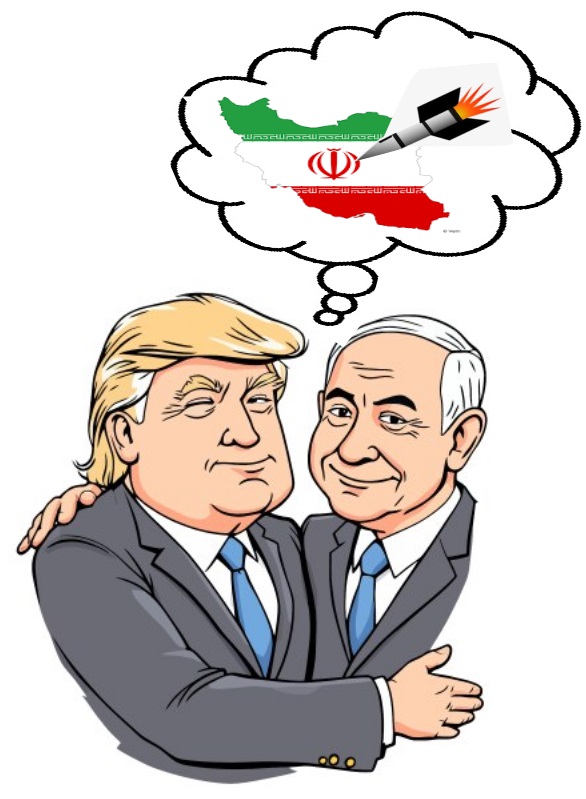
And so we come to the case of Donald J. Trump. I do not consider the American president to be as dangerous as Benjamin Netanyahu. He, Trump, may be stupider than Bibi, but he is not as unhinged. I count Trump Netanyahu’s enabler, and this is the role he just played.
Trump is as deep in the pockets of the Israel lobbies and various wealthy American supporters of the Zionist state as any other American pol, allowing for very few exceptions. But in his support of so dangerous an operation as Rising Lion, Trump may have outdone them all, it seems to me. It is one thing, condemnable enough, to back a genocide by way of limitless supplies of weapons, political support and diplomatic cover. Isn’t another to approve of aggression that carries the risk of global conflagration? The degree of cynicism strikes me as yet greater than Joe Biden’s, and I admit that is going some.
There was a day or so just before Netanyahu’s lion began to rise when Trump put Marco Rubio, his hapless secretary of state, out in front of the microphones and cameras to tell the world no, the U.S. had no prior knowledge of Israel’s plans and there were no “American airplanes” involved. It transpires that Rubio meant no jets with the “USAF” insignia painted on their fuselages. Newsweek reported the day the Israelis attacked that Israel has deployed a variety of American-made fighter jets in the Israeli inventory — F–35s, F–16s and F–15s — against the Iranians. You might ask whether this amounts to tacit consent, but don’t bother. The Israelis, ever eager to boast of America’s approval of all their malevolence, have clarified the matter.
Antiwar.com, the libertarian news site, reported June 13 that a senior Israeli official disclosed to The Jerusalem Post that the Netanyahu and Trump regimes colluded “to convince Tehran that diplomacy was still possible after Israel was ready to attack Iran.” As the Jerusalem Post reported, “The round of U.S.–Iranian nuclear negotiations scheduled for Sunday was part of a coordinated U.S.–Israeli deception aimed at lowering Iran’s guard ahead of Friday’s attack.”
Here is the able Dave DeCamp’s report in Antiwar.com and here is the Jerusalem Post’s. And here, for good measure, is how The New York Times played this story under the headline, “A Miscalculation by Iran Led to Israeli Strikes’ Extensive Toll, Officials Say.” Those foolish Iranians: They took the Americans at their word.
All this while, to complete the picture, Trump was on his Truth Social messaging platform with this kind of thing:
We remain committed to a Diplomatic Resolution to the Iran Nuclear Issue! My entire Administration has been directed to negotiate with Iran. They could be a Great Country, but they first must completely give up hopes of obtaining a Nuclear Weapon. Thank you for your attention to this matter!”
I like the flipped-off flattery, the upper-case nouns, and the exclamation points. Very Donald. So is what we read about in the above-cited publications.
I do not want to go on about how cravenly the U.S. so often conducts itself in matters of state. This has been noted often enough. But what the United States just did to Iran with the assist of its client seems to me the ne plus ultra of diplomatic betrayals. I can think of only one other case that offers a useful comparison.
That was when Vladimir Putin personally negotiated a settlement of the Ukraine crisis in its early stages. The Russian president invested heavily in the two Minsk Protocols, signed in September 2014 and February 2015, as a promising solution to the divisions evident in Ukraine after the U.S.–cultivated coup in Kiev in February 2014. He subsequently discovered neither Ukraine nor the Western powers that served as guarantors of these accords, France and Germany, ever had any intention of implementing them.
Essentially at issue in these two cases is trust and breaches thereof. A measure of trust is foundational in international relations. Without it there can be no constructive diplomacy, either between adversaries or, for that matter, among allies. Nations are that much closer to a default of hostility and potential chaos. The Europeans broke trust with the Russians when they abandoned the Minsk accords as soon as they signed them. Trump just broke trust with the Iranians. This is devastation of a kind — scorched-earth statecraft, we may as well call it.
To finish this point, do you think others do not notice this? The Chinese, to name the most critical case?
Trump and Netanyahu just executed the cheapest sort of good-cop, bad-cop routine with Tehran. It is a variant of Biden’s duplicity as he armed Israel with all it needed to proceed with its genocide in Gaza while claiming to fight “night and day” for a ceasefire. Biden betrayed the Palestinians, Trump the Iranians. They have both betrayed all of us. These are acts of desperation, in my final read. Let us not forget why this is, and in which direction history’s wheel turns. https://scheerpost.com/2025/06/16/patrick-lawrence-the-worlds-most-dangerous-man-and-his-enabler/
Alternative Defence Review
CND 23rd May 2025, https://cnduk.org/ADR/
The UK’s 2025 Strategic Defence Review comes at a moment of intensifying global conflict, escalating climate crisis and soaring UK inequality. Yet, rather than rethinking the country’s militarised foreign policy in response to these pressures, the Government proposes to dramatically increase defence spending, a move that risks worsening each of these crises.
This Alternative Defence Review challenges the dominant war narrative—cultivated by political elites, the military-industrial complex, and the mainstream media—and offers a new vision for peace, justice, and security.
It was proposed by CND in response to the RMT union’s decision to ‘… campaign with other trade unions and peace organisations to convene a labour and peace movement summit to work out the basis of a new foreign policy with the promotion of peace and social justice at its heart’. The Alternative Defence Review is intended to be a contribution towards this.
It examines how militarisation has distorted national priorities, fuelled global instability, undermined international law, harmed the environment, and diverted investment from public services and social infrastructure. It shows that increased military expenditure will be economically inefficient, environmentally destructive, and socially regressive, offering limited job creation while stifling a more sustainable and just economy. The review calls for a shift toward a significantly demilitarised defence strategy rooted in human security and common security—prioritising diplomacy, global cooperation, conflict prevention, and investment in health, education, climate resilience, social care, and the creation of well-paid, secure, unionised and socially useful jobs. It advocates for a significant reduction in military spending, an immediate halt to arms exports to countries involved in active conflict or human rights abuses (including Israel and Gulf states), and a Just Transition for defence-dependent workers and communities. This report offers a credible, democratic alternative to militarism: a sustainable economy grounded in social justice, global solidarity, and the urgent need to build peace—not war—for the 21st century.
You can download the report here.
You can order a copy of the report here.
NewsReal: Israel Attacks Iran, Seeks Regime Change. Will Trump Take US Into War?
Sott.net, 16 Jun 2025
Israel’s brazen attack against Iran on June 13th could result in the culmination of the NeoCons’ plan for the ‘New American Century’: the toppling of the last regime resisting them in the Middle East. The US and Israel would thus fully control the world’s primary ‘energy spigot’ and cement their joint role as global hegemon(s) for decades to come.
Israel intends for this ‘short war’ to last a couple of weeks, after which Iran will be ruled by a new government with a new ideology, having submitted to US-raeli domination.
Wishful thinking?
Well, it depends on what capabilities Iran has to withstand Israel’s onslaught, whether its population is psychologically committed to resisting, and whether the US will have to directly intervene to fully realize Netanyahu’s dream of deposing the Ayatollah and defeating Iran’s military.
If the latter comes about, Trump will have shot MAGA – and his devoted followers, who are extremely hostile about the US engaging in another major Middle East war – through the heart. He isn’t so psychopathic and stupid, is he? https://www.sott.net/article/500130-NewsReal-Israel-Attacks-Iran-Seeks-Regime-Change-Will-Trump-Take-US-Into-War
WHAT I HAVE BEEN TOLD IS COMING IN IRAN
The initial battle plan for a new war
Seymour Hersh, Jun 20, 2025, Seymour Hersh Substack
This is a report on what is most likely to happen in Iran, as early as this weekend, according to Israeli insiders and American officials I’ve relied upon for decades. It will entail heavy American bombing. I have vetted this report with a longtime US official in Washington, who told me that all will be “under control” if Iran’s Supreme Leader Ali Khamenei “departs.” Just how that might happen, short of his assassination, is not known. There has been a great deal of talk about American firepower and targets inside Iran, but little practical thinking, as far I can tell, about how to remove a revered religious leader with an enormous following.
I have reported from afar on the nuclear and foreign policy of Israel for decades. My 1991 book The Samson Option told the story of the making of the Israeli nuclear bomb and America’s willingness to keep the project secret. The most important unanswered question about the current situation will be the response of the world, including that of Vladimir Putin, the Russian president who has been an ally of Iran’s leaders.
The United States remains Israel’s most important ally, although many here and around the world abhor Israel’s continuing murderous war in Gaza. The Trump administration is in full support of Israel’s current plan to rid Iran of any trace of a nuclear weapons program while hoping the ayatollah-led government in Tehran will be overthrown………………………………. ………….(Subscribers only) https://seymourhersh.substack.com/p/what-i-have-been-told-is-coming-in?utm_source=post-email-title&publication_id=1377040&post_id=166335210&utm_campaign=email-post-title&isFreemail=true&r=ln98x&triedRedirect=true&utm_medium=email
After Iraq There’s No Excuse For Buying The War Lies About Iran
Caitlin Johnstone, Jun 17, 2025, https://www.caitlinjohnst.one/p/after-iraq-theres-no-excuse-for-buying?utm_source=post-email-title&publication_id=82124&post_id=166146740&utm_campaign=email-post-title&isFreemail=true&r=1ise1&triedRedirect=true&utm_medium=email
There is absolutely no excuse for buying into the war propaganda about Iran after what we all saw with Iraq.
“OMG nuclear weapons!” Shut up, idiot. If you’re a grown adult with internet access still swallowing this load of bull spunk in the year 2025 you’re either stupid or evil.
President Donald Trump is now saying he has no intention of seeking or facilitating a ceasefire with Iran, telling reporters that he’s after a “complete give-up” from Iran instead.
“I’m not too much in a mood to negotiate,” Trump said.
Asked by the press if he’s worried about US troops being targeted by Iran in the coming days, the president said “We’ll come down so hard if they do anything to our people. We’ll come down so hard. The gloves are off. I think they know not to touch our troops.”
This is a stupid, crazy lie. Iran has explicitly said it will strike US bases in the region if the US attacks Iranian territory. If you punch someone, you expect to be punched back.
If Trump orders US forces to bomb Iran, it will be because he wants to start a war and knowingly chose to do so.
One of the dumbest narratives we’re currently being fed about Iran is the claim that Israel is precision-striking high-level targets in Iran while Iran is just bombing civilians all over the place in Israel.
A casual glance at the death tolls shows this is clearly false. As of this writing the current official death count sits at 24 Israelis killed by Iran and 224 Iranians killed by Israel — most of whom are reportedly civilians. On Friday they bombed a residential building and killed 60 people, including 20 kids.
Israeli Defense Minister Israel Katz thumped his chest on Twitter about an IDF strike on an Iranian television station on Monday, saying “The Iranian regime’s propaganda and incitement broadcasting authority was attacked by the IDF after a widespread evacuation of residents in the area.”
I wonder how the western press who are currently deceiving the public to promote Israel’s information interests feel about this new rule that it’s okay to bomb media outlets if someone decides they’re propaganda?
People shouldn’t be so hard on Trump about all this. You’d probably start a war with Iran too if someone was threatening to leak your child molestation video.
The war on Iran isn’t really about nuclear weapons — if it was they would’ve kept the nuclear deal in place, which was working as intended. The Gaza holocaust isn’t really about Hamas or hostages — if it was they would’ve just targeted Hamas or negotiated a hostage deal.
It’s all lies. The war on Iran is about regional hegemony and the genocide in Gaza is about Israel’s longstanding desire to remove all Palestinians from a Palestinian territory. It’s not about self-defense, it’s about land and power, and it always has been.
This is one of the reasons antiwar people have been focusing so hard on Gaza, by the way. It wasn’t just because it’s a horrific genocide happening right in front of us, it was because it always risked blowing up into a regional war involving Israel’s western allies. We’ve been watching it expand into the West Bank, Lebanon, Yemen, Syria, and into Iran for a bit last year, and now it’s blown up into all-out war between Israel and Iran with the US poised to join in.
For 20 months I’ve been getting people asking me why I’ve been so laser-focused on Gaza while paying less attention to this or that conflict or foreign policy issue. This is why. It’s a waking nightmare in and of itself, but it’s also always been a powderkeg that could explode into something much, much worse.
Jeffrey D. Sachs: Stop Netanyahu Before He Gets Us All Killed
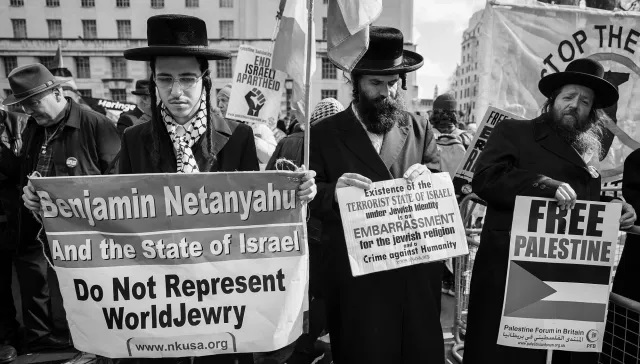
We could soon see several nuclear powers pitted against each other and dragging the world closer to nuclear annihilation.
Jeffrey D. Sachs, Sybil Fares, Jun 16, 2025, Common Dreams, https://www.commondreams.org/opinion/netanyahu-war-on-iran
For nearly 30 years, Israel’s Prime Minister Benjamin Netanyahu has driven the Middle East into war and destruction. The man is a powder keg of violence. Throughout all the wars that he has championed, Netanyahu has always dreamed of the big one: to defeat and overthrow the Iranian Government. His long-sought war, just launched, might just get us all killed in a nuclear Armageddon, unless Netanyahu is stopped.
Netanyahu’s fixation on war goes back to his extremist mentors, Ze’ev Jabotinsky, Yitzhak Shamir, and Menachem Begin. The older generation believed that Zionists should use whatever violence–wars, assassinations, terror–is needed to achieve their aims of eliminating any Palestinian claim to a homeland.
The founders of Netanyahu’s political movement, the Likud, called for exclusive Zionist control over all of what had been British Mandatory Palestine. At the start of the British Mandate in the early 1920s, the Muslim and Christian Arabs constituted roughly 87% of the population and owned ten times more land than the Jewish population. As of 1948, the Arabs still outnumbered the Jews roughly two to one. Nonetheless, the founding charter of Likud (1977) declared that “between the Sea and the Jordan there will only be Israeli sovereignty.” The now infamous chant, “from the River to the Sea,” which is characterized as anti-Semitic, turns out to be the anti-Palestinian rallying call of the Likud.
Israel’s war on Iran is the final move in a decades-old strategy. We are witnessing the culmination of decades of extremist Zionist manipulation of US foreign policy.
The challenge for Likud was how to pursue its maximalist aims despite their blatant illegality under international law and morality, both of which call for a two-state solution.
In 1996, Netanyahu and his American advisors devised a “Clean Break” strategy. They advocated that Israel would not withdraw from the Palestinian lands captured in the 1967 war in exchange for regional peace. Instead, Israel would reshape the Middle East to its liking. Crucially, the strategy envisioned the US as the main force to achieve these aims—waging wars in the region to dismantle governments opposed to Israel’s dominance over Palestine. The US was called upon to fight wars on Israel’s behalf.
The Clean Break strategy was effectively carried out by the US and Israel after 9/11. As NATO Supreme Commander General Wesley Clark revealed, soon after 9/11, the US planned to “attack and destroy the governments in seven countries in five years—starting with Iraq, then Syria, Lebanon, Libya, Somalia, Sudan, and Iran.”
The first of the wars, in early 2003, was to topple the Iraqi government. Plans for further wars were delayed as the US became mired in Iraq. Still, the US supported Sudan’s split in 2005, Israel’s invasion of Lebanon in 2006, and Ethiopia’s incursion into Somalia that same year. In 2011, the Obama administration launched CIA operation Timber Sycamore against Syria and, with the UK and France, overthrew Libya’s government through a 2011 bombing campaign. Today, these countries lie in ruins, and many are now embroiled in civil wars.
For nearly 30 years, Israel’s Prime Minister Benjamin Netanyahu has driven the Middle East into war and destruction. The man is a powder keg of violence. Throughout all the wars that he has championed, Netanyahu has always dreamed of the big one: to defeat and overthrow the Iranian Government. His long-sought war, just launched, might just get us all killed in a nuclear Armageddon, unless Netanyahu is stopped.
Netanyahu’s fixation on war goes back to his extremist mentors, Ze’ev Jabotinsky, Yitzhak Shamir, and Menachem Begin. The older generation believed that Zionists should use whatever violence–wars, assassinations, terror–is needed to achieve their aims of eliminating any Palestinian claim to a homeland.
The founders of Netanyahu’s political movement, the Likud, called for exclusive Zionist control over all of what had been British Mandatory Palestine. At the start of the British Mandate in the early 1920s, the Muslim and Christian Arabs constituted roughly 87% of the population and owned ten times more land than the Jewish population. As of 1948, the Arabs still outnumbered the Jews roughly two to one. Nonetheless, the founding charter of Likud (1977) declared that “between the Sea and the Jordan there will only be Israeli sovereignty.” The now infamous chant, “from the River to the Sea,” which is characterized as anti-Semitic, turns out to be the anti-Palestinian rallying call of the Likud.
Israel’s war on Iran is the final move in a decades-old strategy. We are witnessing the culmination of decades of extremist Zionist manipulation of US foreign policy.
The challenge for Likud was how to pursue its maximalist aims despite their blatant illegality under international law and morality, both of which call for a two-state solution.
In 1996, Netanyahu and his American advisors devised a “Clean Break” strategy. They advocated that Israel would not withdraw from the Palestinian lands captured in the 1967 war in exchange for regional peace. Instead, Israel would reshape the Middle East to its liking. Crucially, the strategy envisioned the US as the main force to achieve these aims—waging wars in the region to dismantle governments opposed to Israel’s dominance over Palestine. The US was called upon to fight wars on Israel’s behalf.
The Clean Break strategy was effectively carried out by the US and Israel after 9/11. As NATO Supreme Commander General Wesley Clark revealed, soon after 9/11, the US planned to “attack and destroy the governments in seven countries in five years—starting with Iraq, then Syria, Lebanon, Libya, Somalia, Sudan, and Iran.”
The first of the wars, in early 2003, was to topple the Iraqi government. Plans for further wars were delayed as the US became mired in Iraq. Still, the US supported Sudan’s split in 2005, Israel’s invasion of Lebanon in 2006, and Ethiopia’s incursion into Somalia that same year. In 2011, the Obama administration launched CIA operation Timber Sycamore against Syria and, with the UK and France, overthrew Libya’s government through a 2011 bombing campaign. Today, these countries lie in ruins, and many are now embroiled in civil wars.
Netanyahu was a cheerleader of these wars of choice–either in public or behind the scenes–together with his neocon allies in the U.S. Government including Paul Wolfowitz, Douglas Feith, Victoria Nuland, Hillary Clinton, Joe Biden, Richard Perle, Elliott Abrams, and others.
Testifying in the U.S. Congress in 2002, Netanyahu pitched for the disastrous war in Iraq, declaring “If you take out Saddam, Saddam’s regime, I guarantee you that it will have enormous positive reverberations on the region.” He continued, “And I think that people sitting right next door in Iran, young people, and many others, will say the time of such regimes, of such despots is gone.” He also falsely told Congress, “There is no question whatsoever that Saddam is seeking, is working, is advancing towards to the development of nuclear weapons.”
The slogan to remake a “New Middle East” provides the slogan for these wars. Initially stated in 1996 through “Clean Break,” it was popularized by Secretary Condoleezza Rice in 2006. As Israel was brutally bombarding Lebanon, Rice stated:
“What we’re seeing here, in a sense, is the growing — the birth pangs of a new Middle East and whatever we do we have to be certain that we’re pushing forward to the new Middle East not going back to the old one.”
In September 2023, Netanyahu presented at UN General Assembly a map of the “New Middle East” completely erasing a Palestinian state. In September 2024, he elaborated on this plan by showing two maps: one part of the Middle East a “blessing,” and the other–including Lebanon, Syria, Iraq, and Iran–a curse, as he advocated regime change in the latter countries.
The premise of Israel’s attack on Iran is the claim that Iran is on the verge of acquiring nuclear weapons. Such a claim is fatuous since Iran has repeatedly called for negotiations precisely to remove the nuclear option in return for an end to the decades of US sanctions.
Since 1992, Netanyahu and his supporters have claimed that Iran will become a nuclear power “in a few years.” In 1995, Israeli officials and their US backers declared a 5-year timeline. In 2003, Israel’s Director of Military Intelligence said that Iran will be a nuclear power “by the summer of 2004.” In 2005, the head of Mossad said that Iran could build the bomb in less than 3 years. In 2012, Netanyahu claimed at the United Nations that “it’s only a few months, possibly a few weeks before they get enough enriched uranium for the first bomb.” And on and on.
This 30-year-plus pattern of shifting deadlines has marked a deliberate strategy, not a failure in prophecy. The claims are propaganda; there is always an “existential threat.” More importantly, there is Netanyahu’s phony claim that negotiations with Iran are useless.
Iran has repeatedly said that it does not want a nuclear weapon and that it has long been prepared to negotiate. In October 2003, Supreme Leader Ayatollah Ali Khamenei issued a fatwa forbidding the production and use of nuclear arms—a ruling later officially cited by Iran at an IAEA meeting in Vienna in August 2005 and referenced since as a religious and legal barrier to pursuing nuclear weapons.
Even for those skeptical of Iran’s intentions, Iran has consistently advocated for a negotiated agreement supported by independent international verification. In contrast, the Zionist lobby has opposed any such settlements, urging the US to maintain sanctions and reject deals that would allow strict IAEA monitoring in exchange for lifting sanctions.
In 2016, the Obama Administration, together with the UK, France, Germany, China, and Russia, reached the Joint Comprehensive Plan of Action (JCPOA) with Iran—a landmark agreement to strictly monitor Iran’s nuclear program in exchange for sanctions relief. Yet, under relentless pressure from Netanyahu and the Zionist lobby, President Trump withdrew from the deal in 2018. Predictably, when Iran responded by expanding its uranium enrichment, it was blamed for violating an agreement that the US itself had abandoned. The double-standard and propaganda is hard to miss.
On April 11, 2021, Israel’s Mossad attacked Iran’s nuclear facilities in Natanz. Following the attack, on April 16, Iran announced that it would increase its uranium enrichment further, as bargaining leverage, while repeatedly appealing for renewed negotiations on a deal like the JCPOA. The Biden Administration rejected all such negotiations.
At the start of his second term, Trump agreed to open a new negotiation with Iran. Iran pledged to renounce nuclear arms and to be subject to IAEA inspections but reserved the right to enrich uranium for civilian purposes. The Trump Administration appeared to agree to this point but then reversed itself. Since then, there have been five rounds of negotiations, with both sides reporting progress on each occasion.
The sixth round was ostensibly to take place on Sunday, June 15. Instead, Israel launched a preemptive war on Iran on June 12. Trump confirmed that the US knew of the attack in advance, even as the administration was speaking publicly of the upcoming negotiations.
Israel’s attack was made not only in the midst of negotiations that were making progress, but days before a scheduled UN Conference on Palestine that would have advanced the cause of the two-state solution. That conference has now been postponed.
Israel’s attack on Iran now threatens to escalate to a full-fledged war that draws in the US and Europe on the side of Israel and Russia and perhaps Pakistan on the side of Iran. We could soon see several nuclear powers pitted against each other and dragging the world closer to nuclear annihilation. The Doomsday Clock is at 89 seconds to midnight, the closest to nuclear Armageddon since the clock was launched in 1947.
Over the past 30 years, Netanyahu and his US backers have destroyed or destabilized a 4,000-km swath of countries stretching across North Africa, the Horn of Africa, the Eastern Mediterranean, and Western Asia. Their aim has been to block a Palestinian State by overthrowing governments supporting the Palestinian cause. The world deserves better than this extremism. More than 170 countries in the UN have called for the two-state solution and regional stability. That makes more sense than Israel bringing the world to the brink of nuclear Armageddon in pursuit of its illegal and extremist aims.
Hidden History: How Israel Acquired Nukes
We have the capability to take the world down with us. And I can assure you that that will happen before Israel goes under.”
Kit Klarenberg, Jun 14, 2025, https://www.kitklarenberg.com/p/hidden-history-how-israel-acquired
On June 13th, the Zionist entity carried out a wide-ranging, unprovoked, criminal military strike on Iran, purportedly to dent the Islamic Republic’s quest to develop nuclear weapons. Tehran has consistently repudiated any suggestion it harbours such ambitions. A November 2007 US National Intelligence Estimate concurred, expressing “high confidence that in fall 2003,” the country “halted” any and all research in the field. This assessment remained unchanged for several years subsequently, and was reportedly shared by Mossad.
By contrast, Benjamin Netanyahu has for decades declared almost annually Iran is mere years away from becoming a nuclear power, urging military action as a result. The longtime Israeli leader’s anxieties are sickly ironic, given Tel Aviv’s own nuclear weapons program is the worst kept ‘secret’ in international affairs. Over many years, multiple entity officials and prominent figures have effectively – or even directly – admitted this monstrous capacity. Moreover, Israel is avowedly committed to the ‘Samson Option’.

Under its horrifying auspices, if the entity feels sufficiently threatened, it reserves the right to carry out preemptive nuclear strikes not merely on regional adversaries, but its Western sponsors into the bargain. As Dutch-born Israeli military theorist Martin van Creveld boasted in September 2003:
“We possess several hundred atomic warheads and rockets and can launch them at targets in all directions, perhaps even at Rome. Most European capitals are targets…We have the capability to take the world down with us. And I can assure you that that will happen before Israel goes under.”
Despite such flagrant disclosures, the Zionist entity rigidly sticks to a policy of “deliberate ambiguity”, refusing to formally confirm or deny it possesses nuclear weapons. When one of Netanyahu’s ministers openly advocated nuking Gaza in November 2023, they were reprimanded and suspended. Such punishment pales in comparison to the fate of Mordechai Vanunu, a former Israeli nuclear technician who revealed details of Tel Aviv’s nuclear weapons program to the British media in 1986.
Lured to Rome by Mossad, he was then rendered to the Zionist entity and convicted in a secret trial. Vanunu subsequently spent 18 years in prison, the majority of which in solitary confinement. Since release in 2004, he has been subject to a broad array of restrictions on his speech and movement, and repeatedly arrested and jailed for violating the stringent terms of his parole. All along, organisations including Amnesty International have condemned Tel Aviv’s brazen breaches of Vanunu’s basic human rights.
At the time of Vanunu’s heroic whistleblowing, Western governments and intelligence agencies had been aware of – and deeply concerned by – Israel’s development of nuclear weapons for almost three decades. How the Zionist entity acquired nukes is a little-known tale, of theft, deception, shadowy spy games, dangerous connivances, and more. Its full dimensions remain indeterminate today. However, given current events, it is vital what’s known about this sordid hidden history is told.
‘Face Value’
Israel’s nuclear weapons program was, from inception, “a secret within a secret”. In 1957, France inked a covert agreement with the Zionist entity, leading to the creation of the Dimona nuclear power facility. Paris was apparently unaware the complex would soon form the basis of a clandestine underground reprocessing facility, capable of producing weapons-grade plutonium. The US was seemingly ignorant of Dimona’s existence, let alone its utility for producing nukes, until December 1960.
That month, a classified CIA assessment outlined “implications of the acquisition by Israel of a nuclear weapons capability.” The document expressed little doubt that a “major purpose” of Dimona was “plutonium production for weapons,” and detailed multiple grave outcomes of Tel Aviv’s push for nukes. For one, exposure of the program would inevitably cause “consternation” in North Africa and West Asia, potentially prompting “threatened” Arab and Muslim states to turn to the Soviet Union for military assistance.
Furthermore, the CIA predicted Western interests in the region more widely could come under attack, and the Israeli initiative “might remove some of the inhibitions to development of nuclear weapons” elsewhere in the world. On January 19th 1961, the day before his inauguration, John F. Kennedy and his incoming administration visited the White House to meet with outgoing President Dwight D. Eisenhower. Israel’s nuclear program loomed large in discussions between the two statesmen.
On January 31st that year, Kennedy met with Eisenhower’s departing ambassador to Israel Ogden Reid, for a comprehensive briefing. Declassified records refer to the President’s “special interest” in Dimona. While a member of Congress during the 1950s, Kennedy had repeatedly taken a righteously robust stand against not only nuclear proliferation, but testing, believing the latter encouraged the former. He was implacably opposed to Tel Aviv securing nukes, and immediately upon taking office began intensely pressuring then-Israeli premier David Ben-Gurion to allow regular US inspections of Dimona.
Reid told Kennedy he believed Ben-Gurion’s “assurances” Dimona was a mere “research reactor”, intended to “serve the needs of industry, agriculture, health, and science”, could be taken at “face value”. The President strongly disagreed, and informed the Israeli Prime Minister in no uncertain terms regular inspections of Dimona were a core condition for harmonious US-Israeli relations. Tel Aviv finally folded in May 1961, and an American inspection team was dispatched to the site.
Their report concluded Dimona was strictly intended for nuclear power generation purposes, without military application. This false finding was achieved by French and Israeli technicians outright lying to US inspectors, while undertaking extensive efforts to camouflage and conceal areas of the plant dedicated to research and development of nukes. It was not until March 1967 that a State Department Intelligence and Research report uncovered this rank subterfuge, and that Tel Aviv had the ability to produce nuclear weapons at the complex.
‘Atrociously Incompetent’
In the intervening time, multiple US investigations of Dimona reached the same conclusion as the first. Yet, until his death in November 1963, Kennedy remained convinced the Zionist entity was determined to develop nuclear weapons, and may have already done so. Six months before his assassination, he wrote a private telegram to Ben-Gurion, warning of “the disturbing effects on world stability which would accompany the development of a nuclear weapons capability by Israel.” He also stressed the “urgency” of regular Dimona inspections.
Given the President’s visceral hostility to Israel’s nuke ambitions, it is hardly surprising theories have abounded for years Tel Aviv was one way or another involved in his murder. In 2004, Mordechai Vanunu explicitly levelled the charge, stating there were “near-certain indications” Kennedy was assassinated due to “pressure he exerted” on Ben-Gurion to “shed light on Dimona’s nuclear reactor.” No smoking gun evidence supporting this allegation has emerged since, although sensitive documents recently released upon Donald Trump’s order unambiguously point in this direction.
In 1992, investigative journalist Samuel Katz posited veteran CIA counterintelligence chief James Jesus Angleton secretly directed clandestine Agency assistance to Israel’s nuclear weapons program for years. Fast forward to today, and the freshly-declassified JFK records amply expose how Angleton, one of the Agency’s founders, systematically abused his position to assist the Zionist entity throughout his lengthy tenure. Among the newly-declassified files is a June 1953 memo stating Angleton’s primary intelligence source was Israel.
Other declassified documents indicate Angleton was effectively running an agency within an agency in the CIA, with Tel Aviv the ultimate beneficiary. A June 1975 FBI report on “Israeli intelligence collection capabilities” in the US outlines Angleton’s “special relationship” with the entity in some detail, noting he routinely delivered “extremely sensitive information” in person to Israel’s Washington DC embassy. Simultaneously, the Bureau was into the 10th year of its probe into how 93 kilograms of highly-enriched uranium mysteriously vanished from Washington’s Nuclear Materials and Equipment Corporation.
Centre of the CIA-instigated FBI investigation was NUMEC president Zalman Shapiro, a hardcore Zionist with high-level government contacts and significant business interests in Israel. This included a contract to build nuclear-powered generators. Officially, the NUMEC scandal remains unsolved today, despite dedicated inquiries by the Atomic Energy Commission, Bureau, CIA, and other US government agencies lasting many years. A scathing 1978 review by Washington’s Comptroller General concluded investigating authorities deliberately sabotaged their probes into the uranium loss, for the Zionist entity’s benefit:
“The NUMEC incident and its associated 13-year investigation highlight this country’s current inability to effectively deal with possible diversions of nuclear material…The US needs to improve its efforts for effectively responding to and investigating incidents of missing or unaccounted for weapons-grade nuclear materials…We believe a timely, concerted effort on the part of these…agencies would have greatly aided and possibly solved the NUMEC diversion questions, if they desired.”
There was an obvious motivation for the CIA, FBI et al not “desiring” to solve the riddle of where NUMEC’s missing highly-enriched uranium ended up. As Kennedy assassination expert Jefferson Morley has told mainstream news networks, Israel’s man in Langley James Jesus Angleton placed the President’s alleged killer Lee Harvey Oswald under Agency surveillance in November 1959. This amounted to intensively “monitoring his politics, his personal life, his foreign travels, his contacts” until the day the President was killed. Morley explained the significance of this thus:
“Angleton had a 180-page file on Oswald on his desk a week before Kennedy went to Dallas in November 1963…So what this story raises is the question: was the CIA incredibly, atrociously incompetent when it comes to Lee Harvey Oswald, or was Angleton actually running an operation involving Oswald?”
Rosatom: A company at war
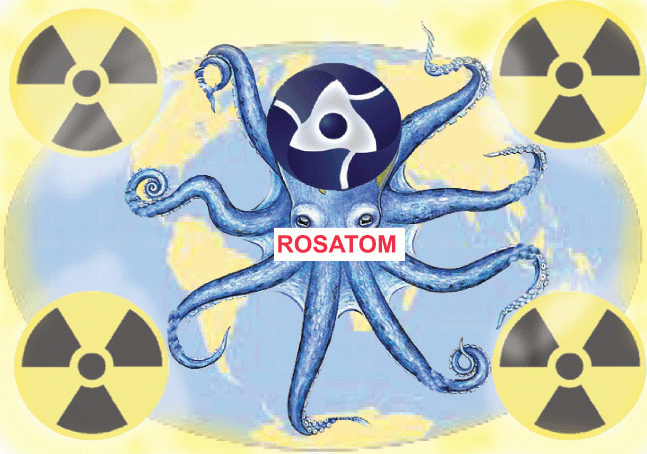
by beyondnuclearinternational, https://beyondnuclearinternational.org/2025/06/15/rosatom-a-company-at-war/
Nuclear state entity is on the ground in Ukraine and smoothing the way for new atomic tests, writes Charles Digges
If Russia’s state nuclear corporation Rosatom is to be believed, 2024 was a banner year.
It is expanding its footprint in new markets in Africa, Asia and the Middle East, as well as in Central Asian post-Soviet states. It is running an expansive development program along the Northern Sea Route, the 6,000-kilometer Arctic shipping corridor uniting Europe and Asia, and is responsible for everything from nuclear icebreaker construction to port infrastructure along its reach. It is powering the mining of rare earth minerals essential for renewable energy and electronics in operations from the Kola Peninsula to Siberia. It is acquiring domestic energy firms and making forays into transport, housing and utilities. And, of course, it is building nuclear power plants in foreign markets — including in some NATO members — at a pace unmatched by any other country or corporation.
But the slick commercial rhetoric belies the fact that Rosatom is a company that is literally at war.
As one of the Kremlin’s prize state industries, Rosatom has reoriented its practices to align with Moscow’s war economy as the invasion of Ukraine drags on. For this, it receives lavish state support and is overseen by members of President Vladimir Putin’s inner circle. Yet, unlike other energy producers in Russia’s oil and gas sectors, Rosatom has thus far managed to sidestep any serious sanctions from the West, attesting to the dependence it has fostered on the international nuclear market.
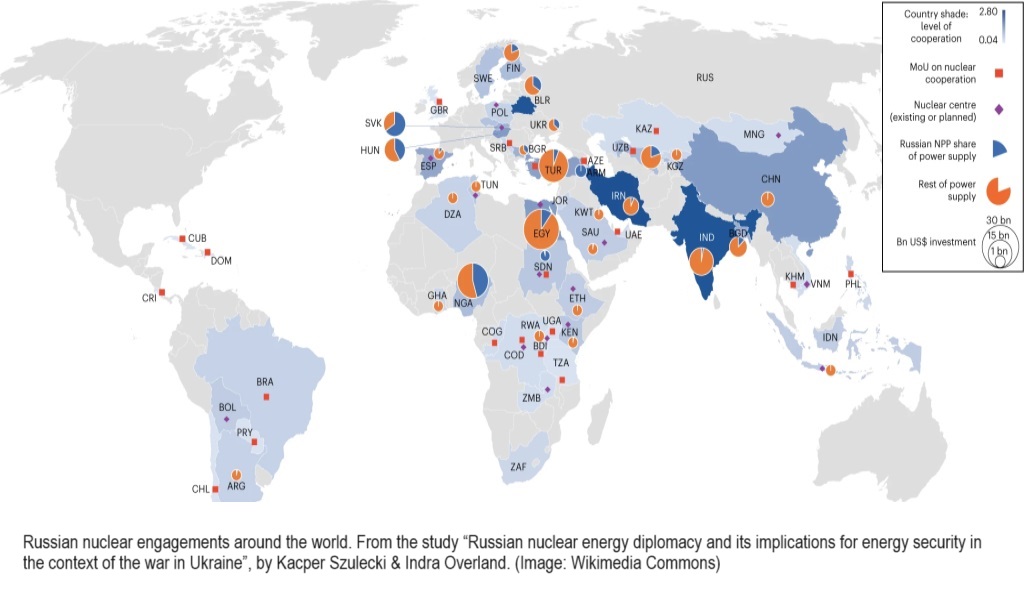
Recently, Western markets have begun to challenge Rosatom’s dominance as they attempt to shift their dependence away from Russian-produced nuclear fuels and other technologies. But our new report suggests that Rosatom is preparing for such shortfalls by changing customers and expanding its operations into industries beyond the nuclear — including further enmeshing itself in Moscow’s war as an active military participant. These are the corporate achievements that are less likely to appear in the company’s glossy public relations materials.
Rosatom at war
For instance, the putatively civilian corporation is helping Russian arms makers sidestep bans on Western-produced components for weapons used on the Ukrainian front. It has also developed technology for the Oreshnik line of ballistic missiles, producing a warhead tip so durable that the company brags it can withstand temperatures as hot as the surface of the Sun.
The corporation also seems to be smoothing the way for various weapons tests, including nuclear tests, on Novaya Zemlya, an Arctic archipelago used by the Soviets as an atomic bomb testing range. Most recently, it has been the site of trials for the Burevestnik nuclear-powered cruise missile developed by Rosatom technicians.
Russia’s recent withdrawal from its ratification of the Comprehensive Nuclear Test Ban Treaty and its abandonment of other arms agreements with the West coincides with a hive of activity on this frozen strip of land, suggesting Russia may be moving back toward testing nuclear weapons. Rosatom, the steward of Russia’s nuclear arsenal, will surely be at the center of it.
Rosatom likewise continues to tighten its grip on the Zaporizhzhia nuclear power plant in Ukraine — Europe’s largest atomic energy station — which the Russian military seized in the opening days of its invasion in 2022. It is widely assumed from the Kremlin’s official statements that Rosatom intends to absorb the plant, making it the 12th nuclear power plant in its purview — and marking one of the most breathtaking seizures of war booty in modern warfare.
What the corporation is ignoring
Alongside these endeavors stands the fact, which Rosatom is loath to mention in its brochures, that Rosatom’s domestic fleet of 36 reactors is aging. Most need to be replaced by 2065, but the funds for this are severely lacking. The company’s current plans to extend runtimes at several aged Chernobyl-style reactors suggest that this is a problem the corporation will not be able to solve anytime soon.
Rosatom has also snuffed out its past efforts to clean up Russia’s Soviet nuclear legacy, retooling many of the constituent enterprises that were responsible for that to handling non-nuclear hazardous waste. These moves turn away from more than two decades of effort with the international community and mark the corporation’s increasing efforts to shut itself off both from the West and from scrutiny at home.
The war in Ukraine and accompanying stifling of civil society organizations — including my employer, Bellona — that once held Rosatom to account has fueled that opacity.
In fact, such organizations once formed Rosatom’s Public Council, which kept the corporation in conversation with environmentalists and the public it purported to serve. While the Public Council still exists, it is staffed by Putin’s cronies, including one from his intramural hockey team.
Nor is there anything left of the robust network of strident Russian-grown, anti-nuclear NGOs that for years fought to keep Rosatom’s activities in the public eye. Their disappearance has left Rosatom to its own secretive devices, the organizations themselves hounded out of existence by the Kremlin’s war bureaucracy.
Rosatom helps Moscow divide the world
All of this taken together — both what the corporation will and will not tell us — paints a picture of Rosatom as primarily a formidable political tool. This allows it to couple a broad mandate at home with a campaign of influence abroad. By offering its reactor customers enormous state-backed loans to build nuclear plants that Rosatom will service, fuel and, in many cases, even staff for decades to come, the corporation is vital to creating regimes that are friendly to — and dependent on — Moscow around the world.
While the war in Ukraine has perhaps cost Rosatom some of its former markets in the West, the company has, as our report shows, survived these geopolitical shifts and remained a powerful vector of Russian influence. As a result, the company will continue to help cleave away many of the world’s nations to Moscow’s geopolitical cause.
Charles Digges is an environmental journalist and researcher who edits the website of the Norway-based NGO Bellona.
Major radiation warning as Israel says it’s ‘on verge of destroying 10 nuclear sites’

International Atomic Energy Agency director Rafael Mariano Grossi said protective measures need to be put in place due to the risk of radiation at the Natanz nuclear facility.
Chiara Fiorillo News Reporter, 17 Jun 2025, https://www.mirror.co.uk/news/world-news/major-radiation-warning-israel-says-35407962
A major radiation warning has been issued after Israel’s Defence Minister said his country is “on the verge” of destroying “more than 10 nuclear targets” in Iran. Israel Katz said the Israeli Air Force will strike “very significant targets, strategic targets, targets of the regime and infrastructure” in Tehran today. One of the targets include the underground Fordow facility which Katz said is “an issue that will certainly be addressed.”
The Natanz nuclear facility has already been hit by Israeli strikes and after the latest warning from Israel, the head of the UN nuclear watchdog agency, Rafael Mariano Grossi, warned of the widespread risks posed by attacks on such facilities. The International Atomic Energy Agency (IAEA) said there is a risk of of both radiological and chemical contamination within Iran’s main nuclear enrichment facility.
“Based on continued analysis of high resolution satellite imagery collected after Friday’s attacks, the IAEA has identified additional elements that indicate direct impacts on the underground enrichment halls at Natanz,” the agency said on X. “No change to report at Esfahan and Fordow,” the IAEA added.
The radiation poses significant danger if uranium is inhaled or ingested. Appropriate protective measures are needed to manage the risk, including using respiratory protection devices while inside the facilities. Mr Grossi said currently, radiation levels outside complex are normal.
Located 220km (135 miles) southeast of Tehran, the Natanz facility was protected by anti-aircraft batteries, fencing and Iran’s paramilitary Revolutionary Guard. The underground part of the facility is buried to protect it from airstrikes and contains the bulk of the enrichment facilities at Natanz, with 10,000 centrifuges that enrich uranium up to 5 per cent, experts assess.
The IAEA had earlier reported that Israeli strikes had destroyed an above-ground enrichment hall at Natanz and knocked out electrical equipment that powered the facility. However, most of Iran’s enrichment takes place underground.
Although Israel has struck Natanz repeatedly and claims to have inflicted significant damage on its underground facilities, Tuesday’s IAEA statement marked the first time the agency has acknowledged impacts there.
Iran has not discussed the damage done in depth at Natanz as the country is reeling from the ongoing Israeli strikes that are dismantling its air defence and killing its top military commanders.
The facility is located 220km southeast of Tehran(Image: Satellite image ©2021 Maxar Tech)
Israel says its sweeping assault on Iran’s top military leaders, nuclear scientists, uranium enrichment sites and ballistic missile program is necessary to prevent its adversary from getting any closer to building an atomic weapon.
The strikes have killed at least 224 people in Iran. Iran has retaliated by launching more than 370 missiles and hundreds of drones at Israel. So far, 24 people have been killed in Israel.
The Israeli military said a new barrage of missiles was launched on Tuesday. Iran maintains its nuclear program is peaceful, and the United States and others have assessed Tehran has not had an organized effort to pursue a nuclear weapon since 2003.
But the head of the IAEA has repeatedly warned that the country has enough enriched uranium to make several nuclear bombs should it choose to do so.
Government holds no record of taxpayer funding arrangements for UK’s historic nuclear stations
17 Jun, 2025 By Tom Pashby, https://www.newcivilengineer.com/latest/government-holds-no-record-of-taxpayer-funding-arrangements-for-uks-historic-nuclear-stations-17-06-2025/
The government has revealed that it doesn’t know how much public money was spent on any of the country’s 19 historic nuclear power plants ahead of their respective final investment decisions (FIDs).
The FID is the agreement between public and private parties on how a major project will be funded, paving the way for the main construction to commence.
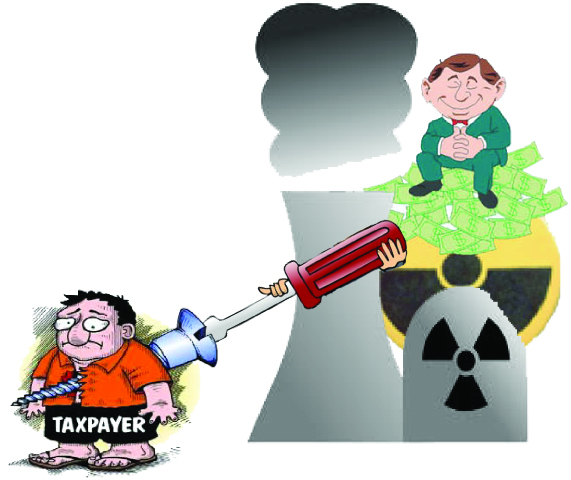
Pre-FID financing has risen up the agenda because of the £18bn of public money spent on Sizewell C despite its FID not having been confirmed. This means that the project is not yet guaranteed to go ahead and presents huge risks for taxpayers if the scheme falls through.
- You are here:Latest
Government holds no record of taxpayer funding arrangements for UK’s historic nuclear stations
17 Jun, 2025 By Tom Pashby
The government has revealed that it doesn’t know how much public money was spent on any of the country’s 19 historic nuclear power plants ahead of their respective final investment decisions (FIDs).
The FID is the agreement between public and private parties on how a major project will be funded, paving the way for the main construction to commence.
Pre-FID financing has risen up the agenda because of the £18bn of public money spent on Sizewell C despite its FID not having been confirmed. This means that the project is not yet guaranteed to go ahead and presents huge risks for taxpayers if the scheme falls through.
The rhetoric from the government about Sizewell C is centred on its confidence about the future of the project, but potential private sector investors including Centrica have aired concerns about the viability of the power station.
NCE submitted a request using the Freedom of Information Act (FOI) to the Department for Energy Security and Net Zero (DESNZ) for information on how much public money was committed to the UK’s 19 historic nuclear energy projects ahead of their respective FIDs or equivalent project milestones.
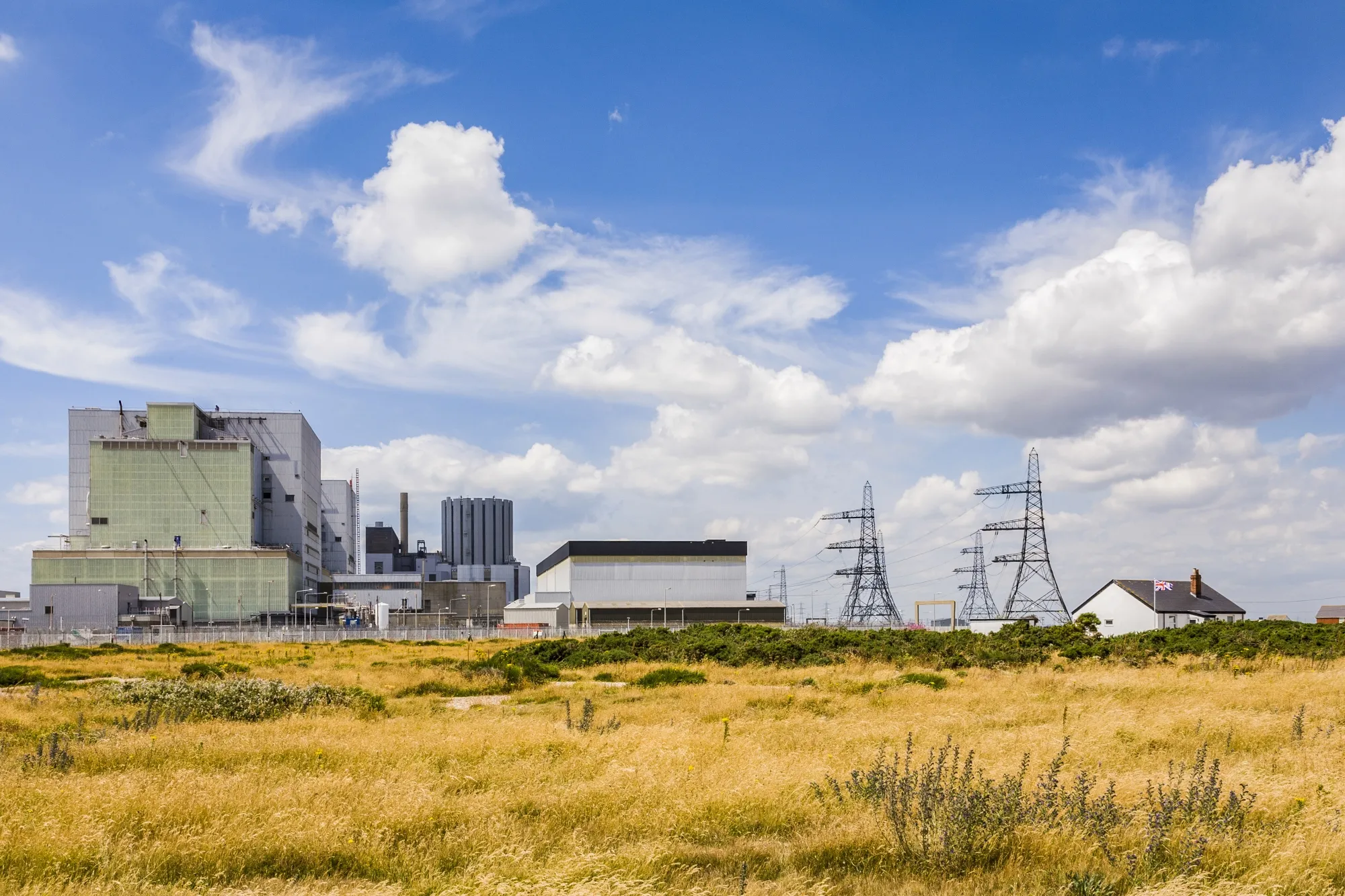
The 19 projects were Calder Hall, Chapelcross, Berkeley, Hunterston A, Hinkley Point A, Bradwell, Trawsfynydd, Dungeness A, Sizewell A, Oldbury, Wylfa, Dungeness B, Hunterston B, Hinkley Point B, Hartlepool, Heysham 1, Heysham 2, Torness and Sizewell B.
All are either operating or in the decommissioning phase of their lifecycles.
In response to the FOI request, DESNZ said: “The department does not hold the historic information requested relating to the UK’s current operational fleet, and projects which have been or are being decommissioned.”
DESNZ added that “the government did not make any funds available” to Hinkley Point C ahead of its FID.
“For Sizewell C, details of the subsidy schemes made by the government and the funds made available can be found on the subsidy transparency database,” it added.
“The DEVEX Scheme has been made for £5.5bn for the SZC company. Under this scheme to date £3.9bn has been awarded to the company – which would be available for them to draw down. Other future awards may be made up to the maximum amount of the scheme.”
The statements from DESNZ on Sizewell C were made ahead of the Spending Review (SR). The day before the SR, the chancellor of the exchequer committed additional public money to the project, bringing total pre-FID public support for the plant to £18bn.
Sizewell C facing scrutiny of its total costs
Campaigners and politicians have spent years trying to get the UK Government to reveal the estimated total costs of Sizewell C, including by calling for the National Audit Office and Office for Value for Money to review the project.
The total final cost estimate has not been officially revealed, with the government citing concerns about commercial sensitivity. The Financial Times reported in January 2025 that costs are expected to reach £40bn, though the government has said it does not recognise this figure.
In a letter dated 10 June 2025, the Office for Value for Money confirmed to the National Audit Office that it would not be looking at the project.
Office for Value for Money independent chair David Goldstone said: “In line with our principle not to duplicate the work of others we did not review HS2, Sizewell C and Dreadnought, as they are already subject to extensive review processes.”
Stop Sizewell C executive director Alison Downes told NCE: “The government continues to stonewall questions about Sizewell C’s cost, and how £6.4bn of taxpayers’ money ahead of a final investment decision is being used, an amount that is double what was spent by EDF at Hinkley Point C to get to the same point.
“Given the further £11.5bn allocated to Sizewell C over the next few years, and the fact that consumers could soon begin to pay a Sizewell tax on their bills, it is woeful that the independent chair of the Office of Value for Money decided not to scrutinise this monster of a project.”
DESNZ was approached for comment but did not provide one.
EDF scaled back financial interest in Sizewell C
- You are here:Latest
Government holds no record of taxpayer funding arrangements for UK’s historic nuclear stations
17 Jun, 2025 By Tom Pashby
The government has revealed that it doesn’t know how much public money was spent on any of the country’s 19 historic nuclear power plants ahead of their respective final investment decisions (FIDs).
The FID is the agreement between public and private parties on how a major project will be funded, paving the way for the main construction to commence.
Pre-FID financing has risen up the agenda because of the £18bn of public money spent on Sizewell C despite its FID not having been confirmed. This means that the project is not yet guaranteed to go ahead and presents huge risks for taxpayers if the scheme falls through.
The rhetoric from the government about Sizewell C is centred on its confidence about the future of the project, but potential private sector investors including Centrica have aired concerns about the viability of the power station.
NCE submitted a request using the Freedom of Information Act (FOI) to the Department for Energy Security and Net Zero (DESNZ) for information on how much public money was committed to the UK’s 19 historic nuclear energy projects ahead of their respective FIDs or equivalent project milestones.
The 19 projects were Calder Hall, Chapelcross, Berkeley, Hunterston A, Hinkley Point A, Bradwell, Trawsfynydd, Dungeness A, Sizewell A, Oldbury, Wylfa, Dungeness B, Hunterston B, Hinkley Point B, Hartlepool, Heysham 1, Heysham 2, Torness and Sizewell B.
All are either operating or in the decommissioning phase of their lifecycles.
Related questions you can explore with Ask NCE, our new AI search engine.

- What is Centrica’s potential investment in Sizewell C?
- What is the Sizewell C Devex Scheme’s total value?
- Why is Sizewell C’s value for money facing scrutiny?
- How could Sizewell C funding affect my energy bills?
- What is the UK’s strategy for increasing nuclear power capacity?
If you would like to ask your own question you just need to login, register or subscribe.
In response to the FOI request, DESNZ said: “The department does not hold the historic information requested relating to the UK’s current operational fleet, and projects which have been or are being decommissioned.”
DESNZ added that “the government did not make any funds available” to Hinkley Point C ahead of its FID.
“For Sizewell C, details of the subsidy schemes made by the government and the funds made available can be found on the subsidy transparency database,” it added.
“The DEVEX Scheme has been made for £5.5bn for the SZC company. Under this scheme to date £3.9bn has been awarded to the company – which would be available for them to draw down. Other future awards may be made up to the maximum amount of the scheme.”
The statements from DESNZ on Sizewell C were made ahead of the Spending Review (SR). The day before the SR, the chancellor of the exchequer committed additional public money to the project, bringing total pre-FID public support for the plant to £18bn.
Sizewell C facing scrutiny of its total costs
Campaigners and politicians have spent years trying to get the UK Government to reveal the estimated total costs of Sizewell C, including by calling for the National Audit Office and Office for Value for Money to review the project.
The total final cost estimate has not been officially revealed, with the government citing concerns about commercial sensitivity. The Financial Times reported in January 2025 that costs are expected to reach £40bn, though the government has said it does not recognise this figure.
In a letter dated 10 June 2025, the Office for Value for Money confirmed to the National Audit Office that it would not be looking at the project.
Office for Value for Money independent chair David Goldstone said: “In line with our principle not to duplicate the work of others we did not review HS2, Sizewell C and Dreadnought, as they are already subject to extensive review processes.”
Stop Sizewell C executive director Alison Downes told NCE: “The government continues to stonewall questions about Sizewell C’s cost, and how £6.4bn of taxpayers’ money ahead of a final investment decision is being used, an amount that is double what was spent by EDF at Hinkley Point C to get to the same point.
“Given the further £11.5bn allocated to Sizewell C over the next few years, and the fact that consumers could soon begin to pay a Sizewell tax on their bills, it is woeful that the independent chair of the Office of Value for Money decided not to scrutinise this monster of a project.”
DESNZ was approached for comment but did not provide one.
EDF scaled back financial interest in Sizewell C
EDF is the minority (14.6%) owner of Sizewell C, while the UK Government is the majority (85.4%) owner. This ownership split was accurate as of March 2025.
EDF is a French state-owned energy giant, and the French public auditor Cour des comptes # said in January 2025 that EDF should scale back its involvement in UK nuclear projects.
The auditor said “a final investment decision on [Sizewell C] should not be approved until a significant reduction in EDF’s financial exposure to the Hinkley Point project has been achieved.
“[Cour des comptes] also recommends ensuring that any new international nuclear project generates quantified gains and does not delay the timetable for the EPR 2 programme in France.”
Labour’s nuclear dream has destroyed my home: inside the Sizewell C planning row.

As the Government pledges £14.2 billion for the new power
station on the Suffolk coast, it faces fierce opposition from residents.
Eastbridge, a small Suffolk village two miles inland from the coast,
surrounded by marshland, has looked much the same for centuries.
Over the past year, however, it has been transformed. Huge swathes of the
surrounding countryside have been dug into a strange lunar landscape of
sand and soil to make way for construction associated with Sizewell C,
including a vast accommodation campus for workers on the outskirts of the
village. The scale of the site is only really clear from aerial
photographs, which shows a patchwork of grey, orange and brown where there
once was lush green. And this is just the beginning.
Last week, the Government pledged £14.2 billion for the project at Sizewell, which will
eventually provide low-carbon electricity for six million homes for a
lifespan of 60 years. The only published overall cost for the scheme was
£20 billion in 2020, but it has reportedly now ballooned to over £40
billion. Still a fair price, many argue, for a source of “clean,
homegrown power” – as Ed Miliband says – to future-proof Britain’s
energy security.
Inevitably, however, it has faced fierce opposition from
residents in the surrounding area, with some locals arguing the Government
hasn’t counted the true cost of the lengthy construction period and the
damage to the natural landscape and neighbouring communities.
Alison Downes, the director of Stop Sizewell C, began campaigning against the
project in 2013 on the grounds of the impact on the local area. “In the
early days we were trying to persuade the project to amend its proposal,
including the location of the [accommodation] campus at Eastbridge,” she
says. “It was of grave concern that it was proposed for 3,000 people –
it’s gone down a little bit, but not much.” Then, she says, as she
learnt more about the project, “all these other issues [came] to the
fore.” Downes, a career campaigner, has wisely focused on scrutinising
Sizewell on issues of national, rather than localised, importance.
Stop Sizewell C argues that the project is bad value for money, will be too slow
to address climate change (it will take at least 10-12 years to build,
according to the EDF), and will ultimately load too much risk onto the
taxpayer.
Telegraph 18th June 2025,
https://www.telegraph.co.uk/news/2025/06/18/labours-nuclear-dream-has-destroyed-my-home-inside-the-size/
1 This Month
Chernobyl: The Lost Tapes – A good documentary on Chernobyl on SBS available On Demand for the next 3 weeks– https://www.sbs.com.au/ondemand/tv-program/chernobyl-the-lost-tapes/2352741955560

of the week–London Campaign for Nuclear Disarmament

Tell the Ukrainian Government to Drop Prosecution of Peace Activist Yurii Sheliazhenko
To see nuclear-related stories in greater depth and intensity – go to https://nuclearinformation.wordpress.com
-
Archives
- April 2026 (139)
- March 2026 (251)
- February 2026 (268)
- January 2026 (308)
- December 2025 (358)
- November 2025 (359)
- October 2025 (376)
- September 2025 (257)
- August 2025 (319)
- July 2025 (230)
- June 2025 (348)
- May 2025 (261)
-
Categories
- 1
- 1 NUCLEAR ISSUES
- business and costs
- climate change
- culture and arts
- ENERGY
- environment
- health
- history
- indigenous issues
- Legal
- marketing of nuclear
- media
- opposition to nuclear
- PERSONAL STORIES
- politics
- politics international
- Religion and ethics
- safety
- secrets,lies and civil liberties
- spinbuster
- technology
- Uranium
- wastes
- weapons and war
- Women
- 2 WORLD
- ACTION
- AFRICA
- Atrocities
- AUSTRALIA
- Christina's notes
- Christina's themes
- culture and arts
- Events
- Fuk 2022
- Fuk 2023
- Fukushima 2017
- Fukushima 2018
- fukushima 2019
- Fukushima 2020
- Fukushima 2021
- general
- global warming
- Humour (God we need it)
- Nuclear
- RARE EARTHS
- Reference
- resources – print
- Resources -audiovicual
- Weekly Newsletter
- World
- World Nuclear
- YouTube
-
RSS
Entries RSS
Comments RSS
 nuclear-news