Radiation risks from US strikes on Iran’s nuclear sites seen as minimal
Negar Mojtahedi, Iran International, Jun 23, 2025, https://www.iranintl.com/en/202506228904
S airstrikes on Iran’s nuclear facilities are unlikely to cause serious radioactive fallout, nuclear experts told Iran International despite fears of a nuclear disaster.
Their assessments come as Iran threatens retaliation, and the International Atomic Energy Agency (IAEA) holds an emergency meeting on Monday in response to the escalating crisis.
“For most facilities the impact of direct strikes will, to a large extent, most likely be very localized,” said Dr. Kathryn Higley, distinguished professor of nuclear science and engineering at Oregon State University and president of the National Council on Radiation Protection and Measurements told Iran International.
“While enriched uranium is radioactive, it is not terribly so. If the uranium is present and released as hexafluoride, that could also pose a serious but still localized hazard due to the fluorine in the compound being reactive,” she said.
Dr. David Albright, founder of the Institute for Science and International Security, told Iran International that concerns over radiation from a strike on Fordow are overblown when compared with past incidents.
“One way to understand the low radiological risk of bombing Fordow is from a comparison to the underground Natanz enrichment site with over 15,000 centrifuges and many tons of uranium,” he said.
“It was attacked with earth penetrators and there is no off-site radiation risk. Fordow has about 2,700 centrifuges and much less uranium, and is more deeply buried underground. Hard to expect worse than Natanz.”
Albright emphasized that the design and location of Iran’s underground enrichment sites inherently limit the spread of radioactive.
Temporary contamination risks are primarily limited to areas near uranium conversion and enrichment plants, according to Andrea Stricker, a research fellow at the Foundation for Defense of Democracies (FDD).
“Response teams going near the destroyed facilities, for example, would need to wear protective gear temporarily due to risks of inhaling or ingesting aerially dispersed uranium chemical compounds,” said Stricker. “There is not concern for dispersal beyond the immediate plants.”
The US strike on the heavily fortified Fordow facility has likely trapped radioactive material underground, limiting any broader hazard, Stricker said.
Iran’s response: ‘no signs of contamination’
Their comments follow US President Donald Trump’s announcement on Sunday that American forces had struck Iran’s Fordow, Isfahan, and Natanz nuclear sites, which he described as “completely and fully obliterated.”
While Iran confirmed the strikes, it insisted its nuclear program would continue undeterred.
Iran’s National Nuclear Safety System reported that radiation detectors at the affected facilities showed “no signs of contamination” and stated, “There is no danger to the residents living around the aforementioned sites,” according to Iran State media.
The IAEA said it had observed “no increase in off-site radiation levels” and would continue monitoring the situation.
Director General Rafael Grossi announced an emergency meeting of the agency’s 35-member board of governors. In response, Iran’s nuclear chief Mohammad Eslami called for an investigation and accused Grossi of “inaction and complicity.”
Isfahan and Natanz—both previously targeted by Israeli airstrikes—have not shown any evidence of radiation release, according to IAEA monitoring.
Experts say Bushehr not likely to be targeted
Bushehr, Iran’s only operational nuclear power reactor, is not expected to be targeted.
“Israel will not have the Bushehr nuclear power plant on its target list, as striking the reactor would cause a radiological disaster in the region,” Stricker said.
Bushehr is used for civilian energy production, not enrichment. The plutonium it generates is not suitable for nuclear weapons, and spent fuel is required to be returned to Russia.
Still, the plant contains significant quantities of nuclear material, and Grossi has warned that an attack on Bushehr could have the most serious radiological consequences of any site in Iran.
Tehran continues to maintain that its nuclear program is for peaceful purposes, but Trump and Israeli officials argue Iran is moving dangerously close to weapons capability.
“There will either be peace,” Trump said during a national address following the strikes, “or there will be tragedy for Iran.”
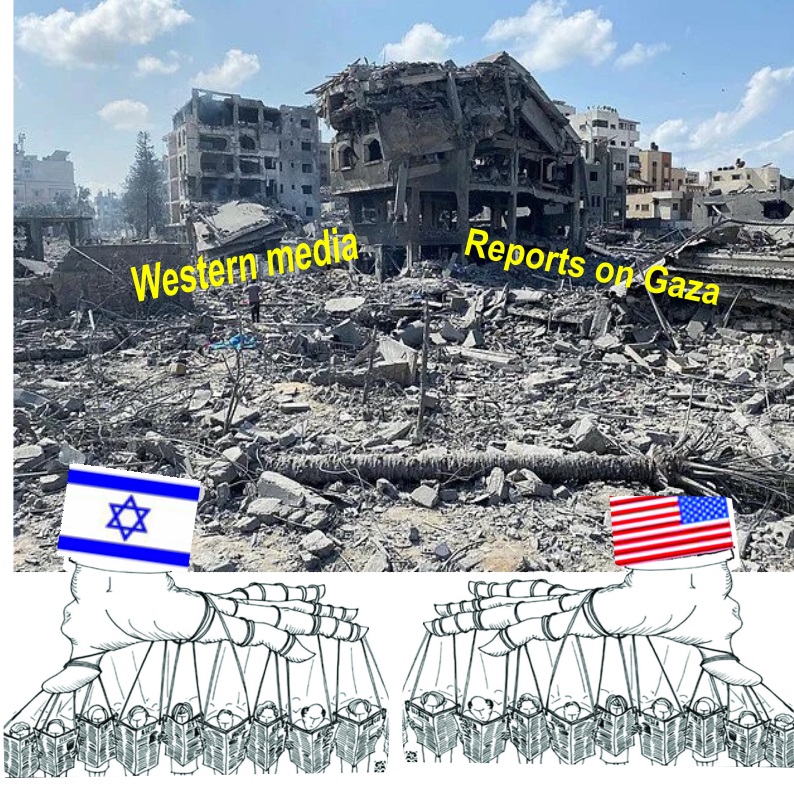
Why BBC editors must one day stand trial for colluding in Israel’s genocide
20 June 2025, https://www.jonathan-cook.net/blog/2025-06-20/bbc-editors-trial-israel-genocide/
In a confrontation with BBC news chief Richard Burgess, journalist Peter Oborne sets out six ways the state broadcaster has wilfully misled audiences on Israel’s destruction of Gaza
Veteran journalist Peter Oborne eviscerated the BBC this week over its shameful reporting of Gaza – and unusually, he managed to do so face-to-face with the BBC’s executive news editor, Richard Burgess, during a parliamentary meeting.
Oborne’s remarks relate to a new and damning report by the Centre for Media Monitoring, which analysed in detail the BBC’s Gaza coverage in the year following Hamas’ one-day attack on 7 October 2023. The report found a “pattern of bias, double standards and silencing of Palestinian voices.” These aren’t editorial slip-ups. They reveal a systematic, long-term skewing of editorial coverage in Israel’s favour.
Oborne was one of several journalists to confront Burgess. His comments, filmed by someone at the meeting, can be watched below [on original]
Oborne makes a series of important points that illustrate why the BBC’s slanted, Israel-friendly news agenda amounts to genocide denial, and means executives like Burgess are directly complicit in Israeli war crimes:
1. The BBC has never mentioned the Hannibal directive, invoked by Israel on 7 October 2023, that green-lit the murder of Israeli soldiers and civilians, often by Apache helicopter fire, to prevent them being taken captive by Hamas. The Israeli media has extensively reported on the role of the Hannibal directive in the Israeli military’s response on 7 October, but that coverage has been completely ignored by the BBC and most UK media outlets.
Israel’s invocation of the Hannibal directive – essential context for understanding what happened on 7 October – explains much of the destruction that day in Israel usually attributed to Hamas “barbarism”, such as the graveyard of burnt-out, crumpled cars and the charred, crumbling remains of houses in communities near Gaza.
Hamas, with its light weapons, did not have the ability to inflict this kind of damage on Israel, and we know from Israeli witnesses, video footage and admissions from Israeli military officers that Israel was responsible for at least a share of the carnage that day. How much we will apparently never know because Israel is not willing to investigate itself, and media like the BBC are not doing any investigations themselves, or putting any pressure on Israel to do so.
2. The BBC has never mentioned Israel’s Dahiya doctrine, the basis of its “mowing the lawn” approach to Gaza over the past two decades, in which the Israeli military has intermittently destroyed large swaths of the tiny enclave. The official aim has been to push the population, in the words of Israeli generals, back to the “Stone Age”. The assumption is that, forced into survival mode, Palestinians will not have the energy or will to resist their brutal and illegal subjugation by Israel and that it will be easier for Israel to ethnically cleanse them from their homeland.
Because Israel has been implementing this military doctrine – a form of collective punishment and therefore indisputably a war crime – for at least 20 years, it is critically important in any analysis of the events that led up to 7 October, or of the genocidal campaign of destruction Israel launched subsequently.
The BBC’s refusal even to acknowledge the doctrine’s existence leaves audiences gravely misinformed about Israel’s historical abuses of Gaza, and deprived of context to interpret the campaign of destruction by Israel over the past 20 months.
3. The BBC has utterly failed to report the many dozens of genocidal statements from Israeli officials since 7 October – again vital context for audiences to understand Israel’s goals in Gaza.
Perhaps most egregiously, the BBC has not reported Israeli prime minister Benjamin Netanyahu’s biblically-inspired comparison of the Palestinians to “Amalek” – a people the Jews were instructed by God to wipe from the face of the earth. Netanyahu knew this clearly genocidal statement would have especial resonance with what now amounts to a majority of the combat soldiers in Gaza who belong to extreme religious communities that view the Bible as the literal truth.
The hardest thing to prove in genocide is intent. And yet the reason Israel’s violence in Gaza is so clearly genocidal is that every senior official from the prime minister down has repeatedly told us that genocide is their intent. The decision not to inform audiences of these public statements is not journalism. It is pro-Israel disinformation and genocide denial.
4. By contrast, as Oborne notes, on more than 100 occasions when guests have tried to refer to what is happening in Gaza as a genocide, BBC staff have immediately shut them down on air. As other investigations have shown, the BBC has strictly enforced a policy not only of banning the use of the term “genocide” by its own journalists in reference to Gaza but of depriving others – from Palestinians to western medical volunteers and international law experts – of the right to use the term as well. Again, this is pure genocide denial.
5. Oborne also points to the fact that the BBC has largely ignored Israel’s campaign of murdering Palestinian journalists in Gaza. A greater number have been killed by Israel in its war on the tiny enclave than the total number of journalists killed in all other major conflicts of the past 160 years combined.
The BBC has reported just 6 per cent of the more than 225 journalists killed by Israel in Gaza, compared to 62 per cent of the far smaller number of journalists killed in Ukraine. This is once again vital context for understanding that Israel’s goals are genocidal. It hopes to exterminate the main witnesses to its crimes.
6. Oborne adds a point of his own. He notes that the distinguished Israeli historian Avi Shlaim lives in the UK and teaches at Oxford University. Unlike the Israeli spokespeople familiar to BBC audiences, who are paid to muddy the waters and deny Israel’s genocide, Shlaim is both knowledgeable about the history of Israeli colonisation of Palestine and truly independent. He is in a position to dispassionately provide the context BBC audiences need to make judgments about what is going on and who is responsible for it.
And yet extraordinarily, Shlaim has never been invited on by the BBC. He is only too ready to do interviews. He has done them for Al Jazeera, for example. But he isn’t invited on because, it seems, he is “the wrong sort of Jew”. His research has led him to a series of highly critical conclusions about Israel’s historical and current treatment of the Palestinians. He calls what Israel is doing in Gaza a genocide. He is one of the prominent Israelis we are never allowed to hear from, because they are likely to make more credible and mainstream a narrative the BBC wishes to present as fringe, loopy and antisemitic. Again, what the BBC is doing – paid for by British taxpayers – isn’t journalism. It is propaganda for a foreign state.
Watch the video above [on original] to see how Burgess responds. His answer is a long-winded shrugging of the shoulders, a BBC executive’s way of acting clueless – an equivalent of Manuel, the dim-witted Spanish waiter in the classic comedy show Fawlty Towers, saying: “I know nothing.”
Other lowlights from Burgess include his responding to a pointed question from Declassified journalist Hamza Yusuf on why the BBC has not given attention to British spy planes operating over Gaza from RAF base Akrotiri on Cyprus. “I don’t think we should overplay the UK’s contribution to what’s happening in Israel,” Burgess answers.
So the British state broadcaster has decided that its duty is not to investigate the nature of British state assistance to Israel in Gaza, even though most experts agree what Israel is doing there amounts to genocide. Burgess thinks scrutiny of British state complicity would be “overplaying” British collusion, even though the BBC has not actually investigated the extent or nature of that collusion to have reached a conclusion. This is the very antithesis of what journalism is there to do: monitor the centres of power, not exonerate such power-centres before they have even been scrutinised.
Labour MP Andy McDonald responded to Burgess: “To underplay the role of the UK is an error.”
It is more than that. It is journalistic complicity in British and Israeli state war crimes.
Here are a few key statistical findings from the Centre for Media Monitoring’s report on BBC coverage of Gaza over the year following 7 October 2023:
- The BBC ran more than 30 times more victim profiles of Israelis than Palestinians.
- The BBC interviewed more than twice as many Israelis as Palestinians.
- The BBC asked 38 of its guests to condemn Hamas. It asked no one to condemn Israel’s mass killing of civilians, or its attacks on hospitals and schools.
- Only 0.5% of BBC articles mentioned Israel’s illegal occupation of Palestine.The BBC mentioned “occupation” – the essential context for understanding the relationship between Israel and Palestinians – only 14 times in news articles when providing context to the events of 7 October 2023. That amounted to 0.3% of articles. Additional context – decades of Israeli apartheid rule and Israel’s 17-year blockade of Gaza — were entirely missing from the coverage.
- The BBC described Israeli captives as “hostages”, while Palestinian detainees, including children held without charge, were called “prisoners”. During one major hostage exchange in which 90 Palestinians were swapped for three Israelis, 70% of BBC articles focused on those three Israelis.
- The BBC covered Ukraine with twice as many articles as Gaza in the time period, even though the Gaza story was newer and Israeli crimes even graver than Russia ones. The corporation was twice as likely to use sympathetic language for Ukrainian victims than it was for Palestinian victims.
- In coverage, Palestinians were usually described as having “died” or been “killed” in air strikes, without mention of who launched those strikes. Israeli victims, on the other hand, were “massacred”, “slaughtered” and “butchered” – and the author of the violence was named, even though, as we have seen, the Hannibal directive clouded the picture in at least some of those cases.
As is only too evident watching Burgess respond, he is not there to learn from the state broadcaster’s glaring mistakes – because systematic BBC pro-Israel bias isn’t a mistake. It’s precisely what the BBC is there to do.
UK to purchase US jets capable of carrying nuclear weapons
Britain will join Nato’s airborne atomic mission in a significant overhaul of the
country’s defence strategy. The UK is to purchase 12 US-made F-35 stealth
fighter jets capable of carrying nuclear weapons, in a sweeping overhaul of
the country’s defence strategy. Under the plans, Britain will join
Nato’s airborne nuclear mission, and the F-35A jets are expected to carry
American atomic bombs, as the military alliance contends with the growing
threat of Russia.
FT 24th June 2025, https://www.ft.com/content/1b779329-18c5-4984-a308-58a2afd12746
The Growing Nuclear Arsenals and Sharpened Rhetoric

By Alice Slater* https://indepthnews.net/the-growing-nuclear-arsenals-and-sharpened-rhetoric/
NEW YORK | 20 June 2025 (IDN) — The recent report from the Stockholm International Peace Institute (SIPRI), despite its assertion that “understanding the conditions for peaceful solutions to international conflicts is a key part of their work”, has just issued alarming news that there is a “clear trend of growing nuclear arsenals, sharpened nuclear rhetoric and the abandonment of arms controls agreements!
The report then goes on to count the many ways that nuclear arsenals are expanding and new and more lethal technology is being developed in a growing number of nuclear weapons states and nuclear wannabe weapons states, bemoaning the “abandonment of arms control agreements”.
But it is precisely because these arms “controllers” never advocate for nuclear elimination, abolition, or disarmament and fail to promote the many missed opportunities to achieve an end to the bomb while repeatedly proposing step-by-step measures for an infinite number of various controls on arsenals, that we never get to see the end to nuclear weapons.
Indeed, scholars writing of the repeated proposals for insufficient steps have nowhere coined a term for these meaningless measures—antipreneurism—the action was taken for only illusory progress in finally banning the bomb.
Since SIPRI correctly notes that it is the US and Russia who have 90% of the total 2025 global inventory of some 12,241 warheads on the planet, it is really up to those countries to make the first move.
The US has rejected many opportunities over the years, starting from the very beginning of the nuclear age when Stalin proposed to Truman that the US put its new and terrifying nuclear weapons under the control of the newly formed United Nations, devoted to “ending the scourge of war” with its first resolution calling for nuclear disarmament. Truman refused, and Russia got the bomb!
The US walked out of the 1972 Anti-Ballistic Missile Treaty in 2002, which it had negotiated with the USSR and put new missile bases in Romania and Poland.
Russia and China repeatedly urge the US to move forward on nuclear abolition; they need to preserve their “strategic security”, which would require the US to enter into treaties to ban weapons in space and cyber war. The US refuses to support those treaties and has vetoed negotiating proposals for draft treaties tabled by Russia and China in the consensus-bound UN Committee on Disarmament in Geneva.
When Gorbachev dissolved the Warsaw Pact and freed all of occupied Eastern Europe, he proposed to Reagan that the countries could eliminate their nuclear arsenals provided the US would end its Star Wars program to dominate and control the military use of space.
The US refused, and Gorbachev withdrew his offer. He was also very concerned that a united Germany would be a member of NATO since the USSR lost 27 million people to the Nazi onslaught.
The US assured Gorbachev and Yeltsin that we would not expand NATO one inch to the east. Still, Clinton began the expansion with the annexation of Poland, Hungary, and the Czech Republic in1999, followed by Bulgaria, Estonia, Latvia, Lithuania, Romania, Slovakia, and Slovenia in 2004; Albania, Croatia, Montenegro. and North Macedonia between 2009 and 2917, and most recently, Sweden and Finland during the Ukraine War.
The US keeps nuclear weapons in five NATO states: Turkey, Germany, Italy, Netherlands and Belgium. Russia recently placed its nuclear weapons in Belarus during the Ukraine War. Indeed, some kind of deal should be urged to remove the US weapons in Europe in return for Russia taking its newly placed nuclear weapons out of Belarus.
Despite SIPRI’s assertion that its mission includes “understanding the conditions for peaceful solutions to international conflicts is a key part of their work”, history shows that there have been many possible solutions to genuine nuclear disarmament and abolition, repeatedly rejected by the US in the awful grip of what has now been described as the MICIMATT—the Military, Industrial, Congressional, Intelligence, Media, Academic Think Tank complex!
Perhaps a more thorough and emphatic discussion and understanding of all the possible solutions over the years by SIPRI would enable more progress than the meaningless steps to “arms control” that are constantly being promoted and have brought us to this burgeoning new arms race today!
*Alice Slater serves on the Board of World BEYOND War and is a UN Representative of the Nuclear Age Peace Foundation. [IDN-InDepthNews]
Image: In this handout photo released by Roscosmos Space Agency Press Service on April 20, 2022, a Sarmat intercontinental ballistic missile is launched from Plesetsk in Russia’s northwest. (Roscosmos Space Agency Press Service via AP, File)
Did the US wipe out Iran’s nuclear programme? What researchers know
Nuclear-policy specialist David Albright told Nature how his organization is monitoring for damage to nuclear sites following US and Israeli strikes.
By , Davide Castelvecchi, Nature, 23 June 25
On 22 June, many people woke to the news that the United States had bombed nuclear sites in Iran, with the goal of destroying its ability to produce nuclear weapons. The raids targeted Iran’s uranium-enrichment facilities in Fordow and Natanz, and its nuclear research centre in Esfahan, using stealth bombers — which dropped massive ‘bunker-busters’ — and cruise missiles.
Although Iran says its nuclear programme is for peaceful purposes, experts have long assessed that Iran was close to having the capability of building nuclear weapons, if it chose to do so. The US attacks followed a bombing campaign by Israel, which has since carried out further attacks on Iranian nuclear facilities. On 23 June, the International Atomic Energy Agency (IAEA) reported that “very significant damage is expected to have occurred” at the underground Fordow site.
Researchers at academic institutions and think tanks are also assessing the potential impacts of the attacks on Iran’s nuclear capabilities. Analysts have said that the attacks probably set the nuclear programme back substantially, but not permanently. In particular, Iran could have moved stockpiles of highly-enriched uranium, and perhaps some enrichment centrifuges, elsewhere. David Albright, a nuclear-policy specialist and president of the Institute for Science and International Security in Washington DC, spoke to Nature about what researchers know.
How do you assess the impact of the bombings on Iran’s nuclear capabilities?
There aren’t many researchers who are able to assess the impact of the bombings. We have decades of experience with the Iranian nuclear programme, so we know their facilities and activities very well. And we have great access to satellite imagery — which we have to buy. We try to buy some every day. And we utilize analysts who have decades of experience to analyze these images. We also have lots of contacts with governments, and we have colleagues who also have contacts with governments.
A lot of the damage is on the surface, so it’s a question of knowing what the building did [in terms of its role in the nuclear program]. We rely on our repository of information about the sites that are attacked. So it’s pretty straightforward.
Obviously, more problematic are the underground sites. When we initially assessed Israel’s bombing of Natanz, three days later I saw a very small crater above the underground hall. I could work out and link it to a type of Earth-penetrating weapon that Israel is known to have. It would leave a really small crater when it went in, and the damage would be underground. The United States bombed it with a much more powerful Earth penetrator, so the damage is probably more extensive.
How and when will the extent of the damage be known for sure?
As nuclear experts, we’d like to see this done with diplomatic agreements, where Iran would allow intrusive inspections into its programme. If that does not happen, then it’s the job of US and Israeli intelligence to assess the damage. They’re looking at communications intercepts, or trying to recruit people on the inside to reveal information.
Would radioactive material be detected outside Natanz, Esfahan and Fordow if the attacks were successful?
So far, the IAEA reports no such leaks. And it appears that Iran had moved the enriched uranium stockpiles in the days before the bombings. The United States has said that the target of its bombings was the facilities, so they understand they are not getting at the nuclear material………………………….… (Subscribers only)
https://www.nature.com/articles/d41586-025-01992-2
William Hague: Long term, this makes an Iran bomb likelier.
We do not know how much of the regime’s nuclear material and knowledge survives and how quickly it can be put to use. In the long term, the efforts to prevent Iran
possessing nuclear weapons are more likely to have been weakened than
strengthened.
This is the key judgment. It is why we did the deal with Iran
a decade ago and why it should have been renegotiated now. It is why Trump
was pursuing a diplomatic strategy until diverted from it. We do not know
what has happened to the 400kg of uranium that Iran has enriched. But we
should not be surprised if future Iranian leaders will have drawn the
lesson from recent events that the case for a nuclear bomb has now been
demonstrated beyond all doubt.
Times 23rd June 2025,
https://www.thetimes.com/comment/columnists/article/long-term-this-makes-an-iran-bomb-likelier-wrnvnx90w
War on Iran Is Fight for US Unipolar Control of World
The plan to use Netanyahu as America’s counterpart to Ukraine’s Zelensky, demanding U.S. intervention with his willingness to fight to the last Israeli, much as the U.S./NATO are fighting to the last Ukrainian, is a tactic that is quite obviously at the expense of strategy.
June 24, 2025 , By Michael Hudson / Geopolitical Economy Report, https://geopoliticaleconomy.com/2025/06/22/michael-hudson-war-iran-us-unipolar-control/
Economist Michael Hudson explains how the war on Iran seeks to stop countries from breaking away from U.S. unipolar control and dollar hegemony, and to disrupt Eurasian integration with China and Russia.
Opponents of the war with Iran say that the war is not in American interests, seeing that Iran does not pose any visible threat to the United States.
This appeal to reason misses the neoconservative logic that has guided U.S. foreign policy for more than a half century, and which is now threatening to engulf the Middle East in the most violent war since Korea.
That logic is so aggressive, so repugnant to most people, so much in violation of the basic principles of international law, the United Nations, and the U.S. Constitution, that there is an understandable shyness in the authors of this strategy to spell out what is at stake.
What is at stake is the U.S. attempt to control the Middle East and its oil as a buttress of U.S. economic power, and to prevent other countries from moving to create their own autonomy from the U.S.-centered neoliberal order administered by the IMF, World Bank, and other institutions to reinforce U.S. unipolar power.
The 1970s saw much discussion about creating a New International Economic Order (NIEO). U.S. strategists saw this as a threat, and since my book Super Imperialism ironically was used as something like a textbook by the government, I was invited to comment on how I thought countries would break away from U.S. control.
I was working at the Hudson Institute with Herman Kahn, and in 1974 or 1975, he brought me to sit in on a military strategy discussion of plans being made already at that time to possibly overthrow Iran and break it up into ethnic parts. Herman found the weakest spot to be Baluchistan, on Iran’s border with Pakistan. The Kurds, Tajiks, and Turkic Azeris were others whose ethnicities were to be played off against each other, giving U.S. diplomacy a key potential client dictatorship to reshape both Iranian and Pakistani political orientation if need be.
Three decades later, in 2003, General Wesley Clark pointed to Iran as being the capstone of seven countries that the United States needed to control in order to dominate the Middle East, starting with Iraq, Syria, Lebanon, Libya, Somalia, and Sudan, culminating in Iran.
The U.S. fight for unipolar control of the world
Most of today’s discussion of the geopolitical dynamics of how the international economy is changing is understandably (and rightly) focusing on the attempt by BRICS and other countries to escape from U.S. control by de-dollarizing their trade and investment.
But the most active dynamic presently reshaping the international economy has been the attempts of Donald Trump’s whirlwind presidency since January to lock other countries into a U.S.-centered economy, by agreeing not to focus their trade and investment on China and other states seeking autonomy from U.S. control. (Trade with Russia is already heavily sanctioned.)
As will be described below, the war in Iran likewise has as an aim blocking trade with China and Russia and countering moves away from the U.S.-centered neoliberal order.
Trump, hoping in his own self-defeating way to rebuild U.S. industry, expected that countries would respond to his threat to create tariff chaos by reaching an agreement with America not to trade with China, and indeed to accept U.S. trade and financial sanctions against it, Russia, Iran, and other countries deemed to be a threat to the unipolar U.S. global order.
Maintaining that order is the U.S. objective in its current fight with Iran, as well as its fights with Russia and China – and Cuba, Venezuela, and other countries seeking to restructure their economic policies to recover their independence.
From the view of U.S. strategists, the rise of China poses an existential danger to U.S. unipolar control, both as a result of China’s industrial and trade dominance outstripping the U.S. economy and threatening its markets and the dollarized global financial system, and by China’s industrial socialism providing a model that other countries might seek to emulate and/or join with to recover the national sovereignty that has been eroded in recent decades.
U.S. administrations and a host of U.S. cold warriors have framed the issue as being between “democracy” (defined as countries supporting U.S. policy as client regimes and oligarchies) and “autocracy” (countries seeking national self-reliance and protection from foreign trade and financial dependency).
This framing of the international economy views not only China but any other country seeking national autonomy as an existential threat to U.S. unipolar domination. That attitude explains the U.S./NATO attack on Russia that has resulted in the Ukraine war of attrition, and most recently the U.S./Israeli war against Iran that is threatening to engulf the whole world in U.S.-backed war.
The motivation for the attack on Iran has nothing to do with any attempt by Iran to protect its national sovereignty by developing an atom bomb. The basic problem is that the United States has taken the initiative in trying to preempt Iran and other countries from breaking away from dollar hegemony and U.S. unipolar control.
Here’s how the neocons spell out the U.S. national interest in overthrowing the Iranian government and bringing about a regime change – not necessarily a secular democratic regime change, but perhaps an extension of the ISIS/Al-Qaida Wahhabi terrorists who have taken over Syria.
With Iran broken up and its component parts turned into a set of client oligarchies, U.S. diplomacy can control all Middle Eastern oil. And control of oil has been a cornerstone of U.S. international economic power for a century, thanks to U.S. oil companies operating internationally (not only as domestic U.S. producers of oil and gas) and remitting economic rents extracted from overseas to make a major contribution to the U.S. balance of payments.
Control of Middle Eastern oil also enables the dollar diplomacy that has seen Saudi Arabia and other OPEC countries invest their oil revenues into the U.S. economy by accumulating vast holdings of U.S. Treasury securities and private-sector investments.
The United States holds OPEC countries hostage through these investments in the U.S. economy (and in other Western economies), which can be expropriated much as the United States grabbed $300 billion of Russia’s monetary savings in the West in 2022. This largely explains why these countries are afraid to act in support of the Palestinians or Iranians in today’s conflict.
But Iran is not only the capstone to full control of the Near East and its oil and dollar holdings. Iran is a key link for China’s Belt and Road Initiative for a New Silk Road of railway transport to the West.
If the United States can overthrow the Iranian government, this interrupts the long transportation corridor that China already has constructed and hopes to extend further west.
Iran also is a key to blocking Russian trade and development via the Caspian Sea and access to the south, bypassing the Suez Canal. And under U.S. control, an Iranian client regime could threaten Russia from its southern flank.
To the neocons, all this makes Iran a central pivot on which the U.S. national interest is based – if you define that national interest as creating a coercive empire of client states observing dollar hegemony by adhering to the dollarized international financial system.
I think that Trump’s warning to Tehran’s citizens to evacuate their city is just an attempt to stir up domestic panic as a prelude to a U.S. attempt to mobilize ethnic opposition as a means to break up Iran into component parts. It is similar to the U.S. hopes to break up Russia and China into regional ethnicities.
That is the U.S. strategic hope for a new international order that remains under its command.
The irony, of course, is that U.S. attempts to hold onto its fading economic empire continue to be self-defeating.
The objective is to control other nations by threatening economic chaos. But it is this U.S. threat of chaos that is driving other nations to seek alternatives elsewhere. And an objective is not a strategy.
The plan to use Netanyahu as America’s counterpart to Ukraine’s Zelensky, demanding U.S. intervention with his willingness to fight to the last Israeli, much as the U.S./NATO are fighting to the last Ukrainian, is a tactic that is quite obviously at the expense of strategy.
It is a warning to the entire world to find an escape hatch.
Like the U.S. trade and financial sanctions intended to keep other countries dependent on U.S. markets and a dollarized international financial system, the attempt to impose a military empire from Central Europe to the Middle East is politically self-destructive.
It is making the split that already is occurring between the U.S.-centered neoliberal order and the Global Majority irreversible on moral grounds, as well as on the grounds of simple self-preservation and economic self-interest.
Trump’s Republican budget plan and its vast increase in military spending
The ease with which Iranian missiles have been able to penetrate Israel’s much-vaunted Iron Dome defense shows the folly of Trump’s pressure for an enormous trillion-dollar subsidy to the U.S. military-industrial complex for a similar Golden Dome boondoggle here in the United States.
So far, the Iranians have used only their oldest and least effective missiles. The aim is to deplete Israel’s anti-missile defenses so that in a few weeks it will be unable to block a serious Iranian attack.
Iran already demonstrated its ability to evade Israel’s air defenses a few months ago, just as during Trump’s previous presidency it showed how easily it could hit U.S. military bases.
The U.S. military budget actually is much larger than is reported in the proposed bill before Congress to approve Trump’s trillion-dollar subsidy.
Congress funds its military-industrial complex (MIC) in two ways: The obvious way is by arms purchases paid for by Congress directly. Less acknowledged is MIC spending routed via U.S. foreign military aid to its allies – Ukraine, Israel, Europe, South Korea, Japan, and other Asian countries – to buy U.S. arms.
This explains why the military burden is what normally accounts for the entire U.S. budget deficit and hence the rise in government debt (much of it self-financed via the Federal Reserve since 2008, to be sure).
The need for alternative international organizations
Unsurprisingly, the international community has been unable to prevent the U.S./Israeli war against Iran.
The United Nations Security Council is blocked by the United States’ veto, and that of Britain and France, from taking measures against acts of aggression by the United States and its allies.
The United Nations is now seen to have become toothless and irrelevant as a world organization able to enforce international law. (Its situation is much as Stalin remarked regarding Vatican opposition, “How many troops does the Pope have?”)
Just as the World Bank and International Monetary Fund are instruments of U.S. foreign policy and control, so too are many other international organizations which are dominated by the United States and its allies, including (relevantly for today’s crisis in West Asia) the International Atomic Energy Agency (IAEA), that Iran has accused of having provided Israel targeting information for its attack on Iranian nuclear scientists and sites.
Breaking free of the U.S. unipolar order requires a full spectrum set of alternative international organizations independent of the United States, NATO, and other client allies.
Trump’s attack on Iran
The sound and fury of Trump’s missile attack on Iran’s most famous nuclear sites on June 21 turned out not to be the capstone of America’s conquest of the Middle East. But it did more than signify nothing.
Trump must have listened to the military’s warnings that all game plans for conflict with Iran at this time showed the United States losing badly.
His Trumpian solution was to brag on his social media account that he had won a great victory in stopping Iran’s march toward making an atom bomb.
Iran for its part evidently was glad to cooperate with the public relations charade. The U.S. missiles seem to have landed on mutually agreed-upon sites that Iran had vacated for just such a diplomatic stand-down.
Trump always announces any act as a great victory, and in a way it was, over the hopes and goading of his most ardent neoconservative advisors. The United States has deferred its hopes for conquest at this time.
The fight is now to be limited to Iran and Israel. And Israel already has offered to stop hostilities if Iran does. Iran gave hope for an armistice once it has exacted due retaliation for Israeli assassinations and terrorist acts against civilians.
Israel is the big loser, and its ability to serve as America’s proxy has been crippled. The devastation from Iranian rockets has left a reported one-third of Tel Aviv and much of Haifa in ruins.
Israel has lost not only its key military and national security structures, but will lose much of its skilled population as it emigrates, taking its industry with it.
By intervening on Israel’s side by supporting its genocide, the United States has turned most of the UN’s Global Majority against it.
Washignton’s ill-thought backing of the reckless Netanyahu has catalyzed the drive by other countries to speed their way out of the U.S. diplomatic, economic, and military orbit.
So America’s Oil War against Iran can now be added to the long list of wars that the United States has lost since the Korean and Vietnam wars, Afghanistan, Iraq, and the rest of its adventures leading up to its imminent loss in Ukraine. Its victories have been against Grenada and German industry – its own imperial “backyard,” so to speak.
Trump Claims Iran Nuclear Sites ‘Totally Destroyed’—But That Clashes With Vance And Experts
By Ty Roush, Forbes Staff. https://www.forbes.com/sites/tylerroush/2025/06/23/did-the-us-destroy-irans-uranium-supply-or-not-vance-experts-clash-with-trumps-claims/
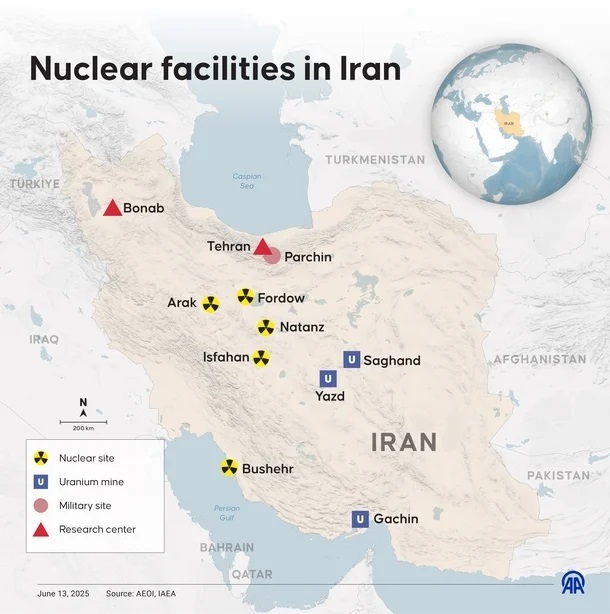
President Donald Trump on Monday said U.S. strikes “totally destroyed” nuclear facilities in Iran and criticized “sleazebags” in the media for suggesting otherwise—but comments from Vice President JD Vance, military officials and nuclear watchdogs all suggest the damage to Iran’s nuclear program remains unconfirmed.
Key Facts
“The sites we hit in Iran were totally destroyed, and everyone knows it,” Trump wrote on Truth Social, disputing “Fake News” he claims “would say anything different in order to try and demean, as much as possible—and even they say they were ‘pretty well destroyed!’”
White House press secretary Karoline Leavitt told ABC on Monday the U.S. is “confident” Iran’s nuclear program was “completely and totally obliterated,” noting there is a “high degree of confidence” the locations the U.S. strikes took place is where Iran stored its enriched uranium and that Iran “no longer [has] the capability … to threaten the world.”
International Atomic Energy Agency chief Rafael Grossi appeared to dispute Trump’s claims in a statement earlier Monday by suggesting the agency would need to verify damage to Iran’s underground Fordow facility, including whether the site’s uranium enrichment halls were impacted, though he noted the U.S. strikes likely caused “very significant” damage.
On Sunday, Defense Secretary Pete Hegseth and Chairman of the Joint Chiefs of Staff Gen. Dan Caine said an assessment on damage to Iran’s nuclear sites was “still pending,” and Caine claimed it was “way too early for me to comment on what may or may not still be there.”
Vance, in an interview with ABC on Sunday, suggested the U.S. strikes only set back Iran’s potential to weaponize its uranium stockpile and said the U.S. was “going to work in the coming weeks to ensure that we do something with that fuel.”
Jeffrey Lewis, a professor of nonproliferation at the Middlebury Institute of International Studies at Monterey, wrote on X he was “unimpressed” by the U.S. strikes while citing satellite images of the attacks, claiming the U.S. “failed to target significant elements of Iran’s nuclear materials and production infrastructure.”
How Large Is Iran’s Uranium Stockpile?
Iran stored about 400 kilograms (about 881 pounds) of uranium enriched to 60%, near weapons-grade enrichment of 90%, according to Grossi. It’s unclear whether Iran’s uranium stockpile is still this large, Grossi noted, adding IAEA’s inspectors last verified Iran’s stockpile a “few days” before Iran’s conflict with Israel began earlier this month.
Could Iran Rebuild Its Uranium Stockpile?
It’s possible Iran could rebuild its nuclear program, but a timeline for development would depend on how much damage was done to Iran’s nuclear sites, according to the Centers for Strategic and International Studies, a U.S.-based think tank. Recent U.S. strikes would make Iran “more motivated than ever” to obtain nuclear weapons, Rosemary Kelanic, a director at the U.S.-based think tank Defense Priorities, told the New York Times. Some American officials estimated an attack on Fordow set back Iran’s nuclear program by as much as five years, the Times reported.
New York Times Gave Green Light to Trump’s Iran Attack by Treating It as a Question of When
Bryce Greene, June 23, 2025, Research assistance: Emma Llano, https://fair.org/home/nyt-gave-green-light-to-trumps-iran-attack-by-treating-it-as-a-question-of-when/
In the wake of the US-supported Israeli attack on Iran, and days before the direct US bombing that followed, the New York Times editorial board (6/18/25) argued that “America Must Not Rush Into a War Against Iran.”
This language was as shifty as it was deliberate. Rather than oppose a policy of unprovoked aggression and mass murder, the Times editorialists suggested such a campaign was happening too hastily, and it should be preceded by more debate.
The opinion writers at the most important paper in the world were fully in favor of attacking Iran; they only worried that Trump would go about it the wrong way. In fact, the Times’ justification for war was identical to that of the Trump administration’s explanation after the fact. It laid it out in the first paragraph:
A nuclear-armed Iran would make the world less safe. It would destabilize the already volatile Middle East. It could imperil Israel’s existence. It would encourage other nations to acquire their own nuclear weapons, with far-reaching geopolitical consequences.
The New York Times‘ echo of the standard Israeli and US propaganda line offers an opportunity to critically examine this most recent justification for aggressive war.
‘Iran is not building a nuclear weapon’
The premise here was that Iran is working to build a nuclear weapon, something that forms the backbone of the Israeli propaganda campaign justifying their actions. The only problem is that there is no evidence whatsoever for this position. Not only is there no evidence that Iran is building a nuclear weapon, there is no reason to think that if they did, they would be anything other than defensive weapons.
Nowhere in the Times analysis was there any reference to the fact that neither US intelligence agencies nor international monitoring organizations have found evidence of any Iranian intention to build a nuclear weapon. As recently as March 25, 2025, Tulsi Gabbard, the Trump administration’s director of national intelligence, told the Senate Select Committee on Intelligence that the US intelligence community “continues to assess that Iran is not building a nuclear weapon and Supreme Leader Khamenei has not authorized the nuclear weapons program that he suspended in 2003.”
While the International Atomic Energy Agency has been critical of steps Iran has taken to make its nuclear power program less transparent in the context of continual threats from Israel and the US to bomb that program, IAEA director Rafael Grossi emphasized in an interview with CNN (6/17/25; cited in Al Jazeera, 6/18/25), after those threats had become reality, “We did not have any proof of a systematic effort to move into a nuclear weapon.”
Unilaterally scrapped
While the Times editorial did make brief mention of the US’s Obama-era anti-nuclear treaty with Iran, it offered no analysis as to why the Trump administration unilaterally scrapped the deal, despite no violation on Iran’s part. Nor did the paper mention the Biden administration refusal to negotiate a return to the deal. There was no mention of the fact that as Israel launched its first strike against Iran, the Iranians had made it clear that they wished to make a deal with the Trump administration on its nuclear energy program, and were actively negotiating toward that end.
But the fact is that every country in the Middle East, including Iran, has been in favor of a nuclear weapons–free Middle East. Every country, that is, with the exception of Israel, whose illegal, undeclared and often unacknowledged stockpile of nuclear weapons are currently in the hands of a genocidal and messianic regime, hell-bent on attacking its neighbors and thwarting any opportunities for peace.
Despite all of the fearmongering about Iran’s alleged aggressive intent and destabilizing potential, the Times ignored ample analysis and evidence to the contrary. As eminent political scientist John Mearsheimer (PBS, 7/9/12) has argued, a nuclear armed Iran could make the region more stable, because of the deterrent power of nuclear weapons.
A 2009 US military–funded study from the RAND corporation (4/14/09) examined Iranian ”press statements, writings in military journals, and other glimpses into Iranian thinking,” and found that it was extremely unlikely that Iran would use nuclear weapons offensively against Israel. Contrary to the Times’ image of Iran as fanatical theocrats bent on Israel’s destruction at all costs, military planners in Iran are well aware of the danger of being wiped off the map by retaliatory US strikes, and plan accordingly. If the Islamic Republic was to get nuclear weapons, predicts RAND, they would be used to deter exactly the kind of unprovoked attack that the US and Israel have launched over the past several days. They would be defensive, not offensive, weapons.
‘A malevolent force in the world’
The editorial board explicitly avoided the question of what Congress should do on the question of war with Iran: “The separate question of whether the United States should join the conflict is not one that we are addressing here.” But they had no problem presenting their pros list:
We know the arguments in favor of doing so—namely, that Iran’s government is a malevolent force in the world, and that it has made substantial progress toward acquiring a nuclear weapon. Last week the International Atomic Energy Agency, which is part of the United Nations, declared that Iran was violating its nonproliferation obligations and apparently hiding evidence of its efforts.
And their cons list:
Given how much weaker Iran is today than it was then, thanks partly to Israel’s humbling of Iranian proxies like Hamas and Hezbollah, the Trump administration might well be able to achieve a stricter [Iran nuclear deal] today.
While the Times correctly pointed out that the IAEA found Iran to be in “noncompliance” with the nonproliferation treaty (NPT), the Times failed to point out that this came after an intense lobbying effort from Western officials just hours before Israeli strikes. They also ignore Iran’s detailed criticism of the IAEA finding, including its allegations that the findings were based in part on forged documents—a credible allegation, given Israel’s history of fabricating and forging evidence to justify aggression. Iran also noted that some of the “nonproliferation obligations” it had allegedly violated were not codified in the NPT, but instead were part of the agreement that the US unilaterally withdrew from. Nor did the Times make reference to the IAEA chief’s explicit insistence that the agency did not have proof Iran was trying to build a nuclear weapon.
‘Let this vital debate begin’
Instead of explaining this, the Times went straight to name-calling. One does not have to scrape the annals of the New York Times to predict that the phrase “malevolent force” has never been used to describe any of Washington’s ultra-violent allies, even the ones who have actually built and maintained an illegal stockpile of nuclear weapons. Certainly not Israel, the nation that has put an entire population under military apartheid for decades, and has slaughtered tens of thousands as part of what international rights organizations have labeled a genocide.
The US and Israel have made Iran the target of propaganda campaigns, terrorism, cyber attacks, assassinations, regime change operations and unprovoked attacks on its personnel and home soil. If the Times had included these facts, it would have inhibited the ultimate goal of the editorial: to promote the idea that war with Iran could potentially be desirable—and certainly justifiable. The Times seemed keen to act as a loyal opposition to Trump, while distancing themselves from the manner in which he might enact such a war.
Including the facts of America’s aggressive and provocative behavior against Iran would force them to conclude that the primary force destabilizing the region is not Iran, but the US and Israel. It isn’t Iran whose top papers are weighing the benefits of whether or not to launch a war of aggression against yet another nation. That honor goes to the New York Times, which said of this national discussion of mass murder policy: “Let this vital debate begin.”
After the strikes on Iran, the Trump administration and Israel have not announced full scale regime change war just yet, though there is every indication that such plans are in the works. As with Iraq in 2003, we have seen how easily false claims of weapons of mass destruction, and propaganda about a need to act, can morph into a years-long quagmire of senseless killing in the name of rebuilding a nation according to Washington’s designs. If such a war should be launched against Iran, the Times will have been one of its key supporters.
From Iran to Everywhere, We Live in Terror of the “Peaceful Atom Apocalypse”
No big city in the US, Europe or Asia is immune to annihilation from the fallout that could be imposed by a single drone, seismic shock or tsunami hitting a single atomic reactor. Millions of downwind humans will die, trillions in economic and ecological damage will threaten the ability of our species to survive on this planet.
Renewables could save a global economy and ecology now death threatened by both atomic warheads and nuclear reactors.
by Harvey “Sluggo” Wasserman, June 22, 2025, https://freepress.org/article/iran-everywhere-we-live-terror-%E2%80%9Cpeaceful-atom-apocalypse%E2%80%9D
Donald Trump has opened the military door to an atomic apocalypse.
But it’s likeliest to come through the “Peaceful Atom Window.”
The 400+ atomic power reactors (94 in the US) now operating worldwide are all sitting ducks for low-tech attack.
Iran or any other nation or terror group, with or without a nuclear warhead, can blow apart any commercial reactor with a single drone.
The resulting apocalypse can be spreading as you read this.
Commercial atomic power makes nuclear warheads ridiculously obsolete. The Trump/Netanyahu attacks on Iran’s alleged bomb factories ae marginal at most to today’s atomic reality.
Once blown apart by a drone, earthquake, tsunami, human error, equipment failure or simple sabotage, any atomic reactor can irradiate a continent, an ocean… the planet as a whole.
All commercial reactors operating in the world today are without comprehensive private insurance.
They are sitting naked ducks…absurdly vulnerable to a simple low-level attack from a single combatant with a drone, mortar, instrument of sabotage.
Fallout from Chernobyl, in 1986, irradiated most of Europe, much of Asia, and was detected all the way across the continental US. Twice.
It killed at least a million humans and cost at least a trillion dollars, probably far more – https://pmc.ncbi.nlm.nih.gov/articles/PMC2974725
Billions of gallons of lethal radioactive liquid still pour into the Pacific Ocean from the 2011 disaster at Fukushima, with no end in sight, and no credible way to gauge the permanent damage to our global ecosystems. But radioactive tuna did turn up within weeks off the coast of California.
Fukushima spewed more than 100X more radioactive cesium into the air than the combined Bombings at Hiroshima & Nagasaki – https://www.whoi.edu/know-your-ocean/ocean-topics/ocean-human-lives/pollution/radiation/fukushima-radiation/faqs-radiation-from-fukushima/#:~:text=Cesium%2D137%20and%20%2D134%20were,direct%20threat%20to%20marine%20life.
If Iran or any other nation, however small, with or without actual atomic weaponry, were serious about inflicting unlimited radioactive damage on a perceived enemy or the planet as a whole, it does not need a warhead or a missile….just a single drone to take down an atomic reactor.
Thus the Trump/Netanyahu attack on Iran’s warhead production is of zero military meaning. It offers the world no respite from the threat of atomic annihilation.
Russia’s Putin has already served many warnings. On February 14, 2025, he crashed a drone into the sarcophagus that covers the still-steaming exploded core at Chernobyl, inflicting millions in damage and threatening the world with another apocalyptic release.
Putin’s mortar shells continue to fly around and about the dozen commercial reactors perched like eggshells in the Ukrainian war zone.
None are protected with multi-billion-dollar shields like the one at Chernobyl. After seventy years in development, no US reactor can get private insurance against a catastrophic disaster.
The two reactors at Diablo Canyon, California, are more than 40 years old. They’re internally embrittled, hopelessly fragile, surrounded by seismic faults, violating state and federal environmental laws, gouging California with the continental US’s highest electric bills. An apocalyptic cloud will inevitably pour down the coast into Los Angeles when the “Big One” turns those reactors into radioactive rubble.
The global insurance industry has de facto pronounced these reactors “UNSAFE!” by refusing to cover liability for a major disaster.
No big city in the US, Europe or Asia is immune to annihilation from the fallout that could be imposed by a single drone, seismic shock or tsunami hitting a single atomic reactor. Millions of downwind humans will die, trillions in economic and ecological damage will threaten the ability of our species to survive on this planet.
Thus the Trump/Netanyahu attack on Iran’s atomic weaponry has in no way made our species safer. On a planet filled with atomic reactors, atomic warheads are an afterthought.
Thankfully, ALL these reactors can be rapidly replaced with solar, wind, geothermal, battery storage, efficiency and other Solartopian technologies that are safer, cheaper, cleaner, more reliable, more job producing and faster to build than anything fossil/nuclear.
They could save a global economy and ecology now death threatened by both atomic warheads and nuclear reactors.
Without eliminating BOTH, our species has no future.
———————————————————————-
Harvey “Sluggo” Wasserman wrote SOLARTOPIA! OUR GREEN-POWERED EARTH, & co-wrote KILLING OUR OWN: THE DISASTER OF AMERICA’S EXPERIENCE WITH ATOMIC RADIATION. Most Mondays he co-convenes the Green Grassroots Emergency Election Protection Coalition Zooms (www.grassrootsep.org)
‘Completely & Totally Obliterated’
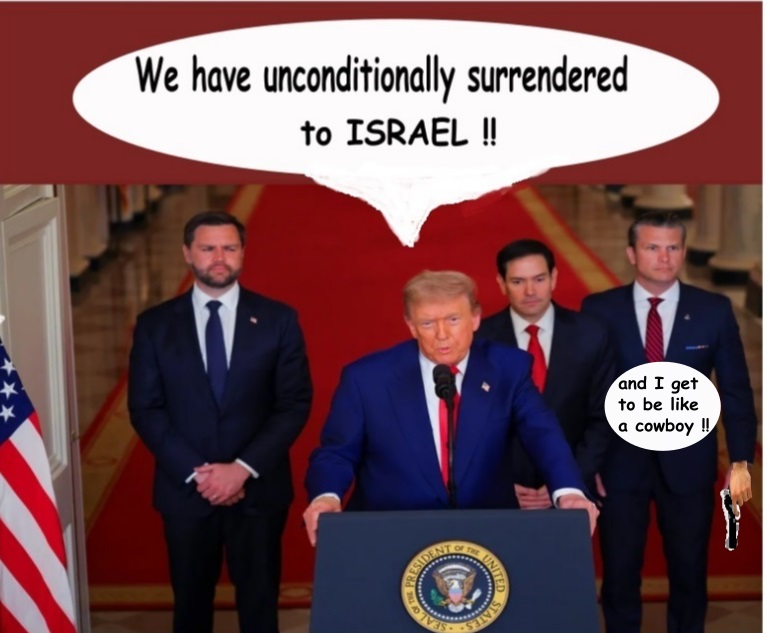
“Iran’s key nuclear enrichment facilities have been completely and totally obliterated,” Trump declared Saturday evening.
It is certainly unclear how “the Jewish state” will take it if Iran’s nuclear program has been damaged but remains extant.
The Iraq invasion and the bombing of Iran are acts of desperation — the conduct of a wounded, uncertain nation that went on the defensive when the Twin Towers went down and history arrived on its shores.
By Patrick Lawrence, Consortium News, 23 June 25, https://consortiumnews.com/2025/06/23/patrick-lawrence-completely-totally-obliterated/
I have heard many unhinged speeches by American presidents over the years, but — no risk of exaggeration here — Donald Trump’s as he declared “a spectacular military success” after seven B–2 bombers attacked three nuclear sites in Iran Saturday night is the barmiest of my lifetime.
“The nuclear threat posed by the world’s No. 1 state sponsor of terror?” “The bully of the Middle East?” There was this by way of a plunge into the crowded precincts of American paranoia:
“They have been killing our people, blowing off their arms, blowing off their legs with roadside bombs. That was their specialty. We lost over a thousand people and hundreds of thousands throughout the Middle East and around the world have died as a direct result of their hate.”
And for the good people out in Peoria, a decisive majority of whom, the polls say, oppose American aggression against the Islamic Republic: “I want to just say, we love you, God, and we love our great military.”
Let me remind readers, as rhetoric this base makes it easy to forget: The speaker of these words is the 47th president of the United States. Yes, the commander-in-chief.
It is difficult to take Trump’s four minutes in front of the microphone late Saturday evening the slightest bit seriously. But we must, precisely because what Trump had to say to his nation was so utterly unserious.
Donald Trump, to put this point another way, turns out to be worse than Donald Trump.
It is natural, for those with some sense of history to compare Trump’s my-God-and-my-military talk with the more craven moments of the McCarthyist 1950s, or with the John Birchers. I say it is more useful to think of that famous remark Karl Rove made during an interview conducted by Ron Suskind a year and seven months after the Bush II regime invaded Iraq.
“Faith, Certainty and the Presidency of George W. Bush” was published in The New York Times Sunday Magazine in October 2004. Suskind identifies Rove, then an adviser to the Bush White House, as “the aide,” but it was soon enough known it was he Suskind had interviewed.
The memorable passage in the Suskind piece is this:
“Guys like me were ‘in what we call the reality-based community,’ which he defined as people who ‘believe that solutions emerge from your judicious study of discernible reality.’ … ‘That’s not the way the world really works anymore,’ he continued. ‘We’re an empire now, and when we act, we create our own reality. And while you’re studying that reality — judiciously, as you will — we’ll act again, creating other new realities, which you can study too, and that’s how things will sort out. We’re history’s actors … and you, all of you, will be left to just study what we do.”
America had by then given Iraqis and the rest of the world a bitter display of what results when a nation purports to conjure realities to its liking. Trump now takes on the same preposterous project, as the ungrounded language cited above indicates.
Bush II failed extravagantly in Iraq, and Trump’s new adventure cannot but come to the same fate.
Creating reality, as if the irreducible foundations of cognition and logic are mere irritants to be set aside, may look like the very zenith of hubristic power. It is not.
The Iraq invasion and the bombing of Iran are to be read as acts of desperation — the conduct of a wounded, uncertain nation that assumed the defensive crouch when the Twin Towers went down in 2001 and history arrived on its shores — history, that process America all along thought was the burden of others.
We must bear this always in mind. Desperation is the mulch wherein recklessness germinates.
“Iran’s key nuclear enrichment facilities have been completely and totally obliterated,” Trump declared Saturday evening. Does this remind you of anything?
Maybe Bush II’s ridiculous appearance, in a bomber jacket no less after landing on board, to declare on an aircraft carrier off San Diego a few days after the Iraq invasion began, “Mission accomplished?” An infamous bit of staging,
We are already well down from “completely and totally.” By Sunday morning the Pentagon was trading in “severe damage,” catch-all vocabulary such that there is no telling what it means.
Casting further doubt on the state of matters, a digital publication called Amwaj.media reported Sunday afternoon that Washington had advised Tehran in advance of its intent to bomb and indicated the limits of its targeting. Citing “a high-ranking Iranian political source,” Amwaj said this source “also confirmed that the targeted sites were evacuated, with ‘most’ of Iran’s stockpile of enriched uranium kept in secure locations.”
Amwaj.media has its head office in Britain and publishes news and comment on West Asia in Arabic, Farsi and English. I cannot verify this report, but I am not at all inclined to discount it. It conforms, certainly, with the Trump regime’s vigorous efforts to stress that it does not seek a full-out war with the Islamic Republic.
“We have no idea where this war will go,” The New York Times declared in the headline atop an opinion piece published in its Sunday editions. “It may appear like a tactical victory less than four hours after the bombs began to fall,” W.J. Hennigan writes, “but projecting any sense of finality about this ordeal is wildly premature.”
This is so by way of facts on the ground, as the expression goes. It is certainly unclear how “the Jewish state” will take it if Iran’s nuclear program has been damaged but remains extant. The Zionist fanatics who started all this seem willing to settle for nothing short of Trump’s “completely and totally.”
But I see finality aplenty when I turn the weekend’s events 180° and consider them from this perspective. Whatever the destruction at Fordow, Isfahan and Natanz by way of the “bunker busters” those B–2s dropped, the damage the Trump regime has done to itself and the nation it pretends to govern is nearly too extravagant to reckon.
Remember “Nous sommes tous Américains,” that celebrated headline atop an editorial Le Monde published shortly after the Sept. 11, 2001, attacks? I did not then think the United States had enjoyed the world’s approval so unreservedly for decades.
The slide began two years later, with Bush II’s wanton, unquestionably illegal invasion of Iraq. The policy cliques could not since have squandered the residual good will of the postwar decades more efficiently had they tried.
It was not a question of trying, of course. It has been a question since 2001 of those planning and executing U.S. policy simply not giving a damn what the rest of the world thinks — or wanting even to know what the rest of the world thinks.
Trump just decisively clarified the point, in my judgment. Nothing other than power matters to the Americans now. If this has been true since 2001, Trump makes clear there is no turning back from this: Power is all the United States has left to give the world — or impose upon it.
“There’s no military in the world that could have done what we did tonight, not even close,” Trump declared triumphantly Saturday night. “There has never been a military that could do what took place just a little while ago.”
What a thing to boast of. So hopelessly out of sync with the 21st century. No, no other military could have done what the American did at the weekend, and no other military would ever be sent on such a mission.
I cannot imagine what some metric of global good will toward America would register now that Trump has led the United States into what looks like another war. If “completely and totally obliterated” were on the dial, the needle would be close.
As widely reported, Trump colluded with the Israelis to deceive Tehran with the suggestion that talks toward a diplomatic settlement of the nuclear question would proceed in Oman two Sundays ago. And as the Iranians prepared for another round of negotiations, Israel launched its attacks the preceding Friday.
Sucker-punching. This now seems part of America’s diplomatic repertoire.
It is hard to believe any American administration would be this craven, but Trump did the same thing again when he stated last week he would take two weeks to give diplomacy a last chance. It was a matter of a few days before the B–2s flew.
When Seymour Hersh predicted this in “What I have been told is coming in Iran,” published in his Substack newsletter last Friday, I confess I thought Sy’s neck was out a touch too far this time. I leave readers to finish the thought.
The Washington policy cliques have been more or less indifferent to statecraft for decades. Diplomacy is for the weak nations, the powerful having no need of it, former U.N. chief Boutros Boutros Ghali wrote insightfully in his memoirs. Trump just burned the bridges diplomats are supposed to build — all of them.
Who — the Russians, the Chinese, the Africans, the Latin Americans, the Europeans, the East Asians, the Indians — who will engage the Americans diplomatically any longer but with deep suspicions, deep reservations, and a profound reluctance to trust? Not to mention a well of contempt.
This is grave far beyond the Iranians, in my view. Contrary to appearances these past 25 years, diplomacy is an essential 21st century technology. B–2s and bunker busters do not seem so to me. High-technology weaponry is deployed at an ever-rising cost.
Incessant breaches of international law, cavalier abuses of the sovereignty of other nations: This will go on for who knows how long. But Trump and his people and the neoconservatives who appear to control them just went some distance destroying all possibility that the U.S. might participate in the making of a new world order.
This matters nil in Washington now, but such an order materializes as we speak, and the day will come when this foreclosed prospect will be up for regret.
I read something else in Trump’s Saturday night speech. To me it was the culmination of weeks of irrationality, a frenzy of it that led — just as the Israelis hoped it would — to senseless attacks with no logical justification.
There seems to me another kind of finality to what Trump just did. He has destroyed — completely and totally, I fear to say — rational thought as the basis of action in the name of what historians of our time will record as a rear-guard defense of raw power.
A late-phase imperium cannot do what Trump just did and then return to sound deliberations, measured policy, sophisticated statecraft. I do not now see a path to any such return.
America has long been — since 2001, again — on the way into an era of unreality, as we may as well call it. Trump just gave the nation a final shove and slammed the door behind it, to put my point another way.
When the bunker busters fell Saturday night the Trump regime created a reality all right. Look at it. Take a hard look. This is essential if some new direction is to be discovered.
Patrick Lawrence, a correspondent abroad for many years, chiefly for the International Herald Tribune, is a columnist, essayist, lecturer and author, most recently of Journalists and Their Shadows, available from Clarity Press or via Amazon. Other books include Time No Longer: Americans After the American Century. His Twitter account, @thefloutist, has been permanently censored.
Chris Hedges: War With Iran

By Chris Hedges / Original to ScheerPost, https://scheerpost.com/2025/06/22/chris-hedges-war-with-iran/
War opens a Pandora’s box of evils that once unleashed are beyond anyone’s control. The warmongers who ordered the strikes by U.S. bombers on Iranian nuclear sites have no more of a plan for what comes next in Iran than they had in Afghanistan, Iraq, Libya or Syria.
European allies, whom Israel and Trump have alienated with these air assaults, are in no mood to cooperate with Washington. The Pentagon, even if it wanted to, does not have the hundreds of thousands of troops it would need to attack and occupy Iran — the only way Iran might be subdued.
And the idea that the marginal and discredited Iranian resistance group Mujahedeen-e-Khalq (MEK), which fought alongside Saddam Hussein in the war against Iran and is viewed by most Iranians as composed of traitors, is a viable counter force to the Iranian government is ludicrous.
In all these equations the 90 million people in Iran are ignored just as the people of Afghanistan, Iraq, Libya and Syria were ignored. They will not welcome the United States and certainly not Israel as liberators. They may hate the regime, but they will resist. They don’t want to be dominated by foreign powers.
A war with Iran will be interpreted throughout the region as a war against Shiism. Soon there will be retaliation. Lots of it. It will come at first with desultory missile strikes and then attacks carried out by elusive enemies on ships, military bases and installations. Steadily it will grow in volume and lethality.
The death toll, including among the some 40,000 soldiers and Marines stationed in the Middle East, will mount. Ships, including aircraft carriers, will be targeted. We will, as we did in Iraq and Afghanistan, begin to lash out with a blind fury, fueling the conflagration we began.
Those who lured us into this war know little about the instrument of war and even less about the cultures or peoples they seek to dominate. Blinded by hubris, believing their own hallucinations, they have learned none of the lessons of the last two decades of warfare in the Middle East. A war with Iran will be a self-defeating and costly quagmire, one more nail in the rotting edifice of the empire.
Nuclear peril

by beyondnuclearinternational, https://beyondnuclearinternational.org/2025/06/23/nuclear-peril/
US and Israeli bombing of Iran’s nuclear facilities set the stage for disaster, writes Linda Pentz Gunter from London
There was widespread if not quite universal condemnation on Sunday after President Trump’s decision to bomb Iran’s nuclear facilities and an immediate call for protests in cities across the United States and other countries. The US attack was launched to support Israel’s determination not to let Iran develop nuclear weapons at its civil nuclear facilities, although presently there is little to no indication that Iran is planning to do so.
“Military action against Iran is not the way to resolve concerns over Tehran’s nuclear programme,” said Melissa Parke, executive director of the Nobel Peace Prize-winning International Campaign to Abolish Nuclear Weapons. “Given that US intelligence agencies assess Iran is not pursuing nuclear weapons, this is a senseless and reckless act that could undermine international efforts to prevent the further proliferation of nuclear weapons.”
Overnight on Saturday and into the early hours of Sunday morning, Trump authorized more than 100 US war planes to bomb Iran and claimed to have “obliterated” Iran’s nuclear program. The Iranians admit damage but not full destruction.
“Operation Midnight Hammer” as it was known, included B-2 bombers that dropped more than a dozen bunker busters on the heavily fortified Fordow uranium enrichment site, believed to be 80 meters below ground. American planes also bombed the Natanz uranium enrichment complex, while Tomahawk missiles were reportedly used to strike the Isfahan uranium conversion facility.
Fordow is believed by western powers to be the location where Iran could be working on producing nuclear weapons. However, the International Atomic Energy Agency had reiterated as recently as a day before this latest attack that “we did not find in Iran elements to indicate that there is an active, systematic plan to build a nuclear weapon,” its general secretary, Rafael Mariano Grossi told Al Jazeera.
Concerns remain about Iran’s only operating civil reactor at Bushehr. Even before the American incursion, Russia, which built and operates Bushehr, had warned the Israelis of the grave risks of another Chornobyl-style disaster should they strike the reactor. Russia had already begun evacuating some of its personnel but threatened to remove more if they were in danger from Israeli bombs. Alexei Likhachev, the CEO of state nuclear company Rosatom said “We are prepared for any scenario, including the rapid evacuation of all our employees.”
But a reactor, even if shut down, cannot be left unattended, raising other grave concerns about its longterm safety during the current war.
A day after the American bombing raid, Israel launched more attacks on Iran, including in Bushehr province. This now means there are two countries actively under attack where civil nuclear power plants are located — Ukraine and Iran. The consequences of a successful bombing raid on a civil nuclear plant could include widespread release of highly harmful and persistent radiation, forcing mass and permanent evacuations and sickening and killing thousands or more in both the near- and long-term.
Even greater concerns have been mounting that US involvement could trigger a wider conflict in the region. As many have pointed out consistently, Israel is a nuclear-armed state, albeit absurdly an undeclared one even though the country likely possesses as many as 200 warheads. Israel refuses UN inspections and has never signed the nuclear Non-Proliferation Treaty. Iran on the other hand is a signatory to the NPT and has long claimed it is exercising its “inalienable right” under that treaty to pursue a civil nuclear weapons program.
Those concerns were further heightened when Christian Zionist US Ambassador to Israel Mike Huckabee urged Trump to consider using a nuclear bomb on Iran, advice Trump fortunately ignored for now. But Trump remains an unpredictable tinder box, illustrating once again the peril of countries continuing to possess nuclear weapons that an unhinged leader might launch on an impulse.
Protests erupted immediately in US cities and elsewhere across the world on the news of the US attack on Iran, which came hours after 350,000 people had marched through London in the latest monthly demonstration against Israel’s attack on Palestine, but this time also calling for halt to its bombing of Iran.
At that rally, there was skepticism that Israel’s attacks on Iran were really just about stopping Iran developing nuclear weapons. Somaye Bagher Zadeh, with Iranians For Palestine UK, said Israel’s actions were potentially about “getting rid of the Iranian regime, but to be frank, regime change by any foreign power is not in the interests of the Iranian people. And it’s entirely up to the Iranian people to decide who rules them.”
“Since they destroyed Iraq, we have known that it was inevitable that they would eventually come for us,” said prominent British-Iranian trade union leader, Maryam Eslamdoust. “We Iranians feel like we have been waiting our whole lives for the US or Israel to attack us.”
Saturday’s mass march in London to Whitehall was followed by an emergency protest called for Monday outside the US Embassy in London by Stop the War Coalition and Campaign for Nuclear Disarmament, alongside other rallies across the country. So far, the UK government has continued to politically support and materially aid and abet Israel’s attacks on Gaza as well as its starvation of the Palestinian population there. A rally was also called by American groups in front of the White House.
British activists are concerned that their government may be drawn back into another disastrous war, similar to the UK’s support of the US in the war in Iraq. That war cost countless lives on all sides and failed to stabilize the Middle East region, instead giving birth to further radicalization.
“Trump’s attack on Iran is brutal, illegal and unjustified,” said a statement from Stop the War Coalition on Sunday. The group said it condemned the US attack on Iran “unequivocally and urges every possible mobilization against British military or political support for the aggression.”
In the US, Senator Chris Van Hollen, a Maryland Democrat, was quick to criticize the bombing raids. “While we all agree that Iran must not have a nuclear weapon, Trump abandoned diplomatic efforts to achieve that goal and instead chose to unnecessarily endanger American lives, further threaten our armed forces in the region, and risk pulling America into another long conflict in the Middle East,” said Van Hollen, who has also spoken out consistently against Israel’s attacks on Gaza. “The U.S. intelligence community has repeatedly assessed that Iran is not building a nuclear weapon. There was more time for diplomacy to work.”
The diplomacy Van Hollen referred to was a resumption of negotiations for a nuclear agreement with Iran that would either limit or eliminate its civil uranium enrichment program. Such an agreement — the Joint Comprehensive Plan of Action, limiting enrichment and allowing for stringent inspections in exchange for a lifting of sanctions — had already been in place until Trump withdrew the US during his previous administration. New talks had been progressing poorly, with Israel chomping at the bit to use military force instead, which it did then initiate with US prior knowledge.
Independent Vermont senator, Bernie Sanders, said “We cannot allow ourselves to be dragged into another Middle East war based on lies,” reflecting on previous such ventures in Vietnam and Iraq based on similar falsehoods.
While most Republicans have lined up behind Trump’s warmongering, one Republican, Representative Thomas Massie of Kentucky, called the attack “not Constitutional.” Earlier in the week, Massie and California Democrat Ro Khanna had introduced a resolution that would have blocked US participation in Israel’s attacks on Iran without Congressional approval.
“This is an extremely dangerous situation,” said a statement from the grassroots movement, Our Revolution, which promotes the campaigning of Sanders on a number of domestic and foreign issues, including Gaza and now Iran. “Trump has immediately threatened even more attacks, and U.S. service members are now directly in harm’s way,” the group said. “We are on the cusp of a catastrophic conflict that could cost countless American and Iranian lives.”
Linda Pentz Gunter is the international specialist at Beyond Nuclear and writes for and edits Beyond Nuclear International. She is currently reporting from London, England.
Iran Fires Missiles at US Base in Qatar
Qatar’s Foreign Ministry said the missiles were intercepted and that there were no casualties
by Dave DeCamp | Jun 23, 2025, https://news.antiwar.com/2025/06/23/iran-fires-missiles-at-us-base-in-qatar/
The Iranian military announced on Monday that it launched an attack on the US’s Al Udeid base in Qatar in response to the US bombing of Iran’s nuclear facilities.
The attack was first reported by Axios reporter Barak Ravid, who cited Israeli sources that said Iran fired at least 10 missiles at the US base. Initial reports said that another missile targeted a US base in Iraq, but US officials later said the attack targeted only a base in Qatar.
“This base is the headquarters of the Air Force and the largest strategic asset of the US terrorist army in the West Asia region,” Iran’s Islamic Revolutionary Guard Corps (IRGC) said of the US base in Qatar.
The IRGC said Iran would not “leave any attack on its territorial integrity, sovereignty, and national security unanswered under any circumstances.”
The Qatari Foreign Ministry issued a statement that said Qatar’s air defenses “successfully thwarted the attack and intercepted the Iranian missiles” and that there were no injuries or deaths caused by the attack.
The reported missile launch comes after Fox News and other outlets said that an Iranian attack on US assets in the region was “imminent” and Qatar announced that it was closing its airspace, signaling the US has at least a few hours’ notice that the barrage was coming.
The New York Times reported that Iran had notified Qatar of its plans to attack in order to minimize casualties, signaling Tehran is seeking de-escalation with the US. In 2020, after the US assassinated Iranian Gen. Qassem Soleimani, Iran launched a similar attack on a US base in Iraq, which the US didn’t respond to.
A White House official told CNN that the US was expecting an Iranian response and claimed President Trump didn’t want more military engagement in the region. “We knew they’d retaliate. They had a similar response after Soleimani,” the official said.
US strikes on Iran’s nuclear sites ‘marks perilous turn’: Diplomacy must prevail, says Guterres
United Nations, 22 June 25
The UN Secretary-General António Guterres told an emergency meeting of the Security Council on Sunday that massive overnight strikes by the United States on Iran’s nuclear facilities only increase the risk of a wider war and “serious damage to the international order.”
After ten days of airstrikes initiated by Israel aimed at crippling Iran’s nuclear programme which have led to deadly daily exchanges of missile fire between Tehran and Tel Aviv, the UN chief said that diplomacy must now prevail.
“We now risk descending into a rathole of retaliation after retaliation,” he said, responding to the US intervention overnight in support of Israel’s military campaign, which targeted three facilities involved in uranium enrichment.
Return to serious negotiations essential
“We must act – immediately and decisively – to halt the fighting and return to serious, sustained negotiations on the Iran nuclear programme,” Mr. Guterres added.
He told ambassadors the citizens of the wider Middle East region could not endure yet another cycle of destruction. Demanding a ceasefire, he also put Iran on notice that it must “fully respect” the Non-Proliferation Treaty on the development of nuclear weapons as a cornerstone of peace and security worldwide.
Iran has consistently denied the allegation from Israel and others that its ambitions are to become a nuclear armed State, versus developing atomic energy for purely peaceful purposes.
Israel, the US and Iran face a stark choice. “One path leads to a wider war,” the UN chief continued, “deeper human suffering and serious damage to the international order. The other leads to de-escalation, diplomacy and dialogue.”……………………
…………………………………………………………………………………https://news.un.org/en/story/2025/06/1164756
1 This Month
Chernobyl: The Lost Tapes – A good documentary on Chernobyl on SBS available On Demand for the next 3 weeks– https://www.sbs.com.au/ondemand/tv-program/chernobyl-the-lost-tapes/2352741955560

of the week–London Campaign for Nuclear Disarmament

Tell the Ukrainian Government to Drop Prosecution of Peace Activist Yurii Sheliazhenko
To see nuclear-related stories in greater depth and intensity – go to https://nuclearinformation.wordpress.com
-
Archives
- April 2026 (139)
- March 2026 (251)
- February 2026 (268)
- January 2026 (308)
- December 2025 (358)
- November 2025 (359)
- October 2025 (376)
- September 2025 (257)
- August 2025 (319)
- July 2025 (230)
- June 2025 (348)
- May 2025 (261)
-
Categories
- 1
- 1 NUCLEAR ISSUES
- business and costs
- climate change
- culture and arts
- ENERGY
- environment
- health
- history
- indigenous issues
- Legal
- marketing of nuclear
- media
- opposition to nuclear
- PERSONAL STORIES
- politics
- politics international
- Religion and ethics
- safety
- secrets,lies and civil liberties
- spinbuster
- technology
- Uranium
- wastes
- weapons and war
- Women
- 2 WORLD
- ACTION
- AFRICA
- Atrocities
- AUSTRALIA
- Christina's notes
- Christina's themes
- culture and arts
- Events
- Fuk 2022
- Fuk 2023
- Fukushima 2017
- Fukushima 2018
- fukushima 2019
- Fukushima 2020
- Fukushima 2021
- general
- global warming
- Humour (God we need it)
- Nuclear
- RARE EARTHS
- Reference
- resources – print
- Resources -audiovicual
- Weekly Newsletter
- World
- World Nuclear
- YouTube
-
RSS
Entries RSS
Comments RSS
 nuclear-news