Jubilation at Ukraine’s Operation Spiderweb – but is this joy justified?

A web, or a trail to Armageddon?
Noel Wauchope, 3 June 25, https://theaimn.net/jubilation-at-ukraines-operation-spiderweb-but-is-this-joy-justified/#google_vignette
The news media is agog with the glorious success of drones sent deep inside Russia to damage 41 planes. Ukraine claims that these were A-50 surveillance planes, the supersonic Tu-160 and Tu-22 bombers, and the massive Tu-95s, which were developed to carry nuclear bombs and now launch cruise missiles.
The damage is estimated to be $7billion. The targets reached inside Russia included Belaya airbase over 4,000km) from Ukraine, and three other distant airbases. the complex operation was planned in secret, over 18 months.
It was such a clever operation, involving smuggling of drones into Russia and placing them inside containers, which were later loaded on to trucks. Remotely activated mechanisms opened the containers allowing the drones to fly out and make their distant attack.
Ukraine’s President Volodymyr Zelenskyy praised the “absolutely brilliant” Ukrainian drone attack’ – “produced by Ukraine independently”.
Wow! We’re all delighted, aren’t we, at this surprise, this ingenuity, done all alone by Ukraine – such a demonstration of how the clever Ukrainians will beat the stupid boorish Russians?
There are just a few questions that I would like to see posed, in the corporate media.
I hardly know where to start. Can we believe that:
- This was done over 18 months completely without the knowledge of Ukraine’s European partners, in particular Great Britain, France and Germany, who were all consulting with Ukraine over that period, and especially in the last few weeks?
- Without the knowledge of the USA, while Senators Lyndsay Graham and Richard Blumenthal, in Ukraine in the past week where they coordinated intensely with the Ukrainian government?
- Why was this attack timed exactly at the time of the Istanbul peace talks between Ukraine and Russia?
- Did Zelensky not understand that this would at least cast a damper on those talks, upsetting Russia – a bit like the effect on USA if someone attacked US Air Force B-52H bombers and B-2 bombers ?
- Well, if Zelensky did understand that, was his intention to sabotage the talks, and provoke Russia into a retaliation, which might bring Europeand even the USA into the war?
The jubilation of the media seems to completely ignore Russia’s stated policy on its use of nuclear weapons, updated in 2024 – nuclear weapons would be authorised for use in response to “attack by [an] adversary against critical governmental or military sites of the Russian Federation, disruption of which would undermine nuclear forces response actions”.
We don’t know how Russia will respond to this remarkable and unprecedented attack.
We don’t know how President Trump will respond.
What is clear is that the Istanbul peace talks have been wrecked, and a whole new phase now opens in the Russia’s invasion of Ukraine. It started out with the intention of a limited attack – the Russians still call it a Special Military Operation. Now Putin has no other option than to declare it a full scale war.
Poll: 82% of Israelis want to expel Palestinians from Gaza; 47% want to kill every man, woman, child

A poll found that 82% of full citizens of Israel want to expel Palestinians from Gaza. 47% want to kill every single man, woman, and child in Gaza. Former Prime Minister Ehud Olmert wrote that Israel is waging a “war of extermination: the indiscriminate, unrestrained, cruel, and criminal killing of civilians”.
By Ben Norton, https://geopoliticaleconomy.com/2025/05/30/poll-israelis-expel-palestinians-gaza-genocide/
Support for genocide, mass murder, and ethnic cleansing is widespread in Israel.
Israel’s former Prime Minister Ehud Olmert admitted that his country is waging a “war of extermination: the indiscriminate, unrestrained, cruel, and criminal killing of civilians”.
Meanwhile, the vast majority of Israelis want to expel Palestinians from Gaza, and roughly half want to kill every single man, woman, and child in the besieged strip.
This is according to a poll that was published by the major Israeli newspaper Haaretz.
It found that 82% of Israelis want to expel Gazans, and 47% support killing all Palestinians in Gaza.
The more religious an Israeli is, the more likely they are to support genocide and ethnic cleansing.
The survey was conducted in March by Israeli scholar Tamir Sorek, a professor at Pennsylvania State University. He worked with the Israeli polling firm Geocartography Knowledge Group.
Most Israelis want to expel Palestinian citizens
Roughly 21% of citizens of Israel are Palestinians, although they are not considered to be fully Israeli. They are third-class citizens, and are denied equal treatment by the Israeli regime.
“Israel is not a state of all its citizens”, Prime Minister Benjamin Netanyahu declared with pride in 2019.
“According to the basic nationality law we passed, Israel is the nation state of the Jewish people – and only it”, Netanyahu stressed, making it clear that Palestinians are not truly considered to be Israelis.
The March 2025 poll commissioned by Pennsylvania State University found that 56% of Jewish Israelis — who are the only ones considered to be true, full citizens — want to expel all Palestinian citizens. This includes 66% of Israelis under the age 40.
The younger an Israeli is, the more likely they are to be a far-right extremist, the survey showed.
How the political systems of Israel and the USA promote far-right extremism
Professor Tamir Sorek, the Israeli scholar who conducted the poll, noted that some prominent religious leaders in Israel have advocated for the mass murder of Palestinian civilians.
As an example, Sorek cited Rabbi Yitzchak Ginsburgh, an influential Israeli settler leader in the West Bank, which according to international law is Palestinian territory that has been illegally occupied by Israel since 1967.
Ginsburgh, who wants to eliminate Palestinians and establish a theocratic monarchy in Israel, is also an American. He was born and raised in the United States, and did not move to Israel until he was in his 20s.
Sorek wrote that the attack on Israel on 7 October 2023 “only unleashed demons that had been nurtured for decades in the media and the legal and educational systems”.
In Haaretz, Sorek wrote (emphasis added):
Zionism, besides being a national movement, is also a movement of immigrant-settlers, seeking to displace the local population. Settler-immigrant societies always encounter indiscriminate violent resistance from indigenous groups. The desire for absolute and permanent security can lead to an aspiration to eliminate the resisting population. Therefore, virtually every settlement project has the potential for ethnic cleansing and genocide, as indeed happened in North America in the 17th through 19th centuries or in Namibia in the early 1900s.
Sorek warned in another article in April that, “In Israel, calls for genocide have migrated from the margins to the mainstream”.
A clear example of how fascism has become mainstream in Israel is the country’s extreme-right Finance Minister Bezalel Smotrich, a member of the government’s powerful security cabinet.
Smotrich described himself as a “fascist homophobe”. The top Israeli official has called for the “total annihilation” of Gaza, and he argued it would be “justified and moral” to starve to death all 2.1 million Palestinians in the strip.
Former Prime Minister Ehud Olmert says Israel is waging a “war of extermination” in Gaza
Israel’s former Prime Minister Ehud Olmert has accused his country of committing war crimes and waging a “war of extermination” in Gaza.
Olmert led the Israeli regime from 2006 to 2009. He was previously a decades-long member of Netanyahu’s right-wing political party, Likud.
He made these frank admissions in a Hebrew-language article in Haaretz in May. (The following quotes are from Google Translate.)
“What we are doing in Gaza is a war of extermination: the indiscriminate, unrestrained, cruel, and criminal killing of civilians”, Olmert stated.
He made it clear that this is the “result of a policy dictated by the government, knowingly, intentionally, viciously, maliciously, recklessly”.
Olmert explained that, in 2023 and 2024, he denied that the Israeli regime was intentionally committing war crimes, but he now realizes that he was wrong.
“There are too many cases of brutal shooting of civilians, of destruction of property and homes”, the former Israeli prime minister said. “Looting of property, thefts from homes, which in many cases IDF soldiers have also taken pride in and published in personal posts. We are committing war crimes”.
Olmert stated in no uncertain terms that Israel is using hunger as a weapons: “Yes, we are depriving the residents of Gaza of food, medicine, and minimal means of subsistence as part of a declared policy”.
He referred to the Israeli regime as a “gang of criminals”, and wrote that “the ministers of the Israeli government, led by the head of the gang, Netanyahu, are actually adopting, without forethought, without hesitation, a policy of starvation and humanitarian pressure whose outcome could be catastrophic”.
Israel officially calls its war in Gaza “Operation Gideon’s Chariots”. Olmert said this is an “illegitimate military campaign”, in which Israeli soldiers have gone on a “rampage”, and have turned Gaza into a “humanitarian disaster zone”.
The army is acting “recklessly, carelessly, and excessively aggressively”, he added.
The large number of Palestinian civilians killed in Gaza is “unreasonable, unjustifiable, unacceptable”, he wrote.
Olmert also admitted that Israelis “massacre Palestinian civilians in the West Bank as well”, and “commit heinous crimes every day in the West Bank”.
In an interview with ABC News, the former Israeli prime minister acknowledged, “We have destroyed Gaza”.
The Nuclear Gambit: Trump just handed the atom to the highest bidder

NJ Today News, 2 June 25, https://njtoday.news/2025/05/31/the-nuclear-gambit-trump-just-handed-the-atom-to-the-highest-bidder/
The air in America reeks of uranium and unchecked ambition as the Trump administration, in a move that can be described as arson, signed a series of executive orders designed to gut the Nuclear Regulatory Commission—the last line of defense between corporate nuclear profiteers and the American public.
This was no mere policy shift.
This was a full-scale sabotage of oversight, a calculated demolition of the very safeguards that have kept Three Mile Island from becoming a recurring nightmare. With the stroke of a pen, Trump has effectively turned the NRC into a rubber-stamp factory, slashing staff, silencing public input, and fast-tracking reactor approvals with all the caution of a drunk gambler doubling down on a losing hand.
The Death of Independent Regulation
The NRC was created for one reason: to keep nuclear power from killing people. But in Trump’s America, profit margins matter more than containment walls. His executive order, dripping with disdain for “overregulation,” directs the NRC to stop worrying about “trivial risks”—as if radiation exposure were a mere nuisance, like a parking ticket.
Meanwhile, the newly christened Department of Government Efficiency (DOGE)—a bureaucratic black hole designed to strangle federal agencies—will “streamline” the NRC by cutting staff and kneecapping its ability to conduct rigorous safety reviews.
Senator Ed Markey, one of the few voices in Washington still screaming into the void, put it bluntly: “Trump wants to turn this critical regulatory agency into the Johnny Appleseed of nuclear energy without safeguards and despite the law that states the NRC has no role in promoting the expansion of nuclear activity. This executive order is a giveaway to the nuclear industry, which has a track record that includes mismanaging for 15 years and at a $35 billion price tag, building just one nuclear power plant in Georgia. That is the very definition of waste.”
The Corporate Handshake
Of course, none of this happens in a vacuum. Standing beside Trump at the signing ceremony was Joe Dominguez, CEO of Constellation Energy, the largest nuclear operator in the U.S. Constellation has big plans—like restarting Three Mile Island’s Unit 1 reactor, the same site where a partial meltdown in 1979 nearly turned Pennsylvania into a no-go zone.
Dominguez, ever the corporate evangelist, whined about “silly questions” slowing down permits—as if nuclear safety were some bureaucratic prank rather than a matter of life and death.
And why the rush? Because AI needs power.
That’s right—the same tech bros who brought us algorithmic chaos now demand 24/7 nuclear juice to fuel their data centers.
Never mind that the last two reactors built in the U.S. were seven years late and $18 billion over budget. Never mind that small modular reactors (SMRs), the industry’s latest pipe dream, are financial black holes propped up by taxpayer subsidies. The grift must go on.
The Ghosts of Uranium Past
But the darkest specter looming over this radioactive power grab is uranium mining—an industry with a legacy of death and environmental ruin.
The Navajo Nation still bears the scars of decades of exploitation, with poisoned water, cancer clusters, and abandoned mines littering their land. Now, with Trump’s orders expanding domestic uranium production, those horrors may return under the banner of “energy dominance.”
Amber Reimondo of the Grand Canyon Trust put it best: “They’re repeating history, pretending the lessons were never learned.”
The Fallout
What does this all mean? It means fewer safety checks. It means rushed reactor designs. It means communities silenced in the name of “efficiency.” And, most of all, it means a windfall for nuclear executives while taxpayers foot the bill for their inevitable disasters.
Edwin Lyman of the Union of Concerned Scientists put it bluntly: “This is a recipe for catastrophe.”
But in Trump’s America, catastrophe is just another business opportunity.
Welcome to the atomic age, version 2.0—where the only thing more unstable than the reactors is the maniac in charge of them.
Trump Says New Iran Deal Must Allow US To ‘Blow Up Whatever We Want’

A senior Iranian adviser said the proposal would amount to “submission and surrender”
by Will Porter May 30, 2025, https://news.antiwar.com/2025/05/30/trump-says-new-iran-deal-must-allow-us-to-blow-up-whatever-we-want/
President Donald Trump argued that any revived nuclear accord with Iran should permit the United States to destroy the country’s nuclear infrastructure and send inspectors to Iranian facilities at any time.
The president outlined his vision for a new agreement during a White House presser on Wednesday, calling for a “very strong document” that would effectively give Washington carte blanche over Tehran’s nuclear energy program.
“I want it very strong – where we can go in with inspectors, we can take whatever we want, we can blow up whatever we want, but [with] nobody getting killed,” he told reporters. “We can blow up a lab, but nobody is gonna be in the lab, as opposed to everybody being in the lab and blowing it up.”
He did not elaborate on those remarks, however, leaving it unclear whether Washington had actually pushed for such major concessions at the negotiating table. The Islamic Republic would be unlikely to accept a deal under those terms.
Ali Shamkhani, a senior adviser to Iran’s supreme leader Ayatollah Ali Khamenei, later denounced Trump’s comments in a social media post, suggesting his proposal would cross Tehran’s “red lines.”
“Efforts to reach Iran’s nuclear plants and ‘blow up their facilities’ have been a dream of previous US presidents,” he wrote. “Iran is an independent state with a strong defense structure, a resilient people, and clear red lines. Negotiations are a means to progress and preserve national interests and honor, not submission and surrender.”
During the same news conference on Wednesday, Trump said he had urged Israeli Prime Minister Benjamin Netanyahu to refrain from military action against Iran amid the ongoing nuclear talks, arguing the move would be “inappropriate” as the two sides were “very close to a solution.” He went on to claim that a new agreement could be reached with Tehran in “a couple weeks,” though his previous assessments have proven overly optimistic.
The threat of an Israeli attack has loomed large over the US-Iran negotiations, as Tel Aviv continues to accuse Tehran of pursuing nuclear weapons despite repeated American intelligence assessments to the contrary.
During a visit to Iran last month, Saudi Arabia’s defense chief reportedly warned top Iranian officials that failure to “quickly” reach a deal with the US could prompt airstrikes by Israel. The Saudi minister added that Trump had “little patience for drawn-out negotiations,” and suggested that a new conflict with Tel Aviv would destabilize the region, according to sources cited by Reuters.
Will Porter is assistant news editor and book editor at the Libertarian Institute, and a regular contributor at Antiwar.com. Find more of his work at Consortium News and ZeroHedge.
UK plan for fighter jets carrying nuclear bombs is slammed.

THE UK Government has been accused of “lurching towards war” after
reports suggested ministers were looking to purchase fighter jets capable
of carrying and firing tactical nuclear weapons.
If the Labour Government went through with the purchase, reportedly to counter the growing threat by Russia, it would be the biggest expansion of the UK’s so-called nuclear
deterrent since the Cold War. The Sunday Times reports that the Government
is taking part in “highly sensitive” talks and that US firm Lockheed
Martin’s F-35A Lightning stealth fighter jet and other aircrafts are
under consideration.
SNP MSP Bill Kidd said: “Many Scots will have concerns
about Labour spending billions of pounds of taxpayer money to expand the
UK’s nuclear arsenal at a time when many families continue to face the
impact of the cost of living crisis. “The UK’s nuclear capability is not
independent, has leaked in recent years putting workers and wildlife at
risk, frequently fails in safety tests and is highly unlikely to ever be
used.
We want an end to these dangerous weapons in Scotland, but Labour are
determined to write them another blank cheque. “Any further expansion of
the UK’s nuclear arsenal must therefore come before parliament for
democratic scrutiny.”
The National 1st June 2025, https://www.thenational.scot/news/25206192.uk-plans-fighter-jets-carrying-nuclear-bombs-slammed/
Iran rejects IAEA report alleging increased enriched uranium stockpile

Aljazeera, 31 May 2025
The UN nuclear watchdog warns Tehran could be close to weapons-grade enriched uranium, as negotiations with the US continue.
Iran has rejected a report from the United Nations nuclear watchdog that alleges Tehran has increased its stockpile of highly enriched, near weapons-grade uranium by 50 percent in the last three months.
Iran said on Saturday that the accusation from the International Atomic Energy Agency (IAEA) was “politically motivated and repeates baseless accusations”.
It all comes as nuclear deal negotiations are under way between the United States and Iran, with the Iranian Foreign Minister Abbas Araghchi saying that his country would respond to “elements of a US proposal” his Omani counterpart, Badr Al-Busaidi, had presented during a short visit to Tehran on Saturday.
Araghchi said that the proposal would be “responded to in line with the principles, national interests and rights of the people of Iran”.
Tehran insists that its nuclear programme is for peaceful purposes only.
The IAEA said that as of May 17, Iran had amassed 408.6kg (900.8 pounds) of uranium enriched up to 60 percent – the only non-nuclear weapon state to do so, according to the UN agency – and had increased its stockpile by almost 50 percent to 133.8kg since its last report in February.
The wide-ranging, confidential report seen by several news agencies said Iran carried out secret nuclear activities with material not declared to the IAEA at three locations that have long been under investigation, calling it a “serious concern” and warning Tehran to change its course.
The Iranian Foreign Ministry slammed the report, saying the agency had used “forged documents provided by the Zionist regime [Israel]” and reiterated “previous biased and baseless accusations”.
Iran refutes allegations of undeclared nuclear sites or activities, stressing that it has instead cooperated with the agency in providing all necessary access to the alleged sites, it said.
“The Islamic Republic of Iran, while expressing regret over the publication of this report, which was prepared for political purposes through pressure on the agency, expresses its clear objection to its content,” the statement added.
Araghchi reaffirmed the country’s longstanding position, saying Tehran deems nuclear weapons “unacceptable”.
“If the issue is nuclear weapons, yes, we too consider this type of weapon unacceptable,” Araghchi, Iran’s lead negotiator in the nuclear talks with the US, said in a televised speech. “We agree with them on this issue.”
‘Both sides building leverage’
But the report, which was requested by the IAEA’s 35-nation board of governors in November, will allow for a push by the US, Britain, France and Germany to declare Iran in violation of its non-proliferation obligations.
On Friday, US President Donald Trump said Iran “cannot have a nuclear weapon”………………………………………………………… https://www.aljazeera.com/news/2025/5/31/iran-increases-stockpile-of-enriched-uranium-by-50-percent-iaea-says
How many nuclear submarines does the UK have – and are they ready for war?

Britain currently has a fleet of nine submarines, including four Vanguard vessels armed with the Trident nuclear system
Alex Croft, Monday 02 June 2025, https://www.bbc.com/news/articles/c4g2jr1m49no
Britain will build up to 12 new nuclear-powered submarines, Sir Keir Starmer will announce as he unveils his much-anticipated defence review.
In a bid to “ensure the UK rises to the challenge” of growing global security threats, the prime minister will say that the 130-page review is a “radical blueprint” signalling a “wave of investments” into military infrastructure and weaponry.
An extra £15bn will be spent on new nuclear warheads for the UK’s nuclear deterrent.
The plans will significantly increase the UK’s conventionally armed, nuclear-powered submarine fleet, with the new vessels built under a joint deal with the US and Australia, known as the Aukus partnership.
Here’s all you need to know about the UK’s fleet of nuclear-deterrent submarines, and the proposed plans for its future:
How many submarines does the Royal Navy currently have?
The Royal Navy currently operates nine submarines, including five Astute-class conventionally armed nuclear-powered attack vessels. The Astute class is Britain’s largest and most advanced fleet of submarines.
The remaining four are Vanguard-class ballistic missile submarines (SSBN), which carry the UK’s Trident nuclear missile system.
A new group, the Dreadnought class, will be introduced in the early 2030s. These will be both nuclear-powered and ballistic missile-armed.
How many submarines will the UK have in the future?
Two further Astute-class submarines, HMS Agamemnon and HMS Agincourt, are set to enter service in late 2025 and late 2026 respectively.
Agamemnon is currently going through trials with the Royal Navy as part of a test and commissioning programme, while Agincourt remains under construction.
As part of the joint defence deal between the US, Australia and the UK – known as Aukus – the UK is set to significantly boost its fleet of submarines following the defence review.
An added 12 submarines would bring the UK’s fleet up to more than 20 in total. This remains far smaller than the US’s fleet of 71, and China and Russia’s fleets of 66 each.
‘Fork in the road’: How a failed nuclear plot locked in Australia’s renewable future

The Age By Nick Toscano, June 1, 2025
hen Australians went to the polls and voted Anthony Albanese back as prime minister, they also voted for something that will outlive the next election: the power industry’s guaranteed switch from coal to renewable energy.
What they didn’t vote for were state-owned nuclear reactors, forced delays of coal-fired power station closures and a slew of other Coalition promises widely viewed as threats to the country’s era-defining challenge of cutting harmful emissions while keeping electricity supply and prices steady.
Although times remain testing in the energy sector, a feeling of relief is clear. “The nuclear conversation is dead and buried for the foreseeable future,” said an executive at one of Australia’s biggest power suppliers, who asked not to be named. Even as the Nationals keep arguing for a nuclear future, any genuine suggestion that atomic facilities could still be built in time to replace retiring coal plants after the next election rolls around was now downright “ridiculous”, said another, adding that renewable energy was on track to surpass 60 per cent of the grid by 2028. “That’s great for the energy sector – it simplifies the path forward,” they said.
Make no mistake, a seismic shift across the grid has been well under way for years now. Australia’s coal-fired power stations – the backbone of the system for half a century – have been breaking down often and closing down earlier, with most remaining plants slated to shut within a decade.
At the same time, power station owners including AGL, Origin Energy and EnergyAustralia are joining a rush of other investors in piling billions of dollars into large-scale renewables and batteries to expand the share of their power that comes from the sun, wind and water. The federal government has an ambitious target for renewable energy to make up 82 per cent of the grid by 2030.
Moving to a system dominated by less-predictable renewables will not be easy. It will take much greater preparation to match supply and demand and require the multibillion-dollar pipeline of private investment in the transition to continue. But ousted opposition leader Peter Dutton, before losing the May 3 federal election and his own seat, hatched a plan to change the course dramatically. A grid powered mainly by renewables would never be able to “keep the lights on”, Dutton insisted.
Instead, he declared, a Coalition government would tear up Australia’s legislated 2030 emissions-reduction commitments, cut short the rollout of renewables, force the extensions of coal-fired generators beyond their owners’ retirement plans and eventually replace them with seven nuclear-powered generators, built at the taxpayer’s expense, sometime before 2050
For Australians who wanted to see urgent action to tackle climate change – and investors at the forefront of the shift to cleaner power – the campaign to dump near-term climate targets in favour of nuclear energy came at the worst possible time. Some likened it to a “near-death experience” for the momentum of the shift to a cleaner, modern energy system that would have wiped out investor confidence and killed off billions of dollars of future renewable projects.
“When you reflect on the significance of energy in the campaign, it’s reasonable to say this was a fork in the road,” said Kane Thornton, outgoing chief executive of the Clean Energy Council……………………………………………..
Dutton argued for months that nuclear plants would be the best way to keep prices down, even though almost no one agreed with him.
“I’m very happy for the election to be a referendum on energy – on nuclear,” he said.
In the end, the idea proved too toxic for voters. It delivered big swings against Dutton’s candidates in electorates chosen to host reactors, while support for Labor grew in many of the places selected to develop massive offshore wind farms, which the Coalition had planned to scrap.
The decisive election result “locks in” the government’s ambitious push for an electricity grid almost entirely powered by renewables, said Leonard Quong, the head of Australian research at BloombergNEF.
“The Labor Party’s landslide victory … is a win for climate, clean energy and the country’s decarbonisation trajectory,” he said…………………………………………..https://www.theage.com.au/business/the-economy/fork-in-the-road-how-a-failed-nuclear-plot-locked-in-australia-s-renewable-future-20250523-p5m1qa.html
Ukraine drone strikes hit nuclear bombers deep inside Russia
Japan Times, Jun 2, 2025
Ukraine staged a dramatic series of strikes across Russia, deploying drones hidden in trucks deep inside the country to hit strategic airfields as far away as eastern Siberia.
Around the same time, Moscow launched one of its longest drone and missile attacks against Kyiv, escalating tensions ahead of crucial peace talks this week.
More than 40 Russian aircraft, including the Tu-95 and Tu-22 M3 long-range bombers capable of deploying conventional and nuclear weapons as well as the A-50, are reported to have been damaged in the operation on Sunday, an official in Ukraine’s Security Service said on condition of anonymity as the details are not public. Ukraine’s Security Service chief Vasyl Malyuk led the operation and losses are assessed to be at least $2 billion, the person said…………………………………………………………………………………………………………. https://www.japantimes.co.jp/news/2025/06/02/world/ukraine-drone-nuclear-bombers-russia/
Almost 40% of world’s glaciers already doomed due to climate crisis – study

Almost 40% of glaciers in existence today are already doomed to melt due
to climate-heating emissions from fossil fuels, a study has found. The loss
will soar to 75% if global heating reaches the 2.7C rise for which the
world is currently on track. The massive loss of glaciers would push up sea
levels, endangering millions of people and driving mass migration,
profoundly affecting the billions reliant on glaciers to regulate the water
used to grow food, the researchers said. However, slashing carbon emissions
and limiting heating to the internationally agreed 1.5C target would save
half of glacier ice. That goal is looking increasingly out of reach as
emissions continue to rise, but the scientists said that every
tenth-of-a-degree rise that was avoided would save 2.7tn tonnes of ice.
Guardian 29th May 2025, https://www.theguardian.com/environment/2025/may/29/almost-40-of-worlds-glaciers-already-doomed-due-to-climate-crisis-study
Nuclear news – but not from the nuclear-military-industrial-media complex
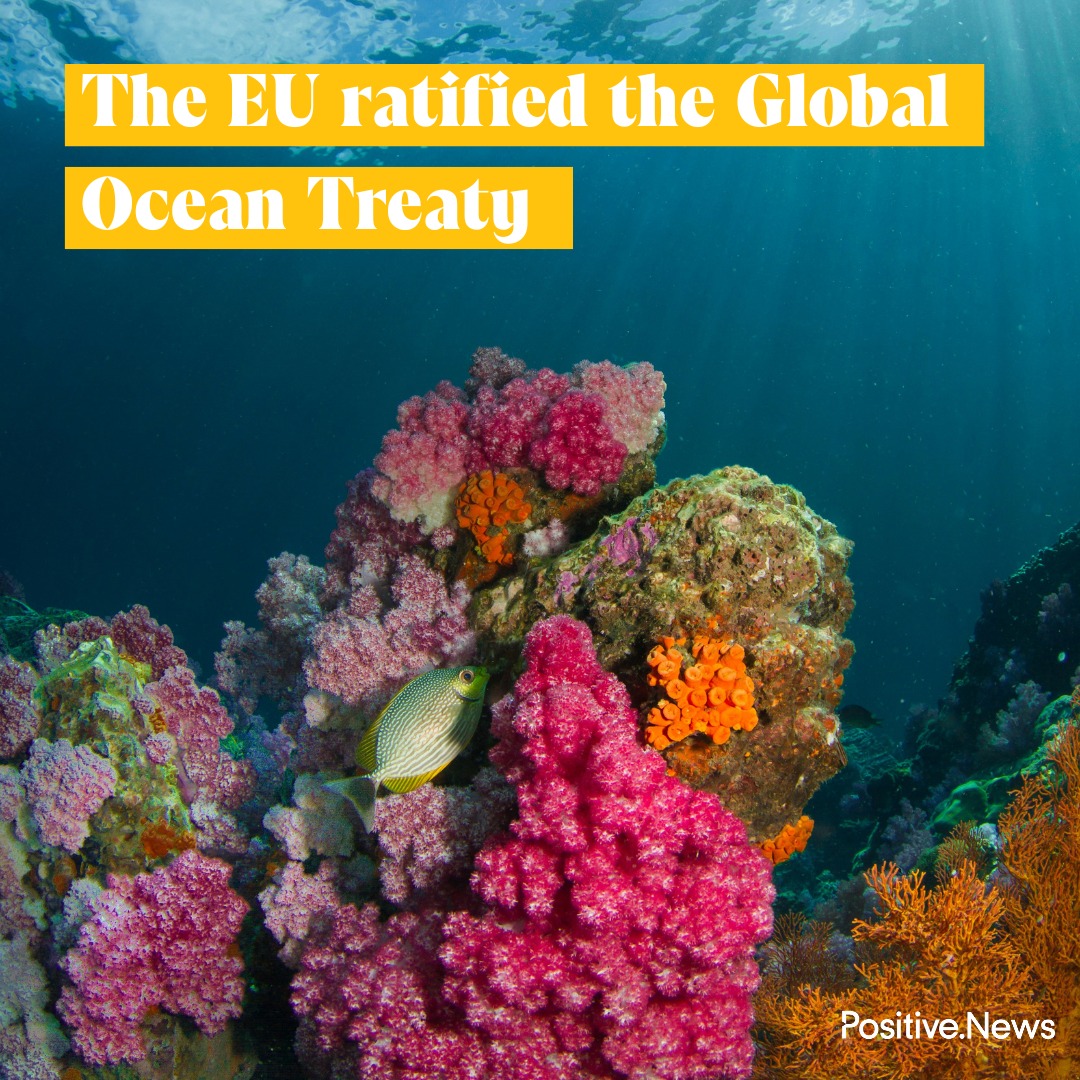
Some bits of good news – Kyrgyz Republic unveils 800,000-hectare ecological corridor for biodiversity. The EU ratified the global ocean treaty Australia’s grid ‘greener than ever’.
TOP STORIES. Legacy of US nuclear weapons tests in the Marshall Islands created global radiation exposure: new study.
US protects Israel as Netanyahu vows to ‘take over’ Gaza, using hunger as as weapon.
Desperation Time in Ukraine End-Game.Putin’s demands for peace include an end to NATO enlargement, sources say – ALSO AT ……..
https://nuclear-news.net/2025/06/02/1-a-putins-demands-for-peace-include-an-end-to-nato-enlargement-sources-say/Revealed: Nato
rearmament could increase emissions by 200m tonnes a year.
Climate. Earth is heading for 2.7°C warming this century- We may avoid the worst climate scenarios – but the outlook is still dire. Almost 40% of world’s glaciers already doomed due to climate crisis – study. World faces new danger of ‘economic denial’ in climate fight, Cop30 head says.
Noel’s notes Time to give up the pretense about Ukraine winning the war. A tale of two dodgy domes.
AUSTRALIA. Marles’ misstep: welcome to the backlash. ‘Fork in the road’: How a failed nuclear plot locked in Australia’s renewable future. Liberals put nuclear power policy to the sword. Turnbull says ‘stupid’ Nationals picking ‘fight over nothing’ as Liberals weigh nuclear.
Albanese ramps up Gaza rhetoric as Zionist narrative erodes.
Nuclear Items
ATROCITIES. Israel’s aid plan for Gaza is a key part of its strategy to expel Palestinians. Extermination as negotiation: Understanding Israel’s strategy in Gaza.
Gaza’s Hospitals ARE The Target.
| ENERGY. Solar puts Australia in fast lane to 100% renewables. |
| ENVIRONMENT. David Lowry: Nuclear power has no role in “clean energy” because it isa very dirty technology! -ALSO AT https://nuclear-news.net/2025/05/29/1-b1-david-lowry-nuclear-power-has-no-role-in-clean-energy-because-it-isa-very-dirty-technology/Davis-Besse Report Reveals Constant Pollution, Flawed Monitoring, and Unending Nuclear Waste. |
| ETHICS and RELIGION. Sorry If This Is Antisemitic But I Think It’s Wrong To Burn Children Alive.Poll: 82% of Israelis want to expel Palestinians from Gaza; 47% want to kill every man, woman, child. Pope Leo XIV Renews Call for Gaza Ceasefire, Laments Israeli Killing of Palestinian Children. |
EVENTS. Veterans Launch 40-Day Fast to Protest Israel’s Starvation of Gaza.
7 June – Sizewell C Outrage Rally.
12 June – Nuclear War: A Scenario – join an online discussion with international best-selling author Annie Jacobsen.
| HEALTH. Ending nuclear weapons, before they end us. |
| HISTORY. The health impact of nuclear tests in French Polynesia – archive, 1981 |
| LEGAL. Enough Is Enough- Israel Is Committing War Crimes- Former Israeli PM. New Israeli Law Allows Palestinians as Young as 12 to Be Imprisoned for Life.Czech Nuclear Power Plant Deal with KHNP Likely Postponed until after October, due to court ruling. |
OPPOSITION to NUCLEAR . Protest against Chalk River nuclear waste disposal project -ALSO AT https://nuclear-news.net/2025/05/30/2-b1-protest-against-chalk-river-nuclear-waste-disposal-project/
Anti-nuclear weapon campaigners picket Plymouth MP’s office ahead of Devonport demonstration.
| POLITICS. Nuclear power is back- Will it work out this time? Labour ministers under pressure as viral video shows broken promises to nuclear veterans. Lincolnshire County Councillors move to pull the plug on nuclear waste site talks. Lincolnshire County Council leader Sean Matthews defends stance on nuclear waste site amid criticism from Tories. Reform leader hits back after Tories saying he’s gone back on nuclear waste site promise. Disappointing but predictable: UK Government minister’s reply on nuke treaty. Trump’s nuclear vision collides with Trump’s actual policies.Trump’s executive orders could endanger America’s nuclear renaissance . |
| POLITICS INTERNATIONAL and DIPLOMACY. How Donald Trump Discovers the Art of Political Negotiation. Trump’s role in provoking Russia’s destruction of Ukraine should not be ignored. Trump warns Netanyahu off Iran strike as nuclear talks continue. Iran rejects IAEA report alleging increased enriched uranium stockpile. Does Tehran want the bomb?Why the US Won’t Be Able to Help Build Taiwan’s Nuclear Future. |
| SAFETY. Rise in nuclear-related incidents deeply worrying. Experts warn Trump’s nuclear blitz could trigger ‘Next Three Mile Island’. ENSURING A MELTDOWN – Trump’s reckless nuclear orders. |
| SECRETS and LIES. How does the nuclear industry get away with its persistent, repetitive lies? France spent €90,000 countering research into impact of Pacific nuclear tests. Watchdog probes Springbank baron over nuclear firm meeting. |
| SPACE. EXPLORATION, WEAPONS. Elon Musk promises more risky launches after sixth Starship failure. SpaceX loses contact with its Starship on 9th test flight after last 2 went down in flames. |
| TECHNOLOGY. Trump’s new ‘gold standard’ rule will destroy American science as we know it. China unveils world’s first AI nuke inspector. |
| WASTES. UK government’s Spending Review needs to allocate nuclear clean-up funds – ALSO AT https://nuclear-news.net/2025/05/31/1-b1-uk-governments-spending-review-needs-to-allocate-nuclear-clean-up-funds/ Dysfunctional: review reveals South Copeland GDF partnership at war. Councillors move to end nuclear waste talks. |
| WAR and CONFLICT. Here’s what they don’t tell you about ‘massive Russian strikes on Ukraine’. Ukraine drone strikes hit nuclear bombers deep inside Russia. Israeli Military Says It Will Occupy 75% of Gaza Within Two Months, ‘Concentrate’ the Civilian Population. US Has 500 Troops in Taiwan in Major Challenge to China. |
| WEAPONS and WEAPONS SALES. The 2026 bill for the Ukraine war is already in the mail. Ukraine ‘can’t afford’ it if US quits conflict – top Zelensky aide. Donald Trump’s Fool’s Gold. Gaza “a Gaping Wound on Humanity:” Spain Convenes Int’l Conference to call for Arms Embargo on Israel. Roads to War: The EU’s Security Action for Europe Fund. Europe’s defence without the U.S.: What does the new cost report say? Britain to buy fighter jets to carry nuclear weapons-ALSO AT https://nuclear-news.net/2025/06/02/1-b1-britain-to-buy-fighter-jets-to-carry-nuclear-weapons/ |
Donald Trump’s Fool’s Gold

“Golden Dome for America is a revolutionary concept to further the goals of peace through strength,” asserts its manufacturer, Lockheed Martin, our first clue that the Golden Dome has nothing whatever to do with peace.
there’s not much use in a Golden Dome unless it’s one hundred percent effective, which it has a one hundred percent probability of not being………….. If just one missile gets through, the level of destruction would be devastating, and the US would then likely retaliate after which all bets are off.
the Golden Dome is merely a deterrent meant to frighten off aggressors. That means we are about to spend $175 billion on something the US would never actually use.
Linda Pentz Gunter, May 30, 2025, https://www.counterpunch.org/2025/05/30/donald-trumps-fools-gold/
Alright, as it turns out, the golden toilet was just a myth. Donald Trump doesn’t have one. But not to fret. President Trump’s private Boeing 757 jet (not the even more lavish one he may shortly be gifted by Qatar) reportedly has gold-plated seat belts. His Trump Tower apartment features a 24-carat gold front door. Inside, there are gold ceilings, golden plant pots and even a gold elevator!
Fancy a visit to Mar-a-Lago? Its imitation Versailles aesthetic has been described as that of an upscale bordello.
Trump’s favorite restaurant is, of course, the Golden Arches, (also known as McDonald’s). And then there’s his lustrous golden tan with the reverse raccoon eyes. We could suggest that Trump’s three trophy wives were all gold diggers, but that wouldn’t be very golden hearted. Remember the golden showers kompromat rumor? Ick, let’s not go there, either.
The wannabe king boasted during his January 20 inaugural address that “The Golden Age of America begins right now.” Six weeks later, during his March 4 Joint Address to Congress, Trump reassured the audience that his Golden Age truly was coming. “Get ready for an incredible future,” he said. “The Golden Age of America has only just begun. It will be like nothing that has ever been seen before.”
That last part was certainly true.Next came Trump’s embarrassingly titled One Big Beautiful Bill Act that would cause almost 14 million Americans to lose health care, 11 million to be deprived of food stamps, and slashes $700 billion from Medicaid and $500 billion from Medicare. This was necessary, insists the Trump junta, because there’s just so much wasteful spending in Washington — except of course the $45 million US taxpayers will spend on Trump’s June 14 he-man vanity project, that will parade tanks on the streets of the capital and fighter jets overhead.
The Big Beautiful Bill was followed a day later with much fanfare — but surprisingly without any actual golden trumpeters — by the signing of Trump’s five executive orders on nuclear power. “President Trump Signs Executive Orders to Usher in a Nuclear Renaissance, Restore Gold Standard Science,” announced the press release that presaged these disastrous directives.
The orders dramatically weaken nuclear regulatory and safety oversight, put new reactor development on an entirely unrealistic timetable, knit the civil and military nuclear sectors firmly back together again and make a major nuclear accident more likely.
They also endeavor to drastically weaken existing and inadequate radiation protection standards that already don’t account for the heightened vulnerability to harm of pregnant women, infants and children.
However, since we are now entering the age of enlightenment, the press release went on to explain: “Gold Standard Science is just that—science that meets the Gold Standard.” Thank you for clearing that up.
All of these dangerous developments have arrived wrapped — or should I say gilded — in a nausea-inducing level of overblown rhetoric that showcases Trump’s obsession with all things gold, both literal and metaphorical.
And now, as if all this golden fleecing of American taxpayers wasn’t enough, we have the Golden Dome for America!
“Golden Dome for America is a revolutionary concept to further the goals of peace through strength,” asserts its manufacturer, Lockheed Martin, our first clue that the Golden Dome has nothing whatever to do with peace. Lockheed Martin is integrally involved in the US nuclear weapons complex, and is a key partner in the development and production of US submarine-launched nuclear ballistic missiles, specifically the Trident II D5, the most lethal destructive force on earth.
The idea of having an invincible missile defense system that could intercept and destroy all missiles targeting the United States, has been around since the 1950s and was developed in various iterations, garnering headlines under the Ronald Reagan administration with the announcement of his Strategic Defense Initiative (SDI), quickly nicknamed “Star Wars” by its detractors.
SDI was highly ambitious, complex, expensive and controversial, and arguably led to the failure of what promised to be a bilateral elimination of nuclear weapons agreed by Reagan and then Russian premier, Mikhail Gorbachev in 1986 when Reagan refused to place limitations on SDI.
“Unexpectedly, the two leaders agreed that they could eliminate ‘all [U.S. and Soviet] nuclear weapons,’ but Gorbachev added the contingency that SDI be confined to the laboratory,” wrote Aaron Bateman for the Arms Control Association in a 2023 article on SDI. “After Reagan refused to accept any limits on SDI, the two leaders departed Reykjavik without a deal in hand.”
By the end of the 20th century, the SDI program had been renamed National Missile Defense (NMD), eventually shifting to a focus on a Ground-Based Midcourse Defense (GMD) system, whose primary task is to defend against incoming long-range ballistic missiles aimed at the US.
As the Union of Concerned Scientists states in the headline to its history of US missile defense, “Since the system’s deployment in 2002, six out of ten test intercepts have failed.”
The Golden Dome is fundamentally another ambitious reboot of SDI. Trump claims he has already settled on what he calls the “architecture”, which makes you wonder if he sees this as some sort of floating palace, a Mar-a-Lago in the sky? When the plan was unveiled in the White House, Defense Secretary, Pete Hegseth, stood by the glittery poster looking for all the world like some sort of game show host.
The Golden Dome price tag is a whopping $175 billion (there’s austerity for you!) and apparently it will all be up and running before Trump’s term is out in January 2029, (assuming Trump willingly leaves office and we still have a democratic election process by then.)
It’s a goal longtime national security and nuclear policy expert, Joe Cirincione, called “insane” in an interview with The Bulletin of the Atomic Scientists, “You probably won’t even get the architecture of the system settled by the end of his administration,” Cirincione said.
Even more insane is that, far from enhancing the safety of the US, the Golden Dome is entirely provocative and, as a nervous China has already warned, will only increase the risks of militarizing space and could even relaunch a global arms race (arguably something that is already underway).
In any case, there’s not much use in a Golden Dome unless it’s one hundred percent effective, which it has a one hundred percent probability of not being. Its predecessor certainly didn’t achieve that and was what Cirincione described as “the longest-running scam in the history of the Department of Defense.”
If just one missile gets through, the level of destruction would be devastating, and the US would then likely retaliate after which all bets are off.
Our current missile defense system, whose earliest iteration was deployed in 1962, has cost at least $531 billion so far according to Stephen Schwartz, a longtime analyst on nuclear weapons costs.
On BlueSky, Schwartz called the Golden Dome project “delusional and reckless. There’s no way to design, test, construct, and deploy a comprehensive system to reliably stop any missiles launched from land, sea, or space, and do it in ‘two-and-a-half to three years’ for $175 billion.”
So far, US missile defense interception attempts (fortunately all tests), have had a success rate that spans a range of 41% to 88% depending on whether you accept an independent analysis, which generates the lower number, or “official” tallies, which produce the higher one. Either way, it’s not 100%.
The Golden Dome, it turns out, is no golden ticket to survival.
But no matter, since, its proponents argue, the Golden Dome is merely a deterrent meant to frighten off aggressors. That means we are about to spend $175 billion on something the US would never actually use.
Trump would do well to take a lesson from Shakespeare’s Prince of Morocco who, in The Merchant of Venice, discovers that “All that glisters is not gold.” Indeed, when he chooses the golden box (of course) over the other less sparkly ones, he learns that what tends to lurk inside such “gilded tombs” are merely “worms.”
Or maybe Trump should just stop talking and heed the most important lesson of all? Silence is golden.
Linda Pentz Gunter is a writer based in Takoma Park, Maryland. She is the international specialist at Beyond Nuclear.
Putin’s demands for peace include an end to NATO enlargement, sources say.
By Guy Faulconbridge, https://www.reuters.com/world/europe/putin-ukraine-peace-wants-pledge-halt-nato-enlargement-sources-say-2025-05-28/
President Vladimir Putin’s conditions for ending the war in Ukraine include a demand that Western leaders pledge in writing to stop enlarging NATO eastwards and lift a chunk of sanctions on Russia, according to three Russian sources with knowledge of the negotiations. U.S. President Donald Trump has repeatedly said he wants to end the deadliest European conflict since World War Two and has shown increasing frustration with Putin in recent days, warning on Tuesday the Russian leader was “playing with fire” by refusing to engage in ceasefire talks with Kyiv as his forces made gains on the battlefield.
After speaking to Trump for more than two hours last week, Putin said that he had agreed to work with Ukraine on a memorandum that would establish the contours of a peace accord, including the timing of a ceasefire. Russia says it is currently drafting its version of the memorandum and cannot estimate how long that will take. Kyiv and European governments have accused Moscow of stalling while its troops advance in eastern Ukraine.
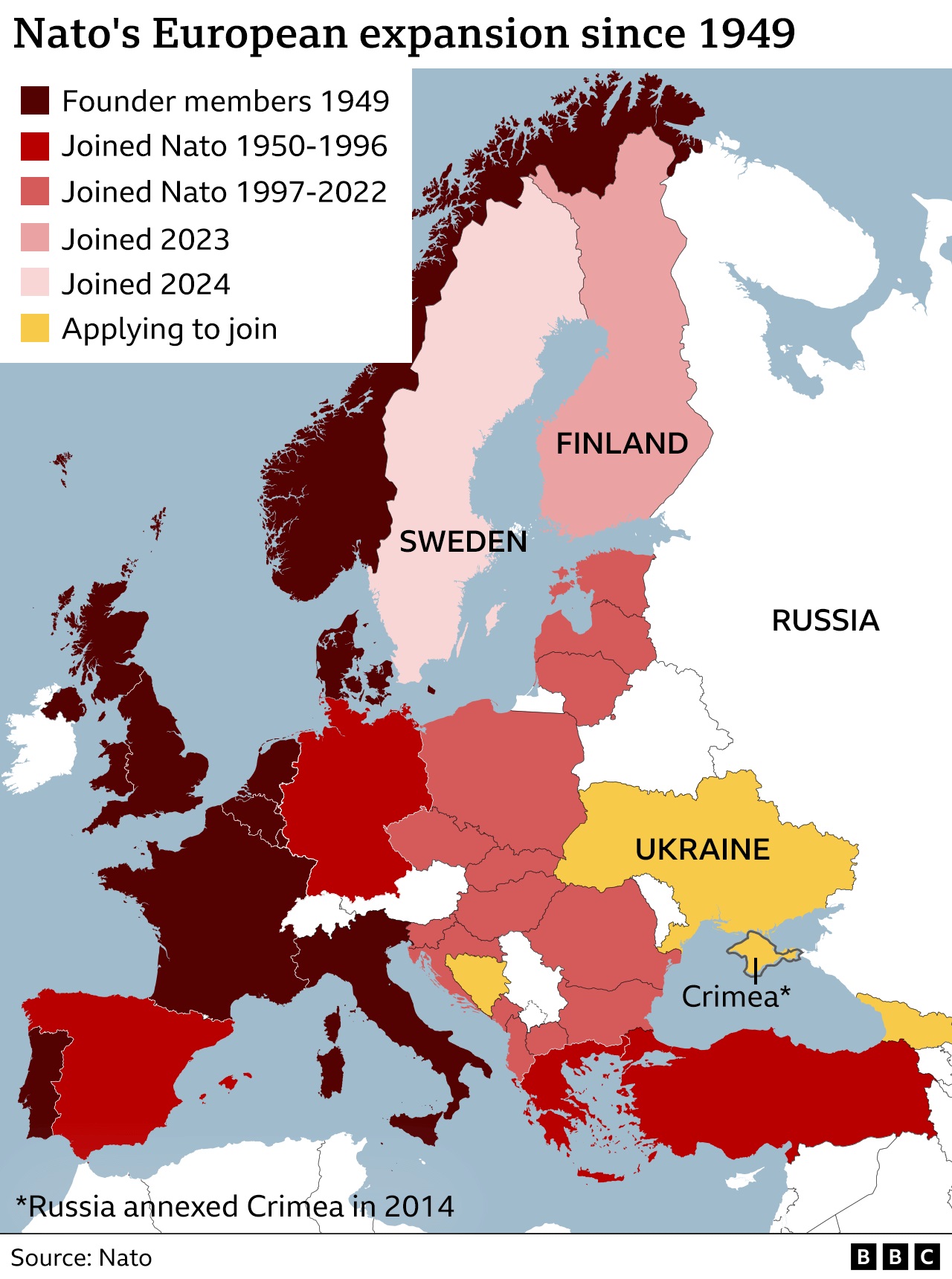
“Putin is ready to make peace but not at any price,” said one senior Russian source with knowledge of top-level Kremlin thinking, who spoke on condition of anonymity. The three Russian sources said Putin wants a “written” pledge by major Western powers not to enlarge the U.S.-led NATO alliance eastwards – shorthand for formally ruling out membership to Ukraine, Georgia and Moldova and other former Soviet republics.
Russia also wants Ukraine to be neutral, some Western sanctions lifted, a resolution of the issue of frozen Russian sovereign assets in the West, and protection for Russian speakers in Ukraine, the three sources said. The first source said that, if Putin realizes he is unable to reach a peace deal on his own terms, he will seek to show the Ukrainians and the Europeans by military victories that “peace tomorrow will be even more painful”. The Kremlin did not respond to a request for comment on Reuters’ reporting.
Putin and Russian officials have repeatedly said any peace deal must address the “root causes” of the conflict – Russian shorthand for the issue of NATO enlargement and Western support for Ukraine. Kyiv has repeatedly said that Russia should not be granted veto power over its aspirations to join the NATO alliance. Ukraine says it needs the West to give it a strong security guarantee with teeth to deter any future Russian attack.
President Volodymyr Zelenskiy’s administration did not respond to a request for comment. NATO has also in the past said that it will not change its “open door” policy just because Moscow demands it. A spokesperson for the 32-member alliance did not respond to Reuters’ questions. Putin ordered tens of thousands of troops into Ukraine in February 2022 after eight years of fighting in eastern Ukraine between Russian-backed separatists and Ukrainian troops. Russia currently controls just under one fifth of the country. Though Russian advances have accelerated over the past year, the war is costing both Russia and Ukraine dearly in terms of casualties and military spending. Reuters reported in January that Putin was growing concerned by the economic distortions in Russia’s wartime economy, amid labour shortages and high interest rates imposed to curb inflation. The price of oil, the bedrock of Russia’s economy, has declined steadily this year.
Trump, who prides himself on having friendly relations with Putin and has expressed his belief the Russian leader wants peace, has warned that Washington could impose further sanctions if Moscow delays efforts to find a settlement. Trump suggesting on social media on Sunday that Putin had “gone absolutely CRAZY” by unleashing a massive aerial attack on Ukraine last week. The first source said that if Putin saw a tactical opportunity on the battlefield, he would push further into Ukraine – and that the Kremlin believed Russia could fight on for years no matter what sanctions and economic pain were imposed by the West.
A second source said that Putin was now less inclined to compromise on territory and was sticking to his public stance that he wanted the entirety of four regions in eastern Ukraine claimed by Russia.
“Putin has toughened his position,” the second source said of the question of territory.
NATO ENLARGEMENT
As Trump and Putin joust in public over the outlook for peace in Ukraine, Reuters could not determine whether the intensification of the war and the toughening of positions heralds determination to reach a deal or the collapse of talks. In June last year, Putin set out his opening terms for an immediate end to the war: Ukraine must drop its NATO ambitions and withdraw all of its troops from the entirety of the territory of four Ukrainian regions claimed and mostly controlled by Russia.
In addition to Crimea, which it annexed in 2014, Russia currently controls almost all of Luhansk, more than 70% of Donetsk, Zaporizhzhia and Kherson regions. It also occupies a sliver of the Kharkiv and Sumy regions, and is threatening Dnipropetrovsk.
Former U.S. President Joe Biden, Western European leaders and Ukraine cast the invasion as an imperial-style land grab and have repeatedly vowed to defeat Russian forces. Putin casts the war as a watershed moment in Moscow’s relations with the West which he says humiliated Russia after the Soviet Union fell in 1991 by enlarging NATO and encroaching on what he considers Moscow’s sphere of influence.
At the 2008 Bucharest summit, NATO leaders agreed that Ukraine and Georgia would one day become members. Ukraine in 2019 amended its constitution committing to the path of full membership of NATO and the European Union.
Trump has said that previousU.S. support for Ukraine’s NATO membershipbid was acause of the war, and has indicated that Ukraine will not get membership. The U.S. State Department did not respond to a request for comment for this story.
Putin, who rose to the top Kremlin job in 1999, has repeatedly returned to the issue of NATO enlargement, including in his most detailed remarks about a possible peace in 2024.
In 2021, just two months before the Russian invasion, Moscow proposed a draft agreement, with NATO members that, under Article 6, would bind NATO to “refrain from any further enlargement of NATO, including the accession of Ukraine as well as other States.” U.S. and NATO diplomats said at the time that Russia could not have a veto on expansion of the alliance. Russia wants a pledge on NATO in writing because Putin thinks Moscow was misled by the United States after the 1989 fall of the Berlin Wall when U.S. Secretary of State James Baker assured Soviet leader Mikhail Gorbachev in 1990 that NATO would not expand eastwards, two of the sources said.
There was such a verbal promise, former Central Intelligence Agency Director Director William J. Burns said in his memoires, but it was never formalised – and it was made at a time when the collapse of the Soviet Union had not occurred.
NATO, founded in 1949 to provide security against the Soviet Union, says it poses no challenge to Russia – though its 2022 assessment of peace and security in the Euro-Atlantic area identified Russia as the most “significant and direct threat”.
Russia’s invasion of Ukraine that year prompted Finland to join NATO in 2023, followed by Sweden in 2024.
Western European leaders have repeatedly said that if Russia wins the Ukraine war, it could one day attack NATO itself – a step that would trigger a world war. Russia dismisses such claims as baseless scaremongering, but has also warned the war in Ukraine could escalate into a broader conflict.
Comment: Putin wants a deal, Trump wants a deal, Zelensky…wants.
Ending nuclear weapons, before they end us

Led by Ireland and New Zealand, in late 2024, the United Nations General Assembly voted overwhelmingly to establish a 21 member independent scientific panel to undertake a new comprehensive study on the effects of nuclear war,12 with its final report due in 2027.
The resolution calls upon UN agencies, including WHO, to support the panel’s work, including by “contributing expertise, commissioned studies, data and papers.”
BMJ 2025; 389 doi: https://doi.org/10.1136/bmj.r881 (Published 13 May 2025)Cite this as: BMJ 2025;389:r88b https://www.bmj.com/content/389/bmj.r881
- Kamran Abbasi, editor in chief1,
- Parveen Ali, editor in chief2,
- Virginia Barbour, editor in chief,
- Marion Birch, editor in chief4,
- Inga Blum, At-large board member5,
- Peter Doherty, 1996 Nobel prize for physiology or medicine,
- Andy Haines, professor of environmental change and public health6,
- Ira Helfand, past president5,
- Richard Horton, editor in chief7,
- Kati Juva, co-president5,
- Jose F Lapena8,
- Jrvice president,
- Robert Mash, editor in chief9,
- Olga Mironova, co-president5,
- Arun Mitra, past president5,
- Carlos Monteiro, editor in chief10,
- Elena N Naumova, editor in chief11,
- David Onazi, co-president5,
- Tilman Ruff, past president5,
- Peush Sahni, editor in chief12,
- James Tumwine, editor in chief13,
- Carlos Umaña, co-president5,
- Paul Yonga, editor in chief14,
- Chris Zielinski, president8
WHO’s mandate to provide evidence on health effects must be restored
In May 2025 the World Health Assembly (WHA) will vote on re-establishing a mandate for the World Health Organization (WHO) to address the health consequences of nuclear weapons and war.1 Health professionals and their associations should urge their governments to support such a mandate and support the new UN comprehensive study on the effects of nuclear war.
The first atomic bomb exploded in the New Mexico desert 80 years ago, in July 1945. Three weeks later, two relatively small (by today’s standards), tactical size nuclear weapons unleashed a cataclysm of radioactive incineration on Hiroshima and Nagasaki. By the end of 1945, about 213 000 people were dead.2 Tens of thousands more have died from late effects of the bombings.
Last December, Nihon Hidankyo, a movement that brings together atomic bomb survivors, was awarded the Nobel peace prize for its “efforts to achieve a world free of nuclear weapons and for demonstrating through witness testimony that nuclear weapons must never be used again.”3 For the Norwegian Nobel committee, the award validated the most fundamental human right: the right to live. The committee warned that the menace of nuclear weapons is now more urgent than ever before. In the words of committee chair, Jørgen Watne Frydnes, “It is naive to believe our civilisation can survive a world order in which global security depends on nuclear weapons. The world is not meant to be a prison in which we await collective annihilation.”4 He noted that our survival depended on keeping intact the “nuclear taboo” (which stigmatises the use of nuclear weapons as morally unacceptable).5
The nuclear taboo gains strength from recognition of compelling evidence of the catastrophic humanitarian consequences of nuclear war, its severe global climatic and famine consequences, and the impossibility of any effective humanitarian response. This evidence contributed significantly to ending the Cold War nuclear arms race.67
While the numbers of nuclear weapons are down to 12 331 now, from their 1986 peak of 70 300,8 this is still equivalent to 146 605 Hiroshima bombs9 and does not mean humanity is any safer.10 Even a fraction of the current arsenal could decimate the biosphere in a severe mass extinction event. The global climate disruption caused by the smoke pouring from cities ignited by just 2% of the current arsenal could result in over two billion people starving.11
A worldwide nuclear arms race is underway. Deployed nuclear weapons are increasing again, and China, India, North Korea, Pakistan, Russia, and UK are all enlarging their arsenals. An estimated 2100 nuclear warheads in France, Russia, UK, US, and, for the first time, in China, are on high alert, ready for launch within minutes.8 With disarmament in reverse, extensive nuclear modernisations underway, multiple arms control treaties abrogated without replacement, no disarmament negotiations in evidence, nuclear armed Russia and Israel engaged in active wars involving repeated nuclear threats, Russia and the US deploying nuclear weapons to additional states, and widespread use of cyberwarfare, the risk of nuclear war is widely assessed to be greater than ever. This year the Doomsday clock was moved the closest to midnight since the clock’s founding in 1947.10
Led by Ireland and New Zealand, in late 2024, the United Nations General Assembly voted overwhelmingly to establish a 21 member independent scientific panel to undertake a new comprehensive study on the effects of nuclear war,12 with its final report due in 2027. Noting that “removing the threat of a nuclear war is the most acute and urgent task of the present day,” the panel has been tasked with examining the physical effects and societal consequences of a nuclear war on a local, regional and planetary scale. It will examine the climatic, environmental, and radiological effects of nuclear war and their impact on public health, global socioeconomic systems, agriculture, and ecosystems.
The resolution calls upon UN agencies, including WHO, to support the panel’s work, including by “contributing expertise, commissioned studies, data and papers.” All UN member states are encouraged to provide relevant information, scientific data, and analyses; facilitate and host panel meetings, including regional meetings; and make budgetary or in-kind contributions. Such an authoritative international assessment of evidence on the most acute existential threat to humankind and planetary health is long overdue. The last such report dates from 1989. It is shameful that France, UK, and Russia opposed this resolution.13
In 1983 and 1987,14 WHO convened an international committee of scientists and health experts to study the health effects of nuclear war. Its landmark, authoritative reports were influential and an excellent example of WHO fulfilling its constitutional mandate “to act as the directing and coordinating authority on international health work.” In 1993, WHO produced an additional shorter report on the health and environmental effects of nuclear weapons, which included discussion of the production chain of nuclear weapons, including processing, testing, and disposal.15
However, despite the WHA having mandated WHO to report periodically on relevant developments, no further work was undertaken, and in 2020 WHO’s mandate on nuclear weapons and health lapsed.
The Marshall Islands, Samoa, and Vanuatu, supported by seven co-sponsoring states and International Physicians for the Prevention of Nuclear War, are working to renew WHO’s mandate. They are seeking wide support for a resolution on the health effects of nuclear weapons/war at this year’s WHA in Geneva on 19-27 May.1 WHO would then re-establish a programme of work on this most critical threat to health and be able to lead strongly in providing the best health evidence to the UN panel.
Health professionals are well aware how crucial accurate and up-to-date evidence is to making good decisions. We and our organisations should support such a renewed mandate by urging our national WHA delegates to vote in support and commit the modest funds needed to re-establish WHO’s work programme, especially now, as the organisation faces severe financial strain with the US decision to withdraw its membership.
Our joint editorial in 202316 on reducing the risks of nuclear war and the role of health professionals, published in over 150 health journals worldwide, urged three immediate steps by nuclear armed states and their allies: adopt a “no first use” policy, take their nuclear weapons off hair trigger alert, and pledge unequivocally that they will not use nuclear weapons in any current conflicts they are involved in. We also urged nuclear armed states to work for a definitive end to the nuclear threat by urgently starting negotiations for a verifiable, timebound agreement to eliminate their nuclear arsenals, and called on all nations to join the Treaty on the Prohibition of Nuclear Weapons.17
It is an alarming failure of leadership that no progress has been made on these needed measures, nor on many other feasible steps away from the brink, acting on the obligation of all states to achieve nuclear disarmament. Nine states jeopardise all humanity and the biosphere by claiming an exclusive right to wield the most destructive and inhumane weapons ever created. The world desperately needs the leaders of these states to freeze their arsenals, end the modernisation and development of new, more dangerous nuclear weapons, and ensure that new technology such as artificial intelligence can never trigger the launch of nuclear weapons.
The UN scientific panel and a renewed mandate for WHO’s work in this area can provide vital authoritative and up-to-date evidence for health and public education, evidence based advocacy and policies, and the mobilised public concern needed to trigger decisive political leadership. This is a core health imperative for all of us.
Revealed: Nato rearmament could increase emissions by 200m tonnes a year

Exclusive: researchers say defence spending boosts across world will worsen climate crisis which in turn will cause more conflict
Damien Gayle 29 May 25, https://www.theguardian.com/environment/2025/may/29/nato-military-spending-could-increase-emissions-study-finds
A global military buildup poses an existential threat to climate goals, according to researchers who say the rearmament planned by Nato alone could increase greenhouse gas emissions by almost 200m tonnes a year.
With the world embroiled in the highest number of armed conflicts since the second world war, countries have embarked on military spending sprees, collectively totalling a record $2.46tn in 2023.
For every dollar invested in new hardware, there is not only a corresponding carbon cost but also an opportunity cost to potential climate action, critics say. This is on top of the huge death toll resulting from armed conflicts.
“There is a real concern around the way that we are prioritising short-term security and sacrificing long-term security,” said Ellie Kinney, a researcher with the Conflict and Environment Observatory and a co-author of the study, shared exclusively with the Guardian.
“Because of this kind of lack-of-informed approach that we’re taking, you’re investing in hard military security now, increasing global emissions for that reason, and worsening the climate crisis further down the line.”
That in turn is only likely to lead to further violence, with climate change itself now increasingly seen as a driver of conflict, albeit indirectly. In Sudan’s Darfur region, conflict was linked to competition over scarce resources after prolonged droughts and desertification. In the Arctic, receding sea ice is leading to tensions over who should control newly accessible oil, gas and critical mineral resources.
Few militaries are transparent about the scale of their fossil fuel use, but researchers have estimated that collectively they are already responsible for 5.5% of global greenhouse gas emissions.
That figure is expected to rise as tensions escalate in a number of regions and as the US, for decades the world’s biggest military spender, indicates that it expects its Nato allies to devote significantly more resources to their armed forces.
According to the Global Peace Index, militarisation increased in 108 countries in 2023. With 92 countries involved in armed conflict, in places ranging from Ukraine and Gaza to South Sudan and DRC, with tensions seething between China and the US over Taiwan, and with the frozen conflict between India and Pakistan flaring, governments fearful of war are investing heavily in their militaries.
In Europe, the increase has been particularly dramatic: between 2021 and 2024, EU states’ weapons spending rose by more than 30%, according to the International Institute for Strategic Studies.
In March, the EU, disconcerted by Donald Trump’s cutting of military aid and diplomatic support for Ukraine, indicated this would go further, with proposals for a further €800bn spend across the bloc outlined in a plan called “ReArm Europe”.
In analysis for the UN Office for Disarmament Affairs, Kinney and colleagues looked at the potential impact of increased militarisation on meeting climate goals. What they found was sobering: the likely increase in emissions from Nato’s remilitarisation alone would be the equivalent of adding the cost of a country as large and populous as Pakistan to the world’s remaining carbon budget.
“Our analysis specifically looks at the impact on sustainable development goal 13, which is climate action – to take urgent action to combat climate change and its impacts,” Kinney said. “And what our analysis finds, looking at the various sub-targets of that … [is] that there is a real threat to global climate action caused by global increase in military spending.”
Of all functions of states, militaries are almost uniquely carbon-intensive. “First of all, with the equipment that they purchase, which is mainly a lot of steel and aluminium, which is very carbon-intensive to produce,” said Lennard de Klerk, of the Initiative on the GHG Accounting of War, another co-author of the study.
“Secondly is during operations, armies are very mobile. And in order to move around they use fossil fuels – that’s diesel for ground operations and kerosene for air operations. Or for maritime operations it’s mainly diesel as well, if they’re not nuclear-driven.”
Given the secrecy that usually surrounds militaries and their operations, it is difficult to know just how much greenhouse gases they are emitting. Only Nato countries report enough of their emissions for scientists to attempt an estimate.
“We took Nato because they are the most transparent in terms of spending. So it’s not that we particularly want to focus on Nato, but simply because they have more data available,” De Klerk said.
The researchers calculated by how much greenhouse gas emissions would increase if Nato countries excluding the US – since it already spends far more than the others – made a two percentage point increase in the share of GDP they devoted to their militaries.
Such an increase is already under way, with many countries in Europe significantly increasing military spending in response to the crisis in Ukraine. Although Nato countries have publicly committed to increasing spending to 2% of GDP, the researchers say the ReArm Europe plan could lead to an eventual rise to 3.5%, from about 1.5% in 2020. The researchers assumed a similar eventual increase in Nato members that are not members of the EU, such as the UK.
Borrowing methodology from a recent paper that argued each percentage point increase in the share of GDP devoted to military spending would lead to an increase in national emissions of between 0.9% and 2%, they estimated that a two percentage point spending shock would lead to an increase across the bloc of between 87 and 194 megatonnes of carbon dioxide equivalent (CO2e) a year.
The researchers say that not only would such a huge increase in emissions supercharge climate breakdown but the increase in global temperatures would hurt the economy. Recent estimates of the social cost of carbon – a monetary indicator of the damage of CO2 emitted – put it at $1,347/tCO2e, suggesting the annual cost of Nato’s military buildup could be as much as $264bn a year.
And that is only a fraction of the true carbon cost of militarisation, Kinney points out. “The calculation in the paper, it’s 31 countries – that only represents 9% of total world emissions. If you consider … the impact of that, there’s a lot of the world that we haven’t taken into consideration of this specific calculation.”
The analysis notes that spending more money on militaries also reduces resources available for policies aimed at mitigating climate change. This already seems to be the case, with the UK, for example, funding its increase in spending by reducing its overseas aid budget – a move mirrored in Belgium, France and the Netherlands.
“This increase in military spending is impacting the kind of core trust that is necessary for multilateralism,” Kinney said. “At Cop29, global south countries like Cuba in particular pointed out the hypocrisy in the room of states being willing to spend increasing amounts on their military spending, but offering … completely, unacceptably low climate finance commitments.”
The Guardian has contacted Nato for comment.
1 This Month
Chernobyl: The Lost Tapes – A good documentary on Chernobyl on SBS available On Demand for the next 3 weeks– https://www.sbs.com.au/ondemand/tv-program/chernobyl-the-lost-tapes/2352741955560

of the week–London Campaign for Nuclear Disarmament

Tell the Ukrainian Government to Drop Prosecution of Peace Activist Yurii Sheliazhenko
To see nuclear-related stories in greater depth and intensity – go to https://nuclearinformation.wordpress.com
-
Archives
- April 2026 (152)
- March 2026 (251)
- February 2026 (268)
- January 2026 (308)
- December 2025 (358)
- November 2025 (359)
- October 2025 (376)
- September 2025 (257)
- August 2025 (319)
- July 2025 (230)
- June 2025 (348)
- May 2025 (261)
-
Categories
- 1
- 1 NUCLEAR ISSUES
- business and costs
- climate change
- culture and arts
- ENERGY
- environment
- health
- history
- indigenous issues
- Legal
- marketing of nuclear
- media
- opposition to nuclear
- PERSONAL STORIES
- politics
- politics international
- Religion and ethics
- safety
- secrets,lies and civil liberties
- spinbuster
- technology
- Uranium
- wastes
- weapons and war
- Women
- 2 WORLD
- ACTION
- AFRICA
- Atrocities
- AUSTRALIA
- Christina's notes
- Christina's themes
- culture and arts
- Events
- Fuk 2022
- Fuk 2023
- Fukushima 2017
- Fukushima 2018
- fukushima 2019
- Fukushima 2020
- Fukushima 2021
- general
- global warming
- Humour (God we need it)
- Nuclear
- RARE EARTHS
- Reference
- resources – print
- Resources -audiovicual
- Weekly Newsletter
- World
- World Nuclear
- YouTube
-
RSS
Entries RSS
Comments RSS
 nuclear-news