Sizewell C nuclear project to get go-ahead during Anglo-French summit

UK ministers hope to sign up private sector investors for new Suffolk power
plant later this month. The new Sizewell C nuclear power station is
expected to get the final go-ahead during an Anglo-French summit in London
next month, as UK ministers edge towards securing billions of investment
from the private sector.
Darren Jones, a Treasury minister, told the
Financial Times earlier this year that the final investment decision for
Sizewell C, where shareholders formally commit to the investment, would be
“at the spending review” on June 11. Ministers are expected to reaffirm
the government’s intention to invest in Sizewell in or around the
spending review, according to people close to the situation, with details
expected on how much they could allocate in taxpayer support for the
project.
However, the final go-ahead is not expected until an announcement
by Prime Minister Sir Keir Starmer and French President Emmanuel Macron
during the Franco-British summit in London between July 8 and July 10,
according to people close to the talks in Britain and France. By then the
government and EDF will have received final bids from several private
investors who have been given a deadline of late June, allowing the formal
final investment decision to proceed.
Groups expected to bid for a stake in
Sizewell include insurer Rothesay, backed by the Singaporean infrastructure
fund GIC, the Canadian pension fund CDPQ, Amber Infrastructure Partners,
Brookfield Asset Management, pension fund USS, Schroders Greencoat and
Equitix, people close to the talks have said. Centrica, the owner of
British Gas, has also confirmed that it is in talks to invest in the
project.
FT 3rd June 2025,
https://www.ft.com/content/25927b63-6ce5-4964-b8df-086c010148f8
Why we should worry about nuclear weapons again
Washington Post , by Jon B. Wolfsthal, Hans Kristensen and Matt Korda,3 June 25
The Cold War prospect of global annihilation has faded from consciousness, but the warheads remain.
ver the past 30 years, since the collapse of the Soviet Union, the prospect of nuclear war has faded from the American consciousness. With the end of the Cold War, films depicting the last days of humanity, such as 1959’s “On the Beach,” or the 1983 TV drama “The Day After,” largely disappeared from the Hollywood playbook. Schoolchildren no longer hid under their desks during practice drills to survive nuclear war.
But the weapons never went away. While thousands were scrapped and nuclear inventories were significantly reduced, many other weapons were put into storage and still thousands more remain deployed, ready for use.
Now, they and the dangers they pose are making a comeback.
The last nuclear age was defined by two superpowers — the United States and the Soviet Union — poised to destroy one another in less than an hour. They both kept nuclear weapons locked and loaded to deter the other by threatening retaliation and certain destruction.
Today’s global nuclear landscape is far more complicated and, in many ways, more precarious. More countries and more advanced technologies are involved. Weapons can fly farther, faster, from more places. Information, accurate or false, can move even more quickly. Autocrats and extremists hold positions of power in nuclear-armed countries. Nuclear threats, once taboo, are now increasingly common. And the last nuclear arms control treaty still in force between Russia and the United States expires in February.
Many of the most dangerous ideas from the Cold War are being resurrected: lower-yield weapons to fight “limited” nuclear wars; blockbuster missiles that could destroy multiple targets at once; the redeploying of a whole class of missiles once banned and destroyed by treaty. On top of this, countries are testing new ways to deliver these weapons, including nuclear-powered cruise missiles that can fly for days before hitting their targets; underwater unmanned nuclear torpedoes; fast-flying, maneuverable glide vehicles that can evade defenses; and nuclear weapons in space that can attack satellites or targets on Earth without warning.
Our organization, the Federation of American Scientists, was created by the same people who invented the atomic bomb at Los Alamos to ensure that when policy was made, it was informed by science and technical facts. For 80 years, we have sought to promote public accountability and transparency about nuclear arsenals. Relying only on unclassified information, including satellite imagery and government data, we maintain the world’s most accurate publicly available estimates of the world’s nuclear arsenals. Now that the nuclear threat has roared back to life, we believe it is our responsibility to provide accurate, nonpartisan information to help reduce the risk of nuclear disaster. We underestimate that risk at our collective peril.
“At this moment in human history,” the Nobel Committee said in announcing last year’s Peace Prize, “it is worth reminding ourselves what nuclear weapons are: the most destructive weapons the world has ever seen.” The prize went to Nihon Hidankyo, an association of survivors of the U.S. bombings of Hiroshima and Nagasaki in 1945 — the only time nuclear weapons have ever been used in wartime.
The numbers
Nine nations now have nuclear weapons: Russia, the United States, Britain, China, France, Israel, India, Pakistan and North Korea. Together, they possess more than 12,200 nuclear warheads, located at approximately 120 sites in 14 countries. More than 9,500 are militarily active or deployed, ready for use. Roughly 2,100 of those are on high alert and can be launched in minutes and reach any point on the planet in less than half an hour.
Russia and the U.S. have long been the dominant nuclear powers. Today, nearly 90 percent of all warheads belong to them…………………………………………………………………………………………………………………………………………………………………………………………………………………………..
The total power of the warheads in the nine nuclear-armed states is an inconceivable destructive force: equivalent to more than 4.8 trillion pounds of TNT — or more than 145,000 Hiroshima bombs. A single U.S. strategic submarine can carry enough warheads to destroy any country, and detonation of a few hundred weapons could propel enough dust and soot into the air to block sunshine, cool the atmosphere and halt crops from growing — “nuclear winter.” Such a sequence of events would lead to worldwide famine.
In her 2024 bestseller, “Nuclear War: A Scenario,” Annie Jacobsen draws on scientific research to describe a postapocalyptic world in which cities and forests burn, temperatures plunge, lakes and rivers freeze, crops and farm animals die, toxic chemicals poison the air, people succumb to radiation poisoning or disease. “Only time will tell if we humans will survive,” she writes.
Everyone makes mistakes
The next nuclear age will bring severe new tests. Without restraint, nations will be building ever more nuclear weapons, and the chances of mistakes or miscalculations will grow.
and the chances of mistakes or miscalculations will grow.
Each of the nine countries’ leaders and the systems they use to control nuclear weapons will have to get every decision right every time. Deterrence theory relies on the assumption that decision-makers are rational actors…………………………………………………
Time to wake up………………………………..
The future…………………
Without working treaties, legal limits or a mutual agreement to cap their forces, both the United States and Russia could double their deployed nuclear arsenals in a year or two without building a single new weapon. Each country could simply move several hundred warheads out of storage and redeploy them on missiles, bombers and submarines. ……………………..
While buildups proceed, nations are becoming more secretive about their nuclear weapons. During the first Trump administration, the U.S. reversed nearly a decade of transparency measures and refused to declassify the size of the American nuclear stockpile — a previously annual practice during Barack Obama’s administration. Britain immediately followed suit, in a highly out-of-character move from one of the most transparent nuclear-armed states. Our organization advocated that the Biden administration declassify its arsenal numbers, which it did in 2024 — a practice Trump will undoubtedly roll back.
………………………………………………………………………..Surviving this new nuclear age will require the constant and informed attention of leaders, policymakers and engaged citizens alike.
………………………..In the early 1980s, hundreds of thousands of people took to the streets in Europe and the United States to demand a nuclear freeze. These mass movements, coupled with the vision of Ronald Reagan and Mikhail Gorbachev, ended the last arms race.
Without renewed public pressure or political will, the world is condemned to live under the shadow of nuclear annihilation. We deserve better. https://www.washingtonpost.com/opinions/interactive/2025/us-russia-nuclear-weapons-proliferation-danger/
Kremlin and Trump aides raise nuclear war fears after Ukraine drone strike
Vladimir Putin has warned Russia will respond to Kyiv’s attacks on nuclear-capable aircraft at airfields
Andrew Roth in Washington, https://www.theguardian.com/world/2025/jun/04/ukraine-russia-nuclear-war-fears
As Vladimir Putin pledges to retaliate against Ukraine for last weekend’s unprecedented drone attack, Kremlin advisers and figures around Donald Trump have told the US president that the risk of a nuclear confrontation is growing, in an attempt to pressure him to further reduce US support for Ukraine.
Kirill Dmitriev, the head of Russia’s sovereign wealth fund and an important intermediary between the Kremlin and Trump’s envoy Steve Witkoff, called the Ukrainian drone strike an attack on “Russian nuclear assets”, and echoed remarks from Maga-friendly figures warning of the potential for a third world war.
“Clear communication is urgent – to grasp reality and the rising risks before it’s too late,” Dmitriev wrote, adding a dove emoji.
Ukraine claimed that the strike damaged more than 40 Russian planes, including Tu-95 and Tu-22M heavy bombers that have been used to launch cruise missiles at Ukrainian cities throughout the war, killing thousands and damaging crucial infrastructure that delivers heat and electricity to millions more.
But those planes can also carry weapons armed with nuclear warheads, and are part of a nuclear triad along with submarine and silo-based missiles that form the basis for a system of deterrence between Russia and the United States.
After a phone call between the two leaders on Wednesday, Trump said: “President Putin did say, and very strongly, that he will have to respond to the recent attack on the airfields.”
Ukraine voluntarily gave up its nuclear weapons in 1994, in return for security assurances from the US, the UK and Russia.
Those skeptical of US support for Ukraine are seizing on the risks of a nuclear confrontation to argue that the conflict could possibly spin out of control.
Maga (Make America great again) influencers such as Steve Bannon and Charlie Kirk have openly condemned the drone attack, with Bannon likening the strike to Japan’s attack on Pearl Harbor and Kirk writing: “Most people aren’t paying attention, but we’re closer to nuclear war than we’ve been since this began in 2022.”
But more centrist advisers within the Trump camp – including some who have closer links to Ukraine – are also warning that the risks of a nuclear conflict are growing as they seek to maintain Trump’s interest in brokering a peace.
“The risk levels are going way up,” Keith Kellogg, Trump’s envoy for Ukraine and Russia, told Fox News. “When you attack an opponent’s part of their [nuclear] triad, your risk level goes up because you don’t know what the other side is going to do. And that’s what they did.”
Kellogg also repeated rumours that Ukraine had struck the Russian nuclear fleet at Severomorsk, although reports of an explosion there have not been confirmed. He said the US was “trying to avoid” an escalation.
Other current and former members of the administration skeptical of US support for Ukraine have also vocally opposed the drone strikes.
“It is not in America’s interest for Ukraine to be attacking Russia’s strategic nuclear forces the day before another round of peace talks,” said Dan Caldwell, an influential foreign policy adviser who was a senior aide to Pete Hegseth at the Pentagon until he was purged amid a leaking scandal last month.
“This has the potential to be highly escalatory and raises the risk of direct confrontation between Russia and Nato,” he said. “US should not only distance itself from this attack but end any support that could directly or indirectly enable attacks against Russian strategic nuclear forces.”
It is not the first time that concerns over Russia’s use of a nuclear weapon have been used to try to temper US support for Ukraine.
As Moscow’s forces were routed near Kharkiv and in the south at Kherson in September 2022, Russian officials sent signals that the Kremlin was considering using a battlefield nuclear weapon, senior Biden officials have said.
National security officials said they believed that if the Russian lines collapsed and left open the potential for a Ukrainian attack on Crimea, then there was a 50% chance that Russia would use a nuclear weapon as a result.
Ukrainian officials have responded by saying that Russia has embellished its threats of a nuclear attack in order to blackmail the US from giving greater support to Ukraine.
Truce or trap? Ukraine makes sure peace talks go nowhere
Any progress towards a settlement will be incremental, slow and painful
Jun 2, 2025 By Tarik Cyril Amar, a historian from Germany working at Koç University, Istanbul, on Russia, Ukraine, and Eastern Europe, the history of World War II, the cultural Cold War, and the politics of memory
On Sunday, in the Russian regions of Bryansk and Kursk, both bordering Ukraine, bridges collapsed on and under trains, killing seven and injuring dozens of civilians. These, however, were no accidents and no extraordinary force of nature was involved either. Instead, it is certain that these catastrophes were acts of sabotage, which is also how Russian authorities are classifying them. Since it is virtually certain that the perpetrators acted on behalf of Kiev, Western media have hardly reported these attacks. Moscow meanwhile rightly considers these attacks terrorism.
On the same day, Ukraine also carried out a wave of drone attacks on important Russian military airfields. That story, trumpeted as a great success by Ukraine’s SBU intelligence service, has been touted in the West. The usual diehard Western bellicists, long starved of good news, have pounced on Ukraine’s probably exaggerated account of these assaults to fantasize once more about how Ukraine has “genius,” while Russia is “vulnerable” and really almost defeated. Despair makes imaginative. In the wrong way.
The reality of Ukraine’s drone strikes on the airfields is not entirely clear yet. What is certain is that Ukraine targeted locations in five regions, including in northern and central Russia as well as Siberia and the Far East. Kiev’s drone swarms were launched not from Ukraine but from inside Russia, using subterfuge and civilian trucks. Under International Humanitarian War (aka the Law of Armed Conflict), this is likely to constitute not a legitimate “ruse of war” but the war crime of perfidy, a rather obvious point somehow never mentioned in Western commentary.
Yet at least, in this instance the targets were military: This was either an act of special-ops sabotage involving a war crime (the most generous possible reading) or plain terrorism or both, depending on your point of view. Three of the attacked airbases, it seems, successfully fended off the Ukrainian first-person-view kamikaze drones. In two locations, enough drones got through to cause what appears to be substantial damage.
Ukrainian officials and, therefore, Western mainstream media claim that more than 40 Russian aircraft were destroyed, including large strategic bombers and an early-warning-and-control aircraft. Official Russian sources have admitted losses but not detailed them. Russian military bloggers, often well-informed, have quoted much lower figures (“in the single digits,” thirteen), while noting that even they still constitute a “tragic loss,” especially as Russia does not make these types of aircraft anymore.
In financial terms, Ukrainian officials claim that they have inflicted the equivalent of “at least 2 billion” dollars in damage. Even if it should turn out that they have been less effective than that, there can be little doubt that, on this occasion, Kiev has achieved a lot of bang for the buck: even if “Operation Spiderweb” took a long time to prepare and involved various resources, including a warehouse, trucks, and the cheap drones themselves, it is certain that Kiev’s expenses must have been much less than Moscow’s losses.
In political terms, Russia’s vibrant social media-based sphere of military-political commentators has revealed a sense of appalled shock and anger, and not only at Kiev but also at Russian officials and officers accused of still not taking seriously the threat of Ukrainian strikes even deep inside Russia. One important Telegram “mil-blogger” let his readers know that he would welcome dismissals among the air force command. But he also felt that the weak spots exploited by Kiev’s sneak drone attack have systemic reasons. Another very popular mil-blogger has written of “criminal negligence.”
Whatever the eventual Russian political fall-out of these Ukrainian attacks, beware Western commentators’ incorrigible tendency to overestimate it. German newspaper Welt, for instance, is hyperventilating about the attack’s “monumental significance.” In reality, with all the frustration inside Russia, this incident will not shake the government or even dent its ability to wage the war.
Probably, its real net effect will be to support the mobilization of Russia. Remember that Wagner revolt that saw exactly the same Western commentators predicting the imminent implosion not merely of the Russian government but the whole country? You don’t? Exactly.
In the case of the terrorist attacks on civilian trains, the consequences are even easier to predict. They will definitely only harden Moscow’s resolve and that of almost all Russians, elite and “ordinary.” With both types of attacks, on the military airfields and on the civilian trains, the same puzzling question arises: What is Kiev even trying to do here?
At this point, we can only speculate. My guess: Kiev’s rather desperate regime was after four things:
First, a propaganda success for domestic consumption. Given that Zelensky’s Ukraine is a de facto authoritarian state with obedient media, this may actually work, for a moment. Until, that is, the tragedy of mobilization, all too often forced, for a losing proxy war on behalf of a fairly demented West, sinks in again, that is, in a day or so.
Second, with its combination of atrocities against civilians and an assault on Russia’s nuclear defenses, this was Kiev’s umpteenth attempt to provoke Russia into a response so harsh that it would escalate the war to a direct clash between NATO (now probably minus the US) and Russia. This is a Ukrainian tactic as old as this war, if not older. Call it the attack’s routine aspect. Equally routinely, that plan went nowhere.
Then there was the attempt to torpedo the second round of the revived Istanbul talks, scheduled for Monday, 2 June, by provoking Russia to cancel or launch such a rapid and fierce retaliation strike that Kiev could have used it as a pretext to do the same. That is, as it were, the tactical dimension, and it also failed.
While the above is devious, it is also run-of-the-mill. States will be states, sigh. The fourth likely purpose of Kiev’s wave of sabotage and terror strikes – the strategic aspect, as it were – however, is much more disturbing: The Zelensky regime – and at least some of its Western backers (my guess: Britain in the lead) – are signaling that they are ready to wage a prolonged campaign of escalating terrorist attacks inside Russia, even if the fighting in Ukraine should end. Think of the Chechen Wars, but much worse again. This, too, would not succeed. One lesson of the Chechen Wars is precisely that Moscow has made up its mind not to bend to terrorism but instead eliminate its source, whatever the cost.
Regarding those Istanbul talks, they have taken place. Ukraine was not able to make Russia abandon them. Otherwise, the results of this second round of the second attempt at peace in Istanbul seem to have been very modest, as many observers predicted. Kiev, while losing, did its usual grimly comedic thing and offered Moscow a chance to surrender. Moscow handed over its terms in turn; and they have not changed and reflect that it is winning the war. Kiev has promised to study them.
Given that the gap between Ukrainian delusions and Russian demands seems unbridgeable at this point, even a large-scale ceasefire is out of reach. And that may be, after all, what both the Zelensky regime and its European backers want. As to Moscow, it has long made clear that it will fight until it reaches its war aims. In that sense, the new talks confirmed what the attacks had signaled already: peace is not in sight.
Russia’s chief negotiator Vladimir Medinsky did, however, offer smaller, local ceasefires of “two to three days” that, he explained, would serve to retrieve the bodies of the fallen for decent burial. In the same spirit, Russia has committed to hand over 6,000 bodies of Ukrainian soldiers and officers.
There was something for the living as well: more prisoner exchanges, for those severely ill or injured as well as for the young, have been agreed. Figures are not clear yet, but the fact that they will take place on an “all-for-all” basis reflects a Russian gesture of good will.
Finally, Medinsky also revealed that the Ukrainian side handed over a list of 339 children that Russia has evacuated from the war zone. He promised that, as in previous cases, Russian officials will trace them and do their best to return the children to Ukraine. Medinsky pointed out that the number of children on Kiev’s list massively contradicts Ukrainian and Western stories – as well as lawfare – about an immense, “genocidal” Russian kidnapping operation.
In that sense, the talks at least helped to deflate an old piece of Western information war. Perhaps that is all that is possible for now: truly incremental humanitarian progress and a very gradual, very slow working toward a more reasonable manner of talking to each other. Better than nothing. But that’s a low bar, admittedly.
Lincolnshire will not be used to store nuclear waste after the county council voted to withdraw from the process.
BBC 3rd June 2025

“People haven’t been able to sell their houses, to do whatever they want to do, to move on with their lives, so we are delighted they now can.”
Nuclear Waste Services (NWS), a government body, had earmarked an area near Louth, in East Lindsey, as a possible site for a Geological Disposal Facility (GDF).
Speaking after the vote to end the talks, council leader Sean Matthews said communities had been subjected to years of “distress and uncertainty”.
NWS said it would take “immediate steps” to close down the consultation.
NWS originally earmarked the former Theddlethorpe gas terminal site, near Mablethorpe, for a storage facility.
A community partnership group was formed to open talks with local communities and councils.
The government body later announced it had moved the proposed location to land between Gayton le Marsh and Great Carlton.
Lincolnshire County Council today voted to follow East Lindsey District Council’s decision to quit the partnership group.
It means that the project cannot progress in Lincolnshire because it does not have the required “community consent”.
‘Treated appallingly’
Matthews, who represents Reform UK, said the authority’s former Conservative administration should “hang its head in shame” for allowing the process to continue for four years.
“I would like to apologise to the communities who have been treated appallingly,” he said.
However, Conservative opposition leader Richard Davies said his party had “always listened to the community” and “led the charge to say no”.
Mike Crooks, from the Guardians of the East Coast pressure group, which was set up to oppose the project, said the wait for a decision had left people “unable to go on with their lives”.
“People haven’t been able to sell their houses, to do whatever they want to do, to move on with their lives, so we are delighted they now can.”
In a statement, Simon Hughes, NWS siting and communities director, said it had granted £2m to support local community projects which had “left a lasting positive legacy”.
Analysis by Paul Murphy, BBC East Yorkshire and Lincolnshire Environment Correspondent.
For the sleepy coastal village of Theddlethorpe, the four year-long “conversation” about the disposal of radioactive material has been a source of anger, distress and bewilderment…………………………………………………………..
That strong opposition grew, despite the promise from NWS of millions of pounds of investment, skilled jobs and transformative road and rail infrastructure.
Questions are being asked about how and why it took the county and district councils so long to reject the proposals when public opposition was being so powerfully expressed.
A similar nuclear disposal plan for East Yorkshire provoked similar furore and was kicked out by the local authority after just 28 days of public consultation.
The prospect of an underground nuclear disposal site in Lincolnshire appears to be dead and buried – unlike the UK’s growing pile of toxic waste from nuclear power stations.
The problem of finding a permanent and safe home for this deadly material is no longer Lincolnshire’s issue, but it hasn’t gone away. https://www.bbc.com/news/articles/ce81471p313o
Trump’s huge military budget will accelerate U.S. economic decay
May 30, 2025 Gary Wilson, Struggle La Lucha
President Donald Trump delivered a rally-style commencement speech at the U.S. Military Academy at West Point on May 24, aggressively promoting militarism, nationalism, and his ongoing attacks on diversity, equity, and inclusion (DEI) as well as transgender rights.
Addressing the graduating cadets, Trump glorified the U.S. military as “the greatest and most powerful army the world has ever known,” claiming personal credit for its expansion during his first term.
“I rebuilt the army and the military like nobody has ever rebuilt it before,” Trump boasted, putting military power at the center of U.S. global dominance.
Trump intensified his militaristic agenda: “We’re getting rid of the distractions and focusing our military on its core mission: crushing America’s adversaries, killing America’s enemies, and defending our great American flag.”
Trump said that’s why the U.S. will invest in new tanks, planes, drones, ships, and missiles. In addition, the U.S. will build the Golden Dome Missile Defense Shield, which has been described as a $175 billion fantasy and a boondoggle for Elon Musk’s SpaceX.
He also praised recent reactionary policies designed to dismantle DEI programs in the armed forces.
The Trump administration has moved to ban trans troops from the military — a decision the Supreme Court upheld earlier this month. Trump’s policies have reintroduced a discriminatory ban on transgender military personnel and imposed new uniform physical standards aimed at severely limiting women’s participation in combat roles.
Unprecedented military expansion
On May 2, Trump released his budget request for 2026, dubbed the “One Big Beautiful Bill.” Over 75% of Trump’s budget is allocated for the military and police.
In the budget proposal, military spending is $1.01 trillion, accounting for approximately 60% of the total requested. For the non-military Departments of Homeland Security, Justice, and Veterans Affairs, the request is $272.2 billion.
Funding for departments whose primary purpose isn’t military, military-adjacent, or policing is $409 billion, or only 24% of the budget.
The proposal includes $163 billion in federal spending cuts, all of which target non-defense programs. For a breakdown of the cuts, see: Trump’s ‘big beautiful’ cuts to Social Security, Medicare, Medicaid and more.
Military Keynesianism
Both Donald Trump and Joe Biden have argued that increased military spending and the production of armaments will reindustrialize the country and create jobs, using this rationale to justify historically large Pentagon budgets. And completely ignoring that military expansion is not, in any way, shape, or form, reindustrialization.
Trump has explicitly said it would provide unmatched military strength and support job creation through the purchase of new equipment and capabilities, mirroring the arguments made by Democrats, including Biden, about the economic benefits of Pentagon budgets.
The Biden administration promoted the jobs argument, especially when seeking support for military aid to Ukraine, Israel, and Taiwan. Biden described the U.S. arms industry as the “arsenal of democracy,” emphasizing the economic benefits to states involved in weapons production.
Military Keynesianism is an economic policy approach that advocates for sustained, high levels of military spending as a primary tool for government stimulus and economic growth, based on the core principles of Keynesian economics………………………………………………………………………………………………………………………. https://www.struggle-la-lucha.org/2025/05/30/trumps-big-beautiful-budget-military-spending-soars-accelerating-u-s-economic-decay/
A peace deal in Istanbul won’t happen until NATO is off the table
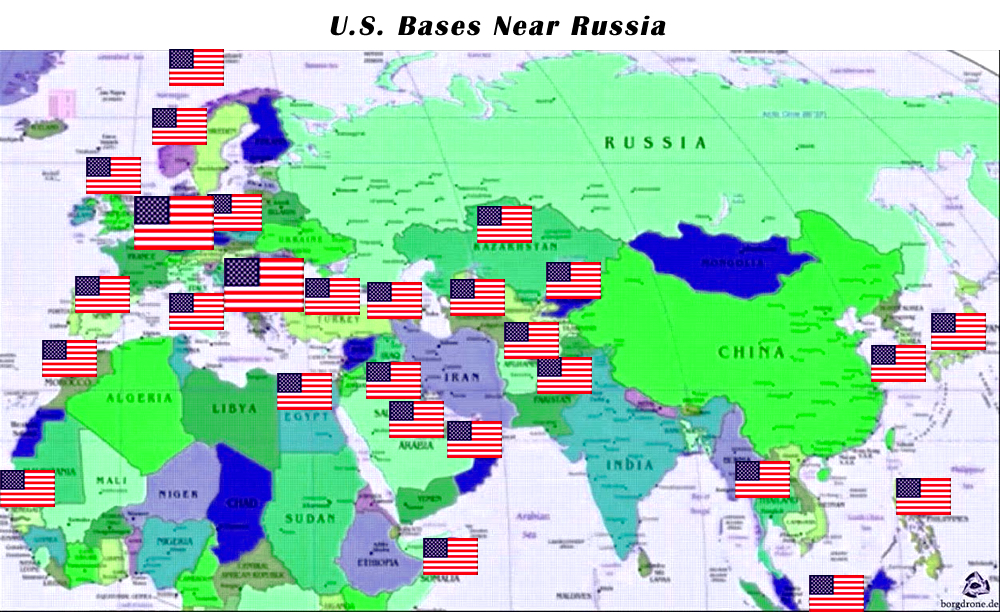
Failure and being seen to fail on NATO will deliver a huge political blow to western leaders who will keep kicking the peace can down the road
Ian Proud, Jun 03, 2025, https://thepeacemonger.substack.com/p/a-peace-deal-in-istanbul-wont-happen?utm_source=post-email-title&publication_id=3221990&post_id=165018630&utm_campaign=email-post-title&isFreemail=true&r=1ise1&triedRedirect=true&utm_medium=email
Russia will not end the war until, at the very least, Ukraine revokes its commitment to join NATO. If and when that happens, European leaders will have to confront their failure, justify it to their voters and explain why they prolonged the war for so long.
The next round of Istanbul peace talks commenced today, with UK media playing down the chances of a breakthrough. Helpful signs emerged of another prisoner exchange. Ukraine will consider Russia’s draft memorandum. There is a more clearly stated intent to continue talks towards a possible future meeting of leaders.
In a war that has long passed the one million mark in numbers of people killed or injured across both sides, no one will emerge from this process completely victorious when the fighting ends if, indeed, it ends this year.
But for President Zelensky and for western leaders, particularly in Europe, it is not victory but rather the fear of failure that presents the biggest stumbling block to a quick peace deal. Lacking sufficient financial and military support from western sponsors, and under pressure from the Trump administration to settle, Ukraine may at some point be forced to revoke its aspiration to join NATO.
NATO is by far the most stubborn ‘root cause’ that Russia is looking to address through negotiations, although the list of issues including on minority language rights, the division and status of territory, and Ukrainian children (raised today in Istanbul) is very long.
And NATO membership for Ukraine is an issue that President Trump and US officials including defence Secretary Pete Hegseth, negotiator Steve Witkoff and Ukraine Envoy Keith Kellogg have all acknowledged as unrealistic.
Undaunted, Zelensky, European leaders and the NATO secretary general still cling to an ever more tenuous line that the path to Ukrainian membership is irreversible.
That is untenable.
Russia has the military and economic means to continue the attritional fight, at a time when its slow but steady rate of progress in the Donbas is accelerating into the summer. There is not a scrap of evidence that Ukraine can recover its position, nor financial or military rabbits that increasingly cash and vote strapped European politicians can pull out of the hat.
Ukraine cannot win the war. It is cynical and self-serving for the hordes of mainstream politicos and pundits to suggest otherwise.
Ukraine will eventually have no choice but to let go of its demand for NATO membership. That will take Ukraine back to March to April 2022, when its negotiators agreed to the inclusion of a clause on neutrality in the draft Istanbul 1 peace treaty, that was derailed by Boris Johnson.
The key substantive difference between Istanbul 1 and a possible Istanbul 2 treaty, will be that Ukraine has since lost hundreds of thousands of troops to death or injury and is a matter of months from losing the whole of the Donbas.
After the first, brief, set of peace talks in Istanbul on 16 May, President Zelensky was quick to assert that there could be no return to the Istanbul 1 draft as a starting point for talks.
But I am afraid that the neutrality issue is not going away.
Ukraine is not going to join NATO.
Not joining NATO is the stinging nettle that Zelensky will sooner or later have to grip. And having clung so long to the NATO aspiration and sent so many Ukrainian troops to their deaths, the political ramifications will be searing
It is therefore this fear of failing and being seen to fail that is acting as the biggest stumbling block to a peace deal, as talks resumed today. That fear of failure is shared by Ukraine’s European sponsors.
Going back to the start of the war, then UK Prime Minister Boris Johnson said that ‘Putin must fail and must be seen to fail.’
Unfortunately for Johnson, when Ukraine is forced to give up its NATO aspiration, he will have failed and be seen to have failed.
Despite its enormous losses of men and materiel, Russia will have seen off the world’s biggest military bloc. The very idea of this is politically terrifying to the likes of Boris Johnson, Liz Truss and Keir Starmer who spent their time in office telling us that victory over Russia would be a doddle.
The UK mainstream media still clings to the victory narrative like a comfort blanket. Even today, the UK state-owned broadcaster, the BBC, reasserted the line that Putin failed in his bid to overrun Kyiv at the start of the war, remove Zelensky, and install a puppet government. And that is a legitimate claim to make.
But this war has never really been about the violent overthrow of a neighbouring Head of State. It is now and has been since 2022 an existential struggle to prevent further NATO expansion up to Russia’s border.
Western pundits argue endlessly that Russia has no right of veto over NATO. But when it boils down to it, governments decide the core strategic interests of their countries, not foreign pundits. NATO and its members should never have forced the issue of membership for Ukraine unless they were willing to fight Russia over it.
And NATO has never been willing to fight Russia for Ukraine’s right to choose.
The warning signs were there at President Putin’s 2007 Munich Security Conference Speech, during Russia’s brief war with Georgia in 2008 and following the overthrow of Ukrainian President Yanukovych in February 2014.
Through endless sanctions and efforts to impose international isolation, Russia’s position on NATO has never changed and will never change.
British and western media continue to promote a host of questionable assertions to keep hopes up that Russia really is losing and has been losing from the start. Russia’s imminent economic collapse, a likely coup d’etat made more real by Prigozhin’s rebellion, overwhelming battlefield losses of the Russian army, compared to the Ukrainian (even though there is a large body of analysis suggesting the picture is the complete opposite). And that just a few more billion dollars should be enough to finish the job.
The western propaganda path to victory has been gaslit like a badly cobbled Victorian street.
Putin must fail and must be seen to have failed.
Yet, when a peace treaty is finally agreed between Russia and Ukraine, it will become clear that western leaders failed. And they will be seen by their voters to have failed, with potentially disastrous domestic political consequences for traditional parties all across a Europe in economic and cultural decline.
Moreover, Europe will have to swallow the bitter pill of being pressured by Trump to accelerate Ukraine’s membership of the EU at a financial cost to ordinary European citizens far greater than the war itself. Little wonder then that indulging Zelensky and maintaining a slowly losing war has cynically been an easier choice for many, rather than striking for peace.
So don’t hold your breath for a quick peace deal out of Istanbul. The queue of European politicians lining up to kick the failure can down the road, from Von der Leyen, Rutte, Merz, Macron, Stubb, Starmer and the whole lot of them, is very long indeed.
A superhighway to nuclear hell
by beyondnuclearinternational, https://beyondnuclearinternational.org/2025/06/02/a-superhighway-to-nuclear-hell/
Trump’s reckless and accelerated nuclear orders would destroy safety oversight and endanger the public, writes Linda Pentz Gunter
On May 23rd, with several strokes of his pen, President Trump issued orders that would roll back US energy policy about 50 years.
On that day, Trump signed five Executive Orders (EOs): Restoring Gold Standard Science; Ordering the Reform of the Nuclear Regulatory Commission; Reinvigorating the Nuclear Industrial Base; Reforming Nuclear Reactor Testing at the Department of Energy; and Deploying Advanced Nuclear Reactor Technologies for National Security. (This page keeps a running tally of all the White House executive orders.
All of this madness was announced in a press release headlined “President Trump Signs Executive Orders to Usher in a Nuclear Renaissance, Restore Gold Standard Science.” Just in case there was any confusion about what this meant, the press release included an explanation that read: “Gold Standard Science is just that—science that meets the Gold Standard.”
Collectively, the four orders that focused on the nuclear sector would: reduce and undermine the already inadequate safety oversight authority of the US Nuclear Regulatory Commission (NRC); fast-track unproven new reactor projects without regard for safety, health or environmental impacts; curtail or possibly even end public intervention; weaken already insufficient radiation exposure standards; and reopen the pathway between the civil and military sectors, all while “unleashing” (Trump’s favorite verb) nuclear power expansion on a dangerous and utterly unrealistic accelerated timeline.
The precursive warning shot to all this had been fired on February 5th with Energy Secretary Chris Wright’s own Executive Order: Unleashing the Golden Era of American Energy Dominance, ‘dominance’ being another of Trump’s favorite big beautiful words, along with ‘big’ and ‘beautiful’ (—see his One Big Beautiful Bill Act.) “It’s time for nuclear, and we’re going to do it very big,” Trump told industry executives when he signed the orders.
Perhaps it’s no surprise to find that ‘dominance’ appears 35 times in the Heritage Foundation’s 2023 handbook, Authoritarianism for Dummies, officially known as Project 2025. Variations on the word ‘unleash’ appear 19 times. ‘Tremendous’ shows up 11 times. So does ‘gold standard’.
Which brings us to the fifth executive order of May 23, Restoring Gold Standard Science. While it does not specifically reference nuclear power, the order determines a hierarchy that will put political appointees in charge of specialized federal agencies, including the NRC. The order also itemizes a set of requirements on how scientific research and activities must be conducted, including “without conflicts of interest.”
But guess whose stocks soared after the release of Trump’s nuclear Executive Orders? Answer: Oklo, the company attempting to deliver the first US micro-reactors. Guess who was on the board of Oklo before his appointment as Trump’s Energy Secretary? Yes, Chris Wright.
Uranium mining company Centrus Energy and the U.S. Navy’s main nuclear reactor supplier, BWX Technologies, also saw their stock prices soar after Trump’s executive orders were released.
An Oklo executive, Jacob DeWitte, who was present at the signing, brought along a golf ball to help Trump understand just how little uranium is needed for the lifetime needs of a single human being (an entirely irrelevant statistic given the lethality contained in that glowing little golf ball.) Trump called the golf ball show-and-tell “very exciting” before teeing up another order that will not only muzzle but actually persecute scientists for any findings with which the Trump hive don’t agree.
The definition of ‘sound science’, under Trump’s ‘gold standard’, is simply anything happening now or under the previous Trump administration. Anything that happened under the Biden administration is “politicized science”.
Among the enforcers who will police and punish the NRC, along with other federal agencies who stray from Trump’s “science” script, is the Director of the Office of Science and Technology Policy, one Michael Kratsios.
Kratsios is the former chief of staff to AI entrepreneur, venture capitalist and nuclear promoter, Peter Thiel. Thiel’s venture capital firm, Founders Fund, supported nuclear fuel start-up General Matter, in contention to produce high-assay low-enriched uranium (HALEU) for advanced nuclear reactors. One of the executive orders will “seek voluntary agreements pursuant to section 708 of the DPA with domestic nuclear energy companies that could deliver HALEU fuel.”
Kratsios is already sharpening his knives to go after the NRC, viewed as an obstacle to fast-tracking the new nuclear projects that Kratisios’s former boss, among others, will be pushing.
“Today’s executive orders are the most significant nuclear regulatory reform actions taken in decades,” said Kratsios on May 23. “We are restoring a strong American nuclear industrial base, rebuilding a secure and sovereign domestic nuclear fuel supply chain, and leading the world towards a future fueled by American nuclear energy. These actions are critical to American energy independence and continued dominance in AI and other emerging technologies.”
There has already been some pushback against allowing a political appointee to be the arbiter of scientific integrity. “Putting that power in the hands of a political appointee who doesn’t need to consult with scientific experts before making a decision is very troubling,” Kris West of COGR, an association of research universities, affiliated medical centers, and independent research institutes, told Science.
A group of scientists has written an open letter, retitling the order “Fool’s Gold Standard Science,” declaring that it “would not strengthen science, but instead would introduce stifling limits on intellectual freedom in our Nation’s laboratories and federal funding agencies”.
Part of the “regulatory reform” outlined as “gold standard science” and that Kratsios will oversee, is gutting the NRC, which, complains the White House, “charges applicants by the hour to process license applications with prolonged timelines that maximize fees while throttling nuclear power development.”
Somehow, “throttling nuclear power development” is not what springs to mind when reviewing the record of an agency that consistently favors the financial needs of the nuclear industry over the interests of public safety and the environment.
Furthermore, charges the White House, the NRC “has failed to license new reactors even as technological advances promise to make nuclear power safer, cheaper, more adaptable, and more abundant than ever.”
Trump, who seems to treat executive orders like a Nike slogan (“just do it”), has commanded that the US quadruple its nuclear energy capacity by 2050. This will be achieved not only by stripping the NRC of its power to scrutinize the safety assurances for new, primarily small modular reactors, but by expediting their licensing while keeping current reactors running longer and hotter and even reopening permanently closed ones.
Licensing timeframes will be slashed to “a deadline of no more than 18 months” for final decisions on construction and operating license applications for new reactors, and to just one year “for final decision in an application to continue operating an existing reactor of any type.”
The Trump order will also require “the reactivation of prematurely shuttered to partially completed nuclear facilities.” The former refers to Palisades, Three Mile Island and Duane Arnold so far. The latter is about the abandoned two-reactor Westinghouse AP 1000 project at V.C. Summer in South Carolina.
Currently operating reactors will be expected to add “5 gigawatts of power uprates”, which comes with its own set of safety concerns given the age of the US nuclear reactor fleet.
Everything has been put on a superhighway to nuclear hell, unhinged from the very real obstacles to fast-tracking nuclear expansion, most notably the cost and risks.
“A pilot program for reactor construction and operation outside the National Laboratories,” will require the Energy Secretary to “approve at least three reactors pursuant to this pilot program with the goal of achieving criticality in each of the three reactors by July 4, 2026,” one order said.
An astonishing “10 new large reactors with complete designs under construction by 2030,” is another aspirational command.
The Secretary of Energy must also designate at least one site for advanced reactor technologies within three months of the order, and ensure that it will host a fully operational reactor there “no later than 30 months from the date of this order.”
None of these timelines share any precedent with the track record of nuclear power plant construction, and bullying or handcuffing the NRC won’t change that.
That’s because, as Toby Dalton and Ariel Levite of the Carnegie Endowment for International Peace point out in their recent column in The Hill: “The Nuclear Regulatory Commission has not presented the key obstacle to nuclear development in the U.S.” The orders, they said “underestimate the addition of time to market due to limitations on workforce availability, supply chain, financing, specialty fuels and community buy-in.”
The Carnegie authors also criticized the way the orders treat nuclear power as if it is similar to any other form of energy. “The orders downplay or ignore the special magnitude of nuclear risks, the series of traumatic accidents suffered by leading nuclear power nations and the unique environmental and multi-generational footprint of nuclear waste and spent fuel,” they wrote.
What reining in the NRC will achieve is an even greater reduction in confidence over the safe operation of current and future nuclear reactors.
“This push by the Trump administration to usurp much of the agency’s autonomy as they seek to fast-track the construction of nuclear plants will weaken critical, independent oversight of the U.S. nuclear industry and poses significant safety and security risks to the public,” said Ed Lyman, a physicist and Director of Nuclear Power Safety at the Union of Concerned Scientists.
To set all this right, the DOGE kids will soon be paying a visit to the NRC to fire people. DOGE, says the Reform the NRC order, will “reorganize the NRC to promote the expeditious processing of licensing applications and the adoption of innovative technology. The NRC shall undertake reductions in force in conjunction with this reorganization, though certain functions may increase in size consistent with the policies in this order, including those devoted to new reactor licensing.”
But “reorganizing” the NRC will have the reverse effect, argues Senator Ed Markey (D-MA) a longtime nuclear watchdog on Capitol Hill, including during his earlier years in the US House of Representatives. “It will be impossible for NRC to maintain a commitment to safety and oversight with staffing levels slashed and expertise gone,”Markey said.
“Allowing DOGE to blindly fire staff at the NRC does nothing to make it easier to permit or regulate nuclear power plants, but it will increase the risk of an accident,” said ranking member of the House Energy and Commerce Committee, Frank Pallone (D-NJ), who called the orders “dangerous.”
But then the Trump administration doesn’t actually consider nuclear power itself to be dangerous, and instead accuses the NRC of being overly cautious, saying: “Instead of efficiently promoting safe, abundant nuclear energy, the NRC has instead tried to insulate Americans from the most remote risks without appropriate regard for the severe domestic and geopolitical costs of such risk aversion.”
Consequently, it’s no surprise to find a clause in the order that reads: “The personnel and functions of the Advisory Committee on Reactor Safeguards (ACRS) shall be reduced to the minimum necessary”. The ACRS panel is composed of cream-of-the-crop scientists from the national laboratories, universities and other areas of academia. Its mandate, ironically and in place for decades, has been precisely to uphold “Gold Standard Science” in the nuclear power sector.
Like everything else Trump does, all of this constitutes another accident waiting to happen. “If you aren’t independent of political and industry influence, then you are at risk of an accident,” confirmed former NRC chair Allison Macfarlane of efforts to undermine her former agency.
The orders are a “guillotine to the nation’s nuclear safety system”, another former NRC chair Greg Jaczko told the Los Angeles Times.
Also guillotined is any pretense about protecting the public from the harm caused by exposure to the ionizing radiation released by the nuclear power sector.
No longer must we adhere to the standard, endorsed by the National Academy of Sciences, that exposure to any amount of radiation, no matter how small, could be harmful to human health. (This is especially true if it involves consistent and chronic longterm exposure even to what might be considered “low” doses.)
Instead, say Trump’s orders, “the NRC shall reconsider reliance on the linear-no-threshold (LNT) model for radiation exposure and the ‘as low as reasonably achievable’ standard, which is predicated on LNT.” Those models, says the White House, are “flawed.”
This will of course open the door to the hormesis advocates who, without any firm basis in actual science, insist that a little radiation is good for all of us.
It’s time to set the record straight on radiation and the damage it causes, particularly to pregnancy, children and women,” responded Cindy Folkers, radiation and health hazard specialist at Beyond Nuclear. “Contrary to what Trump’s recent EO claims, abundant and largely officially ignored scientific evidence demonstrates that childhood cancers increase around normally operating nuclear facilities, with indications that these cancers begin during pregnancy. The uranium mining needed to produce fuel for reactors, is associated with a number of health impacts. Even already existing background radiation is associated with childhood cancers.”
The already flimsy separation between the civil and military nuclear sectors is all but erased in the new EOs, most notably in the emphasis on a return to the reprocessing of irradiated reactor fuel. This operation separates out the uranium and plutonium while producing a vast amount of so-called low- and intermediate-level liquid and gaseous wastes that are routinely released into the air and sea.
Reprocessing was rejected in the US by the Ford and Carter administrations as too proliferation risky, given that plutonium is the trigger component of a nuclear weapon. It is still carried out in France — and until recently in the UK — where radioactive isotopes released by these operations have been found as far away as the Arctic Circle. The UK reprocessing activities at Sellafield rendered the Irish Sea the most radioactively contaminated sea in the world.
But, wrote the White House in the Deploying Advanced Nuclear Reactor Technologies EO: “Within 90 days of the date of this order, the Secretary of Energy shall identify all useful uranium and plutonium material within the Department of Energy’s inventories that may be recycled or processed into nuclear fuel for reactors in the United States.” That sounds like a return to mixed oxide fuel, or MOX, another program that was abandoned, but not until after a protracted opposition campaign launched by our movement — Nix MOX — finally prevailed.
Another order directs “The Secretary of Defense, through the Secretary of the Army” to “commence the operation of a nuclear reactor, regulated by the United States Army, at a domestic military base or installation no later than September 30, 2028.”
Some of those closed civil nuclear power plants could find themselves repurposed by the Department of Defense, serving as “energy hubs for military microgrid support.” Advanced nuclear reactor technologies will also be expected to power AI datacenters “within the 48 contiguous States and the District of Columbia, in whole or in part, that are located at or operated in coordination with Department of Energy facilities, including as support for national security missions, as critical defense facilities, where appropriate.”
Pronounced Kratsios in the May 23 press release: “We are recommitting ourselves to scientific best practices and empowering America’s researchers to achieve groundbreaking discoveries.”
Until they come and arrest you for telling the truth.
Linda Pentz Gunter is the international specialist at Beyond Nuclear and writes for and edits Beyond Nuclear International.
Playing with Fire- Ukraine’s Operation Spiderweb

Ukraine’s Operation Spiderweb has crossed the threshold when it comes to triggering a Russian nuclear response. How Russia and the United States respond could determine the fate of the world.
Scott Ritter, Jun 01, 2025, https://scottritter.substack.com/p/playing-with-fire?utm_source=post-email-title&publication_id=6892&post_id=164935563&utm_campaign=email-post-title&isFreemail=false&r=191n6&triedRedirect=true&utm_medium=email
In 2012, Russian President Vladimir Putin declared that “The nuclear weapons remain the most important guarantee of Russia’s sovereignty and territorial integrity and play a key role in maintaining the regional balance and stability.”
In the intervening years, western analysts and observers have accused Russia and its leadership of irresponsibly invoking the threat of nuclear weapons as a means of “saber rattling”—a strategic bluff to hide operational and tactical shortfalls in Russian military capabilities.
In 2020 Russia published, for the first time, an unclassified version of its nuclear doctrine. The document, called “Basic Principles of State Policy of the Russian Federation on Nuclear Deterrence,” noted that Russia “reserves the right to use nuclear weapons” when Moscow is acting “in response to the use of nuclear and other types of weapons of mass destruction against it and/or its allies, as well as in the event of aggression against the Russian Federation with the use of conventional weapons when the very existence of the state is in jeopardy.” The document also stated that Russia reserved the right to use nuclear weapons in case of an “attack by [an] adversary against critical governmental or military sites of the Russian Federation, disruption of which would undermine nuclear forces response actions.”
In 2024 Vladimir Putin ordered Russia’s nuclear doctrine to be updated to consider the complicated geopolitical realities that had emerged from the ongoing Special Military Operation (SMO) in Ukraine, where the conflict had morphed into a proxy war between the collective west (NATO and the US) and Russia.
The new doctrine declared that nuclear weapons would be authorized for use in case of an “aggression against the Russian Federation and (or) its allies by any non-nuclear state with the participation or support of a nuclear state is considered as their joint attack.”
Russia’s nuclear arsenal would also come into play in the event of “actions by an adversary affecting elements of critically important state or military infrastructure of the Russian Federation, the disablement of which would disrupt response actions by nuclear forces.”
The threats did not have to come in the form of nuclear weapons. Indeed, the new 2024 doctrine specifically stated that Russia could respond with nuclear weapons to any aggression against Russia involving “the employment of conventional weapons, which creates a critical threat to their sovereignty and (or) territorial integrity.”
Operation Spiderweb, the largescale assault on critical Russian military infrastructure directly related to Russia’s strategic nuclear deterrence by unmanned drones, has demonstrably crossed Russia’s red lines when it comes to triggering a nuclear retaliation and/or pre-emptive nuclear strike to preclude follow-on attacks. The Ukrainian SBU, under the personal direction of its chief, Vasyl Malyuk, has taken responsibility for the attack.
Operation Spiderweb is a covert direct-action assault on critical Russian military infrastructure and capabilities directly related to Russia’s strategic nuclear deterrent capabilities. At least three airfields were attacked using FPV drones operating out of the backs of civilian Kamaz trucks repurposed as drone launch pads. Dyagilevo airfield in Ryazan, Belaya airfield in Irkutsk, and Olenya airfield in Murmansk, home to Tu-95 and Tu-22 strategic bombers and A-50 early warning aircraft, were struck, resulting in numerous aircraft being destroyed and/or heavily damaged.
This would be the equivalent of a hostile actor launching drone strikes against US Air Force B-52H bombers stationed at Minot Air Force Base in North Dakota and at Barksdale Air Force Base in Louisiana, and B-2 bombers stationed at Whiteman Air Force Base in Missouri.
The timing of Operation Spiderweb is clearly designed to disrupt peace talks scheduled to take place in Istanbul on June 2.
First and foremost, one must understand that it is impossible for Ukraine to seriously prepare for substantive peace talks while planning and executing an operation such as Operation Spiderweb; while the SBU may have executed this attack, it could not have happened without the knowledge and consent of the Ukrainian President or the Minister of Defense.
Moreover, this attack could not have occurred without the consent of Ukraine’s European partners, in particular Great Britain, France and Germany, all of whom were engaged in direct consultations with Ukrainian President Volodymyr Zelensky in the days and weeks leading up to the execution of Operation Spiderweb.
The Ukrainians have been encouraged by Europe to be seen as actively supporting the Istanbul peace process, with an eye to the notion that if the talks failed, the blame would be placed on Russia, not Ukraine, thereby making it easier for Europe to continue providing military and financial support to Ukraine.
There appears to be a major role being played by US actors as well—Senator’s Lyndsay Graham, a Republican from South Carolina, and Richard Blumenthal, a Democrat from Connecticut, made a joint visit to Ukraine in the past week where they coordinated closely with the Ukrainian government about a new package of economic sanctions linked to Russia’s willingness to accept peace terms predicated on a 30-day ceasefire—one of Ukraine’s core demands.
Operation Spiderweb appears to be a concerted effort to drive Russia away from the Istanbul talks, either by provoking a Russian retaliation which would provide cover for Ukraine to stay home (and an excuse for Graham and Blumenthal to go forward with their sanctions legislation), or provoking Russia to pull out of the talks as it considers its options going forward, an act that would likewise trigger the Graham-Blumenthal sanctions action.
Unknown is the extent to which President Trump, who has been pushing for successful peace talks between Russia and Ukraine, was knowledgeable of the Ukrainian actions, including whether he approved of the action in advance (Trump appeared to be ignorant of the fact that Ukraine had targeted Russian President Putin using drones during a recent trip to Kursk.)
How Russia responds to this latest Ukrainian action is yet unknown; the drone attacks on Russian military bases came on the heels of at least two Ukrainian attacks on Russian rail lines that resulted in significant damage done to locomotives and passenger cars and killed and wounded scores of civilians.
But this much is clear: Ukraine could not have carried out Operation Spiderweb without the political approval and operational assistance of its western allies. The American and British intelligence services have both trained Ukrainian special operation forces in guerilla and unconventional warfare actions, and it is believed that previous Ukrainian attacks against critical Russian infrastructure (the Crimea bridge and Engels Air Base) were done with the assistance of US and British intelligence in the planning and execution phases. Indeed, both the Crimea bridge and Engels airbase attacks were seen as triggers for the issuing of Russia’s 2024 nuclear doctrine modifications.
Russia has in the past responded to provocations by Ukraine and its western allies with a mixture of patience and resolve.
Many have interpreted this stance as a sign of weakness, something which may have factored in the decision by Ukraine and its western facilitators to carry out such a provocative operation on the eve of critical peace discussions.
The extent to which Russia can continue to show the same level of restraint as in the past is tested by the very nature of the attack—a massive use of conventional weapons which struck Russia’s strategic nuclear deterrence force, causing damage.
It is not a stretch of the imagination to see this tactic being used in the future as a means of decapitating Russian strategic nuclear assets (aircraft and missiles) and leadership (the attack against Putin in Kursk underscores this threat.)
If Ukraine can position Kamaz trucks near Russian strategic air bases, it could do so against Russian bases housing Russia’s mobile missile forces.
That Ukraine would carry out such attack likewise shows the extent to which western intelligence services are testing the waters for any future conflict with Russia—one that NATO and EU members say they are actively preparing for.
We have reached an existential crossroads in the SMO.
For Russia, the very red lines it deemed necessary to define regarding the possible use of nuclear weapons have been blatantly violated by not only Ukraine, but its western allies.
President Trump, who has been claiming to support a peace process between Russia and Ukraine, must now decide as to where the United States stands considering these developments.
His Secretary of State, Marco Rubio, has acknowledged that under the previous administration of Joe Biden the United States was engaged in a proxy war with Russia. Trump’s Special Envoy to Ukraine, Keith Kellogg, recently acknowledged the same about NATO.
In short, by continuing to support Ukraine, both the US and NATO have become active participants in a conflict which has now crossed the threshold regarding the employment of nuclear weapons.
The United States and the world stand on the precipice of a nuclear Armageddon of our own making.
Either we separate ourselves from the policies that have brought us to this point, or we accept the consequences of our actions, and pay the price.
We cannot live in a world where are future is dictated by the patience and restraint of a Russian leader in the face of provocations we are ourselves responsible for.
Ukraine, not Russia, represents an existential threat to humanity.
NATO, not Russia, is responsible for encouraging Ukraine to behave in such a reckless manner.
So, too, is the United States. The contradictory statements made by US policy makers regarding Russia provide political cover for Ukraine and its NATO enablers to plan and execute operations like Operation Spiderweb.
Senators Graham and Blumenthal should be called out for sedition if their intervention in Ukraine was done to deliberately sabotage a peace process President Trump has said is central to his vision of American national security going forward.
But it is Trump himself who must decide the fate of the world.
In the coming hours we will undoubtedly hear from the Russian President about how Russia will respond to this existential provocation.
Trump, too, must respond.
By telling Graham and Blumenthal and their supporters to stand down regarding Russian sanctions.
By ordering NATO and the EU to cease and desist from continuing to provide military and financial support to Ukraine.
And by taking sides in the SMO.
Choose Ukraine and trigger a nuclear war.
Choose Russia and save the world.
Scott Ritter is a former Marine intelligence officer with extensive experience in arms control and disarmament, and an expert on US-Russian relations. His work can be found at ScottRitter.com. He is the author of several books, including his latest, Highway to Hell: The Armageddon Chronicles, 2014-2025, published by Clarity Press.Upgrade to paid

The 2026 bill for the Ukraine war is already in the mail

Time to bring the gravy train to a halt. With talks stalled, Zelensky says he needs more money for next year
Ian Proud, May 31, 2025, https://responsiblestatecraft.org/ukraine-war-2672231522/
Ukraine is already asking for more money to continue fighting into 2026, a sure sign that President Volodmyr Zelensky has no plans to end the war.
With the battlefield continuing to favor Russia, European leaders have their collective heads in the sand on who will pay. How long before President Trump walks away?
At the G7 Finance and Central Bank governors’ meeting in Banff on May 21, Ukraine’s Finance Minister Sergii Marchenko sought financial support for 2026, “including the provision of support to the Ukrainian army through its integration into the European security system,” according to reports.
I have said before that Ukraine cannot keep fighting into 2026 without a significant injection of European money. Even if the war were to stop tomorrow, Ukraine would still face a huge funding black hole. And that prolonging the war simply extends Ukraine’s indebtedness and delinquency, nudging it every closer towards the status of a failed state.
Making light of the price tag, German-based Kiel Institute has suggested extra EU support to Ukraine’s army would only need to cost an extra 0.2% of GDP or $43.3 billion per year. This assumes no additional U.S. funding under President Trump and is a figure practically identical to the $41.5 billion figure I forecast two months ago.
The Ukrainian side pointed out two assumptions that underpin their request — first, that funding Ukraine’s military supports macro-financial stability in that country. That is untrue. By far the leading cause of the increased financial distress of Ukraine is its vast and unsustainable prosecution of a war that it cannot win. As I have said before, ending the war would allow for immediate reductions to be made to military spending, which accounts for 65% of total government expenditure.
Second, that paying for Ukraine’s military is keeping Europe safer. It isn’t. The best route to European security would be to end the war tomorrow. The risk of escalation only grows for the longer the war continues and President Zelensky resorts to increasingly desperate tactics as the battlefield realities turn against him.
This latest request for money is a clear signal that Zelensky is not serious about U.S. demands for peace, and would prefer to continue the fight, drawing directly upon European funds. It has long been clear to me that Zelensky is evading peace because it would bring his presidency to a close, not to mention elevate risks to his personal safety.
He has therefore been piling on more pressure for Western leaders to impose more sanctions and other measures, which will only serve to prolong the war. Senator Lindsey Graham’s recent brain wave that the U.S. impose 500% secondary tariffs on countries that trade with Russia is a classic example. No doubt other countries, China in particular, would respond negatively to this, as it has already to the launch of Trump’s tariff war. It would kill President Trump’s efforts at engagement with Russia, by boxing him in to Beltway demands in an identical rerun of his first presidency, making him appear toothless in the eyes of Putin.
But these are not the real points. Having suffered over 20,000 sanctions already since 2014 yet maintaining a stable, growing economy, what makes people believe that Russia will back down to even more sanctions now?
The war continues to favor Russia on the battlefield. In recent days, in addition to expanding territory in the south of Donetsk, the Russian army has made major gains in the pocket around now-occupied Toretsk. Progress, as always, is slow and grinding as it has been since the start of 2024. Ukraine has undoubtedly mounted a formidable defence of its territory, for which its fighters deserve great credit.
But Russia has never fully mobilized the country for the fight in Ukraine, for various domestic political reasons. Putin also wants to maintain relations with developing country partners and a more devastating military offensive against Ukraine would make that harder.
Pumping more billions into Ukraine’s army will merely slow the speed of defeat. Even the Ukrainians now accept that they cannot reclaim lost territory by force. Ending the war would at least draw a line in the sand for future negotiations.
For their part, Europe simply can’t afford to pump another $40 billion per year into Ukraine’s army, at a time when member states are trying to boost their own militaries, revive their flagging economies and deal with an upsurge in nationalist political parties that want to end the war.
An April pledge for extra military donations in 2025 elicited just $2.5 billion per year from Germany, and reconfirmed the £6 billion from the UK already committed, without pledging new funds. Keir Starmer’s government is in the process of making an embarrassing U-turn on previously agreed cuts to winter fuel payments for pensioners.
I seriously doubt that British people would consider another big increase in funds for Ukraine’s war would be a sensible investment if peace was on the table. That this isn’t actively discussed in Britain, in a way that it is in the United States, is driven by the complete lockdown of debate in the UK and European mainstream media.
Right from the beginning, the war in Ukraine has been an attritional battle of who can sustain the fight for the longest period of time. A longer war will always favor Russia because the economic liability Europe faces will ratchet up to the point where it becomes politically unsustainable. We make the assumption that Russia’s aims in Ukraine are to prevent NATO expansion and to protect the rights of native Russian speakers in that country, and of course, on the surface, they are.
But on the current track, Putin gets the added benefit of watching the European Union project slowly implode, without the need to go all in on Ukraine.
President Trump for his part continues to walk a fine line that involves criticizing both Putin and Zelensky for the continuance of the war. In the face of intransigence on all sides, I wonder how long it will be before he washes his hands of the mess and walks away.
Ian Proud was a member of His Britannic Majesty’s Diplomatic Service from 1999 to 2023. He served as the Economic Counsellor at the British Embassy in Moscow from July 2014 to February 2019. Prior to Moscow, he organized the 2013 G8 Summit in Lough Erne, Northern Ireland, working out of 10 Downing Street. He recently published his memoir, “A Misfit in Moscow: How British diplomacy in Russia failed, 2014-2019.”
Ukraine Targets Russian Airfields in Major Drone Attack
According to Reuters, Ukrainian spies hid the drones in wooden sheds that were loaded onto trucks and driven near bases deep inside Russia
by Dave DeCamp June 1, 2025 https://news.antiwar.com/2025/06/01/ukraine-targets-russian-airfields-in-major-drone-attack/
The Security Service of Ukraine (SBU) conducted a large-scale drone attack deep inside Russian territory on Sunday that targeted several Russian airfields.
The Russian Defense Ministry said the attack targeted five Russian regions, including the Amur Oblast in Russia’s far east, which is over 3,000 miles from Ukraine, and a base in the Irkutsk Oblast, over 2,500 miles from the Ukrainian border.
The attack also targeted the northern region of Murmansk and the western oblasts of Ivanovo and Ryazan. The Russian Defense Ministry said that “several aircraft” caught fire in Murmansk and Irkutsk and that the attacks were launched “in the exact proximity” of the airfields in the region.
The Defense Ministry said the attacks were “repelled” in the other three regions. “No casualties were reported either among servicemen or civilians. Some of those involved in the terror attacks were detained,” the ministry said.
A Ukrainian official told Reuters that the SBU was able to pull off the attack by hiding explosive-laden drones inside the roofs of wooden sheds. The sheds were loaded onto trucks driven near the bases, and the roof panels were lifted off by a remotely activated mechanism, allowing the drones to fly out.
Videos on social media show drones flying out of a truck near the Belaya airbase in Irkutsk. Ukrainian officials said the attack was planned for more than a year and claimed it destroyed 41 Russian aircraft, including TU-95 long-range bombers, though the number hasn’t been confirmed by the Russian side.
Ukrainian President Volodymyr Zelensky described the attack as a “brilliant operation” in his nightly address. ” It took place on enemy territory and was aimed exclusively at military targets – specifically, the equipment used in strikes against Ukraine. Russia suffered truly significant losses – entirely justified and deserved,” he said.
US and Ukrainian officials claimed that the Trump administration was not notified ahead of the attack, although the CIA is deeply involved with the SBU and helped build up Ukraine’s intelligence services following the 2014 US-backed coup that ousted former Ukrainian President Viktor Yanukovych.
Also on Sunday, a Russian missile strike on a Ukrainian military training site killed 12 Ukrainian troops and wounded 60. Ukrainian officials said that on Sunday, Russia launched 472 drones at Ukraine overnight, marking the largest Russian drone barrage of the war.
Both sides have dramatically stepped up their drone attacks in recent weeks despite the US push for peace talks. Russian and Ukrainian negotiators are expected to hold a second round of direct peace talks in Istanbul on Sunday.
UK to build up to 12 new attack submarines

Paul Seddon, Political reporter,Jonathan Beale, Defence correspondent, BBC 1 June 25
The UK will build “up to” 12 new attack submarines, the prime minister has announced, as the government unveils its major defence review on Monday.
The new conventionally-armed, nuclear-powered submarines will replace the seven-strong Astute class from the late 2030s onwards.
The review is expected to recommend the armed forces move to “warfighting readiness” to deter growing threats faced by the UK.
Sir Keir Starmer said the government will adopt a “Nato-first” stance towards defence, so that everything it does adds to the strength of the alliance.
The threat posed by Moscow has been a key part of the government’s pitch ahead of Monday’s review, led by ex-Labour defence secretary Lord Robertson, which was commissioned by Labour shortly after it took office last July.
The report will make 62 recommendations, which the government is expected to accept in full.
Speaking to BBC Radio 4’s Today programme ahead of its publication, Sir Keir said the danger posed by Russia “cannot be ignored” and the “best way” to deter conflict was to prepare for it…………………………………………………………………………………………………………
Other announcements in the review will include:
- Commitment to £1.5bn to build six new factories to enable an “always on” munitions production capacity
- Building up to 7,000 long-range weapons including missiles or drones in the UK, to be used by British forces
- Pledge to set up a “cyber and electromagnetic command” to boost the military’s defensive and offensive capabilities in cyberspace
- Extra £1.5bn to 2029 to fund repairs to military housing
- £1bn on technology to speed up delivery of targeting information to soldiers
…………………………Submarine plans
The Astute class is the Royal Navy’s current fleet of attack submarines, which have nuclear-powered engines and are armed with conventional torpedoes and missiles.
As well as protecting maritime task groups and gathering intelligence, they protect the Vanguard class of submarines that carry the UK’s Trident nuclear missiles.
The sixth submarine in the current Astute series was launched last October, with the seventh, the final one in the series, currently under construction.
The next generation of attack submarines that will replace them, SSN-AUKUS, have been developed with the Australian Navy under a deal announced in 2021 under the previous Conservative government.
The Ministry of Defence (MoD) said it expected the rollout of the new generation would see a submarine built every 18 months.
It added the construction programme would see a “major expansion of industrial capability” at BAE Systems’ shipbuilding site in Barrow-in-Furness, Cumbria, as well as the Derby site of Rolls-Royce, which makes nuclear reactors.
Meanwhile work on modernising the warheads carried by Trident missiles is already under way.
The £15bn investment into the warhead programme will back the government’s commitments to maintain the continuous-at-sea nuclear deterrent.
In his announcement on Monday, Sir Keir is to repeat a Labour manifesto commitment to deliver the Dreadnought class of nuclear-armed submarines, which are due to replace the ageing Vanguard fleet from the early 2030s onwards.
The MoD’s Defence Nuclear Enterprise accounts for 20% of its budget and includes the cost of building four Dreadnought class submarines.
https://www.bbc.co.uk/news/articles/c4g2jr1m49no
Off to War We Go: Starmer’s Strategic Defence Review

June 3, 2025, Dr Binoy Kampmark, https://theaimn.net/off-to-war-we-go-starmers-strategic-defence-review/
Unpopular governments always retreat to grounds of lazy convenience. Instead of engaging in exercises of courage, they take refuge in obvious distractions. And there is no more obvious distraction than preparing for war against a phantom enemy.
That is exactly where the government of Sir Keir Starmer finds itself. Despite a mammoth majority and a dramatically diminished Tory opposition, the Prime Minister acts like a man permanently besieged, his Labour Party seemingly less popular than Typhoid Mary. His inability to be unequivocal to questions of whether he will contest the next election suggest as much.
The same cannot be said about his enthusiasm for the sword and sabre. There are monsters out there to battle, and Sir Keir is rising to the plate. Sensing this, the military mandarins, most prominently General Sir Roland Walker, head of the Army, have been more than encouraging, seeing the need to ready the country for war by 2027. Given the military’s perennial love affair with astrology, that state of readiness could only be achieved with a doubling of the Army’s fighting power and tripling it by 2030.
Given that background, the UK Strategic Defence Review (SDR) was commissioned in July 2024. Led by former Labour Defence Secretary and NATO Secretary General Lord George Robertson, the freshly released report promises a fat boon for the military industrial complex. Like all efforts to encourage war, its narrative is that of supposedly making Britain safer.
Starmer’s introduction is almost grateful for the chance to out the blood lusting enemy. “In this new era for defence and security, when Russia is waging war on our continent and probing our defences at home, we must meet the danger head on.” The placing of noble Ukraine into the warming fraternity of Europe enables a civilisational twist to be made. The Russian military efforts in Ukraine are not specific to a murderous family affair and historical anxieties but directed against all Europeans. Therefore, all Europeans should militarise and join the ranks, acknowledging that “the very nature of warfare is being transformed” by that conflict.
In pursuing the guns over butter program, Starmer recapitulates the sad theme of previous eras that led to global conflict. As Europe began rearming in the 1930s, a prevalent argument was that people could have guns and butter. Greater inventories of weaponry would encourage greater prosperity. So, we find Starmer urging the forging of deeper ties between government and industry and “a radical reform of procurement,” one that could only be economically beneficial. This would be the “defence dividend,” another nonsense term the military industrial complex churns out with such disconcerting ease.
The foreword from the Defence Secretary, John Healey, outlines the objectives of the SDR. These include playing a leading role in NATO “with strengthened nuclear, new tech, and updated conventional capabilities”; moving the country to a state of “warfighting readiness”; nourishing the insatiable military industrial Moloch; learning the lessons of Ukraine (“harnessing drones, data and digital warfare”); and adopting a “whole-of-society approach”, a sly if clumsy way of enlisting the civilian populace into the military enterprise.
The review makes 62 recommendations, all accepted by the grateful government. Some £15 billion will go to the warhead programme, supporting 9,000 jobs, while £6 billion will be spent on munitions over the course of the current Parliament. A “New Hybrid Navy” is envisaged, one that will feature Dreadnought and the yet to be realised SSN-AUKUS submarines, alongside “support ships” and “autonomous vessels to patrol the North Atlantic and beyond.” Submarine production is given the most optimistic assessment: one completion every 18 months.
The Royal Air Force is not to miss out, with more F-35s, modernised Typhoons, and the next generation of jets acquired through the Global Combat Air Programme. To his splurge will be added autonomous fighters, enabling global reach.
Mindless assessments are abundant in the Review. The government promises a British army 10 times “more lethal to deter from the land, by combining more people and armoured capability with air defence, communications, AI, software, long-range weapons, and land drone swarms.” Some 7,000 new long-range weapons will be built and a New CyberEM Command established “to defend Britain from daily attacks in the grey zone.” Keeping those merchants of death happy will be a new Defence Exports Office located in the Ministry of Defence, one intended “to drive exports to our allies and growth at home.”
The fanfare of the report, festooned with fripperies for war, conceals the critical problems facing the British armed forces. The ranks are looking increasingly thinned. (In 2010, regular troop numbers stood at 110,000; the current target of 73,000 soldiers is being barely met.) Morale is ebbing. The state of equipment is embarrassingly poor. The UK’s celebrated submarine deterrent is somewhat less formidable in the deterrence department, with its personnel exhausted and subject to unpardonably lengthy stints at sea. The 204-day patrol by HMS Vanguard is a case in point.
Whether the SDR’s recommendations ever fructify remains the hovering question. It’s all very good to make promises about weapons programmes and boosting a country’s readiness to kill, but militaries can be tardy in delivery and faulty in execution. What saves the day may well be standard ineptitude rather than any firebrand conviction in war. To the unready go the spoils.
The NRC’s new Mission Impossible: Making Atoms Great Again

If the NRC complies with them and reduces itself to a rubber-stamp, the public will be increasingly at risk.
Perhaps recognizing that this NRC “reform” will likely render the agency non-functional for the foreseeable future, the administration hedged its bets by issuing two other orders that would bypass NRC licensing altogether.
The NRC has been given a new mission to facilitate nuclear power at the expense of public health and environmental protection.
By Edwin S. Lyman | May 29, 2025
In early May, drafts of presidential executive orders surfaced that would “reform” (e.g., dismantle) the long-established independent safety and security framework under which the United States regulates commercial nuclear power. For those who held out hope that the leaked orders were trial balloons and would be shot down by stakeholders who value regulatory stability and clarity—such as nuclear power plant operators—disappointment loomed. On May 23, President Donald Trump signed the orders, which in some respects had gotten even more extreme than originally advertised.
One order mandates that the Nuclear Regulatory Commission (NRC) fundamentally change its mission to support the absurd and reckless goal of quadrupling of US nuclear energy capacity to 400 gigawatts by 2050—which would, if achieved, add the equivalent of 300 large nuclear plants to the US fleet—by prioritizing speedy licensing over protecting public health and safety from radiation exposure. This would effectively make the NRC a promotional agency not unlike its predecessor, the Atomic Energy Commission, thereby undoing the NRC’s 51-year history as the independent safety regulator established by the 1974 Energy Reorganization Act. Congress considered but ultimately watered down a legislative provision to do just that last year. Now President Trump wants to finish the job by requiring the NRC to “facilitate nuclear power” in addition to “ensuring nuclear safety.”
The order requires that the agency undertake “a wholesale revision of its regulations and guidance documents” and produce draft and final versions of the new rules within nine and 18 months, respectively. Anyone who has even a passing familiarity with this massive body of regulatory detail—refined over decades of increasing technical knowledge, facility operating experience (including the 1979 Three Mile Island and 2011 Fukushima Daiichi accidents), and often impassioned debate about “how safe is safe”—surely knows this is a nigh impossible task. The challenge is compounded by the vague criteria provided to guide the revision, which invoke subjective terms that are the bane of regulators, such as “reduce unnecessary burdens” and “focus on credible, realistic risks.”
This exercise in busywork on a massive scale will only serve as a disruptive distraction from the NRC’s important work overseeing the operating fleet of US nuclear reactors, likely leading to regulatory paralysis and delays.
Specifically, even though the NRC has already been working to shorten approval timelines under pressure from Congress, the order directs the commission to establish fixed, 18-month deadlines for approving applications for new reactors of any type, providing no leeway except for “instances of applicant failure.” Imposing such a rigid schedule may appease arrogant vendors of new nuclear designs who resent the scrutiny of regulators, but such a dictat is terrible for nuclear safety. New nuclear reactors in the licensing pipeline are mostly experimental in design; they have had little to no operating experience and introduce novel safety concerns that require painstaking and time-consuming experiments and analyses to resolve. Forcing technical reviewers to paper over such gaps in knowledge to meet arbitrary deadlines may lead to faster approvals, but it is sure to create implementation headaches and serious safety problems for anyone who tries to build and operate these first-of-a-kind reactors. And dedicated safety professionals at the NRC are not likely to remain in an environment where they are compelled to compromise their integrity, depleting the workforce needed to process a growing number of applications.
NRC reviews often uncover safety issues that reactor applicants miss. A case in point is the NuScale small modular reactor. During the review of the original NuScale design, NRC staff identified a mechanism that could cause the reactor to become critical and melt down following an emergency shutdown, leading the company to make last-minute design changes.
In the anti-science push that we have come to expect from the Trump administration, the order also deems well-established models of the risks of low-level radiation exposure to “lack sound scientific basis.” It directs the agency to “specifically consider adopting determinate radiation limits”—that is, to accept the view of a small minority that there is a “safe” level of radiation and incorporate it into its regulations—despite an actual lack of sound scientific basis supporting such a claim. The NRC recently affirmed in a unanimous vote that the “linear no-threshold model” (the principle that any level of radiation is harmful, but the cancer risk is proportional to the dose), which is the foundation of international radiation protection standards, remains an effective basis for the NRC’s regulatory framework. Compelling the NRC to rewrite its regulations based not on the current state of scientific knowledge but on pseudoscience will only create chaos and ultimately put the public at unnecessary risk.
Perhaps recognizing that this NRC “reform” will likely render the agency non-functional for the foreseeable future, the administration hedged its bets by issuing two other orders that would bypass NRC licensing altogether. Those orders encourage approval of reactors within the purview of the Defense Department and the Energy Department. This would have a detrimental impact on nuclear safety in both cases: Defense lacks the expertise to conduct such reviews (as it hasn’t approved its own nuclear reactors in decades); and Energy’s self-regulation of nuclear plants would be tainted by conflicts of interest, as the agency would directly benefit from approval of these projects. One order calls for deploying reactors to power artificial intelligence data centers at Energy Department sites, even if they are privately owned and operated. Whether this order actually expands Energy Department authority to approve reactors for commercial purposes is a complicated question best left for the lawyers. But there is clear intent to sideline the Nuclear Regulatory Commission and the relatively high level of public engagement and transparency that the agency offers compared to the Defense and Energy departments.
Another goal of the orders is to “promote American nuclear exports.” But what the administration doesn’t realize is that the NRC’s image (deserved or not) as the world’s “gold standard” nuclear safety regulator is a critical selling point for the US brand and US nuclear vendors. This is especially true for countries new to nuclear power that lack their own regulatory expertise and put their faith in NRC licensing. Yet nearly every action in the orders will undermine global confidence that the NRC is continuing to make independent safety judgments about new reactor designs and isn’t merely doling out seals of approval to Trump’s preferred cronies of the moment. Also, adopting radiation protection standards that violate international norms is not likely to bolster confidence in US designs around the world.
The NRC has been given a new mission to facilitate nuclear power at the expense of public health and environmental protection. But it doesn’t have to choose to accept it. It’s no surprise that an administration that embraces conflicts of interest would not care about preserving NRC’s non-promotional status. But unless the Supreme Court says otherwise, it is far from clear that independent agencies are obligated to follow executive orders—and as an independent agency, the NRC would be well justified in rejecting any attempt to negate Congress’ chief rationale for creating it in 1974. Chairman David Wright often says that safety is the NRC’s “North Star.” Now he can show that he means what he says by rebuffing President Trump’s crude and possibly illegal attempt to effectively destroy the Nuclear Regulatory Commission and undermine its authority to protect the public from potentially disastrous corner-cutting by the nuclear industry.
For decades, the nuclear industry has blamed overregulation for the cost overruns and delays that have plagued new projects and caused it to lose the confidence of investors. Now, these dangerous executive orders call the bluff. If the NRC complies with them and reduces itself to a rubber-stamp, the public will be increasingly at risk. Only time will tell if the industry, even without needed oversight and reasonable regulation, can build nuclear plants on schedule and on budget, or if it will finally have to grapple with the real root causes of its failure to thrive.
Iran says IAEA new report on nuclear activities politically motivated, based on Israel’s fake documents
By IFP Editorial Staff, June 1, 2025, https://ifpnews.com/iran-iaea-new-report-nuclear-activities-politically-motivated-israels-fake-documents/
The Foreign Ministry and the Atomic Energy Organization of Iran (AEOI) have issued a joint statement in response to the latest report by the International Atomic Energy Agency (IAEA), regarding Iran’s nuclear program, denouncing it as “political” and based on forged documents provided by the Israeli regime.
Iran stressed on Saturday that the accusation from the IAEA was “politically motivated and repeats baseless allegation”.
“The repetition of baseless allegations that cannot lend credibility to these claims, coupled with voicing too much concern in this regard, serves merely as a pretext for political propaganda against the Islamic Republic of Iran,” the statement said.
“This is while the fake Israeli regime, without being a signatory to the NPT, possesses a nuclear arsenal and simultaneously threatens the peaceful nuclear facilities of an NPT member nation. Unfortunately, despite his legal duties and repeated requests from the Islamic Republic of Iran to condemn these threats, the IAEA director general has taken no action,” it added.
Iran expressed “deep regret about the director general’s lack of impartiality and his disregard for professional conduct under political pressures in the preparation and publication of the report”.
“Unfortunately, despite such broad cooperation on part of Iran, the comprehensive report prepared, although acknowledging Iran’s cooperation, does not reflect the actual level of such cooperation,” the statement read.
“In the report, the director general, by relying extensively on forged documents provided by the Zionist regime, has reiterated previous biased and unfounded accusations. The allegations leveled in the current report are based on a few claims about undeclared activities and locations from past decades. This is while Iran has repeatedly declared that it has had no undeclared nuclear sites or activities.”
In its latest report, the IAEA claimed that Iran has sharply increased its stockpile of uranium enriched to up to 60 percent, close to the roughly 90 percent level needed for atomic weapons.
In its quarterly report, the agency said that as of May 17, Iran possesses an estimated 408.6 kilograms of uranium enriched up to 60 percent, marking an increase of 133.8 kilograms since the previous report in February.
According to the report, Iran’s total amount of enriched uranium now exceeds 45 times the limit authorized by the 2015 agreement – formally known as the Joint Comprehensive Plan of Action — and is estimated at 9,247.6 kilograms.
1 This Month
Chernobyl: The Lost Tapes – A good documentary on Chernobyl on SBS available On Demand for the next 3 weeks– https://www.sbs.com.au/ondemand/tv-program/chernobyl-the-lost-tapes/2352741955560

of the week–London Campaign for Nuclear Disarmament

Tell the Ukrainian Government to Drop Prosecution of Peace Activist Yurii Sheliazhenko
To see nuclear-related stories in greater depth and intensity – go to https://nuclearinformation.wordpress.com
-
Archives
- April 2026 (152)
- March 2026 (251)
- February 2026 (268)
- January 2026 (308)
- December 2025 (358)
- November 2025 (359)
- October 2025 (376)
- September 2025 (257)
- August 2025 (319)
- July 2025 (230)
- June 2025 (348)
- May 2025 (261)
-
Categories
- 1
- 1 NUCLEAR ISSUES
- business and costs
- climate change
- culture and arts
- ENERGY
- environment
- health
- history
- indigenous issues
- Legal
- marketing of nuclear
- media
- opposition to nuclear
- PERSONAL STORIES
- politics
- politics international
- Religion and ethics
- safety
- secrets,lies and civil liberties
- spinbuster
- technology
- Uranium
- wastes
- weapons and war
- Women
- 2 WORLD
- ACTION
- AFRICA
- Atrocities
- AUSTRALIA
- Christina's notes
- Christina's themes
- culture and arts
- Events
- Fuk 2022
- Fuk 2023
- Fukushima 2017
- Fukushima 2018
- fukushima 2019
- Fukushima 2020
- Fukushima 2021
- general
- global warming
- Humour (God we need it)
- Nuclear
- RARE EARTHS
- Reference
- resources – print
- Resources -audiovicual
- Weekly Newsletter
- World
- World Nuclear
- YouTube
-
RSS
Entries RSS
Comments RSS
 nuclear-news