The president who talks like a child

28 June 2025 Roswell, https://theaimn.net/the-president-who-talks-like-a-child/
Watching President Trump respond to questions is like watching a child give a report on a book they didn’t read. He rambles, repeats himself, and jumps from topic to topic with little connection to the original question. Ask about the economy, and you might get a story about how everyone says he’s done more than Lincoln. Ask about foreign policy, and he’s suddenly reminiscing about crowd sizes or a golf course he owns.
It’s cringeworthy – not just because it’s embarrassing to witness, but because it’s dangerous. The world sees it. Allies shake their heads; adversaries take notes. His speech patterns aren’t just odd – they reveal a mind that struggles with depth, nuance, or even basic coherence.
He often sounds like someone who needs constant validation, like a child needing applause. Every sentence is laced with “the best,” “nobody knew,” or “a lot of people are saying.” But the substance? Missing in action.
What’s even more concerning is that this isn’t new. His speaking style has always raised eyebrows, but in his second term, it seems to have become even more unhinged. When asked a direct question – about inflation, war, or national security – he responds with something entirely unrelated. He pivots to grievances, boasts about his supposed achievements, or launches into a tirade about the media. It’s not just deflection. It’s a fundamental inability to engage with the question at hand.
This is not a partisan complaint. It’s not about policy. It’s about the basics of leadership: coherence, focus, responsibility. A functioning adult in the Oval Office should be able to answer a question without wandering into fantasy, nostalgia, or conspiracy. Trump rarely does.
Supporters (both MAGAs and media) might claim it’s part of his charm – that he’s just speaking off the cuff, unscripted. But there’s a difference between authenticity and incoherence. When every answer sounds like a poorly rehearsed rally speech, it’s not refreshing – it’s exhausting.
Even his defenders have learned to lower the bar. “That’s just Trump being Trump,” they shrug, as if we should expect the most powerful man in the world to behave like a distracted child. If this were a reality show, it might be entertaining. But it’s not. It’s the presidency. And the stakes are real.
What does it say about America when its president communicates like a confused child? When complexity is replaced with slogans, when questions are treated as insults, and when leadership is reduced to soundbites?
A president doesn’t need to be a poet or a scholar. But they do need to be able to think, listen, and respond like an adult. On that front, Trump continues to fail – loudly.
Greenham Common women urge new generation to ‘rise up’ against nuclear threat
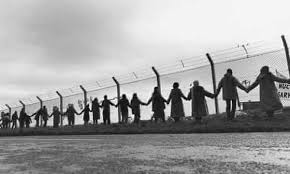
Those who set up protest camp in 1980s hope its spirit can be revived to oppose UK’s plan to buy nuclear-carrying jets
Alexandra Topping, https://www.theguardian.com/uk-news/2025/jun/27/greenham-common-women-urge-new-generation-rise-up-nuclear-threat
In August 1981, 36 people, mainly women, walked from Wales to RAF Greenham Common in Berkshire to protest against the storing of US cruise missiles in the UK. They were alarmed about the imminent threat the weapons posed for themselves and for their children, they later said.
More than 40 years on, the prospect of American nuclear weapons stationed on British soil has returned with urgent focus. And for some of the women who were at the Greenham Common women’s peace camp, it is time for dissenting UK citizens to rise up again.
In the wake of the UK government’s announcement this week that it plans to significantly expand its nuclear arsenal by buying a squadron of American fighter jets capable of carrying US tactical warheads, key figures at Greenham hope a new generation of campaigners will take up the baton.
Ann Pettitt, now 78, devised the original idea for a march that led to the formation of the camp. At its height, more than 70,000 women were there and it became the biggest female-led protest since women’s suffrage. It was, as Pettitt says, “actually successful” in managing to hugely raise awareness of the presence of US nuclear warheads in the UK – the last of which left RAF Lakenheath in 2008. The camp went on after the Greenham Common missiles had gone in 1991 and the base was closed in 1992. The remaining campaigners left Greenham Common after exactly 19 years.
Pettitt said this week’s news had left her “disillusioned” but she was hopeful that a younger generation would protest. “It certainly calls for protest, because it’s so stupid,” she said. “Nuclear weapons are like the emperor’s new clothes, they can’t be used and if they are they backfire because of radiation spreads and they target civilians. We should simply not have them.”
The decision to buy 12 F-35A jets, which are capable of carrying conventional arms and also the US B61-12 gravity bomb, a variant of which has more than three times the explosive power of the Hiroshima bomb, has energised the anti-nuclear movement, said Sophie Bolt, the general secretary of the Campaign for Nuclear Disarmament.
The group has organised a protest on Saturday at RAF Marham in Norfolk, and Bolt said Greenham women – many of whom are in their 70s – still form the “backbone” of the resistance.
“These are women who have got a huge history and totally understand how high the stakes are,” she said. “Their determination, creativity and strategic thinking is just really incredible. They are a massive inspiration and so enriching to the campaign.”
One of those women, Angie Zelter, 74, went on to found the civil disobedience campaign Snowball and the anti-nuclear weapons group Trident Ploughshares. In 2019, aged 68, she was found guilty of a minor public order offence for protesting with Extinction Rebellion. “We had a saying, ‘carry Greenham home’, and from the moment I was there that’s what I’ve done,” she said.
But Zelter said it was also time for a new generation of Greenham women. “I think we need a new women’s movement, but I think actually we need everybody to rise up, quite frankly. All we can do as elders is support younger activists and give advice, solidarity and support.”
There was no time for squabbles in despondency, she added. “I hope it is a moment of mass realisation when we come together now and say, look, enough is enough … It is a moment of hope that people will realise that they’ve got to come together and protest loud and clearly.”
Pettitt said those not ready to man the barricades could still join the struggle – by the simple act of writing a letter to MPs to protest about the “outrageous” decision to buy the jets without parliamentary debate. “The way to get it discussed in parliament is to write your MP a letter,” she said. “Parliament is still very archaic … the humble letter is part of that kind of archaic functioning that is surprisingly effective.”
Another original walker, Sue Lent, now 73 and a councillor on Cardiff council, said the general public had lost sight of the anti-nuclear movement, but she hoped that a silver lining from the news this week was that younger and older activists would start “joining the dots”.
“1981 is a long time ago,” she said. “But hopefully the spirit still lives on and can be revived.”
Three Blows Against Zionism in a Single Day

A court ruling in Australia, an election result in New York and a military setback for Israel, all coming on Tuesday this week, signaled a serious turn of events for Zionism and its supporters, writes Joe Lauria.
By Joe Lauria, Consortium News, https://consortiumnews.com/2025/06/26/three-blows-against-zionism-in-a-single-day/
The impunity with which Zionism invades and bombs its neighbors and shuts up its critics in Western nations was thrown into question perhaps as never before on Tuesday as Zionism suffered a legal, a political and a military defeat all in one day.
A Military Defeat in the Morning
On Tuesday morning Washington time, President Donald Trump announced that Israel and Iran had agreed to a cessation of hostilities after an 11-day war that saw Israel seriously deplete its air defenses, undermine its economy and suffer the worst damage from enemy fire in memory.
A war that Israel — and especially its prime minister Benjamin Netanyahu — had lusted after for three decades had finally been launched. Netanyahu at last found an American president willing to join him in unprovoked aggression against Iran to extend Israel’s regional dominance well beyond the Jordan River.
That would require the destruction of Iran’s nuclear enrichment program and the overthrow of the Iranian government to be replaced by a puppet regime led by Israel and the United States.
Instead, Israel had to cut short the operation despite U.S. involvement because it was not going to plan. U.S. intelligence says the so-far merely civilian nuclear program was only set back a few months and the Iranian government has never been made more secure.
As it touts itself as the most invincible (and “moral”) army, the failure to achieve its goals in Iran and the physical damage it took from Iranian missile and drone attacks makes what just transpired a humiliating military defeat for Zionism.
And though U.S. presidents have privately groused about Israeli leaders before, never has Israel been cursed out before in public by a president, as Trump did on Tuesday morning.
A Legal Defeat in the Evening
Then at 8:15 pm Tuesday, U.S. East Coast time (10:15 am Wednesday in Australia), a federal judge in Sydney found the courage to stand up to the organized thuggery of Zionist lobbies by ruling that the Australian Broadcasting Corporation (ABC) had succumbed to intense pressure from Israel lobbyists to sack a radio presenter because she shared an instagram post from Human Rights Watch which accurately reported that Israel was using starvation as a weapon of war.
That is the exact charge formally leveled in Netanyahu’s arrest warrant issued by the International Criminal Court (ICC). The Australian judge ruled that the presenter, Antoinette Lattouf, was wrongly dismissed and that the ABC must pay her restitution.
Judge Daryl Rangiah said the ABC had “appease[d] … pro-Israel lobbyists” because Lattouf “held political opinions opposing the Israeli military campaign in Gaza.” Rangiah said that “the complaints [to the ABC] were an orchestrated campaign by pro-Israel lobbyists to have Ms Lattouf taken off air.”
ABC managing director Hugh Marks apologized to the public on air, saying, “Any undue influence or pressure on ABC management or any of its employees must always be guarded against.”
It was a major setback for a powerful Israel Lobby in a Western nation. These lobbies have been untouchable until now no matter what underhanded tactics they employ to create cover for genocide and wars of aggression by smearing and silencing legitimate critics of Israel.
A Political Defeat in the Night
Still on Tuesday, at around 11 pm in New York City, a Muslim politician who has vowed to arrest Netanyahu based on the ICC warrant if he steps foot in the city while he is mayor, defeated a Democratic Party machine politician in the party’s primary election for mayor.
Despite being repeatedly smeared as an anti-semite, Zohran Mamdani has refused to renounce his strong support for Palestinians, including refusing to retract his labelling of Israel’s war on Gaza “genocide.”
Mamdani’s electoral victory has incensed Zionists everywhere, setting off gnashing of teeth. “NY Democrats have fully embraced Marxism, antisemitism, anti-capitalism, and sheer insanity,” said fanatical Zionist Congresswoman Elise Stefanik. U.S. Rep. Mike Lawler called Mamdani “a radical, antisemitic socialist.”
The election result shows that a sizeable number of voters in the city with the largest population of Jews after Tel Aviv don’t care anymore about the taboos constructed and enforced against criticizing Israel. Israel has their live-streamed genocide to thank for that.
A Beginning, Not an End
Anyone of these events alone would signify a momentous turning of the tide against decades of built-up injustice committed by Israel and its lobby. The baseless smears of anti-semitism are losing their effect. The image of an all-powerful Israeli military is tarnished.
June 24, 2025 may be seen as the day in which fear of Israel was overcome on a scale not seen before. There is a long road ahead filled with enormous obstacles, but this day could usher in an era in which Israel and its enablers are at last held accountable for their many crimes.
Joe Lauria is editor-in-chief of Consortium News and a former U.N. correspondent for The Wall Street Journal, Boston Globe, and other newspapers, including The Montreal Gazette, the London Daily Mail and The Star of Johannesburg. He was an investigative reporter for the Sunday Times of London, a financial reporter for Bloomberg News and began his professional work as a 19-year old stringer for The New York Times. He is the author of two books, A Political Odyssey, with Sen. Mike Gravel, foreword by Daniel Ellsberg; and How I Lost By Hillary Clinton, foreword by Julian Assange.
UK schools and offices not equipped for impact of global heating, report warns

The UK’s schools, care homes and offices are not equipped for the
effects of global heating and face lengthy heatwaves even in optimistic
scenarios, according to a groundbreaking report that calls for climate
resilience to be declared a national emergency.
The report by the UK Green
Building Council also predicts that towns including Peterborough and
Fairbourne will be uninhabitable by the end of the century because of
flooding.
Produced over two years, the roadmap sets out a blueprint for
action and warns that without the adaptation of millions of buildings,
there will be increased injury, health impacts, deaths and untold economic
damage. Five key threats are examined by the roadmap: overheating,
wildfires, flooding, drought and storms. Detailed thermodynamic modelling
on school buildings reveals that schools across London and the south-east
will face 10 weeks of extreme heat a year – defined as 28C and above –
in a low-warming scenario, defined as 2C above preindustrial levels. The
world is on track for 2.7C of heating.
Guardian 26th June 2025, https://www.theguardian.com/environment/2025/jun/26/uk-care-homes-schools-and-offices-not-equipped-to-deal-with-global-heating
Revealed: 585 cracks in Torness nuclear reactor
Rob Edwards, The Ferret 26th June 2025
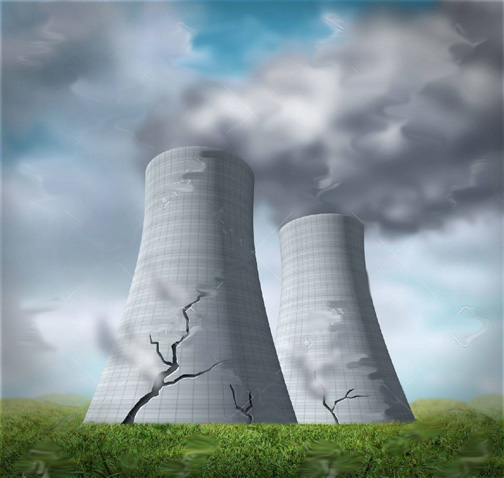
The estimated number of cracks in the graphite core of a nuclear reactor at Torness in East Lothian has risen to 585 – the highest so far – prompting fears of a nuclear “meltdown” and calls for its early closure.
In documents released under freedom of information law, the UK Government’s safety watchdog, the Office for Nuclear Regulation (ONR), said that the state of the graphite core posed a “significant challenge” to plans to keep Torness and other ageing nuclear stations running over the next five years.
In November 2024 ONR advised the French operator, EDF Energy, to “pause for thought” before deciding to extend the lives of Torness and other nuclear stations in England. Less than a week later EDF decided to extend the life of Torness from 2028 to 2030.
Campaigners accused EDF of putting profits before safety, and warned that keeping “clapped out reactors” running would endanger the public. It was “time for these ageing reactors to be closed”, they said.
EDF, however, insisted that nuclear safety was its “overriding priority” and that it would not consider operating Torness unless it was “confident it was safe”. Planned closure dates for reactors were “kept under review”, it said.
ONR said that cracking was “a well known phenomenon”, and that the number of cracks was “acceptable”. It stressed that the risks were “tolerable”, and that it would not allow any nuclear plant to operate “unless we are satisfied that it is safe.”
The Ferret previously reported that 46 cracks had been detected in April 2024 in the graphite bricks that surround the highly radioactive uranium fuel powering one of the two reactors at Torness. The first three cracks were found in February 2022.
But only a small proportion of the bricks were actually inspected, and no estimate has previously been given for the total number of cracks across the core. Following a freedom of information request by The Ferret, ONR has now disclosed that 59 cracks were found in a similarly limited inspection in March 2025.
In its response, ONR said that this “equated to around 585 cracks when forecast across the central area of the core where cracking is expected”. The high number of cracks did not “challenge safety margins” at Torness, it said.
EDF confirmed that it had found 59 cracks in the graphite bricks it sampled in March 2025. This suggested that in total around a third of the central part of the core had cracking, equivalent to about 585 cracks, it said.
ONR also revealed that another inspection in May 2025 discovered the first crack in the second reactor at Torness. It started generating electricity later than the first reactor.
Torness nuclear power station, near Dunbar, was officially opened in May 1989 by the then Conservative prime minister, Margaret Thatcher. The site had been the target of anti-nuclear protests since 1978.
Scotland’s other nuclear power station at Hunterston in North Ayrshire was closed down in January 2022, more than a year earlier than planned. This followed the discovery of an estimated 586 cracks in its two reactors.
‘Pause for thought’ on Torness
ONR also released to The Ferret the results of its assessment of EDF’s 2024 review of extending the lives of Torness, and other advanced gas-cooled reactors (AGRs) at Heysham, near Lancaster, and Hartlepool, on the north east coast of England.
Three scenarios were reviewed. One assumed Torness closed as planned in 2028, a second assumed its operation was extended to 2030, and a third envisaged keeping it going until 2032.
ONR concluded that because of cracking and other issues, “graphite represents one of EDF’s significant challenges for lifetime extension”. It also highlighted a series of other potential ageing problems with AGRs, including risks from leaking boilers, failing equipment, and corrosion.
“It is possible that safe operation of certain components might be undermined due to life extension,” ONR said. There were a number of issues which had not been fully covered in EDF’s review, it argued.
“Although these are not considered a blocker to potential life extensions, ONR expects EDF to manage and resolve these issues as part of its lifetime management of the AGRs,” ONR added.
“Moreover, coupled with the aspects identified by EDF in the submissions, this should give EDF pause for thought when reaching a decision on AGR lifetime extensions.”
ONR wrote to EDF with its advice on 27 November 2024. On 3 December – less than a week later – EDF decided to extend the life of Torness from 2028 to 2030, and to extend the lives of its English AGR stations.
Another document released by ONR was a June 2024 assessment of the “structural integrity” of the graphite core of the more badly cracked reactor at Torness. The majority of the 35-page document was redacted “for the purposes of safeguarding national security”.
The ONR assessment found “shortfalls” in the crack predictions made by EDF, and concluded that this “raises a question” over the company’s “ability to predict the future core state”. At the time ONR nevertheless gave EDF permission to keep running Torness on the grounds that the risks were “tolerable”.
The nuclear critic and consultant, Peter Roche, argued that there was “a significant design difference” which could make cracking at Torness worse than at Hunterston. “Graphite debris in the fuel channels or misshapen bricks could compromise the operator’s ability to keep the fuel cool and in a worst case lead to a meltdown,” he claimed.
This risked releasing radioactivity into the environment. “Clearly it’s time for these ageing reactors to be closed,” Roche said. “Keeping them open would be gambling with public safety.”
The veteran environmental campaigner, Dr Richard Dixon, accused EDF of trying to cover the costs of building new nuclear plants. “It cannot be a coincidence that running Torness for an extra two years would ease EDF’s major financial woes caused by the massive delays to its reactor projects elsewhere,” he said
“EDF’s inability to complete reactor projects anything remotely like on time or on budget should not mean that the public in Scotland face the extra risk of running clapped out reactors ever further past their sell-by date.”
The Scottish Greens described the Torness cracks as “potentially dangerous”. It was “deeply concerning” that EDF was planning to keep the station going until 2030, according to the party’s energy spokesperson and retiring co-leader, Patrick Harvie MSP.
“It appears that the profits of a giant energy company are being put ahead of safety here in Scotland,” he told The Ferret. EDF is owned by the French government, and earnt £15.6bn (€18.3bn) before interest and taxes in 2024…………………………………………………………..
https://theferret.scot/nuclear-reactor-torness-585-cracks/
Torness ideal for small modular nuclear reactor, says Britain Remade.

a recent analysis of the technology in the United States said that SMR are projected
to be the most expensive of all electricity technologies per KW. The report
by management consultancy firm ICF found that they would cost more than any
other source of electricity, including battery energy storage systems,
solar, wind, combustion turbines and gas.
A UK campaign for accelerated infrastructure-building has said that
Torness is “a prime site” for the next generation of small nuclear
reactors. Britain Remade, a group co-founded by a former energy and climate
advisor to Boris Johnson, says Torness as an ideal target for small modular
reactors of the type the UK Government recently backed. ………………………………….
Britain Remade, which is strongly focussed on campaigning
for “nuclear power alongside the rapid roll-out of renewables” and
infrastructure-building to drive growth, hosted a public meeting in Dunbar
in April. The campaign also conducted a poll which found that half of the
SNP’s voters believe nuclear power should be part of Scotland’s mix of
clean energy generation.
But many in Scotland still maintain a strong objection to nuclear.
Pete Roche, who campaigned against Torness in the
1970s, founding the Scottish Campaign to Resist the Atomic Menace, said:
“The last thing Scotland needs at Torness is more reactors, whether large
or small. Incidentally Rolls Royce’s so-called small reactors at 470MW are
only slightly smaller than Torness’s two 660MW reactors.”
Earlier this month, the UK Government announced its selection of Rolls-Royce SMR as the
preferred bidder “to develop small modular reactors, subject to final
government approvals and contract signature – marking a new golden age of
nuclear in the UK”. Dumitriu said: “SMRs are already being deployed in
Canada. The idea behind them is that because you build them in a factory
and 90% of the construction of them is done in a factory, you’re rolling
them off a production line and because of that you get all of the cost
reductions of economies of scale, of learning by doing and you’re able to
build them a lot cheaper than the current design.”
However a recent analysis of the technology in the United States said that SMR are projected
to be the most expensive of all electricity technologies per KW. The report
by management consultancy firm ICF found that they would cost more than any
other source of electricity, including battery energy storage systems,
solar, wind, combustion turbines and gas.
Campaigner Pete Roche said:
“There is no evidence that small modular reactors will be cheaper,
because almost none have ever been built. In fact it is beginning to look
like small reactors will be even more expensive than large reactors because
they won’t benefit from economies of scale.”
Energy Secretary Gillian Martin said: “Decommissioning Scotland’s nuclear sites will take
decades and will require the retention of a highly skilled workforce.
Meanwhile, the significant growth in renewables, storage hydrogen, carbon
capture and decommissioning are key opportunities for our future energy
workforce in Scotland – with independent scenarios from Ernst and Young
(EY), showing that with the right support, Scotland’s low carbon and
renewable energy sector could support nearly 80,000 jobs by 2050.“
Herald 28th June 2025,
https://www.heraldscotland.com/news/25261384.torness-ideal-small-modular-reactor-says-britain-remade/
As NATO Countries Pledge to Up Defense Spending, Will Food and Climate Security Have a Seat at the Table?

By Siena Cicarelli and Tom Ellison, https://climateandsecurity.org/2025/06/as-nato-countries-pledge-to-up-defense-spending-will-food-and-climate-security-have-a-seat-at-the-table/
This summer marks a critical juncture for European food and climate security. Before heading off on their summer holidays, leaders will attempt to navigate burgeoning crises in the Middle East, an unpredictable US government, growing defense needs, and an unstable global economy.
Several key political decision points are unfolding this summer, starting with this week’s NATO Summit, where a number of member state leaders committed to a new defense and security spending target of 5 percent of GDP by 2035, which, if implemented by the target date, could entail roughly hundreds of billions of dollars in new spending. However, given that the text of the commitment changed from “all Allies” to just “Allies,” in the final hours of negotiations, commitments will likely vary by member state. Furthermore, given the current combination of budget deficits, national politics, and a collective shift towards “competitiveness,” the European Union risks falling prey to false dichotomies and short-termism, placing climate and food security priorities essential to sustainable security on the back burner in favor of “hard” security goals. While 1.5% GDP of the new spending target can come from non-defense resilience, infrastructure, and civil preparedness spending, food and climate security were not prominent at the NATO Summit.
There are some positive signs, however, that countries are considering climate resilience as a core part of their defense and security strategies. This includes an explicit climate security pledge in the recent EU-UK defense partnership announcement and reported plans from some NATO members, like Spain and Southern Mediterranean states, to use the 1.5% resilience carveout for disaster response and climate investments.
A key indicator of how Europe will prioritize and balance food security, climate resilience, and defense needs will be the next five-year EU budget, also known as the Multiannual Financial Framework (MFF) and updates to the Common Agricultural Policy (CAP) – the initial proposals for which are expected to be released in mid-July. The CAP is a complex structure of subsidies and schemes related to farming, environmental protection, and rural development that aims to keep European farmers competitive, enhance food security, and protect biodiversity. It remains the EU’s second-largest budgetary line item at €387/$450 billion in the current MFF period (roughly 25% of the EU budget). The formation of the MFF is notoriously opaque, but initial reporting suggests a limited commitment from national governments to additional expenditures and a strong desire from the largest net contributors to allocate more to joint procurement and defense spending. This raises doubts about whether the bloc’s food security ambitions are feasible, or if policies will be fractured across EU member states in a so-called “27-speed” system.
While the topline goals of the CAP are relatively clear, implementation remains a perennial political challenge for the European Union. In 2024, farmers’ protests spread across Europe over concerns about fuel subsidy reductions, safety net cuts, and environmental regulations in the CAP. The protests at times featured misinformation, threats to political leaders, and property damage, and were exploited by right wing extremists and Russian propagandists to build influence and stoke division. This year, Commissioners have tried to reassure farmers that direct subsidies (which are €291/$338 billion, about three-quarters of the CAP budget) will likely remain protected in the next MFF, but concerns about cuts to rural development and national-level programs have already set top farming groups on edge.
More broadly, Europe cannot afford to ignore food and climate risks amid new defense spending obligations. Staple crops that underpin European food security and local agricultural economies are endangered in the coming decades, even with robust adaptation. In 2024, the European Environment Agency’s European Climate Risk Assessment rated risks from extreme weather disruptions to crop production and climate-driven food price spikes as rising from “substantial” to “critical” over the next two decades. Recent studies have showcased that agricultural vulnerability – and potential losses – are EU-wide. While the risks are severe in southern European states like Spain and Italy, they don’t stop there. The Benelux states, Germany, France, the United Kingdom, as well as southern regions of the Nordics, also face unusually hot and dry conditions. Drought alone currently drives over 50% of agricultural climate risk and is expected to contribute heavily to the EIB-estimated 42-66% increase in annual average crop losses (from EUR 17.4 billion to 24.8-28.9 billion annually) over the next 25 years. When incorporating other agricultural outputs, such as livestock or aquaculture, estimated annual losses reach EUR 40+ billion by 2050. These losses have cascading effects outside of the food and agricultural sector, straining supply chains and potentially boosting prices for consumers across the bloc.
With climate change contributing to rising food, energy, and insurance prices, demands for military disaster relief, and overseas instability risks and migration, turning a blind eye to these risks could intensify a vicious cycle of affordability crises and nativist politics that already constrain Europe’s security investments. Under-resourced or disorderly approaches to these challenges would hinder Europe’s resilience and security, with climate and economic shocks to food exacerbating divisions that could precipitate another round of protests and even political shifts in upcoming elections, undermining European unity.
The Center for Climate and Security (CCS) will be watching for how key issues play out as these challenges come into focus this summer and over the coming years, including:
How does the EU balance its commitments to the CAP and the MFF with the budgetary demands of the new NATO target?- To what extent are any reforms or substantial changes to the CAP structure done in consultations with producers, consumers and other stakeholders navigating the green transition, to insulate against green backlash or disinformation?
- What role can food and climate security investments play in the 1.5% of GDP portion of the NATO spending target that includes non-defense resilience, infrastructure, and civil preparedness?
EU and UK make contributions to EBRD-managed Chornobyl ICCA fund
EBRD 26th June 2025,
https://www.ebrd.com/home/news-and-events/news/2025/eu-and-uk-make-contributions-to-ebrd-managed-chornobyl-icca-fund.html
- EU and United Kingdom pledge up to €31.7 million to EBRD-managed International Chernobyl Cooperation Account
- Contributions will help fund emergency repairs to New Safe Confinement
- Total cost of emergency repairs could exceed €100 million
The European Union (EU) and the United Kingdom will make contributions to the EBRD-managed International Chernobyl Cooperation Account (ICCA) as part of ongoing international efforts to support the restoration of the key functions of the New Safe Confinement (NSC) at the Chornobyl nuclear power plant (ChNPP) in Ukraine.
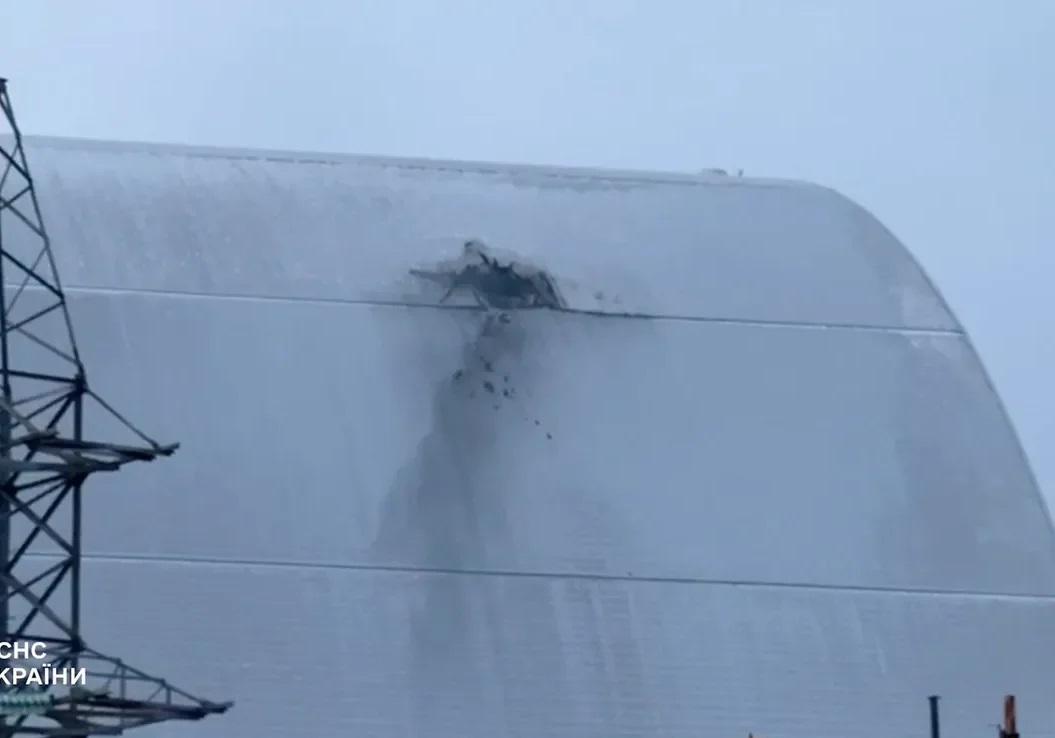
The EU will contribute up to €25 million, while the United Kingdom will contribute up to €6.7 million, with both pledges being made at today’s ICCA Assembly meeting in London. The money will be used to fund emergency repairs to the NSC following the Russian drone attack in February 2025.
That strike has severely affected the NSC’s two primary functions: (i) containing radiological hazards and (ii) supporting long-term decommissioning. Key systems designed to ensure the NSC’s 100-year lifespan have been rendered non-operational, with a significant risk of further deterioration in the absence of swift emergency repairs. While it is difficult to provide an accurate estimate of the cost of repairs to the NSC at the moment, the scale of the damage and the complex radiological environment suggest that the total cost of the emergency works could exceed €100 million.
Balthasar Lindauer, EBRD Nuclear Safety Department Director, said, “These new pledges to the ICCA are a manifestation of the international community’s unwavering support for Chornobyl and its togetherness in the face of the major radiological threat that the damaged NSC poses. We are grateful to the EU and the United Kingdom for their contributions to the ICCA.”
The ICCA was established by the EBRD in November 2020 at the request of the Ukrainian government. It was set up as a multilateral fund to support the development of a comprehensive plan for Chornobyl. The EBRD manages the ICCA, which currently holds some €25 million in donor funds. Following the occupation of the Chornobyl Exclusion Zone (CEZ) at the start of Russia’s war on Ukraine, the scope of the ICCA was broadened to support the restoration of safety and security within the CEZ, as well as wider nuclear safety measures across Ukraine.
The international community has contributed around €2 billion to EBRD-managed programmes in Chornobyl since 1995. In addition, the Bank has made more than €800 million of its net income available for Chornobyl-related projects.
Centrica set to take 15% stake in Sizewell C nuclear project.
All sides are keen to reach an investment decision in July after years of delay and
months of negotiations. Centrica is set to take a 15 per cent stake in the
UK’s Sizewell C nuclear project after years of delay and months of drawn
out negotiations. All sides are keen to reach a final investment decision
on the project before parliament’s recess on July 21, according to people
familiar with the discussions.
The final cost of Sizewell — set to be
only the second new nuclear plant built in a generation in Britain —
could be close to £40bn, the Financial Times reported in January based on
assumptions from industry experts. Sizewell’s management has rejected
that figure although no new estimate has been given.
The planned investment
by Centrica means that the FTSE 100 energy company behind British Gas would
have the same size stake in Sizewell C as French state-owned energy group
EDF, which has progressively reduced its position in the Suffolk project to
15 per cent.
Centrica already holds a 20 per cent stake in the parent
company of the entity that operates EDF’s existing nuclear assets in the
UK. The investment in Sizewell could still come in time for French
President Emmanuel Macron’s visit to London for an Anglo-French summit on
July 8. However, timetables have slipped, according to the people familiar
with the situation, putting that goal in doubt.
FT 27th June 2025 , https://www.ft.com/content/5e107953-7f93-4a0d-ba73-6f28213e943c
How Torness will decommission and what it means for jobs.
.The power plant is due to stop generating by the end of March 2030. However, that will not
be the end of the story, with decommissioning work expected to get under
way there afterwards. A spokesperson for EDF, which manages the plant,
said: “Decommissioning happens in stages. “Removing all the spent fuel
from the reactors will take about four years and will be carried out by
EDF.
“The site will then transfer to Nuclear Restoration Services (NRS)
to carry out deconstruction. “It will take around 15 years to remove all
the buildings from site, with the exception of the reactor building.
“It will be left in situ, in a state called ‘Safestore’, for around 70 years,
until final site clearance.” The decommissioning staffing structure is
yet to be agreed at the power station, which currently employs about 550
full-time EDF employees, plus more than 180 full-time contract partners.
Staff consultation is yet to begin, but the spokesperson added: “Every
site is different but, as a rough guide, at Hunterston B, the number of EDF
staff being transferred to NRS is about 250, which is around half the
generation headcount. “This has been a managed reduction which has been
taking place over a number of years and has largely been accommodated
through redeployment, retirement and voluntary redundancy.
“During defueling, we will go through formal consultation with staff to see who
wants to stay at site and who would like to leave. “Decommissioning
offers lots of new opportunities, but we have found at other sites that not
everyone who works at a site during generation wants to stay and be part of
deconstruction. “Those who do want to stay and secure a role in the
decommissioning structure will transfer over to NRS.
Herald 28th June 2025, https://www.heraldscotland.com/news/25260842.torness-will-decommission-means-jobs/
Why Trump’s Golden Dome must be opposed – Bruce Gagnon & Dae-Han Song
19 Jun 2025
In January 2025, Donald Trump signed an executive order directing the US armed forces to construct a missile defense system – the ‘Golden Dome’ – a proposed multi-layer defense system, comparable to the Iron Dome system in Israel. It aims to place and maintain space weapons orbit, for the first time in history.
The proposed system will be exorbitant. According to US Congress sources it could cost several trillion dollars. This would require the US to cut every one of its remaining social programs. Such a military system would inflict ever more damage to the environment both on and around our planet.
Trump wants such a system, so that the US can launch a nuclear attack on another nuclear armed country and the US be confident that it has sufficient defenses to reduce the impact of any retaliatory missiles launched against US to levels deemed acceptable to US military planners. As the US advances its war drive, it is developing its military alliances with other countries and locking them into its war preparations.
Military coordination is being stepped up with increased ‘interoperability’ of hardware. In these alliances, such as NATO, it is always the US that is ‘in charge of the tip of the spear’.
Bruce Gagnon, in discussion with Dae-Han Song, explains why the proposed Golden Dome should be opposed. Bruce Gagnon has been organizing to stop the new arms race in space (Star Wars) since 1982. He began by coordinating the Florida Coalition for Peace and Justice from 1983-1998. During those years, in 1992, he co-founded the Global Network Against Weapons & Nuclear Power in space that he now coordinates. Bruce began his organizing career working for the United Farm Workers Union. He is a Vietnam war era veteran. He lives in Brunswick, Maine.
Website of The Global Network Against Weapons & Nuclear Power in Space: https://space4peace.org/ The petition against the Golden Dome is here: https://space4peace.org/global-networ… Dae-Han Song is a part of the International Strategy Center and the Korea Policy Institute. He is a member of the international No Cold War collective.
The Chris Hedges Report: Starvation and Profiteering in Gaza (w/ Francesca Albanese)
Francesca Albanese joins Chris Hedges to break down the current starvation campaign in Gaza, and her upcoming report detailing the profiteering corporations capitalizing on the erasure of Palestinians
Chris Hedges, Jun 26, 2025
This interview is also available on podcast platforms and Rumble.
There is not much more that can be said about the unfathomable levels of devastation the genocide in Gaza has reached. Francesca Albanese, the United Nations Special Rapporteur on the Occupied Palestinian Territories, has been chronicling the genocide and joins host Chris Hedges on this episode of The Chris Hedges Report to shed light on the current situation in Gaza, including parts from her upcoming report on the profiteers of the genocide.
Israel’s siege on the Palestinians is leaving the population starving, and Albanese lambasts other nations for not stepping up and completing their obligations under international law. “[Countries] have an obligation not to aid, not to assist, not to trade with Israel, not to send weapons, not to buy weapons, not to provide military technology, not to buy military technology. This is not an act of charity that I’m asking you. This is your obligation,” she explains.
Albanese compares Gaza and Israel’s siege to a concentration camp, stating it is unsustainable but also allows the world to witness how a Western settler colonial entity functions. “There is a global awareness of something that has for a long time been a prerogative, a painful prerogative of the global majority, the Global South, meaning the awareness of the pain and the wounds of colonialism,” Albanese tells Hedges.
In her forthcoming report, Albanese will detail exactly how Palestine has been exploited by the global capitalist system and will highlight the role certain corporations have played in the genocide. “[T]here are corporate entities, including from Palestine-friendly states, who have for decades made businesses and made profits out of the economy of the occupation, because Israel has always exploited Palestinian land and resources and Palestinian life,” she says.
“The profits have continued and even increased as the economy of the occupation transformed into an economy of genocide.”……………………………………………TRANSCRIPT………………………………….. …………..https://scheerpost.com/2025/06/25/the-chris-hedges-report-starvation-and-profiteering-in-gaza-w-francesca-albanese/
EPR nuclear reactors are just not performing well at all

The French EPR reactor was supposed to be built in 4 or 4,5 years, and to
produce 13 TWh of electricity per year. (As for EDF:s promise, see for
example https://lnkd.in/dFXe5geb point 19.)
At 13 TWh/year and operating when planned to do so, the first 4 reactors, in Finland, France and China should have produced about 648 TWh by the end of 2024. According to new
data from the IAEA PRIS they have produced 123,4 TWh, a mere 19 % of what
was promised.
Much of this underachievement is explained by construction
delays, on average 8,5 years for the first 4 reactors. But even after they
have started to produce electricity, it is far less than the 13 TWh/year.
In fact, it is 8,4 TWh. Put it in another way, the ”load factor” is
low. Lifetime load factors through 2024 are Taishan 1: 55%, Taishan 2: 76
%, Olkiluoto 3: 77,6%. Flamanville 3 in France was connected to the grid
only in December 2024 so it is too early to tell.
But as for the other three, the weighted average so far is about 67 percent. 100 per cent is
impossible. The world average load factor is about 82 per cent, as real
world reactors have both planned and unplanned stops.
The EPR has consistently been marketed as being able to produce 13 TWh per year, for 60
years. The theoretical maximum for a 1600 megawatt reactor, 24/365, is just
above 14 TWh, so 13 TWh corresponds to a load factor of 92.8%.It is
conceivable that the load factors will increase but it is not sure. Taishan
is the oldest EPR in operation, and it is also the worst performer.
Frederik Lundberg 24th June 2025,
https://www.linkedin.com/feed/update/urn:li:activity:7343320565471924224/
Why Limit Iranian Enrichment Peacefully When You Can Bomb Them Instead?

A deal was limiting Iran’s enrichment of uranium until Donald Trump pulled the U.S. out of it. Instead the Dealmaker bombed Iran, threatening to set the region on fire, writes Joe Lauria. With a ceasefire what does he do now?
By Joe Lauria, Consortium News. June 24, 2025, https://consortiumnews.com/2025/06/24/why-limit-iranian-enrichment-peacefully-when-you-can-bomb-them-instead/
In the last great achievement of international diplomacy, the United States and its allies Britain, France and Germany, concluded a deal in 2015 with Russia, China and Iran — something that today would be unthinkable — to limit Iran’s nuclear enrichment to purely civilian uses at 3.67 percent.
Negotiations on the deal began in November 2013, just three months before the U.S.-backed unconstitutional change of government in Kiev that started the long slide in U.S.-Russian relations. That did not prevent the nuclear deal from being concluded in July 2015 and endorsed by the Security Council in October of that year.
Seven years later, Washington and its European allies began fighting a hot war against Moscow through its proxy Ukraine. Relations with China have also sharply deteriorated. The idea of such cooperation on Iran now is unthinkable.
But in 2013 such wise diplomacy was still possible and the result was a peaceful resolution of the Iranian enrichment issue.
Iran agreed to stringent monitoring by the International Atomic Energy Agency and in exchange, the United States, Europe and the United Nations lifted economic sanctions against Tehran.
The IAEA certified that the deal was working. Iran was sticking to 3.67 percent enrichment. Diplomacy worked. Iran’s nuclear program was in check.
But the Israelis had opposed it all along because Israel’s aim has long been to overthrow the government in Iran in Israel’s quest for regional dominance.
Netanyahu could not stop Barack Obama from working with the Chinese and the Russians to conclude the deal that solved the nuclear issue and left the Iranian government in a more secure position.
Then Donald Trump became president. He did what Netanyahu wanted. He pulled the U.S. out of the deal, saying it was a lousy agreement and he could do better. But there was no new deal. Iran continued to cooperate with the existing agreement for a year before increasing enrichment, eventually to 60 percent for leverage in the negotiation. (90 percent is needed for a bomb, but U.S. intelligence and the IAEA said in recents months that Iran is not pursuing a bomb).
Obama’s vice president, Joe Biden, did nothing to return the U.S. to the deal to save it when he got into the White House, dishonoring probably Obama’s greatest achievement.
Trump 2.0’s idea of a better deal to limit Tehran’s enrichment was to demand zero percent after Iran agreed to return to 3.67 percent. Trump would look like a fool if he accepted 3.67 percent, as that would mean agreeing to the very deal that was working well before he tore it up.
So it was bombs away instead.
Clearing Smoke Reveals Trump’s Lies
More than 24 hours after the smoke cleared above Fordow, Natanz and Isfahan nuclear facilities Trump’s lies during his address Saturday night came clearly into view.
The strikes were not “a spectacular military success.” Iran’s “key nuclear enrichment facilities” were not “completely and totally obliterated.” There is no evidence that a single centrifuge was damaged and Iran’s 60 percent enriched fuel had already been removed and is in a location unknown to Israel, the U.S. and the IAEA.
Trump called Iran the “bully of the Middle East” when any neutral person knows that bully is Israel backed by the U.S., the bully of the world.
In just the past few months, with U.S. backing, Israel has invaded Lebanon and Syria, launched an unprovoked attack on Iran and is committing genocide in Gaza. The last time Iran invaded anyone was Iraq in 1982 but only after Iraq had invaded it first in 1980.
Israel gets away with this by portraying itself as the perpetual victim of an imminent new Holocaust 80 years after the fact and thus needs to invade and bomb its neighbors in “self defense” to pre-empt this from happening.
Regional hostility toward Israel does not stem from a reaction to its decades of aggression against Palestinians and its neighbors but purely from anti-semitic hatred. These countries must constantly be attacked to wipe out this hatred, not to reconstitute an ancient Hebrew empire from (beyond) the River to the Sea.
One power that empire never conquered was Persia
With their overlapping empires — Israel’s regional and the U.S.’s global — Iran, the land of Darius and Cyrus, is the prime target. The U.S. has sought to control it since at least its 1953 coup restored the shah to power for its oil and because of its Cold War rivalry with Russia.
Trump mimicked Israel, calling Iran “the world’s number one state sponsor of terror,” when an objective analysis would correctly award that title to the Gulf Sunni monarchies, principally Saudi Arabia, all allied with the United States.
They have sponsored al-Qaeda and ISIS and all their offshoots and rebrandings, while Iran has mostly supported militia resisting occupations in Lebanon, Iraq, Syria and Gaza.
Though formed in 1982 in response to Israel’s invasion and occupation of Lebanon, Hezbollah was only designated a terrorist organization by the European Union in 2013, for instance. Though founded in 1987, the EU did not view Hamas as a terrorist group until 2001.
Then Trump said of Iran:
“They have been killing our people, blowing off their arms, blowing off their legs with roadside bombs. That was their specialty. We lost over 1,000 people, and hundreds of thousands throughout the Middle East and around the world have died as a direct result of their hate.”
This is a bizarre statement that can only be related to attacks by militia against U.S. occupation forces in Iraq after the U.S. 2003 invasion. But only some of these groups were Iranian-backed and they killed not a thousand, but 169 U.S. soldiers, whom Trump referred to as “our people,” as if they were tourists and not an occupying army.
Trump’s thousand U.S. victims appears to come from propaganda put out by the Jerusalem Center for Public Affairs, which calls itself “a leading independent research institute, serving as Israel’s global embassy for national security and applied diplomacy.”
It combats what it calls “apartheid antisemitism.” It falsely called the 2015 nuclear agreement that Trump withdrew from “a deal that would allow Iran to become a nuclear-armed state.” In 2015, Haaretz named Sheldon Adelson, Trump’s principal donor, “one of the main financers of JCFA in recent years.”
Israel had to cut short its ambitions to conquer Iran (at least overtly) and agree to a ceasefire because it was running out of interceptor missiles; it’s economy, already weakened by Gaza, was threatened at $200 million a day; and it sustained far more damage than it will admit.
Now that there is a ceasefire, Trump is back to square one. The New York Times reported:
“Rafael Mariano Grossi, the director of the U.N.’s nuclear watchdog, welcomed news of a cease-fire. In a social-media post, he said he has invited Iran’s foreign minister Abbas Araghchi to meet to discuss a diplomatic solution on Iran’s nuclear program.”
That solution would be a return to 3.67 percent enrichment and Iran giving up its 60 percent stockpile, in other words, returning exactly to the deal Trump tore up to plunge the region into extreme danger with his bombing stunt.
Where will he turn now?
Joe Lauria is editor-in-chief of Consortium News and a former U.N. correspondent for The Wall Street Journal, Boston Globe, and other newspapers, including The Montreal Gazette, the London Daily Mail and The Star of Johannesburg. He was an investigative reporter for the Sunday Times of London, a financial reporter for Bloomberg News and began his professional work as a 19-year old stringer for The New York Times. He is the author of two books, A Political Odyssey, with Sen. Mike Gravel, foreword by Daniel Ellsberg; and How I Lost By Hillary Clinton, foreword by Julian Assange.
Iran Shows Us Why The US And Israel Should Not Be Allowed To Have Nukes.
Caitlin Johnstone, Jun 25, 2025
Well it’s been a crazy couple of days.
Trump bombed Iran’s civilian nuclear energy facilities in an attack that CNN reports did no lasting damage, and Iran exercised extraordinary restraint with symbolic retaliatory strikes on US military bases coordinated to avoid American casualties — a move many are comparing to Iran’s non-lethal response to the US assassination of General Qassem Soleimani in 2020.
After pumping out deception and fake diplomacy for weeks in order to assist Israel’s unprovoked war on Iran and launch an unprovoked attack on his own, Trump took to social media to proudly celebrate his administration’s facilitation of a ceasefire to the war he himself needlessly started, like an arsonist giving himself a trophy for extinguishing one of his own house fires.
And, for the moment at least, the ceasefire appears to be holding. Which is good. There are a lot of terrible people who did everything they could to get Iran to kill US troops and spark a horrific war, but Iran didn’t take the bait. Iran doesn’t want war at all. Trump found out that Americans disapproved of the airstrikes and opposed war with Iran. And Israel found out that fighting an actual military force is a lot less easy than fighting hospital patients and children.
So for now we’ve got a ceasefire.
We have never been shown any evidence that Iran was working on obtaining nuclear weapons, which given the US empire’s extensive history of lying about this sort of thing means we should assume it was not. But it has certainly been given every incentive to obtain them now, given that that’s probably the only thing that can stop the US and Israel from casually committing these egregious acts of aggression whenever they feel like it.
And isn’t it interesting how Iran keeps demonstrating a degree of restraint that we all know we’d never see from the United States or Israel if another country bombed their energy infrastructure or assassinated their military leaders, and yet Iran is the country we’re told can never be trusted with nuclear weapons?
The US empire and Israel both exist in a perpetual state of war and attack other countries constantly; Iran never invades other countries and avoids war like Melania Trump avoids missionary position. But we’re meant to accept that it’s fine for the US and Israel to have nukes and do anything necessary to prevent Iran from getting any?
Even if you accept the evidence-free premise that Iran would do crazy and reckless things if it became a nuclear-armed state, there is no rational argument that Trump and his handlers have been going about preventing this outcome intelligently. As Joe Lauria explains in Consortium News, the Iran nuclear deal was a remarkable achievement of international diplomacy that was working fine until Trump shredded it in 2018. Iran was following all the agreed upon rules and its nuclear enrichment was capped at 3.67 percent, but Trump killed it because the Zionists and warmongers who brought him to power want more aggression toward Iran instead of less.
It’s so intensely stupid that we have to keep doing this horrifying dance every few years just because there are too many war-horny freaks with way too much power inside the US empire. And every time they get closer to getting their wish. Iran is being given more and more reasons to view the US and Israel as an existential threat, more and more motive to obtain nuclear weapons, and less and less reason to negotiate anything with Washington.
These bastards keep pushing us toward something very ugly. Let’s hope people keep waking up to the depravity of Israel and the US empire before the warmakers succeed in obtaining their long-sought prize.
2
1 This Month
Chernobyl: The Lost Tapes – A good documentary on Chernobyl on SBS available On Demand for the next 3 weeks– https://www.sbs.com.au/ondemand/tv-program/chernobyl-the-lost-tapes/2352741955560

of the week–London Campaign for Nuclear Disarmament

Tell the Ukrainian Government to Drop Prosecution of Peace Activist Yurii Sheliazhenko
To see nuclear-related stories in greater depth and intensity – go to https://nuclearinformation.wordpress.com
-
Archives
- April 2026 (139)
- March 2026 (251)
- February 2026 (268)
- January 2026 (308)
- December 2025 (358)
- November 2025 (359)
- October 2025 (376)
- September 2025 (257)
- August 2025 (319)
- July 2025 (230)
- June 2025 (348)
- May 2025 (261)
-
Categories
- 1
- 1 NUCLEAR ISSUES
- business and costs
- climate change
- culture and arts
- ENERGY
- environment
- health
- history
- indigenous issues
- Legal
- marketing of nuclear
- media
- opposition to nuclear
- PERSONAL STORIES
- politics
- politics international
- Religion and ethics
- safety
- secrets,lies and civil liberties
- spinbuster
- technology
- Uranium
- wastes
- weapons and war
- Women
- 2 WORLD
- ACTION
- AFRICA
- Atrocities
- AUSTRALIA
- Christina's notes
- Christina's themes
- culture and arts
- Events
- Fuk 2022
- Fuk 2023
- Fukushima 2017
- Fukushima 2018
- fukushima 2019
- Fukushima 2020
- Fukushima 2021
- general
- global warming
- Humour (God we need it)
- Nuclear
- RARE EARTHS
- Reference
- resources – print
- Resources -audiovicual
- Weekly Newsletter
- World
- World Nuclear
- YouTube
-
RSS
Entries RSS
Comments RSS
 nuclear-news