UK taxpayers to spend billions more on Sizewell C nuclear plant.
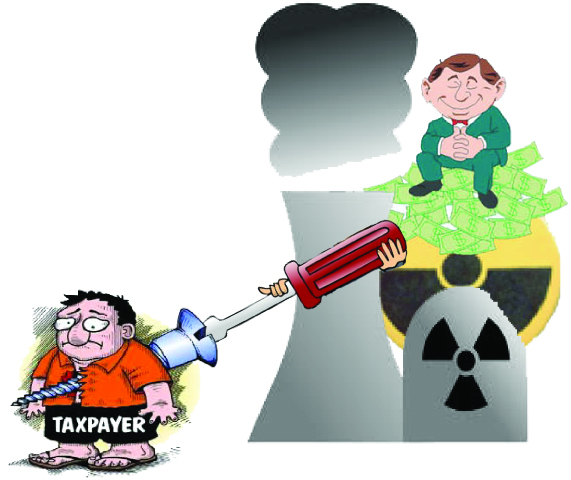
Ministers have agreed to take a £17.8 billion stake in the Sizewell C
nuclear power plant in a move that they claim will reduce carbon
emissions and even make money for the taxpayer. Under plans announced by
Rachel Reeves, the chancellor, the government will increase its investment
in the project by £14.2 billion over the next three years on top of £3.6
billion of public money committed under the Conservatives.
Further funding will come from the French energy group EDF, which is building the plant, as
well as private infrastructure investors. Whitehall sources said ministers
decided to take a larger stake because they were confident it would provide
a significant return to the taxpayer.
Under the funding model, investors
carry all the risk of cost overruns but are paid back through consumer
bills and can make more money if the project comes in on time and on
budget. The company said it had learnt lessons from Hinkley, in Somerset,
and can build Sizewell C, in Suffolk, faster and more cheaply.
However, it is still likely to cost much more than the estimated £20 billion in 2020
and will not produce power for at least another decade. The total cost will
be set out this summer when external private investors are announced.
Ultimately, the project will be paid for via consumers’ electricity bills,
adding about £1 a month to the cost of power over the 60-year lifespan of
the plant.
The announcement is among investments in nuclear at the spending
review as part of the government’s pledge to decarbonise electricity
supplies and cope with growing demand.
Alison Downes, of Stop Sizewell C, the campaign group, said ministers had not “come clean” about the full cost of the project, which the group previously estimated could be as much
as £40 billion. “Where is the benefit for voters in ploughing more
money into Sizewell C that could be spent on other priorities, and when the
project will add to consumer bills and is guaranteed to be late and
overspent, like Hinkley C?
Times 10th June 2025,
https://www.thetimes.com/uk/politics/article/sizewell-c-nuclear-power-plant-3z7jlqdd6
US launches AUKUS review to ensure it meets Donald Trump’s ‘America First’ agenda

By Brad Ryan and Emilie Gramenz in Washington DC, ABC News, 11 June 25
In short:
The US is reviewing the AUKUS security pact with Australia and the UK, which Australia is depending on to acquire nuclear-powered submarines.
A US defence official said it would ensure the pact met President Donald Trump’s “America First” agenda, as the US struggles to build enough submarines for its own fleet.
But Defence Minister Richard Marles said he was “very confident this [AUKUS] is going to happen” and it was only natural for the new US administration to review it.
The Pentagon is reviewing the AUKUS security pact between Australia, the US and the UK to ensure it aligns with President Donald Trump’s “America First” agenda, a US defence official told the ABC.
But Defence Minister Richard Marles said he remained confident the pact would remain intact, and a review was a “perfectly natural” thing for a new administration to do.
The news follows US Defense Secretary Pete Hegseth’s recent request for Australia to significantly boost its defence spending “as soon as possible”.
The US defence official said the review “will ensure the initiative meets … common sense, America First criteria”.
“As Secretary Hegseth has made clear, this means ensuring the highest readiness of our service members, that allies step up fully to do their part for collective defence, and that the defence industrial base is meeting our needs,” the official said.
Under the AUKUS pact, Australia would be armed with nuclear-powered submarines at a cost of more than $350 billion.
Elbridge Colby, who is the under secretary of Defense for Policy and has voiced scepticism about AUKUS, is leading the review, according to the UK’s Financial Times.
Last August, Mr Colby tweeted he was an AUKUS “agnostic”.
“In principle it’s a great idea. But I’ve been very skeptical in practice,” he wrote, but added he’d become “more inclined based on new information I’ve gleaned”.
Mr Marles told ABC Radio Melbourne he was “very confident this [AUKUS] is going to happen”.
“The meetings that we’ve had with the United States have been very positive in respect of AUKUS,” Mr Marles said. “That dates back to my most recent meeting with Pete Hegseth in Singapore.”
……………………………………………. The Australian government paid the US almost $800 million earlier this year — the first in a series of payments to help America improve its submarine manufacturing capabilities.
………… Mr Hegseth met Defence Minister Richard Marles in Singapore, and said Australia needed to lift its defence spending.
Mr Trump himself has said little publicly about the AUKUS pact, and his criticisms of America’s traditional alliances have fuelled anxieties about its future in Canberra and London.
When a reporter asked Mr Trump about AUKUS in February, he appeared to be unfamiliar with the term, replying: “What does that mean?”…………………………..
Under “Pillar I” of the two-pillar AUKUS deal, the first submarine would arrive in Australia no sooner than 2032. It would be a second-hand US Virginia-class vessel.
The US would subsequently supply Australia with between three and five submarines, before Australia began building its own in Adelaide, modelled on British designs.
Mr Albanese was expected to meet Mr Trump on the sidelines of the G7 summit in Canada next week. But that’s now in limbo after the US condemned Australia and several other countries that placed sanctions on two far-right Israeli ministers.
…………..Critics of the deal, including former prime ministers Malcolm Turnbull and Paul Keating, have long warned it is unfair and risky. “I’ve never done a deal as bad as this,” Mr Turnbull told Radio National earlier this year.
The Greens have proposed a “plan B” defence policy that would eventually see AUKUS cancelled.
There are also longstanding concerns around the US’s consistent failure to meet its own submarine-building targets to fully stock its military fleet…………………………………………….https://www.abc.net.au/news/2025-06-12/aukus-pentagon-review-donald-trump-america-first/105406254
Campaigners launch legal challenge against Sizewell C’s ‘secret’ flood defences
09 Jun, 2025 By Rob Hakimian, New Civil Engineer,
Together Against Sizewell C (TASC) is seeking a judicial review over the development consent order (DCO) for the Suffolk nuclear power station, citing new concerns over unapproved flood defence measures that could adversely impact the environment and local heritage.
Since 2013, the community-based voluntary campaign group opposing the Sizewell C nuclear power project in Suffolk have campaigned against the construction of the twin European Pressurised Reactors (EPRs) on the Suffolk coast, an area renowned for its rapidly eroding shoreline and precious designated natural habitats, including RSPB Minsmere and the Suffolk Coast & Heaths National Landscape. The group’s latest salvo targets the recent disclosure that Sizewell C Ltd, now under UK government control, has committed to installing sea defences not included in the DCO, which was granted in July 2022.
TASC’s concerns stem from an Office for Nuclear Regulation (ONR) assessment document April 2024 about the external hazards to the Sizewell C site which was put together as part of the process of granting it a nuclear site licence (NSL). The group has said that the process has proposed “huge” flood defences in the case of adverse climate change, which were kept “secret” from the DCO process.
The ONR’s assessment document states: “Consideration of a site’s flood hazard is a fundamental part of ONR’s assessment of site suitability and is included within ONR’s external hazards NSL assessment. Ensuring that there is confidence that sufficient defences against flooding can be constructed, is similarly important and is included within ONR’s civil engineering NSL assessments……………………………………………….. https://www.newcivilengineer.com/latest/campaigners-launch-legal-challenge-against-sizwell-cs-secret-flood-defences-09-06-2025/
Sizewell C nuclear plant gets £14bn go-ahead from government
Alice Cunningham, BBC News, Suffolk, 9 June 25
The government has committed £14.2bn of investment to build the new Sizewell C nuclear plant on the Suffolk coastline, ahead of the Spending Review.
Sizewell Cwill create 10,000 direct jobs, thousands more in firms supplying the plant and generate enough energy to power six million homes, the Treasury said.
Chancellor Rachel Reeves saidthe “landmark decision” would “kickstart” economic growth, while Energy Secretary Ed Miliband said the investment was necessary to usher in a “golden age of clean energy”.
However, Alison Downes, director of pressure group Stop Sizewell C, said ministers had not “come clean” about Sizewell C’s cost, because “negotiations with private investors are incomplete”.
Once construction work begins, Sizewell C will take at least a decade to complete.
Reeves said it would be the “biggest nuclear building programme in a generation”.
Ms Downes added she believed the investment could be spent on other priorities and feared the project would “add to consumer bills”……………………………………………………..
Hinkley Point C in Somerset, the other new plant of which Sizewell C is a copy, will switch on in the early 2030s – more than a decade late and costing billions more than originally planned.
The Sizewell C investment is the latest in a series of announcements in the run-up to the government’s Spending Review, which will be unveiled on Wednesday……………………….
In the 1990s, nuclear power generated about 25% of the UK’s electricity. But that figure has fallen to about 15%, with all but one of the UK’s existing nuclear fleet due to be decommissioned by 2030.
The previous Conservative government backed the construction of Sizewell C in 2022.
Since then, Sizewell C has had other pots of funding confirmed by government, and in September 2023 a formal process to raise private investment was opened.
Ministers and EDF – the French state-owned energy company that has a 15% stake in Sizewell C -have previously said there were plenty of potential investors and they were close to finalising an agreement on it.
The final investment decision on the funding model for the plant is due later this summer.
The Sizewell C project has faced opposition at thelocal and national level from those who think it will prove to be a costly mistake.
“There still appears to be no final investment decision for Sizewell C but £14.2bn in taxpayers’ funding, a decision we condemn and firmly believe the government will come to regret,” she said.
“Starmer and Reeves have just signed up to HS2 mark 2,” she added, referring to the railway project mired by years of budget disputes and delays…………..
On Saturday about 300 protesters demonstrated on Sizewell beach against the project, with many concerned about how the plant would change the area’s environment………………..
https://www.bbc.co.uk/news/articles/c4gr3nd5zy6o
Another delay for Sizewell C nuclear despite Government 14bn pledge

ITV News. 10 June 2025
The government has confirmed a £14.2bn investment to build the Sizewell C nuclear plant – but still cannot confirm the project is fully funded.
Ministers claim the reactor – the third to be built on the Suffolk coast – will create 10,000 jobs, 1,500 apprenticeships, and generate enough “clean” energy to power millions of homes.
It will be part of a “golden age of clean energy abundance” which will pave the way for household bills and help tackle the climate crisis, according to Energy Secretary Ed Miliband.
But the government has had to stop short of issuing a “Final Investment Decision”, which can only be given once full investment has been secured.
Opponents insist the government “will come to regret” this latest backing for Sizewell C, claiming the project “will add to consumer bills and is guaranteed to be late and overspent”, comparing it to Hinkley Point C, the nuclear plant under construction in Somerset.
Sizewell, which sits just a few miles south of celebrity hotspot Southwold and borders the former Springwatch base at RSPB Minsmere, was first identified as a potential site for a new plant back in 2009.
The project was granted development consent by the then-Conservative government in July 2022 and Sir Keir Starmer made a further £5.5bn available to the project last August.
Preparatory work has already been started by French energy firm EDF and contracts worth around £330m have already been signed with local companies.
The government said Tuesday’s announcement would end “years of delay and uncertainty”.
“We will not accept the status quo of failing to invest in the future and energy insecurity for our country,” said Mr Miliband.
“We need new nuclear to deliver a golden age of clean energy abundance, because that is the only way to protect family finances, take back control of our energy, and tackle the climate crisis.
“This is the government’s clean energy mission in action – investing in lower bills and good jobs for energy security.”
The joint managing directors of Sizewell C, Julia Pyke and Nigel Cann, said: “Today marks the start of an exciting new chapter for Sizewell C, the UK’s first British-owned nuclear power plant in over 30 years.”But with an estimated cost of at least £20bn – and some experts predicting it could exceed £40bn – EDF continues to seek investors in the project.
The government said it expected to issue a Final Investment Decision in the summer.https://www.itv.com/news/anglia/2025-06-09/another-delay-for-sizewell-c-despite-governments-14bn-pledge
Zelensky’s spectacular Operation Spiderweb has backfired spectacularly

Walt Zlotow, West Suburban Peace Coalition, Glen Ellyn IL , 11 June 25
The June 1 Ukraine drone attack on air bases deep in Russia was spectacular only insofar as it galvanized the Ukraine war dead enders to proclaim Ukraine can prevail in the war Ukraine lost on Day One.
The attack was strategically insignificant for Ukraine. Russia, as expected, launched devastating retaliatory attacks that will dramatically weaken Ukraine’s ability to keep fighting.
What was Ukraine President Zelensky thinking in allowing an attack that had no strategic importance but guaranteed to bring a strategically devastating response?
A likely explanation is Zelensky’s hope that the Russian retaliation might shame Trump into expanding his military aid to Ukraine rather than reduce or even end it. That desperate gambit will likely fail. Trump is determined to end the war so he can continue the process of withdrawing from European defense. Trump prefers expanding the US military Asia pivot to counter China’s growing regional dominance there. Trump also needs his highly stretched military resources for possible war with Iran. If that’s the worst possible reason for ending the war, so be it.
Zelensky has been on a reckless suicide mission with Russia virtually guaranteeing a Ukraine military collapse ahead of Ukraine’s descent into a weakened rump state.
Zelensky has been pursuing this self destructive policy for all 1,200 days of this war. And every time he attacks deep into Russia, he’s guaranteeing Russia will expand the buffer zone they’re creating in Ukraine to prevent such attacks.
Zelensky has been Ukraine’ worst enemy thruout this senseless war. Filled with delusions of grandeur, he keeps fighting to win back all 45,000 square miles of lost territory he could have avoided by signing the Istanbul Agreement 3 years ago. He even demands return of Crimea lost in 2014 after a US inspired coup disposed Russian friendly Ukraine President Yanukovych. That madness is not only destroying Ukraine, its keeping the world in fear this now escalating war could possibly go nuclear.
To save the remainder of Ukraine, Zelensky must be pushed out, replaced by sensible leaders willing to make peace on the best terms possible, none of which are recognized by Zelensky.
And Trump must stop waffling and withdraw all US military support that squandered nearly $200 billion of US treasure on a lost war.
If both happen, not only will the war end, the three and a half year threat of nuclear war over Ukraine will end as well.
We must never abandon that hope.
Revealed: three tonnes of uranium legally dumped in protected English estuary in nine years
Expert raises concerns over quantities allowed to be discharged from nuclear fuel factory near Preston
The Environment Agency has allowed a firm to dump three tonnes of uranium into one of England’s most protected sites over the past nine years, it can be revealed, with experts sounding alarm over the potential environmental impact of these discharges.
Documents obtained by the Guardian and the Ends Report through freedom of information requests show that a nuclear fuel factory near Preston discharged large quantities of uranium – legally, under its environmental permit conditions – into the River Ribble between 2015 and 2024. The discharges peaked in 2015 when 703kg of uranium was discharged, according to the documents.
Raw uranium rock mined from all over the world is brought to the Springfields Fuels factory in Lea Town, a small village roughly five miles from Preston, where the rock is treated and purified to create uranium fuel rods.
According to the factory’s website, it has supplied several million fuel elements to reactors in 11 different countries.
The discharge point for the uranium releases is located within the Ribble estuary marine conservation zone – and about 800m upstream of the Ribble estuary, which is one of the most protected sites in the country, classified as a site of special scientific interest, a special protection area (SPA) and a Ramsar site (a wetland designated as being of international importance).
The government’s latest Radioactivity in Food and the Environment report, published in November 2024, notes that in 2023 the total dose of radiation from Springfields Fuels was approximately 4% of the dose limit that is set to protect members of the public from radiation.
However, Dr Ian Fairlile, an independent consultant on radioactivity in the environment, who was a scientific secretary to the UK government’s committee examining radiation risks of internal emitters, said that in terms of radioactivity, the discharges from Springfields Fuels were a “very large amount”.
“I’m concerned at this high level. It’s worrying”, he said, referring specifically to the 2015 discharge.
In a 2009 assessment, the Environment Agency concluded that the total dose rate of radioactivity for the Ribble and Alt estuaries SPA was “significantly in excess” of the agreed threshold of 40 microgray/h, below which regulators have agreed there would be no adverse effect to the integrity of a protected site. The report found the calculated total dose rate for the worst affected organism in the estuary was more than 10 times higher than this threshold, with discharges of radionuclides from the Springfields Fuels site to blame.
As a result, a more detailed assessment was undertaken. In this latter report, it was concluded that based on new permitted discharge limits, which had been lowered due to planned operational changes at Springfields Fuels, the dose rates to wildlife were below the agreed threshold and therefore there was no adverse effect on the integrity of the protected site.
Under the site’s current environmental permit, there is no limit on the weight of uranium discharges, which in itself has raised eyebrows. Instead, the uranium discharge is limited in terms of its radioactivity, with an annual limit of 0.04 terabecquerels. Prior to this, the discharge limit in terms of radioactivity was 0.1 terabecquerels.
A terabecquerel is a unit of radioactivity equal to 1tn becquerels. One becquerel represents a rate of radioactive decay equal to one radioactive decay per second.
Despite this tighter limit having been agreed six years ago, experts have raised concerns over the continued authorised discharges from the site.
Fairlile specifically questioned the Environment Agency’s modelling of how this discharge level could be classified as safe. “This is a very high level. The Environment Agency’s risk modelling might be unreliable. Which would make its discharge limits unsafe”, he said.
The Environment Agency said its processes for assessing impacts to habitats were “robust and follow international best practice, including the use of a tiered assessment approach”.
Dr Patrick Byrne, a reader in hydrology and environmental pollution at Liverpool John Moores University, said the 703kg of uranium discharged in 2015 was an “exceptionally high volume”
Dr Doug Parr, a policy director at Greenpeace UK, said: “Discharges of heavy metals into the environment are never good, especially when those metals are radioactive.”
An Environment Agency spokesperson declined to comment directly, but the regulator said it set “strict environmental permit conditions for all nuclear operators in England, including Springfields Fuels Limited”.
It said these permits were based on “detailed technical assessments and are designed to ensure that any discharges of radioactive substances, including uranium, do not pose an unacceptable risk to people or the environment”.
While the government’s Radioactivity in Food and the Environment report found sources of radiation from Springfield Fuels were approximately 4% of the dose limit to members of the public, it also concluded that radionuclides – specifically isotopes of uranium – were detected downstream in sediment and biota in the Ribble estuary due to discharges from Springfields.
This is not the first time uranium levels in the estuary silt have been noted. Research conducted by the British Geological Survey (BGS) in 2002 detected “anomalously high” concentrations of uranium in a silt sample downstream of the Springfields facility.
The highest level recorded in the BGS report was 60μg/g of uranium in the silt – compared with a background level of 3-4μg/g. The researchers described this as a “significant anomaly”.
The UK is looking to expand its nuclear fuel production capabilities, including at Springfields Fuels. This is in order to increase energy security and reduce reliance on Russian fuel, and to deliver on a target of 24GW of new nuclear capacity by 2050.
A spokesperson from Westinghouse Electric Company UK, the operator of the factory), said: “Springfields is committed to strong environmental stewardship in our Lancashire community. The plant is monitored and regulated by the Environment Agency and operates well within those regulations. For nearly the past 80 years, Springfields has provided high-quality jobs to the local community and the fuel we provide to the UK’s nuclear power plants has avoided billions of tonnes of CO2 from fossil fuels.”
An Environment Agency spokesperson said: “The Environment Agency strictly regulates Springfields Fuels through robust environmental permits that control radioactive discharges, ensuring they pose no unacceptable risk to people or the environment. These permits are based on international best practice and are routinely reviewed, including detailed habitat assessments. Discharge limits have been progressively reduced over time, and monitoring by both the operator and the Environment Agency confirms no cause for concern.
UK pledges £11.5bn of new state funding for Sizewell C nuclear plant.
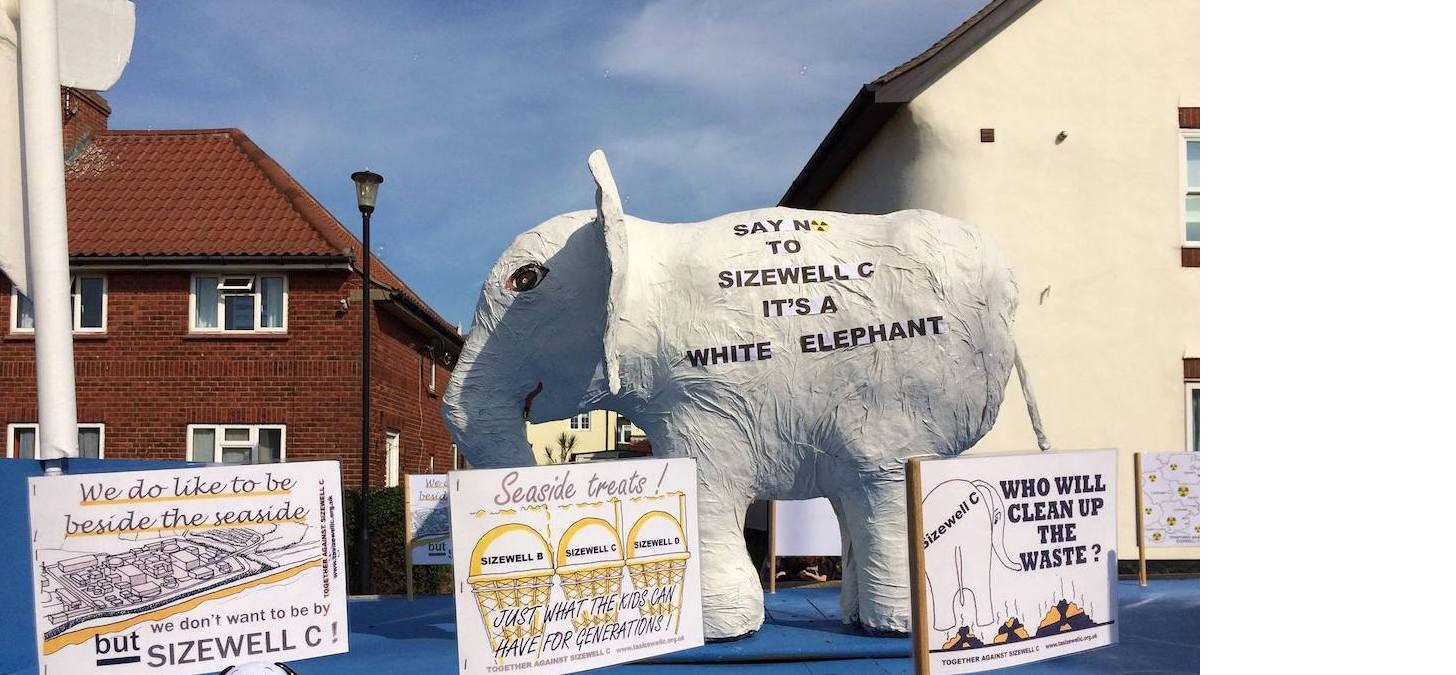
Latest money raises total taxpayer investment in power station site to
£17.8bn. The move marks a return to significant state funding for nuclear
energy after the UK chose the private sector to finance and build its last
project, Hinkley Point C in Somerset, which is heavily delayed and over
budget.
The previous record public investment in nuclear energy was £2bn
for the Sizewell B plant in 1987, or £7bn in today’s prices. The UK
government already has a partnership with French state-owned energy group
EDF, which has kept a 15 per cent stake in Sizewell C.
The pair are now seeking financial commitments from several other investors before they can sign off a “final investment decision”, expected next month during an
Anglo-French summit in London.
The chancellor will promise £14.2bn of
taxpayer funding for the 3.2 gigawatt plant over the current parliament,
including a £2.7bn commitment she previously made in the autumn Budget. The
Treasury had already committed £3.6bn over the past two years.
EDF has said the final investment decision will depend on securing private investment
and on whether it can make its expected return on capital, but Simone
Rossi, the company’s UK chief executive, said the project would benefit the
UK’s “energy security and economic growth”. Private investors expected
to bid for stakes in Sizewell C include Canadian pension fund CDPQ, Amber
Infrastructure Partners, Brookfield Asset Management, pension fund USS,
Schroders Greencoat, Equitix, Centrica and insurer Rothesay.
The total cost of the project could be close to £40bn by the time it is built, industry
figures believe. State-owned Great British Nuclear will soon announce the
outcome of its competition to choose a company to start building a fleet of
“small modular reactors”. The government said it would also invest more
than £2.5bn in nuclear fusion over five years in what it called a “record
investment” in the nascent technology. Melanie Windridge, head of
advisory group Fusion Energy Insights, praised the government for
recognising the “economic value of developing fusion in this country”.
The sum is slightly less than the US is spending on fusion and one-third of
China’s annual investment on the technology.
FT 9th June 2025,
https://www.ft.com/content/e017efeb-0a9c-4d30-894f-86037a096984
US suspends export licences for nuclear equipment suppliers selling to China
The suspensions were communicated by the Department of Commerce.
Power Technology, June 9, 2025
he US has halted the issuance of export licences for companies supplying nuclear equipment to China’s power plants, amidst an escalating trade conflict between the two nations, as reported by Reuters.
The suspensions were communicated by the Department of Commerce and impact licences for the export of parts and equipment essential for nuclear power operations.
The decision is one among several measures in recent weeks that target supply chains between the two nations, reflecting a shift from tariff negotiations to direct action against each other’s industries. ………………………………………………
Companies such as Westinghouse and Emerson have yet not commented on how these suspensions might affect their global operations.
Two sources told the media outlet that businesses stand to lose hundreds of millions due to these suspensions. …………………………………. https://www.power-technology.com/news/us-suspends-licenses-nuclear-equipment-suppliers-china/?cf-view
Securing the nuclear nation, (Russia)
Cambridge University Press: Kate Brown 20 November 2018, https://www.cambridge.org/core/journals/nationalities-papers/article/abs/securing-the-nuclear-nation/9D92C7AA447CC337F56999FC8C03C4D4
Abstract
In 1946, in the Southern Urals, construction of the Union of Soviet Socialist Republics first plutonium plant fell to the GULAG-Narodnyi Komissariat Vnutrennikh Del (NKVD). The chief officers in charge of the program – Lavrentii Beria, Sergei Kruglov, and Ivan Tkachenko – had been pivotal figures in the deportation and political and ethnic cleansing of territories retaken from Axis forces during WWII.
These men were charged with building a nuclear weapons complex to defend the Soviet Union from the American nuclear monopoly. In part thanks to the criminalization and deportation of ethnic minorities, Gulag territories grew crowded with foreign nationals and ethnic minorities in the postwar years. The NKVD generals were appalled to find that masses of forced laborers employed at the plutonium construction site were members of enemy nations. Beria issued orders to cleanse the ranks of foreign enemies, but construction managers could not spare a single healthy body as they raced to complete their deadlines.
To solve this problem, they created two zones: an interior, affluent zone for plutonium workers made up almost exclusively of Russians; and anterior zones of prisoners, soldiers, ex-cons, and local farmers, many of whom were non-Russian. The selective quality of Soviet “nuclearity” meant that many people who were exposed to the plant’s secret plutonium disasters were ethnic minorities, people whose exposures went unrecorded or under-recorded because of their invisibility and low social value.
Israeli attack could drive Iran to seek nuclear weapons, IAEA chief warns
Head of nuclear watchdog warns Israeli strike may harden Iran’s resolve on nuclear arms as diplomacy stalls.
The head of the International Atomic Energy Agency (IAEA), Rafael Grossi, has warned that an Israeli attack on Iran’s nuclear facilities could push Tehran closer to developing nuclear weapons as indirect talks between the United States and Iran continue through Omani mediation.
Speaking to i24 News and The Jerusalem Post, Grossi said Iranian officials had cautioned him about the potential consequences of a strike.
“A strike could potentially have an amalgamating effect, solidifying Iran’s determination – I will say it plainly – to pursue a nuclear weapon or withdraw from the Treaty on the Non-Proliferation of Nuclear Weapons,” he said in an interview that was published on Monday.
Grossi added that he did not believe Israel would launch such an operation.
“But one thing is certain,” he said, “The [Iranian] programme runs wide and deep. And when I say ‘deep’, I mean it. Many of these facilities are extremely well-protected. Disrupting them would require overwhelming and devastating force.”
He made his comments as Iran prepares a counteroffer to a US proposal for a new nuclear deal.
Iranian Ministry of Foreign Affairs spokesman Esmaeil Baghaei said on Monday that the US offer lacked key elements and failed to address sanctions relief – a longstanding demand from Tehran.
“We’re doing a lot of work on Iran right now,” Trump said during a White House economic event. “It’s tough … They’re great negotiators.”
Israeli Prime Minister Benjamin Netanyahu’s office confirmed the two leaders spoke on Monday, with Trump assuring him that negotiations with Iran would continue later in the week.
In a surprise comment last week, Trump said he had warned Israeli Prime Minister Benjamin Netanyahu not to jeopardise the fragile negotiations.
“I told him this would be inappropriate to do right now because we’re very close to a solution,” Trump said.
Iran says it will release Israeli nuclear secrets as pressure grows to reimpose sanctions
Tehran threat comes as European powers press for vote that could lead to reimposition of UN sanctions
Guardian Patrick Wintour, 9 June 25
Iran has said it will soon start releasing information from a hoard of Israeli nuclear secrets it claims to have obtained, as European countries push for a vote this week on reimposing UN sanctions on Tehran over its nuclear programme.
The unverified claims by Iranian intelligence of a massive leak of Israeli secrets may be designed to turn the focus away from what Iran argues is its own excessively monitored civil nuclear programme.
On Sunday, Iran’s intelligence minister, Esmail Khatib, claimed Tehran had obtained “a vast collection of strategic and sensitive [Israeli] documents, including plans and data on the nuclear facilities”. He added evidence would be released shortly, and implied some of the documentation was linked to Israel’s arrest of two Israeli nationals, Roi Mizrahi and Almog Attias, over alleged spying for Iran………………………………………………………………………………………………………………………………………………… https://www.theguardian.com/world/2025/jun/09/iran-says-it-will-release-israeli-nuclear-secrets-as-pressure-grows-to-reimpose-sanctions
Golden Dome Idiocy

A “shield” against nuclear attack makes nuclear war more likely
Bill Astore, Jun 10, 2025, https://bracingviews.substack.com/p/golden-dome-idiocy?utm_source=post-email-title&publication_id=1156402&post_id=164965873&utm_campaign=email-post-title&isFreemail=true&r=c9zhh&triedRedirect=true&utm_medium=email
Donald Trump has a dream: a “golden dome” over America to defend the country against nuclear missiles. It’s a repeat of Ronald Reagan’s dream, the Strategic Defense Initiative, nicknamed “Star Wars” after the movie. The problem is that the dream represents a nightmare.
How so? Golden Dome would be dangerously escalatory, wildly expensive, and unlikely to work as a “shield” to America. It is worse than a mistake: it is a crime. It represents a massive theft from those who hunger and suffer in America. As Republican President Dwight D. Eisenhower said in 1953, wasting enormous resources on weapons systems is no way of life at all. It is humanity crucifying itself on a cross of iron. Crucifixion is not made more pleasant when the cross is golden.
Put differently, the Golden Dome is a golden idol, a false god, one that by making a massive nuclear strike more likely endangers all of us and God’s creation.
Golden Dome is a grotesque example of makework militarism and warfare as welfare for weapons makers. Though it’s unlikely to work, if it did (partially) it would make a massive nuclear strike more likely, not less, endangering the world with the ecocidal terror of nuclear winter.
Golden Dome and the so-called investment in America’s nuclear triad are both examples of socio-technological madness–America’s leaders are like the mutants in “Beneath the Planet of the Apes,” worshipping the bombs that twisted them and which can only destroy what’s left of civilization.
Some Christians today await the apocalypse when Christ is supposed to return–but the most likely apocalypse features not the second coming of a God-man but a third world war featuring bomb-gods of thermonuclear destruction.
As Daniel Ellsberg once noted, U.S. nuclear attack plans in the early 1960s envisioned 600 million killed, or 100 Holocausts (before we knew such an attack would lead to nuclear winter). We’re lucky this insanity never came to pass. The only sane policy is to cancel Golden Dome and end “investment” in a new nuclear triad. Disarmament, not rearmament, is what’s needed.
The Global Network Against Weapons & Nuclear Power in Space has released a statement against Golden Dome that you can read here. You can add your name to the statement, as I have. Here are some bullet points released along with the statement:
- Golden Dome is financially reckless and unsustainable. Early cost estimates range from $550 billion to several trillion dollars over two decades. This dwarfs even the Pentagon’s annual budget and adds to the US’s $37 trillion national debt—a price tag that makes the project fiscally indefensible.
- Experts overwhelmingly agree that 100% effective missile interception is a fantasy, especially against complex attacks involving decoys, hypersonic missiles, and maneuverable warheads. Even Israel’s Iron Dome has been bypassed by more rudimentary drone and missile attacks.
- Golden Dome includes space-based interceptors—effectively weaponizing the Earth’s orbit and triggering an arms race. This violates the spirit of the Outer Space Treaty and pushes nations like China and Russia to accelerate space weapons development.
- By giving the illusion of first-strike survivability, it runs counter to the Mutually Assured Destruction (MAD) doctrine that has prevented so far a nuclear holocaust and incentivizes other powers to retain or expand their nuclear arsenals, blocking disarmament efforts permanently.
- Thousands of rocket launches for satellite interceptors would further damage the ozone layer, could generate dangerous orbital debris (Kessler Syndrome), and will harm our already fragile space environment.
- The only guaranteed winners of Golden Dome are weapons giants like Lockheed Martin, Raytheon, and Palantir, which stand to profit enormously regardless of the system’s effectiveness or risks.
- The trillions funneled into Golden Dome could be used for urgent domestic priorities—such as healthcare, infrastructure, climate action, and education, directly benefiting millions of Americans.
In short, Golden Dome is a massive, dangerous, and futile vanity project, cloaked in patriotism but driven by profit, politics, and illusion.
How the ‘evil twin’ of the climate crisis is threatening our oceans

There’s frustration among researchers that falling pH levels in seas
around the globe are not being taken seriously enough, and that until the
buildup of CO2 is addressed, the consequences for marine life will be
devastating.
“At the end of the day, we know CO2 is going up, pH is going
down, and that’s an urgent issue that people are not talking about,”
says Turner. “It’s an overlooked consequence of carbon in our ocean
that governments can no longer afford to overlook in mainstream policy
agendas, and the time to address it is running out.”
Guardian 9th June 2025, https://www.theguardian.com/environment/2025/jun/09/the-scientists-warning-the-world-about-ocean-acidification-evil-twin-of-the-climate-crisis
Lincolnshire council pulls out of nuclear waste disposal siting process
Lincolnshire County Council has decided to withdraw from the geological
disposal facility (GDF) siting process – ending plans to potentially
store nuclear waste in the county. The council’s new executive voted to
withdraw from the Nuclear Waste Services’ (NWS’s) Community Partnership
on 3 June.
A Community Partnership in Theddlethorpe had been established by
the NWS as part of its search to find a GDF site with suitable geology for
storing higher activity radioactive waste underground. The council’s vote
means that it will no longer be a member of Theddlethorpe GDF Community
Partnership. The GDF siting process cannot continue without the support of
the council as the relevant principal local authority, and the Community
Partnership closed with immediate effect.
Ground Engineering 09 June, 2025 By Thames Menteth, https://www.geplus.co.uk/news/lincolnshire-council-pulls-out-of-nuclear-waste-disposal-siting-process-09-06-2025/
1 This Month
Chernobyl: The Lost Tapes – A good documentary on Chernobyl on SBS available On Demand for the next 3 weeks– https://www.sbs.com.au/ondemand/tv-program/chernobyl-the-lost-tapes/2352741955560

of the week–London Campaign for Nuclear Disarmament

Tell the Ukrainian Government to Drop Prosecution of Peace Activist Yurii Sheliazhenko
To see nuclear-related stories in greater depth and intensity – go to https://nuclearinformation.wordpress.com
-
Archives
- April 2026 (152)
- March 2026 (251)
- February 2026 (268)
- January 2026 (308)
- December 2025 (358)
- November 2025 (359)
- October 2025 (376)
- September 2025 (257)
- August 2025 (319)
- July 2025 (230)
- June 2025 (348)
- May 2025 (261)
-
Categories
- 1
- 1 NUCLEAR ISSUES
- business and costs
- climate change
- culture and arts
- ENERGY
- environment
- health
- history
- indigenous issues
- Legal
- marketing of nuclear
- media
- opposition to nuclear
- PERSONAL STORIES
- politics
- politics international
- Religion and ethics
- safety
- secrets,lies and civil liberties
- spinbuster
- technology
- Uranium
- wastes
- weapons and war
- Women
- 2 WORLD
- ACTION
- AFRICA
- Atrocities
- AUSTRALIA
- Christina's notes
- Christina's themes
- culture and arts
- Events
- Fuk 2022
- Fuk 2023
- Fukushima 2017
- Fukushima 2018
- fukushima 2019
- Fukushima 2020
- Fukushima 2021
- general
- global warming
- Humour (God we need it)
- Nuclear
- RARE EARTHS
- Reference
- resources – print
- Resources -audiovicual
- Weekly Newsletter
- World
- World Nuclear
- YouTube
-
RSS
Entries RSS
Comments RSS
 nuclear-news