Netanyahu Says It’s Antisemitic For Israeli Soldiers To Describe Their Own Atrocities
Caitlin Johnstone, Jun 28, 2025, https://www.caitlinjohnst.one/p/netanyahu-says-its-antisemitic-for?utm_source=post-email-title&publication_id=82124&post_id=167017991&utm_campaign=email-post-title&isFreemail=true&r=1ise1&triedRedirect=true&utm_medium=email
Sometimes I’ll write a headline that looks odd on its face, but then I’ll lay out facts and arguments which allow the reader to understand the validity of the claim by the end of the essay. This is not one of those times.
This headline is just me saying the thing that happened. Israeli Prime Minister Benjamin Netanyahu and Defense Minister Israel Katz are publicly denouncing a report from an Israeli newspaper quoting Israeli soldiers who describe atrocities they were ordered to commit in the Israeli military, accusing the report of “blood libels”.
The Israeli newspaper Haaretz has published an article titled “‘It’s a Killing Field’: IDF Soldiers Ordered to Shoot Deliberately at Unarmed Gazans Waiting for Humanitarian Aid”, subtitled “IDF officers and soldiers told Haaretz they were ordered to fire at unarmed crowds near food distribution sites in Gaza, even when no threat was present. Hundreds of Palestinians have been killed, prompting the military prosecution to call for a review into possible war crimes.”
One Israeli soldier attests that civilians seeking aid are “treated like a hostile force — no crowd-control measures, no tear gas — just live fire with everything imaginable: heavy machine guns, grenade launchers, mortars.”
“We open fire early in the morning if someone tries to get in line from a few hundred meters away, and sometimes we just charge at them from close range. But there’s no danger to the forces,” the soldier says, adding, “I’m not aware of a single instance of return fire. There’s no enemy, no weapons.”
IDF sources tell Haaretz that Gaza has become “a place with its own set of rules” where they are interacting with civilians with whom “your only means of interaction is opening fire”. Deadly military weapons are used as crowd control to steer the starving populace wherever it’s determined they’re supposed to be, routinely killing desperate aid seekers.
Another soldier describes being instructed to fire artillery shells at a crowd to keep them at a distance, saying, “Every time we fire, there are casualties and deaths, and when someone asks why a shell is necessary, there’s never a good answer. Sometimes, merely asking the question annoys the commanders.”
In quote after quote after quote we read Israeli soldiers describing atrocities they were ordered to commit which they knew were wrong. I guess Israel’s PR machine never counted on some of the soldiers they sent in to perpetrate the Gaza holocaust having an actual conscience.
A joint statement from Netanyahu and Katz denounced the report, accusing Haaretz of publishing “blood libels”.
“The State of Israel absolutely rejects the contemptible blood libels that have been published in the Ha’aretz newspaper, according to which ‘IDF Soldiers Ordered to Shoot Deliberately at Unarmed Gazans Waiting for Humanitarian Aid.’ These are malicious falsehoods designed to defame the IDF, the most moral military in the world,” the statement reads.
“Blood libel” refers to the way medieval Europeans used to falsely accuse Jews of murdering Christian children in blood sacrifices — an early form of atrocity propaganda used to justify the persecution of Jews.
So again, just to be absolutely clear, the leader of the Israeli government is claiming that an Israeli newspaper quoting Israeli soldiers describing their own atrocities is antisemitic. And that mountains of testimony from inside the IDF is “designed to defame the IDF, the most moral military in the world.”
What can I even say about that here? It speaks for itself. I have nothing to add.
The more exposed Israel’s criminality becomes, the more absurd the arguments made in its defense are getting.
How Iran could build a bomb in secret – despite Trump’s $30bn offer

Iran enters ‘era of nuclear ambiguity’ with its capabilities ‘hidden and unverifiable’
Radina Gigova, 27 June 25, https://inews.co.uk/news/world/how-iran-build-bomb-secret-despite-trumps-30bn-offer-3775501
Despite US strikes on Iranian nuclear sites, the Trump administration is reportedly prepared to offer Tehran financial incentives to strike a deal over its nuclear programme.
Sources familiar with current plans told CNN that Washington could offer investment in a civilian energy worth up to $30bn (£21.9bn) if the regime is willing to abandon uranium enrichment and adopt transparency measures, as well as sanctions relief.
But Iran has signaled that it intends to rebuild the programme after acknowledging heavy damage by US strikes, and it could do so in secret after passing a law to suspend co-operation with the International Atomic Energy Agency (IAEA), which would block inspections on its nuclear sites and pave the way to withdrawal from the Nuclear Non-Proliferation Treaty.
How far Iran has progressed towards nuclear weapons, and what steps it could take next, could now be hidden from view, experts say.
“The truth is, no one really knows – and that’s exactly the problem,” said Sina Toossi, an Iran specialist and senior fellow at the Centre for International Policy, a Washington DC think-tank.
“Iran is entering an era of nuclear ambiguity, where its capabilities are deliberately hidden and unverifiable,” he said.
The ambiguity has been heightened after President Donald Trump said he would consider bombing Iran again.
Trump said he had spared Khamanei’s life during the original raids. US officials told the Reuters news agency on June 15 that Trump had vetoed an Israeli plan to kill the supreme leader.
“His Country was decimated, his three evil Nuclear Sites were OBLITERATED, and I knew EXACTLY where he was sheltered, and would not let Israel, or the U.S. Armed Forces, by far the Greatest and Most Powerful in the World, terminate his life,” Trump said in a social media post.
“I SAVED HIM FROM A VERY UGLY AND IGNOMINIOUS DEATH,” he said.
Iran’s decision to suspend IAEA co-operation just two days after a ceasefire “marks a turning point in the decades-long nuclear dispute”, and is “a strategic setback for both the United States and Israel”, Toossi added.
Iran retains nuclear capabilities
Donald Trump claimed last Saturday that US “bunker-buster” bombs had thoroughly destroyed Iran’s nuclear enrichment facilities, including sites at Natanz and Fordo – the latter located deep underground – and a storage site in Isfahan.
“The strikes were a spectacular military success,” the US President declared, adding that Iran’s core enrichment infrastructure had been “completely and totally obliterated”.
Iranian officials, for their part, continue to deny any intention of developing a nuclear bomb.
But experts caution that Iran retains the potential to weaponise.
“Yes, Iran retains the technical capability and infrastructure to eventually build a nuclear bomb behind the scenes, despite the recent Israeli and US strikes,” said Dr Andreas Krieg, senior lecturer at the School of Security Studies at King’s College London, Royal College of Defence Studies and fellow at the Institute of Middle Eastern Studies.
The strikes caused substantial damage to critical nuclear facilities, including the enrichment and conversion sites at Natanz, Fordo, and Esfahan, according to US officials. However, intelligence reports and satellite imagery indicate that Iran likely relocated a large portion of its enriched uranium stockpile – and possibly even advanced centrifuges – to secret locations ahead of the attacks.
“This preserved the most critical elements of its breakout capability. Moreover, Iran’s knowledge base – its cadre of nuclear scientists and engineers – is intact. Human capital, unlike physical infrastructure, is difficult to eliminate and can reconstitute programmes even after significant setbacks,” said Dr Krieg.
Krieg noted that the IAEA has acknowledged that although inspections at declared sites have been hindered, there is only limited visibility into any potential undisclosed or secret facilities.
“This opens the possibility of a clandestine parallel programme – especially given that Iran has previously experimented with such pathways during the AMAD programme in the early 2000s,” he said, referring to an alleged secret Iranian nuclear weapons development project believed to have been active at the start of the century.
“Therefore, while recent military operations may have delayed Iran’s ability to assemble a bomb, they have not eliminated the potential,” he said.
“If Iran were to exit the Nuclear Non-Proliferation Treaty or reduce co-operation with the IAEA, concerns about a hidden weapons programme would intensify. In the absence of a durable diplomatic solution, Iran’s latent capability remains a central strategic risk in the region.”
Dr Pavel Podvig, a senior researcher and nuclear specialist at the UN Institute for Disarmament Research, said the US and Israel could struggle to keep track of a hidden programme.
“It would be very difficult without IAEA access,” he said. “Look at North Korea – and North Korea wasn’t really making a special effort to hide facilities underground.”
A clandestine “breakout” would prioritise storage of any remaining highly enriched uranium, he added, which could potentially be further enriched to weapons-grade at an unknown facility.
Basis of a deal may already exist
Krieg believes “it is imperative that the Trump administration, through mediators like Qatar, is transforming this current momentum of the ceasefire into a sustainable and mutually acceptable nuclear deal, including enrichment constraints and effective oversight mechanisms”.
Uranium is the central element in question, and according to the UN’s nuclear watchdog, no other country has as much enriched uranium at this level as Iran does without also engaging in a nuclear weapons programme.
John Erath, senior policy director at the Centre for Arms Control and Non-Proliferation, agrees that Iran may have the capability to build a nuclear weapon and that negotiating a new agreement, similar to the Joint Comprehensive Plan of Action (JCPOA) nuclear deal reached in 2015 and abandoned by Trump in 2018 – could be the basis of a new deal.
“We have an example of an arrangement that provided confidence that closed off the path to nuclear weapons for Iran,” he said, referring to the JCPOA, “and so, if I were negotiating a new arrangement, I would use that as a starting point but I would have something that would not have an expiration date.”
“If you want to demonstrate that you do not have nuclear weapons, be completely transparent, be completely open, and they were not that,” Erath claimed, referring to the Iranian government. “They were doing things that they wanted to keep hidden, that they wanted to keep in secret, that were only things that you could do if you were considering a nuclear weapons programme.”
Iranian officials have indicated reluctance to re-enter talks after the US and Israeli attacks, citing a lack of trust, although Tehran’s ambassador to the UN left the door open to a regional nuclear consortium involving Gulf states – a previous proposal floated by the US.
The 12-day war has “certainly put the possibility of further negotiations under serious threat”, Erath said. “[But that’s] what happened, and we have to live with the consequences.”
“Midnight Hammer” – a Fordow’s Bunker Buster or just Busted [i]
The reality is that the location of Iran’s 60% enriched uranium, along with key components of the program, is known only to a select few within Iran. Moreover, there are underground facilities believed to be even deeper than those at Natanz or Fordow — capable of continuing enrichment activities beyond the reach of current conventional weapons.
In short, the nuclear game is far from over.
The USA bombing the Iranian Nuclear facilities – Aftermath
– EXCELLENT ILLUSTRATIONS on original
Mike Mihajlovic, Jun 28, 2025, Black Mountain Analysis
The United States has conducted a series of airstrikes targeting key Iranian nuclear facilities – specifically, three high-value sites, with at least three B-2 Spirit bombers as well as a salvo of Tomahawk cruise missiles launched from submarines. In total, 14 GBU-57A/B Massive Ordnance Penetrators (MOPs) ( 12 for Fordow and 2 for Natanz) were deployed, along with 30 cruise missiles.
According to President Trump, who often portrays himself as a strongman unafraid to use force, the operation was extremely successful and all goals achieved, meaning the Iranian nuclear program went up in ashes. However, beneath the rhetoric and posturing, serious doubts remain about whether such strikes could meaningfully degrade Iran’s nuclear capabilities, especially when it comes to deeply embedded sites like Fordow. cspsbilities
At best, this could amount to little more than strategic theater, a carefully orchestrated display of power aimed at sending a political message rather than achieving lasting military results. In effect, the U.S. may have executed a strike based on an Israeli wish list: using bombs to project strength while avoiding actions that could trigger broader conflict.
For neoconservatives and proponents of an aggressive foreign policy, such a scenario would be hailed as a success—proof that decisive military action can shape geopolitical outcomes. Yet, Iran, a nation known for its strategic patience and resilience, chose to respond publicly in a controlled manner, targeting the US bases in Qatar. What will happen next is that they quietly assess the damage, reinforce their underground infrastructure, and continue their nuclear work beyond the reach of even the most powerful conventional weapons.
The world may be led to believe that the “threat” has been neutralized, for now. But history suggests that such illusions rarely last. Eventually, the same concerns will resurface, bringing the crisis back into the global spotlight.
“The roaring mountain just gave birth to a mouse.”
In the case of a high-profile strike, such as the one on Fordow, the symbolic value often overshadows the physical outcome. A site as hardened and deeply buried as Fordow—originally constructed within a mountain to withstand conventional attacks. It can’t be easily neutralized even with specialized munitions like the MOP or a direct hit from a hypersonic ballistic missile.
Yet, even then, the effectiveness depends on:
- Intelligence accuracy: Was the target still active?
- Timing: Was the infrastructure recently evacuated or relocated?
- Munition capability: Did the weapon used have sufficient penetration depth and explosive yield?
If the facility was decommissioned, emptied, or redundant, then the operation becomes more about message than material damage, a geopolitical performance aimed at deterring adversaries and reassuring allies.
Optical Effect Over Outcome
Such events often produce more theater than transformation. The media cycle amplifies the action, leaders issue statements of resolve, flags are waved, and bombs and missiles are launched – but the real question remains: What was actually destroyed?
This is where the gap between perception and reality widens. If core infrastructure remains intact or the targeted regime adapts quickly, the long-term strategic balance may not shift significantly. In this light, the operation resembles a symbolic punctuation mark in an ongoing diplomatic struggle rather than a decisive blow.
While political rhetoric and military parades dominate headlines, financial markets often act as the first honest arbiter of whether a crisis has real economic consequences, including:
A spike in oil prices could signal concerns over regional stability.- Currency fluctuations could reflect investor confidence (or lack thereof) in involved nations.
- Defense stocks may rise on expectations of increased military spending.
Markets don’t care about slogans or intercepted missiles shown in shaky phone videos; rather, they react to risk, uncertainty, and real shifts in power dynamics. So far, as the punches were exchanged, the market is not reacting “violently”.
The Depth
How deep is Fordow?
Open sources provide at least three distinct estimates for the depth of the Fordow facility: approximately 60–90 meters, 80–100 meters, and even up to 500–800 meters. These discrepancies arise from differences in measurement methodologies, limitations of satellite imagery, and deliberate information obfuscation by the Iranian government. Until engineering plans are leaked or the IAEA gains direct access to the site for inspection, the precise depth of Fordow remains uncertain.
Still, it is worth examining why Iran might engineer such a deeply buried facility, possibly extending toward the half-kilometer mark, and why that possibility alarms the Pentagon more than it does Israel.
The 60–90 Meter Estimate:
Outlets such as Deutsche Welle, Economic Times, and the Foundation for Defense of Democracies (FDD) estimate Fordow’s depth based on the thickness of the mountain rock layer above the main halls. In practical terms, this reflects the vertical cover, like measuring the height of “floor-1” from the surface. Their estimates place the depth at 60–90 meters.
The 80–100 Meter Estimate:
Moneycontrol cites a slightly deeper figure, likely accounting for a broader interpretation of structural depth rather than just the overhead rock.
The ~100 Meter Estimate via Satellite DEM:
Bloomberg reportedly used digital elevation models (DEMs) from commercial satellite imagery (Planet Labs and Maxar) to measure the distance from the entrance tunnel’s opening to the presumed facility roof. This method places Fordow around 100 meters deep. However, it should be noted that small angular errors, such as a ±3° deviation in tunnel slope, can introduce measurement discrepancies of dozens of meters. Additionally, some sources introduce further variance when rounding feet to meters.
Given these limitations, depth estimates are best treated as approximations unless corroborated by direct data……………………………………………………………………………………………………………………..
……………………………………………………………………………………………………………………………..Conclusion
Israel, acting without direct U.S. involvement, does not possess the necessary means to guarantee the destruction of the Fordow facility, even if its depth is “only” around 90 meters. While Israel has advanced airpower and precision munitions, it lacks the deep-penetration capability required to reach and neutralize such hardened underground infrastructure.
By contrast, the United States is undoubtedly capable of achieving a “mission kill”—disabling the site by targeting entrances, ventilation systems, and power nodes. However, a “layout kill” (the complete structural destruction of the underground halls) can only be reliably achieved if the facility is no deeper than approximately 35-40 m. Beyond that depth, even the GBU-57 MOP’s effectiveness is significantly reduced by the geological protection offered by dense rock formations.
So, how does the MOP manufacturer claim penetration of 60 m of concrete?
The U.S. spent considerable time and resources developing the MOP. Testing was conducted not far from the site where the first nuclear bomb test was previously carried out.
I am not aware of the Pentagon publicly sharing extensive results of these tests, but it is reasonable to believe that the intention was to demonstrate the MOP’s ability to penetrate to a depth comparable to the estimated depths of key Iranian nuclear sites, as well as underground facilities in North Korea and China.
It is reasonable to assume that U.S. assessments of destruction are based not only on classified intelligence but also on rudimentary analysis of test results shown in publicly released videos. However, the question remains: who should we believe?
The media landscape offers little clarity, with both pro-Trump and anti-Trump outlets presenting conflicting narratives. Analysts continue to assess the situation from multiple angles, and it may take time before a more definitive picture emerges.
Iranian sources contribute to the confusion, often contradicting themselves, with reports ranging from minimal damage to claims of major destruction. This inconsistency raises questions about intent: Is Iran attempting to downplay the impact of any strikes, or is it deliberately obscuring the true status of its nuclear infrastructure?
From a strategic perspective, there are clear incentives for each side to shape the narrative in their favor. By asserting total destruction, the U.S. can project military dominance and suggest the permanent end of Iran’s nuclear ambitions, at least for public consumption.
Meanwhile, Iranian claims of localized damage could serve as a deliberate distraction, shifting attention away from deeper, more resilient parts of its program. In this context, everyone has a stake in letting the dust settle, allowing ambiguity to work in their favor.
The reality is that the location of Iran’s 60% enriched uranium, along with key components of the program, is known only to a select few within Iran. Moreover, there are underground facilities believed to be even deeper than those at Natanz or Fordow — capable of continuing enrichment activities beyond the reach of current conventional weapons.
In short, the nuclear game is far from over. If anything, it has merely entered a new phase—one marked by strategic misdirection, information warfare, and long-term resilience planning.
The bottom line, summed up in one sentence about the current equation between the U.S., Israel, and Iran: “the wolves are fed, and all the cattle are accounted for”.
Edited by Piquet (EditPiquet@gmail.com)
References…. https://bmanalysis.substack.com/p/midnight-hammer-a-fordows-bunker?utm_source=post-email-title&publication_id=1105422&post_id=166540747&utm_campaign=email-post-title&isFreemail=true&r=1ise1&triedRedirect=true&utm_medium=email
What if Iran withdraws from the NPT?
Bulletin. By Mark Goodman, Mark Fitzpatrick | June 25, 2025
As the Iranian nuclear program saga plays out, one diplomatic action has been widely expected: Iran may declare its withdrawal from the Nuclear Non-Proliferation Treaty (NPT).[1] Such a withdrawal would eliminate the legal prohibition on Iran’s acquisition of nuclear weapons and the requirement that Iran accept international safeguards monitoring. Over the past decade, Iran has threatened many times to play this card in retaliation for far less serious assaults.
NPT withdrawal is one of the few actions available to Iran that would have a significant effect. It would facilitate reconstitution of Iran’s bombed nuclear capabilities and enable Tehran to use them to develop nuclear weapons without international oversight.[2] Even with the loss of the 14 nuclear scientists and engineers assassinated by Israel this month, Iran surely retains the knowledge on how to build centrifuges and assemble them into cascades, plus the expertise acquired during the secret work to date on weapons development. Iran may also have taken steps to remove equipment and material from its enrichment facilities before the US attacks against three Iranian nuclear facilities over the weekend.
Given these realities, Iran likely will be able to build and operate a secret underground enrichment plant capable of producing significant quantities of weapons-grade highly enriched uranium (HEU). This process will be sped if Iran was able to protect from Israeli bombing the over 400 kilograms of uranium enriched to 60 percent uranium 235 content the International Atomic Energy Agency (IAEA) says Iran had as of May[3] and, until recently at least, stored in easily transportable cylinders. At a time when much of the world sees Iran as the victim of Israeli aggression, NPT withdrawal could be accomplished with less political blowback than if it were employed in response to economic sanctions.
Iran’s adversaries would see NPT withdrawal as tantamount to a declaration of nuclear weapons intent. There is no such legal connection, however, and the logical case is not airtight. It is conceivable that Iran could withdraw from the treaty and maintain a policy of nuclear hedging, even as it reconstituted its enrichment program in secret. A decision to actually build a nuclear weapon could be made down the road when the capabilities are again in place. Invoking the NPT’s withdrawal clause in the near term would risk military escalation with few immediate benefits, though ending IAEA inspections would reduce the transparency and vulnerability of a reconstituted nuclear program.
Iran’s NPT status. Iran signed the NPT in 1968 and became one of its original parties when the treaty entered into force in 1970. As a non-nuclear-weapon state, Iran is prohibited from acquiring nuclear weapons and from seeking or receiving assistance in the manufacture of nuclear weapons. As an NPT party, Iran is also required to accept IAEA safeguards—international monitoring and inspections—on all its peaceful nuclear activities. To that end, Iran concluded a comprehensive safeguards agreement with the IAEA in 1974…………………………………………………………………………………….
Implications of withdrawal. Article X of the NPT allows withdrawal from the treaty if a party “decides that extraordinary events, related to the subject matter of this Treaty, have jeopardized the supreme interests of its country.” To do so, it must give three months’ advance notice to all other NPT Parties and to the UN Security Council, including a statement of those “extraordinary events.” After those three months, the obligations not to acquire nuclear weapons and to accept safeguards would cease.
…………………………………………………………………Some NPT parties have never accepted North Korea’s withdrawal as valid in meeting the requirements of Article X, questioning whether its notification cited “extraordinary events” that were “related to the subject matter of the [NPT].”[13]
In Iran’s case, such questions are unlikely to be raised, since the “extraordinary events” are obvious.
…………………………………………………………… There is little prospect of effective multilateral responses to an Iranian withdrawal notification, aside from toothless requests for Iran to reconsider its decisions. Such responses would require consensus at least among the five permanent members of the UN Security Council.
……………………………………………….There is little prospect of effective multilateral responses to an Iranian withdrawal notification, aside from toothless requests for Iran to reconsider its decisions. Such responses would require consensus at least among the five permanent members of the UN Security Council.
……………………………….. The NPT-based nonproliferation regime has often worked best by slowing developments and giving countries time and incentives to reconsider fateful decisions. In Iran’s case, Israel’s war of choice is likely to have the opposite effect of speeding up a step off the cliff. If Iran announces formal withdrawal from the NPT, other members should do whatever they can during the three months’ notification period to persuade it not to follow through.
https://thebulletin.org/2025/06/what-if-iran-withdraws-from-the-npt/
British billpayers saved £300m through energy flexibility in 2024, figures show
Savings were driven by lower contributions to infrastructure costs, reduced connection charges and the increased use of low-carbon energy sources.

Rebecca Speare-Cole, Independent 26th June 2025
.Many customers reduced their bills by changing the time or
day that they used electricity. British billpayers saved more than £300
million by switching the time at which they turned on their washing
machines or ovens, according to figures released by the industry body for
network operators.
The data shows households and businesses reduced their
bills by changing the time or day they used electricity – such as by
cooking or washing earlier or later in the day, or setting electric cars to
charge at specific times. In the past when most of the UK’s electricity
generators were fossil-fuel power plants, supply of electricity adapted to
demand.
Today as the wind and the sun influence when renewables are being
produced, incentivising users to adapt their demand to when there is a lot
of supply can help take pressure off the grid. Flexibility can also be a
valuable tool to optimise capacity while longer-term infrastructure
upgrades are planned and delivered.
https://www.independent.co.uk/news/business/british-ofgem-mps-b2777498.html
Independent 26th June 2025
‘Shut it down’ demands as Torness nuclear plant breaches a safety limit
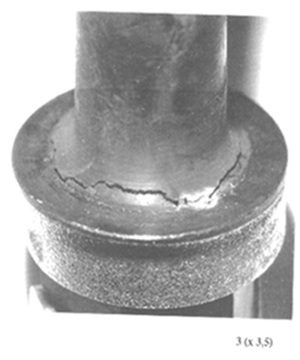
Demands have been made to shut Scotland’s one remaining active nuclear
power plant as it emerged a third of the central part of one reactor core
is cracked, sparking deep safety concerns. The Herald can reveal an
inspection from March estimates that in Torness’s Reactor 1 central core
area, there are 585 cracks in the bricks, which are key components for
cooling and keeping it safe and could increase the risk of a radioactive
accident.
The Herald has seen evidence of an agreed safety case for the
37-year-old Torness nuclear power plant as of June 2022, which supported
operation with up to 300 cracked bricks in a core reactor, similar to that
which led to the shutting down of sister power station Hunterston B. The
plant owners’ French energy firm EDF said that the safety case had been
superseded by an agreed new one in May 2024, which increased the allowance
to an unspecified new level in a move that echoed what happened at
Hunterston B.
Some have said it is “changing the goalposts”. The plant was
scheduled to close in 2023, but had its life extended to 2030 in 2016.
However, the planned shut down was brought forward to 2028 in 2022 as
predictions over the onset of cracks were seen as more imminent. But at the
start of December, last year four power stations run by EDF had their lives
extended with Torness put back to 2030 alongside and received the backing
of UK energy secretary Ed Miliband who described it as a “strong
endorsement of our clean power mission”.
It was just three months before
the extent of the cracking of Torness’s Reactor 1 core was uncovered.
Cracking can destabilise the bricks leading to crucial coolants not flowing
properly, which can lead to overheating, fuel damage and the risk of
radiation release – the early steps of a meltdown.
At the now closed sister
Hunterston B advanced gas-cooled plant also owned by French firm EDF, more
than 350 cracks were found in a reactor’s graphite bricks when it was
forced to shut down in 2018 because it was decided it could not safely
operate. A second reactor was also shut down later the same year under
similar circumstances. According to ONR documentation, seen by The Herald,
an “essentially intact” core is defined as one with fewer than 10% cracked
bricks. In Torness’s 3,000 brick reactor cores that would equate to around
300 – similar to that of now shut Hunterston.
The cracking issues that
caused the Hunterston shutdown affected one in every nine bricks in what
was its Reactor 3 core. At the Torness nuclear plant, near Dunbar in East
Lothian, it equates to one in five of the bricks of the entire core.
It has further emerged that cracks have begun to be discovered in the second of
the two Torness reactor cores. In a May inspection of 13 of the estimated
330 fuel channels in the core, one brick was found to have a crack. The
ONR, the watchdog which is primarily funded through fees charged to the
nuclear industry, say the number of cracks does not challenge the “safety
margins” in the agreed safety case. They say that the reactor could still
be safely shut down in an emergency.
But radioactivity expert Dr Ian
Fairlie, who was the former head of the secretariat of the UK Government’s
Committee Examining Radiation Risks of Internal Emitters insisted that the
levels of cracking should lead to it being closed down. He said: “Wow. They
should shut it imminently. This is a repeat of what happened at Hunterston
and they had to shut that down.
“Once the integrity of the core is
unreliable then really you have to close it sooner rather than later. That
is what they did at Hunterston and they should do the same with Torness. It
is not being anti-progress, it is about safety.” Dr Fairlie, who acts as a
consultant and is a vice-president of the Campaign for Nuclear Disarmament
(CND) added: “There will be lots of assurances given but to be honest with
you, I don’t trust it. Safety is more important than money. I would argue
and other environmentalists would argue that you have to adopt the
precautionary principle … If in doubt you err on the side of caution.
Protecting the public is more important than profits.
Energy consultant
Pete Roche, who has been policy adviser to the Scottish Nuclear Free Local
Authorities echoed the call for Torness to close. He said of the latest
crack numbers: “Goodness. It needs to shut. Absolutely.” He said of the
expanding of the cracks tolerance level that it was changing the goalposts:
“It seems to me they are stretching what is feasible with these reactors,
and if they go too far we could be in trouble.”
Friends of the Earth
Scotland head of campaigns Caroline Rance said: “The enormous costs of
nuclear power are due in part because so much time and money has to be
spent trying to reduce the immense danger it poses. But the only real
guarantee is that we’ll end up with literal toxic waste that must be
guarded for thousands of years.
“Scotland’s nuclear power plants have a
chequered safety history with serious safety lapses reported and
investigations revealing hundreds of cracks in the reactor cores. “Nuclear
projects are always billions over budget and desperately late. Politicians
are willing to write blank cheques for the nuclear industry while people
are crying out for support to insulate their homes and public transport
needs upgrading. “Climate breakdown demands an urgent move to reliable,
affordable renewable energy and a real transition that supports oil workers
into industries that don’t harm the planet.”
Herald 27th June 2025 https://www.heraldscotland.com/news/25260633.shut-down-demands-scotlands-last-nuclear-plant-breaches/
‘It looks more likely with each day we burn fossil fuels’: polar scientist on Antarctic tipping points

Despite working on polar science for the British Antarctic Survey for 20 years, Louise Sime finds the magnitude of potential sea-level rise hard to comprehend. Up until 2016, the sea ice
in Antarctica seemed relatively stable. Then everything started to change.
At first, the decline was mostly in line with climate models.
But suddenly, in 2023, there was an enormous drop. About 2.5 million sq km of Antarctic
sea ice went missing relative to the average before 2023. The anomaly was
of such a magnitude that it’s quite hard for scientists to know what to
make of it. It has been described as a five sigma event.
The potential for Antarctica to increase global sea levels is scarier than for Greenland.
Right now, they’re both contributing similar amounts to sea-level rise,
but in future, it could be Greenland goes up a bit and then Antarctica goes
up catastrophically. Greenland has the potential to raise sea levels by
five or six metres, but we don’t expect this will come in the form of an
absolutely catastrophic, abrupt loss. Most of the ice in Greenland is not
below sea level so we can see what is happening and we expect it will melt
in a linear fashion.
By contrast, Antarctica has 80 metres of potential
sea-level rise. We don’t expect all of that, but it is harder to know
exactly what is happening.
Guardian 27th June 2025, https://www.theguardian.com/environment/ng-interactive/2025/jun/27/tipping-points-antarctica-arctic-sea-ice-polar-scientist
Wreckers, money woes and mutirão: 10 things we learned about Cop30 from Bonn climate talks

Key takeaways from two weeks of negotiations aimed at setting out stall
for November’s Cop30 in Brazil. Two weeks of negotiations on the climate
crisis have just concluded in Bonn in preparation for the Cop30 summit
taking place in Brazil this November.
What did we learn?
Limiting global heating to 1.5C above preindustrial levels is vital for a healthy planet,
but hopes of doing so are rapidly vanishing as greenhouse gas emissions
continue to rise, and temperatures soar.
The main task for Cop30 in Belém
this November is for every country to submit a national plan, required
under the 2015 Paris agreement, to cut carbon as far as necessary to hold
to the 1.5C limit. Few countries have submitted their plans, called
nationally determined contributions (NDCs), which set out a target on
emissions to 2035 and an indication of the measures that will be taken to
meet them.
They were due in February, but the US presidency of Donald
Trump, his vacillations over tariffs and the prospect of a global trade war
led many to adopt a “wait and see” approach. Military conflicts in
Ukraine, Gaza and Iran have further frightened governments and taken
attention away from the climate.
Guardian 27th June 2025, https://www.theguardian.com/environment/2025/jun/27/cop30-10-things-we-learned-from-bonn-climate-talks
The president who talks like a child

28 June 2025 Roswell, https://theaimn.net/the-president-who-talks-like-a-child/
Watching President Trump respond to questions is like watching a child give a report on a book they didn’t read. He rambles, repeats himself, and jumps from topic to topic with little connection to the original question. Ask about the economy, and you might get a story about how everyone says he’s done more than Lincoln. Ask about foreign policy, and he’s suddenly reminiscing about crowd sizes or a golf course he owns.
It’s cringeworthy – not just because it’s embarrassing to witness, but because it’s dangerous. The world sees it. Allies shake their heads; adversaries take notes. His speech patterns aren’t just odd – they reveal a mind that struggles with depth, nuance, or even basic coherence.
He often sounds like someone who needs constant validation, like a child needing applause. Every sentence is laced with “the best,” “nobody knew,” or “a lot of people are saying.” But the substance? Missing in action.
What’s even more concerning is that this isn’t new. His speaking style has always raised eyebrows, but in his second term, it seems to have become even more unhinged. When asked a direct question – about inflation, war, or national security – he responds with something entirely unrelated. He pivots to grievances, boasts about his supposed achievements, or launches into a tirade about the media. It’s not just deflection. It’s a fundamental inability to engage with the question at hand.
This is not a partisan complaint. It’s not about policy. It’s about the basics of leadership: coherence, focus, responsibility. A functioning adult in the Oval Office should be able to answer a question without wandering into fantasy, nostalgia, or conspiracy. Trump rarely does.
Supporters (both MAGAs and media) might claim it’s part of his charm – that he’s just speaking off the cuff, unscripted. But there’s a difference between authenticity and incoherence. When every answer sounds like a poorly rehearsed rally speech, it’s not refreshing – it’s exhausting.
Even his defenders have learned to lower the bar. “That’s just Trump being Trump,” they shrug, as if we should expect the most powerful man in the world to behave like a distracted child. If this were a reality show, it might be entertaining. But it’s not. It’s the presidency. And the stakes are real.
What does it say about America when its president communicates like a confused child? When complexity is replaced with slogans, when questions are treated as insults, and when leadership is reduced to soundbites?
A president doesn’t need to be a poet or a scholar. But they do need to be able to think, listen, and respond like an adult. On that front, Trump continues to fail – loudly.
1 This Month

of the week – Shut Down Drone Warfare!


Tell the Ukrainian Government to Drop Prosecution of Peace Activist Yurii Sheliazhenko

Petition to revoke the licensing of the Near Surface Nuclear Disposal Facility (NSDF) at Chalk River. https://www.ourcommons.ca/petitions/en/Petition/Details?Petition=e-7247
To see nuclear-related stories in greater depth and intensity – go to https://nuclearinformation.wordpress.com
-
Archives
- April 2026 (57)
- March 2026 (251)
- February 2026 (268)
- January 2026 (308)
- December 2025 (358)
- November 2025 (359)
- October 2025 (376)
- September 2025 (257)
- August 2025 (319)
- July 2025 (230)
- June 2025 (348)
- May 2025 (261)
-
Categories
- 1
- 1 NUCLEAR ISSUES
- business and costs
- climate change
- culture and arts
- ENERGY
- environment
- health
- history
- indigenous issues
- Legal
- marketing of nuclear
- media
- opposition to nuclear
- PERSONAL STORIES
- politics
- politics international
- Religion and ethics
- safety
- secrets,lies and civil liberties
- spinbuster
- technology
- Uranium
- wastes
- weapons and war
- Women
- 2 WORLD
- ACTION
- AFRICA
- Atrocities
- AUSTRALIA
- Christina's notes
- Christina's themes
- culture and arts
- Events
- Fuk 2022
- Fuk 2023
- Fukushima 2017
- Fukushima 2018
- fukushima 2019
- Fukushima 2020
- Fukushima 2021
- general
- global warming
- Humour (God we need it)
- Nuclear
- RARE EARTHS
- Reference
- resources – print
- Resources -audiovicual
- Weekly Newsletter
- World
- World Nuclear
- YouTube
-
RSS
Entries RSS
Comments RSS
 nuclear-news