Revealed: 585 cracks in Torness nuclear reactor
Rob Edwards, The Ferret 26th June 2025
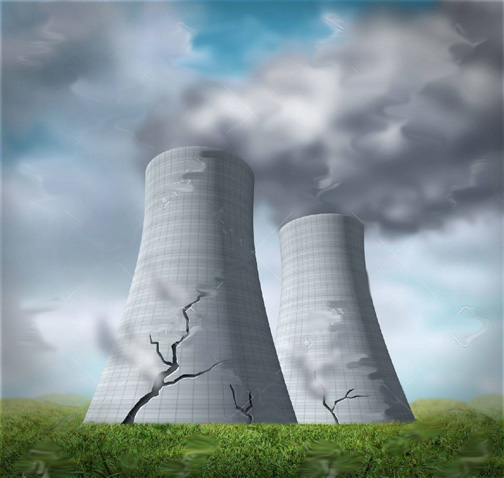
The estimated number of cracks in the graphite core of a nuclear reactor at Torness in East Lothian has risen to 585 – the highest so far – prompting fears of a nuclear “meltdown” and calls for its early closure.
In documents released under freedom of information law, the UK Government’s safety watchdog, the Office for Nuclear Regulation (ONR), said that the state of the graphite core posed a “significant challenge” to plans to keep Torness and other ageing nuclear stations running over the next five years.
In November 2024 ONR advised the French operator, EDF Energy, to “pause for thought” before deciding to extend the lives of Torness and other nuclear stations in England. Less than a week later EDF decided to extend the life of Torness from 2028 to 2030.
Campaigners accused EDF of putting profits before safety, and warned that keeping “clapped out reactors” running would endanger the public. It was “time for these ageing reactors to be closed”, they said.
EDF, however, insisted that nuclear safety was its “overriding priority” and that it would not consider operating Torness unless it was “confident it was safe”. Planned closure dates for reactors were “kept under review”, it said.
ONR said that cracking was “a well known phenomenon”, and that the number of cracks was “acceptable”. It stressed that the risks were “tolerable”, and that it would not allow any nuclear plant to operate “unless we are satisfied that it is safe.”
The Ferret previously reported that 46 cracks had been detected in April 2024 in the graphite bricks that surround the highly radioactive uranium fuel powering one of the two reactors at Torness. The first three cracks were found in February 2022.
But only a small proportion of the bricks were actually inspected, and no estimate has previously been given for the total number of cracks across the core. Following a freedom of information request by The Ferret, ONR has now disclosed that 59 cracks were found in a similarly limited inspection in March 2025.
In its response, ONR said that this “equated to around 585 cracks when forecast across the central area of the core where cracking is expected”. The high number of cracks did not “challenge safety margins” at Torness, it said.
EDF confirmed that it had found 59 cracks in the graphite bricks it sampled in March 2025. This suggested that in total around a third of the central part of the core had cracking, equivalent to about 585 cracks, it said.
ONR also revealed that another inspection in May 2025 discovered the first crack in the second reactor at Torness. It started generating electricity later than the first reactor.
Torness nuclear power station, near Dunbar, was officially opened in May 1989 by the then Conservative prime minister, Margaret Thatcher. The site had been the target of anti-nuclear protests since 1978.
Scotland’s other nuclear power station at Hunterston in North Ayrshire was closed down in January 2022, more than a year earlier than planned. This followed the discovery of an estimated 586 cracks in its two reactors.
‘Pause for thought’ on Torness
ONR also released to The Ferret the results of its assessment of EDF’s 2024 review of extending the lives of Torness, and other advanced gas-cooled reactors (AGRs) at Heysham, near Lancaster, and Hartlepool, on the north east coast of England.
Three scenarios were reviewed. One assumed Torness closed as planned in 2028, a second assumed its operation was extended to 2030, and a third envisaged keeping it going until 2032.
ONR concluded that because of cracking and other issues, “graphite represents one of EDF’s significant challenges for lifetime extension”. It also highlighted a series of other potential ageing problems with AGRs, including risks from leaking boilers, failing equipment, and corrosion.
“It is possible that safe operation of certain components might be undermined due to life extension,” ONR said. There were a number of issues which had not been fully covered in EDF’s review, it argued.
“Although these are not considered a blocker to potential life extensions, ONR expects EDF to manage and resolve these issues as part of its lifetime management of the AGRs,” ONR added.
“Moreover, coupled with the aspects identified by EDF in the submissions, this should give EDF pause for thought when reaching a decision on AGR lifetime extensions.”
ONR wrote to EDF with its advice on 27 November 2024. On 3 December – less than a week later – EDF decided to extend the life of Torness from 2028 to 2030, and to extend the lives of its English AGR stations.
Another document released by ONR was a June 2024 assessment of the “structural integrity” of the graphite core of the more badly cracked reactor at Torness. The majority of the 35-page document was redacted “for the purposes of safeguarding national security”.
The ONR assessment found “shortfalls” in the crack predictions made by EDF, and concluded that this “raises a question” over the company’s “ability to predict the future core state”. At the time ONR nevertheless gave EDF permission to keep running Torness on the grounds that the risks were “tolerable”.
The nuclear critic and consultant, Peter Roche, argued that there was “a significant design difference” which could make cracking at Torness worse than at Hunterston. “Graphite debris in the fuel channels or misshapen bricks could compromise the operator’s ability to keep the fuel cool and in a worst case lead to a meltdown,” he claimed.
This risked releasing radioactivity into the environment. “Clearly it’s time for these ageing reactors to be closed,” Roche said. “Keeping them open would be gambling with public safety.”
The veteran environmental campaigner, Dr Richard Dixon, accused EDF of trying to cover the costs of building new nuclear plants. “It cannot be a coincidence that running Torness for an extra two years would ease EDF’s major financial woes caused by the massive delays to its reactor projects elsewhere,” he said
“EDF’s inability to complete reactor projects anything remotely like on time or on budget should not mean that the public in Scotland face the extra risk of running clapped out reactors ever further past their sell-by date.”
The Scottish Greens described the Torness cracks as “potentially dangerous”. It was “deeply concerning” that EDF was planning to keep the station going until 2030, according to the party’s energy spokesperson and retiring co-leader, Patrick Harvie MSP.
“It appears that the profits of a giant energy company are being put ahead of safety here in Scotland,” he told The Ferret. EDF is owned by the French government, and earnt £15.6bn (€18.3bn) before interest and taxes in 2024…………………………………………………………..
https://theferret.scot/nuclear-reactor-torness-585-cracks/
No comments yet.
1 This Month


18 March Webinar @ 1 PM EST: An Assessment of SMR Projects: The Case of Canada
register for the zoom:
https://us02web.zoom.us/webinar/register/WN_o8BIIOUvQ2ONJR1nta65DQ#/registration


of the week – STOP SMALL MODULAR REACTORS IN CANADA
To see nuclear-related stories in greater depth and intensity – go to https://nuclearinformation.wordpress.com
-
Archives
- March 2026 (141)
- February 2026 (268)
- January 2026 (308)
- December 2025 (358)
- November 2025 (359)
- October 2025 (376)
- September 2025 (258)
- August 2025 (319)
- July 2025 (230)
- June 2025 (348)
- May 2025 (261)
- April 2025 (305)
-
Categories
- 1
- 1 NUCLEAR ISSUES
- business and costs
- climate change
- culture and arts
- ENERGY
- environment
- health
- history
- indigenous issues
- Legal
- marketing of nuclear
- media
- opposition to nuclear
- PERSONAL STORIES
- politics
- politics international
- Religion and ethics
- safety
- secrets,lies and civil liberties
- spinbuster
- technology
- Uranium
- wastes
- weapons and war
- Women
- 2 WORLD
- ACTION
- AFRICA
- Atrocities
- AUSTRALIA
- Christina's notes
- Christina's themes
- culture and arts
- Events
- Fuk 2022
- Fuk 2023
- Fukushima 2017
- Fukushima 2018
- fukushima 2019
- Fukushima 2020
- Fukushima 2021
- general
- global warming
- Humour (God we need it)
- Nuclear
- RARE EARTHS
- Reference
- resources – print
- Resources -audiovicual
- Weekly Newsletter
- World
- World Nuclear
- YouTube
-
RSS
Entries RSS
Comments RSS
 nuclear-news
Leave a comment