Trump Claims Iran Nuclear Sites ‘Totally Destroyed’—But That Clashes With Vance And Experts
By Ty Roush, Forbes Staff. https://www.forbes.com/sites/tylerroush/2025/06/23/did-the-us-destroy-irans-uranium-supply-or-not-vance-experts-clash-with-trumps-claims/
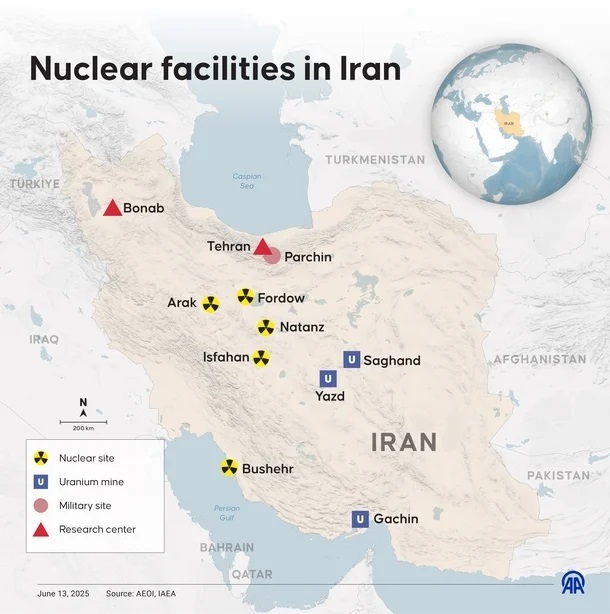
President Donald Trump on Monday said U.S. strikes “totally destroyed” nuclear facilities in Iran and criticized “sleazebags” in the media for suggesting otherwise—but comments from Vice President JD Vance, military officials and nuclear watchdogs all suggest the damage to Iran’s nuclear program remains unconfirmed.
Key Facts
“The sites we hit in Iran were totally destroyed, and everyone knows it,” Trump wrote on Truth Social, disputing “Fake News” he claims “would say anything different in order to try and demean, as much as possible—and even they say they were ‘pretty well destroyed!’”
White House press secretary Karoline Leavitt told ABC on Monday the U.S. is “confident” Iran’s nuclear program was “completely and totally obliterated,” noting there is a “high degree of confidence” the locations the U.S. strikes took place is where Iran stored its enriched uranium and that Iran “no longer [has] the capability … to threaten the world.”
International Atomic Energy Agency chief Rafael Grossi appeared to dispute Trump’s claims in a statement earlier Monday by suggesting the agency would need to verify damage to Iran’s underground Fordow facility, including whether the site’s uranium enrichment halls were impacted, though he noted the U.S. strikes likely caused “very significant” damage.
On Sunday, Defense Secretary Pete Hegseth and Chairman of the Joint Chiefs of Staff Gen. Dan Caine said an assessment on damage to Iran’s nuclear sites was “still pending,” and Caine claimed it was “way too early for me to comment on what may or may not still be there.”
Vance, in an interview with ABC on Sunday, suggested the U.S. strikes only set back Iran’s potential to weaponize its uranium stockpile and said the U.S. was “going to work in the coming weeks to ensure that we do something with that fuel.”
Jeffrey Lewis, a professor of nonproliferation at the Middlebury Institute of International Studies at Monterey, wrote on X he was “unimpressed” by the U.S. strikes while citing satellite images of the attacks, claiming the U.S. “failed to target significant elements of Iran’s nuclear materials and production infrastructure.”
How Large Is Iran’s Uranium Stockpile?
Iran stored about 400 kilograms (about 881 pounds) of uranium enriched to 60%, near weapons-grade enrichment of 90%, according to Grossi. It’s unclear whether Iran’s uranium stockpile is still this large, Grossi noted, adding IAEA’s inspectors last verified Iran’s stockpile a “few days” before Iran’s conflict with Israel began earlier this month.
Could Iran Rebuild Its Uranium Stockpile?
It’s possible Iran could rebuild its nuclear program, but a timeline for development would depend on how much damage was done to Iran’s nuclear sites, according to the Centers for Strategic and International Studies, a U.S.-based think tank. Recent U.S. strikes would make Iran “more motivated than ever” to obtain nuclear weapons, Rosemary Kelanic, a director at the U.S.-based think tank Defense Priorities, told the New York Times. Some American officials estimated an attack on Fordow set back Iran’s nuclear program by as much as five years, the Times reported.
New York Times Gave Green Light to Trump’s Iran Attack by Treating It as a Question of When
Bryce Greene, June 23, 2025, Research assistance: Emma Llano, https://fair.org/home/nyt-gave-green-light-to-trumps-iran-attack-by-treating-it-as-a-question-of-when/
In the wake of the US-supported Israeli attack on Iran, and days before the direct US bombing that followed, the New York Times editorial board (6/18/25) argued that “America Must Not Rush Into a War Against Iran.”
This language was as shifty as it was deliberate. Rather than oppose a policy of unprovoked aggression and mass murder, the Times editorialists suggested such a campaign was happening too hastily, and it should be preceded by more debate.
The opinion writers at the most important paper in the world were fully in favor of attacking Iran; they only worried that Trump would go about it the wrong way. In fact, the Times’ justification for war was identical to that of the Trump administration’s explanation after the fact. It laid it out in the first paragraph:
A nuclear-armed Iran would make the world less safe. It would destabilize the already volatile Middle East. It could imperil Israel’s existence. It would encourage other nations to acquire their own nuclear weapons, with far-reaching geopolitical consequences.
The New York Times‘ echo of the standard Israeli and US propaganda line offers an opportunity to critically examine this most recent justification for aggressive war.
‘Iran is not building a nuclear weapon’
The premise here was that Iran is working to build a nuclear weapon, something that forms the backbone of the Israeli propaganda campaign justifying their actions. The only problem is that there is no evidence whatsoever for this position. Not only is there no evidence that Iran is building a nuclear weapon, there is no reason to think that if they did, they would be anything other than defensive weapons.
Nowhere in the Times analysis was there any reference to the fact that neither US intelligence agencies nor international monitoring organizations have found evidence of any Iranian intention to build a nuclear weapon. As recently as March 25, 2025, Tulsi Gabbard, the Trump administration’s director of national intelligence, told the Senate Select Committee on Intelligence that the US intelligence community “continues to assess that Iran is not building a nuclear weapon and Supreme Leader Khamenei has not authorized the nuclear weapons program that he suspended in 2003.”
While the International Atomic Energy Agency has been critical of steps Iran has taken to make its nuclear power program less transparent in the context of continual threats from Israel and the US to bomb that program, IAEA director Rafael Grossi emphasized in an interview with CNN (6/17/25; cited in Al Jazeera, 6/18/25), after those threats had become reality, “We did not have any proof of a systematic effort to move into a nuclear weapon.”
Unilaterally scrapped
While the Times editorial did make brief mention of the US’s Obama-era anti-nuclear treaty with Iran, it offered no analysis as to why the Trump administration unilaterally scrapped the deal, despite no violation on Iran’s part. Nor did the paper mention the Biden administration refusal to negotiate a return to the deal. There was no mention of the fact that as Israel launched its first strike against Iran, the Iranians had made it clear that they wished to make a deal with the Trump administration on its nuclear energy program, and were actively negotiating toward that end.
But the fact is that every country in the Middle East, including Iran, has been in favor of a nuclear weapons–free Middle East. Every country, that is, with the exception of Israel, whose illegal, undeclared and often unacknowledged stockpile of nuclear weapons are currently in the hands of a genocidal and messianic regime, hell-bent on attacking its neighbors and thwarting any opportunities for peace.
Despite all of the fearmongering about Iran’s alleged aggressive intent and destabilizing potential, the Times ignored ample analysis and evidence to the contrary. As eminent political scientist John Mearsheimer (PBS, 7/9/12) has argued, a nuclear armed Iran could make the region more stable, because of the deterrent power of nuclear weapons.
A 2009 US military–funded study from the RAND corporation (4/14/09) examined Iranian ”press statements, writings in military journals, and other glimpses into Iranian thinking,” and found that it was extremely unlikely that Iran would use nuclear weapons offensively against Israel. Contrary to the Times’ image of Iran as fanatical theocrats bent on Israel’s destruction at all costs, military planners in Iran are well aware of the danger of being wiped off the map by retaliatory US strikes, and plan accordingly. If the Islamic Republic was to get nuclear weapons, predicts RAND, they would be used to deter exactly the kind of unprovoked attack that the US and Israel have launched over the past several days. They would be defensive, not offensive, weapons.
‘A malevolent force in the world’
The editorial board explicitly avoided the question of what Congress should do on the question of war with Iran: “The separate question of whether the United States should join the conflict is not one that we are addressing here.” But they had no problem presenting their pros list:
We know the arguments in favor of doing so—namely, that Iran’s government is a malevolent force in the world, and that it has made substantial progress toward acquiring a nuclear weapon. Last week the International Atomic Energy Agency, which is part of the United Nations, declared that Iran was violating its nonproliferation obligations and apparently hiding evidence of its efforts.
And their cons list:
Given how much weaker Iran is today than it was then, thanks partly to Israel’s humbling of Iranian proxies like Hamas and Hezbollah, the Trump administration might well be able to achieve a stricter [Iran nuclear deal] today.
While the Times correctly pointed out that the IAEA found Iran to be in “noncompliance” with the nonproliferation treaty (NPT), the Times failed to point out that this came after an intense lobbying effort from Western officials just hours before Israeli strikes. They also ignore Iran’s detailed criticism of the IAEA finding, including its allegations that the findings were based in part on forged documents—a credible allegation, given Israel’s history of fabricating and forging evidence to justify aggression. Iran also noted that some of the “nonproliferation obligations” it had allegedly violated were not codified in the NPT, but instead were part of the agreement that the US unilaterally withdrew from. Nor did the Times make reference to the IAEA chief’s explicit insistence that the agency did not have proof Iran was trying to build a nuclear weapon.
‘Let this vital debate begin’
Instead of explaining this, the Times went straight to name-calling. One does not have to scrape the annals of the New York Times to predict that the phrase “malevolent force” has never been used to describe any of Washington’s ultra-violent allies, even the ones who have actually built and maintained an illegal stockpile of nuclear weapons. Certainly not Israel, the nation that has put an entire population under military apartheid for decades, and has slaughtered tens of thousands as part of what international rights organizations have labeled a genocide.
The US and Israel have made Iran the target of propaganda campaigns, terrorism, cyber attacks, assassinations, regime change operations and unprovoked attacks on its personnel and home soil. If the Times had included these facts, it would have inhibited the ultimate goal of the editorial: to promote the idea that war with Iran could potentially be desirable—and certainly justifiable. The Times seemed keen to act as a loyal opposition to Trump, while distancing themselves from the manner in which he might enact such a war.
Including the facts of America’s aggressive and provocative behavior against Iran would force them to conclude that the primary force destabilizing the region is not Iran, but the US and Israel. It isn’t Iran whose top papers are weighing the benefits of whether or not to launch a war of aggression against yet another nation. That honor goes to the New York Times, which said of this national discussion of mass murder policy: “Let this vital debate begin.”
After the strikes on Iran, the Trump administration and Israel have not announced full scale regime change war just yet, though there is every indication that such plans are in the works. As with Iraq in 2003, we have seen how easily false claims of weapons of mass destruction, and propaganda about a need to act, can morph into a years-long quagmire of senseless killing in the name of rebuilding a nation according to Washington’s designs. If such a war should be launched against Iran, the Times will have been one of its key supporters.
From Iran to Everywhere, We Live in Terror of the “Peaceful Atom Apocalypse”
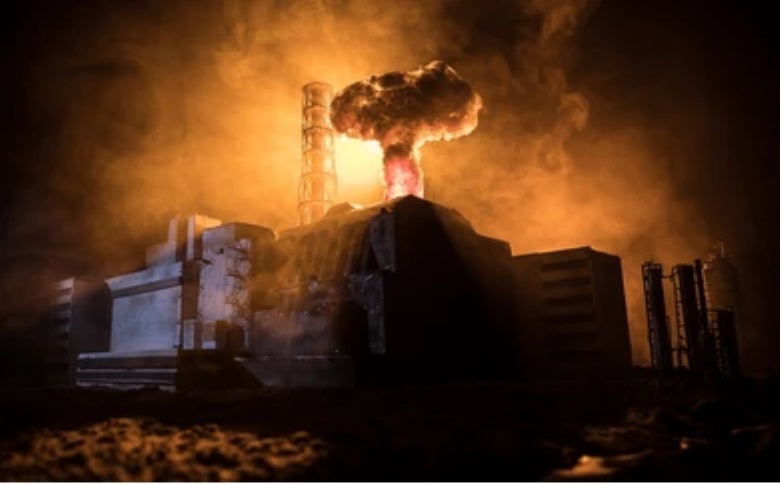
No big city in the US, Europe or Asia is immune to annihilation from the fallout that could be imposed by a single drone, seismic shock or tsunami hitting a single atomic reactor. Millions of downwind humans will die, trillions in economic and ecological damage will threaten the ability of our species to survive on this planet.
Renewables could save a global economy and ecology now death threatened by both atomic warheads and nuclear reactors.
by Harvey “Sluggo” Wasserman, June 22, 2025, https://freepress.org/article/iran-everywhere-we-live-terror-%E2%80%9Cpeaceful-atom-apocalypse%E2%80%9D
Donald Trump has opened the military door to an atomic apocalypse.
But it’s likeliest to come through the “Peaceful Atom Window.”
The 400+ atomic power reactors (94 in the US) now operating worldwide are all sitting ducks for low-tech attack.
Iran or any other nation or terror group, with or without a nuclear warhead, can blow apart any commercial reactor with a single drone.
The resulting apocalypse can be spreading as you read this.
Commercial atomic power makes nuclear warheads ridiculously obsolete. The Trump/Netanyahu attacks on Iran’s alleged bomb factories ae marginal at most to today’s atomic reality.
Once blown apart by a drone, earthquake, tsunami, human error, equipment failure or simple sabotage, any atomic reactor can irradiate a continent, an ocean… the planet as a whole.
All commercial reactors operating in the world today are without comprehensive private insurance.
They are sitting naked ducks…absurdly vulnerable to a simple low-level attack from a single combatant with a drone, mortar, instrument of sabotage.
Fallout from Chernobyl, in 1986, irradiated most of Europe, much of Asia, and was detected all the way across the continental US. Twice.
It killed at least a million humans and cost at least a trillion dollars, probably far more – https://pmc.ncbi.nlm.nih.gov/articles/PMC2974725
Billions of gallons of lethal radioactive liquid still pour into the Pacific Ocean from the 2011 disaster at Fukushima, with no end in sight, and no credible way to gauge the permanent damage to our global ecosystems. But radioactive tuna did turn up within weeks off the coast of California.
Fukushima spewed more than 100X more radioactive cesium into the air than the combined Bombings at Hiroshima & Nagasaki – https://www.whoi.edu/know-your-ocean/ocean-topics/ocean-human-lives/pollution/radiation/fukushima-radiation/faqs-radiation-from-fukushima/#:~:text=Cesium%2D137%20and%20%2D134%20were,direct%20threat%20to%20marine%20life.
If Iran or any other nation, however small, with or without actual atomic weaponry, were serious about inflicting unlimited radioactive damage on a perceived enemy or the planet as a whole, it does not need a warhead or a missile….just a single drone to take down an atomic reactor.
Thus the Trump/Netanyahu attack on Iran’s warhead production is of zero military meaning. It offers the world no respite from the threat of atomic annihilation.
Russia’s Putin has already served many warnings. On February 14, 2025, he crashed a drone into the sarcophagus that covers the still-steaming exploded core at Chernobyl, inflicting millions in damage and threatening the world with another apocalyptic release.
Putin’s mortar shells continue to fly around and about the dozen commercial reactors perched like eggshells in the Ukrainian war zone.
None are protected with multi-billion-dollar shields like the one at Chernobyl. After seventy years in development, no US reactor can get private insurance against a catastrophic disaster.
The two reactors at Diablo Canyon, California, are more than 40 years old. They’re internally embrittled, hopelessly fragile, surrounded by seismic faults, violating state and federal environmental laws, gouging California with the continental US’s highest electric bills. An apocalyptic cloud will inevitably pour down the coast into Los Angeles when the “Big One” turns those reactors into radioactive rubble.
The global insurance industry has de facto pronounced these reactors “UNSAFE!” by refusing to cover liability for a major disaster.
No big city in the US, Europe or Asia is immune to annihilation from the fallout that could be imposed by a single drone, seismic shock or tsunami hitting a single atomic reactor. Millions of downwind humans will die, trillions in economic and ecological damage will threaten the ability of our species to survive on this planet.
Thus the Trump/Netanyahu attack on Iran’s atomic weaponry has in no way made our species safer. On a planet filled with atomic reactors, atomic warheads are an afterthought.
Thankfully, ALL these reactors can be rapidly replaced with solar, wind, geothermal, battery storage, efficiency and other Solartopian technologies that are safer, cheaper, cleaner, more reliable, more job producing and faster to build than anything fossil/nuclear.
They could save a global economy and ecology now death threatened by both atomic warheads and nuclear reactors.
Without eliminating BOTH, our species has no future.
———————————————————————-
Harvey “Sluggo” Wasserman wrote SOLARTOPIA! OUR GREEN-POWERED EARTH, & co-wrote KILLING OUR OWN: THE DISASTER OF AMERICA’S EXPERIENCE WITH ATOMIC RADIATION. Most Mondays he co-convenes the Green Grassroots Emergency Election Protection Coalition Zooms (www.grassrootsep.org)
‘Completely & Totally Obliterated’
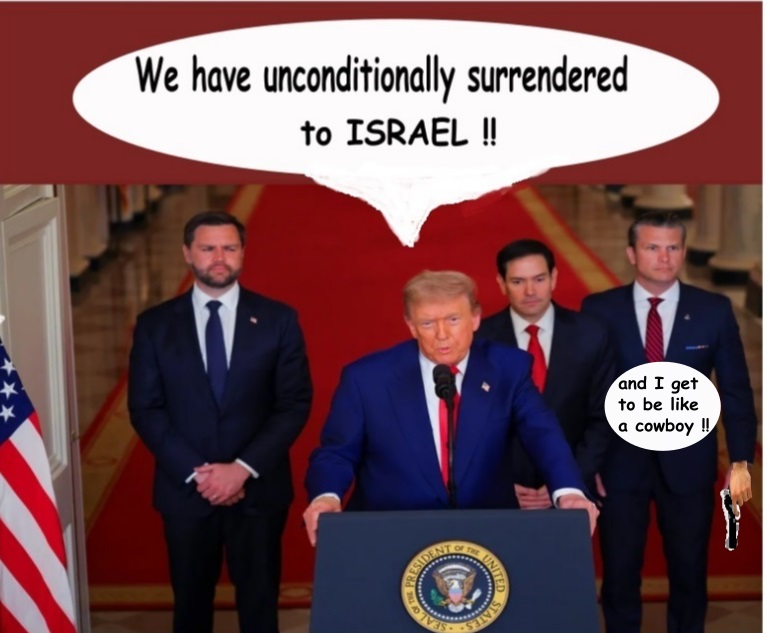
“Iran’s key nuclear enrichment facilities have been completely and totally obliterated,” Trump declared Saturday evening.
It is certainly unclear how “the Jewish state” will take it if Iran’s nuclear program has been damaged but remains extant.
The Iraq invasion and the bombing of Iran are acts of desperation — the conduct of a wounded, uncertain nation that went on the defensive when the Twin Towers went down and history arrived on its shores.
By Patrick Lawrence, Consortium News, 23 June 25, https://consortiumnews.com/2025/06/23/patrick-lawrence-completely-totally-obliterated/
I have heard many unhinged speeches by American presidents over the years, but — no risk of exaggeration here — Donald Trump’s as he declared “a spectacular military success” after seven B–2 bombers attacked three nuclear sites in Iran Saturday night is the barmiest of my lifetime.
“The nuclear threat posed by the world’s No. 1 state sponsor of terror?” “The bully of the Middle East?” There was this by way of a plunge into the crowded precincts of American paranoia:
“They have been killing our people, blowing off their arms, blowing off their legs with roadside bombs. That was their specialty. We lost over a thousand people and hundreds of thousands throughout the Middle East and around the world have died as a direct result of their hate.”
And for the good people out in Peoria, a decisive majority of whom, the polls say, oppose American aggression against the Islamic Republic: “I want to just say, we love you, God, and we love our great military.”
Let me remind readers, as rhetoric this base makes it easy to forget: The speaker of these words is the 47th president of the United States. Yes, the commander-in-chief.
It is difficult to take Trump’s four minutes in front of the microphone late Saturday evening the slightest bit seriously. But we must, precisely because what Trump had to say to his nation was so utterly unserious.
Donald Trump, to put this point another way, turns out to be worse than Donald Trump.
It is natural, for those with some sense of history to compare Trump’s my-God-and-my-military talk with the more craven moments of the McCarthyist 1950s, or with the John Birchers. I say it is more useful to think of that famous remark Karl Rove made during an interview conducted by Ron Suskind a year and seven months after the Bush II regime invaded Iraq.
“Faith, Certainty and the Presidency of George W. Bush” was published in The New York Times Sunday Magazine in October 2004. Suskind identifies Rove, then an adviser to the Bush White House, as “the aide,” but it was soon enough known it was he Suskind had interviewed.
The memorable passage in the Suskind piece is this:
“Guys like me were ‘in what we call the reality-based community,’ which he defined as people who ‘believe that solutions emerge from your judicious study of discernible reality.’ … ‘That’s not the way the world really works anymore,’ he continued. ‘We’re an empire now, and when we act, we create our own reality. And while you’re studying that reality — judiciously, as you will — we’ll act again, creating other new realities, which you can study too, and that’s how things will sort out. We’re history’s actors … and you, all of you, will be left to just study what we do.”
America had by then given Iraqis and the rest of the world a bitter display of what results when a nation purports to conjure realities to its liking. Trump now takes on the same preposterous project, as the ungrounded language cited above indicates.
Bush II failed extravagantly in Iraq, and Trump’s new adventure cannot but come to the same fate.
Creating reality, as if the irreducible foundations of cognition and logic are mere irritants to be set aside, may look like the very zenith of hubristic power. It is not.
The Iraq invasion and the bombing of Iran are to be read as acts of desperation — the conduct of a wounded, uncertain nation that assumed the defensive crouch when the Twin Towers went down in 2001 and history arrived on its shores — history, that process America all along thought was the burden of others.
We must bear this always in mind. Desperation is the mulch wherein recklessness germinates.
“Iran’s key nuclear enrichment facilities have been completely and totally obliterated,” Trump declared Saturday evening. Does this remind you of anything?
Maybe Bush II’s ridiculous appearance, in a bomber jacket no less after landing on board, to declare on an aircraft carrier off San Diego a few days after the Iraq invasion began, “Mission accomplished?” An infamous bit of staging,
We are already well down from “completely and totally.” By Sunday morning the Pentagon was trading in “severe damage,” catch-all vocabulary such that there is no telling what it means.
Casting further doubt on the state of matters, a digital publication called Amwaj.media reported Sunday afternoon that Washington had advised Tehran in advance of its intent to bomb and indicated the limits of its targeting. Citing “a high-ranking Iranian political source,” Amwaj said this source “also confirmed that the targeted sites were evacuated, with ‘most’ of Iran’s stockpile of enriched uranium kept in secure locations.”
Amwaj.media has its head office in Britain and publishes news and comment on West Asia in Arabic, Farsi and English. I cannot verify this report, but I am not at all inclined to discount it. It conforms, certainly, with the Trump regime’s vigorous efforts to stress that it does not seek a full-out war with the Islamic Republic.
“We have no idea where this war will go,” The New York Times declared in the headline atop an opinion piece published in its Sunday editions. “It may appear like a tactical victory less than four hours after the bombs began to fall,” W.J. Hennigan writes, “but projecting any sense of finality about this ordeal is wildly premature.”
This is so by way of facts on the ground, as the expression goes. It is certainly unclear how “the Jewish state” will take it if Iran’s nuclear program has been damaged but remains extant. The Zionist fanatics who started all this seem willing to settle for nothing short of Trump’s “completely and totally.”
But I see finality aplenty when I turn the weekend’s events 180° and consider them from this perspective. Whatever the destruction at Fordow, Isfahan and Natanz by way of the “bunker busters” those B–2s dropped, the damage the Trump regime has done to itself and the nation it pretends to govern is nearly too extravagant to reckon.
Remember “Nous sommes tous Américains,” that celebrated headline atop an editorial Le Monde published shortly after the Sept. 11, 2001, attacks? I did not then think the United States had enjoyed the world’s approval so unreservedly for decades.
The slide began two years later, with Bush II’s wanton, unquestionably illegal invasion of Iraq. The policy cliques could not since have squandered the residual good will of the postwar decades more efficiently had they tried.
It was not a question of trying, of course. It has been a question since 2001 of those planning and executing U.S. policy simply not giving a damn what the rest of the world thinks — or wanting even to know what the rest of the world thinks.
Trump just decisively clarified the point, in my judgment. Nothing other than power matters to the Americans now. If this has been true since 2001, Trump makes clear there is no turning back from this: Power is all the United States has left to give the world — or impose upon it.
“There’s no military in the world that could have done what we did tonight, not even close,” Trump declared triumphantly Saturday night. “There has never been a military that could do what took place just a little while ago.”
What a thing to boast of. So hopelessly out of sync with the 21st century. No, no other military could have done what the American did at the weekend, and no other military would ever be sent on such a mission.
I cannot imagine what some metric of global good will toward America would register now that Trump has led the United States into what looks like another war. If “completely and totally obliterated” were on the dial, the needle would be close.
As widely reported, Trump colluded with the Israelis to deceive Tehran with the suggestion that talks toward a diplomatic settlement of the nuclear question would proceed in Oman two Sundays ago. And as the Iranians prepared for another round of negotiations, Israel launched its attacks the preceding Friday.
Sucker-punching. This now seems part of America’s diplomatic repertoire.
It is hard to believe any American administration would be this craven, but Trump did the same thing again when he stated last week he would take two weeks to give diplomacy a last chance. It was a matter of a few days before the B–2s flew.
When Seymour Hersh predicted this in “What I have been told is coming in Iran,” published in his Substack newsletter last Friday, I confess I thought Sy’s neck was out a touch too far this time. I leave readers to finish the thought.
The Washington policy cliques have been more or less indifferent to statecraft for decades. Diplomacy is for the weak nations, the powerful having no need of it, former U.N. chief Boutros Boutros Ghali wrote insightfully in his memoirs. Trump just burned the bridges diplomats are supposed to build — all of them.
Who — the Russians, the Chinese, the Africans, the Latin Americans, the Europeans, the East Asians, the Indians — who will engage the Americans diplomatically any longer but with deep suspicions, deep reservations, and a profound reluctance to trust? Not to mention a well of contempt.
This is grave far beyond the Iranians, in my view. Contrary to appearances these past 25 years, diplomacy is an essential 21st century technology. B–2s and bunker busters do not seem so to me. High-technology weaponry is deployed at an ever-rising cost.
Incessant breaches of international law, cavalier abuses of the sovereignty of other nations: This will go on for who knows how long. But Trump and his people and the neoconservatives who appear to control them just went some distance destroying all possibility that the U.S. might participate in the making of a new world order.
This matters nil in Washington now, but such an order materializes as we speak, and the day will come when this foreclosed prospect will be up for regret.
I read something else in Trump’s Saturday night speech. To me it was the culmination of weeks of irrationality, a frenzy of it that led — just as the Israelis hoped it would — to senseless attacks with no logical justification.
There seems to me another kind of finality to what Trump just did. He has destroyed — completely and totally, I fear to say — rational thought as the basis of action in the name of what historians of our time will record as a rear-guard defense of raw power.
A late-phase imperium cannot do what Trump just did and then return to sound deliberations, measured policy, sophisticated statecraft. I do not now see a path to any such return.
America has long been — since 2001, again — on the way into an era of unreality, as we may as well call it. Trump just gave the nation a final shove and slammed the door behind it, to put my point another way.
When the bunker busters fell Saturday night the Trump regime created a reality all right. Look at it. Take a hard look. This is essential if some new direction is to be discovered.
Patrick Lawrence, a correspondent abroad for many years, chiefly for the International Herald Tribune, is a columnist, essayist, lecturer and author, most recently of Journalists and Their Shadows, available from Clarity Press or via Amazon. Other books include Time No Longer: Americans After the American Century. His Twitter account, @thefloutist, has been permanently censored.
Chris Hedges: War With Iran

By Chris Hedges / Original to ScheerPost, https://scheerpost.com/2025/06/22/chris-hedges-war-with-iran/
War opens a Pandora’s box of evils that once unleashed are beyond anyone’s control. The warmongers who ordered the strikes by U.S. bombers on Iranian nuclear sites have no more of a plan for what comes next in Iran than they had in Afghanistan, Iraq, Libya or Syria.
European allies, whom Israel and Trump have alienated with these air assaults, are in no mood to cooperate with Washington. The Pentagon, even if it wanted to, does not have the hundreds of thousands of troops it would need to attack and occupy Iran — the only way Iran might be subdued.
And the idea that the marginal and discredited Iranian resistance group Mujahedeen-e-Khalq (MEK), which fought alongside Saddam Hussein in the war against Iran and is viewed by most Iranians as composed of traitors, is a viable counter force to the Iranian government is ludicrous.
In all these equations the 90 million people in Iran are ignored just as the people of Afghanistan, Iraq, Libya and Syria were ignored. They will not welcome the United States and certainly not Israel as liberators. They may hate the regime, but they will resist. They don’t want to be dominated by foreign powers.
A war with Iran will be interpreted throughout the region as a war against Shiism. Soon there will be retaliation. Lots of it. It will come at first with desultory missile strikes and then attacks carried out by elusive enemies on ships, military bases and installations. Steadily it will grow in volume and lethality.
The death toll, including among the some 40,000 soldiers and Marines stationed in the Middle East, will mount. Ships, including aircraft carriers, will be targeted. We will, as we did in Iraq and Afghanistan, begin to lash out with a blind fury, fueling the conflagration we began.
Those who lured us into this war know little about the instrument of war and even less about the cultures or peoples they seek to dominate. Blinded by hubris, believing their own hallucinations, they have learned none of the lessons of the last two decades of warfare in the Middle East. A war with Iran will be a self-defeating and costly quagmire, one more nail in the rotting edifice of the empire.
Nuclear peril

by beyondnuclearinternational, https://beyondnuclearinternational.org/2025/06/23/nuclear-peril/
US and Israeli bombing of Iran’s nuclear facilities set the stage for disaster, writes Linda Pentz Gunter from London
There was widespread if not quite universal condemnation on Sunday after President Trump’s decision to bomb Iran’s nuclear facilities and an immediate call for protests in cities across the United States and other countries. The US attack was launched to support Israel’s determination not to let Iran develop nuclear weapons at its civil nuclear facilities, although presently there is little to no indication that Iran is planning to do so.
“Military action against Iran is not the way to resolve concerns over Tehran’s nuclear programme,” said Melissa Parke, executive director of the Nobel Peace Prize-winning International Campaign to Abolish Nuclear Weapons. “Given that US intelligence agencies assess Iran is not pursuing nuclear weapons, this is a senseless and reckless act that could undermine international efforts to prevent the further proliferation of nuclear weapons.”
Overnight on Saturday and into the early hours of Sunday morning, Trump authorized more than 100 US war planes to bomb Iran and claimed to have “obliterated” Iran’s nuclear program. The Iranians admit damage but not full destruction.
“Operation Midnight Hammer” as it was known, included B-2 bombers that dropped more than a dozen bunker busters on the heavily fortified Fordow uranium enrichment site, believed to be 80 meters below ground. American planes also bombed the Natanz uranium enrichment complex, while Tomahawk missiles were reportedly used to strike the Isfahan uranium conversion facility.
Fordow is believed by western powers to be the location where Iran could be working on producing nuclear weapons. However, the International Atomic Energy Agency had reiterated as recently as a day before this latest attack that “we did not find in Iran elements to indicate that there is an active, systematic plan to build a nuclear weapon,” its general secretary, Rafael Mariano Grossi told Al Jazeera.
Concerns remain about Iran’s only operating civil reactor at Bushehr. Even before the American incursion, Russia, which built and operates Bushehr, had warned the Israelis of the grave risks of another Chornobyl-style disaster should they strike the reactor. Russia had already begun evacuating some of its personnel but threatened to remove more if they were in danger from Israeli bombs. Alexei Likhachev, the CEO of state nuclear company Rosatom said “We are prepared for any scenario, including the rapid evacuation of all our employees.”
But a reactor, even if shut down, cannot be left unattended, raising other grave concerns about its longterm safety during the current war.
A day after the American bombing raid, Israel launched more attacks on Iran, including in Bushehr province. This now means there are two countries actively under attack where civil nuclear power plants are located — Ukraine and Iran. The consequences of a successful bombing raid on a civil nuclear plant could include widespread release of highly harmful and persistent radiation, forcing mass and permanent evacuations and sickening and killing thousands or more in both the near- and long-term.
Even greater concerns have been mounting that US involvement could trigger a wider conflict in the region. As many have pointed out consistently, Israel is a nuclear-armed state, albeit absurdly an undeclared one even though the country likely possesses as many as 200 warheads. Israel refuses UN inspections and has never signed the nuclear Non-Proliferation Treaty. Iran on the other hand is a signatory to the NPT and has long claimed it is exercising its “inalienable right” under that treaty to pursue a civil nuclear weapons program.
Those concerns were further heightened when Christian Zionist US Ambassador to Israel Mike Huckabee urged Trump to consider using a nuclear bomb on Iran, advice Trump fortunately ignored for now. But Trump remains an unpredictable tinder box, illustrating once again the peril of countries continuing to possess nuclear weapons that an unhinged leader might launch on an impulse.
Protests erupted immediately in US cities and elsewhere across the world on the news of the US attack on Iran, which came hours after 350,000 people had marched through London in the latest monthly demonstration against Israel’s attack on Palestine, but this time also calling for halt to its bombing of Iran.
At that rally, there was skepticism that Israel’s attacks on Iran were really just about stopping Iran developing nuclear weapons. Somaye Bagher Zadeh, with Iranians For Palestine UK, said Israel’s actions were potentially about “getting rid of the Iranian regime, but to be frank, regime change by any foreign power is not in the interests of the Iranian people. And it’s entirely up to the Iranian people to decide who rules them.”
“Since they destroyed Iraq, we have known that it was inevitable that they would eventually come for us,” said prominent British-Iranian trade union leader, Maryam Eslamdoust. “We Iranians feel like we have been waiting our whole lives for the US or Israel to attack us.”
Saturday’s mass march in London to Whitehall was followed by an emergency protest called for Monday outside the US Embassy in London by Stop the War Coalition and Campaign for Nuclear Disarmament, alongside other rallies across the country. So far, the UK government has continued to politically support and materially aid and abet Israel’s attacks on Gaza as well as its starvation of the Palestinian population there. A rally was also called by American groups in front of the White House.
British activists are concerned that their government may be drawn back into another disastrous war, similar to the UK’s support of the US in the war in Iraq. That war cost countless lives on all sides and failed to stabilize the Middle East region, instead giving birth to further radicalization.
“Trump’s attack on Iran is brutal, illegal and unjustified,” said a statement from Stop the War Coalition on Sunday. The group said it condemned the US attack on Iran “unequivocally and urges every possible mobilization against British military or political support for the aggression.”
In the US, Senator Chris Van Hollen, a Maryland Democrat, was quick to criticize the bombing raids. “While we all agree that Iran must not have a nuclear weapon, Trump abandoned diplomatic efforts to achieve that goal and instead chose to unnecessarily endanger American lives, further threaten our armed forces in the region, and risk pulling America into another long conflict in the Middle East,” said Van Hollen, who has also spoken out consistently against Israel’s attacks on Gaza. “The U.S. intelligence community has repeatedly assessed that Iran is not building a nuclear weapon. There was more time for diplomacy to work.”
The diplomacy Van Hollen referred to was a resumption of negotiations for a nuclear agreement with Iran that would either limit or eliminate its civil uranium enrichment program. Such an agreement — the Joint Comprehensive Plan of Action, limiting enrichment and allowing for stringent inspections in exchange for a lifting of sanctions — had already been in place until Trump withdrew the US during his previous administration. New talks had been progressing poorly, with Israel chomping at the bit to use military force instead, which it did then initiate with US prior knowledge.
Independent Vermont senator, Bernie Sanders, said “We cannot allow ourselves to be dragged into another Middle East war based on lies,” reflecting on previous such ventures in Vietnam and Iraq based on similar falsehoods.
While most Republicans have lined up behind Trump’s warmongering, one Republican, Representative Thomas Massie of Kentucky, called the attack “not Constitutional.” Earlier in the week, Massie and California Democrat Ro Khanna had introduced a resolution that would have blocked US participation in Israel’s attacks on Iran without Congressional approval.
“This is an extremely dangerous situation,” said a statement from the grassroots movement, Our Revolution, which promotes the campaigning of Sanders on a number of domestic and foreign issues, including Gaza and now Iran. “Trump has immediately threatened even more attacks, and U.S. service members are now directly in harm’s way,” the group said. “We are on the cusp of a catastrophic conflict that could cost countless American and Iranian lives.”
Linda Pentz Gunter is the international specialist at Beyond Nuclear and writes for and edits Beyond Nuclear International. She is currently reporting from London, England.
Iran Fires Missiles at US Base in Qatar
Qatar’s Foreign Ministry said the missiles were intercepted and that there were no casualties
by Dave DeCamp | Jun 23, 2025, https://news.antiwar.com/2025/06/23/iran-fires-missiles-at-us-base-in-qatar/
The Iranian military announced on Monday that it launched an attack on the US’s Al Udeid base in Qatar in response to the US bombing of Iran’s nuclear facilities.
The attack was first reported by Axios reporter Barak Ravid, who cited Israeli sources that said Iran fired at least 10 missiles at the US base. Initial reports said that another missile targeted a US base in Iraq, but US officials later said the attack targeted only a base in Qatar.
“This base is the headquarters of the Air Force and the largest strategic asset of the US terrorist army in the West Asia region,” Iran’s Islamic Revolutionary Guard Corps (IRGC) said of the US base in Qatar.
The IRGC said Iran would not “leave any attack on its territorial integrity, sovereignty, and national security unanswered under any circumstances.”
The Qatari Foreign Ministry issued a statement that said Qatar’s air defenses “successfully thwarted the attack and intercepted the Iranian missiles” and that there were no injuries or deaths caused by the attack.
The reported missile launch comes after Fox News and other outlets said that an Iranian attack on US assets in the region was “imminent” and Qatar announced that it was closing its airspace, signaling the US has at least a few hours’ notice that the barrage was coming.
The New York Times reported that Iran had notified Qatar of its plans to attack in order to minimize casualties, signaling Tehran is seeking de-escalation with the US. In 2020, after the US assassinated Iranian Gen. Qassem Soleimani, Iran launched a similar attack on a US base in Iraq, which the US didn’t respond to.
A White House official told CNN that the US was expecting an Iranian response and claimed President Trump didn’t want more military engagement in the region. “We knew they’d retaliate. They had a similar response after Soleimani,” the official said.
US strikes on Iran’s nuclear sites ‘marks perilous turn’: Diplomacy must prevail, says Guterres
United Nations, 22 June 25
The UN Secretary-General António Guterres told an emergency meeting of the Security Council on Sunday that massive overnight strikes by the United States on Iran’s nuclear facilities only increase the risk of a wider war and “serious damage to the international order.”
After ten days of airstrikes initiated by Israel aimed at crippling Iran’s nuclear programme which have led to deadly daily exchanges of missile fire between Tehran and Tel Aviv, the UN chief said that diplomacy must now prevail.
“We now risk descending into a rathole of retaliation after retaliation,” he said, responding to the US intervention overnight in support of Israel’s military campaign, which targeted three facilities involved in uranium enrichment.
Return to serious negotiations essential
“We must act – immediately and decisively – to halt the fighting and return to serious, sustained negotiations on the Iran nuclear programme,” Mr. Guterres added.
He told ambassadors the citizens of the wider Middle East region could not endure yet another cycle of destruction. Demanding a ceasefire, he also put Iran on notice that it must “fully respect” the Non-Proliferation Treaty on the development of nuclear weapons as a cornerstone of peace and security worldwide.
Iran has consistently denied the allegation from Israel and others that its ambitions are to become a nuclear armed State, versus developing atomic energy for purely peaceful purposes.
Israel, the US and Iran face a stark choice. “One path leads to a wider war,” the UN chief continued, “deeper human suffering and serious damage to the international order. The other leads to de-escalation, diplomacy and dialogue.”……………………
…………………………………………………………………………………https://news.un.org/en/story/2025/06/1164756
Why does the U.S. get to play nuclear cop?
24 June 2025 Michael Taylor, https://theaimn.net/why-does-the-u-s-get-to-play-nuclear-cop/
I’ve always wondered why the U.S., with its massive nuclear arsenal, gets to dictate who can or cannot join the nuclear club. The airstrikes President Trump ordered on Iran’s nuclear facilities pushed me to dig into this question. Spoiler: it’s less about fairness… it’s more about power.
The Unequal Nuclear Order
The U.S. was the first to build the bomb and is one of five “recognised” nuclear powers under the 1968 Nuclear Non-Proliferation Treaty (NPT), alongside Russia, China, France, and the UK. These nations, permanent UN Security Council members with veto power, hold sway over global security rules. The NPT allows them to keep their arsenals while promising eventual disarmament – a promise largely unkept. Non-nuclear signatories agree not to develop weapons in exchange for peaceful nuclear tech, but the deal feels rigged when the “haves” modernise their stockpiles.
The U.S., with roughly 3,708 warheads leads this unequal system. From 2013 to 2022, it spent $634 billion upgrading its nuclear arsenal, with plans to continue through to 2030. Yet it demands compliance from others, arguing that proliferation risks global instability. Fair? Hardly.
Iran and U.S. Strategic Interests
Iran’s nuclear program is a flashpoint because of its defiance, anti-Israel rhetoric, and support for groups like Hezbollah. The U.S. and allies – particularly Israel and Saudi Arabia – see a nuclear-armed Iran as a threat to Middle East power dynamics. U.S. airstrikes on Iran’s nuclear facilities, framed as preventing NPT violations, aimed to delay Tehran’s nuclear ambitions. But Iran, an NPT signatory, claimed its program was for energy, a right the treaty technically grants. It is worth noting that the U.S.’s 2018 withdrawal (under Trump) from the Joint Comprehensive Plan of Action (JCPOA) nuclear deal – ”an agreement to limit the Iranian nuclear program in return for sanctions relief” – undermined diplomacy, pushing Iran toward escalation.
Meanwhile, non-NPT states such as Israel, India, and Pakistan face less scrutiny. Israel’s nuclear arsenal and U.S. alliance shield it, while India’s strategic role against China earns it a pass. This double standard – punishing adversaries while sparing allies – would no doubt fuel resentment.
Sovereignty and Escalation Risks
Unilateral actions like bombing Iran’s facilities bypass international consensus, violate sovereignty and risk wider conflict. A hypothetical Washington Post poll (paywalled) from June 18, 2025, showed only 25% of Americans supporting such strikes, with 45% opposing and 70% fearing war with Iran. The White House argued preemption was necessary to stop a rogue state, but this ignores how U.S. policies, like JCPOA abandonment, escalate tensions.
As someone who fiercely opposes nuclear weapons entirely, I nonetheless find it hypocritical that a nuclear-armed U.S. polices others for seeking the same leverage. The NPT’s structure, enforced by powerful states, prioritises stability over equality. The U.S. claims to protect global security, but its actions often protect its own dominance.
A Path Forward
The nuclear order needs reform. Instead of airstrikes or sanctions, the U.S. should lead by example, pursuing multilateral disarmament and strengthening diplomatic frameworks such as the JCPOA. Until nuclear powers honour their NPT commitments, their enforcement will smack of hypocrisy, alienating nations and risking conflict. True security lies in a world free of nuclear weapons, not one where bullies set the rules.
1 This Month

of the week – Shut Down Drone Warfare!


Tell the Ukrainian Government to Drop Prosecution of Peace Activist Yurii Sheliazhenko

Petition to revoke the licensing of the Near Surface Nuclear Disposal Facility (NSDF) at Chalk River. https://www.ourcommons.ca/petitions/en/Petition/Details?Petition=e-7247
To see nuclear-related stories in greater depth and intensity – go to https://nuclearinformation.wordpress.com
-
Archives
- April 2026 (57)
- March 2026 (251)
- February 2026 (268)
- January 2026 (308)
- December 2025 (358)
- November 2025 (359)
- October 2025 (376)
- September 2025 (257)
- August 2025 (319)
- July 2025 (230)
- June 2025 (348)
- May 2025 (261)
-
Categories
- 1
- 1 NUCLEAR ISSUES
- business and costs
- climate change
- culture and arts
- ENERGY
- environment
- health
- history
- indigenous issues
- Legal
- marketing of nuclear
- media
- opposition to nuclear
- PERSONAL STORIES
- politics
- politics international
- Religion and ethics
- safety
- secrets,lies and civil liberties
- spinbuster
- technology
- Uranium
- wastes
- weapons and war
- Women
- 2 WORLD
- ACTION
- AFRICA
- Atrocities
- AUSTRALIA
- Christina's notes
- Christina's themes
- culture and arts
- Events
- Fuk 2022
- Fuk 2023
- Fukushima 2017
- Fukushima 2018
- fukushima 2019
- Fukushima 2020
- Fukushima 2021
- general
- global warming
- Humour (God we need it)
- Nuclear
- RARE EARTHS
- Reference
- resources – print
- Resources -audiovicual
- Weekly Newsletter
- World
- World Nuclear
- YouTube
-
RSS
Entries RSS
Comments RSS
 nuclear-news