Sizing up Sizewell C
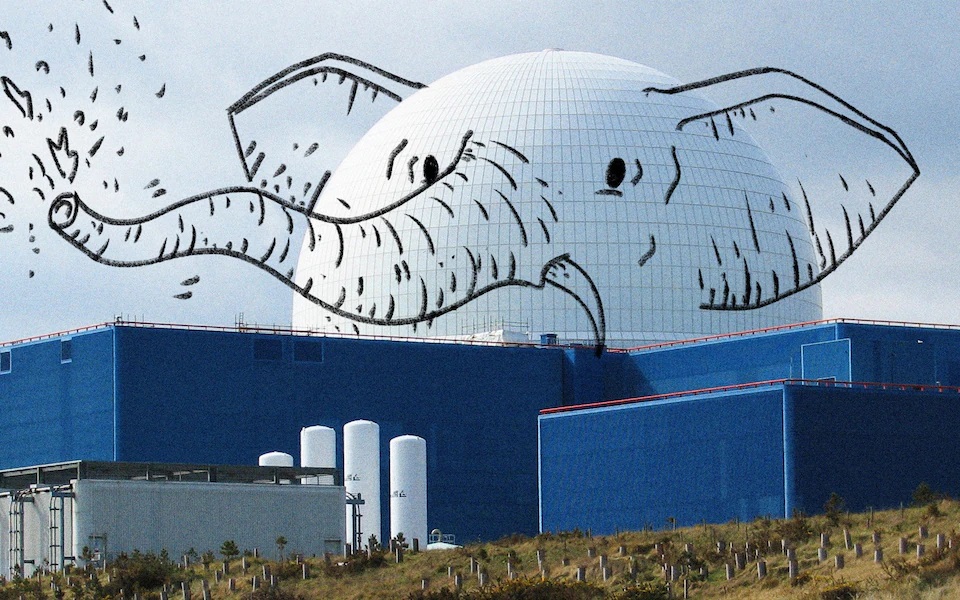
The British approach to nuclear power has been a disaster of nuclear proportion
The Critic Artillery Row By Matthew Kirtley, 19 June, 2025
s part of last week’s spending review, the government announced a further investment of £14.2bn for the Sizewell C nuclear power station. This puts the state’s total commitment into the project at £17.8bn.
Despite the scale of these numbers, the government’s pledges for Sizewell C seem to only cover a minority of the plant’s construction costs. That’s because, per leaks to the FT, Sizewell C’s construction budget is likely to balloon to over £40bn.
Government spokespeople have defended these costs by pointing out that Sizewell C is set to be significantly cheaper than the Hinkley Point C plant — conservatively, using CPI inflation, the latter’s construction costs are set to run up to £46.8bn in 2025 prices. The lessons from Hinkley Point C, which is a virtually identical facility that also uses the European Pressurised Reactor (EPR) architecture, are apparently being realised into cost savings.
However, this does conceal the big point: the EPR plants are both grossly expensive, relative to Britain’s historic plants. Sizewell B, the last new nuclear plant built in Britain, came online in 1995 and cost £2,030mn in 1987 prices — £5.85bn in 2025, using CPI inflation.
Even accounting for the fact that Sizewell B’s nameplate capacity is 1,250MW compared to the 3,260 MW of the two EPRs, the capital costs per MW are far more expensive. The construction costs of the cheaper EPR, Sizewell C, are set to stand at £12.3mn per MW. By comparison, Sizewell B’s construction costs amount to £4.7mn per MW. So even adjusting for inflation and plant size — which should nominally reduce the cost per MW via economies of scale — the EPR reactors are nearly three times more expensive than their predecessors.
So why has nuclear become so much more expensive?
One elephant in the room is the EPR architecture. The system was designed with the ethos of risk minimisation at all costs, employing countless redundancies. Whereas many contemporary pressurised water reactors minimise risk through passive safety systems, EPRs build in countless new pumps and active countermeasures to avert a disaster. The result is an orders of magnitude increase in plant complexity, and thus cost.
However, while there’s much to be said about the faults of EPR, it probably takes a backseat to a more pressing structural problem: the way that Britain funds nuclear projects……………………………………………………….
These heightened costs are felt by consumers — Hinkley Point C’s energy via exceptionally high energy prices through a pre-agreed Contract for Difference (CfD) price, and Sizewell C’s via increased energy bills during construction via a Regulated Asset Base (RAB) price hike. While in the long-run RAB is a better model than CfD for cost-minimisation, both still push up energy prices by forcing consumers to cover the far more expensive private debts of investors………….. https://thecritic.co.uk/sizing-up-sizewell-c/
No comments yet.
1 This Month
10 March A LIVE WEBINAR THE REAL EFFECTS OF NUCLEAR POWER
What the Industry Isn’t Telling Us
1:00 PM Mountain, 2 pm Central, 3 pm Eastern. Live on the Keepers of the Water Facebook page

18 March Webinar @ 1 PM EST: An Assessment of SMR Projects: The Case of Canada
register for the zoom:
https://us02web.zoom.us/webinar/register/WN_o8BIIOUvQ2ONJR1nta65DQ#/registration


of the week – STOP SMALL MODULAR REACTORS IN CANADA
To see nuclear-related stories in greater depth and intensity – go to https://nuclearinformation.wordpress.com
-
Archives
- February 2026 (256)
- January 2026 (308)
- December 2025 (358)
- November 2025 (359)
- October 2025 (376)
- September 2025 (258)
- August 2025 (319)
- July 2025 (230)
- June 2025 (348)
- May 2025 (261)
- April 2025 (305)
- March 2025 (319)
-
Categories
- 1
- 1 NUCLEAR ISSUES
- business and costs
- climate change
- culture and arts
- ENERGY
- environment
- health
- history
- indigenous issues
- Legal
- marketing of nuclear
- media
- opposition to nuclear
- PERSONAL STORIES
- politics
- politics international
- Religion and ethics
- safety
- secrets,lies and civil liberties
- spinbuster
- technology
- Uranium
- wastes
- weapons and war
- Women
- 2 WORLD
- ACTION
- AFRICA
- Atrocities
- AUSTRALIA
- Christina's notes
- Christina's themes
- culture and arts
- Events
- Fuk 2022
- Fuk 2023
- Fukushima 2017
- Fukushima 2018
- fukushima 2019
- Fukushima 2020
- Fukushima 2021
- general
- global warming
- Humour (God we need it)
- Nuclear
- RARE EARTHS
- Reference
- resources – print
- Resources -audiovicual
- Weekly Newsletter
- World
- World Nuclear
- YouTube
-
RSS
Entries RSS
Comments RSS
 nuclear-news
Leave a comment