The prophecy – about Donald Trump.
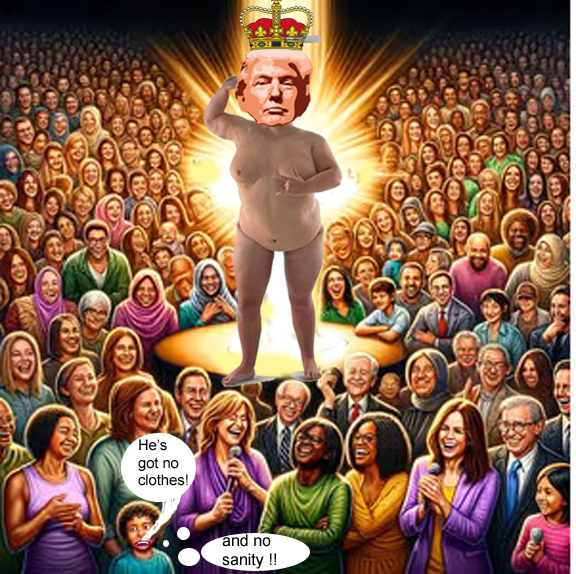
The world is on edge, and Trump’s insatiable hunger for attention could push it over the brink.
a chaos-driven showman, more concerned with headlines than consequences.
Trump’s ‘chaos’ might appeal to his voters but risks catastrophe on a global stage.
18 June 2025 Michael Taylor, https://theaimn.net/the-prophecy/
A chilling warning, attributed to a biographer of Donald Trump, has lingered in the air since his first campaign: “He would start World War 3 just to prove he could.” Whether this quote, possibly heard in a radio segment or buried in an article, came from Michael D’Antonio or another chronicler of Trump’s life, its exact source remains elusive. Yet, as the 47th President, Trump’s recent actions – bluster at the G7, threats against Iran, and a desperate need to recover from a humiliating military parade – make the warning feel prophetic. The world is on edge, and Trump’s insatiable hunger for attention could push it over the brink.
Trump has always been a performer, a man who thrives on the spotlight. Biographers such as D’Antonio, author of Never Enough: Donald Trump and the Pursuit of Success, describe him as a “little boy” unchanged since first grade, craving validation at every turn. Timothy L. O’Brien, in TrumpNation, paints him as a chaos-driven showman, more concerned with headlines than consequences. This portrait aligns with the biographer’s alleged warning: a leader who might ignite a global crisis not for strategy, but for ego. In 2025, as Trump’s second term unfolds, his sabre-rattling suggests a dangerous willingness to test that theory.
The stage was set on June 14, 2025, when Trump’s military parade in Washington, meant to cement his strongman image, collapsed into a national embarrassment. Billed as a nation-building triumph, it drew sparse crowds, dampened by rain and mocked by critics. The White House spun absurd tales of its success, but the stark reality of empty fields left Trump humiliated. A bruised ego is a dangerous thing, and Trump, ever the performer, needed a bigger stage to reclaim his spotlight.
Enter the G7 summit. Still smarting from the parade fiasco, Trump arrived with a chip on his shoulder, ready to take it out on world leaders. The summit, meant to address trade, climate, and Ukraine, became a platform for his grievances – and a warning of how far he might go to prove his dominance.
Trump’s G7 performance was less statesmanship, more spectacle.
Sensing he wasn’t the most popular person in attendance he bailed early on June 16, citing Middle East tensions – specifically, backing Israel’s strikes and warning Iran to “evacuate Tehran.” His exit – though probably welcomed – left the G7 fragmented, with experts warning of a “global economy adrift.” The biographer’s WW3 warning loomed large: a leader who’d rather disrupt than unite, all to prove he’s in charge.
Iran Threats and Global Jitters
Trump’s Iran rhetoric is where the WW3 fears hit fever pitch. His tweeted threat to “evacuate Tehran,” tied to Israel’s escalating strikes, sent oil prices soaring and sparked panic; “We’re closer to a major military confrontation than we’ve been in two decades.” This isn’t just posturing; it’s a high-stakes gamble that could misfire. The 2020 Soleimani strike, which nearly sparked war with Iran, shows Trump’s willingness to roll the dice. The parade flop likely amplified this urge to punch above his weight, as if global brinkmanship could erase domestic embarrassment.
At home, Trump’s actions mirror his global aggression. Executive orders pardoning 1,500 January 6 rioters, blocking asylum-seekers, and designating drug cartels as terrorists signal a strongman act to rally his base. His tweets about military mobilisation in cities such as Los Angeles, Chicago and New York risks weaponising the government against opponents, a domestic echo of his foreign provocations. If Trump’s parade failure pushed him to lash out at allies and Iran, what’s to stop him from escalating further to boost flagging polls? Starting a war might make him look strong.
The Risk of a Performer’s War
Trump’s “madman theory” – projecting unpredictability to keep foes guessing – worked in his first term to an extent, like pressuring North Korea. But in 2025, it’s a tighter rope. His Iran threats could provoke retaliation, especially with US troops on alert. His G7 snub and NATO skepticism weaken collective defence, leaving smaller nations exposed to Russia or China.
Trump’s ‘chaos’ might appeal to his voters but risks catastrophe on a global stage.
The biographer’s warning, even if apocryphal, captures this perfectly. Starting a war “to prove he could” isn’t about policy – it’s about ego. Trump’s parade flop, G7 antics, and Iran threats show a man desperate to reclaim the narrative, no matter the cost. The stakes – trade wars, Ukraine, the Middle East – are too high for a leader driven by applause.
The world is holding its breath. Trump’s actions have spiked tensions, alienated allies, and raised the spectre of conflict. The WW3 quote, whether from a biographer’s pen or a radio quip, haunts 2025. Its exact words may be lost, but its truth endures: a man who craves attention above all else is a dangerous force. From tariff wars to Tehran threats, Trump’s not just playing to the crowd – he’s playing with fire.
The question isn’t whether Trump would start a war to prove he could – it’s whether anyone can stop him.
No comments yet.
1 This Month


Tell the Ukrainian Government to Drop Prosecution of Peace Activist Yurii Sheliazhenko

Petition to revoke the licensing of the Near Surface Nuclear Disposal Facility (NSDF) at Chalk River. https://www.ourcommons.ca/petitions/en/Petition/Details?Petition=e-7247


of the week – STOP SMALL MODULAR REACTORS IN CANADA
To see nuclear-related stories in greater depth and intensity – go to https://nuclearinformation.wordpress.com
-
Archives
- March 2026 (204)
- February 2026 (268)
- January 2026 (308)
- December 2025 (358)
- November 2025 (359)
- October 2025 (376)
- September 2025 (258)
- August 2025 (319)
- July 2025 (230)
- June 2025 (348)
- May 2025 (261)
- April 2025 (305)
-
Categories
- 1
- 1 NUCLEAR ISSUES
- business and costs
- climate change
- culture and arts
- ENERGY
- environment
- health
- history
- indigenous issues
- Legal
- marketing of nuclear
- media
- opposition to nuclear
- PERSONAL STORIES
- politics
- politics international
- Religion and ethics
- safety
- secrets,lies and civil liberties
- spinbuster
- technology
- Uranium
- wastes
- weapons and war
- Women
- 2 WORLD
- ACTION
- AFRICA
- Atrocities
- AUSTRALIA
- Christina's notes
- Christina's themes
- culture and arts
- Events
- Fuk 2022
- Fuk 2023
- Fukushima 2017
- Fukushima 2018
- fukushima 2019
- Fukushima 2020
- Fukushima 2021
- general
- global warming
- Humour (God we need it)
- Nuclear
- RARE EARTHS
- Reference
- resources – print
- Resources -audiovicual
- Weekly Newsletter
- World
- World Nuclear
- YouTube
-
RSS
Entries RSS
Comments RSS
 nuclear-news
Leave a comment