Nuclear power: a dream not worth having
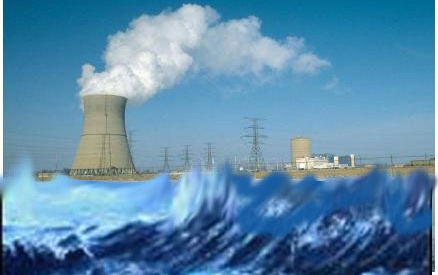
The Government wants more nuclear power stations, but renewable energy is cheaper, safer, and more sustainable.
by Steve Dawe, 7 June 2025, https://westenglandbylines.co.uk/business/energy/nuclear-power-a-dream-not-worth-having/
Labour is committed to building new nuclear power stations on eight coastal sites. Margaret Thatcher was also an enthusiast for nuclear power. She wanted one new nuclear power station built each year in the UK during the 1980s. Only one, Sizewell B, was built. Why? Because it cost too much, as was obvious in 1990:
Mr Illsley: “The Secretary of State must be aware that recent estimates have put the final cost of Sizewell B at about £3.8 bn, taking into account the cost overruns, delays and lack of economies of scale… £2bn can be saved by cancelling the project now. Does the Secretary of State agree that the time to cancel Sizewell B is right now?”
(House of Commons Debates, 25 June 1990).
Renewables are cheaper
Sizewell B did not come online until 1995. The Government admitted in 2020 that renewables can be cheaper than they thought. Given decades of nuclear industry propaganda intended to obscure the deficiencies of this sector, support for nuclear appears less about stating a technology preference than an indirect political statement in favour of nuclear weapons.
We need electricity; we don’t need it to come from nuclear. But successive UK governments have used public money to subsidise the industries involved, instead of using it for things actually sustainable, cost-effective, and with minimal pollution. Keir Starmer has even ignored the nuclear watchdog when he blamed regulations for implementation delays.
The extensive range of reasons to oppose nuclear power
Here is a short list of some of the reasons to oppose new nuclear power stations, and phase out existing ones:
- Nuclear power is too slow to implement to be relevant to the climate emergency. Construction times are an average of 10 years per nuclear power station.
- Nuclear power stations are at risk of terrorist sabotage or attack in war, as has been demonstrated in Ukraine.
There are comprehensive reasons to oppose nuclear power, based partly on the British experience and that of other states recently. These also include:
The radioactive waste that needs storage for at least 100,000 years makes the true costs of nuclear power incalculable.- Part of the reason for this storage is the known health effects of radiation.
- Since major nuclear accidents have continued to occur and spread radioactive material into the environment, preference for other means of generating electricity and for radically improving insulation in buildings to reduce energy needs is unarguable.
- This is especially the case when the water implications are considered: nuclear power stations require water for cooling, on a planet with increasing droughts and extreme weather events. Nuclear power stations using water from watercourses have had to shut down during periods of drought, emphasising the desirability of solar and wind power which do not require water to operate.
- Making it easier to build more nuclear power stations on the eight coastal sites the Government prefers completely ignores the risk of sea level rise discussed below. It is extraordinary that these sites have been chosen.
Hence, to quote from one of the recent critical analyses, new nuclear power is “doomed to fail“. It is certainly prone to extreme weather events such as storms, if the proposed sites are used.
Nuclear power supports nuclear weapons
Most countries in the world do not have nuclear weapons. Today, 120 countries belong to the Non-Aligned Movement, committing themselves not to belong to alliances which perpetuate long-term confrontations between states.
The UK Government admits part of its support for existing and new nuclear power stations is to maintain essential supplies to its nuclear weapons programme. What is true for the UK clearly applies to other states with nuclear weapons.
Since nuclear weapons proliferation is against the general interest of all species on the planet, phasing out both nuclear power and nuclear weapons would be rational when alternatives exist, are becoming cheaper, and are expanding in use year after year.
New nuclear is too expensive to consider
Nuclear power is notoriously expensive. The International Energy Agency reported in 2023 that new solar and on-shore wind are cheaper than fossil fuels. Greenpeace has summarised the current situation, comparing renewables to nuclear, as follows:
“The cost of generating solar power ranges from $36 to $44 per megawatt-hour (MWh), the World Nuclear Industry Status Report said, while onshore wind power comes in at $29–$56 per MWh. Nuclear energy costs between $112 and $189 per MWh. Over the past decade, the World Nuclear Industry Status Report estimates levelised costs… for utility-scale solar have dropped by 88% and for wind by 69%. According to the same report, these costs have increased by 23% for nuclear.”
Worse for the British Government, an authoritative report asserts that the new nuclear power in the UK would actually be the world’s most expensive. Support by political parties in the UK for nuclear power is therefore a choice of the most expensive of options under consideration.
Jonathon Porritt, former head of the Government’s Sustainable Development Commission, has indicated that the cost of Hinkley C and Sizewell C are both likely to rise to about £75bn each. Others have argued that nuclear power may simply not be cost-effective in relation to realistic cost assessments including paying for very long-term radioactive waste storage.
The toxic twins: Hinkley C and Sizewell C
“Hinkley C in Somerset will cost the energy bill payer up to £17.6bn in subsidies. The agreed price of £92.50 per MW/hour is over double the current wholesale price at just over £41 per MW/hour.” (People Against Wylfa-B)
The construction costs were already predicted to rise by a third in early 2024, illustrating the general problem of high-cost infrastructure in the UK. Sizewell C costs were also predicted to double in early 2025.
Nuclear is never ‘clean’
The UK is going ‘all out’ to be a clean energy superpower, said Keir Starmer. But nuclear power has never been a ‘clean’ technology. Essentially, many alleged solutions to the problem of radioactive nuclear waste need to rely on perfect storage for 100,000 years.
This is a conception worthy of science fiction. Uranium mining is known to cause health problems in proximate populations, often to indigenous peoples.
Small modular nuclear reactors – why bother?
The nuclear industry has problems with scaling up to reduce costs. Nuclear power construction and related expense means reduced costs do not materialise.
The small modular reactor (SMR) is allegedly going to change this. However, a US Department of Energy report of September 2024 suggested a cost per megawatt more than 50% higher than for large reactors.
There are only three operating SMRs: one in China, with a 300% cost overrun, and two in Russia, with 400% cost overrun. In March, a Financial Times analysis labelled such small reactors “the most expensive energy source.” Others concur that SMRs are very expensive, and slow to construct, with negative environmental implications.
Sea level rise and nuclear sites
All eight of the Government’s preferred sites for new nuclear power development are coastal. There are concerns about the impact of sea-level rises for all the sites. There should also be concerns about storms increasing in power and frequency too as the climate changes.
Hinkley and Sizewell are already in development. Will an island be created to protect the proposed Sizewell C site from the sea? Does the Government privately think this might be necessary for all eight sites?
The Intergovernmental Panel on Climate Change(IPCC) may have under-estimated sea level rise up to 2100. Scientific papers have been predicting higher sea level rises than the IPCC since at least 2012. It has been suggested that: “All energy-related infrastructure is at risk from the impacts of climate change, especially due to the changing frequency and intensity of surface water and coastal flooding.”
And the rate of sea level rise has been increasing. Very low-lying sites like that of Sizewell C should be abandoned. And back in 1981, the Hinkley Point site was flooded, forcing closure of a nuclear power station there for a week.
Communities with nuclear legacies need alternatives
Communities with declining nuclear industry work would need alternative jobs. This is a general need for all localities experiencing employment transitions.
Each district and unitary council should have its own Green New Deal to promote and directly support just transitions. This would involve re-introducing a version of the Community Programme of the 1980s to employ people in projects and programmes, in cooperation with local voluntary bodies where possible. This should both support existing sustainability initiatives and help introduce new ones.
Training on the job should feature, to provide a better range of local skills appropriate to a just transition in areas like construction, forestry and nature, gardening, agriculture, energy efficiency, installing heat pumps in homes and more.
Just transition or another failure to future-proof the UK?
The colossal financial impact of nuclear power in the past and future in the UK is difficult to calculate, especially when radioactive waste storage is considered. The repercussions of public spending on this technology and its aftermath include inadequate spending on sustainable retrofitting of the existing built environment.
We certainly need electricity. We have never needed it to be specifically from nuclear power. The scale and diversity of energy alternatives are more than enough to meet future needs, including by increasing battery storage to address any potential problems in maintaining baseload supply.
Political will is absent. The long shadow of nuclear power remains in place over the major political parties, at public expense and with zero long-term vision.
1 Comment »
Leave a comment
1 This Month


18 March Webinar @ 1 PM EST: An Assessment of SMR Projects: The Case of Canada
register for the zoom:
https://us02web.zoom.us/webinar/register/WN_o8BIIOUvQ2ONJR1nta65DQ#/registration


of the week – STOP SMALL MODULAR REACTORS IN CANADA
To see nuclear-related stories in greater depth and intensity – go to https://nuclearinformation.wordpress.com
-
Archives
- March 2026 (140)
- February 2026 (268)
- January 2026 (308)
- December 2025 (358)
- November 2025 (359)
- October 2025 (376)
- September 2025 (258)
- August 2025 (319)
- July 2025 (230)
- June 2025 (348)
- May 2025 (261)
- April 2025 (305)
-
Categories
- 1
- 1 NUCLEAR ISSUES
- business and costs
- climate change
- culture and arts
- ENERGY
- environment
- health
- history
- indigenous issues
- Legal
- marketing of nuclear
- media
- opposition to nuclear
- PERSONAL STORIES
- politics
- politics international
- Religion and ethics
- safety
- secrets,lies and civil liberties
- spinbuster
- technology
- Uranium
- wastes
- weapons and war
- Women
- 2 WORLD
- ACTION
- AFRICA
- Atrocities
- AUSTRALIA
- Christina's notes
- Christina's themes
- culture and arts
- Events
- Fuk 2022
- Fuk 2023
- Fukushima 2017
- Fukushima 2018
- fukushima 2019
- Fukushima 2020
- Fukushima 2021
- general
- global warming
- Humour (God we need it)
- Nuclear
- RARE EARTHS
- Reference
- resources – print
- Resources -audiovicual
- Weekly Newsletter
- World
- World Nuclear
- YouTube
-
RSS
Entries RSS
Comments RSS
 nuclear-news
Excellent article that should be widely shared. Thank you!