Nuclear news – but not from the nuclear-military-industrial-media complex
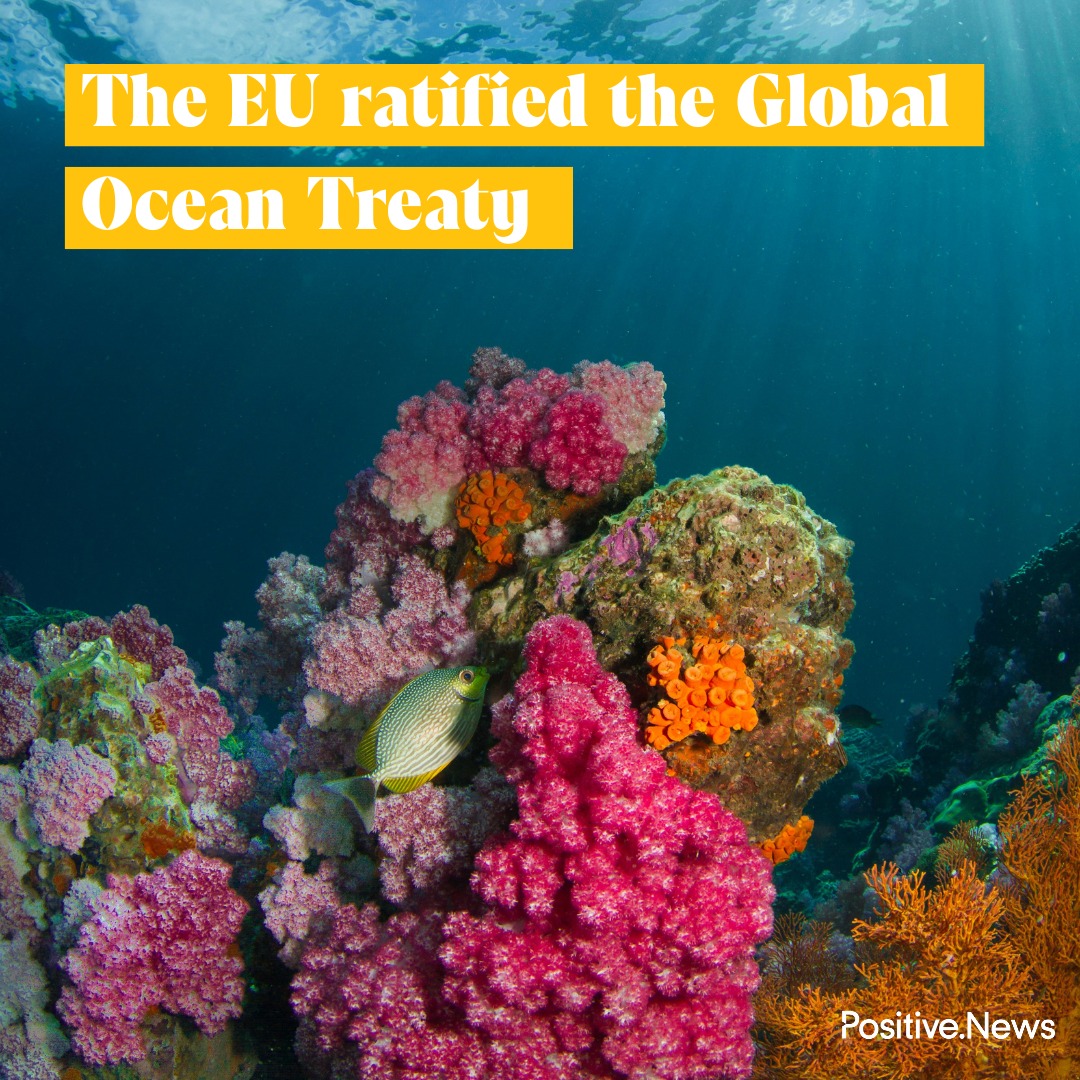
Some bits of good news – Kyrgyz Republic unveils 800,000-hectare ecological corridor for biodiversity. The EU ratified the global ocean treaty Australia’s grid ‘greener than ever’.
TOP STORIES. Legacy of US nuclear weapons tests in the Marshall Islands created global radiation exposure: new study.
US protects Israel as Netanyahu vows to ‘take over’ Gaza, using hunger as as weapon.
Desperation Time in Ukraine End-Game.Putin’s demands for peace include an end to NATO enlargement, sources say – ALSO AT ……..
https://nuclear-news.net/2025/06/02/1-a-putins-demands-for-peace-include-an-end-to-nato-enlargement-sources-say/Revealed: Nato
rearmament could increase emissions by 200m tonnes a year.
Climate. Earth is heading for 2.7°C warming this century- We may avoid the worst climate scenarios – but the outlook is still dire. Almost 40% of world’s glaciers already doomed due to climate crisis – study. World faces new danger of ‘economic denial’ in climate fight, Cop30 head says.
Noel’s notes Time to give up the pretense about Ukraine winning the war. A tale of two dodgy domes.
AUSTRALIA. Marles’ misstep: welcome to the backlash. ‘Fork in the road’: How a failed nuclear plot locked in Australia’s renewable future. Liberals put nuclear power policy to the sword. Turnbull says ‘stupid’ Nationals picking ‘fight over nothing’ as Liberals weigh nuclear.
Albanese ramps up Gaza rhetoric as Zionist narrative erodes.
Nuclear Items
ATROCITIES. Israel’s aid plan for Gaza is a key part of its strategy to expel Palestinians. Extermination as negotiation: Understanding Israel’s strategy in Gaza.
Gaza’s Hospitals ARE The Target.
| ENERGY. Solar puts Australia in fast lane to 100% renewables. |
| ENVIRONMENT. David Lowry: Nuclear power has no role in “clean energy” because it isa very dirty technology! -ALSO AT https://nuclear-news.net/2025/05/29/1-b1-david-lowry-nuclear-power-has-no-role-in-clean-energy-because-it-isa-very-dirty-technology/Davis-Besse Report Reveals Constant Pollution, Flawed Monitoring, and Unending Nuclear Waste. |
| ETHICS and RELIGION. Sorry If This Is Antisemitic But I Think It’s Wrong To Burn Children Alive.Poll: 82% of Israelis want to expel Palestinians from Gaza; 47% want to kill every man, woman, child. Pope Leo XIV Renews Call for Gaza Ceasefire, Laments Israeli Killing of Palestinian Children. |
EVENTS. Veterans Launch 40-Day Fast to Protest Israel’s Starvation of Gaza.
7 June – Sizewell C Outrage Rally.
12 June – Nuclear War: A Scenario – join an online discussion with international best-selling author Annie Jacobsen.
| HEALTH. Ending nuclear weapons, before they end us. |
| HISTORY. The health impact of nuclear tests in French Polynesia – archive, 1981 |
| LEGAL. Enough Is Enough- Israel Is Committing War Crimes- Former Israeli PM. New Israeli Law Allows Palestinians as Young as 12 to Be Imprisoned for Life.Czech Nuclear Power Plant Deal with KHNP Likely Postponed until after October, due to court ruling. |
OPPOSITION to NUCLEAR . Protest against Chalk River nuclear waste disposal project -ALSO AT https://nuclear-news.net/2025/05/30/2-b1-protest-against-chalk-river-nuclear-waste-disposal-project/
Anti-nuclear weapon campaigners picket Plymouth MP’s office ahead of Devonport demonstration.
| POLITICS. Nuclear power is back- Will it work out this time? Labour ministers under pressure as viral video shows broken promises to nuclear veterans. Lincolnshire County Councillors move to pull the plug on nuclear waste site talks. Lincolnshire County Council leader Sean Matthews defends stance on nuclear waste site amid criticism from Tories. Reform leader hits back after Tories saying he’s gone back on nuclear waste site promise. Disappointing but predictable: UK Government minister’s reply on nuke treaty. Trump’s nuclear vision collides with Trump’s actual policies.Trump’s executive orders could endanger America’s nuclear renaissance . |
| POLITICS INTERNATIONAL and DIPLOMACY. How Donald Trump Discovers the Art of Political Negotiation. Trump’s role in provoking Russia’s destruction of Ukraine should not be ignored. Trump warns Netanyahu off Iran strike as nuclear talks continue. Iran rejects IAEA report alleging increased enriched uranium stockpile. Does Tehran want the bomb?Why the US Won’t Be Able to Help Build Taiwan’s Nuclear Future. |
| SAFETY. Rise in nuclear-related incidents deeply worrying. Experts warn Trump’s nuclear blitz could trigger ‘Next Three Mile Island’. ENSURING A MELTDOWN – Trump’s reckless nuclear orders. |
| SECRETS and LIES. How does the nuclear industry get away with its persistent, repetitive lies? France spent €90,000 countering research into impact of Pacific nuclear tests. Watchdog probes Springbank baron over nuclear firm meeting. |
| SPACE. EXPLORATION, WEAPONS. Elon Musk promises more risky launches after sixth Starship failure. SpaceX loses contact with its Starship on 9th test flight after last 2 went down in flames. |
| TECHNOLOGY. Trump’s new ‘gold standard’ rule will destroy American science as we know it. China unveils world’s first AI nuke inspector. |
| WASTES. UK government’s Spending Review needs to allocate nuclear clean-up funds – ALSO AT https://nuclear-news.net/2025/05/31/1-b1-uk-governments-spending-review-needs-to-allocate-nuclear-clean-up-funds/ Dysfunctional: review reveals South Copeland GDF partnership at war. Councillors move to end nuclear waste talks. |
| WAR and CONFLICT. Here’s what they don’t tell you about ‘massive Russian strikes on Ukraine’. Ukraine drone strikes hit nuclear bombers deep inside Russia. Israeli Military Says It Will Occupy 75% of Gaza Within Two Months, ‘Concentrate’ the Civilian Population. US Has 500 Troops in Taiwan in Major Challenge to China. |
| WEAPONS and WEAPONS SALES. The 2026 bill for the Ukraine war is already in the mail. Ukraine ‘can’t afford’ it if US quits conflict – top Zelensky aide. Donald Trump’s Fool’s Gold. Gaza “a Gaping Wound on Humanity:” Spain Convenes Int’l Conference to call for Arms Embargo on Israel. Roads to War: The EU’s Security Action for Europe Fund. Europe’s defence without the U.S.: What does the new cost report say? Britain to buy fighter jets to carry nuclear weapons-ALSO AT https://nuclear-news.net/2025/06/02/1-b1-britain-to-buy-fighter-jets-to-carry-nuclear-weapons/ |
Donald Trump’s Fool’s Gold

“Golden Dome for America is a revolutionary concept to further the goals of peace through strength,” asserts its manufacturer, Lockheed Martin, our first clue that the Golden Dome has nothing whatever to do with peace.
there’s not much use in a Golden Dome unless it’s one hundred percent effective, which it has a one hundred percent probability of not being………….. If just one missile gets through, the level of destruction would be devastating, and the US would then likely retaliate after which all bets are off.
the Golden Dome is merely a deterrent meant to frighten off aggressors. That means we are about to spend $175 billion on something the US would never actually use.
Linda Pentz Gunter, May 30, 2025, https://www.counterpunch.org/2025/05/30/donald-trumps-fools-gold/
Alright, as it turns out, the golden toilet was just a myth. Donald Trump doesn’t have one. But not to fret. President Trump’s private Boeing 757 jet (not the even more lavish one he may shortly be gifted by Qatar) reportedly has gold-plated seat belts. His Trump Tower apartment features a 24-carat gold front door. Inside, there are gold ceilings, golden plant pots and even a gold elevator!
Fancy a visit to Mar-a-Lago? Its imitation Versailles aesthetic has been described as that of an upscale bordello.
Trump’s favorite restaurant is, of course, the Golden Arches, (also known as McDonald’s). And then there’s his lustrous golden tan with the reverse raccoon eyes. We could suggest that Trump’s three trophy wives were all gold diggers, but that wouldn’t be very golden hearted. Remember the golden showers kompromat rumor? Ick, let’s not go there, either.
The wannabe king boasted during his January 20 inaugural address that “The Golden Age of America begins right now.” Six weeks later, during his March 4 Joint Address to Congress, Trump reassured the audience that his Golden Age truly was coming. “Get ready for an incredible future,” he said. “The Golden Age of America has only just begun. It will be like nothing that has ever been seen before.”
That last part was certainly true.Next came Trump’s embarrassingly titled One Big Beautiful Bill Act that would cause almost 14 million Americans to lose health care, 11 million to be deprived of food stamps, and slashes $700 billion from Medicaid and $500 billion from Medicare. This was necessary, insists the Trump junta, because there’s just so much wasteful spending in Washington — except of course the $45 million US taxpayers will spend on Trump’s June 14 he-man vanity project, that will parade tanks on the streets of the capital and fighter jets overhead.
The Big Beautiful Bill was followed a day later with much fanfare — but surprisingly without any actual golden trumpeters — by the signing of Trump’s five executive orders on nuclear power. “President Trump Signs Executive Orders to Usher in a Nuclear Renaissance, Restore Gold Standard Science,” announced the press release that presaged these disastrous directives.
The orders dramatically weaken nuclear regulatory and safety oversight, put new reactor development on an entirely unrealistic timetable, knit the civil and military nuclear sectors firmly back together again and make a major nuclear accident more likely.
They also endeavor to drastically weaken existing and inadequate radiation protection standards that already don’t account for the heightened vulnerability to harm of pregnant women, infants and children.
However, since we are now entering the age of enlightenment, the press release went on to explain: “Gold Standard Science is just that—science that meets the Gold Standard.” Thank you for clearing that up.
All of these dangerous developments have arrived wrapped — or should I say gilded — in a nausea-inducing level of overblown rhetoric that showcases Trump’s obsession with all things gold, both literal and metaphorical.
And now, as if all this golden fleecing of American taxpayers wasn’t enough, we have the Golden Dome for America!
“Golden Dome for America is a revolutionary concept to further the goals of peace through strength,” asserts its manufacturer, Lockheed Martin, our first clue that the Golden Dome has nothing whatever to do with peace. Lockheed Martin is integrally involved in the US nuclear weapons complex, and is a key partner in the development and production of US submarine-launched nuclear ballistic missiles, specifically the Trident II D5, the most lethal destructive force on earth.
The idea of having an invincible missile defense system that could intercept and destroy all missiles targeting the United States, has been around since the 1950s and was developed in various iterations, garnering headlines under the Ronald Reagan administration with the announcement of his Strategic Defense Initiative (SDI), quickly nicknamed “Star Wars” by its detractors.
SDI was highly ambitious, complex, expensive and controversial, and arguably led to the failure of what promised to be a bilateral elimination of nuclear weapons agreed by Reagan and then Russian premier, Mikhail Gorbachev in 1986 when Reagan refused to place limitations on SDI.
“Unexpectedly, the two leaders agreed that they could eliminate ‘all [U.S. and Soviet] nuclear weapons,’ but Gorbachev added the contingency that SDI be confined to the laboratory,” wrote Aaron Bateman for the Arms Control Association in a 2023 article on SDI. “After Reagan refused to accept any limits on SDI, the two leaders departed Reykjavik without a deal in hand.”
By the end of the 20th century, the SDI program had been renamed National Missile Defense (NMD), eventually shifting to a focus on a Ground-Based Midcourse Defense (GMD) system, whose primary task is to defend against incoming long-range ballistic missiles aimed at the US.
As the Union of Concerned Scientists states in the headline to its history of US missile defense, “Since the system’s deployment in 2002, six out of ten test intercepts have failed.”
The Golden Dome is fundamentally another ambitious reboot of SDI. Trump claims he has already settled on what he calls the “architecture”, which makes you wonder if he sees this as some sort of floating palace, a Mar-a-Lago in the sky? When the plan was unveiled in the White House, Defense Secretary, Pete Hegseth, stood by the glittery poster looking for all the world like some sort of game show host.
The Golden Dome price tag is a whopping $175 billion (there’s austerity for you!) and apparently it will all be up and running before Trump’s term is out in January 2029, (assuming Trump willingly leaves office and we still have a democratic election process by then.)
It’s a goal longtime national security and nuclear policy expert, Joe Cirincione, called “insane” in an interview with The Bulletin of the Atomic Scientists, “You probably won’t even get the architecture of the system settled by the end of his administration,” Cirincione said.
Even more insane is that, far from enhancing the safety of the US, the Golden Dome is entirely provocative and, as a nervous China has already warned, will only increase the risks of militarizing space and could even relaunch a global arms race (arguably something that is already underway).
In any case, there’s not much use in a Golden Dome unless it’s one hundred percent effective, which it has a one hundred percent probability of not being. Its predecessor certainly didn’t achieve that and was what Cirincione described as “the longest-running scam in the history of the Department of Defense.”
If just one missile gets through, the level of destruction would be devastating, and the US would then likely retaliate after which all bets are off.
Our current missile defense system, whose earliest iteration was deployed in 1962, has cost at least $531 billion so far according to Stephen Schwartz, a longtime analyst on nuclear weapons costs.
On BlueSky, Schwartz called the Golden Dome project “delusional and reckless. There’s no way to design, test, construct, and deploy a comprehensive system to reliably stop any missiles launched from land, sea, or space, and do it in ‘two-and-a-half to three years’ for $175 billion.”
So far, US missile defense interception attempts (fortunately all tests), have had a success rate that spans a range of 41% to 88% depending on whether you accept an independent analysis, which generates the lower number, or “official” tallies, which produce the higher one. Either way, it’s not 100%.
The Golden Dome, it turns out, is no golden ticket to survival.
But no matter, since, its proponents argue, the Golden Dome is merely a deterrent meant to frighten off aggressors. That means we are about to spend $175 billion on something the US would never actually use.
Trump would do well to take a lesson from Shakespeare’s Prince of Morocco who, in The Merchant of Venice, discovers that “All that glisters is not gold.” Indeed, when he chooses the golden box (of course) over the other less sparkly ones, he learns that what tends to lurk inside such “gilded tombs” are merely “worms.”
Or maybe Trump should just stop talking and heed the most important lesson of all? Silence is golden.
Linda Pentz Gunter is a writer based in Takoma Park, Maryland. She is the international specialist at Beyond Nuclear.
Putin’s demands for peace include an end to NATO enlargement, sources say.
By Guy Faulconbridge, https://www.reuters.com/world/europe/putin-ukraine-peace-wants-pledge-halt-nato-enlargement-sources-say-2025-05-28/
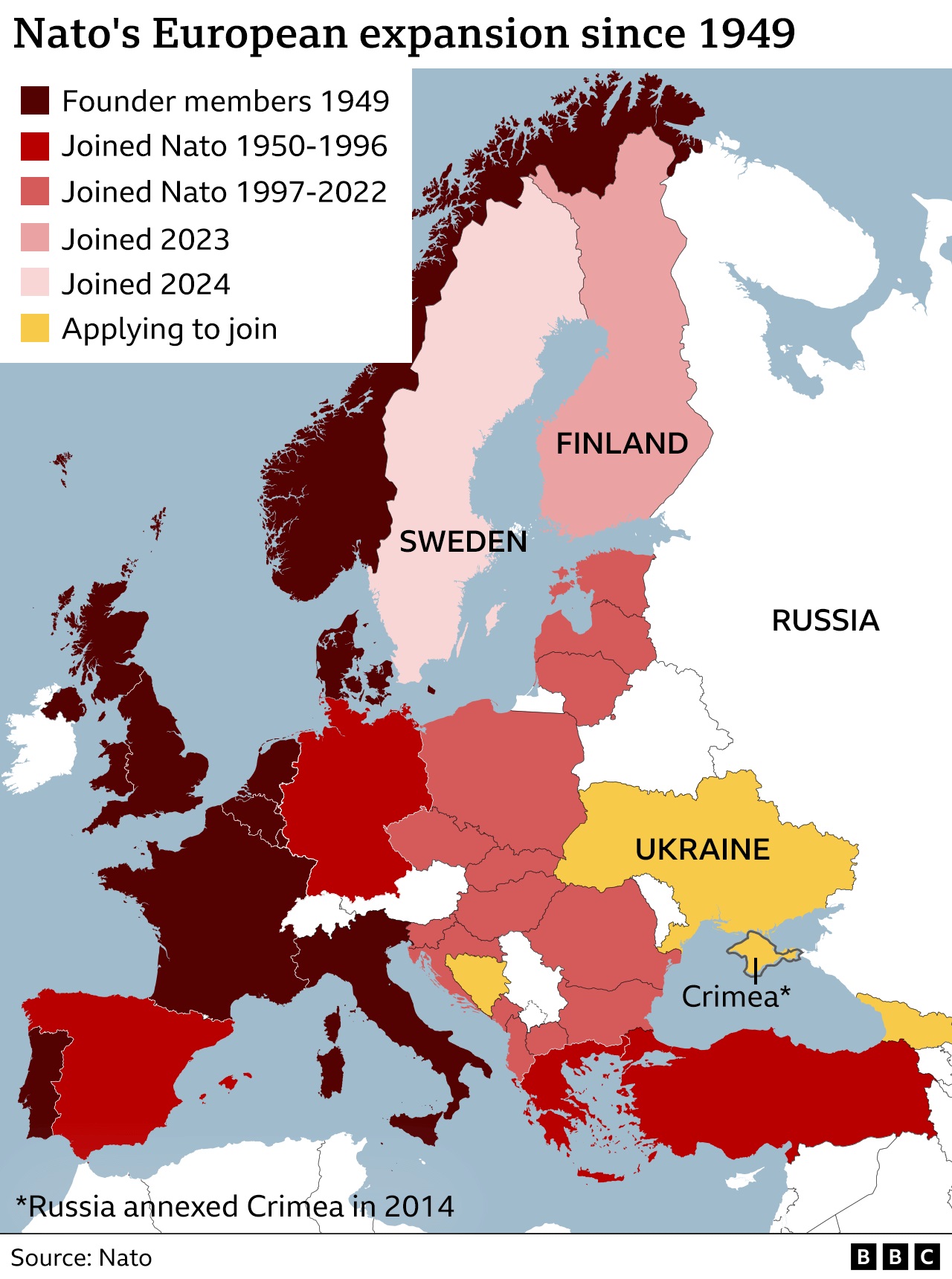
President Vladimir Putin’s conditions for ending the war in Ukraine include a demand that Western leaders pledge in writing to stop enlarging NATO eastwards and lift a chunk of sanctions on Russia, according to three Russian sources with knowledge of the negotiations. U.S. President Donald Trump has repeatedly said he wants to end the deadliest European conflict since World War Two and has shown increasing frustration with Putin in recent days, warning on Tuesday the Russian leader was “playing with fire” by refusing to engage in ceasefire talks with Kyiv as his forces made gains on the battlefield.
After speaking to Trump for more than two hours last week, Putin said that he had agreed to work with Ukraine on a memorandum that would establish the contours of a peace accord, including the timing of a ceasefire. Russia says it is currently drafting its version of the memorandum and cannot estimate how long that will take. Kyiv and European governments have accused Moscow of stalling while its troops advance in eastern Ukraine.
“Putin is ready to make peace but not at any price,” said one senior Russian source with knowledge of top-level Kremlin thinking, who spoke on condition of anonymity. The three Russian sources said Putin wants a “written” pledge by major Western powers not to enlarge the U.S.-led NATO alliance eastwards – shorthand for formally ruling out membership to Ukraine, Georgia and Moldova and other former Soviet republics.
Russia also wants Ukraine to be neutral, some Western sanctions lifted, a resolution of the issue of frozen Russian sovereign assets in the West, and protection for Russian speakers in Ukraine, the three sources said. The first source said that, if Putin realizes he is unable to reach a peace deal on his own terms, he will seek to show the Ukrainians and the Europeans by military victories that “peace tomorrow will be even more painful”. The Kremlin did not respond to a request for comment on Reuters’ reporting.
Putin and Russian officials have repeatedly said any peace deal must address the “root causes” of the conflict – Russian shorthand for the issue of NATO enlargement and Western support for Ukraine. Kyiv has repeatedly said that Russia should not be granted veto power over its aspirations to join the NATO alliance. Ukraine says it needs the West to give it a strong security guarantee with teeth to deter any future Russian attack.
President Volodymyr Zelenskiy’s administration did not respond to a request for comment. NATO has also in the past said that it will not change its “open door” policy just because Moscow demands it. A spokesperson for the 32-member alliance did not respond to Reuters’ questions. Putin ordered tens of thousands of troops into Ukraine in February 2022 after eight years of fighting in eastern Ukraine between Russian-backed separatists and Ukrainian troops. Russia currently controls just under one fifth of the country. Though Russian advances have accelerated over the past year, the war is costing both Russia and Ukraine dearly in terms of casualties and military spending. Reuters reported in January that Putin was growing concerned by the economic distortions in Russia’s wartime economy, amid labour shortages and high interest rates imposed to curb inflation. The price of oil, the bedrock of Russia’s economy, has declined steadily this year.
Trump, who prides himself on having friendly relations with Putin and has expressed his belief the Russian leader wants peace, has warned that Washington could impose further sanctions if Moscow delays efforts to find a settlement. Trump suggesting on social media on Sunday that Putin had “gone absolutely CRAZY” by unleashing a massive aerial attack on Ukraine last week. The first source said that if Putin saw a tactical opportunity on the battlefield, he would push further into Ukraine – and that the Kremlin believed Russia could fight on for years no matter what sanctions and economic pain were imposed by the West.
A second source said that Putin was now less inclined to compromise on territory and was sticking to his public stance that he wanted the entirety of four regions in eastern Ukraine claimed by Russia.
“Putin has toughened his position,” the second source said of the question of territory.
NATO ENLARGEMENT
As Trump and Putin joust in public over the outlook for peace in Ukraine, Reuters could not determine whether the intensification of the war and the toughening of positions heralds determination to reach a deal or the collapse of talks. In June last year, Putin set out his opening terms for an immediate end to the war: Ukraine must drop its NATO ambitions and withdraw all of its troops from the entirety of the territory of four Ukrainian regions claimed and mostly controlled by Russia.
In addition to Crimea, which it annexed in 2014, Russia currently controls almost all of Luhansk, more than 70% of Donetsk, Zaporizhzhia and Kherson regions. It also occupies a sliver of the Kharkiv and Sumy regions, and is threatening Dnipropetrovsk.
Former U.S. President Joe Biden, Western European leaders and Ukraine cast the invasion as an imperial-style land grab and have repeatedly vowed to defeat Russian forces. Putin casts the war as a watershed moment in Moscow’s relations with the West which he says humiliated Russia after the Soviet Union fell in 1991 by enlarging NATO and encroaching on what he considers Moscow’s sphere of influence.
At the 2008 Bucharest summit, NATO leaders agreed that Ukraine and Georgia would one day become members. Ukraine in 2019 amended its constitution committing to the path of full membership of NATO and the European Union.
Trump has said that previousU.S. support for Ukraine’s NATO membershipbid was acause of the war, and has indicated that Ukraine will not get membership. The U.S. State Department did not respond to a request for comment for this story.
Putin, who rose to the top Kremlin job in 1999, has repeatedly returned to the issue of NATO enlargement, including in his most detailed remarks about a possible peace in 2024.
In 2021, just two months before the Russian invasion, Moscow proposed a draft agreement, with NATO members that, under Article 6, would bind NATO to “refrain from any further enlargement of NATO, including the accession of Ukraine as well as other States.” U.S. and NATO diplomats said at the time that Russia could not have a veto on expansion of the alliance. Russia wants a pledge on NATO in writing because Putin thinks Moscow was misled by the United States after the 1989 fall of the Berlin Wall when U.S. Secretary of State James Baker assured Soviet leader Mikhail Gorbachev in 1990 that NATO would not expand eastwards, two of the sources said.
There was such a verbal promise, former Central Intelligence Agency Director Director William J. Burns said in his memoires, but it was never formalised – and it was made at a time when the collapse of the Soviet Union had not occurred.
NATO, founded in 1949 to provide security against the Soviet Union, says it poses no challenge to Russia – though its 2022 assessment of peace and security in the Euro-Atlantic area identified Russia as the most “significant and direct threat”.
Russia’s invasion of Ukraine that year prompted Finland to join NATO in 2023, followed by Sweden in 2024.
Western European leaders have repeatedly said that if Russia wins the Ukraine war, it could one day attack NATO itself – a step that would trigger a world war. Russia dismisses such claims as baseless scaremongering, but has also warned the war in Ukraine could escalate into a broader conflict.
Comment: Putin wants a deal, Trump wants a deal, Zelensky…wants.
Ending nuclear weapons, before they end us

Led by Ireland and New Zealand, in late 2024, the United Nations General Assembly voted overwhelmingly to establish a 21 member independent scientific panel to undertake a new comprehensive study on the effects of nuclear war,12 with its final report due in 2027.
The resolution calls upon UN agencies, including WHO, to support the panel’s work, including by “contributing expertise, commissioned studies, data and papers.”
BMJ 2025; 389 doi: https://doi.org/10.1136/bmj.r881 (Published 13 May 2025)Cite this as: BMJ 2025;389:r88b https://www.bmj.com/content/389/bmj.r881
- Kamran Abbasi, editor in chief1,
- Parveen Ali, editor in chief2,
- Virginia Barbour, editor in chief,
- Marion Birch, editor in chief4,
- Inga Blum, At-large board member5,
- Peter Doherty, 1996 Nobel prize for physiology or medicine,
- Andy Haines, professor of environmental change and public health6,
- Ira Helfand, past president5,
- Richard Horton, editor in chief7,
- Kati Juva, co-president5,
- Jose F Lapena8,
- Jrvice president,
- Robert Mash, editor in chief9,
- Olga Mironova, co-president5,
- Arun Mitra, past president5,
- Carlos Monteiro, editor in chief10,
- Elena N Naumova, editor in chief11,
- David Onazi, co-president5,
- Tilman Ruff, past president5,
- Peush Sahni, editor in chief12,
- James Tumwine, editor in chief13,
- Carlos Umaña, co-president5,
- Paul Yonga, editor in chief14,
- Chris Zielinski, president8
WHO’s mandate to provide evidence on health effects must be restored
In May 2025 the World Health Assembly (WHA) will vote on re-establishing a mandate for the World Health Organization (WHO) to address the health consequences of nuclear weapons and war.1 Health professionals and their associations should urge their governments to support such a mandate and support the new UN comprehensive study on the effects of nuclear war.
The first atomic bomb exploded in the New Mexico desert 80 years ago, in July 1945. Three weeks later, two relatively small (by today’s standards), tactical size nuclear weapons unleashed a cataclysm of radioactive incineration on Hiroshima and Nagasaki. By the end of 1945, about 213 000 people were dead.2 Tens of thousands more have died from late effects of the bombings.
Last December, Nihon Hidankyo, a movement that brings together atomic bomb survivors, was awarded the Nobel peace prize for its “efforts to achieve a world free of nuclear weapons and for demonstrating through witness testimony that nuclear weapons must never be used again.”3 For the Norwegian Nobel committee, the award validated the most fundamental human right: the right to live. The committee warned that the menace of nuclear weapons is now more urgent than ever before. In the words of committee chair, Jørgen Watne Frydnes, “It is naive to believe our civilisation can survive a world order in which global security depends on nuclear weapons. The world is not meant to be a prison in which we await collective annihilation.”4 He noted that our survival depended on keeping intact the “nuclear taboo” (which stigmatises the use of nuclear weapons as morally unacceptable).5
The nuclear taboo gains strength from recognition of compelling evidence of the catastrophic humanitarian consequences of nuclear war, its severe global climatic and famine consequences, and the impossibility of any effective humanitarian response. This evidence contributed significantly to ending the Cold War nuclear arms race.67
While the numbers of nuclear weapons are down to 12 331 now, from their 1986 peak of 70 300,8 this is still equivalent to 146 605 Hiroshima bombs9 and does not mean humanity is any safer.10 Even a fraction of the current arsenal could decimate the biosphere in a severe mass extinction event. The global climate disruption caused by the smoke pouring from cities ignited by just 2% of the current arsenal could result in over two billion people starving.11
A worldwide nuclear arms race is underway. Deployed nuclear weapons are increasing again, and China, India, North Korea, Pakistan, Russia, and UK are all enlarging their arsenals. An estimated 2100 nuclear warheads in France, Russia, UK, US, and, for the first time, in China, are on high alert, ready for launch within minutes.8 With disarmament in reverse, extensive nuclear modernisations underway, multiple arms control treaties abrogated without replacement, no disarmament negotiations in evidence, nuclear armed Russia and Israel engaged in active wars involving repeated nuclear threats, Russia and the US deploying nuclear weapons to additional states, and widespread use of cyberwarfare, the risk of nuclear war is widely assessed to be greater than ever. This year the Doomsday clock was moved the closest to midnight since the clock’s founding in 1947.10
Led by Ireland and New Zealand, in late 2024, the United Nations General Assembly voted overwhelmingly to establish a 21 member independent scientific panel to undertake a new comprehensive study on the effects of nuclear war,12 with its final report due in 2027. Noting that “removing the threat of a nuclear war is the most acute and urgent task of the present day,” the panel has been tasked with examining the physical effects and societal consequences of a nuclear war on a local, regional and planetary scale. It will examine the climatic, environmental, and radiological effects of nuclear war and their impact on public health, global socioeconomic systems, agriculture, and ecosystems.
The resolution calls upon UN agencies, including WHO, to support the panel’s work, including by “contributing expertise, commissioned studies, data and papers.” All UN member states are encouraged to provide relevant information, scientific data, and analyses; facilitate and host panel meetings, including regional meetings; and make budgetary or in-kind contributions. Such an authoritative international assessment of evidence on the most acute existential threat to humankind and planetary health is long overdue. The last such report dates from 1989. It is shameful that France, UK, and Russia opposed this resolution.13
In 1983 and 1987,14 WHO convened an international committee of scientists and health experts to study the health effects of nuclear war. Its landmark, authoritative reports were influential and an excellent example of WHO fulfilling its constitutional mandate “to act as the directing and coordinating authority on international health work.” In 1993, WHO produced an additional shorter report on the health and environmental effects of nuclear weapons, which included discussion of the production chain of nuclear weapons, including processing, testing, and disposal.15
However, despite the WHA having mandated WHO to report periodically on relevant developments, no further work was undertaken, and in 2020 WHO’s mandate on nuclear weapons and health lapsed.
The Marshall Islands, Samoa, and Vanuatu, supported by seven co-sponsoring states and International Physicians for the Prevention of Nuclear War, are working to renew WHO’s mandate. They are seeking wide support for a resolution on the health effects of nuclear weapons/war at this year’s WHA in Geneva on 19-27 May.1 WHO would then re-establish a programme of work on this most critical threat to health and be able to lead strongly in providing the best health evidence to the UN panel.
Health professionals are well aware how crucial accurate and up-to-date evidence is to making good decisions. We and our organisations should support such a renewed mandate by urging our national WHA delegates to vote in support and commit the modest funds needed to re-establish WHO’s work programme, especially now, as the organisation faces severe financial strain with the US decision to withdraw its membership.
Our joint editorial in 202316 on reducing the risks of nuclear war and the role of health professionals, published in over 150 health journals worldwide, urged three immediate steps by nuclear armed states and their allies: adopt a “no first use” policy, take their nuclear weapons off hair trigger alert, and pledge unequivocally that they will not use nuclear weapons in any current conflicts they are involved in. We also urged nuclear armed states to work for a definitive end to the nuclear threat by urgently starting negotiations for a verifiable, timebound agreement to eliminate their nuclear arsenals, and called on all nations to join the Treaty on the Prohibition of Nuclear Weapons.17
It is an alarming failure of leadership that no progress has been made on these needed measures, nor on many other feasible steps away from the brink, acting on the obligation of all states to achieve nuclear disarmament. Nine states jeopardise all humanity and the biosphere by claiming an exclusive right to wield the most destructive and inhumane weapons ever created. The world desperately needs the leaders of these states to freeze their arsenals, end the modernisation and development of new, more dangerous nuclear weapons, and ensure that new technology such as artificial intelligence can never trigger the launch of nuclear weapons.
The UN scientific panel and a renewed mandate for WHO’s work in this area can provide vital authoritative and up-to-date evidence for health and public education, evidence based advocacy and policies, and the mobilised public concern needed to trigger decisive political leadership. This is a core health imperative for all of us.
Revealed: Nato rearmament could increase emissions by 200m tonnes a year

Exclusive: researchers say defence spending boosts across world will worsen climate crisis which in turn will cause more conflict
Damien Gayle 29 May 25, https://www.theguardian.com/environment/2025/may/29/nato-military-spending-could-increase-emissions-study-finds
A global military buildup poses an existential threat to climate goals, according to researchers who say the rearmament planned by Nato alone could increase greenhouse gas emissions by almost 200m tonnes a year.
With the world embroiled in the highest number of armed conflicts since the second world war, countries have embarked on military spending sprees, collectively totalling a record $2.46tn in 2023.
For every dollar invested in new hardware, there is not only a corresponding carbon cost but also an opportunity cost to potential climate action, critics say. This is on top of the huge death toll resulting from armed conflicts.
“There is a real concern around the way that we are prioritising short-term security and sacrificing long-term security,” said Ellie Kinney, a researcher with the Conflict and Environment Observatory and a co-author of the study, shared exclusively with the Guardian.
“Because of this kind of lack-of-informed approach that we’re taking, you’re investing in hard military security now, increasing global emissions for that reason, and worsening the climate crisis further down the line.”
That in turn is only likely to lead to further violence, with climate change itself now increasingly seen as a driver of conflict, albeit indirectly. In Sudan’s Darfur region, conflict was linked to competition over scarce resources after prolonged droughts and desertification. In the Arctic, receding sea ice is leading to tensions over who should control newly accessible oil, gas and critical mineral resources.
Few militaries are transparent about the scale of their fossil fuel use, but researchers have estimated that collectively they are already responsible for 5.5% of global greenhouse gas emissions.
That figure is expected to rise as tensions escalate in a number of regions and as the US, for decades the world’s biggest military spender, indicates that it expects its Nato allies to devote significantly more resources to their armed forces.
According to the Global Peace Index, militarisation increased in 108 countries in 2023. With 92 countries involved in armed conflict, in places ranging from Ukraine and Gaza to South Sudan and DRC, with tensions seething between China and the US over Taiwan, and with the frozen conflict between India and Pakistan flaring, governments fearful of war are investing heavily in their militaries.
In Europe, the increase has been particularly dramatic: between 2021 and 2024, EU states’ weapons spending rose by more than 30%, according to the International Institute for Strategic Studies.
In March, the EU, disconcerted by Donald Trump’s cutting of military aid and diplomatic support for Ukraine, indicated this would go further, with proposals for a further €800bn spend across the bloc outlined in a plan called “ReArm Europe”.
In analysis for the UN Office for Disarmament Affairs, Kinney and colleagues looked at the potential impact of increased militarisation on meeting climate goals. What they found was sobering: the likely increase in emissions from Nato’s remilitarisation alone would be the equivalent of adding the cost of a country as large and populous as Pakistan to the world’s remaining carbon budget.
“Our analysis specifically looks at the impact on sustainable development goal 13, which is climate action – to take urgent action to combat climate change and its impacts,” Kinney said. “And what our analysis finds, looking at the various sub-targets of that … [is] that there is a real threat to global climate action caused by global increase in military spending.”
Of all functions of states, militaries are almost uniquely carbon-intensive. “First of all, with the equipment that they purchase, which is mainly a lot of steel and aluminium, which is very carbon-intensive to produce,” said Lennard de Klerk, of the Initiative on the GHG Accounting of War, another co-author of the study.
“Secondly is during operations, armies are very mobile. And in order to move around they use fossil fuels – that’s diesel for ground operations and kerosene for air operations. Or for maritime operations it’s mainly diesel as well, if they’re not nuclear-driven.”
Given the secrecy that usually surrounds militaries and their operations, it is difficult to know just how much greenhouse gases they are emitting. Only Nato countries report enough of their emissions for scientists to attempt an estimate.
“We took Nato because they are the most transparent in terms of spending. So it’s not that we particularly want to focus on Nato, but simply because they have more data available,” De Klerk said.
The researchers calculated by how much greenhouse gas emissions would increase if Nato countries excluding the US – since it already spends far more than the others – made a two percentage point increase in the share of GDP they devoted to their militaries.
Such an increase is already under way, with many countries in Europe significantly increasing military spending in response to the crisis in Ukraine. Although Nato countries have publicly committed to increasing spending to 2% of GDP, the researchers say the ReArm Europe plan could lead to an eventual rise to 3.5%, from about 1.5% in 2020. The researchers assumed a similar eventual increase in Nato members that are not members of the EU, such as the UK.
Borrowing methodology from a recent paper that argued each percentage point increase in the share of GDP devoted to military spending would lead to an increase in national emissions of between 0.9% and 2%, they estimated that a two percentage point spending shock would lead to an increase across the bloc of between 87 and 194 megatonnes of carbon dioxide equivalent (CO2e) a year.
The researchers say that not only would such a huge increase in emissions supercharge climate breakdown but the increase in global temperatures would hurt the economy. Recent estimates of the social cost of carbon – a monetary indicator of the damage of CO2 emitted – put it at $1,347/tCO2e, suggesting the annual cost of Nato’s military buildup could be as much as $264bn a year.
And that is only a fraction of the true carbon cost of militarisation, Kinney points out. “The calculation in the paper, it’s 31 countries – that only represents 9% of total world emissions. If you consider … the impact of that, there’s a lot of the world that we haven’t taken into consideration of this specific calculation.”
The analysis notes that spending more money on militaries also reduces resources available for policies aimed at mitigating climate change. This already seems to be the case, with the UK, for example, funding its increase in spending by reducing its overseas aid budget – a move mirrored in Belgium, France and the Netherlands.
“This increase in military spending is impacting the kind of core trust that is necessary for multilateralism,” Kinney said. “At Cop29, global south countries like Cuba in particular pointed out the hypocrisy in the room of states being willing to spend increasing amounts on their military spending, but offering … completely, unacceptably low climate finance commitments.”
The Guardian has contacted Nato for comment.
Britain to buy fighter jets to carry nuclear weapons.

Britain wants to purchase fighter jets capable of firing tactical nuclear
weapons, in a major expansion of the deterrent intended to counter the
growing threat posed by Russia. Sir Keir Starmer’s government is in
highly sensitive talks over the move, which would represent the biggest
development in the UK’s deterrent since the Cold War and a recognition
that the world has entered a more dangerous nuclear era.
Times 31st May 2025, https://www.thetimes.com/uk/defence/article/review-fighter-jets-nuclear-weapons-x9vldt0sv
Davis-Besse Report Reveals Constant Pollution, Flawed Monitoring, and Unending Nuclear Waste
Ohio Atomic Press, 30 May 2025
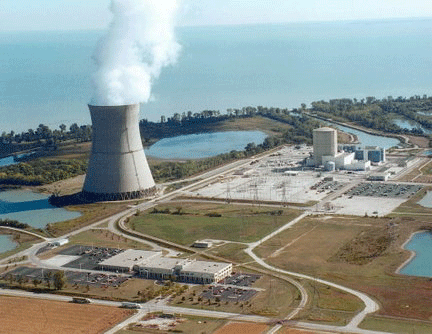
OAK HARBOR, OH – The Davis-Besse Nuclear Power Station’s 2024 Annual Radiological Environmental Operating Report and Radioactive Effluent Release Report, presented as a routine compliance document, is, upon closer inspection, a testament to the inherent contradictions and failures of nuclear power. Far from offering reassurance, a detailed breakdown of its contents reveals a systematic downplaying of risk, consistent operational deficiencies, and an unavoidable legacy of environmental burden.
This analysis dissects the report’s core assertions, exposing the fallacies and highlighting the damning issues that FirstEnergy (now Vistra) attempts to obscure through technical jargon and regulatory compliance claims.
The Fallacy of “Acceptable” Contamination: Routine Radioactive Releases
The report repeatedly emphasizes that radioactive releases are “well below applicable federal regulatory limits.” This is a fundamental fallacy. “Below limits” does not equate to “zero risk” or “no impact.” It merely signifies adherence to arbitrary thresholds set by regulators, thresholds that do not account for the cumulative effects of decades of exposure or the long-term biological impacts of even low-level radiation.
- Continuous Effluents: Davis-Besse admits to the routine discharge of both gaseous and liquid radioactive effluents. Tables 14 (“Gaseous Effluents Summation of All Releases”) and 17 (“Liquid Effluents – Summation of All Releases”) within the report confirm these ongoing releases. The fact that these are planned and continuous highlights that nuclear power is inherently a polluting industry. Every day, radioactive isotopes are deliberately introduced into our air and water, becoming part of the ecosystem and our food chain.
Irreducible Public Dose: Despite claims of minimal impact, the report’s own dose calculations (Tables 21, 22, and 23) confirm that the public does receive a measurable radiation dose from Davis-Besse’s operations. The identification of a critical pathway through a garden just over half a mile from the plant unequivocally demonstrates direct, localized human exposure. To assert that total body doses are “not distinguishable from background” is a deceptive attempt to normalize environmental contamination. Background radiation is not static; it is augmented by every single planned release, contributing to a cumulative burden on local populations.
Operational Failures: A Flawed Monitoring System
The credibility of any environmental report hinges on robust and reliable monitoring. Davis-Besse’s 2024 report exposes a litany of operational failures that directly undermine the accuracy and completeness of its environmental data………………………………………………………………………………………………………………………………………………………………
Damning Legacies: Groundwater Contamination and Unresolved Waste
Beyond the daily operations, the report touches on two long-standing, inherently “damning issues” that underpin the environmental cost of nuclear power: localized contamination and an unresolved waste crisis………………………………………………………………………………………
Conclusion: A Report of Inconvenient Truths
The Davis-Besse Nuclear Power Station’s 2024 environmental report, when subjected to rigorous scrutiny, is not a document of reassurance but rather a catalog of inconvenient truths. It confirms continuous environmental contamination, highlights persistent failures in monitoring and data integrity, and underscores the profound, unresolved challenge of radioactive waste management. For those committed to a truly clean and sustainable energy future, this report serves as a compelling argument against the ongoing fallacy that nuclear power can ever be truly benign………………… https://www.ohioatomicpress.com/nuclear-news/2536207_davis-besse-report-reveals-constant-pollution-flawed-monitoring-and-unending-nuclear-waste?fbclid=IwY2xjawKotsZleHRuA2FlbQIxMQBicmlkETE5N1drbzFkSjRoZXlUOFRXAR7H0k0sGjhgS1_UeBtK8SEEmwdUM4HcqvR03EoYKAtXm8DIiM9FD9ybXiELvA_aem_MWU5pe3_TNSnSMO21fC8OQ
Nuclear power is back. Will it work out this time?

Britain used to lead the world but lost its way over decades of false starts. The planet’s
first small reactors could win us energy independence — at a price. The
energy secretary was very clear about the urgency of the problem. “The
British nuclear power programme has been in decline over the last
decade,” he told the House of Commons. “If we are to reverse this trend
and ensure that the industry is on a sound footing we must act now.”
This would be a very fair summary of Britain’s nuclear industry today. But
these comments were made nearly half a century ago, by David Howell in
December 1979. Fortunately, Howell, a key member of Margaret Thatcher’s
cabinet (and future father-in-law to one George Osborne), had a plan to put
things right. Construction would begin on ten new nuclear power stations in
the decade from 1982 — one a year. “We consider this a reasonable
prospect,” he assured the Commons.
Yet only one of those stations was
ever built: Sizewell B on the Suffolk coast. It was switched on in 1995.
Britain hasn’t completed a station since. This failure is not down to a
lack of ambition. Thirty years after the hubris of Howell, Ed Miliband,
during his first stint as energy secretary, again announced ten new power
stations. When he re-entered the energy department last summer, another 15
years later, construction had started on only one: Hinkley Point C.
On June 11, Milliband will confirm £2.7 billion of funding for Sizewell C, in
Suffolk, where ground preparation has begun. He will also announce a new
generation of small modular reactors (SMRs) — factory-built miniature
nuclear power generators that are seen by many as the future of the sector.
SMRs will cost a fraction of the price and take a fraction of the time to
build, and by the early 2030s will be sending vital power into our homes
… in theory.
Nobody in Britain, or indeed anywhere else, has even built a
prototype SMR. Why, one wonders, is it so fiendishly difficult to build
nuclear power stations in this country? With the sector’s questionable
safety record and such eye-watering costs, to be met through our energy
bills, do we even need new nuclear power? Next week Great British Nuclear
will announce the winner of a competition to build the UK’s first SMRs,
which will also be the world’s first if they get a move on. Four
companies are in the running: GE Hitachi, Rolls-Royce, Holtec and a
restructured Westinghouse.
Times 1st June 2025, https://www.thetimes.com/business-money/energy/article/british-nuclear-energy-what-went-wrong-future-wx2qtxqnd
Trump’s nuclear vision collides with Trump’s actual policies

Some nuclear-watchers are more explicitly worried that the EOs could backfire — specifically, that the Trump administration’s anti-bureaucratic mission of overhauling the Nuclear Regulatory Commission could lead to the kind of disaster that would threaten the fragile new bipartisan consensus around nuclear power.
By DEREK ROBERTSON , 05/28/2025 With help from Gabby Mille, https://www.politico.com/newsletters/digital-future-daily/2025/05/28/trumps-nuclear-vision-collides-with-trumps-actual-policies-00373330
Many of these nuclear boosters have noted — echoing the Secretary of Energy himself, in a hearing last week — that continued nuclear innovation could hinge on Congress continuing to fund the Loan Programs Office, an increasingly high-profile sub-office of the DOE responsible for funding experimental nuclear projects. Thomas Hochman, infrastructure director at the Foundation for American Innovation, in a conversation with POLITICO claimed some momentum for the pro-nuclear cadre’s cause of the moment, saying, “if things go the right way in Congress [the LPO] will continue to have authority.”
With a slate of splashy executive orders Friday, president Donald Trump promised to “usher in a nuclear energy renaissance …providing a path forward for nuclear innovation.”
By streamlining the Nuclear Regulatory Commission, exploring building reactors on federal land and ordering the quadrupling of the U.S.’ nuclear energy capacity, the administration moved to, as Secretary of Energy Chris Wright said in a statement, “unshackle our civil nuclear energy industry and ensure it can meet this critical moment.”
That all should be music to the ears of the burgeoning pro-nuclear revival, which has seen energy and infrastructure wonks across the political spectrum advocate for nuclear energy as a cleaner, scalable alternative to fossil fuels.
But it also raises a question that is becoming familiar in the second Trump administration: How is this all supposed to happen amid Trump’s radical cutbacks to research — to say nothing of government oversight or safety rules?
As with similar administration goals on supercomputing, or innovation, or artificial intelligence, these big promises aren’t happening in a policy vacuum. They’re happening amid an all-fronts rollback of America’s massive research and regulation infrastructure. Even some of those cheering the nuclear EOs are worried that Trump’s bone-deep cuts to the federal government could doom the nuclear revival before it kicks off.
The Nuclear Innovation Alliance, a nonprofit cheerleader for advanced nuclear reactor development, took the moment to urge GOP-controlled Washington to “adequately resource and staff DOE to meet this moment.” President and CEO Judi Greenwald wrote in a statement that Trump’s cuts — actual and proposed — at the Department of Energy “undermine the Department’s efforts and make it harder to implement these executive orders.”
The progressive pro-nuclear Breakthrough Institute, in its own response to the EOs, enumerated the new staffing levels it would require just to license new plants, and worried that the EOs focused on regulatory overhaul “threaten to reduce the NRC’s workforce, independence, and resources.”
Many of these nuclear boosters have noted — echoing the Secretary of Energy himself, in a hearing last week — that continued nuclear innovation could hinge on Congress continuing to fund the Loan Programs Office, an increasingly high-profile sub-office of the DOE responsible for funding experimental nuclear projects. Thomas Hochman, infrastructure director at the Foundation for American Innovation, in a conversation with POLITICO claimed some momentum for the pro-nuclear cadre’s cause of the moment, saying, “if things go the right way in Congress [the LPO] will continue to have authority.”
Some nuclear-watchers are more explicitly worried that the EOs could backfire — specifically, that the Trump administration’s anti-bureaucratic mission of overhauling the Nuclear Regulatory Commission could lead to the kind of disaster that would threaten the fragile new bipartisan consensus around nuclear power.
In an op-ed for The Hill published this morning, the Carnegie Endowment for International Peace’s Toby Dalton and Ariel Levite argued that the ADVANCE Act, passed in 2024, has already gone a long way toward overhauling licensing processes for new reactors and that the Trump administration risks gilding the lily.
“What Americans need is confidence that any nuclear power plant built and operated in the U.S. is safe, secure and ultimately beneficial to American and host community prosperity,” Dalton and Levite wrote, while concluding “the net result of these executive orders, coupled with the additional impact of other administration actions to reform governmental regulatory processes to align with White House policies, is to risk public trust in nuclear energy.”
The nuclear revival has largely been inspired by the massive thirst for energy that cutting-edge technologies carry with them, from enormous AI data centers to semiconductor manufacturing to even cryptocurrency mining. Nuclear is an attractive, relatively clean option for solving these problems, with an attractive retrofuturist sheen to boot.
It’s always been a risky bet, though, given its unique safety concerns and steep costs — and that was in the pre-Trump days of relative policy stability. As even its allies have pointed out, the Trump administration’s lurching, unpredictable approach — taking big, sometimes contradictory swings at issues of “American greatness” — could backfire in a major way, especially when public safety is a factor.
But with so much wind at their sails, and relatively few bipartisan, technocratic wins to be had in the early Trump era, nuclear supporters are still willing to be cautiously optimistic.
“I don’t think any of that stuff is sort of like, you know, so complex as to be unachievable,” Hochman said. “The worst possible outcome is just that nothing really gets done.”
Elon Musk promises more risky launches after sixth Starship failure
Sara Webb, Lecturer, Centre for Astrophysics and Supercomputing, Swinburne University of Technology May 30, 2025, https://theconversation.com/elon-musk-promises-more-risky-launches-after-sixth-starship-failure-257726?utm_medium=email&utm_campaign=The%20Weekender%2031%20May%202025&utm_content=The%20Weekender%2031%20May%202025+CID_582867a545e37e29eece86475cd84bb4&utm_source=campaign_monitor&utm_term=Elon%20Musk%20promises%20more%20risky%20launches%20after%20sixth%20Starship%20failure
What goes up must come down, and earlier this week yet another of SpaceX’s Starships, the biggest and most powerful type of rocket ever built, came back down to Earth in spectacular fashion. In the sky above the Indian Ocean, it exploded.
This was the ninth test flight for the rocket, and the third catastrophic failure in a row, just this year.
Is this what we should expect from the very ship some are counting on to take humans further than we’ve ever been in the solar system? Or does this failure point to deeper concerns within the broader program?
A decade of development
The Starship program from Elon Musk’s space technology company, SpaceX, has been in development for more than a decade now and has undergone many iterations in its overall design and goals.
The Starship concept is based upon the SpaceX Raptor engines to be used in a multistage system. In a multistage rocket system, there are often two or three separate blocks with their own engine and fuel reserves. These are particularly important for leaving Earth’s orbit and travelling to the Moon, Mars and beyond.
With Starship, the key factor is the ability to land and reuse vast amounts of the rocket stages again and again. The company’s Falcon 9 vehicles, which used this model, were fantastically successful.
Initial tests of Starship began in 2018 with two low-altitude flights showing early success. Subsequent flights have faced numerous challenges with now four complete failures, two partial failures and three successes overall.
Just two days ago, during the latest failed attempt, I watched alongside more than 200 other space industry experts at the Australian Space Summit in Sydney. Broadcast live on a giant screen, the launch generated an excited buzz – which soon turned to reserved murmurs.
Of course, designing and launching rockets is hard, and failures are to be expected. However, a third catastrophic failure within six months demands a pause for reflection.
On this particular test flight, as Starship positioned itself for atmospheric re-entry, one of its 13 engines failed to ignite. Shortly after, a booster appeared to explode, leading to a complete loss of control. The rocket ultimately broke apart over the Indian Ocean, which tonnes of debris will now call home.
Polluting Earth in pursuit of space
We don’t know the exact financial cost of each test flight. But Musk has previously said it is about US$50–100 million.
The exact environmental cost of the Starship program – and its repeated failures – is even harder to quantify.
For example, a failed test flight in 2023 left the town of Port Isabel, Texas, which is located beside the launch site, shaking and covered in a thick cloud of dirt. Debris from the exploded rocket smashed cars. Residents told the New York Times they were terrified. They also had to clean up the mess from the flight.
Then, in September 2024, SpaceX was fined by the US Environmental Protection Agency and the Texas Commission on Environmental Quality for 14 separate incidents since 2022 where the launch facilities discharged polluted water into Texas waterways. Musk denied these claims.
That same month, the US Federal Aviation Administration (FAA) proposed a fine of US$633,009 in civil penalties should be issued to SpaceX. This was on the grounds of using an unapproved launch control room and other violations during 2023. Musk denied these claims too and threatened to countersue the FAA for “regulatory overreach”.
It’s unclear if this suit was ever filed.
Two other failed launches in January and March this year also rained rocket debris over the Caribbean, and disrupted hundreds of commercial flights, including 80 which needed to be diverted and more than 400 requiring delayed takeoff to ensure they were entering safe air space.
Success of different space programs
Until last year, the FAA allowed SpaceX to try up to five Starship launches a year. This month, the figure was increased to 25.
A lot can go wrong during a launch of a vehicle to space. And there is a long way to go until we can properly judge whether Starship successfully meets its mission goals.
We can, however, look at past programs to understand typical success rates seen across different rocketry programs.
The Saturn V rocket, the workhorse of the Apollo era, had a total of 13 launches, with only one partial failure. It underwent three full ground tests before flight.
SpaceX’s own Falcon 9 rocket, has had more than 478 successful launches, only two in flight failures, one partial failure and one pre-flight destruction.
The Antares rocket, by Orbital Sciences Corporation (later Orbital ATK and Northrop Grumman) launched a total of 18 times, with one failure.
The Soyuz rocket, originally a Soviet expendable carrier rocket designed in the 1960s, launched a total of 32 times, with two failures.
No sign of caution
Of course, we can’t fairly compare all other rockets with the Starship. Its goals are certainly novel as a reusable heavy-class rocket.
But this latest failure does raise some questions. Will the Starship program ever see success – and if so when? And what are the limits of our tolerance as a society to the pollution of Earth in the pursuit of the goal to space?
For a rocketry program that’s moving so fast, developing novel and complex technology, and experiencing several repeated failures, many people might expect caution from now on. Musk, however, has other plans.
Shortly after the most recent Starship failure, he announced on X (formerly Twitter), that the next test flights would occur at a faster pace: one every three to four weeks.
China unveils world’s first AI nuke inspector
China creates artificial intelligence system to oversee nuclear warhead detection despite concerns it could leak tech secrets
China creates artificial
intelligence system to oversee nuclear warhead detection despite concerns
it could leak tech secrets. Chinese scientists have developed an artificial
intelligence system that can distinguish real nuclear warheads from decoys,
marking the world’s first AI-driven solution for arms control
verification. The technology, disclosed in a peer-reviewed paper published
in April by researchers with the China Institute of Atomic Energy (CIAE),
could bolster Beijing’s stance in stalled international disarmament talks
while fuelling debate on the role of AI in managing weapons of mass
destruction.
South China Morning Post 30th May 2025, https://www.scmp.com/news/china/science/article/3312270/china-unveils-worlds-first-ai-nuke-inspector
Anti-nuclear weapon campaigners picket Plymouth MP’s office ahead of Devonport demonstration
Anti-nuclear weapon campaigners picketed the office of a Plymouth MP ahead
of a Devonport demonstration. The Campaign for Nuclear Disarmament (CND) is
calling on people to say “no to Britain’s weapons of mass destruction”.
The group held a protest outside the constituency base of Armed Forces
Minister Luke Pollard MP this week over the issue and said it has requested
a meeting with him. It came ahead of a national demonstration opposing
Britain’s nuclear weapons which is planned for Devonport Dockyard on
Saturday, June 7. Devonport is the focus of the campaign in Plymouth
because it is where the Ministry of Defence (MoD), operates, berths, and
maintains nuclear powered submarines and warships. The Devonport Site
covers the land owned by the MoD and Devonport Royal Dockyard Ltd (DRDL),
operated by Babcock.
Plymouth Herald 30th May 2025, https://www.plymouthherald.co.uk/news/plymouth-news/gallery/anti-nuclear-weapon-campaigners-picket-10226906
Labour ministers under pressure as viral video shows broken promises to nuclear veterans.
A video showing Labour ministers promising compensation to nuclear veterans has gone viral, putting the government under pressure to keep its word.
Susie Boniface Reporter, Mirror UK, 30 May 2025
Pressure is growing on the Labour government to keep its years of promises to nuclear veterans, after a social media video went viral.
It includes clips of Deputy Prime Minister Angela Rayner, Defence Secretary John Healey and Armed Forces Minister Luke Pollard all insisting that when in power they would offer full recognition to Britain’s most mistreated heroes.
More than a million people have now seen the video, compiled by social justice campaigner Peter Stefanovic. He is calling on Prime Minister Keir Starmer to sit down with the families affected by involvement with Cold War nuclear weapons tests.
In Opposition and the shadow cabinet, the three gave unscripted and unasked-for offers of compensation, saying “there was no good reason” not to and it was “really dumb” of the Tories not to have done it already. Mr Starmer himself told them: “The country owes you a huge debt of honour. Your campaign is our campaign.” Yet after almost a year in power, nothing has changed.
Mr Stefanovic said: “Despite expressing his “gratitude” to the veterans in opposition, after becoming PM, Keir Starmer has made no public comment on the nuclear blood test programme, and 10 months since Labour came to power, there is no compensation scheme, no recognition, beyond a commemorative medal which was authorised by the Tories.
“A ‘thorough’ review of the archives promised to Parliament by Mr Healey has been given no budget with which to find answers. Our nuclear test veterans – national heroes to whom this country owes a huge debt of honour and gratitude, most of whom are now in their eighties and with chronic ill health – are calling on the PM to meet with them and honour the commitment which his party to them in opposition… it’s the very least the veterans deserve.”
The pledges were all made before evidence emerged in November 2022 of the Nuked Blood Scandal, a secret biological monitoring programme on troops involving blood tests, urinalysis and chest x-rays to determine whether radiation had entered their bodies. The MoD had long denied such a programme existed, but a three-year investigation by the Mirror has uncovered thousands of pages of evidence hidden on a secret database at the Atomic Weapons Establishment.
Discovery of the cover-up has led to a civil lawsuit, a police complaint, and a decision to declassify the entire historic archive. After it featured in a BBC documentary, a review was launched but six months on ministers have refused to reveal any findings, and admitted it has no deadline.
The video shows Ms Rayner addressing a conference of the forgotten Cold War heroes in 2022, telling them: “Myself and my Labour colleagues are calling on the Secretary of State for Defence to…. liaise with the Treasury to set up an appropriate financial compensation programme for veterans and their descendants, as America, France, China, Russia, Fiji and the Isle of Man have done.”………………………………………………. https://www.mirror.co.uk/news/politics/labour-ministers-under-pressure-viral-35314341
Lincolnshire County Councillors move to pull the plug on nuclear waste site talks
Councillors have moved to pull the plug on talks to bury nuclear waste in
open countryside near the coast. Members of Lincolnshire County Council’s
Overview and Scrutiny Management Board have recommended the council’s
Executive withdraw from a community partnership it joined with Nuclear
Waste Services (NWS) in 2021, ending Lincolnshire’s involvement in the
Geological Disposal Facility (GDF) siting process.
Lincolnshire Live 30th May 2025, https://www.lincolnshirelive.co.uk/news/lincoln-news/lincolnshire-county-councillors-move-pull-10225069
Solar puts Australia in fast lane to 100% renewables
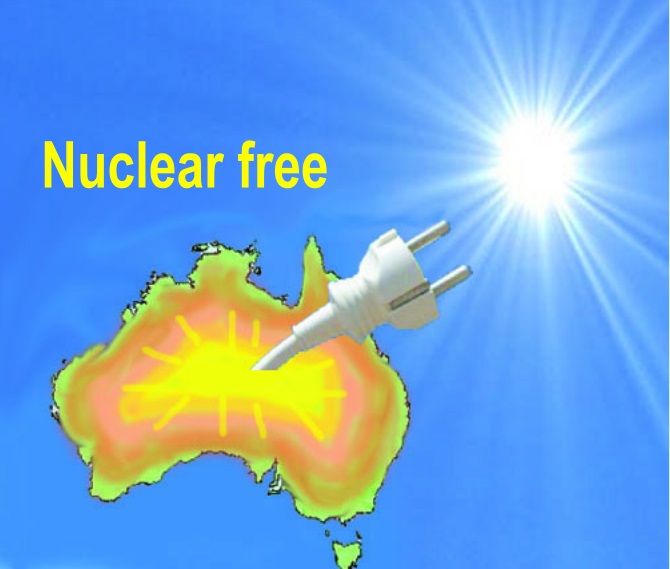
A massive increase in solar power generation capacity is already putting Australia on the fast track to a 100% renewable energy future.
An academic living in cold Canberra retired his gas heaters a few years
ago and installed electric heat pumps for space and water heating. His gas
bill went to zero. He also bought an electric vehicle, so his gas bill went
to zero. He installed rooftop solar panels that export enough solar
electricity to the grid to pay for electricity imports at night, so his
electricity bill also went to zero. That Canberra academic will get his
money back from these energy investments in about eight years. I am that
academic and I’m experiencing how rooftop solar coupled with
electrification of everything provides the cheapest domestic energy in
history. Solar energy is also causing the fastest energy change in history.
Along with support from wind energy, it offers unlimited, cheap, clean and
reliable energy forever. With energy storage effectively a problem solved,
the required raw materials impossible to exhaust – despite some
misconceptions in the community – and an Australian transition gathering
pace, solar and wind are becoming a superhighway to a future of 100%
renewable energy.
PV Magazine 29th May 2025 https://www.pv-magazine.com/2025/05/29/solar-puts-australia-in-fast-lane-to-100-renewables/
1 This Month

Petition to revoke the licensing of the Near Surface Nuclear Disposal Facility (NSDF) at Chalk River. https://www.ourcommons.ca/petitions/en/Petition/Details?Petition=e-7247


of the week – STOP SMALL MODULAR REACTORS IN CANADA
To see nuclear-related stories in greater depth and intensity – go to https://nuclearinformation.wordpress.com
-
Archives
- March 2026 (153)
- February 2026 (268)
- January 2026 (308)
- December 2025 (358)
- November 2025 (359)
- October 2025 (376)
- September 2025 (258)
- August 2025 (319)
- July 2025 (230)
- June 2025 (348)
- May 2025 (261)
- April 2025 (305)
-
Categories
- 1
- 1 NUCLEAR ISSUES
- business and costs
- climate change
- culture and arts
- ENERGY
- environment
- health
- history
- indigenous issues
- Legal
- marketing of nuclear
- media
- opposition to nuclear
- PERSONAL STORIES
- politics
- politics international
- Religion and ethics
- safety
- secrets,lies and civil liberties
- spinbuster
- technology
- Uranium
- wastes
- weapons and war
- Women
- 2 WORLD
- ACTION
- AFRICA
- Atrocities
- AUSTRALIA
- Christina's notes
- Christina's themes
- culture and arts
- Events
- Fuk 2022
- Fuk 2023
- Fukushima 2017
- Fukushima 2018
- fukushima 2019
- Fukushima 2020
- Fukushima 2021
- general
- global warming
- Humour (God we need it)
- Nuclear
- RARE EARTHS
- Reference
- resources – print
- Resources -audiovicual
- Weekly Newsletter
- World
- World Nuclear
- YouTube
-
RSS
Entries RSS
Comments RSS
 nuclear-news