Atomic bombs destroyed their lives – now they want Russia to pay
“People living around the test site “became unwitting test subjects, and their lives were treated with casual disregard due to racism and ignorance,”
“It was a crime of negligence, whereby secrecy, control, and the acquisition of more powerful nuclear weapons were prioritised over the lives of local people.”
Amid calls to restart nuclear testing, families are still suffering from mutations passed down through the generations
Arthur Scott-Geddes. Simon Townsley Photographer, in Semey, Telegraph, 21 May 2025
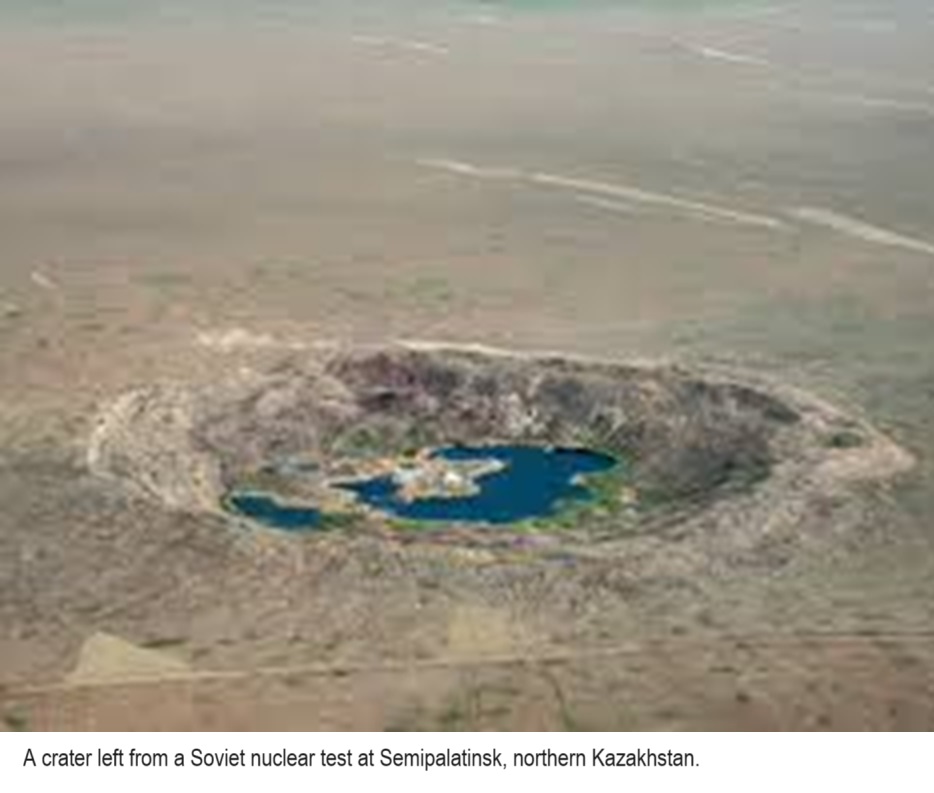
The Geiger counter came to life as we trudged toward the lip of the crater, its clicks becoming frantic before giving way to an alarm.
“This is the Atomic Lake,” said the hazmat-suited guide, throwing out his arms against the wind to encompass the circular expanse of water below. “Don’t get too close to the edge.”
Sixty years ago a nuclear bomb ten times more powerful than the one that destroyed Hiroshima exploded at the bottom of a 178-metre shaft in this remote (but not unpopulated) corner of Kazakhstan.
The blast excavated a basin a quarter of a mile wide and several hundred feet deep, sending up a plume of pulverised rock and radioactive material that was detected as far away as Japan.
It was not a one off. The hydrogen bomb was one of 456 nuclear weapons detonated by the Soviet Union at the Semipalatinsk Test Site, a 7,000 square mile swathe of steppe known as the Polygon.
The tests started in 1949 and continued right up until 1989 and the fall of the Berlin wall. They account for a quarter of all the nuclear explosions in history, creating an ongoing health crisis of a scale and nature that is hard to fathom.
The Kazakh authorities estimate that one-and-a-half million people living in nearby cities, towns and villages were exposed to the residual fallout.
The region has elevated rates of cancer, heart disease, birth defects and fertility problems – all linked to the tests. Suicides are common and the area’s graveyards are filled with people who died young.
But as well as sickening those who were directly exposed, the fallout has worked its way into the population’s DNA, leading to mutations that have been passed down through the generations.
‘There were so many children born with different mutations’
Almost everyone who grew up in Semey, a city of about 350,000 that lies only 75 miles from the Polygon, was affected in some way by the testing programme.
Olga Petrovskaya, the 78-year-old chair of Generation, a campaign group founded in 1999 to petition the government for greater support for the victims of the tests, remembers explosions shaking the city.
“We would be taken out of the classroom because they were worried about the windows shattering,” she said. “But nobody would explain why it was happening.”
White dust would sometimes fall on the city, causing sores to form on exposed skin. It was not long before people started dying.
“When we were six years old, at nursery school, there was a girl who died of leukaemia,” she said. “And then at [primary] school our classmates were also dying of cancerous diseases.
“Cancer became a very common diagnosis – there is no family that hasn’t been affected by it – and there were so many children born with different mutations.”
Ms Petrovskaya lost her brother, her aunt and her in-laws to cancer in the 1960s. She herself suffered numerous miscarriages and still has debilitating headaches and dizzy spells that she believes are linked to the radiation.
Her group of activists has dwindled as its members succumbed to their illnesses. There are now only a handful of them left.
The Soviet testing programme has been frequently criticised for its recklessness.
For instance, the first test of a two-stage hydrogen bomb created a blast much more powerful than anticipated, causing a building to collapse and killing a young girl in Kurchatov, the closed-off city 40 miles away where the tests were directed from
But the scientists and military personnel responsible understood the risks inherent in what they were doing. Modelling has shown that people who lived through all 456 tests received doses of radiation up to 120 times greater than survivors of the Hiroshima bombing.
“The Soviet authorities were absolutely not ignorant of the dangers of nuclear weapons testing,” said Dr Becky Alexis-Martin, a Lecturer in Peace, Science, and Technology at the University of Bradford.
“The tests occurred long after the Hiroshima and Nagasaki bombings, and records from the time reveal that the scientists involved in the Polygon tests had expert understandings of the impacts of ionising radiation on health.”
People living around the test site “became unwitting test subjects, and their lives were treated with casual disregard due to racism and ignorance,” added Dr Alexis-Martin
“It was a crime of negligence, whereby secrecy, control, and the acquisition of more powerful nuclear weapons were prioritised over the lives of local people.”
There is a growing body of evidence showing that radiation-induced mutations can be passed down multiple generations.
In 2002, an international study of 20 families living around the Semipalatinsk test site showed that exposure to fallout nearly doubled the risk of inherited gene mutations.
“Genetic consequences manifest in many different ways and any gene can be affected by radioactive exposure. Some gene changes are invisible beyond our DNA – but others can have harmful and intergenerational impacts,” said Dr Alexis-Martin.5
“We often think of birth defects when we think of radiation exposure, but hereditary heart conditions, blindness, and deafness can also arise.”
Today many Kazakh families still bear the marks of the tests several generations after the explosions stopped.
‘I will not live much longer’
Read more: Atomic bombs destroyed their lives – now they want Russia to pay
Asel Oshakbayeva was born in 1997, eight years after the last atomic detonation at the Polygon.
Yet she soon began to have seizures, and at the age of three months suffered a brain haemorrhage that left her blind and unable to speak, move or eat.
“She was in a coma, she couldn’t see anything,” said her mother, Sandugush.
The family sold their home and two cars to fund experimental surgical treatment in Russia that, after 14 operations, repaired damage to her optic nerve, partly restored her speech and made it possible for her to eat again.
But she remains totally dependent on her mother, and the pair left Semey and now live cheek-by-jowl with five other relatives in a small flat in Astana, the capital.
Sandugush, like her parents before her, was exposed to high levels of radiation while living near the Polygon.
In total, three generations of her family have now been officially recognised as victims of the testing, including her daughter. Her husband died of cancer 10 years ago, and she herself has a host of unusual health complaints.
“I will not live much longer,” she said, gesturing to her side where surgeons removed cancerous tumours from her breast and lymph nodes.
She now worries who will look after her daughter in the future. “She has the mind of a ten-year-old. If I die, what will happen?”
Despite the high prevalence of disability in the communities affected by the Polygon, a stigma around the children born with deformities persists.
Maira Zhumageldina, 56, lived for a time in the area of maximum radiation risk and gave birth to her daughter Zhannur in 1992.
Zhannur’s ribcage, spine and limbs never properly formed, leaving her permanently disabled – unable to walk, talk or feed herself.
When the extent of Zhannur’s disability became clear, Ms Zhumageldina came under pressure to give her up, even from her own family.
“When I had Zhannur about 13 or 14 children were born with different kinds of disabilities, so some were abandoned and some died at early ages,” she said.
“My parents-in-law said: ‘Why don’t you leave her?’ But I said ‘this is my child’ I could never leave her.”
A well-thumbed album of photographs documents the 28 years that Ms Zhumageldina devoted to caring for her daughter.
She trained as a massage therapist to ease her pain, and took her to Astana for specialised treatment……………………………………………………………………………………………………………………
‘The slow genocide’
……people whose families have been torn apart by the tests accuse the government of a “genocide” by inaction.
Reluctant to cough up the cash to properly support the hundreds of thousands of people sickened by the radiation and unwilling to press Russia for help in fear of provoking a diplomatic row, the government, they say, is simply waiting for them to die.
………Most of the fallout came their way – the Soviet scientists in Kurchatov made sure not to detonate any weapons while the wind was blowing towards them.
Hardly anyone here lives to retirement age, and cancer and birth defects are common.
“It’s a genocide,” said Acen Kusayenuli, 59, a veteran of the war in Afghanistan who recently had a portion of his lung removed after being diagnosed with cancer. He cannot afford chemotherapy so instead chews herbs to fight the disease.
“We were just like mice,” he said. “Why else would they not relocate the people and animals? They wanted to see how we would be affected.”
Even the landscape has suffered……..
the villagers, always kept in the dark about what was going on, bore the burden of death with a strange stoicism common to many parts of the former Soviet Union.
“We just accepted that whoever gets sick, gets sick,” she said……………………..
“The nuclear weapons tests were undertaken in the knowledge that the local ethnic Kazakhs could be harmed or even gradually eradicated,” said Dr Alexis-Martin.
“The lack of impetus and action across the decades by successive Soviet, Russian, and Kazakhstan governments and the global community amounts to ‘slow genocide’ – this arises when an ethnic or cultural group is gradually and systematically destroyed due to cumulative and sustained harm over time.”
Seventy-five miles further down the road is the village of Kaynar, which sits in the shadow of a rock formation overlooking the test site. Older residents remember climbing to the top to watch the explosions. ……………………………………………………………
Dr Saule Isakhanova, the head doctor of the Abralinski Regional Hospital which looks after around 2,100 people in Kaynar and the surrounding villages, said nearly half of her patients had health problems linked to the tests.
Her husband, the former mayor, was one of those who used to go out into the steppe to collect grass. He now has bowel cancer.
She said the effects of the tests could continue to harm people living in the area for a long time.
“Research shows that particles of these elements can remain in the dust for 300,000 years,” she said, referring to the radionuclides released by the bombs. “Those particles, once you breathe them in, they get into your bones.”
While much of the research attention has so far focused on rates of cancer and birth defects, little has been done to understand the prevalence of developmental disorders among children affected by the tests.
……………………………………………………..Dr Talgat Moldagaliyev, the former Director of the Institute of Radiation Medicine and Oncology in Semey, said more work is needed to understand the effects the tests are continuing to have.
“It’s a living experimental zone, but not enough research has been done.”
‘It should never happen again’
Most of the victims of the Polygon only learned the truth about what had been happening to them after the Soviet Union collapsed and Kazakhstan gained independence.
That moment gave rise to Kazakhstan’s first civil society movement, which connected survivors of the Polygon tests with communities affected by American nuclear testing in Nevada.
Over 35 years since the last nuclear explosion at the Polygon, there is a renewed push to win justice for those affected by the radiation.
Maira Abenova, the founder of Committee Polygon 21, an advocacy group representing the victims, lost her mother, brother, sister and husband to diseases related to the Polygon and now suspects she has cancer herself.
She wants the world to recognise that the suffering did not end with the closure of the test site.
“Currently the law recognises as a survivor of the nuclear tests only those people who lived in four regions around the Polygon from 1949 to 1991,” she said, referring to a law brought in in 1992 which gave people who qualified a “radiation passport” certifying their exposure to the radiation.
Those given the small, beige documents, which bear a blue mushroom cloud stamp on the cover, receive a small amount of compensation and other benefits including longer holidays.
While older survivors of the tests say the system worked at first, many of the families The Telegraph spoke to, particularly those in the hard-hit villages, said it was difficult to get official recognition for their children.
Rising medical costs far outstrip benefits worth around $40 a month and moving away from the villages, even to seek better medical care, disqualifies survivors from support.
Ms Abenova has been petitioning government agencies, who are more interested in collaborating with Russia on nuclear energy and turning the test site into a dark tourism destination, to take action on a grander scale.
“You cannot solve the problem just by paying small additional payments, you have to upgrade the economy in the region,” she said.
United Nations resolutions and the sustainable development goals (SDGs) should also be used to improve the lives of those living in the areas affected by the tests, and a new law is needed “which recognises all the survivors,” she said.
Committee Polygon 21 was among several Kazakh civil society groups to appeal to the UN in New York urging global action on justice for the testing victims.
After Vladimir Putin, the Russian President, withdrew his country’s ratification of the global treaty banning nuclear weapons tests, and with advisers of Donald Trump urging him to restart US testing, Ms Abenova hopes her work will also energise calls for disarmament.
“Kazakhstan suffered from nuclear tests […] Our people should use this opportunity to appeal to other countries that it should never happen again,” she said.
Meanwhile, how safe it is to live in the area around the Polygon remains unclear.
The site itself has been picked over by scavengers looking for – often highly irradiated – scrap metals.
Some 116 bombs were detonated in the atmosphere, but 340 exploded underground, and a secretive joint US-Russian-Kazakh cleanup programme to secure fissile material and even bomb components left behind by the Soviets in tunnels and shafts was only made public after it ended in 2012.
Those living nearby still do not know if their food and water is safe.
……………………..https://www.telegraph.co.uk/global-health/terror-and-security/soviet-union-nuclear-testing-atomic-bomb-kazakhstan/
The nuclear divide: Why are women cautious of nuclear energy?
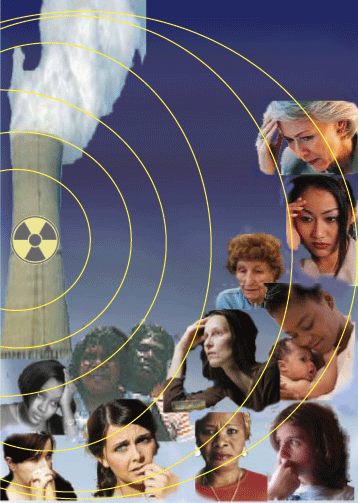
Women are consistently more skeptical than men, and not just marginally so. The gender divide is greater for nuclear technology than for any other energy source.
Their concerns are justified. Studies show women are twice as likely to develop radiation-related cancers, yet safety regulations often rely on the so-called “Reference Man” standard, ignoring biological differences.
by Emma Fackenthall, May 19, 2025, https://nbmediacoop.org/2025/05/19/the-nuclear-divide-why-are-women-cautious-of-nuclear-energy/
As many countries scramble toward a net-zero future, some are betting on nuclear energy to reach their goal. However, a quiet but profound gender divide is growing around nuclear energy.
While nuclear power is often hailed as a critical tool in the climate fight, a growing body of research suggests that fewer women than men support nuclear power. This divide can be explained by safety concerns, ecofeminist ethics of care, and the nuclear industry’s macho culture.
The striking gender divide is another reason to question the viability of nuclear energy to attain climate justice and energy democracy.
Despite the foundational contributions of female scientists to the nuclear field (think Marie Curie, Lise Meitner, and Chien-Shiung Wu) the industry is currently male-dominated. According to a recent international report, women make up only 25 per cent of the nuclear workforce. Among new hires, 28.8 per cent are women, reflecting slow progress. Of that, a mere 18.5 per cent hold leadership roles.
Meanwhile, public opinion surveys spanning 20 countries show a persistent gender difference in support for nuclear energy. Women are consistently more skeptical than men, and not just marginally so. The gender divide is greater for nuclear technology than for any other energy source. Women cite safety risks and the potential to delay the rollout of renewable energy as primary reasons for their lack of support for nuclear energy.
Their concerns are justified. Studies show women are twice as likely to develop radiation-related cancers, yet safety regulations often rely on the so-called “Reference Man” standard, ignoring biological differences. Initiatives like the Gender and Radiation Impact Project are now working to redefine safety metrics using the “Reference Girl,” highlighting the systemic underrepresentation of women in regulatory science.
Indeed, more and more attention is being placed on the lack of female representation in science and society. Books like Unwell Women, Invisible Women, and Feminist City recount these enduring systemic misrepresentations.
The nuclear industry has noted the low female support. A 2023 report by the Nuclear Energy Agency declared the gender gap an “existential challenge” for achieving climate targets. One of its key recommendations? Attract more women through targeted communication campaigns.
The response has been… complicated. Enter the “nukefluencers”: social media-savvy women – many of them models and beauty queens – paid by the nuclear industry to tout the supposed benefits of nuclear power on Instagram and TikTok.

Posts often blend lifestyle content with pro-nuclear messaging, echoing the corporate “girl boss” ethos. But while these accounts aim to appeal to women, a brief analysis reveals that most engagement comes from men. It raises the question: who is this campaign really reaching?
Ecofeminist ethics offer another possible explanation for women’s reluctance to support nuclear energy. This perspective ties environmental degradation to systems of patriarchy and domination, arguing that the same forces that exploit nature also marginalize women, Indigenous peoples, and racialized communities.
Women, therefore, may be more attuned to nuclear energy’s ethical and social implications. Research shows women are 2.5 times more likely to demand climate action and that women-led companies tend to have stronger climate performance.
The “macho mentality” embedded in nuclear culture is another reason. Nuclear power is often portrayed in the media as powerful and dangerous, tapping into masculine ideals. From post-apocalyptic video games to radioactive superheroes, pop culture reinforces the narrative of nuclear as bold and aggressive.
In contrast, renewable energy is frequently associated with care, sustainability, and cooperation – all traits traditionally coded as feminine and therefore undervalued in male-dominated spheres.
Even nuclear industry branding can reflect this gender divide. Some nuclear companies employ harsh, bold typography and stark color schemes that psychological and communications studies believe subconsciously project strength and authority, often masculine traits.
Others, like the nuclear companies in New Brunswick, are attempting to greenwash their image with soft fonts, green logos, and lowercase letters, perhaps in a bid to court a more gender-diverse audience. Ironically, this might alienate men, who may perceive these aesthetic cues as less aligned with masculine identity.
You might think a simple change of font would not have the power to deter men, but studies have shown that men are more concerned with gender-identity maintenance than women and simple things like fonts can deter men due to the risk of harming masculine perception.
Nuclear energy’s gender divide is interwoven in many different ways, but the implications remain far-reaching. If nuclear expansion continues to ignore gendered perceptions and safety concerns, it risks exacerbating conflicts rather than resolving them. Climate justice and social justice are interlinked, ignoring one will equally harm the other.
If we want real change, we need women and other marginalized groups at the decision-making tables. If women are reluctant to support nuclear energy, their reasons need to be understood. Their voices against nuclear energy are important and need validation.
More than just a public opinion gap, the nuclear gender divide is a signal that the future of energy must be inclusive, equitable, and just. Without considering the concerns of women, no technological solution, however potentially powerful, will be truly sustainable.
Emma Fackenthall is a research assistant with the CEDAR project at St. Thomas University. She will be presenting a version of this research in Montreal this May at The Great Transition event.
We’re all pretending to be mad at Israel now that 14,000 babies are starving to death
At least we’re proving we’re serious about our opposition to genocide though. So serious, in fact, that the RAF is conducting surveillance flights and helping Israel select targets to bomb with the F-35s we helped build. Makes you proud to be British, doesn’t it?
This is about saving our reputations and avoiding arrest…
Laura and Normal Island News, May 21, 2025, https://www.normalisland.co.uk/p/were-all-pretending-to-be-mad-at?utm_source=post-email-title&publication_id=1407757&post_id=164073303&utm_campaign=email-post-title&isFreemail=true&r=ln98x&triedRedirect=true&utm_medium=email
As a journalist in the mainstream media, I have proudly defended Israel for the last 19 months, but now that everyone is realising how bad they are (and more ICC arrest warrants are coming), I would like to express my genuine anger at the killers I encouraged.
While I took no issue with the bombing of apartment buildings and hospitals and schools and universities and food distribution centres and aid vehicles and tents and even my fellow journalists, I have suddenly my found my conscience, which is a real thing that definitely exists.
The mass murder of civilians was fine while we could get away with blaming everything on Hamas, but now that Israel is starving 14,000 babies to death and openly boasting about it and saying not even the west can stop us, I’m shitting myself to be honest. I’m worried the International Criminal Court might see Normal Island News in the same light as Radio Rwanda.
I feel particularly bad for you, my obsessed readers, who face the real prospect of no more Normal Island News unless I act. If anyone knows a quick way to purge the internet of everything I’ve ever written it would be most appreciated.
I’m not alone in shitting myself because not only is almost every western journalist finding their conscience at the very last moment, but we’ve even seen Lammy and Starmer pretend to be mad at Israel in parliament. I say “pretend”, but they genuinely are mad, just not about the babies. They’re mad that Israel is making them look really fucking bad.
The foreign secretary has shrewdly noticed Israel has been blocking food for 11 weeks and Gaza’s babies look like skeletons. He has even noticed the genocidal words of Israeli ministers like Smotrich and Ben Gvir, but I’m unclear if he has noticed all the buildings have been destroyed and Gaza has the largest cohort of child amputees in history.
When discussing Netanyahu’s plans to take over Gaza and minimise food distribution, Lammy told MPs: “We must call this what it is. It is extremism… It is monstrous. I condemn it in the strongest possible terms.” He insisted the extremists have a right to defend themselves though and said he believes in their cause. Warms your heart, doesn’t it?
Sadly, Lammy’s olive branch was not enough to appease Israel whose spokesperson insisted Britain has an “anti-Israel obsession” and still thinks it is a colonial power. Obviously, Israel is the only colonial power in this equation.
Sadly, we’re all getting smeared now, apart from Priti Patel who is the only person in parliament still backing Israel. Turns out, Priti is as stupid as she is evil because she said she didn’t want to let Hamas win by feeding babies. She seemed blissfully unaware she could end up in jail for this. When the time comes, I will be more than happy to throw Priti under a bus to save my own skin.
As you can imagine, the Westminster WhatsApp group has been in panic mode so we’ve knocked together a cover story. The short version is that everything is Jeremy Corbyn’s fault. The long version is that we were so ashamed by the Labour antisemitism scandal (that we fabricated) that we felt the need to support Israel, no matter what. Our genocide support was our way of saying sorry about all those lefties who knew Israel was genocidal before it was cool.
Since 2015, the Corbynistas had accused Israel of being a genocidal state that would not stop until all the Palestinians were gone. It was antisemitic of them to be correct about Israel, every step of the way, long before the rest of us caught up.
Please understand it was our sense of national shame (combined with generous lobbying and threats from Mossad) that made us cheer for genocide for 19 straight months. Why did the Corbynistas make us do this? Why?
Thankfully, the prime minister is taking a principled stand against Israel by suspending trade talks. You know how we spent forever insisting BDS was antisemitic? Well, we’re now threatening Israel with sanctions which is a bit embarrassing, isn’t it? It’s gonna be so awkward if taking a stand works now when we’ve spent 19 months insisting nothing we could do would make a difference.
At least we’re proving we’re serious about our opposition to genocide though. So serious, in fact, that the RAF is conducting surveillance flights and helping Israel select targets to bomb with the F-35s we helped build. Makes you proud to be British, doesn’t it?
The prime minister said the suffering in Gaza is “utterly intolerable” which is quite the U-turn on that time he said Israel has the right to withhold food, water and medicine. I’m unclear if we’re supposed to be using the “G” word in public so I messaged Starmzy for an update, but I’m not getting a read receipt, presumably because his phone might explode for no apparent reason.
By the way, Spain’s mobile network coincidentally went down right after its government criticised Israel, just like that time its power grid went down right after it criticised Israel, so if the same happens to us, please remember to blame Jeremy Corbyn. If anyone blows up Starmer’s phone it will be him
We did the math on AI’s energy footprint. Here’s the story you haven’t heard
Tallies of AI’s energy use often short-circuit the conversation—either by scolding individual behavior, or by triggering comparisons to bigger climate offenders. Both reactions dodge the point: AI is unavoidable, and even if a single query is low-impact, governments and companies are now shaping a much larger energy future around AI’s needs.
“It’s not clear to us that the benefits of these data centers outweigh these costs,”
Tallies of AI’s energy use often short-circuit the conversation—either by scolding individual behavior, or by triggering comparisons to bigger climate offenders. Both reactions dodge the point: AI is unavoidable, and even if a single query is low-impact, governments and companies are now shaping a much larger energy future around AI’s needs.
“It’s not clear to us that the benefits of these data centers outweigh these costs,”
The emissions from individual AI text, image, and video queries seem small—until you add up what the industry isn’t tracking and consider where it’s heading next.
James O’Donnell, Casey Crownhart, MIT Technology Review, May 20, 2025
AI’s integration into our lives is the most significant shift in online life in more than a decade. Hundreds of millions of people now regularly turn to chatbots for help with homework, research, coding, or to create images and videos. But what’s powering all of that?
Today, new analysis by MIT Technology Review provides an unprecedented and comprehensive look at how much energy the AI industry uses—down to a single query—to trace where its carbon footprint stands now, and where it’s headed, as AI barrels towards billions of daily users.
This story is a part of MIT Technology Review’s series “Power Hungry: AI and our energy future,” on the energy demands and carbon costs of the artificial-intelligence revolution.
We spoke to two dozen experts measuring AI’s energy demands, evaluated different AI models and prompts, pored over hundreds of pages of projections and reports, and questioned top AI model makers about their plans. Ultimately, we found that the common understanding of AI’s energy consumption is full of holes.
We started small, as the question of how much a single query costs is vitally important to understanding the bigger picture. That’s because those queries are being built into ever more applications beyond standalone chatbots: from search, to agents, to the mundane daily apps we use to track our fitness, shop online, or book a flight. The energy resources required to power this artificial-intelligence revolution are staggering, and the world’s biggest tech companies have made it a top priority to harness ever more of that energy, aiming to reshape our energy grids in the process.
Meta and Microsoft are working to fire up new nuclear power plants. OpenAI and President Donald Trump announced the Stargate initiative, which aims to spend $500 billion—more than the Apollo space program—to build as many as 10 data centers (each of which could require five gigawatts, more than the total power demand from the state of New Hampshire). Apple announced plans to spend $500 billion on manufacturing and data centers in the US over the next four years. Google expects to spend $75 billion on AI infrastructure alone in 2025.
This isn’t simply the norm of a digital world. It’s unique to AI, and a marked departure from Big Tech’s electricity appetite in the recent past. From 2005 to 2017, the amount of electricity going to data centers remained quite flat thanks to increases in efficiency, despite the construction of armies of new data centers to serve the rise of cloud-based online services, from Facebook to Netflix. In 2017, AI began to change everything. Data centers started getting built with energy-intensive hardware designed for AI, which led them to double their electricity consumption by 2023. The latest reports show that 4.4% of all the energy in the US now goes toward data centers.
the US average.
Given the direction AI is headed—more personalized, able to reason and solve complex problems on our behalf, and everywhere we look—it’s likely that our AI footprint today is the smallest it will ever be. According to new projections published by Lawrence Berkeley National Laboratory in December, by 2028 more than half of the electricity going to data centers will be used for AI. At that point, AI alone could consume as much electricity annually as 22% of all US households.
Meanwhile, data centers are expected to continue trending toward using dirtier, more carbon-intensive forms of energy (like gas) to fill immediate needs, leaving clouds of emissions in their wake. And all of this growth is for a new technology that’s still finding its footing, and in many applications—education, medical advice, legal analysis—might be the wrong tool for the job or at least have a less energy-intensive alternative.
Tallies of AI’s energy use often short-circuit the conversation—either by scolding individual behavior, or by triggering comparisons to bigger climate offenders. Both reactions dodge the point: AI is unavoidable, and even if a single query is low-impact, governments and companies are now shaping a much larger energy future around AI’s needs.
We’re taking a different approach with an accounting meant to inform the many decisions still ahead: where data centers go, what powers them, and how to make the growing toll of AI visible and accountable.
That’s because despite the ambitious AI vision set forth by tech companies, utility providers, and the federal government, details of how this future might come about are murky. Scientists, federally funded research facilities, activists, and energy companies argue that leading AI companies and data center operators disclose too little about their activities. Companies building and deploying AI models are largely quiet when it comes to answering a central question: Just how much energy does interacting with one of these models use? And what sorts of energy sources will power AI’s future?
This leaves even those whose job it is to predict energy demands forced to assemble a puzzle with countless missing pieces, making it nearly impossible to plan for AI’s future impact on energy grids and emissions. Worse, the deals that utility companies make with the data centers will likely transfer the costs of the AI revolution to the rest of us, in the form of higher electricity bills.
It’s a lot to take in. To describe the big picture of what that future looks like, we have to start at the beginning.
ning.
Part One: Making the model|…………………………………………………………………………………………………………………………………………………………………………………………………………………………………….
At each of these centers, AI models are loaded onto clusters of servers containing special chips called graphics processing units, or GPUs, most notably a particular model made by Nvidia called the H100.
This chip started shipping in October 2022, just a month before ChatGPT launched to the public. Sales of H100s have soared since, and are part of why Nvidia regularly ranks as the most valuable publicly traded company in the world.
Other chips include the A100 and the latest Blackwells. What all have in common is a significant energy requirement to run their advanced operations without overheating.
A single AI model might be housed on a dozen or so GPUs, and a large data center might have well over 10,000 of these chips connected together.
Wired close together with these chips are CPUs (chips that serve up information to the GPUs) and fans to keep everything cool.
Some energy is wasted at nearly every exchange through imperfect insulation materials and long cables in between racks of servers, and many buildings use millions of gallons of water (often fresh, potable water) per day in their cooling operations.
Depending on anticipated usage, these AI models are loaded onto hundreds or thousands of clusters in various data centers around the globe, each of which have different mixes of energy powering them.
They’re then connected online, just waiting for you to ping them with a question.
Part Two: A Query……………………………
Part Three: Fuel and emissions………………………………………………………
Part four: The future ahead|……………………………………………………………………………………..
The Lawrence Berkeley researchers offered a blunt critique of where things stand, saying that the information disclosed by tech companies, data center operators, utility companies, and hardware manufacturers is simply not enough to make reasonable projections about the unprecedented energy demands of this future or estimate the emissions it will create. They offered ways that companies could disclose more information without violating trade secrets, such as anonymized data-sharing arrangements, but their report acknowledged that the architects of this massive surge in AI data centers have thus far not been transparent, leaving them without the tools to make a plan.
“Along with limiting the scope of this report, this lack of transparency highlights that data center growth is occurring with little consideration for how best to integrate these emergent loads with the expansion of electricity generation/transmission or for broader community development,” they wrote. The authors also noted that only two other reports of this kind have been released in the last 20 years.
We heard from several other researchers who say that their ability to understand the emissions and energy demands of AI are hampered by the fact that AI is not yet treated as its own sector. The US Energy Information Administration, for example, makes projections and measurements for manufacturing, mining, construction, and agriculture, but detailed data about AI is simply nonexistent.
Individuals may end up footing some of the bill for this AI revolution, according to new research published in March. The researchers, from Harvard’s Electricity Law Initiative, analyzed agreements between utility companies and tech giants like Meta that govern how much those companies will pay for power in massive new data centers. They found that discounts utility companies give to Big Tech can raise the electricity rates paid by consumers. In some cases, if certain data centers fail to attract the promised AI business or need less power than expected, ratepayers could still be on the hook for subsidizing them. A 2024 report from the Virginia legislature estimated that average residential ratepayers in the state could pay an additional $37.50 every month in data center energy costs.
“It’s not clear to us that the benefits of these data centers outweigh these costs,” says Eliza Martin, a legal fellow at the Environmental and Energy Law Program at Harvard and a coauthor of the research. “Why should we be paying for this infrastructure? Why should we be paying for their power bills?”
When you ask an AI model to write you a joke or generate a video of a puppy, that query comes with a small but measurable energy toll and an associated amount of emissions spewed into the atmosphere. Given that each individual request often uses less energy than running a kitchen appliance for a few moments, it may seem insignificant.
But as more of us turn to AI tools, these impacts start to add up. And increasingly, you don’t need to go looking to use AI: It’s being integrated into every corner of our digital lives.
Crucially, there’s a lot we don’t know; tech giants are largely keeping quiet about the details. But to judge from our estimates, it’s clear that AI is a force reshaping not just technology but the power grid and the world around us.
We owe a special thanks to Jae-Won Chung, Mosharaf Chowdhury, and Sasha Luccioni, who shared their measurements of AI’s energy use for this project. https://www.technologyreview.com/2025/05/20/1116327/ai-energy-usage-climate-footprint-big-tech/?utm_source=Global+Energy+Monitor&utm_campaign=689b47e840-EMAIL_CAMPAIGN_2025_05_19_12_14&utm_medium=email&utm_term=0_-689b47e840-621514978
The Ethnic Cleansing of Gaza: Israel’s Operation Gideon’s Chariots

a broader, ever more lethal offensive was in the offing with five new IDF divisions even as aid was being provided. This was implicitly telling. Did Palestinian civilians matter in so far as they should be fed, even as they were being butchered and encouraged into fleeing?
May 21, 2025 Dr Binoy Kampmark, https://theaimn.net/the-ethnic-cleansing-of-gaza-israels-operation-gideons-chariots/
The latest phase of slaughter and seizure on the part of Israeli forces in Gaza has commenced. Following relentless airstrikes that have left hundreds of Palestinians dead, Operation Gideon’s Chariots is now in full swing, begun even as Israel and Hamas concluded a second day of ceasefire talks in Doha. The intention, according to the Israeli Defense Forces, is to expand “operational control” in the Strip while seeking to free the remaining Israeli hostages. In the process, it hopes to achieve what has, to date, been much pie in the sky: defeating Hamas and seizing control of the enclave.
The mendacious pattern of the IDF and Netanyahu government has become clearer than ever. It comes in instalments, much like a distasteful fashion show. The opening begins with unequivocal, hot denial: famine is not taking place, and any aid to Gaza has been looted by the Hamas authorities; civilians were not targeted, let alone massacred; aid workers were not butchered but legitimately killed as they had Hamas militants among them. And there is no ethnic cleansing and genocide to speak of. To claim otherwise was antisemitic.
Then comes the large dollop of corrective, inconvenient reality, be it a film, a blatant statement, or some item of damning evidence. The next stage is one of quibbles and qualifications: Gaza will receive some necessaries; there is a humanitarian crisis, because we were told by the United States, our main sponsor, that this was the case; and there might have been some cases where civilians were killed, a problem easily rectified by an internal investigation by the military.
Just prior to the latest assault, Israeli Prime Minister Benjamin Netanyahu, in leaked quotes, revealed another dark purpose of the new military operation. “We are destroying more and more homes. They have no nowhere to return to,” he said in testimony before the Knesset’s Foreign Affairs and Defence Committee. “The only inevitable outcome will be the desire of Gazans to emigrate outside the Gaza Strip.” Here was a state official’s declaration of intent to ethnically cleanse a population.
Finance Minister Bezalel Smotrich was even blunter, something praised by Netanyahu. Israel’s objective, he revealed in a statement on March 19, was to destroy “everything that’s left of the Gaza Strip.” What was currently underway involved “conquering, cleansing, and remaining in Gaza until Hamas is destroyed.”
The Netanyahu government has also added another twist to the ghastly performance. On March 18, the provision of various “basic” forms of humanitarian aid into Gaza was announced. The measure was approved by a security cabinet meeting pressed by concerns from military officials warning that food supplies from UN sources and other aid groups had run out. The pressure had also come from, in Netanyahu’s words in a March 19 video address, Israel’s “greatest friends in the world”, the trying sort who claimed that there was “‘one thing we cannot stand. We cannot accept images of hunger, mass hunger. We cannot stand that. We will not be able to support you’.” How inconveniently squeamish of them.
That same day, United Nations aid chief Tom Fletcher said nine aid trucks had been cleared by Israeli authorities to enter Gaza through the Karem Abu Salem crossing. This was an absurd, ineffectual number, given the 500 trucks or more that entered Gaza prior to October 2023.
Fanatics who subscribe to the ethnic cleansing, rid-of-Palestine school were understandably disappointed, even at this obscenely modest provision of aid. “Any humanitarian aid that enters the Strip… will fuel Hamas and give it oxygen while our hostages languish in tunnels,” moaned National Security Minister Itamar Ben Gvir. “We must crush Hamas, not simultaneously give it oxygen.” He also wished that Netanyahu “explain to our friends in the White House the implications of this ‘aid’, which only prolongs the war and delays our victory and the return of all our hostages.”
Israel’s Heritage Minister Amichai Eliyahu, also of Ben Gvir’s Otzma Yehudit party, was in a similar mood, making the farcical resumption of aid sound like criminal salvation for a savage people. “This is our tragedy with Netanyahu’s approach. A leader who could have led to a clear victory and be remembered as the one who defeated radical Islam but who time after time let this historic opportunity slip away. Letting humanitarian aid in now directly harms the war effort to achieve victory and is another obstacle to the release of the hostages.”
The picture emerging from Israel’s latest mission of carnage is one of murderous dysfunction. It made little sense to Knesset member Moshe Saada, for instance, that a broader, ever more lethal offensive was in the offing with five new IDF divisions even as aid was being provided. This was implicitly telling. Did Palestinian civilians matter in so far as they should be fed, even as they were being butchered and encouraged into fleeing?
The extent of the horror has now reached the point where it is being acknowledged in the capitals of Israel’s close allies. A joint statement from the UK, France and Canada affirmed opposition to “the expansion of Israel’s military operations in Gaza.” Israel’s permission of “a basic quantity of food into Gaza” was wholly inadequate in the face of “intolerable” human suffering. Denying essential humanitarian assistance to the Palestinian population in the Strip “is unacceptable and risks breaching International Humanitarian Law. We condemn the abhorrent language used recently by members of the Israeli Government, threatening that, in their despair at the destruction of Gaza, civilians will start to relocate.”
For much time, the notion of consciously eliminating the Palestinian presence in Gaza, through starvation, massacre and displacement, was confined to the racial, ethnoreligious fringes of purist lunacy typified by Smotrich and Ben Gvir. Their vocal presence and frank advocacy have now made that ambition a grotesque, ongoing reality.
NNSA completes assembly of the first B61-13 nuclear gravity bomb ahead of schedule

Major nuclear stockpile milestone assembled almost a year ahead of target date through streamlined production
National Nuclear Security Administration, May 19, 2025
MARILLO, TX – U.S. Secretary of Energy Chris Wright announced at the Pantex Plant today that the Department of Energy’s National Nuclear Security Administration (DOE/NNSA) has completed the manufacture of the first B61-13 gravity bomb, the latest modification to the B61 family of nuclear weapons. The first unit was assembled almost a year before the original target date and less than two years after the program was first announced, making the B61-13 one of the most rapidly developed and fielded weapons since the Cold War.
“Modernizing America’s nuclear stockpile is essential to delivering President Trump’s peace through strength agenda,” said Secretary of Energy Chris Wright. …………………………………………………………………………………………………………………… https://www.energy.gov/nnsa/articles/nnsa-completes-assembly-first-b61-13-nuclear-gravity-bomb-ahead-schedule
White House weighs overhaul of Nuclear Regulatory Commission

E and E News, By Francisco “A.J.” Camacho | 05/14/2025
Draft White House executive orders would overhaul nuclear regulation and hand the Department of Energy secretary new powers to approve advanced reactor designs and projects — placing a nuclear safety gatekeeper directly under President Donald Trump.
A review by POLITICO’s E&E News of the language in four separate draft orders shows that nuclear advocates in the Trump administration are looking for ways to bypass the independent Nuclear Regulatory Commission and challenge its central claim over nuclear safety standards.
“This is the detailed, agency-specific effort to override the historic independent agency construct,” Stephen Burns, former chair of the NRC during the Obama administration, said in an interview.
Burns emphasized that many of the reforms outlined in the draft orders are already being implemented under the ADVANCE Act that Congress passed last year. He questioned the necessity and merits of White House micromanagement.
“Everybody should be worried about that, especially because we depend on nuclear power plants for about 20 percent of our electricity across this country,” said Emily Hammond, a former DOE deputy general counsel and current George Washington University law professor. “That’s an important segment of low-carbon electricity, and if it’s not safe, that’s a huge gap to fill.”
It isn’t clear when or if any of the draft orders will land on Trump’s desk. But as written now, the drafts return to a theme laid out in many of Trump’s energy orders: Radical policy overhauls are needed to power the rapidly growing U.S. tech industry.
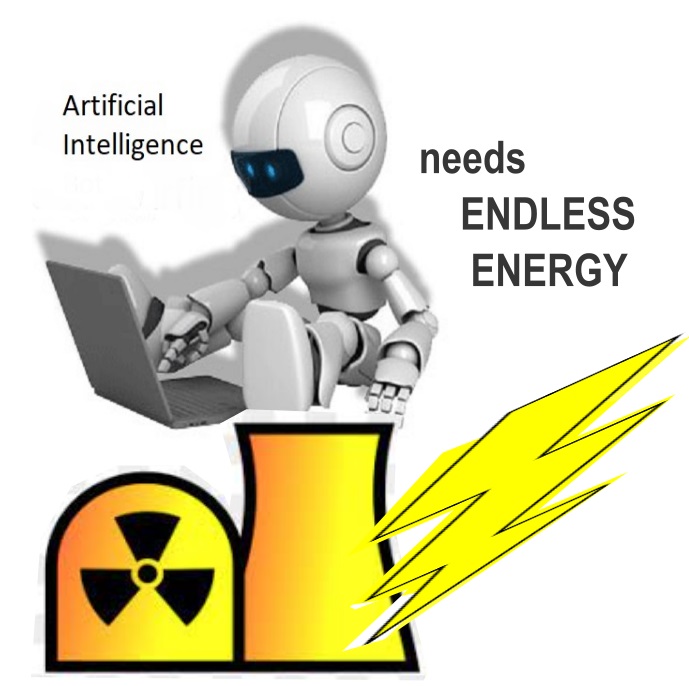
Efforts to restart large nuclear plants along with private-sector investment and Department of Energy support for small modular reactor technology are pushing the industry forward after decades of little or no growth. The government and big technology firms say they hope to plug AI data centers into nuclear power plants that can provide around-the-clock generation.
But in asserting more direct control over the NRC, some nuclear boosters fear more harm than good. Trump’s February executive order subjects “significant regulatory actions” to review by the White House’s Office of Information and Regulatory Affairs, or OIRA.
Judi Greenwald, executive director of the Nuclear Innovation Alliance, said adding the OIRA review of either technical nuclear safety issues or minor activities would make NRC less efficient and introduce uncertainty into licensing timelines.
“NRC’s reputation as a trusted regulator is important to the public, to industry, and to potential customers of U.S. nuclear technology both here and abroad,” Greenwald said. “We don’t want changing political winds in either direction to undermine NRC’s credibility.”
Sources with direct knowledge of how NRC and the White House are handling the February order have told E&E News that OIRA has instructed the agency to submit all draft rules. OIRA will decide on a case-by-case basis if a given regulation is “significant.” If it is, the White House will conduct a second review that may entail comments or edits. The draft rules will then be returned to the commission.
People familiar with policy discussions say OIRA has already deemed reactor safety rules to be “significant” enough for a deeper White House review. The proposed “Part 53” advanced reactor rule and updates to environmental standards are also considered likely to trigger a second review.
The new process also obscures the public record of internal commission deliberations.
“It would potentially run afoul of the Sunshine Act,” said Adam Stein, nuclear energy innovation director at the pro-nuclear think tank Breakthrough Institute. “The Atomic Energy Act does not say the commission will send regulations to OIRA for approval. It says that the commission will decide.”
The prospect of stripping away much of the NRC’s independence has rattled Republicans and Democrats on the House Energy and Commerce Committee.
Rep. Jay Obernolte (R-Calif.) said in February that he’s willing to give the administration “the benefit of the doubt” as it tries to bring more political control over independent agencies. “Everyone should be able to agree that regulatory authorities like the NRC should not be involved in the day-to-day political struggles that occur here in Washington, D.C.,” he said.
Rep. Lori Trahan (D-Mass.) characterized any White House effort to exert more control over the NRC as a “dangerous attempt to serve the interests of Donald Trump and his donors.”
“Undermining the NRC’s independence invites safety risks, regulatory dysfunction, and corruption that threaten the future of nuclear energy in America,” she said.
Adding to the instability is growing speculation about leadership changes at the NRC. The term of Trump-appointed Chair David Wright expires in June, and no renomination has been announced.
“At this point, it would be difficult to get him through the process without a lapse,” Stein said.
Here is what we know about the four draft orders:
Draft Order 1: Overhauling NRC
The White House is circulating draft executive orders that could radically alter nuclear policy. They touch on several fronts, from restructuring the NRC to reorienting federal nuclear research and development priorities to setting a goal to quadruple U.S. nuclear power capacity by 2040.
The first draft viewed by E&E News would order NRC, OIRA, the Department of Government Efficiency and “other agencies” to finalize NRC rules that would establish deadlines for reviewing license applications; reconsider the NRC radiation safety threshold; revise the environmental review process; expedite approvals for reactors that have been tested at DOE and Defense Department sites; and shrink the Advisory Committee on Reactor Safeguards, which independently reviews all nuclear licensing actions.
And the agencies, the draft says, would have 18 months to finish this “wholesale regulatory revision” of the NRC with mandatory “reductions in force.”………………………………………………………………….
Draft Order 2: Nuclear R&D
Another draft order would authorize DOE to more directly spearhead pilot and demonstration reactor projects at national laboratories and on other federal lands.
“The Department shall approve at least three reactors pursuant to this pilot program with the goal of completing construction of each of the three reactors by July 4, 2026,” the draft reads.
Experts say that the timeline is nearly impossible at this point.
Draft Order 3: Nuclear for “national security”
A third draft order seeks to boost American nuclear power by leveraging DOE and the Defense and State departments.
The draft would give the secretaries of Defense and Energy 60 days to “identify 9 military facilities at which advanced nuclear technologies can be immediately installed and deployed,” prioritizing bases in the Arctic and Indo-Pacific. Then, the military would move toward installation.
Another section would have the secretary of Energy “site, approve, and authorize the design, construction, and operation of privately-funded advanced nuclear technologies at Department of Energy-owned sites for the purpose of powering AI infrastructure.” It would classify such nuclear power as “defense critical infrastructure” and allow them to connect to the commercial grid……………
Other sections of the draft order would release DOE-held high-assay, low-enriched uranium to private advanced reactor developers and create a new State Department envoy to promote American nuclear exports.
Draft Order 4: Nuclear supply chain
The final draft order primarily focuses on bolstering the nuclear energy supply chain. It would have DOE bolster R&D and deployment of uranium enrichment and nuclear fuel recycling, fund the restart of closed nuclear plants and improve the “nuclear engineering talent pipeline” with other Cabinet departments.
It is unclear how likely Trump is to sign any of these draft executive orders. “Each executive order is almost written from a certain agency’s perspective,” Stein said. “They overlap and conflict in some places probably because they weren’t written together.”……………….. https://www.eenews.net/articles/white-house-weighs-nrc-overhaul/
Trump’s Break with Israel: Genuine Shift or Political Theater?
May 19th, 2025, Kit Klarenberg, https://www.mintpressnews.com/trump-breaks-with-israel/289818/
When Donald Trump was re-elected president in November 2024, expectations were widespread that Israel’s assault on Gaza would intensify, and that the incoming administration would take a much more active role in neutralizing Tel Aviv’s regional adversaries. The affinity between Benjamin Netanyahu, many Israelis, and Trump is well-established. As Foreign Policy noted in October 2024, “Israel is Trump country, and Trump’s No. 1 supporter is its prime minister,” the magazine wrote. Trump’s victory was widely celebrated in Israel, both publicly and at the state level.
Just days later, former CIA Director and Defense Secretary Leon Panetta predicted the president would give Netanyahu a “blank check” to cause havoc across the Middle East, up to all-out war with Iran. After taking office in January, the president did little to dispel such forecasts—quite the opposite. In February, Trump outlined plans for “Gaza Lago”—a total displacement and forced resettlement of Gaza’s Palestinian population and the creation of a so-called “Riviera of the Middle East” in its place.
In March, Trump renewed hostilities against Yemen’s Ansar Allah, after the group reinstated its Red Sea blockade in response to Israel’s flagrant breaches of its cease-fire agreement with Hamas. Battering Yemen far harder than Biden ever had, U.S. officials boasted that the air and naval effort against Ansar Allah would continue “indefinitely.” Trump also claimed that Washington’s “relentless strikes” would leave the resistance decimated.
In early May, however, Trump declared the mission over after agreeing to a cease-fire under which Ansar Allah would stop targeting U.S. ships in return for free rein in its war against Israel. Tel Aviv was reportedly kept out of the loop, learning of the deal via news reports. Mike Huckabee, the U.S. ambassador to Israel, responded to backlash over the deal by stating that the U.S. “isn’t required to get permission from Israel” to make deals.
Huckabee, an ultraconservative evangelical and outspoken Zionist who vowed upon his nomination to refer to Israel in biblical terms such as the “Promised Land,” and who has frequently claimed that Jews hold a “rightful deed” to Palestinian land, surprised observers with the statement. Yet it seemed to mark the beginning of a dramatic shift in direction by the Trump administration, which, as MintPress News has previously documented, is stacked with pro-Israel hawks.
Since then, Trump has embarked on a tour of the Middle East, with Israel conspicuously absent from his itinerary. Instead, he has traveled to states in the Gulf Cooperation Council. Meanwhile, the president negotiated the release of the last living U.S. hostage held by Hamas and convened direct peace talks with the resistance group—in both cases without Tel Aviv’s involvement. There are rumors that Hamas may end hostilities in return for U.S. recognition of a Palestinian state, an offer Trump is reportedly open to.
Washington went on to sign a slew of deals with Riyadh across various sectors, including the largest-ever defense agreement between the two countries, valued at nearly $142 billion. In sum, a string of seismic developments strongly suggests that Trump’s administration is breaking with the previously unshakable U.S. policy of lockstep support for Israel and serving its interests in nearly every regard—an arrangement in place since the country’s founding in 1948. But is this previously unthinkable rupture real, or just for show?
From the United States to Europe, Criticizing Israel Is Becoming a Crime
After October 7, governments across the West are moving to criminalize criticism of Israel — placing free speech under growing global threat.
MintPress News·Kit Klarenberg·Apr 30
Trump Snubs Israel in Middle East Pivot
Purported rifts in the U.S.-Israel relationship are nothing new. Throughout Barack Obama’s presidency, multiple mainstream reports suggested the relationship was “strained,” especially due to sharp personal differences between the then-president and Netanyahu. Similarly, from the start of the Gaza genocide, major news outlets intermittently reported that Joe Biden was “privately” angry with Netanyahu’s behavior. Meanwhile, White House spokespeople and prominent Democrats, including Alexandria Ocasio-Cortez, publicly insisted that the administration was committed to securing a cease-fire.
In both cases, though, the U.S. financial and military aid that is fundamental to Israel’s continued existence and erasure of the Palestinian people continued unabated, if not increased. In late April, Israel’s ambassador to Washington, Michael Herzog, who served from 2021 to 2025, proudly declared that “the [Biden] administration never came to us and said, ‘Cease-fire now.’ It never did.” As such, skepticism about the sincerity and substance of the Trump administration’s abrupt break from its traditionally pro-Israel trajectory is well-founded.
Giorgio Cafiero, CEO of Gulf State Analytics, tells MintPress News that there may be a real shift underway in U.S. foreign policy, driven in large part by Trump’s determination to counter China’s rising global influence, particularly in the Middle East. It is this agenda that, for now, is pushing Washington to conduct “a foreign policy increasingly friendly to deep-pocketed states on the Arabian Peninsula, at the expense of the historic U.S.-Israel alignment.” As Cafiero put it:
Trump wants to pull Saudi Arabia, Qatar and the UAE et al closer to U.S. geopolitical and geo-economic influence, while pulling them away from China to some extent. He likely won’t have much success in slowing down the momentum of Arab-Chinese relations in energy, investment, trade, logistics, commerce, AI, digitization, and so on. But in terms of defense and security, the U.S. will continue to dominate, and Trump will make clear these are uncrossable ‘red lines’ in terms of the Gulf’s relationship with China from Washington’s perspective.”
Trump’s large trade and investment deals with Gulf states play heavily into his “Make America Great Again” agenda and self-mythologizing as a dealmaker at home and abroad. The Gulf states are “ripe for lucrative deals” for U.S. companies, Cafiero says, adding that these agreements will create jobs and generate “good optics” for the administration at home.
Geopolitical risk analyst Firas Modad agrees that economic factors are central to Trump’s current course shift, and are alienating Tel Aviv. “Trump needs to sell F-35s. The U.S. defense industry needs the funds. The sale of F-35s to Turkey and perhaps to Saudi Arabia… a new deal with Iran, a Saudi civilian nuclear program — these will all be big bones of contention with Israel,” Modad said.
If nuclear negotiations succeed, Trump will likely seek to open Iranian markets to U.S. firms too. Israel doesn’t want this either. Trump is showing Netanyahu how much Israel needs the U.S., not the other way around.”
The Battle for the ‘Woke Right’: How Israel Is Dividing MAGA
A growing rift within MAGA sees right-wing influencers clashing over Israel and the ‘woke right.’
MintPress News·Robert Inlakesh·May 15
Gulf States Rise as Israel Loses Clout
Seyed Mohammad Marandi, a Tehran-based political analyst and professor at the University of Tehran, tells MintPress News that a “rift” between the U.S. and Israel does indeed exist, but that it is “difficult to say how significant or deep it truly is.”
Marandi believes the broader U.S. power structure recognizes that its support for what he calls the “Gaza Holocaust” since October 2023—“a 24/7 televised genocide”—has seriously damaged the West’s international image and soft power, telling MintPress News that “By default, this has greatly enhanced the soft power of China, Iran and Russia. The Global South looks to them, not the U.S. or its European vassals, for leadership, direction and partnership.”
Modad agrees, noting that in March 2023, Saudi Arabia unexpectedly reconciled with Iran “under Chinese auspices, without meaningful consultation with Washington.” Now that Arab and Muslim states view China and Russia as viable economic and military partners, the prospect of political scientist Samuel P. Huntington’s “Sino-Islamic alliance” becoming a reality is increasingly likely.
“The Americans will do whatever it takes to avoid resource-rich or militarily capable Muslim countries falling into Beijing’s orbit, even if that’s at Israel’s expense,” Modad tells MintPress News.
Marandi sees potential for shifts in U.S. relations with the region, saying “the space is there for progress”—though such progress remains “limited in scope and purely prospective for now.” He believes the current divide between Washington and Tel Aviv is largely tied to Netanyahu’s leadership.
“There’s a chance he’ll be sacrificed to preserve and rehabilitate Israel’s image internationally, with blame for everything since October 7 placed squarely on him,” Marandi says. “It would be like blaming Hitler alone for World War II and the Holocaust, instead of the system he led and everyone who enabled it.”
Marandi doubts a broader U.S.-Israel split will occur, saying the relationship is “so substantial, it’s not going to completely wither and die” over current events. “The Zionist lobby in the U.S. remains very powerful,” Marandi notes, adding that while Israel “has been discredited worldwide and is internationally despised, with people across the West condemning and abhorring the Zionist regime, the lobby still exerts enormous influence over Washington’s domestic and foreign policy.”
Modad is likewise under no illusions about the Israeli lobby’s clout in Washington. He expects its affiliated groups—and the many lawmakers they generously fund—to aggressively push back against Trump’s shift. He also suggests the administration could respond to the pressure by forcing the American Israel Public Affairs Committee (AIPAC) to register as a foreign agent. Given AIPAC’s political clout, such a move would be unprecedented.
U.S. political scientist John Mearsheimer has described AIPAC as “a de facto agent for a foreign government” with “a stranglehold on Congress.” Indeed, the powerful lobbying organization has a disturbing success rate in helping to elect hardcore proponents of Israel to Congress and the Senate, and aggressively works to unseat anyone on Capitol Hill who expresses solidarity with Palestinians. This effort has only intensified since October 7, and the organization is so confident in its impunity that it openly advertises its activities.
For example, AIPAC publishes an annual report highlighting its “policy and political achievements.” The committee’s 2022 report boasts, among other things, of securing $3.3 billion “for security assistance to Israel, with no added conditions” and funding “pro-Israel candidates” to the tune of $17.5 million—the most of any U.S. PAC. A staggering 98% of those candidates went on to win, defeating 13 pro-Palestinian challengers in the proces
A network of figures like Ben Shaprio, think tanks, and foreign policy advocates helped shift the right from advocating free speech to embracing blacklists.
AIPAC Faces White House Resistance
Trump is not unaware of the Israel lobby’s outsized influence over U.S. domestic and foreign affairs. As Marandi notes, on Jan. 15, Trump shared a video of Professor Jeffrey Sachs in which he blames Benjamin Netanyahu for the 2003 U.S. invasion of Iraq—a war that Trump has long criticized. The crucial role that AIPAC and its allies played in laying the groundwork for that war has largely been forgotten.
That’s likely due in part to the organization’s large-scale online cleanup operations in which evidence of their early cheerleading for a full-scale U.S. invasion of Iraq was quietly erased. In December 2001, AIPAC published a briefing for U.S. lawmakers on the “major threat” it claimed that Saddam Hussein posed in the Middle East, to U.S. interests in the region and to “Israel’s security”—accusing him of producing weapons of mass destruction and harboring terrorist organizations.
Both claims were false, forming the basis of Washington’s case for the invasion. AIPAC later removed the briefing from its website. In 2015, a committee spokesperson told The New York Times that “AIPAC took no position whatsoever on the Iraq War.” Later that year, AIPAC President Robert A. Cohen went even further, claiming that “Leading up to the start of the Iraq War in March 2003, AIPAC took no position whatsoever, nor did we lobby on the issue.”
Today, Israel and its lobbying network are pushing for another major conflict in the Middle East—this time with Iran. In April, The New York Times, citing anonymous briefings, revealed that Tel Aviv had drawn up detailed plans for an attack on the Islamic Republic that would have required U.S. support—plans that were reportedly waved off by Trump. Israeli officials were said to be furious over the leak, with one calling it “one of the most dangerous leaks in Israel’s history.”
While Tel Aviv is purportedly still planning a “limited attack” on Iran, The New York Times report sent an unambiguous message to Netanyahu and his government that the Trump administration would not support any such action under any circumstances. Opposition to belligerence towards Tehran is in itself quite an extraordinary reversal for Trump and his cabinet, given their past rhetoric and stances. Before even taking office, it was reported that the administration was concocting plans to “bankrupt Iran” with “maximum pressure.”
Secretary of State Marco Rubio, who had long called for tightening already devastating sanctions on Tehran, was at the forefront of this push. He was eagerly supported by National Security Adviser Mike Waltz, a Pentagon veteran who previously sat on the House Armed Services Committee. At an event convened by NATO adjunct the Atlantic Council in October 2024, Waltz bragged about how Trump had previously almost destroyed the Islamic Republic’s currency, and looked ahead to doling out even worse punishment following the president’s inauguration.
However, the reportedly positive progress of nuclear negotiations between the U.S. and Iran today suggests Trump and his team have not only jettisoned these ambitions but are determined to avoid war. Cafiero believes this objective is one of the key geopolitical considerations driving the President’s current course in the Middle East. He notes such a conflict would inevitably be “messy, bloody, and costly,” and believes Netanyahu’s determination “to pull the U.S. into war” means Trump now sees Israel as a real liability:
Trump views West Asia as a region the U.S. has historically been sucked into, and he believes Washington shouldn’t be excessively entangled there anymore – no more costly and humiliating quagmires, diverting resources and attention away from other parts of the world, where China is making major economic and geopolitical gains. The Gulf monarchies are sources of regional stability – they’re diplomatic bridges and interlocutors, facilitating dialogue and negotiation, and assisting in winding down local and international conflicts, or at least U.S. involvement in them.”
A costly and humiliating quagmire conflict between the U.S. and Iran would certainly be – and were Israel to dare strike Tehran alone, Washington would likely suffer adverse consequences in any event. A September 2024 report from the powerful and secretive lobby group the Jewish Institute for National Security of America (JINSA) spelled out in forensic detail that it would take “five minutes or less” for Iran’s ballistic and hypersonic missiles to reach most U.S. military bases in the Middle East and obliterate them.
Is US Support for Israel Ending?
Fears of such an eventuality, and the Empire’s repeatedly proven inability to prevail in battling Yemen’s Ansar Allah, surely lie behind Trump’s determined push for peace with Iran. Even if the administration’s current sidelining of Tel Aviv in favor of the Gulf states is temporary and conducted purely for expediency, given current geopolitical contexts, never before in Israel’s history have its leaders’ wishes and wills been so flagrantly and concertedly overlooked or outright contravened in American corridors of power.
Should this rocky period represent a mere transitory blip in the U.S./Israel relationship, the episode at least amply demonstrates that Washington isn’t as beholden to Israel as its leaders and the international Israel lobby like to think. With China’s rising influence and the newly anointed multipolar world going nowhere, U.S. leaders may think twice about being so deferential to Tel Aviv’s demands, its designs of endless territorial expansion, and its perpetual wars against its neighbors in the name of “security”.
Reactor closure marks Taiwan’s nuclear exit
Monday, 19 May 2025, WNN
Unit 2 of the Maanshan nuclear power plant – Taiwan’s last operating reactor – has been disconnected from the grid and will be decommissioned following the expiry of its 40-year operating licence, in accordance with Taiwan’s nuclear phase-out policy. ………………………..
Phase-out policy
Taiwan’s Democratic Progressive Party (DPP) was elected to government in January 2016 with a policy of creating a “nuclear-free” Taiwan by 2025. Under this policy, Taiwan’s six operable power reactors would be decommissioned as their 40-year operating licences expire. Shortly after taking office, the DPP government passed an amendment to the Electricity Act, passing its phase-out policy into law. The government aims for an energy mix of 20% from renewable sources, 50% from liquefied natural gas and 30% from coal……………………………..
Unit 1 of Taiwan’s oldest plant, Chinshan, was taken offline in December 2018, followed by Chinshan 2 in July 2019………………….https://www.world-nuclear-news.org/articles/reactor-closure-marks-taiwans-nuclear-exit
1 This Month


Petition to revoke the licensing of the Near Surface Nuclear Disposal Facility (NSDF) at Chalk River. https://www.ourcommons.ca/petitions/en/Petition/Details?Petition=e-7247


of the week – STOP SMALL MODULAR REACTORS IN CANADA
To see nuclear-related stories in greater depth and intensity – go to https://nuclearinformation.wordpress.com
-
Archives
- March 2026 (163)
- February 2026 (268)
- January 2026 (308)
- December 2025 (358)
- November 2025 (359)
- October 2025 (376)
- September 2025 (258)
- August 2025 (319)
- July 2025 (230)
- June 2025 (348)
- May 2025 (261)
- April 2025 (305)
-
Categories
- 1
- 1 NUCLEAR ISSUES
- business and costs
- climate change
- culture and arts
- ENERGY
- environment
- health
- history
- indigenous issues
- Legal
- marketing of nuclear
- media
- opposition to nuclear
- PERSONAL STORIES
- politics
- politics international
- Religion and ethics
- safety
- secrets,lies and civil liberties
- spinbuster
- technology
- Uranium
- wastes
- weapons and war
- Women
- 2 WORLD
- ACTION
- AFRICA
- Atrocities
- AUSTRALIA
- Christina's notes
- Christina's themes
- culture and arts
- Events
- Fuk 2022
- Fuk 2023
- Fukushima 2017
- Fukushima 2018
- fukushima 2019
- Fukushima 2020
- Fukushima 2021
- general
- global warming
- Humour (God we need it)
- Nuclear
- RARE EARTHS
- Reference
- resources – print
- Resources -audiovicual
- Weekly Newsletter
- World
- World Nuclear
- YouTube
-
RSS
Entries RSS
Comments RSS
 nuclear-news