Hopes for Iran nuclear talks tempered by threats and mixed messages
Parham Ghobadi, BBC Persian, BBC, 18 Apr 25
As Iran and the United States prepare to hold a second round of high-stakes nuclear talks in Rome, hopes for de-escalation are being tempered by mounting military threats and mixed messages.
US President Donald Trump reminds Tehran nearly every day of its options: a deal or war.
He has previously said Israel would lead a military response if the talks failed.
On Wednesday, the New York Times reported that Trump had “waved off” an Israeli plan to strike Iranian nuclear sites as early as next month.
“I wouldn’t say waved off. I’m not in a rush to do it,” Trump told reporters in response to the article on Thursday, adding that he preferred to give diplomacy a chance.
“I think that Iran has a chance to have a great country and to live happily without death… That’s my first option. If there’s a second option, I think it would be very bad for Iran.”
After both sides described the first round of talks in Oman last weekend as constructive, Trump had said he would be “making a decision on Iran very quickly”………………………………………………………………………………………………………………………………………………………………………..
Atmosphere of distrust
Since Trump returned to office this year, Ayatollah Khamenei has consistently denounced negotiations with Washington.
“Negotiating with this administration is not logical, not wise, nor honourable,” he said in a February speech, just two months before agreeing to the current round of talks.
The supreme leader’s distrust stems from Trump’s withdrawal from the nuclear deal, the “maximum pressure” campaign that followed, and the assassination of General Qassem Soleimani in a US strike in Iraq in 2020.
Ayatollah Khamenei expressed satisfaction with the first round of talks, saying it was “implemented well”.
But he cautioned that he was “neither overly optimistic nor overly pessimistic”……………………………………………………. https://www.bbc.com/news/articles/cwy7n905jqdo
Trump’s Latest Executive Order is Blatant Attack on States’ Rightful Action to Protect Communities and the Climate

“We will pursue all legal avenues to ensure that states are not harmed by this shameful assault on health and the environment.”
On Tuesday the Trump administration issued an executive order that seeks to initiate an attack on state laws and policies that address the environmental pollution and climate-wrecking emissions resulting from fossil fuel and nuclear energy development.
In response, Food & Water Watch Legal Director Tarah Heinzen issued the following statement:
“This malicious and destructive order goes further than ever before in proving that President Trump cares nothing about states’ rights, or clean air, or healthy people, or anything else of any virtue that he has ever claimed to prioritize. It proves that Trump cares only about doing the bidding of filthy, polluting industries that poison our air and water, sicken our communities and wreck our climate.
“This executive order baselessly threatens to weaponize the justice department against state climate protections adopted with broad public support. States have clear authority to act to protect people and communities from toxic pollution – including carbon emissions that drive climate chaos.
“Laws like the Climate Change Superfund Acts in New York and Vermont, which ensure that the largest industrial polluters are held responsible for their harmful impacts on the land and communities, are currently at the vanguard of responsible environmental protection in the country. Trump’s attack on these common-sense laws are an attack on everyday Americans who bear the brunt of toxic pollution and climate change-fueled weather catastrophes.
“We will monitor closely how the administration may seek to implement this preposterous order, and we will pursue any and all legal avenues to help ensure that states and communities are not harmed by this shameful assault on public health, environmental protection and climate stability.”
Third tender submitted in UK SMR selection process

Holtec has announced that it has submitted its final tender response to
Great British Nuclear as part of the UK’s ongoing small modular reactor
technology selection competition.
GE Hitachi and Rolls-Royce SMR earlier
confirmed they had submitted final tenders. There were initially six
companies shortlisted by Great British Nuclear (GBN), the arms-length body
set up to oversee the UK’s plans for new nuclear, with the four shortlisted
companies – Westinghouse being the other – entering negotiations last
September.
In February, the four SMR vendors were issued with an Invitation
to Submit Final Tenders. The aim is for GBN to select up to three of the
technologies, with the intention of supporting the deployment of multiple
units of a company’s SMRs at a site. GBN currently owns land for potential
new nuclear at Wylfa in Anglesey in North Wales, and at Oldbury in
Gloucestershire in southwest England, but other sites could also be chosen.
In an interview early last year for the World Nuclear News podcast, GBN
Chairman Simon Bowen said the intention was to place contracts with one,
two or three technology providers – this would be for co-funding the
technology all the way through to completion of the design, regulatory,
environmental and site-specific permissions process, and the potential to
place a contract for the supply of equipment. Each selected technology
would have an allocated site with the potential to host multiple SMRs.
World Nuclear News 16th April 2025
https://www.world-nuclear-news.org/articles/third-tender-submitted-in-uk-smr-selection-process
Aerial photos show state of Sizewell C preparatory works

Aerial photos of the proposed Sizewell C nuclear power station in Suffolk
have revealed the state of preparatory works ahead of its final investment
decision (FID). Despite the nuclear power plant having received development
consent in 2022, its FID is still yet to be achieved and the mood of
potential investors has been the subject of intense speculation.
Centrica chief executive Chris O’Shea said his company’s stake in Sizewell C
could be “between 1% or 2% and 50%”, meanwhile, the French spending
regulator Cour des comptes said EDF should scale back its involvement in
the project.
Nevertheless, preparatory work is underway such on road
upgrades and ground freezing, with over £2.5bn worth of contracts having
been awarded already. Four photos taken from an aerial platform, which
could be a drone, aircraft or hot air balloon, were published by Stop
Sizewell C on 8 April. The images were republished by Nuclear Free Local
Authorities (NFLA), which said the photos had been taken by an “anonymous
source” who “kindly made them free of license for open use”.
New Civil Engineer 16th April 2025, https://www.newcivilengineer.com/latest/aerial-photos-show-state-of-sizewell-c-preparatory-works-16-04-2025/
Bill Gates enters race to build mini-nuclear reactors in Britain

Competition from billionaire’s company TerraPower threatens blow for Rolls-Royce
A company founded by Bill Gates has submitted a bid to build
mini-nuclear reactors in Britain, dealing a potential blow to
Rolls-Royce’s hopes of dominating the domestic market.
Seattle-based TerraPower has written to the Government outlining its intention to submit
its reactor design for regulatory approval. The move kickstarts efforts by
the US company to enter an increasingly competitive market to build small
modular reactors (SMR), which are expected to play a key role in the UK’s
shift to cleaner energy.
The Microsoft billionaire’s company has
developed a reactor, called Natrium, that uses a molten sodium heat storage
system that allows it to rapidly ramp up its power output at peak times.
Natrium is the Latin word for sodium which has the chemical symbol Na.
Chris Levesque, TerraPower chief executive, said: “I am incredibly
excited to begin the process of licensing the Natrium technology in the UK.
Rolls-Royce had hoped to corner UK market with its small modular reactors.
While TerraPower is not involved in the competition for the UK’s SMR
contract, the potential entrant of a new deep-pocketed rival into the
market will pose a fresh challenge to Rolls-Royce’s plans.
Telegraph 16th April 2025, https://www.telegraph.co.uk/business/2025/04/16/bill-gates-bids-to-build-mini-nuclear-reactors-in-britain/
Is Elon Musk a halfwit ?

April 19, 2025, https://theaimn.net/is-elon-musk-a-halfwit/
A silly insult! I hear your cry. Yes, as the Oxford Dictionary defines a “halfwit” as a”foolish or stupid person” And I do agree, it is stupid to call Elon Musk “stupid”.
But that’s not what I mean. I guess that I have invented a new interpretation of “halfwit”.
According to my view , one can be brilliantly clever with one kind of thinking, yet lacking in understanding of other important ways of thinking, as though half of one’s brain is sort of not functioning. I was prompted to ponder on this by Gautam Mukunda‘s article in The Business Standard – “Musk and the dangerous myth of “omnigenius“. Mukanda deplores “the Halo Effect” – a cognitive bias in which we revere someone for remarkable success in just one area, and assume that they will be equally great in other areas.
Mukunda gave a chilling example. “Musk’s Department of Government Efficiency (DOGE )fired hundreds of employees at the National Nuclear Security Administration, the agency responsible for the production and security of nuclear weapons and management of nuclear waste sites” (These cuts were soon reversed under the advice of Arms Control Association Executive Director Daryl Kimball).
Mukunda is exploring the attitude of people in general, towards valuing a high achiever So he’s not actually discussing Musk himself and Musk’s way of thinking.
But it looks as if Elon Musk had no insight into the potential negative consequences of the firing of nuclear safety staff.
This touches on Musk’s apparent lack of interest in some areas of life – employment relationships, social studies – the non-technical areas. We all know that Elon Musk is a genius in science and technology. He’s got all that impressive knowledge. And let’s not forget – his early, and no doubt continuing motivation – to save and benefit humanity. Hence his desire, and technical know-how – aimed at creating a safer home for humanity -on another planet.
And what about Musk’s undoubted knowledge of science? Does it include those “soft” sciences – biology, ecology, cytology, genetics, psychology, neuroscience….
Neuroscience comes up with some clues to human ways of thinking. For one example, the development of the frontal lobe of the brain comes at different ages between males and females. Complex research has also shown for example, the role of testosterone in embryonic development in both sexes. It may account for males having, on the whole, better abilities in spatial understanding, and for female thinking on the whole encompassing more regions of the brain at the one time. Now this is a terrible digression from the immediate topic, but just my attempt to indicate that individual brain function differs between people.
Getting back to Elon Musk, it is just my guess that he, for one reason or another, is really good at STEM thinking (Science, Technology, Engineering and Maths). And unfortunately, even within that STEM, those so-called “soft” sciences don’t seem to count. It would seem that Musk is uninterested both in those other sciences, and of humanities studies.
So – that’s what I’m calling being “half-witted” – terrific at the concrete technical stuff, but sadly lacking in that other half – those other, less well-defined , areas of thinking
So I think that Gautam Mukunda is onto something, when he warns us “why do we listen to these people? And why should they get positions of power in areas where they have little knowledge or experience?”
Ukrainian-born US lawmaker says Ukraine should cede land to Russia, demand Zelensky’s resignation
by The Kyiv Independent news desk April 7, 2025
Ukrainian-born U.S. lawmaker Victoria Spartz has said Ukraine should cede land to Russia, and its people should demand the resignation of President Volodymyr Zelensky.
In an interview with the Telegraph published on April 7, Spartz said Ukraine is not in a position to demand the return of all occupied territories. “If they were winning the war, that would be very different,” she added.
Spartz was born in Chernihiv Oblast and moved to the U.S. in 2000. She was elected to Congress three times, in 2020, 2022, and 2024, and represents Indiana’s 5th District.
Spartz initially supported U.S. aid for Ukraine and has often spoken about the war in personal terms.
However, she has also criticized the Ukrainian government, particularly Zelensky and his chief of staff, Andriy Yermak.
Spartz, who has been a critic of both the Biden administration and the Ukrainian government, supported U.S. President Donald Trump’s call to negotiate with Russian President Vladimir Putin.
“There are no easy solutions,” she said, placing blame on former President Joe Biden for what she sees as failed support.
“President Trump inherited it, so now he has to deal with it.”………………..
On April 4, 2024, The Wall Street Journal reported that Spartz would not support a new $60 billion Ukraine aid bill. She articulated “a lack of clear strategy” and the need for better oversight.
Spartz also said she has “largely moved on from focusing heavily on Ukraine.” In October 2023, Spartz also backed fellow Republican Jim Jordan’s calls for more accountability in Ukraine funding………………..
“To win wars, you need to have leaders who know how to win, not to try not to lose and become oligarchs themselves,” she said. Spartz also claimed Zelensky “took control of all Ukrainian media, prosecuted churches, businesses and volunteers.”https://kyivindependent.com/uss-only-ukrainian-born-lawmaker-says-ukraine-should-cede-land-to-russia-demand-zelenskys-resignation/
Israel still eyeing a limited attack on Iran’s nuclear facilities.
AFR, Erin Banco, Apr 19, 2025
New York | Israel has not ruled out an attack on Iran’s nuclear facilities in the coming months despite President Donald Trump telling Israeli Prime Minister Benjamin Netanyahu that the US was, for now, unwilling to support such a move, according to an Israeli official and two other people familiar with the matter.
Israeli officials have vowed to prevent Tehran from acquiring a nuclear weapon and Netanyahu has insisted that any negotiation with Iran must lead to the complete dismantling of its nuclear program.
US and Iranian negotiators are set for a second round of preliminary nuclear talks in Rome on Saturday.
Over the past months, Israel has proposed to the Trump administration a series of options to attack Iran’s facilities, including some with late spring and summer timelines, the sources said. The plans include a mix of airstrikes and commando operations that vary in severity and could set back Tehran’s ability to weaponise its nuclear program by just months or a year or more, the sources said.
The New York Times reported on Wednesday that Trump told Netanyahu in a White House meeting earlier this month that Washington wanted to prioritise diplomatic talks with Tehran and that he was unwilling to support a strike on the country’s nuclear facilities in the short term.
But Israeli officials now believe that their military could instead launch a limited strike on Iran that would require less US support. Such an attack would be significantly smaller than those Israel initially proposed.
It is unclear if or when Israel would move forward with such a strike, especially with talks on a nuclear deal getting started. Such a move would likely alienate Trump and could risk broader US support for Israel.
Parts of the plans were previously presented last year to the Biden administration, two former senior Biden administration officials told Reuters. Almost all required significant US support via direct military intervention or intelligence sharing. Israel has also requested that Washington help Israel defend itself should Iran retaliate.
In response to a request for comment, the US National Security Council referred Reuters to comments Trump made on Thursday, when he told reporters he has not waved Israel off an attack but that he was not “in a rush” to support military action against Tehran…………………………………………..
While the more limited military strike Israel is considering would require less direct assistance – particularly in the form of US bombers dropping bunker-busting munitions that can reach deeply buried facilities – Israel would still need a promise from Washington that it would help Israel defend itself if attacked by Tehran in the aftermath, the sources said.
Any attack would carry risks. Military and nuclear experts say that even with massive firepower, a strike would probably only temporarily set back a program the West says aims to eventually produce a nuclear bomb, although Iran denies it.
Israeli officials have told Washington in recent weeks that they do not believe US talks with Iran should move forward to the deal-making stage without a guarantee that Tehran will not have the ability to create a nuclear weapon.
“This can be done by agreement, but only if this agreement is Libyan style: They go in, blow up the installations, dismantle all of the equipment, under American supervision,” Netanyahu said following his talks with Trump. “The second possibility is … that they [Iran] drag out the talks and then there is the military option.”
From Israel’s perspective, this may be a good moment for a strike against Iran’s nuclear facilities.
Iran allies Hamas in Gaza and Hezbollah in Lebanon have been hammered by Israel since the Gaza war began, while the Houthi movement in Yemen has been targeted by US airstrikes. Israel also severely damaged Iran’s air defence systems in an exchange of fire in October 2024.
A top Israeli official, speaking with reporters earlier this month, recognised there was some urgency if the goal was to launch a strike before Iran rebuilds its air defences. But the senior official refused to state any timeline for possible Israeli action and said discussing this would be “pointless”. https://www.afr.com/world/middle-east/israel-still-eyeing-a-limited-attack-on-iran-s-nuclear-facilities-20250419-p5lswv
DOE report: Cost to finish cleaning up Hanford site could exceed $589 billion
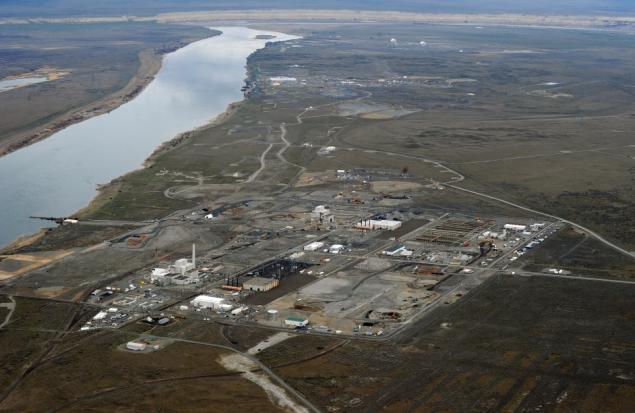
The cost to complete the cleanup of the Department of Energy’s Hanford Site in Washington state could cost as much as $589.4 billion, according to the 2025 Hanford Lifecycle Scope, Schedule, and Cost Report, which was released by the DOE on April 15. While that estimate is $44.2 billion lower than the DOE’s 2022 estimate of $640.6 billion, a separate, low-end estimate has since grown by more than 21 percent, to $364 billion.
The life cycle report, which the DOE is legally required to issue every three years under agreement with the U.S. Environmental Protection Agency and Washington State Department of Ecology (Ecology), summarizes the remaining work scope, schedule, and cost estimates for the nuclear site. For more than 40 years, Hanford’s reactors produced plutonium for America’s defense program.
The DOE’s cost estimates assume an active site cleanup schedule lasting until 2086, with long-term site stewardship until 2100. The DOE, however, said the federal government plans to have a presence at Hanford well beyond 2100.
The details: The report provides both a baseline (low-range) and a high-range cost estimate for completing the Hanford cleanup work. For this latest report, the DOE estimates a baseline cost of approximately $364 billion and a high-range cost estimate of approximately $589.4 billion. In 2022, the DOE reported an estimated cost range of $300.2 billion to $640.6 billion. The estimates include active cleanup, decommissioning, and remediation work, along with the final disposition of Hanford’s remaining reactors and long-term stewardship of the site.
According to the DOE, the cost range reflects the high degree of technical complexity and uncertainty associated with the large volume of work to be completed at the site, which includes the treatment and disposal of Hanford’s radioactive and chemical tank waste, Hanford’s largest liability. The estimates also include risk reduction work along with mission and site infrastructure costs.
According to the DOE, the high-range estimate reflects an 80 percent confidence level and is intended to ensure transparency among Hanford stakeholders of the inherent risks in achieving the agreed-upon cleanup goals.
While the Hanford life cycle report is not a decision-making document on the actions the DOE will take to meet its cleanup obligations, it does act as a foundation for preparing budget requests and for informational briefings with stakeholders. It also supports the DOE’s discussions with the EPA and Ecology on the progress it is making in cleaning up the site.
Feedback: The DOE is collecting public feedback on the report in writing until June 16. Received feedback will be considered when the department drafts its 2028 life cycle report.
Comments can be emailed to lifecyclereport@rl.gov (preferred) or mailed to:
Dana Gribble, Hanford Mission Integration Solutions
U.S. Department of Energy
P.O. Box 450, H5-20
Richland, WA 99354
Unprecedented number of B-2 bombers amassed for Iran strike

Ken Klippenstein, Apr 08, 2025
In the largest single deployment of stealth bombers in U.S. history, the Pentagon has sent six B-2 “Spirit” aircraft to Diego Garcia in the Indian Ocean.
The long-range bombers, which are uniquely suited to evade Iranian air defenses and can carry America’s most potent bunker busting weapons, flew in from Missouri last week in a little noticed operation.
The B-2s carry not just bombs, but a message for Iran: “do you see our sword?,” as one retired general told Newsmax this week.
President Donald Trump hasn’t been shy in threatening Iran, saying that if Tehran doesn’t close the door on a nuclear capability they will experience “bombing the likes of which they haven’t seen.”
“Hell” will “rain down” on the country, Trump has also said. Just today, amidst the stock market meltdown Trump again reiterated his threat, saying that “doing a deal would be preferable to doing the obvious” — which to the president is undertaking a massive strike.
Blatant as the threat is, the U.S. government has not otherwise publicly acknowledged the bomber buildup. Though B-2 bombers were used to carry out strikes on underground Houthi facilities in Yemen (both under the Biden and Trump administration), the forward deployment of the bombers to the island of Diego Garcia was only reported when commercial satellite images of the airbase there revealed the six on the runway.
“To my knowledge, this is the largest B-2 deployment to a forward location,” Hans Kristensen, director of the Nuclear Information Project at the Federation of American Scientists told me. Kristensen is the world’s leading tracker of nuclear comings and goings.
“All the bombers, they’re not in hangers, they’re underneath satellites where they can be photographed and seen; and the idea is, do you see our sword?” retired Air Force Brig. Gen. Blaine Holt, who served as Deputy U.S. Military Representative to NATO, said in an interview with Newsmax last week. Holt also said that the B-2 deployment “gives the president a military option that he can actually use these weapons against Iran if needed.”
This is a highly visible threat to Tehran, but at least one party isn’t supposed to notice: the American people.
The Pentagon refuses to acknowledge that the deployment is even happening. Trump’s new Pentagon Press Secretary Sean Parnell has only vaguely alluded to “other air assets” being deployed it has announced that two aircraft carriers will stay in the region, the result of a delay in sending one home after its current deployment.
According to Google Trends, searches for terms like “B-2” and “war with Iran” have only modestly increased, indicating that public curiosity has been suppressed despite Donald Trump’s many threats to attack his enemies.
Why B-2s?
The B-2 was first designed during the Cold War to penetrate deep into Russian territory for a nuclear attack. The aircraft’s stealth features (making it all but “invisible” to conventional radar) allow it to evade even the most sophisticated air defenses. Subsequent to its deployment, the bomber was modified so that it could take on unique conventional roles as well, especially in attacking underground facilities.
Though the U.S. has a variety of long-range fighters in the region — F-16s, F/A-18s, F-15Es, and F-35s — deployed on aircraft carriers and based in countries like Jordan and the UAE, the B-2s also allow the Trump administration to carry out unilateral strikes. That is, without the permission or involvement of any other Middle East countries. (Diego Garcia continues to be militarily controlled by the U.K.)……………………………………………………………………………………………https://www.kenklippenstein.com/p/pentagon-prepares-for-trump-to-go?utm_source=post-email-title&publication_id=7677&post_id=160827397&utm_campaign=email-post-title&isFreemail=true&r=191n6&triedRedirect=true&utm_medium=email
During Canada’s leaders’ debate, Carney praised a nuclear firm he bought while at Brookfield
Investment fund co-headed by Liberal leader acquired 51% of Westinghouse in 2023
Daniel Leblanc · CBC News ·Apr 17, 2025
During the first leaders’ debate on Wednesday, Liberal Leader Mark Carney praised nuclear energy and named two companies in the sector with which he did business during his tenure at Brookfield Asset Management.
In 2023, Brookfield formed a partnership with uranium mining firm Cameco to purchase the Westinghouse Electric Company. Brookfield Asset Management acquired 51 per cent of Westinghouse while Cameco got the rest, according to a news release.
The purchase was made within the Brookfield Global Transition Fund, an investment fund that was co-headed by Carney at the time. He was an executive at Brookfield Asset Management from 2020 until early 2025, when he entered politics and became leader of the Liberal Party and prime minister of Canada.
During Wednesday’s French-language leaders’ debate, Carney praised nuclear energy in response to a question from host Patrice Roy. In Canada, nuclear energy falls within the jurisdiction of the federal government, which invested hundreds of millions of dollars in the sector earlier this year.
“It’s a great opportunity,” responded Carney, adding it’s up to the provinces to decide whether or not to invest in nuclear power.
“We have a great advantage here in Canada. We have uranium, that’s one of the advantages. We have major nuclear companies including CANDU, Westinghouse and Cameco,” he said.
Carney then began talking about “small” modular reactor technology in which several firms including Westinghouse are active, but he was interrupted.
According to documents made public by Brookfield Asset Management, as of Dec. 31, Carney had stock options in the firm worth $6.8 million US.
Carney has repeatedly explained that he co-operated with the ethics commissioner when he entered politics to establish a blind trust to hold all of his assets except cash and his personal real estate holdings. In addition, Carney established anti-conflict of interest screens as prime minister to avoid intervening in matters affecting Brookfield.
Carney facing calls for more transparency
Political scientist Geneviève Tellier said she wonders whether some of Carney’s assets are still linked to his time at Brookfield, adding a clear answer should be provided before the federal election on April 28.
“To directly mention companies in a leaders’ debate, when he perhaps has interests in these companies or has benefited from these companies, I think that raises major ethical questions,” the University of Ottawa professor said.
“I understand the law does not require it, but morally and for the sake of transparency, we should have more information.”…………………………………
In a written statement issued Thursday, Conservative MP Michael Barrett criticized the Liberal leader’s failure to disclose whether or not he has an ongoing financial interest in Brookfield.
According to the Conservatives, Carney’s response during the debate was designed to “promote” nuclear energy and Westinghouse.
“If Westinghouse was to rake in billions of Canadian tax dollars, Mark Carney would almost certainly benefit financially,” Barrett said.
“[He] should come clean now and disclose all his assets and conflicts of interest before Canadians go to vote. If Carney has done nothing wrong and has nothing to hide, he should have no problem doing so.” https://www.cbc.ca/news/politics/during-leaders-debate-carney-praised-a-nuclear-firm-he-bought-while-at-brookfield-1.7513169
DOGE’s staff firing fiasco at the nuclear weapon agency means everything but efficiency
Bulletin, By Stephen Young | April 16, 2025
According to a recent press report, the Energy Department has identified 8,500 employees who are “nonessential” and therefore vulnerable to being laid off by Elon Musk’s chainsaw-welding wrecking crew known as the Department of Government Efficiency (DOGE). Of those 8,500 employees, 500 work in the National Nuclear Security Administration (NNSA), the agency responsible for maintaining the US nuclear weapons stockpile. This follows on from a chaotic period in February, when 177 NNSA employees were summarily fired by DOGE. Following a bipartisan uproar, DOGE reversed course, rehiring all but about 27 of the staff who had been laid off.
The media coverage of those forced-then-reversed departures was extensive, with the Washington Post and the New York Times each reporting later the details of the Trump administration operation. But all the coverage, including the latest news, misses two important aspects of this debacle.
Creating chaos in an agency responsible for the safety and security of nuclear weapons is already concerning; the early DOGE firing plan and any new layoffs are very inefficient ways to save taxpayers’ money. According to DOGE, the average salary of the Energy Department’s staff, including the NNSA, is $116,739. If the 500 “nonessential” employees are laid off and all those initially let go were not rehired, it would save approximately $79 million—or about one-third of a percent of the NNSA’s $25 billion budget.
More important, the United States could save tens to hundreds of billions of dollars if it had a sensible and sustainable nuclear modernization plan rather than one that seeks to replace every single weapon in the arsenal—and even create new ones. Such a plan would also have the benefit of removing fuel from the nuclear arms race that President Donald Trump himself has decried.
New security environment. Right now, the NNSA is in the middle of an unnecessary multi-billion-dollar effort to build new and expanded facilities that will produce plutonium pits for new nuclear weapons—the first being made since the end of the Cold War.
The push for new pits usually relies on two arguments—neither of which makes much sense even as they ignore the very high economic, environmental, and geopolitical risks of the path the United States is taking.
First, supporters of new nuclear weapons argue that, as plutonium pits age, they will stop working as expected. In the early 2000s, pit lifetime was estimated at 45 to 60 years. Given that pit production stopped in 1989, that estimate could be a cause for concern, if true. Fortunately, pit lifetime estimates were significantly updated in 2007, when JASON, the federal government’s independent science advisory committee, concluded that most plutonium pits “have credible minimum lifetimes in excess of 100 years as regards aging of plutonium” and that “those with assessed minimum lifetimes of 100 years or less have clear mitigation paths.”
In 2014, Congress passed legislation mandating pit production “driven by the requirement to hedge against technical and geopolitical risk and not solely by the needs of life extension programs.” The law called for demonstrating the capacity to make 80 pits per year by 2027. The “technical” risk highlighted appears tied to pit lifetime—an argument thoroughly refuted by JASON’s reassuring conclusions.
The geopolitical risk perception is more complicated………………………………………………………………………………………………….
DOGE’s arbitrary cuts in NNSA staffing were an ill-informed and very poor choice. The US government could save vastly more money by reconsidering the bloated defense programs that the NNSA is responsible for executing compared to the relatively insignificant savings from the haphazard elimination of staff critical for national security.
The NNSA firing debacle questions whether DOGE is serious about reducing wasteful government programs and promoting efficiency. But if Congress and the Trump administration are, they could easily find tens of billions of dollars to save from the NNSA budget so no more taxpayer is used for a new nuclear arms race that the president has said he does not want. https://thebulletin.org/2025/04/doges-staff-firing-fiasco-at-the-nuclear-weapon-agency-means-everything-but-efficiency/?utm_source=ActiveCampaign&utm_medium=email&utm_content=Behind%20the%20US-Iran%20talks&utm_campaign=20250417%20Thursday%20Newsletter
US envoy calls for Iran to ‘eliminate’ nuclear programme
US envoy Steve Witkoff said on Tuesday that Iran “must stop and
eliminate” its nuclear enrichment programme to secure a deal with Donald
Trump after previously hinting that Washington might be willing to soften
its stance. “A deal with Iran will only be completed if it is a Trump
deal,” Witkoff said on social media platform X as he appeared to
backtrack on his previous comments. “It is imperative for the world that
we create a tough, fair deal that will endure.”
FT 15th April 2025, https://www.ft.com/content/5fa3707d-7952-464f-a67c-37ddfc061ed5
‘Risk of insolvency’ at parent company of N.B. nuclear developer
Moltex Canada CEO says money problems in U.K. ‘slowed us down’ on small modular reactor development
Jacques Poitras · CBC News ·Apr 17, 2025
Saint John-based Moltex Energy Canada Inc. is hoping potential new owners for its overseas parent company will breathe new life into its development of small modular nuclear reactor technology in the province.
But the company acknowledges that cash flow problems at its U.K.-based parent company have slowed down those efforts.
There is “a risk of insolvency” at the parent company, Moltex Canada CEO Rory O’Sullivan acknowledged in an interview.
An administrator is now looking for buyers for the U.K. company’s assets, which include Moltex Energy Canada.
“As a technology development company we need to almost continuously be fundraising to keep progressing technical milestones,” O’Sullivan told CBC News. “And, because we need parent company authorization to raise new capital, we have not got that authorization.
“That has slowed us down. And so that’s why we’re looking forward to new owners as soon as possible.”
The U.K. administrator overseeing the sale, Azets Holdings Ltd., said in a statement that the holding company had been unable to get majority shareholder consent for new investments or a sale of assets.
That led directors to decide on March 17 to put the company under Azets administration…………………………………………………………………………………………………………………..
“They are looking for investors now. … We also have to have a Plan B in the event ARC isn’t ready.”
That could include buying small reactors from companies not operating in New Brunswick.
Ontario Power Generation was recently granted a licence by the Canadian Nuclear Safety Commission to build its first SMR, a competing model by GE-Hitachi, at its Darlington power station.
ARC spokesperson Sandra Donnelly said in a statement Wednesday that the company aims to complete design work by 2027 so it can apply to the commission for a licence to build its first reactor. https://www.cbc.ca/news/canada/new-brunswick/moltex-canada-parent-potential-sale-1.7512014
Second Annual WIPP Plutonium Trail Caravan on Saturday, April 26th
April 17th, 2025, nuclearactive,org
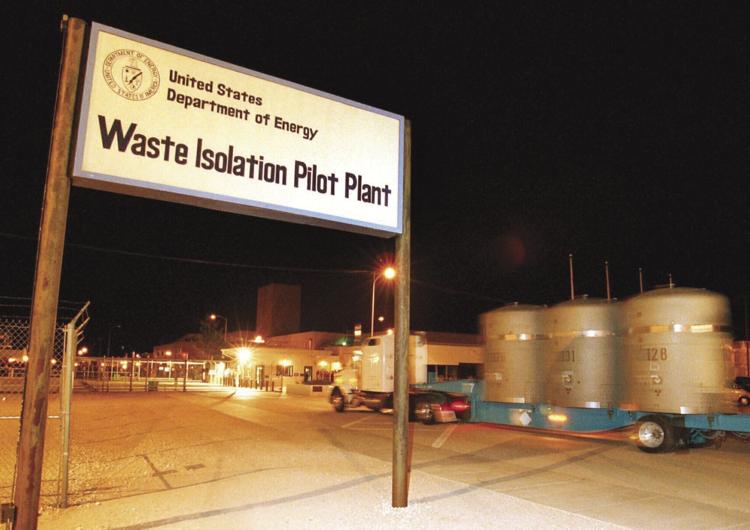
The U.S. Department of Energy (DOE) promised the People of New Mexico that it would cleanup and dispose of its plutonium-contaminated nuclear bomb waste by depositing it into the Waste Isolation Pilot Plant (WIPP) over 25 years and close. DOE broke its promise when that deadline passed on March 26th, But DOE has a new plan to keep the deep geologic nuclear waste disposal facility at WIPP open for 60 more years for legacy bomb waste and for newly-generated bomb waste from fabricating new weapons. https://wipp.energy.gov/
To alert the public about DOE’s plans, the Stop Forever WIPP Coalition will host the Second Annual WIPP Plutonium Caravan on Saturday, April 26th beginning at 9 am at the DeVargas Mall in Santa Fe. The Caravan will travel south on St. Francis Drive to Interstate 25 and towards Las Vegas, New Mexico with stops along the way. You are invited to be part of the Caravan. For more information, please visit https://stopforeverwipp.org/……………………………………………………………………………………………….. https://nuclearactive.org/
1 This Month
To see nuclear-related stories in greater depth and intensity – go to https://nuclearinformation.wordpress.com/
12 February – Webinar The Big Push: New Nuclear Projects in Canada

Thursday, February 12, 7 pm Eastern | 2nd of 4 sessions in the 2026 Nuclear Waste Online webinar series
Join a webinar on the push for new nuclear generation in Canada. Go to Northwatch.org to register or use the registration link https://us02web.zoom.us/webinar/register/WN_ZfWOf1GITqSRIZX8CB-A9w

-
Archives
- February 2026 (115)
- January 2026 (308)
- December 2025 (358)
- November 2025 (359)
- October 2025 (376)
- September 2025 (258)
- August 2025 (319)
- July 2025 (230)
- June 2025 (348)
- May 2025 (261)
- April 2025 (305)
- March 2025 (319)
-
Categories
- 1
- 1 NUCLEAR ISSUES
- business and costs
- climate change
- culture and arts
- ENERGY
- environment
- health
- history
- indigenous issues
- Legal
- marketing of nuclear
- media
- opposition to nuclear
- PERSONAL STORIES
- politics
- politics international
- Religion and ethics
- safety
- secrets,lies and civil liberties
- spinbuster
- technology
- Uranium
- wastes
- weapons and war
- Women
- 2 WORLD
- ACTION
- AFRICA
- Atrocities
- AUSTRALIA
- Christina's notes
- Christina's themes
- culture and arts
- Events
- Fuk 2022
- Fuk 2023
- Fukushima 2017
- Fukushima 2018
- fukushima 2019
- Fukushima 2020
- Fukushima 2021
- general
- global warming
- Humour (God we need it)
- Nuclear
- RARE EARTHS
- Reference
- resources – print
- Resources -audiovicual
- Weekly Newsletter
- World
- World Nuclear
- YouTube
-
RSS
Entries RSS
Comments RSS
 nuclear-news