Pope Francis Refused to Be Silent on Gaza. Will His Successor Follow Suit?
Even from his hospital bed, Pope Francis continued his near-daily video calls in solidarity with Palestinians in Gaza
By Seraj Assi , Truthout, April 27, 2025
Pope Francis, who died on April 21, was a rare beacon of hope for many Palestinians in the long months of the Gaza genocide. The pope refused to be silent on Gaza. For 18 months, he made nearly daily video calls in solidarity with Palestinians in Gaza, including recent calls he made from his hospital bed. He rang the Holy Family Church in Gaza City every night, speaking with church leaders and displaced Palestinians sheltering there, usually for about 15 minutes.
Pope Francis began one of his most memorable calls to parishioners in Gaza earlier this year by saying “As-salaam Alaikum” (“Peace be upon you”). The video of that call showed his intimate relationship with the small Palestinian Christian community that remains in Gaza, many of whom he came to know by name. His final call to the Gaza Strip, made two days before his death, lasted 30 seconds.
For many in Gaza, those phone calls were a ray of light that shone through the horrors of Israeli genocide, which has killed over 51,000 Palestinians, most of them women and children. “His Holiness the pope was not an ordinary person,” Musa Antone, a Christian resident of Gaza, told CNN. “He was a man of faith who inquired about both Christians and Muslims.”
The surviving Christian community in Gaza now mourns Francis’s loss. “We felt like ‘Oh my God, we’re like orphans now,’” lamented George Anton, a local Catholic, and the emergency coordinator in the Holy Family church. “He was a real father to us. Pope Francis was like a shield for the Christians in the enclave. He was the fighter. He was fighting for our rights and for our protection.”
Kamal Anton, a 72-year-old who had taken shelter at the church amid the genocide, said: “During his call, he prayed for peace and resilience for us in Gaza. He never forgot the word ‘peace’ in any of his calls with us throughout the war. His support included all of us — Christians and Muslims alike. He prayed daily for our safety.”……………………………………………
In a tribute to the late pope, Palestinian theologian Munther Isaac wrote Monday: “He conveyed true compassion to Palestinians, most notably to those in Gaza during this genocide. The pope left our world today, and the occupation and the wall remained. Even worse, he left our world while a genocide continues to unfold.”
Pope Francis’s last public appearance was a plea to end the war in Gaza. In an Easter message one day before his death, the pope, visibly very sick, renewed his call for a ceasefire
The appeal culminated Francis’s months-long antiwar legacy in Gaza. In 2024, the pope wrote that, “what is happening in Gaza has the characteristics of a genocide,” while calling for an international investigation. He called Israel’s genocide in Gaza “shameful,” “deplorable” and a “useless slaughter” of civilians. He also labeled Israel’s massacres of civilians in Gaza “terrorism.” In December, after an Israeli strike in Gaza killed Palestinian children, he said: “Children have been bombed. This is cruelty. This is not war. I wanted to say this because it touches the heart.”…………………………………
Last Christmas, in a bold symbolic gesture against genocide, Francis unveiled a Nativity scene portraying baby Jesus in a crib lined with a Palestinian Keffiyeh, which was likely inspired by Palestinian Rev. Munther Isaac’s iconic “Christ in the Rubble” Christmas sermon in Bethlehem………
Pope Francis’s support for the Palestinian people was not merely humanitarian; he also unequivocally recognized Palestinian independence and freedom. Ten years ago, when he visited Bethlehem, widely recognized as the birthplace of Jesus, he referred to the land as “the State of Palestine.” Shortly after, the Vatican signed a treaty recognizing the State of Palestine. “Yes, it’s a recognition that the state exists,” affirmed Rev. Federico Lombardi, the Vatican spokesman.
Pope Francis’s unwavering solidarity with Gaza stood in sharp contrast with the shameful complicity of the Western political class. “This campaign has made Pope Francis arguably the most consistent high-profile defender of the humanity of the Palestinian people during a period when the Israeli assault on Gaza has been pursued with relentless violence,” wrote John Nichols ………………………………………..
In a move that has caused some controversy within Israel, according to the Israeli news site Ynet, the foreign ministry in Israel sought to prevent its ambassadors from expressing condolences following the pope’s passing. Middle East Eye reports: “Without providing an explanation, the ministry instructed its missions and diplomats to delete any social media posts mourning the former pope, according to Yedioth Ahronoth” (a major Israeli newspaper). Meanwhile, Israeli Prime Minister Benjamin Netanyahu waited more than three days after Pope Francis’s death before finally offering his own condolences on Thursday, following backlash over the foreign ministry’s deletion of condolence tweets.
Certainly, Francis’s broad antiwar vision, which made him a champion of nuclear disarmament who opposed and denounced nuclear weapons as “immoral,” did not endear him to warmongers………………………………..
Amid urgent concerns about the ongoing genocide in Gaza and rising attacks on the LGBTQ community in the U.S. and beyond, Palestinians and progressive supporters of the church are nervously awaiting news about who the pope’s successor will be.
One notable candidate to replace Pope Francis is the Latin Patriarch of Jerusalem, Cardinal Pierbattista Pizzaballa, a longtime advocate for the Christian minority in the Holy Land.
Cardinal Pizzaballa has praised the late pope’s moral clarity on Gaza, saying:
War is not just weapons. War is sometimes words. Pope Francis recently, especially in the last year, has been very outspoken about the situation of the Holy Land, calling for the liberation of the hostages, but also condemning the dramatic situation, the ongoing war in Gaza and the situation for Palestinians.
Cardinal Pizzaballa, an Italian Franciscan prelate, is the top Catholic in the Middle East with an archdiocese encompassing Israel, Palestine, Jordan and Cyprus. He has appealed for peace from both sides, and led a Christmas mass both in Gaza and Jerusalem. The cardinal, who visited Gaza in May 2024 after months of ceasefire negotiations, nearly one year after he offered to be exchanged for Gaza hostages, would be expected to continue some aspects of Francis’s leadership of the church……………………………………………………………
Cardinal Sarah, who has branded himself as a “parallel authority” to Pope Francis, has defended clerical celibacy, denounced “gender ideology,” and refused any “theological dialogue” with Islam –– a stark departure from the late pontiff’s legacy, who made notable progress in interfaith relations, particularly with Muslims. As Katherine Kelaidis writes at Vox, it’s important to note that “millions of dollars have been spent pushing a conservative social agenda in Africa” — a dynamic at play in the rise of socially conservative church leaders like Cardinal Sarah…………………………………………………………..
Another more progressive candidate is Luis Antonio Gokim Tagle, who hails from the Philippines. Described by some commentators as “Asian Francis,” the Filipino prelate has been praised for his commitment to social justice and equality, particularly for marginalized groups like LGBTQ people and the poor, though he simultaneously maintains a hardline anti-abortion stance.
……………………………………………. like most of the candidates, Cardinal Tagle’s views on the Gaza genocide remain to be seen.
Meanwhile, Raymond Burke, the Wisconsin-born cardinal, and Trump’s favorite candidate — a rabid Islamophobe who is highly conservative and clashed with Pope Francis on issues ranging from LGBTQ rights and the role of women in the church, to immigration — is perfectly positioned to become Trump’s papal puppet in the Vatican if he is chosen.
Pope Francis’s bold political stance on Palestine will put to the test the apolitical and eerie silence among his progressive successors, few of whom have expressed substantial views on Palestine. One of the few who have done so is Matteo Zuppi, the cardinal from Bologna, who was Francis’s peace envoy between Russia and Ukraine, and has worked extensively to broker peace there. He been outspoken in the wake of October 7, calling for peace, urging the need to understand the “root causes” of the conflict. He also called Hamas “the worst enemy of the Palestinian people.” He visited Bethlehem, called for a ceasefire, and highlighted the suffering of Palestinian children.
The other candidate who has publicly expressed a view on Palestine is Pietro Parolin,the first person Francis made a cardinal, in 2014. As secretary of state, he was involved in the George W. Bush administration’s attempts to revive the Israeli-Palestinian peace talks. He argued against deportation of Palestinians in Gaza in a rebuke to Trump’s plan, urged for lasting peace in Gaza and called for respect for humanitarian law. But he is hardly a liberal………………………
Most of the other candidates have hardly ever addressed Palestine, save for general allusions to peace. The issues of Palestine, social justice and immigration are inexorably linked, and many Palestine solidarity activists are hoping that the next pope will not fail to see that justice should be whole and not selective or partial.
Pope Francis, the first Latin American pontiff, brought a limited yet desperately needed progressive spirit to the Catholic Church. For all his reluctance to bring about church reforms on social issues, he will still go down as a symbol of a more compassionate and tolerant Christianity; a steadfast voice of peace and opponent of genocide; and a defender of the oppressed in Gaza, immigrants and the poor. Judging from the list of potential candidates, a move rightward seems likely………………………………………………….
Seraj Assi is a Palestinian writer living in Washington, D.C. and the author, most recently, of My Life as an Alien (Tartarus Press).
No comments yet.
1 This Month
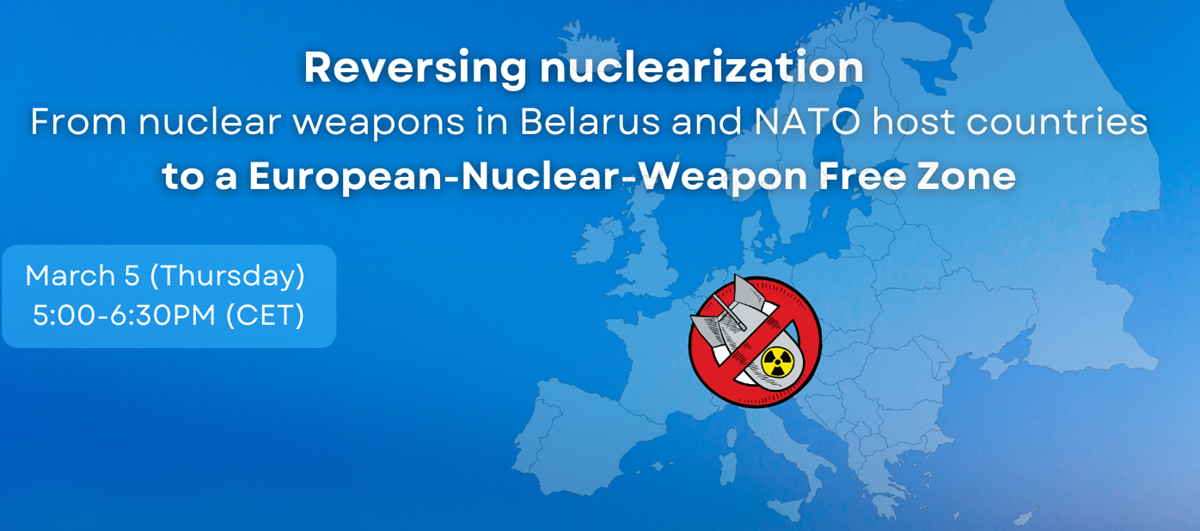
5 March -Online – Reversing nuclearization:
From nuclear weapons in Belarus and NATO host countries to a European-Nuclear-Weapon Free Zone
11am-12:30pm Eastern Time USA / 5pm-6:30pm CET

of the week – Advocating for a
nuclear free beach – https://www.samuellawrencefoundation.org/
The Samuel Lawrence Foundation advocates for a Nuclear Waste Free Beach at San Onofre, join us and take action!
10 March A LIVE WEBINAR THE REAL EFFECTS OF NUCLEAR POWER
What the Industry Isn’t Telling Us
1:00 PM Mountain, 2 pm Central, 3 pm Eastern. Live on the Keepers of the Water Facebook page

18 March Webinar @ 1 PM EST: An Assessment of SMR Projects: The Case of Canada
register for the zoom:
https://us02web.zoom.us/webinar/register/WN_o8BIIOUvQ2ONJR1nta65DQ#/registration

of the week – STOP SMALL MODULAR REACTORS IN CANADA
To see nuclear-related stories in greater depth and intensity – go to https://nuclearinformation.wordpress.com
-
Archives
- March 2026 (38)
- February 2026 (268)
- January 2026 (308)
- December 2025 (358)
- November 2025 (359)
- October 2025 (376)
- September 2025 (258)
- August 2025 (319)
- July 2025 (230)
- June 2025 (348)
- May 2025 (261)
- April 2025 (305)
-
Categories
- 1
- 1 NUCLEAR ISSUES
- business and costs
- climate change
- culture and arts
- ENERGY
- environment
- health
- history
- indigenous issues
- Legal
- marketing of nuclear
- media
- opposition to nuclear
- PERSONAL STORIES
- politics
- politics international
- Religion and ethics
- safety
- secrets,lies and civil liberties
- spinbuster
- technology
- Uranium
- wastes
- weapons and war
- Women
- 2 WORLD
- ACTION
- AFRICA
- Atrocities
- AUSTRALIA
- Christina's notes
- Christina's themes
- culture and arts
- Events
- Fuk 2022
- Fuk 2023
- Fukushima 2017
- Fukushima 2018
- fukushima 2019
- Fukushima 2020
- Fukushima 2021
- general
- global warming
- Humour (God we need it)
- Nuclear
- RARE EARTHS
- Reference
- resources – print
- Resources -audiovicual
- Weekly Newsletter
- World
- World Nuclear
- YouTube
-
RSS
Entries RSS
Comments RSS
 nuclear-news
Leave a comment