Utahns must think carefully about becoming the nation’s nuclear hub
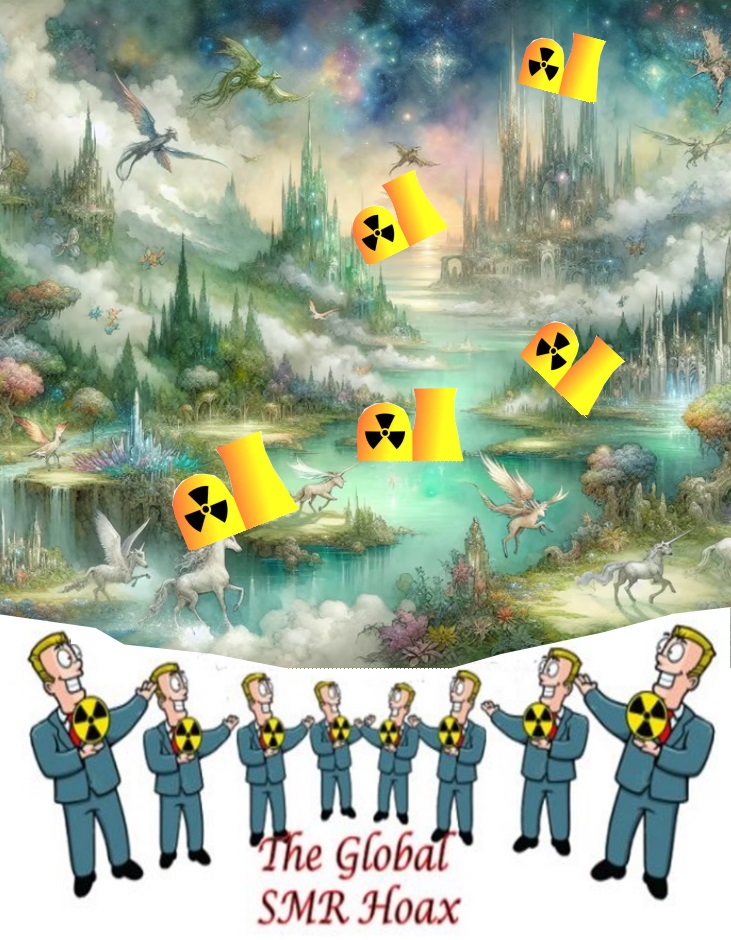
the risk of investing millions of taxpayer dollars in technology that’s yet to be implemented on a large scale. The investment required to develop nuclear power plants is massive. The state has lauded microreactors and SMRs as the stuff of the future.
We call on all Utahns to evaluate nuclear energy’s cost, timeline and environmental impacts
April 26, 2025, By Danielle Endres, Madi Sudweeks,
https://www.deseret.com/opinion/2025/04/26/utah-risks-of-nuclear-energy-hub/
Danielle Endres, Ph.D., is a professor at the University of Utah whose research focuses on energy democracy. Madi Sudweeks is a lifelong Utahn and a graduate student studying nuclear energy and environmental justice. The views expressed in this op-ed are their own and do not necessarily represent those of the University of Utah.
Utah’s Legislature has put hope in nuclear energy as a key component of our state’s future energy mix. At the start of the 2025 legislative session, Senate President Stuart Adams proclaimed that he wants Utah to be the “nation’s nuclear hub.” Governor Spencer Cox, likewise, included nuclear energy in Operation Gigawatt, an initiative aimed at doubling the state’s energy production over the next 10 years. With the passage of HB249, the state created the Nuclear Energy Consortium to advise nuclear energy development in Utah. Now we must consider whether nuclear energy is right for our state.
To ensure decisions about how we will power Utah’s future are as democratic as possible, all Utahns should be part of the deliberation. We call on Utahns, including our Legislature, governor and the Nuclear Energy Consortium, to evaluate nuclear energy’s cost, timeline and environmental impacts.
We have already seen how costly nuclear development can be here in Utah. In 2015, Utah Associated Municipal Power Systems (UAMPS) partnered with NuScale on a small modular reactor (SMR) project, planned to be at Idaho National Labs and provide power to several towns in Utah by 2030. The project was canceled in November 2023 after cost estimates increased from $3 billion to $9 billion.

This failed project reveals the risk of investing millions of taxpayer dollars in technology that’s yet to be implemented on a large scale. The investment required to develop nuclear power plants is massive. The state has lauded microreactors and SMRs as the stuff of the future. They claim new technology will make nuclear energy safer, easier to produce and cheaper. However, the electricity produced by UAMPS/NuScale project would have been more expensive than that produced by the most recent traditional nuclear power plant to come online in the U.S.
That project was not an exception. A 2013 Union of Concerned Scientists report shows that SMRs will be more expensive than traditional nuclear plants.
Developing nuclear power is costly and time-intensive. A 2014 study by Dr. Benjamin Sovacool and colleagues demonstrated that a sample of 175 nuclear reactors took on average 64% longer than projected. Dr. Arjun Makhijani argues that nuclear power is too slow and too costly to meaningfully reduce emissions, especially when renewables like solar and wind are ready now and cheaper than ever.
The state’s call to become a nuclear powerhouse is another iteration of the nuclear renaissance we saw in the early 2000s. However, calls for nuclear development in response to climate change then did not result in an increase in nuclear power. Nuclear consistently provides about 20% of electricity for the U.S. Skeptical public opinion, accidents at TMI and Chernobyl, cost, and long construction times have meant that only three new reactors have come online since the 1990s.
Now we’re seeing a new version of a call for a nuclear renaissance. In Utah, Adams said we need nuclear energy to meet the energy demand of Artificial Intelligence (AI). AI requires massive amounts of power and water; experts expect power demand to skyrocket with the computing power needed for AI. Because tech companies have committed to reducing greenhouse gases, they are looking to nuclear power to supply the increased demand because, proponents argue, it can supply stable electricity that intermittent solar and wind energy cannot. However, there are other ways to provide baseload or surgable electricity, including battery storage and geothermal.
Whether or not nuclear energy ends up powering AI, we should be asking ourselves if it is worth the cost and if Utah, already threatened by drought, should be seeking out such a water and energy-intensive industry. Our communities and our environment will continue to pay the price with our tax dollars, our water and our power.
There is no one energy source that is inherently good. Each requires resources and has an impact on its surrounding communities and environments. If Utah is going to consider nuclear power, we call for state leaders and Utahns to engage in a nuanced and research-based analysis of its benefits and risks. Our own analysis makes us skeptical that it’s the right energy source for Utah. And we’re not alone — a former nuclear engineer also recently made the case against nuclear power for Utah.
No comments yet.
1 This Month

of the week – Shut Down Drone Warfare!


Tell the Ukrainian Government to Drop Prosecution of Peace Activist Yurii Sheliazhenko

Petition to revoke the licensing of the Near Surface Nuclear Disposal Facility (NSDF) at Chalk River. https://www.ourcommons.ca/petitions/en/Petition/Details?Petition=e-7247
To see nuclear-related stories in greater depth and intensity – go to https://nuclearinformation.wordpress.com
-
Archives
- April 2026 (57)
- March 2026 (251)
- February 2026 (268)
- January 2026 (308)
- December 2025 (358)
- November 2025 (359)
- October 2025 (376)
- September 2025 (257)
- August 2025 (319)
- July 2025 (230)
- June 2025 (348)
- May 2025 (261)
-
Categories
- 1
- 1 NUCLEAR ISSUES
- business and costs
- climate change
- culture and arts
- ENERGY
- environment
- health
- history
- indigenous issues
- Legal
- marketing of nuclear
- media
- opposition to nuclear
- PERSONAL STORIES
- politics
- politics international
- Religion and ethics
- safety
- secrets,lies and civil liberties
- spinbuster
- technology
- Uranium
- wastes
- weapons and war
- Women
- 2 WORLD
- ACTION
- AFRICA
- Atrocities
- AUSTRALIA
- Christina's notes
- Christina's themes
- culture and arts
- Events
- Fuk 2022
- Fuk 2023
- Fukushima 2017
- Fukushima 2018
- fukushima 2019
- Fukushima 2020
- Fukushima 2021
- general
- global warming
- Humour (God we need it)
- Nuclear
- RARE EARTHS
- Reference
- resources – print
- Resources -audiovicual
- Weekly Newsletter
- World
- World Nuclear
- YouTube
-
RSS
Entries RSS
Comments RSS
 nuclear-news
Leave a comment