What’s Legally Allowed in War – Gaza a dress rehearsal for U.S. war on China.

The claim that Israel has adhered to the laws of war is extremely contentious.
1977, an international agreement explicitly prohibited the intentional targeting of civilians.
Gaza not only looks like a dress rehearsal for the kind of combat U.S. soldiers may face. It is a test of the American public’s tolerance for the levels of death and destruction that such kinds of warfare entail….………………………………………………………………………………………………………………………………………………….
On Chernobyl Disaster Anniversary, Repairing Damaged Shield Poses ‘Enormous Challenge’
April 26, 2025 ,By RFE/RL’s Ukrainian Service, Stuart Greer and Oleh Haliv, https://www.rferl.org/a/ukraine-chernobyl-nuclear-disaster-anniversary-russia/33397012.html?fbclid=IwY2xjawJ6SqxleHRuA2FlbQIxMQBicmlkETE3RG9aSkhxNzhYNndQMGFFAR4zqGfz15XQZ8lgJtOhc7sSWq1aQn8M_cCUwEQ8_iwc4gjbpLOjfLqY7ftG6g_aem_uTOf_f4ZB8kKArzvpkNfYQ
As Ukraine marks the 39th anniversary of the world’s worst civilian nuclear accident at the Chernobyl power plant, engineers are struggling to find ways to repair the complex’s protective shield more than two months after a Russian drone left a large hole in the structure.
The massive steel dome was designed to protect and confine the radioactive remains of crippled reactor number four that exploded when a routine safety test went wrong on April 26, 1986.
Radiation levels outside the punctured shield have stayed normal since the drone attack, officials say.
But sealing the hole hasn’t been possible because it sits above the crumbling sarcophagus that encases radioactive debris from the reactor.
“How can you fix a roof space where the higher you go up in the building, the higher the radiation levels? They’re so high next to the actual sarcophagus, the reactor unit, that you can’t work above it,” says Shaun Burnie, a nuclear expert with Greenpeace.
Burnie was part of a Greenpeace team invited to Chernobyl to inspect the damage shortly after the February 14 drone strike which Moscow denied it was responsible for.
“It’s a very, very serious, enormous challenge for Ukraine at a time when it’s faced with so many other challenges, and so the international community really needs to step in and support.” says Burnie.
It took emergency crews three weeks to locate and extinguish fires that spread and smoldered through the membrane of the shield’s outer shell.
The new confinement structure was completed in 2019 as part of a $2.2 billion international project involving 45 countries. The temporary rail track used to install it over the reactor has since been dismantled, meaning the massive structure can’t be moved safely to the side for repairs.
The United Nations predicted the shield would “make the reactor complex stable and environmentally safe for the next 100 years.”
But long-term plans to safely dismantle the sarcophagus to allow the removal of radioactive ruins of the reactor are no longer possible following damage to the shield, according to Dmytro Humeniuk, an expert from Ukraine’s State Scientific and Technical Center for Nuclear and Radiation Safety.
The European Bank for Reconstruction and Development has earmarked $450,000 to assess the drone damage to the confinement structure.
Ukrainian Environment Minister Svitlana Hrynchuk estimates the preliminary results of the analysis should be completed sometime in May.
Repairs to the shield will be costly and Ukraine will need significant funding from international donors, predicts Burnie.
“They have to come up with a longer-term plan, which will be very extensive, very complicated, and potentially horrendously expensive.”
US nuclear giant Westinghouse pulls out of race to build Britain’s first mini-nukes

There are growing fears that the economics of SMRs could prove even harder to justify – because they have many of the same problems as large reactors – meaning security and waste disposal – but produce far less electricity and so make less money.
There are growing fears that the economics of SMRs could prove even harder to justify – because they have many of the same problems as large reactors – meaning security and waste disposal – but produce far less electricity and so make less money.
Westinghouse has not submitted its final bid for the UK’s SMR design competition
Matt Oliver, Industry Editor, https://www.telegraph.co.uk/business/2025/04/26/us-company-pulls-out-race-build-britains-first-mini-nuke/
US nuclear giant Westinghouse has pulled out of the UK’s small modular reactor (SMR) design competition.
The four companies remaining in the contest were given a deadline of mid-April to make their final bids, but The Telegraph understands that Westinghouse did not submit one following a negotiation process.
It means only three finalists – Rolls-Royce, GE-Hitachi and Holtec – remain in the running.
Great British Nuclear (GBN), the quango responsible for the SMR programme, was expected to announce two winners this summer with bidders told to prepare to build three to four mini reactors each.
Westinghouse did not deny it had withdrawn on Friday but declined to give its reasons.
One industry source suggested the company had baulked at the commercial offer made by the Government.
GBN previously advertised contracts worth £20bn in total for SMR “technology partners”, a figure that is understood to be based on the assumption two winners would be chosen.
However, The Telegraph revealed in February that the Government was considering awarding a contract to only one company as Rachel Reeves, the Chancellor, looks to make savings in her cross-departmental spending review.
The Chancellor is struggling to balance the books as weak economic growth makes it harder to meet her self-imposed “fiscal rules” for borrowing.
SMR supporters claim they could be a breakthrough in nuclear power because they would be made predominantly in factories and then assembled on site, cutting building times from around a decade to a few years. In theory this could cut costs – as would-be builders of SMRS have repeatedly promised..
Many politicians have snapped up that bait. When he opened the latest stage of the SMR competition, Mr Miliband said: “Small modular reactors will support our mission to become a clean energy superpower.”
However, the nuclear industry has a mixed record on bringing in key projects on time and on budget.
The biggest current example is the UK’s Hinkley Point C power station in Somerset which EDF originally said would cost under £20bn and be operating by now. Current costs estimates are for a final price approaching £50bn and a start-up after 2030.
There are growing fears that the economics of SMRs could prove even harder to justify – because they have many of the same problems as large reactors – meaning security and waste disposal – but produce far less electricity and so make less money.
A spokesman from the UK Energy Department said: “Great British Nuclear is driving forward its SMR competition for UK deployment. It has now received final tenders, which it will evaluate ahead of taking final decisions this spring.”
On Friday, a GBN spokesman declined to comment on Westinghouse’s position as did Westinghouse itself.
Kiev and its backers reject key aspects of Trump’s peace plan – Reuters
25 Apr 25, https://www.rt.com/news/616288-reuters-trump-peace-plan/
The counteroffer is “on the table” of the American president, Vladimir Zelensky has stated
Kiev and its European backers have turned down President Donald Trump’s reported peace plan for the Ukraine conflict in several significant respects, according to a report by Reuters, citing the full texts of the US proposal and the response.
Washington tabled a proposed deal to end hostilities between Kiev and Moscow during a meeting in Paris on Thursday last week. A follow-up meeting took place in London on Wednesday, at which Ukrainian officials and their NATO European counterparts drafted counterproposal.
The London talks were downgraded at the last minute after Ukraine’s Vladimir Zelensky publicly rejected key American suggestions. He declared on Thursday that the European-backed “strategy” was now “on President Trump’s table.”
Having examined the drafts “in full and explicit detail” on Friday, Reuters identified four critical areas of disagreement.
The US is proposing Washington’s formal recognition of Russian sovereignty over Crimea — the former Ukrainian region that voted to join Russia following the 2014 Western-backed armed coup in Kiev — and a cessation of hostilities along the current frontline.
Kiev and its European backers are only willing to discuss territorial issues after a ceasefire has been established.
The US document offers a “robust security guarantee” for Ukraine from willing nations, according to Reuters. The Euro-proposal rival proposal insists that no restrictions be placed on Ukraine’s military, including the deployment of foreign troops on its territory, and calls for the US to provide NATO-like protection to Ukraine.
Russia demands Ukraine remains neutral and insists that it will not accept any NATO troop presence, or troops from bloc members as part of a coalition, in the country.
Reuters reported that the US is advocating for the removal of restrictions imposed on Russia since 2014, while Kiev and the Europeans propose a “gradual easing of sanctions after a sustainable peace is achieved,” paired with a threat of snapback measures for non-compliance.
The US framework includes mentions of financial compensation for Ukraine, but lacks specifics. The Kiev-backed counterproposal identifies frozen Russian assets in Western countries as a source for such payments, according to Reuters. Russia has labeled the seizure of its funds illegal and views any use of these assets to support Ukraine as “theft.”
Members of the Trump administration have blasted Zelensky for attempting to negotiate a deal through the media rather than in confidential discussions. The US president has warned that he may withdraw from his mediation efforts altogether if either party stalls progress.
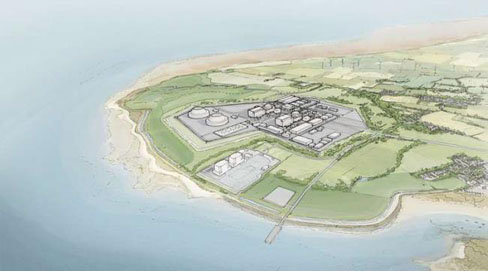
Campaigners tell Government to drop Bradwell nuclear site
27th April, By Sophie England, AI Champion for the South East, https://www.maldonandburnhamstandard.co.uk/news/25110689.campaigners-tell-government-drop-bradwell-nuclear-site/
A campaign group has told the Government to “drop the Bradwell site” for the development of nuclear energy.
The Blackwater Against New Nuclear Group (BANNG) has urged the Government to end all interest in the Bradwell site for future nuclear power station development.
In their response to the Government’s National Policy Statement for Nuclear Energy, BANNG stated: “In the specific case of Bradwell, the site should be removed from further consideration on the grounds that it is unsuitable and unacceptable.”
The Bradwell site was considered “potentially suitable” for nuclear power by Chinese company CGN from 2015.
However, a pre-application for development in 2020 was met with strong opposition from the Blackwater communities and councils.
This led to CGN pausing its investigations and leaving the site.
It has now been confirmed by the Government and industry that they no longer expect planning applications to be submitted.
BANNG claims this confirms the end of the CGN Bradwell project.
Despite this, the site is still considered to have potential for energy transmission and nuclear infrastructure.
However, BANNG argues that the site does not have widespread public support, with “overwhelming opposition from local councils, stakeholders, community groups led by BANNG over many years”.
BANNG also points out the site’s vulnerability due to its exposed and low-lying coastal location.
They argue that this makes it susceptible to “accidental or malevolent interference and to the increasing impacts of climate change, sea level rise, inundation and storm surges capable of ultimately overwhelming the power station and its long-term highly active waste stores.”
BANNG also criticises the idea of using the site for Small Modular Reactors (SMRs), stating that these are “not small and do not yet exist”.
In their consultation response, BANNG urges the Government “to provide a more balanced, less hysterical, account of the virtues and failings of nuclear energy”.
Kursk Region fully liberated from Ukrainians – Putin
Rt.com, 26 Apr, 2025
Kiev’s gamble to invade Russia has ended up in an unmitigated disaster, the president has said.
The Russian military has completely liberated the border Kursk Region from Ukrainian forces, President Vladimir Putin has said after being briefed on the battlefield situation by General Staff Chief Valery Gerasimov.
In a video address shared by the Kremlin on Saturday, Putin thanked Russian service members “who took part in defeating the neo-Nazi groups” that invaded the region last summer.
“The Kiev regime’s adventure has completely failed, and the huge losses suffered by the enemy, including among the most combat-ready, trained and equipped, including by Western models of equipment… will certainly be reflected along the entire line of combat contact,” he said.
According to Putin, the Russian success sets the stage for further advances in other areas of the front, bringing final victory in the conflict closer……………….
…………….Ukraine launched its incursion into Kursk Region last August, initially gaining some ground and capturing numerous settlements before their advance was checked by Russian forces.
Putin has characterized the incursion as an attempt by Kiev to divert attention from Moscow’s offensive in Donbass, adding that this ploy has failed. Ukrainian officials described the operation as a way to gain leverage in potential peace talks with Russia. https://www.rt.com/russia/616355-kursk-region-fully-liberated/
Smash it, then claim it

Trump is trying to rebuild the Iran nuclear deal he destroyed, then declare personal triumph, writes Linda Pentz Gunter
There is deep irony in the current efforts by the Trump administration to secure a nuclear deal with Iran, given it was the previous Trump administration that broke a fully functioning agreement already in place to ensure Iran did not develop nuclear weapons.
The JCPOA — or Joint Comprehensive Plan of Action — also known colloquially as the Iran nuclear deal — was agreed in Vienna in June 2015 between Iran and China, France, Germany, the Russian Federation, the United Kingdom and the United States. It involved significant monitoring and verification of Iran’s nuclear enrichment activities to ensure it remained within the confines of commercial grade. It also lifted UN Security Council sanctions on Iran as well as multilateral and national sanctions related to its nuclear program.
But under the first Donald Trump presidency, the White House effectively tore up the agreement, rendering it worthless when the US withdrew in May 2018. In his classically hyperbolic style, Trump labeled the JCPOA “one of the worst and most one-sided transactions the United States has ever entered into.”
In recent weeks, the new Trump administration has been feverishly negotiating, most recently in Oman, to establish an Iran nuclear deal that could turn out to be remarkably similar to the JCPOA. But this, of course, is the Trump modus operandi: Destroy something perfectly effective, then rebuild it almost in the exact image and declare it his own invention.
So far, the administration has wavered between demanding that Tehran dismantle its entire nuclear program, backtracking to allow Iran to enrich uranium to within commercial grade, then reversing again, with Middle East envoy Steve Witkoff telling Iran it must “stop and eliminate its nuclear enrichment” before the US would sign a deal.
Whether any of this will work remains uncertain, but it certainly wasn’t helped by the recent ravings of New Jersey Senator John Fetterman, a Democrat and former Bernie Sanders supporter whose politics — and especially rhetoric — on Israel and immigration, have become indistinguishable from many of the more extreme Republicans.
Of the current Iran talks, Fetterman pronounced: “The negotiations should be comprised of 30,000-pound bombs and the IDF,” referring to the Israeli Defence Forces. …………………………………..
what would the health and environmental impacts be of a major bombing attack on Iran’s nuclear facilities? Such an act could release clouds of radioactive dust into the atmosphere, contaminating land and water downwind. Contamination of surface and ground water would result in prolonged harmful consequences through ingestion by exposed populations.
Protracted exposure to enriched uranium dust by inhalation and ingestion can cause bone toxicity and reproductive toxicity and lead to renal failure. Uranium is also neurotoxic to the brain.
Tehran had been keeping its uranium enrichment well within the 3.67% limit, even after Trump withdrew the US from JCPOA. But in 2021, an act of sabotage against Natanz, Iran’s largest uranium enrichment facility, which Iran blamed on Israel, blacked out the plant and damaged centrifuges. The attack prompted Iran, unfettered by the shattered nuclear deal, to begin enriching its uranium to as high as 60% U-235 — some sources assert it has even reached 85% — either way a level that is considered weapons usable. Uranium enriched to 90% is considered weapons grade.
Iran’s nuclear facilities have been targeted on several occasions. In 2010, a powerful computer worm known as Stuxnet, designed by US and Israeli intelligence, was used to disable a key part of the Iranian nuclear program. Last year, a strike by the Israeli Air Force hit Iran’s Isfahan Nuclear Technology Center for uranium conversion and fuel production.
As negotiations began with Iran this spring, Trump also used threatening rhetoric at first, warning in late March that if the country did not dismantle its nuclear program, “there will be bombing. It will be bombing the likes of which they have never seen before.” He made similar threats during the last gasps of his first presidency, when he weighed an attack on Iran’s Natanz nuclear center but never followed through.
If Iran does indeed agree to end all its nuclear activities, the question remains about what to do with its stockpile of already enriched uranium. One idea apparently mooted by the White House is to allow Russia to store it, with a clause that would let Russia return the stockpile to Iran should the US breach any deal made in the coming weeks.
What all of this points to, of course, is the blurry line between commercial and military nuclear programs. Iran, a signatory to the nuclear Non-Proliferation Treaty, can claim to be abiding by the terms laid out in Article IV which gives countries who agree not to develop nuclear weapons “the inalienable right of all the Parties to the Treaty to develop research, production and use of nuclear energy for peaceful purposes.” The trouble is, no one believes them, exposing the weakness in — and wrongheadedness of — the treaty clause that leaves the back door perpetually open to the production of nuclear weapons.
Linda Pentz Gunter is the international specialist at Beyond Nuclear and writes for and edits Beyond Nuclear International. Views are her own. https://beyondnuclearinternational.org/2025/04/27/smash-it-then-claim-it/
Utahns must think carefully about becoming the nation’s nuclear hub
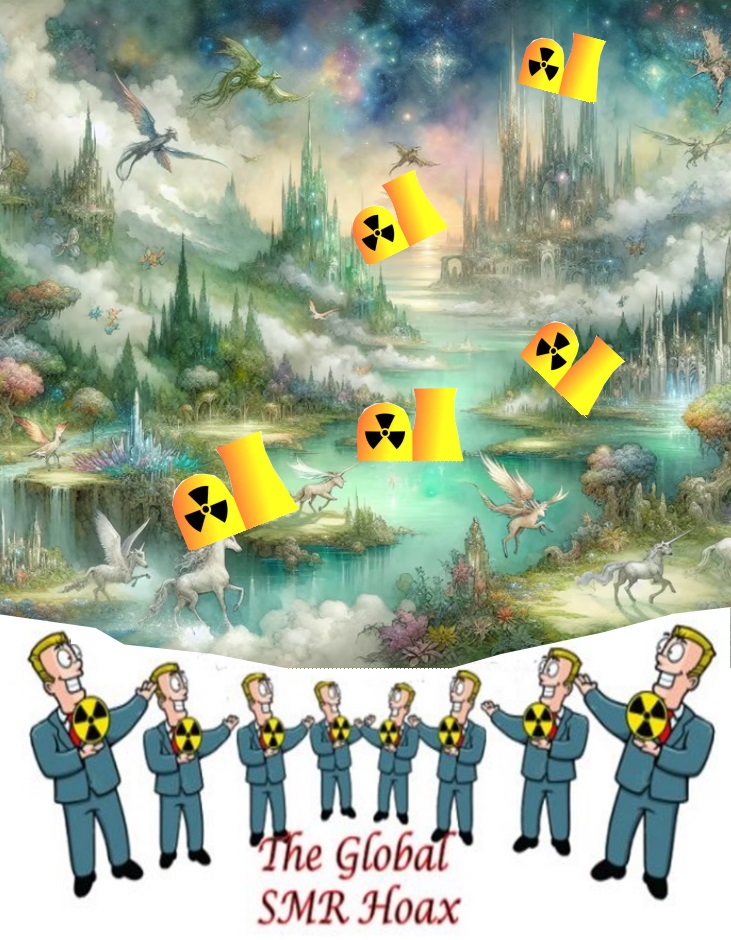
the risk of investing millions of taxpayer dollars in technology that’s yet to be implemented on a large scale. The investment required to develop nuclear power plants is massive. The state has lauded microreactors and SMRs as the stuff of the future.
We call on all Utahns to evaluate nuclear energy’s cost, timeline and environmental impacts
April 26, 2025, By Danielle Endres, Madi Sudweeks,
https://www.deseret.com/opinion/2025/04/26/utah-risks-of-nuclear-energy-hub/
Danielle Endres, Ph.D., is a professor at the University of Utah whose research focuses on energy democracy. Madi Sudweeks is a lifelong Utahn and a graduate student studying nuclear energy and environmental justice. The views expressed in this op-ed are their own and do not necessarily represent those of the University of Utah.
Utah’s Legislature has put hope in nuclear energy as a key component of our state’s future energy mix. At the start of the 2025 legislative session, Senate President Stuart Adams proclaimed that he wants Utah to be the “nation’s nuclear hub.” Governor Spencer Cox, likewise, included nuclear energy in Operation Gigawatt, an initiative aimed at doubling the state’s energy production over the next 10 years. With the passage of HB249, the state created the Nuclear Energy Consortium to advise nuclear energy development in Utah. Now we must consider whether nuclear energy is right for our state.
To ensure decisions about how we will power Utah’s future are as democratic as possible, all Utahns should be part of the deliberation. We call on Utahns, including our Legislature, governor and the Nuclear Energy Consortium, to evaluate nuclear energy’s cost, timeline and environmental impacts.
We have already seen how costly nuclear development can be here in Utah. In 2015, Utah Associated Municipal Power Systems (UAMPS) partnered with NuScale on a small modular reactor (SMR) project, planned to be at Idaho National Labs and provide power to several towns in Utah by 2030. The project was canceled in November 2023 after cost estimates increased from $3 billion to $9 billion.

This failed project reveals the risk of investing millions of taxpayer dollars in technology that’s yet to be implemented on a large scale. The investment required to develop nuclear power plants is massive. The state has lauded microreactors and SMRs as the stuff of the future. They claim new technology will make nuclear energy safer, easier to produce and cheaper. However, the electricity produced by UAMPS/NuScale project would have been more expensive than that produced by the most recent traditional nuclear power plant to come online in the U.S.
That project was not an exception. A 2013 Union of Concerned Scientists report shows that SMRs will be more expensive than traditional nuclear plants.
Developing nuclear power is costly and time-intensive. A 2014 study by Dr. Benjamin Sovacool and colleagues demonstrated that a sample of 175 nuclear reactors took on average 64% longer than projected. Dr. Arjun Makhijani argues that nuclear power is too slow and too costly to meaningfully reduce emissions, especially when renewables like solar and wind are ready now and cheaper than ever.
The state’s call to become a nuclear powerhouse is another iteration of the nuclear renaissance we saw in the early 2000s. However, calls for nuclear development in response to climate change then did not result in an increase in nuclear power. Nuclear consistently provides about 20% of electricity for the U.S. Skeptical public opinion, accidents at TMI and Chernobyl, cost, and long construction times have meant that only three new reactors have come online since the 1990s.
Now we’re seeing a new version of a call for a nuclear renaissance. In Utah, Adams said we need nuclear energy to meet the energy demand of Artificial Intelligence (AI). AI requires massive amounts of power and water; experts expect power demand to skyrocket with the computing power needed for AI. Because tech companies have committed to reducing greenhouse gases, they are looking to nuclear power to supply the increased demand because, proponents argue, it can supply stable electricity that intermittent solar and wind energy cannot. However, there are other ways to provide baseload or surgable electricity, including battery storage and geothermal.
Whether or not nuclear energy ends up powering AI, we should be asking ourselves if it is worth the cost and if Utah, already threatened by drought, should be seeking out such a water and energy-intensive industry. Our communities and our environment will continue to pay the price with our tax dollars, our water and our power.
There is no one energy source that is inherently good. Each requires resources and has an impact on its surrounding communities and environments. If Utah is going to consider nuclear power, we call for state leaders and Utahns to engage in a nuanced and research-based analysis of its benefits and risks. Our own analysis makes us skeptical that it’s the right energy source for Utah. And we’re not alone — a former nuclear engineer also recently made the case against nuclear power for Utah.
7 arrested during blockade of RAF Lakenheath, 26 April 2025
- 7 activists arrested during blockade of RAF Lakenheath
- 250 people gathered to blockade base in opposition to return of US nuclear weapons to Britain
- Action occured on final day of two-week peace camp organised by Lakenheath Alliance for Peace
CND, 26 Apr 25
Seven people were arrested during a blockade that closed the main gate of RAF Lakenheath today, during peaceful protests in opposition to any return of US nuclear weapons to the Suffolk air base.
250 people from across the country – as well as international delegates – participated in the demonstration and blockade, which marked the final day of the Lakenheath Alliance for Peace peace camp. There has been acontinuous presence of campaigners outside the main gate of the base since 14 April, as well as events highlighting Lakenheath’s role in Israel’s ongoing genocide in Gaza, the role of the military in climate breakdown, and NATO’s nuclear network in Europe.
CND General Secretary Sophie Bolt said:
“Solidarity with the seven people who were arrested as part of this successful action which shut down the main entrance to RAF Lakenheath for over three hours. Rather than arresting people for peacefully protesting the return of US nuclear weapons to Britain and the base’s role in supporting Israel’s genocide in Gaza, the police should be investigating the clear violations of international law being facilitated by both the British government and US bases in Britain. Nuclear weapons don’t make us safer, they make us a target. We’re going to keep on protesting at these bases to stop US nuclear dangers. We want an end to these US bases in Britain.”
Remembering Chernobyl: Why not developing Wylfa B is a no-brainer.
26 Apr 2025, Robat Idris, https://nation.cymru/opinion/remembering-chernobyl-why-not-developing-wylfa-b-is-a-no-brainer/
26th April 2025 marks the 39th anniversary of the catastrophic nuclear explosion in Chernobyl, Ukraine – which, at the time, was part of the Soviet Union.
It’s worth reminding people of the effects of that horrific event. Tens of thousands of children and adolescents developed thyroid cancer in Ukraine, Belarus and Russia, and children from affected areas have been welcomed here for respite holidays.
Genetic problems have been observed in the wildlife of the area. The area around the nuclear plant is still uninhabited.
Moreover, the rain that fell in Wales following the explosion caused radioactive pollution, even though we were 1,600 miles away. As a result, there was a serious impact on the agricultural industry, with upland lamb being banned from entering the food chain until tests showed that the level of Caesium-137 radiation had been adequately reduced.
Restrictions were placed on 9,800 farms, most of them in Wales and Cumbria. The final restrictions were not lifted until 2012 – 26 years after the explosion.
Why mention this now?
Because Chernobyl is in a country that is in the middle of war; a country that contains other nuclear reactors such as Zaporizhzhia, the largest nuclear complex in Europe. Because a shell built over the reactor at Chernobyl in order to prevent radiation from escaping was hit by a drone on the 14th of February this year. Because it is the first war that is being fought in a country where there are active nuclear reactors.
And because this nightmare could happen to us.
War target
With all the talk of preparing for war by political parties in Westminster, the British State’s obsession with nuclear energy and nuclear weapons is extremely dangerous. Consider that Starmer wants to see nuclear plants all over the State! All would be a target in war. And all need to be protected by special police.
All of this is another reason for opposing nuclear, though there are enough already – the radioactive waste without a long-term solution; the fact that waste would be on site for over a century; the dangers of fire; the fact that it will not be possible to build enough nuclear to have an impact on climate change; the diversion of funds and resources from renewable energy; the environmental mess associated with uranium mining; the threat to the Welsh language by thousands of workers for a large station; the likelihood that relatively few workers would be needed for operating a Modular Reactor (SMR); the extreme cost.
No-brainer
Yet as reported in Nation Cymru, Llinos Medi, the Member of Parliament for Ynys Môn at Westminster, has claimed in the House of Commons on 8 April 2025 that the development of a site at Wylfa is a ‘no-brainer’.
We respectfully ask her to reconsider this statement, and see why NOT building Wylfa B is a ‘no-brainer’. Here are, in short, 10 additional reasons.
The people of Anglesey need work – Llinos and PAWB at least agree on this! Nevertheless, since Tony Blair’s Energy Review in 2006, the main political emphasis of all levels of government has been on supporting Wylfa B. Where is the evidence that nuclear work is what the people want? The portraying of nuclear power over so many years as essential is economic recklessness.
In a world where there is uncertainty about the relationship with the United States, shouldn’t we be as wary of American investment in infrastructure as we are with investments from China?
As there are no licensed Modular Reactors (SMR’s), wouldn’t it be foolish for Ynys Môn to be a laboratory for this untested technology? And where are the reliable figures for how many permanent jobs would be needed?
The link between civil and military nuclear is undeniable, and is recognized by none other than Rolls-Royce, which is in the race to build SMR’s. As a representative of Plaid Cymru, a party that opposes nuclear weapons, this should be an essential consideration. Llinos, to her credit, is in the Welsh tradition of raising a voice against war, as she has done for Gaza.
A nuclear power station at Wylfa would create more dependence on the Westminster government, as huge public funding would be required, not only for construction, but for eventual decommissioning for tens of years.
On the other hand, sustainable energy could not only create jobs, but also generate income. The marine energy project, Morlais, shows what is possible.
Energy ownership
Energy ownership is crucial – the profit from nuclear would be exported. Similarly, sustainable energy must be in our hands, or we will export the profits that we generate. Green energy in the right place, not on hundreds of agricultural acres for the benefit of multinational companies.
It must be asked in whose interests the Starmer Government is working. Large American companies such as BlackRock are favored to invest in infrastructure. It intends to undermine the right of local communities to oppose major plans. What democracy is this?
Why do companies like Microsoft, Amazon and Google have investments in nuclear energy? The reason is data centers, which use electricity on an enormous scale, and moreover require a large amount of water to keep them from overheating. 21% of Ireland’s electricity goes to data centres (2023). Water demand is at its peak when the weather is hot and dry – which is exactly when water is scarce in reservoirs. A warning to Ynys Môn!
The growth agenda – represented in Ynys Môn by Wylfa B – runs counter to the needs of the planet, and the needs of Ynys Môn and Wales. Sooner or later, politicians will have to recognize how dire the situation is before it’s too late.
Prosperous future
The challenge for Llinos Medi is to find a way to make a reality of what we ALL would fully support – a prosperous future for Ynys Môn and its people – but without a nuclear power station. After almost two decades of supporting Wylfa B, our economic situation is desperate. The legacy she wishes the children of the island to inherit are good and sustainable jobs, with the ability to afford to live here instead of having to leave. That’s our hope too.
PAWB (People Against Wylfa B), as ever, is ready to offer constructive ideas, as it did with the ‘Maniffesto Môn’ written by the late Dr Carl Clowes back in 2012. How about it, Llinos?
UK to scrap plans for Ukraine troop deployment – The Times
RT.com 25 Apr 25
London and Paris had previously lead an effort to send a European contingent if a ceasefire is reached.
The UK has ditched plans to deploy a military contingent to Ukraine in the event of a ceasefire, The Times has reported, citing anonymous sources.
The defense chiefs from a number of European NATO states had in recent weeks been discussing sending military personnel to Ukraine, under a so-called “coalition of the willing.” Russia has strongly objected to the prospect of Western troops appearing in the neighboring country under any pretext.
In an article on Thursday, The Times quoted an unnamed source as saying that the “risks are too high and the forces inadequate for” a deployment that had been previously under consideration. According to the publication, “it was France who wanted a more muscular approach.”
Instead of coalition forces guarding key Ukrainian cities, ports, and nuclear power plants, the grouping now envisages more emphasis on Western military instructors training Ukrainian troops in the west of the country, who would “‘reassure’ by being there but aren’t a deterrence or protection force,” The Times reported, citing an anonymous source.
The softened vision for a Western military presence in Ukraine does, however, reportedly include the coalition’s aircraft patrolling Ukraine’s airspace and Türkiye providing maritime cover…………………………………..https://www.rt.com/news/616330-uk-scraps-ukraine-troop-deployment/
US prepares $100bn arms deal with Saudi Arabia ahead of Trump visit
The mega deal comes as Washington continues to push for the normalization of ties between Saudi Arabia and Israel
APR 25, 2025, The Cradle,
Washington is preparing a major arms package for Saudi Arabia worth over $100 billion, according to six sources cited by Reuters.
The deal is expected to be announced during US President Donald Trump’s upcoming visit to the kingdom in May.
This proposed package follows a failed attempt by the former US president Joe Biden government to broker a broader security agreement that included Saudi normalization with Israel in exchange for advanced US arms, assistance in developing a civilian nuclear program, and reduced Chinese influence in the region.
While it remains unclear whether Trump’s proposal includes similar conditions, the package is expected to feature a range of advanced weaponry.
This includes C-130 transport aircraft, missiles, and radars supplied by major US defense contractors such as Lockheed Martin, RTX (formerly Raytheon Technologies), Boeing, Northrop Grumman, and General Atomics.
Lockheed is reportedly involved in a potential $20 billion drone deal involving MQ-9B SeaGuardian-style aircraft – an agreement discussed since 2018.
Defense company executives are reportedly considering traveling to Saudi Arabia as part of the US delegation. The Pentagon emphasized that the US–Saudi defense relationship remains strong under Trump’s leadership.
The US has a longstanding history of arms sales to Saudi Arabia, highlighted by Trump’s 2017 proposal of $110 billion in weapons deals. However, only $14.5 billion of those sales had been initiated by 2018, and Congress raised concerns following the 2018 murder of journalist Jamal Khashoggi. These concerns led to a 2021 congressional ban on offensive weapons sales under president Biden.
The Biden administration began softening its stance in 2022 due to shifting geopolitical dynamics, including the Ukraine war’s impact on oil markets. The ban on offensive weapons sales was lifted in 2024, as the US worked more closely with Riyadh after Hamas’s 7 October 2023 attack on Israel.
Meanwhile, Saudi Defense Minister Prince Khalid bin Salman visited Tehran on April 17, meeting Iranian Supreme Leader Ali Khamenei and conveying a message from King Salman.
The visit resulted from renewed nuclear talks between the US and Iran amid fears of regional escalation………………….https://thecradle.co/articles-id/30331
Spain terminates multimillion deal with Israeli weapons maker
Coalition authorities in Madrid have stressed their commitment to ‘the Palestinian cause and peace in West Asia
APR 24, 2025, The Cradle,https://thecradle.co/articles/spain-terminates-multimillion-deal-with-israeli-weapons-maker
The Spanish government ordered the immediate termination of a $7.5 million contract to buy ammunition from a company with direct ties to Israeli arms maker Elbit Systems on 24 April.
Prime Minister Pedro Sanchez canceled the deal after Sumar, a group of left-wing parties, threatened to leave the governing coalition.
“After exhausting all routes for negotiation, the prime minister, deputy prime minister, and ministries involved have decided to rescind this contract,” a government source told Al Jazeera.
Earlier this week, Interior Minister Fernando Grande-Marlaska formalized a contract with Israeli-owned company Guardian Homeland Security S.A. for over 15 million rounds of ammunition, causing a stir at the Moncloa Palace in light of Sanchez’s February 2024 pledge not to purchase weapons from Israel over the Gaza genocide.
Spanish media reports that authorities stressed the commitment of the progressive coalition government parties (PSOE and Sumar) “to the Palestinian cause and peace in the Middle East.” They also noted that since the US-backed ethnic cleansing campaign began in Gaza in October 2023, Spain has not purchased or sold weapons to Israeli firms, “nor will it do so in the future.”
However, despite the claims from Moncloa Palace, in February, the Progressive International (PI), the Palestinian Youth Movement, and the American Friends Service Committee revealed that over 60,000 weapon parts have been transported to Israel via Zaragoza airport in northern Spain since October 2023.
“The evidence indicates that these flights continue to this day,” investigators told elDiario.es, adding that the shipments include “parts and accessories for artillery, rifles, rocket/grenade launchers and machine guns” and “parts and accessories for revolvers and pistols.”
In December, The Intercept revealed that Washington sent over a thousand tons of ammunition to Israel on a ship that docked at a US naval base in Spain, despite Madrid’s embargo on vessels carrying military cargo bound for Israel.
“Shipments through American military bases in Spain of military materials, which may be used in the commission of international crimes, are harder to detect,” Spanish lawmaker Enrique Santiago told the New York-based outlet.
1 This Month

of the week – Shut Down Drone Warfare!


Tell the Ukrainian Government to Drop Prosecution of Peace Activist Yurii Sheliazhenko

Petition to revoke the licensing of the Near Surface Nuclear Disposal Facility (NSDF) at Chalk River. https://www.ourcommons.ca/petitions/en/Petition/Details?Petition=e-7247
To see nuclear-related stories in greater depth and intensity – go to https://nuclearinformation.wordpress.com
-
Archives
- April 2026 (57)
- March 2026 (251)
- February 2026 (268)
- January 2026 (308)
- December 2025 (358)
- November 2025 (359)
- October 2025 (376)
- September 2025 (257)
- August 2025 (319)
- July 2025 (230)
- June 2025 (348)
- May 2025 (261)
-
Categories
- 1
- 1 NUCLEAR ISSUES
- business and costs
- climate change
- culture and arts
- ENERGY
- environment
- health
- history
- indigenous issues
- Legal
- marketing of nuclear
- media
- opposition to nuclear
- PERSONAL STORIES
- politics
- politics international
- Religion and ethics
- safety
- secrets,lies and civil liberties
- spinbuster
- technology
- Uranium
- wastes
- weapons and war
- Women
- 2 WORLD
- ACTION
- AFRICA
- Atrocities
- AUSTRALIA
- Christina's notes
- Christina's themes
- culture and arts
- Events
- Fuk 2022
- Fuk 2023
- Fukushima 2017
- Fukushima 2018
- fukushima 2019
- Fukushima 2020
- Fukushima 2021
- general
- global warming
- Humour (God we need it)
- Nuclear
- RARE EARTHS
- Reference
- resources – print
- Resources -audiovicual
- Weekly Newsletter
- World
- World Nuclear
- YouTube
-
RSS
Entries RSS
Comments RSS
 nuclear-news