UN: Gaza Is Facing Worst Humanitarian Situation Yet Due to Israeli Blockade.
“Hunger is spreading & deepening, deliberate & manmade,” “Two million people: a majority of women & children are undergoing collective punishment.”
The Israeli blockade on humanitarian aid and all other goods entering Gaza has been imposed for 50 days
by Dave DeCamp April 22, 2025, https://news.antiwar.com/2025/04/22/un-gaza-is-facing-worst-humanitarian-situation-yet-due-to-israeli-blockade/
The UN’s humanitarian office, OCHA, warned on Tuesday that Gaza is facing its worst humanitarian situation yet, as a total Israeli blockade on humanitarian aid and all other goods has been imposed for more than 50 days.
“Right now is probably the worst humanitarian situation we have seen throughout the war in Gaza,” Jens Laerke, a spokesperson for OCHA, said at a press briefing in Geneva, according to Turkey’s Anadolu Agency.
Also on Tuesday, the UN’s Palestinian relief agency, UNRWA, said Gaza had become a “land of desperation” and warned of spreading hunger.
“Hunger is spreading & deepening, deliberate & manmade,” UNRWA chief Philippe Lazzarini wrote on X. “Two million people: a majority of women & children are undergoing collective punishment.”
Lazzarini said that aid trucks, including 3,000 from UNRWA, are ready to enter Gaza but are being blocked by Israel. “The siege must be lifted, supplies must flow in, the hostages must be released, the ceasefire must resume,” he said.
The US has strongly backed Israel’s collective punishment of the civilian population of Gaza. US Ambassador to Israel Mike Huckabee released a video statement on Monday in response to calls for him to pressure Israel to allow humanitarian aid into Gaza and blamed Hamas for the Israeli blockade.
Last week, 12 major aid organizations issued a statement that said the “people of Gaza – particularly women and children – are paying the price” and that “famine is not just a risk, but likely rapidly unfolding in almost all parts of Gaza.”
Scottish nuclear plant emptied of fuel as UK winds down ageing gas-cooled reactors.
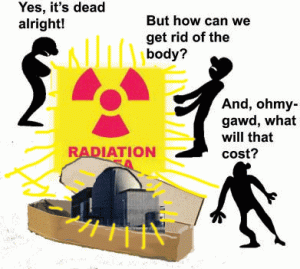
the cost of decommissioning should be taken into
account when the government decided on new nuclear plants as “no scheme can be guaranteed to meet a cost more than a century into the future”.
The first of the UK’s seven advanced gas-cooled reactor nuclear power
stations has been emptied of fuel, kick-starting a decommissioning process
that will cost at least £27bn in total and take almost a century.
EDF said on Thursday it had defuelled Hunterston B, on the west coast of Scotland,
paving the way for the transfer of the site and 250 staff from the French
power company to the UK Nuclear Decommissioning Authority next April. The
site provided most of Scotland’s energy for more than 40 years from its
launch in 1976 until its final closure in 2022.
EDF owns seven advanced gas-cooled reactors (AGRs) plants in the UK, which were built between the 1960s and 1980s and differ from newer nuclear plants that use water for
cooling. Just four are still operating.
The uranium fuel has been packaged
into 350 large flasks, which will be stored by the NDA at the Sellafield
nuclear site in Cumbria for at least 50 years until a longer-term
underground facility has been built.
Although the process took just three
years and £400mn, it will take almost a century to eradicate the radiation
from the land and buildings, EDF has said. The decommissioning of the seven
AGRs is separate to a much wider £105bn decommissioning programme, which
will cover an additional 17 closed nuclear sites over the next 120 years,
according to the NDA.
The closures will leave the UK with just one nuclear
power plant still running by 2030 — Sizewell B in Suffolk, which is also
managed by EDF and uses a pressurised water reactor. The NDA said it was
“acutely aware of the costs associated with delivering our mission”.
The cost of decommissioning nuclear power plants is under scrutiny as the
UK presses ahead with new nuclear projects, including the £40bn Sizewell
C, which is expected to get government go-ahead this spring, and the £46bn
Hinkley Point C, which is still under construction and will open by 2030 at
the earliest.
Steve Thomas, emeritus professor of energy policy at
Greenwich university, said the cost of decommissioning should be taken into
account when the government decided on new nuclear plants as “no scheme
can be guaranteed to meet a cost more than a century into the future”.
Although EDF has owned Hunterston B and the seven other AGR nuclear plants
since 2009, the cost of decommissioning is being paid for through the
ringfenced Nuclear Liabilities Fund (NLF), which was set up in 1996 after
privatisation and is valued at £20.6bn. Decommissioning costs have soared
over the past three decades, with the fund requiring cash injections from
the Treasury, including £5bn in July 2020 and a further £5.6bn in March
2022, according to the NLF.
FT 24th April 2025, https://www.ft.com/content/c31af2d6-eeaa-4a3d-a2c0-81c63b29cb1d
EDF’s two nuclear plants in Britain should be negotiated as one, French minister says.

Guy Taylor, Transport Reporter, 25 April 2025
EDF’s two nuclear construction schemes at Hinkley Point and Sizewell C should be treated as one financial venture in negotiations, according to France’s energy minister.
Marc Ferracci told the FT he had held discussions with the UK’s energy minister Ed Miliband at the sidelines of a conference in London on Thursday.
“France and EDF are very committed to deliver the projects but we have to find a way to accelerate them and we have to find a way to consolidate the financial schemes of both projects,” he said.
The French government has been pushing ministers in the UK to lend a hand with Hinkley Point’s floundering finances over the last year.
Costs on the nuclear project have risen to as high as £46bn and it argues EDF, the French state-owned energy firm, should not be forced to cover the overruns.
EDF’s equity stake in Sizewell C, a 3.2 gigawatt nuclear station on the Suffolk Coast, is smaller than Hinkley Point.
Ferracci denied that the French government was looking to use Sizewell as “leverage” against the financial troubles at Hinkley………………….. https://www.cityam.com/edfs-two-nuclear-plants-should-be-negotiated-as-one-french-minister-says/
The Australian Labor Party is No Friend of the Nuclear-Free Cause.

https://theaimn.net/the-australian-labor-party-is-no-friend-of-the-nuclear-free-cause/ 26 Apr 25
I’m thinking that the nuclear lobby loves the ALP even more than it loves the Liberal Coalition opposition party.
Advance Australia, and the U.S-controlled Atlas Network are powerful and well-funded groups dedicated to molding public opinion on behalf of wealthy right-wing groups. They did a fine job in 2023 of destroying Australian support for the 2023 Australian referendum on the indigenous Voice to Parliament.
I was expecting them to pretty much run riot in support of the Liberal Coalition’s plan for a nuclear Australia. That does not seem to have happened. Why not?
Advance “kicked off with outright lies“, but has been rather quiet lately. And the Atlas Network is nowhere in sight, although its modus operandi is secretive anyway, spreading simplistic memes.
My conclusion is that Peter Dutton’s Liberal Coalition campaign is so inept, so incompetent, that it has turned out to be counter-productive to the party’s cause. There’s just so much evidence of this ineptitude – particularly when it comes to the estimated costs of setting up seven nuclear power plants around Australia. The latest of many examinations of these costs is – “Coalition’s nuclear gambit will cost Australia trillions – and permanently gut its industry.” Half-baked plans to keep old coal-power plants running for many years until nuclear is “ready”, no mention of plans for waste disposal, – the tax-payer to cop the whole cost. Even a suave sales magician like Ted O’Brien has not been able to con the Australian public. The party’s incompetence is on show in other ways, too, unconnected to the nuclear issue.
But what of Labor? They have been remarkably quiet on the nuclear issue – focussing on their own rather ha[f-baked plans for housing. It’s all cost-of-living issues – and I don’t deny that this is important. But nuclear rarely gets a mention – except when Labor finds it useful to mention the costs.
It doesn’t look as if Peter Dutton’s Liberal Coalition has a hope in hell of getting a majority win for its nuclear platform.
But does the nuclear lobby really care? I’m afraid not. You see, the Labor Party, supposedly opposed to the nuclear industry, has a long tradition of caving in on nuclear issues. From 1982 – a weak, supposed “no new uranium mines” policy became a “three mines uranium policy” 1984 then a pathetic “no new mines policy” in the 1990s. Backing for South Australia’s uranium mines further weakened Labor anti-nuclear policy.
Over decades, Labor luminary Gareth Evans has been acclaimed for his supposed stance against nuclear weapons. But he’s done a disservice to the nuclear-free movement, in his long-standing position in favour of “the contribution that can be made by nuclear energy capable of providing huge amounts of energy, and just as clean as renewables in its climate impact”. Evans has always been close to the International Atomic Energy Agency, in his complacency that nuclear power has nothing to do with nuclear weapons!
Labor has always been officially opposed to nuclear power, but at the Federal level, and some State levels, there have always been significant Ministers like Bob Hawke, and Martin Ferguson, who pushed for the nuclear industry. To his credit, Anthony Albanese for a long time held out against the nuclear industry. Even up until 2024, he was still trying .
But the crunch had already come – Albanese on Thursday, 16th September 2021 – “We accept that this technology [nuclear-powered submarines ] is now the best option for Australia’s capability.”
Why did Albanese agree to this deal, arranged between the Morrison Liberal government, and the USA and UK? Apparently, he did so, after just a two-hour briefing, with no documents provided, on the previous day. Labor Caucus was presented with it as a fait accompli. No vote was taken.
I can only conclude that Albanese’s decision was based on that time-honored fear of Labor looking “weak on security”.
In one fell swoop, Labor’s anti-nuclear policy was wrecked. The nuclear submarines will mean nuclear reactors on Australia’s coast. The will mean nuclear waste disposal in Australia, including foreign nuclear waste from the second-hand submarines. They will surely eventually mean nuclear weapons, as who can really tell if a nuclear-powered submarines has or has not got nuclear weapons? (The Chinese will be very wary about them.)
Since 2021, Australia’s nuclear submarine arrangement has been largely in the hands of Defence Minister Richard Marles, who worked with that dodgy company PWC to set it up, and who is a committed supporter of Australia’s solidarity with the USA.
March 2023 – Prime Minister Anthony Albanese, US President Joe Biden and UK Prime Minister Rishi Sunak unveiled the path to acquiring nuclear-powered submarines.
“In 2024, Australian Prime Minister, Anthony Albanese, made undisclosed “political commitments” with its AUKUS partners in an agreement for the transfer of naval nuclear technology to Australia, sparking concerns about the potential for high-level radioactive waste to be stored in the country. “
The global nuclear lobby works across national boundaries to promote its industry. It does well with Russia – as government clamp-down on dissent makes it easier to expand the industry in all its forms, and to market nuclear power to Asian ana African countries.
The nuclear industry is well aware of the problems in maintaining the belief that nuclear is clean, cheap, and climate friendly. But above all, it’s the nuclear-waste problem that its most expensive and difficult obstacle. Here’s where Australia has always looked appealing. All this nonsense about getting small nuclear reactors is just a distraction . The industry knows that small nuclear reactors are fraught with difficulties – too expensive, requiring too much security, public opposition at the local level, still needing too much water……… But to keep the global industry going, a nuclear-waste-welcoming country would be such a boost.
Well, it is early days, even for the prospect of those AUKUS nuclear submarines ever actually arriving. But in the meantime – the whole AUKUS thing has quietly introduced the Australian public to the idea that nuclear submarines are OK, and so are their wastes, and so are USA nuclear weapons based in Australia.
So, really, the Australian Labor Party has done a much better job of promoting the nuclear industry, than the fumbling Liberal Coalition could.
We are fortunate inn Australia to have proportional representation in our election. If you care about keeping Australia nuclear-free, you don’t have to vote for either of the big parties.
Before the Elephant’s Foot: True Story of Chernobyl’s Reactor Explorers | Chornobyl Uncharted Ep 22
What happened inside the Chernobyl Sarcophagus after 1986? Where was the missing nuclear fuel? And who were the first people to go in? In this episode of Chornobyl Uncharted, we reveal the untold story of the Soviet scientists and nuclear experts who became the first explorers of Reactor 4 — after the explosion, after the fires, and after the construction of the Shelter. Led by the Kurchatov Institute of Atomic Energy, these early missions faced deadly radiation, pitch darkness, and structural chaos. Using boreholes, detectors, periscopes, and even a robot built from a toy rover, they began the search for the melted nuclear core — and unknowingly discovered what would later be known as the Elephant’s Foot.
But, that was just the beginning. With newly translated reports from Oleksandr Borovoi and Volodymyr Shykalov, we follow their first steps into the ruins of Unit IV, the surprising data they uncovered, and the moment they realized: the reactor shaft was nearly empty. This is the true story of the people who dared to enter the Sarcophagus first — and what they found inside.
China, Russia may build nuclear plant on moon to power lunar station, official says

By Eduardo Baptista, April 24, 2025,
https://www.reuters.com/business/energy/china-led-lunar-base-include-nuclear-power-plant-moons-surface-space-official-2025-04-23/
- Summary
- China and Russia plan nuclear reactor for lunar base by 2035
- China and Russia-led ILRS aims to rival NASA’s Artemis program
- China-Russia cooperation strengthened by tensions with West
SHANGHAI, April 23 (Reuters) – China is considering building a nuclear plant on the moon to power the International Lunar Research Station (ILRS) it is planning with Russia, a presentation by a senior official showed on Wednesday.
China aims to become a major space power and land astronauts on the moon by 2030, and its planned Chang’e-8 mission for 2028 would lay the groundwork for constructing a permanent, manned lunar base.
In a presentation in Shanghai, the 2028 mission’s Chief Engineer Pei Zhaoyu showed that the lunar base’s energy supply could also depend on large-scale solar arrays, and pipelines and cables for heating and electricity built on the moon’s surface.
Russia’s space agency Roscosmos said last year it planned to build a nuclear reactor on the moon’s surface with the China National Space Administration (CNSA) by 2035 to power the ILRS.
The inclusion of the nuclear power unit in a Chinese space official’s presentation at a conference for officials from the 17 countries and international organisations that make up the ILRS suggests Beijing supports the idea, although it has never formally announced it.
“An important question for the ILRS is power supply, and in this Russia has a natural advantage, when it comes to nuclear power plants, especially sending them into space, it leads the world, it is ahead of the United States,” Wu Weiren, chief designer of China’s lunar exploration program, told Reuters on the sidelines of the conference.
After little progress on talks over a space-based reactor in the past, “I hope this time both countries can send a nuclear reactor to the moon,” Wu said.
China’s timeline to build an outpost on the moon’s south pole coincides with NASA’s more ambitious and advanced Artemis programme, which aims to put U.S. astronauts back on the lunar surface in December 2025.
Wu said last year that a “basic model” of the ILRS, with the Moon’s south pole as its core, would be built by 2035.
In the future, China will create the “555 Project,” inviting 50 countries, 500 international scientific research institutions, and 5,000 overseas researchers to join the ILRS.
Researchers from Roscosmos also presented at the conference in Shanghai, sharing details about plans to look for mineral and water resources, including possibly using lunar material as fuel.
They didn’t know their backyard creek carried nuclear waste. Now, they’re dying of cancer.
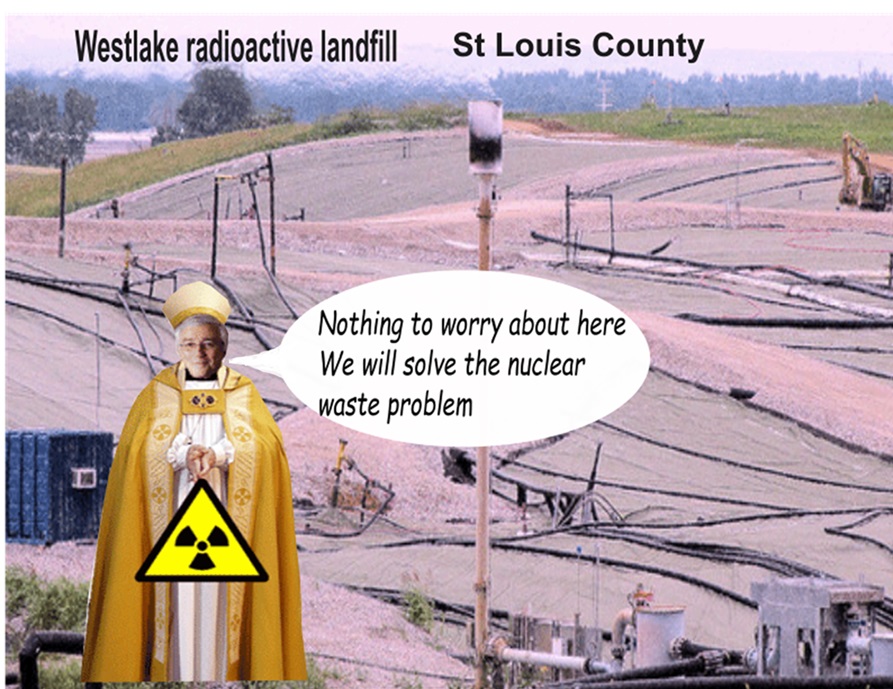
By Skyler Henry, Cait Bladt, https://www.cbsnews.com/amp/news/coldwater-creek-st-louis-missouri-nuclear-waste-manhattan-project/?fbclid=IwY2xjawJ5WlNleHRuA2FlbQIxMQBicmlkETE3b0JDR3JZZ0xqRkNqVU1oAR6r1OHnTIbzQszYmq5UdxWm2CDEhfSw2CBAqIbrvNc_QJ0mnVpSMlz18FoZ6A_aem_HBiqzbUxMZqObYI2gfOYx April 24, 2025
This story is part one of a two-part series that examines the effects of nuclear waste contamination in Coldwater Creek on the surrounding community in St. Louis, Missouri. Part two aired Wednesday, April 23 on “CBS Evening News.”
When Linda Morice and her family first moved to St. Louis in 1957, they had no idea they had anything to fear. Then, people started getting sick.
“It was a slow, insidious process,” Morice said.
After the death of Morice’s mother, her physician uncle took her aside and gave her a stark warning: “Linda, I don’t believe St. Louis is a very healthy place to live. Everyone on this street has a tumor.”
Their neighborhood was bordered by Coldwater Creek, a 19-mile tributary of the Missouri River It wound through their backyards, near baseball fields, schools and cemeteries — and past lots where leaking barrels and open-air dumps of nuclear waste leeched into its waters.
“It was shocking that this creek was likely making people sick,” Morice said.
Starting in 1942, roughly one ton of pure uranium was produced per day in downtown St. Louis. It was then shipped to labs across the country for the top secret Manhattan Project that created the first nuclear bomb.
The leftover waste was dumped around the city.
“That material was in 82 different spots throughout St. Louis County. It spilled. Children played in it. It seemed to me that there wasn’t an attempt to absolutely get to the bottom of it,” Morice said.
In Morice’s family alone, her mother, father and brother died of cancer, leaving her to think differently about her childhood.
“All that time, all those fun things were happening, but that whole time we, and the rest of the community were being exposed to some pretty dangerous stuff,” Morice said.
Now her husband, who also lived in the area, is fighting cancer. He’s being treated by urologic oncologist Dr. Gautum Agarwal. For the last several years, Agarwal has been tracking which of his patients lived near Coldwater Creek.
“I was seeing patients who are young, who had developed pretty significant cancers from areas that there’s been some contamination with nuclear waste,” Agarwal said.
While radiation is known to cause cancer, experts say they can’t pin down the specific cause of the disease in a given patient.
But a 2019 study from the Department of Health and Human Services found that people who lived and played near Coldwater Creek from the 1960s to 1990s “could be at an increased risk of developing lung cancer, bone cancer or leukemia.”
“The people there deserve for us to look at this much closer than we have,” Agarwal said.
Chernobyl’s shadow highlights Australia’s potential nuclear risks

April 26, 2025, Don’t Nuke the Climate
On 26 April 1986, the Chernobyl nuclear power plant in Ukraine exploded, spewing uncontrolled radiation across Europe and beyond.
Chernobyl caused massive human, environmental and economic impacts. The ongoing clean-up is set to continue for another four decades, with parts of the exclusion zone likely to remain uninhabitable for many hundreds of years.
Against the shadow of Chernobyl, Peter Dutton’s proposal to build nuclear power plants at seven sites around the country could put up to 200,000 Australians in direct danger.
Advocacy group Don’t Nuke the Climate has produced an online resource based on real world data from the Fukushima nuclear disaster in Japan. This detail has been transposed to Australia to help people understand the extent of nuclear contamination from a potential reactor accident.
The maps at www.nuclearplume.au show how far radioactive fallout from a Fukushima-sized accident would spread under different wind conditions from the seven sites identified for nuclear reactor by the federal Coalition. They highlight how a nuclear accident at one of the proposed reactor sites would affect nearby communities, including schools and hospitals.
Don’t Nuke the Climate is sharing this research to assist with evidence-based decision making that reduces nuclear risks and prioritises environmental responsibility and a safe future ahead of the coming federal election.
Dave Sweeney – Nuclear analyst, Australian Conservation Foundation says:
‘Australia should heed the lessons of Chernobyl and Fukushima and keep the door shut on domestic nuclear power. Nuclear isn’t just dangerous, it’s an irresponsible distraction from real climate action that makes no economic or environmental sense in Australia.’
‘Instead of the threat of radiation blowing in the wind we should be using the wind to generate clean electricity. Australia’s energy future is renewable, not radioactive.’
Dr Jim Green – Nuclear campaigner, Friends of the Earth Australia says:
‘Emergency Leaders for Climate Action recently warned that nuclear reactors would introduce significant and unnecessary risk to Australian communities and emergency responders, including firefighters already stretched by escalating climate fuelled disasters.’
‘The Coalitions nuclear push is risky and reckless. It is a high cost, high risk thought bubble, not a credible national energy policy.’
1 This Month


Tell the Ukrainian Government to Drop Prosecution of Peace Activist Yurii Sheliazhenko

Petition to revoke the licensing of the Near Surface Nuclear Disposal Facility (NSDF) at Chalk River. https://www.ourcommons.ca/petitions/en/Petition/Details?Petition=e-7247


of the week – STOP SMALL MODULAR REACTORS IN CANADA
To see nuclear-related stories in greater depth and intensity – go to https://nuclearinformation.wordpress.com
-
Archives
- March 2026 (193)
- February 2026 (268)
- January 2026 (308)
- December 2025 (358)
- November 2025 (359)
- October 2025 (376)
- September 2025 (258)
- August 2025 (319)
- July 2025 (230)
- June 2025 (348)
- May 2025 (261)
- April 2025 (305)
-
Categories
- 1
- 1 NUCLEAR ISSUES
- business and costs
- climate change
- culture and arts
- ENERGY
- environment
- health
- history
- indigenous issues
- Legal
- marketing of nuclear
- media
- opposition to nuclear
- PERSONAL STORIES
- politics
- politics international
- Religion and ethics
- safety
- secrets,lies and civil liberties
- spinbuster
- technology
- Uranium
- wastes
- weapons and war
- Women
- 2 WORLD
- ACTION
- AFRICA
- Atrocities
- AUSTRALIA
- Christina's notes
- Christina's themes
- culture and arts
- Events
- Fuk 2022
- Fuk 2023
- Fukushima 2017
- Fukushima 2018
- fukushima 2019
- Fukushima 2020
- Fukushima 2021
- general
- global warming
- Humour (God we need it)
- Nuclear
- RARE EARTHS
- Reference
- resources – print
- Resources -audiovicual
- Weekly Newsletter
- World
- World Nuclear
- YouTube
-
RSS
Entries RSS
Comments RSS
 nuclear-news