DOE report: Cost to finish cleaning up Hanford site could exceed $589 billion
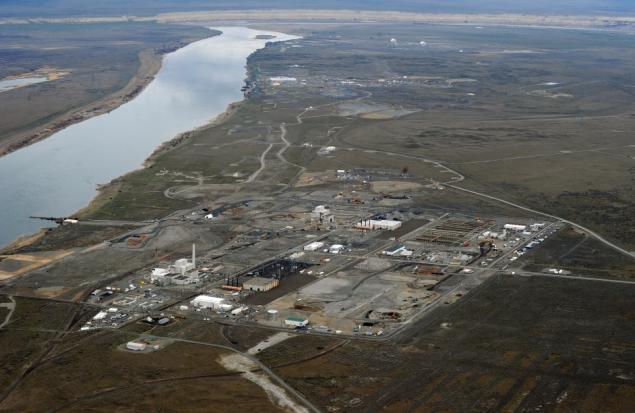
The cost to complete the cleanup of the Department of Energy’s Hanford Site in Washington state could cost as much as $589.4 billion, according to the 2025 Hanford Lifecycle Scope, Schedule, and Cost Report, which was released by the DOE on April 15. While that estimate is $44.2 billion lower than the DOE’s 2022 estimate of $640.6 billion, a separate, low-end estimate has since grown by more than 21 percent, to $364 billion.
The life cycle report, which the DOE is legally required to issue every three years under agreement with the U.S. Environmental Protection Agency and Washington State Department of Ecology (Ecology), summarizes the remaining work scope, schedule, and cost estimates for the nuclear site. For more than 40 years, Hanford’s reactors produced plutonium for America’s defense program.
The DOE’s cost estimates assume an active site cleanup schedule lasting until 2086, with long-term site stewardship until 2100. The DOE, however, said the federal government plans to have a presence at Hanford well beyond 2100.
The details: The report provides both a baseline (low-range) and a high-range cost estimate for completing the Hanford cleanup work. For this latest report, the DOE estimates a baseline cost of approximately $364 billion and a high-range cost estimate of approximately $589.4 billion. In 2022, the DOE reported an estimated cost range of $300.2 billion to $640.6 billion. The estimates include active cleanup, decommissioning, and remediation work, along with the final disposition of Hanford’s remaining reactors and long-term stewardship of the site.
According to the DOE, the cost range reflects the high degree of technical complexity and uncertainty associated with the large volume of work to be completed at the site, which includes the treatment and disposal of Hanford’s radioactive and chemical tank waste, Hanford’s largest liability. The estimates also include risk reduction work along with mission and site infrastructure costs.
According to the DOE, the high-range estimate reflects an 80 percent confidence level and is intended to ensure transparency among Hanford stakeholders of the inherent risks in achieving the agreed-upon cleanup goals.
While the Hanford life cycle report is not a decision-making document on the actions the DOE will take to meet its cleanup obligations, it does act as a foundation for preparing budget requests and for informational briefings with stakeholders. It also supports the DOE’s discussions with the EPA and Ecology on the progress it is making in cleaning up the site.
Feedback: The DOE is collecting public feedback on the report in writing until June 16. Received feedback will be considered when the department drafts its 2028 life cycle report.
Comments can be emailed to lifecyclereport@rl.gov (preferred) or mailed to:
Dana Gribble, Hanford Mission Integration Solutions
U.S. Department of Energy
P.O. Box 450, H5-20
Richland, WA 99354
No comments yet.
1 This Month
Chernobyl: The Lost Tapes – A good documentary on Chernobyl on SBS available On Demand for the next 3 weeks– https://www.sbs.com.au/ondemand/tv-program/chernobyl-the-lost-tapes/2352741955560

of the week–London Campaign for Nuclear Disarmament

Tell the Ukrainian Government to Drop Prosecution of Peace Activist Yurii Sheliazhenko
To see nuclear-related stories in greater depth and intensity – go to https://nuclearinformation.wordpress.com
-
Archives
- April 2026 (126)
- March 2026 (251)
- February 2026 (268)
- January 2026 (308)
- December 2025 (358)
- November 2025 (359)
- October 2025 (376)
- September 2025 (257)
- August 2025 (319)
- July 2025 (230)
- June 2025 (348)
- May 2025 (261)
-
Categories
- 1
- 1 NUCLEAR ISSUES
- business and costs
- climate change
- culture and arts
- ENERGY
- environment
- health
- history
- indigenous issues
- Legal
- marketing of nuclear
- media
- opposition to nuclear
- PERSONAL STORIES
- politics
- politics international
- Religion and ethics
- safety
- secrets,lies and civil liberties
- spinbuster
- technology
- Uranium
- wastes
- weapons and war
- Women
- 2 WORLD
- ACTION
- AFRICA
- Atrocities
- AUSTRALIA
- Christina's notes
- Christina's themes
- culture and arts
- Events
- Fuk 2022
- Fuk 2023
- Fukushima 2017
- Fukushima 2018
- fukushima 2019
- Fukushima 2020
- Fukushima 2021
- general
- global warming
- Humour (God we need it)
- Nuclear
- RARE EARTHS
- Reference
- resources – print
- Resources -audiovicual
- Weekly Newsletter
- World
- World Nuclear
- YouTube
-
RSS
Entries RSS
Comments RSS
 nuclear-news
Leave a comment