The Conservative Argument Against Nuclear Power in Japan

It has been said that nuclear power stations are like nuclear weapons directed at your own country. I couldn’t agree more.
Getting rid of these “nuclear weapons directed at our own country” will not require huge defense spending or difficult diplomatic negotiations. All that is required is the ability to look square at the facts, and a conservative mindset determined to protect our rich and productive land and pass it on to the next generation.
Higuchi Hideak, Apr 15, 2025, https://www.nippon.com/en/in-depth/d01111/
A Devastating Loss of Territory
“Conservatism is essentially realism. A conservatism that refuses to confront reality is as worthless as a progressivism without ideals.”
This is how I opened my Hoshu no tame no genpatsu nyūmon (Nuclear Power: An Introduction for Conservatives), which came out last summer. In the book, I tried to bring attention to the contradictions inherent in the policies of the Liberal Democratic Party: a party that claims to support conservative values and uphold the ideals of patriotism but nevertheless advocates that Japan should continue or increase its reliance on nuclear power, even in the aftermath of the Fukushima disaster.
In the book, I made three main points. First, nuclear power is fundamentally incompatible with conservatism and patriotism. Second, nuclear power stations are inherently vulnerable to earthquakes, for structural reasons. And third, nuclear power stations are also vulnerable from a national security perspective.
The disaster at the Tokyo Electric Power Company’s Fukushima Daiichi Nuclear Power Station in March 2011 led to the evacuation of more than 150,000 people. More than 20,000 are still not able to return to their homes even today. And the state of emergency declared shortly after the disaster has still not been lifted, 14 years later.
In Fukushima Prefecture, evacuation orders are still in effect across more than 300 square kilometers, in what the government has designated as “closed to inhabitation indefinitely.” This is in spite of the fact that the annual safety limits for radiation exposure among the general population were lifted from 1 millisievert to 20 millisieverts. An area of more than 300 square kilometers—equivalent to the size of Nagoya, one of Japan’s key economic centers—is still effectively under evacuation orders. The country has effectively lost territory 50 times larger than the Senkaku Islands in Okinawa Prefecture, controversially claimed by China and the frequent focus of national security anxiety. As if this weren’t bad enough, more than 300 young people have been diagnosed with childhood thyroid cancer, a condition that would normally be expected to affect only around one in a million. Many of these have been serious cases requiring invasive surgery.
When I sat as presiding judge in the case brought before the Fukui District Court to stop the planned reactivation of the Ōi Nuclear Power Station, operated by the Kansai Electric Power Company, the argument put forward by the Liberal Democratic Party (then newly returned to power) and the business lobby was that shutting down nuclear plants would force Japan to import vast amounts of oil and natural gas to fuel thermal power stations. This would result in a massive outflow of the nation’s wealth and lead to national impoverishment.
On May 21, 2014, the court handed down its verdict. Even if shutting down the plant did lead to a trade deficit, the court rejected the idea that this would represent a loss of national wealth. True national wealth, the court held, consists of rich and productive land—a place where people can put down roots and make a living. The risk of losing this, and being unable to recover it, would represent a more serious loss of national wealth. Compare the arguments of the LDP and economic business lobby with the decision of the Fukui District Court. Which represents true conservatism, unafraid to look squarely at the facts about nuclear disasters? Which best represents the true spirit of patriotism?
Disaster Caused by a Power Failure
Let’s consider a few of the characteristics of nuclear power stations. First, they must be continuously monitored and supplied with a constant flow of water to cool the reactor. Second, if the supply of electricity or water is interrupted, there is the risk of an immediate meltdown. A serious accident could potentially mean the end of Japan as a nation.
The accident at Fukushima Daiichi came perilously close to rendering much of the eastern part of Japan uninhabitable. Yoshida Masao, the director in charge at the time, feared that radioactive fallout would contaminate all of eastern Japan when it looked as though the containment building at the Unit 2 reactor would rupture after venting became impossible. The chair of the Japan Atomic Energy Commission also expected it would be necessary to evacuate the population from a 250-kilometer radius of the plant, including Tokyo.
The accident at Fukushima did not happen because the reactor was damaged directly by the earthquake or tsunami. The initial earthquake interrupted the external supply of electricity, and the tsunami that followed cut off the emergency supply as well. Essentially, a power failure made it impossible to cool the reactor, and this was enough to trigger a catastrophe.
These characteristics mean that the resilience of nuclear power stations depends not on how physically robust the reactors and containment buildings are, but on the dependability of the electricity supplied to them. Nuclear power plants in Japan are designed to be able to withstand seismic activity between 600 to 1,000 gals (a gal being a unit of acceleration used in gravimetry to measure the local impact of an earthquake). But earthquakes over 1,000 gals are not unusual in Japan, and some have exceeded 4,000 gals. For this reason, some construction companies build housing that is designed to withstand seismic shocks up to 5,000 gals.
There are only 17 fully constructed nuclear power stations across the country. Six earthquakes exceeding the safety standards have already occurred at four of these: Onagawa, Shika, Kashiwazaki-Kariwa, and Fukushima Daiichi (twice each at Onagawa and Shika). Japan experiences more earthquakes than any other country on earth. Although the country accounts for just 0.3% of the world’s landmass, more than 10% of all the world’s earthquakes happen here. Despite the inherent dangers, there are 54 nuclear reactors along the coasts, around 10% of the world’s total.
Since it is impossible to forecast what scale of earthquake might hit a given site in an earthquake-prone country like Japan, construction companies operate on the principle that houses should be able to withstand seismic events equivalent to the strongest earthquake on record in the past.
The government ratified the Seventh Strategic Energy Plan at a cabinet meeting in February this year. This latest iteration of the plan removed references to an ambition to reduce the country’s dependence on nuclear power as much as possible, and signaled a clear intention to restore nuclear power to a more prominent position in the country’s energy strategy. Despite this, the seismic planning standards for nuclear power stations still assume that it is possible to accurately predict the maximum size of any earthquake that will hit in the future by analyzing past seismic data and running a site assessment of local geotechnical conditions. Whose position demonstrates better scientific judgement and a more realistic assessment of the facts—the government’s or the construction companies’?
Why Europe’s Biggest Nuclear Power Plant Fell into the Hands of the Enemy
TEPCO was a huge company, with annual revenue of around ¥5 trillion and a profit margin of 5%, meaning the company was making ¥250 billion every year. But the economic damages from the Fukushima accident came to at least ¥25 trillion, equivalent to 100 years in revenue for the company. What can we say about an approach to electricity generation in which a single accident can wipe out a century’s worth of revenue and essentially bankrupt a huge company like TEPCO? It is an energy source that is not just cost-ineffective but unsustainable.
For example, it is estimated that if an accident on a similar scale happened at the Tōkai Daini Nuclear Power Station in Ibaraki Prefecture, it would cause damage worth ¥660 trillion (compared to the national government budget of ¥110 trillion). As head of the Fukushima plant, Yoshida was resigned to losing the containment building of the unit 2 reactor to an explosion. He was saved by a “miracle” when a weakness somewhere in the structure of the building allowed pressure to escape and a rupture was avoided. Without this lucky intervention, it is estimated that the economic damages might have reached ¥2.4 quadrillion.
These figures make clear that the problem of nuclear power is not merely an energy issue. It has profound implications for national survival, and should be regarded as a national security priority. Russia’s war in Ukraine has provided a stark reminder of the seriousness of this threat. The Zaporizhzhia station on the Dnieper River is the largest nuclear power plant in Europe. A threat from Russia to attack it was enough to persuade Ukraine to hand over the plant to Russian control. If the plant really had been attacked, it might have caused a crisis with the potential to lay waste to large parts of Eastern Europe.
It has been said that nuclear power stations are like nuclear weapons directed at your own country. I couldn’t agree more. And in Japan we have 54 of these reactors bristling our shores, all but unprotected against earthquakes, potential enemies, and terrorist attacks. The LDP government mocks those who oppose Japan’s holding the offensive capability to attack enemy bases and argue for an exclusively defense-oriented posture as indulging in “flower garden” thinking. At the same time, the party is blind to the fact that nuclear power stations represent this country’s biggest national defense vulnerability.
Getting rid of these “nuclear weapons directed at our own country” will not require huge defense spending or difficult diplomatic negotiations. All that is required is the ability to look square at the facts, and a conservative mindset determined to protect our rich and productive land and pass it on to the next generation.
In my previous books and articles, I addressed the legal issues involved in nuclear power. In my Nuclear Power: An Introduction for Conservatives, I made clear that my own political stance is conservative. I was prepared for a backlash from progressives, who make up the bulk of the antinuclear movement, but in fact I received no pushback from that quarter all. In fact, I was taken aback by the resounding support I received.
Most of the criticism came from supposed conservatives who were apparently determined to discredit my sincere intentions and grumbled that it was unseemly for a former judge to be sticking his nose into politics. On Amazon, my reviews were flooded with apparently coordinated personal attacks and slander. But I am still convinced that true and fair-minded conservatives will understand my true intentions.
Geologists acknowledge that it is simply not possible to accurately predict earthquakes with today’s science. A huge earthquake could strike tomorrow, causing a catastrophe at one of the nation’s nuclear power stations that could wipe out or render inhabitable large parts of the country. My aim is simply to make as many people as possible aware of this terrifying fact.
(Originally written in Japanese. )
Saying It’s Antisemitic To Oppose Genocide Is Like Saying It’s Anti-Catholic To Oppose Pedophilia
Caitlin Johnstone, Apr 15, 2025, https://www.caitlinjohnst.one/p/saying-its-antisemitic-to-oppose?utm_source=post-email-title&publication_id=82124&post_id=161378744&utm_campaign=email-post-title&isFreemail=true&r=1ise1&triedRedirect=true&utm_medium=email
On Sunday Israel bombed the al-Ahli Arab Baptist Hospital, which readers may remember as the hospital that Israel ferociously insisted it didn’t bomb in October 2023 and accused anyone who said otherwise of antisemitic blood libel. According to a statement from the Episcopal Church’s Diocese of Jerusalem, this is now the fifth time this hospital has been bombed since the beginning of the Gaza onslaught.
The IDF is predictably claiming there was a Hamas base in the hospital, because that’s what they always do. The hospitals are Hamas, the ambulances are Hamas, the journalists are Hamas, the UN is Hamas, the schools are Hamas, the children are Hamas, every building in Gaza is Hamas, and anyone who disputes this is also Hamas.
God this gets old.
❖
Israel, October 2023: How dare you say we bombed Al-Ahli Baptist Hospital? We would never bomb a hospital!
Israel, 2023–2025: *bombs all hospitals in Gaza*
Israel, April 2025: We just bombed Al-Ahli Baptist Hospital again.
❖
Saying that opposing genocide is hateful toward Jews is like saying that opposing child molestation is hateful toward Catholics.
Western Zionists will be like, “All this hate for Israel makes me feel anxious and unsafe!”
Really? Are you sure that’s what you’re feeling? Are you sure it’s not guilt? Gut-wrenching guilt about all those dead kids in the genocide you support? Or cognitive dissonance, because your entire worldview is wrong?
❖
People often say I hate Israel, but what’s weird is they say it like it’s a bad thing.
So far the “President of Peace” has started a relentless bombing campaign in Yemen, reignited the Gaza holocaust, and shifted more US war machinery to west Asia in preparation for war with Iran, all while getting ready to announce the first ever trillion-dollar Pentagon budget.
Trump is just as awful a warmonger as Biden. If there’s a war with Iran he’ll be far worse. He hasn’t even gotten a Ukraine ceasefire.
❖
The western political faction that’s doing the most to help murder children in Gaza are not the “Yeehaw kill them Arabs” fanatics of the far right, but the “Gosh it’s so complicated, both sides hate each other and they’ve been at war for millennia” fence-sitting of the so-called moderate.
So far the “President of Peace” has started a relentless bombing campaign in Yemen, reignited the Gaza holocaust, and shifted more US war machinery to west Asia in preparation for war with Iran, all while getting ready to announce the first ever trillion-dollar Pentagon budget.
Trump is just as awful a warmonger as Biden. If there’s a war with Iran he’ll be far worse. He hasn’t even gotten a Ukraine ceasefire.
❖
The western political faction that’s doing the most to help murder children in Gaza are not the “Yeehaw kill them Arabs” fanatics of the far right, but the “Gosh it’s so complicated, both sides hate each other and they’ve been at war for millennia” fence-sitting of the so-called moderate.
And this isn’t an ancient conflict, it’s the culmination of abuses which were initiated by western powers dropping a brand new settler-colonialist ethnostate on top of a pre-existing civilization after the second world war. There was no reason to believe the middle east would not have joined the rest of the world in settling into a more peaceful status quo after WWII without western imperialists forcefully inserting an artificial apartheid state into the region like a shard of glass into a foot and then keeping it there by any amount of violence necessary.
Sure the middle east had plenty of violence prior to the world wars, but if you’ve ever read American and European history you’ll know this wasn’t anything unique to the middle east; it was the norm around the world. It wasn’t until after WWII that things settled down a bit and westerners grew accustomed to a more peaceful status quo; the only reason the middle east wasn’t allowed to join in that movement was because of aggressive western intervention.
By just shrugging saying “Yeah the Israelis hate the Palestinians and the Palestinians hate the Israelis, who’s to say who’s right,” this mainstream line tacitly promotes the notion that we should just let things play out as they are rather than doing everything we can to stop an active genocide that’s being backed by our own leaders. And this is the position put forward by most of the people with prominent voices in our society. They’re not just not helping, they’re discouraging everyone else from helping too.
Documentary – “Atomic Secrets”

Dmitry Kalmykov is a Ukrainian scientist who has dedicated his life to eliminating environmental disasters, first at Chornobyl and now in Semipalatinsk, in Kazakhstan – formerly the Soviet Union’s primary nuclear weapons testing site. He teaches schoolchildren about how bombs were tested, and how – more than 30 years after the site was decommissioned – the community is only really beginning to understand radiation’s powerfully harmful effects. Against the backdrop of war in Ukraine and the long shadow of a nuclear conflict across the region, Dmitry debates Kazakhstan’s nuclear future with its next generation
UPENN REPORT: TARIFFS LIKELY NAIL IN COFFIN OF U.S. SMALL NUCLEAR REACTORS.

Small Modular Reactors (SMRs) are a “false promise” for powering
proposed artificial intelligence (AI) data centers nationwide, according to
a new report published today by the University of Pennsylvania’s (UPenn), Dr. Joseph Romm, a former Acting Assistant Secretary of Energy.
The research report, “Smaller nuclear reactors (SMRs) are a costly dead end,
especially for AI, and Trump’s tariffs and other policies make them even
more of a losing bet,” is an expanded version of a chapter in Dr.
Romm’s new book, “The Hype About Hydrogen: False Promises and Real
Solutions in the Race to Save the Climate” (Island Press, April 22).
The report examines recent economic developments, including the over-budget $35
billion completion of Georgia’s Vogtle plant, current and canceled SMR
proposals, and how Trump’s tariffs (and other policies) threaten the
nuclear industry. The study concludes that these factors will ultimately
doom the likelihood of new American commercial nuclear reactors playing
much of a role in meeting U.S. electricity demand needs for the foreseeable
future.
“It would be unprecedented in the history of energy for smaller
nuclear reactors to overcome not only the high cost per megawatt of large
nuclear plants but also the diseconomies of shrinking them down—and then
to somehow keep dropping in price so sharply that SMRs become such clear
marketplace winners as to make a major contribution to cutting greenhouse
gas emissions by 2050. This is especially true since SMRs show every sign
of the kind of cost escalation that has plagued larger nuclear reactors for
decades,” according to the report.
Hastings Group 15th April 2025,
https://hastingsgroupmedia.com/SMF/041525-Romm-SMR-Dead-End-Report-news-release.pdf
Germany: One exit and back? The role of nuclear power in the Merz coalition.
April 14, 2025, by Joachim Wille Note, abbreviation, background, and translation – Dieter Kaufmann, Working Group Against Nuclear Facilities, Frankfurt am Main, Germany
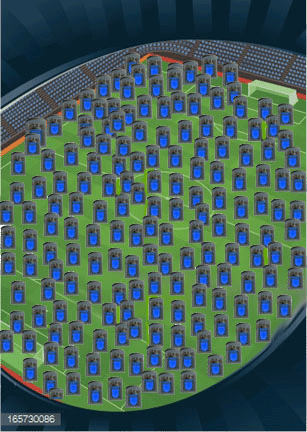
“SMRs will hardly be able to produce electricity more cheaply than conventional new nuclear power plants, unless thousands of them are mass-produced, which is not at all foreseeable.”
Although desired by some members of the Merz coalition, there will be no comeback for nuclear power plants. Joachim Wille philosophizes about the reasons.
Berlin – For a while, it looked as if the future Merz coalition would reverse the shutdown of the most recently shut-down nuclear power plants. The CDU/CSU, by far the largest partner, pushed for reversing the phase-out. The paper from the grand coalition’s “Energy and Climate” exploratory group stated – colored in the CDU/CSU blue – the CDU/CSU’s wish: “Nuclear energy can play a significant role, particularly with regard to climate goals and security of supply.”
Union backtracks on nuclear power: Coalition agreement seals Germany’s nuclear phase-out
But the coalition agreement recently presented by Merz and his colleagues no longer mentions any of this. This is an unmistakable signal: Germany is sticking to its nuclear phase-out, which was initiated in 2011 by CDU Chancellor Angela Merkel after the Fukushima disaster.
And this despite the fact that the public image of nuclear power has turned positive. The last three nuclear power plants in Germany were shut down two years ago. Today, however, according to a survey, a narrow majority of Germans (55 percent) support a return to nuclear energy, while 36 percent oppose it.
In politics, the CDU/CSU could have seen its pro-nuclear stance vindicated. It wanted to investigate whether the recently shut-down reactors could still be reactivated, and possibly even build new mini-reactors, as well as invest more money in the promising future of nuclear fusion. In the current representative Verivox survey, almost a third of respondents (32 percent) favor building new nuclear power plants, while another 22 percent would like to see only the most recently decommissioned plants brought back online.
After the Fukushima disaster: The Bundestag in Berlin voted in 2011 to shut down nuclear power plants
The phase-out of nuclear power, which at its peak provided around a third of the electricity consumed in Germany, was finally sealed by the Fukushima nuclear power plant disaster. In 2011, the Bundestag passed a cross-party resolution to gradually shut down the 17 nuclear power plants still in operation at the time.
After the reactor meltdowns in Japan, which rendered an entire region uninhabitable, there was a consensus: the “residual risk” of even Western nuclear technology is too great, and a phase-out is necessary. Ultimately, safety calculations showed that even with nuclear power plants made in Germany, serious accidents with radioactive contamination of large areas in the surrounding area, including entire cities, could not be ruled out.
Polls at the time showed high levels of support for the decision pushed forward by Merkel. The physicist’s legendary utterance when she saw the explosions at the Fukushima nuclear power plants on TV was legendary: “That’s it.”
Note: In 2011 polls, over 80 percent of the German population wanted to shut down all nuclear power plants after Fukushima
After the end of the Merkel era: The Union included plans for a return to nuclear power in coalition negotiations
After the end of the Merkel era, the remaining nuclear fans in the Union felt they had the upper hand again. It also looked as if they had a good chance of prevailing in the negotiations with the SPD. In particular, their demand for an “assessment of whether … a resumption of operation of the most recently shut-down nuclear power plants is still possible at a reasonable technical and financial cost,” as stated in the energy policymakers’ paper, seemed to have a good chance of success.
But there is no mention of this in the coalition agreement. Only fusion research plays a role here. “Our goal is: The world’s first fusion reactor should be located in Germany,” it states. However, the time perspective here is two or more decades. So, have Klingbeil’s Social Democrats, who have been pushing for a phase-out since the Chernobyl disaster in 1986, prevailed with their course against the CDU/CSU’s nuclear fans?
The energy industry doubts the CDU/CSU’s plan to reactivate nuclear power plants.
The most recent election platform clearly stated: “Nuclear power has been shut down in Germany, and that’s a good thing.” The anti-nuclear NGO “ausgestrahlt” sees it this way, accusing the SPD of having “burst the Union’s nuclear soap bubbles.” In fact, it’s at least as likely that the Union leaders realistically assessed the problems of the nuclear power renaissance. The dismantling of the nuclear power plants is already well advanced, and restarting them would be extremely expensive and very time-consuming due to the need for new permits.
A return to nuclear power is hardly possible: Nuclear power plant operators have closed their chapter.
In addition, the three current nuclear power plant operators, EnBW, PreussenElektra, and RWE, have practically closed the chapter on nuclear power. None of them would voluntarily take the entrepreneurial risk of reversing the decommissioning process. Before the start of the grand coalition negotiations, the line was clear. EnBW’s nuclear power chief Jörg Michels said: “The decommissioning status of our five nuclear power plants is, in practical terms, irreversible.”
PreussenElektra stated that it was not “engaged in such thought experiments.” RWE CEO Markus Krebber stated: “We are past the point in this country where we should bring decommissioned nuclear power plants back online.”
Estimates by the nuclear power plant service provider Nukem show how expensive the restart would have been. He estimates the cost of repairing the six reactors shut down between 2021 and 2023 at one to three billion euros per nuclear power plant, depending on how far the decommissioning has progressed. This would therefore involve a sum of ten billion euros or more, which would likely have had to come from the federal budget in Berlin.
Nukem CEO Thomas Seipolt told bild.de that he sees “a realistic possibility of a comeback for nuclear power” by 2030 and is therefore making a corresponding offer to the future German government. For his company, which specializes in the decommissioning of nuclear power plants and the management of nuclear waste, such a renaissance of nuclear power would have been extremely lucrative. But the fact remains: Despite the federal government’s €500 billion special fund for infrastructure and climate protection, such a massive cash injection for the nuclear power plant operators would have been virtually impossible to implement.
Further arguments against nuclear power: Green electricity now dominates the electricity market
But other arguments may have slowed the nuclear renaissance. “A return to nuclear power doesn’t fit in a market increasingly dominated by green electricity,” said Christoph Pistner, nuclear power expert at the Öko-Institut, to the Frankfurter Rundschau newspaper. The share of renewables in the grid is growing rapidly; currently, it’s already 60 percent, and according to current plans, it’s expected to reach around 80 percent by 2030 and even 100 percent by 2035.
The same applies, by the way, to the mini-nuclear power plants (Small Nuclear Reactors) proposed by the CDU/CSU, which, according to Pistner’s estimates, could not be ready for series production and built until the mid-2030s at the earliest. And: “As things stand today, SMRs will hardly be able to produce electricity more cheaply than conventional new nuclear power plants, unless thousands of them are mass-produced, which is not at all foreseeable.”
And then Pistner recalled a politically critical aspect: “A return to nuclear energy has the potential to jeopardize the search for a final storage site in Germany.” The search for a final storage site was restarted after the Fukushima nuclear phase-out, which eliminated the previously hotly contested Gorleben site, which proved to be geologically unsuitable. A Gorleben 2.0 would probably be the last thing the Merz grand coalition needs – https://www.fr.de/politik/warum-sich-die-neue-koalition-gegen-eine-atom-rueckkehr-entschied-93684231.html Groko (Grand Coalition) is an abbreviation for grand coalition.
Background: Nuclear phase-out in Germany
The first phase-out of nuclear energy in Germany took place in 2000. As early as 2006, it was clear that the conservative parties (CDU/CSU), also known as the Union, wanted to return to nuclear energy with a new government change in 2009. This happened in 2010. But then Fukushima happened in 2011, and Chancellor Merkel withdrew from nuclear energy after just a few months. The resolution was supported by all parties in the federal parliament in Berlin that the last nuclear power plants would be shut down on December 31, 2022. We would have preferred to phase out nuclear power sooner.
All social groups have prepared for the nuclear phase-out. Then Russia, Putin’s country, invaded Ukraine in February 2022 for the second time since 2014. Natural gas and oil became very expensive. Electricity prices also rose. In addition, half of all nuclear power plants in France were shut down in the winter of 2022/2023 for various reasons. The Union then wanted to re-enter nuclear energy. But it was too late. Nuclear power plant operators in Germany were annoyed. Planning security looks different. Nuclear power plants are not kettles that can be switched on and off.
An agreement was reached with the nuclear power plant operators, and the remaining three nuclear power plants were extended until April 15, 2023, as long as the nuclear fuel still allowed. Certain fuel elements were converted once again in the core area of the three nuclear power plants. Then it was over.
Peace camp protestors hand in letter to US airbase commanders at Lakenheath

14th April 2025, https://www.nuclearpolicy.info/news/peace-camp-protestors-hand-in-letter-to-us-airbase-commanders-at-lakenheath/
On this the first day of a two-week Peace Camp hosted by the Lakenheath Alliance for Peace, a delegation from LAP will hand in a letter to commanders of the US airbase at Lakenheath.
The Peace Camp will comprise various themed days, including Democracy Day on 22 April, for which the NFLA Secretary has produced a bespoke briefing paper for peace activists wishing to engage with Councillors on the issue of nuclear disarmament. As a partner in LAP, the UK/Ireland NFLAs have endorsed the letter.
The letter reads:
14th April 2025
Peace camp protestors hand in letter to US airbase commanders at Lakenheath
On this the first day of a two-week Peace Camp hosted by the Lakenheath Alliance for Peace, a delegation from LAP will hand in a letter to commanders of the US airbase at Lakenheath.
The Peace Camp will comprise various themed days, including Democracy Day on 22 April, for which the NFLA Secretary has produced a bespoke briefing paper for peace activists wishing to engage with Councillors on the issue of nuclear disarmament. As a partner in LAP, the UK/Ireland NFLAs have endorsed the letter.
The letter reads:
Dear Base Commanders and all personnel of ‘RAF’/USAF Lakenheath,
Lakenheath Alliance for Peace (now consisting of around 60 Alliance Organisations) are writing to you once more. This is our 5th letter[1] to you and we politely ask that you please reply to us.
As you will know from our previous communications and protests over the last year, we are concerned at the blatant disregard of international humanitarian law by the preparation to use US guided nuclear bombs. Just one could kill hundreds of thousands of people and cause lasting devastation to our environment. We are also horrified and ashamed that you have been training Israeli pilots who are engaged in a genocide in Gaza and have also, along with USAF Mildenhall, been aiding and abetting that genocide.
We are engaged in a 2-week nonviolent presence at your base in order to show that your war mongering is not being done in our name.
Many people living close to US military bases in Europe, Japan and South Korea (to mention just a few) are extremely concerned that you operate outside the rule of law and in the interests of controlling scarce resources for yourselves, not for purely self-defensive reasons and certainly not in the interests of the general public in our countries.
The informed public understand that the existential threats facing us are escalating climate change, biodiversity loss and nuclear annihilation. Your activities at Lakenheath are exacerbating all these threats and putting us all in danger. They are a breach of our peace and are in breach of national and international laws.
Yours in peace,
Lakenheath Alliance for Peace, info@lakenheathallianceforpeace.org.uk
CND Cymru has highlighted the continued lack of investment in communities and people, while billions is to be spent subsidising the nuclear industry.
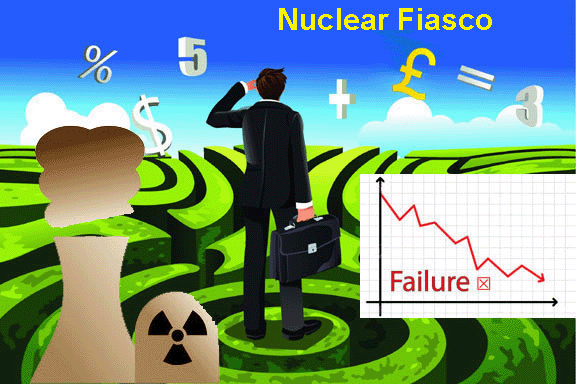
Following reports that the Westminster government is doubling down on
Nuclear Power, including a potential further investment in Sizewell C and a
raft of new Small Modular Reactors (SMRs), CND Cymru has highlighted the
continued lack of investment in communities and people, while billions is
to be spent subsidising the nuclear industry.
Keir Starmer seems poised to announce renewed public subsidy in Hinkley Point C, not set to open till 2031, and support for a further reactor at Sizewell C, costing billions in
taxpayer money. Coupled with a renewed focus on pushing through SMR
proposals, also likely subsidised by the taxpayer, Starmer may be set to
hand over £10 billion to the nuclear industry at a time when austerity is
looming over everyone.
Citing the potential for growth, Starmer is banking
on moderate gains by corporations in order to save a stagnating economy
that would benefit more from investment in community and green projects.
A CND Cymru spokesperson said “The willingness of the government to fund
the nuclear industry to the tune of billions while preaching austerity to
everyone else is absolutely farcical. We have seen the winter fuel payment
means tested, an attack on disability and other welfare systems, and a
refocus away from people towards profit. This government is functionally
taking money from the pockets of working class people and handing it to
corporations in the nuclear and warfare industry in order to chase a
mythical idea of growth – all while suppressing the true wealth creators in
this country.
A different, greener, fairer, future is possible which
doesn’t leave future generations with nuclear waste – and the government
has time to refocus and adjust their plans in order to build that future.
We must not accept the subsidy of the nuclear industry – all meant to prop
up a failing industry in order to preserve our nuclear attack capabilities
– while working people are facing impossible choices or sometimes not even
having the luxury of choice – starving and freezing – while the CEOs and
shareholders rake in the cash. Something has to change – and it is in the
government’s power to change it if they wish; because austerity, the death
of thousands, and the attack on millions, is a political choice, not
economic necessity.”
CND Cymru 14th April 2025
Lawsuit on Nuclear Regulation
Nuclear Start-up Valar Atomics is suing the US Nuclear Regulatory
Commission (NRC), claiming in essence that the NRC doesn’t have the right
to regulate small reactors, and instead the states should have oversight.
Let’s skip over for a moment what a nightmare it would be to have 50
different regulators to deal with just for one country. Their claim —
that small reactors are not capable of accidents posing public health and
safety concerns — is dangerous baloney. It seems after decades of
fighting rampant radiophobia from anti-nuclear activists and scared
normies, the pro-nuclear community must now also contend with a new
problem: nukebros who have become too cavalier about radiation.
Elemental 15th April 2025
A picture paints a thousand words: Shocking aerial images of Sizewell C devastation

14th April 2025
Stop Sizewell C has published shocking aerial photographs of the environmental devastation meted out by developers at the Sizewell C site despite the still-uncertain provenance of the project. These photographs were taken by an anonymous source. We are grateful to the photographer who has kindly made them free of license for open use.
Links to these images can be found at:
X – https://x.com/StopSizewellC/status/1909602544680153277
LinkedIn – https://www.linkedin.com/feed/update/urn:li:activity:7315368916342497280
BlueSky – https://bsky.app/profile/stopsizewellc.bsky.social/post/3lmcmbwflj22r
Instagram – https://www.instagram.com/p/DIMBBwiMNEh/?utm_source=ig_web_copy_link
CND Cymru condemns billions for nuclear industry
Morning Star 15th April 2025
https://morningstaronline.co.uk/article/cnd-cymru-condemns-billions-nuclear-industry
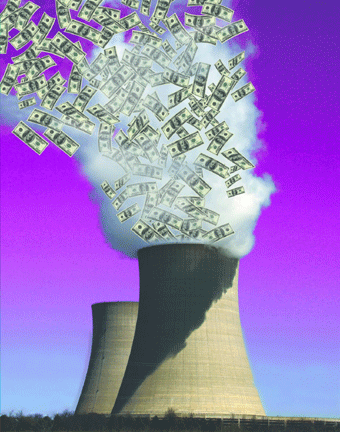
CAMPAIGNERS have condemned the billions being poured into nuclear energy while the Westminster government “preaches austerity” for everybody else.
CND Cymru attacked Sir Keir Starmer today, claiming he was poised to announce more public subsidy for the Hinkley Point C nuclear power plant in Somerset, not due to open until 2031.
A CND Cymru spokesperson said: “The willingness of the government to fund the nuclear industry to the tune of billions while preaching austerity to everyone else is absolutely farcical.
The anti-nuclear campaigners said Hinkley Point is likely to cost over £40 billion, £14bn over the initial estimate, with CND pointing out the project was managed by French company EDF.
“We must not accept the subsidy of a failing industry in order to preserve our nuclear attack capabilities while working people are facing impossible choices,” the CND spokesperson said.
“A different, greener, fairer, future is possible which doesn’t leave future generations with nuclear waste.”
U.S. advances microreactor program for military sites
Nuclear Newswire, Apr 15, 2025,
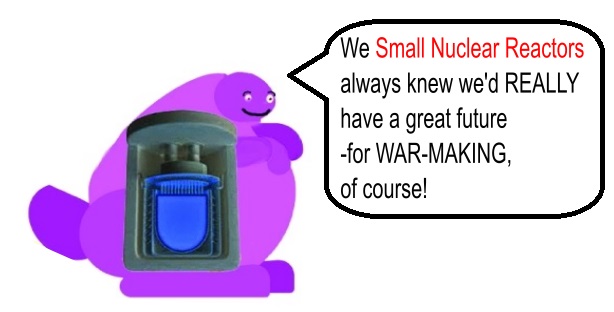
The Defense Innovation Unit announced April 10 next steps in the Advanced Nuclear Power for Installations (ANPI) program, launched in 2024 to deploy microreactor nuclear systems for increased power reliability at select military locations.
The ANPI program is a collaboration between DIU, which is under the Department of Defense, and the Departments of the Army and the Air Force, with the goals of working to design, license, build, and operate one or more microreactor nuclear power plants for the armed forces………………..
The DIU released the names of eight companies eligible to receive Other Transaction awards to provide commercially available dual use microreactor technology at various DOD installations:
- Antares Nuclear
- BWXT Advanced Technologies
- General Atomics Electromagnetic Systems
- Kairos Power
- Oklo
- Radiant Industries Incorporated
- Westinghouse Government Services
- X-energy
“Projecting power abroad demands ensuring power at home and this program aims to deliver that, ensuring that our defense leaders can remain focused on lethality,” ………………………………………………………………… https://www.ans.org/news/2025-04-14/article-6931/us-advances-microreactor-program-for-military-sites/
-
Archives
- February 2026 (199)
- January 2026 (308)
- December 2025 (358)
- November 2025 (359)
- October 2025 (376)
- September 2025 (258)
- August 2025 (319)
- July 2025 (230)
- June 2025 (348)
- May 2025 (261)
- April 2025 (305)
- March 2025 (319)
-
Categories
- 1
- 1 NUCLEAR ISSUES
- business and costs
- climate change
- culture and arts
- ENERGY
- environment
- health
- history
- indigenous issues
- Legal
- marketing of nuclear
- media
- opposition to nuclear
- PERSONAL STORIES
- politics
- politics international
- Religion and ethics
- safety
- secrets,lies and civil liberties
- spinbuster
- technology
- Uranium
- wastes
- weapons and war
- Women
- 2 WORLD
- ACTION
- AFRICA
- Atrocities
- AUSTRALIA
- Christina's notes
- Christina's themes
- culture and arts
- Events
- Fuk 2022
- Fuk 2023
- Fukushima 2017
- Fukushima 2018
- fukushima 2019
- Fukushima 2020
- Fukushima 2021
- general
- global warming
- Humour (God we need it)
- Nuclear
- RARE EARTHS
- Reference
- resources – print
- Resources -audiovicual
- Weekly Newsletter
- World
- World Nuclear
- YouTube
-
RSS
Entries RSS
Comments RSS
 nuclear-news