Nuclear war threat: why Africa’s pushing for a complete ban
Olamide Samuel, Track II Diplomat and Expert in Nuclear Politics, University of Leicester, April 1, 2025 , https://theconversation.com/nuclear-war-threat-why-africas-pushing-for-a-complete-ban-253171
At a time of heightened geopolitical tensions between Russia and Ukraine, intensified by strategic dynamics involving the US, Nato and Russia over Europe’s security, nuclear weapons are back on the agenda.
In recent times, Russia has openly threatened to use nuclear weapons. The UK and France are considering ways to rapidly increase their nuclear weapons stockpiles.
Germany, Poland, Sweden, Finland, South Korea and Japan are now seeking nuclear weapons capabilities.
Even a limited nuclear war in Europe would lead to catastrophic global climatic effects. Huge amounts of debris thrown high into the atmosphere would block sunlight, causing global temperatures to drop sharply. It would be much harder to grow food around the world.
This would severely threaten Africa’s food security, exacerbating mass migration, disrupting supply chains and potentially collapsing public order systems.
How should African countries respond to this growing threat?
Based on my experience in nuclear non-proliferation and politics, I argue that African leaders need to proactively confront the risks, while there is still time.
All African states, except for South Sudan, abide by the Nuclear Non-Proliferation Treaty. This is an international agreement which limits the spread of nuclear weapons. And 43 African states have gone further to join the African Nuclear Weapons Free Zone Treaty (Treaty of Pelindaba). This was negotiated in the belief that it would “protect African states against possible nuclear attacks on their territories”.
As conflict and uncertainty pushes many western leaders to support the madness of nuclear weapons proliferation, African leaders are in a unique position to push back against this.
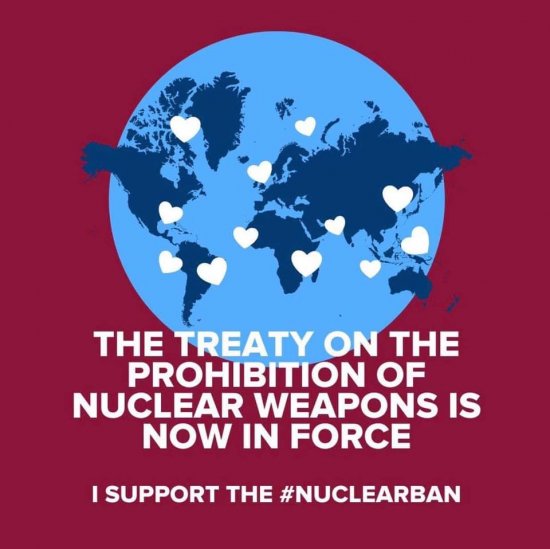
Africa’s strength in numbers in the Treaty on the Prohibition of Nuclear Weapons, also known as the Nuclear Ban Treaty, is a vehicle the continent can use to address nuclear weapons risks, head-on.
Global divide
On one side, nuclear-armed states cling to deterrence for their national security. They insist that possessing nuclear arsenals keeps them safe.
At present, there are nine nuclear-armed states: the US, Russia, the UK, China, France, India, Pakistan, Israel and North Korea. These countries possess around 12,331 nuclear warheads (as of 2025).
The use of only 10% of these weapons could disrupt the global climate and threaten the lives of up to 2 billion people.
On the other side, African countries and other non-nuclear-weapon states such as Ireland, Austria, New Zealand and Mexico highlight how deterrence creates unacceptable risks for the entire international community.
This global majority – the 93 countries that have signed the Nuclear Ban Treaty and 73 that are party to it – argue that real safety comes from eliminating nuclear threats.
The Nuclear Ban Treaty became international law on 22 January 2021. It is the first instance of international law challenging the legality and morality of nuclear deterrence.
Since 2022, states parties to the Nuclear Ban Treaty have held formal meetings to address current nuclear risks. In March 2025, at their third meeting, 17 African states officially recognised nuclear deterrence as a critical security concern. They called on nuclear armed states to end deterrence.
The deterioration of the international security environment is so palpable that there has been a noticeable shift in nuclear ban states’ perception of nuclear threats. Nuclear disarmament is no longer just a humanitarian or moral concern to these states, it is now a national security concern.
South Africa warned that
any use of nuclear weapons would result in catastrophic humanitarian consequences that would have a global impact.
Ghana likewise stressed that Africa is not immune to nuclear war’s fallout:
Africa, despite its geographic distance from the immediate hotspots of nuclear conflict, is not immune to the repercussions of nuclear weapons.
Africa bears a unique historical connection to nuclear issues. Nuclear testing in the Sahara Desert in the 1960s, when France detonated nuclear bombs in Algeria, had devastating consequences. Widespread radioactive contamination harmed local communities, caused long-lasting health problems, displaced populations, and left large areas environmentally damaged and unsafe for generations.
For its part, Nigeria recalled that Africa had “long acknowledged the existential threat nuclear weapons posed to human existence.”
The meeting determined that it is unacceptable that states parties are exposed to nuclear risks, “created without their control and without accountability”. It stressed that eliminating nuclear risks “is a prime and legitimate concern and national responsibility” of states.
Next steps
Delegates effectively asked whether their own national security concerns had less value than those of nuclear-armed states. I think this is a valid question.
Africa’s leaders and their allies in the Nuclear Ban Treaty are reframing what “national security” means in the nuclear age.
Rather than accepting a world perpetually held hostage by the madness of nuclear deterrence, they are asserting that the security of nations – and of peoples – is best served by dismantling this threat to humanity.
They are prioritising human life, development and international law over the threat of overwhelming force.
The outcome of this contest will have profound implications, not just for Africa but for the entire globe.
Walt Zlotow – Why do so many leaders remain stupid about Ukraine war?
Walt Zlotow, West Suburban Peace Coalition, Glen Ellyn IL , 31 Mar 2.
The 3 year long destruction of Ukraine should never have occurred.
Had leaders in the US, NATO and Ukraine simply used common sense, Ukraine would not be a shell of its former self before the February 24, 2022 Russian invasion that has largely destroyed it. Ukraine economy shattered. Hundreds of thousands of dead and wounded. Over 10 million fled. Over 45,000 square miles lost to Russia forever.
This occurred from massive stupidity by all the leaders in the countries involved.
The stupidity starts with US presidents going back to Bill Clinton. In 1999 he broke the deal with USSR/Russia that he would not expand NATO eastward to their borders. From 1999 thru 2023 US relentlessly doubled NATO from 16 to 32 members.
Reasons likely many but all stupid. Smart diplomats, historians and political scientists were aghast, declaring this would inevitably lead to a US Russian confrontation. It took 23 years but stupid presidents Clinton, Bush, Obama, Biden all stupidly succeeded into provoking Russia to attack.
Odd, but only Trump was not stupid enough to add to NATO during his first term. He was however incredibly stupid to begin arming the Kyiv neofascists to wipe out the Russian leaning Ukrainian separatists in Donbas. That, along with NATO expansion, ensured Russia would intervene.
Western European NATO giants England, France and Germany also took their stupidity cue from Uncle Sam. They were getting cheap energy from Russia but stupidly bowed to US demands to weaken, isolate Russia thru NATO expansion and Kyiv warfare on Donbas Ukrainians. They were cool with replacing cheap Russian gas with exorbitant US LNG. Now they’re economies are crumbing, allowing inroads from MAGA like political opponents. Incredibly, instead of recognizing their stupidly, they’re stupidly planning to squander hundreds of billions of their vanishing treasure to keep the war going till they wreck their economies
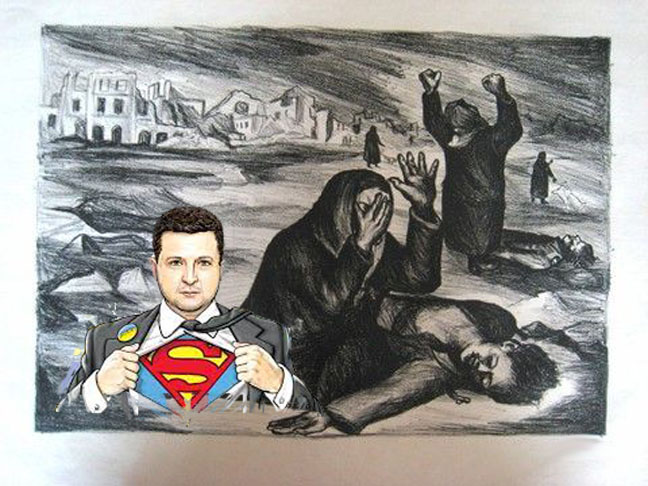
If we were awarding a Stupid Prize, it must go to Ukraine President Volodymyr Zelensky. The comedian turned politician campaigned for the Ukraine presidency on a platform of peace with the Donbas Ukrainians being brutalized by the Kyiv government. It got him elected with big majority of Donbas voters. Alas, Zelensky was too stupid to realize the Kyiv neofascists would never allow him to make peace with Donbas separatists they sought to destroy. To save his presidency, possibly even his life, Zelensky abandoned his voting base.
Zelensky even stupidly amassed 60,000 elite troops on the Donbas border in early 2022 to finish off his constituents there. All that achieved, along with stupidly begging NATO for membership, was to provoke the Russian invasion.
Once started, Zelensky became stupider and stupider. He wisely prepared to sign a peace deal with Russia in the first 2 months which would have ended the war without Ukraine losing a single square mile of territory. But Zelensky stupidly caved to stupid US and UK leaders who told him he could win with US/NATO weapons…but no troops. That stupidity sent Ukraine into failed state status.
Ukraine is now on the cusp of peace being negotiated 2 leaders, Trump and Putin, employing common sense instead of stupidity. But the US Democratic Party, Ukraine, UK, French, German and other NATO leadership remain mired in stupidity that this senseless war must continue till the last Ukrainian soldier is dead.
They all forget the first rule of sane, peaceful governance: Don’t do stupid.
Trump’s bombing threat over Iran nuclear programme prompts backlash
Guardian, Patrick Wintour Diplomatic editor, 31 Mar 25
Iranian officials accuse US president of breaching UN charter and say ‘violence brings violence’
Iran has reacted with outrage after Donald Trump said the country will be bombed if it does not accept US demands to constrain its nuclear programme.
The US president said on Sunday that if Iran “[doesn’t] make a deal, there will be bombing. It will be bombing the likes of which they have never seen before.”.
Trump’s latest threat – more explicit and violent than any made before – came after he sent a letter to Iran, as yet undisclosed, offering to hold talks on its nuclear programme. Iran had sent a reply to the US stating it was willing to hold indirect talks, officials confirmed.
Esmail Baghaei, the Iranian foreign ministry spokesperson, said of Trump’s threat: “The explicit threat of bombing Iran by the head of a country is clear contradiction to the essence of international peace and security.
Such a threat is a gross violation of the United Nations charter and a violation of the International Atomic Energy Agency safeguards regime. Violence brings violence and peace creates peace, America can choose.”
The supreme leader, Ayatollah Ali Khamenei, a sceptic about talks with the US, said Iran was “not overly concerned” by Trump’s words. “We consider it unlikely that such harm would come from outside. However, if any malicious act does occur, it will certainly be met with a firm
and decisive response,” he said.
Brig Gen Amir Ali Hajizadeh, the commander of the Revolutionary Guard’s aerospace force, said: “Someone in glass houses does not throw stones at anyone,” adding: “The Americans have at least 10 bases with 50,000 troops in the region, meaning they are sitting in a glass house.”
But the Iranian foreign minister, Abbas Araghchi, clearly had authority to keep the prospect of talks alive, saying Iran had already replied to the Trump letter through intermediaries in Oman and adding he knew the Iranian letter had now reached the US. Araghchi said direct talks were not possible while the US continued to threaten and bully Iran………………………………………………………………………………………………………………. https://www.theguardian.com/world/2025/mar/31/trumps-bombing-threat-over-iran-nuclear-programme-prompts-backlash
Britain is aiding Israel’s nuclear force
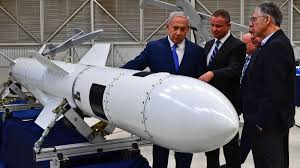
Israeli ministers may not see their nuclear weapons just as weapons of last resort, to be used if the country were threatened with annihilation.
In the months after the Hamas attacks on Israel in October 2023, several Israeli policymakers and commentators—including heritage minister Amihai Eliyahu who was later suspended from the cabinet—suggested that Israel should use nuclear arms against Hamas fighters in Gaza.
DECLASSIFIED UK, MARK CURTIS, 26 March 2025
When the government recently published its arms exports data for the period July to September last year, one item caught the eye: a licence to sell Israel £7.1m worth of “technology for submarines”.
Israel’s submarines are believed to house nuclear arms.
The government data included a footnote stating that the licence related to “marketing and promotional purposes, including demonstration to potential customers, temporary exhibitions”.
Whatever that might mean, what is clearer is that British ministers have authorised 77 export licences to supply Israel with components for its submarines since 2010. This makes that category of equipment the fourth most numerous for all UK military exports to Israel.
The total value of these licences is £8.96m, Declassified has established. Two of the licences are, however, “open” rather than “single”, meaning that unlimited quantities and values of such equipment can be exported from Britain.
These licences for Israel’s submarines were excluded from the UK’s restrictions on exports of military equipment for Israel announced last September during its bombardment of Gaza.
Also excluded were components from Israel’s F-35 warplanes used to devastating effect in the territory.
Israeli military officials are doubtless pleased that British companies can continue to support their submarines – since their underwater and nuclear arms programmes are both being upgraded.
Nuclear dolphins
Research institute SIPRI estimates that Israel has at least 90 nuclear warheads but that the number could reach as high as 300.
While Israel continues to deny it has nuclear arms, SIPRI says it is “believed to be modernizing its nuclear arsenal and appears to be upgrading its plutonium production reactor site at Dimona” in the Negev desert.
The Stockholm-based institute also notes unconfirmed reports that “all or some of the submarines have been equipped to launch an indigenously produced nuclear-armed sea-launched variant of the Popeye cruise missile, giving Israel a sea-based nuclear strike capability”.
It “assesses that around 10 cruise missile warheads might be available for the submarine fleet”………………………………………………………………………….
‘Armed with nuclear weapons’
Israel’s most recent, and sixth, submarine, known as the INS Drakon, is the country’s largest and was unveiled last November at the Kiel shipyard in northern Germany where it was built, and from where it will be delivered to Israel later this year.
“Israeli nuclear submarines have the capability to be armed with nuclear weapons as well as to perform clandestine spying missions all over the world”, the Jerusalem Post reported at the time.
Israeli ministers may not see their nuclear weapons just as weapons of last resort, to be used if the country were threatened with annihilation.
In the months after the Hamas attacks on Israel in October 2023, several Israeli policymakers and commentators—including heritage minister Amihai Eliyahu who was later suspended from the cabinet—suggested that Israel should use nuclear arms against Hamas fighters in Gaza.
Whitehall in denial
The UK government has consistently refused to acknowledge the open secret that Israel possesses nuclear weapons. One reason Whitehall can be certain, however, is that it helped Israel acquire nuclear arms in the first place.
In the late 1950s, Britain sold Israel 20 tonnes of heavy water, a vital ingredient for the production of plutonium at Israel’s top secret Dimona nuclear site.
In fact, Declassified previously found that staff in the Foreign Office and Ministry of Defence have for over 40 years believed Israel has developed nuclear arms.
Britain has also aided Israel’s submarine development…………………………………………………………………….https://www.declassifieduk.org/britain-is-aiding-israels-nuclear-force/?utm_source=Email&utm_medium=Button&utm_campaign=ICYMI&utm_content=Button
Iran rejects direct nuclear talks with Trump, open to indirect negotiations
US president threatens Iran with bombings if Tehran does not come to a nuclear agreement with Washington.
Aljazeera, 30 Mar 25
Iranian President Masoud Pezeshkian has ruled out direct negotiations with the administration of US President Donald Trump over the country’s nuclear programme but signalled a willingness for indirect talks, while Trump threatened bombings and secondary tariffs if Tehran does not come to an agreement with Washington.
“We responded to the US president’s letter via Oman and rejected the option of direct talks, but we are open to indirect negotiations,” Pezeshkian said during a cabinet meeting in Tehran on Sunday.
He stressed that while Iran is not against negotiations in principle, Washington must first rectify its past “misconduct” and rebuild trust.
His remarks, reported by the ISNA news agency, come amid escalating tensions between the two nations.
“If they don’t make a deal, there will be bombing,” Trump said in a telephone interview with NBC on Sunday.
“But there’s a chance that if they don’t make a deal, that I will do secondary tariffs on them like I did four years ago.”
Barbara Slavin, a fellow at the Stimson Center in Washington and a lecturer in international affairs at George Washington University, told Al Jazeera that “the Iranians are, right to be distrustful, given Trump’s track record and withdrawing from a previous deal”.
Trump has even signalled willingness to lift sanctions if nuclear and regional issues are resolved, but his ability to secure a deal is uncertain, said Slavin.
“The Iranians are worried, but mostly about the economic impact of Trump’s sanctions, the resumption and increase in economic sanctions, which we’ve already seen. The Iranian currency has depreciated dramatically. There’s high inflation and unemployment, and I think this frankly worries the Iranians more than a physical attack, which if anything, might unify the country,” she added.
“The US has moved additional bombers to Diego Garcia. It’s got another aircraft carrier apparently coming into the region. So it is well positioned to carry out some sort of military action, possibly in conjunction with the Israelis if there isn’t movement toward a diplomatic settlement,” Slavin said……………………………………………………https://www.aljazeera.com/news/2025/3/30/iran-rejects-direct-nuclear-talks-with-trump-open-to-indirect-negotiations
The great trek for justice
Linda Pentz Gunter, beyondnuclearinternational, https://beyondnuclearinternational.org/2025/03/30/the-great-trek-for-justice/?fbclid=IwY2xjawJYPUJleHRuA2FlbQIxMQABHbTmI9Rmb5knuObbif5AyBi6QtzDPUk738EQVWKFyLjhSy0BzHZEkr0Jxg_aem_N7hMr5F6Wk2F3eIhm-2GeA
Won-Young Lee has walked from his homeland in South Korea to Tokyo. Now he’s on the march in the US, writes Linda Pentz Gunter
How far would you walk for a cause? In the case of South Korean anti-nuclear activist, Won-Young Lee, that distance has no limit.
Lee, 67, and the director of the Korea Land Future Research Institute and the Public Reporting Center for the Dangers of Nuclear Power Plants (PRCDN), will arrive in Washington, DC on April 8, having walked there from the United Nations in New York City, a journey he began on March 19. The distance is about 260 miles.
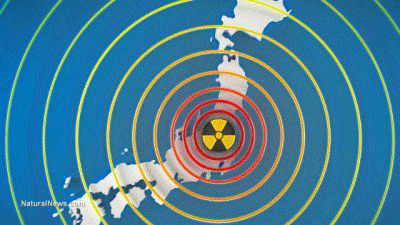
His cause this time is to draw attention to the continued dumping of highly radioactive waste water from the stricken Fukushima Daiichi nuclear power plant in Japan into the Pacific Ocean. This is not Mr. Lee’s first walk, but he chose the dates deliberately to span the time between the 2011 Fukushima nuclear disaster that began on March 11 and the April 26, 1986 Chornobyl reactor explosion in Ukraine.
This latest walk falls under the umbrella of what Lee has titled the “New Silk Road for Life and No-Nukes. Walking Planet Earth With Joy.” Together, the walks constitute a marathon that have taken Lee and other walkers through vast areas of the Asian continent, including Vietnam, Laos, Thailand, Malaysia, India and Nepal and on through Uzbekistan, Azerbaijan, and Georgia and through numerous countries in Europe. Lee himself has traversed 6,125 miles on foot.
He has been inspired, he says, by Gandhi’s ‘Salt March’ “that led to India’s independence,” and was also started, Lee says, “by a small number of people,” that grew into ever greater numbers.
That will of the people manifested again in 2023, during a trek of almost 1,000 miles undertaken by South Korean and Japanese citizens from Seoul, South Korea to Tokyo, Japan with stops that included one in Hiroshima.
Currently, as Lee marches resolutely from Manhattan to DC, he has encountered others who are equally inspired, often from Japan. Yoko Akashi, who marched with him in New Jersey, wrote that “even though we’re only two walking highways and shopping streets, people waved, honked cars and wanted to know more because they’re concerned.”
All of this is done with unbounded optimism. The purpose of the current walk is not only to engage with populations along the route but to try, once it reaches its destination in the nation’s capital, to convince members of Congress and even the White House, that the water dumping at Fukushima needs to stop.
By marching, we can gain the support of citizens, get citizens to join the march, and as the procession gets longer, citizens can pressure politicians,” asserts Lee.
We have published numerous articles on our news site — Beyond Nuclear International — arguing against the dumping of at least 1.3 million tons of radioactive water from Fukushima into the Pacific, a procedure that will go on for years, even decades.
One of the more recent ones, by Tilman Ruff, sums up many of the arguments. Another earlier one from GENSUIKIN, also lays out the specific risks.
Lee’s organization has turned to the cartoon format to produce a booklet telling the story. It’s entitled STOP! Fukushima Nuclear Wastewater Dumping and can be downloaded from the PRCDN website in English here.
I met with Lee and a group of Korean activists on Capitol Hill in February, during a press conference led by Congressman Brad Sherman (CA-32), a senior member of the House Foreign Affairs Committee, to urge for the passage of his bipartisan legislation, the Peace on the Korean Peninsula Act.
The bill calls for swift and substantial diplomatic engagement in order to achieve a formal end to the Korean War – America’s longest war.
During the event, Lee expressed his hopes for a political change of policy over the dumping (I am afraid I did not share his optimism.) In a statement before his New York to Washington march began, Lee expressed the view that stopping the dumping was in the hands of the US president. “He is the only person to whom the Japanese prime minister bows his head,” Lee wrote. “If the US president asks the Japanese prime minister to stop, the dumping can be stopped.”
At the heart of the matter for Lee is the devastating and continued destruction of the ecosystems on which all of us — human and animals — depend. The Fukushima radioactive water dump is just one of the most recent examples.
“Humanity has a responsibility to respect the survival of all living things in the ecosystem as well as its own future generations,” said a declaration put out before the latest walk launched. And yet, “the Japanese government is intentionally dumping potentially fatal nuclear contaminants into the sea.”
Both the International Atomic Energy Agency (IAEA) and the United Nations come in for deservedly harsh criticism as well. In the cartoon booklet, the IAEA is referred to as “Japan’s Brazen Enabler”. The UN, says the declaration, is “ignoring the spirit of the World Charter of Nature (1982), drawn up by themselves and the Earth Charter (2000), made by agreement at the Rio Environmental Conference, and are simply watching the destruction of our ecosystem.” Striking an uncharacteristically pessimistic note, it adds: “All of these things show that our international community is completely broken. At this rate, there is no hope for humanity.”
In conclusion, the march declaration offers the following:
The Japanese government, which has intentionally put humanity and the Earth’s ecosystem at great risk, must immediately stop dumping nuclear contaminated water and apologize to all living things on Earth.
The U.S. government and the IAEA, which support Japan’s ocean dumping of nuclear contaminated water, should immediately withdraw their support and seek safe measures for all living things on Earth.
The UN and the International Community must acknowledge and reflect on dereliction of their duty to stop Japan from dumping nuclear contaminated water into the ocean.
Global citizens, keep in mind that if we turn a blind eye to these errors, we are committing a crime to our descendants, and let us actively punish any country or power that intentionally commits such crimes.
Global citizens, let us be aware of our responsibility to protect the dignity of all life in the global village, and set the right guideposts.
Linda Pentz Gunter is the international specialist at Beyond Nuclear and writes for and edits Beyond Nuclear International. Her forthcoming book, Hot Stories. Reflections from a Radioactive World, will be published later this year.
Pearl Harbor update brings nuclear risk
Star Advertiser March 30, 2025, Lynda Williams
Kevin Knodell’s recent article highlights the significance of Dry Dock 5 at Pearl Harbor, but omits a critical detail: this facility is set to host the U.S. Navy’s most lethal nuclear-powered and nuclear-armed submarines (“‘An emphasis on lethality,’” Star-Advertiser, March 23).
This will likely transform Hawaii’s role in the U.S. nuclear arsenal by accommodating Ohio-class and, eventually, Columbia-class ballistic missile submarines, each capable of carrying Trident missiles with multiple nuclear warheads.
The detonation of even a single modern warhead could result in millions of deaths and potentially trigger a nuclear winter, devastating the global biosphere.
An accident on such a submarine near Pearl Harbor would be catastrophic and could cause widespread contamination across Hawaii. Hawaii’s residents were not consulted about housing nuclear-armed submarines in Honolulu. Please do not whitewash or sugarcoat the dangers associated with housing these submarines in our community……………………………………….. https://lyndalovon.blogspot.com/2025/03/my-op-ed-in-honolulu-star-advertiser.html?m=1&fbclid=IwY2xjawJYOxdleHRuA2FlbQIxMQABHXmnePII2HU6StRh1n7LgFionyc9TcmHIMLXETxISQeaZWtElxJvUl_axg_aem_RhuD_LZZLNNZDjuYWl-yGg
Swarms of satellites are harming astronomy. Here’s how researchers are fighting back

SpaceX and other companies plan to launch tens of thousands of satellites, which could mar astronomical observations and pollute the atmosphere.
Nature, By Alexandra Witze, 18 Mar 25
In the next few months, from its perch atop a mountain in Chile, the Vera C. Rubin Observatory will begin surveying the cosmos with the largest camera ever built. Every three nights, it will produce a map of the entire southern sky filled with stars, galaxies, asteroids and supernovae — and swarms of bright satellites ruining some of the view.
Astronomers didn’t worry much about satellites photobombing Rubin’s images when they started drawing up plans for the observatory more than two decades ago. But as the space around Earth becomes increasingly congested, researchers are having to find fresh ways to cope — or else lose precious data from Rubin and hundreds of other observatories.
The number of working satellites has soared in the past five years to around 11,000, mostly because of constellations of orbiters that provide Internet connectivity around the globe (see ‘Satellite surge’). Just one company, SpaceX in Hawthorne, California, has more than 7,000 operational Starlink satellites, all launched since 2019; OneWeb, a space communications company in London, has more than 630 satellites in its constellation. On paper, tens to hundreds of thousands more are planned from a variety of companies and nations, although probably not all of these will be launched1.
Satellites play a crucial part in connecting people, including bringing Internet to remote communities and emergency responders. But the rising number can be a problem for scientists because the satellites interfere with ground-based astronomical observations, by creating bright streaks on images and electromagnetic interference with radio telescopes. The satellite boom also poses other threats, including adding pollution to the atmosphere.
When the first Starlinks launched, some astronomers warned of existential threats to their discipline. Now, researchers in astronomy and other fields are working with satellite companies to help quantify and mitigate the impacts on science — and society. “There is growing interest in collaborating and finding solutions together,” says Giuliana Rotola, a space-policy researcher at the Sant’Anna School of Advanced Studies in Pisa, Italy.
Timing things right………………………………………..https://www.nature.com/articles/d41586-025-00792-y?fbclid=IwY2xjawJYMe9leHRuA2FlbQIxMAABHZglIwLgXdf2zs39ZTJIEmAP2QcvsWbVMRrzGsBT3jO8rtlyneCYBjefSA_aem_YRQybLlF5vTcwKEIIuQ0ZA
Biden Lied About Everything, Including Nuclear Risk, During Ukraine Operation
Sourced to tone-deaf “U.S. officials,” a massive New York Times exposé reveals an unprecedented betrayal of American voters, but also Ukraine
Racket News, Matt Taibbi, Apr 01, 2025
From “The Secret History of the War in Ukraine” in the New York Times:
At a hastily arranged meeting on the Polish border, General Zaluzhny admitted to Generals Cavoli and Aguto that the Ukrainians had in fact decided to mount assaults in three directions at once.
“That’s not the plan!” General Cavoli cried…
Fifteen months into the war, it had all come to this tipping point.
“We should have walked away,” said a senior American official.
But they would not.
When Ukrainian President Volodymyr Zelensky visited the White House nearly a month ago, the New York Times packed its pages with stories denouncing Donald Trump and J.D. Vance for abandoning Ukraine, and the impolitic “dressing down” of a friendly foreign leader. The Times like most Western news outlets for years suggested that anything short of a full-throated expression of support for war was a betrayal of the “democratic world order” that would lead to instant battlefield deaths.
Now that the war appears lost, and newspapers abroad (conspicuously, not here) are full of news about an apparent bombing of Vladimir Putin’s motorcade, and the future of NATO hangs by a thread, the Times has run a 13,000-word “Secret History” that shows the same U.S. officials who denounced Trump and American voters for saying it out loud long ago concluded that they, too, should probably “walk away.”
The piece is also an extraordinarily comprehensive betrayal of Zelensky and Ukraine, exponentially worse than the “dressing down” by Trump. Authored by longtime veteran of controversial intel pieces Adam Entous, it’s sourced to 300 American and European officials who seem to be responding to their apparent sidelining via a shameless tantrum, exhibiting behavior that in the field would get military men shot. Not only do they play kiss and tell with a trove of operational secrets, they use the Times to deflect blame from their own failures onto erstwhile Slavic partners, cast as ignorant savages who snatched defeat from the jaws of America-designed victory. It’s as morally abhorrent a piece of ass-covering ever as I’ve seen in print, and that somehow is not its worst quality.
The people who quarterbacked the NATO side of the Ukraine war are so pleased with themselves, they can’t keep from boasting about things that will make the average American want to pitchfork the lot of them. Entous describes a tale told “through a secret keyhole” that reveals how America was “woven into the war far more intimately and broadly than previously understood.” (Translation: it was hidden from us.) Sources not only make it clear that the public was lied to on a continuous basis from the outset of the conflict, they describe how we were lied to, apparently thinking the methods clever. Some are small semantic gambits the idiots wrongly believe exculpated their actions, but the main revelation involves one gigantic, inexcusable deception. From Joe Biden down, they all lied about the risk of World War III.
They risked our lives and our children’s lives, knowingly, repeatedly, and for the worst possible reason: politics. Afraid to admit a mistake, they planned individual excuses while letting bureaucratic inertia expand the conflict. Worse, as was guessed at on this site late last year, the Biden administration after last November’s election increased the risk of global conflict by “expanding the ops box to allow ATACMS and British Storm Shadow strikes into Russia,” in order to “shore up his Ukraine project.” If you and check this “secret history” against contemporaneous statements of American and European leaders, you’ll find the scale of the lies beyond comprehension. Heads need to roll for this:………………………………….. https://www.racket.news/p/biden-lied-about-everything-including?utm_source=post-email-title&publication_id=1042&post_id=160259839&utm_campaign=email-post-title&isFreemail=true&r=1ise1&triedRedirect=true&utm_medium=email
Iran rejects direct talks with the US over its nuclear programme
IRAN will not hold direct negotiations with the United States over its
nuclear programme, President Masoud Pezeshkian said today. Commenting on a
letter sent by US President Donald Trump to Iranian Supreme Leader Ali
Khamenei, Mr Pezeshkian said Iran’s response, delivered via Oman, left
open the possibility of indirect negotiations with Washington.
However, such talks have made no progress since Mr Trump, during his first term in
the White House, unilaterally withdrew the US from Tehran’s nuclear deal
with world powers in 2018. The Iranian president told a cabinet meeting:
“We don’t avoid talks; it’s the breach of promises that has caused
issues for us so far. “They must prove that they can build trust.”
Morning Star 30th March 2025, https://morningstaronline.co.uk/article/iran-rejects-direct-talks-us-over-its-nuclear-programme
Why Ontario won’t consider the nuclear option in its fight over Trump’s tariffs
Although Ontario Premier Doug Ford vowed that his
government would “not back down,” “apply maximum pressure” and
“keep up the fight” in the Canada-U.S. trade war, one nuclear option is
off the table: cancelling contracts to build American power reactors.
The province’s utility, Ontario Power Generation, is on the cusp of starting
construction of the first of four BWRX-300 small modular reactors, or SMRs,
at Darlington Nuclear Generating Station in Clarington. They’re designed
by Wilmington, N.C.-based GE-Hitachi Nuclear Energy, a stalwart of the
U.S.‘s nuclear industry. While the cost hasn’t been disclosed yet, the
first reactor is likely to cost several billion dollars.
Globe & Mail 30th March 2025,
https://www.theglobeandmail.com/business/article-why-ontario-wont-consider-the-nuclear-option-in-its-fight-over-trumps/
1 This Month
Chernobyl: The Lost Tapes – A good documentary on Chernobyl on SBS available On Demand for the next 3 weeks– https://www.sbs.com.au/ondemand/tv-program/chernobyl-the-lost-tapes/2352741955560

of the week–London Campaign for Nuclear Disarmament

Tell the Ukrainian Government to Drop Prosecution of Peace Activist Yurii Sheliazhenko
To see nuclear-related stories in greater depth and intensity – go to https://nuclearinformation.wordpress.com
-
Archives
- April 2026 (127)
- March 2026 (251)
- February 2026 (268)
- January 2026 (308)
- December 2025 (358)
- November 2025 (359)
- October 2025 (376)
- September 2025 (257)
- August 2025 (319)
- July 2025 (230)
- June 2025 (348)
- May 2025 (261)
-
Categories
- 1
- 1 NUCLEAR ISSUES
- business and costs
- climate change
- culture and arts
- ENERGY
- environment
- health
- history
- indigenous issues
- Legal
- marketing of nuclear
- media
- opposition to nuclear
- PERSONAL STORIES
- politics
- politics international
- Religion and ethics
- safety
- secrets,lies and civil liberties
- spinbuster
- technology
- Uranium
- wastes
- weapons and war
- Women
- 2 WORLD
- ACTION
- AFRICA
- Atrocities
- AUSTRALIA
- Christina's notes
- Christina's themes
- culture and arts
- Events
- Fuk 2022
- Fuk 2023
- Fukushima 2017
- Fukushima 2018
- fukushima 2019
- Fukushima 2020
- Fukushima 2021
- general
- global warming
- Humour (God we need it)
- Nuclear
- RARE EARTHS
- Reference
- resources – print
- Resources -audiovicual
- Weekly Newsletter
- World
- World Nuclear
- YouTube
-
RSS
Entries RSS
Comments RSS
 nuclear-news