House Of Commons Public Accounts Committee: Decommissioning Sellafield – Seafield is the most dangerous place in the U.K
House Of Commons Public Accounts Committee: Decommissioning Sellafield.
Admissions that Seafield is the most dangerous place in the U.K. and an
accident involving the high activity waste storage tanks would be
catastrophic. Witness(es): Clive Maxwell, Second Permanent Secretary,
Department for Energy Security and Net Zero; Lee McDonough, Director
General, Net Zero, Nuclear and International, Department for Energy
Security and Net Zero; David Peattie, Group Chief Executive Officer,
Nuclear Decommissioning Authority; Kate Bowyer, Chief Financial Officer,
Nuclear Decommissioning Authority; Euan Hutton, Chief Executive, Sellafield
Ltd
Parliament TV 20th March 2025 https://parliamentlive.tv/Event/Index/7f124fa5-c2e2-4c68-bce8-557763429471
UK will not shy away from nuclear weapons, John Healey tells Russia
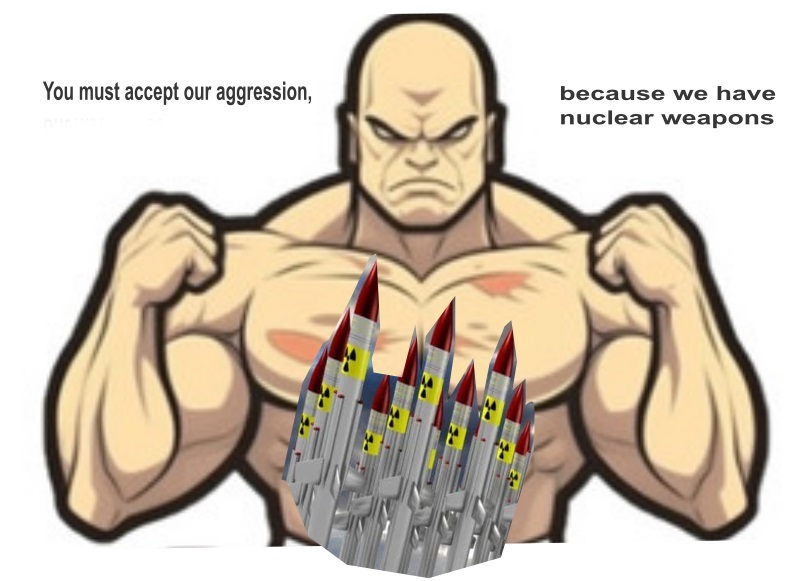
Defence secretary warned the weapons could do ‘untold damage’ as construction began on the successor to Trident
Larisa Brown, Defence Editor |Bruno Waterfield, Brussels, Thursday March 20 2025, The Times
Britain has the power to do “untold damage” to adversaries such as Russia with its nuclear deterrent, the defence secretary has warned, as he marked the build of the next generation of nuclear submarines.
John Healey said he took Vladimir Putin’s threats to use his nuclear arsenal seriously and the UK should not “fight shy” of the fact it has such weapons.
On a visit to a submarine yard, he also said that France could follow the UK’s example and commit its nuclear weapons to defend Nato and protect the security of Europe. At the moment, France will only officially use its weapons to protect itself.
In an interview with The Times, he said: “Our nuclear deterrent is there as a deterrent.
https://www.thetimes.com/uk/defence/article/britain-nuclear-power-damage-russia-cd8bv0d
Hinkley Point C nuclear will cost at least £75 billion – highly unlikely that Sizewell C will be any cheaper.

KEEPING REEVES SWEET: AXE SIZEWELL C!
Jonathon Porritt, 19 Mar 25
“…………………………… , Ed Miliband’s still a total sucker for the propaganda of both the fossil fuel industry (with the latest research from Fossil Free Parliament reminding us that DESNZ Ministers notched up an unbelievable 104 ministerial meetings with various fossil fuel companies between July and September last year) as well as the nuclear industry.
I’ll return to Ed’s mystifying obsession with the fossil fuel industry’s mega-scam of Carbon Capture and Storage in my next blog. For now, let’s just stick to his nuclear nonsense.
Knowing that he will have to give something big and bold back to the Treasury if he’s going to be able to protect things that really matter in his overall portfolio, the blindingly obvious thing to give up is Sizewell C. He knows the Treasury already despises the nuclear industry, deep down, after literally decades of its over-claiming and under-performing. So give them some red meat. A lot of red meat.
The UK Government has already spent around £3.7 billion on preparing the groundworks for Sizewell C. I saw the consequences of that for myself when I was in the area a couple of weeks ago, and I was genuinely shocked. The devastation is unbelievable – including more than 21,000 trees cut down. And that’s BEFORE a Final Investment Decision (FID) has actually been secured. Prospective investors (even in the Middle East) seem to be a lot less keen on Sizewell C than Ministers keep telling us.
Worse yet, Labour has promised another £2.7 billion in the next financial year – to go on doing exactly the same, again, before an FID is secured. Axing Sizewell C at this point, however painful that might be politically, would be a huge, short-term win for the Treasury.
In fact, this would be a much, much bigger prize for UK taxpayers in the longer term. Sizewell C has been described by EDF as a “Hinkley Point look-alike, with a lot of lessons learned”. There’s mighty little evidence that the UK nuclear industry has ever learned a single lesson from its unparalleled record of failure, but let’s just live with that for the time being.
The latest estimate for the “overnight cost” of Hinkley Point C in Somerset is £46 billion. Please don’t be fooled by that ever-so-opaque terminology: “overnight” simply means the cost of construction. It’s the figure the industry loves to trot out to the UK’s limitlessly gullible media (including the BBC and The Guardian), without acknowledging that it doesn’t include the cost of the capital EDF has had to raise to build this monstrous white elephant in the first place. EDF has indicated in the past that cost of capital can add as much as 60% to the overnight cost.
Yes, that’s right: Hinkley Point C will cost at least £75 billion.
It’s highly unlikely that Sizewell C, on the Suffolk coast, will be any cheaper – indeed, it’s already clear that the engineering challenge at Sizewell C is much greater than at Hinkley Point C.
And who will pay for Sizewell C? Well, it’s either YOU as a taxpayer (depending on the size of the stake that the UK government will eventually have to take in Sizewell C in order to secure that ever-elusive Final Investment Decision), or YOU as an energy consumer, through the chosen mechanism of a Regulated Asset Base. From the moment construction at Sizewell C starts, consumers’ bills will start rising.
Axing Sizewell C will obviously be a huge hit to the nuclear industry. Which means it’s probably too much to kill off the industry’s accompanying fantasies about Small Modular Reactors at the same time. At the moment, subsidising SMRs is relatively small beer for the taxpayer, and it’s got as much to do with keeping Rolls Royce on board as it has with any serious attempt to crack the huge technological challenges associated with these new reactors.
Once free of Sizewell C, DESNZ could then double down on all those parts of its portfolio which will deliver real economic value before the next election: solar and wind, storage (batteries plus a lot more), reconfigured grids, and low-carbon manufacturing………………………………..
https://jonathonporritt.com/poor-old-ed-miliband/
Sellafield decommissioning to continue for at least a century – robot dogs play a part
Robot dogs could help decommission Sellafield nuclear plant after successful trials.
Operators working from the Westlakes Science Park in Whitehaven, around
eight miles from Sellafield, remotely operated “safely and securely” a
custom Boston Dynamics Spot Quadrupedal Robot ‘dog’ that could carry
out tasks such as remote inspections, data gathering and clean-up work.
Energy generation at the plant stopped in 2003, but the painstaking
decommissioning process typically takes decades and presents radioactive
hazards to workers. Sellafield is unusual in that the decommissioning
challenge also encompasses early nuclear research and nuclear weapons
programmes that took place on the site.
The Nuclear Decommissioning Authority (NDA) is not expecting full site remediation to be completed until 2125.
Engineering & Technology 20th March 2025
Book- Before Our Very Eyes, Fake Wars and Big Lies: From 9/11 to Donald Trump

Before Our Very Eyes, Fake Wars and Big Lies: From 9/11 to Donald Trump. March 2025
World-famous political analyst and editor Thierry Meyssan draws on his last 10 years in the thick of the action in Syria and Libya, where he served personally as an adviser to those governments. In “Before Our Very Eyes,” he shares the inside story of the 21st century regime change wars.
He lays bare the “Arab Spring,” the “revolutions” against Gaddafi and Assad, and the rapid rise of the jihadist monster ISIS, as masked operations of the US empire, “leading from behind.”
In “Before Our Very Eyes” he chronicles the onslaught against Syria and Libya, from the viewpoints of three camps: the foolish ambitions of the French neocolonialists, the fanaticism of the Muslim Brotherhood, and the lust for world domination of the Anglo-Zionist-American Empire.
We see how the Anglo-American axis (the US, UK, and Israel discreetly behind the scenes) deployed their iron grip on the world’s money and media to propagate a fake scenario of human rights violations. This was the cover story for the real scheme — to utterly disable the Muslim world by bringing it under the sword of fanatics like the Brotherhood, Al-Qaeda and ISIS. Vassal regimes like Turkey, Saudi Arabia, Qatar, Jordan and the Emirates were assigned to do the heavy lifting.
For public relations purposes, the US pretended to fight half-heartedly against ISIS – which in fact it had intentionally created in Iraq, to divide and conquer the insurgency. The US then covertly ferried the terrorists into Libya and Syria. It continues to prop up ISIS by devious means. Thus the wars on Libya and Syria were based on treachery and fakery from start to finish – but the suffering of millions of innocent victims is all too real. A most murderous masquerade!
After Ukraine, Iran?

nuclear experts who studied the Iranian documents provided by Israel would all assure that it was not Iran that lied, but Israel.
while Iran is no longer complying with its commitment not to enrich uranium above 3.67%, it is still abiding by its JCPOA commitments to IAEA inspectors and fulfilling its obligations under the Treaty on the Non-Proliferation of Nuclear Weapons (NPT).
From the State Department, where he is in charge of Venezuela, Elliott Abrams, who brought together Straussians and revisionist Zionists within the Vandenberg Coalition, is advocating for an attack on Iran.
Thierry Meyssan, voltairenet.org, Tue, 18 Mar 2025 , https://www.sott.net/article/498539-After-Ukraine-Iran
For the “revisionist Zionists” (that is, the successors of Ze’ev Jabotinsky and Benzion Netanyahu — not to be confused with Theodor Herzl’s “Zionists”), the time has come, after the victory over Hamas, Hezbollah, and the Assads, to crush Iran.
On the contrary, for Donald Trump, after the pacification of the Ukrainian conflict, the priority should be to pacify the one surrounding Iran.
The press has its eyes fixed on Palestine, but it is around Tehranthat peace in the Middle East is being played out.
In Tehran, Iranians are anxiously wondering whether, once their economy is exhausted and they can no longer defend themselves, the Israelis and the United States will bomb them. Under these circumstances, should they or should they not negotiate with the enigmatic President Donald Trump?
On March 2, 2025, Iran’s Majlis (Parliament) voted no confidence in Economy and Finance Minister Abdolnaser Hemmati over his handling of the Western economic blockade and the resulting economic crisis. On the same day, his friend Mohammad Javad Zarif, former negotiator of the Joint Comprehensive Nuclear-Test-Ban Treaty (JCPOA) and current Vice President, resigned.
President Donald Trump revealed on March 7 that he had sent a letter to Iran. The international press had reported that it had been delivered the same day by Russian Deputy Foreign Minister Sergei Ryabkov to Iranian Foreign Minister Abbas Araghchi. However, Nournews revealed that Russia had refused to act as intermediary. According to Foreign Ministry spokesman Esmail Baghaei, it was ultimately delivered on March 12 by Anwar Gargash, diplomatic adviser to the President of the United Arab Emirates.
In any case, without waiting to hear about it, Ayatollah Ali Khamenei, leader of the Revolution, declared:
“What interest do we have in negotiating when we know that he will not respect his commitments? We sat at the same table and negotiated for several years, and once the agreement was completed, finalized and signed, he overturned the table and tore up the agreement.”
The liabilities of the JCPoA agreement
Indeed, in 2013, Iran negotiated a comprehensive agreement with the five permanent members of the UN Security Council and Germany, the 5+1, in Geneva. They resulted in a temporary halt to Iran’s nuclear program and a partial lifting of unilateral Western coercive measures and Security Council economic sanctions. The 5+1 negotiations then broke off, while direct discussions between Iran and the United States continued behind the scenes. They finally resumed in 2015 in Lausanne. The public agreement was signed in Vienna, in much the same terms as the draft that had been drawn up two years earlier. It is known as the Joint Comprehensive Plan of Action (JCPoA).
The United States finally recognized the Islamic Republic’s right to develop its civilian nuclear program. In exchange, Iran agreed to allow the International Atomic Energy Agency (IAEA) to verify that it was not concurrently developing a military program. To this end, it agreed to possess no more than 5,060 centrifuges, not enrich uranium above 3.67%, and limit its plutonium production.
France and the United Kingdom declared themselves satisfied, while the French negotiator, Sayan Laurent Fabius, acknowledged that, as the talks progressed, he had informed the Israeli Prime Minister, his friend Benjamin Netanyahu, without the knowledge of other diplomats.
Russia and China concluded from these discussions, confirmed by their own observations on the ground, that Iran had closed its military nuclear programme in 1988, in accordance with a fatwa from Ayatollah Ruhollah Khomeini, and had never resumed it [ 1 ].
On April 30, 2018, Benjamin Netanyahu released 100,000 documents stolen by the Mossad from archives in Tehran relating to the AMAD project. He explained that, by resorting to the Muslim principle of taqiya, Iran had lied. Tehran had developed a military nuclear program from 1989 to 2003 under the direction of physicist Mohsen Fakhrizadeh.
A week later, on May 8, 2018, President Donald Trump announced the United States’ withdrawal from the agreement signed by the Obama administration in Vienna. The persisting unilateral coercive Western measures are being maintained and strengthened.
“Since then, Iran has lost $100 billion a year,” according to former President Hassan Rouhani. By this measure, the US withdrawal would have caused $650 billion in losses over the past six and a half years.
Subsequently, nuclear experts who studied the Iranian documents provided by Israel would all assure that it was not Iran that lied, but Israel. The only part of the AMAD project that could be linked to the manufacture of an atomic bomb is a shock wave generator that is used in the manufacture of a detonator for this type of bomb [ 2 ].
Iran, in turn, withdrew from the JCPoA and the secret agreements signed with the United States. Its stockpile of uranium enriched to 60% increased to 182 kg in the last quarter of 2024.
In 2020, Israel assassinated Mohsen Fakhrizadeh in Tehran.
Towards new negotiations
Asked by the Iranian press about possible contacts via Oman, Minister of Foreign Affairs Abbas Araghchi said:
“Yes, this is not a strange method, and it has happened many times throughout history. Therefore, indirect negotiation is feasible… What is important is that the will to negotiate and reach a fair and just agreement arises under conditions of equality between states. The form of the negotiation is irrelevant.”
On March 12, the same day President Trump delivered his letter, France, Greece, Panama, South Korea, the United Kingdom, and the United States convened a closed-door meeting of the Security Council to examine Iran’s continued failure to comply with the IAEA’s requests for information.
The following day, March 13, Mohammad Hassan-Nejad Pirkouhi, director general for International Peace and Security at the Iranian Foreign Ministry, summoned the ambassadors of the United States, France, and the United Kingdom. He criticized them for an “irresponsible and provocative” convening of the Security Council by abusing UN mechanisms. He emphasized that while Iran is no longer complying with its commitment not to enrich uranium above 3.67%, it is still abiding by its JCPOA commitments to IAEA inspectors and fulfilling its obligations under the Treaty on the Non-Proliferation of Nuclear Weapons (NPT).
The United Kingdom has indicated that it is prepared to reinstate UN sanctions by October 18 if Iran does not curb its uranium enrichment. These sanctions have, in fact, been suspended, not repealed.
Simultaneously, the United States took unilateral coercive measures against Mohsen Paknejad, Iran’s oil minister.
On March 14, Russian Sergei Ryabkov and Iranian Kazem Gharibabadi were received by their Chinese counterpart, Ma Zhaoxu, in Beijing. The latter stressed that “the parties concerned should commit to addressing the root causes of the current situation and abandoning sanctions, pressure, or threats of force.” At a press conference, Kazem Gharibabadi stated that “all negotiations and discussions will be focused exclusively on the nuclear issue and the lifting of sanctions.” The former JCPoA negotiator, for his part, told the BBC that “the negotiations should not include Iran’s missile program or its regional influence. Adding these topics would complicate the process and make it unmanageable.” Finally, Sergei Lavrov, Russian Foreign Minister, told the press that adding additional conditions to the negotiations would doom them to failure. Finally, Mao Ning, spokesperson for the Chinese Ministry of Foreign Affairs, stressed that “in the current situation, we believe that all parties must maintain calm and restraint in order to avoid the escalation of the Iranian nuclear situation or moving towards confrontation and conflict.”
Meanwhile, G7 foreign ministers, meeting in La Malbaie, Canada, discussed arbitrary detentions in Iran and assassination attempts by Iranian intelligence abroad.
On March 15, former President Hassan Rouhani emphasized that the leader, Ali Khamenei, “does not have absolute opposition to negotiations.” He continued:
“Didn’t we negotiate with the United States on Iraq, Afghanistan, and the nuclear deal? Even back then, when I was secretary of the Supreme National Security Council, the leader himself wrote that negotiations must adhere to certain principles.”
However, on the same day, the Pentagon bombed Ansar Allah (called “Houthis” by Atlanticist propaganda) in Yemen, killing nine civilians. On his TruthSocial network, President Donald Trump posted this message:
“To Iran: Support for Houthi terrorists must end IMMEDIATELY. Do NOT threaten the American people, their President, who has been given one of the most important presidential terms in history, or the world’s shipping lanes. If you do it, WITH the Houthis, America will hold you fully responsible and we will not be nice.” [ 3 ]
From the State Department, where he is in charge of Venezuela, Elliott Abrams, who brought together Straussians and revisionist Zionists within the Vandenberg Coalition, is advocating for an attack on Iran.
The stakes of the new negotiations
If new contacts take place (and it is likely that they have already begun), the pacification of US-Iranian relations would once again shake up the broader Middle East.
Currently, Iran has lost in Palestine, Lebanon, and Syria.Tehran maintains its military influence only in Yemen. Economically, the country, subject to unilateral Western coercive measures, is on the brink of famine, like Iraq before the overthrow of Saddam Hussein (2002) and Syria before the overthrow of Bashar al-Assad (2024). It would no longer withstand a ground invasion.
Since nature abhors a vacuum, Israel and Turkey are attempting to divide up the region’s ruins. The internal pacification of the Kurdish question in Turkey delegitimizes the position of Kurdish mercenaries from the pseudo-state formed in Syria (Rojava) and makes them available for a possible ground invasion of Iran on behalf of Israel.
Behind the scenes, the man behind Benjamin Netanyahu, Elliott Abrams [ 4 ], is doing everything he can to turn President Donald Trump against Tehran [ 5 ].
References:………………………..Thierry Meyssan. Political consultant, President-founder of the Réseau Voltaire (Voltaire Network).Latest work in English – Before Our Very Eyes, Fake Wars and Big Lies: From 9/11 to Donald Trump, Progressive Press, 2019.
Hold Southern California Edison (SCE) Accountable: From Wildfires to Nuclear Waste.

Samuel Lawrence Foundation, 20 Mar 25
On March 5, 2025, Los Angeles County filed a lawsuit against Southern California Edison (SCE) over the devastating Eaton Fire, which killed 17 people and destroyed over 9,000 structures. The lawsuit alleges that SCE’s failure to maintain its infrastructure led to the disaster—echoing a long history of negligence by the utility. From wildfires to nuclear waste, Edison has repeatedly put profit over public safety, avoiding accountability for the risks it imposes on millions of Californians. The parallels to nuclear waste stored at San Onofre are striking: just as SCE’s equipment failures have fueled deadly fires, their reckless handling of 3.6 million pounds of nuclear waste at San Onofre poses an existential threat to our coastal communities.
This lawsuit highlights the urgent need to hold SCE accountable—not just for wildfire destruction but for the dangerous waste sitting on our shoreline. Our fight continues to demand oversight, responsibility, transportability, and real solutions for San Onofre’s ticking time bomb before disaster strikes again. We are optimistic that LA County will see justice in this fight against Edison.
‘Vandals in the White House’ no longer reliable allies of Australia, former defence force chief says
Henry Belot and Ben Doherty, Guardian, 21 Mar 25
Chris Barrie says Donald Trump’s second term is ‘irrecoverable’, but stops short of calling for end to Aukus pact.
A former Australian defence force chief has warned “the vandals in the White House” are no longer reliable allies and urged the Australian government to reassess its strategic partnership with the United States.
Retired admiral Chris Barrie spent four decades in the Royal Australian Navy and was made a Commander of the Legion of Merit by the US government in 2002. He is now an honorary professor at the Australian National University.
“What is happening with the vandals in the White House is similar to what happened to Australia in 1942 with the fall of Singapore,” Barrie said. “I don’t consider America to be a reliable ally, as I used to.
“Frankly, I think it is time we reconsidered our priorities and think carefully about our defence needs, now that we are having a more independent posture … Our future is now in a much more precarious state than it was on 19 January.
“Trump 1.0 was bad enough. But Trump 2.0 is irrecoverable.”
Barrie said it was “too soon” to say whether Australia should end its multibillion-dollar Aukus partnership, but raised concerns about a lack of guarantee that nuclear-powered submarines would actually be delivered. He also warned about an apparent lack of a back-up option.
Pillar One of the Aukus deal – which would see the US sell Australia nuclear-powered submarines before the Aukus-class submarines were built in Australia – is coming under increasing industry scrutiny and political criticism, with growing concerns the US will not be able, or will refuse, to sell boats to Australia, and continuing cost and time overruns in the development of the Aukus submarines.
“Let’s define why we really need nuclear submarines in the first instance, given a new independent defence posture for Australia,” Barrie said. “If they still make sense in that context, fine. But they might not. There might be alternatives. There might be alternatives with conventional submarines if we didn’t want to go any further than the Malacca Straits.”
Barrie’s warning comes after former foreign affairs minister Bob Carr said Australia would face a “colossal surrender of sovereignty” if promised US nuclear-powered submarines did not arrive under Australian control.
Carr, the foreign affairs minister between 2012 and 2013, said the Aukus deal highlighted the larger issue of American unreliability in its security alliance with Australia.
“The US is utterly not a reliable ally. No one could see it in those terms,” he said. “[President] Trump is wilful and cavalier and so is his heir-apparent, JD Vance: they are laughing at alliance partners, whom they’ve almost studiously disowned.”………………………. https://www.theguardian.com/australia-news/2025/mar/21/vandals-in-the-white-house-no-longer-reliable-allies-to-australia-former-defence-force-chief-says-ntwnfb?CMP=share_btn_url
Climate impacts may be starting to spiral, but a sub-1.5C world is ‘still possible’

Climate impacts may be starting to spiral, but a sub-1.5C world is ‘still
possible’. World Meteorological Organisation report shows CO2 in atmosphere
has reached its highest level in 800,000 years, but the world can still
avoid a climate catastrophe. Carbon dioxide in the Earth’s atmosphere has
reached its highest level in 800,000 years, with temperature records being
shattered, polar ice melting at unprecedented rates, and ocean
acidification worsening.
Business Green 19th March 2025, https://www.businessgreen.com/news-analysis/4411077/climate-impacts-starting-spiral-sub-5c-world
“We will not back down:” Court tells Greenpeace to pay billion dollar damages bill to oil and gas company
The case has been mired in controversy from the outset with many jurors holding unfavourable views of the protests and it was reported that more than half the jurors selected to hear the case had ties to the fossil fuel industry.
the US decision is a good indicator about what may be in store for Australia.
Royce Kurmelovs, Mar 20, 2025,
https://reneweconomy.com.au/we-will-not-back-down-court-tells-greenpeace-to-pay-billion-dollar-damages-bill-to-oil-and-gas-company/
A jury in the US has hit Greenpeace with $US660 million ($A1.04 billion) in damages for defamation and other claims for the green group’s part in a campaign led by First Nations people against an oil pipeline in 2016 and 2017.
The Standing Rock protests marked a major turning point in the movement against new oil and gas infrastructure, when the Standing Rock Sioux Tribe led a campaign against the construction of the Dakota Access pipeline.
Right wing organisations and groups mobilised in response to the protests that became a flashpoint in the broader fight over climate change, with sweeping anti-protest laws rolled out across the United States.
The case against Greenpeace is the latest reaction to the protest with Dallas-based oil and gas company, Energy Transfer Partners, alleging it lost $70 billion as a result of the campaign. It pursued Greenpeace in the courts alleging defamation and incitement of criminal behaviour against the project.
The lawsuit relied upon a US-specific statute, the Racketeer Influenced and Corrupt Organizations Act (RICO), that was initially written to target the mob, but has since been used to prosecute international football federation FIFA for corrupt conduct and ExxonMobil for its role in attacking the science of climate change.
By seeking hundreds of millions in compensation against an organisation that played a minimal role in the protests, legal experts have described the litigation known as “strategic litigation against public participation”, or a “SLAPP Suit”. These are cases brought by large corporation to shut down public criticism or protest about a company’s activities.
The case has been mired in controversy from the outset with many jurors holding unfavourable views of the protests and it was reported that more than half the jurors selected to hear the case had ties to the fossil fuel industry.
Greenpeace made multiple attempts to move the hearings to another venue over concerns it would not get a fair hearing but were denied.
Following the verdict, Greenpeace International Executive Director Mads Christensen linked the decision to a broader corrosion of the right to protest in the US under the Trump administration.
“We are witnessing a disastrous return to the reckless behaviour that fuelled the climate crisis, deepened environmental racism, and put fossil fuel profits over public health and a liveable planet,” Christensen said.
“The previous Trump administration spent four years dismantling protections for clean air, water, and Indigenous sovereignty, and now along with its allies wants to finish the job by silencing protest.”
“We will not back down. We will not be silenced.”
David Mejia-Canales, a senior human rights lawyer from the Human Rights Law Centre, said the US decision is a good indicator about what may be in store for Australia.
SLAPP suits are not new in Australia, but the US lawfirm representing oil company Santos in the recent Munkara decision that ruled against the Environmental Defenders Office used an approach similar to US-style RICO litigation.
Coalition leader Peter Dutton has already pledged to defund the Environmental Defenders Office after the ruling in Munkara found its lawyers had behaved improperly, but has recently proposed to formally introduce RICO-style laws into Australia if elected.
Mejia-Canales said it was early days on the opposition leader’s proposal that seemed “a bit of a thought bubble” but said that should these laws be introduced, they had “potential to be abused”.
“In a way, the Greenpeace decision in the US is peering a little bit into our own future,” he said. “What we are seeing happening in the US today might be happening here tomorrow.”
“If these RICO type laws get introduced in Australia, they’re not doing it for the greater good or the greater purpose, it’s to stop us critiquing these massive companies whose behaviour leads to a whole lot of criticism and we should be able to do that safely.”
The Human Rights Law Centre is working to draft a bill that would introduce a set of principles for Australian courts to follow when confronted by a SLAPP litigation.
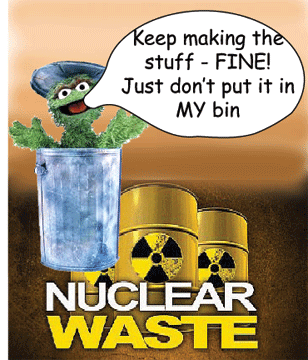
Louth and Horncastle MP welcomes council pulling out of nuclear waste site partnership
By Andy Hubbert
Louth and Horncastle’s MP, Victoria Atkins has welcomed news that
Lincolnshire County Council’s Leader, Coun Martin Hill is minded to pull
the authority out of a community partnership group overseeing proposals for
a nuclear waste facility. By pulling out of the Nuclear Waste Services’
Community Partnership, the council would effectively cancel the company’s
consideration of the Lincolnshire coast for a Geological Disposal Facility
(GDF) for deep burial of nuclear waste, after NWS announced that their area
of focus had changed to an area of open land between Gayton le Marsh and
Great Carlton, between Louth and Mablethorpe.
Lincolnshire World 19th March 2025 https://www.lincolnshireworld.com/news/politics/louth-and-horncastle-mp-welcomes-council-pulling-out-of-nuclear-waste-site-partnership-5041035
Dismantling work begins at Hamaoka nuclear plant
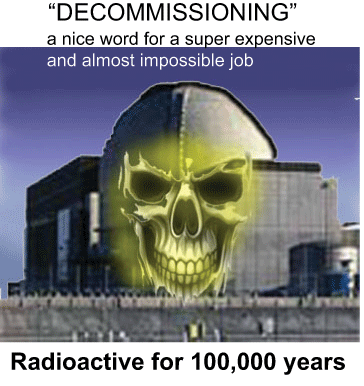
The start of the dismantling work signifies that the so-called “great era of decommissioning” has begun in earnest in Japan.
While Japan has entered an era of decommissioning, decommissioning plans continue to be postponed due to the lack of a finalized waste disposal site.
By FUMI YADA/ Staff Writer, March 17, 2025, https://www.asahi.com/ajw/articles/15671904?fbclid=IwY2xjawJHQ-9leHRuA2FlbQIxMQABHcLLRpjB5amZOZL-8qR613ATPjVA-r1TzUbw_ezeLkSwaBkwhCZVpLnMlw_aem_9niHHKoB8JXLoduuhcoh2Q
Dismantling work has begun at Chubu Electric Power Co.’s Hamaoka nuclear power plant in Omaezaki, Shizuoka Prefecture, the first time a commercial reactor in Japan is being dismantled.
On March 17, a crane was used to lift and remove the top lid of the No. 2 reactor pressure vessel, which contained nuclear fuel during its operation.
The start of the dismantling work signifies that the so-called “great era of decommissioning” has begun in earnest in Japan.
The No. 1 and No. 2 reactors at the Hamaoka plant are both boiling water reactors.
The No. 1 reactor began operation in 1976 with an output of 540,000 kW, and the No. 2 reactor went online in 1978 with an output of 840,000 kW.
After the earthquake resistance guidelines for nuclear power plants were revised in 2006, Chubu Electric Power Co. decided to decommission both reactors in 2008 due to the high cost of seismic reinforcement and other necessary measures.
Work began in 2009.
So far, spent nuclear fuel in the building has been removed to the fuel pools of No. 4 and No. 5 reactors, which are located on the same site, and unused fuel has been taken off site.
Decontamination of equipment has been carried out, and since fiscal 2015, dismantling of the turbines, generators and part of the reactor building has also been under way.
The dismantling of the reactor, which began on March 17, is considered the main part of the decommissioning work.
The reactor pressure vessel and internal reactor structures have high radiation levels that make them inaccessible to humans.
The work will be carried out by remote control using specialized robots, which requires advanced technology.
Chubu Electric Power Co. will dismantle the No. 1 and No. 2 reactors over a period of about 12 years, starting with the No. 2 reactor first.
The decommissioning of the two reactors is expected to be completed in fiscal 2042 after the buildings are finally dismantled.
Chubu Electric estimates that the decommissioning of No. 1 reactor will cost about 37.9 billion yen ($254.4 million) and about 46.2 billion yen for the No. 2 reactor.
However, the company has not yet decided where to dispose of the large amount of metal, concrete and other waste materials generated by the decommissioning work.
In Japan, the Japan Atomic Energy Agency has decommissioned a small experimental reactor, but no commercial reactors have been decommissioned yet.
At present, 18 nuclear power plants, excluding Tokyo Electric Power Co.’s Fukushima No. 1 nuclear power plant, are scheduled to be decommissioned.
Many other reactors in Japan have been in operation for a long time.
While Japan has entered an era of decommissioning, decommissioning plans continue to be postponed due to the lack of a finalized waste disposal site.
EDF may get state loan for six new reactors

France’s Nuclear Policy Council – headed by President Emmanuel Macron –
has agreed that a subsidised government loan should be issued to
state-owned power utility EDF to cover at least half the construction costs
of six EPR2 reactors.
World Nuclear News 18th March 2025,
https://www.world-nuclear-news.org/articles/edf-may-get-state-loan-for-six-new-reactors
Canada Pours Nearly $450M into New Nuclear Subsidies
March 18, 2025 The Energy Mix, Author: Jody MacPherson
Canada has announced around C$450 million in new subsidies for nuclear energy, including the reallocation of funds collected from industrial emitters of greenhouse gases, in what the government frames as a bid to enhance energy security and reliability.
Ottawa will lend AtkinsRéalis, formerly SNC-Lavalin Group, C$304 million over four years to finance the development and modernization of a new Canadian deuterium uranium (CANDU) nuclear reactor named MONARK, Energy and Natural Resources Minister Jonathan Wilkinson said in a news release.
But a leading nuclear critic told The Energy Mix the new subsidies will be far from sufficient to bring the new design to life, and the new design is years if not a decade or more away from going into service………………………………………….
Nuclear Cost Concerns
But nuclear is also by far the most expensive way to generate electricity, Susan O’Donnell, an adjunct research professor at St. Thomas University who studies energy transitions in Canada, told The Mix. Ottawa’s funding is “nowhere near the amount” needed to fully develop and build reactors, she said, adding that it will take years to develop the MONARK design toward applying for a licence to build.
O’Donnell pointed to two similar reactors that just came online in Georgia, United States, at a cost of US$35 billion, compared to just $4 billion for the equivalent solar capacity.
“The big nuclear reactors were almost nine times more expensive than solar,” said O’Donnell. “It makes no sense.”
More Federal Cash for SMRs
Canada is also directing $55 million from Environment and Climate Change Canada’s Future Electricity Fund (FEF) to Ontario Power Generation’s Darlington New Nuclear Project for three new small modular reactors (SMRs) that together could power about 900,000 average Ontario homes……………
The SMRs destined for Darlington were designed by GE Hitachi Nuclear Energy, based out of North Carolina, and would require enriched uranium fuel, which Canada cannot produce domestically, reported the Globe and Mail. Wilkinson told the Globe that Canada’s options for enriched uranium include the United States or Russia, and that Canada could develop that capability if necessary, but it was not preferable.
While collaborating on nuclear projects with the U.S. might help eliminate tariffs, he added, “we’re unlikely to be spending an enormous amount of time collaborating with a party that is treating us like an adversary.”
First Nations Concerns
The Canadian Nuclear Safety Commission held its second set of public hearings just over a month ago for the first of the three reactors planned for Darlington. The hearing included presentations from the chiefs of four First Nations—Curve Lake, Hiawatha, Mississaugas of Scugog Island, and Alderville—calling for a new collaborative relationship built on respect, trust, and partnership.
Chief Kelly LaRocca of the Mississaugas of Scugog Island First Nation said “the current relationship is not working effectively.”
Additional Funding Announced
Further funding will also go to SaskPower’s SMR pre-development program. The FEF increased its program funding from $24 million to $80 million.
More federal subsidy support is also destined for Saskatchewan, Alberta, and Ontario. ……..
https://www.theenergymix.com/canada-pours-nearly-450m-into-new-nuclear-subsidies/
Questions asked in Cumberland on two key nuke dump concerns
Green Councillor Jill Perry kindly asked questions of senior Labour
Councillors at the most recent meeting of Cumberland Council relating to
two key concerns relating to any possible location of a Geological Disposal
Facility (nuclear waste dump) in Cumbria.
These concerns relate to the
future flooding and flood defences of any site and making all parties
engaged in property transactions aware of the possibility of a GDF and the
discretionary ‘Property Value Protection Scheme’ launched last year by
Nuclear Waste Services.
The NFLAs raised these issues – and others
relating to housing demand and provision – with Cllr Perry and we are
grateful for her support in asking these questions of the Council Leader
and an Executive member. The NFLAs have been highly critical of the NWS
compensation scheme and raised our concerns over historic instances of
flooding at Millom and Haverigg in a recent letter to NWS and the Chair of
the South Copeland GDF Search Area.
NFLA 19th March 2025, https://www.nuclearpolicy.info/news/questions-asked-in-cumberland-on-two-key-nuke-dump-concerns/
1 This Month


Tell the Ukrainian Government to Drop Prosecution of Peace Activist Yurii Sheliazhenko

Petition to revoke the licensing of the Near Surface Nuclear Disposal Facility (NSDF) at Chalk River. https://www.ourcommons.ca/petitions/en/Petition/Details?Petition=e-7247


of the week – STOP SMALL MODULAR REACTORS IN CANADA
To see nuclear-related stories in greater depth and intensity – go to https://nuclearinformation.wordpress.com
-
Archives
- March 2026 (183)
- February 2026 (268)
- January 2026 (308)
- December 2025 (358)
- November 2025 (359)
- October 2025 (376)
- September 2025 (258)
- August 2025 (319)
- July 2025 (230)
- June 2025 (348)
- May 2025 (261)
- April 2025 (305)
-
Categories
- 1
- 1 NUCLEAR ISSUES
- business and costs
- climate change
- culture and arts
- ENERGY
- environment
- health
- history
- indigenous issues
- Legal
- marketing of nuclear
- media
- opposition to nuclear
- PERSONAL STORIES
- politics
- politics international
- Religion and ethics
- safety
- secrets,lies and civil liberties
- spinbuster
- technology
- Uranium
- wastes
- weapons and war
- Women
- 2 WORLD
- ACTION
- AFRICA
- Atrocities
- AUSTRALIA
- Christina's notes
- Christina's themes
- culture and arts
- Events
- Fuk 2022
- Fuk 2023
- Fukushima 2017
- Fukushima 2018
- fukushima 2019
- Fukushima 2020
- Fukushima 2021
- general
- global warming
- Humour (God we need it)
- Nuclear
- RARE EARTHS
- Reference
- resources – print
- Resources -audiovicual
- Weekly Newsletter
- World
- World Nuclear
- YouTube
-
RSS
Entries RSS
Comments RSS
 nuclear-news