Radiation exposure victims fight for compensation as nuclear weapons funding soars

Bulletin, By Chloe Shrager | March 19, 2025
Nine months have passed since the law that compensates US victims of radiation exposure expired in June, and yet another opportunity to reinstate it fell to the wayside last week.
The Radiation Exposure Compensation Act (RECA), enacted in 1990, provided pay-outs to people unwittingly exposed to radioactive substances from the Manhattan Project and Cold War efforts. For decades, people living downwind from the Nevada Test Site, nuclear weapons site workers and uranium miners relied on the money they received from RECA to pay their medical bills for rare cancers and diseases contracted from their radiation exposure.
But even so, activist groups across the US homeland and territories argue that the law was woefully inadequate. “When you talk about nuclear justice, we have not had it. We haven’t seen it,” Mary Dickson, a Utah downwinder and thyroid cancer survivor, said in a recent interview.
After the House shot down an attempt to push an expanded version of the compensation act through Congress last year, a bipartisan group of senators reintroduced a RECA reauthorization and expansion bill in January. The effort is led by Republican Sen. Josh Hawley of Missouri and Democratic Sen. Ben Ray Luján of New Mexico, who recently spoke on the proposed bill in an interview with the Bulletin.
“This is not a partisan issue,” Luján said. “This is for the American people, and especially those who live downwind of this testing and those uranium mine workers who are sacrificing their lives and their careers for national security purposes.”
The hope was to slip the amended act into the Trump Administration’s first stopgap budget bill, due no later than the end-of-day last Friday to avoid a government shutdown. But that hope evaporated when instead of proposing an omnibus bill overhauling previous budget priorities—as was expected of the new administration—the House introduced a continuing resolution that largely carried on Biden administration funding levels without mention of the new RECA bill. The continuing resolution does, however, increase defense budget spending by $6 billion……………………………………………………………………………………………………………………………………………………………………………………………………. The human cost of nuclear security. Congress passed a GOP budget bill on Friday to avoid a government shutdown and fund the government through September. While the bill does not fund RECA’s reauthorization, it does earmark at least $21.7 billion for “defense nuclear nonproliferation” and “weapons activities” under the National Nuclear Security Administration for the next six months. Funding under these categories can be used for anything from continued domestic uranium enrichment to warhead modernization and assembly. These defense budget proposals come during an estimated $1.7 trillion, 30-year overhaul of the United States’ nuclear arsenal that will rebuild each leg of the nuclear triad and its accompanying infrastructure.
These investments were approved. Legislation to continue to compensate those poisoned by nuclear weapons activities were not.
“They’re investing all this money to build up our arsenal and develop new weapons. So when they say there’s not enough money to take care of the people those weapons have harmed in the past… I just think part of that cost has got to be taking care of the people they harm,” Dickson said. https://thebulletin.org/2025/03/radiation-exposure-victims-fight-for-compensation-as-nuclear-weapons-funding-soars/?utm_source=ActiveCampaign&utm_medium=email&utm_content=Plans%20to%20colonize%20Mars%20threaten%20Earth&utm_campaign=20250320%20Thursday%20Newsletter
Trump: best protection for Ukraine’s nuclear power is US takeover.

President Trump has told President Zelensky that an American takeover of
nuclear power in Ukraine would offer the “best protection” for the
country’s infrastructure. The White House said Trump had “moved
beyond” the minerals deal for American companies to extract oil, gas and
rare metals that had been proposed as a way to protect Ukraine from future
Russian aggression. That deal was suspended after Zelensky’s disastrous
meeting last month with Trump and JD Vance, the vice-president, in the Oval
Office. It envisaged US control over natural resources and infrastructure
such as ports, but did not mention nuclear power.
Times 19th March 2025 https://www.thetimes.com/world/russia-ukraine-war/article/trump-best-protection-for-ukraines-nuclear-power-is-us-takeover-9l0xsxqjj
UK nuclear deterrent could do ‘untold damage’, Healey warns
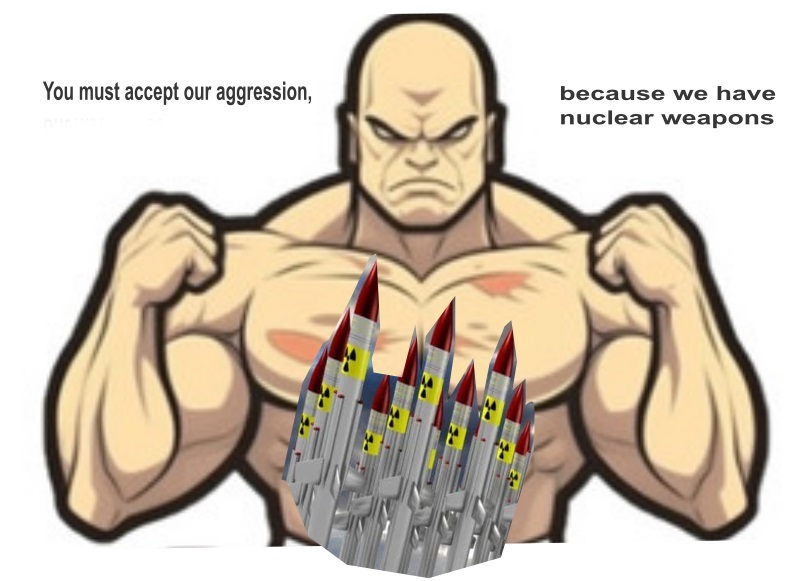
John Healey said the UK should not ‘fight shy’ of the fact it has such weapons, which are the ‘ultimate guarantor’ to any hostile state if it attacks.
The Standard 20th March 2025
Britain could do “untold damage” to adversaries with its nuclear deterrent, the Defence Secretary has said as military officials discussed plans to safeguard any ceasefire for Ukraine.
John Healey said the UK should not “fight shy” of the fact it has such weapons, which he described as the “ultimate guarantor” in a stark warning to Moscow
Meanwhile, Prime Minister Sir Keir Starmer warned Moscow would face “severe consequences” if it breached any peace deal with Kyiv amid fragile diplomatic efforts to secure a truce to end the war.
Sir Keir and Mr Healey met defence officials from 31 allied countries at the Northwood military headquarters in London on Thursday to firm up proposals for a so-called coalition of the willing to help enforce any agreement.
Mr Healey also laid the keel for Dreadnought, the first submarine being built to replace the Vanguard-class nuclear-armed submarines, in a ceremony in Barrow-in-Furness watched by Sir Keir Starmer.
In an interview with The Times newspaper afterwards, he said: “Our nuclear deterrent is there as a deterrent. It is the ultimate guarantor to any would-be adversary. We have the power to do untold damage to them if they attack us.”
He added: “We should not fight shy of the fact we are a nuclear power, that we do have an independent nuclear deterrent.”
The Prime Minister said the military planning involved offering support to Ukraine by air, sea and land if a deal were reached.
But he ruled out redeploying UK troops from countries such as Estonia to commit to Kyiv, saying: “There’s no pulling back from our commitments to other countries.
“The mood in the room – because this came up in the private briefing I had – was that this actually will help reinforce what we’re doing in Nato in other countries, so they see it as an opportunity rather than a question of moving troops around.”
Thursday’s gathering of defence allies marked a turning point in which the “political intention” among western allies to provide safeguards for Ukraine’s future becomes “reality” with discussions of how best to deter future Russian aggression.
Sir Keir said: “It is vitally important we do that work because we know one thing for certain, which is a deal without anything behind it is something that Putin will breach. “We know that because it happened before. I’m absolutely clear in my mind it will happen again.”
He added: “The point of the security arrangements is to make it clear to Russia there will be severe consequences if they are to breach any deal.
“That’s why we need a forward-leaning European element, which is what I’ve been working on intensely – obviously with the French – that brings these allied countries together, and beyond.”
Calls this week between US President Donald Trump, Mr Putin and Ukrainian President Volodymyr Zelensky have failed to produce the 30-day ceasefire envisaged by the White House……………………………………………. https://www.standard.co.uk/news/politics/john-healey-keir-starmer-volodymyr-zelensky-ukraine-donald-trump-b1218001.html
Israel Restarts Large-Scale Bombing of Gaza, Over 400 Killed

Many of the dead are children as Israel is hitting homes and tents sheltering displaced Palestinians
by Dave DeCamp March 18, 2025, https://news.antiwar.com/2025/03/17/israel-restarts-large-scale-bombing-of-gaza-over-100-killed/
The Israeli military on Tuesday morning began launching large-scale airstrikes on the besieged Gaza Strip, marking the full-scale resumption of Israel’s genocidal war.
Around 1:00 pm Gaza time, Al Jazeera reported that 404 Palestinians had been killed and 562 had been wounded by Israeli strikes on homes and tents sheltering displaced Palestinians across the Strip.
Pictures and videos from Gaza that have surfaced online show there is a large number of child casualties. “Israeli bombardment has returned to Gaza, bringing massacres with it once again,” Al Jazeera reporter Anas al-Sharif wrote on X. “The bodies of children, killed in their sleep, lay scattered in the aftermath.”
The massive attack came about two weeks after Israel imposed a total blockade on aid and all other goods entering Gaza at the end of the first phase of the ceasefire deal. Israel violated the agreement by imposing the blockade, refusing to engage in negotiations on the second phase, and killing Palestinians throughout the truce.
Israeli Prime Minister Benjamin Netanyahu said in a statement Tuesday morning that he instructed the Israeli military to escalate in Gaza in response to Hamas rejecting US and Israeli terms for an extended temporary ceasefire. Hamas wanted Israel to stick to the deal it agreed to in January, which would have involved a permanent truce and full Israeli withdrawal.
“Prime Minister Benjamin Netanyahu and Defense Minister Israel Katz have instructed the IDF to take strong action against the Hamas terrorist organization in the Gaza Strip,” Netanyahu’s office said. “This follows Hamas’s repeated refusal to release our hostages, as well as its rejection of all of the proposals it has received from US Presidential Envoy Steve Witkoff and from the mediators.”
The statement added that Israel will “from now on, act against Hamas with increasing military strength. The operational plan was presented by the IDF over the weekend and approved by the political leadership.”
Hamas told Reuters that Israel had chosen to end the ceasefire unilaterally and that Israel’s attacks expose the remaining Israeli hostages to an “unknown fate.”
The White House confirmed that President Trump was notified before Israel launched the massive bombing. “The Trump administration and the White House were consulted by the Israelis on their attacks in Gaza tonight,” said White House Press Secretary Karoline Leavitt.
Leavitt repeated Trump’s threat that “all hell would break loose” in Gaza. Trump previously threatened that the “people of Gaza” would be “dead” if the hostages weren’t immediately freed.
Since President Trump came into office, he has provided a massive amount of military aid to Israel, approving over $12 billion in arms deals and supplying Israel with 2,000-pound bombs. The Trump administration did not pressure Israel to implement the ceasefire deal reached in January.
SCOTUS Ruling Could Shape the Future of Nuclear Waste Storage.

Samuel Lawrence Foundation, 20 Mar 25
The U.S. Supreme Court is currently reviewing a case that could have major implications for how nuclear waste is stored across the country—including the 3.6 million pounds of radioactive waste at San Onofre. At the center of the case is whether the Nuclear Regulatory Commission (NRC) has the authority to license private interim storage facilities, such as the one proposed in Andrews County, Texas, which would hold high-level nuclear waste away from reactor sites. Texas has challenged this decision, arguing that the NRC is overstepping its legal bounds and that waste management should remain under federal oversight.
This case matters to us because San Onofre’s waste remains in thin-walled metal canisters near a rising ocean, with no long-term plan for safe containment. If the Supreme Court rules against private storage, it could limit future options for moving this waste to a safer location. Meanwhile, if the Court upholds the NRC’s authority, it could pave the way for private companies to take a larger role in nuclear waste management—raising serious questions about safety, oversight, and accountability. As we continue to fight for a real solution for San Onofre, this decision will play a critical role in shaping what’s possible. Stay tuned for more updates as this case unfolds.
Labour ‘utterly wrong’ to double down on costly and immoral nuclear weapons, Scottish Greens say

Chris Jarvis Bright Green 19th March 2025, https://bright-green.org/2025/03/19/labour-utterly-wrong-to-double-down-on-costly-and-immoral-nuclear-weapons-scottish-greens-say/
Scottish Labour is utterly wrong to be doubling down in its support for costly and immoral nuclear weapons that tie us even closer to the extremist Trump administration, the Scottish Greens Co-leader Patrick Harvie has said.
Harvie’s comments followed Scottish Labour leader Anas Sarwar’s support for Trident at last week’s First Minister’s Questions in Holyrood.
Harvie said: “Nuclear weapons have always been a moral abomination. It is utterly wrong for Labour to be doubling down in their support.
“But now, even those who have supported Trident in the past must surely realise that the US is not a reliable ally, and it is simply unsafe to continue nuclear cooperation with them.
“We urgently need to move away from the extremist Trump administration, but maintaining these weapons of mass destruction would leave us tied to him and his dangerous foreign policy.
“Nuclear weapons are incapable of discriminating between military and civilian targets. Their use would cause mass murder and environmental damage on a scale never seen before.
“They are an extortionate and destructive money pit that has already soaked up hundreds of billions of pounds that could have been spent addressing the genuine security needs we have, or, better still, on tackling the cost of living crisis that is plunging thousands of families into totally avoidable poverty.”
One Trident sub could ‘incinerate 40 Russian cities’: Why Putin should fear Britain’s nuclear arsenal
One Trident sub could ‘incinerate 40 Russian cities’: Why Putin should
fear Britain’s nuclear arsenal. Royal Navy submarines have suffered a few
mishaps recently, but the country’s Trident programme shows we’re still
a potent threat.
Telegraph 20th March 2025 https://www.telegraph.co.uk/news/2025/03/20/trident-sub-putin-should-fear-britain-nuclear-arsenal/
BAE: Barrow MP hits out at planned nuclear protest
The MP for Barrow and Furness has hit back at plans for an anti-nuclear
protest outside BAE Systems this weekend. The Cumbria and Lancashire
district of the Campaign for Nuclear Disarmament (CND) will begin their
national ‘Peace Not Weapons’ tour on Saturday, March 22. This will involve
leafletting across Barrow’s town centre, with the main rally coming
together on the High Level Bridge over the Devonshire Dock. Michelle
Scrogham, however, has voiced her opposition to the demonstration,
particularly given the global climate.
NW Evening Mail 19th March 2025, https://www.nwemail.co.uk/news/25016245.michelle-scrogham-utterly-barrow-nuclear-protest/
Mars Attacks: How Elon Musk’s plans to colonize Mars threaten Earth
By Kelly Weinersmith and Zach Weinersmith, 20 Mar 25
“If the world’s most powerful nation, helped along by history’s most powerful rocket company, were to scrap international space law, it would have consequences that may echo for centuries,” writes Kelly Weinersmith, adjunct faculty member at Rice University, and Zach Weinersmith, creator of popular webcomic Saturday Morning Breakfast Cereal.
This fully-illustrated comic exploring the implications of space colonization, adapted from the Weinersmiths’ Hugo Award-winning A City on Mars. Read more.
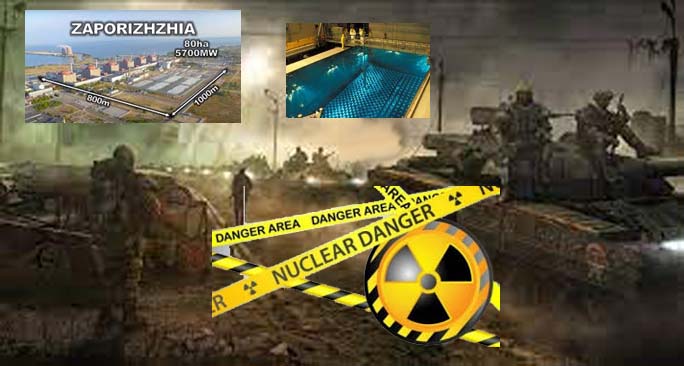
Nuclear power is such a mess – Zaporizhzhia plant as the shining example
https://theaimn.net/nuclear-power-is-such-a-mess-zaporizhzhia-plant-as-the-shining-example/ 23 Mar 25
You do wonder how the International Atomic Energy Association (IAEA) can tell us with a straight face, that nuclear power is safe !
Nobody talks about Chernobyl any more (melted down 1986), Fukushima (melted down 2011). They’re ancient history. No, not really. The cleanup in each case is really only just beginning.
The Chernobyl ‘sarcophagus’ – still contains the molten core of the reactor and an estimated 200 tonnes of highly radioactive material. The stability of the structure has developed into one of the major risk factors at the site. Fukushima – Experts say the hard work and huge challenges of decommissioning the plant are just beginning. There are estimations that the work could take more than a century.
But – let’s look at the Zaporizhzhia nuclear power plant in Ukraine. With 6 reactors (all shut down) it’s the largest nuclear power station in Europe. It’s a messy nuclear plant, in that it was originally set up to use Russian nuclear technology and fuel, enriched uranium (U-235). Then later the Ukrainians gradually changed the fuel type to American Westinghouse. By 2024, this fuel type at Zaporizhzhia was expiring. Now under the Russians’ control, they could not now access this fuel, if Russia did seek to restart the reactors.
Suddenly, the status and future of the Zaporizhzhia plant has become a very timely question. With the ceasefire negotiations going on, have President Trump and President Putin been discussing this? Nobody is letting on. The White House and the US State Department are keeping mum. Donald Trump and Ukrainian President Voldymyr Zelensky are reported to have discussed “American ownership” of the Zaporizhzhia plant, with Zelensky insisting that it could function only under Ukrainian ownership. Russia has been reported as planning to make those reactors functional again.
That critical question comes to mind – What’s In It For Whom?
Is it the glory? The pride of ownership? A wonderful economic opportunity? That last one is dubious. Ownership in wartime is fraught with danger. The IAEA repeatedly warns of the danger of a military strike on the plant, including on its hazardous spent fuel pools. With cessation of fighting, it’s still dangerous. To reactivate it would take years. It’s not just the confusion of using American or Russian fuel, (both in supplies now out of date.)
What about the water? Even now, as the reactors are in cold shutdown, they still need continuous supplies of water to reduce the residual heat from the shutdown reactors, to cool the spent fuel, and to cool the emergency diesel generators if the plant loses off-site power.
But if the Zaporizhzhia nuclear station were to be brought back into operation, it would require massive amounts of water. The destruction of the Kakhovka dam in 2023 has left Zaporizhzhia without that essential supply. It’s estimated that to restore the plant the plant to function would take several years. Shut for three years, and constantly in military danger, the plant had safety problems, including fires, even before the war began.
These questions of fuel and water are the obvious practical ones. But dig deeper into this Zaporizhzhia nuclear station problem and we find almost insuperable problems of logistics, legal and regulatory requirements, costs, and the conflicting ambitions and abilities and hostilities of the men in leadership in Ukraine, Russia, and USA. And for now, the plant is on the front line, in territory controlled by Russia.
Voldymyr Zelensky – always the shining hero, knows the right solution. The nuclear station can belong only to Ukraine. https://www.youtube.com/watch?v=umwwpybIW3k
The Zelensky simple solution assumes that in a ceasefire, or negotiated end to the war, the plant, along with all the now Russian- occupied territories, will be returned to Ukraine ownership, (and that the USA will pay up for the plant’s necessary repairs and modernisation). And Ukraine will prosper, selling the electricity to Europe. These are big assumptions, considering that Russia now controls 20% of Ukrainian territory and now has the advantage in the war.
For Russia, that Zelensky scenario has zero appeal, and you wonder why anyone would expect Russia to simply capitulate to Zelensky’s wishes. For Russia, at present, keeping the nuclear station in their own hands is the safest option, defending it against Ukrainian attacks. But, even if the Zaporizhzhia plant becomes permanently owned by Russia, there are still risks of Ukrainian sabotage, and there will be the costly and difficult process of trying to restart the reactors, and what to do with the hazardous old nuclear fuel.
For the USA, ownership of the plant would have its attractions: it would benefit Westinghouse, expanding its market for nuclear technology. But all of Ukraine’s nuclear power plants are owned by Energoatom, and Ukrainian law prohibits their privatization. There would certainly be resistance in Ukraine to this American takeover. Complicated legal and financial gymnastics would go on. Perhaps Trump would see the American ownership as part of the war debt that he intends to get from Ukraine; he estimates that debt as over $300billion, although others differ about that amount. Whatever the involvement of the USA in the future management of these nuclear reactors, the USA will face the same daunting problems in trying to operate them. Nobody seems to know what is the extent of repairs needed. The Zaporizhzhia nuclear station continues to be in a state of peril, as Raphael Grossi of the IAEA constantly reminds us, (in between his promotion of new nuclear power)
This huge nuclear station is indeed a test case for the whole industry. While the much-hyped small nuclear reactors are turning out to be unaffordable and impractical mythical beasts, UK Prime Minister Sir Keir Starmer and others are going all-out for new big nuclear reactors. But this Ukraine situation demonstrates the dangers of big nuclear reactors.. Not only do they have the well-known hazards of accident risk, health and environmental hazards, toxic wastes problem, but also those complicated problems of military attack, international political relations, and that always supreme consideration – who will pay?
‘Never forget’: Pacific countries remember nuclear test legacy as weapons ban treaty debated.
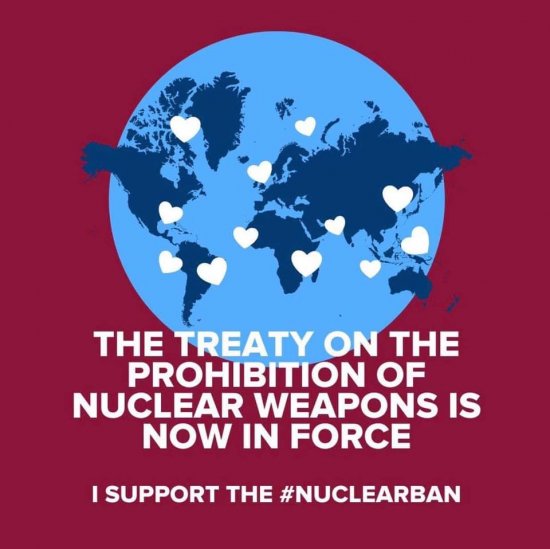
Supporters of the UN treaty prohibiting nuclear weapons gathered this month in New York to call for wider ratification
Jon Letman, Guardian, 21 Mar 25
Growing up in the Pacific nation of Kiribati, Oemwa Johnson heard her grandfather’s stories about nuclear explosions he witnessed in the 1950s. The blasts gave off ferocious heat and blinding light. He told her people were not consulted or given protective gear against bombs detonated by the US and UK at Kiritimati Island, now part of Kiribati, decades ago.
People in Kiribati suffered grave health consequences as a result of exposure to radiation from the tests in the late 1950s and early 1960s, a legacy they say continues to this day. Johnson says there’s a lack of accountability and awareness of how nuclear testing by foreign countries has harmed her people and homeland.
“It doesn’t matter if they’re very small island nations, their stories matter,” the 24-year-old says.
Between 1946 and 1996, the US, the UK and France conducted more than 300 underwater and atmospheric nuclear tests in the Pacific region, according to Pace University International Disarmament Institute. Kiribati, French Polynesia, and the Republic of the Marshall Islands were among the most affected.
For decades the countries have called for justice for the ongoing environmental and health impacts of nuclear weapons development. The push intensified this month as supporters of the UN treaty on the prohibition of nuclear weapons (TPNW) – including many from Pacific nations – met to discuss the treaty and call for wider ratification.
The treaty imposes a ban on developing, testing, stockpiling, using or threatening to use nuclear weapons – or helping other countries in such activities. It entered into force in 2021 and has 98 countries as parties or signatories. In the Pacific region 11 countries have backed the treaty. Treaty supporters want universal global support but many countries – including the US, the UK and France – oppose the treaty.
The nine nuclear armed countries argue that nuclear weapons are critical to their security. Likewise, Nato nations, Japan, South Korea and others are not yet party to the treaty. Australia, where the UK conducted nuclear tests in the 1950s, has not ratified the TPNW despite the prime minister, Anthony Albanese, saying in 2018 that Australia would do so the treaty when his party was in power…………………………..
‘Nuclear risks rising’
Against this backdrop, politicians, activists and other representatives gathered at UN headquarters in New York this month for week-long discussions on how to secure more support for the TPNW.
Hinamoeura Morgant-Cross, a representative of the French Polynesia assembly, was among the parliamentarians. She says her family was significantly affected by French nuclear detonations at Moruroa and Fangataufa atolls between 1966 and 1996. Morgant-Cross told the forum high rates of radiation-induced cancer in her family had motivated her to become an anti-nuclear activist and assembly member.
“It started with my grandma with thyroid cancer,” she said. “Then her first daughter – my auntie – with thyroid cancer. She also got breast cancer. My mom and my sister have thyroid disease. I got chronic leukemia when I was 24 years old. I’m still fighting against this leukemia.”
New Zealand’s UN representative in Geneva, Deborah Geels, stressed the treaty’s “special importance in the Pacific”, warning: “Tensions between nuclear-armed states and nuclear risk are rising, and no region is immune – even the South Pacific.”……………………………….. more https://www.theguardian.com/world/2025/mar/21/never-forget-pacific-countries-remember-nuclear-test-legacy-as-weapons-ban-treaty-debated
Whistleblowers at nuclear sites may face bullying and threats, MPs warn
Members of public accounts committee raise concerns about culture and call for greater examination
Anna Isaac, Guardian 20th March 2025 https://www.theguardian.com/business/2025/mar/20/whistleblowers-at-nuclear-sites-may-face-bullying-and-threats-mps-warn
Nuclear whistleblowers who try to draw attention to cultural and safety issues face bullying, MPs have warned.
Members of parliament’s public accounts committee have said they are concerned about the way people who raise concerns about culture and safety on nuclear sites are treated.
“There is generally a problem with whistleblowing and a safety culture,” said Rachel Gilmour, a Liberal Democrat MP, when quizzing nuclear bosses on Thursday.
“That relation between bullying and safety within a nuclear context” needs greater examination, Gilmour said, adding that her office was seeking to raise the issue further with regulators.
The Guardian’s Nuclear Leaks investigation has revealed claims of bullying, sexual harassment and drug use at the nuclear waste dump, Sellafield, which could put safety at risk.
Gilmour’s interjection followed a refusal by Euan Hutton, the chief executive of the Sellafield site, to apologise for its treatment of an HR consultant, Alison McDermott, when asked to by Anna Dixon, a Labour MP. Hutton also refused to say whether he considered the cost of the case against McDermott to be a good use of public funds.
Sellafield, in Cumbria, spent about £750,000 in its pursuit of McDermott’s claim that she was wrongfully dismissed after raising concerns of a “toxic culture” at the Sellafield site.
McDermott was found by a judge to have blown the whistle by raising reports of harassment. The judgment was made in 2023, after an appeal over the findings of an employment tribunal.
However, her wrongful dismissal claim was not upheld. Sellafield, along with the oversight body the Nuclear Decommissioning Authority (NDA), sought to recoup costs of £40,000. A judge reduced these to £5,000. McDermott told the Guardian she intends to appeal against this decision.
Dixon said she was “disappointed” by Hutton’s response. She said it was “critical for a safety culture” that people feel able to speak up.
Hutton acknowledged there had been problems faced by staff but that there had been progress in recent years.
Hutton also acknowledged major cybersecurity failings at the site, which were also first revealed by the Guardian.
He said that “as an organisation we let ourselves down”, by failing to meet standards, but he repeated denials that the world’s largest plutonium store had been subject to “successful” cyber-attacks.
Sellafield was ordered to pay nearly £400,000 after pleading guilty to leaving data that could threaten national security exposed for four security.
With Trump’s ‘Thumbs Up’, Netanyahu restarts Gaza genocide.

Walt Zlotow, West Suburban Peace Coalition, Glen Ellyn IL, 21 Mar 25
Over 400 killed, 500 injured in massive Israeli bombing of Palestinians sheltering in tents from earlier Israeli bombings.
Trump was notified in advance and gave the typical US green light to proceed. In under 2 months Trump has funneled $12 billion in genocide weapons including many 2,000 lb. bombs to fuel Netanyahu’s latest genocide campaign.
Trump is anxious for all the Palestinians in Gaza to be dead and gone so he can begin his massive real estate development there to create a ‘Greater Israel.’
The massive Israeli bombing comes 2 weeks after Netanyahu blocked all humanitarian aid from reaching Gaza. Whether killing Palestinians slowly with no food, fmedicine or killing them quickly with 2,000 lb. US bombs, Netanyahu and Trump cover the gamut of ghoulish death in Gaza.
Trump’s threats reignite talk of nuclear bombs in Iran
Trump is still met with defiance from the leadership in Tehran as he threatens military strikes against Iran.
Aljazeera, By Maziar Motamedi, 19 Mar 2025
Tehran, Iran – The latest threats of military action against Iran by United States President Donald Trump have prompted more discussions about the possibility of Iran abandoning nuclear non-proliferation.
Senior White House officials have again said Iran must do away with its nuclear programme entirely, leaving all uranium enrichment activity, even at low levels.
Amid intense US air strikes on Yemen, Trump has also said the US will hold Tehran responsible for any attacks by Yemen’s Houthis, dismissing Iran’s insistence that the group operates independently.
This has only led to more calls from within Iran to abandon its officially stated policy that it will never pursue nuclear weapons.
‘Nuclear year’
On Tuesday, Vatan-e Emrooz, a top daily newspaper run by ultraconservatives, marked the upcoming end of the Iranian year on March 20 by saying more countries will ponder nuclear bombs for their security as a result of Trump’s policies.
“Nuclear year”, read its headline, complete with an image of a massive nuclear explosion.
Nournews, an outlet affiliated with Iran’s Supreme National Security Council, said there will be “no guarantees” Iran will not abandon the Non-Proliferation Treaty (NPT) if Trump and his team keep threatening.
Ahmad Naderi, a member of the presiding board of the Iranian parliament, told a public session of the assembly last week that “perhaps it is time for us to rethink our nuclear, military and security doctrine”.
The Tehran lawmaker has also previously backed testing intercontinental ballistic missiles capable of carrying nuclear warheads, claiming “there will be no balance in the region” unless Iran possesses a bomb
Such calls have increasingly gained favour among hardline factions in Iran, echoing a sentiment that the establishment is prepared to dash for a bomb if its existence is threatened.
Last week, Supreme Leader Ayatollah Ali Khamenei, whose religious ruling currently bars Iran from seeking weapons of mass destruction, also commented.
“If we wanted to make nuclear weapons, America could not stop us. If we do not have nuclear weapons and are not pursuing them, it is because we do not want it,” Khamenei said.
According to the International Atomic Energy Agency (IAEA), which carries out inspections of Iranian nuclear sites, Iran has amassed enough fissile material for multiple bombs but has made no effort to build one.
On the same page with China, Russia
In the years since Trump’s 2018 unilateral withdrawal from Iran’s nuclear deal with world powers, Washington’s European allies have become increasingly hawkish on the Iranian nuclear programme.
They have pushed Iran to curb its nuclear advances despite no prospects of lifting sanctions, introduced censure resolutions at the board of the global nuclear watchdog, and demanded more answers over several nuclear-related cases – some dating back two decades.
Years of escalation over Tehran’s cooperation with the IAEA, in addition to European anger over Iran’s closer ties with Moscow in light of the Ukraine war, have prompted Iran to maintain closer coordination with China and Russia.
The three countries have been holding talks in Beijing to present a more unified approach on the Iranian nuclear issue, especially over sanctions.
France, Germany and the United Kingdom, the European powers still party to the Iranian nuclear accord of 2015, continue to threaten to activate its “snapback” mechanism to reinstate all United Nations sanctions against Iran.
China and Russia oppose the move.
The E3 have said they are pursuing the snapback because they are concerned about the use of advanced centrifuges to enrich high-purity uranium, alleged non-compliance with the nuclear accord, and alleged provision of ballistic missiles by Iran to Russia.
Iran has strongly rejected that it delivered missiles to Russia, and has maintained that it only sent some drones to Russia months before the start of the war.
Iranian officials also held talks with IAEA chief Rafael Grossi this week, and the country objected to what it called “an unwarranted interference” in its engagements with the IAEA after the United Nations Security Council held a meeting over its nuclear programme.
The closed-door meeting prompted Iran’s foreign ministry to summon the E3 ambassadors to protest against “misuse” of the UNSC mechanism.
The White House said on Tuesday that Trump and Russian President Vladimir Putin agreed during a phone call that “Iran should never be in a position to destroy Israel”
Trump letter, threats
The US president’s threat that “every shot” fired by the Houthis in Yemen will be viewed as an attack from Iran has escalated tensions.
In a post on his Truth Social platform, Trump said Iran provides “so-called intelligence” to the Houthis, which has been viewed in Iranian media and online as a potential military threat against Iran’s Zagros warship, inaugurated in January.
The Iranian army in a statement on Tuesday rejected speculation that had circulated online claiming that the Zagros was hit with any projectiles, and said the warship was safely anchored at Bandar Abbas in Iran’s southern waters…………………..more https://www.aljazeera.com/news/2025/3/19/trumps-threats-reignite-talk-of-nuclear-bombs-in-iran
Idle Lepreau nuclear plant threatens to post worst operational year in 4 decades
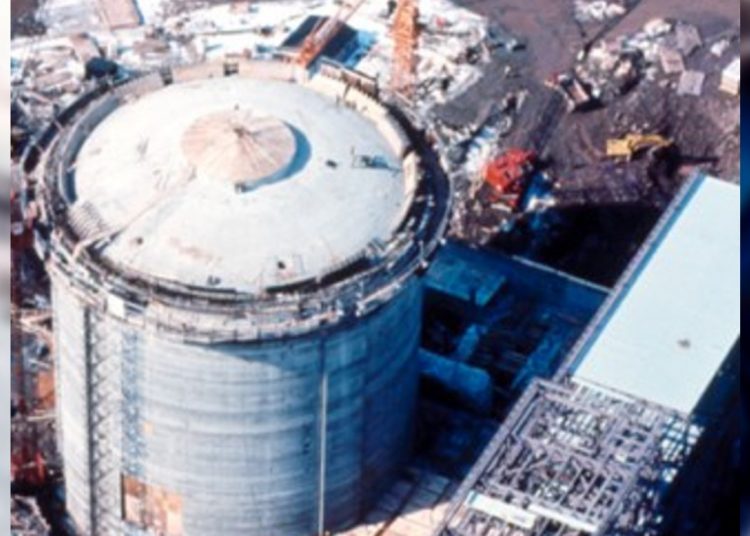
Refurbishing only half the nuclear plant was a mistake, utility president admits
Robert Jones · CBC News : Mar 21, 2025
An end-of-the-fiscal-year breakdown at Point Lepreau is worsening what may turn out to be the poorest operational year on record for the 42-year-old plant.
The nuclear generating station was shutdown on Monday after a malfunctioning cooling fan was deemed to need immediate repair. That fix is expected to take almost until the end of the month
“Work is underway to repair an issue with the cooling fan and motor assembly,” D’Arcy Walsh, an N.B. Power spokesperson, said in an email. “We expect the station to return to service by the end of next week.”
A scheduled maintenance shutdown last spring, followed by the discovery of a major issue last summer in Lepreau’s generator, previously had the plant offline from early last April to mid-December. The latest problem is dragging the year’s low productivity further
Not including the years Lepreau was offline between 2008 and 2013 for a $2.5-billion refurbishment, the plant’s least productive year was in 1995, when it underwent work on sagging pressure tubes in its reactor and operated for just over 100 days.
Downtime at Lepreau is expensive for N.B. Power and has been cited as the primary cause for its current financial problems.
In February, N.B. Power president Lori Clark told MLAs the fortunes of the utility are largely dependent on how well, or poorly, the nuclear plant performs…………………….
Since it returned from refurbishment in late 2012, Lepreau has suffered a number of problems and has been taken offline for maintenance and repairs for more than 1,100 days in total.
More than one third of that downtime has occurred just in the last three years.
It has been estimated by the utility to cost between $1 million and $4 million per day when Lepreau is idle, depending on the time of year and the cost of generating or buying replacement power……………………………https://www.cbc.ca/news/canada/new-brunswick/idle-lepreau-nuclear-plant-threatening-worst-operational-year-nb-1.7490177
1 This Month
Chernobyl: The Lost Tapes – A good documentary on Chernobyl on SBS available On Demand for the next 3 weeks– https://www.sbs.com.au/ondemand/tv-program/chernobyl-the-lost-tapes/2352741955560

of the week–London Campaign for Nuclear Disarmament

Tell the Ukrainian Government to Drop Prosecution of Peace Activist Yurii Sheliazhenko
To see nuclear-related stories in greater depth and intensity – go to https://nuclearinformation.wordpress.com
-
Archives
- April 2026 (152)
- March 2026 (251)
- February 2026 (268)
- January 2026 (308)
- December 2025 (358)
- November 2025 (359)
- October 2025 (376)
- September 2025 (257)
- August 2025 (319)
- July 2025 (230)
- June 2025 (348)
- May 2025 (261)
-
Categories
- 1
- 1 NUCLEAR ISSUES
- business and costs
- climate change
- culture and arts
- ENERGY
- environment
- health
- history
- indigenous issues
- Legal
- marketing of nuclear
- media
- opposition to nuclear
- PERSONAL STORIES
- politics
- politics international
- Religion and ethics
- safety
- secrets,lies and civil liberties
- spinbuster
- technology
- Uranium
- wastes
- weapons and war
- Women
- 2 WORLD
- ACTION
- AFRICA
- Atrocities
- AUSTRALIA
- Christina's notes
- Christina's themes
- culture and arts
- Events
- Fuk 2022
- Fuk 2023
- Fukushima 2017
- Fukushima 2018
- fukushima 2019
- Fukushima 2020
- Fukushima 2021
- general
- global warming
- Humour (God we need it)
- Nuclear
- RARE EARTHS
- Reference
- resources – print
- Resources -audiovicual
- Weekly Newsletter
- World
- World Nuclear
- YouTube
-
RSS
Entries RSS
Comments RSS
 nuclear-news