The US hypocrisy about Israel’s nuclear weapons must stop

What stands out from the television series is the grip Israel has had over US policy regarding Israel’s nuclear weapons.
a secret federal bulletin that threatens disciplinary actions for any US official who publicly acknowledges Israel’s nuclear weapons.
The existence of these weapons may have started as a deterrent against another Holocaust but has now morphed into an instrument of an aggressive and expansionist Israel.
By Victor Gilinsky, Leonard Weiss | March 21, 2025, https://thebulletin.org/2025/03/the-us-hypocrisy-about-israels-nuclear-weapons-must-stop/?utm_source=ActiveCampaign&utm_medium=email&utm_content=Israel%20s%20nuclear%20weapons&utm_campaign=20250324%20Monday%20Newsletter
An extraordinary three-part series on Israeli television, The Atom and Me, lays out how the country got its nuclear weapons. It takes for granted what anyone who pays attention has known for years. But the series goes well beyond a general discussion about Israel’s nuclear weapons. It shows the country’s single-minded determination to get the bomb no matter what it took, including stealing nuclear explosives and bomb components from the United States and violating a major nuclear arms control treaty to which Israel is a party—and lying about it.
As the Trump administration is in serious discussion about joining Israel in attacks on Iran to stop it from getting nuclear weapons, it is useful to shed illusions about Israel’s modus operandi.
US officials stay mute. A thread running through the three episodes is a continuing conversation, before he died in 2018, with Benjamin Blumberg, the head of Lakam, the Israeli scientific intelligence agency responsible for the nuclear missions that led to the Israeli bomb, some so secret they were kept from the Mossad. (Mossad is the Israeli agency that handles foreign intelligence collection and covert action.) Blumberg was in failing health and agreed to talk so long as the interview was not aired until after his death.
That conversation is mixed with archival material and recent interviews. The significance of the series lies not in showing what was not previously known—although there are details in that category—but in the admissions on Israeli public television, with the approval of the Israeli censors, about events that have been denied by Israel’s supporters in the United States, including the US government.
Several events discussed in the television series deal directly with the United States: the theft in the 1960s of bomb quantities of uranium 235 from the NUMEC facility in Pennsylvania, where the leaders of the Israeli team that spirited Eichmann out of Argentina appeared inexplicably in 1968 with false identities; the illicit purchase of hundreds of high-speed switches (krytrons) for triggering nuclear weapons, and spiriting them out of the country in the 1980s by Israeli spy and arms dealer, and by then Hollywood producer, Arnon Milchan; and, most significantly at this point, Israel’s 1979 nuclear test in the seas off South Africa of what appears to be the initial fission stage for a thermonuclear weapon. The nuclear test violated the 1963 Limited Test Ban Treaty to which Israel is a party.
What stands out from the television series is the grip Israel has had over US policy regarding Israel’s nuclear weapons.
Not since John Kennedy has any US president tried to rein in Israel’s nuclear program. His successor, Lyndon Johnson, did not challenge the Israelis on nuclear issues (and covered up Israel’s attempt during the 1967 six-day war to sink the US spy ship Liberty). Such has been Israel’s political clout in the United States.
No one was ever charged in the disappearance of nuclear material from NUMEC. When the issue of Israel’s involvement arose again in 1976, President Gerald Ford’s attorney general suggested to the president the possibility of charging US officials, presumably in the Atomic Energy Commission, with failing to report a felony. But it was too late. Ford lost the election to Jimmy Carter, who let the matter drop. Milchan was never charged for the filching of krytrons even though he later bragged about his arms dealing and spying for Israel. And Carter—and every US president after him—took no enforcement action in response to the illegal 1979 nuclear test.
The United States’ indulgence of Israeli nuclear weapons has not escaped international attention, and the evident hypocrisy has undermined US nonproliferation policy. The US government’s public position continues to be that it does not know anything about Israeli nuclear weapons, and this will apparently continue until Israel releases the United States’ gag. This policy is allegedly enforced by a secret federal bulletin that threatens disciplinary actions for any US official who publicly acknowledges Israel’s nuclear weapons.
Meanwhile, Israel brags about its nukes. Ironically, the Israelis feel free to allude to their nuclear weapons whenever they find it useful. The best example is Prime Minister Benjamin Netanyahu’s 2016 speech on receipt of the Rahav, the latest submarine supplied by Germany. The Times of Israel, using the standard “according to foreign reports,” described the submarine as “capable of delivering a nuclear payload.” In his speech, Netanyahu said, “Above all else, our submarine fleet acts as a deterrent to our enemies … They need to know that Israel can attack, with great might, anyone who tries to harm it.” How else, other than with nuclear weapons, can a submarine be a deterrent? The submarines’ long-range cruise missiles could not only hit Iran’s capital, Tehran, Israel’s main security concern, they could also hit any European capital.
Those submarine-based cruise missiles—if they exist—might be tipped with thermonuclear warheads, which are also carried on planes and ground-based rockets. Light-weight thermonuclear weapons allow flexibility in delivery, but the two-stage designs are highly sophisticated. The Israelis logically decided that they had to conduct at least one low-yield fission test—even though they had promised not to do this—to be sure their first stage produced the radiation that would initiate the thermonuclear fuel in the second stage.
In the last episode of the Israeli television series, journalist Meir Doron, who has written on Israel’s security secrets, says: “After the nuclear test, for the first time, the heads of the Israeli nuclear program, Blumberg, Shimon Peres, and all the people from the reactor, could sleep soundly at night. They knew that what they’re building works.”

While Israel did not sign the 1970 Nuclear Non-Proliferation Treaty (NPT), it signed and ratified the 1963 Limited Nuclear Test Ban Treaty, which obligates parties not to explode a nuclear device in the atmosphere or oceans. Such a test also triggers a nonproliferation provision of US law, the 1977 Glenn Amendment (Sec.102 (B) to the Arms Export Control Act), that imposes severe sanctions on any country (other than the five approved in the NPT) that explodes a nuclear device after 1977. Upon learning of such an explosion, the president is supposed to impose the wide-ranging sanctions “forthwith.” That, of course, did not happen.
The nuclear explosion’s characteristic two-hump signal was detected by a US satellite on September 22, 1979, and US intelligence agencies were convinced Israel was the culprit. President Carter did not want to risk his ongoing Middle East policy efforts by blaming Israel. The White House asked a group of scientists whether the detected light flash could somehow have been unconnected with a nuclear explosion. The scientists came up with some ideas that gave the president a public out. At the same time, the White House kept classified Navy reports on ocean sound waves from the explosion that supported the satellite data. And Carter wrote in his diary: “We have a growing belief among our scientists that the Israelis did indeed conduct a nuclear test explosion in the ocean near the southern end of Africa.” All this was essentially a cover-up.
The Glenn Amendment allows the president to delay sanctions on national security grounds or waive them entirely with the help of congressional action. The law does not allow the president to ignore it. But that is exactly what all of them have done.
The price of silence. The US government’s silence on Israel’s nuclear weapons has meant silence about them in discussions on Iran’s nuclear program. Public debate is an essential part of US policy development and, in the case of Iran, is hobbled by an inability to have an honest appraisal of the nature and purpose of Israeli nuclear weapons.
The existence of these weapons may have started as a deterrent against another Holocaust but has now morphed into an instrument of an aggressive and expansionist Israel.
The inability to have honest public discussion allows for the pretense by Israel and its supporters that it faces an existential threat from Iran, which is ready to drop a nuclear bomb on Tel Aviv as soon as it gets one. Various aspects of the Iran issue are hidden by an inability to weigh all the elements of policy needed to arrive at an intelligent US policy.
The US government’s silence has also taught the press to avoid the issue. The last time a White House correspondent asked about Israeli nuclear weapons, even then indirectly, was when Helen Thomas asked President Obama in 2009 whether he knew of any nuclear weapons in the Middle East. She got a chilly non-response—Obama said he was not going to speculate.
An exception to the general lack of press interest in the issue is a 2018 New Yorker report by Adam Entous, revealing how US presidents have signed secret letters to the Israelis promising to do nothing to interfere with Israel’s nuclear weapons or acknowledge their existence.
Israel claims this US obligation flows from a “deal” made by Nixon and Golda Meir in their 1969 meeting during the 15 minutes when they were alone. William Quandt, Kissinger’s aide at the time, says in the third episode, “There is no documentary record on the American side to this day. No one else was in the room.” Nor has any Israeli record appeared. Without any record, there can be no enduring obligation.
So why did US presidents go along with the Israeli version of the US obligation, including denying any knowledge about Israeli nuclear weapons, long after it ceased to be in the United States’s interest to do so? Entous reported that when Trump first entered office in 2017 his staff was confronted by Israeli ambassador Ron Dermer (a former American who switched allegiance to Israel). He is said to have acted “like he owned the place,” but it worked. He got his way.
The single-mindedness of the Israeli establishment—that what it thinks is best for Israel overrides all other considerations—is caught at the end of the third television episode. The conversation with Benjamin Blumberg turns to Israel’s more-than-amicable relations with apartheid-era South Africa, from which it got uranium to fuel the Dimona reactor and later permission to conduct the 1979 nuclear test, and to which Israel provided tritium to upgrade South Africa’s nuclear weapons. He is asked, was not South Africa an oppressive racist regime? “All true,” said Blumberg, “but what do I care. I wanted what was best for Israel.” It’s time to realize that what is “best for Israel” is not necessarily good for the United States.
Editor’s note: Victor Gilinsky was a commissioner of the Nuclear Regulatory Commission at the time of the events in question. Leonard Weiss was a long-term aide to Senator Glenn and the author of the first version of the Glenn Amendment. They both appear in the mentioned Israeli TV series.
Nuclear experts pour cold water on US idea to restore and run Ukrainian power plant.
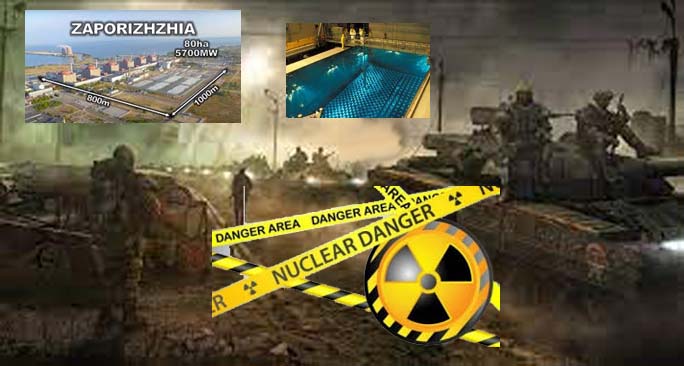
Nuclear experts have also highlighted that the US does not have any nuclear plants that use the same class of technology as Zaporizhzhia, which is a Soviet-designed “water water energetic reactor” (abbreviated as “VVER” in Russian).
By Lauren Kent, CNN, 20th March 2025, https://edition.cnn.com/2025/03/20/europe/ukraine-us-zaporizhzhia-nuclear-power-plant-explainer/index.html
Ukraine’s Zaporizhzhia nuclear power plant, occupied by Russian forces since the early days of the war, could be restored and protected by US ownership – at least according to the Americans.
But it’s unclear how the operation would work in practice, experts say, especially as the plant is on the front line, in territory controlled by Russia.
As part of ongoing talks to inch toward a partial ceasefire, US President Donald Trump and Ukrainian counterpart Volodymyr Zelensky “discussed Ukraine’s electrical supply and nuclear power plants” during a Wednesday phone call, according to the US readout of the call.
“(Trump) said that the United States could be very helpful in running those plants with its electricity and utility expertise. American ownership of those plants would be the best protection for that infrastructure and support for Ukrainian energy infrastructure,” the readout said.
On Thursday, Zelensky disputed that section, saying: “In terms of ownership, we definitely did not discuss this with President Trump.” Zelensky stressed that “all nuclear power belongs to the (Ukrainian) state, including the temporarily occupied Zaporizhzhia region.”
Zelensky said the day before that Ukraine is ready to consider the possibility of American investment in the restoration and modernization of Zaporizhzhia. During a news conference after his call with Trump, Zelensky said they only discussed the occupied Zaporizhzhia plant, rather than Ukraine’s wider nuclear power network.
“I believe that the station will not work under occupation. I believe that the station can be restored to operation,” Zelensky said, also cautioning that the process will take an estimated two years or more.
Before Russia’s full-scale invasion in 2022, the Zaporizhzhia plant supplied roughly 20% of Ukraine’s energy, with six reactors, making it the largest nuclear power station in Europe. Ukrainian staff remain at the plant under Russian occupation, and at one point staff were forced to work at “gunpoint.”
But the plant is now disconnected from the grid and the electricity infrastructure required to operate the plant safely has been damaged by drone strikes and frequent shelling. Russia also destroyed the nearby Kakhovka dam, emptying the reservoir that supplied water to cool the plant.
All six reactors are shut down and there are concerns over the plant’s ongoing maintenance, as explosions continue nearby, according to a UN nuclear watchdog team on the ground.
When asked about how the US could potentially run a Ukrainian nuclear plant, Energy Secretary Chris Wright told Fox News that he didn’t believe it would require American troops on the ground.
“Certainly, we have immense technical expertise in the United States to run those plants. I don’t think that requires boots on the ground,” Wright said. “But I’ll leave the foreign policy to President Trump and Secretary (of State Marco) Rubio. I know they are working tirelessly, ‘How do we bring peace to Ukraine?’
“But, if it was helpful to achieve that end – have the US run nuclear power plants in Ukraine? No problem. We can do that,” Wright added.
But experts question how feasible the idea floated by the Trump administration would be.
Operating the plant safely would require a safe, constant power supply to avoid a reactor meltdown, as well as the restoration of sufficient water supplies for cooling the plant.
“The first word of business would be to establish definitively that there could be no attacks on either the plant directly or on the supporting infrastructure – both power and water resources – and that would have to be iron-clad,” said Edwin Lyman, director of nuclear power safety at the Union of Concerned Scientists. “So far, that kind of agreement has been elusive, as shelling occurs at a daily basis in the vicinity of the reactors.”
“There’s no point in trying to rebuild a plant and operate it if it could be jeopardized at any moment,” Lyman said. “And the notion that US-ownership would somehow be more of a deterrent to Russia attacking the plant than now, when the Russians themselves control the plant, that doesn’t make sense either.”
The idea of US operation “raises a whole lot of logistical and technical and practical questions that are very unclear,” Lyman said, including the question of US liability for any accident at the facility. “With ownership or operator status comes responsibility.”
Nuclear experts have also highlighted that the US does not have any nuclear plants that use the same class of technology as Zaporizhzhia, which is a Soviet-designed “water water energetic reactor” (abbreviated as “VVER” in Russian).
“These are different technologies,” said Elena Sokova, director of the Vienna Center for Disarmament and Non-Proliferation, adding that there are strict licensing requirements for the plant’s operators.
“The US is an advanced country… but to be prepared to immediately take control of something that is of a different design, designed by different country, and where you have no experience of running it – I don’t think it’s a good solution or viable option.”
“Having said that, if we’re talking about a long process, I’m sure certain things could be worked out, particularly if there is an arrangement… to have the majority of the Ukrainian staff and operators running these reactors,” Sokova added.
Ukraine wants role in restoration of plant
Zelensky emphasized on Wednesday night that safe restoration of the plant is in the whole world’s interest, and Ukraine should have a role in that “because it is ours, and this is our land, this is our station.”
The Ukrainian president said any return of the plant would not be possible without control of the area where it is located – the city of Enerhodar – on the Russian-occupied side of the Zaporizhzhia region.
“If you just hand over the station, and a meter away from the station, everything is occupied or there are Russian weapons, no one will work like that,” Zelensky told reporters, raising concerns that the plant could be restored with US and Ukrainian investment, only to have Russia possibly damage or destroy it again later.
As fighting continues along the front line, the dire situation at the Zaporizhzhia plant “remains unchanged,” Andrian Prokip, energy program director at the Ukrainian Institute for the Future, wrote last month.
“It still does not receive adequate maintenance and it continues to serve as a Russian ammunition depot,” said Prokip, also a senior associate at the Wilson Center.
CNN’s Svitlana Vlasova, Christian Edwards and DJ Judd contributed to this report.
Chris Hedges: The Last Chapter of the Genocide

March 23, 2025
By Chris Hedges / Original to ScheerPost
This is the last chapter of the genocide. It is the final, blood-soaked push to drive the Palestinians from Gaza. No food. No medicine. No shelter. No clean water. No electricity. Israel is swiftly turning Gaza into a Dantesque cauldron of human misery where Palestinians are being killed in their hundreds and soon, again, in their thousands and tens of thousands, or they will be forced out never to return.
The final chapter marks the end of Israeli lies. The lie of the two-state solution. The lie that Israel respects the laws of war that protect civilians. The lie that Israel bombs hospitals and schools only because they are used as staging areas by Hamas. The lie that Hamas uses civilians as human shields, while Israel routinely forces captive Palestinians to enter potentially bobby trapped tunnels and buildings ahead of Israeli troops. The lie that Hamas or Palestine Islamic Jihad (PIJ) are responsible — the charge often being errant Palestinian rockets — for the destruction of hospitals, United Nations’ buildings or mass Palestinian casualties. The lie that humanitarian aid to Gaza is blocked because Hamas is hijacking the trucks or smuggling in weapons and war material. The lie that Israeli babies are beheaded or Palestinians carried out mass rape of Israeli women. The lie that 75 percent of the tens of thousands killed in Gaza were Hamas “terrorists.” The lie that Hamas, because it was allegedly rearming and recruiting new fighters, is responsible for the breakdown of the ceasefire agreement.
Israel’s naked genocidal visage is exposed. It has ordered the evacuation of northern Gaza where desperate Palestinians are camped out amid the rubble of their homes. What comes now is mass starvation — the United Nations Relief and Works Agency for Palestine Refugees in the Near East (UNRWA) said on March 21 it has six days of flour supplies left — deaths from diseases caused by contaminated water and food, scores of killed and wounded each day under the relentless assault of bombs, missiles, shells and bullets. Nothing will function, bakeries, water treatment and sewage plants, hospitals — Israel blew up the damaged Turkish-Palestinian hospital on March 21 — schools, aid distribution centers or clinics. Less than half of the 53 emergency vehicles operated by the Palestine Red Crescent Society are functional due to fuel shortages. Soon there will be none.
Israel’s message is unequivocal: Gaza will be uninhabitable. Leave or die.
Since Tuesday, when Israel broke the ceasefire with heavy bombing, over 700 Palestinians have been killed, including 200 children. In one 24 hour period 400 Palestinians were killed. This is only the start. No Western power, including the United States, which provides the weapons for the genocide, intends to stop it. The images from Gaza during the nearly sixteen months of incessant attacks were awful. But what is coming now will be worse. It will rival the most atrocious war crimes of the twentieth century, including the mass starvation, wholesale slaughter and leveling of the Warsaw Ghetto in 1943 by the Nazis.
Oct. 7 marked the dividing line between an Israeli policy that advocated the brutalization and subjugation of the Palestinians and a policy that calls for their extermination and removal from historic Palestine. What we are witnessing is the historical equivalent of the moment triggered by the annihilation of some 200 soldiers led by George Armstrong Custer in June 1876 at the Battle of the Little Bighorn. After that humiliating defeat, Native Americans were slated to be killed with the remnants forced into prisoner of war camps, later named reservations, where thousands died of disease, lived under the merciless gaze of their armed occupiers and fell into a life of immiseration and despair. Expect the same for the Palestinians in Gaza, dumped, I suspect, in one of the world’s hellholes and forgotten.
“Gaza residents, this is your final warning,” Israeli Minister of Defense Israel Katz threatened:
The first Sinwar destroyed Gaza and the second Sinwar will completely destroy it. The Air Force strikes against Hamas terrorists were just the first step. It will become much more difficult and you will pay the full price. The evacuation of the population from the combat zones will soon begin again…Return the hostages and remove Hamas and other options will open for you, including leaving for other places in the world for those who want to. The alternative is absolute destruction.
The ceasefire deal between Israel and Hamas was designed to be implemented in three phases. The first phase, lasting 42 days, would see an end to hostilities. Hamas would release 33 Israeli hostages who were captured on Oct. 7, 2023 — including women, those aged above 50, and those with illnesses — in exchange for upwards of 2,000 Palestinian men, women and children imprisoned by Israel (around 1,900 Palestinian captives have been released by Israel as of March 18). Hamas has released a total of 147 hostages, of whom eight were dead. Israel says there are 59 Israelis still being held by Hamas, 35 of whom Israel believes are deceased.
The Israeli army would pull back from populated areas of Gaza on the first day of the ceasefire. On the seventh day, displaced Palestinians would be permitted to return to northern Gaza. Israel would allow 600 aid trucks with food and medical supplies to enter Gaza daily.
The second phase, which was expected to be negotiated on the sixteenth day of the ceasefire, would see the release of the remaining Israeli hostages. Israel would complete its withdrawal from Gaza maintaining a presence in some parts of the Philadelphi corridor, which stretches along the eight-mile border between Gaza and Egypt. It would surrender its control of the Rafah border crossing into Egypt.
The third phase would see negotiations for a permanent end of the war and the reconstruction of Gaza.
Israel habitually signs agreements, including the Camp David Accords and the Oslo Peace Agreement, with timetables and phases. It gets what it wants — in this case the release of the hostages — in the first phase and then violates subsequent phases. This pattern has never been broken.
Israel refused to honor the second phase of the deal. It blocked humanitarian aid into Gaza two weeks ago, violating the agreement. It also killed at least 137 Palestinians during the first phase of the ceasefire, including nine people, — three of them journalists — when Israeli drones attacked a relief team on March 15 in Beit Lahiya in northern Gaza
Israel’s heavy bombing and shelling of Gaza resumed March 18 while most Palestinians were asleep or preparing their suhoor, the meal eaten before dawn during the holy month of Ramadan. Israel will not stop its attacks now, even if the remaining hostages are freed — Israel’s supposed reason for the resumption of the bombing and siege of Gaza.
The Trump White House is cheering on the slaughter. They attack critics of the genocide as “antisemites” who should be silenced, criminalized or deported while funneling billions of dollars in weapons to Israel.
Israel’s genocidal assault on Gaza is the inevitable denouement of its settler colonial project and apartheid state. The seizure of all of historic Palestine — with the West Bank soon, I expect, to be annexed by Israel — and displacement of all Palestinians has always been the Zionist goal.
Israel’s worst excesses occurred during the wars of 1948 and 1967 when huge parts of historic Palestine were seized, thousands of Palestinians killed and hundreds of thousands were ethnically cleansed. Between these wars, the slow-motion theft of land, murderous assaults and steady ethnic cleansing in the West Bank, including East Jerusalem, continued.
That calibrated dance is over. This is the end. What we are witnessing dwarfs all the historical assaults on Palestinians. Israel’s demented genocidal dream — a Palestinian nightmare — is about to be achieved. It will forever shatter the myth that we, or any Western nation, respect the rule of law or are the protectors of human rights, democracy and the so-called “virtues” of Western civilization. Israel’s barbarity is our own. We may not understand this, but the rest of the globe does.
Chris Hedges is a Pulitzer Prize–winning journalist who was a foreign correspondent for fifteen years for The New York Times, where he served as the Middle East Bureau Chief and Balkan Bureau Chief for the paper. He previously worked overseas for The Dallas Morning News, The Christian Science Monitor, and NPR. He is the host of show The Chris Hedges Report.
He was a member of the team that won the 2002 Pulitzer Prize for Explanatory Reporting for The New York Times coverage of global terrorism, and he received the 2002 Amnesty International Global Award for Human Rights Journalism. Hedges, who holds a Master of Divinity from Harvard Divinity School, is the author of the bestsellers American Fascists: The Christian Right and the War on America, Empire of Illusion: The End of Literacy and the Triumph of Spectacle and was a National Book Critics Circle finalist for his book War Is a Force That Gives Us Meaning. He writes an online column for the website ScheerPost. He has taught at Columbia University, New York University, Princeton University and the University of Toronto.
An Extreme Ultimatum for Iran
The public still needs to be aware of the danger that the U.S. is on course to start a war with Iran for no good reason.
Daniel Larison, Mar 24, 2025, https://daniellarison.substack.com/p/an-extreme-ultimatum-for-iran?utm_source=post-email-title&publication_id=73370&post_id=159715611&utm_campaign=email-post-title&isFreemail=true&r=ln98x&triedRedirect=true&utm_medium=email
Mike Waltz confirmed again that the Trump administration’s demands for Iran are extreme:
MARGARET BRENNAN: Can you clarify? Is the U.S. seeking the dismantlement of Iran’s nuclear program, or verification, like what President Obama put in place back in 2015 and President Trump pulled out of?
MIKE WALTZ: Full dismantlement [bold mine-DL]. Iran has to give up its program in a way that the entire world can see.
Recent remarks from Trump’s Middle East envoy seemed to suggest that the administration would be satisfied with an agreement that ensures that Iran’s nuclear program remained peaceful, but Waltz shot that idea down without qualification. The administration’s ultimatum to Iran is every bit as unreasonable as we thought, and the Iranian government is not going to agree to such humiliating terms. As we mark the 22nd anniversary of the invasion of Iraq this month, it is alarming to hear the drumbeat for another unnecessary and illegal war in the Middle East.
The demands that the administration delivered to Iran in Trump’s letter were far-reaching, and they touched on issues far beyond the nuclear program itself. In addition to telling Iran to give up domestic enrichment and their entire nuclear program, the president’s letter said that they are supposed to halt all support for allied groups throughout the region, and they must withdraw all their forces from Iraq and Syria. According to the Emirati official who delivered the letter, Trump gave Iran two months to comply with these demands or they would face “large-scale military action.”
This is unfortunately consistent with what we have been hearing for the last two months. Last month, it was reported that Trump had reached an understanding with Netanyahu on Iran that paved the way for military action. On a related note, Trump appeared to be on board with seeking a “Libya-style” dismantling of Iran’s entire nuclear program. This is such an obvious non-starter for Iran that we have to assume that the administration wants this to give themselves a pretext for war.
Later in the interview, Waltz said, “But we want to be clear, this isn’t some kind of, you know, kind of tit for tat that we had under the Obama administration, or Biden. This is the full program. Give it up, or there will be consequences.” The interviewer failed to ask Waltz what the consequences would be, but it is clear enough that this is a public threat to launch an unprovoked attack on Iran if their government refuses to cave to the administration’s preposterous demands.
When Trump kept Mike Pompeo out of the second administration, some people thought that this was a sign that the president wouldn’t be pursuing such a braindead, aggressive foreign policy this time around. So much for that. As it turns out, Trump’s foreign policy is every bit as hardline as it was when Pompeo and Bolton were there (and possibly even more so) because Trump favors hardline policies and reliably surrounds himself with hardline advisers. Pompeo may not be in government anymore, but judging from the absurd demands that Trump sent to Iran he might as well be.
Americans are understandably preoccupied with the extensive damage that the administration is causing at home, but the public still needs to be aware of the danger that the U.S. is on course to start a war with Iran for no good reason. If the administration is serious about this two-month deadline, it is possible that we could be looking a U.S. or U.S.-backed Israeli attack on Iran by the end of May. Americans need to begin organizing and mobilizing against that attack now if we are going to have any chance of stopping it.
Report: Israel Planning More Aggressive Invasion of Gaza
The IDF will take control of the humanitarian aid in the Strip
by Kyle Anzalone, March 24, 2025 , https://news.antiwar.com/2025/03/23/report-israel-planning-more-aggressive-invasion-of-gaza/
According to the Washington Post, the Israeli military is gearing up for a major ground operation in Gaza that could last months or longer. Last week, Israel broke a ceasefire and hostage deal with Hamas and conducted large-scale bombings in the Strip that killed hundreds.
The Post spoke with current and former Israeli officials, who explained that “The new and more aggressive tactics” would probably include “direct military control of humanitarian aid,” “targeting more of Hamas’s civilian leadership, and evacuating women, children and vetted noncombatants from neighborhoods to ‘humanitarian bubbles.’”
The officials said those who are not evacuated would face a siege that is a “more intense version of a tactic employed last year in northern Gaza.” In 2024, the Israeli military carried out a version of the “general’s plan,” an outline for ethnic cleansing drawn up by retired IDF generals for Northern Gaza.
The plan called for the complete evacuation of all Palestinian civilians south of the Netzarim Corridor, a strip of land controlled by the Israeli military. Under the plan, if civilians don’t leave, they are to be treated as combatants and killed, either by military action or starvation.
The Post reported the more brutal strategy reflects a change in military leadership, and the new policy is more in line with the view of Prime Minister Benjamin Netanyahu. IDF Chief of Staff Herzi Halevi stepped down from that post earlier this month. He was replaced by Eyal Zamir.
Amir Avivi, a former deputy commander of the military’s Gaza division, explained to the Post that President Donald Trump’s vigorous support for Tel Aviv gives Israeli military commanders more faith that they will have the equipment needed in Gaza.
“Now there is new [IDF] leadership, there is the backup from the U.S., there is the fact that we have enough munitions, and the fact that we finished our main missions in the north and can concentrate on Gaza,” Avivi said. “The plans are decisive. There will be a full-scale attack and they will not stop until Hamas is eradicated completely. We’ll see.”
Since October 7, 2023, Israel has decimated the Strip and killed at least 50,000 Gazans. Still, Israeli and US officials have said Hamas has returned to its prewar strength. The Post noted that the IDF would not be less restrained in order to defeat Hamas.
Yossi Kuperwasser, a former senior IDF intelligence official and head of the Jerusalem Institute for Strategy and Security think tank explained, “There is less opposition now with Zamir and [Defense Minister Israel] Katz. They are more ready.”
“The government was committed to removing Hamas from power,” Kuperwasser added. “The security establishment was not happy with this idea. They were trying to focus more on military assets and less on civilian assets. Because once you remove Hamas from Gaza, the IDF would have to rule Gaza.”
While the Post report says the IDF plans to wage a counterinsurgency in Gaza, Katz has said Tel Aviv will expel the Palestinians and annex the Strip. “I have instructed the IDF to seize additional areas in Gaza, while evacuating the population, and to expand the security zones around Gaza for the protection of Israeli communities and IDF soldiers,” he said on Friday.
On Saturday night, the Israeli Security Council established a new office that will coordinate the expulsion of Palestinians from Gaza.
Since breaking the ceasefire and hostage deal last week, Israel has resumed large-scale bombing in Gaza. Additionally, Israeli troops have attacked Rafah in southern Gaza and the Netzarim Corridor in central Gaza.
Kyle Anzalone is the opinion editor of Antiwar.com and news editor of the Libertarian Institute. He hosts The Kyle Anzalone Show and is co-host of Conflicts of Interest with Connor Freeman.
Nuclear Severnside…is this our future?
STAND (accessed) 23rd March 2025,
https://www.youtube.com/watch?v=wz9CaHbM-9o
The Severn Estuary, in Gloucestershire, is set to be a major hub for the
Government’s plans to expand nuclear power in the UK. This video, by STAND
(Severnside Together Against Nuclear Development)
https://www.nuclearsevernside.co.uk, explains the Government’s proposed
expansion of nuclear power by building the completely unproven technology
of SMRs (Small Modular Reactors. It also explains why they will be
disastrous for the economy, increase the cost for electricity bill payers,
rob renewable sources of power generation such as wind, solar and tidal of
essential resources, fail to secure energy security and come far too late
to help mitigate climate change or meet the country’s carbon emission
targets.
US seeks full dismantling of Iran’s nuclear program, Trump’s advisor says
Iran International 23rd March 2025,
https://www.iranintl.com/en/202503231237
The Trump administration is seeking full dismantlement of Iranian nuclear program in a way that the entire world can see, White House National Security Advisor Michael Waltz told CBS News on Sunday.
“It is time for Iran to walk away completely from its desire to have a nuclear weapon. And they will not, and cannot be allowed to have a nuclear weapons program, that’s enrichment, weaponization, and its strategic missile program,” Waltz said.
“The President has all options on the table. But we want to be clear, this isn’t some kind of, you know, kind of tit for tat that we had under the Obama administration, or Biden. This is the full program. Give it up, or there will be consequences,” he added.
His comments came in contrast to the much more conciliatory tone of Trump’s Middle East envoy, Steve Witkoff, who spoke of the US president’s intention to resolve Iran’s nuclear dispute diplomatically.
Earlier this month, Trump wrote a letter to Iran’s Supreme Leader Ali Khamenei in an attempt to explore a new nuclear agreement and prevent military escalation, Witkoff told Fox News on Sunday.
“We don’t need to solve everything militarily,” Witkoff said.
He emphasized that Iran cannot have a nuclear bomb, saying, “It cannot happen and it will not happen.”
“Our signal to Iran is let’s sit down and see if we can, through dialogue, through diplomacy, get to the right place. If we can, we are prepared to do that. And if we can’t, the alternative is not a great alternative.”
On Friday, Witkoff told the Tucker Carlson show, “We should talk. We should clear up the misconceptions. We should create a verification program so that nobody worries about weaponization of your nuclear material.”
He also said Trump believes the issue “has a real possibility of being solved diplomatically” and “acknowledged that he’s open to an opportunity to clean it all up with Iran.”
His remarks raised questions about the Trump’s administration’s approach toward Iran, as Trump’s Secretary of State, Marco Rubio, and National Security Advisor, Michael Waltz, have taken a much tougher stance, insisting over the past few weeks that Iran’s nuclear program must be dismantled and that Iran will face military action unless it complies with US demands.
Ukraine will have to make territorial concessions – Waltz
https://www.rt.com/news/614323-waltz-ukraine-territorial-concessions/ 24 Mar 25
Trump’s national security adviser has also indicated that the US is ready to ramp up sanctions pressure on Russia if it declines a 30-day ceasefire.
Ukraine should be prepared to give up certain territories as part of any future peace negotiations with Russia, US National Security Adviser Mike Waltz has said.
Kiev claims sovereignty over Crimea, the Donetsk and Lugansk People’s Republics, as well as Kherson and Zaporozhye Regions. The territories officially became part of Russia after referendums in 2014 and 2022. Moscow has maintained that their status is non-negotiable.
Speaking to ABC News on Sunday, Waltz said that a potential settlement to the Ukraine conflict “is going to be some type of territory for future security guarantees” for Kiev.
According to the official, an alternative in the form of NATO membership for Ukraine “is incredibly unlikely.” Ukraine has demanded accession to the US-led military bloc whereas Moscow views Kiev’s NATO aspirations as a root cause of the ongoing conflict.
Attempts to “drive every Russian off of every inch of Ukrainian soil, including Crimea” would be unrealistic at this point, Waltz believes. The ongoing diplomatic efforts spearheaded by the US should focus on the “reality of the situation on the ground,” the national security adviser argued.
Also on Sunday, in an interview with Fox News, Waltz said that “we are engaging in diplomacy, and that will involve both carrots and sticks to get both sides to the table.” When asked whether US President Donald Trump was prepared to “punish” Russian President Vladimir Putin with more sanctions if he rejected a ceasefire, Waltz replied that “all options are on the table.”
Earlier this week, US Secretary of State Marco Rubio revealed that representatives from Washington and Kiev had “had conversations” on the issue of territorial concessions during the talks in the Saudi Arabian city of Jeddah on Tuesday. The diplomat argued that “neither side can militarily achieve their maximalist goals.”
He similarly predicted that “obviously, it’ll be very difficult for Ukraine in any reasonable time period to sort of force the Russians back all the way to where they were in 2014.”
Following the negotiations in Jeddah, Ukraine agreed to a 30-day ceasefire.
Trump’s special envoy, Steve Witkoff, traveled to Moscow on Thursday to present Putin with the details of the proposal.
The Russian head of state welcomed the ceasefire in principle but insisted on addressing several salient issues first, including the fate of the Ukrainian troops encircled in Russia’s Kursk Region
Dounreay learns what its share of £4bn decommissioning cash will be
Dounreay has been allocated a total spend of £221 million for the coming
financial year. Its share of the £4 billion budget overseen by the Nuclear
Decommissioning Authority (NDA) is a good outcome for the site, according
to Dave Wilson, managing director of operators NRS.
“It’s a really, really good settlement given the current financial challenges,” he said
at the latest meeting of Dounreay Stakeholder Group (DSG) on Wednesday. Mr
Wilson said it was just over £5 million up on the previous year after
taking account of inflation. He said: “It’s a very positive settlement
for Dounreay and will make sure the site is safe, secure and able to
continue to protect the environment.” The funding would underwrite the
ongoing clean-up of the site and the upgrading of its ageing
infrastructure.
John O’Groat Journal 22nd March 2025, https://www.johnogroat-journal.co.uk/news/dounreay-learns-what-its-share-of-4bn-decommissioning-cash-377633/
How bloated energy supply projections are usually wrong – a history of energy efficiency tells us why

David Toke, Substack, Mar 23, 2025
There’s a general belief going around about surging energy demand in developed countries like the USA and the UK. Goldman Sachs, for example, has been leading the chorus proclaiming massive AI-led increases in energy demand (See HERE). But such claims are likely much exaggerated. They are the latest in a history of falsely predicted energy bubbles. These have served the interests of the big energy corporations and their bizarre demands for state funding of technologies like small modular reactors (see my post HERE). I want to discuss this history of bloated projections of future energy consumption. I want to talk about how it is that they are false prophets, both in history and now.
Yes, we need to electrify the economy to make it more energy-efficient using things like heat pumps and EVs. These technologies will increase electricity demand, but they will actually reduce overall energy demand, not increase it. The stories about ‘surging’ energy demand imply absolute increases in energy consumption, not relative shifts.
The (historical) role of bloated projections of future energy consumption has been to distract attention from energy efficiency improvements. These are important, if not the overriding, means through which the bloated energy projections are confounded. It is doubly true today when we desperately need to encourage energy efficiency through electrification. This will reduce emissions, increase energy security and create more demand for renewable energy.
A history of bloated energy projections
Bloated projections in the USA
Yes, we’ve been here before. The big energy corporations with their demands for massive investment in centralised power plant trade on the fact that the general public do not remember the past and the inaccuracy of the past claims of massive increases in energy consumption.
In the 1970s it became clear that the world could not survive unsustainable increases in energy production and pollution. This was, by the way, before climate change became a major issue even within the green movement. Amory Lovins led the way in charting a strategy based on decentralised energy consumption in a book called ‘Soft Energy Paths’. published in 1977. He noted how the US Government and its agencies were predicting a doubling of energy consumption in the year 2000 compared to 1975 (note: all energy not just electricity). They were predicting a massive increase in reliance on coal and nuclear power.
Lovins talked about what he called an alternative ‘soft energy path’ to this ‘hard energy path’. In his projection total energy projection increased by only around a third by 2000, and thereafter began to decline (pages 29 and 38 compared)1. He mused about how solar photovoltaics ‘could be used, to increase the range of functions now performed by electricity’ (page 143). Amazingly his projection of total US energy consumption by 2000 turned out to be broadly correct, even though many of his general policy rescriptions were not adopted. Energy consumption increased by only around a third compared to the confident predictions made by Government agencies and reports supported by big corporations.
Exaggeration of future energy demand is the usual practice of the Government. The US Government’s Energy Information Administration (EIA) publishes a lot of very useful data about energy. However its future energy projections are riddled with overestimations………………………………………..
I am focusing on the USA because I have more data for this discussion. The same general position holds in the UK………………………………
As we can see, overblown energy projections are now manifesting themselves in new ways. In Australia, the Australian Energy Market Operator (AEMO) is being criticised for imagining a future natural gas supply shortage. This is despite the fact that natural gas use in Australia is declining because of increasing electrification of services (See HERE).
How energy efficiency deflates bloated energy demand projections
Energy efficiency is the creeping destroyer of energy demand projections. I call it ‘creeping’ energy efficiency because this is often missed by people who are modeling projections of future energy. They simply do not know what improvements in energy efficiency there are going to be. But they do know how much is generated by power stations or supplied by gas. So they just do multiplication sums involving the supply-side data they do know about and they do not make radical enough assumptions about the development of energy efficiency.
Recently I have seen projections of the impact of AI on energy consumption derived by assuming a constant relationship between the amount of AI and data centres and energy consumption. They then multiply the expected expansion of AI by the current expected energy consumption of AI and arrive at some very large quantities. But this is stupid.
It is as if somebody in the year 1900 was projecting how much coal was going to be used in power stations in the future relying on the energy efficiency of a coal-fired power plant existing in 1900. This was around 10 percent (ie 10 percent of the coal’s energy was converted into electricity). Of course, this energy efficiency increased, ultimately to over 40 percent. So anybody doing these sums about future coal consumption would have gotten their answers absurdly wrong. Nowadays coal is on its way out, in the West, at least. But as will coal-fired power plants, the efficiencies of AI will improve. This may happen very rapidly.
Early 2025 saw the emergence of DeepSeek, an AI system that is radically cheaper than other US based systems. They, reportedly, have reduced energy consumption by around 75 per cent (see HERE), or perhaps even more according to some estimates (see HERE). Other companies will have to try to emulate their success since they will struggle to compete if they do not. According to an analysis of the company’s efforts:
‘DeepSeek’s research team disclosed that they used significantly fewer chips than their competitors to train their model. While major AI companies rely on supercomputers with 16,000+ chips, DeepSeek achieved comparable results using just 2,000. This strategic approach could mark a turning point in AI energy efficiency and resource allocation.’ (see HERE)
After the emergence of DeepSeek, much of the conversation on the energy demand from AI centres briefly paused. Then, the lessons of the example of DeepSeek apparently lost the cacophony of voices carried on from before in the vein of talking about ‘surging’ AI-related demand for energy.
So as was the case with coal-fired power plants, the efficiencies of AI will improve. This will happen very rapidly indeed if DeepSeek is anything to go by since the other AI companies will have to keep up with improving efficiencies and cutting costs if they are to keep up with the competition.
…………………. even in the case of the USA, it has all been much overblown. Certainly AI and data centers are unlikely to produce a substantial increase in energy demand in the UK. Indeed, AI is likely to induce declines in energy consumption, as I argue in an earlier post (see HERE).
Energy Efficient lighting
A good case study of how energy efficiency almost silently hacks away at energy is lighting…………………………………………………………………………….
Future energy efficiency
Often talk about likely increases in electricity consumption to power more energy-efficient technologies like EVs and heat pumps becomes confused with talk about surges in energy demand through data centres (which are overblown, as I argue). Heat pumps and EVs will reduce energy consumption overall – by pretty large amounts. Battery-electric technology will expand to all of transport (ultimately even including aircraft). Heat pumps will provide residential, commercial, and industrial space heating. The energy-saving potential is immense. Up to half of all energy consumption could be saved. Energy consumption has already stabilised in most western states – and has reduced in some such as the UK.
Conclusion
As we have seen, in the past clams of projected surges in energy demand have been undermined by greater energy efficiency. So why is it that demands for energy supply increases to meet overblown estimations of surges in energy demand receive so much more publicity than energy efficiency?
One major reason is that big corporations whose interests are concerned with building large power stations have concentrated political power. The lobby for greater energy efficiency has a much more diffuse base. But today the renewable energy lobbies and the energy efficiency lobbies should have a much keener interest in working together. To create a much bigger market for renewable electricity, electrification needs to be rapidly developed.
One problem that obscures this, and makes the energy supply lobby ignore energy efficiency, is that the electricity supply and natural gas supply interests are intertwined. AEMO in Australia feels the need to bang the drum for natural gas, even though electrification is more efficient and more sustainable than natural gas. The big energy corporations tend to sell both electricity and gas, and so they will try and promote both of them.
We need to combat the influence of the big corporations. We need to put our shoulders on the wheel in backing incentives and regulations to be shifted in favour of energy efficiency. Otherwise the energy transition will take much longer to happen.
https://davidtoke.substack.com/p/how-bloated-energy-supply-projections
What is the fate of Russian-held Zaporizhzhia nuclear power plant after Trump talks?
The Zaporizhzhia Nuclear Power Plant is one of the world’s 10 largest and Europe’s biggest
Hanna Arhirova, Friday 21 March 2025, https://www.independent.co.uk/news/world/europe/ukraine-nuclear-power-plants-trump-putin-b2719353.html
President Donald Trump suggested a potential transfer of Ukrainian power plants to US ownership during a call with Ukrainian President Volodymyr Zelensky, according to a US statement.
The discussion, later clarified by Zelensky, centred on the Zaporizhzhia Nuclear Power Plant (ZNPP), currently under Russian occupation.
While the plant remains connected to Ukraine‘s grid, it is not producing electricity, raising questions about the feasibility and nature of any future US involvement.
The Zaporizhzhia Nuclear Power Plant is one of the world’s 10 largest and Europe’s biggest.
Who controls the Zaporizhzhia Nuclear Power Plant
Located in Ukraine’s southern Zaporizhzhia region, Russian forces occupied it shortly after Moscow’s February 2022 invasion.
While Russia declared the region annexed in Autumn 2022, its largest city, Zaporizhzhia, remains under Ukrainian control.
Ukraine has accused Russia of stationing troops and weapons at the plant and using it as a launchpad for attacks across the Dnipro River. Russia denies this, accusing Ukraine of shelling the facility.
How many nuclear power plants does Ukraine have?
Besides Zaporizhzhia, Ukraine operates three active nuclear power plants, which generate the majority of the country’s electricity following sustained Russian attacks on thermal and hydroelectric plants.
These facilities are located in southern, western and northwestern Ukraine, away from frontline areas.
What did Trump and Zelenskyy discuss and are there negotiations over Zaporizhzhia’s fate?
During their call on Wednesday, Trump suggested that Zelensky should consider giving the US ownership of Ukraine’s power plants to ensure their long-term security, according to a White House statement from US Secretary of State Marco Rubio and National Security Adviser Mike Waltz.
“American ownership of those plants could be the best protection for that infrastructure,” Trump suggested, according to the statement.
Zelensky later told journalists their conversation focused on the Zaporizhzhia nuclear power plant, and the following day, made it clear that “the issue of ownership” of the other three plants was never discussed.
“All nuclear power plants belong to the people of Ukraine,” he said.
Zelenskyy said that when they discussed Zaporizhzhia, the US leader had inquired about the facility’s future. “Trump asked my thoughts on the plant,” Zelensyy said. “I told him that if it is not Ukrainian, it will not operate. It is illegal.”
Even though ZNPP is a state-owned plant, Zelenskyy acknowledged that if the US were to claim it from Russian control, invest in it and modernise it, Ukraine might consider it. “That is a separate question, an open one,” he said.
What is the current state of Zaporizhzhia’s nuclear plant?
Since falling under Russian control, the plant’s conditions have deteriorated. While its six reactors have been shut down for years, they still require power and qualified staff to maintain cooling systems and safety features.
Energoatom, Ukraine’s state nuclear operator, said that after Russian forces took over, Ukrainian personnel were forced to sign contracts with Russian authorities and take Russian citizenship. Those who refused faced abduction or threats, forcing thousands to flee, leaving the facility understaffed and harder to manage.
The collapse of a dam in June 2023 further jeopardised the plant’s cooling systems, which relied on water from the reservoir. In response, plant administrators dug wells, according to the International Atomic Energy Agency (IAEA).
Zelensky said extensive repairs would be needed before the plant could operate again, estimating the process could take at least two years.
The IAEA has repeatedly warned the war could cause a radiation leak. While the plant no longer produces electricity, it still holds large amounts of nuclear fuel, requiring constant cooling.
Regular blackouts caused by the fighting have disrupted the facility, though power has been quickly restored each time.
IAEA experts permanently stationed there still face restricted access, with Russian authorities blocking some inspection requests, according to IAEA head Rafael Grossi.
Is any kind of deal imminent?
Zelensky said the discussions with Trump on restoring Zaporizhzhia were a positive step, but cautioned that no one would work at the plant if Russian forces remained stationed nearby.
Control over the plant is likely to remain a legal and logistical challenge, intertwined with a highly divisive issue for both warring sides: control over the land itself.
Russian troops hold the area, while Ukrainian forces are separated from it by the Dnipro River and more than 100 kilometres (62 miles) of terrain.
Macron ousts EDF boss accused of giving French industry ‘the middle finger’
Luc Rémont will be replaced in a reshuffle with factory energy prices set to soar
Alex Singleton, Business Reporter, https://www.telegraph.co.uk/business/2025/03/21/macron-ousts-boss-state-run-edf-french-energy-prices-surge/
Emmanuel Macron has ousted the boss of the state-run EDF after French industrialists revolted over its high electricity prices.
Luc Rémont is to be replaced in a surprise reshuffling of the company’s top ranks, Mr Macron’s office said on Friday. Mr Rémont has run the the state-owned energy giant since November 2022.
The shake-up follows an outcry over the high energy prices EDF is poised to charge factories. Benoît Bazin, the boss of building materials giant Saint-Gobain, had accused EDF of “giving the middle finger to French industry” by increasing prices.
Rules that force EDF to sell energy to major industrialists at below-market prices are set to expire at the end of the year and the generator had announced plans to raise its prices.
Industry group Uniden, which represents dozens of France’s biggest manufacturers including Renault and steelmaker ArcelorMittal, claimed EDF was “deliberately turning its back” on French businesses at a time when manufacturers were “exposed to unprecedented non-European competition that threatens the very survival of many sites”.
The row is embarrassing for Mr Macron, who had pledged to “take back control of electricity prices” and who sees cheap electricity as a way of securing the French economy. Two years ago, he fully nationalised EDF by buying the 16pc of the company the government did not already own.
The shake-up comes days after the Macron administration said it had agreed state financing for six new nuclear reactors to be built by EDF over the coming decades.
Anger over high industrial energy prices is rising in the UK too. UK factories pay 50pc more for electricity than rivals in France and Germany, and four times as much as American plants. High prices have been blamed on net zero and slow-moving plans to expand nuclear power.
Warnings from industrialists that net zero energy policies are damaging the economy have fallen on deaf ears. Ed Miliband, the Energy Secretary, said this week the UK Government was “absolutely up for the fight” over net zero.
EDF is one of the largest players in the UK nuclear power market, after buying three formerly nationalised regional electricity boards and the nuclear operator British Energy.
It is currently building the UK’s first new nuclear power station for over 20 years, Hinkley Point C, and plans to embark on the construction of another, Sizewell C. But in January, the future of this new project was thrown into doubt after the French state auditor warned it against embarking on risky new foreign projects.
EDF declined to comment. The French government has been approached for comment.
Complicity of Australia’ s Labor and Liberal Party in Israel’s genocide of Palestinians
David Bradbury, 21 Mar 25
This clip shows the complicity of the Australian Govt – both major parties – in allowing/subsidising over 70 Australian companies to produce vital component parts for Lockheed Martin’s F35 fighter which has caused so many deaths in Gaza, the West Bank, southern Lebanon and Syria. Elsewhere in the world.
US wants to negotiate with Iran on nuclear programme: US envoy
Tehran accuses US of bullying tactics as nuclear deal uncertainty deepens under Trump’s renewed pressure campaign.
US President Donald Trump’s outreach to Iran’s Supreme leader, Ayatollah Ali Khamenei, on a possible new nuclear deal is an attempt to avoid direct military action, US special envoy Steve Witkoff has said.
“We don’t need to solve everything militarily,” Witkoff told Fox News on Sunday. “Our signal to Iran is ‘Let’s sit down and see if we can, through dialogue, through diplomacy, get to the right place’. If we can, we are prepared to do that. And if we can’t, the alternative is not a great alternative.”
Witkoff’s comments come after Trump said on March 7 that he sent a letter to the Iranian leadership seeking to engage in talks over Iran’s nuclear activities and warning of potential military action if it refused. The approach was slammed by Khamenei, who said Iran was not going to engage with a “bully”.
Trump has also threatened Tehran over any support for the Iran-aligned Houthis in Yemen, who have resumed their military support for Palestinians by targeting Israel after it blockaded aid and then resumed its war in Gaza.
Amid intense US air strikes on Yemen last week, Trump said the US will hold Tehran responsible for any attacks by Yemen’s Houthis, dismissing Iran’s insistence that the group operates independently.
Talks with the US are impossible unless Washington changes its pressure policy the Iranian Foreign Minister Abbas Araghchi said on Sunday. On Thursday, he said that the letter was “actually more of a threat”, and that Tehran would respond soon.
There is little trust in Iran in US negotiation commitments after Trump in 2018 pulled the US out of a landmark nuclear deal – the Joint Comprehensive Plan of Action (JCPOA) – imposing instead additional sanctions on Iran. The JCOPA was signed with world powers in 2015 to curb Iran’s nuclear deal in exchange for sanctions relief.
Since Trump’s unilateral withdrawal from the accord, Iran has accelerated its enrichment of uranium to up to 60 percent purity – a step away from the 90 percent level needed for weapons-grade uranium.
According to the International Atomic Energy Agency (IAEA), which carries out inspections of Iranian nuclear sites, Iran has amassed enough fissile material for multiple bombs, but has made no effort to build one.
While Trump has hinted at the desire to negotiate with Iran since returning to the White House earlier this year, he has reinstated a “maximum pressure” campaign against Tehran.
And on Wednesday, senior White House officials again said Iran must do away with its nuclear programme entirely, leaving all uranium enrichment activity, even at low levels.
That, along with Trump’s threats of military action against Iran, has prompted calls from within Iran to abandon its officially stated policy that it will never pursue nuclear weapons.
Aaron Mate on how NATO provoked Russia in Ukraine and undermined peace
By Aaron Maté / The Grayzone March 23, 2025, https://scheerpost.com/2025/03/23/aaron-mate-on-how-nato-provoked-russia-in-ukraine-and-undermined-peace/
The Grayzone’s Aaron Maté argues that the US and NATO provoked Russia in Ukraine by expanding NATO, dismantling arms control, installing military assets threatening Russia, meddling in Ukraine and blocking multiple opportunities for peace.https://www.youtube.com/watch?v=z8IMtB6UkvM
1 This Month
Chernobyl: The Lost Tapes – A good documentary on Chernobyl on SBS available On Demand for the next 3 weeks– https://www.sbs.com.au/ondemand/tv-program/chernobyl-the-lost-tapes/2352741955560

of the week–London Campaign for Nuclear Disarmament

Tell the Ukrainian Government to Drop Prosecution of Peace Activist Yurii Sheliazhenko
To see nuclear-related stories in greater depth and intensity – go to https://nuclearinformation.wordpress.com
-
Archives
- April 2026 (139)
- March 2026 (251)
- February 2026 (268)
- January 2026 (308)
- December 2025 (358)
- November 2025 (359)
- October 2025 (376)
- September 2025 (257)
- August 2025 (319)
- July 2025 (230)
- June 2025 (348)
- May 2025 (261)
-
Categories
- 1
- 1 NUCLEAR ISSUES
- business and costs
- climate change
- culture and arts
- ENERGY
- environment
- health
- history
- indigenous issues
- Legal
- marketing of nuclear
- media
- opposition to nuclear
- PERSONAL STORIES
- politics
- politics international
- Religion and ethics
- safety
- secrets,lies and civil liberties
- spinbuster
- technology
- Uranium
- wastes
- weapons and war
- Women
- 2 WORLD
- ACTION
- AFRICA
- Atrocities
- AUSTRALIA
- Christina's notes
- Christina's themes
- culture and arts
- Events
- Fuk 2022
- Fuk 2023
- Fukushima 2017
- Fukushima 2018
- fukushima 2019
- Fukushima 2020
- Fukushima 2021
- general
- global warming
- Humour (God we need it)
- Nuclear
- RARE EARTHS
- Reference
- resources – print
- Resources -audiovicual
- Weekly Newsletter
- World
- World Nuclear
- YouTube
-
RSS
Entries RSS
Comments RSS
 nuclear-news