Radiation exposure victims fight for compensation as nuclear weapons funding soars

Bulletin, By Chloe Shrager | March 19, 2025
Nine months have passed since the law that compensates US victims of radiation exposure expired in June, and yet another opportunity to reinstate it fell to the wayside last week.
The Radiation Exposure Compensation Act (RECA), enacted in 1990, provided pay-outs to people unwittingly exposed to radioactive substances from the Manhattan Project and Cold War efforts. For decades, people living downwind from the Nevada Test Site, nuclear weapons site workers and uranium miners relied on the money they received from RECA to pay their medical bills for rare cancers and diseases contracted from their radiation exposure.
But even so, activist groups across the US homeland and territories argue that the law was woefully inadequate. “When you talk about nuclear justice, we have not had it. We haven’t seen it,” Mary Dickson, a Utah downwinder and thyroid cancer survivor, said in a recent interview.
After the House shot down an attempt to push an expanded version of the compensation act through Congress last year, a bipartisan group of senators reintroduced a RECA reauthorization and expansion bill in January. The effort is led by Republican Sen. Josh Hawley of Missouri and Democratic Sen. Ben Ray Luján of New Mexico, who recently spoke on the proposed bill in an interview with the Bulletin.
“This is not a partisan issue,” Luján said. “This is for the American people, and especially those who live downwind of this testing and those uranium mine workers who are sacrificing their lives and their careers for national security purposes.”
The hope was to slip the amended act into the Trump Administration’s first stopgap budget bill, due no later than the end-of-day last Friday to avoid a government shutdown. But that hope evaporated when instead of proposing an omnibus bill overhauling previous budget priorities—as was expected of the new administration—the House introduced a continuing resolution that largely carried on Biden administration funding levels without mention of the new RECA bill. The continuing resolution does, however, increase defense budget spending by $6 billion……………………………………………………………………………………………………………………………………………………………………………………………………. The human cost of nuclear security. Congress passed a GOP budget bill on Friday to avoid a government shutdown and fund the government through September. While the bill does not fund RECA’s reauthorization, it does earmark at least $21.7 billion for “defense nuclear nonproliferation” and “weapons activities” under the National Nuclear Security Administration for the next six months. Funding under these categories can be used for anything from continued domestic uranium enrichment to warhead modernization and assembly. These defense budget proposals come during an estimated $1.7 trillion, 30-year overhaul of the United States’ nuclear arsenal that will rebuild each leg of the nuclear triad and its accompanying infrastructure.
These investments were approved. Legislation to continue to compensate those poisoned by nuclear weapons activities were not.
“They’re investing all this money to build up our arsenal and develop new weapons. So when they say there’s not enough money to take care of the people those weapons have harmed in the past… I just think part of that cost has got to be taking care of the people they harm,” Dickson said. https://thebulletin.org/2025/03/radiation-exposure-victims-fight-for-compensation-as-nuclear-weapons-funding-soars/?utm_source=ActiveCampaign&utm_medium=email&utm_content=Plans%20to%20colonize%20Mars%20threaten%20Earth&utm_campaign=20250320%20Thursday%20Newsletter
No comments yet.
1 This Month
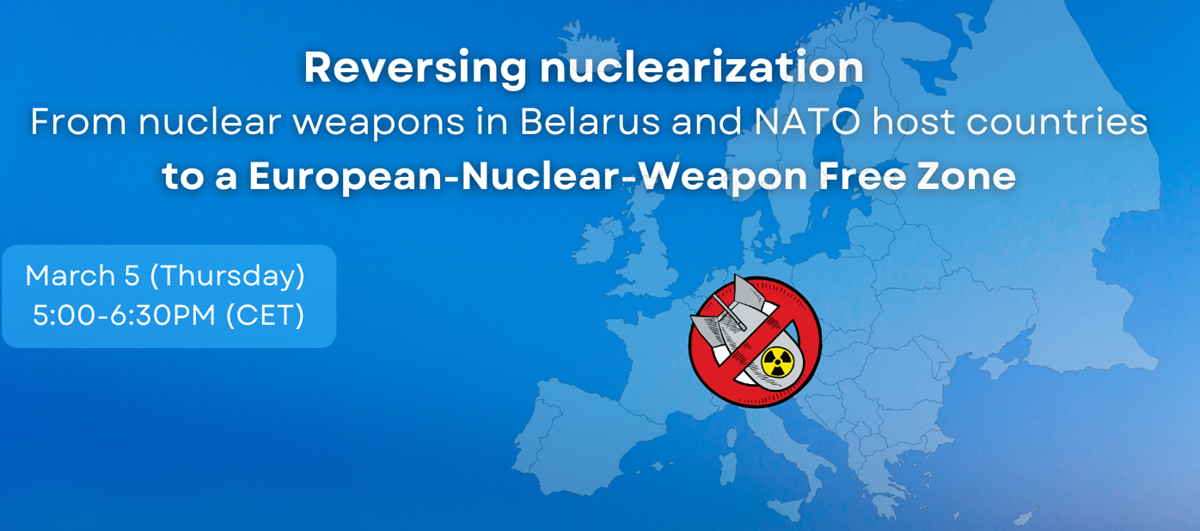
5 March -Online – Reversing nuclearization:
From nuclear weapons in Belarus and NATO host countries to a European-Nuclear-Weapon Free Zone
11am-12:30pm Eastern Time USA / 5pm-6:30pm CET

of the week – Advocating for a
nuclear free beach – https://www.samuellawrencefoundation.org/
The Samuel Lawrence Foundation advocates for a Nuclear Waste Free Beach at San Onofre, join us and take action!

10 March A LIVE WEBINAR THE REAL EFFECTS OF NUCLEAR POWER
What the Industry Isn’t Telling Us
1:00 PM Mountain, 2 pm Central, 3 pm Eastern. Live on the Keepers of the Water Facebook page

18 March Webinar @ 1 PM EST: An Assessment of SMR Projects: The Case of Canada
register for the zoom:
https://us02web.zoom.us/webinar/register/WN_o8BIIOUvQ2ONJR1nta65DQ#/registration

of the week – STOP SMALL MODULAR REACTORS IN CANADA
To see nuclear-related stories in greater depth and intensity – go to https://nuclearinformation.wordpress.com
-
Archives
- March 2026 (51)
- February 2026 (268)
- January 2026 (308)
- December 2025 (358)
- November 2025 (359)
- October 2025 (376)
- September 2025 (258)
- August 2025 (319)
- July 2025 (230)
- June 2025 (348)
- May 2025 (261)
- April 2025 (305)
-
Categories
- 1
- 1 NUCLEAR ISSUES
- business and costs
- climate change
- culture and arts
- ENERGY
- environment
- health
- history
- indigenous issues
- Legal
- marketing of nuclear
- media
- opposition to nuclear
- PERSONAL STORIES
- politics
- politics international
- Religion and ethics
- safety
- secrets,lies and civil liberties
- spinbuster
- technology
- Uranium
- wastes
- weapons and war
- Women
- 2 WORLD
- ACTION
- AFRICA
- Atrocities
- AUSTRALIA
- Christina's notes
- Christina's themes
- culture and arts
- Events
- Fuk 2022
- Fuk 2023
- Fukushima 2017
- Fukushima 2018
- fukushima 2019
- Fukushima 2020
- Fukushima 2021
- general
- global warming
- Humour (God we need it)
- Nuclear
- RARE EARTHS
- Reference
- resources – print
- Resources -audiovicual
- Weekly Newsletter
- World
- World Nuclear
- YouTube
-
RSS
Entries RSS
Comments RSS
 nuclear-news
Leave a comment