Towards a Eurobomb: The Costs of Nuclear Sovereignty
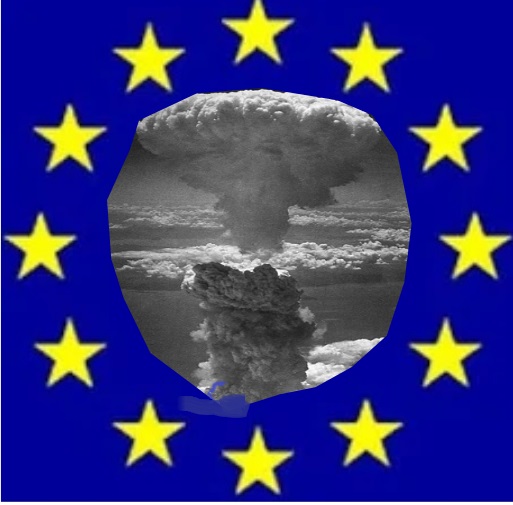
it would be much better if the leaders of the EU spend as much time on diplomacy with Russia than in building up European defense.
Instead of investing in weapons of mass destruction, making EU defense more efficient should be the priority as well as integrating Russia into a larger collective security organization
Tom Sauer |11.03.2025 , https://www.aa.com.tr/en/opinion/opinion-towards-a-eurobomb-the-costs-of-nuclear-sovereignty/3505915
The author is a professor in International Politics at the University of Antwerp in Belgium.
- If American soldiers or the tactical nuclear weapons are withdrawn, the odds are that the Europeanization of the French (and maybe British) nuclear weapons in one way or another may indeed become reality
ISTANBUL
The Trump administration’s recent isolationist statements, amid the talks of war in Europe, have revived discussions on Europeanizing French (and possibly British) nuclear weapons. After 75 years of NATO, concerns over US abandonment are increasingly shaping European foreign policy discussions. In the past, the French idea of a “dissuasion concertée (concerted deterrence) was mostly met with silence, especially in Germany. This time around the conservative leader Friedrich Merz seems in favor despite the fact that NATO is still alive and the US still has 100,000 soldiers and 100 tactical nuclear weapons in Europe. These weapons are stationed in Türkiye, Germany, Italy, the Netherlands, and Belgium. If the soldiers or the tactical nuclear weapons are withdrawn, the odds are that the Europeanization of the French (and maybe British) nuclear weapons in one way or another may indeed become reality.
There are different scenarios imaginable. The first step is for European nuclear states to declare that their “national interests” align with “European interests,” a principle already reflected in the Lisbon Treaty. The latter, by the way, also contains a collective defense clause similar to NATO’s Article 5. Further steps could be imagined to make these statements more credible: information exchange, consultation, joint planning, joint exercises, and co-financing. Another step could involve deploying French dual-capable aircraft in Germany or Poland. A final step would be the creation of an EU nuclear bomb in a European Defense Union (EDU). It remains, however, still to be seen how the Ukraine war will accelerate the pace towards such an EDU.
What are the costs of Europeanization of nuclear weapons?
First of all, the assumption that nuclear deterrence works is uncertain. Advocates of nuclear weapons believe that it works. They forget that in history many nuclear weapon states (including Israel, India, the UK) have been attacked by non-nuclear weapon states. In theory, it is very hard to make it work as it assumes for instance a rational enemy. It also assumes that the possessor is really prepared to use them. However, if used on a massive scale, it means the annihilation of the planet. In the war in Ukraine, French President Emmanuel Macron for that reason stated that even if Russia uses a tactical nuclear weapon in Ukraine, France would not retaliate with nuclear weapons.
Secondly, emerging and disruptive technologies (like AI) and weapon systems (like hypersonic missiles) will further undermine the so-called nuclear stability. Ideally, conventional deterrence (using hypersonic missiles) could and should replace nuclear deterrence on the condition that all nuclear states agree.
Thirdly, extended nuclear deterrence, read the atomic umbrella, is even more incredible. As early as the 1970s, Henry Kissinger cautioned Europeans against assuming that the US would employ nuclear weapons for their defense. That is also the reason why France did not want to shelter under the US umbrella, and why it built its own nuclear arsenal in the 1950s. Ironically, France now offers its umbrella to its European partners.
Fourthly, as long as there is no EDU, the question will be whose finger will be on the button. Macron is very clear: it will be his finger. The question then becomes whether German taxpayers would be interested in co-financing a strategic weapon system that they cannot control in times of war.
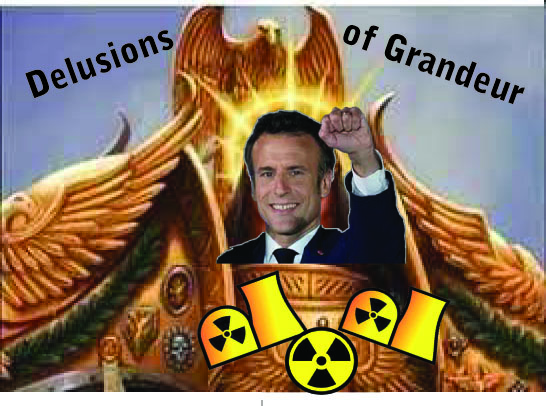
Fifthly, by Europeanizing the French nuclear weapons, the EU legitimizes nuclear weapons. This complicates the fight against proliferation. How sustainable is it to ask Iran not to produce nuclear weapons when the EU itself is setting up a nuclear arsenal?
There are also concerns about whether Europeanization aligns with the Nuclear Non-Proliferation Treaty, particularly if Germany and Poland were to develop their own nuclear capabilities. Both ideas also go against the spirit and the letter of the Treaty on the Prohibition of Nuclear Weapons (2017) that in the meantime has been signed by more or less 100 states.
Sixthly and lastly, it would be much better if the leaders of the EU spend as much time on diplomacy with Russia than in building up European defense. It is high time that the war in Ukraine ends, not only for humanitarian but also economic reasons. A peace agreement ideally includes a beginning of a restructuring of the European collective security architecture that includes both Russia and Ukraine, either in a transformed NATO or an upgraded Organization for Security and Cooperation in Europe (OSCE). If such an agreement is reached, there would be little justification for further fragmenting European defense into over 25 separate, small-scale military forces. Nowadays already the European NATO member states spend $485 billion on defense, much more than Russia ($120 billion). The primary challenge for EU defense today is not the absence of a Eurobomb but the lack of coordination in pooling, sharing, and specialization. Instead of investing in weapons of mass destruction, making EU defense more efficient should be the priority as well as integrating Russia into a larger collective security organization.
Delusional, ruinous and obsolete -the ITER nuclear fusion project
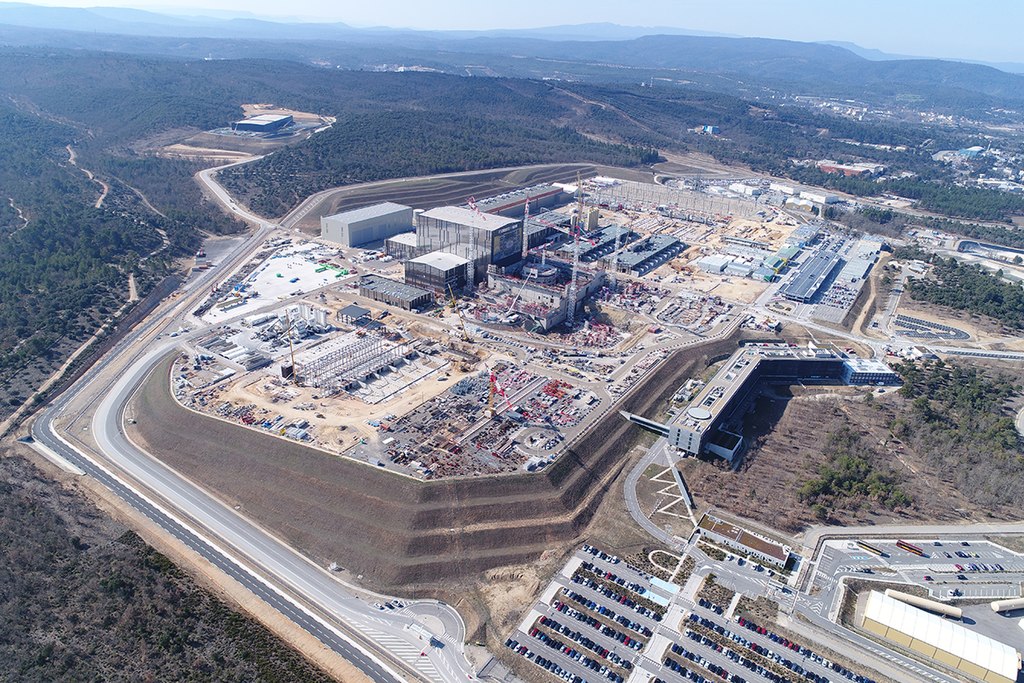
The ITER fusion project is 18 years late and can do nothing about climate change, writes Antoine Calandra
https://beyondnuclearinternational.org/2025/03/16/delirante-ruineuse-et-obsolete/
ITER (International Thermonuclear Experimental Reactor) is an international tokamak nuclear fusion research and engineering project, which has been significantly over budget and schedule, and is currently under construction next to the Cadarache nuclear facility in southern France.
India is one of the seven partner countries in the ITER project, along with the European Union, Russia, Japan, the United States, China, and South Korea. Macron may boast as much as he likes, but ITER is a complete fiasco, a delusional, ruinous, and obsolete project.
On November 14, 2024, the annual public meeting entitled: ITER, 15 years: what assessment? was held in Peyrolles.
I was expecting a big event and to get some recent information on the ITER construction site…But surprise, none of that!
A nondescript multipurpose room, no decor, no documents available, unpleasant white light, around forty people present, only interns (CEA ITER* employees, CLI members, local elected officials, a few union members)
For the event, the tables and chairs were arranged differently, “for a more convivial, cabaret-like atmosphere,” I heard. Oh!?
Pietro Barabaschi, Director General of ITER, was not there.
No agenda to announce the evening’s schedule with the names of the speakers, as in previous occasions. A very meager presentation of the ITER project (5 or 6 images) and that was it. And “time for questions from the audience.” Ah!
In short, the most pathetic ITER public meeting I have ever attended. A public meeting that reflects the ITER assessment.
ITER, what is the outcome?….a disaster!
We already wrote in 2005 with the MEDIANE association: “ITER, a dangerous, ruinous and doomed nuclear project”
The latest important news regarding ITER came on July 3, 2024, during the press conference of Pietro Barabaschi, the current ITER Director General, news that had been expected for a year.
A new calendar: 9 more years late!
The first plasma was originally scheduled for 2016, then postponed to 2025. It has been postponed to 2034. We are 18 years behind schedule.
And with the new calendar, an additional cost of €5 billion!
That’s at least €25 billion of public money to date, a cost multiplied by five. And in reality, more than €40 billion, including the in-kind contributions from the project’s partner countries.
The ITER Director acknowledged that “Fusion cannot come in time to solve the problems our planet faces today, and investments in other technologies, both known and unknown, are absolutely necessary.”
However, the speeches and commitments to get this nuclear fusion project accepted were completely different in 2006 at the time of this charade of public debate.
It was even possible to read that after ITER, DEMO, a pre-industrial demonstrator, was planned to “prove the industrial feasibility of this technology around 2040 and demonstrate that fusion can, by 2050, produce electricity on an industrial scale.”
Once again, the seven partner countries (the European Union, Russia, Japan, the United States, China, India, and South Korea) have agreed to pay more. But the ITER Director is now considering finding private actors to try to fill this financial gap.
Several private companies no longer expect anything from ITER, but they firmly believe in nuclear fusion and promise electricity production in a shorter timeframe.
Some even claim that ITER will be obsolete by the time it is commissioned.
I would add that ITER will probably not work and that there will never be industrial production of electricity through nuclear fusion.
Nuclear fusion will be neither “a revolution for humanity” nor “the energy of the future.”
It is not clean energy, nor even abundant energy. It is dangerous to human health and produces radioactive waste.
Its interest is above all military and to try to save the nuclear industry which has been in a bad state for several years.
ITER will probably never work and will end in total fiasco, worse than SuperPhénix*, which was supposed to be the flagship of the French nuclear industry.
But by squandering all these billions, the ITER monster will have succeeded in blocking any progress towards another energy model and imposing the continuation of the nuclear industry for years to come.
This myth of free and inexhaustible energy that allows for indefinite consumption and waste must be eradicated from people’s minds once and for all. It is also time to put an end to this gigantism and centralization of production in the hands of powerful, commanding states that serve the richest.
The solutions for the future have been known for a long time:
save energy, put an end to waste, develop and improve renewable energies (solar, wind, hydraulic) the only truly clean and future energies.
And not to develop them in an industrial and centralized manner, which is obviously and unfortunately the case.
The industrialization of the world must be fought. A new social project is a prerequisite for any energy project.
The future lies in small production units, local or regional, with technology accessible to the greatest number, low energy consumption, avoiding the cost of distribution.
Nuclear fusion, like fission, is a dangerous, dirty, and expensive energy source. It’s a complex, centralized technology reserved for wealthy countries, leading to proliferation, dependency, injustice, and war.
* CEA: Atomic Energy Commission
* CLI: Local information commission
* SuperPhénix, a former nuclear reactor, commissioned in 1986 and definitively shut down in 1997, is a prototype of a sodium-cooled fast neutron reactor. A dangerous machine that consumed more than 60 billion francs while operating for only thirty months in its twelve years of existence.
Antoine Calandra is a former administrator of the “Sortir du nucléaire” network and a member of the Médiane association. This article was first published in French on Mediapart.
Australia’s Trump cards
by Rex Patrick | Mar 16, 2025, https://michaelwest.com.au/tariffs-australias-trump-cards/

Australia does have Trump cards; North West Cape, Pine Gap, US Marine Rotational forces in Darwin, AUKUS and/or critical minerals that the US needs. Perhaps it’s also time to cancel the traitorous quantum computing development contract given to a US company over Australian companies.
These are things that we can put on the table. But doing that requires a measure of boldness. Our problem is our Prime Minister doesn’t have the ticker. Neither does the opposition leader. They are with Trump internationally as they are with the gas cartel domestically; owned and weak.
Anthony Albanese has it all wrong, writes former senator and submariner Rex Patrick. He’s trying to bribe Trump with sweeteners in response to trade tariffs. Instead, he needs to tell Trump he’s prepared to take things away.
US nuclear deterrent
Deep beneath the Indian Ocean, USS Kentucky, a nuclear-powered Ohio Class Ballistic Missile Submarine (SSBN) ploughs its way through the water. Contained within its 18,750 tonne pressure hull structure are 24 Trident ballistic missiles, each capable of carrying eight nuclear warheads to targets up to 12,000 km away.
The launch of all of USS Kentucky’s missiles would, quite literally, change the world by exacting severe destruction on whole societies.
This ability to inflict damage on an exceptionally large scale is the basis of the SSBN’s deterrent capability. Unlike silo based missiles, which are vulnerable to a first strike, or aircraft delivered nuclear weapons, which can be pre-emptively hit or shot down, SSBNs are essentially invisible. They provide certainty of response.
SSBNs serve as the ultimate nuclear deterrent. They’re extremely important to the US, whose navy possesses 14 of them. At any one time six to eight will be at sea, with four of them always on deterrent patrol. They are spread about the globe giving the US President the ability to quickly deliver return-fire with nuclear warheads at any adversary.
24/7 Operation
The primary performance metric for an SSBN is to be able to deliver its nuclear weapons with reliability, timeliness and accuracy.
The Commanding Officer of USS Kentucky must be able to loiter undetected in a place suited for the launching of weapons, be able to receive an order to launch, have an understanding of the submarine’s exact navigational position to a high degree of accuracy and have the ability to launch the weapons quickly and reliably once that order arrives.
Loitering undetected and being able to receive an order to launch is challenging. When a submarine is near the surface, their hulls can be seen by aircraft, and raised periscopes and communications masts can be seen visually and on radar. Operating a submarine at shallow depth can also result in acoustic counter-detection.
The Commanding Officer of USS Kentucky knows that deep is the place to be.
But being deep frustrates a submarine’s ability to receive communications, particularly an ‘emergency action message’.
And that’s were Very Low Frequency (VLF) communications stations come into play. In conjunction with a submarine’s buoyant wire antenna – a long wire that sits just below the sea surface – they can receive a launch command from the President.
The US has a network of these VLF communication stations around the world including in Maine, Washington state and North West Cape, Australia.
North West Cape
The VLF Communication Facility at North West Cape (NAVCOMMSTA Harold E Holt) has been in operation since 1967. Born of secrecy, it was at first exclusively US operated until 1974 when the facility became joint and started communicating with Australian submarines. In 1991 it was agreed that Australia would take full command in 1992 and US Naval personnel subsequently left in 1993.
The facility’s deterrence support role now rests on a 2008 treaty which, ratified in 2011, is formally titled the “Agreement between the Government of Australia and the Government of the United States of America relating to the Operation of and Access to an Australian Naval Communication Station at North West Cape in Western Australia”.
The station’s antenna is 360 meters high, with a number of supporting towers in a hexagon shape connected to it by wires. Considered to be the most powerful transmitter in the southern hemisphere, it transmits on 19.8 kHz at about 1 megawatt.
The station enables emergency action messages to be relayed to submerged SSBNs, like USS Kentucky, when operating in the Indian and Western Pacific oceans.
If the facility was taken out by a first strike nuclear attack, the US Air Force can temporarily deploy Hercules ‘TACAMO’ aircraft, with a long VLF wire they deploy while airborne. It’s a back-up measure with much lower transmission power capabilities.
A bedrock of certainty
After US steel and aluminium tariffs were put into play, the Australian Financial Review ran with a headline “How Australia was blindsided on the US tariffs”. The article opened with, “Australia pulled out all stops to avoid Donald Trump’s duties on steel and aluminium, but it’s impossible to negotiate with someone who doesn’t want anything”.
But the US does want something.
A fact not so well appreciated with respect to nuclear deterrence is it must be seen to be a robust and continuous capability. Onlookers must see a 24/7 capability including deployable submarines manned by well-trained crews, proven and reliable missile systems, an organised strategic command, a continuous communication system that reliably links that strategic command to the submarines with appropriate redundant communication pathways, training facilities and maintenance support.
Potential adversaries must know that they could be struck by an SSBN that could be lurking anywhere in the world’s major oceans.
Effective nuclear deterrence must be built on a bedrock of operational certainty.
Remove the transmitter keys
North West Cape forms part of that certainty.
Australia has the keys to take some certainty away. Without our cooperation the US can’t operate a certain global deterrent capability. Turning off transmissions at North West Cape reduces the effectiveness of the US nuclear deterrence while eliminating one Australian nuclear target
The North West Cape Treaty provides leverage. While the agreement has another decade to run, Article 12 provides that “either Government may terminate this Agreement upon one year’s written notice to the other Government.”
It’s open to Australia to signal or give actual notice of termination. That would focus up policy makers in Washington.
Would we do that to a mate? No, but the US is showing they are not a mate. They are not showing us the loyalty we have shown them. Other actions; abandoning Ukraine, threatening Greenland and Panama and a not so subtle push to annex Canada have also shown they are an unreliable ally who doesn’t share our values.
Trump cards
In negotiating with President Zelensky over the war in Ukraine, President Trump told him in no uncertain terms. “We’re going to feel very good and very strong. You’re, right now, not in a very good position. You’ve allowed yourself to be in a very bad position. You don’t have the cards right now with us.”
But Australia does have Trump cards; North West Cape, Pine Gap, US Marine Rotational forces in Darwin, AUKUS and/or critical minerals that the US needs. Perhaps it’s also time to cancel the traitorous quantum computing development contract given to a US company over Australian companies.
These are things that we can put on the table. But doing that requires a measure of boldness. Our problem is our Prime Minister doesn’t have the ticker. Neither does the opposition leader. They are with Trump internationally as they are with the gas cartel domestically; owned and weak.
Things have changed
Alliances are means to ends, not an end in themselves; and, as pointed out above, things have changed. We can pretend everything is okay, but that doesn’t make it so.
But the bureaucracy is unlikely to advise the Government of alternatives.
Our uniformed leaders are locked into AUKUS, a program that gives them relevance at the big table; something they wouldn’t otherwise have with the depleted Navy they’ve built out of their procurement incompetence. They’re clinging to that relevance, despite all signs showing the program is running aground.
Our spooks are in the same place. In response to calls to put Pine Gap on the table, former Home Affairs Secretary Mike Pezzullo (sacked for failing to safeguard sensitive government information) spoke out, putting the facility ahead of trade interests and Aussie jobs.
The bulk of the intelligence from Pine Gap is very usable for the US and rather less so for Australia. Senior spooks just want to maintain their own relevance in the Five Eyes club; but it’s a mistake to conflate their interest with our national interest.
We should be prepared to play our Trump cards and we should be prepared to face the national security consequences.
If that means an Australia that‘s more independent and more self-reliant, that would be a very good thing. If there’s a shock to the system, then all well and good, because in the changing world we find ourselves in, it might be the only thing that wakes the Canberra bubble from its stupor and pushes us to actually be prepared.
In these uncertain times, there are no hands more trustworthy than our own.
Rex Patrick is a former Senator for South Australia and earlier a submariner in the armed forces. Best known as an anti-corruption and transparency crusader, Rex is running for the Senate on the Lambie Network ticket next year – www.transparencywarrior.com.au.
Putin Signals He’s Open to Ceasefire as Witkoff Arrives for Talks.
An aide to Putin said the proposal would only help Ukraine regroup and that it would need to be adjusted to meet Moscow’s position
by Dave DeCamp March 13, 2025, https://news.antiwar.com/2025/03/13/us-envoy-arrives-in-russia-to-discuss-30-day-ceasefire-proposal-with-putin/
Russian President Vladimir Putin has signaled that he’s open to a ceasefire in Ukraine but that he has “questions” about the 30-day US-Ukraine proposal that need to be discussed.
“The idea itself is the right one, and we definitely support it,” Putin said, according to The New York Times. “But there are questions that we need to discuss, and I think that we need to talk them through with our American colleagues and partners.”
The Russian leader listed potential conditions for a 30-day truce, including a guarantee that Ukraine wouldn’t be supplied with more weapons. “We also want guarantees that during the 30-day ceasefire, Ukraine will not conduct mobilization, will not train soldiers, and will not receive weapons,” he said, according to RT.
Putin also questioned who would monitor the ceasefire. “Who will determine where and who has violated a potential ceasefire agreement along a 2,000-kilometer line? Who will attribute blame for any violations? These are all questions that require thorough examination from both sides,” he said.
The Russian leader said any long-term peace deal needs to address the “root causes” of the war. He made the comments as US envoy Steve Witkoff arrived in Russia to discuss the proposal. Yuri Ushakov, a Kremlin official, said Witkoff would be holding a closed-door meeting with Putin.
Ushakov also said the US-Ukraine proposal would only give Ukraine a chance to regroup, and it would need to be adjusted to meet Moscow’s interests.
“As for the 30-day temporary ceasefire, what is it about? There is nothing in it for us. It will only provide the Ukrainians with the opportunity to regroup and gain strength to continue doing what they are doing,” he said, according to Russia’s TASS news agency.
“These are some hasty actions that do not benefit a long-term settlement … We will need to work on it, to think it over so that it reflects our position, too. It reflects only Ukraine’s stance at this point,” he added.
Ushakov said that Russia wanted a long-term peace deal and that the “official” Russian position on the US-Ukraine proposal would be formulated by Putin.
Russian Foreign Minister Sergey Lavrov made similar comments opposing the idea of a temporary ceasefire, pointing to the Minsk Accords, which were first reached in 2014 for a truce in Ukraine’s eastern Donbas region. Lavrov also mentioned the “Istanbul agreement,” referring to a peace deal that was on the table in March and April 2022, which was discouraged by the US and its allies.
“I’m talking about the Minsk Accords, the deal that was discarded after the 2014 coup, and the Istanbul agreements. All of those included a ceasefire. And every time, it turned out that they had lied to us. The Ukrainians lied with the support of their European partners,” Lavrov said.
A joint statement between the US and Ukraine that was released after talks in Saudi Arabia on Tuesday said that Ukraine had “expressed readiness to accept the US proposal to enact an immediate, interim 30-day ceasefire, which can be extended by mutual agreement of the parties, and which is subject to acceptance and concurrent implementation by the Russian Federation.”
The statement also said that the US had resumed military aid and intelligence sharing for Ukraine, which was briefly paused. US Secretary of State Marco Rubio has said that if Russia doesn’t accept the 30-day proposal, the US would then know who the “impediment” to peace is, signaling he wants the proxy war will continue as usual if a deal isn’t reached.
China, Russia back Iran as Trump presses Tehran for nuclear talks

By Ryan Woo, Xiuhao Chen and Laurie Chen, March 14, 2025,
- Summary
- China, Russia, Iran say talks should be based on mutual respect
- They say ‘unlawful’ unilateral sanctions should be lifted
- China, Russia urge respect for Iran’s right to peaceful uses of nuclear energy
BEIJING, March 14 (Reuters) – China and Russia stood by Iran on Friday after the United States demanded nuclear talks with Tehran, with senior Chinese and Russian diplomats saying dialogue should only resume based on “mutual respect” and all sanctions ought to be lifted.
In a joint statement issued after talks with Iran in Beijing, China and Russia also said they welcomed Iran’s reiteration that its nuclear programme was exclusively for peaceful purposes, and that Tehran’s right to peaceful uses of nuclear energy should be “fully” respected………………………………………………… https://www.reuters.com/world/asia-pacific/china-iran-russia-kick-off-talks-beijing-over-irans-nuclear-issues-2025-03-14/
Royal Navy: Powerful new nuclear submarines being built costing £41bn – when will they enter the fleet?

Ben Obese-Jecty MP, Conservative MP for
Huntingdon, enquired about the construction in a parliamentary written
question to the Ministry of Defence (MoD). Minister of defence procurement,
Maria Eagle, said: “The programme remains on track to manufacture four
Dreadnought Class submarines within the original cost estimate of £41bn,
consisting of £31bn and a contingency of £10bn. The First of Class, HMS
Dreadnought, will enter service in the early 2030s.”
Portsmouth News 14th March 2025.
https://www.portsmouth.co.uk/news/defence/royal-navy-new-nuclear-submarines-when-5033798
An Unreliable America Means More Countries Want the Bomb
By Debak Das, an assistant professor at the Josef Korbel School of International Studies at the University of Denver, and Rachel A. Epstein, a professor of international relations at the Josef Korbel School of International Studies at the University of Denver.
Without credible U.S. security guarantees, nuclear proliferation is likely to increase
rapidly across Europe and Asia. U.S. President Donald Trump’s recent
foreign-policy moves have alienated the country’s traditional allies in
Europe while stirring glee in Moscow. While it’s a catastrophic
development for Ukrainian security and democracy, this paradigmatic shift
portends much larger risks for global security.
The most pressing is the
threat of rampant nuclear proliferation that the Trump administration’s
actions will elicit. While on the surface it might seem as though a warmer
relationship between two of the world’s largest nuclear powers could
reduce the risk of nuclear war, the opposite is true.
We are on the precipice of a global turn toward nuclear instability, in which many
countries will be newly incentivized to build their own arsenals,
increasing the risk of nuclear use, terrorist subversion, and accidental
launch. Countries like South Korea, Japan, Iran, and Saudi Arabia are all
so-called nuclear latent states that could potentially build nuclear
weapons quickly—as are Germany, Belgium, Italy,
Foreign Policy 14th March 2025, https://foreignpolicy.com/2025/03/14/trump-nuclear-weapons-proliferation-nato-security-guarantees-korea-poland-germany-japan/
The Volunteer “Data Hoarders” Resisting Trump’s Purge
Can librarians and guerrilla archivists save the country’s files from DOGE?
New Yorker, By Julian Lucas, 15 Mar 25
The deletions began shortly after Donald Trump took office. C.D.C. web pages on vaccines, H.I.V. prevention, and reproductive health went missing. Findings on bird-flu transmission vanished minutes after they appeared. The Census Bureau’s public repository went offline, then returned without certain directories of geographic information. The Department of Justice expunged the January 6th insurrection from its website, and whitehouse.gov took down an explainer page about the Constitution. On February 7th, Trump sacked the head of the National Archives and Records Administration, the agency that maintains the official texts of the nation’s laws, and whose motto is “the written word endures.”
More than a hundred and ten thousand government pages have gone dark in a purge that one scientist likened to a “digital book burning,” and which has proved as frightening in its imprecision as in its malice……………………………………………………………………………………. (Subscribers only)
https://www.newyorker.com/news/the-lede/the-data-hoarders-resisting-trumps-purge?utm_source=nl&utm_brand=tny&utm_mailing=TNY_Science_031525&utm_campaign=aud-dev&utm_medium=email&bxid=5be9d23d24c17c6adf3bf435&cndid=30183386&hasha=432fc0d0ad6543e820e2dfcd39f76c35&hashb=e1c24f6a6459c7d1d625eb2ea55d9dfbbb4633bf&hashc=ac5a1f5526e7292c73f49dfa8fb6d5d0cb87d8773cec3b9b03d38a4ce482d7c8&esrc=subscribe-page&mbid=CRMNYR012019&utm_term=TNY_Science_Tech
How multi-billion nuclear weapons facility aims to overcome challenge of limited supply chain
New Civil Engineer 14th March 2025, By Tom Pashby
The UK’s nuclear warhead manufacturing organisation is facing recruitment challenges as it attempts to attract civil engineering firms to work on its multi-billion pound Future Materials Campus (FMC) project.
What is AWE’s FMC?
AWE (the Atomic Weapons Establishment) is seeking construction and engineering partners to build a new manufacturing facility at its AWE Aldermaston site in Berkshire for its next generation ‘Astraea’ nuclear warhead.
AWE said: “[The FMC] is part of a wider, multi-year multi-billion-pound portfolio of infrastructure investment that will support us in our overall purpose to protect the UK through nuclear science and technology and enable nuclear science for generations to come.”
AWE recognises supply chain capacity is ‘one of the biggest challenges’
NCE spoke with AWE to learn about what the organisation is doing to address supply chain constraints as the civil nuclear sector – and infrastructure more broadly – gears up for expected increase in investment and demand.
“One of the biggest challenges we anticipate is ensuring sufficient supply chain capacity and capability to deliver a programme of this scale and complexity,” AWE said.
……………………………………….NCE recently spoke with University of Sussex principal research fellow Phil Johnstone, who said that the demand for more skills capacity in the wider UK nuclear sector is push factor for the demand for the FMC, in addition to its role in providing warheads. This aligns with AWE’s assertion that its FMC will “enable nuclear science for generations to come”……………………………………………………………………………………..
Civil engineering trade representative says all projects facing skills challenges………………………………………………………………………………. https://www.newcivilengineer.com/latest/how-multi-billion-nuclear-weapons-facility-aims-to-overcome-challenge-of-limited-supply-chain-14-03-2025/
1 This Month

of the week – Shut Down Drone Warfare!


Tell the Ukrainian Government to Drop Prosecution of Peace Activist Yurii Sheliazhenko

Petition to revoke the licensing of the Near Surface Nuclear Disposal Facility (NSDF) at Chalk River. https://www.ourcommons.ca/petitions/en/Petition/Details?Petition=e-7247
To see nuclear-related stories in greater depth and intensity – go to https://nuclearinformation.wordpress.com
-
Archives
- April 2026 (68)
- March 2026 (251)
- February 2026 (268)
- January 2026 (308)
- December 2025 (358)
- November 2025 (359)
- October 2025 (376)
- September 2025 (257)
- August 2025 (319)
- July 2025 (230)
- June 2025 (348)
- May 2025 (261)
-
Categories
- 1
- 1 NUCLEAR ISSUES
- business and costs
- climate change
- culture and arts
- ENERGY
- environment
- health
- history
- indigenous issues
- Legal
- marketing of nuclear
- media
- opposition to nuclear
- PERSONAL STORIES
- politics
- politics international
- Religion and ethics
- safety
- secrets,lies and civil liberties
- spinbuster
- technology
- Uranium
- wastes
- weapons and war
- Women
- 2 WORLD
- ACTION
- AFRICA
- Atrocities
- AUSTRALIA
- Christina's notes
- Christina's themes
- culture and arts
- Events
- Fuk 2022
- Fuk 2023
- Fukushima 2017
- Fukushima 2018
- fukushima 2019
- Fukushima 2020
- Fukushima 2021
- general
- global warming
- Humour (God we need it)
- Nuclear
- RARE EARTHS
- Reference
- resources – print
- Resources -audiovicual
- Weekly Newsletter
- World
- World Nuclear
- YouTube
-
RSS
Entries RSS
Comments RSS
 nuclear-news