The forever wars may be over, but Trump is no peacemaker
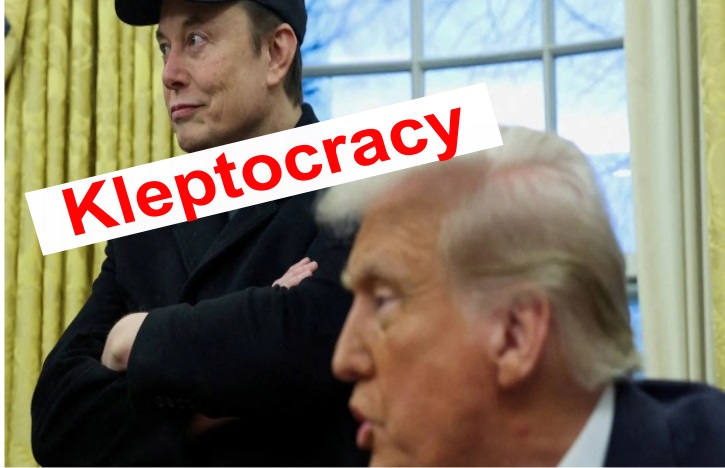
The reassuring, knee-jerk response is to take one side or another. Either Trump is a mould-breaker, remaking a dysfunctional world order. Or he is a fascist-in-the-making, who will hasten the collapse of the established world order, bringing it crashing down on our heads.
The truth is he is both.
The far-right, most especially Trump, is riding that wave of disillusionment. And its success stems precisely from this rule-breaking, by presenting itself as a new broom sweeping away the old guard of corporate war-makers.
MIDDLE EAST EYE, Jonathan Cook, 14 March 2025
The new guard of kleptocrats are seeking quick deals on Gaza and Ukraine not because they want peace but because they have found a better way to make themselves even richer.
nyone trying to make sense of the Trump administration’s policy towards Gaza should have a thumping headache by now.
Initially, US President Donald Trump called for the mass expulsion of Palestinians from the tiny territory wrecked by Israel over the past year and a half, so that he could build the “Riviera of the Middle East” on the crushed bodies of Gaza’s children.
He followed up last week with an explicitly genocidal threat addressed to “the people of Gaza” – all two million-plus of them. They will be “DEAD” if the Israeli hostages held by Hamas are not quickly released – a decision over which Gaza’s population has precisely no control.
To make this extermination threat more credible, his administration has expedited the transfer of an extra $4bn worth of US weapons to Israel, bypassing Congressional approval.
Those arms include more of the 2,000lb bombs sent by the Biden administration, which turned Gaza into a “demolition site“, as Trump himself called it.
The White House also nodded through Israel’s reimposition of a blockade that has once again choked off food, water and fuel to the enclave – further evidence of Israel’s genocidal intent.
But while all this was going on, Trump also dispatched to the region a special envoy, Adam Boehler, to negotiate the release of the few dozen Israeli hostages still held in Gaza.
He was given permission to break with 30 years of US foreign policy and meet directly with Hamas, long designated a terrorist organisation by Washington.
‘Pretty nice guys’
The meeting reportedly took place without Israel’s knowledge.
One Israeli official observed: “You can’t announce that this organisation [Hamas] needs to be eliminated and destroyed, and give Israel full backing to do it, and at the same time conduct secret and intimate contacts with the group.”……………………………………………………………………
…………………..the White House hoped to “jump-start” talks and the US was not “an agent of Israel” – implicitly acknowledging that, for many decades, it has very much looked like one.
Trump indicated a change of heart himself on Wednesday, telling reporters at the White House: “Nobody will expel the Palestinians.”
Sword of retribution
Meanwhile, apparently confounding Boehler’s claim that the US is able to make its own decisions about the Middle East, Trump was reported on Thursday to have removed him from dealing with the hostages issue following Israeli objections. Meanwhile, Trump noisily shredded First Amendment protections on political speech, specifically in relation to Israel.
He signed an executive order empowering US authorities to arrest and deport visa holders protesting Israel’s year-and-a-half-long slaughter in Gaza – or what the world’s highest court is investigating as a “plausible” genocide.
That quickly resulted in the arrest of Mahmoud Khalil, a leader of last spring’s student protests at New York’s Columbia University – one of the most high-profile of dozens of protracted demonstrations on US campuses last year, which were often met with police violence.
The Department of Homeland Security accused Khalil of “activities” – namely, campus protests – supposedly “aligned to Hamas”. These demonstrations, it alleged, threatened “US national security”.
“This is the first arrest of many to come,” Trump wrote on social media, declaring that his administration would be coming after anyone “engaged in pro-terrorist, anti-Semitic, anti-American activity”. Axios reported last week that Secretary of State Marco Rubio planned to use AI to search through foreign students’ social media accounts for signs of “terrorist” sympathies.
These developments formalise Washington’s working assumption that any opposition to Israel’s killing and maiming of tens of thousands of Palestinian children should be equated with terrorism – a view increasingly shared, it seems, by UK and European authorities.
In concert, the White House announced that it was cancelling some $400m in federal grants and contracts to Columbia University over its “continued inaction in the face of persistent harassment of Jewish students”.
Confusingly, the university administration was among the most hardline in calling in police to crush the protests against the genocide. But the financial cuts had the intended effect, with Columbia announcing on Thursday it would inflict stringent punishments, including expulsions and degree revocations, on students and graduates who had taken part in a campus sit-in last year.
Some 60 other institutions have reportedly received letters warning that they are in danger of funding cuts if they do not “protect Jewish students” – a reference to those who cheerlead Israel’s war crimes.
That will come at a heavy price for other students, including many Jewish students, who have been exercising their constitutional right to criticise Israel’s crimes.
A sword of retribution now hangs over every single publicly funded centre of higher learning in the US: crush any sign of opposition to Israel’s destruction of Gaza, or face dire financial consequences.
‘Baffling rhetoric’
Does any of this amount to a clear strategy? Does it make any sense?
These mixed messages fit a pattern with the Trump administration. Its wider strategy is, as Francesca Albanese, the United Nations special rapporteur on the occupied territories, calls it: psychological overwhelming.
“Hitting us every day with XXL [extra-extra large] doses of baffling rhetoric and erratic policies serves to ‘control the script’, distracting and disorienting us, normalising the absurd, all while disrupting global stability (and consolidating US control).”
The White House is doing something similar over Ukraine……………….
The Trump administration’s goal is to normalise its inconsistencies, hypocrisies, lies and misdirections so they become entirely unremarkable.
Opposition to its will – a will that can change from day to day, or week to week – will be treated as treasonous. The only safe response in such circumstances is acquiescence, passivity and silence.
In the tumultuous political landscape Trump has created, the one constant – our North Star – is the western media’s uncritical cheerleading of the West’s war industries.
Consider the Biden administration. The media’s harshest condemnation came not over the destruction Washington wrought on Afghanistan during its 20-year occupation, but for ending the war – a war that had left the country in ruins and the official enemy, the Taliban, stronger than ever.
Contrast that with the media’s resolutely muted response to Biden’s 15 months of arming Israel’s genocide in Gaza. In doing so, they eagerly cast aside their supposed humanitarian concerns, including their ritualistic nods to the post-Second World War global order and international law.
Similarly, the media have been openly critical of Trump’s overtures to Russia over Ukraine, siding with European leaders who insist the war must continue to the bitter end – regardless of how much higher the death toll of Ukrainians and Russians climbs as a result.
And predictably, the media have gone out of their way to accommodate Trump’s Israel-supporting, openly genocidal rhetoric and actions towards Gaza.
It was astonishing to watch outlets that regularly portray Trump as a threat to democracy contort themselves to whitewash his explicit call to exterminate “the people of Gaza” should the hostages not be immediately released. Instead, they mendaciously suggested he was referring only to Hamas leadership.
It is not just Trump and his team who are well practised in the dark arts of deception.
Illegitimacy trap
While the Trump administration may be playing fast and loose with Washington’s political culture, it is largely adhering to the West’s traditional script on Israel and Palestine.
Witkoff and Boehler are deploying a well-worn strategy, binding the Palestinians into what could be called an illegitimacy trap. Damned if you do; damned if you don’t.
Whatever Palestinians choose – however much they are dispossessed and brutalised – it is they, and anyone who supports them, who are cast as the villains. The criminals. The oppressors. The Jew-haters. The terrorists……………………………………..
until now, Hamas has always been excluded from negotiations. The talks that have taken place – over its head – have operated on the assumption that Hamas must be disarmed before Israel is expected to make any concessions.
Hamas must relinquish its weapons voluntarily – against an opponent armed to the teeth, whose bad faith in negotiations is legendary – or it will be forcibly disarmed by Israel or its rival, Fatah.
In other words, peace with Israel is premised on civil war for Palestinians.
That appears to be the course the Trump administration will pursue. For now, it is demanding that Hamas “demilitarise” voluntarily. When that fails, Hamas will find itself back at square one.
Endless accommodation
Faced with Trump’s plan to ethnically cleanse the Palestinians from Gaza, Hamas has precisely no incentive to disarm.
In fact, it has a further disincentive. Fatah is all too visibly caught in its own, even more fatal, illegitimacy trap.
………………………………………………Now Israel is gearing up to formally annex most of the West Bank, backed by the Trump administration. Behind the scenes, the White House is finagling support from the Gulf states.
Fatah cannot extricate itself any more than Hamas from the illegitimacy trap set for it by Washington and Europe.
Clinging to the old order
Paradoxically, critics in Washington – backed by the media and European elites – dismiss Trump’s moves on Ukraine as appeasement of a supposedly resurgent Russian imperialism, rather than as peacemaking.
These same critics are equally discomfited by the Trump administration’s meetings with Hamas.
All of this breaks with the decades-old Washington consensus, which dictates who are the good guys and who are the bad guys, who are the law enforcers and who are the terrorists.
In typical fashion, Trump is disrupting these former certainties.
The reassuring, knee-jerk response is to take one side or another. Either Trump is a mould-breaker, remaking a dysfunctional world order. Or he is a fascist-in-the-making, who will hasten the collapse of the established world order, bringing it crashing down on our heads.
The truth is he is both.
……………………………………………………This new consistency replaces an older one, in which Washington’s elite perpetuated forever wars against painted devils that justified the siphoning of national wealth into the coffers of the war industries on which that elite’s wealth depended.
The pretexts for those forever wars had become so threadbare, and so destabilising in a world of ever-depleting resources, that the elites behind those wars were utterly discredited.
The far-right, most especially Trump, is riding that wave of disillusionment. And its success stems precisely from this rule-breaking, by presenting itself as a new broom sweeping away the old guard of corporate war-makers.
As the Bidens, Starmers, Macrons, and Von der Leyens sink deeper into the mire, the more desperately they cling to a crumbling system. Trump’s disruption works against them.
Feathering their nests
But the new guard is no more invested in peace than the old, as Gaza makes clear. It is simply looking for new ways to do business – new deals that still siphon national wealth away from ordinary people and into the pockets of billionaires. ………………………………………………………………..
The new guard of kleptocrats is less interested in forever wars – not because they have any love for peace, but because they believe they’ve found a better way to make themselves even richer.
This newfound openness to “doing things differently” has an appeal, especially after decades of the same cynical elites waging the same cynical wars.
But make no mistake: the fundamentals remain unchanged. The rich are still looking out for themselves. They are still feathering their own nests, not yours. They still see the world as their plaything, where lesser humans – you and me – are expendable.
If he can, Trump will end the war in Ukraine by cutting a money-making deal, over Kyiv’s head, with Russia.
If he can, Trump will end the slaughter in Gaza by striking a deal with Israel and the Gulf states, over the heads of Hamas and Fatah, to ethnically cleanse the Palestinians from their homeland.
And if he can get away with it, Trump is ready for something else, too. He’s prepared to break heads at home to ensure his critics can’t stop him and his billionaire pals from getting their way. https://www.middleeasteye.net/opinion/us-forever-wars-may-be-over-trump-no-peacemaker
Dialogue only viable option to solve Iranian nuclear issue

Diplomacy must remain the primary tool for resolving disputes and crises, and not be used only as a last resort after aggressive policies have failed
Xinhua, Editor: huaxia, 2025-03-15 more https://english.news.cn/20250315/0e246e2703d64d58a08113de887e3932/c.html
The Iranian nuclear issue is not just about Iran — it is a test of whether global governance will be defined by cooperation or coercion.
BEIJING, March 15 (Xinhua) — In a world fraught with geopolitical tensions, the Iranian nuclear issue is a critical test of the international community’s commitment to peace, diplomacy and multilateralism.
Whether diplomacy prevails or “maximum pressure” tactics take center stage will shape the region’s stability and set a precedent for global non-proliferation efforts.
The joint statement issued by China, Russia and Iran on Friday after a trilateral meeting in Beijing reaffirms a shared conviction: political and diplomatic engagement and dialogue are not merely preferable but the only viable and practical option to address this complex challenge.
At the heart of the discussions was a shared commitment to rejecting unilateral sanctions and coercive measures. Diplomacy must remain the primary tool for resolving disputes and crises, and not be used only as a last resort after aggressive policies have failed.
In an increasingly complex and fragile international environment, relying on sanctions and military posturing is not only counterproductive but also dangerously short-sighted, promoting instability rather than fostering meaningful engagement.
A sustainable resolution requires a holistic approach, one that balances nuclear non-proliferation with the legitimate right to peaceful nuclear energy. While Iran must continue to uphold its commitment not to develop nuclear weapons, all parties must also fully respect its right to civilian nuclear programs, as recognized under international law.
The 2015 Joint Comprehensive Plan of Action (JCPOA) once demonstrated the power of dialogue, proving that even the most entrenched disputes can yield to diplomacy when all parties engage in good faith.
However, the unilateral withdrawal of the United States from the agreement and its subsequent “maximum pressure” campaign have left the JCPOA in jeopardy.
Xinhua Commentary: Dialogue only viable option to solve Iranian nuclear issue
Source: Xinhua
Editor: huaxia
2025-03-15 09:43:15
The Iranian nuclear issue is not just about Iran — it is a test of whether global governance will be defined by cooperation or coercion.
BEIJING, March 15 (Xinhua) — In a world fraught with geopolitical tensions, the Iranian nuclear issue is a critical test of the international community’s commitment to peace, diplomacy and multilateralism.
Whether diplomacy prevails or “maximum pressure” tactics take center stage will shape the region’s stability and set a precedent for global non-proliferation efforts.
The joint statement issued by China, Russia and Iran on Friday after a trilateral meeting in Beijing reaffirms a shared conviction: political and diplomatic engagement and dialogue are not merely preferable but the only viable and practical option to address this complex challenge.
At the heart of the discussions was a shared commitment to rejecting unilateral sanctions and coercive measures. Diplomacy must remain the primary tool for resolving disputes and crises, and not be used only as a last resort after aggressive policies have failed.
In an increasingly complex and fragile international environment, relying on sanctions and military posturing is not only counterproductive but also dangerously short-sighted, promoting instability rather than fostering meaningful engagement.
A sustainable resolution requires a holistic approach, one that balances nuclear non-proliferation with the legitimate right to peaceful nuclear energy. While Iran must continue to uphold its commitment not to develop nuclear weapons, all parties must also fully respect its right to civilian nuclear programs, as recognized under international law.
The 2015 Joint Comprehensive Plan of Action (JCPOA) once demonstrated the power of dialogue, proving that even the most entrenched disputes can yield to diplomacy when all parties engage in good faith.
However, the unilateral withdrawal of the United States from the agreement and its subsequent “maximum pressure” campaign have left the JCPOA in jeopardy.
Against this backdrop, China’s call to uphold the JCPOA as the foundation for renewed consensus is both practical and visionary. The agreement remains a rare diplomatic achievement that balances Iran’s right to peaceful nuclear energy with non-proliferation imperatives — a balance that must guide future diplomatic efforts.
By advocating for a process rooted in respect rather than ultimatums, China seeks to bridge divides and restore the JCPOA’s original spirit.
The trilateral meeting came after six of the United Nations (UN) Security Council’s 15 members — the United States, France, Greece, Panama, South Korea and Britain — met behind closed doors on the Iranian nuclear issue.
This exclusive gathering raises concerns about the politicization of the issue. What is needed now is dialogue and cooperation, rather than an imposed intervention by the Security Council.
Under the current circumstances, a hasty intervention by the Security Council will not help build trust or bridge differences. Meanwhile, triggering a snap-back of sanctions would undo years of diplomatic efforts.
A step-by-step and reciprocal approach is urgently needed. Instead of escalating tensions through unilateral measures, major countries should focus on restoring trust and ensuring compliance through engagement.
The Iranian nuclear issue is not just about Iran — it is a test of whether global governance will be defined by cooperation or coercion.
Europe going nuclear would be a catastrophic mistake
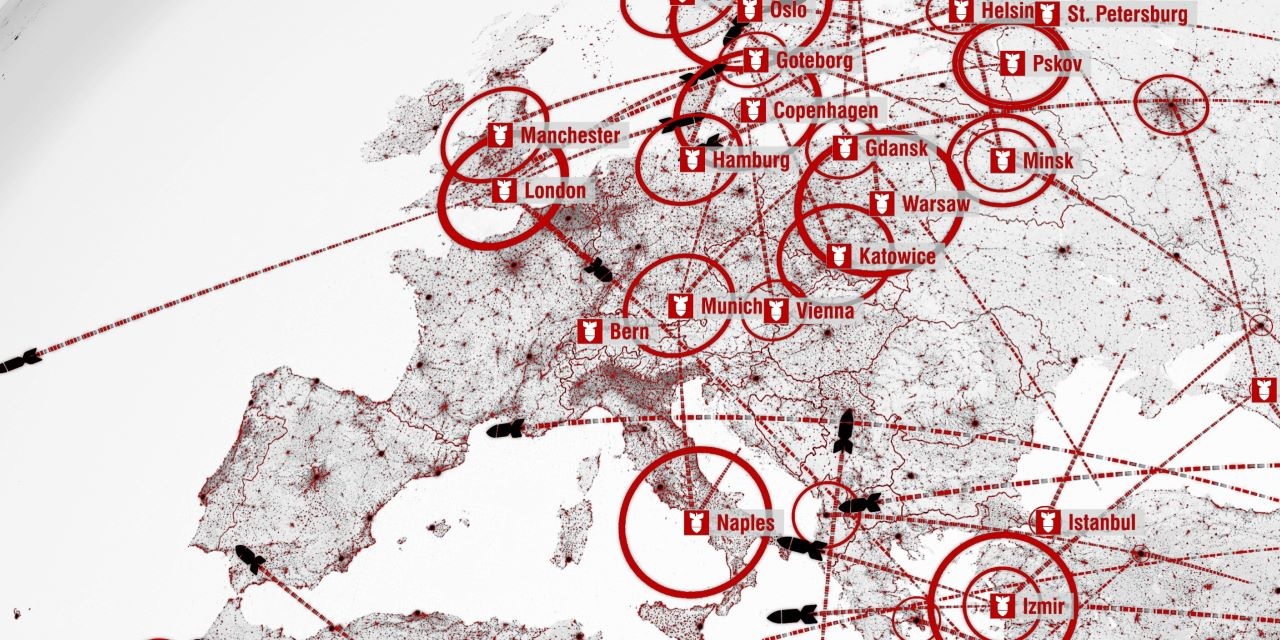
Proposals for nuclear sharing as a form of deterrence risk bringing more insecurity to Europe.
Olamide Samuel, International security expert, 11 Mar 25 https://www.aljazeera.com/opinions/2025/3/11/europe-going-nuclear-would-be-a-catastrophic-mistake
The second administration of US President Donald Trump has brought about tectonic shifts in the European security calculus. Growing anxieties about American retrenchment and the collapse of post-World War II security arrangements have sent European leaders scrambling to put forward alternatives.
Ahead of the German elections last month, Friedrich Merz, the head of the Christian Democratic Union, who was already expected to become the next German chancellor, opined: “We need to have discussions with both the British and the French – the two European nuclear powers – about whether nuclear sharing, or at least nuclear security from the UK and France, could also apply to us”.
Last week, French President Emmanuel Macron said that in response to Merz, he has decided to “open the strategic debate on the protection of our allies on the European continent through our [nuclear] deterrence”.
The proposal for some form of European nuclear sharing arrangement with France and the United Kingdom to protect against threats from Moscow is not new. Versions of it have been floated around for decades.
But today, resurfacing this proposal is not just a geopolitical miscalculation; it is a strategic dead end. It reflects a misreading of both the nuclear balance of power and the existential risks of fragmenting Europe’s security architecture further. Rather than bolstering deterrence, this gambit risks accelerating the very instability it seeks to avert.
Amid the growing unpredictability of United States-Russia relations under the second Trump administration, Europe must pivot from nuclear escapism to a bold agenda of diplomatic engagement on nuclear disarmament.
The fantasy of European nuclear sharing
The proposal for European nuclear sharing founders on arithmetic and strategic reality. Russia’s nuclear arsenal boasts 5,580 warheads, including hypersonic Avangard glide vehicles and Sarmat intercontinental ballistic missiles (ICBMs). This dwarfs the combined Anglo-French stockpile of 515 warheads.
This asymmetry isn’t merely quantitative; it is also doctrinal. Moscow’s “escalate to de-escalate” strategy represents a calculated approach to conflict escalation designed to coerce adversaries into concessions. It is a strategy the British and French nuclear arsenals, optimised for minimal deterrence, cannot counter.
Data on defence spending reveals a deeper flaw: Europeans do not have the funds or the technological capabilities to carry it out while executing their ambitious rearmament plans.
Germany’s 90.6-billion euro ($98bn) military budget remains crippled by inefficiencies, with only 50 percent of army equipment meeting NATO readiness standards. Meanwhile, France and the UK lack the conventional force multipliers – global surveillance networks, intelligence capabilities, or even complete nuclear triads – that underpin US extended deterrence. Even if every euro cent of the European Union’s recently announced 800 billion-euro ($867 billion) defence boost were spent on nuclear weapons programmes, cold-starting the sort of production complexes required for a credible deterrent would still take decades.
Attempting to replicate NATO’s nuclear-coalition model at a European level ignores six decades of integrated command structures and fails to address hybrid threats now defining modern conflict.
What is more, replacing one dependency with another solves nothing. Proponents claim nuclear sharing offers protection, but the reality is that it can lead to strategic subjugation.
Neither France nor the UK is likely to give up control over its nuclear arsenals and transfer it to the EU. That means that a nuclear-sharing agreement would reduce Germany and other European countries participating in the arrangement to Franco-British warhead warehouses with no real agency. This Potemkin deterrence—all ceremony, no substance—would only further irritate Washington.
Trump has already shown that he has no qualms about abandoning allies if he sees no benefit for the US strategic interest. His recent moves to stop intelligence sharing and military aid for Ukraine and his conditioning mutual defence on military spending have exposed NATO’s fraying norms – the alliance is witnessing a collapse of shared purpose.
As experts note, Trump’s “MAGA Carta” foreign policy explicitly rejects strategic altruism. A European nuclear caucus would signal panic, validating Trump’s transactional world view while undermining NATO’s cohesion.
A European nuclear club would deepen fragmentation, emboldening revisionist actors like Russia and China while diverting resources from critical gaps in AI advancement, sustainable economic output, and energy resilience that define 21st-century power.
The economic argument compounds the folly. Pouring billions of euros from Europe’s finite resources into redundant warheads while neglecting practical gaps in conventional capability isn’t statecraft—it’s generational malpractice.
Disarmament and fiscal realpolitik
The EU’s opportunity lies not in nuclear posturing, but in revitalising arms control and mediation. The collapse of the US-Russia strategic dialogue since the invasion of Ukraine has left critical arms control frameworks in disarray.
The New START treaty, which limits deployed strategic nuclear warheads to 1,550 each for Russia and the US, remains the last pillar of bilateral arms control. Its expiration in 2026 without a successor would mark the first time since 1972 that the world’s nuclear superpowers operate without mutually verified limits—a scenario that could trigger a new nuclear arms race.
Herein lies Europe’s opportunity. Rather than pursuing a European nuclear umbrella, it could lead efforts to revive nuclear disarmament dialogue.
Austria, an EU member, has already played a key role in nuclear talks between the West and Iran as well as the 2020 US-Russia-China trilateral arms control discussions. This positions it as an ideal venue for restarting negotiations on nuclear risk reduction issues, especially at a time when Washington is open to renewed dialogue with Moscow.
Taking a lead on nuclear disarmament would be the sort of leadership that would reflect a more mature interpretation of security policy, as opposed to seeking an impossible nuclear deterrence.
Some critics maintain that negotiating with Russia rewards aggression. Yet history shows even bitter adversaries can cooperate on arms control when interests align. The 1987 Intermediate-Range Nuclear Forces Treaty, which eliminated 2,692 missiles, was finalised after years of heightened tensions between the USSR and the US in the early 1980s.
The treaty succeeded not because US President Ronald Reagan and Soviet leader Mikhail Gorbachev trusted each other, but because dismantling missiles saved both sides a significant amount of funds that would have gone into continuing the arms race and maintaining the destroyed ordinance.
Today, with Russia’s economy faltering amid the war in Ukraine and Trump’s fixation with cost-cutting, there is an opportunity to pursue another deal if disarmament is framed not as idealism, but as fiscal pragmatism. Europe can help broker a deal that serves all parties’ wallets—and humanity’s survival.
The unintended consequences of Trump’s first-term nuclear gambits – escalated arms racing, eroded alliances, and emboldened adversaries – offer cautionary lessons. His second term, however, can offer an opportunity to shift the Doomsday Clock back from its position of 89 seconds to midnight.
Europe now faces a choice: to cling to Cold War relics while the planet burns, or to pioneer a security paradigm prioritising planetary survival over great-power vanity. The decision it makes will define not just Europe’s future—but all of humanity’s.

Olamide Samuel. International security expert
Dr Olamide Samuel is a renowned international security expert and Network Specialist at the Open Nuclear Network. Previously, he served as Special Envoy of the African Commission on Nuclear Energy (AFCONE), established by the African Nuclear-Weapon-Free Zone Treaty, also known as the Treaty of Pelindaba.
Court upholds two legal challenges to the Chalk River Radioactive Megadump.

Gordon Edwards, 14 Mar 25
The radioactive megadump planned for Chalk River (an “engineered mound” intended to contain about one million tonnes of so-called “Low-level” radioactive waste in a permanent landfill-like toxic waste dump just one kilometre from the Ottawa River) was planned by Canadian Nuclear Laboratories (CNL) and approved by CNSC.
Three legal challenges against this decision were launched in the Federal Appeals Court. The first had to do with the inadequacy of the safety case and the lack of adequate monitoring of the contents of the megadump. The second had to do with the failure to consult the Indigenous Algonquin peoples as required by the “Duty to Consult” and the UN Declaration on the Rights of Indigenous Peoples (UNDRIP). The third challenge had to do with the failure to consider alternative sites for such a toxic waste facility to provide adequate protection for endangered species.
Although the first challenge was not successful, the good news is that the second and third challenges were upheld by the court and CNSC and CNL will have to re-open the regulatory process to correct the inadequacies that have been noted. This does not mean that the existing megadumo has been forbidden but that more work must be done by both the proponent and the regulator to satisfactorily address these inadequacies.
The success of the third challenge was only announced yesterday.
The Federal Court overturned the Species at Risk permit for the nuclear waste facility planned for Chalk River, just 180 km up the Ottawa River from Ottawa.
The project proponent, CNL, said that the construction would harm, harass, or kill the endangered Blanding’s Turtle and 2 endangered bat species.
The Court found that CNL did not consider all reasonable alternative locations, and CNL admitted that it picked Chalk River even though it was less favourable for protecting species at risk than two other viable sites.
This violated s. 73(3)(a) of the Species at Risk Act, which says that “all” reasonable alternatives that would reduce the impact on species at risk must be considered and the best solution must be adopted.
There’s a lot to parse, but essentially, Justice Zinn agreed about the first 2 issues (not all reasonable locations were considered, and the best option was not chosen), but disagreed about the others (bat boxes, wildlife corridors, bird nests, the Monarch).
The win on the location issue is huge, of course. If they have to pick a new location, they have to start over from scratch and none of the other issues matter. See para 48 (of the decision) for some good reasoning by Zinn J:
“During both the hearing and public consultation with the Canadian Nuclear Safety Commission, CNL conceded that it would only consider non-AECL properties if no suitable AECL-owned site was identified. This admission confirms that CNL’s default approach was to confine its search to AECL lands unless compelled to broaden it. This methodology is directly at odds with the statutory mandate under paragraph 73(3)(a). The Minister failed to reconcile this self-imposed limitation with the statutory requirement for a comparative assessment of ecological impacts on protected species. I am of the view that, even if a non-AECL site posed greater logistical challenges, such as increased transportation distances, the Act would still require CNL to consider it if it offered reduced harm to at-risk species. Administrative or logistical difficulties do not absolve the project’s proponent of its duty to evaluate such alternatives under paragraph 73(3)(a), even if those factors later justify rejecting them.”
Unfortunately, this does not mean that ECCC will not approve the permit for Chalk River. The decision is being sent back for redetermination, as is normal in admin law cases. From Zinn’s interpretation of the statutory language, it’s hard to see how it could be approved for Chalk River, given CNL’s deficient siting process, but Zinn seemed to be aware of these massive implications and tried to avoid these repercussions. He goes out of his way to say that it could be possible for ECCC to approve the permit for Chalk River if 1) they give appropriate justification for only looking at AECL sites (para 50) and 2) interpreted “best option” differently than ECCC has in the past, to include non-species-at-risk factors, and justified this different interpretation (paras 57-61).
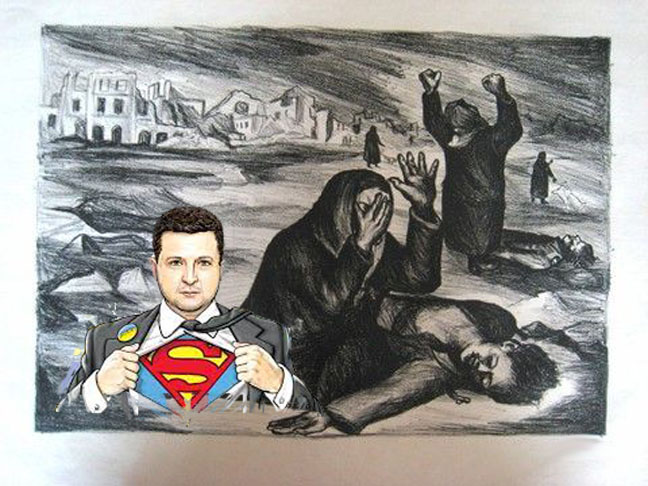
‘Ukraine will not recognize any territory occupied by Russia’: Zelensky
Tyler Durden, Zero Hedge, Wed, 12 Mar 2025, https://www.zerohedge.com/geopolitical/moscow-studying-30-day-truce-plan-while-making-steady-battlefield-gains-meantime
On Wednesday Zelensky shut the door on territorial concessions, awkwardly at a moment Ukraine has just agreed to a US plan for a 30-day ceasefire intended to pave the way for extended peace negotiations. An initial statement from the Kremlin said that Putin likely to eventually agree to truce but with own terms as Moscow “studies” the Trump-sponsored proposal hammered out during the Tuesday Jeddah talks.
Zelensky said in fresh comments:
“We are fighting for our independence. Therefore, we will not recognize any occupied territories as Russia’s. This is a fact. Our people have fought for this, our heroes died. How many injured, how many passed. No one will forget about it… This is the most important red line. We will not let anyone forget about this crime against Ukraine.”
But Russia’s red line in any near-future negotiations will be to demand recognition of the Russian Federations sovereign control over the four easter territories of Donetsk, Luhansk, Kherson and Zaporizhia regions – which President Putin has previously referred to as “our citizens forever.”
As for Zelensky’s new proclamation that he won’t cede territory, US Secretary of State Marco Rubio told reporters just after the Ukraine-US talks in Saudi Arabia that discussions with Kiev’s delegations included “territorial concessions” as part of a negotiated settlement. The suggestion from the US side is that Ukraine showed openness and willingness on this question. So either the two allies can’t get on the same page (which is no surprise), or else Zelensky is trying to tank these negotiation efforts before they ever get off the ground, also as the White House has pressed Kiev to hold new presidential elections.
Fresh comments from Zelensky asserting Ukraine will NOT recognize any territory occupied by Russia…
Certainly Russia sees no need to rush into negotiations, especially if Zelensky is unwilling to budge on territory in the east, given all the battlefield gains of late. Kursk will also soon return to full Russian control, as Ukrainian forces there are reportedly in disarray, and as Moscow has taken back over a dozen key sites just this week.
The Kremlin says it is “studying” statements issued by the US and Ukrainian delegations following yesterday’s talks in Jeddah, and further describes Russian officials are waiting for a fuller briefing from the US on the proposal. The 30-day ceasefire plan calls for a halt to all the fighting on land, sea and in the air – whichcan be extended by mutual agreement, with a hoped-for path to a permanent truce based on negotiations in the interim.
Zelensky in a Tuesday X post said the ceasefire will apply to missile, drone and bomb attacks “not only in the Black Sea, but also along the entire front line” – though its as yet unclear what mechanism there will be to monitor this.
The joint statement issued from Jeddah said the sides “will communicate to Russia that Russian reciprocity is the key to achieving peace.” Thus nothing will happen unless Moscow agrees.
Washington has agreed to lift the Trump ban on arms and intelligence for Kiev, while at the same time Kiev and Washington agreed on inking a deal on Ukraine’s critical minerals “as soon as possible”.
Russian state media is meanwhile reporting that President Putin is open to holding a telephone conversation with his US counterpart.
On the potential for a new Trump call to discuss progress toward setting up negotiations and a truce, spokesman Dimitry Peskov said Wednesday:
“We also do not rule out that the topic of a call at the highest level may arise. If such a need emerges, it will be organized very quickly. The existing channels of dialogue with the Americans make it possible to do this in a relatively short time.”
If it happens this would mark the second call since Trump’s inauguration, after the prior February 12 call. Theoretically this could lead to an in-person meeting between the two leaders if all goes well.
Secretary of State Marco Rubio is traveling back from the meeting in Saudi Arabia, and gave some remarks to a press conference in Ireland:
Deterrence against future attacks on Ukraine will be a crucial element of future negotiations.- The US-Ukraine minerals deal benefits both nations and deepens Washington’s interest in Ukraine, but “I would not couch it as a security guarantee”.
- European sanctions against Russia will be part of the negotiations, making Europe’s involvement in the process essential.
- Any truce could be effectively monitored, but “one of the things we’ll have to determine is who both sides trust on the ground” to oversee it.
Ukraine continues to hold little to no leverage, given Russia is fast taking back its territory in Kursk as of mid-week. Over a dozen settlements have been liberated, and by all accounts Ukraine forces are in retreat there, also as Russian troops are currently in the center of Sudzha town.
One regional sources says that the Russian advance has been swift especially after one particularly daring operation: “Reports over the weekend claimed that 800 Russian special forces had crawled for 15 kilometers through an unused section of pipeline, which once carried Russian gas to Europe via Ukraine, in order to carry out a sneak attack on Ukrainian forces in Sudzha,” writes Moscow Times.
These developments mean that Putin is even less likely to agree to any temporary pause in fighting. In January statements he had warned the Kremlin will not sign off on any temporary truces – given Ukraine could just use it to rearm, resupply, and regroup. Moscow has less incentive to sign onto a deal unless territorial concessions are part of it, given that at this rate it can just keep advancing in territory, particularly in the Donbass.
Uranium fever collides with industry’s dark past in Navajo country
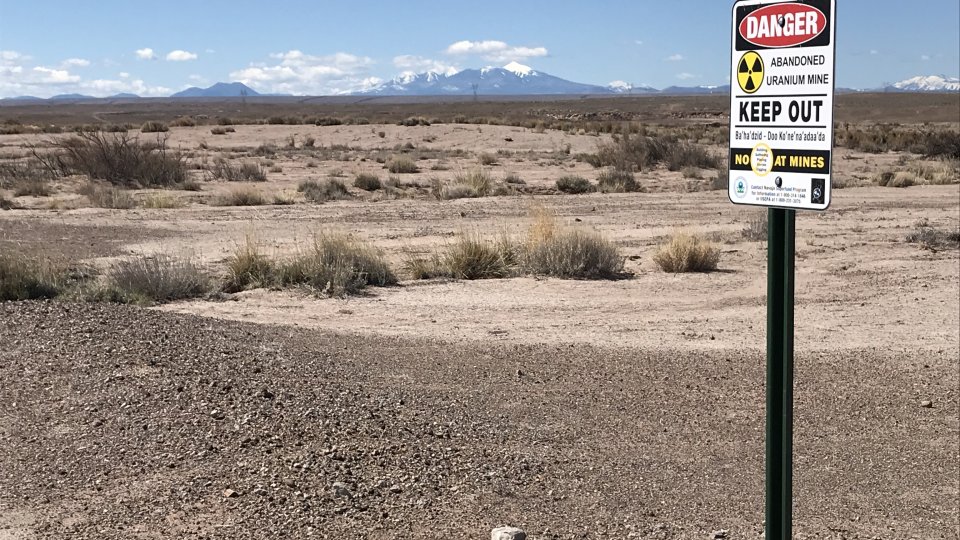
Mining.com, Bloomberg News | January 14, 2025
A few miles south of the Grand Canyon, thousands of tons of uranium ore, reddish-gray, blue and radioactive, are piled up high in a clearing in the forest.
They’ve been there for months, stranded by a standoff between the mining company that dug them deep out of the ground, Energy Fuels Inc., and the leader of the Navajo Nation, Buu Nygren.
Back in the summer, Energy Fuels had triggered an uproar when it loaded some of the ore onto a truck, slapped a “radioactive” sign over the taillights and drove it through the heart of Navajo territory.
Radioactive is an alarming word anywhere, but here in Navajo country, surrounded by hundreds of abandoned uranium mines that powered America’s nuclear arms race with the USSR and spewed toxic waste into the land, it causes terror. Those fears have only grown the past couple years as nuclear power came back in vogue and sparked a uranium rush in mining camps all across the Southwest.
So when the news made it to Nygren that morning, he was furious. No one had sought his consent for the shipment. He quickly ordered dozens of police officers to throw on their sirens, fan out and intercept the truck.
The dragnet turned up nothing in the end — the truck snuck through — but the hard-line response delivered a warning, amplified over social media and ratified days later by the governor of Arizona, to the miners: Stay out of Navajo country.
Cut off from the lone processing mill in the US — all the main routes cut through Navajo territory — executives at Energy Fuels stockpiled it by the entrance of the mine. When the heaps of crushed rock grew too sprawling, they pulled the miners out of the tunnels and turned the drilling machines off…………………………………………………………………………………………………………………………………………………………………
Animosity towards mining companies runs high on Navajo land. It’s visible everywhere. On huge roadside billboards and small office signs, in fading pinks and yellows and jet blacks, too. They read “Radioactive Pollution Kills” and “Haul No” and, along the main entrance to Cameron, a hard-scrabble village on the territory’s western edge, “No Uranium Mining.”
A few miles down the road, big mounds of sand streaked gray and blue rise, one after the other, high above the vast desert landscape. They are the tailings from some of the uranium mines that were abandoned in the territory last century.
To Ray Yellowfeather, a 50-year-old construction worker, the tailings were always the “blue hills,” just one big playground for him and his childhood friends.
“We would climb up the blue hills and slide back down,” Yellowfeather says. “Nobody told us they were dangerous.”
Years later, they would be cordoned off by the Environmental Protection Agency as it began work to clean up the mines. By then, though, the damage was done. Like many around here, Yellowfeather says he’s lost several family members to stomach cancer. The last of them was his mother in 2022.
Yellowfeather admits he doesn’t know exactly what caused their cancer but, he says, “I have to think it has to do with the piles of radioactive waste all around us.” It’s in the construction material in many of the homes and buildings and in the aquifers, too. To this day, drinking water is shipped into some of the hardest-hit areas.
The US government has recognized the harm its nuclear arms projects have done to communities in the Southwest. In 1990, Congress passed a law to compensate victims who contracted cancer and other diseases. It paid out some $2.5 billion over the ensuing three decades. The EPA, meanwhile, has been in charge of the clean-up of the abandoned mines. Two decades after the program began, though, only a small percentage have been worked on at all.
This is giving mining companies an opportunity to curry favor in tribal communities by offering to take over and expedite the clean-up of some mines.
…………………………………………………………………………..the EPA released a detailed study on Pinyon Plain. In it, the agency found that operations at the mine could contaminate the water supply of the Havasupai, a tribe tucked in such a remote corner of the Grand Canyon that it receives mail by mule. The report emboldened Havasupai leaders to step up their opposition to the mine, adding to Chalmers’s growing list of problems.
For the Navajo, the risks that come from the hauling of uranium through its territory are far smaller — so negligible as to be almost non-existent, according to Chalmers. Nygren is unmoved. The Navajo have heard such reassurances many times before, he says, only to pay dearly in the end.
Nygren grew up near a cluster of old mines right along the territory’s Arizona-Utah border, which makes the whole Energy Fuels affair “incredibly personal,” he says. His voice grows louder now and his tone more emphatic, indignant. To him, the Energy Fuels incursion feels no different than all the abuses committed over the course of decades by the US government and the mining companies that supplied it with a steady stream of uranium.
“We played a big role in the national security of the United States and we played a big part in the Cold War, providing energy for nuclear weapons. We’ve done our part. And now it’s time for the US to do its part by cleaning up these mines and respecting our laws.” https://www.mining.com/web/uranium-fever-collides-with-industrys-dark-past-in-navajo-country/
High stakes as Iran nuclear issue reaches crunch moment

Caroline Hawley, BBC diplomatic correspondent, BBC 14th March 2025
Almost a decade since world powers sealed a historic deal to limit the Iranian nuclear programme, this is a crunch moment for Iran and the international community.
The country is now closer than ever to being able to make a nuclear bomb.
And the agreement – designed to prevent Iran developing a nuclear weapon – expires later this year.
“It’s a real fork in the road moment,” says Dr Sanam Vakil of the London-based think tank Chatham House. “Without meaningful and successful diplomacy we could see Iran weaponise or we could see a military strike against the Islamic Republic.”
The deal, painstakingly negotiated over nearly two years under Barack Obama’s presidency, imposed restrictions on Iran’s nuclear activities in return for relief from sanctions that crippled the country’s economy.
But after Donald Trump pulled out of the agreement in 2018 during his first presidency and reinstated US sanctions, Iran gradually stopped complying with its commitments.
It has accelerated its enrichment of uranium – used to make reactor fuel but also potentially nuclear bombs – to close to weapons-grade.
Experts say it would now take Iran less than a week to enrich enough material to make a single nuclear weapon.
Hence a flurry of urgent diplomatic activity by the US and the five other parties to the deal – the UK, China, France, Germany and Russia.
A closed-door meeting of the UN Security Council discussed Iran’s nuclear programme on Wednesday.
And China is hosting talks with Iran and Russia on Friday in search of a “diplomatic” resolution.
“In the current situation, we believe that all parties should maintain calm and restraint to avoid escalating the Iran nuclear situation, or even walking towards confrontation and conflict,” Chinese foreign ministry spokeswoman Mao Ning said this week.
On Wednesday, a letter from President Trump was delivered in Tehran by a senior diplomat from the United Arab Emirates.
The contents have not been made public.
But President Trump, after imposing new sanctions on Iran as part of a “maximum pressure” campaign, last week issued a televised ultimatum to Iran: make a deal or else.
“I’ve written them a letter saying, ‘I hope you’re going to negotiate because if we have to go in militarily, it’s going to be a terrible thing,'” he said.
Iran’s Supreme Leader, Ayatollah Ali Khamenei, appeared to reject the idea of talks with a “bullying” US.
So too – publicly – has President Masoud Pezeshkian, who had previously supported a resurrection of the nuclear deal, in return for an end to sanctions.
But the country has been sending out mixed messages.
“There are camps inside the country that favour negotiations,” says Dr Vakil. “And there are camps that see weaponisation as the best opportunity for Iran to manage its security.”
Trust in the Trump administration is in very short supply.
“They have seen his erratic, very bullying approach to [Ukraine’s President Volodymyr] Zelensky. And his outlandish proposals on Gaza and they don’t want to be put in that position,” Dr Vakil adds.
Iran hates the humiliation of having a gun held to its head. But it is currently vulnerable – weakened militarily by Israeli air strikes last year, which are believed to have destroyed most of the air defences protecting its nuclear programme.
Israel has long wanted to take the facilities out.
Iranian authorities continue to insist the country’s nuclear programme is for peaceful purposes.
But concern in the international community is becoming increasingly acute……………………………………………………… https://www.bbc.co.uk/news/articles/c86pvyd2qeno
Poland’s president urges U.S. to move nuclear warheads to Polish territory, FT reports
By Reuters, March 13, 2025, Reporting by Gnaneshwar Rajan in Bengaluru, Pawel Florkiewicz and Alan Charlish in Warsaw; Editing by Christopher Cushing and Gareth Jones, https://www.reuters.com/world/polands-president-urges-us-move-nuclear-warheads-polish-territory-ft-reports-2025-03-13/
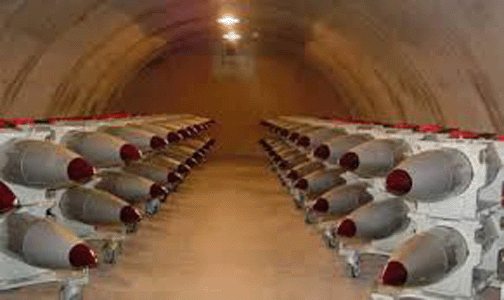
WARSAW, March 13 (Reuters) – Poland’s president has called on the U.S. to transfer nuclear weapons to its territory as a deterrent against future Russian aggression, the Financial Times reported on Thursday.
President Andrzej Duda also told the newspaper he had discussed the proposal recently with U.S. President Donald Trump’s special envoy for Ukraine and Russia, Keith Kellogg.
Poland has previously said it would be ready to host U.S. weapons under a nuclear arms sharing programme, and Polish policymakers have also more recently expressed interest in an idea floated by French President Emmanuel Macron that Paris’s nuclear umbrella could be extended to its European allies.
The borders of NATO moved east in 1999, so 26 years later there should also be a shift of the NATO infrastructure east. For me this is obvious,” the FT cited Duda as saying in an interview.
It would be safer if those weapons were already in the country, Duda added.
Polish Prime Minister Donald Tusk, a political opponent of Duda, said on Thursday he thought it was better to address such issues discreetly rather than in media interviews, although he added that he believed the president had good intentions.
“We should formulate certain expectations… publicly when we are certain, or have reasons to be convinced, that such appeals or calls will be heard and that the addressee, in this case the American administration, President Trump, is prepared for a positive response,” Tusk told reporters.
Galvanised by Russia’s invasion of neighbouring Ukraine three years ago, Poland now spends a higher proportion of its gross domestic product (GDP) on defence than any other NATO member, including the United States.
Last year Poland’s defence spending reached 4.1% of GDP, according to NATO estimates, and it plans to hit 4.7% this year. Duda has suggested enshrining defence spending of at least 4% of GDP in the Polish constitution.
Some Small Nuclear Reactors could bypass environmental review step under Arizona bill
SMRs in rural Arizona would be exempt from review if the units are colocated with certain large industrial loads or built at power plants that previously received environmental certification.
March 14, 2025, By Brian Martucci, https://www.utilitydive.com/news/arizona-smr-nuclear-environmental-review-bill-aps-srp/742564/
Dive Brief:
- Arizona utilities would be allowed to bypass a key state environmental review process to deploy small modular nuclear reactors on or near certain power plants and large rural industrial sites, including data centers, under a bill that cleared the state House of Representatives on Feb. 26.
- In most Arizona counties, the bill would supersede any local zoning restrictions on the construction and operation of colocated SMRs, provided the host facility received all required zoning entitlements, according to a March 7 fact sheet developed by Arizona Senate staff.
- Arizona House Majority Leader Michael Carbone, R, introduced the bill on Feb. 10, days after the state’s three largest utilities announced a joint effort to assess “a wide range of possible locations” for the siting and deployment of nuclear reactors.
Dive Insight:
The collaboration among Arizona Public Service, Salt River Project and Tucson Electric Power would consider options for both small modular reactors and “potential large reactor projects,” the utilities said Feb. 5.
The utilities have applied for a grant through the U.S. Department of Energy’s Generation III+ Small Modular Reactor Program, they said. The Gen III+ SMR program will provide up to $800 million to “two first-mover teams of utility, reactor vendor, constructor, and end-users or power off-takers” committed to an initial SMR deployment and developing a multi-reactor order book, according to DOE.
The utilities called the application a first step in a broader effort to “explore the possibility” of adding nuclear capacity in Arizona, possibly at retiring coal-fired power plant sites. The trio could select a preferred nuclear site later this decade “at the earliest, potentially enabling additional nuclear to be in operation in the early 2040s,” they said.
“We know the development timeline would be long, so it makes sense for our state’s energy providers to begin this preliminary evaluation as soon as possible,” Tucson Electric Power President Susan Gray said in February.
Carbone’s bill allows a utility to construct an SMR in Arizona after providing 30 days’ notice to the Arizona Corporation Commission, the state utility regulator, provided the SMR complies with applicable state, federal and local laws and is colocated with a large industrial user.
The utility would not have to apply to the ACC for a certificate of environmental compatibility, as is typically required for new generation and transmission projects, according to the Arizona Senate fact sheet.
The bill also allows utilities to bypass the certificate of environmental compatibility process to construct a new or replacement SMR if the SMR is located “on or immediately adjacent to” a power plant that previously received a certificate of environmental compatibility or was in operation before Aug. 13, 1971. This allowance covers SMRs built to replace existing thermal generation units.
The bill requires the ACC to define colocation, large industrial user and eligible SMR types and sizes, provided the maximum nameplate capacity is at least 100 MW, according to the fact sheet.
The bill limits preemption of local land use ordinances related to SMR construction to counties with fewer than 500,000 people, according to the fact sheet. That comfortably excludes Arizona’s two largest counties, Maricopa and Pima, which are together home to about 75% of the state’s population. Fast-growing Pinal County crossed the 500,000-person threshold in 2024, according to the U.S. Census Bureau.
State Police to Hold Major Radiological Incident Exercise with International, Federal, State and Local Partners

The Michigan State Police, Emergency Management and Homeland Security Division (MSP/EMHSD) is playing a lead role in the planning, hosting and execution of a historic full-scale radiological exercise. More than 70 local, state, provincial and federal agencies from the United States and Canada will participate in this major radiological incident exercise at various locations in Lansing, southeast Michigan, Indiana, Ohio and Ontario from March 14 – 21.
The Cobalt Magnet 2025 exercise is led by the U.S. Department of Energy’s National Nuclear Security Administration (NNSA), in partnership with the MSP/EMHSD. It will bring numerous agencies together to ensure preparedness against radiological threats.
“Michigan is home to two active nuclear power plants, with a third slated to return online within the next year,” said Col. James F. Grady II, director of the Michigan State Police and state director of emergency management and homeland security. “Given our location near Canada and other Great Lakes states, Michigan is uniquely positioned to play a critical role in this vital exercise, where the lessons learned will improve safety and response actions impacting the nation and beyond.”
Cobalt Magnet 2025 represents the culmination of 18 months of planning by local, state, provincial and federal responders. The exercise, with more than 3,000 participants, will simulate a nuclear power plant accident. It will enable response personnel to practice scanning for radiological materials, protecting public health and safety, providing emergency relief to affected populations and restoring essential services.
“During the exercise, members of the public may see field teams in protective clothing using radiological monitoring and detection equipment, low-flying aircraft conducting data-gathering overflights and groups of first responders and others staged at various locations,” explained Capt. Kevin Sweeney, deputy state director of Emergency Management and commander of the MSP/EMHSD. “The MSP/EMHSD will host a large portion of the Cobalt Magnet 25 exercise at the State Emergency Operations Center at MSP Headquarters in Dimondale. Multiple State of Michigan agencies will join the MSP in this full-scale exercise.”
Cobalt Magnet 2025 is part of a regular program of training, exercises and planning that help first responders prepare in case of a public health and safety emergency.
For more information on how to prepare before, during and after an emergency or disaster, visit www.michigan.gov/miready or follow MSP/EMHSD on X at @MichEMHS.
Anas Sarwar U-turns on Scottish Labour nuclear weapons policy
SCOTTISH Labour are facing calls to clarify their stance on the UK’s
nuclear weapons after Anas Sarwar appeared to pull a unilateral U-turn at
First Minister’s Questions. Speaking at Holyrood on Thursday, the Labour
group leader called for First Minister John Swinney and the SNP to reverse
their stance on Trident – the UK’s nuclear weapons system which is
housed on the Clyde.
The SNP oppose nuclear weapons and oppose renewing
Trident, want to see the system removed from Scotland, and support an
international treaty banning the bomb.
Previously, Scottish Labour’s
membership passed a motion opposing the renewal of Trident – and in 2021
Sarwar backed it despite Keir Starmer’s support for the policy. Sarwar
has now suggested that he supports the UK’s nuclear weapons being
renewed. Speaking at FMQs, the Scottish Labour leader said: “Global
events are reshaping the world before our eyes. This is a generation
defining moment, and all political parties and both of Scotland’s
governments must adjust to this new reality and rethink previous red
lines.”
The National 13th March 2025, https://www.thenational.scot/news/25005720.anas-sarwar-seems-u-turn-scottish-labour-nuclear-weapons-policy/
Walt Zlotow – GOP intervention needed to remove disintegrating Trump from office

Walt Zlotow, Glen Ellyn, 14 Mar 25
It took nearly 4 years to Democrats to stage an intervention to remove a mentally disintegrating Joe Biden from office.
We cannot wait that long for GOP to do their version with a disintegrating Donald Trump.
That’s because his disintegration is compounded by a malevolent streak of vindictiveness, revenge, lust for dictatorial power, gleeful dismantling of the American safety net maintaining the commons never before experienced in American history.
Annoy him and he’ll call you Asian if you’re black; Palestinian if you’re a Jew. That is sick.
Trying to salvage Musk’s sinking Tesla brand, he morphed into a sleazy car salesman pitching Tesla cars as his smug governmental wrecking ball looked on.
His obsession with tariffs has spooked Wall Street, every sensible economist, every trading partner and Joe Sixpack watching his retirement drop while his costs of necessities rise. He appears detached from reality of the economic deluge he’s unleashing.
His congressional speech sounded more like an indoor Nuremburg Rally than a prescription for healing America. His idolatrous congressional Republicans roared their approval. Apparently oblivious they’re standing on the deck of the Titanic along with the Democrats, they jeered them for not saluting America’s first autocratic president.
Whether it’s sliming critics, stealing foreign territory, gutting government, snipping the social safety net, provoking self-destructive trade war, Trump’s delusions of grandeur increase daily.
There is historical precedent for Republicans staging an intervention to remove a morally compromised president. In 1974 a GOP intervention led by Sen. Barry Goldwater visited morally compromised President Nixon in the White House and convinced him to resign. Such an intervention by today’s GOP, while virtually inconceivable, is still critically needed to prevent an unprecedented collapse of every vestige of the American promise to its citizenry.
If morally centered Barry Goldwater were in the Senate today, he’d likely step up to lead the Trump intervention. Alas, knowing the makeup of today’s GOP, it might be an intervention of one.
1 This Month

of the week – Shut Down Drone Warfare!


Tell the Ukrainian Government to Drop Prosecution of Peace Activist Yurii Sheliazhenko

Petition to revoke the licensing of the Near Surface Nuclear Disposal Facility (NSDF) at Chalk River. https://www.ourcommons.ca/petitions/en/Petition/Details?Petition=e-7247
To see nuclear-related stories in greater depth and intensity – go to https://nuclearinformation.wordpress.com
-
Archives
- April 2026 (103)
- March 2026 (251)
- February 2026 (268)
- January 2026 (308)
- December 2025 (358)
- November 2025 (359)
- October 2025 (376)
- September 2025 (257)
- August 2025 (319)
- July 2025 (230)
- June 2025 (348)
- May 2025 (261)
-
Categories
- 1
- 1 NUCLEAR ISSUES
- business and costs
- climate change
- culture and arts
- ENERGY
- environment
- health
- history
- indigenous issues
- Legal
- marketing of nuclear
- media
- opposition to nuclear
- PERSONAL STORIES
- politics
- politics international
- Religion and ethics
- safety
- secrets,lies and civil liberties
- spinbuster
- technology
- Uranium
- wastes
- weapons and war
- Women
- 2 WORLD
- ACTION
- AFRICA
- Atrocities
- AUSTRALIA
- Christina's notes
- Christina's themes
- culture and arts
- Events
- Fuk 2022
- Fuk 2023
- Fukushima 2017
- Fukushima 2018
- fukushima 2019
- Fukushima 2020
- Fukushima 2021
- general
- global warming
- Humour (God we need it)
- Nuclear
- RARE EARTHS
- Reference
- resources – print
- Resources -audiovicual
- Weekly Newsletter
- World
- World Nuclear
- YouTube
-
RSS
Entries RSS
Comments RSS
 nuclear-news