Zelensky’s hostility to peace triggers White House meltdown.

Those who insist that Zelensky was ambushed are overlooking the cordial, lengthy exchange that occurred before the meeting turned testy. In a room full of aides and news cameras, Trump, Vance, and Zelensky held court for more than 40 minutes. It was Zelensky who became confrontational each time the two US leaders spoke favorably about negotiations with Russia.
because Trump stressed that his goal is to end the war through diplomacy, Zelensky grew agitated.
While Zelensky now claims that Russia cannot be negotiated with, his own representatives in Istanbul hold a much different view.
Aaron Maté, aaronmate.net, Sun, 02 Mar 2025 https://www.aaronmate.net/p/zelenskys-hostility-to-peace-triggers?utm_source=post-email-title&publication_id=100118&post_id=158233237&utm_campaign=email-post-title&isFreemail=true&r=1b65ob&triedRedirect=true&utm_medium=email
Long rewarded by Washington and NATO for undermining diplomacy with Russia, Zelensky grew confrontational — and told outright falsehoods — when Donald Trump and JD Vance told him to make peace.
A contentious White House meeting between President Donald Trump, Vice President JD Vance, and Ukrainian president Volodymyr Zelensky has thrown US-Ukrainian relations into disarray. The meeting resulted in Zelensky’s ejection from the White House, the cancellation of a planned minerals agreement, and, according to one report, a review of continued US military assistance to Ukraine.
For panicked cheerleaders of the proxy war against Russia, the consensus view is that Trump has betrayed a stalwart US ally, sided with an enemy in Moscow, and may have even deliberately triggered the clash to serve his treacherous agenda.
Those who insist that Zelensky was ambushed are overlooking the cordial, lengthy exchange that occurred before the meeting turned testy. In a room full of aides and news cameras, Trump, Vance, and Zelensky held court for more than 40 minutes. It was Zelensky who became confrontational each time the two US leaders spoke favorably about negotiations with Russia.
In his opening remarks, Trump criticized his predecessor Joe Biden for refusing to “speak to Russia whatsoever” and expressed his hope to bring the war “to a close.” Zelensky responded by calling Vladimir Putin a “a killer and terrorist” and vowing that there would be “of course no compromises with the killer about our territories.” In a paranoid threat, he also declared that unless Trump helps him “stop Putin,” then the Russian leader will invade the Baltic states “to bring them back to his empire”, which would draw the US into the war, despite the “big nice ocean” shielding the US from Europe: “Your soldiers will fight.”
Trump did not interrupt or object to these initial, belligerent comments. The closest he came to a direct criticism occurred when a reporter asked about Zelensky’s avowed refusal to compromise. Trump replied that “certainly he’s going to have to make some compromises, but hopefully they won’t be as big as some people think you’re going to have to make.” Trump even promised that “we’re going to be continuing” US military support to Ukraine.
Yet because Trump also stressed that his goal is to end the war through diplomacy, Zelensky grew agitated. The tipping point came when, after 40 minutes, a reporter asked whether Trump has chosen to “align yourself too much with Putin.” Vance responded that, in his view, “the path to peace and the path to prosperity” entails “engaging in diplomacy.” It was here that Zelensky lost his composure and directly challenged Vance: “What kind of diplomacy, J.D., you are speaking about? What do you mean?”.
This drew a sharp reaction. Vance reminded Zelensky that his military is brutally nabbing Ukrainian men off the street to send them to the front lines, and that the US seeks “the kind of diplomacy that’s going to end the destruction of your country.” Zelensky then doubled down by challenging Vance to visit Ukraine and reviving his attempted fearmongering. “You have a nice ocean and don’t feel it now,” he said, referring to the Atlantic, “but you will feel it in the future.” That veiled threat angered Trump, who proceeded to call out Zelensky for, among other things, “gambling with the lives of millions of people,” and “with World War III.”
In opting to confront Vance, Zelensky showed that he is so reflexively hostile to the notion of negotiating with Russia that he is willing to berate his chief sponsor, in public no less, for daring to suggest it. And to serve his agenda, Zelensky also showed that he is willing to engage in distortion and even outright falsification.
To make his case that Putin cannot be negotiated with, Zelensky invoked an agreement, brokered by France and Germany, that he signed with Putin in Paris on December 9, 2019. The pact called for a prisoner exchange, which, Zelensky asserted, Putin ignored. “He [Putin] didn’t exchange prisoners. We signed the exchange of prisoners, but he didn’t do it,” Zelensky said.
Zelensky was not being truthful. He himself attended a December 29, 2019 ceremony welcoming the return of Ukrainian prisoners freed under his agreement with Putin. Then in April 2020, his office hailed the release of a third round of prisoners.
omitted his own record in undermining diplomacy with Moscow.
The December 2019 Paris agreement recommitted Ukraine and Russia to the Minsk peace process, the UN Security Council-endorsed framework for ending the war that broke out in 2014 between the post-coup Ukrainian government and Russian-backed eastern Ukrainian rebels.
After initially taking some positive steps toward implementation, Zelensky ultimately refused to comply, a stance that he previewed in Putin’s company. During a joint news conference in Paris, Zelensky visibly smirked as Putin discussed the importance of following through with Minsk. The following March, Zelensky, under pressure from Ukraine’s ultra-nationalists and US-funded NGOs, abandoned a pledge to hold direct talks with representatives of the breakaway Donbas republics, which would be granted limited autonomy under Minsk.
By that point, the Kremlin had begun raising concerns that Zelensky was not following through. A Kremlin readout of a call between Putin and Zelensky the previous month noted that Putin had “stressed the importance of the full and unconditional fulfillment of all measures and decisions made in Minsk and adopted at the Normandy summits, including the one held in Paris on December 9, 2019… Vladimir Putin directly asked if Kyiv intends to really implement the Minsk agreements.”
Zelensky kept signaling that he had no such intention. In mid-July 2020, Zelensky’s party proposed a measure that would hold local elections throughout Ukraine – yet in a deliberate omission, the plan excluded Donbas, which was supposed to have new elections under Minsk. By that point, Zelensky was openly contemptuous of Donbas residents. “The people of the Donbas have been brainwashed,” Zelensky complained. “They live in the Russian information space… I can’t reach them.”
The entry of the Biden team to the Oval Office in January 2021 encouraged Zelensky’s confrontational path. In February 2021 – one year before Russia invaded – Zelensky shut down three television networks tied to his main political opposition, which advocated better ties with Russia. A Zelensky aide later disclosed that this crackdown was “conceived as a welcome gift to the Biden administration,” which offered its enthusiastic endorsement of Zelensky’s effort to “counter Russia’s malign influence.”
The following month, the Biden administration returned the favor by approving its first military package for Ukraine, valued at $125 million. That encouraged even more bellicosity from Zelensky’s government. Ukraine’s National Security and Defense Council approved a strategy to recover all of Crimea from Russian control, including by force. Ukrainian military leaders also announced that they were “ready” to retake Donbas by force, with the help of NATO allies.
By this point, Zelensky was openly disdainful of the diplomatic path that he had signed onto in Paris. “I have no intention of talking to terrorists, and it is just impossible for me in my position,” he declared in April 2021. Zelensky also demanded changes to Minsk. “I’m now participating in the process that was designed before my time,” he said. “The Minsk process should be more flexible in this situation. It should serve the purposes of today not of the past.”
Zelensky and his aides maintained this stance in the weeks before Russia’s February 2022 invasion. “The position of Ukraine, which has been expressed many times at different levels, is unchanged,” top Zelensky advisor Andrii Yermak said. “There have not been and will not be any direct negotiations with the separatists.” Added Ukrainian security chief Oleksiy Danilov: “The fulfillment of the Minsk agreement means the country’s destruction.” Perhaps to underscore the point, Zelensky’s government escalated attacks on rebel-controlled areas.
The Russian invasion forced Zelensky to abandon his hostility to negotiations, resulting in the Istanbul talks of March-April 2022. While Zelensky now claims that Russia cannot be negotiated with, his own representatives in Istanbul hold a much different view.
“We managed to find a very real compromise,” Oleksandr Chalyi, a senior member of the Ukrainian negotiating team, recalled in December 2023. “We were very close in the middle of April, in the end of April, to finalize our war with some peaceful settlement.” Putin, he added, “tried to do everything possible to conclude [an] agreement with Ukraine.”
According to former Zelensky advisor Oleksiy Arestovich, who also took part in the talks, “the Istanbul peace initiatives were very good.” While Ukraine “made concessions,” he said, “the amount of their [Russia’s] concessions was greater. This will never happen again.” The Ukraine war, Arestovich concluded, “could have ended with the Istanbul agreements, and several hundreds of thousands of people would still be alive.”
The US and UK sabotaged the Istanbul talks by refusing to provide Ukraine with security guarantees and encouraging Zelensky to keep fighting instead. Zelensky’s decision to obey their dictates helps explain why he is so desperate to obtain a security guarantee from Trump. Having walked away from a peace deal that would have saved hundreds of thousands of lives, Zelensky needs a tangible Western security commitment to show for it.
In Zelensky’s defense, he has also faced, from the start of his presidency, the threat of violence from Ukrainian ultra-nationalists staunchly opposed to any peace deal with Russia and allied eastern Ukrainians. And rather than help him overcome this domestic obstacle to peace, Washington has enabled it. As the late scholar Stephen F. Cohen prophetically warned in October 2019, Zelensky would not be able to “go forward with full peace negotiations unless America has his back” against “a quasi-fascist movement” that was literally threatening his life.
For this reason, it was disrespectful of Vance to insist that Zelensky thank the US for its military support, when that assistance has in fact fueled Ukraine’s decimation. Yet Zelensky is also responsible for putting himself in this position. Because he dutifully served the US goal of using Ukraine to bleed Russia, Zelensky was rewarded with political and media adulation, along with tens of billions of dollars in NATO funding.
The unprecedented dispute at the White House shows that Zelensky’s disingenuous hostility to negotiations is no longer welcome in Washington. While this may prove fatal to Zelensky’s political career and US proxy warfare against Russia, it is a tangible step toward ending his country’s destruction.
The SMR Gamble: Betting on Nuclear to Fuel the Data Center Boom

“Who’s going to insure these plants?” “That’s a huge unknown. “
Mar 3, 2025, by Sonal Patel Power Mag
Data center power demand is accelerating, pushing the grid to its limits and prompting tech giants to bet on next-generation nuclear reactors. But given steep costs, regulatory hurdles, and uncertain scalability, is nuclear the future of data center energy—or just another high-stakes gamble?
At the end of January, Chinese artificial intelligence (AI) startup DeepSeek unveiled two large language models (LLMs)—DeepSeek-R1 and DeepSeek-R1-zero. Unlike previous generations of AI models, DeepSeek’s breakthrough reduced the compute cost of AI inference by a factor of 10, allowing it to achieve OpenAI GPT-4.5-level performance while consuming only a fraction of the power.
The news upended future electricity demand assumptions, rattling both the energy and tech sectors. Investment markets reacted swiftly, driving down expectations—and share prices—for power generation, small modular reactor (SMR) developers, uranium suppliers, gas companies, and major tech firms.
Yet, amid the chaos, optimism abounded. Analysts pointed to Jevons paradox, the economic principle that efficiency gains can increase consumption, rather than reduce it. “Our model shows a ~90% drop in the unit cost of compute over a six-year period, and our recent survey of corporate AI adoption suggests increases in the magnitude of AI use cases,” said Morgan Stanley Research. The U.S. remains the dominant market for AI-driven data center expansion, with 40 GW of new projects under development, aligning with a projected 57 GW of AI-related compute demand by 2028. Already, that load is transforming the energy landscape. A recent POWER analysis shows that U.S. data center electricity consumption could reach between 214 TWh and 675 TWh annually by 2030, up from 176 TWh in 2023 (Figure 1 on original)………………………………
Emerging Business Challenges
Still, beyond regulations, the actual business of running co-located nuclear plants remains uncertain. While recent discussions highlight tech companies as potential investors in advanced nuclear facilities, data center sources confirmed most aren’t attracted to the prospect of owning and operating nuclear plants.
“Data center operators are not in the business of running power plants,” said Walsh. “They want reliability and cost certainty, but they don’t want to deal with regulatory oversight, fuel procurement, or reactor maintenance.”………………………
From an operational standpoint, co-located facilities can pose new risks, as Nina Sadighi, professional engineer and founder of Eradeh Power Consulting told POWER. “Who’s going to insure these plants?” she asked. “That’s a huge unknown. Right now, insurance providers are hesitant because of the regulatory and operational complexity. The traditional nuclear liability structures are built around large reactors with established operational histories, and when you introduce something novel like SMRs or microreactors, you’re dealing with a very different risk profile.”
Sadighi, though generally optimistic about nuclear’s suitability for data centers, also pointed to potential workforce-related challenges that hinge on timely deployment. “If we train nuclear workers now, but deployment gets delayed, those workers won’t wait around,” she said. “The nuclear workforce pipeline is not like a tech workforce, where people can pivot between roles quickly. These are specialized skills that require years of training, and if there’s uncertainty about job stability, we risk losing them to other industries entirely,” she said. Sadighi also raised concerns about the stringent operational protocols that add to labor inefficiencies.
Finally, while the data center industry isn’t solely bent on economics—and told POWER sustainability with a long-term vision is a bigger priority—scaling up will require significant investment. That has sparked all kinds of debate. Lux Research estimates first-of-a-kind (FOAK) SMRs could cost nearly three times more than natural gas ($331/MWh versus $124/MWh) and more than 10 times more when factoring in cost overruns and delays. The firm projects SMRs won’t be cost-competitive before 2035. “Cheap nuclear just isn’t in the cards in the next two decades,” it says.
The fundamental debate is rooted in several uncertainties—which is not uncommon for emerging sectors, experts also generally pointed out. “Tax credits—especially the clean electricity production tax credits and investment tax credits—will be vital to the commercial viability of these projects, especially considering the FOAK risk,” said Teplinsky. “DOE [U.S. Department of Energy] loan guarantees and direct financing from the Federal Financing Bank at low rates are also essential to companies’ ability to secure debt and reduce cost of capital. Grant funding to support commercial demonstrations and high-assay low-enriched uranium support are also key.” ………………..
https://www.powermag.com/the-smr-gamble-betting-on-nuclear-to-fuel-the-data-center-boom/
Nuclear Power Is the Cuckoo in the Climate Policy Nest

Politicians in Australia, the U.K., and elsewhere are obfuscating the true cost of next-generation technologies.
Enthusiasm for a new generation of nuclear technology has gripped politicians across the world. The United Kingdom is the latest country to take action, with the Labour Party government set to revise planning rules in February 2025 with a goal of restoring the country’s position as “one of the world leaders on nuclear.” Key to this plan is accelerating the deployment of a new generation of miniature nuclear and small modular reactors (SMRs)—compact units that generate less power than traditional nuclear reactors but can be assembled onsite.
Similarly, in Australia, as part of the Australian campaign for a federal election expected in late April, the Coalition Party led by Peter Dutton unveiled a plan in December 2024 to adopt nuclear energy as a solution for providing efficient and affordable electricity. The proposal—which has drawn significant opposition from the public, as it would overturn a decades-old bans on nuclear reactors—is to build conventional nuclear stations and SMRs, with a goal of having them running by the late 2030s. The plan includes the announcement of seven proposed reactor locations across the country
There are high expectations for SMRs, but there is also a major challenge: They
have been touted to require lower capital costs and shorter construction
times than the traditional large-scale nuclear reactors. However, in
reality, SMRs are facing similar pitfalls as large-scale nuclear power, and
the disappointing results from the first pilot project in the United States
should serve as a cautionary tale for governments and developers…………………………… [Subscribers only] https://foreignpolicy.com/2025/03/04/nuclear-power-australia-britain-reactors/
Russia agrees to help US in negotiations with Iran over nuclear program, Bloomberg reports
by Kateryna Hodunova andThe Kyiv Independent news desk, March 4, 2025
Moscow has pledged to help Washington in dealing with Iran over the Islamic Republic’s nuclear program and its support for regional anti-American proxies, Bloomberg reported on March 4, citing its undisclosed sources.
Since returning to the White House, Trump has been trying to restore relations with Russia, which were severed under the previous administration when the full-scale invasion of Ukraine began in February 2022.
Trump voiced his interest in negotiations with Iran to Putin during a phone call in February. A few days later, the U.S. and Russian delegations discussed this issue during talks in Riyadh, Saudi Arabia, Bloomberg reported……………………………… https://kyivindependent.com/russia-agrees-to-help-us-in-negotiations-with-iran-over-nuclear-program-bloomberg-reports/
Trump Pauses All Military Aid to Ukraine
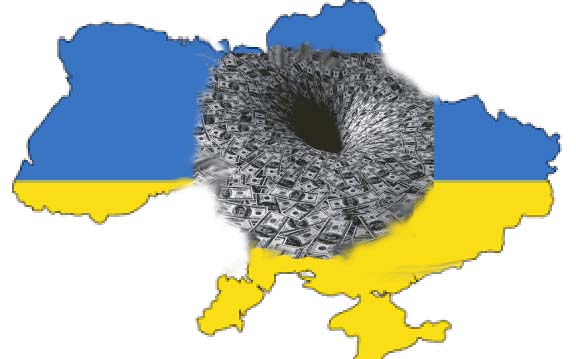
The pause applies to weapons that are already in transit
by Dave DeCamp March 3, 2025, https://news.antiwar.com/2025/03/03/trump-pauses-all-military-aid-to-ukraine/
President Trump has paused all military aid to Ukraine, Bloomberg reported on Monday, citing a senior Pentagon official.
The pause applies to all US military equipment bound for Ukraine that’s not currently in the country, including weapons that are in transit on aircraft and ships or waiting in Poland to be delivered.
The Pentagon official said the US was pausing all military to Ukraine until the country’s leadership demonstrates a good faith commitment to peace. A senior Trump administration official told Fox News, “This is not permanent termination of aid, it’s a pause.”
The move comes a few days after Ukrainian President Volodymyr Zelensky clashed with President Trump and Vice President JD Vance in the Oval Office, an argument that started after Zelensky questioned the administration’s push for diplomacy with Russia.
News of the pause comes after reports said the Trump administration was holding a meeting on Monday afternoon on the possibility of pausing military aid to Ukraine. Before the meeting, the US had already frozen weapons sales to Ukraine under the State Department’s Foreign Military Financing program, which only accounted for a small portion of the US weapons supply to Ukraine.
While the Trump administration hasn’t approved any new military aid for Ukraine, President Biden signed off on a massive number of arms packages during his final months in office that would take years to deliver.
The aid approved by Biden came in two forms: the Presidential Drawdown Authority (PDA), which ships weapons straight from US military stockpiles, and the Ukraine Security Assistance Initiative (USAI), which allows the Pentagon to purchase arms for Ukraine.
More than 145 Reports Added to IAEA Incident and Trafficking Database in 2024
In 2024, 147 incidents of illegal or unauthorized activities involving
nuclear and other radioactive material were reported to the Incident and
Trafficking Database (ITDB), a number aligned with the historical average.
The new data released by the International Atomic Energy Agency (IAEA)
today underlines the need for continued vigilance and improvement of
regulatory oversight for security of nuclear and other radioactive
material.
IAEA 28th Feb 2025,
https://www.iaea.org/newscenter/pressreleases/more-than-145-reports-added-to-iaea-incident-and-trafficking-database-in-2024
US poised to house nuclear weapons in Britain for first time in two decades
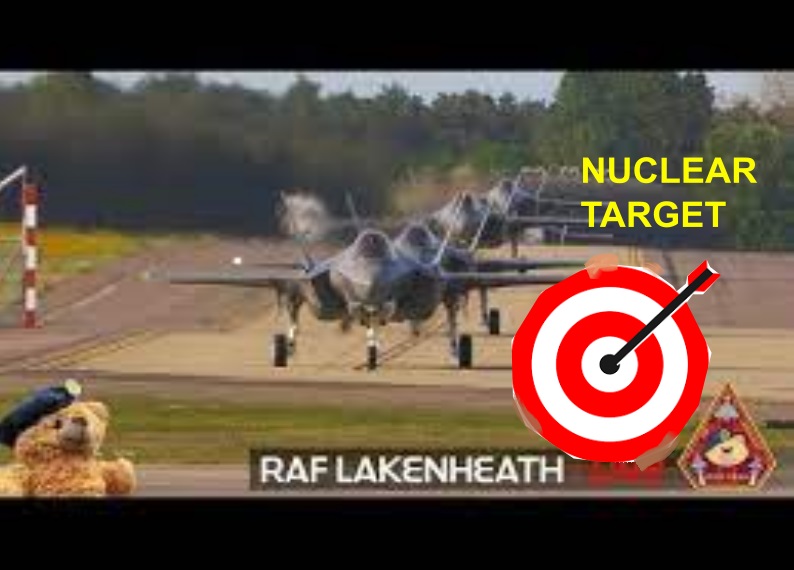
Mothballed bunkers in Suffolk undergo extensive upgrade as America eyes ‘special weapons’ sites
US nuclear weapons could be set to return to British soil almost two decades after Washington removed its last warheads, satellite images have revealed.
The images, published in a report from the Federation of American Scientists (FAS), indicate that 22 previously mothballed nuclear bunkers at RAF Lakenheath in Suffolk have
undergone extensive upgrade work. A decision to reactivate Lakenheath’s
nuclear capability for US aircraft was made as long ago as 2021, the report
suggests, with the proposals gathering force following Russia’s invasion
of Ukraine three years ago.
Telegraph 4th March 2025, https://www.telegraph.co.uk/business/2025/03/04/us-readies-british-air-base-house-nuclear-weapons/
Is giving old reactors new life the future of nuclear energy?
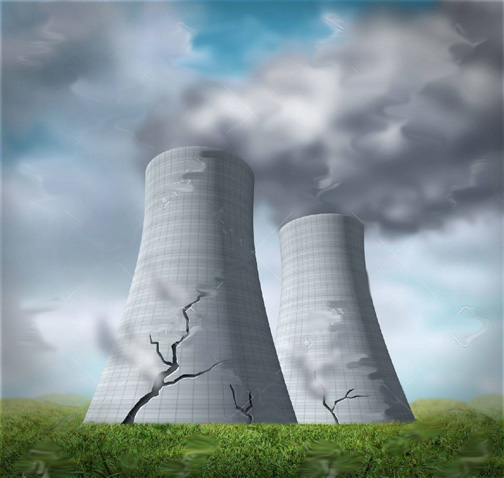
Countries want to squeeze more electricity from ageing power plants to help meet
global demand, but the strategy has its own challenges. The Torness nuclear
power station on Scotland’s south-east coast is showing its age. Over the
past few years, cracks have started to appear in the graphite bricks
encasing the uranium-filled fuel rods.
The bricks are too difficult to replace, so engineers routinely lower microscopic cameras into the reactor to monitor the wear and tear caused by radiation. If the cracks start to
jeopardise the reactor’s ability to safely shut down during an extreme
earthquake or other disaster, it cannot stay open.
So far, so good. And the
plant’s owner EDF, the French energy group, intends to keep the station
running until at least 2030, 42 years after it opened in 1988. Station
director Paul Forrest is confident. “But if the graphite inspection
starts surprising us, we will change course,” he says.
His efforts are part of an urgent, global quest to squeeze more years of electricity out of
existing nuclear power plants to meet rising demand for low carbon power as
countries try to move away from fossil fuels. Most of the world’s
operating nuclear power plants, around 400, were built in the 1970s to
1990s and are now coming to the end of their projected lives or original
licence periods.
FT 3rd March 2025 https://www.ft.com/content/91784663-eba2-48e6-a0a3-47e04774c5c0
Keir Starmer faces backbench rebellion over ‘shortsighted’ cuts to aid budget
Keir Starmer is facing a backbench revolt by Labour MPs this week as anger
mounts over the government’s decision to cut the international
development budget by almost half in order to pay for an increase in
defence spending.
The Labour chair of the all-party select committee on
international development, Sarah Champion, who has already called on the
government to rethink the decision, has secured a debate in the Commons on
Wednesday at which dozens of Labour backbenchers are considering
intervening to express their dismay. One of those who may speak out,
according to colleagues, is Anneliese Dodds, who resigned as international
development minister on Friday.
Guardian 2nd March 2025, https://www.theguardian.com/politics/2025/mar/02/keir-starmer-faces-backbench-rebellion-over-shortsighted-cuts-to-aid-budget
Conservatives’ push to identify ‘suitable sites’ for nuclear reactors in Telford and Wrekin is defeated.
A Conservative move to get Telford and
Wrekin’s local plan to ‘identify suitable sites’ for small nuclear
reactors was defeated as the borough’s all important development
blueprint moved to the next stage.
Shropshire Star 3rd March 2025 https://www.shropshirestar.com/news/2025/03/03/conservatives-push-to-identify-suitable-sites-for-nuclear-reactors-in-telford-and-wrekin-is-defeated/
1 This Month


Tell the Ukrainian Government to Drop Prosecution of Peace Activist Yurii Sheliazhenko

Petition to revoke the licensing of the Near Surface Nuclear Disposal Facility (NSDF) at Chalk River. https://www.ourcommons.ca/petitions/en/Petition/Details?Petition=e-7247


of the week – STOP SMALL MODULAR REACTORS IN CANADA
To see nuclear-related stories in greater depth and intensity – go to https://nuclearinformation.wordpress.com
-
Archives
- March 2026 (176)
- February 2026 (268)
- January 2026 (308)
- December 2025 (358)
- November 2025 (359)
- October 2025 (376)
- September 2025 (258)
- August 2025 (319)
- July 2025 (230)
- June 2025 (348)
- May 2025 (261)
- April 2025 (305)
-
Categories
- 1
- 1 NUCLEAR ISSUES
- business and costs
- climate change
- culture and arts
- ENERGY
- environment
- health
- history
- indigenous issues
- Legal
- marketing of nuclear
- media
- opposition to nuclear
- PERSONAL STORIES
- politics
- politics international
- Religion and ethics
- safety
- secrets,lies and civil liberties
- spinbuster
- technology
- Uranium
- wastes
- weapons and war
- Women
- 2 WORLD
- ACTION
- AFRICA
- Atrocities
- AUSTRALIA
- Christina's notes
- Christina's themes
- culture and arts
- Events
- Fuk 2022
- Fuk 2023
- Fukushima 2017
- Fukushima 2018
- fukushima 2019
- Fukushima 2020
- Fukushima 2021
- general
- global warming
- Humour (God we need it)
- Nuclear
- RARE EARTHS
- Reference
- resources – print
- Resources -audiovicual
- Weekly Newsletter
- World
- World Nuclear
- YouTube
-
RSS
Entries RSS
Comments RSS
 nuclear-news