Ukraine to soon jump back out of the fire and into the frying-pan?
https://theaimn.net/ukraine-to-soon-jump-back-out-of-the-fire-and-into-the-frying-pan/ 1 Mar 25
Volodymyr Zelensky met Donald Trump and J.D. Vance to work out a peace agreement. “What started as nervous diplomacy ended as a Three Stooges pie-fight,”- but as Trump put it “It made great television“.
Was anyone really expecting Zelensky to cave in to the planned deal, when he continued to insist on NATO membership for Ukraine, all territories returned, and American military support? As Trump unkindly put it, the Ukrainians “don’t have any cards” in this negotiation.
The military situation? It looks as if Russia is winning, and there is no doubt that Ukraine cannot prevail unless the USA continues its military backing:
“Russia’s military for months has been reporting a slow but steady advance westward across Donetsk region, capturing village after village……….The troops have been closing in for several seeks on the key logistics centre of Pokrovsk….. Moscow’s troops have focused on capturing Donbas — made up of Donetsk and Luhansk regions.”
The humanitarian situation:
“The conflict in Ukraine has displaced over 3.5 million people within the country and forced over 6.8 million to leave the country as of January 2025……….. an estimated 12.7 million requiring humanitarian aid and protection, according to the U.N. Refugee Agency (UNHCR).The war has sparked economic shocks and disruption with global ramifications, impacting people in poverty and contributing to an escalating global hunger crisis”
“Millions of people are living in damaged buildings without basic necessities like electricity, water, or heat.”…………………………………According to the United Nations (U.N.), 12.7 million people will need humanitarian aid and protection in 2025
The war in Ukraine has had a devastating impact on children, with over 2,400 killed or injured since the conflict escalated in February 2022, an average of 16 child casualties every week, according to UNICEF.
So where do negotiations stand now?
Zelensky doesn’t seem to understand that in a real negotiation, both sides have to get something out of it. However much Zelensky and the West hate the Russian President, Vladimir is in a powerful position, and it is simple logic that he would need some concessions from Ukraine. That’s something that Donald Trump well understands, (along with the opportunities for American business in this negotiation.)
What happens next is very much up to the Ukrainian Parliament, and also to Trump, who has already shown willingness to make some concessions on his demands for financial repayments to USA . We could see a dramatic fall from grace by Volodymyr Zelensky, and his departure into irrelevance.
Politics in Ukraine.
The Western media have fawned over Zelensky, and ignored some unsavoury aspects of his government. His rule has become dictatorial. “The president has reduced the national legislature to a tool for rubber-stamping his decisions, a major outlet reports” The national parliament – the Verkhovna Rada has long been tightly controlled by the presidential administration. Before 2022 Zelensky cracked down on opposition politicians and critical media. He has admired, and restored the reputation of, Ukraine’s past Nazi group leaders, Stepan Bandera, Evgeny Konovalets, Yaroslav Hunka. He banned Ukraine’s largest Christian orthodox, church, banned the use of the Russian language in official and public documents, banned performance of all Russian language books, music, and films, in public. He has supported one of the most notorious neo-Nazis in modern Ukrainian history: Azov Battalion founder Andriy Biletsky.
Business and Corruption in Ukraine. One can hardly blame Zelensky for this – corruption has been consistent in Ukraine, following paths similar to organised crime and political parties in the post-Soviet Union . Transparency International ranks Ukraine low on the “clean” list. In the annual ranking it still ranks 104th among 180 countries. 92% of Ukrainians identify corruption as a severe national issue in 2024, second only to the war.
The USA role in corruption in Ukraine. Well, it’s hard to find information on this. The U.S. Republicans tried hard to pin this on President Biden’s son Hunter, without much success. However he did not come up squeaky clean. Hunter Biden did have business dealings in Ukraine, which included high paid consultancies and gifts, In December 2024, Biden’s father pardoned him for all federal offenses committed between 2014 and 2024, including any potential offenses not yet discovered.
But let’s wait and see what kind of corruption might emerge in Ukraine, once Trump has achieved this contentious peace deal. His record from his previous presidency:
“As president, Donald Trump has flouted all kinds of norms, starting with his decision not to divest from his business interests while in office. That set the stage for an administration marked by self-interest, profiteering at the highest levels and more than 3,700 conflicts of interest.”
All of which leads me to conclude that things are not going to be easy for Ukraine, whatever the outcome of this crisis about a peace deal. It is generally accepted that Ukraine simply cannot fight on without the military backing of the USA. It’s difficult, and confusing, to predict what kind of backing can Ukraine expect from European nations and the UK.
The most likely outcome – the Ukrainian parliament does decide to agree to a deal with Russia, which will entail considerable USA business presence , and commercial gain from resources, both in Ukraine and in Russia. Hardly a surprise – as that’s what Donald Trump is all about- American business interests in control.
It doesn’t sound like a great outcome for Ukraine. But from the humanitarian point of view, it sounds better than the carnage of war.
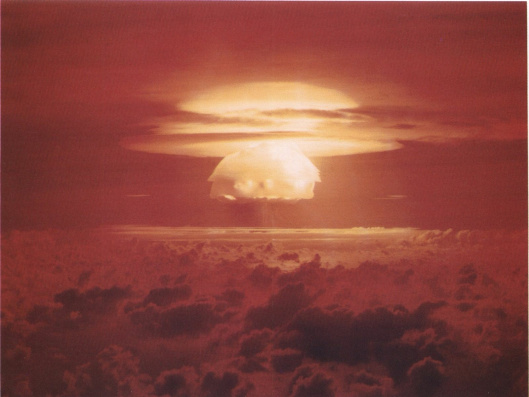
More powerful than Hiroshima: how the largest ever nuclear weapons test built a nation of leaders in the Marshall Islands.
Shiva Gounden and Shaun Burnie , Greenpeace 28th Feb 2025, https://www.greenpeace.org/international/story/65565/nuclear-victims-remembrance-day-united-states-must-comply-with-marshall-islands-demands-for-recognition-and-nuclear-justice/
71 years ago, on Bikini Atoll in the Marshall Islands, a nuclear bomb with the codename “Castle Bravo”, exploded with an energy of 15 megatons. The mushroom cloud reached 40 kilometres into the atmosphere, resulting in thousands of square kilometres of the Pacific Ocean being contaminated by radioactivity. Its explosive yield was 1000 times more powerful than the Hiroshima bomb; and within four hours of the explosion, radioactive fallout made up of crushed coral, water, and radioactive particles, rained down over inhabited atolls, including Rongelap Atoll, which was 150 kilometres away. A fine white ash landed on the heads and bare arms of people standing in the open, dissolving into water supplies and drifting into houses. Witnesses of the Bravo nuclear fireball described seeing a second sun rising in the west, just before the terrifying shock waves hit them.
For the people of the Marshall Islands, that day on March 1 1954 will forever be known as Remembrance Day – the anniversary of Castle Bravo, the largest ever nuclear weapons ‘test’ conducted by the United States military.
In the 1950s, after the explosion, U.S. government scientists warned that the people of Marshall Islands were subjected to “high sub-lethal dose of gamma radiation, extensive beta burns of the skin, and significant internal absorption of fission products”. They were subjected to decades of medical experiments run by secretive U.S. laboratories, later to be discovered as “Project 4.1”.
71 years after the detonation, there remains no cancer clinic in the whole country. Many of the citizens still live in permanent exile, with some of the islands vaporised by nuclear weapons, while others remain too radioactive for safe return. The consequences of Castle Bravo have echoed through generations of the people in the Marshall Islands who have been denied the right to justice, proper medical care, and full reparation for loss and damage.
“After centuries of colonial rule, the people of the Marshall Islands and the wider Pacific, were made 20th century victims of a nuclear arms race which for them was never a ‘Cold War’,” said Shiva Gounden, Head of Pacific at Greenpeace Australia Pacific. “But all through this, their decades of resilience, resistance and refusal to be silenced in their quest for nuclear justice, has been an inspiration across generations. The proud people of the Marshall Islands have retained their profound and deep connection to their Pacific home, despite all efforts to destroy that connection through displacement and contamination. That same determination is now evident in their response to the devastating impacts of climate change. The refusal of the U.S. to meet in full their obligations, is matched today by the neo-colonial forces which deny the right of Pacific islanders to climate justice, funds for climate adaptation and mitigation, and financing for loss and damage. Today, we pay our deepest respects to the people of the Marshall Islands and their demands for nuclear and climate justice.”
The Marshall Islands government continues its strenuous efforts to secure compensation and justice from the U.S. government. It received US$150 million in nuclear compensation under its 1986 Compact of Free Association (COFA) with the U.S. The COFA established a tribunal to adjudicate compensation claims. The tribunal sought over US$3 billion in today’s dollars that the U.S. has never paid. In addition the US government has left the Marshallese with a “ticking time bomb” – the Runit Dome. After years of nuclear testing, a concrete dome measuring 114 meters in diameter and filled with radioactive waste has been left to the Marshallese. Climate change and rising sea levels have caused cracks to appear; and since the Marshall Islands independence in the late 70s, the US has absolved all responsibility of the maintenance of the Dome and have left it to the Marshall Islands government.
Like the resilient people of the Marshall Islands who refuse to give up, Greenpeace stands in genuine and deep solidarity by elevating the voices and stories of the communities impacted by the testing of nuclear weapons and the dangers it imposes. As their people are today pursuing those responsible for their suffering through the human rights institutions of the United Nations, Greenpeace will also continue to highlight this injustice. Jimwe im Maron
This article was originally published in 2024, to mark the 70 year anniversary of the Castle Bravo test. In 1957, just three years after the detonation, the people of Rongelap were told by the US government their island was deemed safe and asked to return. Decades later, after experiencing too many health complications and finding the island unsafe to live in, the people of Rongelap asked for assistance from Greenpeace; and in 1985, the Rainbow Warrior helped evacuate them from their home and move them to Mejatto Island.
In 2025, the Rainbow Warrior will be visiting again – this time to support and amplify the Marshall Islands’ courageous ongoing call for justice and fight for systemic change at a global level.
Shiva Gounden is the Head of Pacific at Greenpeace Australia Pacific
Shaun Burnie is International Climate & Nuclear Campaigner for Greenpeace International.
ELON AND THE MILITARY-INDUSTRIAL-COMPLEX

Bruce Gagnon, Feb 28, 2025, Pentagon and StarLink
“…………………………………………………………………………………………….Until he entered the Trump White House, many still perceived Musk as a radical tech industry outsider. Yet this was never the case. From virtually the beginning of his career, Musk’s path has been shaped by his exceptionally close relationship with the U.S. national security state, particularly with Mike Griffin of the CIA.

From 2002 to 2005, Griffin led In-Q-Tel, the CIA’s venture capitalist wing. In-Q-Tel is an organization dedicated to identifying, nurturing, and working with tech companies that can provide Washington with cutting-edge technologies, keeping it one step ahead of its competition.
Griffin was an early believer in Musk. In February 2002, he accompanied Musk to Russia, where the pair attempted to purchase cut-price intercontinental ballistic missiles to start SpaceX. Griffin spoke up for Musk in government meetings, backing him as a potential “Henry Ford” of the tech and military-industrial complex.
After In-Q-Tel, Griffin became the chief administrator of NASA. In 2018, President Trump appointed him the Under Secretary of Defense for Research and Engineering. While at NASA, Griffin brought Musk in for meetings and secured SpaceX’s big break. In 2006, NASA awarded the company a $396 million rocket development contract – a remarkable “gamble,” in Griffin’s words, especially as it had never launched a rocket. National Geographic wrote that SpaceX “never would have gotten to where it is today without NASA.” And Griffin was essential to this development. Still, by 2008, both SpaceX and Tesla Motors were in dire straits, with Musk unable to make payroll and assuming both businesses would go bankrupt. It was at that point that SpaceX was savedby an unexpected $1.6 billion NASA contract for commercial cargo services.
Today, the pair remain extremely close, with Griffin serving as an official advisor to Castelion. A sign of just how strong this relationship is that, in 2004, Musk named his son “Griffin” after his CIA handler.
Today, SpaceX is a powerhouse, with yearly revenues in the tens of billions and a valuation of $350 billion. But that wealth comes largely from orders from Washington. Indeed, there are few customers for rockets other than the military or the various three-letter spying agencies.
In 2018, SpaceX won a contract to blast a $500 million Lockheed Martin GPS into orbit. While military spokespersons played up the civilian benefits of the launch, the primary reason for the project was to improve America’s surveillance and targeting capabilities. SpaceX has also won contracts with the Air Force to deliver its command satellite into orbit, with the Space Development Agency to send tracking devices into space, and with the National Reconnaissance Office to launch its spy satellites. All the “big five” surveillance agencies, including the CIA and the NSA, use these satellites.
Therefore, in today’s world, where so much intelligence gathering and target acquisition is done via satellite technology, SpaceX has become every bit as important to the American empire as Boeing, Raytheon, and General Dynamics. Simply put, without Musk and SpaceX, the U.S. would not be able to carry out such an invasive program of spying or drone warfare around the world.

The repugnantly infantile libertarian extremist Elon Musk
An example of how crucial Musk and his tech empire are to the continuation of U.S. global ambitions can be found in Ukraine. Today, around 47,000 Starlinks operate inside the country. These portable satellite dishes, manufactured by SpaceX, have kept both Ukraine’s civilian and military online. Many of these were directly purchased by the U.S. government via USAID or the Pentagon and shipped to Kiev.
In its hi-tech war against Russia, Starlink has become the keystone of the Ukrainian military. It allows for satellite-based target acquisition and drone attacks on Russian forces. Indeed, on today’s battlefield, many weapons require an internet connection. One Ukrainian official told The Times of London that he “must” use Starlink to target enemy forces via thermal imaging.
The controversial mogul has also involved himself in South American politics. In 2019, he supported the U.S.-backed overthrow of socialist president Evo Morales. Morales suggested that Musk financed the insurrection, which he dubbed a “lithium coup.” When directly charged with his involvement, Musk infamously replied, “We will coup whoever we want! Deal with it!” Bolivia is home to the world’s largest lithium reserves, a metal crucial in producing batteries for electric vehicles such as the ones in Musk’s Tesla cars.
In Venezuela last year, Musk went even further, supporting the U.S.-backed far-right candidate against socialist president Nicolás Maduro. He even went so far as to suggest he was working on a plan to kidnap the sitting president. “I’m coming for you Maduro. I will carry you to Gitmo on a donkey,” he said, referencing the notorious U.S. torture center.
More recently, Musk has thrown himself into American politics, funding and campaigning for President Trump, and will now lead Trump’s new Department of Government Efficiency (DOGE). DOGE’s stated mission is to cut unnecessary and wasteful government spending. However, with Musk at the helm, it seems unlikely that the billions of dollars in military contracts and tax incentives his companies have received will be on the chopping block.

At Trump’s inauguration, Musk garnered international headlines after he gave two Sieg Heil salutes – gestures that his daughter felt were unambiguously Nazi. Musk – who comes from a historically Nazi-supporting family – took time out from criticizing the reaction to his salute to appear at a rally for the Alternative für Deutschland Party. There, he said that Germans place “too much focus on past guilt” (i.e., the Holocaust) and that “we need to move beyond that.” “Children should not feel guilty for the sins of their parents – their great-grandparents even,” he added to raucous applause.
The tech tycoon’s recent actions have provoked outrage among many Americans, claiming that fascists and Nazis do not belong anywhere near the U.S. space and defense programs. In reality, however, these projects, from the very beginning, were overseen by top German scientists brought over after the fall of Nazi Germany. Operation Paperclip transported more than 1,600 German scientists to America, including the father of the American lunar project, Wernher von Braun. Von Braun was a member of both the Nazi Party and the infamous elite SS paramilitary, whose members oversaw Hitler’s extermination camps.
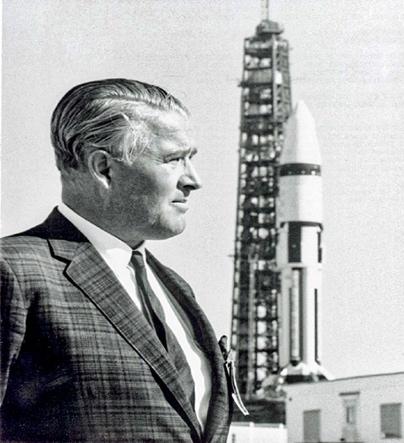
Thus, Nazism and the American empire have, for a long time, gone hand in hand. Far more disturbing than a man with fascist sympathies being in a position of power in the U.S. military or space industry, however, is the ability the United States is seeking for itself to be impervious to intercontinental missile attacks from its competitors.
On the surface, Washington’s Iron Dome plan may sound defensive in nature. But in reality, it would give it a free hand to attack any country or entity around the world in any way it wishes – including with nuclear weapons. This would upend the fragile nuclear peace that has reigned since the early days of the Cold War. Elon Musk’s help in this endeavor is much more worrying and dangerous than any salutes or comments he could ever make. https://brucegagnon177089.substack.com/p/the-pentagon-and-starlink-satellites?utm_source=post-email-title&publication_id=3720343&post_id=158057576&utm_campaign=email-post-title&isFreemail=false&r=c9zhh&triedRedirect=true&utm_medium=email
The Supreme Court faces the absurdly difficult problem of where to put nuclear waste

And so it now falls to the Supreme Court to decide whether this latest attempt to find a place to store some of the most undesirable trash on the planet must falter on the shores of NIMBYism.
America’s worst NIMBY problem comes to the Supreme Court.
by Ian Millhiser, Vox , 26th Feb 2025,
https://www.vox.com/scotus/399304/supreme-court-nuclear-waste-texas-nrc-nimby
On March 5, the Supreme Court will hear a case that may involve one of the most toxic examples of NIMBYism in American history. The issue at the heart of Nuclear Regulatory Commission v. Texas arises out of a predictable problem: Absolutely no one wants radioactive waste anywhere near where they live or work, but that waste has to go somewhere.
Texas, as the case name suggests, involves an effort by the federal government to store nuclear waste in Texas, and at the same time, solve a problem it’s struggled with for nearly 40 years.
To fully understand what’s before the Supreme Court in Texas, we need to go back to 1982, when Congress passed a law that was supposed to establish a permanent repository for all of the radioactive waste produced by America’s nuclear power plants. This waste remains dangerous for thousands or even tens of thousands of years after it is produced, so it made sense to find a spot far from human civilization where it can be buried.
But then NIMBY — that’s “not in my backyard” — politics set in.
The US Department of Energy identified several possible sites for the waste, and eventually culled those sites down to three — one in Texas, one in Washington state, and Yucca Mountain in Nevada. But, in 1987, before these officials could complete the selection process, Congress stepped in and chose the Nevada site for them.
According to a Slate article on the eventual collapse of the Yucca Mountain plan, this choice is easy to explain when you look at who ran Congress at the time. The House speaker was Jim Wright, a representative from Texas. The House majority leader was Tom Foley, from Washington. So Nevada, which had the weakest congressional delegation at the time, lost out.
Indeed, according to Rod McCullum of the Nuclear Energy Institute, “the 1987 Amendment is now commonly referred to as the ‘screw Nevada’ bill.”
By the time President Barack Obama took office, however, the balance of power in Congress had changed. Sen. Harry Reid, of Nevada, was the majority leader. He set out, with the Obama administration’s support, to kill the Yucca Mountain project. Congress, at Obama’s urging, zeroed out funding for Yucca Mountain. Then, just in case the project wasn’t already dead enough, a 2013 court decision ordered the government to stop collecting taxes that would have funded the permanent storage facility until it could figure out where that facility would be located.
And that brings us to the present date, and to the issue before the Supreme Court in the Texas case. Without a permanent storage facility on the horizon, the federal Nuclear Regulatory Commission turned to an older statute which has been understood to allow it to authorize temporary storage facilities for nuclear waste since the 1970s, licensing a private facility to handle storage in Andrews County, Texas.
Texas eventually sued to block this facility, as did a nearby landowner. Their case wound up before a three-judge panel of the United States Court of Appeals for the Fifth Circuit. Two of these judges are from Texas. It’s not hard to guess what happened next.
And so it now falls to the Supreme Court to decide whether this latest attempt to find a place to store some of the most undesirable trash on the planet must falter on the shores of NIMBYism.
Indeed, the 1954 law’s language allowing the NRC to license possession of these three kinds of material is quite broad. The NRC may license possession of special nuclear material for reasons that it “determines to be appropriate to carry out the purposes” of the law. It may license possession of source material for any “use approved by the Commission as an aid to science or industry.” And it may license possession of byproduct material for “industrial uses” or for “such other useful applications as may be developed.”
Though both Texas and the landowner claim that this language should not be read to permit the kind of license at issue in the Texas case, they are swimming against at least a half-century of precedent. The landowner’s brief concedes that the NRC first claimed the authority to license facilities under the 1954 law in 1975 (it claims that this fact cuts against the government’s case, because the NRC waited two decades to claim this power, but the fact remains that this question has been settled for 50 years). The landowner’s brief also concedes that the NRC finalized regulations governing licenses for such facilities in 1980.
That said, the landowner’s brief does make a plausible — if not, exactly, airtight — argument that the 1982 law overrides the 1954 law’s provisions concerning private storage facilities. (Texas’s brief, by contrast, is heavy on overwrought rhetoric claiming that nuclear waste must be stored at Yucca Mountain, and light on the kind of statutory analysis that a responsible judge would rely upon in deciding this case.)
Among other things, the landowner’s legal team points to three provisions of the 1982 law which say that the NRC shall “encourage” storage of nuclear waste “at the site of each civilian nuclear power reactor,” and take other steps to promote such onsite storage. They also point to a provision calling for a federal storage facility. And, they highlight a provision stating that the 1982 law should not be read to “encourage” or “authorize” private storage facilities away from a reactor.
As the landowner’s legal team writes, allowing the Texas facility to exist would “discourage” creating new storage capacity at reactor sites, the opposite of what the 1982 law was supposed to accomplish.
It’s safe to say that, when Congress wrote the 1982 law, they imagined a world where nuclear waste would be stored either at reactor sites or at a federal facility, and not at a private facility like the one at issue in Texas. But the 1982 law also does not explicitly repeal the 1954 law’s provisions governing the three kinds of nuclear material. So the government has a very strong argument that it can still rely on those provisions to license the facility in Texas.
There is a possibility that the Supreme Court will simply make this case go away
There’s a real possibility that the Supreme Court will get rid of this case on procedural grounds, effectively handing a victory to the government.
Briefly, the federal law that both Texas and the landowner relied upon to bring their case to the Fifth Circuit permits “any party aggrieved by the final order” of the NRC to challenge that decision in a federal appeals court. The government argues that, to qualify as a “party,” Texas or the landowner must have participated “as a litigant” in the NRC’s internal proceeding governing the Andrews County license.
While both the state and the landowner took some steps to make their views known to the NRC during that proceeding, neither ever officially became litigants. Thus, the government argues, they do not count as a “party” to that proceeding which can appeal the NRC’s decision, and the Court should toss the case out. The key thing to know about this legal argument is that it may be enough to prevent the justices from reaching the merits of this particular case.
If the Court does reach the merits, however, it faces a difficult decision. Allowing the Andrews County project to move forward will undoubtedly trigger the same kind of political backlash that has accompanied every other attempt to pick a site to store nuclear waste. But, if this project is not allowed, it’s far from clear where the waste would go.
Tonnes of nuclear waste to be sent back to Europe
Federica Bedendo, BBC News, North East and Cumbria, 27th Feb 2025,
https://www.bbc.co.uk/news/articles/cpwddyg7e4do
More than 700 tonnes of nuclear waste is due to be shipped to Europe as part of a project to send back spent fuel to the countries that produced it.
The Sellafield nuclear plant in West Cumbria was tasked with reprocessing the nuclear material used to produce electricity in Germany.
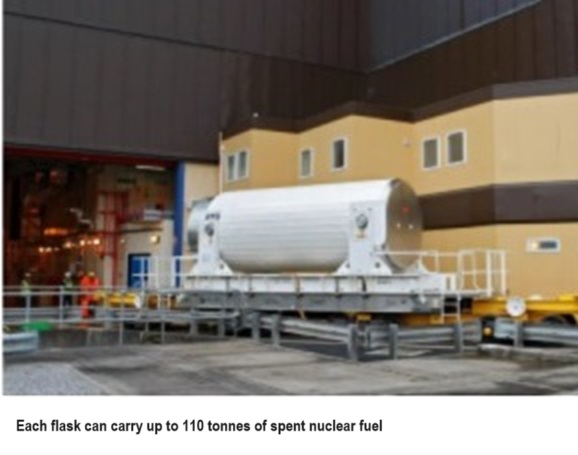
Seven cylindric containers, each carrying up to 110 tonnes of recycled nuclear waste, are due to make the journey to the Isar Federal storage facility by sea on a specialist vessel.
A Sellafield spokesman said the move was a “key component” of the strategy to “repatriate high level waste from the UK”.
This will be the second of three shipments from the UK to the European country.
The first shipment of six containers – known as flasks – to Biblis, was completed in 2020.
Each flask is about 20ft (6m) long, with a 8ft (2.5m) diameter.
The waste will be transported by sea on a specialist vessel to a German port, then onwards by rail to its final destination.
The Pentagon and Starlink Satellites
it is only the existence of a credible deterrent that tempers Washington’s actions around the world. Since the end of the Second World War, the United States has only attacked relatively defenseless countries. The reason the North Korean government remains in place, but those of Libya, Iraq, Syria, and others do not, is the existence of the former’s large-scale conventional and nuclear forces. Developing an American Iron Dome could upset this delicate balance and usher in a new age of U.S. military dominance.
The stakes are high. If successful, the US could again intimidate the world through nuclear blackmail
Bruce Gagnon, Feb 28, 2025
Donald Trump has announced his intention to build a gigantic anti-ballistic missile system to counter Chinese and Russian nuclear weapons, and he is recruiting Elon Musk to help him. The Pentagon has long dreamed of constructing an American “Iron Dome.” The technology is couched in the defense language – i.e., to make America safe again. But like its Israeli counterpart, it would function as an offensive weapon, giving the United States the ability to launch nuclear attacks anywhere in the world without having to worry about the consequences of a similar response. This power could upend the fragile peace maintained by decades of mutually assured destruction, a doctrine that has underpinned global stability since the 1940s.
A NEW GLOBAL ARMS RACE
Washington’s war planners have long salivated at the thought of winning a nuclear confrontation and have sought the ability to do so for decades. Some believe that they have found a solution and a savior in the South African-born billionaire and his technology.
Neoconservative think tank the Heritage Foundation published a video last year stating that Musk might have “solved the nuclear threat coming from China.” It claimed that Starlink satellites from his SpaceX company could be easily modified to carry weapons that could shoot down incoming rockets. As they explain:
Elon Musk has proven that you can put microsatellites into orbit, for $1 million apiece. Using that same technology, we can put 1,000 microsatellites in continuous orbit around the Earth, that can track, engage and shoot down, using tungsten slugs, missiles that are launched from North Korea, Iran, Russia, and China.”
Although the Heritage Foundation advises using tungsten slugs (i.e., bullets) as interceptors, hypersonic missiles have been opted for instead. To this end, a new organization, the Castelion Company, was established in 2023.
Castelion is a SpaceX cutout; six of the seven members of its leadership team and two of its four senior advisorsare ex-senior SpaceX employees. The other two advisors are former high officials from the Central Intelligence Agency, including Mike Griffin, Musk’s longtime friend, mentor, and partner.
Castelion’s advisors and leadership team are extensively connected to SpaceX and the CIA
Castelion’s mission, in its own words, is to be at the cutting edge of a new global arms race. As the company explains:
Despite the U.S. annual defense budget exceeding those of the next ten biggest spenders combined, there’s irrefutable evidence that authoritarian regimes are taking the lead in key military technologies like hypersonic weapons. Simply put – this cannot be allowed to happen.”
The company has already secured gigantic contracts with the U.S. military, and reports suggest that it has made significant strides toward its hypersonic missile goals.
WAR AND PEACE
Castelion’s slogan is “Peace Through Deterrence.” But in reality, the U.S. achieving a breakthrough in hypersonic missile technology would rupture the fragile nuclear peace that has existed for over 70 years and usher in a new era where Washington would have the ability to use whatever weapons it wished, anywhere in the world at any time, safe in the knowledge that it would be impervious to a nuclear response from any other nation.
In short, the fear of a nuclear retaliation from Russia or China has been one of the few forces moderating U.S. aggression throughout the world. If this is lost, the United States would have free rein to turn entire countries – or even regions of the planet – into vapor. This would, in turn, hand it the power to terrorize the world and impose whatever economic and political system anywhere it wishes.
If this sounds fanciful, this “Nuclear Blackmail” was a more-or-less official policy of successive American administrations in the 1940s and 1950s. The United States remains the only country ever to drop an atomic bomb in anger, doing so twice in 1945 against a Japanese foe that was already defeated and was attempting to surrender.
President Truman ordered the destruction of Hiroshima and Nagasaki as a show of force, primarily to the Soviet Union. Many in the U.S. government wished to use the atomic bomb on the U.S.S.R. President Truman immediately, however, reasoned that if America nuked Moscow, the Red Army would invade Europe as a response…………………………………………………………………………………………………………………………………………………..
In the end, the Soviet Union was able to successfully develop a nuclear weapon before the U.S. was able to produce hundreds. Thus, the idea of wiping the U.S.S.R. from the face of the Earth was shelved. Incidentally, it is now understood that the effects of dropping hundreds of nuclear weapons simultaneously would likely have sparked vast firestorms across Russia, resulting in the emission of enough smoke to choke the Earth’s atmosphere, block out the sun’s rays for a decade, and end organized human life on the planet.
With the Russian nuclear window closing by 1949, the U.S. turned its nuclear arsenal on the nascent People’s Republic of China.
The U.S. invaded China in 1945, occupying parts of it for four years until Communist forces under Mao Zedong forced both them and their Nationalist KMT allies from the country. During the Korean War, some of the most powerful voices in Washington advocated dropping nuclear weapons on the 12 largest Chinese cities in response to China entering the fray. Indeed, both Truman and his successor, Dwight D. Eisenhower, publicly used the threat of the atomic bomb as a negotiating tactic.
Routed on the mainland, the U.S.-backed KMT fled to Taiwan, establishing a one-party state. In 1958, the U.S. also came close to dropping the bomb on China to protect its ally’s new regime over control of the disputed island – an episode of history that resonates with the present-day conflict over Taiwan.
However, by 1964, China had developed its own nuclear warhead, effectively ending U.S. pretensions and helping to usher in the détente era of good relations between the two powers—an epoch that lasted well into the 21st century.
In short, then, it is only the existence of a credible deterrent that tempers Washington’s actions around the world. Since the end of the Second World War, the United States has only attacked relatively defenseless countries. The reason the North Korean government remains in place, but those of Libya, Iraq, Syria, and others do not, is the existence of the former’s large-scale conventional and nuclear forces. Developing an American Iron Dome could upset this delicate balance and usher in a new age of U.S. military dominance.
NUKING JAPAN? OK. NUKING MARS? EVEN BETTER!
Musk, however, has downplayed both the probability and the consequences of nuclear war. On The Lex Friedman Podcast, he described the likelihood of a terminal confrontation as “quite low.” And while speaking with Trump last year, he claimed that nuclear holocaust is “not as scary as people think,” noting that “Hiroshima and Nagasaki were bombed, but now they are full cities again.” President Trump agreed.
According to the International Campaign to Abolish Nuclear Weapons, there are over 12,000 warheads in the world, the vast majority of them owned by Russia and the United States. While many consider them a blight on humanity and favor their complete eradication, Musk advocates building thousands more, sending them into space, and firing them at Mars.
Musk’s quixotic plan is to terraform the Red Planet by firing at least 10,000 nuclear missiles at it. The heat generated by the bombs would melt its polar ice caps, releasing carbon dioxide into the atmosphere. The rapid greenhouse effect triggered, the theory goes, would raise Mars’ temperatures (and air pressure) to the point of supporting human life.
Few scientists have endorsed this idea. Indeed, Dmitry Rogozin, then-head of Russian state space agency Roscosmos, labeled the theory completely absurd and nothing more than a cover for filling space with American nuclear weapons aimed at Russia, China, and other nations, drawing Washington’s ire.
“We understand that one thing is hidden behind this demagogy: This is a cover for the launch of nuclear weapons into space,” he said. “We see such attempts, we consider them unacceptable, and we will hinder this to the greatest extent possible,” he added.
The first Trump administration’s actions, including withdrawing from multiple international anti-ballistic missile treaties, have made this process more difficult.
ELON AND THE MILITARY-INDUSTRIAL-COMPLEX……………………………………………………………. more https://brucegagnon177089.substack.com/p/the-pentagon-and-starlink-satellites?utm_source=post-email-title&publication_id=3720343&post_id=158057576&utm_campaign=email-post-title&isFreemail=false&r=c9zhh&triedRedirect=true&utm_medium=email
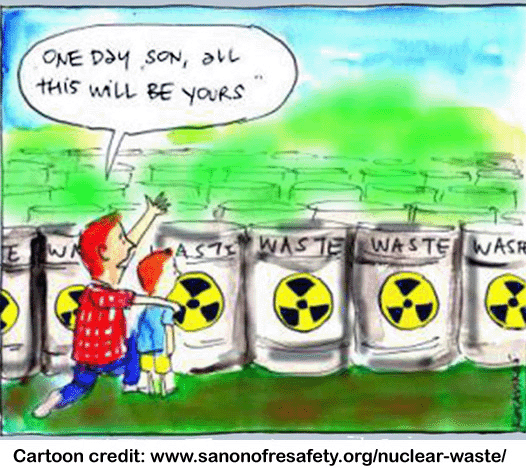
Letter: Hinkley Point C will be a Sellafield waste dump
By Jo Smoldon,
Burnham & Highbridge Weekly News 25th Feb 2025, https://www.burnhamandhighbridgeweeklynews.co.uk/news/24957412.letter-hinkley-point-c-will-sellafield-waste-dump/
In response to your Hinkley article around all the jobs created at Hinkley Point C, yes, of course it is good that the nuclear industry is training people to understand the nuclear sites and maybe later the nuclear process.
Nuclear, due to its very, very long-term footprint, has to be understood for thousands of years to come when the radioactive waste will need managing at high costs and high risk on this Hinkley location.
Trying to attract young people into a subject that is very antiquated in its science has been something that government and business will have to invest in forever.
Nuclear power for electricity is made by the last century science of steam driving turbines to condense to hot water.
Two-thirds of the energy produced from the reactors is thrown out in the form of hot water to be discharged into the Severn Estuary, hardly a ‘low-carbon energy’ if looked at in real terms!
What hasn’t been mentioned with all this bigging up the Hinkley site is that it will be the big Sellafield waste dump of the south, as after B station waste has been transferred to Sellafield, no more nuclear waste will move from Somerset.
Radioactive waste will remain on the North Somerset coast forever, how does that fit with the predicted sea level rise, extreme coastal events and Somerset’s regular flooding events?
IAEA Director General Statement on fire Situation in Chernobyl nuclear station

IAEA, 27 Feb 25
Two weeks after it was hit by a drone, Ukrainian firefighters are still trying to extinguish smouldering fires within the large structure built over the reactor destroyed in the 1986 Chornobyl nuclear accident, Director General Rafael Mariano Grossi of the International Atomic Energy Agency (IAEA) said today.
With unrestricted access, the IAEA team based at the site has been closely monitoring the situation following the strike early in the morning on 14 February that pierced a big hole in the New Safe Confinement (NSC), designed to prevent any potential release into the atmosphere of radioactive material from the Shelter Object covering the damaged reactor, and to protect it from external hazards………………………….
Working in shifts, more than 400 emergency response personnel have been participating in the site’s efforts to manage the aftermath of the drone strike.
“The firefighters and other responders are working very hard in difficult circumstances to manage the impact and consequences of the drone strike. It was clearly a serious incident in terms of nuclear safety, even though it could have been much worse. As I have stated repeatedly during this devastating war, attacking a nuclear facility must never happen,” Director General Grossi said……………………………………………………………………. https://www.iaea.org/newscenter/pressreleases/update-278-iaea-director-general-statement-on-situation-in-ukraine
Total collapse of vital Atlantic currents unlikely this century, study finds

Damian Carrington, Guardian 26th Feb 2025
Climate scientists caution, however, that even weakened currents would cause profound harm to humanity.
Vital Atlantic Ocean currents are unlikely to completely collapse this century, according to a study, but scientists say a severe weakening remains probable and would still have disastrous impacts on billions of people.
The Atlantic meridional overturning circulation (Amoc) is a system of currents that plays a crucial role in the global climate. The climate crisis is weakening the complex system, but determining if and when it will collapse is difficult.
Studies based on ocean measurements indicate that the Amoc is becoming unstable and approaching a tipping point, beyond which a collapse will be unstoppable. They have suggested this would happen this century, but there are only 20 years of direct measurements and data inferred from earlier times bring large uncertainties.
Climate models have indicated that a collapse is not likely before 2100, but they might have been unrealistically stable compared with the actual ocean system………………………………………………………………………………………. https://www.theguardian.com/environment/2025/feb/26/total-collapse-of-vital-atlantic-currents-unlikely-this-century-study-finds
‘Fish disco’ row risks fresh delays to Hinkley Point nuclear plant
EDF has been urged by campaigners to stick with plans to install underwater
loudspeakers to deter fish in the Bristol Channel, as the energy company
grapples with delays to construction of its Hinkley Point C nuclear
reactor.
The row over the “fish disco” deterrent, as it is known in
Whitehall circles, marks the latest salvo in the UK’s long-running battle
to balance growth with environmental protections. Mark Lloyd, chief
executive of The Rivers Trust charity, said France’s state-owned energy
company should keep its commitment to the acoustic fish deterrent, as part
of its Hinkley Point C project.
His comments follow warnings that wrangling
over fish protection risks further delaying completion of the Somerset
power plant, which is already several years behind schedule and billions of
pounds over budget. Plans for the deterrent system involve 288 underwater
speakers that would produce underwater noise louder than a jumbo jet all
day, every day for six decades, according to EDF.
Despite previously
agreeing to build an “acoustic fish deterrent”, EDF is now trying to
scrap those plans, saying they would endanger divers, and is instead
proposing salt marshes to shelter fish. But Lloyd argued that, unless the
acoustic deterrent was installed, “there are likely to be local
extinctions and a very significant impact on marine species throughout the
South West and the Irish Sea”. EDF rejects this characterisation,
pointing out that regulators estimate the amount of fish that will be
harmed without the deterrent is 44 tonnes per year, equivalent to an annual
catch of one small fishing vessel.
FT 26th Feb 2025,
https://www.ft.com/content/28c4cade-d477-4df5-a4b4-cf5ea8dfac95
Nuclear Decommissioning Authority budget raises Sellafield safety concerns
Wednesday 26 February 2025,
https://www.unitetheunion.org/news-events/news/2025/february/nuclear-decommissioning-authority-budget-raises-sellafield-safety-concerns
Safety could also be impacted at 16 other Nuclear Decommissioning Authority sites
Safety concerns over the Nuclear Decommissioning Authority (NDA) budget, which includes Sellafield as well as UK-wide services for nuclear waste and restoration, have been raised by Unite, the UK’s leading union.
The NDA group is responsible for decommissioning and cleaning up 17 nuclear sites. The group’s key operating companies include Sellafield, Nuclear Restoration Services (NRS) and Nuclear Waste Services (NWS).
The CEOs of all the operating companies have all stated that their current budgets are not enough to provide full services.
Unite general secretary Sharon Graham said: “Unite is extremely concerned that UK’s workers at Sellafield, NRS and NWS could be put at risk through efforts to cut costs. If the NDA budget isn’t fit for purpose, the government needs to increase it. Unite will not tolerate attacks on our members’ jobs or any changes that could jeopardise their health and safety.”
Unite national officer Simon Coop said: “Sellafield, NRS and NWS must fully consult with Unite before taking any steps that could endanger workers or impact their jobs, pay or conditions. We will not hesitate to defend our members if actions are taken that put them at risk.”
1 This Month

Petition to revoke the licensing of the Near Surface Nuclear Disposal Facility (NSDF) at Chalk River. https://www.ourcommons.ca/petitions/en/Petition/Details?Petition=e-7247


of the week – STOP SMALL MODULAR REACTORS IN CANADA
To see nuclear-related stories in greater depth and intensity – go to https://nuclearinformation.wordpress.com
-
Archives
- March 2026 (152)
- February 2026 (268)
- January 2026 (308)
- December 2025 (358)
- November 2025 (359)
- October 2025 (376)
- September 2025 (258)
- August 2025 (319)
- July 2025 (230)
- June 2025 (348)
- May 2025 (261)
- April 2025 (305)
-
Categories
- 1
- 1 NUCLEAR ISSUES
- business and costs
- climate change
- culture and arts
- ENERGY
- environment
- health
- history
- indigenous issues
- Legal
- marketing of nuclear
- media
- opposition to nuclear
- PERSONAL STORIES
- politics
- politics international
- Religion and ethics
- safety
- secrets,lies and civil liberties
- spinbuster
- technology
- Uranium
- wastes
- weapons and war
- Women
- 2 WORLD
- ACTION
- AFRICA
- Atrocities
- AUSTRALIA
- Christina's notes
- Christina's themes
- culture and arts
- Events
- Fuk 2022
- Fuk 2023
- Fukushima 2017
- Fukushima 2018
- fukushima 2019
- Fukushima 2020
- Fukushima 2021
- general
- global warming
- Humour (God we need it)
- Nuclear
- RARE EARTHS
- Reference
- resources – print
- Resources -audiovicual
- Weekly Newsletter
- World
- World Nuclear
- YouTube
-
RSS
Entries RSS
Comments RSS
 nuclear-news