Trump threatens bombs if Iran doesn’t make nuclear deal

Canberra Times, By Doina Chiacu and David Ljunggren, March 31 2025
US President Donald Trump has threatened Iran with bombing and secondary tariffs if Tehran does not come to an agreement with Washington over its nuclear program.
In Trump’s first remarks since Iran rejected direct negotiations with Washington last week, he told NBC News on Sunday that US and Iranian officials were talking, but did not elaborate.
“If they don’t make a deal, there will be bombing,” Trump said in a telephone interview.
“It will be bombing the likes of which they have never seen before.”
“There’s a chance that if they don’t make a deal, that I will do secondary tariffs on them like I did four years ago.”
Iran sent a response through Oman to a letter from Trump urging Tehran to reach a new nuclear deal, saying its policy was to not engage in direct negotiations with the United States while under its maximum pressure campaign and military threats, Tehran’s foreign minister was quoted as saying on Thursday.
Iranian President Masoud Pezeshkian reiterated the policy on Sunday. “Direct negotiations (with the US) have been rejected, but Iran has always been involved in indirect negotiations, and now too, the Supreme Leader has emphasised that indirect negotiations can still continue,” he said, referring to Ayatollah Ali Khamenei.
In the interview, Trump also threatened so-called secondary tariffs, which affect buyers of a country’s goods, on both Russia and Iran. He signed an executive order last week authorising such tariffs on buyers of Venezuelan oil…………………………………….. https://www.canberratimes.com.au/story/8930263/trump-threatens-bombs-if-iran-doesnt-make-nuclear-deal/
Quakers condemn police raid on Westminster Meeting House

Quakers 28th March 2025, https://www.quaker.org.uk/news-and-events/news/quakers-condemn-police-raid-on-westminster-meeting-house
Police broke into a Quaker Meeting House last night (27 March) and arrested six young people holding a meeting over concerns for the climate and Gaza.
Quakers in Britain strongly condemned the violation of their place of worship which they say is a direct result of stricter protest laws removing virtually all routes to challenge the status quo.
Just before 7.15pm more than 20 uniformed police, some equipped with tasers, forced their way into Westminster Meeting House.
They broke open the front door without warning or ringing the bell first, searching the whole building and arresting six women attending the meeting in a hired room.
The Police, Crime, Sentencing and Courts Act 2022 and the Public Order Act 2023 have criminalised many forms of protest and allow police to halt actions deemed too disruptive.
Meanwhile, changes in judicial procedures limit protesters’ ability to defend their actions in court. All this means that there are fewer and fewer ways to speak truth to power.
Quakers support the right to nonviolent public protest, acting themselves from a deep moral imperative to stand up against injustice and for our planet.
Many have taken nonviolent direct action over the centuries from the abolition of slavery to women’s suffrage and prison reform.
Paul Parker, recording clerk for Quakers in Britain, said: “No-one has been arrested in a Quaker meeting house in living memory.
“This aggressive violation of our place of worship and the forceful removal of young people holding a protest group meeting clearly shows what happens when a society criminalises protest.
“Freedom of speech, assembly, and fair trials are an essential part of free public debate which underpins democracy.”
Will Texas Become ‘the Epicenter of a National Nuclear Renaissance’?
A new bill would create a taxpayer-funded incentive program of at least $2 billion for nuclear power plants.
By Arcelia Martin, 24Mar 25
Texas lawmakers are considering a bill to
resuscitate the state’s nuclear power industry through a taxpayer-funded
incentives program. State Rep. Cody Harris, a Republican from Palestine in
East Texas, proposed allocating $2 billion toward a fund to create the
Texas Advanced Nuclear Deployment Office. The bill proposes using public
dollars to help fund nuclear construction, provide grants for reactors and
fund development research. HB 14 would also create a state coordinator to
assist in the state and federal permitting processes.
Inside Climate News 24th March 2025,
https://insideclimatenews.org/news/24032025/texas-national-nuclear-renaissance/
As Nuke Power Dies, Lithium Must Not Be the New Plutonium
https://columbusfreepress.com/article/nuke-power-dies-lithium-must-not-be-new-plutonium-2 30 Mar 25
Atomic Energy’s death spiral has spawned a run to green power.
But the toxic mineral lithium has become a critical pitfall…with clear ways around it that demand attention.
Humankind’s 400+ licensed large commercial reactors embody history’s most expensive technological failure.
Once hyped as “too cheap to meter,” just three “Peaceful Atom” plants have opened in the US since 1996, all of them very late and hugely over budget. Four at Japan’s Fukushima blew up in 2011, with ever-escalating economic, ecological and biological costs. Two in South Carolina are outright $9 billion failures. Projects in Georgia (US), Finland, France and the UK have come with catastrophic delays, overruns and cancellations. So have much-hyped Small Modular Reactors, and the taxpayer-funded idea of restarting nukes already dead.
And in the post DeepSeek era, gargantuan projected power demands for Artificial Intelligence and crypto are coming back to Earth.
Meanwhile the US now gets far more usable electricity from solar, wind and geothermal than from coal or nuclear. China’s wind/solar investments now dwarf its nukes, whose new construction plans are shrinking fast . Likewise those for the world as a whole (except among countries wanting to build nuclear weapons).
Despite nearly seven decades of operation, commercial atomic power still can’t get comprehensive private insurance against the next Fukushima. The recent (likely Russian) February 24, 2025 explosion at Chernobyl warned that a single drone or military mis-hap could ignite yet another mega-radiation release.
None of which will deter a radioactive grab for taxpayer billions. While gutting government, Team Trump is hell-bent to spew still more money at this dying technology. New nukes, SMRs and zombie reactor revivals will get gargantuan sums while generating little if any actual electricity. Corporate Democrats like Gavin Newsom and Gretchen Whitmer will do all they can to stall the green revolution.
Nonetheless, amidst the global rush to renewables, the toxic, expensive mineral lithium is slated for millions of batteries worldwide.
Some will be at the heart of electric cars. Others will back up solar and wind turbines for “when the sun doesn’t shine and the wind doesn’t blow.”
Powerful, efficient, and relatively lightweight, lithium has been viewed as essential for use in electric vehicles and stationary storage. Billions of dollars have been invested in mining, milling and processing lithium, with far more to come. At its best, it has been envisioned at the core of any green-powered transition.
But lithium is volatile, flammable, toxic, challenging to mine, sustain and re-cycle, with ecological, labor and health issues that must be addressed.
On January 15 and February 18, 2025, fire devastated the 300mgw Moss Landing, California, battery storage facility, among the world’s largest. Faulty maintenance and major techno-failures set 80% of the plant ablaze, emitting massive toxic fallout. So have Tesla vehicles burned in accidents, wildfires and protests.
Health impacts already reported by lithium downwinders tragically recall symptoms from poisonous disasters like Bhopal (India), East Palestine (Ohio), Three Mile Island (PA) and elsewhere. Lithium mining can be ecologically destructive, with significant health and labor issues.
Thankfully, there are superior substitutes on the near horizon. Sodium Ion batteries are heavy, but can be far cheaper, cleaner to mine and easier to recycle than lithium. Chinese auto giant BYD now offers a sodium iron battery sedan cheaper than a lithium Tesla. Iron air, aqueous (water) metal ion, gallium nitride and other unexpected players are likely (sooner or later) to have their place.
When it comes to the millions of solar panels poised to bury nuke power worldwide, activists concerned with electric/magnetic radiation warn that DC/AC “dirty” current must also be carefully managed, requiring updated filters, inverters, micro-grids and more. There are also the on-going problems of eco-destructive bio-fuel production and persistent turbine bird kills.
Fossil/nuclear backers are forever happy to weaponize such techno-challenges. Solartopian advocates have no choice but to fully face them.
Lithium may be a long way from plutonium, high level radioactive waste, or the airborne fallout that cursed Hiroshima andNagasaki, Fukushima and Chernobyl. There are known solar solutions to EMF/inverter challenges. The kwh/bird kill problem has been steadily improving.
While wind turbines don’t kill fish, fossil/nuke burners kill trillions. Agri-voltaics on solarized farmland can be hugely productive. Micro-grids are orders of magnitude safer, cleaner and more efficient than the utility power lines that ignite our forests and cities.
But on a planet we must preserve, in a volatile political and ecological climate, mere “trade-offs” may not be good enough.
With VERY significant economic realities on our side, green advocates can and must phase out not only King CONG (Coal, Oil, Nukes, Gas) but also lithium and other toxic elements, along with EMF emissions, poorly deployed inverters, bird kills, disrupted desert eco-systems, faulty grids, and more.
Perfection may not always be possible…but we need to rapidly evolve to pretty damn close.
Thankfully, unlike the forever escalating cost overruns, delays, techno-failures and eco-impacts of fossil/nuclear fuels, the barriers to overcome on the way to Solartopia seem largely curable, at prices that are sustainable and rewards that are essentially infinite.
Behind the hype -“New wave of smaller, cheaper nuclear reactors sends US states racing to attract the industry “

No modular reactors are operating in the U.S. and a project to build the first, this one in Idaho, was terminated in 2023, despite getting federal aid.
The U.S. remains without a long-term solution for storing radioactive waste
Nuclear also has competition from renewable energies.
New wave of smaller, cheaper nuclear reactors sends US states racing to attract the industry, By ASSOCIATED PRESS, 29 March 2025 https://www.dailymail.co.uk/wires/ap/article-14549543/New-wave-smaller-cheaper-nuclear-reactors-sends-US-states-racing-attract-industry.html
HARRISBURG, Pa. (AP) – With the promise of newer, cheaper nuclear power on the horizon, U.S. states are vying to position themselves to build and supply the industry’s next generation as policymakers consider expanding subsidies and paving over regulatory obstacles.
Advanced reactor designs from competing firms are filling up the federal government’s regulatory pipeline as the industry touts them as a reliable, climate-friendly way to meet electricity demands from tech giants desperate to power their fast-growing artificial intelligence platforms.
The reactors could be operational as early as 2030, giving states a short runway to roll out the red carpet, and they face lingering public skepticism about safety and growing competition from renewables like wind and solar. Still, the reactors have high-level federal support, and utilities across the U.S. are working to incorporate the energy source into their portfolios.
Last year, 25 states passed legislation to support advanced nuclear energy and this year lawmakers have introduced over 200 bills supportive of nuclear energy, said Marc Nichol of the Nuclear Energy Institute, a trade association whose members include power plant owners, universities and labor unions.
“We´ve seen states taking action at ever-increasing levels for the past few years now,” Nichol said in an interview.
Smaller reactors are, in theory, faster to build and easier to site than conventional reactors. They could be factory-built from standard parts and are touted as flexible enough to plunk down for a single customer, like a data center or an industrial complex.
Advanced reactors, called small modular reactors and microreactors, produce a fraction of the energy produced by the conventional nuclear reactors built around the world for the last 50 years. Where conventional reactors produce 800 to 1,000 megawatts, or enough to power about half a million homes, modular reactors produce 300 megawatts or less and microreactors produce no more than 20 megawatts.
Tech giants Amazon and Google are investing in nuclear reactors to get the power they need, as states compete with Big Tech, and each other, in a race for electricity.
For some state officials, nuclear is a carbon-free source of electricity that helps them meet greenhouse gas-reduction goals. Others see it as an always-on power source to replace an accelerating wave of retiring coal-fired power plants.
Tennessee Gov. Bill Lee last month proposed more than $90 million to help subsidize a Tennessee Valley Authority project to install several small reactors, boost research and attract nuclear tech firms.
Long a proponent of the TVA’s nuclear project, Lee also launched Tennessee’s Nuclear Energy Fund in 2023, designed to attract a supply chain, including a multibillion-dollar uranium enrichment plant billed as the state’s biggest-ever industrial investment.
In Utah, where Gov. Spencer Cox announced “Operation Gigawatt” to double the state’s electricity generation in a decade, the Republican wants to spend $20 million to prepare sites for nuclear. State Senate President J. Stuart Adams told colleagues when he opened the chamber’s 2025 session that Utah needs to be the “nation´s nuclear hub.”
Texas Gov. Greg Abbott declared his state is “ready to be No. 1 in advanced nuclear power” as Texas lawmakers consider billions in nuclear power incentives.
Michigan lawmakers are considering millions of dollars in incentives to develop and use the reactors, as well as train a nuclear industry workforce.
One state over, Indiana lawmakers this month passed legislation to let utilities more quickly seek reimbursement for the cost to build a modular reactor, undoing a decades-old prohibition designed to protect ratepayers from bloated, inefficient or, worse, aborted power projects.
In Arizona, lawmakers are considering a utility-backed bill to relax environmental regulations if a utility builds a reactor at the site of a large industrial power user or a retired coal-fired power plant.
Still, the devices face an uncertain future.
No modular reactors are operating in the U.S. and a project to build the first, this one in Idaho, was terminated in 2023, despite getting federal aid.
The U.S. Department of Energy last year, under then-President Joe Biden, estimated the U.S. will need an additional 200 gigawatts of new nuclear capacity to keep pace with future power demands and reach net-zero emissions of planet-warming greenhouse gases by 2050 to avoid the worst effects of climate change.
The U.S. currently has just under 100 gigawatts of nuclear power operating. More than 30 advanced nuclear projects are under consideration or planned to be in operation by the early 2030s, Nichol of the NEI said, but those would supply just a fraction of the 200 gigawatt goal.
Work to produce a modular reactor has drawn billions of dollars in federal subsidies, loan guarantees and more recently tax credits signed into law by Biden.
Those have been critical to the nuclear industry, which expects them to survive under President Donald Trump, whose administration it sees as a supporter.
The U.S. remains without a long-term solution for storing radioactive waste, safety regulators are under pressure from Congress to approve designs and there are serious questions about industry claims that the smaller reactors are efficient, safe and reliable, said Edwin Lyman, director of nuclear power safety at the Union of Concerned Scientists.
Plus, Lyman said, “the likelihood that those are going to be deployable and instantly 100% reliable right out of the gate is just not consistent with the history of nuclear power development. And so it´s a much riskier bet.”
Nuclear also has competition from renewable energies.
Brendan Kochunas, an assistant professor of nuclear engineering at the University of Michigan, said advanced reactors may have a short window to succeed, given the regulatory scrutiny they undergo and the advances in energy storage technologies to make wind and solar power more reliable.
Those storage technologies could develop faster, bring down renewables’ cost and, ultimately, make more economic sense than nuclear, Kochunas said.
The supply chain for building reactors is another question.
The U.S. lacks high-quality concrete- and steel-fabrication design skills necessary to manufacture a nuclear power plant, Kochunas said.
That introduces the prospect of higher costs and longer timelines, he said. While foreign suppliers could help, there also is the fuel to consider.
Kathryn Huff, a former top Energy Department official who is now an associate professor at the University of Illinois Urbana-Champaign, said uranium enrichment capacity in the U.S. and among its allies needs to grow in order to support reactor production.
First-of-their-kind reactors need to get up and running close to their target dates, Huff said, “in order for anyone to have faith that a second or third or fourth one should be built.”
Greenland’s uranium ban likely to continue.

Gordon Edwards, 30 Mar 25
Donald Trump has belligerently bragged that he will “get Greenland” one way or another. The officially stated piurpose is “national security” but there is also a strong underlying motive: possessing the “rich resources” of others.
Greenland has one of the largest identified deposite of “
Rare Earth Elements” (REE), that are always intimately mingled with uranium and thorium. There is a mountain rich in such radioactive ores located very close to the Inuit village of Narsaq (southern Greenland) that developers would like to strip-mine. This project is called Kuannersuit (in the Inuit language Greenlandic) or Kvanefjeld (in Danish).
If approved for mining the main commodity from Narsaq would be rare earths and the secondary commodity would be uranium. The economics of the project dictates marketing both.
However, t
here is currently a ban on uranium mining in Greenland which precludes this mining project from going forward. In 2016 Neils Henrik Hooge was sent to Narsaq by the Canadian group Physicans for Global Survival (PGS), to communicate some of the health-related concerns associated with uranium (and thorium) mining, at the request of the IA (Inuit Ataqatigiit) political party. The ban was enacted a few years afterwards.
PGS in now IPPNWC – International Physicians for the Prevention of Nuclear War, Canada.
Yesterday (March 28) a coalition government was installed in Greenland which includes the IA party. The ban on uranium mining will likely be upheld and extended for the foreseeable future. So probably no Kvanejeld/Kuannersuit project for now.
But Donald Trump wants those rare earth elements from Greenland. Coincidentally, he is bullying Ukraine into surrendering its rare earth minerals to the USA in exchange for Trump’s brokering a limited cease-fire in the war.
The global supply of rare earths is currently a quasi-monopoly of China. These elements are of crucial importance in many electronic applications, including renewable enetrgy sources. America’s billionaires want unfettered access for Artificial Intelligence and other profitable ventures,.
Canada of course is another tempting target for Trump’s rapacious appetite. Among the plentiful natural resources that Canada has been exploiting and exporting routinely, as if there is no tomorrow, almost always at the expense of indigenous peoples and the environment, Trump’s gang knows there rare earth deposits in Northern Ontario’s “Ring of Fire”. He – and presumably his friend Elon Musk – wants them.
Why should Greenland, or Canada, retain control over anything that Donald Trump wants?
He is tired of being treated unfairly!
France’s UK energy apathy poses nuclear problem for Labour
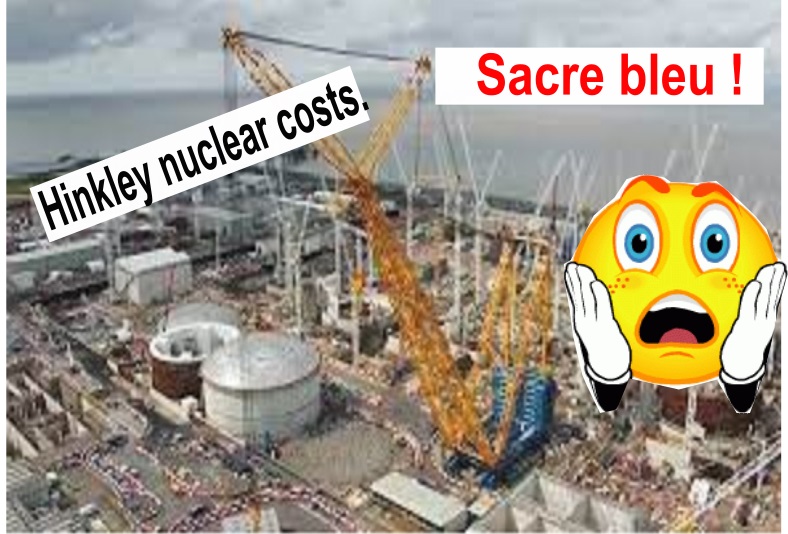
France’s public spending watchdog is advising the country to cut back on its involvement in UK nuclear projects
Brad Gray, Tortoise 27th March 2025, https://www.tortoisemedia.com/2025/03/26/frances-uk-energy-apathy-poses-nuclear-problem-for-labour
EDF has reduced its stake in the Sizewell C nuclear power plant by a further 7.7 per cent, leaving the UK government with an 83.8 per cent share.
In 2022, a government buy-out to allow the Chinese state to exit the project made the UK the leading investor.
Last week Emmanuel Macron fired the EDF chief following a row over energy prices, and France’s public spending watchdog is advising the country to cut back on its involvement in UK nuclear projects and focus on small modular reactors instead.
As France reduces its investment, taxpayers are likely to foot more of the bill than anticipated – a tough pill to swallow as the chancellor slashes public funding.
When complete, Sizewell C is forecast to provide up to 7 per cent of the country’s electricity needs, with reactors lasting 60 years. Right now it’s a political headache.
Dounreay more likely to build up than knock down.

By Iain Grant, 26 March 2025
People are being warned not to expect any of Dounreay’s former fuel or
waste buildings to be levelled any time soon. NRS Dounreay managing
director Dave Wilson was responding to a query posed at the latest meeting
of Dounreay Stakeholder Group (DSG). Mr Wilson said none of the cluster of
buildings deployed in the former fast reactor complex is slated for
demolition in the next couple of years. He added: “Skyline changes in the
short term might be a building going up to store material.
John O Groat Journal 26th March 2025, https://www.johnogroat-journal.co.uk/news/dounreay-more-likely-to-build-up-than-knock-down-377882/
**Plutonium**
Why The US Australia Alliance Needs a Rethink

Australian Independent Media March 29, 2025, By Denis Hay
Description
Why the US Australia alliance needs a rethink. The U.S. is no ally. Discover why Australia must distance itself to avoid war and reclaim its sovereignty.
How Australia Can Safely Distance Itself from U.S. Hegemony
Introduction – The US Australia Alliance: Myth vs Reality
Picture this: You’re sitting in a Brisbane café, sipping a flat white while reading the headlines – Australia has just signed another defence pact with the United States. More American troops, military hardware, and diplomatic praise about our “unbreakable alliance.” Yet, beneath the headlines lies a growing discomfort – are we allies, or are we just a strategic pawn in U.S. global dominance?
Joh Bjelke-Petersen once said that this is just politicians “feeding the chooks.” Empty words. The truth is, the U.S. government doesn’t respect its people, let alone Australia. It sees nations – including its own – as resources to be mined for profit. This article will explore how Australia can break free from this exploitative alliance without putting itself in harm’s way.
The U.S. Government’s Track Record: A Global Power Without Respect
Exploiting Its Own Citizens
Visit Detroit, Michigan – a city once bustling with manufacturing pride. Now, it stands as a ghost town of forgotten promises, where basic water access has become a luxury. Millions of Americans are homeless or working two jobs or more just to survive. U.S. billionaires soared in wealth, while 45 million Americans live impoverished.
Internal reflection: “If they treat their own citizens this way, what hope do allies have?”
Exploiting Other Nations
Let’s take Iraq. The 2003 invasion, sold on lies about weapons of mass destruction, cost hundreds of thousands of lives, all to secure oil. In Libya, a once-stable nation descended into chaos after U.S.-led intervention. This is not defence—it’s corporate imperialism.
When the U.S. backs coups in Latin America or imposes sanctions on countries like Venezuela or Cuba, the motive is always clear: control the global economy for U.S. corporate gain.
The U.S.–Australia Relationship: Not What It Seems
Political Rhetoric vs Reality
Australian and U.S. politicians often repeat phrases like “shared values” and “strong friendship.” But how many Australians were consulted when Pine Gap was set up or when AUKUS was signed?
Dialogue: “This isn’t a partnership. It’s a surrender of our sovereignty,” says a former Australian diplomat.
The Cost of Loyalty
Australia’s blind support for U.S. policy has real consequences:
• Trade tensions with China – our largest trading partner
• Environmental destruction from military exercises on Australian soil
• Loss of independence as U.S. bases expand here without public debate.
Why China Matters More Than Ever
60% of Australia’s exports go to Asia, with China alone accounting for over 25%. Australia’s economy is tightly linked to Chinese demand, from iron ore to wine. Trade disruptions – often driven by political antagonism encouraged by the U.S. – have already cost farmers, winemakers, and miners dearly.
The Danger of Choosing Sides
We risk becoming collateral damage in a U.S.-China conflict. Australia should not repeat its mistakes from Vietnam or Iraq – wars that had nothing to do with our national interest but cost us dearly in blood, treasure, and reputation. This has been the outcome of the US Australia alliance.
Thought: “Must we always fight other nations’ wars? When do we stand up for ourselves?”
Pathways Toward Australian Independence………………………………………..
Phasing Out US Australia Alliance and Military Influence
Start with transparency:
• Conduct a national audit of U.S. bases and agreements.
• Establish parliamentary oversight.
• Hold a public referendum on AUKUS.
Dialogue: “Our security must not come at the cost of our sovereignty,” says Senator David Shoebridge.
………………………………………….more https://theaimn.net/why-the-us-australia-alliance-needs-a-rethink/
Leona Morgan – Rally and March to Abolish Nuclear Weapons in front of the UN
27 Mar,25, Leona Morgan
Indigenous activist from Diné (Navajo) in New Mexico, where their lands remain contaminated by uranium activities, radioactive waste, and radioactive fallout from the first atomic bomb test at “Rally and March to Abolish Nuclear Weapons in front of the UN” March 5, 2025
This is a recording of a rally and march to abolish nuclear weapons that was held on March 5, 2025, across the United Nations Headquarters in New York City. 2025 marks the 80th Anniversary of the first atomic bomb test and the bombings of Hiroshima and Nagasaki. At a time when the risk of nuclear use is the highest since the Cold War, a coalition of U.S. groups held a rally and march in the morning on March 5, 2025, across the United Nations to coincide with the Third Meeting of States Parties to the Treaty on the Prohibition of Nuclear Weapons (TPNW). [ Co-organized by ] Manhattan Project for a Nuclear-Free World NYC Metro Raging Grannies NYC War Resisters League Peace Action New York State Pax Christi New York State Brooklyn For Peace
[ List of Speakers ]…………………………………………………https://www.youtube.com/watch?v=6XB-TQWWIi4
Trump warns of ‘bad, bad things’ for Iran if nuclear deal not reached
https://www.iranintl.com/en/202503289286 29 Mar 25
AS president Donald Trump warned Iran on Friday that “bad, bad things” would happen if Tehran did not agree to a nuclear deal, a day after Iran declined to have direct talks under his stepped-up sanctions.
“My big preference … is we work it out with Iran. But if we don’t work it out, bad, bad things are going to happen to Iran,” Trump told reporters in the Oval Office.
This is what Trump said he conveyed in his letter to Iran’s supreme leader Ali Khamenei last week.
Tehran confirmed on Wednesday that a response to the letter had been sent via Oman.
“Our policy remains not to engage in direct negotiations under maximum pressure and military threats. However, indirect negotiations as existed in the past can continue,” foreign minister Abbas Araghchi said.
Iran denies seeking a nuclear weapon but the UN’s nuclear watchdog says it has enriched more uranium than any state lacking a bomb. While Washington assesses Tehran is not actively building one, it doubts Iranian intentions.
Trump last month reinstated the “maximum pressure” campaign of sanctions on Iran from his first term, with the stated aim of driving its oil sales to zero.
Trump’s remarks come as Iran’s parliament speaker on Friday accused the US of using nuclear talks to pressure Tehran into relinquishing its defense capabilities.
“The US means disarmament when it says negotiation,” Mohammad Bagher Ghalibaf said in a speech during Quds Day rallies in Tehran on Friday. “Our people understand that talks under threat are just a show to impose their will. No wise nation would accept that.”
His comments were echoed by other senior Iranian officials speaking at Quds Day events showcasing Tehran’s solidarity with Palestinians, including Foreign Minister Abbas Araghchi and senior adviser to Iran’s Supreme Leader Ali Larijani.
The US has the power to switch off the UK’s nuclear subs – a big problem as Donald Trump becomes an unreliable partner

Th Conversation, March 28, 2025 , Becky Alexis-Martin, Peace Studies and International Development, University of Bradford
Prime Minister Keir Starmer recently boarded one of the UK’s four nuclear-armed submarines for a photo call as part of his attempts to demonstrate the UK’s defence capabilities as tensions with Russia continue.
However, Starmer faces a problem. The submarine, and the rest of the UK’s nuclear fleet, is heavily reliant on the US as an operating partner. And at a time when the US becomes an increasingly unreliable partner under the leadership of an entirely transactional president, this is not ideal. The US can, if it chooses, effectively switch off the UK’s nuclear deterrent.
British and US nuclear history is irrevocably interwoven. The US and UK cooperated on the Manhattan project, under the 1943 Quebec agreements and the 1944 Hyde Park aide memoire. This work generated the world’s first nuclear weapons, which were deployed on Hiroshima and Nagasaki in 1945.
It also led to the first rupture. In 1946, the US classified UK citizens as “foreign” and prevented them from engaging in secret nuclear work. Collaboration with the UK immediately ceased.
The UK decided to develop its own arsenal of nuclear weapons. The successful detonation of the “Grapple Y” hydrogen bomb in April 1958 cemented its position as a thermonuclear power.
In the meantime, however, Russia’s launch of the Sputnik satellite in 1957 had demonstrated the lethal reach of Soviet nuclear technology. This brought the US and UK back together as nuclear partners…………………………………………..
Serious concerns are now being raised about the UK’s nuclear capacity, given the unpredictability and potential unreliability of the new US administration. Trump could ignore or threaten to terminate the agreement in a show of power or contempt.
The UK’s nuclear subs
The UK’s Trident nuclear deterrence programme consists of four Vanguard nuclear-powered and armed submarines. The UK has some autonomy, as it is operationally independent and controls the decision to launch.
However, it remains dependent on the US because the nuclear technologies at the heart of the Trident system are US designed and leased by Lockheed Martin – and there is no suitable alternative. The Trident system therefore relies on the US for support and maintenance.
The UK is currently in the process of upgrading the current system. But its options seem limited. If the US were to renege on its commitments, the UK would either have to produce its own weapons domestically, collaborate with France or Europe or disarm. Each scenario creates new issues for the UK. Manufacturing nuclear weapons from scratch in the UK, for example, would be a costly and protracted activity.
Technical collaboration with France seems the most plausible back-up option at the moment. The two countries already have a nuclear collaboration treaty in place. France has taken a similar submarine-based approach to deterrence as the UK and French president Emmanuel Macron has suggested its deterrent could be used to protect other European countries. Another alternative would be to spread the cost across Europe and create a European deterrence – but both strategies just re-embed the UK’s current nuclear reliance.
While these weapons may deter a hostile nuclear strike, they have failed to prevent broader acts of aggression. Nuclear weapons have not been used in warfare for 80 years. Perhaps it is time to completely and permanently unshackle the UK from nuclear deterrence, and consider alternative forms of defence.
The UK’s nuclear arsenal is expensive to maintain. The cost of replacing Trident is £205 billion. In 2023, the Ministry of Defence reported that the anticipated costs for supporting the nuclear deterrent would exceed its budget by £7.9 billion over the next ten years. This funding could be channelled into more pressing security threats, such as cybersecurity, terrorism or climate change.
Nuclear weapons will become strategically redundant if the UK cannot act independently. As Nato and the US dominate the global nuclear stage, the UK’s capacity to respond has become contested. The time has come to decide whether the US is really our friend – or a new foe. https://theconversation.com/the-us-has-the-power-to-switch-off-the-uks-nuclear-subs-a-big-problem-as-donald-trump-becomes-an-unreliable-partner-252674
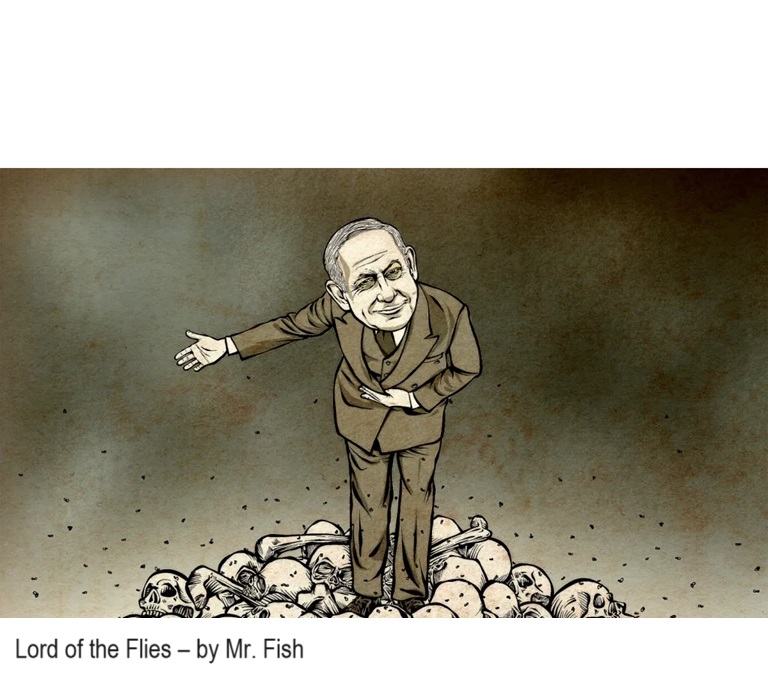
Is your insurance company funding Israeli war crimes?
13 March 2025, Paula Lacey, https://newint.org/arms/2025/your-insurance-company-funding-israeli-war-crimes
A new campaign called Boycott Bloody Insurance exposes the extent of the insurance sector’s financial support for Israel’s assault on Palestine. Paula Lacey reports.
A new report has exposed the extent of the insurance sector’s financial support for Israel’s assault on Palestine. The newly-launched Boycott Bloody Insurance campaign reveals investments totalling over $1.7 billion, from a range of multinational insurers, into companies supplying military equipment used by Israel since 7 October 2023.
‘Insurance giants claim to protect communities, but they’re funnelling our money into war, exploitation, and violence,’ says Monika Nielsen, lead researcher at Boycott Bloody Insurance.
The research details how global insurers such as Allianz, Zurich, AIG, RSA, Aviva and AXA underwrite and fund firms such as Boeing, Lockheed Martin, Elbit Systems and BAE Systems. Many of these companies are already the subject of national campaigns due to their direct implication in documented war crimes in the Gaza Strip, such as attacks on civilians using white phosphorus and precision guided munitions.
Besides those that explicitly supply weaponry and military equipment, other companies such as Maersk – insured by AIG – provide logistical and shipping support to the Israeli military. The Palestinian Youth Movement (PYM) have incorporated the report’s findings into their ongoing campaign ‘Mask off Maersk’.
‘Insurance, just like logistics, is crucial for arms transfers to oppressive regimes,’ says Yara Derbas of the PYM. ‘Our actions target the corporate complicity enabling Israel’s ongoing crimes. This isn’t just about Palestine – it’s about global justice and ending corporate exploitation.’
The Boycott Bloody Insurance campaign calls for urgent civic action against the companies named in the report, as a way of ‘demand[ing] accountability from insurers profiting from human suffering,’ explains Nielsen. Co-ordinated actions across the UK are set to take place on 25 March to urge institutions, charities, and businesses to shift to ethical insurers, incurring reputational damage and financial cost to complicit firms.
This call joins a wider chorus to enact Boycotts, Divestments and Sanctions (BDS) against all companies and institutions complicit in the ethnic cleansing of Gaza. PYM stands alongside a number of pro-Palestine organizations in endorsing the report and campaign, along with the Palestinian BDS National Committee and the Watermelon Index.
This week’s report is the first in a damning series set to be released by Boycott Bloody Insurance over the coming months, with future reports promising similar analyses of the insurance sector’s financial support for harmful industries such as fossil fuel companies, controversial weapons manufacturers and the UK detention industry.
Second shipment of high level waste departs UK for Germany
Second shipment of high level waste departs UK for Germany. As previously
announced, the UK will be returning high level waste (HLW) in the form of
vitrified residues to Germany. The second of three planned shipments is now
safely under way. Seven flasks containing high level waste were transported
from the Sellafield site in West Cumbria to the nearby port of
Barrow-in-Furness by rail. The flasks were then loaded to the specialist
nuclear transport vessel Pacific Grebe, operated by Nuclear Transport
Solutions (NTS).
Sellafield 27th March 2025. https://www.gov.uk/government/news/second-shipment-of-high-level-waste-departs-uk-for-germany
Britain’s worst nuclear disaster: the Windscale fire of 1957
When a routine procedure went wrong in October 1957, a fire broke out at
the Windscale nuclear power station in Cumbria, UK. By the time it was put
out, radiation had been sent across Britain and Europe.
Jonny Wilkes reveals what happened, and why we should be grateful that it wasn’t much
worse. Chernobyl, Three Mile Island, Fukushima: three names that have gone
down in infamy; bywords for the nightmare scenarios that can occur when the
production of nuclear power goes disastrously wrong. Before them all
though, was Windscale.
History Extra 27th March 2025,
https://www.historyextra.com/period/20th-century/atomfall-real-nuclear-windscale-disaster-fire/
1 This Month
Chernobyl: The Lost Tapes – A good documentary on Chernobyl on SBS available On Demand for the next 3 weeks– https://www.sbs.com.au/ondemand/tv-program/chernobyl-the-lost-tapes/2352741955560

of the week–London Campaign for Nuclear Disarmament

Tell the Ukrainian Government to Drop Prosecution of Peace Activist Yurii Sheliazhenko
To see nuclear-related stories in greater depth and intensity – go to https://nuclearinformation.wordpress.com
-
Archives
- April 2026 (139)
- March 2026 (251)
- February 2026 (268)
- January 2026 (308)
- December 2025 (358)
- November 2025 (359)
- October 2025 (376)
- September 2025 (257)
- August 2025 (319)
- July 2025 (230)
- June 2025 (348)
- May 2025 (261)
-
Categories
- 1
- 1 NUCLEAR ISSUES
- business and costs
- climate change
- culture and arts
- ENERGY
- environment
- health
- history
- indigenous issues
- Legal
- marketing of nuclear
- media
- opposition to nuclear
- PERSONAL STORIES
- politics
- politics international
- Religion and ethics
- safety
- secrets,lies and civil liberties
- spinbuster
- technology
- Uranium
- wastes
- weapons and war
- Women
- 2 WORLD
- ACTION
- AFRICA
- Atrocities
- AUSTRALIA
- Christina's notes
- Christina's themes
- culture and arts
- Events
- Fuk 2022
- Fuk 2023
- Fukushima 2017
- Fukushima 2018
- fukushima 2019
- Fukushima 2020
- Fukushima 2021
- general
- global warming
- Humour (God we need it)
- Nuclear
- RARE EARTHS
- Reference
- resources – print
- Resources -audiovicual
- Weekly Newsletter
- World
- World Nuclear
- YouTube
-
RSS
Entries RSS
Comments RSS
 nuclear-news