Trouble at t’mill: local Councils rebel over nuke dump plan

The NFLAs have welcomed today’s statement made by the Leader of East Lindsey District Council that he shall recommend to his Executive that they ‘unanimously withdraw’ the council from the Theddlethorpe Community Partnership and the GDF process at their next meeting.
Coupled with the withdrawal of Millom Town Council from the South Copeland GDF Community Partnership and condemnation by Seascale Parish Council of the imposition of an Area of Focus for Mid-Copeland east of the village, this demonstrates that there is increasing disaffection amongst politicians with the process.
In his statement, ELDC Council Leader Craig Leyland cited the change of prospective site for a possible GDF surface facility from the former Theddlethorpe Conoco gas terminal to a 4km square parcel of farmland between the inland villages of Gayton le Marsh and Great Carlton. This he describes as prime agricultural land that has not had any previous industrial use and that is ‘nestling close to the Lincolnshire Wolds Area of Outstanding Natural Beauty’…………….
NFLA 12th Feb 2025,
https://www.nuclearpolicy.info/news/trouble-at-tmill-local-councils-rebel-over-nuke-dump-plan/
NFLAs endorse international appeal for justice over French nuclear tests
NFLA 13th Feb 2025
Sixty-five years ago (13 February 1960), the first French nuclear test was conducted in its colony of Algeria, exposing French soldiers and Indigenous Tuareg civilians to radiation.
The NFLAs have been campaigning for justice for veterans and local communities impacted by British atomic and nuclear bomb tests in Australia and the Pacific Islands, so in the spirit of solidarity we have joined UK and international partners in endorsing a similar appeal to the French and Algerian Governments over the impact of the ‘Gerboise Bleue’ (‘Blue Jerboa’) test and those which followed.
President Charles de Gaulle ordered a nuclear test in the first quarter of 1960. After a plan to explode a device in Corsica was prevented by public protests, the Nuclear Experiments Operational Group relocated to the Saharan Military Experiments Centre near Reggane in (then) French Algeria.
‘Gerboise Bleue’ (or ‘Blue Jerboa’) was the operational name for the first test of a series. The name combined a reference to one of the colours of the French flag with a rodent that resided in the Sahara Desert. On 13 February 1960, the plutonium bomb was detonated atop a 100-metre steel tower. No journalists were allowed on site, but an eyewitness account given to the French press stated that “the desert was lit up by a vast flash, followed 45 seconds later by an appreciable shock-wave” with “enormous ball of bluish fire with an orange-red centre” followed by a mushroom cloud.
Following the test, France followed the United States, the USSR and the United Kingdom as the world’s fourth nuclear armed power.
With a yield of 70 kilotons, ‘Gerboise Bleue’ was over three times more powerful than the Fat Boy plutonium bomb dropped on Nagasaki and the largest by far of the first test bombs used by any of the previous nuclear powers.
Following this test until 1966, France carried out a further three atmospheric nuclear tests and another thirteen underground tests as the ‘Gerboise’ series at this location.
The French treatment of test veterans and Indigenous communities mirrored that of the UK.
The French Ministry of the Armed Forces maintained that the radioactive effects on humans present at the site would be “weak”, and “well below annual doses.” However, test veterans said that protection gear was lacking and charged the military authorities with using them to study the effects of nuclear radiation on humans. After the later ‘Gerboise Verte’ test, soldiers were sent within 1 km of the hypocentre to practice combat exercises and to drive tanks, being subjected to high levels of radiation for three hours before being offered only a shower as a method to decontaminate.
After the tests, nuclear fallout was detected as far away as Senegal, Ivory Coast, Burkina Faso and Sudan. According to the French NGO, ACRO, Saharan dust blown northwards by strong seasonal winds to France in early 2021 carried measurable levels of radioactive caesium-137 attributable to the ‘Gerboise’ tests……………………………………………………………….. https://www.nuclearpolicy.info/news/nflas-endorse-international-appeal-for-justice-over-french-nuclear-tests/
Nuclear waste plan ‘would scar Lincolnshire Wolds’
BBC UK Sharon Edwards, Political reporter, Lincolnshire, 12th Feb 2025
A council is set to withdraw from talks to bury nuclear waste in the countryside.
Nuclear Waste Services (NWS), a government body, has earmarked an area near Louth, Lincolnshire, to build a disposal facility.
However, East Lindsey District Council (ELDC) leader Craig Leyland said the scheme would “scar” agricultural land, and a consultation process had served only to “antagonise and distress” residents.
NWS thanked the district council for taking part in the talks and said it would continue working with Lincolnshire County Council.
In 2021, the district council joined a community partnership group with NWS to examine a previous proposal to bury waste at a former gas terminal in Theddlethorpe, near Mablethorpe.
Last month, NWS announced it had moved the proposed location of the facility to land between Gayton le Marsh and Great Carlton.
But Leyland said the new proposal would “scar several kilometres of Lincolnshire farmland on the margins of the Lincolnshire Wolds”.
He also said the consultation process had “not been effective” and the council had not been given all the information it needed from NWS.
East Lindsey councillors will be asked to formally vote to withdraw from the consultation.
‘A key role’
The move will not automatically kill the plan, which requires “community consent” to go ahead, as NWS is still working with the county council……………………………
Lincolnshire County Council (LCC) remains in the process, but leader Councillor Martin Hill said the authority shared some of ELDC’s concerns about the new location…………………………….
https://www.bbc.co.uk/news/articles/cnvqljq77p0o
Safety Issues and Impact on Marine Environment of Extension of British Nuclear Plant Lifespan Queried by NGO

The Celtic League has noted that there was a previous review of a decision to extend Torness’s lifespan, after the discovery of cracks in the graphite bricks, which make up the reactor cores of some advanced gas-cooled power stations.
Afloat 12th February 2025, https://afloat.ie/resources/news-update/item/66295-safety-issues-and-impact-on-marine-environment-of-extension-of-british-nuclear-plant-lifespan-queried-by-ngo
The Celtic League NGO has queried the impact on the marine environment of the British government’s decision to extend the life of four old nuclear power plants.
It has also said that the decision is one that both the Irish and Manx governments should be concerned about, given the potential environmental impact.
Last month, French state-owned company EDF Energy said that the lifespan of Scotland’s last remaining nuclear power station and three other plants in England would be extended.
The company said that Torness, in East Lothian, and its sister site Heysham 2, in Lancashire, would continue generating for an extra two years until 2030.
Two other sites – Hartlepool and Heysham 1 – will continue for an extra year until 2027, it said, and it planned to invest £1.3bn (sterling) across its operational nuclear estate over the next three years.
The Celtic League has noted that there was a previous review of a decision to extend Torness’s lifespan, after the discovery of cracks in the graphite bricks, which make up the reactor cores of some advanced gas-cooled power stations.
Bernard Moffatt of the Celtic League has submitted a number of questions relating to safety to British Chief Nuclear Inspector Mark Foy at the Office of Nuclear Regulation, and says it will publish any response it receives.
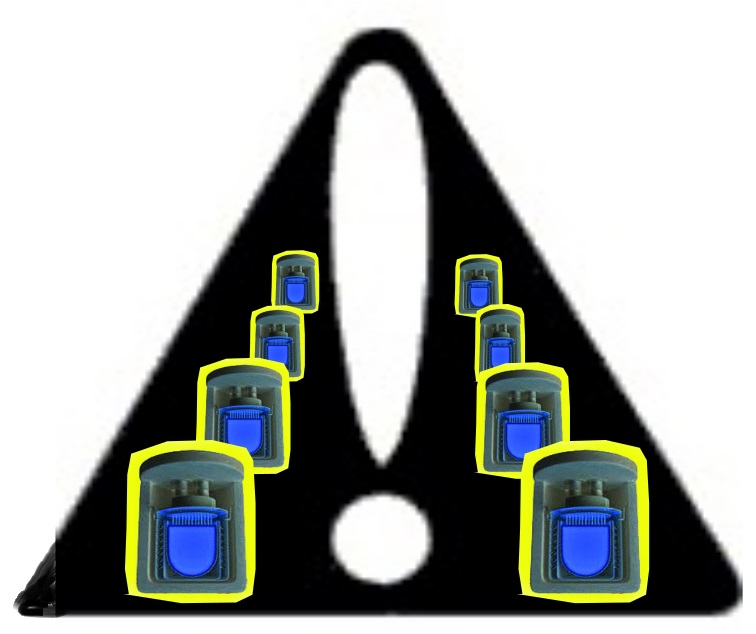
Small nuclear reactors: Big safety problems, and who pays the piper?
https://www.smh.com.au/world/north-america/trump-wants-russia-china-to-stop-making-nuclear-weapons-so-all-can-cut-defence-spending-by-half-20250214-p5lc59.html 15 February, 2025
As usual, in matters nuclear, the Anglophone news is awash with articles extolling the future virtues of Small Nuclear Reactors. Especially in the UK, where Trumpian antics don’t dominate the news the whole time, nuclear news gets a lot of coverage. As I’ve mentioned before, the UK corporate press is ecstatic about SMRs. SMR critics, (of which there are plenty), usually focus their ire on the subject of costs. Other objections centre on health, climate needs, the environment, and the connection between civil and military nuclear technology.
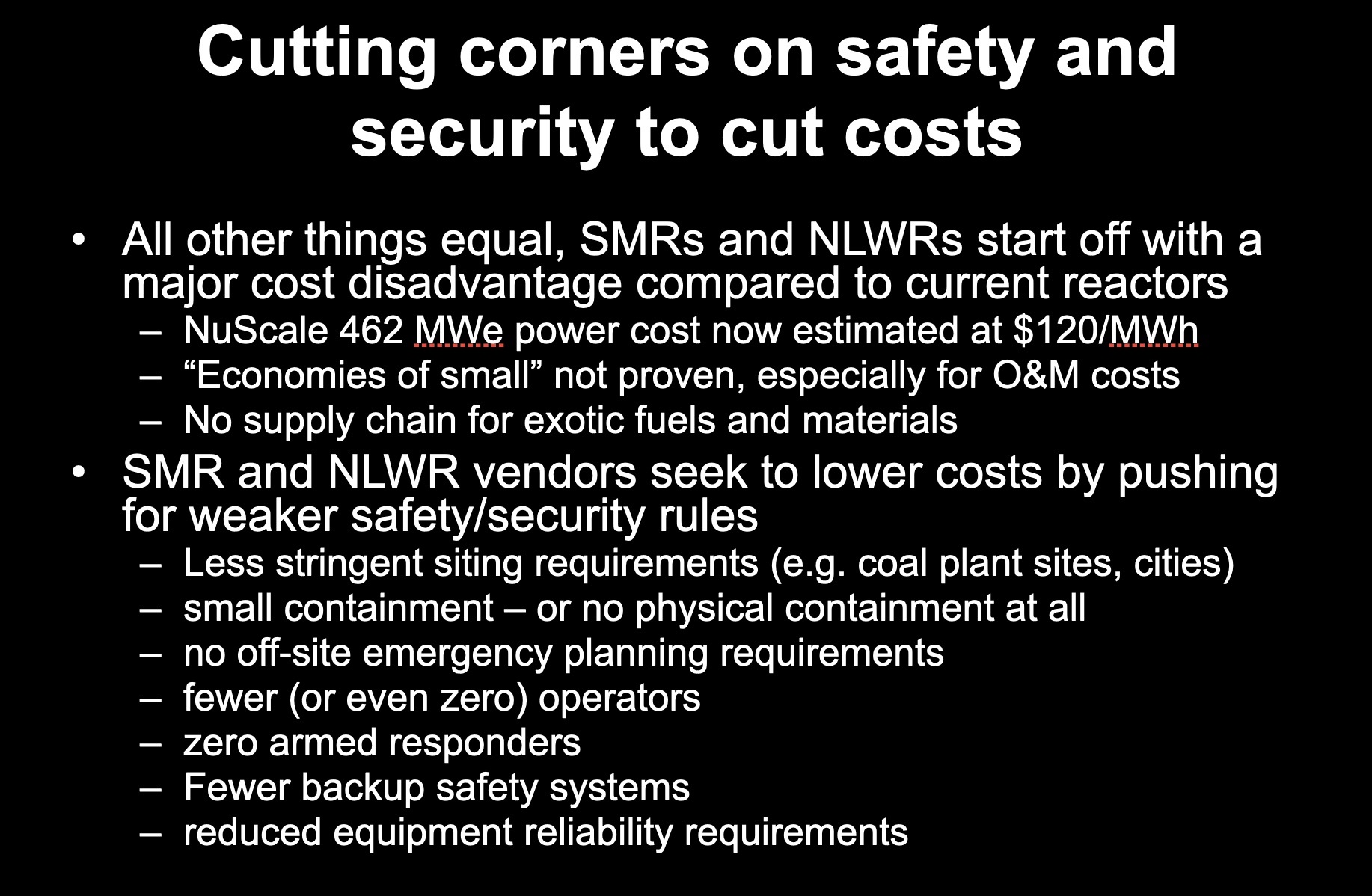
The nuclear lobby has very successfully touted safety as the big plus for the new (though still non-existent) Small Nuclear Reactors (SMRs) . Everyone seemed to buy this idea, because, after all, SMRs can’t melt down in the same dramatic way that big ones can. So, there’s been relatively little fuss made by the anti-nuclear movement on the grounds of safety, regarding SMRs.
Imagine my surprise when I opened up my eyes today – to see a corporate media news outlet, New Civil Engineer, usually pro-nuclear, coming out with a damning criticism of SMRs on the grounds of safety. It’s not as if New Civil Engineer actually condemned SMRs. Oh no! – they did indeed point out that the Department for Energy Security & Net Zero ((DESNZ) is confident that SMR developments are subject to “robust controls“. And the Office of Nuclear Security (ONR) “ensures that the highest levels of safety, security and safeguards are met”
It’s just that New Civil Engineer brought up a few points that have escaped notice, following the publication of the draft National Policy Statement for nuclear energy generation (EN-7) They note that –
“Despite EN-7 being 64 pages, just two lines are dedicated to specifically addressing the security of SMRs.“
The new regulations for SMRs would allow for many new nuclear sites near communities.
For large nuclear power sites, security is funded by the developers themselves. For SMRs, the security needs would be provided by the Civil Nuclear Constabulary (CNC) and also by local police. But these bodies are not under the direction of the ONR or the DESNZ. The writer quotes a policing expert, John McNeill :
“Not even [the government] can direct them.
Policing of airports and football grounds, even schools and educational campuses, shows how hard this will be to fund fairly.”
The expansion of AI and data centres add another complexity to the question of the amount of security needed, and of who pays for it. The proliferation of nuclear sites, closer to populated areas also means the increase in transport of radioactive materials – again bringing the risks of accidents, theft, and terrorism. And again, bringing the need for more security measures.
There’s some community concern in the UK about the safety of prolonging the life of aging nuclear reactors, and of the safety of coastal reactors and the marine environment. There’s also concern about the safety of the SMRs themselves, as the governments relax regulations.
The highly enriched uranium needed for most SMRs poses another risk – as it is useful for nuclear weapons, and therefore attractive to terrorists, and to countries seeking to get nuclear weapons.
So there has been some awareness of safety and security problems amongst critics, especially in the environmental movement. However, this is the first time that I’ve seen the corporate media speak up about this. As the author quotes questions raised in the House of Lords, it looks as though this issue is at last coming to the fore.
I guess that I should not be surprised that the issue of security of Small Nuclear Reactors is at last going to be taken seriously by The Establishment. After all, the examination of the huge and complicated difficulties raised in trying to organise security of SMRs eventually boils down to costs again – “Finally, who pays the piper?”
Why are young people like this 18-year-old fronting the pro-nuclear push in Australia?

SBS News, 13 February 2025
The regional sessions were not publicised beforehand on Nuclear for Australia’s social media accounts or the tour page on its website — you could only register for tickets if you knew the URL for the event’s webpage.
Campaigns director for the Conservation Council of Western Australia, Mia Pepper, said when she tried to get tickets for the Perth event online, she was denied. She said a colleague also failed to get tickets using their real name, but able to get in using an alias.
Shackel said Nuclear for Australia Googles people’s names beforehand to determine whether they are “likely going to cause a disruption or a threat”
Some polling suggests older Australians are more supportive of nuclear power than their younger counterparts. So why are young people fronting a pro-nuclear push?
SBS News, By Jennifer Luu, 13 February 2025
In a function room at Brisbane’s The Gabba sports ground, around 600 people have gathered to hear Miss America 2023 try to convince Australians nuclear power is a good idea.
Sporting a blue cocktail dress, blonde hair and a wide smile, 22-year-old Grace Stanke looks the part of a beauty pageant contestant.
She’s also a nuclear engineer touring the country with Nuclear for Australia: a pro-nuclear lobby group founded by teenager Will Shackel and funded by donors that include entrepreneur Dick Smith.
The event — billed as an information evening featuring a panel of experts — is off to a rocky start. A protester steps in front of the audience and speaks into a microphone.
“All of the organisers, presenters and sponsorship of this event tonight has a very deep vested interest — ” he says, before he’s drowned out in a chorus of boos and the mic is seized from his hand.
Audience members continue to disrupt last month’s event, raising their voices and speaking to the crowd before being herded out by security.
Among them is Di Tucker, a retired psychologist concerned about climate change. She said she became upset after submitting half a dozen questions online to be answered by the panel — and felt like they were being deliberately ignored.
“I felt so frustrated by the lack of factual information in that so-called information session forum on the safety, the timescale and the reality of nuclear energy,” Tucker told The Feed.
“I did stand up and I addressed the crowd, and I said something like: ‘You people need to go away and do your own research … it’s glossing over facts’.”
Nuclear for Australia founder Will Shackel, who was emceeing, estimated there were 20 to 30 protesters heckling the room.
He labelled their behaviour “simply unacceptable and … not in the interest of a fair discussion”.
“They were yelling abuse at us on stage. We had people come up to Grace at the end, call her a clown,” he claimed.
Shackel told The Feed: “We had people [who] had to be physically dragged out because they were resisting security … it was pretty ugly and pretty disturbing.”
Tucker disputes this: “Nobody I saw leave the room was hostile or aggressive, physically aggressive towards the security guards.”
“In fact, it was the opposite. The security guards were shoving the people outside.”
Outside, a separate group of protesters wields banners warning against the dangers of radioactive waste.
The words “Nuclear energy distracts from the climate emergency” are projected onto The Gabba over the image of a red herring.
The teen and the beauty queen
Tucker said the audience was mostly male and over 60. So why are two young people fronting the pro-nuclear movement in Australia?………………………….
As well as launching Nuclear for Australia — which describes itself as “the largest nuclear advocacy organisation in Australia” with over 80,000 supporters — he’s addressed a Senate committee and interviewed French President Emmanuel Macron for his organisation’s social media at the COP28 climate conference in Dubai in 2023.
Shackel first became fascinated with the nuclear debate while in high school in Brisbane.
“I’d just done a school assignment on nuclear energy when I realised it was banned. And that, as a 16-year-old kid, was pretty shocking to me,” he said.
Australia is one of the few countries where using nuclear energy to produce electricity is illegal. The ban was introduced in 1998, when the Howard government made a deal with the Greens in order to build a nuclear reactor in Sydney for research purposes.
At 16, Shackel launched a petition calling on Australia to lift its nuclear energy ban, garnering a flurry of media attention……….
As well as launching Nuclear for Australia — which describes itself as “the largest nuclear advocacy organisation in Australia” with over 80,000 supporters — he’s addressed a Senate committee and interviewed French President Emmanuel Macron for his organisation’s social media at the COP28 climate conference in Dubai in 2023……………………………
Nuclear power is still a contentious topic, but more Australians have become supportive of the idea over time.
A 2024 Lowy Institute poll of 2,028 Australians
indicates 61 per cent support Australia using nuclear power to generate electricity, while 37 per cent were opposed.
Among the 18- to 29-year-olds surveyed, 66 per cent supported nuclear power while 33 per cent were opposed.
In contrast,
a December 2024 poll of 6,709 people conducted for the Australian Conservation Foundation suggests young people were less likely to agree that nuclear is good for Australia, compared to older respondents. For example, 42 per cent of males aged 18-24 agreed, while 56 per cent of males over 54 agreed.
There’s also a gender gap — in the same poll, just over a quarter of women thought nuclear would be good for Australia, compared to half of men.
Nuclear for Australia hopes Grace Stanke can convince the sceptics. Dubbed “the real-life Barbenheimer”, she works for the operator of the largest fleet of nuclear power plants in the US, Constellation. (The company operates 21 of the US’s 94 nuclear reactors).
Now 18, Shackel suggests young Australians are more open-minded towards nuclear power than older generations and are more likely to support parties that are concerned about climate change……..
Physicist Ken Baldwin speculates the rise in support for nuclear power is due to shifting demographics.
He said older generations are more likely to have historical hangups around the dangers of nuclear power, having lived through the British and French weapons tests in the Pacific and nuclear catastrophes like the 1986 accident in Chernobyl and the 2011 accident in Fukushima. ……
“The younger generation … doesn’t have that particular historical baggage, and perhaps they’re more attuned to thinking about the need to do something about climate change,” he said.
Nuclear for Australia hopes Grace Stanke can convince the sceptics. Dubbed “the real-life Barbenheimer”, she works for the operator of the largest fleet of nuclear power plants in the US, Constellation. (The company operates 21 of the US’s 94 nuclear reactors)…………….
Nuclear for Australia has been drumming up public support for nuclear power over the past fortnight, touring every capital city (except Darwin) and holding a parliamentary briefing in Canberra.
It also targeted regional areas near the Coalition’s proposed sites for future nuclear power stations — including Morwell in Victoria, Collie WA, Port Augusta SA, Callide and Tarong in Queensland and Lithgow in NSW. The Coalition says its taxpayer-funded plan is for five large and two smaller reactors, with the smaller ones to come online in 2035 and the rest by 2037.
Nuclear for Australia was slow to reveal all the names for a total number of regional locations for the tour. During the first week of the tour, Nuclear for Australia told The Feed there would only be two regional stops.
The regional sessions were not publicised beforehand on Nuclear for Australia’s social media accounts or the tour page on its website — you could only register for tickets if you knew the URL for the event’s webpage.
Campaigns director for the Conservation Council of Western Australia, Mia Pepper, said when she tried to get tickets for the Perth event online, she was denied. She said a colleague also failed to get tickets using their real name, but able to get in using an alias.
She accused Nuclear for Australia of blacklisting known anti-nuclear activists and trying to avoid criticism by attempting to “creep around the country”.
“If they were really genuine about having a mature debate, they would do their best to invite some people like myself that have engaged really respectfully in the debate over many years to answer the tough questions,” she said.
Shackel said Nuclear for Australia Googles people’s names beforehand to determine whether they are “likely going to cause a disruption or a threat”, and that regional events aren’t publicised on social media because they are not relevant to city-based audiences.
“We care about the safety of our attendees, we care about the safety of our experts,” Shackel said.
“If we believe that someone is a known protester … someone who could cause a physical threat to people in there, we will not allow them in.”
Pepper said: “I have never been physically aggressive to anybody in my entire life.”
“The idea that because you are opposed to nuclear power, you somehow would be aggressive or violent is absolutely outrageous.”
Locals left with more questions than answers
South of Perth, around 100 of the 9,000 residents of the tiny coal mining town of Collie showed up to the Nuclear for Australia event, hoping to learn more about how living next to a nuclear reactor could affect them.
The Coalition has proposed converting Collie’s coal-powered station into a nuclear power plant. But the state government is vowing to phase out coal by 2030 and there’s little chance nuclear power could come online by then, leaving coal workers in limbo.
Resident Jayla Anne Parkin said the information session was “an utter waste of time”, and she came away with more questions than answers. “Their whole speech was very generic. They were probably using the same speech for every single area,” she said.
Parkin asked one of the experts where the water for a nuclear power plant would come from — with large amounts needed to cool the radioactive core.
“He gave a long-winded speech about how we can take any body of water, whether it be the ocean, the river, pool, sewage, and treat it and turn it into the water. But at the end of him answering it, he still didn’t tell me what source of water in Collie they were going to use,” she said.
“We’re very limited with water here as it is.”……………………………………………
there have been reports about Shackel’s alleged political ties.
A 2024 research report from progressive activist group GetUp on nuclear disinformation in Australia
analysed Shackel’s LinkedIn connections and reported that their political party affiliation leant heavily towards Liberal Party MPs, Senators and advisors.
GetUp reported at least 36 of Shackel’s connections, including 11 current or former politicians, were directly linked to the Liberal Party — with the party having the highest concentration of current employees from a single organisation in his network…………………………………..
Lobby groups are allowed to have political party affiliations. While registered charities can participate in campaigning and advocacy, they “cannot have a purpose of promoting or opposing a particular political party or candidate”, according to the Australian Charities and Not-for-profits Commission.
……………………………………………………… Professor Ken Baldwin said nuclear is “not really viable” as an option for decarbonising Australia by 2050, as it would take 15 years at the very minimum to develop the necessary regulations and build a nuclear power station.
“We will have, according to the current plans, converted our current energy system to almost an entirely renewable energy system by that time,” Baldwin said.
“Australia is at the leading edge of the renewable energy transition. We’re installing solar and wind at one of the fastest rates per capita of any country in the world.”…………… https://www.sbs.com.au/news/the-feed/article/will-shackel-australia-pro-nuclear-movement-young-people/gucu0iefz
Oops! Trump accidentally fired hundreds of federal workers who maintain our nuclear weapons
Mass layoffs now paused at US nuclear weapons agency.
-ABC News’ Jay O’Brien, https://abcnews.go.com/Politics/live-updates/trump-2nd-term-tariffs-trade-war/?id=118643360&entryId=118833343
The Department of Energy has paused the firings of hundreds of employees who work for a key agency maintaining the U.S. nuclear weapons stockpile, multiple sources tell ABC News.
Managers with the National Nuclear Security Administration (NNSA) are frantically calling employees back and telling them that — as of right now — they’re not fired, despite some receiving termination emails and phone calls on Thursday. Their badges are getting turned back on and access to federal systems is being restored, at least temporarily.
Hundreds of probationary employees were terminated Thursday night in the mass Trump administration layoffs. The move prompted concerns of a national security risk because the agency is responsible for maintaining U.S. nuclear weapons, transporting them, and nuclear counterterrorism, among other missions.
NNSA held an all-staff meeting Friday morning, announcing the DOE had agreed to pause the layoffs, due to the agency’s national security mission.
NNSA staff tell ABC News they are in a holding pattern. They’re still bracing for firings, but possibly not as widespread.
Trump proposes nuclear deal with Russia and China to halve defense budgets
‘We’re all spending a lot of money that we could be spending on other things,’ the US president said
Guardian staff and agencies in Washington, Fri 14 Feb 2025
Donald Trump said that he wants to restart nuclear arms control talks with Russia and China and that eventually he hopes all three countries could agree to cut their massive defense budgets in half.
Speaking to reporters in the Oval Office on Thursday, Trump lamented the hundreds of billions of dollars being invested in rebuilding the nation’s nuclear deterrent and said he hopes to gain commitments from the US adversaries to cut their own spending.
“There’s no reason for us to be building brand-new nuclear weapons. We already have so many,” Trump said. “You could destroy the world 50 times over, 100 times over. And here we are building new nuclear weapons, and they’re building nuclear weapons.”
“We’re all spending a lot of money that we could be spending on other things that are actually, hopefully, much more productive,” Trump said.
While the US and Russia have held massive stockpiles of weapons since the cold war, Trump predicted that China would catch up in their capability to exact nuclear devastation “within five or six years”.
He said that if the weapons were ever called to use, “that’s going to be probably oblivion”.
Trump said he would look to engage in nuclear talks with the two countries once “we straighten it all out” in the Middle East and Ukraine.
“One of the first meetings I want to have is with President Xi of China, President Putin of Russia. And I want to say: ‘Let’s cut our military budget in half.’ And we can do that. And I think we’ll be able to.”
Trump in his first term tried and failed to bring China into nuclear arms reduction talks when the US and Russia were negotiating an extension of a pact known as New Start. Russia suspended its participation in the treaty during the Biden administration, as the US and Russia continued on massive programs to extend the lifespans of or replace their cold war-era nuclear arsenals………………………
https://www.theguardian.com/us-news/2025/feb/13/trump-nuclear-russia-china
Anas Sarwar’s insistences on nuclear energy serves wrong people.

Last week, Anas Sarwar challenged John Swinney over his
determination to continue SNP policy that uses planning to veto new nuclear
power plants in Scotland. Sarwar announced at FMQs that 29% of the energy
mix that morning came from nuclear.
John Swinney pointed out 70% came from
renewables and suggested Labour would only muddy the water for investors in
Scotland if they focused unduly on the “junior partner” in the energy
mix.
Sarwar then pointed out China has built 29 nuclear power plants. Fine
– China has also built two-thirds of the world’s wind and solar
resource, yet its use of coal also makes it the world’s largest emitter.
Which tells us what precisely? Forget China – focus on Scotland. Scotland
backing nuclear is like geothermal and hydro-powered Iceland backing gas.
It makes no sense at all. Our destiny is to develop clean, green baseload
energy sources for ourselves and the rest of the world.
What’s so wrong with nuclear?
Jings, where to start? Nuclear costs more to produce, plants
take far longer to construct, leave behind radioactive waste and depend
largely on highly enriched uranium derived from Russia and workers forced
to risk radiation and exploitation.
Wind critics complain that
intermittency means baseload (flick of a switch) energy like gas must be
ready for wind-free days. But nuclear isn’t flick of a switch either –
it takes too long to power up and down so stays permanently on (apart from
planned maintenance) even when wind is high.
Last year, six international
academics were so worried about Labour’s new stance, they issued a joint
statement. Maybe it didn’t reach the new Prime Minister, but it was
published in The National. Professor Steve Thomas, Dr Paul Dorfman,
Professor MV Ramana, Professor Amory Lovins and Tetsunari Iida stated that
after 60 years of commercial history, “nuclear power is further from, not
nearer to, survival without massive public subsidies”, and contributes as
much electricity in one year as renewables add in three days.
Nuclear isn’t cheaper – anywhere. The German Institute for Economic Research
examined 674 nuclear power plants built across the world since 1951 and
found the average plant made a loss of €4.8 billion. It also isn’t
greener – the International Panel on Climate Change says renewables are
now 10 times more efficient than nuclear at CO2 mitigation.
And it certainly isn’t quicker. Professor Naomi Oreskes from Harvard University
wrote in Scientific American: “The most recent US nuclear power reactors
were started in 2013 and are still not finished. That’s the problem with
imagined ‘breakthrough’ technologies. The breakthrough can be sudden,
but implementation is slow.” [Sarwar] wrote a column for the Daily Record
which insisted: “John Swinney could end the SNP’s ideological
opposition to nuclear power, with the stroke of a pen.” Ah, Anas. The
boot’s on the other foot.
Opposition to nuclear in Scotland isn’t
ideological. But Labour’s deep attachment certainly is. Anas Sarwar also
contended that if Swinney backed nuclear, “he could unlock billions of
pounds of investment in Scotland and create spates of new quality jobs”.
Mmm. Spates. Maybe this was written in a hurry. Like the billions not
invested by the City of London in Sizewell or Hinkley C over the past
decade? Come on.
So, what’s Labour’s nuclear love-in really about? Some
think Starmer inherited “an absolute monster” after the Tories’ bad
decision to put billions of public cash into Sizewell. But others like
Professor Andrew Stirling and senior research fellow Philip Johnstone
advanced a different theory in the latest edition of the European:
“Nuclear affections are a military romance. Powerful defence interests
– with characteristic secrecy and highly active PR – are mostly driving
the dogged persistence.”
The National 13th Feb 2025, https://www.thenational.scot/politics/24931561.anas-sarwars-insistences-nuclear-energy-serves-wrong-people/
Chernobyl nuclear power station hit by ‘Russian drone’
Despite hitting the nuclear plant, the small fire was quickly contained and officials said
there was no apparent radiation leak. The Chernobyl nuclear power station
was hit overnight in an apparent drone strike, International Atomic Energy
Agency (IAEA) has said. Ukrainian president, Volodymyr Zelensky, said a
Russian drone strike with a “high explosive warhead” hit the outer
shelter of the nuclear plant. The IAEA said that a UAV hit the shelter
protecting the site at approximately 1.50am local time.
Footage from lastnight, showing a Russian Drone striking the Containment Structure around
Reactor No. 4 at the Chernobyl Nuclear Power Plant (ChNPP) in Northern
Ukraine, as well as the extent of the Damage from inside the Containment
Structure.
iNews 14th Feb 2025,
https://inews.co.uk/news/world/chernobyl-nuclear-power-station-hit-by-russian-drone-3535413
Great British Nuclear competition winners announcement still ‘around Spending Review’

13 Feb, 2025 By Tom Pashby
Great British Nuclear (GBN) has confirmed that the winners of its small modular reactor (SMR) competition will still be announced around the time of the Spending Review on 11 June 2025, despite reports that it would take place on 26 March at the Spring Statement.
GE-Hitachi, Holtec Britain, Rolls-Royce SMR and Westinghouse Electric Co. were announced as the final four companies in contention following the conclusion of the initial tender
stage at the end of September. NuScale dropped out at this point, while EDF
exited the competition in July when it failed to submit documents before
the deadline.
GBN completed two rounds of assessment with the four
shortlisted companies and is now entering negotiations ahead of the
submission of final tenders. The nuclear body said in November 2024 it had
started “detailed negotiations” with the four small modular reactor
(SMR) developers remaining in its competition for deployment in the UK. GBN
debunks financial news site report. Financial news site The Motley Fool
reported on 11 February that the announcement was “expected to be
announced by Great British Nuclear on or around the time of the Spring
Budget Statement, scheduled for 26 March”.
New Civil Engineer 13th Feb 2025, https://www.newcivilengineer.com/latest/great-british-nuclear-competition-winners-announcement-still-around-spending-review-13-02-2025/
Warning sent about need for strategic policing reform to address security of SMRs
New Civil Engineer, 2 Feb, 2025 By Tom Pashby
Security concerns have been raised following the publication of the draft National Policy Statement for nuclear energy which would change where small modular reactors (SMRs) could be situated.
National Policy Statement for nuclear energy generation (EN-7) was published in draft form on 6 February following an announcement by the prime minister about the slashing of legislation aroudn the development of nuclear energy generation projects………………………………….
Limited details about security in EN-7 raises policing questions
Despite EN-7 being 64 pages, just two lines are dedicated to specifically addressing the security of SMRs.
The proposed proliferation of SMRs in the UK presents a novel nuclear security risk because of there potentially being many more smaller nuclear-licensed sites which are closer to people and property than gigawatt-scale reactors which tend to be in remote coastal locations.
King’s College London Centre for Science & Security Studies research fellow Ross Peel previously told NCE that security planning for SMRs in the UK is “not where it should be”.
In a section titled “Security of Site”, EN-7 says “Ensuring that the proposed nuclear infrastructure will be secure is vital. The Security Considerations section of EN-1 addresses security considerations in detail.
“The applicant should engage with the Office for Nuclear Regulation (ONR) as part of early engagement on securing a Nuclear Site Licence to understand what steps will be required to comply with relevant site security requirements.”
Recent analysis by the Alan Turing Institute’s Centre for Emerging Technology and Security said that policing capability was not up to scratch to protect SMRs.
Policing SMRs would require a significant uplift in funding and workforce at the Civil Nuclear Constabulary (CNC) which is run by the Civil Nuclear Police Authority (CNPA). The CNPA is an executive non-departmental public body, sponsored by the Department for Energy Security and Net Zero (DESNZ).
Local police forces, overseen by the Home Office, could also be required to increase their capacity to respond to CBRN (chemical, biological, radiological and nuclear) incidents.
It is currently unclear how any resource uplift would be funded, and which bodies would provide that funding. As things stand, gigawatt-scale nuclear power sites’ security is funded by the developers themselves.
The business model for SMRs is not yet settled, with different developers proposing different management mechanisms.
Existing policing model does not accommodate complex demands of SMRs
Former police investigations and review commissioner Scotland and co-author of the Centre for Emerging Technology and Security analysis on SMR policing John McNeill said: “The ONR can specify security standards for SMRs, but they cannot require policing bodies to comply with their requirements.
“ONR can specify, approve, or reject, security arrangements, and vary these in response to changes in the threat assessments. But they cannot require any Police and Crime Commissioner (PCC) or Chief Constable (CC) to assign resources to meet their defined standards. Not even [the government] can direct them.
“Policing of airports and football grounds, even schools and educational campuses, shows how hard this will be to fund fairly…………………………………………………………….
“The existing policing model does not readily accommodate the complex demands of responding to the protection of the critical national infrastructure, nor a spread of SMRs.
It’s an outdated model that is not fit for this purpose. Since 2012 the 43 local (directly elected) policing bodies have set the priorities and assigned the budgets, for their police areas.
“We have already highlighted the complexities of policing a proliferation of SMRs in new areas of the country. Policing will need to extend their capability and capacity to respond. And meet the associated costs. It will not be enough to promise a reduction in their electricity bills sometime in the future!
“In short, the deafening silence from the Home Office and policing bodies is not reassuring to apprehensive communities who may have an SMR (or more) in their back yard.
“Finally, who pays the piper? Contractors will baulk at paying for local security. Site security may be less problematic.”
Sheffield Hallam University hosts the Centre of Excellence in Terrorism, Resilience, Intelligence and Organised Crime Research (Centric).
Centric professor in governance and national security Fraser Sampson co-authored the policing reform analysis with McNeill.
Sampson said: “The introduction of SMRs (and now associated data centres) is being presented as wholly different from whatever has gone before. That means the policing and security arrangements will need to be wholly different as they are the solution to the wrong problem.
“The engineering, environmental and economic noises are deafening but so is the silence on the extraordinary challenges that this will bring for community-level policing and resilience.
Policing and security are a network of systems. Turbocharging one part of a system will only pay off if the rest of the system can keep up – otherwise, the fast bit has to wait for the rest. No one wants to be responsible for the weakest link in the security chain.
“Workforce vetting has proved challenging enough for policing; an exponential increase in both volume and speed of reliable vetting must have a significant resource impact but add in risks from supply chain integrity, cyber-attacks and insider threats.”
Sampson said that the International Atomic Energy Agency (IAEA) “states more than half of radioactive [materials] thefts/losses since 1993 occurred during authorised transit.
“Where is the reassurance coming from that proliferation will improve these figures? We’re not dealing with Swampy anymore.”
Concerns about security of SMRs raised in parliament
In a debate about SMRs in the House of Lords, backbench Labour peer Lord Harris of Haringey asked about the potential increased demand on nuclear policing. The debate took place on 22 January 2025, before the publication of EN-7.
Outside of parliament, Harris is chair of the National Preparedness Commission (NPC), which works “to promote policies and actions to help the UK be significantly better prepared to avoid, mitigate, respond to, and recover from major shocks, threats and challenges”.
In the Lords debate, Harris asked: “What consideration has been given to who will protect and police modular nuclear reactors?
“Will it be the Civil Nuclear Constabulary, which would mean covering far more sites than it currently does, or will it be the other police forces?
“What discussions has the Minister had with his colleagues at the Home Office?”……………………………………………………………………..
https://www.newcivilengineer.com/latest/warning-sent-about-need-for-strategic-policing-reform-to-address-security-of-smrs-12-02-2025/
Nuclear waste site plans in Midlands face major setback as council withdraws
Proposals for a massive underground hazardous nuclear waste site in the
Midlands have hit a setback after a council withdrew from a major
partnership, ignited because the agency behind the scheme are now looking
at putting the entrance close to a national beauty spot rather than a
disused gasworks.
Yesterday (wed) the leader of East Lindsey District
Council announced it was leaving a community partnership with Nuclear Waste
Services (NWS), the government agency which is behind the project to
dispose of Britain’s radioactive waste in a Ground Disposal Facility (GDF).
Insider Media 13th Feb 2025, https://www.insidermedia.com/news/midlands/nuclear-waste-site-plans-in-midlands-face-major-setback-as-council-withdraws
Why Welsh speakers oppose Wylfa nuclear plant
Letter David Thomas: I was dismayed to see your article (Report, February
8), blithely dismissing the impact of the planned Wylfa Newydd nuclear
power station on Welsh-speaking communities. You parrot the view of the
nuclear industry that nothing should stand in the way of the bulldozers,
with little regard for the wider picture here in Wales.
The valid concerns
of Welsh-speaking communities are deemed illegitimate by the nuclear
industry, and Welsh speakers’ interests are portrayed as akin to those of
bats and newts — as unnecessary “blockers” to progress.
The ongoing survival of the Welsh language is nothing short of a miracle in the face of
the linguistic, economic and political hegemony of our English neighbour.
To dismiss linguistic and cultural concerns that the Wylfa Newydd plan
might entail is to dismiss the very existence of Wales as a linguistic and
cultural entity.
The Welsh government has committed to a target of having
1mn Welsh speakers by 2050. This plan has been ratified on repeated
occasions by the Welsh electorate, and surveys show that an overwhelming
majority of the Welsh population are well disposed to the language, even
among groups of non Welsh speakers.
We might also question why Ynys Môn
(Anglesey) is perceived as a suitable site for a new nuclear power plant.
Wales is already a net exporter of energy, yet Welsh consumers pay more for
electricity than the vast majority of their English counterparts.
Possibilities for renewables in the form of onshore and offshore wind and
tidal energy appear promising, yet attempts to pioneer tidal power in Wales
have been blocked by successive UK governments.
FT 12th Feb 2025
https://www.ft.com/content/3c9045c5-8cb4-4db3-bdf1-734b7cd789bf
1 This Month


10 March A LIVE WEBINAR THE REAL EFFECTS OF NUCLEAR POWER
What the Industry Isn’t Telling Us
1:00 PM Mountain, 2 pm Central, 3 pm Eastern. Live on the Keepers of the Water Facebook page


18 March Webinar @ 1 PM EST: An Assessment of SMR Projects: The Case of Canada
register for the zoom:
https://us02web.zoom.us/webinar/register/WN_o8BIIOUvQ2ONJR1nta65DQ#/registration


of the week – STOP SMALL MODULAR REACTORS IN CANADA
To see nuclear-related stories in greater depth and intensity – go to https://nuclearinformation.wordpress.com
-
Archives
- March 2026 (76)
- February 2026 (268)
- January 2026 (308)
- December 2025 (358)
- November 2025 (359)
- October 2025 (376)
- September 2025 (258)
- August 2025 (319)
- July 2025 (230)
- June 2025 (348)
- May 2025 (261)
- April 2025 (305)
-
Categories
- 1
- 1 NUCLEAR ISSUES
- business and costs
- climate change
- culture and arts
- ENERGY
- environment
- health
- history
- indigenous issues
- Legal
- marketing of nuclear
- media
- opposition to nuclear
- PERSONAL STORIES
- politics
- politics international
- Religion and ethics
- safety
- secrets,lies and civil liberties
- spinbuster
- technology
- Uranium
- wastes
- weapons and war
- Women
- 2 WORLD
- ACTION
- AFRICA
- Atrocities
- AUSTRALIA
- Christina's notes
- Christina's themes
- culture and arts
- Events
- Fuk 2022
- Fuk 2023
- Fukushima 2017
- Fukushima 2018
- fukushima 2019
- Fukushima 2020
- Fukushima 2021
- general
- global warming
- Humour (God we need it)
- Nuclear
- RARE EARTHS
- Reference
- resources – print
- Resources -audiovicual
- Weekly Newsletter
- World
- World Nuclear
- YouTube
-
RSS
Entries RSS
Comments RSS
 nuclear-news