OpenAI Strikes Deal With US Government to Use Its AI for Nuclear Weapon Security
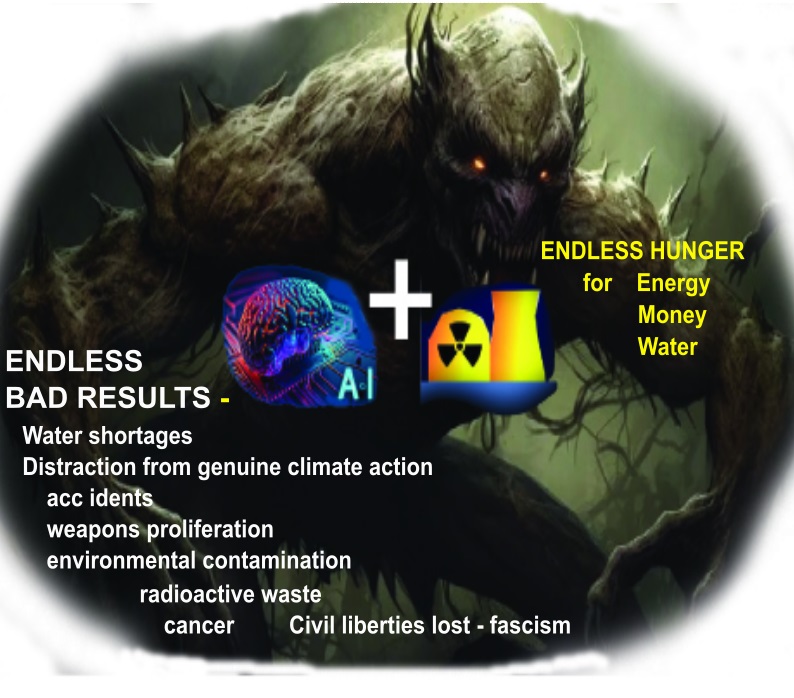
31 Jan24, https://futurism.com/openai-signs-deal-us-government-nuclear-weapon-security
Wait, isn’t this the plot to the “Terminator” movies?
“There was a nuclear war,” a character explains. “Defense network computers. New… powerful… hooked into everything, trusted to run it all. They say it got smart, a new order of intelligence. Then it saw all people as a threat, not just the ones on the other side. Decided our fate in a microsecond: extermination.”
It seems like either the execs at OpenAI have never seen it or they’re working overtime to make that premise a reality.
Don’t believe us? OpenAI has announced that the US National Laboratories will use its deeply flawed AI models to help with a “comprehensive program in nuclear security.”
As CNBC reports, up to 15,000 scientists working at the institutions will get access to OpenAI’s latest o1 series of AI models — the ones that Chinese startup DeepSeek embarrassed on the world stage earlier this month.
According to OpenAI CEO Sam Altman, who announced the partnership at an event in Washington, DC, the tech will be “focused on reducing the risk of nuclear war and securing nuclear materials and weapons worldwide,” as quoted by CNBC.
If any alarm bells are ringing by this point, you’re not alone. We’ve seen plenty of instances of OpenAI’s AI models leaking sensitive user data and hallucinating false claims with abandon.
OpenAI’s been making a huge push into government. Earlier this week, the Sam Altman-led company released ChatGPT Gov, a platform specifically designed for US government use that focuses on security.
But whether the company can deliver on some sky-high expectations — while also ensuring that its frequently lying AI chatbots won’t leak the nuclear codes or trigger the next nuclear war — is anyone’s guess.
The news comes after the Wall Street Journal reported that OpenAI is in early talks for a new round of funding that would value it at a gargantuan $340 billion, double its previous valuation last year.
Altman has also fully embraced president Donald Trump, gifting him $1 million for his inauguration and claiming that he had “really changed my perspective on him” after trashing him in years past.
OpenAI also signed onto Trump’s $500 billion AI infrastructure deal, dubbed Stargate, with the plan of contributing tens of billions of dollars within the next year.
Whether the company’s o1 reasoning models will prove useful in any meaningful way to the researchers at the US National Laboratories remains to be seen.
But given the widespread dismantling of regulations under the Trump administration, it also feels like an unbelievably precarious moment to be handing over any amount of control over nuclear weapons to a busted AI system.
Trump says he wants new nuclear deal letting Iran ‘prosper’
AFR, Arsalan Shahla, Feb 6, 2025
Washington | US President Donald Trump said he was willing to immediately start working on a new nuclear deal with Iran that allows the country to “peacefully grow and prosper”, seemingly softening his stance on the Islamic Republic.
“Reports that the United States, working in conjunction with Israel, is going to blow Iran into smithereens, ARE GREATLY EXAGGERATED,” Mr Trump said in a post on his social networking site Truth Social on Wednesday (Thursday AEDT).
He didn’t give details on what such an agreement would entail, and Iranian officials haven’t yet responded to the post.
The US has long accused Tehran of using a decades-old civilian nuclear program to disguise ambitions to develop weapons, a claim repeatedly denied by Iran. The latest comments contrast with Mr Trump’s attitude in his first term, when he ordered a fatal strike on Iran’s most senior military general and prompted fears that the US would be drawn into war.
Mr Trump posted the Truth Social statement hours after signing a directive that calls for tough enforcement of existing sanctions. The move effectively revives his first-term “maximum pressure” strategy, including unilaterally quitting a landmark 2015 agreement that limited Iran’s nuclear program in exchange for sanctions relief.
Those measures weakened Iran’s economy but failed to thwart the country’s regional ambitions and instead triggered a security crisis in the oil-rich Persian Gulf that embroiled neighbouring Saudi Arabia and sent jitters through global energy markets.
Earlier, Iranian Foreign Minister Abbas Araghchi said Mr Trump’s maximum pressure strategy would continue to fail. “If the main issue is ensuring that Iran doesn’t pursue nuclear weapons, that’s already a firm commitment, Iran’s position is clear,” Mr Araghchi said in comments aired on state TV.
Oil prices fell as traders weighed concerns that a trade war between the US and China will hurt global growth against the possibility of further economic pressure on OPEC member Iran.
Withstanding the pressure
Mr Araghchi said Iran was already party to the treaty on the non-proliferation of nuclear weapons – a post-war international agreement seeking to prevent the spread of atomic bombs – and the country’s supreme leader, Ayatollah Ali Khamenei, had years earlier issued an Islamic ruling forbidding them.
However, the world’s top nuclear regulator said last month Iran’s stockpile of near-bomb-grade enriched uranium continued to grow. France, Germany and the UK asked inspectors with the International Atomic Energy Agency to prepare a special report in the first half of 2025 about Iran’s nuclear activities.
During Mr Trump’s initial term, the “maximum pressure” regime translated into strong sanctions and tough enforcement, including chasing Iranian oil cargoes on the high seas and killing the country’s most powerful military figure in a targeted drone strike……. https://www.afr.com/world/north-america/trump-says-he-wants-new-nuclear-deal-letting-iran-prosper-20250206-p5l9y6
UAE Turns to Satellites to Shield Region’s Only Nuclear Plant From Climate Risks
The United Arab Emirates, which operates the Gulf’s only commercial
nuclear power station, is for the first time taking special measures to
protect the project from the devastating impact of climate change. Since
September, the Federal Authority for Nuclear Regulation and the Mohammed
Bin Rashid Space Centre have been monitoring climate and the environment
around the Barakah plant from space, officials from the regulatory body
said in Abu Dhabi. They have been collecting information on sea levels,
land and water temperatures, earthquakes and other threats, and assessing
their severity and potential impact.
Bloomberg 4th Feb 2025, https://www.bloomberg.com/news/articles/2025-02-04/uae-turns-to-satellites-to-shield-region-s-only-nuclear-plant-from-climate-risks
Ministers will relax rules to build small nuclear reactors
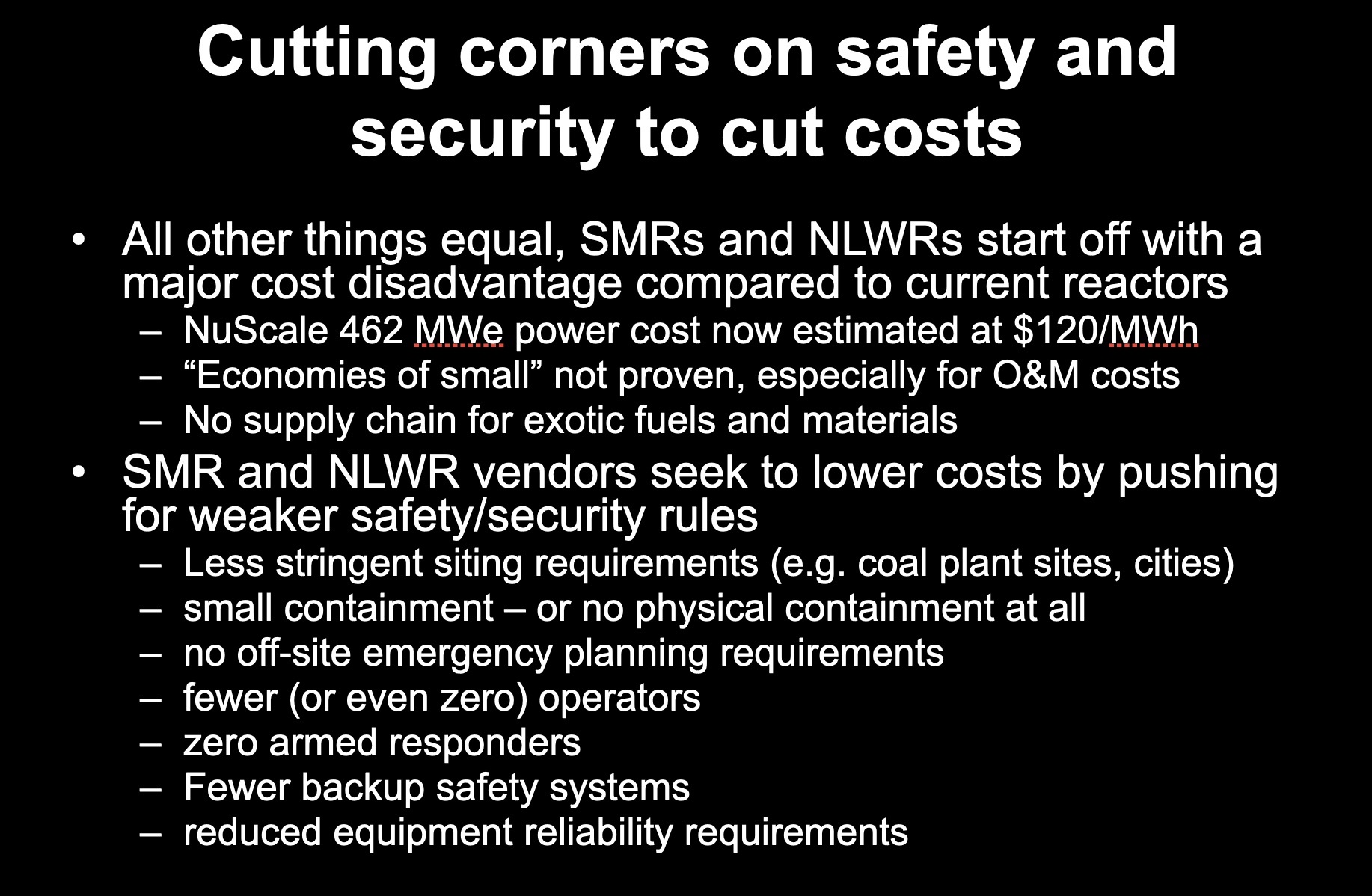
Ministers are preparing to relax planning rules to make it easier to build mini nuclear
power plants in more parts of the country in order to hit [?] green energy
targets and boost the industry.
They are also examining whether it is
possible to streamline the process for approving the safety of new nuclear
power plants as a way to reduce construction delays. At present rules state
that only the government may designate sites for potential nuclear power
stations, of which there are eight, severely limiting where they can be
built. T
his is seen as a serious barrier to developing small modular
reactors (SMRs) that could be placed in various locations across the
country, providing power for remote areas or power-hungry developments such
as data centres for artificial intelligence.
Under plans to update the
planning regime with a new national policy statement on nuclear power,
companies would be free to develop SMRs in most areas of the country
outside built-up areas and would also benefit from fast-tracked planning
approval, as the power plants would be designated nationally significant
infrastructure.
Rachel Reeves, the chancellor, is expected to use the
government’s spending review to announce funding for one of two small
modular reactors designs. GE Hitachi Nuclear Energy and Rolls-Royce are
among companies competing for the funding in a process being run by Great
British Nuclear. Reeves is also expected to make a final funding decision
on Sizewell C.
Times 5th Feb 2025, https://www.thetimes.com/uk/politics/article/labour-ministers-rachel-reeves-relax-nuclear-reactor-rules-92cpcc6wj
IAEA chief, in Kyiv, warns of nuclear risk from attacks on Ukraine grid
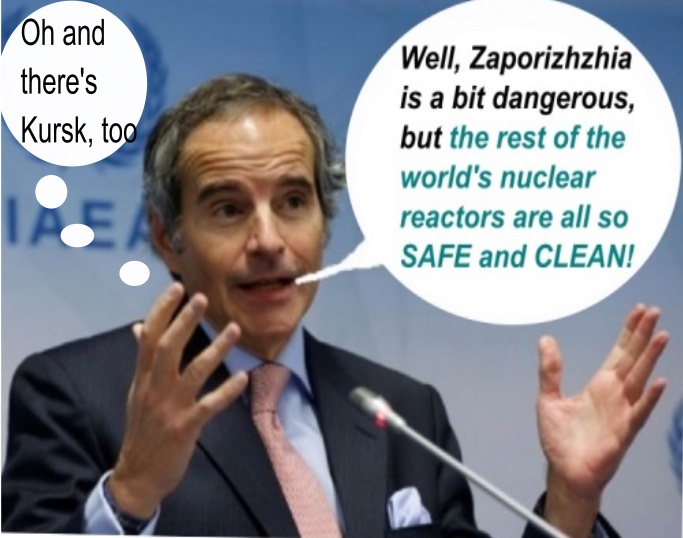
International Atomic Energy Agency (IAEA) chief Rafael Grossi said late on
Monday that he was on his way to visit Kyiv and inspect a key substation
that is critical for the safety of Ukraine’s nuclear power. “On my 11th
visit to Ukraine since the war began,” Grossi wrote on X. “I’m heading to
Kyivska substation, critical for the safety of Ukraine’s nuclear power, to
assess damage and help prevent a nuclear accident.” Last week, the IAEA
said in a statement that Grossi would visit Kyiv for “high-level” meetings
to ensure nuclear safety in the war that Russia started in February 2022.
Reuters 3rd Feb 2025, https://www.reuters.com/world/europe/iaeas-grossi-heads-kyiv-crucial-nuclear-safety-inspection-2025-02-03/
Engineer who worked on Hinkley Point C nuclear project quizzed on suspicion of being a Russian spy
A nuclear power station worker was quizzed on suspicion of being a spy
after he returned to the UK from Russia. Mario Zadra, a 67-year-old Italian
national, worked at Hinkley Point C in Somerset from 2020 to 2023, and was
questioned by counter-terrorism police after he flew into Heathrow airport
on April 12, 2023. It was reported that potentially sensitive documents
were found in his possession and were seized by the authorities to prevent
them being ‘used to carry out a hostile attack’.
Daily Mail 3rd Feb 2025,
https://www.dailymail.co.uk/news/article-14355483/Nuclear-power-worker-suspicion-Russian-spy.html
AI’s Energy Demands Threaten a Nuclear Waste Nightmare
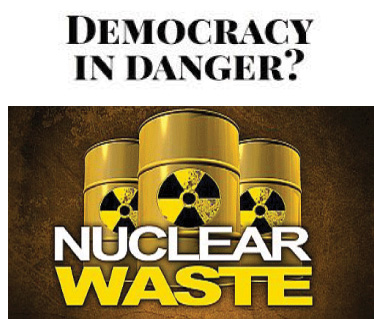
Reviving nuclear power plants to power AI threatens an avalanche of nuclear waste
By Michael Riordan , https://www.scientificamerican.com/article/ais-energy-demands-threaten-a-nuclear-waste-nightmare/ January 31, 2025
Long in decline, the U.S. nuclear industry is hoping for resurrection at two sites of its greatest failures: Three Mile Island in Pennsylvania and the Hanford Site in Washington state. Nuclear power, the industry claims, will help satisfy the surging power demands from data centers and the growing AI economy. But such a wrong turn ignores the long-unresolved problems of radioactive nuclear wastes that AI cannot wish away.
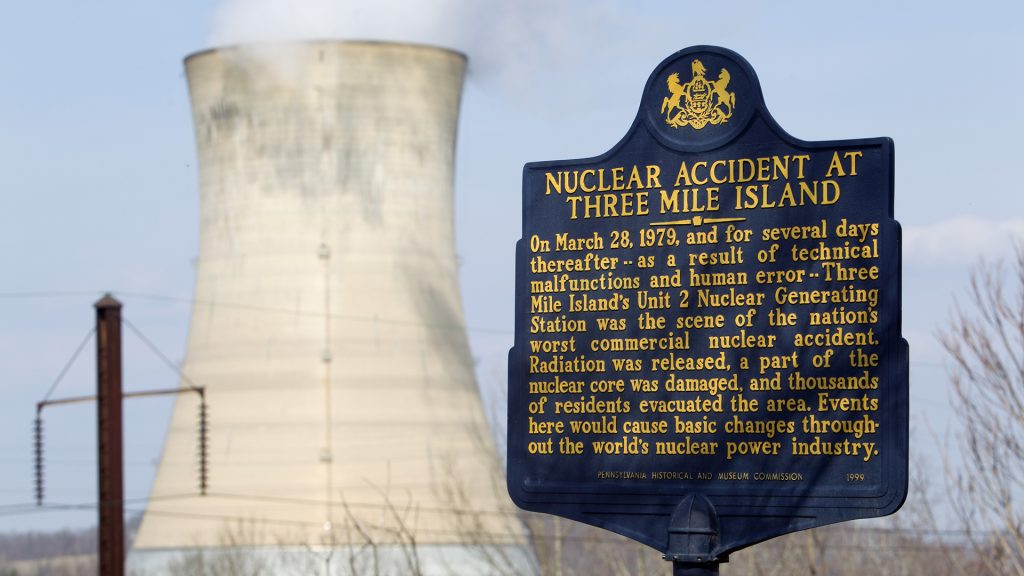
In September Constellation Energy announced plans to restart a shuttered reactor at Three Mile Island, prodded by Microsoft, which will need many gigawatts of power to perform extensive AI calculations in its expanding fleet of data centers. Amazon followed suit and announced in November that it will invest $334 million to develop small modular nuclear reactors (SMRs) at Hanford, site of the world’s first plutonium-production facility.
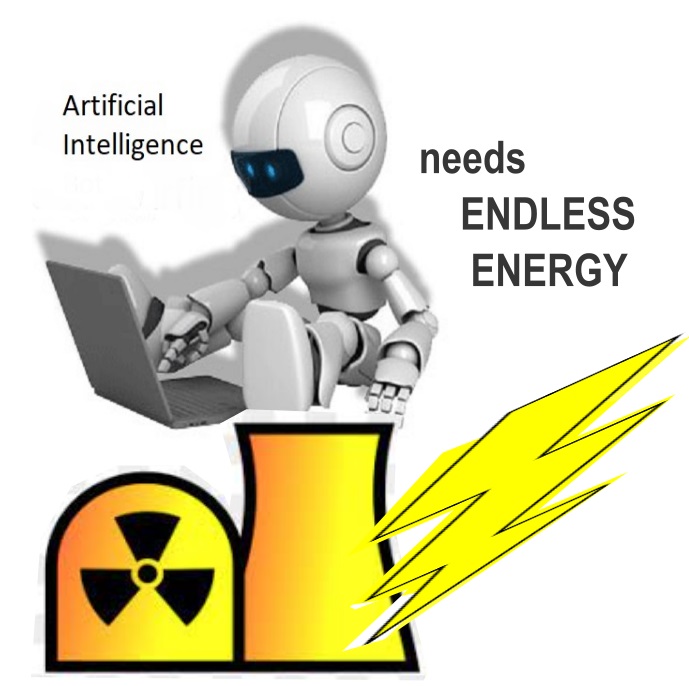
Google and Meta are also hoping to bring nuclear power back. In October 2024 Google announced it eventually plans to purchase 500 megawatts of electricity from Kairos Power, which is developing a novel SMR in Oak Ridge, Tenn., on the site of the national lab that long refined uranium for the nuclear industry. And Facebook parent Meta is seeking bids for nuclear power plants for its data centers.
These tech giants recognize that the next generation of microprocessors to be used for AI calculations at data centers will require oodles of electricity to power and cool them. A single Nvidia Blackwell chip, for example, can draw up to two kilowatts, more than what is needed for a typical house. Cram thousands of them in servers inside a data center, and they will need as much power as a small city.

So-called hyperscale data centers require over 100 megawatts (100 MW)—a sizeable fraction of the output of a major power plant. And that power should be cheap, steady and reliable.
An authoritative December 2024 report from the U.S. Department of Energy, written by energy experts at the Lawrence Berkeley National Laboratory, is especially illuminating. The growth in U.S. data-center energy usage over the next five years, they state, would correspond “to a total power demand for data centers between 74 and 132 [gigawatts].” That would represent some 7 to 12 percent of the U.S. electricity consumption forecast for 2028.
Where on Earth is all this power going to come from? Given the challenges electric utilities face in supplying electricity to meet other growing needs, including electric vehicles, it’s small wonder that big tech has turned back to the atomic nucleus. But the power demands outlined in the DOE report would require building or resurrecting the equivalent of at least 40 Three Mile Island reactors over the next five years. That’s impossible.
Several years ago Amazon, Google, Meta and Microsoft promised not to exacerbate atmospheric carbon-dioxide levels. But that laudable goal is becoming increasingly difficult to achieve, given their data centers’ exploding electricity consumption. So they have instead begun touting a return to nuclear power to avert this thorny problem. That’s a huge mistake.
Nuclear power is indeed a source of carbon-emission-free energy, but it is hardly a clean energy source, and it is definitely not renewable. All along the uranium supply chain—from mining to enrichment to the fabrication of fuel rods or pellets—opportunities abound for radioactive releases. In South Texas, for example, landowners worry about contamination of their groundwater by renewed uranium mining activities nearby.
The diagram below illustrates carbon emissions – but the same picture applies also to radioactive emissions

Since 1989, the DOE has spent hundreds of billions of taxpayer dollars cleaning up the original nuclear complex—including the gargantuan Oak Ridge factory that enriched much of the uranium used for commercial nuclear power. And despite decades of trying, the department has yet to fully clean up and dismantle the oozing, disintegrating tanks of highly radioactive wastes left over from plutonium processing at Hanford.

The storage and containment of spent nuclear fuel is in fact the crucial unresolved challenge of the U.S. nuclear industry. Over 90,000 tons of these wastes are stored at 77 sites in 35 states—an amount increasing by over 2,000 tons a year.
Small modular reactors, promoted by Microsoft co-founder Bill Gates and others, will only add to this growing burden. As former U.S. Nuclear Regulatory Commission (NRC) chair Allison Macfarlane and Rodney C. Ewing of Stanford University stated, “In some cases these new reactors may make it worse by creating more waste that’s more costly to manage, new kinds of complex waste, or just more waste, period.”
Elsewhere, Macfarlane stressed the procedural and practical difficulties faced by novel nuclear reactor technologies in gaining NRC acceptance and achieving commercial success. Shortly after it had received NRC certification in 2023, for example, the much-touted NuScale SMR project was abandoned after anticipated construction costs more than doubled to $9.3 billion. Leaving aside the waste problem, a commercially successful SMR design is probably over a decade away.
But the relentless AI gold rush, if left unchecked, will impose unattainable demands on projected power supplies well before that. Meanwhile, electricity rates will rise inexorably in light of the law of supply and demand. That looming energy crisis explains big tech’s efforts to slow shutdowns of fossil-fueled power plants and to resurrect shuttered reactors.
Amazon, Google, Meta and Microsoft executives should instead take a deep breath and begin reevaluating their options. Do they really need to build and upgrade data centers at such a breakneck pace? Or is this devil-take-the-hindmost AI arms race just the result of bitter competition, prodded by recent advances in semiconductor technology?
And what about the truly clean, renewable energy sources they once embraced—especially solar, wind and geothermal? Yes, the variability of solar and wind energy makes them a poor match to the steady power requirements of data centers. But energy storage has come a long way recently and has a promising future. And the recent startling success of the Chinese DeepSeek AI program demonstrates that software efficiency will play an important role in this effort.
Given the dark clouds still lingering over nuclear power, especially its unresolved waste problem, these renewable alternatives deserve renewed consideration.
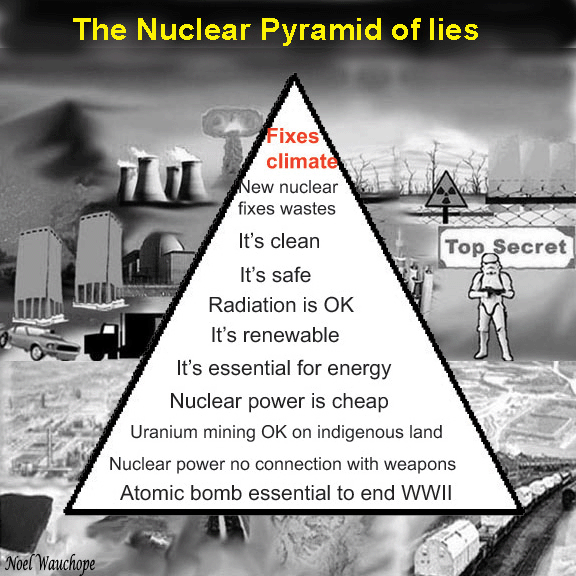
They won’t tell you these truths about nuclear energy
by Cindy Folkers and Amanda M. Nichols, opinion contributors – 02/02/25 , https://thehill.com/opinion/energy-environment/5118792-nuclear-power-industry-radiation-debunk/?fbclid=IwY2xjawIOldhleHRuA2FlbQIxMQABHfrKakROFL169LYfifqZe6YoIrO_jAtv23bm6hkyL0zF7neIUesv9XURpw_aem_ocJM3kdP_FV_AlGdyUVxdg
Scientists have been arguing about the health risks from radiation since the end of the 19th century, when radioactivity was first discovered. Today, with electricity demand soaring and AI companies clamoring for their own nuclear power plants, from small modular reactor projects to giant new nuclear builds, that century-old argument is ongoing.
But now it’s mostly a battle between scientists on the one hand and the nuclear industry, the politicians it lobbies and gullible media on the other.
Currently, scientists are being drowned out. The Biden administration proposed to triple U.S. nuclear capacity by 2050, and President Trump is perceived as favoring nuclear expansion as well. Despite reams of peer-reviewed studies and books showing radiation’s harmful effects, there is persistent denialism that seems impervious to fact-checking.
It took until this century for the U.S. government to finally admit that radiation had killed workers at nuclear weapons plants. For Congress, compensating them remains politically radioactive: lawmakers failed to reauthorize the Radiation Exposure Compensation Act that expired in 2024. Media coverage increasingly and uncritically repeats the talking points of nuclear industry spokespeople, who preposterously claim you would have to stand next to nuclear waste for a year to get as much radiation as having an X-ray, or that eating a banana gives you as much radiation exposure as living next to a nuclear plant.
This is dangerous disinformation in a long line of dangerous disinformation.
After the U.S. dropped atomic bombs on Japan, the director of the Manhattan Project, Gen. Leslie R. Groves, debunked reports of radiation sickness as Japanese “propaganda.” Later, when he had to admit its existence, Groves misled Congress and the public by saying it was “a very pleasant way to die.”
Spreading such lies is bad enough. What is even worse is that the truth of the matter has been actively and deliberately suppressed.
Scientists who first dared to expose radiation’s harms — cancer, birth defects, disproportionate impacts on females — had their funding and data seized and suffered professional ostracism and vilification.
Spreading such lies is bad enough. What is even worse is that the truth of the matter has been actively and deliberately suppressed.
Scientists who first dared to expose radiation’s harms — cancer, birth defects, disproportionate impacts on females — had their funding and data seized and suffered professional ostracism and vilification. Yet their early scientific findings were largely vindicated. It’s now well established that exposure to ionizing radiation has adverse health impacts, affecting the heart, lungs, thyroid, brain and immune system, causing blood disorders, cataracts, malignant tumors, keloids and other chronic conditions. It wreaks genetic havoc that can result in cancer, organ dysfunction and immune and metabolic disorders. Children and pregnant women are particularly vulnerable.
It’s also proven that ionizing radiation disproportionately impacts women and girls, with the youngest worst affected. Ethnicity and other factors beyond biological sex and age may be contributing or compounding factors. There is also a growing body of evidence that radiation has transgenerational impacts.
Meanwhile, regulators set dose limits for radiation exposure that fly in the face of the evidence. These limits purport to set a “safe” level of radiation exposure, ignoring radiation researchers who have long stressed there is no such thing as a safe level, since any exposure can contribute to adverse health impacts.
In fact, nuclear technologies, including civilian power reactors, have poisoned large swaths of land — and not only the areas around Chernobyl and Fukushima, whose radioactive cesium contaminated Tokyo. The U.S. nuclear industry has left a lasting legacy of radiation in our environment, including in our water and food, which U.S. regulators are hardly able to effectively track, let alone remediate.
Uranium mining and nuclear weapons testing particularly and disproportionately affect Indigenous land and Native Americans, compounding the harms of colonization, exploitation and marginalization on already overburdened communities. Nuclear technologies have done and will continue to do long, slow violence, especially to the poor and marginalized, leaving long-lasting ecological, human-health and genetic impacts.
We seem unable to keep these inconvenient truths in our heads, the more so since well-financed nuclear lobbyists and their government targets have misdirected our attention by reframing nuclear power as key to fighting climate change.
This is a fallacy. There’s actually plenty of evidence showing the opposite — that relying on nuclear power actually makes climate change worse, and undercuts the true climate solution of renewables and efficiency. Even the Government Accountability Office called out the Nuclear Regulatory Commission for its nonsensical refusal to consider the growing dangers of operating nuclear plants amid climate change. But none of that has prevented countenancing the myth of nuclear as a climate strategy and other big lies about it
Perhaps the biggest lies about nuclear stem from Eisenhower’s 1953 “Atoms for Peace” speech, a carefully crafted bid to recast nuclear technology as peaceful after the atrocious 1945 Hiroshima and Nagasaki bombings. Atoms for Peace promised to make electricity “too cheap to meter” and “make the deserts bloom,” while deliberately concealing the truth that nuclear was utterly uncompetitive and not remotely economically viable as a power source. Civilian nuclear power was misdirection away from the real agenda of building nuclear power plants, which was to help supply the nuclear weapons complex, producing enriched plutonium as feedstocks for nuclear bombs in the burgeoning arms race.
Today, nuclear weapons are still the hidden agenda and secret rationale behind the otherwise nonsensical nuclear power industry. The resurgent nuclear arms race is the real reason why many tens of billions in federal subsidies ($53.5 billion in the Inflation Reduction Act alone, plus billions more in state subsidies) are propping up the utterly uncompetitive nuclear power industry, and why many billions more of taxpayers’ money is now getting thrown at corporations pushing chimerical “advanced” nuclear and uneconomical, dirty, failing small modular reactors (SMRs).
But some are pushing back, like Indigenous nations and public interest advocates in southwest Washington, where Amazon is pushing to build SMRs to power its AI business, heedless of their negative impacts and prohibitive costs.
Of all the dangers of reckless nuclear boosterism, the most insidious is disinformation concealing and denying nuclear’s past, present and future harms while wildly exaggerating its benefits. These are the perennial tactics of the nuclear industry. They litter its history, and they’re again getting traction today.
But they can be countered with sunshine — both the kind that powers real renewables with which nuclear can’t compete, and the kind that exposes its prevarications and lies with scientific evidence and public scrutiny.
Cindy Folkers is the radiation and health hazard specialist at the NGO Beyond Nuclear, and co-author with Ian Fairlie of the new book “The Scientists who Alerted us to the Dangers of Radiation.” Amanda M. Nichols, Ph.D. is a postdoctoral research fellow at University of California Santa Barbara’s Environmental Studies Program, and managing editor of the peer-reviewed Journal of Religion, Nature and Culture.

Trump and the global nuclear order

The potential impact of Trump’s second term on the global nuclear order is profoundly negative. His previous acts, as well as the declared goals of those in his orbit, indicate that unilateral policies that emphasise short-term gain over long-term global stability will likely be maintained and intensified. The consequences – an unregulated nuclear weapons race, the loss of global norms, and heightened regional instability – call for immediate action from the international community.
Anubhav S Goswami, https://www.lowyinstitute.org/the-interpreter/trump-global-nuclear-order 2 Feb 25
The impact of the President’s second term on the
global nuclear order could be profoundly negative.
Donald Trump’s comeback to the White House poses a substantial challenge to the global nuclear order. His previous administration had contempt for arms control agreements. The United States’ exit from the Intermediate-Range Nuclear Forces (INF) Treaty removed a vital guardrail to nuclear escalation in Europe. This move, while deemed legitimate by the US in reaction to Russian transgressions of the Treaty, considerably weakened the international framework for arms control. Moreover, the hesitance of his first administration to prolong New START, the last existing nuclear weapons limitation treaty between the US and Russia, nearly led to its rupture prior to the Biden administration obtaining a five-year extension. This reluctance originated from Trump’s insistence on including China in future arms control talks.
The transactional approach to arms control in Trump’s first-term is casting a long shadow on the future of the global nuclear order in his second term. His America First platform is expected to reinforce his pursuit of unilateral nuclear programs.
The impending expiry of New START in February 2026 could be a pivotal moment in the stability of the global nuclear order. Trump was previously either uninterested in renewing the treaty or sought renegotiation under conditions disadvantageous to Russia. The good news is that both Trump and Russian President Vladimir Putin have signalled a willingness to restart nuclear arms talks as soon as possible. However, the expansion of China’s nuclear arsenal is a complication because Trump insists on China being a party to the talks.
Even if there’s a breakthrough on this front, there won’t be any stopping the massive US nuclear modernisation program already underway and costing $1.7 trillion over 30 years or nearly $75 billion per year from 2023 to 2032. The plans include “a new class of ballistic missile submarines, a new set of silo-based intercontinental ballistic missiles, a modified gravity bomb, a new stealthy long-range strike bomber, and associated warheads … for each delivery system”. Trump’s expected backing for this program, combined with plans for new systems like the nuclear-armed sea-launched cruise missile (SLCM) and the potential deployment of tactical nuclear weapons to the Indo-Pacific and European theatres, contribute to a resurgence of nuclear arms development on a global scale.
Furthermore, Trump is backing the upgrading of US missile defence shield by adding an interceptor layer in space. He laid out his vision for missile defence in his first term, saying in 2019: “[W]e will recognise that space is a new warfighting domain, with the Space Force leading the way. My upcoming budget will invest in a space-based missile defence layer. It’s new technology. It’s ultimately going to be a very, very big part of our defence and, obviously, of our offense”. If Trump pursues a nationwide missile defence shield, it could lead Russia and China to build more numerous and sophisticated offensive missile systems to overwhelm and evade American defences.
To make matters worse, the United States may resume nuclear testing for the first time since 1992. Breaking the long-standing tradition of refraining from nuclear testing may see other nuclear-armed states follow suit. According to several analysts, the US does not need to start testing again to preserve the credibility or efficacy of its nuclear weapons, with current modelling and simulation methods enough to guarantee the safety and dependability of nuclear weapons. Therefore, critics argue, recommencing testing would be solely a political decision to demonstrate strength. Supporters argue that although simulation is improving, it cannot fully replace real world testing, especially for new weapon designs.
The potential impact of Trump’s second term on the global nuclear order is profoundly negative. His previous acts, as well as the declared goals of those in his orbit, indicate that unilateral policies that emphasise short-term gain over long-term global stability will likely be maintained and intensified. The consequences – an unregulated nuclear weapons race, the loss of global norms, and heightened regional instability – call for immediate action from the international community.
The absence of a balanced strategy risks ushering in a period of increased nuclear peril. Experts and advocates working to reduce nuclear threats should remind US authorities that just having more nuclear weapons during the Cold War did little to make the country safer. Rather, the accidents and miscalculations generated by the pursuit of nuclear superiority nearly led to Armageddon on several occasions.
The Guardian view on Star Wars II: US plans for missile shield risk nuclear instability

Editorial, https://www.theguardian.com/commentisfree/2025/feb/02/the-guardian-view-on-star-wars-ii-us-plans-for-missile-shield-risk-nuclear-instability
Donald Trump’s initiative echoes past mistakes and could provoke adversaries and undermine efforts toward nuclear diplomacy.
With a stroke of his pen, Donald Trump last week ordered an “iron dome for America” – an act that risks sparking a destabilising global arms race. Mr Trump’s proposal takes its name from Israel’s air defence system, but it is cast in more ambitious terms for the US: a space-based interception system designed to counter nuclear, hypersonic and cruise missile threats.
It is also the latest turn of the wheel in a cycle of escalation. Moves by Washington to “increase security” have repeatedly ended up making the world more volatile and unsafe. The historic chance to eliminate nuclear weapons in 1986 slipped away over Ronald Reagan’s insistence on America’s unproven “Star Wars” missile defence system. In 2002, George W Bush – citing the threat from North Korea – ditched the anti-ballistic missile treaty, which was built on the idea that mutual vulnerability cools the nuclear arms race while unchecked defences fuel it. In The New Nuclear Age, Ankit Panda points out that Russia and China responded with countermeasures to ensure “their nuclear forces would have the ability to penetrate a sophisticated US system”.
The upshot of such policies has been that Russia and China can deliver devastating nuclear attacks against which the US has no real hope of defence, while North Korea has intercontinental ballistic missiles that can hit the US mainland. Proverbially, insanity is repeating the same action and expecting a different outcome. Yet Mr Trump is launching Star Wars II. Given the technological hurdles and prohibitive costs involved, the odds are that its vision will never be realised. The rhetorical effect, however, is likely to be to scare other countries into building more nukes.
Mr Trump’s executive order also represents a shift in US policy. Rather than missile defence centring on “rogue states” such as North Korea and Iran, it is being refocused on Russia and China. Its logic is that a new system would be such a strong deterrent that it would reduce the temptation for enemies to attack in the first place. Whether it does misses the point that it risks triggering an uncontrolled arms race.
In January 2022, a month before Russia’s invasion of Ukraine, the five recognised nuclear powers reaffirmed the “taboo” that using nuclear weapons is morally unacceptable. But their continued strategic value shows that nukes have not been truly stigmatised – because if they were, no one would be discussing them as useful military tools. Indeed, the dangerous rhetoric from Mr Trump, Russia’s Vladimir Putin and even India’s Narendra Modi suggests a worrying normalisation of a nuclear exchange.
This is particularly concerning when detente, eventually pursued by the US and the Soviet Union in the cold war, “appears elusive in this new three‑player great power nuclear contest” between Washington, Moscow and Beijing, as Mr Panda writes. The use of just a fraction of the trio’s nuclear arsenals would lead to mass destruction on an unprecedented scale. Unless there is a major shift, the last remaining US-Russia arms control treaty, New Start, which limits strategic nuclear warheads and restricts missile launcher numbers, will expire in 2026. US, Chinese and Russian officials must sit down together and rebuild nuclear stability. The world’s survival rests on them reviving an adversarial cooperation. True security comes from arms control and reductions and creative nuclear diplomacy, not trying to build an impenetrable shield.
15 – 29 March 2025 Virtual Film Festival: The Untold Stories of Nuclear Weapons
15 – 29 March, World Beyond War,

Join World BEYOND War for our 5th annual virtual film festival!
Join World BEYOND War for our annual virtual film festival throughout the month of March to explore the untold stories of nuclear weapons, in commemoration of Nuclear Remembrance Day (March 1).
Nuclear weapons pose an existential threat to humanity. 2025 marks the 80th anniversary of the bombing of Hiroshima and Nagasaki, the impacts of which are still felt to this day. The tentacles of the nuclear weapons industry are far-reaching, from the uranium mining, to the testing, to the waste disposal. World BEYOND War’s 2025 film festival shares the untold stories of nuclear weapons – from the Marshall Islands to St. Louis, Missouri, to the Saharan desert – in light of the escalating conflicts of our time, to expose the historic and current impacts of nuclear weapons and serve as a clarion call that it is time once and for all to ban the bomb.
Scroll down to learn more about each film and our special guests, and to purchase tickets!……………………………………………………………………………………………………. more https://worldbeyondwar.org/filmfest2025/?link_id=6&can_id=438b89ea63c299137ec80f405e1a4d53&source=email-wbw-news-action-the-futility-of-war&email_referrer=email_2604296&email_subject=wbw-news-action-country-is-humanity
Threat of nuke dump falls on Cumbrian and Lincolnshire rural communities

NFLA 3rd Feb 2025, https://www.nuclearpolicy.info/news/threat-of-nuke-dump-falls-on-cumbrian-and-lincolnshire-rural-communities/
Residents living in rural villages in West Cumbria and East Lincolnshire will have been shocked to discover that Nuclear Waste Services has its eye on their backyard as the potential location for Britain’s high-level nuclear waste dump.
For contained amidst the detailed announcements made last week by NWS of that organisation’s plans to conduct more intensive investigations in so-called Areas of Focus in the three GDF Search Areas were revelations that several small villages are now potentially threatened by this huge civil-engineering project.
The Geological Disposal Facility will be the final repository for Britain’s historic and future high-level nuclear waste, including redundant nuclear submarine reactors, spent nuclear fuel, and the world’s largest civil stockpile of deadly plutonium. Nuclear Waste Services is charged with finding a forever site for the GDF that combines ‘suitable’ geology and a ‘willing’ community.
The facility will comprise a surface site approximately 1 km square that shall receive regular shipments of nuclear waste. This waste will be transferred downwards along a sub-surface accessway into a network of deep tunnels located between 400 and 1,000 metres below the seabed. Here the waste will be placed in permanent storage with tunnels sealed up as they are filled. The network of tunnels could be between 20 – 50 kms square in area and extend up to 22 kms out from the coast (the UK territorial limit).
Last week, Nuclear Waste Services published three ‘brochures’, which identified specific Areas of Focus within each Search Area that NWS consider may have potential to locate the surface facility, the accessway, and the tunnel network. NWS intends to conduct more intensive investigations in these areas, seeking official approval at a later stage to carry out deep borehole drilling at those sites deemed to be most geologically promising by NWS.
It is in the South Copeland and Theddlethorpe GDF Search Areas that the chosen Areas of Focus will court controversy.
In South Copeland, NWS has now finally conceded – as the NFLAs and many local Cumbrians have long suspected – that their area of choice is West of Haverigg, incorporating the former RAF airfield and surrounding the prison [Figure 1]. Although Nuclear Waste Services have made much of their efforts to avoid Haverigg and Millom, referencing the provision of a ‘buffer zone’, they have given no similar consideration to the poor residents of Kirksanton, who will find that the Area of Focus comes up to their very doorsteps and, in some sorry instances, incorporates their properties. In so doing NWS have provided for direct access to the railway line.
As the Area of Focus incorporates the former RAF airfield and surrounds the prison, it seems inconceivable that HMP Haverigg would remain open if the GDF surface facility were to be located there, and the two wind farms owned by Thrive Renewables and Windcluster might also be lost[i]. The prison’s closure would impact more than two hundred staff, over 100 of them local, as well as local businesses which supply the prison[ii].
There is at least some consolation for the good people of Drigg, living on the other side of the South Copeland Search Area. Although a parcel of land northeast of the village was identified as being of interest, in recognition that the Low Level (Radioactive) Waste Repository is located nearby it was considered that ‘an Area of Focus so close to the LLW Repository site could potentially impact ongoing operation of the site’. Consequently, NWS are ‘not prioritising it at this stage’, but this is one to watch as this may represent a stay, rather than a commutation, of execution.
In the Theddlethorpe Search Area, a huge bombshell has been dropped on the unsuspecting residents of Great and Little Carlton and Gayton-le-Marsh, as Nuclear Waste Services’ primary focus has moved from the former Theddlethorpe Conoco gas terminal to the fields that lie between these villages [Figure 2]. As the new site is so far inland, NWS are looking at a prospective accessway of considerable length under the King’s National Nature Reserve to the coast [Figure 3 on original].
The current site selection appears worse than the original. Local Theddlethorpe and Withern Ward Councillor Travis Hesketh explains why: “After 4 years NWS have abandoned the 69-acre brownfield former gas terminal site for 250-1000 acres of productive farmland”. The NFLAs look forward to hearing senior Lincolnshire politicians berating the loss of agricultural land to this energy project as they have so readily condemned the encroachment of solar farms and pylons. But we won’t be holding our collective breath!
Also worrying is the illustration used in the accompanying ‘brochure’, a more detailed version of which is used with this media release [Figure 4 on original and at top of this page]. This incorporates a jetty – termed a Marine Off-loading Facility – which suggests that if the Lincolnshire site is chosen, NWS might consider bringing waste shipments to the site by ship from Sellafield as there is no immediate rail station.
This news will have been a tremendous shock to many local people in Cumbria and Lincolnshire for now the threat of a nuclear waste dump suddenly appears writ large. Residents are already up in arms, and doubtless in coming days, there will also be new protest groups formed to represent the people affected.
It is important though to emphasise that the identification of the final site for a GDF is a long way off, is still very uncertain, and that there is still time to organise and fight back! Cllr Hesketh is clear what should happen next: “Residents are well informed and want a vote now. East Lindsey District Council and Lincolnshire County Council promises of a vote by 2027 are worthless as they will be abolished in local government reorganisations.”
As ever the NFLAs as always stands ready to offer advice and support to these new groups, as we continue to work with existing groups which have long campaigned against the GDF.
Nuclear delusion in Ynys Môn will deny islanders green jobs

NFLA 3rd Feb 2025
Welsh antinuclear campaigners believe that the continued fixation of certain Senedd politicians and civil servants on bringing a new nuclear project back to Wylfa amounts to a delusion which will deny local people of Ynys Môn the opportunity to take up green jobs in the interim and make of Ynys Môn a true ‘green energy island’.
Former Labour First Minister Vaughan Gething MS convened an inaugural meeting of the Nuclear Energy Senedd Cross-Party Group recently with the primary objective of bringing a new nuclear power plant to Wylfa. In the gushing pre-amble accompanying the meeting invite the organisers describe such a project as the ‘single biggest inward investment opportunity in Welsh history’, without seemingly being cognizant that such a project will be costly and uncertain with a previous gigawatt project being derailed by the enormous financial cost and a condemnatory Planning Inspector’s report setting out clear and valid reasons for refusal.
Antinuclear campaigners are adamant that new nuclear cannot deliver ‘clean Welsh power, good jobs and skills and investment in communities’; they believe there should instead be a focus on renewable energy technologies, which will guarantee new ‘green’ jobs and a boost to the Ynys Môn economy.
The promise of such a strategy was outlined in the publication a ‘Manifesto for Mon’, authored by the late renowned Dr Carl Clowes, who identified that the development of sustainable industries, including renewable energy, on the island could create 2,500 – 3,000 jobs for local people. Existing jobs decommissioning the old Wylfa plant would be retained as the project will take decades to complete.
In July 2022, campaign groups met in Caernarfon to adopt a declaration outlining their common goals in opposing new nuclear power and affirming the commitment to achieving a renewable energy future for the nation.
Of nuclear power, the declaration states that ‘it costs too much; takes too long; will come too late [to address the energy or climate change crisis]; is accompanied by operational risks; causes long-term damage to the natural environment; is dependent upon foreign technology, finance, and uranium; is inevitably linked to the production and possession of nuclear weapons; always represents a potential target for terrorists or hostile powers in times of war; and creates toxic waste, left for future generations to deal with.’ ………………………………………………………………………………………………
the reality, as established at the two existing gigawatt projects, at Hinkley Point C in Somerset and increasingly at Sizewell C in Suffolk, is that, for these large construction projects, large national and multinational civil engineering contractors are engaged, with experience in delivering mega projects at this scale, and they bring with them specialist subcontractors with their own transient workforces. These workers require housing and landlords, recognising that they are in highly paid employment and able to pay higher rents, displace existing tenants to free up houses for the workforce. Alternately local holiday camps have been acquired to house the workers denying this accommodation to tourists for years. It is hardly likely that any more than a tiny minority of this workforce would be local or Welsh-speaking.
Referencing specific concerns about its impact on Welsh-speaking Gwynedd and Ynys Môn, the Declaration states that new nuclear ‘will inevitably lead to a huge influx of temporary workers, most of whom will not use Welsh as their first language. This will lead to a dilution in the first use of the Welsh language for daily conversations and transactions, and inevitably adversely impact the linguistic heritage of the region.’
Wylfa was described by former Conservative Prime Ministers Boris Johnson and Rishi Sunak as the ‘best site for new nuclear in Europe’ without either backing this bold statement with any evidence. The Planning Inspectorate clearly had a contrary view as they published a report recommending refusal of Hitachi’s proposal to build the Wylfa Newydd plant.
Energy company Horizon – a subsidiary of Hitachi – needed a Development Consent Order to allow their £16bn project to go ahead, but refusal of the DCO was recommended on several grounds. Although the project was expected to create 1,000 permanent jobs and 9,000 temporary construction posts, planning officers believed that ‘on balance, the matters weighing against the proposed development outweigh the matters weighing in favour of it’ for their assessment identified that the project would displace the Arctic and Sandwich tern populations from Cemlyn Bay where the plant was set to be built, and that the influx of thousands of building workers would have an adverse impact on the local economy and tourism, put huge pressure on local housing, and dilute the prevalent use of the Welsh language.
For the reality, as established at the two existing gigawatt projects, at Hinkley Point C in Somerset and increasingly at Sizewell C in Suffolk, is that, for these large construction projects, large national and multinational civil engineering contractors are engaged, with experience in delivering mega projects at this scale, and they bring with them specialist subcontractors with their own transient workforces. These workers require housing and landlords, recognising that they are in highly paid employment and able to pay higher rents, displace existing tenants to free up houses for the workforce. Alternately local holiday camps have been acquired to house the workers denying this accommodation to tourists for years. It is hardly likely that any more than a tiny minority of this workforce would be local or Welsh-speaking.
In May 2024, Energy Secretary Claire Coutinho announced that Wylfa was the Conservative Government’s ‘preferred site’ for a third large-scale nuclear power plant. Although the Welsh Nuclear Free Local Authorities had urged the Welsh Government to themselves purchase and redevelop the site as a renewable energy hub as a step towards making Ynys Mon a ‘green energy island’, this suggestion was declined and instead the site was eventually bought by the British Government from the former owners – Hitachi – who had wound up its Horizon Nuclear Power subsidiary in March 2021 after failing to secure a satisfactory public subsidy from Conservative Ministers and must have been keen to sell the site, with Oldbury, for £160 million.
It remains unlikely that any third new gigawatt plant at Wylfa will be developed. With two similar projects currently in development securing the necessary finance for a third remains the overriding challenge.
Hinkley Point C is being developed at its own expense by EDF Energy, which is owned by the French state. It is significantly above budget and will be delivered years late. The original estimated cost was £18 billion, but this has risen to £34 billion, based on 2015 prices. Although the project was first expected to be generating by the end of 2017, it is now unlikely to be completed before 2031.
British newspapers have recently reported comments attributed to sources close to the Sizewell C project that the likely budget has doubled to £40 billion. EDF Energy is also a minority stakeholder in this project, but, based on their sobering experience in backing Hinkley Point C, French state auditors have just recommended that no further significant investment be made in such foreign enterprises. The UK Government is the majority stakeholder. It has so far burnt through, or committed, £5.5 billion of taxpayer cash to finance preliminary works, whilst conducting an extensive and, so far, elusive, search for committed private sector partners upon which to offload much of its stake.
With future French and British Government financial support likely to be limited or non-existent, with Chinese state investment being currently effectively excluded by government diktat, and with private finance so difficult to find, it is highly unlikely a third gigawatt project at Wylfa can be funded. Indeed, the Final Investment Decision to proceed at Sizewell C has been put on hold pending the conclusion of an overall Government Spending Review, amidst a backdrop of more and more cross-party voices in both Houses calling for its abandonment.
Prior to the 2024 general election, Conservative Ministers courted the American nuclear concerns Bechtel and Westinghouse as potential suitors to develop the site. The Welsh NFLAs have previously highlighted their very chequered history of working on the Vogtle and V C Summer projects in the United States, with huge cost overruns, work being charged to state taxpayers which has never been delivered, senior executives being prosecuted for corruption, a corporate bankruptcy, and, in South Carolina, $9 billion being squandered on an incomplete and abandoned nuclear plant which shall never generate electricity. Such businesses, averse to risk, focused on profit, and hooked on grift, would be looking for a big public handout to pique their interest; a handout which Chancellor Rachel Reeves, already contemplating the price tag of Sizewell C and an alleged £22 billion blackhole inherited from the Tories to boot, would baulk at.
With a gigawatt plant at Wylfa then unlikely, what then is the new Senedd committee seeking?
Well, the invite gives a big clue as it references potential developments in the spring. This could of course allude to the outcome of the Spending Review, but equally it might refer to the much-delayed decision about which two Small Modular Reactor designs the Department for Energy Security and Net Zero should take forward with support from the public purse (again) following the conclusion of the SMR competition that is being conducted by Great British Nuclear. Four designs are in the running, with the expectation that two will be selected and offered money and development sites for deployment.
As antinuclear campaigners have previously, and repeatedly, pointed out none of these SMR designs have yet fully navigated the regulatory road to approval for deployment, nor have any been built or operated, and it is uncertain where the finance would come from. It is also unlikely that any will be deployed before the early or mid-2030’s, even if they work; are economically viable; and an acceptable solution to the management and disposal of radioactive waste can be identified. Like gigawatt plants, these modular projects will be assembled on-site by specialist teams who doubtless will be moved from site to site by the developer. Operators will thereafter be often specialists who will be relocated with no family or Welsh connections to Wylfa.
Even were new nuclear to eventually come to the ‘energy island’, it would come far too late to help address the energy and climate change crisis we face now. Remember those 2,500 – 3,000 jobs for local people predicted in the Manifesto for Mon; they could be delivered far more quickly and at a much lower cost, and with local people engaged in renewable energy technologies they would also be contributing to reducing the carbon footprint of Wales and generating the affordable energy the nation’s electricity consumers need……………………………………… https://www.nuclearpolicy.info/news/nuclear-delusion-in-ynys-mon-will-deny-islanders-green-jobs/
More nuclear news in the time of Trump

I quote Hannah Arendt because her message is so timely right now. The Anglophone world, led by Donald Trump, is about to descend into a morass of lies, deceptions, omissions. Already, climate scientists in America wonder whether or not to speak out. Here in Australia, we rightly condemn anti-semitism, but no-one dares to speak out against Israel’s genocide of Palestinians. Similarly, no mention of Ukraine gives the full picture. Who dares speak of the positive achievements of China? It is de rigueur to condemn everything about China. I fear that journalists of integrity are losing their jobs in the USA, and are threatened in other countries, too.
I still realise that in nuclear dangers, the big one, nuclear war, is looming in the context of the Middle East, of Ukraine, and of the visceral hatred of Russia and China. But I do feel relief in now deciding rather than wading through those morasses, – to concentrate on more strictly nuclear issues.
TOP STORIES.
AI’s Energy Demands Threaten a Nuclear Waste Nightmare.
Drones, Nukes, and the Myth of Reactor Safety.
China AI startup rattles US new nukes plan.
Open source vs. closed doors: How China’s DeepSeek beat U.S. AI monopolies.
An “American Iron Dome”: Perhaps the Most Ridiculous Trump Idea Yet.
Climate. Climate change made LA fires worse, scientists say. The surface of our oceans is now warming four times faster than it was in the late 1980s. Leaders in the Pacific raise alarm over ‘direct impact’ of Trump’s climate retreat and aid freeze.
Noel’s notes. Dangerous climate radical, Lloyd’s of London, threatens the world economy.
AUSTRALIA. “Nuclear for Australia” – a CHARITY ? Whaa-at !
Nuclear waste. AUKUS agency’s reckless indifference. Dutton’s nuclear plan requires ‘huge’ new bureaucracy– ALSO AT https://antinuclear.net/2025/02/02/duttons-nuclear-plan-requires-huge-new-bureaucracy/ Dutton defends nuclear costings as opponents warn of power bill hit . More Australian nuclear news at https://antinuclear.net/2025/02/03/australian-nuclear-news-27-january-to-3-february/
NUCLEAR ITEMS.
ART and CULTURE. Pentagon Warns China Developing Love, The Greatest Weapon Of All.
ECONOMICS. NuScale Power Corporation (SMR) Stock Plunges 25% Amid DeepSeek AI Concerns and Reevaluation of AI-Driven Energy Demand. Vistra, Constellation lead S&P losers as DeepSeek market rout takes down nuclear plays.
ENERGY. Power stocks plunge as energy needs called into question because of new China AI lab. Renewables to dominate future EU energy supply despite nuclear buzz – German engineers.
| ENVIRONMENT. Hinkley Point C owner warns fish protection row may further delay nuclear plant. |
| EVENTS. Anti-Nuclear War Activists Roll Out Counter Version of Doomsday Clock: The Peace Clock. Save Severn Estuary’s Fish: Demand Action from Hinkley — Sign the petition. 23 February GLOBAL DAY OF ACTION TO CLOSE BASES. – https://worldbeyondwar.org/closebases/ April 19-26: SHUT DOWN DRONE WARFARE, Spring Action Week, NM, 2025. Make your State a Nuclear Free Zone. |
| HEALTH. Social effects– Towns near Fukushima plant struggle to attract families with children. Radiation. 40% of workers cite radiation concerns at Fukushima plant. |
| MEDIA. Media coverage of Dutton’s nuclear ‘plan‘: Scrutiny, stenography or propaganda https://www.youtube.com/watch?v=yzZO66-3HfU |
| PLUTONIUM Hot Plutonium Pit Bomb Redux. Radioactive Plutonium In Sahara Dust Came From An Unexpected Source |
| SPACE. EXPLORATION, WEAPONS. Nuke Mars, Elon? Not with your Outer Space Treaty. |
| TECHNOLOGY. The Evolution of the Militarized Data Broker. How a Chinese nerd destroyed the US AI biosphere. https://www.youtube.com/watch?v=NzrpMohWkmY DeepSeek: how a small Chinese AI company is shaking up US tech heavyweights. Do AI and Nukes Mix? Hint: Keep ‘Human Decision in the Loop’. |
| URANIUM. Concerns about Agnew Lake Uranium Mine Unheard at Nuclear Commission Meeting. |
| WASTES. Sweden building world’s second nuclear waste storage site amid safety concerns. Potential UK nuclear waste sites identified |
| WAR and CONFLICT. Russia claims nuclear plant targeted during massive Ukrainian drone attack. Closer than ever: It is now 89 seconds to midnight. |
| WEAPONS and WEAPONS SALES. Israel sends missiles to Ukraine – Axios. The Guardian view on Star Wars II: US plans for missile shield risk nuclear instability. Trump orders ‘Iron Dome for America’ in sweeping missile defense push. General in Charge of Nuclear Weapons Says Heck, Let’s Add Some AI. Government announces dangerous new plan for more plutonium at Livermore Lab. Sole control -No US president should be allowed to unilaterally authorize a first strike of nuclear weapons. |
1 This Month

of the week – Shut Down Drone Warfare!


Tell the Ukrainian Government to Drop Prosecution of Peace Activist Yurii Sheliazhenko

Petition to revoke the licensing of the Near Surface Nuclear Disposal Facility (NSDF) at Chalk River. https://www.ourcommons.ca/petitions/en/Petition/Details?Petition=e-7247
To see nuclear-related stories in greater depth and intensity – go to https://nuclearinformation.wordpress.com
-
Archives
- March 2026 (222)
- February 2026 (268)
- January 2026 (308)
- December 2025 (358)
- November 2025 (359)
- October 2025 (376)
- September 2025 (257)
- August 2025 (319)
- July 2025 (230)
- June 2025 (348)
- May 2025 (261)
- April 2025 (305)
-
Categories
- 1
- 1 NUCLEAR ISSUES
- business and costs
- climate change
- culture and arts
- ENERGY
- environment
- health
- history
- indigenous issues
- Legal
- marketing of nuclear
- media
- opposition to nuclear
- PERSONAL STORIES
- politics
- politics international
- Religion and ethics
- safety
- secrets,lies and civil liberties
- spinbuster
- technology
- Uranium
- wastes
- weapons and war
- Women
- 2 WORLD
- ACTION
- AFRICA
- Atrocities
- AUSTRALIA
- Christina's notes
- Christina's themes
- culture and arts
- Events
- Fuk 2022
- Fuk 2023
- Fukushima 2017
- Fukushima 2018
- fukushima 2019
- Fukushima 2020
- Fukushima 2021
- general
- global warming
- Humour (God we need it)
- Nuclear
- RARE EARTHS
- Reference
- resources – print
- Resources -audiovicual
- Weekly Newsletter
- World
- World Nuclear
- YouTube
-
RSS
Entries RSS
Comments RSS
 nuclear-news