The Pentagon Is Recruiting Elon Musk To Help Them Win a Nuclear War

By Alan MacLeod / MintPress News 10 Feb 25
Donald Trump has announced his intention to build a gigantic anti-ballistic missile system to counter Chinese and Russian nuclear weapons, and he is recruiting Elon Musk to help him. The Pentagon has long dreamed of constructing an American “Iron Dome.” The technology is couched in the defense language – i.e., to make America safe again. But like its Israeli counterpart, it would function as an offensive weapon, giving the United States the ability to launch nuclear attacks anywhere in the world without having to worry about the consequences of a similar response. This power could upend the fragile peace maintained by decades of mutually assured destruction, a doctrine that has underpinned global stability since the 1940s.
A New Global Arms Race
Washington’s war planners have long salivated at the thought of winning a nuclear confrontation and have sought the ability to do so for decades. Some believe that they have found a solution and a savior in the South African-born billionaire and his technology.
Neoconservative think tank the Heritage Foundation published a video last year stating that Musk might have “solved the nuclear threat coming from China.” It claimed that Starlink satellites from his SpaceX company could be easily modified to carry weapons that could shoot down incoming rockets. As they explain:
Elon Musk has proven that you can put microsatellites into orbit, for $1 million apiece. Using that same technology, we can put 1,000 microsatellites in continuous orbit around the Earth, that can track, engage and shoot down, using tungsten slugs, missiles that are launched from North Korea, Iran, Russia, and China.”
Although the Heritage Foundation advises using tungsten slugs (i.e., bullets) as interceptors, hypersonic missiles have been opted for instead. To this end, a new organization, the Castelion Company, was established in 2023.
Castelion is a SpaceX cutout; six of the seven members of its leadership team and two of its four senior advisors are ex-senior SpaceX employees. The other two advisors are former high officials from the Central Intelligence Agency, including Mike Griffin, Musk’s longtime friend, mentor, and partner.
Castelion’s mission, in its own words, is to be at the cutting edge of a new global arms race. As the company explains:
Despite the U.S. annual defense budget exceeding those of the next ten biggest spenders combined, there’s irrefutable evidence that authoritarian regimes are taking the lead in key military technologies like hypersonic weapons. Simply put – this cannot be allowed to happen.”
The company has already secured gigantic contracts with the U.S. military, and reports suggest that it has made significant strides toward its hypersonic missile goals.
War and Peace
Castelion’s slogan is “Peace Through Deterrence.” But in reality, the U.S. achieving a breakthrough in hypersonic missile technology would rupture the fragile nuclear peace that has existed for over 70 years and usher in a new era where Washington would have the ability to use whatever weapons it wished, anywhere in the world at any time, safe in the knowledge that it would be impervious to a nuclear response from any other nation.
In short, the fear of a nuclear retaliation from Russia or China has been one of the few forces moderating U.S. aggression throughout the world. If this is lost, the United States would have free rein to turn entire countries – or even regions of the planet – into vapor. This would, in turn, hand it the power to terrorize the world and impose whatever economic and political system anywhere it wishes.
If this sounds fanciful, this “Nuclear Blackmail” was a more-or-less official policy of successive American administrations in the 1940s and 1950s. The United States remains the only country ever to drop an atomic bomb in anger, doing so twice in 1945 against a Japanese foe that was already defeated and was attempting to surrender.
President Truman ordered the destruction of Hiroshima and Nagasaki as a show of force, primarily to the Soviet Union. Many in the U.S. government wished to use the atomic bomb on the U.S.S.R. President Truman immediately, however, reasoned that if America nuked Moscow, the Red Army would invade Europe as a response.
As such, he decided to wait until the U.S. had enough warheads to completely destroy the Soviet Union and its military. War planners calculated this figure at around 400, and to that end—totaling a nation representing one-sixth of the world’s landmass—the president ordered the immediate ramping up of production.
This decision was met with stiff opposition among the American scientific community, and it is widely believed that Manhattan Project scientists, including Robert J. Oppenheimer himself, passed nuclear secrets to Moscow in an effort to speed up their nuclear project and develop a deterrent to halt this doomsday scenario.
In the end, the Soviet Union was able to successfully develop a nuclear weapon before the U.S. was able to produce hundreds. Thus, the idea of wiping the U.S.S.R. from the face of the Earth was shelved. Incidentally, it is now understood that the effects of dropping hundreds of nuclear weapons simultaneously would likely have sparked vast firestorms across Russia, resulting in the emission of enough smoke to choke the Earth’s atmosphere, block out the sun’s rays for a decade, and end organized human life on the planet.
With the Russian nuclear window closing by 1949, the U.S. turned its nuclear arsenal on the nascent People’s Republic of China.
The U.S. invaded China in 1945, occupying parts of it for four years until Communist forces under Mao Zedong forced both them and their Nationalist KMT allies from the country. During the Korean War, some of the most powerful voices in Washington advocated dropping nuclear weapons on the 12 largest Chinese cities in response to China entering the fray. Indeed, both Truman and his successor, Dwight D. Eisenhower, publicly used the threat of the atomic bomb as a negotiating tactic.
Routed on the mainland, the U.S.-backed KMT fled to Taiwan, establishing a one-party state. In 1958, the U.S. also came close to dropping the bomb on China to protect its ally’s new regime over control of the disputed island – an episode of history that resonates with the present-day conflict over Taiwan.
However, by 1964, China had developed its own nuclear warhead, effectively ending U.S. pretensions and helping to usher in the détente era of good relations between the two powers—an epoch that lasted well into the 21st century.
In short, then, it is only the existence of a credible deterrent that tempers Washington’s actions around the world. Since the end of the Second World War, the United States has only attacked relatively defenseless countries. The reason the North Korean government remains in place, but those of Libya, Iraq, Syria, and others do not, is the existence of the former’s large-scale conventional and nuclear forces. Developing an American Iron Dome could upset this delicate balance and usher in a new age of U.S. military dominance.
Nuking Japan? OK. Nuking Mars? Even Better!
Musk, however, has downplayed both the probability and the consequences of nuclear war.
According to the International Campaign to Abolish Nuclear Weapons, there are over 12,000 warheads in the world, the vast majority of them owned by Russia and the United States. While many consider them a blight on humanity and favor their complete eradication, Musk advocates building thousands more, sending them into space, and firing them at Mars.
Musk’s quixotic plan is to terraform the Red Planet by firing at least 10,000 nuclear missiles at it. The heat generated by the bombs would melt its polar ice caps, releasing carbon dioxide into the atmosphere. The rapid greenhouse effect triggered, the theory goes, would raise Mars’ temperatures (and air pressure) to the point of supporting human life.
Few scientists have endorsed this idea…………………………………………………..
Elon and the Military-Industrial-Complex
Until he entered the Trump White House, many still perceived Musk as a radical tech industry outsider. Yet this was never the case. From virtually the beginning of his career, Musk’s path has been shaped by his exceptionally close relationship with the U.S. national security state, particularly with Mike Griffin of the CIA……………………………………….
Griffin became the chief administrator of NASA. In 2018, President Trump appointed him the Under Secretary of Defense for Research and Engineering. While at NASA, Griffin brought Musk in for meetings and secured SpaceX’s big break. In 2006, NASA awarded the company a $396 million rocket development contract – a remarkable “gamble,” in Griffin’s words, especially as it had never launched a rocket. National Geographic wrote that SpaceX “never would have gotten to where it is today without NASA.”…………………………………………………….
Today, the pair remain extremely close, with Griffin serving as an official advisor to Castelion. A sign of just how strong this relationship is that, in 2004, Musk named his son “Griffin” after his CIA handler.
Today, SpaceX is a powerhouse, with yearly revenues in the tens of billions and a valuation of $350 billion. But that wealth comes largely from orders from Washington. Indeed, there are few customers for rockets other than the military or the various three-letter spying agencies.
In 2018, SpaceX won a contract to blast a $500 million Lockheed Martin GPS into orbit. While military spokespersons played up the civilian benefits of the launch, the primary reason for the project was to improve America’s surveillance and targeting capabilities. SpaceX has also won contracts with the Air Force to deliver its command satellite into orbit, with the Space Development Agency to send tracking devices into space, and with the National Reconnaissance Office to launch its spy satellites. All the “big five” surveillance agencies, including the CIA and the NSA, use these satellites.
Therefore, in today’s world, where so much intelligence gathering and target acquisition is done via satellite technology, SpaceX has become every bit as important to the American empire as Boeing, Raytheon, and General Dynamics. Simply put, without Musk and SpaceX, the U.S. would not be able to carry out such an invasive program of spying or drone warfare around the world.
Global Power
An example of how crucial Musk and his tech empire are to the continuation of U.S. global ambitions can be found in Ukraine. Today, around 47,000 Starlinks operate inside the country. These portable satellite dishes, manufactured by SpaceX, have kept both Ukraine’s civilian and military online. Many of these were directly purchased by the U.S. government via USAID or the Pentagon and shipped to Kiev.
In its hi-tech war against Russia, Starlink has become the keystone of the Ukrainian military. It allows for satellite-based target acquisition and drone attacks on Russian forces. Indeed, on today’s battlefield, many weapons require an internet connection. One Ukrainian official told The Times of London that he “must” use Starlink to target enemy forces via thermal imaging.
The controversial mogul has also involved himself in South American politics……………………………………………….
At Trump’s inauguration, Musk garnered international headlines after he gave two Sieg Heil salutes – gestures that his daughter felt were unambiguously Nazi. Musk – who comes from a historically Nazi-supporting family – took time out from criticizing the reaction to his salute to appear at a rally for the Alternative für Deutschland Party. There, he said that Germans place “too much focus on past guilt” (i.e., the Holocaust) and that “we need to move beyond that.” “Children should not feel guilty for the sins of their parents – their great-grandparents even,” he added to raucous applause.
The tech tycoon’s recent actions have provoked outrage among many Americans, claiming that fascists and Nazis do not belong anywhere near the U.S. space and defense programs. In reality, however, these projects, from the very beginning, were overseen by top German scientists brought over after the fall of Nazi Germany. Operation Paperclip transported more than 1,600 German scientists to America, including the father of the American lunar project, Wernher von Braun. Von Braun was a member of both the Nazi Party and the infamous elite SS paramilitary, whose members oversaw Hitler’s extermination camps.
Thus, Nazism and the American empire have, for a long time, gone hand in hand. Far more disturbing than a man with fascist sympathies being in a position of power in the U.S. military or space industry, however, is the ability the United States is seeking for itself to be impervious to intercontinental missile attacks from its competitors.
On the surface, Washington’s Iron Dome plan may sound defensive in nature. But in reality, it would give it a free hand to attack any country or entity around the world in any way it wishes – including with nuclear weapons. This would upend the fragile nuclear peace that has reigned since the early days of the Cold War. Elon Musk’s help in this endeavor is much more worrying and dangerous than any salutes or comments he could ever make. more https://www.mintpressnews.com/pentagon-recruiting-elon-musk-nuclear-war/289055/
The Coventry experiment: why were Indian women in Britain given radioactive food without their consent?
When details about a scientific study in the 1960s became public, there was shock, outrage and anxiety. But exactly what happened?
By Samira Shackle, Guardian, 11 Feb 25
In 2019, Shahnaz Akhter, a postdoctoral researcher at Warwick University, was chatting to her sister, who mentioned a documentary that had aired on Channel 4 in the mid-1990s. It was about human radiation experiments, including one that had taken place in 1969 in Coventry. As part of an experiment on iron absorption, 21 Indian women had been fed chapatis baked with radioactive isotopes, apparently without their consent.
Having grown up in Coventry’s tight-knit South Asian community, Akhter was shocked that she had never heard of the experiment. When she looked into it, she found an inquiry by the Coventry Health Authority in 1995 conducted soon after the documentary aired. The inquiry examined whether the experiment put the subjects’ health at risk and whether informed consent was obtained. But the only mention of the women’s perspectives was a single sentence: “At the public meeting, it was stated that two of the participants who had come forward had no recollection of giving informed consent.”
…………………………………… rather than putting out a public call for information, Akhter quietly asked around within her community for people who might know families that had been affected.
By chance, at about the same time, a historian and broadcaster, Dr Louise Raw, came across some old reporting about the radioactive chapatis – specifically, a 1995 story in India Today following up on the documentary, which jogged her memory of watching the film when it aired. Raw is interested in hidden histories and was immediately intrigued.
……………………………………………………….The story provoked major anxiety in Coventry. Though the study only involved 21 women, Owatemi was contacted by scores of people terrified that their mothers or grandmothers had been affected.
………………………………………Desperate for information, Kalbir – an articulate, assertive woman who sees herself as a fighter – tried to get access to her mother’s medical records, only to hit dead ends: the doctor’s surgery no longer existed and medical confidentiality still applied after death. Meanwhile, Akhter and Owatemi’s efforts were stalling too. The Medical Research Council (MRC), the public body that funds and coordinates research into human health in the UK, says it does not have any documentation relating to the study, not even a list of who was experimented on………………………………
The study took place more than 50 years ago, yet it still stirs up strong emotions, tapping into a host of broader anxieties about racial health inequalities and abuses by the medical establishment. After so many years have elapsed, sorting truth from panic is a complex task. What really happened in Coventry in 1969?
……………………………………………………..In the postwar period, doctors used radiation to treat everything from arthritis to ringworm. By the mid-1950s, it had become clear that exposure increases the chance of developing certain cancers and can cause infertility. The use of radiation was pared back, but medical researchers remained excited about the quick, precise experimentation it offered.
……………………………………..a new set of principles for ethical research on humans, known as the Nuremberg Code, had been introduced. The first of its 10 points is: “The voluntary consent of the human subject is absolutely essential.” The code also sets out other principles: experiments should be for the good of society and carried out by qualified researchers, and the risk should never exceed the potential benefit. But at first the code didn’t have much effect on researchers in the UK and the US, who saw it as something that applied to evil war criminals, not high-minded doctors who wanted to further scientific knowledge. In 1964, the medical researcher Paul Beeson, who had been a professor of medicine at both Yale and Oxford, wrote that the Nuremberg Code was “a wonderful document to say why the war crimes were atrocities, but it’s not a very good guide to clinical investigation which is done with high motives”.
……………………………..There are countless other examples from the US, UK and Canada. A number of these involved radiation exposure: in the 1950s, pregnant women in London and Aberdeen were injected with radioactive iodine to test their thyroid function despite the fact that radiation exposure of any sort poses a risk to a foetus. In Massachusetts in the 1940s and 1950s, boys with learning difficulties at a residential school were fed radioactive oatmeal as part of an experiment to see how Quaker Oats were digested.
………………………………………………………………………………………………………. in Cardiff Elwood hired an Indian housewife to teach a group of Welsh women to make traditional chapatis. Using flour fortified with radioactive iron, they made 200 chapatis to freeze until needed. Meanwhile, Elwood looked for participants. He needed South Asian women who still ate a traditional diet. Eventually he settled on Coventry, where there was a community of migrants from the Punjab region of India. Elwood’s team enlisted a doctor’s surgery in Foleshill, the centre of Coventry’s South Asian community, to identify women who could take part.
………………………………………………………….Despite translation difficulties, and the possibility that the women did not understand what was happening, the study got under way. Every morning for four days, the women were asked to eat one of the irradiated chapatis, which were delivered on dry ice each morning. A few hours later, Tom Benjamin, a field worker on Elwood’s team, would return, visiting all 21 houses to check the women had eaten it and record what foods they’d had with it. Seventeen days later, the women were picked up and driven an hour and a half to Harwell Laboratory for testing,
…………………………………Kalbir finds it upsetting to imagine her mother there. “The terror these women must have gone through,” she said. “They were already struggling in England. Our homes were being attacked by racists, we would get abused on the street, and then the system does this to them.”
The study, published in 1970, found that iron was not absorbed any more effectively from chapatis and the fermented flour they use than from bread. No one informed the women about the results, and no one followed up to check whether the radiation exposure had impacted their health.
………………………………………………In the 1990s, MRC officials insisted that it would be a poor use of public money to do a follow-up study on the women since the level of radiation exposure was so low. But to people who already feel misled, such reassurances can feel like a repetition of the “doctor knows best” mentality. “I feel anger, frustration and massive anxiety,” Kalbir told me. “I’m desperate to get answers and justice.” As it has surfaced and resurfaced, the story of the radioactive chapatis has come to represent something more than itself. “These women had a hard time in England,” said Kalbir. “They didn’t understand the way research and the medical professions worked. They had a great deal of trust. This shouldn’t have happened.” https://www.theguardian.com/news/2025/feb/11/the-coventry-experiment-why-were-indian-women-in-britain-given-radioactive-food-without-consent
‘Nothing prepared us for Sizewell C devastation’
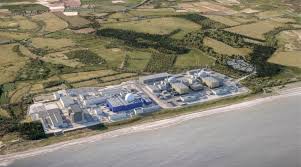
Richard Daniel, Environment reporter, BBC East of England, 10 Feb 25
Groundwork for a new nuclear power station on the Suffolk coast is well under way, but the funding needed to build it has still not been agreed.
Sizewell C said it was confident a final investment decision on the station would be made this summer.
Meanwhile, the cost of its sister project, Hinkley Point C in Somerset, has risen to as high as £46bn.
Opponents have likened Sizewell C to the beleaguered HS2 rail project and said the government should pull out before it is too late.
So what is the state of play?
In east Suffolk, signs of development are hard to miss.
Thousands of trees have been felled, and a huge swathe of land stretching from the outskirts of Leiston to the coast have been cleared for a new construction compound and access road to the Sizewell C site.
Elsewhere, land is being dug up for a new link road off the A12, a new bypass around the villages of Stratford St Andrew and Farnham, and two park-and-ride sites at Wickham Market and Darsham.
The groundwork started a year ago.
The twin reactors would generate 3.2 GW of electricity, sufficient to power six million homes.
So far the UK government, which has an 85% stake in the project, has pledged £5.5bn towards development work.
Last month, EDF denied reports that the total cost of the project had risen to over £40bn, up from an estimated £20bn in 2018.
It is seeking investors and the government said a final investment decision would be made in June.
‘It’s all gone’
David Grant’s farm at Middleton, near Leiston, has been cut in two by the new Sizewell link road and an access road to the B1122.
He said he had lost 38 acres (15 hectares) of arable land.
Opponents of Sizewell C still argue the project should be scrapped before it is too late.
Alison Downes, from Stop Sizewell C, said: “The taxpayer is being forced to pay for what is basically a bet that this project is a good idea and should go ahead.
“The possibility that Sizewell C could go ahead at whatever price is just completely inconceivable.
“Every penny they spend on Sizewell C is a penny lost to cheaper, quicker renewable energy projects that could get us to net zero more quickly and address our climate crisis.”
“Nothing prepared us for the devastation caused,” he said.
“It’s all gone, dug out with machines completely ruthlessly and without any sympathy.
“I think this is HS2, but bigger, frankly.
“I’ve got friends who were involved in the HS2 cancellation and they haven’t even been able to repurchase their land. Luckily we have the option to repurchase if this doesn’t go ahead.”
‘Every penny they spend is a penny lost’
Opponents of Sizewell C still argue the project should be scrapped before it is too late.
Alison Downes, from Stop Sizewell C, said: “The taxpayer is being forced to pay for what is basically a bet that this project is a good idea and should go ahead.
“The possibility that Sizewell C could go ahead at whatever price is just completely inconceivable.
“Every penny they spend on Sizewell C is a penny lost to cheaper, quicker renewable energy projects that could get us to net zero more quickly and address our climate crisis.”…………………. https://www.bbc.co.uk/news/articles/cd9qwygd5j4o
Trump Promises Billions in Defense Cuts
State of the Union: Trump said that Elon Musk’s DOGE will audit the Pentagon and Department of Education.
Mason Letteau Stallings, Feb 9, 2025 more https://www.theamericanconservative.com/trump-promises-billions-in-defense-cuts/
Trump said that Elon Musk’s Department of Government Efficiency would soon lead an audit of the Pentagon and “find billions, hundreds of billions of dollars of fraud and abuse.”
The Department of Education will be another one of Musk’s targets, Trump said. “I’m going to tell him very soon, like maybe in 24 hours, to go check the Department of Education.”
Trump’s comments came during a pre-Super Bowl interview with Bret Baier of Fox News.
National Security Advisor Mike Waltz, in a separate interview Sunday on NBC’s “Meet the Press,” offered that military shipbuilding should be an area of interest for DOGE. “There is plenty to look into in ship building, which is an absolute mess,” he said.
According to Waltz, the Pentagon suffers from widespread problems. “Everything seems to cost too much, take too long, and deliver too little to the soldiers,” he said, adding that “we do need business leaders to go in there and absolutely reform the Pentagon’s acquisition process.”
Nuclear Free Local Authorities back petition to save fish at Hinkley C
The NFLAs are backing a petition promoted by the Bristol Avons River Trust
(BART) and The Rivers Trust calling on the developer of the Hinkley Point C
nuclear power station to honour its requirement to install an Acoustic Fish
Deterrent at the plant. BART and The Rivers Trust wants EDF to install the
fish protection measures that were originally agreed to prevent millions of
fish being sucked to their death into the huge intake pipes, each the size
of six double decker buses.
The new station will suck in the equivalent of
three Olympic swimming pools of cooling water per minute from the Severn
Estuary, and with it the fish. The estuary is one of the UK’s most highly
designated nature conservation sites, with fish stocks including the
endangered Atlantic salmon, European eel, and twaite shad. These species
play a crucial role in global ecosystems and support the food chain for
tens of thousands of birds and other wildlife, including seals and
cetaceans.
NFLA 10th Feb 2025 https://www.nuclearpolicy.info/news/nuclear-free-local-authorities-back-petition-to-save-fish-at-hinkley-c/
The resurgence of nuclear power: a conversation with M. V. Ramana

energy central, 12 Feb 25
Ahmad Faruqui 45,027,conomist-at-Large. Ahmad Faruqui is an energy economist who has worked on electricity pricing issues throughout the globe and testified numerous times before regulatory commissions and governmental bodies.
Professor Ramana is the Simons Chair in Disarmament, Global and Human Security at the University of British Columbia. His latest book is Nuclear is Not the Solution. I put some questions to him on what is causing a resurgence of nuclear power and whether it is a good or a bad idea.
Faruqui. What is causing the resurgence? The sudden arrival of data centers, driven by the quest for AI? Or climate change?
Ramana. I would first dispute the idea that there is an actual resurgence in nuclear power. What we are seeing is a resurgence in talk about nuclear power. We have seen similar waves of talk about nuclear power, most recently during the first decade of this millennium when there was much talk about a so-called nuclear renaissance. It was during that period that the US government introduced the Energy Policy Act of 2005 which provided significant incentives to utilities to build nuclear plants.
Utilities proposed building more than thirty reactors, but of these only four nuclear reactors proceeded to the construction stage, and two of these reactors in the state of South Carolina were abandoned mid-project following huge cost and time overruns, after over 9 billion dollars were spent. Only two reactors were actually built, at the Vogtle power plant in Georgia, and these ended up costing over $36 billion, much more than the $14 billion estimated when construction of those reactors started, and even more than the roughly $5 to $6 billion figures that were suggested when the Energy Policy Act was passed.
It is in light of this history that we should consider the talk about new nuclear plants today. Coming back to your question, what is causing this talk about resurgence: I would argue that this is mostly motivated by the nuclear industry’s struggle to stay alive and viable. Many nuclear plants today are operating only because of government subsidies of one kind or the other. So, if the industry has to build anything new, it has to resort to hype and artificially induced panic about running out of power.
…………………………………………………………………………… Faruqui. Japan, which had shut down its nuclear power plants after the 2011 incident at Fukushima, is now planning to expand it rapidly to meet its climate goals. Does that surprise you?
Ramana. Once again, I would separate the rhetoric from reality………………………. Despite the strong support from the Japanese government to restart nuclear reactors for over a decade, Japan got just 5.6 percent of its electricity from nuclear power plants in 2023. That does not suggest that nuclear power will expand “rapidly”.
Faruqui. What is the status of nuclear power in Germany?
Ramana. Germany has shut down all of its reactors over a long phaseout process starting with a law passed in 2000. At that time, Germany’s nuclear reactors produced a little over 150 TWh of electrical energy. That has declined to zero in 2024. This decline in electrical energy has more than been compensated by renewables. In 2024, wind power contributed 136.4 TWh, biomass contributed 36 TWh, and solar photovoltaics contributed 72.2 TWh. Altogether renewables provided 62.7 percent of Germany’s electricity, and emissions from the power sector have declined by 58 percent between 1990 and 2024.
…………………………………………….Ramana. ………………..Most countries around the world do not operate nuclear plants. The existing nuclear plants are heavily concentrated in a few countries.
Faruqui. What are the main barriers to nuclear power: costs, delays in construction and activation, or inability to safely handle nuclear waste?
Ramana. I would say that the main barrier is cost; delays in construction and commissioning also translate into financial losses for the utilities building nuclear plants.
Faruqui. Are small modular reactors (SMRs), which are being put forward by tech billionaires such as Bill Gates, going to solve the problems associated with large, conventional reactors?
Ramana. I do not think so. As I mentioned earlier, one of the main challenges confronting those promoting nuclear power is poor economics. This problem is worse for small modular reactors. If they are ever built, SMRs will generate lower amounts of power, which means less revenue for the owner. But the cost of constructing these reactors will not be proportionately smaller. Therefore, electricity from SMRs will be more expensive than power from large nuclear plants……………………..
Faruqui. Can nuclear fusion get around the problems faced by nuclear fission energy?
Ramana. In my opinion, generating electrical power from nuclear fusion is unlikely to ever be economically viable. Three basic challenges confront using nuclear fusion to generate electricity. First, there is the “physics challenge”: to produce more energy than is used by the facility as a whole. Current nuclear fusion experiments are far from meeting this challenge. Second, there is the “engineering challenge” of converting what works in an experimental set up and produces energy for a microscopic fraction of second into a continuous source of electricity that operates 24 hours/day, 365 days/year. The third is the economic challenge of having this incredibly complicated process compete with other simpler and far cheaper ways of generating electricity.
Faruqui. Many nuclear plants have been shut down over the years in the US. What were the reasons? Are those concerns still valid for functioning power plants, such as Diablo Canyon in California?
Ramana. Most nuclear plants that were shut down in recent years were closed because of economic reasons……………………………………………………………………………
Faruqui. Some nuclear plants that were shut down are being reopened. In particular, Three Mile Island in Pennsylvania which was shut down in 1979 after a major disaster. What risks are associated with its reopening?
Ramana. Again, I would like to see the plant actually start operating before saying that the plant is “being reopened”………………………………… , the dangers of continuing operations are high and increasing.
Faruqui. Nuclear proponents argue that incidents such as Chernobyl in 1986 in what is now Ukraine and Fukushima in 2011 in Japan were caused by bad design and bad operations and are unlikely to occur in the US. Do you agree?
Ramana. While it is true that we are unlikely to have another severe accident exactly like the ones at Chernobyl and Fukushima, there are many different combinations of initiating factors and failures that can lead to another accident that results in radioactive materials being dispersed into the biosphere. …………………………………. For Perrow, “the dangerous accidents lie in the system, not in the components” and are inevitable……
more https://energycentral.com/c/gn/resurgence-nuclear-power-conversation-m-v-ramana
1 This Month


Tell the Ukrainian Government to Drop Prosecution of Peace Activist Yurii Sheliazhenko

Petition to revoke the licensing of the Near Surface Nuclear Disposal Facility (NSDF) at Chalk River. https://www.ourcommons.ca/petitions/en/Petition/Details?Petition=e-7247


of the week – STOP SMALL MODULAR REACTORS IN CANADA
To see nuclear-related stories in greater depth and intensity – go to https://nuclearinformation.wordpress.com
-
Archives
- March 2026 (193)
- February 2026 (268)
- January 2026 (308)
- December 2025 (358)
- November 2025 (359)
- October 2025 (376)
- September 2025 (258)
- August 2025 (319)
- July 2025 (230)
- June 2025 (348)
- May 2025 (261)
- April 2025 (305)
-
Categories
- 1
- 1 NUCLEAR ISSUES
- business and costs
- climate change
- culture and arts
- ENERGY
- environment
- health
- history
- indigenous issues
- Legal
- marketing of nuclear
- media
- opposition to nuclear
- PERSONAL STORIES
- politics
- politics international
- Religion and ethics
- safety
- secrets,lies and civil liberties
- spinbuster
- technology
- Uranium
- wastes
- weapons and war
- Women
- 2 WORLD
- ACTION
- AFRICA
- Atrocities
- AUSTRALIA
- Christina's notes
- Christina's themes
- culture and arts
- Events
- Fuk 2022
- Fuk 2023
- Fukushima 2017
- Fukushima 2018
- fukushima 2019
- Fukushima 2020
- Fukushima 2021
- general
- global warming
- Humour (God we need it)
- Nuclear
- RARE EARTHS
- Reference
- resources – print
- Resources -audiovicual
- Weekly Newsletter
- World
- World Nuclear
- YouTube
-
RSS
Entries RSS
Comments RSS
 nuclear-news