The £40bn nuclear project at risk of becoming another British white elephant.
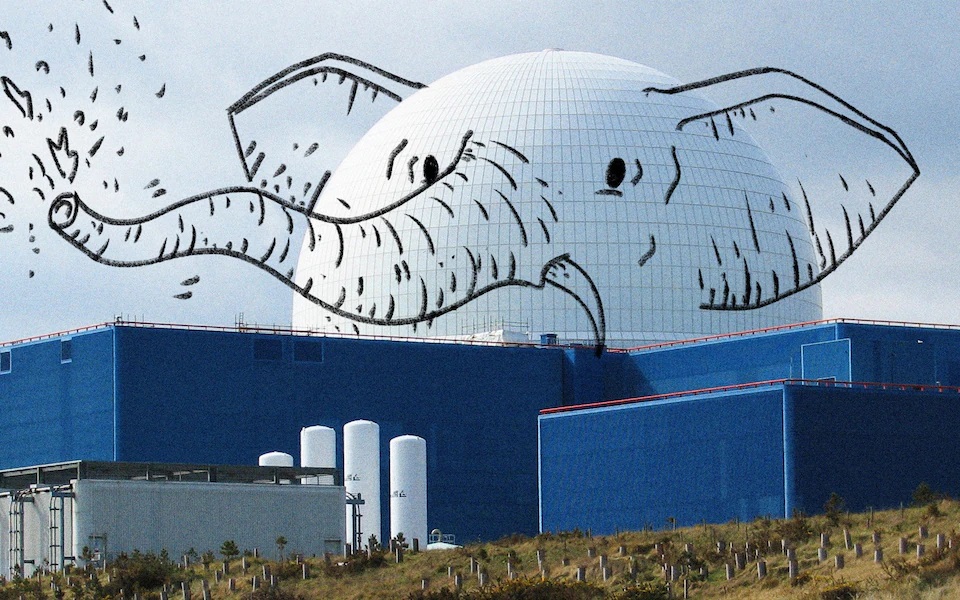
Telegraph 9th Feb 2025, Matt Oliver. Industry Editor,
On the Suffolk coast, an army of yellow diggers and dump
trucks are levelling fields and preparing the ground for one of Britain’s
biggest infrastructure projects. It is here that thousands of workers plan
to raise Sizewell C, a multibillion-pound nuclear power station, in the
late 2030s, eventually providing power for some 6m homes. If approved in
the coming months, the scheme would replace capacity lost elsewhere over
the next decade as other nuclear plants from the 1970s and 80s gradually
shut down.
Yet that is still a big “if”, with Labour ministers
currently weighing up whether the benefits of Sizewell C are worth the
gargantuan costs, which will reportedly exceed £40bn (the original budget
given to HS2). On one hand, it is a shovel-ready project that promises to
boost energy security and economic growth – something Rachel Reeves, the
Chancellor, is in desperate need of.
Hanging over the project, however, is
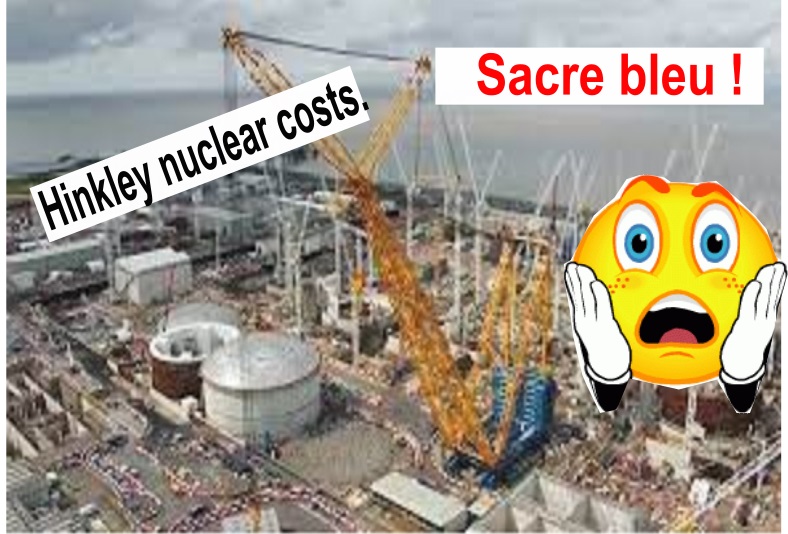
the shadow of its sister scheme: Hinkley Point C in Somerset, which is
running years behind schedule and has gone dramatically over-budget.
Should Sizewell C spiral into disaster, like Hinkley, it could easily become a
white elephant that kills off the prospects of any future successors. And
unlike its sister scheme, which was funded entirely by EDF and other
investors, British taxpayers will be on the hook if things go wrong, with
the Government playing the role of anchor investor.
“There is no transparency around Sizewell C,” says spokesman Alison Downes, who lives
nearby. “Why, despite government support, does its likely eye-watering
cost and impact on households remain shrouded in secrecy? Hinkley has
morphed into the most expensive nuclear power station ever built, by some
distance. Originally budgeted at £18bn, it is now estimated to cost
£46bn. Miliband quietly initiated a review of the nuclear programme last
year and there is speculation he could soon axe the Wylfa proposal in
favour of focusing on mini nuclear plants known as small modular reactors
(SMR) instead.
https://www.telegraph.co.uk/business/2025/02/09/sizewell-c-becoming-another-british-white-elephant/
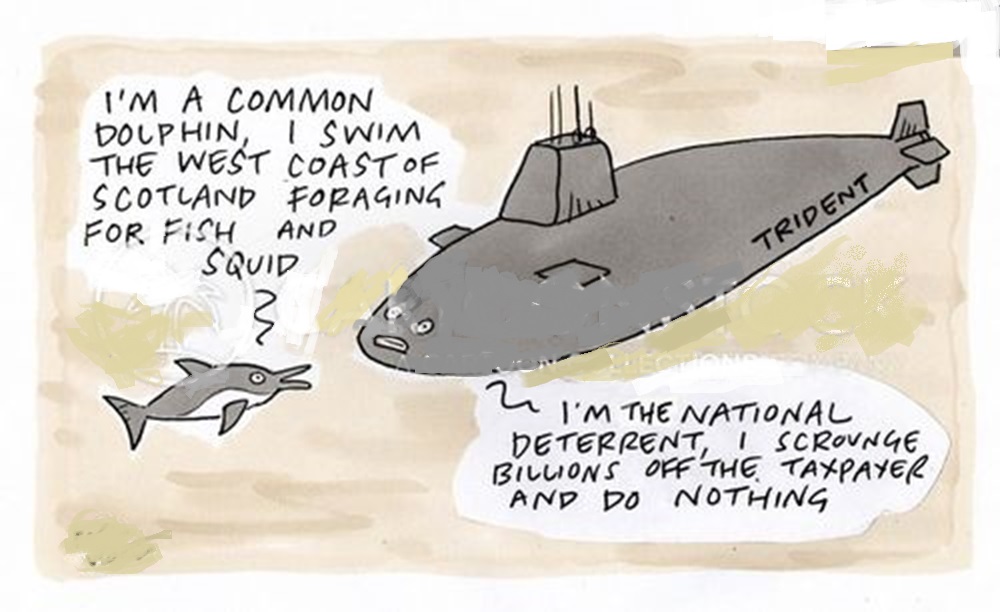
Trident nuclear submarine project rated “unachievable” third year running
The IPA’s latest report for 2023-24 was published in January 2025, six months late. It assessed the feasibility of 227 major government projects, including 44 run by the MoD with a total cost of £298bn.
A new submarine programme, known as Aukus, to eventually replace the Astute-class boats, is under development with the US and Australia. Its budget for 2023-24 was £495m, but its total cost and delivery date have been kept secret to protect “national security” and “international relations”.
Aukus was rated as amber for 2023-24 and 2022-23. The IPA suggested that the MoD might be over-stretching itself on the project.
Rob Edwards, The Ferret 10th Feb 2025
A £4bn project to help replace nuclear-armed Trident submarines on the Clyde has been branded as “unachievable” for the third year running by a UK government watchdog.
The Infrastructure and Projects Authority (IPA) has again given the manufacture of new reactors to power replacement submarines its lowest rating of “red” for 2023-24. There are “major issues” that do not seem to be “manageable or resolvable”, it said.
The IPA has badged eight other major UK nuclear weapons projects, with a combined overall cost of over £55bn, as “amber”. This means they are facing “significant issues” which require “management attention”.
These include building new facilities at the Faslane nuclear base, near Helensburgh, and dismantling nuclear submarines at Rosyth in Fife. The construction of the entire future nuclear-powered fleets of submarines – Astute, Dreadnought and Aukus – was also rated amber.
Campaigners attacked the UK nuclear weapons programme as “an unaffordable shambles” and a “disastrous money pit”. They have demanded its cancellation, and asked for the money saved to be spent on public services.
The Scottish National Party (SNP) accused the Ministry of Defence (MoD) of being “totally unable” to deliver a cost-effective replacement for Trident on time. The Scottish Greens said that public money shouldn’t be wasted on “deadly Cold War hangovers.”…………………………………..
The IPA’s latest report for 2023-24 was published in January 2025, six months late. It assessed the feasibility of 227 major government projects, including 44 run by the MoD with a total cost of £298bn.
Nine of the MoD projects were related to nuclear weapons and submarine programmes, with a total cost of at least £59bn. The one that was given a red rating was to construct reactors to be installed in four Trident-armed Dreadnought submarines to replace ageing Vanguard submarines at Faslane in the 2030s.
The project was also rated as red in 2022-23 and 2021-22, as The Ferret reported. According to the IPA, that means that “successful delivery of the project appears to be unachievable” and it may need its “overall viability reassessed”.
It said: “There are major issues with project definition, schedule, budget, quality and/or benefits delivery, which at this stage do not appear to be manageable or resolvable.”
The Dreadnought reactors, which are being built by Rolls-Royce in Derby, faced “ongoing challenges associated with achieving the required delivery date” in 2028, the IPA added. This was an “important milestone” for the UK’s policy of keeping at least one nuclear-armed submarine on patrol all the time, known as “continuous at sea deterrent”.
Among the eight other nuclear projects rated as amber, was a £1.9bn scheme to build new facilities at Faslane and nearby Coulport, on the Clyde, to support new submarines. Its rating was kept secret in 2022-23 and it was red in 2021-22.
Amber is defined by the IPA as: “successful delivery appears feasible but significant issues already exist, requiring management attention”. The issues “appear resolvable at this stage” and should not cause delay or increased costs “if addressed promptly”.
The Clyde infrastructure project was entering its “most complex phase” over the next four years, the IPA said. It highlighted “two main issues affecting delivery confidence”.
One was rebuilding existing facilities while they continue to be used for submarine operations. The other was attracting and retaining suitably skilled staff “to a remote site in a very tight labour market in western Scotland.”
Costs of some nuclear projects kept secret
A £362m project to begin dismantling defunct nuclear submarines at the Rosyth naval base on the Firth of Forth, was also rated as amber for 2023-24, as it was for 2022-23 and 2021-22. “This is a novel and complex project and learning by doing encounters difficulty and challenge that cannot necessarily be planned for,” commented the IPA.
A £37bn project to build the four Dreadnought submarines, other than the reactors, has been rated as amber for the last six years. An £11bn project to finish building seven nuclear-powered but conventionally-armed Astute submarines has been amber for the last three years.
A new submarine programme, known as Aukus, to eventually replace the Astute-class boats, is under development with the US and Australia. Its budget for 2023-24 was £495m, but its total cost and delivery date have been kept secret to protect “national security” and “international relations”.
Aukus was rated as amber for 2023-24 and 2022-23. The IPA suggested that the MoD might be over-stretching itself on the project.
There was “a degree of risk relating to the ability of the defence nuclear enterprise and the wider UK supply chain to resource the programme with the necessary skills, experience and infrastructure to deliver against a demanding schedule, without adversely impacting the delivery of the Dreadnought programme,” it said.
A new programme repackaging previous projects for making and storing nuclear materials at Aldermaston in Berkshire has been rated as amber for the last two years. Its total cost and delivery date have been kept under wraps.
The rating, costs and comments on another project to test nuclear weapons in France and England, known as Teutates, have also been kept secret for national security and international relations reasons.
The SNP highlighted the MoD’s record of radioactive leaks and rising costs on the Clyde. “It is disappointing but not surprising that the MoD seems to be totally unable to manufacture a replacement for Trident in a timely or cost-effective manner,” said SNP MSP Keith Brown.
“The UK’s nuclear weapons aren’t safe for workers and wildlife, they don’t work when tested, and their manufacture is not efficient. Nor are they delivering a good deal for taxpayers.”
The Scottish Greens described nuclear weapons as a “moral abomination” that should be opposed. “The fact that they have also proven to be a disastrous money pit only underlines the urgent need to remove them for good,” said Green MSP Maggie Chapman.
“We could do so much good with this money, investing in services that make our lives safer and better, rather than wasting it on these deadly Cold War hangovers.”
The Scottish Campaign for Nuclear Disarmament (SCND) blasted the UK’s nuclear weapons as “a colonial hangover, an unaffordable shambles, a danger to us and the world”.
SCND chair, Lynn Jamieson, said: “The combined cost of keeping the nuclear weapon system going and of building a replacement escalates while public services are drastically cut.”
The Nuclear Information Service, which researches and criticises nuclear weapons, argued that the UK nuclear programme was unsustainable. “The case for cancelling badly run and unaffordable weapons projects is compelling,” said research manager, Tim Street……………………
https://theferret.scot/trident-nuclear-unachievable-third-year/
Anatomy of an AI Coup

It is political offloading, shifting the messy work of winning political debates to the false authority of machine analytics. It’s a way of displacing the collective decision-making at the core of representative politics.
Tech Policy Press, Eryk Salvaggio / Feb 9, 2025
DOGE is gutting federal agencies to install AI across the government. Democracy is on the line, writes Tech Policy Press fellow Eryk Salvaggio.
Artificial intelligence (AI) is a technology for manufacturing excuses. While lacking clear definitions or tools for assessment, AI has nonetheless seized the imagination of politicians and managers across government, academia, and industry. But what AI is best at producing is justifications. If you want a labor force, a regulatory bureaucracy, or accountability to disappear, you simply say, “AI can do it.” Then, the conversation shifts from explaining why these things should or should not go away to questions about how AI would work in their place.
We are in the midst of a political coup that, if successful, would forever change the nature of American government. It is not taking place in the streets. There is no martial law. It is taking place cubicle by cubicle in federal agencies and in the mundane automation of bureaucracy. The rationale is based on a productivity myth that the goal of bureaucracy is merely what it produces (services, information, governance) and can be isolated from the process through which democracy achieves those ends: debate, deliberation, and consensus.
AI then becomes a tool for replacing politics. The Trump administration frames generative AI as a remedy to “government waste.” However, what it seeks to automate is not paperwork but democratic decision-making. Elon Musk and his Department of Government Efficiency (DOGE) are banking on a popular but false delusion that word prediction technologies make meaningful inferences about the world. They are using it to sidestep Congressional oversight of the budget, which is, Constitutionally, the allotment of resources to government programs through representative politics.
While discussing an AI coup may seem conspiratorial or paranoid, it’s banal. In contrast to Musk and his acolytes’ ongoing claims of “existential risk,” which envision AI taking over the world through brute force, an AI coup rises from collective decisions about how much power we hand to machines. It is political offloading, shifting the messy work of winning political debates to the false authority of machine analytics. It’s a way of displacing the collective decision-making at the core of representative politics.
The Cast
We can set the stage by describing the cast. In Elon Musk’s part-time job at DOGE, he takes the lead role. His team aims to use generative AI to find budget efficiencies even as he eviscerates the civil service. The DOGE entity has already attempted to take over the Treasury Department’s computer system to distribute funds and effectively disbanded USAID. Musk hopes to deliver an “AI-first strategy” for government agencies, such as GSAi, “a custom generative AI chatbot for the US General Services Administration.”
…………………………Then there is the supporting cast. ………………………………………………………………….
The Plan
Amidst the chaos in Washington, Silicon Valley firms will continue to build their case that they are the answer…………………………………………………………………………………. The solution will be a “centralized data repository” hooked to a chatbot and a suite of promises.
………………………………………………………….. OpenAI’s ChatGPTGov is a prime example of a system that is ready to come into play. By shifting government decisions to AI systems they must know are unsuitable, these tech elites avoid a political debate they would probably lose. Instead, they create a nationwide IT crisis that they alone can fix.
Weaken the Opposition
As the technical elite embeds generative AI into hollowed-out institutions, the administration will carry on its effort to eviscerate independent research institutions. Trump campaigned in 2023 for an “American University,” an online resource presenting “study groups, mentors, industry partnerships, and the latest breakthrough in computing” that “will be strictly non-political, and there will be no wokeness or jihadism allowed.” Trump proposed that American University would be funded by “taxing, fining, and suing excessively large private university endowments.”
………………………………………….. Eventually, this would create a crisis through which higher education, with its commitments to diversity already neutered, could be starved to death. A weakened university research ecosystem would strengthen the private sector by luring scientists to their labs, diminishing independent research oversight.
……………………………………………….DOGE aims to replace government bureaucracy with technical infrastructure. Reversing and dismantling dependencies embedded in infrastructure is slow and difficult, especially when efforts to study systemic bias are prohibited. The ingredients for “technofascism” will be assembled.
Generating a Crisis
Eventually, the shoddy infrastructure of these automated government agencies and services will produce language or code that creates an AI-driven national crisis. Because no AI system is presently suited to the complex task of governance, failure is inevitable. Deploying that system anyway is a human decision, and humans should be held accountable.
The designers of AI have repeatedly told us that it poses a threat akin to the atomic bomb.
……………………………………….. Years of bipartisan lobbying by groups focused narrowly on AI’s “existential risks” have positioned it as a security threat controllable only by Silicon Valley’s technical elite. They now stand poised to benefit from any crisis……………………………………………….
Algorithmic Resistance
The AI coup emerged not just from the union of Donald Trump and Elon Musk. It is born of practices and beliefs now standard among Silicon Valley ideologues that are obscure to most Americans. However, the tech industry’s weakness is that it has never understood the emotional and social complexity of actual human beings.
…………………….Speed is essential to their work. They know they cannot create a public consensus for this effort and must move before it takes shape. By moving fast and breaking things, DOGE forces a collapse of the system where unanswered questions are met with technological solutions. Shifting the conversation to the technical is a way of locking policymakers and the public out of decisions and shifting that power to the code they write.
…………………………………..Do not fall for the trap. Democratic participation and representative politics in government are not “waste.” Nor should arguments focus on the technical limits of particular systems, as the tech elites are constantly revising expectations upward through endless promises of exponential improvements. The argument must be that no computerized system should replace the voice of voters. Do not ask if the machine can be trusted. Ask who controls them.
https://www.techpolicy.press/anatomy-of-an-ai-coup/
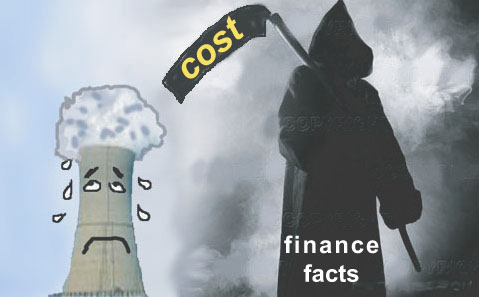
It’s money that has stopped nuclear power, not planning problems
David Toke, Feb 09, 2025, https://davidtoke.substack.com/p/its-money-that-has-stopped-nuclear
Of all the nonsense about nuclear power that one hears, the idea that somehow it is planning problems rather than financial issues that stop its development surely takes the biscuit. The Government bats away any formal planning objection made to its nuclear plant when companies want to build them. Yet the UK government is flogging nuclear planning problems as a scapegoat for the technology’s failure for all it is worth. And it is talking about the non-existent concept of small modular reactors (see HERE). Is this a smokescreen to hide its problems with financing Sizewell C?
The real reason for the failure of the Wylfa project
There was a silly story published in most leading newspapers about the proposed Wylfa plant in North Wales being knocked back in 2019 because of ‘language’ objections (see HERE). The reality was that the proposal was scrapped for financial reasons. This involved the Government being unable to offer enough incentives to keep Hitachi interested in developing the project. In January 2019 the BBC reported that ‘Japanese tech giant Hitachi said it was suspending construction of the new plant in north Wales as the project’s cost continues to spiral.’ (see HERE). The National Grid cancelled plans for pylons needed for the project (see HERE).

The reporting at the time failed to mention any planning issues, only the financial ones. Indeed, once Hitachi announced its withdrawal, that was the effective end of the plans. However, the company set up to make the planning application continued what looks to me like it was going through the motions. It didn’t matter that the Planning Inspector rejected the application. If the proposal was a real one (in an economic sense), the government would surely have overruled the Inspector without delay. -As indeed happened in 20122 with the planning application for Sizewell C.
By contrast, the recent coverage of the planning objections to the Hitachi proposal seems to completely omit any mention of the real reason why the project was abandoned.
Problems with the Government’s nuclear programme
Hitachi originally bought the ‘Horizon’ option from RWE and E.On. It consisted of the proposed development at Wylfa and another at Oldbury in Gloucestershire. RWE/E.ON had withdrawn from the proposal in 2012. This (Horizon) was one of three consortia set up in 2009 to constitute the Government’s new nuclear programme. This was announced by Ed Miliband in 2009 in his last manifestation as Energy Secretary.
The second consortium to fall apart, the so-called ‘NuGen’ consortium, was supposed to build a new nuclear project at Sellafield called ‘Moorside’. This consortium was originally owned by Iberdrola, the Spanish company and the French company GDF Suez (now Engie). However, they lost interest and the consortium was bought up instead by Toshiba in 2013. Then in 2017, Toshiba decided to ‘mothball’ the project. Again, financial reasons were always cited as the reason for this. Once again this had nothing to do with planning issues.
This left the third consortium led by EDF. They advanced their Hinkley C project. Eventually, they agreed the controversial deal whereby they would receive £92.50 per MWh over 35 years in 2012 prices, now worth over £130 power MWh in today’s money. They also agreed on a contract for Sizewell C so that if that went ahead as well both projects would receive £89.50 per MWh.
I knew at the time this was a bit of PR and that EDF would never go ahead with the agreement in respect of Sizewell C. They did not. Instead, they have agreed on a deal whereby, in effect, most of the costs, including the inevitable large overruns, will be paid by the British taxpayer or electricity consumer.
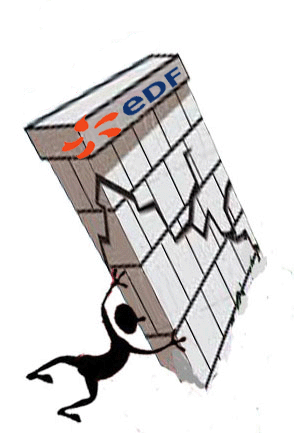
So, none of the privately owned companies originally involved in the British nuclear programme went ahead with the proposals. Centrica was also involved with the Hinkley C proposal at one stage, but it withdrew in 2013. Only the French-state-owned EDF has gone ahead with building a nuclear power plant, ie Hinkley C. EDF can carry on the construction. This is despite the mounting construction cost overruns. The French state pays!
Planning and paying for Sizewell
In effect, the French taxpayer is paying for a British nuclear power plant in the shape of Hinkley C. However, the French have said that this cannot happen again (ie they paying (most of) the cost overruns for a British nuclear power station). Hence Sizewell C will be funded mostly by the British taxpayer and electricity consumer, with the Brits taking the main liabilities, not the French.
The UK Government is currently arguing within itself and with EDF about how much Treasury funding the UK Government is going to put into the project. There has been a charade of looking for private investors. The only way private investment could be achieved would be for the investors to be effectively guaranteed their profits at the taxpayers’ or energy consumers’ expense.
Interestingly, in 2022 the Planning Inspector said they could not recommend the Sizewell C project without a more convincing plan to ensure a sustainable water supply. However, this objection was batted aside by the then Energy Secretary, Kwasi Kwateng, in 2022 (see HERE). This affair received little publicity because everybody knew that the Government could easily dismiss this problem, and override recommendations by Planning Inspectors. The Government saw no reason at the time to make a big deal out of it. After all, why would the Government want to publicise doubts about the water supply for Hinkley C when it wanted the project to go ahead?
Indeed in the summer of 2022, all the talk was on how to pay for Sizewell C. With planning consent having been sorted, Boris Johnson wanted to go full steam ahead and give the final go-ahead, something that did not please the Treasury. According to a report in The Times (see HERE) ‘Simon Clarke, the chief secretary to the Treasury……………. wrote to Johnson and Zahawi warning that a signoff for Sizewell would compromise the new prime minister’s ability to cut taxes or spend more on the cost of living’. Apparently, even Liz Truss did not want to take on the costs of Sizewell C.
But fast forward to February 2025 (with still no final go-ahead for Sizewell C), and the Government saw fit to make a very big deal out of a planning debating point regarding an already-abandoned project in Wales. Why? Maybe, I think to distract attention from the fact that it is the financing of nuclear power and its delivery that is the big problem. One can almost hear Sir Humphrey intoning ‘The public does not need to be overloaded with such details’. Otherwise, the politicians might stop blaming each other about things (eg costs of nuclear power) over which they have no control and focus on things that they do have some control.
Planning (or not?) for heat pumps
One thing that the politicians do control are the building regulations which could be making heat pumps and solar PV mandatory in new buildings. Alas, this has been kicked into the long grass by a press release a few weeks ago (see HERE). The Government has full control over the regulations, but it has given way to pressures from the construction industry. Yes, that is the same industry who are so keen on building nuclear power stations.
Nimbys. Naysayers. Traitors. Children take note, why learn oracy when insults will do?
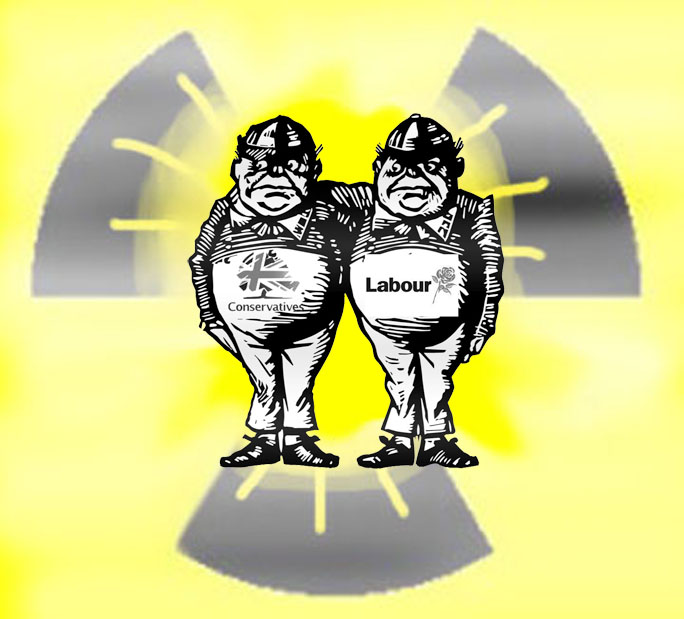
Catherine Bennett, Guardian, 9th Feb 2025
Keir Starmer’s rhetoric against green campaigners appears to have taken a playground turn.
Before the last election, in what was billed as his “most personal interview yet”, Keir Starmer said: “I’m not in the habit of bandying insults around”. It was once part of his appeal, or meant to be, that his speech was polite, even to the point of colourless, in contrast to the ugly gibberish streaming out of Boris Johnson, then Liz Truss. When the Tories went low, Starmer went sorrowful headteacher. “I don’t think Boris Johnson is a bad man,” he said in one speech, “I think he is a trivial man.”
His favourite word, these days, is “nimbys”. Starmer uses it so freely he’s personally breathed new life into the original acronym (“not in my back yard”), revealing along the way its largely unexplored potential to create national disharmony. Why restrict such a genius jibe to arguments about ring roads and executive homes?
Last week’s headlines about his plan for nuclear power expansion – typically, “Starmer to ‘push past nimbyism’ in pledge to expand nuclear power sites” – are only the latest in which Starmer demonstrates how any opposition to any scheme with environmental consequences can be represented, by a skilled litigator like himself, as nimbyism: purely selfish, irrational and against the common good. Unlike the visionary tech overlords such as Google, Meta and Amazon, which Starmer invited, in the same speech, to profit, with their data centres, from the UK nimbys’ certain defeat. His government’s pro-nuclear press release featured praise from similarly patriotic, non-nimby-infested corporations, such as EDF and Microsoft.
It is thanks to Starmer we now understand that Greenpeace and other environmental campaigners – actually anyone with questions about, for instance, the disposal of nuclear waste – are essentially indistinguishable from other varieties of nimby he has been insulting for a while, so as to trivialise in advance any disquiet about Labour’s plans to tear up planning regulations.
Look beyond the acronym’s “back yard” element: now any non-local objection to 150 infrastructure projects, all evidently beyond criticism, also identifies a person as, in his eyes, the enemy of his “working people”.
…………………………..“There are countless more examples of Nimbys and zealots gumming up the legal system,” he wrote, “often for their own ideological blindspots to stop the Government building the infrastructure the country needs.” Anti-growth traitors, the lot of them. “They want to win for themselves,” Starmer raved, “not for the country.”………………………………………..
For prominent Tory idealists, there must be validation in Starmer’s promise to fulfil their dreams, never properly realised, of humbling environmentalists and trashing planning restrictions (in places where they don’t live). Not forgetting the satisfaction of seeing Starmer recycle, for Labour, their exact same phrases, sometimes wearing the same accessories – hard hats and hi-vis jackets – for the benefit of vanity photographers recently declassified as a Tory outrage.
Since it can’t be plagiarism, only shared passion can explain why Starmer and David Cameron have phrased their ambitions in identical terms, in wanting, say, a “bonfire of red tape” (Starmer 2024; Cameron 2014). Starmer thinks regulations are “suffocating” (likewise Cameron); Starmer says “we are the builders” (ditto George Osborne); Starmer wants to end “dithering” (Cameron, “cut through the dither”); Starmer declares Britain “open for business” (Cameron, same, 2012); Starmer confronts those “talking our country down” (so did Cameron, 2011).
To judge by their interchangeable expressions of annoyance, hostility to environmental protections is also common ground for Reeves and Osborne. For him, they placed “ridiculous costs on British businesses”; for her, they make “delivering major infrastructure in our country far too expensive”. In 2012, the vice-president of the RSPB, Britain’s largest nature conservation charity, called Osborne “a bloody idiot”.
…………………………The teaching of “oracy” in schools was once a priority for Starmer. Confident speaking, he said, gives “an inner belief to make your case in any environment”. Whatever explains his recent change in style, the debacle is not without educational value. Kids, if you go in for name-calling, offensive misrepresentation and unconvincing assertions of your superior judgement, the finest voice coach may struggle to transform it into persuasive oracy. Even when, as with Starmer’s nimbys, your targets were, only months ago, your friends. https://www.theguardian.com/commentisfree/2025/feb/09/nimbys-naysayers-traitors-children-take-note-why-learn-oracy-when-insults-will-do
Opposition mounts to planned nuclear plant as Starmer confirms new policy of ‘Build, baby, build’
Martin Shipton Nation Cymru 9th Feb 2025
Opposition to a proposed nuclear energy plant in Bridgend is mounting, with the local Green Party saying it is “unnecessary, unwanted and unsafe”.
But doubts about the proposal come as Keir Starmer confirmed that the UK Government intends to change the planning system to make it easier for such projects to go ahead.
An American-owned company called Last Energy intends to build the SMR (small modular reactor) plant next to the River Llynfi, just to the north of Bridgend.
The Green Party argues that If the development goes ahead, it will be funded by venture capitalists who are not likely to be citizens of Wales. The nuclear power plant will operate for profit, as a private enterprise.
Untested
A party spokesperson said: “It is based on a new design which if built will be the first of its kind. So the design is untested in the real world. Locals, including Green Party members, have several credible reasons for concern.
“The Green Party questions the need for a nuclear power plant, when Wales has the natural resources required to produce all its energy from a mixture of solar power, onshore and off-shore wind generation.
“It is true that people need secure energy supplies which can be quickly restored, and that Wales needs investment in improving the grid infrastructure. But nuclear power is not the solution to Wales’ energy needs.
“As was proved in the December 2024 storm, we desperately need improvements to our energy resilience – such as the ability to restore power after severe climate events, and this should be the focus of any energy investment.
“Do locals want a nuclear power plant in Bridgend? Last Energy has hosted two community consultations, one in Bettws and one in Pencoed. Debra Cooper, the Green Party Chair for Bridgend, attended both events and asked how the locals had been invited to these meetings, given that many were unaware that they were taking place.
“The speaker gave a vague reply that Facebook had been used, and that Last Energy had outsourced the invitations. More consultation events are planned, and we demand that Last Energy genuinely seeks to invite the community to their consultations.
“Is nuclear power safe? The risk of nuclear leaks from the onsite nuclear waste storage is not acceptable.
“Who will pay for future nuclear waste storage? There is a risk that no other region of the UK will be willing to store the nuclear waste, and that this area will become a long term nuclear waste storage site. The consequences of accidental leakage and terrorist targeting have not been fully considered.”
Nuclear waste
Brian Jones, CND Cymru Vice Chair, said: ““Last Energy, despite having never built a nuclear reactor, is proposing to build four nuclear reactors near Bridgend which, like all nuclear reactors, will produce nuclear waste which needs to be safely contained and monitored for thousands of years. Nuclear power stations have consistently cost more and taken longer to build than originally proposed.”
Tony Cooke, who leads on Wales energy policy development for the Green Party, said: “Green Party policy is clearly opposed to any new nuclear power stations. The developers haven’t actually built any to their proposed design and they don’t have a design licensed by the UK Office for Nuclear Regulation which would be required. Their website claims more than 300 are operating globally – but this is misleading – there are more than 300 pressurised water reactors), but PWR refers to a generic ‘family’ approach to design – not a specific one. Licensing is not likely to be quick. (years not months)
“The developers are presumably targeting an ex coal fired power station site because it has a now unused grid connection. These are valuable, given the time lag in getting new grid connections. The site should be prioritised for battery storage, which is needed and complements renewable generation. Because of the small scale of the proposal it is in the powers of the local authority to reject it. We should lobby for them to do so.”
Planning approvals
Richard Outram, secretary of the Britain / Ireland Nuclear Free Local Authorities group said: “Nuclear energy can never be 100% safe and is never ‘clean’ whatever the industry claims. Last Energy has a long way to go before securing the necessary regulatory or planning approvals to begin its project by 2027. The Office for Nuclear Regulation said this was ‘very ambitious’. And Last Energy does not even appear to have any working reactors – just mock ups! Nuclear at Bridgend would be more Lost Energy – renewables are the future.”
Last Energy says it hopes the pressurised water reactors will supply power to “mid-size manufacturers throughout the region, providing 24/7 baseload power and putting the local economy on a path toward industrial decarbonisation”.
It says the project will not need taxpayer cash, with the company estimating it would be making a £300m investment, £30m of which would benefit the local economy, excluding business rates collected by Bridgend County Borough Council. It also expects to create at least 100 local full-time jobs.
Last Energy UK CEO Michael Jenner said: “Last Energy’s Llynfi project will not only transform a vacant coal site into a hub for clean energy production, it will also create economic opportunity for companies throughout South Wales.
“The benefits of nuclear power speak for themselves, so our focus must be on delivering those benefits on time and on budget. Last Energy’s emphasis on mass-manufacturability allows us to deliver significantly smaller plants in under 24 months with purely private financing.
“We look forward to engaging with the public, meeting local suppliers, and being an active partner in south Wales’ path towards energy security and industrial decarbonisation.”
Nato
In June 2024, Last Energy announced it was working with Nato to research opportunities for the future deployment of micro-nuclear power technologies at military installations.
The partnership between Last Energy and Nato Energy Security Centre of Excellence (Ensec Coe) will see the two parties research military applications for the micro-reactors and look into potential deployment.
In October 2024, independent nuclear experts told New Civil Engineer magazine that SMRs could be used to produce weapons-grade material, but various practical, legal and moral challenges made this unlikely to be done in reality.
On February 6 Prime Minister Keir Starmer pledged to “build baby build”, as he announced plans to make it easier to construct mini nuclear power stations in England and Wales.
He told the BBC the government was going to “take on the blockers” and change planning rules so new reactors could be built in more parts of the country.
Sir Keir said he wanted the country to return to being “one of the world leaders on nuclear”, helping to create thousands of highly skilled jobs and boosting economic growth. https://nation.cymru/news/opposition-mounts-to-planned-nuclear-plant-as-starmer-confirms-new-policy-of-build-baby-build/
CND Cymru warns against Starmer’s ‘anti-democratic’ push for mini-nuclear reactors
Morning Star 7th Feb 2025 https://morningstaronline.co.uk/article/cnd-cymru-warns-against-starmers-anti-democratic-push-mini-nuclear-reactors
CND CYMRU has blasted Sir Keir Starmer’s “anti-democratic” push to put nuclear reactors in communities without consultation.
The Prime Minister announced planning reforms this week that will see “archaic” rules slashed to allow more power plants approved across England and Wales.
Clearing a path for so-called small modular reactors (SMRs) to be built for the first time, the government said growth will be prioritised ahead of so-called Nimbys.
A set list of eight sites where mini-nuclear power stations can be included in planning rules and the expiry date on nuclear planning rules will be scrapped.
CND Cymru national secretary Dylan Lewis-Rowlands said: “If the proposals from Westminster are to be believed, then not only could plans similar to this pop up anywhere in Wales or England, but could also be pushed through against community will from the UK government.”
CND Cymru vice-chairman Brian Jones added: “This is not just a question of nuclear development, but of democracy.
“The intention of this move by Starmer seems to be something that the nuclear power and weapons industry has only dreamt of before — the ability to ignore communities wishes and focus their vast lobbying budgets on getting central government to allow them to build wherever they want, without opposition.
“It is fundamentally putting profit before people and planet, and turning Britain into a nuclear power test site for SMRs. It is, in one word, anti-democratic.”
Concerns were also raised regarding the intention of these proposals to power AI datacentres, with Mr Lewis-Rowlands warning: “The industry always try and co-opt any reason to push development and secure the lucrative government money that allows them to pay their shareholders.

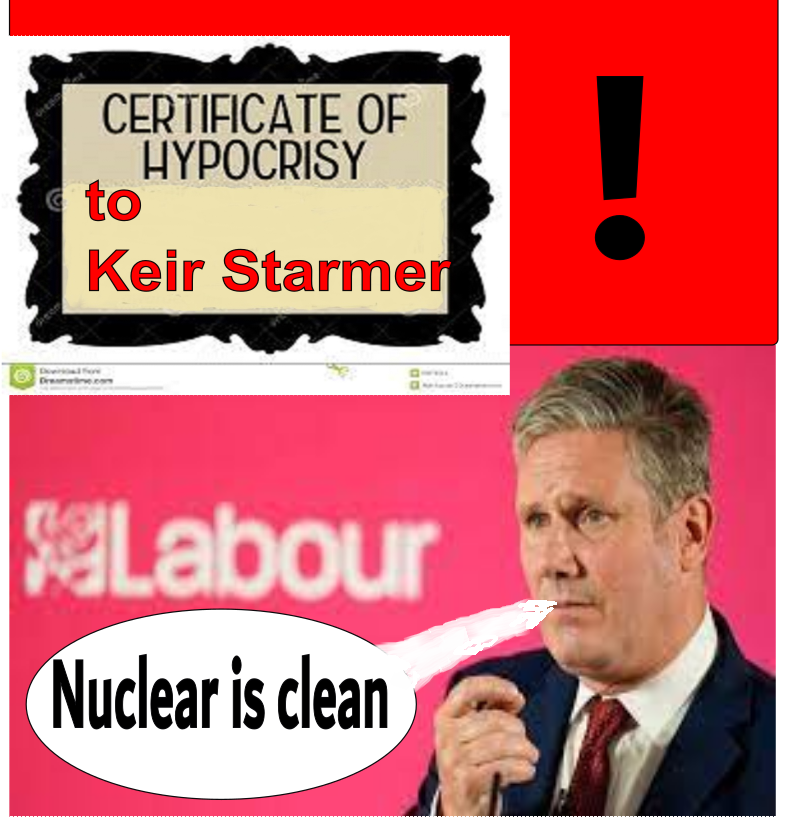
Prime Minister Keir Starmer (centre) and Energy Security and Net Zero Secretary Ed Miliband (right) meet staff at the new decontamination and decommissioning lab during a visit to Springfields (Preston Lab), National Nuclear Laboratory facility in Preston, Lancashire, as the Government is pledging to create thousands of highly skilled jobs by reforming planning rules to make it easier to build new nuclear reactors. Picture date: Thursday February 6, 2025
Prioritizing nuclear power and natural gas over renewable energy is a risky move for Ontario’s energy future
Norman W. Park, The Conversation, 11 Feb 25
The demand for electricity is growing rapidly as the world transitions from fossil fuels to low carbon-emitting forms of energy. However, making this transition will be difficult.
Ontario is projected to require 75 per cent more electricity by 2050, spurred by increasing demand from the industrial sector, data centres, electric vehicle (EV) adoption and households, according to the Independent Electricity System Operator (IESO).
To meet this demand, Ontario Energy Minister Stephen Lecce has proposed transforming the province into an “energy superpower” by aggressively expanding nuclear energy and natural gas while cutting support for wind and solar renewable energy.
This plan was spelled out in a policy directive from Lecce instructing the IESO to consider bids from all energy sources, opening the door to allow bids from natural gas and nuclear energy.
This is a departure from previous policies. Previously, under former Energy Minister Todd Smith, the IESO had stipulated bids for the electrical grid should only be from wind, solar, hydro or biomass.
The Ontario government should reconsider these plans. Non-renewable energy sources are costly, rely on new, expensive technologies, ignore the harm to human health and ignore the consequences for global warming.
Expanding nuclear
A central pillar of the Ontario government’s energy plan is the aggressive expansion of nuclear power. The province has committed to refurbishing 14 CANDU reactors at Bruce, Darlington and Pickering, and has proposed constructing new reactors at Bruce.
Ontario is also the first jurisdiction in the world to contractually build a BWRX–300 small modular reactor project at Darlington, despite not knowing its projected cost.
The cost of this small modular reactor may be much higher than similarly sized solar, wind and natural gas projects. This is unsurprising, given that the costs of nuclear projects are often much higher than projected.
Ontario encountered a similar issue when the Darlington nuclear generating station was constructed. The actual costs of nuclear projects were more than double projected costs and took almost six years longer to complete than projected.
Given these historical challenges and uncertainties, the province’s push for nuclear expansion is a cause for concern.
Opposition to wind and solar
Despite significant cost reductions in utility-scale wind and solar farms, which makes them less expensive than nuclear and fossil fuels in many parts of the world, Ontario’s recent policy directive reduced support for these non-emitting renewable energy sources…………………………………………………………..
Reconsidering Ontario’s energy transition
Ontario’s energy transition must involve supplying more energy to an expanding electrical grid while ensuring it remains reliable and resilient. The current government’s plans to turn the province into an “energy superpower” will commit Ontario to decades of costly expenditures and relies on unproven new technologies.
The government’s proposal to increase natural gas to supply the electricity grid and new buildings will increase the risk of premature death and serious illness to Ontarians and will increase greenhouse gas emission, undermining efforts to combat global warming.
Lecce should reconsider his current policy directive to the IESO. Future bids for the electrical grid should instead be evaluated for their impacts on the health of Ontario residents and climate change.
Ontario’s energy policies should also be guided by knowledgeable experts outside of government, rather than solely by politicians. Establishing a blue-ribbon committee comprising energy scientists and environmental specialists would provide needed oversight and ensure the province’s energy strategy is cost-effective, technologically sound and aligned with climate goals.
Ontario has an opportunity to lead by example in balancing energy needs with environmental and health priorities. https://theconversation.com/prioritizing-nuclear-power-and-natural-gas-over-renewable-energy-is-a-risky-move-for-ontarios-energy-future-246289
Kansai Electric to ship more spent nuclear fuel to France

Fukui Japan Times 9th Feb 2025 https://www.japantimes.co.jp/news/2025/02/09/japan/japan-more-spent-nuke-fuel-to-france/
Kansai Electric Power is working to double the amount of spent nuclear fuel it will ship to France, increasing it by about 200 tons, informed sources said.
The move comes as Fukui Prefecture, home to several nuclear plants, urges Kansai Electric to address shrinking storage capacity for spent nuclear fuel, the sources said.
In 2023, Kansai Electric announced a plan to ship about 200 tons of the fuel from its Takahama plant in Fukui to France starting in fiscal 2027. Based on the Japanese government’s policy, the spent fuel will be used for research on technology to reprocess uranium-plutonium mixed oxide, or MOX, fuel.
At the Takahama plant, about 90% of the spent fuel storage capacity has already been used, and that amount is expected to reach the upper limit in about three years.
About 200 tons of spent fuel will be generated if the No. 1 to No. 4 reactors at the plant are operated for about three years. Kansai Electric has restarted all of its seven nuclear reactors.
The company initially planned to send spent fuel mainly to a reprocessing plant to be built in Aomori Prefecture, but the completion of the facility has been postponed.
Last September, the company notified Fukui Gov. Tatsuji Sugimoto of its intention to review the plan, and said that it would halt three reactors in the prefecture if it fails to come up with a proposal that can win the understanding of officials there by the end of fiscal 2024.
America’s nuclear gamble: The dangerous push to resume atmospheric testing

Experts warn of catastrophic fallout as calls grow to restart nuclear weapons tests abandoned since 1963.
By Karl Grossman, February 10, 2025
“The United States may need to restart explosive nuclear weapons testing,” declared Robert Peters, research fellow for nuclear deterrence and missile defense at The Heritage Foundation, the right-wing organization close to the Trump administration, in a lengthy report last month. Issued on January 15, it was titled: “America Must Prepare to Test Nuclear Weapons.”
Peters stated that “the President may order the above-ground testing of a nuclear weapon….And while the United States leaving the [Nuclear] Test Ban Treaty may not be optimal and may indeed have negative downstream effects, doing so may be necessary to stave off further adversary escalation.”
There has not been a nuclear weapon tested above-ground in the United States since 1962, Peters said. That was a year before the Nuclear Test Ban Treaty of 1963 was signed by the U.S., Soviet Union and United Kingdom. It prohibits nuclear weapons tests in the atmosphere, underwater or in outer space. It allowed underground tests as long as they didn’t result in “radioactive debris to be present outside the territorial limits of the state under whose jurisdiction or control” the test was conducted.
“Resuming atmospheric testing of nuclear weapons would be disastrous,” says Joseph Mangano, executive director of the Radiation and Public Health Project. He cited the “lessons learned from above-ground nuclear weapons testing—the radioactive fall-out that harmed many people, especially infants and children.”
Testimony by a co-founder of the Radiation and Public Health Project, the late Dr. Ernest Sternglass, a physicist, before the then Congressional Joint Committee on Atomic Energy, was instrumental in President John F. Kennedy signing the Nuclear Test Ban Treaty of 1963.
As President Kennedy said in a 1963 national address: “This treaty can be a step towards freeing the world from the fears and dangers of radioactive fallout.” He said that “over the years the number and the yield of weapons tested have rapidly increased and so have the radioactive hazards from such testing. Continued unrestricted testing by the nuclear powers, joined in time by other nations which may be less adept in limiting pollution, will increasingly contaminate the air that all of us must breathe.” Kennedy spoke of “children and grandchildren with cancer in their bones, with leukemia in their blood, or with poison in their lungs” as a result.
The Heritage Foundation’s 900-page publication “Project 2025” is the “governing agenda” for the Trump administration, writes Susan Caskie, executive editor of the magazine The Week, in its current issue. “Many of its authors and contributors,” she noted, are now members of the administration, some appointed to “even Cabinet posts.” …………………………………………………………………………………………………………………..
Are we, if there is a return to atmospheric nuclear weapons testing, to go back to the years of radioactive fallout—and the resulting health impacts? And, as Kennedy stated, “children and grandchildren with cancer in their bones, with leukemia in their blood, or with poison in their lungs.” more https://www.nationofchange.org/2025/02/10/americas-nuclear-gamble-the-dangerous-push-to-resume-atmospheric-testing/
Sam Altman’s Fusion Power Startup Is Eyeing Trump’s $500 Billion AIPlay.

Few energy startups are better positioned to cash in on Stargate than
Helion, which has raised major funding from the AI initiative’s leaders,
and signed a contract with another. Sam Altman announced the $500 billion
Stargate initiative at the White House last month, with a plan to build the
world’s largest AI infrastructure project.
Stargate, the $500 billion effort to secure American AI supremacy for perpetuity backed by OpenAI’s Sam Altman and SoftBank founder Masa Son, among others, will require a
gargantuan amount of energy to power it. As it happens, Altman and Son are
backing a startup that says it can provide it. It’s a fusion energy
company called Helion that recently raised $425 million in a funding round
backed by SoftBank. Prior to that it banked $375 million from Altman, who
serves as Helion’s chairman. It was the single largest investment check
the AI billionaire has written so far. And Microsoft, a Stargate partner,
was the first company to contract with Helion for a fusion power plant by
2028 — a timeline that has some physicists skeptical.
Forbes 5th Feb 2025 https://www.forbes.com/sites/davidjeans/2025/02/05/stargate-sam-altman-fusion-helion/
Can the nuclear industry find a better way to build?
The sector is hopeful that using copies of established reactors can help keep costs down and
prevent delays for new projects.
On a construction site sitting behind the
beach at Sizewell, on England’s East Anglian coast, mountains of soil
make it hard to see two small, blue signs. These indicate the spots where,
in the middle of the next decade, two nuclear reactors should start
generating enough energy to power 6mn homes.
The extraordinary thing about
the 900-acre site is not its scale but that it has an identical twin —
for reasons that reveal a lot about the latest thinking on building nuclear
power stations. The new Sizewell C plant has been designed to be as close
as possible a copy of Hinkley Point C, a project 280 miles away on the
other side of the country. Building there started in 2016, eight years
before that at Sizewell.
The replication is part of a push across Europe and North America to tackle what Bent Flyvbjerg, an academic studying project management, calls the nuclear power industry’s “negative learning” problem. More simply: for an industry that has become infamous
for massive cost overruns and endless delays, maybe the solution is just to
build exact copies of established reactors.
The IEA has found that nuclear
plants delivered since 2000 in the US and Europe were on average eight
years late and cost two-and-a-half times their original budget. The UK
government on Thursday announced planning reforms intended to make it
easier to build nuclear plants quickly and cheaply. Tom Burke, founder of
E3G, a London-based clean energy consultancy, is far more sceptical, saying
the information from the countries claiming better records lacks
credibility. “Where the publicly available information is reliable — if
you look at what happened in Finland, the United States and the United
Kingdom — people have not built reactors to time and budget, ever,”
Burke says. EDF has said UK regulations meant there were 7,000 changes to
the design for Hinkley Point from that at Flamanville — although the
UK’s Office for Nuclear Regulation has disputed the figure.
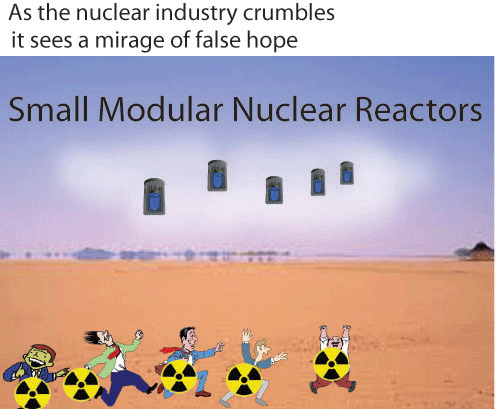
Many developers’ hopes are hanging on a new breed of reactors — small
modular reactors. The devices are intended to be small enough to
mass-produce on a highly standardised basis in the controlled environment
of a factory. They will then be taken to power station sites for
installation. Most SMRs will have a capacity below 300MW, less than 10 per
cent of the 3.2GW capacity at Sizewell C, and will be far smaller.
Yet sceptics such as E3G’s Burke are far from convinced. Asked if he thinks
steady orders and standardisation can bring the sector’s costs under
control, Burke replies: “I think that’s one of the biggest ‘ifs’
I’ve ever seen.”
FT 10th Feb 2025
https://www.ft.com/content/5e563e3f-575d-4a90-bd46-4d0a3083f707
Sizewell C campaigners slammed “clueless” Government
By Dominic Bareham, East Anglian Daily Times 9th Feb 2025
Campaigners opposed to the new Sizewell C nuclear power station have slammed prime minister Sir Keir Starmer’s backing for nuclear energy as “appalling”.
On Thursday, the Labour leader pledged to “build, baby, build” as part of an effort to create thousands of highly skilled jobs and boost economic growth in the UK.
This included plans to “fast forward on nuclear” by tackling “blockers” and changing planning rules so more reactors could be built in more parts of the country.
But Jenny Kirtley, chair of action group Together Against Sizewell C (TASC), said: “Starmer’s statement is appalling, full of soundbites fuelled by the pro-nuclear lobbyists – many of whom already have their ‘snouts in the trough’ – spouted by a clueless government blaming ‘blockers’ to divert attention away from the evidence that nuclear is not cheap, quick to deploy, homegrown, nor clean.”
In response to the prime minister’s suggestion that legal actions brought by campaign groups had delayed construction projects, she said Sizewell C had not been blocked by campaigners, but by “incompetent planning”.
In particular, she highlighted locating the reactor on a “fast eroding coastline” and in the UK’s driest, most drought-prone region with “no guaranteed sustainable supply of mains water”.
Instead, she said the UK government should be looking to develop renewable energy.
She added: “With renewables, we already have technologies that are cheaper, quicker to deploy and cleaner than nuclear, yet Labour favours slow nuclear, meaning that fossil fuels will burn for longer.”……………………….. https://www.eadt.co.uk/news/24919434.sizewell-c-campaigners-slammed-clueless-government/
1 This Month

18 March Webinar @ 1 PM EST: An Assessment of SMR Projects: The Case of Canada
register for the zoom:
https://us02web.zoom.us/webinar/register/WN_o8BIIOUvQ2ONJR1nta65DQ#/registration

of the week – STOP SMALL MODULAR REACTORS IN CANADA
To see nuclear-related stories in greater depth and intensity – go to https://nuclearinformation.wordpress.com
-
Archives
- February 2026 (256)
- January 2026 (308)
- December 2025 (358)
- November 2025 (359)
- October 2025 (376)
- September 2025 (258)
- August 2025 (319)
- July 2025 (230)
- June 2025 (348)
- May 2025 (261)
- April 2025 (305)
- March 2025 (319)
-
Categories
- 1
- 1 NUCLEAR ISSUES
- business and costs
- climate change
- culture and arts
- ENERGY
- environment
- health
- history
- indigenous issues
- Legal
- marketing of nuclear
- media
- opposition to nuclear
- PERSONAL STORIES
- politics
- politics international
- Religion and ethics
- safety
- secrets,lies and civil liberties
- spinbuster
- technology
- Uranium
- wastes
- weapons and war
- Women
- 2 WORLD
- ACTION
- AFRICA
- Atrocities
- AUSTRALIA
- Christina's notes
- Christina's themes
- culture and arts
- Events
- Fuk 2022
- Fuk 2023
- Fukushima 2017
- Fukushima 2018
- fukushima 2019
- Fukushima 2020
- Fukushima 2021
- general
- global warming
- Humour (God we need it)
- Nuclear
- RARE EARTHS
- Reference
- resources – print
- Resources -audiovicual
- Weekly Newsletter
- World
- World Nuclear
- YouTube
-
RSS
Entries RSS
Comments RSS
 nuclear-news