AI’s Energy Demands Threaten a Nuclear Waste Nightmare
Reviving nuclear power plants to power AI threatens an avalanche of nuclear waste
By Michael Riordan , https://www.scientificamerican.com/article/ais-energy-demands-threaten-a-nuclear-waste-nightmare/ January 31, 2025
Long in decline, the U.S. nuclear industry is hoping for resurrection at two sites of its greatest failures: Three Mile Island in Pennsylvania and the Hanford Site in Washington state. Nuclear power, the industry claims, will help satisfy the surging power demands from data centers and the growing AI economy. But such a wrong turn ignores the long-unresolved problems of radioactive nuclear wastes that AI cannot wish away.
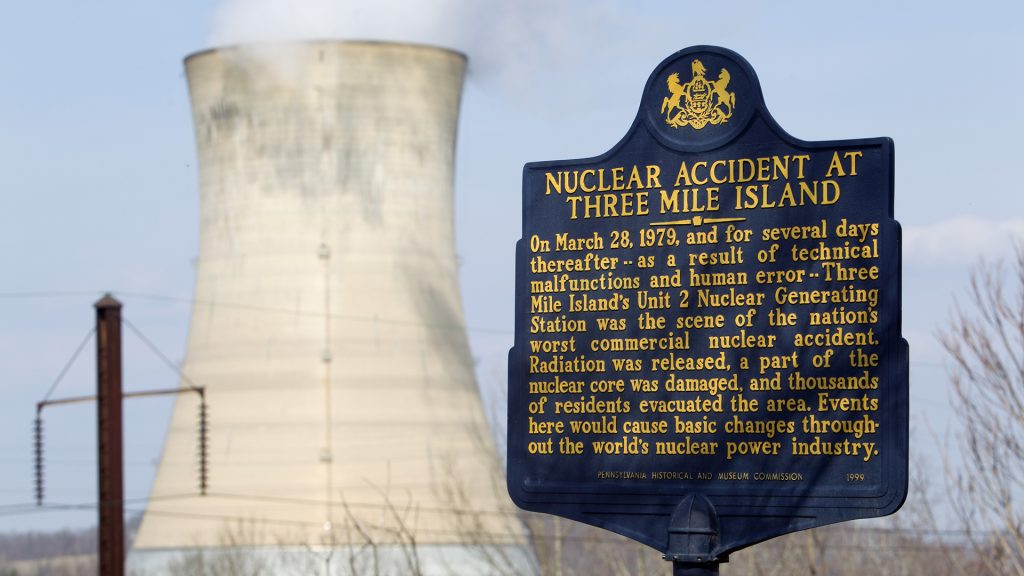
In September Constellation Energy announced plans to restart a shuttered reactor at Three Mile Island, prodded by Microsoft, which will need many gigawatts of power to perform extensive AI calculations in its expanding fleet of data centers. Amazon followed suit and announced in November that it will invest $334 million to develop small modular nuclear reactors (SMRs) at Hanford, site of the world’s first plutonium-production facility.
Google and Meta are also hoping to bring nuclear power back. In October 2024 Google announced it eventually plans to purchase 500 megawatts of electricity from Kairos Power, which is developing a novel SMR in Oak Ridge, Tenn., on the site of the national lab that long refined uranium for the nuclear industry. And Facebook parent Meta is seeking bids for nuclear power plants for its data centers.
These tech giants recognize that the next generation of microprocessors to be used for AI calculations at data centers will require oodles of electricity to power and cool them. A single Nvidia Blackwell chip, for example, can draw up to two kilowatts, more than what is needed for a typical house. Cram thousands of them in servers inside a data center, and they will need as much power as a small city.
So-called hyperscale data centers require over 100 megawatts (100 MW)—a sizeable fraction of the output of a major power plant. And that power should be cheap, steady and reliable.
An authoritative December 2024 report from the U.S. Department of Energy, written by energy experts at the Lawrence Berkeley National Laboratory, is especially illuminating. The growth in U.S. data-center energy usage over the next five years, they state, would correspond “to a total power demand for data centers between 74 and 132 [gigawatts].” That would represent some 7 to 12 percent of the U.S. electricity consumption forecast for 2028.
Where on Earth is all this power going to come from? Given the challenges electric utilities face in supplying electricity to meet other growing needs, including electric vehicles, it’s small wonder that big tech has turned back to the atomic nucleus. But the power demands outlined in the DOE report would require building or resurrecting the equivalent of at least 40 Three Mile Island reactors over the next five years. That’s impossible.
Several years ago Amazon, Google, Meta and Microsoft promised not to exacerbate atmospheric carbon-dioxide levels. But that laudable goal is becoming increasingly difficult to achieve, given their data centers’ exploding electricity consumption. So they have instead begun touting a return to nuclear power to avert this thorny problem. That’s a huge mistake.
Nuclear power is indeed a source of carbon-emission-free energy, but it is hardly a clean energy source, and it is definitely not renewable. All along the uranium supply chain—from mining to enrichment to the fabrication of fuel rods or pellets—opportunities abound for radioactive releases. In South Texas, for example, landowners worry about contamination of their groundwater by renewed uranium mining activities nearby.
The diagram below illustrates carbon emissions – but the same picture applies also to radioactive emissions

Since 1989, the DOE has spent hundreds of billions of taxpayer dollars cleaning up the original nuclear complex—including the gargantuan Oak Ridge factory that enriched much of the uranium used for commercial nuclear power. And despite decades of trying, the department has yet to fully clean up and dismantle the oozing, disintegrating tanks of highly radioactive wastes left over from plutonium processing at Hanford.

The storage and containment of spent nuclear fuel is in fact the crucial unresolved challenge of the U.S. nuclear industry. Over 90,000 tons of these wastes are stored at 77 sites in 35 states—an amount increasing by over 2,000 tons a year.
Small modular reactors, promoted by Microsoft co-founder Bill Gates and others, will only add to this growing burden. As former U.S. Nuclear Regulatory Commission (NRC) chair Allison Macfarlane and Rodney C. Ewing of Stanford University stated, “In some cases these new reactors may make it worse by creating more waste that’s more costly to manage, new kinds of complex waste, or just more waste, period.”
Elsewhere, Macfarlane stressed the procedural and practical difficulties faced by novel nuclear reactor technologies in gaining NRC acceptance and achieving commercial success. Shortly after it had received NRC certification in 2023, for example, the much-touted NuScale SMR project was abandoned after anticipated construction costs more than doubled to $9.3 billion. Leaving aside the waste problem, a commercially successful SMR design is probably over a decade away.
But the relentless AI gold rush, if left unchecked, will impose unattainable demands on projected power supplies well before that. Meanwhile, electricity rates will rise inexorably in light of the law of supply and demand. That looming energy crisis explains big tech’s efforts to slow shutdowns of fossil-fueled power plants and to resurrect shuttered reactors.
Amazon, Google, Meta and Microsoft executives should instead take a deep breath and begin reevaluating their options. Do they really need to build and upgrade data centers at such a breakneck pace? Or is this devil-take-the-hindmost AI arms race just the result of bitter competition, prodded by recent advances in semiconductor technology?
And what about the truly clean, renewable energy sources they once embraced—especially solar, wind and geothermal? Yes, the variability of solar and wind energy makes them a poor match to the steady power requirements of data centers. But energy storage has come a long way recently and has a promising future. And the recent startling success of the Chinese DeepSeek AI program demonstrates that software efficiency will play an important role in this effort.
Given the dark clouds still lingering over nuclear power, especially its unresolved waste problem, these renewable alternatives deserve renewed consideration.
They won’t tell you these truths about nuclear energy
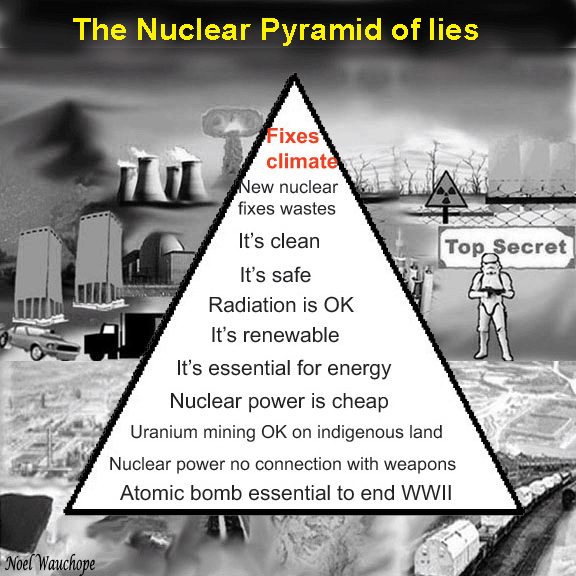
by Cindy Folkers and Amanda M. Nichols, opinion contributors – 02/02/25 , https://thehill.com/opinion/energy-environment/5118792-nuclear-power-industry-radiation-debunk/?fbclid=IwY2xjawIOldhleHRuA2FlbQIxMQABHfrKakROFL169LYfifqZe6YoIrO_jAtv23bm6hkyL0zF7neIUesv9XURpw_aem_ocJM3kdP_FV_AlGdyUVxdg
Scientists have been arguing about the health risks from radiation since the end of the 19th century, when radioactivity was first discovered. Today, with electricity demand soaring and AI companies clamoring for their own nuclear power plants, from small modular reactor projects to giant new nuclear builds, that century-old argument is ongoing.
But now it’s mostly a battle between scientists on the one hand and the nuclear industry, the politicians it lobbies and gullible media on the other.
Currently, scientists are being drowned out. The Biden administration proposed to triple U.S. nuclear capacity by 2050, and President Trump is perceived as favoring nuclear expansion as well. Despite reams of peer-reviewed studies and books showing radiation’s harmful effects, there is persistent denialism that seems impervious to fact-checking.
It took until this century for the U.S. government to finally admit that radiation had killed workers at nuclear weapons plants. For Congress, compensating them remains politically radioactive: lawmakers failed to reauthorize the Radiation Exposure Compensation Act that expired in 2024. Media coverage increasingly and uncritically repeats the talking points of nuclear industry spokespeople, who preposterously claim you would have to stand next to nuclear waste for a year to get as much radiation as having an X-ray, or that eating a banana gives you as much radiation exposure as living next to a nuclear plant.
This is dangerous disinformation in a long line of dangerous disinformation.
After the U.S. dropped atomic bombs on Japan, the director of the Manhattan Project, Gen. Leslie R. Groves, debunked reports of radiation sickness as Japanese “propaganda.” Later, when he had to admit its existence, Groves misled Congress and the public by saying it was “a very pleasant way to die.”
Spreading such lies is bad enough. What is even worse is that the truth of the matter has been actively and deliberately suppressed.
Scientists who first dared to expose radiation’s harms — cancer, birth defects, disproportionate impacts on females — had their funding and data seized and suffered professional ostracism and vilification.
Spreading such lies is bad enough. What is even worse is that the truth of the matter has been actively and deliberately suppressed.
Scientists who first dared to expose radiation’s harms — cancer, birth defects, disproportionate impacts on females — had their funding and data seized and suffered professional ostracism and vilification. Yet their early scientific findings were largely vindicated. It’s now well established that exposure to ionizing radiation has adverse health impacts, affecting the heart, lungs, thyroid, brain and immune system, causing blood disorders, cataracts, malignant tumors, keloids and other chronic conditions. It wreaks genetic havoc that can result in cancer, organ dysfunction and immune and metabolic disorders. Children and pregnant women are particularly vulnerable.
It’s also proven that ionizing radiation disproportionately impacts women and girls, with the youngest worst affected. Ethnicity and other factors beyond biological sex and age may be contributing or compounding factors. There is also a growing body of evidence that radiation has transgenerational impacts.
Meanwhile, regulators set dose limits for radiation exposure that fly in the face of the evidence. These limits purport to set a “safe” level of radiation exposure, ignoring radiation researchers who have long stressed there is no such thing as a safe level, since any exposure can contribute to adverse health impacts.
In fact, nuclear technologies, including civilian power reactors, have poisoned large swaths of land — and not only the areas around Chernobyl and Fukushima, whose radioactive cesium contaminated Tokyo. The U.S. nuclear industry has left a lasting legacy of radiation in our environment, including in our water and food, which U.S. regulators are hardly able to effectively track, let alone remediate.
Uranium mining and nuclear weapons testing particularly and disproportionately affect Indigenous land and Native Americans, compounding the harms of colonization, exploitation and marginalization on already overburdened communities. Nuclear technologies have done and will continue to do long, slow violence, especially to the poor and marginalized, leaving long-lasting ecological, human-health and genetic impacts.
We seem unable to keep these inconvenient truths in our heads, the more so since well-financed nuclear lobbyists and their government targets have misdirected our attention by reframing nuclear power as key to fighting climate change.
This is a fallacy. There’s actually plenty of evidence showing the opposite — that relying on nuclear power actually makes climate change worse, and undercuts the true climate solution of renewables and efficiency. Even the Government Accountability Office called out the Nuclear Regulatory Commission for its nonsensical refusal to consider the growing dangers of operating nuclear plants amid climate change. But none of that has prevented countenancing the myth of nuclear as a climate strategy and other big lies about it
Perhaps the biggest lies about nuclear stem from Eisenhower’s 1953 “Atoms for Peace” speech, a carefully crafted bid to recast nuclear technology as peaceful after the atrocious 1945 Hiroshima and Nagasaki bombings. Atoms for Peace promised to make electricity “too cheap to meter” and “make the deserts bloom,” while deliberately concealing the truth that nuclear was utterly uncompetitive and not remotely economically viable as a power source. Civilian nuclear power was misdirection away from the real agenda of building nuclear power plants, which was to help supply the nuclear weapons complex, producing enriched plutonium as feedstocks for nuclear bombs in the burgeoning arms race.
Today, nuclear weapons are still the hidden agenda and secret rationale behind the otherwise nonsensical nuclear power industry. The resurgent nuclear arms race is the real reason why many tens of billions in federal subsidies ($53.5 billion in the Inflation Reduction Act alone, plus billions more in state subsidies) are propping up the utterly uncompetitive nuclear power industry, and why many billions more of taxpayers’ money is now getting thrown at corporations pushing chimerical “advanced” nuclear and uneconomical, dirty, failing small modular reactors (SMRs).
But some are pushing back, like Indigenous nations and public interest advocates in southwest Washington, where Amazon is pushing to build SMRs to power its AI business, heedless of their negative impacts and prohibitive costs.
Of all the dangers of reckless nuclear boosterism, the most insidious is disinformation concealing and denying nuclear’s past, present and future harms while wildly exaggerating its benefits. These are the perennial tactics of the nuclear industry. They litter its history, and they’re again getting traction today.
But they can be countered with sunshine — both the kind that powers real renewables with which nuclear can’t compete, and the kind that exposes its prevarications and lies with scientific evidence and public scrutiny.
Cindy Folkers is the radiation and health hazard specialist at the NGO Beyond Nuclear, and co-author with Ian Fairlie of the new book “The Scientists who Alerted us to the Dangers of Radiation.” Amanda M. Nichols, Ph.D. is a postdoctoral research fellow at University of California Santa Barbara’s Environmental Studies Program, and managing editor of the peer-reviewed Journal of Religion, Nature and Culture.
Trump and the global nuclear order

The potential impact of Trump’s second term on the global nuclear order is profoundly negative. His previous acts, as well as the declared goals of those in his orbit, indicate that unilateral policies that emphasise short-term gain over long-term global stability will likely be maintained and intensified. The consequences – an unregulated nuclear weapons race, the loss of global norms, and heightened regional instability – call for immediate action from the international community.
Anubhav S Goswami, https://www.lowyinstitute.org/the-interpreter/trump-global-nuclear-order 2 Feb 25
The impact of the President’s second term on the
global nuclear order could be profoundly negative.
Donald Trump’s comeback to the White House poses a substantial challenge to the global nuclear order. His previous administration had contempt for arms control agreements. The United States’ exit from the Intermediate-Range Nuclear Forces (INF) Treaty removed a vital guardrail to nuclear escalation in Europe. This move, while deemed legitimate by the US in reaction to Russian transgressions of the Treaty, considerably weakened the international framework for arms control. Moreover, the hesitance of his first administration to prolong New START, the last existing nuclear weapons limitation treaty between the US and Russia, nearly led to its rupture prior to the Biden administration obtaining a five-year extension. This reluctance originated from Trump’s insistence on including China in future arms control talks.
The transactional approach to arms control in Trump’s first-term is casting a long shadow on the future of the global nuclear order in his second term. His America First platform is expected to reinforce his pursuit of unilateral nuclear programs.
The impending expiry of New START in February 2026 could be a pivotal moment in the stability of the global nuclear order. Trump was previously either uninterested in renewing the treaty or sought renegotiation under conditions disadvantageous to Russia. The good news is that both Trump and Russian President Vladimir Putin have signalled a willingness to restart nuclear arms talks as soon as possible. However, the expansion of China’s nuclear arsenal is a complication because Trump insists on China being a party to the talks.
Even if there’s a breakthrough on this front, there won’t be any stopping the massive US nuclear modernisation program already underway and costing $1.7 trillion over 30 years or nearly $75 billion per year from 2023 to 2032. The plans include “a new class of ballistic missile submarines, a new set of silo-based intercontinental ballistic missiles, a modified gravity bomb, a new stealthy long-range strike bomber, and associated warheads … for each delivery system”. Trump’s expected backing for this program, combined with plans for new systems like the nuclear-armed sea-launched cruise missile (SLCM) and the potential deployment of tactical nuclear weapons to the Indo-Pacific and European theatres, contribute to a resurgence of nuclear arms development on a global scale.
Furthermore, Trump is backing the upgrading of US missile defence shield by adding an interceptor layer in space. He laid out his vision for missile defence in his first term, saying in 2019: “[W]e will recognise that space is a new warfighting domain, with the Space Force leading the way. My upcoming budget will invest in a space-based missile defence layer. It’s new technology. It’s ultimately going to be a very, very big part of our defence and, obviously, of our offense”. If Trump pursues a nationwide missile defence shield, it could lead Russia and China to build more numerous and sophisticated offensive missile systems to overwhelm and evade American defences.
To make matters worse, the United States may resume nuclear testing for the first time since 1992. Breaking the long-standing tradition of refraining from nuclear testing may see other nuclear-armed states follow suit. According to several analysts, the US does not need to start testing again to preserve the credibility or efficacy of its nuclear weapons, with current modelling and simulation methods enough to guarantee the safety and dependability of nuclear weapons. Therefore, critics argue, recommencing testing would be solely a political decision to demonstrate strength. Supporters argue that although simulation is improving, it cannot fully replace real world testing, especially for new weapon designs.
The potential impact of Trump’s second term on the global nuclear order is profoundly negative. His previous acts, as well as the declared goals of those in his orbit, indicate that unilateral policies that emphasise short-term gain over long-term global stability will likely be maintained and intensified. The consequences – an unregulated nuclear weapons race, the loss of global norms, and heightened regional instability – call for immediate action from the international community.
The absence of a balanced strategy risks ushering in a period of increased nuclear peril. Experts and advocates working to reduce nuclear threats should remind US authorities that just having more nuclear weapons during the Cold War did little to make the country safer. Rather, the accidents and miscalculations generated by the pursuit of nuclear superiority nearly led to Armageddon on several occasions.
1 This Month


31st January – Challenging the War Machine – a DECLASSIFIED UK SUMMIT



Website of the Week
Now until to February 10, 2026 Radioactive waste storage in France: the debate is finally open! How to participate?
-
Archives
- January 2026 (227)
- December 2025 (358)
- November 2025 (359)
- October 2025 (377)
- September 2025 (258)
- August 2025 (319)
- July 2025 (230)
- June 2025 (348)
- May 2025 (261)
- April 2025 (305)
- March 2025 (319)
- February 2025 (234)
-
Categories
- 1
- 1 NUCLEAR ISSUES
- business and costs
- climate change
- culture and arts
- ENERGY
- environment
- health
- history
- indigenous issues
- Legal
- marketing of nuclear
- media
- opposition to nuclear
- PERSONAL STORIES
- politics
- politics international
- Religion and ethics
- safety
- secrets,lies and civil liberties
- spinbuster
- technology
- Uranium
- wastes
- weapons and war
- Women
- 2 WORLD
- ACTION
- AFRICA
- Atrocities
- AUSTRALIA
- Christina's notes
- Christina's themes
- culture and arts
- Events
- Fuk 2022
- Fuk 2023
- Fukushima 2017
- Fukushima 2018
- fukushima 2019
- Fukushima 2020
- Fukushima 2021
- general
- global warming
- Humour (God we need it)
- Nuclear
- RARE EARTHS
- Reference
- resources – print
- Resources -audiovicual
- Weekly Newsletter
- World
- World Nuclear
- YouTube
-
RSS
Entries RSS
Comments RSS
 nuclear-news