Innovative computer modelling with AI doesn’t need the most expensive and dangerous energy from nukes
The much touted second-coming of a “nuclear renaissance” in the United States fueled by the projected soaring global demand to power artificial intelligence (AI) just got a major setback with the surprise January 20, 2025 overnight emergence of an apparently more competitive and efficient Chinese AI startup company, DeepSeek. The US stock market plummeted for the S&P 500 nuclear power companies that have been financially scaling up as the most reliable 24/7 electricity supply for a massive expansion of energy intensive data centers. China’s surprise rollout of DeepSeek and sudden rise to international acclaim at the start of 2025 has seriously disrupted the US claim to global dominance in cloud computing, networking and data storage services powered by extravagantly expensive atomic energy.
US-based AI technology firms, including Nvidia, which lost nearly $600 billion in the January 27th record breaking single day’s largest stock selloff, have led the way in rebranding nuclear power as the preferred choice as the 24/7 power supplier for a massive AI surge. The sudden emergence of DeepSeek, only two months in the making, is being compared to a “sputnik moment” for the US AI market, referencing the former Soviet Union’s launch of the first artificial satellite into orbit in 1959 that triggered a US technological panic and launched America into a “space race” with Russia. DeepSeek has just as suddenly now laid claim to competitively take the technological lead to advance mere computer modelling to an innovative era of computer reasoning.
Starting in 2023 and swelling in 2024, there was sort of a “gold rush” of fast money that sprang up to finance AI deals with new reactor licensing and construction of still unproven Small Modular Reactor (SMR) designs as well as repowering uneconomical, permanently closed reactors like Three Mile Island Unit 1. The Big Tech corporate promotion was primarily driven by the leading hyperscalers including Google, Amazon, MicroSoft, Meta Platforms (aka Facebook) and Oracle. A series of deals have since been cut with the established S&P 500 nuclear corporations led by Constellation Energy, Vistra, and the usual suspects of nuclear start-ups including Oklo Power, NuScale, Talen Energy Corp and TerraPower.
However, like a bolt from the blue, the US nuclear industry has been rattled on the stock market. The S&P 500 nuclear power giants Constellation Energy (CEG) and Vistra (VST) are under scrutiny as international energy analysts reevaluate the energy needs of AI data centers along with that same host of nuclear power start-ups.
NNSA has yet to satisfy Government Accounting Office best practice guidelines for the SRS pit project.
LANL itself has experienced numerous and serious safety accidents, including a plutonium fire, flooding, glove box contamination and a plutonium “criticality” accident, in recent years.
Why does the production of new plutonium pits take priority over cleaning up the hazardous legacy of previous pit production?
Last week U.S. District Judge Mary Lewis Geiger, South Carolina, faulted the Department of Energy and the National Nuclear Security Agency for ignoring the National Environmental Protection Act and rushing plans to fabricate plutonium pit bombs at Savannah River Site, near Aiken, South Carolina.
Newly designed plutonium pits will serve as “triggers” for the next generation of nuclear warheads mounted atop Sentinel, the next generation of intercontinental ballistic missile, and for new submarine-launched nuclear weapons. Combined, these projects comprise major components in the trillion-dollar “modernization” of the U.S. strategic deterrence force.
Plaintiffs including Savannah River Site Watch, South Carolina Environmental Law Project Gullah/Geechee Sea Island Coalition, Nuclear Watch New Mexico and Tri-Valley CAREs forced NNSA to halt construction on many phases of its plutonium pit facility near Aiken, SC, to hold public scoping meetings, solicit public comments, and produce a Programmatic Environmental Impact Statement within thirty months.
Plaintiffs successfully argued that the plutonium pit modernization project was complex, involving diverse entities, was spread over wide geographical regions and therefore, by definition, required a “programmatic environmental impact statement, PEIS.
The proposed plutonium pit facility at Savannah River Site will reconstruct a massive 500-room partially completely abandoned building designed for the Mixed Oxide Plant. The spectacularly failed MOX plant would have processed old plutonium pits from de-commissioned US nuclear weapons per a nuclear weapons agreement with the Russians in 2000. Poor management and engineering revisions multiplied costs exceeding $7 billion when DOE finally terminated the MOX project in 2019. DOE recently paid the State of South Carolina an extra $600 million fine for failure to remove 10 tons of plutonium delivered to the MOX plant and stored at SRS. Ironically SRS is importing a different 10 tons of plutonium pits from the PANTEX pit storage site in Texas to manufacture new pits.
NNSA’s plan for plutonium pit production at Savannah River Site involves complex coordination between Los Alamos, the Waste Isolation Pilot Plant in Carlsbad NM, the Lawrence Livermore National Laboratory in CA and the Kansas City National Security Campus, and therefor requires a NEPA “programmatic environmental impact statement”. NNSA refused repeated calls to perform the PEIS, which resulted in the successful lawsuit agreed last week.
NNSA has yet to satisfy Government Accounting Office best practice guidelines for the SRS pit project. GAO’s repeated calls for NNSA to create quality Integrated Master Schedules and Life Cycle Cost Estimates for its plutonium pit modernization program remain unfulfilled. These plans and guidelines establish best practices for building an efficient cost-effective project, something MOX consistently ignored, leading to its disastrous failure. Congress subsequently ordered NNSA meet these GAO parameters by July 2025.
Congress had mandated in 2019 that Los Alamos National Laboratory in New Mexico manufacture 80 plutonium pits per year by 2030. Because LANL is a research facility, it has not produced any plutonium pits since 2011, and never at scale. It was unprepared to fulfill this Congressional mandate, authored by Senator John McCain. In response, NNSA then divided the plutonium pit project in two: Savannah River Site would produce 50 pits per year by 2030, and LANL 30 pits. SRS has never manufactured plutonium pits, though it did produce 10 tons of plutonium for pit fabrication at Rocky Flats, CO beginning in 1957. Thirty million gallons of highly radioactive wastes from that project, more than 200 million curies* of radiation, remain stored on- site at SRS, making it one of the most radioactive Superfund sites in the U.S.
Rocky Flats had produced one to two thousand plutonium pits per year for decades until it was closed in 1989. After whistleblower leaks, (see Jon Lipsky, James Stone) the FBI and EPA raided Rocky Flats discovering gross fraud and egregious violations of environmental regulations by contractor, Rockwell International. Rocky Flats was closed and will remain a superfund site into the far distant future.
Parts of Los Alamos National Lab, wedged on a tabletop mesa, comprises a superfund site with residual plutonium still found around the site and in surrounding canyons from operations and waste dumping begun in the 1940’s “Oppenheimer years”.DOE recently signed a consent decree with the State of New Mexico to assume greater responsibility for the clean-up of waste deposit wells and trenches that threaten nearby towns like White Rock, the San Ildefonso Pueblo and the Rio Grande River with radiological contamination. DOE paid New Mexico a $420,000 fine for mishandling hazardous wastes is 2024.
LANL itself has experienced numerous and serious safety accidents, including a plutonium fire, flooding, glove box contamination and a plutonium “criticality” accident, in recent years. The most recent 2023 safety report for LANL, operated by Triad LLC, showed improvement in its safety operations, though in that same year LANL was fined $420,000 by New Mexico for improper handling of hazardous materials.
Plutonium, Pu, is a man-made metallic element. It is highly toxic, highly radioactive, pyrophoric, (spontaneously ignites on contact with air) and fissionable. It is extremely challenging to produce, purify, mill, melt, mold, weld, control and store. All these processes have taken place at sites across the U.S. since the 1940’s and are now catalogued by DOE as “legacy hazardous waste sites”.
Because plutonium ignites on contact with air, it must be handled in “glove boxes”, self-contained hermetically sealed boxed filled with inert gases. Impervious rubber sleeves extend into the box, and workers slip their arms into these sleeves, then manipulate the plutonium through different phases of pit production. Any nicks or cracks in the rubber gloves can and have resulted in plutonium leaks, and serious illnesses.
Glove boxes and gloves for the plutonium pit project, in example, are already is short supply, demonstrating how integral and integrated every aspect of the plutonium pits program is, and how poor planning could disrupt the program; the basic tenant of the lawsuit against NNSA.
Training a skilled glove box worker at LANL can take four years. A shortage of skilled workers at LANL poses a regular challenge, one that will intensify as LANL workers will also train unskilled SRS workers. A shortage of workers at WIPP in Carlsbad NM has been a chronic problem despite significant wage increases from DOE.
Historically, sites involved with the production, refining, milling or fabrication of plutonium or plutonium pits for nuclear weapons have left a voluminous legacy of radionuclide pollution. Radioactive wastes generated in weapons production beginning with the 1940’s Manhattan Project, by statute, are destined for the Waste Isolation Pilot Plant, WIPP, in Carlsbad, New Mexico. Because plutonium has a half life of 24,000 years and remains lethal for much longer, plutonium waste products trucked over millions of highway miles to WIPP are stored in vaults excavated into salt domes 2000 feet underground. While WIPP is the sole repository for defense department transuranic wastes, the Government Accounting Office cautioned that WIPP may not have the capacity to accept all the plutonium pit wastes generated at LALN and SRS. Timely removal of plutonium waste from SRS and LANL is crucial for uninterrupted pit production.
A fire in WIPP’s salt dome closed the facility for 3 years in 2014. A fire at LANL closed its operation for 3 years in 2013.
Both SRS and LANL will recycle surplus plutonium pits from the strategic reserve at PANTEX near Amarillo, TX. Currently 4000 reserve pits and 10,000 surplus pits waiting disposal are stored at PANTEX. Re-engineered pits from SRS and LANL will be returned to PANTEX for final assembly into W87-1 and W 88 nuclear warheads.
The rate of deterioration of plutonium pits, 30 or more years old, has concerned and motivated lawmakers to legislate a complete replacement of all 3,600 deployed and reserve nuclear warheads. Independent scientific groups like JASON and the Livermore National Lab have estimated that plutonium pits maintain their viability for 100 or even 150 years. Hardware within the nuclear warhead corrodes much more quickly than the pits themselves, focusing doubt on the race to replace the pits themselves.
The programmatic environmental statement ordered by federal Judge Geiger may resolve many questions posed by the rush to produce new plutonium pits. The pits produced at SRS and LANL will trigger new W87-1 nuclear warheads. What need is there for a new warhead when the old W87-0 has the same safety features? Why are SRS and LANL adopting an aggressive production schedule when the new Sentinel ICBM deliver systems is way over budget and at least a decade away from deployment? Why does the production of new plutonium pits take priority over cleaning up the hazardous legacy of previous pit production? Has any plutonium production site ever not become a hazardous waste site? Will NNSA slow pit production to engineer safety improvements instead of placing workers in risky dangerous situations? Do we really want to spend a trillion dollars and start a new nuclear arms race?
Note.
* A curie, Ci, is a measure of radiation per second, named after Marie and Pierre Curie. Exposure to even a few curies can be fatal.
Yet, in recent months highly placed government officials have expressed their concerns over the possibility that drones flying near or over conventional and nuclear electric generating facilities could cause damage to the facilities, leading to power blackouts or worse.
drones operated with malicious intent present two distinct threats to critical infrastructure sites such as power-generating facilities.
drones can be equipped with weapons or explosives to devastating effect.
Are nuclear power plants, other electric facilities at risk from drones?
By DRONELIFE Features Editor Jim Magill
This is the third in a series of articles, examining the problems posed to critical infrastructure sites and other significant potential targets of drone incursions by hostile actors. Part one described current federal laws pertaining to the use of counter-drone technology. Part two looked at the threats from UAVs faced by jails and prisons.
This article will explore whether drones operated with malicious intent present a danger to nuclear power plants and other facets of the U.S. electric grid.
Counter-drone series – Part 3
Earlier this month the Nuclear Regulatory Commission put out a statement in an effort to reassure the public that nuclear power plants are safe from potential attacks from the sky in the form of drones flown by bad actors.
“While nuclear power plant security forces do not have the authority to interdict or shoot down aircraft, including drones, flying over their facilities, commercial nuclear power plants are inherently secure and robust, hardened structures,” the statement reads.
They are built to withstand hurricanes, tornadoes and earthquakes. Nuclear plants maintain high levels of security measures, which ensure they can defend against threats,” up to and including threats to the plant’s basic structure.
The statement notes that last year, the NRC updated its regulations to require its nuclear power plant licensees, which are largely private companies, to report sightings of drones over their facilities. These reports are sent to the NRC, the FAA, the FBI and local law enforcemen
Yet, in recent months highly placed government officials have expressed their concerns over the possibility that drones flying near or over conventional and nuclear electric generating facilities could cause damage to the facilities, leading to power blackouts or worse. In early January, Louisiana Gov. Jeff Landry brought the question up to then President-elect Donald Trump at a dinner meeting of Republican governors at Trump’s Mar-a-Lago resort in Palm Beach. Landry reported that suspicious drone activity had been spotted over or near Entergy’s River Bend nuclear power plant in West Feliciana Parish.
Scott Parker, chief of unmanned aircraft systems at the U.S. Department of Homeland Security’s Cybersecurity and Infrastructure Security Agency (CISA), said drones operated with malicious intent present two distinct threats to critical infrastructure sites such as power-generating facilities.
A drone “can be used to either compromise the site’s secret protocols, or it can also be used to capture information that that organization may want to protect, like intellectual property,” Parker said. “There’s also the added capability of cyber-attack tools.” Drones can easily be equipped with a number of capabilities that could identify and exploit wireless communications to gain access into sensitive systems or networks.
Earlier this month the Nuclear Regulatory Commission put out a statement in an effort to reassure the public that nuclear power plants are safe from potential attacks from the sky in the form of drones flown by bad actors.
“While nuclear power plant security forces do not have the authority to interdict or shoot down aircraft, including drones, flying over their facilities, commercial nuclear power plants are inherently secure and robust, hardened structures,” the statement reads.
“They are built to withstand hurricanes, tornadoes and earthquakes. Nuclear plants maintain high levels of security measures, which ensure they can defend against threats,” up to and including threats to the plant’s basic structure.
The statement notes that last year, the NRC updated its regulations to require its nuclear power plant licensees, which are largely private companies, to report sightings of drones over their facilities. These reports are sent to the NRC, the FAA, the FBI and local law enforcement.
“Additionally, in late 2019, the nuclear industry began coordinating with the Department of Energy (DOE) and the FAA to restrict drone overflights over certain nuclear power plants,” the statement says.
Yet, in recent months highly placed government officials have expressed their concerns over the possibility that drones flying near or over conventional and nuclear electric generating facilities could cause damage to the facilities, leading to power blackouts or worse. In early January, Louisiana Gov. Jeff Landry brought the question up to then President-elect Donald Trump at a dinner meeting of Republican governors at Trump’s Mar-a-Lago resort in Palm Beach. Landry reported that suspicious drone activity had been spotted over or near Entergy’s River Bend nuclear power plant in West Feliciana Parish.
Scott Parker, chief of unmanned aircraft systems at the U.S. Department of Homeland Security’s Cybersecurity and Infrastructure Security Agency (CISA), said drones operated with malicious intent present two distinct threats to critical infrastructure sites such as power-generating facilities.
A drone “can be used to either compromise the site’s secret protocols, or it can also be used to capture information that that organization may want to protect, like intellectual property,” Parker said. “There’s also the added capability of cyber-attack tools.” Drones can easily be equipped with a number of capabilities that could identify and exploit wireless communications to gain access into sensitive systems or networks.
In addition, as demonstrated in overseas conflicts in recent months, drones can be equipped with weapons or explosives to devastating effect. “It could also be used to some degree in order to attack critical infrastructure, especially when you think about a close-in blast capability of a drone targeting a specific asset,” Parker said……………
Are Drones a Threat to Nuclear Power Plants? Examining Risks to the U.S. Electric Grid
Are nuclear power plants, other electric facilities at risk from drones?
By DRONELIFE Features Editor Jim Magill
This is the third in a series of articles, examining the problems posed to critical infrastructure sites and other significant potential targets of drone incursions by hostile actors. Part one described current federal laws pertaining to the use of counter-drone technology. Part two looked at the threats from UAVs faced by jails and prisons.
This article will explore whether drones operated with malicious intent present a danger to nuclear power plants and other facets of the U.S. electric grid.
Counter-drone series – Part 3
Earlier this month the Nuclear Regulatory Commission put out a statement in an effort to reassure the public that nuclear power plants are safe from potential attacks from the sky in the form of drones flown by bad actors.
“While nuclear power plant security forces do not have the authority to interdict or shoot down aircraft, including drones, flying over their facilities, commercial nuclear power plants are inherently secure and robust, hardened structures,” the statement reads.
“They are built to withstand hurricanes, tornadoes and earthquakes. Nuclear plants maintain high levels of security measures, which ensure they can defend against threats,” up to and including threats to the plant’s basic structure.
The statement notes that last year, the NRC updated its regulations to require its nuclear power plant licensees, which are largely private companies, to report sightings of drones over their facilities. These reports are sent to the NRC, the FAA, the FBI and local law enforcement.
“Additionally, in late 2019, the nuclear industry began coordinating with the Department of Energy (DOE) and the FAA to restrict drone overflights over certain nuclear power plants,” the statement says.
Yet, in recent months highly placed government officials have expressed their concerns over the possibility that drones flying near or over conventional and nuclear electric generating facilities could cause damage to the facilities, leading to power blackouts or worse. In early January, Louisiana Gov. Jeff Landry brought the question up to then President-elect Donald Trump at a dinner meeting of Republican governors at Trump’s Mar-a-Lago resort in Palm Beach. Landry reported that suspicious drone activity had been spotted over or near Entergy’s River Bend nuclear power plant in West Feliciana Parish.
Scott Parker, chief of unmanned aircraft systems at the U.S. Department of Homeland Security’s Cybersecurity and Infrastructure Security Agency (CISA), said drones operated with malicious intent present two distinct threats to critical infrastructure sites such as power-generating facilities.
A drone “can be used to either compromise the site’s secret protocols, or it can also be used to capture information that that organization may want to protect, like intellectual property,” Parker said. “There’s also the added capability of cyber-attack tools.” Drones can easily be equipped with a number of capabilities that could identify and exploit wireless communications to gain access into sensitive systems or networks.
In addition, as demonstrated in overseas conflicts in recent months, drones can be equipped with weapons or explosives to devastating effect. “It could also be used to some degree in order to attack critical infrastructure, especially when you think about a close-in blast capability of a drone targeting a specific asset,” Parker said.
The Nuclear Energy Institute (NEI), the trade association for nuclear power industry, downplays the potential hazards associated with UAV flights over its facilities. ……………………………
Evie Lake, BBC News, North East and Cumbria, 30th Jan 2025
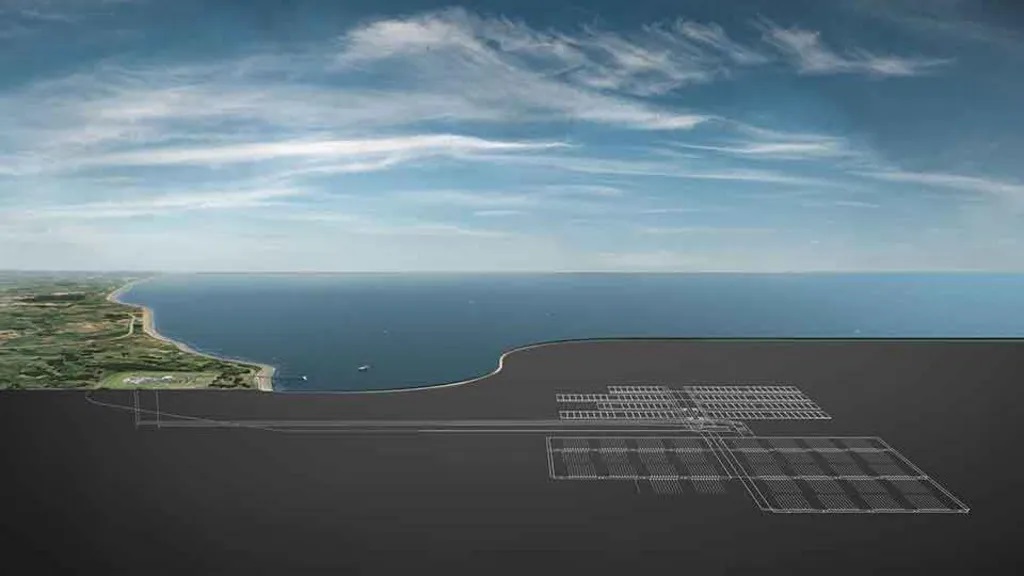
Three areas have been shortlisted to host a nuclear waste disposal site.
Communities in Mid Copeland and South Copeland in Cumbria and Lincolnshire have become “Areas of Focus” for Nuclear Waste Services (NWS) to help consider their potential to host a Geological Disposal Facility (GDF).
NWS said construction would only start when a suitable site was identified and a potential community had confirmed its “willingness” to host the facility.
Community events will be held to talk about “what this means for each area”, it added.
The locations have been identified using geological data, areas of environmental protection and consideration of built-up areas.
Each needed the right sub-surface geological environment deep underground, a suitable surface location and the ability to connect the two with accessways.
‘Willing community’
Two surface Areas of Focus have been identified in Mid Copeland, east of Sellafield and east of Seascale.
In South Copeland, land west of Haverigg has been chosen.
The sub-surface level in the sea off the coast of Cumbria would be the same for both.
In Lincolnshire, land between Gayton Le Marsh and Great Carlton, near Louth, is being considered.
This could see existing proposals to bury the nuclear waste at the old gas terminal in Theddlethorpe scrapped.
The United States is estimated to have spent more than $400 billion on the kinds of antimissile goals that the president now says will provide “for the common defense.”
Star Wars is back, with an executive order from President Trump that the White House said “directs the building of the Iron Dome missile defense shield for America.”
The order, issued on Monday night, didn’t quite do that. It was more a vaguely worded set of instructions to accelerate current programs or explore new approaches to defending the continental United States than a blueprint for arming the heavens with thousands of antimissile weapons, sensors and tracking devices.
But two blocks away, on the same evening, the Office of Management and Budget issued a 56-page spreadsheet that detailed the suspension of funding for thousands of programs. They included most of the major U.S. efforts to reduce the amount of nuclear fuel that terrorists might seize, to guard against biological weapon attacks and to manage initiatives around the globe to curb the spread of nuclear arms.
The two announcements seemed to encapsulate the administration’s conflicting instincts in its opening weeks. Mr. Trump wants to build big and take the Space Force he created to new heights, even at the risk of new arms races. That effort has been underway since Ronald Reagan’s day, with only mixed results.
But in its drive to shut down programs it believes could be creations of the so-called deep state, the administration wants to cut off funding for many programs that seek to reduce the chances of an attack on the United States — an attack that could very well come in forms other than a missile launched from North Korea, China or Russia.
A judge paused Mr. Trump’s spending freeze on Tuesday, but the president’s intentions are clear.
Though Mr. Trump calls his plan the Iron Dome, it has little if any resemblance to the Israeli system of the same name that has succeeded in destroying small missiles that move at a snail’s pace compared with the blinding speeds of intercontinental warheads………………………………………………………..
Missile defense has long been a favorite topic for Mr. Trump, who has envisioned the project as the next step for the Space Force, which he created in his first term.
But it could also trigger a new arms race, some experts fear. And unaddressed in Mr. Trump’s new initiative is the threat of nuclear terrorism and blackmail with an atomic bomb, which might be smuggled into the United States on a truck or a boat. Many experts see the terrorism threat as far bigger than an enemy firing a single missile or a swarm.
In 2001, after Sept. 11 attacks, the federal government scrambled to get wide-ranging advice on how outwit terrorists and better protect Americans from the threats of germ, computer, chemical and nuclear attacks.
“The combination of simultaneously deploying a missile defense system of questionable effectiveness against any real threat” while “suspending operative programs against nuclear or bioterrorists, sophisticated cyberattackers or others” is a “terrible trade-off,” said Ernest Moniz, the energy secretary under President Barack Obama who now heads the Nuclear Threat Initiative.
“The Iron Dome reference conjures up the success of the Israeli missile defense, but that’s misleading given the relatively short-range missiles that Israel defends against and the small territory it needs to defend,” said Mr. Moniz, a former professor at the Massachusetts Institute of Technology with long experience in nuclear weapons ………………
Critics of the executive order say it is more a list than a program, and includes systems that have never panned out. In an interview, Theodore A. Postol, an emeritus professor of science and national security at M.I.T., called Mr. Trump’s missile plan “a compendium of flawed weapons systems that have been shown to be unworkable.”…………………………………………
However, Britain’s Foreign, Commonwealth and Development Office said no UK-Hungarian strategic cooperation agreement on nuclear energy was signed by the two ministers, as a story published by TVP World on January 30, 2025, had suggested.
Federal agencies across the government are increasingly adapting new uses of artificial intelligence to streamline processes, aggregate data, and even complete tasks designed for human resources staff. And while some have openly embraced AI and its uses, others still don’t believe it can be trusted for operations in nuclear controls.
The Department of Defense in its 2022 Nuclear Posture Review outlined efforts to implement AI with department data and software. Since then, AI has rapidly developed and brought along with that many questions about its future use.
In October, U.S. Strategic Command General Anthony Cotton said implementing AI in Nuclear Command, Controls and Communications (NC3) helps to make those more resilient to adversarial threats and increases decision making capabilities.
“Advanced AI and robust data analytics capabilities provide decision advantage and improve our deterrence posture,” Cotton said, adding that NC3 must maintain “human decision in the loop” to “maximize the adoption of these capabilities and maintain our edge over our adversaries.”
Cotton’s comments have prompted much discussion about AI’s role in nuclear command and controls. The Center for Strategic and International Studies hosted a debate on AI’s role in nuclear command and controls on Jan. 24 as part of its Project on Nuclear Issues (PONI) debate series.
Sarah Mineiro, senior associate at the Aerospace Security Project, and Paul Scharre, executive vice president and director of studies at the Center for a New American Security, debated the question: “Should the United States increase its reliance on artificial intelligence to enhance resilient decision-making in its NC3 systems to prevent inadvertent escalation?”
Mineiro argued for increased reliance on AI except for its use in nuclear weapons deployment whereas Scharre argued against all uses of AI in nuclear command and controls.
Mineiro pointed to the various use cases of AI in NC3 including designing and engineering CPUs and GPUs, image and signal processing, nuclear attack assessment algorithms, and modeling nuclear weapons use scenarios. She said she would never want AI to be involved in nuclear weapons deployment.
“I think we need everything, every tool that American innovation can give us to preserve our security,” she said. “I think AI in NC3 is an appropriate use.”
Scharre said AI cannot be trusted in nuclear command controls because it lacks the novelty of human judgment, it can be hacked or manipulated, and it cannot handle zero tolerance mistake policies.
“It will degrade our decision making, make the risk of inadvertent installation more likely, and undermine nuclear stability,” Scharre said.
Scharre continued and pointed out that AI can be used in tasks which are more repeatable – such as taking off or landing an airplane – but cannot be trusted in nuclear command and controls scenarios.
“We never want a situation where there is an accidental or unauthorized use, and there is just no way AI is good enough to meet that correction,” Scharre said.
Mineiro agreed with Scharre that zero risk tolerance within nuclear command and controls should be kept in place. She pointed out, however, the various other operations AI can be reliably used for which do not include nuclear weapons release.
Mineiro said she is “optimistic” about the Pentagon’s ability to balance integrating emerging technology to boost the American economy and national security while also strictly adhering to nuclear peace agreements.
“I’m a relatively risk tolerant person,” Mineiro said. “The one area I will never choose to accept risk is nuclear command and control.”
The two debaters ultimately came to agree that safeguards must be implemented when integrating AI into NC3 because AI cannot replace human thinking, as much as it may appear to do so.
“Even if the outputs sort of look like humans, that’s what it’s designed to do,” Scharre said. “What’s going on under the hood is not and that’s what we need to be conscious of when we’re using this technology.”
The nuclear watchdog has issued an improvement notice after two railway wagons carrying nuclear waste crashed.
It happened on the Sellafield site, in Cumbria, which manages more radioactive waste in one place than any other nuclear facility in the world.
The Office for Nuclear Regulation (ONR) said although no-one was injured and there were no radiation risks during the incident, which happened in November, it could have had “serious consequences”.
A Sellafield spokesman said: “An internal investigation was initiated to understand the root cause and to prevent this from happening again in future.”
The ONR said one of the wagons on the site’s railway had not been properly secured and it rolled about 200ft (60m), hitting a stationary wagon.
They added the wagons were left with minor damage and the nuclear containers were unaffected “due to their robust construction”, however health and safety improvements were needed to prevent future incidents.
Ian Bramwell, ONR’s head of regulation for Sellafield, said: “This will include improving how Sellafield plan, organise, monitor and review the measures in place to protect personnel directly and indirectly involved in rail activities on the site.”
The ONR will reinspect the site in the coming months and Sellafield has until 13 June to comply with the notice.
A Sellafield spokesman said it was working with the ONR to review its processes.
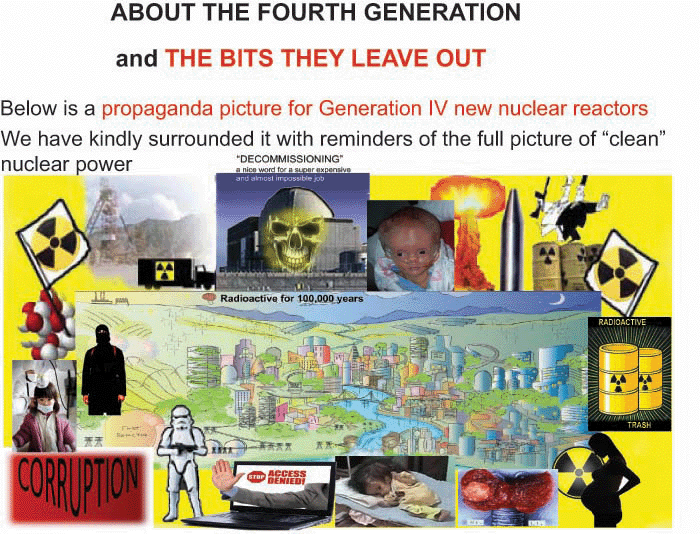
No precise definition of a Generation IV reactor exists, but the term is used to refer to nuclear reactor technologies under development.
By Kamen Kraev, Nucnet 30th Jan 2025
Group is ‘bedrock of international research and development,’ says OECD head
An international forum dedicated to the development of a new generation of nuclear power plants has signed a framework agreement that will ensure collaboration continues beyond the expiration of the current agreement on 28 February 2025.
The Generation IV International Forum (GIF) said the new agreement, signed at Organisation for Economic Co-operation and Development (OECD) premises in Paris, France, marks the start of “a new chapter” for advanced reactor development.
GIF is an international organisation established in 2001 that coordinates the development of Generation IV reactors.
Canada, France, Japan and Switzerland signed the new agreement at this week’s ceremony. The UK and the US signed the agreement in the margins of Cop29 climate conference in Baku, Azerbaijan, in November 2024.
The OECD said other major nuclear energy countries are expected to sign the agreement, which will enter into force on 1 March 2025, increasing what is a collaborative effort on deployment of Generation IV nuclear energy systems “at a time when all options to deliver low-carbon energy are critically needed”.
No precise definition of a Generation IV reactor exists, but the term is used to refer to nuclear reactor technologies under development.
GIF’s Six Generation IV Reactor Concepts
GIF provides a platform for collaborative research and development on six Generation IV reactor concepts: gas-cooled fast reactors; lead-cooled fast reactors; molten salt reactors; sodium-cooled fast reactors; supercritical-water-cooled reactors and very high-temperature reactors………………………………………
OECD secretary general Mathias Cormann told ambassadors and delegates at the signing ceremony that this is GIF’s 24th year as the bedrock of international research and development on advanced reactor concepts with improved safety, performance, and proliferation-resistant features.OECD secretary general Mathias Cormann told ambassadors and delegates at the signing ceremony that this is GIF’s 24th year as the bedrock of international research and development on advanced reactor concepts with improved safety, performance, and proliferation-resistant features. https://www.nucnet.org/news/generation-iv-advanced-nuclear-reactor-forum-signs-agreement-to-ensure-continued-collaboration-1-4-2025
The owner of Hinkley Point C in Somerset has warned that the much-delayed construction of Britain’s first new nuclear power plant in a generation could face further hold-ups because of a row over its impact on local fish.
The nuclear developer, EDF Energy, warned that the “lengthy process” to agree to a solution with local communities to protect fish in the River Severn had “the potential to delay the operation of the power station”.
As a result, the developer, which is owned by the French state, raised the threat of further delays to Hinkley Point – a project already running years late and billions of pounds over budget.
EDF said last year that Hinkley could be delayed to as late as 2031 and cost up to £35bn, in 2015 money. The actual cost including inflation would be far higher. EDF declined to say how long any new delay could be.
EDF last week welcomed the government’s new reforms to “stop blockers getting in the way” of new infrastructure projects, including nuclear power plants. It called for the government to establish a framework to manage environmental concerns “in a more proportionate” manner.
The developer has pressured the government to loosen environmental rules while at loggerheads with local communities over its complex plans to protect local fish populations which are at risk of being sucked up into the nuclear power plant’s cooling systems.
The company had planned to install an “acoustic fish deterrent” to keep fish away from the reactor’s water intake system, which is nearly two miles offshore.
The project, which was reportedly informally dubbed “the fish disco” among former ministers, would require almost 300 underwater speakers to boom noise louder than a jumbo jet 24 hours a day for 60 years.
But the plan was later scrapped by EDF over concerns for the safety of divers who would need to maintain the speakers in dangerous conditions. There are also questions over its effectiveness.
Without the deterrent an estimated 18 to 46 tonnes of fish could be killed every year, according to estimates provided by EDF.
After a growing outcry, it said earlier this month it would delay the formal consultation on its salt marsh plan, which it says would provide safe habitats for fish and animals, from the end of this month until later this year.
Mark Lloyd, the chief executive of the Rivers Trust, said any fish deterrent was vital. “The water intakes will suck in an Olympic swimming pool’s worth of water every 12 seconds, more than the normal flow of all the rivers flowing into the Severn estuary, and without a deterrent mechanism will cause a vast slaughter of millions of fish every year for the next 60 years. “This will cause the potential extinction of populations of rare and endangered species … As the Severn estuary is a vital fish nursery for the whole region, the strategic and economic impacts for marine fisheries throughout the Irish Sea will be devastating.”……………………………………………………………………………………… https://www.theguardian.com/business/2025/jan/30/hinkley-point-c-owner-warns-fish-row-may-further-delay-nuclear-plant
ENVIRONMENTAL groups have launched a petition to protect the Severn Estuary and ensure the new nuclear power station at Hinkley Point C is compliant with regulations.
17 groups including the West Country Rivers Trust and CPRE have joined forces to call on the Energy Secretary to ensure that an acoustic fish deterrent is installed at Hinkley Point C, with ‘comprehensive mitigation and compensation’ for all species.
It follows comments made by the Prime Minister, Sir Kier Starmer, in an article for Mail Online, which lambasted efforts to block major infrastructure projects, singling out opposition to the acoustic fish deterrent which EDF had originally proposed for Hinkley Point C.
Mark Lloyd, CEO of The Rivers Trust, said: “It is very disappointing that the Prime Minister was so disparaging and dismissive about the need for acoustic fish deterrents on the water intakes for the new nuclear power station being built at Hinkley by EDF.”
EDF recently confirmed that the “only option currently likely to be accepted as a mitigation” is the creation of a salt marsh. It would act as an environmental mitigation for the harm the project would bring to 44 tonnes of fish.
A formal consultation on the salt marsh location was delayed earlier in January. Some residents along the Severn, including landowners and farmers, previously expressed their opposition to the plans.
Four possible locations have been proposed for a salt marsh along the River Severn, including Kingston Seymour, Arlingham, Littleton, and Rodley.
EDF has confirmed that its process for Hinkley Point C and the project “is working with local communities and stakeholders to find solutions that work for both communities and the environment.”










 nuclear-news