Wildfire risks high at nuclear plants

by beyondnuclearinternational, https://beyondnuclearinternational.org/2025/01/19/wildfire-risks-high-at-nuclear-plants/
So why won’t the industry and NRC plan for them when extending reactor licenses, asks Paul Gunter
For nuclear power plants, fire is considered a very significant contributor to the overall reactor core damage frequency (CDF), or the risk of a meltdown. Fire at a nuclear power station can be initiated by both external and/or internal events. It can start with the most vulnerable external link to the safe operation of nuclear power plants; the Loss Of Offsite Power (LOOP) from the electric grid. LOOP is considered a serious initiating event to nuclear accident frequency. Because of that risk, US reactors won’t operate without external offsite power from the electric grid.
The still largely uncontained wildfires burning in and around Los Angeles and Ventura Counties in southern California “are sure to rank among America’s most expensive.” The ongoing firestorms have now extended into a fourth period of “extremely critical fire weather” conditions and have burned nearly 63 square miles, an area the size of Washington, D.C. The estimated number is still being tallied for the thousands of homes and structures destroyed, the loss of life, the evacuation of communities indefinitely dislocated and the threats to and impacts on critical infrastructure including electrical power .
There is no scientific doubt that global warming is primarily caused by the unquenchable burning of fossil fuels, yet politically motivated denial is entrenched in the US Congress. The increased frequency and severity of these wildfires—leading to suburban and even urban firestorms— are but one consequence of a climate crisis along with a range of other global natural disasters including sea level rise, hurricanes, more severe storms generally, extreme precipitation events, floods and droughts. This more broadly adversely impacts natural resources and critical infrastructures to include inherently dangerous nuclear power stations.
At this particular time, it is important to reflect upon the April 2, 2024, report to Congress issued by its investigative arm, the United States Government Accountability Office (GAO), “Nuclear Power Plants: NRC Should Take Actions to Fully Consider the Potential Effects of Climate Change,” (GAO 24-106326).
The GAO warns that the US Nuclear Regulatory Commission (NRC) needs to start taking actions to address the increased risk of severe nuclear power plant accidents attributable to human caused climate change.
The NRC’s actions to address the risks from natural hazards do not fully consider potential climate change effects on severe nuclear accident risks. “For example, NRC primarily uses historical data in its licensing and oversight processes rather than climate projections data,” the GAO report said.
Beyond Nuclear has uncovered similar findings during our challenges to the NRC’s extreme relicensing process for extending reactor operating licenses, now out to the extreme of 60 to 80 years and talk of 100 years. We found that the agency’s staff believes and stubbornly insists that an environmental review for climate change impacts (sea level rise, increasingly severe hurricanes, extreme flooding, etc.) on reactor safety and reliability is “out of scope” for the license extensions hearing process.
The GAO report points out to the NRC that wildfires, specifically, can dangerously impact US nuclear power station operations and public safety with potential consequences that extend far beyond the initiating natural disaster. These consequences can include loss of life, large scale and indefinite population dislocation and uninsurable economic damage from the radiological consequences:
“Wildfire. According to the NCA (National Climate Assessment), increased heat and drought contribute to increases in wildfire frequency, and climate change has contributed to unprecedented wildfire events in the Southwest. The NCA projects increased heatwaves, drought risk, and more frequent and larger wildfires. Wildfires pose several risks to nuclear power plants, including increasing the potential for onsite fires that could damage plant infrastructure, damaging transmission lines that deliver electricity to plants, and causing a loss of power that could require plants to shut down. Wildfires and the smoke they produce could also hinder or prevent nuclear power plant personnel and supplies from getting to a plant.”
LOOP to nuclear power stations is a leading contributor to increasing the risk of a severe nuclear power accident. The availability of alternating current (AC) power is essential for safe operation and accident recovery at commercial nuclear power plants. Offsite fires destroying electrical power transmission lines to commercial reactors therefore increase the probability and severity of nuclear accidents.
For US nuclear power plants, 100% of the electrical power supply to all reactor safety systems is initially provided through the offsite power grid. If the offsite electrical grid is disturbed or destroyed, the reactors are designed to automatically shut down or “SCRAM”. Onsite emergency backup power generators are then expected to automatically or manually start up to provide power to designated high priority reactor safety systems needed to safely shut the reactors down and provide continuous reactor cooling and pressure monitoring. Reliable offsite power is therefore a key factor to minimizing the probability of severe nuclear accidents.
The GAO identifies a number of US nuclear power plant sites that are vulnerable to the possible outbreak of wildfires where they are located. “According to our analysis of U.S. Forest Service and NRC data, about 20 percent of nuclear power plants (16 of 75) are located in areas with a high or very high potential for wildfire,” the GAO report states. “More specifically, more than one-third of nuclear power plants in the South (nine of 25) and West (three of eight) are located in areas with a high or very high potential for wildfire.” The GAO goes on to identify “Of the 16 plants with high or very high potential for wildfire, 12 are operating and four are shut down.”
To analyze exposure to the wildfire hazard potential, the GAO used 2023 data from the U.S. Forest Service’s Wildfire Hazard Potential Map. “High/very high” refers to plants in areas with high or very high wildfire hazard potential. Those nuclear power stations described by GAO as “high / very high” exposure to wildfires and their locations are excerpted from GAO Appendix III: Nuclear Power Plant Exposure to Selected Natural Hazards.
able 1: Potential High Exposure to “Wildfires” at Operating Nuclear Power Plants
–AZ / SAFER, one of two mobile nuclear emergency equipment supply units in the nation, “HIGH / VERY HIGH”
–CA / Diablo Canyon Units 1 & 2 nuclear power station, “HIGH / VERY HIGH”
–FL / Turkey Point Units 3 & 4 nuclear power station, “HIGH / VERY HIGH”
–GA / Edwin I. Hatch Units 1 & 2 nuclear power station, “HIGH / VERY HIGH”
–GA / Vogtle Units Units 1, 2, 3 & 4, nuclear power station, “HIGH / VERY HIGH”
–NC / Brunswick Units 1 & 2 nuclear power station, “HIGH / VERY HIGH”
–NC / McGuire Units 1 & 2 nuclear power station, “HIGH / VERY HIGH”
–NC / Shearon Harris Units 1 & 2 nuclear power station, “HIGH /VERY HIGH”
–NB / Cooper nuclear power station, “HIGH / VERY HIGH”
–SC / Catawba Units 1 & 2 nuclear power station, “HIGH / VERY HIGH”
–SC / H. B. Robinson Units 1 & 2 nuclear power station, “HIGH / VERY HIGH”
–WA / Columbia nuclear power station, “HIGH / VERY HIGH”
Table 2: Potential High Exposure to “Wildfires” at Shutdown Nuclear Power Plants
–CA / San Onofre Units 1 & 2, “HIGH / VERY HIGH”
–FL / Crystal River, “HIGH / VERY HIGH”
–NJ / Oyster Creek, “HIGH / VERY HIGH”
–NY / Indian Point Units 1, 2 & 3, “HIGH / VERY HIGH”
Wildfires can transport radioactive contamination from nuclear facilities
A historical review of wildfires that occur around nuclear facilities (research, military and commercial power) identifies that these events are also a very effective transport mechanism of radioactivity previously generated at these sites and subsequently released into the environment by accident, spills and leaks, and careless dumping. The radioactivity is resuspended by wildfires that occur years, even decades later.
The fires carry the radioactivity on smoke particles downwind, thus expanding the zone of contamination further and further with each succeeding fire. The dispersed radionuclides can have very long half-lives meaning they remain biologically hazardous in the environment for decades, centuries and longer.
Here are a few examples of how wildfires increasing in frequency and intensity are also threatening to spread radioactive contamination farther away the original source of generation.
The Chornobyl nuclear catastrophe and recurring wildfires
The Chornobyl nuclear disaster that originally occurred on April 26,1986, initially spread harmful levels of radioactive fallout concentrated around the destroyed Chornobyl Unit 4 in northern Ukraine. The radioactive fallout was transported high into the atmosphere by the accidental reactor explosion. The days long fire and smoke transported extreme radioactivity from the expelled burning nuclear fuel and its graphite moderator. Radioactive fallout then spread far afield in shifting winds, precipitated with rainfall and was terrestrially deposited in its highest concentrations largely in northern Ukraine, Belarus and Southern Russia.
Additional atmospheric distributions of radioactive contamination fell across much of Europe, persisting in numerous hot spots, including in Poland, Germany, France, Scandinavia and the United Kingdom.
The Chornobyl ‘Exclusion Zone’ to restrict long term human habitation was established in the immediate aftermath in 1986 as an arbitrary 1,000 square miles within an 18 mile radius around the exploded reactor in Ukraine and remains in place today nearly 39 years later. The Bulletin of Atomic Scientists reports that seasonal wildfires continue to occur within the Chornobyl Exclusion Zone, routinely burning across already contaminated land and resuspending radioactivity via the smoke into the atmosphere. The radioactive smoke is borne on the wind, carrying the radioactive fallout farther out and increasing the size of what can be measured as potentially an expanding Exclusion Zone.
Contrary to claims, wildfires can threaten US nuclear facilities
The Los Angeles Times headlined in May 2024 “Sites with radioactive material more vulnerable as climate change increases wildfire, flood risks.”
The LA Times did a look back at several wildfires surrounding the government radiological laboratories and government nuclear weapons manufacturing sites including the 2018 Woolsey wildfire at the old Santa Susana Field Laboratory (SSFL). This facility specifically housed 10 nuclear reactors and plutonium and uranium fuel fabrication facilities. SSFL was used for early testing of rockets and nuclear reactors for energy. But decades of carelessness during experiments resulted in one of the first nuclear reactor meltdowns in 1959, leaving acres of soil, burn pits and water radioactively and chemically contaminated. Boeing, the current operator of SSFL, is now obligated to conduct the cleanup of the SSFL site.
“A 2018 fire in California started at the Santa Susana Field Laboratory, a former nuclear research and rocket-engine testing site, and burned within several hundred feet of contaminated buildings and soil, and near where a nuclear reactor core partially melted down 65 years ago,” reported the LA Times.
Over the years, NBC news has broadcast continuing coverage of the massive 2018 Woolsey fire at SSFL and the radioactive contamination from this event, found in several Los Angeles suburbs miles away.
Despite these events, federal authorities continue to issue vapid safety assurances that climate changes, including more frequent wildfires, will not increase the risks to public health and safety from contaminated commercial, military and national laboratory facilities and that there is no need to include environmental reviews that account for the impacts of climate change in the regulatory environmental review process.
A recent example of the NRC resistance to factor in reasonable assurance for protecting the public’s health and safety from climate change risk — and its potential impacts that increase the risk of a severe nuclear accident, including wildfire — into its oversight and environmental reviews for licensing and relicensing, came from Commission Chairman Christopher Hanson’s September 27, 2024 response to the GAO report:
“…the NRC does not agree with the [GAO] conclusion that the agency does not address the impacts of climate change. In effect, the layers of conservatism, safety margins, and defense in depth incorporated into the NRC’s regulations and processes provide reasonable assurance of adequate protection of public health and safety, to promote the common defense and security, and to protect the environment.”
Hanson’s outright dismissal of the GAO report and its finding that the agency needs to take action, runs contrary to the view of one of the agency’s own Atomic Safety Licensing Board judges, Michael Gibson. Gibson issued a dissenting opinion to the similar blanket dismissal by the NRC to take a “hard look” at climate change impacts under the National Environmental Policy Act (NEPA) on extreme reactor relicensing. His opinion came in support of Beyond Nuclear’s legal challenge to the Commission’s second 20-year license extensions to its commercially operating reactors. Gibson dissented from the licensing board’s majority denial of our hearing request on climate change’s contribution to the risk and consequences of severe nuclear accidents.
In Judge Gibson’s 23 page dissent of his colleagues’ decision to extend the nuclear plant’s operating license out to 2060 without a pubic hearing on climate change impacts on nuclear power plants, he wrote on the record:
“That is hardly the reception climate change should be given. As CEQ (the President’s Council on Environmental Quality), the federal government’s chief source for assessing the importance of climate change in environmental analyses under NEPA, has made clear, ‘The United States faces a profound climate crisis and there is little time left to avoid a dangerous—potentially catastrophic—climate trajectory. Climate change is a fundamental environmental issue, and its effects on the human environment fall squarely within NEPA’s purview.’ Sadly, the majority and the NRC Staff have failed to heed this warning.”
Paul Gunter is Director of the Reactor Oversight Project at Beyond Nuclear. This article first appeared on the Beyond Nuclear website.
Memo to Trump: Address the new threat of drone-vulnerable nuclear reactors

Bulletin By Henry Sokolski | January 17, 2025
Mr. President, in the closing days of your first administration, you issued an executive order spotlighting the growing dangers of drone attacks against America’s critical energy infrastructure. Your order asked the Federal Aviation Administration to propose regulations restricting overflights of critical infrastructure. Four years later, large drones overflying nuclear plants both here and abroad demonstrate your request was spot on.
Our government, however, continues to discount the dangers such overflights pose. As for the threats facing the most frightening of civilian targets—nuclear power plants—Washington has been all too silent. While there are many other infrastructure nodes drones can hit, the effects of striking nuclear plants exceed that of almost any other civilian target set. Your second administration urgently needs to address this new threat.
………………….. drones—far larger than those commercially available to hobbyists—have overflown US dams, power lines, and nuclear reactors. Recently, the NRC itself has observed a sharp increase in the number of drone sightings over nuclear plants, with drone reports nearly doubling in just one week in December. This led the 10th largest electrical utility company in the United States to urge the Federal Aviation Administration to ban all air traffic over its two nuclear plants after drones were sighted flying over its reactors. Now, Republican governors, including Jeff Landry of Louisiana, are asking you to do something about drones overflying reactors in Louisiana and other states. Overseas, Russian military drones overflew a German nuclear plant in August, prompting the German government to announce a formal investigation.
Security implications
All of this comes as the United States, South Korea, and Russia are pushing the export and construction of scores of large and small reactors in Eastern Europe, Africa, the Middle East, and East Asia. You and your cabinet should understand that new and existing nuclear plants are potential military targets—now and in the future. Certainly, Russia’s targeting of Ukrainian nuclear reactors and their critical electrical supply systems demonstrates a willingness to attack these dangerous targets.
……………………………………Your administration should start by refocusing on the concerns you rightly raised in 2021. In specific, within your first 100 days in office, you and your cabinet should:
Have the Secretary of Defense, the Secretary of Homeland Security, and the Director of National Intelligence assess within 90 days the threat that drone and missile attacks pose to US and allied electrical supply systems, nuclear plants, and other key infrastructure nodes. This report should be published both in classified form—to you, key members of your cabinet, and the national security leadership in the House and Senate—and in unclassified form to the public.- Ask the Defense Department, National Nuclear Security Administration, and the Department of Homeland Security to explain how they will either require or provide active and passive defenses for existing and planned US civilian and military nuclear plants here and abroad. This report should also describe how the US government should respond to drone and missile attacks on such plants which, if hit, could release harmful amounts of radiation.
- Direct the Energy Department and the Federal Aviation Administration to contract JASON (the government’s scientific advisory group), to explore what technologies might better detect and counter hostile drone and missile attacks and mitigate the effects of such attacks. These technologies could include hardening nuclear reactors, active and passive defenses, and research on nuclear fuels that might be able to survive advanced conventional attacks with thermobaric and other advanced conventional explosives.
- Direct the Energy Department, the Department of Homeland Security, and the Defense Department to devise a program of realistic testing to clarify the military vulnerabilities and safety thresholds of reactors and other nuclear plants against missile and drone attacks.
These steps should guide possible Congressional hearings as well as legislation. You rightly took the lead on these matters in 2021. Now, again, your leadership is needed. https://thebulletin.org/2025/01/memo-to-trump-address-the-new-threat-of-drone-vulnerable-nuclear-reactors/?utm_source=ActiveCampaign&utm_medium=email&utm_content=Memos%20to%20Trump%20%28he%20might%20actually%20like%29&utm_campaign=20250120%20Monday%20Newsletter
Memo to Trump: Cancel US Air Force’s Sentinel ICBM program

Bulletin, By Mackenzie Knight | January 17, 2025
Mr. President, the extreme cost and schedule overruns of the United States Air Force’s new Sentinel intercontinental ballistic missile (ICBM) program highlight the need to address the future of our country’s ICBM force and present an opportunity for curtailing wasteful spending.
Background
In 2016, an Air Force cost analysis concluded that replacing the existing force of Minuteman III ICBMs would be cheaper than a life-extension program. But the Air Force program to develop the new Sentinel ICBM is vastly over budget and significantly behind schedule. The Air Force notified Congress in January 2024 that the program was in critical breach of the Nunn-McCurdy Act, with a 37 percent cost overrun and a two-year schedule delay.
The situation had worsened as of July 2024 when, upon certifying the Sentinel program to continue after its Nunn-McCurdy breach, the Defense Department announced a new cost estimate of $140.9 billion—constituting an 81 percent increase since the previous estimate—and a three-year schedule delay. Flawed assumptions, program mismanagement, and the awarding of an unprecedented sole-source contract for a program of this size have worked together to create this problem.
The struggling Sentinel program is on track to become one of the most expensive nuclear modernization programs ever in the United States. But there is still time to put a check on some of this wasteful spending while maintaining strategic security.
Options
The following options are presented in order of the level they deviate from the current program of record, from lowest to highest.
……………………………………………………………………….. — Option 3: Cancel the Sentinel ICBM program
This option would reduce the number of deployed ICBMs to 300, life-extend Minuteman III ICBMs, and cancel the Sentinel program. This would save a significant amount of money. In 2012, it was estimated to cost $7 billion to turn Minuteman III ICBMs into what the Air Force called “basically new missiles except for the shell.” Even if a new life-extension program were more expensive than this estimate, it is unlikely that the cost would even remotely approach Sentinel’s projected $141 billion—and growing—price tag.
………………………………………………………. Recommended course of action
I recommend Option 3 at this time. Reviews by military officials and experts support a reduction in the number of deployed ICBMs. The Sentinel program’s cost and schedule challenges have become untenable and unacceptable for US taxpayers, particularly for a program that is not necessary for national security. We must prioritize government efficiency by slashing wasteful spending, streamlining modernization programs, and not allowing the legislative branch alone to dictate the US nuclear posture. This can best be achieved by reducing ICBM numbers and life-extending the current missile force. Option 1 would further delay ICBM modernization and would not guarantee lower costs. Option 4 is likely politically infeasible at this time and would incur significant costs and logistical requirements to dismantle the entire ICBM infrastructure and warheads. https://thebulletin.org/2025/01/memo-to-trump-cancel-us-air-forces-sentinel-icbm-program/?utm_source=ActiveCampaign&utm_medium=email&utm_content=Memos%20to%20Trump%20%28he%20might%20actually%20like%29&utm_campaign=20250120%20Monday%20Newsletter
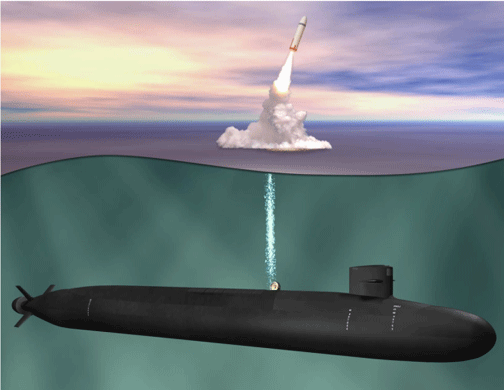
Memo to Trump: Cancel the sea-launched nuclear cruise missile
Bulletin, By David Kearn | January 17, 2025
Mr. President, we urge the cancellation of the SLCM-N program. It is unnecessary, costly, and makes the job of rebuilding our military more difficult.
As you know, the SLCM-N program was initiated during your first term. It was canceled by the Biden administration, but Congress allocated funds to revive the program in the 2024 National Defense Authorization Act. However, with the benefit of study and analysis, the Navy has signaled opposition to the program, viewing it as costly distraction from pressing modernization priorities, a strain on the already struggling defense industrial base, and an unnecessary complication of the missions of the fast attack submarine fleet.
…………………………………………………….. Redundancy
The United States already deploys significant conventional military assets in key regions and can quickly augment them by moving in nuclear weapons as needed to signal to adversaries that transgressions will have severe consequences. First, the Long-Range Standoff Missile (LRSO) deployed on either B-52 or B-21 bombers—while not technically classified as a “tactical weapon”—will possess the range, penetrability, and single-kiloton yield to provide the United States with the flexibility to respond to the threatened or actual use of nuclear weapons by an adversary in a proportional way without resorting larger strategic systems. Second, the B61-12 gravity bomb provides a low-yield munition that can be delivered by bomber and strike aircraft. Finally, thanks to your leadership during the first administration, the United States also possesses a low-yield variant of the Trident II D-5 submarine-launched ballistic missile (SLBM). In short, the United States possesses adequate nuclear capabilities to provide limited, flexible options if you or a successor would ever need them.
Costs
The expected costs of the SLCM-N—initially estimated at $10 billion but likely to be higher—are significant. The Navy will do its best to implement your preferred policies, but the SLCM-N program will require an “entirely new workforce and industrial base” to deliver this single system. The new missile cannot simply utilize an existing conventional Tomahawk cruise missile fitted with a nuclear warhead, as advocates initially assumed.
Beyond program costs, the Navy’s Strategic Systems Program office already has a “very full plate” of other programs, including upgrading the Trident II D-5 SLBM, as well as the new Conventional Prompt Strike hypersonic missile to be deployed on destroyers and attack submarines. A new program devoted exclusively to SLCM-N would divert workforce and resources away from these important programs at a time when industrial capacity and budgets are already stretched thin.
………………………………… Recommended course of action
We urge that you work with Congress to cancel the SLCM-N program. In doing so, you may prefer to recommend that the allocated funds be devoted to existing conventional Navy programs or toward further investment in flexible nuclear programs, such as the long-range standoff (LRSO) cruise missile…………. more https://thebulletin.org/2025/01/memo-to-trump-cancel-the-sea-launched-nuclear-cruise-missile/?utm_source=ActiveCampaign&utm_medium=email&utm_content=Memos%20to%20Trump%20%28he%20might%20actually%20like%29&utm_campaign=20250120%20Monday%20Newsletter
Green energy in abundance

“Sorry, pessimists, the energy problem is solved.” Ulrich Fichtner, SPIEGEL colleague, is almost right with this description of the energy crisis ( Ulrich Fichtner: Born for the big opportunities, Spiegel-Buch-Verlag 2023 ).
Correct: The problem is solvable, but it is far from being solved. The energy question is the survival question of the 21st century. We know what we are doing, but we are not yet really doing what we know and doing it sufficiently. The new solar dynamic is like this: cheaper, better, faster. We can still win the climate war.
At least things are moving in the right direction. Examples:
- We have seen a 90 percent reduction in the cost of a kilowatt hour of solar power within two decades.
- That is why green electricity is booming worldwide, as are storage technologies.
- Solar energy and wind energy are the cheapest sources of electricity in the world. According to the Fraunhofer Institute ISE, PV with battery storage is now cheaper than electricity from conventional power plants.
- The photo (right –on original) shows one of the largest photovoltaic plants in the world in Abu Dhabi. It is expected to be four times as large by 2030 and will then be able to produce as much electricity as around 15 medium-sized nuclear power plants.
- We have global growth rates for renewable energies of 40, 50 and 60 percent per year.
- In Germany, renewables were already the largest source of electricity generation by 2024 – almost two thirds renewable and only one third fossil fuels.
- According to calculations by the World Energy Agency, IEA, this will be the case globally by 2027.
- The World Energy Outlook, published every year by the IEA in Paris, assumes that demand for fossil energy sources will peak in 2025. Although the global economy will continue to grow then, CO2 emissions will shrink.
- The energy transition is in full swing worldwide. I agree with my colleague Ulrich Fichtner when he writes: “A renewable economic miracle is sweeping the globe” (page 87).
- Even in China, solar and wind will have overtaken coal by 2024, something that seemed unthinkable until recently.
- Not only the USA, but also Germany has decided to produce its electricity completely CO2-free by 2035.
- The European Union doubled its share of green electricity between the beginning of 2022 and the end of 2023.
- Costa Rica, Iceland and Kenya already produce their electricity almost entirely from renewable sources, but from very different sources, which is due to their different geographies.
- China aims to produce half of all renewable electricity worldwide by 2027.
- The United Arab Emirates, Morocco, Norway and Chile have ambitious plans to produce solar hydrogen.
- In addition to China, the USA, Egypt and Morocco are investing heavily in photovoltaics.
- The ten ASEAN countries in East Asia want to increase their share of renewable energies by 70 percent by 2027 compared to 2023 – Brazil, Cuba, Argentina, Mali and other countries in Central and Southern Africa have similar goals.
Children born today can experience a climate without crisis in 2050 – when they will be 25. People all over the world will be the winners of the solar world revolution in the future when they produce renewable electricity for one or two euro cents. Fortunately for us, plans for a better world with peaceful coexistence without exploitation of people and nature are on the table worldwide.
In spring 2024, Abu Dhabi’s energy minister told me that his country was already producing one kilowatt hour of solar power for 0.7 euro cents. The figures mentioned show that the world is electrifying and developing economically at a previously unimaginable pace. On this point, too, I can agree with Ullrich Fichtner: “A child born today will not have to worry too much about the world’s energy supply on its 25th birthday.” (Page 86).
This reminds me of a new book title by couples therapist Matthias Jung about the miracle of transformation. He writes: “It is not where the wind blows from that determines our path, but how we set the sails.” ( Matthias Jung: Setting Sails – The Miracle of Transformation, emuverlag ).
Memo to Trump: Modify the US policy of sole authority to launch nuclear weapons

Bulletin, By Lisbeth Gronlund | January 17, 2025
Mr. President, as you know, as president, you must approve any use of nuclear weapons—whether first or in retaliation. This would be a momentous decision for any one person to make. While any use would be devastating, the future of the world would hang in the balance because it might lead to an all-out nuclear war, immediately killing hundreds of millions of people, many of these Americans. Many more deaths—in the United States and globally—would occur within a year from a lack of medical services for the injured and radioactive fallout. The Earth’s temperature would change and severely lower agricultural production, resulting in widespread starvation. Such a war would leave the United States and other countries barely functional, with destroyed infrastructures and defunct societies.
The United States should adopt a better approach that avoids placing this responsibility on one person, take advantage of the wisdom and perspective of other officials, and reduce the risk of nuclear war. The global community would welcome a US policy that does not rely on just one person to decide to use nuclear weapons.
Ordering the Pentagon to adopt a modified policy that incorporates the input of a few other officials would bolster your international credibility as a real leader who made tough decisions to reduce the risk of nuclear war. Moreover, once the new Trump policy is in place, it would be difficult for future presidents to return to the old, more dangerous approach. You would be remembered for significantly reducing the risk of inadvertent nuclear use, and you would set a new standard for all future administrations.
Background
If the Pentagon detected an incoming Russian nuclear attack aimed at US missile silos, it would consider launching these missiles before Russian missiles could destroy them. And it would need your approval to do so. Because the Russian missiles would land quickly following their detection, you would have about 10 minutes for the Pentagon to brief you and lay out a small number of launch plans for your decision and approval. You could also decide to not launch any missiles. Any modified policy to involve other people in the decision-making process would need to function under such severe time constraints………………………………………………………………………………………………………………………………………………
Options
— Option 1: This option could be used for either a first or retaliatory strike. Any nuclear attack plan would require a presidential order and agreement by the next two people in the presidential chain of succession. Under normal circumstances, these would be the vice president and Speaker of the House. You alone would have the authority to order a specific attack, but either of the other two could veto your order. If for some reason the other people could not be reached, the procedure could default to the current one………………………………………..
Recommendation
You should immediately adopt Option 1. I also recommend discussing Option 3 with your advisers and members of Congress to determine, among other things, the precise steps required and the length of time such approval would likely take………………………………………………………………….. more https://thebulletin.org/2025/01/memo-to-trump-modify-the-us-policy-of-sole-authority-to-launch-nuclear-weapons/?utm_source=ActiveCampaign&utm_medium=email&utm_content=Memos%20to%20Trump%20%28he%20might%20actually%20like%29&utm_campaign=20250120%20Monday%20Newsletter
Nine Swedish energy researchers find that new nuclear power is not needed.
The government has stated that “physics is heavier than politics” .
Unfortunately, on several occasions, misconceptions have been spread about
the physical capabilities of the power system.
It is not true that it costs 8 billion to regulate and balance wind power, or that new nuclear power is necessary for a stable electricity system, write nine energy researchers
from north to south. The need for new nuclear power. “New nuclear power
is necessary for a stable and reliable energy system, for both consumers
and businesses,” stated Finance Minister Elisabeth Svantesson (M) in
November 2023.
It goes without saying that a stable and reliable energy
system is needed. Svenska kraftnät has studied various alternatives in its
reports, the latest of which is “ Long-term Market Analysis 2024 ”. It
shows that a Swedish fossil-free power system with more than twice as much
consumption as today, and without nuclear power, can achieve reliability at
the same level as today.
The solution is called flexibility, where electric
cars, hydrogen storage and electricity trading contribute, among other
things. Nuclear power is important for stability today, as it contributes a
buffer in the form of rotational energy. This buffer ensures that balance
is maintained during the first seconds after, for example, a sudden stop in
another nuclear power plant. Nuclear power also helps to ensure that we get
an appropriate voltage on the power lines.
But this can also be arranged in
other ways. In the Nordic countries there is a system that activates
batteries, among other things, in seconds, so that stability is achieved
even with lower amounts of nuclear power. There is also a technological
development where Swedish industry is at the forefront. There is an
incredibly large export market, since the whole world will get more solar
and wind power when the existing fossil power plants are phased out. This
shift is happening now because solar and wind power have steadily fallen in
price and can be built quickly.
Dagens Nyheter 18th Jan 2025 https://www.dn.se/debatt/karnkraft-ar-en-mojlighet-men-ingen-fysisk-nodvandighet/
Nuclear news as the Trump chaos world begins
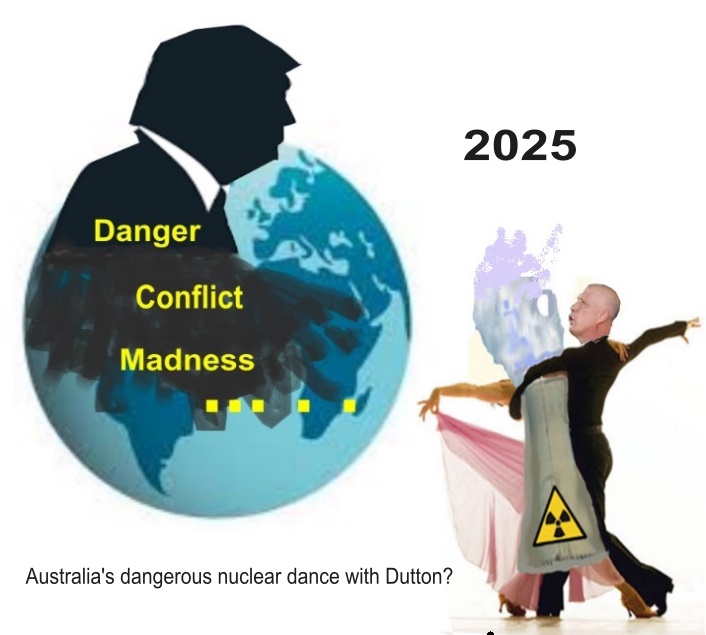
Now we enter the chaos of Trump World. It means lies, manipulations, news that you can’t trust. I cannot keep up with the Israel, Ukraine, monster China etc stuff – though it’s all on the brink of nuclear disaster.
So, from now on, I’m confining this newsletter more narrowly to NUCLEAR news. And with an emphasis on Australia, as it now faces a nuclear industry takeover, and becoming the USA’s proxy for nuclear war against China.
TOP STORIES
California wildfires: a warning to Nuclear Regulatory Commission on climate change.
Chris Hedges: The Ceasefire Charade. Report: Israel and Hamas Agree ‘in Principle’ to Ceasefire and Hostage Deal .
Becoming a responsible ancestor – about America’s nuclear wastes.
The EPR nuclear sector: new dynamics show persistent risks -La cour des comptes .
Former nuclear energy executives face federal charges in massive Ohio bribery scheme
Noel’s notes. 2025 – Australia’s dangerous nuclear dance with Dutton? The world’s blind eye to the nightmare problem of nuclear waste disposal.
AUSTRALIA. Dutton’s new nuclear nightmare: construction costs continue to explode. Virginia, we have a problem. More Australian nuclear news at https://antinuclear.net/2025/01/20/australian-nuclear-news-13-20-january-2025/
| CLIMATE. Trump’s got a radioactive time bomb under Greenland’s ice. Wildfire risks high at nuclear plants.Weatherwatch: Could small nuclear reactors help curb extreme weather? There’s a credibility gap. |
| ECONOMICS. French energy giant EDF launches search for Hinkley Point finance after damning audit report – ALSO AT https://nuclear-news.net/2025/01/19/2-b1-french-energy-giant-edf-launches-search-for-hinkley-point-finance-after-damning-audit-report/. French auditor recommends EDF delays UK Sizewell investment decision ALSO AT https://nuclear-news.net/2025/01/17/2-b1-french-auditor-recommends-edf-delays-uk-sizewell-investment-decision/Sizewell C’s future in doubt as EDF told to prioritise French nuclear power. Cost of Sizewell C nuclear project expected to reach close to £40bn. EDF Energy Juggles Maintenance Amid UK’s Nuclear Energy Challenges. Ukraine’s parliament has given the go-ahead for the purchase of two old Russian nuclear reactors. |
| ENERGY. Renewable energy sets global record…but it’s not enough. |
| EVENTS. Petition/email: Save Billions, Cancel Sizewell C |
| HEALTH. Nukes kill kids. |
| HUMAN RIGHTS. Amazon Is Censoring My Most Recent Magazine Issue. |
| LEGAL. Last Energy, Texas, Utah allege NRC overstepping in SMR regulation |
MEDIA. CBS’ 60 Minutes Exposes the Biden Administration’s Complicity in Gaza Genocid.
Interviews the Whistleblowers. ‘National scandal’: The BBC’s Gaza cover-up.
Told you so: Financial Times follows Nuclear Free Local Authorities’s lead on Sizewell C cost estimate.
How Canada supplied uranium for the Manhattan Project- documentary “Atomic Reaction“
| PERSONAL STORIES. Patrick Lawrence: The Nihilism of Antony Blinken. |
| POLITICS. Over time, over budget… will our new nuclear plants ever be built? – ALSO AT https://nuclear-news.net/2025/01/20/1-a-over-time-over-budget-will-our-new-nuclear-plants-ever-be-built/ |
| POLITICS INTERNATIONAL and DIPLOMACY. The UK military’s secret visits to Israel. |
| URANIUM. Saudi Arabia plans to enrich and sell uranium as Iran commences nuclear talks with E3. |
| WASTES. Ask the locals: NFLA Chair says it is ‘prudent and proper’ for Nuclear Waste Services to consult residents over South Copeland flooding risk. Dunfermline MP Graeme Downie calls for MoD commitment to dismantle dead nuclear submarines. |
| WEAPONS and WEAPONS SALES. Are AI defense firms about to eat the Pentagon? Outgoing CIA director says ‘no sign’ Iran developing nuclear weapons. Submarine nuclear core project faces ‘challenges’. |
Trump’s got a radioactive time bomb under Greenland’s ice
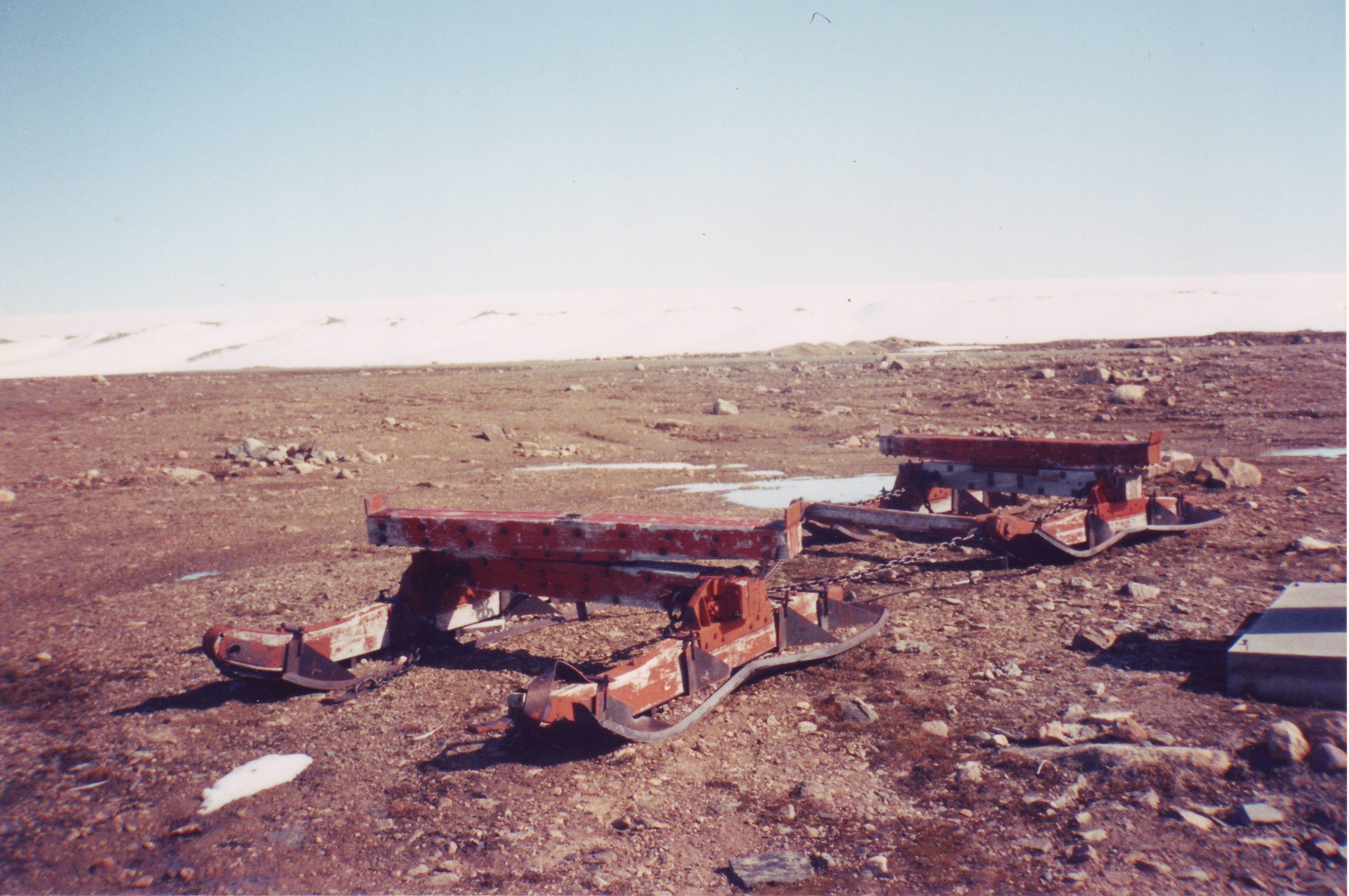
The U.S. would inherit an environmental dilemma of its own making if it lays claim to the massive Arctic island.
January 17, 2025 , By Seb Starcevic, https://www.politico.eu/article/trumps-got-a-radioactive-time-bomb-under-greenlands-ice/
Deep in Greenland’s frozen wilderness, a radioactive secret sleeps beneath the ice — and it could be a headache for Donald Trump if the U.S. president-elect follows through on his threat to take control of the vast Arctic island.
Its name is Camp Century, an American military base built in 1959 during the Cold War in an attempt to develop nuclear launch sites that could survive a Russian strike.
The project, which involved carving a network of tunnels through Greenland’s ice sheet and was powered by a small nuclear reactor, was deemed unfeasible due to the constantly shifting ice and abandoned in 1967.
Although the Americans dismantled the reactor and took its nuclear reaction chamber with them when they departed in ’67, they left behind thousands of tonnes of waste and debris — including radioactive residue — to be buried under the icecap forever.
But thanks to climate change, forever might come sooner than planned.
As the world warms, Camp Century — which is located in one of the most remote spots on Earth, about 1,500 kilometers north of Nuuk, Greenland’s capital city — has been the focus of renewed interest and anxiety about just how long it will remain entombed. A landmark study published in 2016 found the remains of the abandoned base could be exposed by melting ice and snow toward the end of the 21st century.
“Our study highlights that Camp Century now possesses unanticipated political significance in light of anthropogenic climate change,” the researchers wrote (though they later revised their findings in 2021 to rule out the base reemerging from the ice until at least 2100).
The revelation caused a political storm in Greenland, a Danish territory which has been self-ruling since 1979.
Greenlandic Foreign Minister Vittus Qujaukitsoq demanded Denmark take responsibility for cleaning up the debris from abandoned U.S. military installations in Greenland, of which there are 20 to 30 mainly disused sites. Greenland, formerly a colony of Denmark, never consented to hosting them.
Nuuk and Copenhagen signed a deal in 2017 earmarking about $30 million to clean up the debris and waste — but Camp Century was not included in the agreement.
Greenlanders are “concerned that [Camp Century] will pollute as the ice melts down,” said Pipaluk Lynge, an MP from Greenland’s largest party and chair of the parliamentary foreign policy committee.
But it’s not just Camp Century, she added, referring to the other abandoned bases. “There are many places where [they] have left tons of dump,” she told POLITICO. “The U.S. has military waste all over the Arctic.”
‘Don’t poke it’
There have so far been “no attempts” to clean up Camp Century’s radioactive and toxic waste, said William Colgan, professor of glaciology and climate at the Geological Survey of Denmark who led the 2016 study into the ice surrounding Camp Century.
While Colgan did once drill deep into the site to test its radioactivity at the Danish health ministry’s request, “There is actually a conscious effort not to drill into the debris field,” he told POLITICO. “We don’t actually know the full nature of what’s down there.”
Camp Century has been described as a subterranean city, complete with a chapel, a barbershop and dormitories that once housed hundreds of people. To construct it, equipment and supplies were transported across the ice on sleds and tractor-trailers from nearby Pituffik Space Base, the northernmost U.S. military installation in the world, which is still active today.
In a 1961 report on American broadcaster CBS, TV legend Walter Cronkite visited the military base. His program filmed Camp Century’s massive ice tunnels being dug and showed U.S. army engineers relaxing in their underground, nuclear-powered barracks, reading and listening to records.
All that is now buried under thick layers of ice. Colgan said he and his team of researchers had been unable to find parts of Camp Century, such as its fuel depot, and feared disturbing it too much. “It’s cold, it’s deep, don’t poke it,” he said.
There are different ways Camp Century could contaminate the environment. One is if melting ice and snow carry toxic waste — such as the 200,000 liters of diesel fuel beneath the ice, according to Colgan — out into the ocean. Another is if the ice containing the base breaks off and forms an iceberg. Neither are likely anytime this century; while the latter would likely take thousands of years.
But the timeline shifts a little depending on how much the world warms in the coming decades. While there are different projections, a United Nations report published last October found the planet will heat up by 2.6 to 3.1 degrees Celsius this century, with no chance of limiting the temperature increase to the totemic 1.5 C target agreed in Paris in 2015.
“It’s a game of just a couple of degrees,” Colgan said. “2 or 3 C is the difference between Camp Century staying under ice or melting out.”
Climate change in microcosm
Camp Century itself was pivotal to scientists’ understanding of climate change. In the 1960s, scientists extracted an ice core there, a frozen soil sample that is still studied to this day for insights into climate patterns hundreds of thousands of years ago. The base remains a scientific “supersite,” said Colgan, who visits it annually along with many other climate researchers.
If the U.S. were to lay claim to the island — as Trump has repeatedly said it should do, calling American control of Greenland an “absolute necessity” and even threatening to use military force — it would also inherit the legacy of its own Cold War-era polluting activities at Camp Century.
“Camp Century is a microcosm of climate change,” Colgan argued. “People today are left picking up and trying to understand the climate impacts of decisions made 50 years ago, 60 years ago.”
And with the U.S. currently the second-biggest emitter of planet-warming emissions in the world, Camp Century and its “shifting fate” aren’t just a fascinating slice of Cold War trivia, but a story of climate action and responsibility today, he added.
“It is the decisions being made in the next decade or two that will put us on these trajectories that have multi-century implications,” Colgan warned.
UK Nuclear Power Ambitions Hampered by Delays and Soaring Costs
The construction of Hinkley Point C and Sizewell C nuclear power plants is
facing significant delays and cost overruns, jeopardizing the UK’s energy
security. Sellafield Ltd’s cybersecurity failings have raised concerns
about the safety and security of the UK’s nuclear industry.
The UK government’s ambitious plans to expand nuclear power are facing criticism
due to the high costs and potential impact on taxpayers. As the U.K.
government doubles down on plans to develop the country’s nuclear power
industry following decades of neglect, severe delays and cost increases are
hampering progress. Delays and rising costs at the Sizewell C and Hinkley C
nuclear projects have drawn public criticism, while concerns over public
safety have been brought into question due to cybersecurity failings by
Sellafield Ltd. While public support for nuclear power is at its highest
level in decades, these failings could hinder the development of a strong
nuclear power industry in the U.K.
Oil Price 19th Jan 2025, https://oilprice.com/Alternative-Energy/Nuclear-Power/UK-Nuclear-Power-Ambitions-Hampered-by-Delays-and-Soaring-Costs.html
Northwestern Ontario nuclear waste site selection raises concerns.

The selection process has overlooked the broader impact on local and Indigenous populations near highways that could be used to transport nuclear waste north.
The Hill Times: Canada’s Politics and Government News Source, BY ERIKA SIMPSON | December 12, 2024
The Nuclear Waste Management Organization selection of two northwestern Ontario communities—Wabigoon Lake Ojibway Nation and Ignace—as host communities for Canada’s proposed Deep Geological Repository raises concerns and controversy. Located approximately 1,500 km from Toronto, the distance highlights the geographical separation between the selected communities and Toronto, home to the Darlington and Pickering nuclear power plants that will eventually be decommissioned.
On Nov. 28—the same day of Nuclear Waste Management Organization’s (NWMO) announcement—the Municipality of South Bruce took many by surprise by announcing it was exiting the site selection process for the proposed Deep Geological Repository (DGR). Despite South Bruce’s proximity—just 46 km from the Bruce reactor, the world’s largest-operating nuclear facility on Lake Huron’s shores—the NWMO decided to pursue the Ignace location. This raises questions about why the NWMO chose to bypass South Bruce, which, due to its location, appeared to be a more logical choice for Canada’s first DGR.
Despite being presented as a “community-driven, consent-based” process, the selection process launched in 2010 sought to narrow 22 potential sites down to just one willing community. The process has thus far overlooked the broader impact on local and Indigenous populations near highways that could be used to transport nuclear waste northward.
Media outlets like The Globe and Mail and The Hill Times report that the NWMO’s DGR plan involves transporting nuclear waste by truck for over four decades, from all Canada’s reactor sites to the nuclear facility, where the waste could be stored underground. More than 90 per cent of the waste is currently at Pickering, Darlington, and Bruce nuclear stations in Ontario, with the rest located in Point Lepreau, N.B., Quebec, Manitoba, and Ottawa.
With the NWMO selecting the Ignace site and an all-road transportation method, the trucks are expected to travel a total of 84 million km on Canadian roads. There is always the risk that radioactive material will leak while in transit or short-term storage, something that has happened in Germany and New Mexico over the past two decades.
The NWMO’s claims of a rigorous and independent process are undermined by a lack of public dialogue and transparency. Few have been aware of the proposal to build a national underground nuclear waste site. Northwatch and We The Nuclear Free North raised concerns about the NWMO’s decision involving Wabigoon Lake Ojibway Nation (WLON) in the project.
WLON’s Nov. 28 statement clarifies that the First Nation has not approved the project but has agreed to proceed with the next phase of site characterization and regulatory processes. Their “yes” vote reflects a commitment to assess the project’s feasibility through environmental and technical evaluations, not an endorsement of the DGR itself.
South Bruce, the other potential willing community, held a referendum on Oct. 28, which revealed deep divisions. The final tally was 1,604 votes in favor (51.2 per cent) and 1,526 against (48.8 per cent), with a total of 3,130 votes cast. A margin of just 78 votes decided a by-election with far-reaching implications for millions of people across multiple generations.
The decision to allow a local municipality to oversee the referendum on the nuclear waste disposal site has been met with significant controversy. Critics argue that the arrangement posed a conflict of interest, as municipal staff—partially funded by the NWMO—actively promoted the project, casting doubt on their impartiality and raising concerns about financial influence on the referendum’s outcome. The council’s firm opposition to allowing a paper ballot raised further suspicions. Why reject a voting method that could be physically verified?
Located about 19 km southeast of Dryden, WLON faces similar concerns regarding the fairness of the online voting process and voter eligibility. These issues could erode public confidence in municipal referendum processes, and the handling of decisions by councils.
The nuclear waste storage site selection marks an early shift to the regulatory phase, raising concerns about whether the process is premature. Over the coming year, the effectiveness of the Canadian Nuclear Safety Commission and its regulation of all steps in the management of radioactive waste will come under scrutiny, particularly as Ontario’s new energy minister, Stephen Lecce, emphasizes the need to invest in energy infrastructure to meet rising electricity demand over the next 25 years.
Critics argue that despite evaluations with long-term implications, ethical and environmental concerns surrounding nuclear waste disposal remain long unaddressed. Ontario Power Generation’s initial 2005 proposal to the safety commission for a DGR near the Bruce reactor was rejected in 2020 following a Saugeen Ojibway Nation vote.
While many acknowledge the potential benefits of nuclear energy and DGR technology, the NWMO’s approach to the project over the past two decades has drawn significant scrutiny. Questions centre on the decision to place untested DGR technology in populated farmland near the Great Lakes, the world’s largest source of freshwater. The risks of radiation leakage into Hudson’s Bay and the Arctic over thousands of years are particularly troubling, especially as the technology remains unproven in such a critical and sensitive location.
Despite objections, the NWMO pressed forward, with its process viewed as federally approved bribery through financial incentives. South Bruce has already received millions and will receive $4-million more for its involvement, with another $4-million due in 2025. Mayor Mark Goetz has announced plans for alternative development, but critics like W.J. Noll from Protect Our Waterways question why such options weren’t considered earlier, given the risks to farmland, water sources, and the divisions left in the local farming community.
The growing influence of the nuclear industry on international and local governance has left many feeling powerless, fearing that war-torn regions, Indigenous lands, and rural communities are being sacrificed, threatening ecosystems from Ukraine and Russia to the Great Lakes and Arctic rivers.
If no Canadian community agrees to host a permanent nuclear waste depository, it may be necessary to reconsider nuclear energy expansion, halt new plant construction, and scale back capacity at existing reactors. In the interim, managing waste at above-ground sites could offer a safer alternative until technology ensures long-term environmental protection.
Erika Simpson is an associate professor of international politics at Western University, the author of Nuclear Waste Burial in Canada? The Political Controversy over the Proposal to Construct a Deep Geologic Repository, and Nuclear waste: Solution or problem? and NATO and the Bomb. She is also the president of the Canadian Peace Research Association.
Allied Groups Reach Historic Settlement on New Nuclear Bomb Part Production

Gender and Radiation Impact project celebrates the historic victory of radiation impacted communities across the nation standing together in clear conscience in a legal challenge that has successfully required the National Nuclear Security Administration (NNSA) to obey the National Environmental Policy Act and include the public in big decisions it is making! NNSA is owner of the US nuclear arsenal, which it intends to greatly expand, which would have our taxes cover trillions of dollars paid to defense contractors.
South Carolina Environmental Law Project
Gullah/Geechee Sea Island Coalition
Nuclear Watch New Mexico
Savannah River Site Watch
Tri-Valley CAREs January 18, 2025
Ben Cunningham, Esquire, SCELP,
Tom Clements, Savannah River Site Watch,
Jay Coghlan, Nuclear Watch New Mexico,
Scott Yundt, Tri-Valley CAREs
AIKEN, S.C. — Nonprofit public interest groups have reached an historic settlement agreement with the Department of Energy’s semi-autonomous nuclear weapons agency, the National Nuclear Security Administration (NNSA). This is the successful result of a lawsuit against NNSA over its failure to complete a programmatic environmental impact statement on the expanded production of plutonium “pit” bomb cores, as required by the National Environmental Policy Act (NEPA). This agreement and a joint motion to dismiss have been submitted to Judge Mary Lewis Geiger of the Federal District of South Carolina. Should the Court enter the dismissal and retain jurisdiction to enforce the settlement, the agreement will go into effect.
…………………….. In September 2024, Judge Lewis ruled that DOE and NNSA had violated NEPA by failing to properly consider alternatives before proceeding with their plan to produce plutonium pits, a critical component of nuclear weapons, at the Los Alamos National Laboratory (LANL) in New Mexico and, for the first time ever, at the Savannah River Site (SRS) in South Carolina. The Court found that the plan’s purpose had fundamentally changed from NNSA’s earlier analyses which had not considered simultaneous pit production at two sites. Judge Lewis directed the Defendants and Plaintiffs to prepare a joint proposal for an appropriate remedy which fostered additional negotiations
In sum, the just released settlement agreement requires the National Nuclear Security Administration to:
• Complete a nation-wide programmatic environmental impact statement (PEIS) on expanded plutonium “pit” bomb core production within 2.5 years.
• Hold two successive rounds of public hearings, first on the scope of the PEIS and then on the draft PEIS before it is finalized. Hearings will be held in Livermore, CA; Santa Fe or Los Alamos, NM; Kansas City, MO; Aiken, SC; and Washington, DC (dates to be determined).
• Citizens will have 45 days to submit scoping comments and 90 days to comment on the draft PEIS. The last PEIS in 2008 generated more than 100,000 public comments.
• Until it issues a formal Record of Decision on the final PEIS, NNSA is enjoined from:
– Installing classified equipment at the Savannah River Plutonium Processing Facility’s Main Processing Facility;
– Introducing any nuclear materials into the Main Processing Facility; and
– Starting construction on a related Waste Characterization Lab, Construction Maintenance Building and Vehicle Entry Building.
………………………………………. Of added significance, the PEIS will have to assess the impacts of disposal of large quantities of radioactive plutonium wastes from pit production at the Waste Isolation Pilot Plant (WIPP) in southern New Mexico, located 2,000 feet underground in a salt deposit. Disposal of “transuranic” (TRU) wastes will challenge the congressionally mandated volume cap for WIPP, which the National Academy of Sciences has projected will be substantially exceeded. Nevertheless, NNSA expects to be able to dump TRU wastes at WIPP until at least 2050, fundamentally changing its mission from cleanup to direct support of expanded nuclear weapons production…………………………
The Settlement Agreement with plaintiffs’ and defendants’ declarations is available at https://nukewatch.org/settlement-agreement-and-exhibits (20.9 MB) more https://nukewatch.org/wp-content/uploads/2025/01/Settlement-Reached-in-Historic-NEPA-Lawsuit-Over-Plutonium-Pit-Bomb-Core-Production.pdf
Canada’s Nuclear Waste Management Organization’s (NWMO) proposed DGR is a speculative unproven concept.
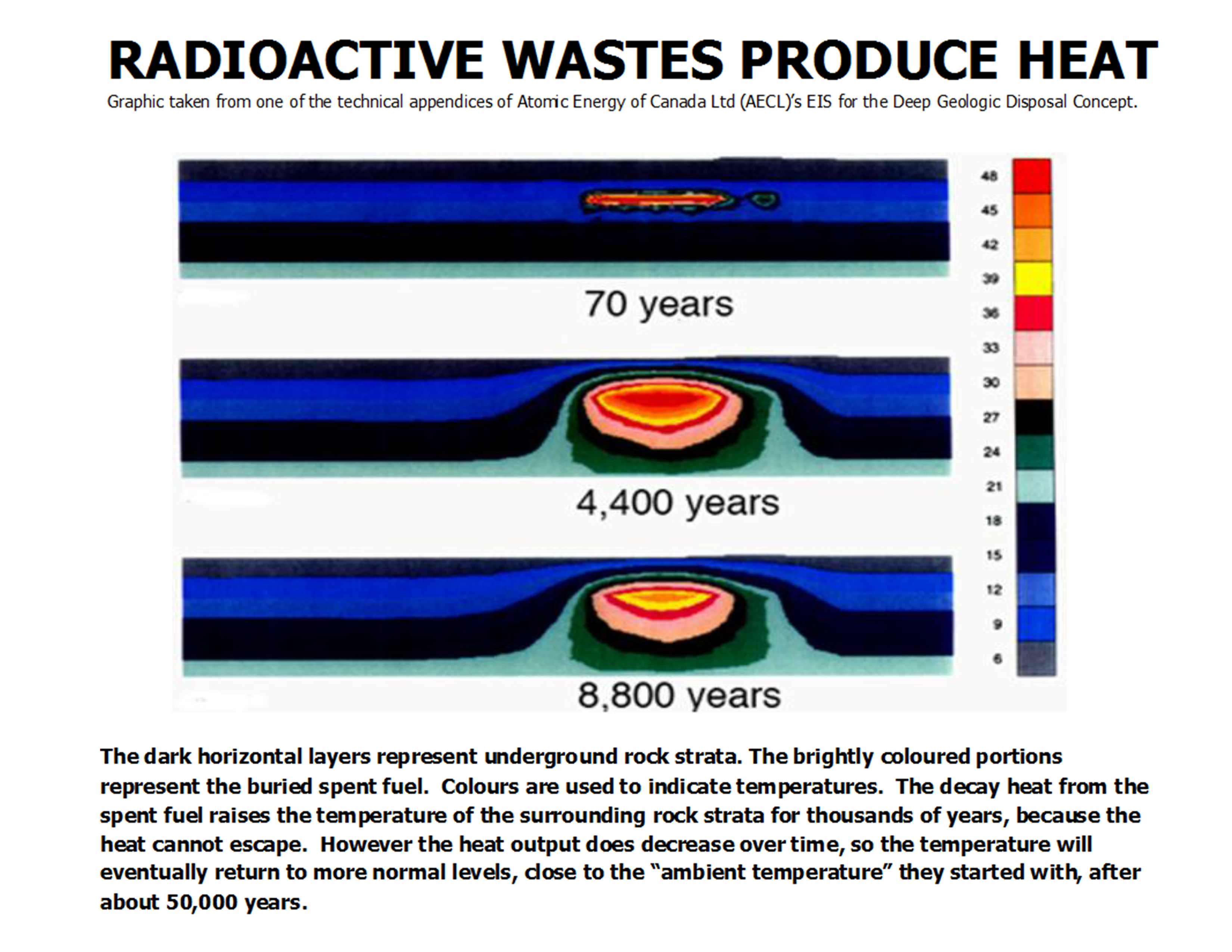
The most worrying aspect is an expected long-term “thermal pulse” from the entombed heat-producing radioactive waste. According to an Atomic Energy of Canada environmental study,1994, the DGR temperature could reach 230 degrees C. That intense heat would cause distortion and fracturing of host rock, impacting the structure of metallic containment casks.
David Geary, 19 Jan 25
In Geology 101 we learned that geology is a descriptive science, not a predictive science. Hydrology of rock is especially unpredictable. Science can not foresee what happens to a stable rock formation once disturbed by human activity. Thus, any Deep Geological Repository (DGR) cannot be counted on to maintain the required long-term stability to contain Canada’s high-level nuclear waste.
Because leaks do happen.
Canada’s Nuclear Waste Management Organization’s (NWMO) proposed DGR is a speculative unproven concept. A study of NWMO’s literature and conceptual renderings reveals numerous unresolved scientific, engineering, and modelling challenges.
Also troublesome is that Canada’s engineered ‘vertical shaft’ design vs. the European ‘inclined ramp’ approach was flagged as potentially dangerous by NWMO’s own expert international Independent Technical Review Group (ITRG), a body composed of European scientists and engineers. Vertical shafts relying on powered lift systems frequently fail.
Geologists at previous DGR hearings noted numerous NWMO deficiencies in the hydro-geological realm. For example, the integrity of host rock would be severely compromised by underground blasting required to create the extensive lattice-work of tunnels, chambers, and vertical shafts. There’d likely be rapid and unpredictable geo-hydrological changes, including water ingress, from the fracturing that ensues.
The most worrying aspect is an expected long-term “thermal pulse” from the entombed heat-producing radioactive waste. According to an Atomic Energy of Canada environmental study,1994, the DGR temperature could reach 230 degrees C. That intense heat would cause distortion and fracturing of host rock, impacting the structure of metallic containment casks.
Depicted in NWMO’s diagrams is a DGR air vent to the surface. It would carry the heat upwards while easing underground air pressure buildup. However, should nuclear waste casks become damaged or crushed by rock pressures, carcinogenic fission & activation products would leak out of them. Those radionuclides would be carried via the air vent to the surface, to the biosphere, to nearby communities, to people.
In fact, that is precisely how, in 2014, several workers near a vent far above a nuclear waste DGR in New Mexico were contaminated with radioactive plutonium.
Because geology is unpredictable.
Leaks happened and people were affected.
Former nuclear energy executives face federal charges in massive Ohio bribery scheme

Two former executives are charged in a racketeering scheme and turned themselves into federal authorities on Friday. The pair are charged in connection with the biggest bribery scandal in Ohio.
Laura A. Bischoff, Jessie Balmert, Michael Loria, https://www.usatoday.com/story/news/nation/2025/01/17/former-firstenergy-executives-charged-in-ohio-bribery-scheme-householder/77783516007/
Two former energy company executives turned themselves into authorities Friday for their suspected role in facilitating the biggest corruption scandal in Ohio state history.
The scheme involved over $60 million in bribes to secure a $1 billion bailout of FirstEnergy’s faltering nuclear plants and eliminate regulatory hurdles. The scandal has already landed one of Ohio’s most powerful politicians in federal prison.
Prosecutors indicted former FirstEnergy CEO Chuck Jones, 69, and ex-Senior Vice President of External Affairs Michael Dowling, 60, under the Racketeer Influenced and Corrupt Organizations Act, a charge created to prevent organized crime and fight against drug kingpins.
“This alleged $60 million racketeering conspiracy defrauded Ohioans to enrich the defendants,” FBI Cincinnati Special Agent in Charge Elena Iatarola said. “The FBI will continue to pursue political corruption and corporate fraud to protect taxpayers and hold white-collar criminals responsible for their actions.”
The charging of the pair of executives is the latest in a case that’s racked the state since the U.S. Attorney’s Office for the Southern District of Ohio first indicted former Ohio House Speaker Larry Householder and four others linked to the scheme in 2020. Householder was dealt a 20-year sentence in 2023 for orchestrating the scheme. Others tied to scheme are in prison, awaiting sentencing or have committed suicide.
Ohio Gov. Mike DeWine would not comment on the indictments during a press conference on Friday.
Prosecutors allege that Jones and Dowling participated in bribery, money laundering and obstruction to increase the company stock price and enrich themselves. FirstEnergy fired the two men in October 2020.
The Akron-based company previously pleaded guilty to bribing Householder and former Public Utilities Commission of Ohio Chairman Sam Randazzo − two public officials in powerful positions to help the company. The company paid a $230 million fine and agreed to cooperate with federal investigators……
Householder’s role in the scheme involved recruiting Republicans to win control of the House and passing the controversial House Bill 6, which included a $1 billion bailout for two nuclear plants then-owned by a FirstEnergy subsidiary. Former Ohio Republican Party chairman Matt Borges received a five-year prison sentence for his role.
Randazzo was accused of accepting a $4.3 million bribe to help pass that law and ease regulatory hurdles for the company. He had pleaded not guilty. The case was dismissed after he died by suicide last April.
A statehouse scandal fueled by dark money
Even before Friday’s announcement, the case has had a huge impact: Householder and Borges are convicted and imprisoned, two co-conspirators Jeff Longstreth and Juan Cespedes pleaded guilty and are awaiting sentencing, lobbyist Neil Clark and Randazzo both died by suicide, and FirstEnergy changed its leadership and board.
The latest development marks the first time federal authorities have charged the bribers instead of the bribe recipients.
The indictment paints a picture of how FirstEnergy executives used money and influence to their own advantage at the Ohio Statehouse. After House Bill 6 passed, Jones sent a photoshopped version of Mount Rushmore, featuring Randazzo’s and others’ faces on it. The caption read: “HB 6 F*** ANYBODY WHO AINT US.”
In October 2016, the executives pledged to the FirstEnergy board that the company value would be increased by 27%. But at the same time, the utility faced a weak energy market and hundreds of millions of dollars in losses, especially from FirstEnergy Solutions, its nuclear power subsidiary. To turn the company around, Jones and his team pursued bailouts from federal and state officials.
In 2018, FirstEnergy Solutions filed for bankruptcy and said it would close its nuclear power plants absent a government bailout.
The latest development marks the first time federal authorities have charged the bribers instead of the bribe recipients.
The indictment paints a picture of how FirstEnergy executives used money and influence to their own advantage at the Ohio Statehouse. After House Bill 6 passed, Jones sent a photoshopped version of Mount Rushmore, featuring Randazzo’s and others’ faces on it. The caption read: “HB 6 F*** ANYBODY WHO AINT US.”
In October 2016, the executives pledged to the FirstEnergy board that the company value would be increased by 27%. But at the same time, the utility faced a weak energy market and hundreds of millions of dollars in losses, especially from FirstEnergy Solutions, its nuclear power subsidiary. To turn the company around, Jones and his team pursued bailouts from federal and state officials.
In 2018, FirstEnergy Solutions filed for bankruptcy and said it would close its nuclear power plants absent a government bailout.
FirstEnergy used dark money groups to help Householder amass political power and become Ohio House speaker. In April 2019, Householder unveiled House Bill 6, which would require 4.5 million Ohio consumers to pay fees on their monthly electric bills to help keep the nuclear plants open.
‘An expensive friend’: Gleeful texts show fruits of bribery
Text messages Jones and Dowling included in the indictment show the glee the pair shared as their scheme to save the company on the backs of Ohio taxpayers took shape.
“Huge bet and we played it all right on the (state) budget and HB6, so we can go back for more!” Dowling said in a text to Jones the day that Ohio’s governor signed the bailout into law.
The pair followed the success of the bailout bill with a new goal: “Win the National Championship” − a reference to getting favorable action in the state budget that would guarantee the company millions of dollars per year as well as other favorable treatment.
“Tell LH to put on his big boy pants. Ha,” Dowling told Jones as they continued the scheme.
As FirstEnergy’s stock climbed Jones texted Randazzo – the state utilities commissioner accused of accepting bribes who committed suicide: “Those guys are good but it wouldn’t happen without you,” he wrote. “My Mom taught me to say Thank you.”
How Canada supplied uranium for the Manhattan Project
Peter C. van Wyck · CBC, Jan 10, 2025
In the past couple of years, the public imagination has been taken up with all things nuclear — the bomb, energy and waste. The film Oppenheimer recasts the story of the bomb as a Promethean and largely American narrative, while the series Fallout depicts a post-nuclear world. Russia has repeatedly emphasized its readiness for nuclear conflict. Nuclear energy has been regaining popularity as a hedge against climate change.
And yet, the story of Canada’s nuclear legacy — and our connection to the bombs that the U.S. military dropped on the Japanese cities of Hiroshima and Nagasaki, killing tens of thousands in an instant — is rarely told.
The documentary Atomic Reaction examines the impact of the radioactive materials mined in a Dene community in the Northwest Territories in the 1930s and ’40s. That radioactive ore was transported thousands of kilometres south, via Canada’s “Atomic Highway,” to be refined in Port Hope, Ont. And the uranium was used in the Manhattan Project, which developed those atomic bombs.
A mineral with immense power
This Canadian story began in 1930. Gilbert LaBine, a co-founder of Eldorado Gold Mines, discovered a rich deposit of radioactive pitchblende ore — containing radium, uranium and polonium — as well as silver, on the eastern shores of Great Bear Lake in the Northwest Territories. The site, on the traditional lands of the Sahtúgot’įnę Dene, came to be known as Port Radium. In a stroke, the country had entered the atomic age. ………………………………….
Port Hope: ‘The town that radiates friendliness’
In 1932, Eldorado constructed a radium-processing plant in Port Hope, the only such refinery in North America. Eldorado secured an abandoned waterfront factory and hired Marcel Pochon, a former student of radioactivity pioneers Marie and Pierre Curie, to mass-produce radium.
By 1936, the first grams of radium salts had been produced. (More than six tonnes of pitchblende are needed to produce a gram of radium.) However, by the late 1930s, Eldorado’s radium business was in decline. Competition with Belgium’s mine in the Congo was fierce, and global radium prices had fallen. In 1940, the Port Radium mine closed.
But soon, Eldorado’s and Port Hope’s fortunes radically changed. Uranium, previously considered waste from the processing of radium, became a strategic commodity. In 1942, LaBine’s Eldorado signed contracts with the U.S. military to supply uranium to the fledgling Manhattan Project, and the mine at Port Radium quietly reopened. In 1943, the company changed its name to Eldorado Mining and Refining, and in early 1944 the Canadian government took over the company and made it a Crown corporation.
The Port Hope refinery processed both Canadian and Congolese ores for the Manhattan Project. Eldorado continued to refine military-grade uranium for the Americans until 1965. The facility currently converts nuclear-grade uranium trioxide into uranium hexafluoride or uranium dioxide, used in nuclear reactors around the world. In the 1970s, a billboard leading into town even read, “Beautiful old Port Hope. The town that radiates friendliness.” Today, the plant is owned by Cameco, one of the world’s largest publicly traded uranium companies.
A lasting legacy and a massive cleanup
In Délı̨nę, a Dene community near Port Radium, a dark shadow remains after so many residents worked in the mine without being told they were involved in the Manhattan Project. And later, Dene miners started dying of lung cancer, earning the community of Délı̨nę the grim nickname the “Village of Widows.”
In 2005, a national report examining the health and environmental effects of the mine concluded there was no scientific link between cancer rates in Délı̨nę and mining activities in the area. But another study by the Canadian Nuclear Safety Commission the following year found increased rates of lung cancer in mine workers. People in the community still feel fear and anxiety about Port Radium’s impact on their health.
But the story of Eldorado and Port Hope also includes radioactive and chemical contamination.
Today, the municipalities of Port Hope and neighbouring Clarington are the sites of the largest volume of historic low-level radioactive waste in Canada — a result of spillage, leakage and widespread disposal of contaminated fill and other materials.
Major radioactive contamination in the area first came to light in the late 1960s, but little was done.
It wasn’t until 1975 that the public started to become aware of the problem, when St. Mary’s elementary school was abruptly closed. Eldorado had detected gamma radiation in the school’s parking lot and dangerously high levels of radon gas in the school; the building had unknowingly been built on contaminated fill from Eldorado’s operations some 15 years earlier.
The school closure set in motion a flurry of activity. It came to light that radioactive and chemical waste — estimated at roughly two million cubic metres — had been dumped directly into the harbour beside the plant and in ravines around town and used in the construction of homes, basements, driveways, businesses, roads, schools and other public buildings. Properties were surveyed for radiation levels; several hundred of them were remediated; and some 100,000 tonnes of contaminated soil and materials were relocated to a site at Chalk River, operated by Atomic Energy of Canada Ltd. (AECL). Still, the scope and severity of the contamination was not fully understood.
In 2001, the Port Hope Area Initiative (PHAI) began — a government plan to ensure the safe long-term management of historic low-level radioactive waste.
In 2012, the minister of natural resources announced an investment of $1.28 billion over 10 years for the PHAI. A radiological survey of approximately 4,800 public and private properties began, along with project design, an environmental assessment and community engagement.
Today, many sites await cleanup, and waste is still produced and stored at the Port Hope facility. https://www.cbc.ca/documentaries/how-canada-supplied-uranium-for-the-manhattan-project-1.7402051
1 This Month

of the week – Shut Down Drone Warfare!


Tell the Ukrainian Government to Drop Prosecution of Peace Activist Yurii Sheliazhenko

Petition to revoke the licensing of the Near Surface Nuclear Disposal Facility (NSDF) at Chalk River. https://www.ourcommons.ca/petitions/en/Petition/Details?Petition=e-7247
To see nuclear-related stories in greater depth and intensity – go to https://nuclearinformation.wordpress.com
-
Archives
- April 2026 (7)
- March 2026 (251)
- February 2026 (268)
- January 2026 (308)
- December 2025 (358)
- November 2025 (359)
- October 2025 (376)
- September 2025 (257)
- August 2025 (319)
- July 2025 (230)
- June 2025 (348)
- May 2025 (261)
-
Categories
- 1
- 1 NUCLEAR ISSUES
- business and costs
- climate change
- culture and arts
- ENERGY
- environment
- health
- history
- indigenous issues
- Legal
- marketing of nuclear
- media
- opposition to nuclear
- PERSONAL STORIES
- politics
- politics international
- Religion and ethics
- safety
- secrets,lies and civil liberties
- spinbuster
- technology
- Uranium
- wastes
- weapons and war
- Women
- 2 WORLD
- ACTION
- AFRICA
- Atrocities
- AUSTRALIA
- Christina's notes
- Christina's themes
- culture and arts
- Events
- Fuk 2022
- Fuk 2023
- Fukushima 2017
- Fukushima 2018
- fukushima 2019
- Fukushima 2020
- Fukushima 2021
- general
- global warming
- Humour (God we need it)
- Nuclear
- RARE EARTHS
- Reference
- resources – print
- Resources -audiovicual
- Weekly Newsletter
- World
- World Nuclear
- YouTube
-
RSS
Entries RSS
Comments RSS
 nuclear-news