University of Cumbria’s central role in new £4.9 million nuclear robotics and AI cluster.

University of Cumbria is part of a consortium with
UK Atomic Energy Authority, University of Oxford and University of
Manchester to develop a new nuclear robotics and AI cluster linking Cumbria
and Oxfordshire. Awarded £4.9 million, the cluster is the largest of seven
new projects supported through an overall funding package of £22 million
from the UK Research and Innovation (UKRI) Engineering and Physical
Sciences Research Council (EPSRC) Place Based Impact Acceleration Account
(PBIAA) scheme to strengthen emerging and existing research and innovation
clusters to kickstart economic growth and address regional needs.
University of Cumbria 6th Jan 2025
https://news.cumbria.ac.uk/news/university-of-cumbrias-central-role-in-new-gbp-4-9-million-nuclear-robotics-and-ai-cluster
Iran Condemns US Threats to Nuclear Facilities, Calls for UN Accountability
Latifa Ferial Nail, 6 Jan 25, https://nbmediacoop.org/2025/01/06/first-nations-chiefs-shouldnt-be-duped-by-nuclear-is-green-deception/
Iran’s Foreign Ministry spokesman, Esmaeil Baghaei, has condemned recent remarks by US national security adviser Jake Sullivan regarding potential military action against Iran’s peaceful nuclear program.
Baghaei urged the UN Security Council to hold the United States accountable for its threats to attack Iran’s nuclear facilities, emphasizing that such actions violate the United Nations Charter.
Sullivan reportedly presented US President Joe Biden with options for strikes on Iranian nuclear sites, should Tehran allegedly pursue a nuclear weapon—a claim Iran has repeatedly denied.
Baghaei noted that these threats had been made multiple times and stressed that the international community must address this issue to maintain global peace and security. The spokesman reaffirmed Iran’s determination to defend its sovereignty and dignity.
Raffi Berg: BBC Middle East Editor Exposed as CIA, Mossad Collaborator
By Alan MacLeod / MintPress News
Asenior BBC editor at the center of an ongoing scandal into the network’s systematic pro-Israel bias is, in fact, a former member of a CIA propaganda outfit, MintPress News can reveal. Raffi Berg, an Englishman who heads the BBC’s Middle East desk, formerly worked for the U.S. State Department’s Foreign Broadcast Information Service, a unit that, by his own admission, was a CIA front group.
Berg is currently the subject of considerable scrutiny after thirteen BBC employees spoke out, claiming, among other things, that his “entire job is to water down everything that’s too critical of Israel” and that he holds “wild” amounts of power at the British state broadcaster, that there exists a culture of “extreme fear” at the BBC about publishing anything critical of Israel, and that Berg himself plays a key role in turning its coverage into “systematic Israeli propaganda.” The BBC has disputed these claims.
Our Man in London
Berg came to public attention in December after Drop Site News published an investigation based on interviews with 13 BBC staffers who present him as a domineering figure, systematically blocking coverage critical of Israel and manipulating stories to suit pro-Israel narratives.
The 9000-word report, written by popular journalist Owen Jones, is extensive and well-researched. However, one aspect of the story it almost completely avoids is Berg’s connections to the U.S. national security state, which MintPress News can now reveal.
According to his LinkedIn profile, Berg was an employee of the U.S. State Department’s Foreign Broadcast Information Service (FBIS) three years before joining the BBC. The FBIS is understood the world over to be a CIA front group known for gathering intelligence for the agency.
As the first two lines of its Wikipedia entry read:
The Foreign Broadcast Information Service (FBIS) was an open source intelligence component of the Central Intelligence Agency’s Directorate of Science and Technology. It monitored, translated, and disseminated within the U.S. government openly available news and information from media sources outside the United States.
In 2005, the FBIS was subsumed into the CIA’s new Open Source Enterprise.
Berg does not dispute that he was, in fact, a CIA man. In fact, according to a 2020 interview with The Jewish Telegraph, he was “absolutely thrilled” to be secretly working for the agency. Berg said, “One day, I was taken to one side and told, ‘you may or may not know that we are part of CIA, but don’t go telling people.’” He was unsurprised by this news, as the application process was extremely long and rigorous. “They went through my character and background with a fine tooth comb, asking if I had ever visited communist countries and, if I had, did I form any relationships while I was there,” he said.
Mossad Collaborator
The CIA, however, is not the only clandestine spy organization with which Berg has a long history of collaborating. He also has a rich professional relationship with Mossad, Israel’s premier intelligence agency………………………………………………………………………………………………………………………
Relentlessly Pro-Israel
Of course, it is entirely possible that a pro-Israel stance would help one climb the ladder at the BBC, an organization long known to display a strong bias in favor of the country and its interests………………………………………………………………………………………………………..
Berg is alleged to have made extensive pre-publication edits to others’ stories, changing the framing of news events to shield Israel from blame. One example of this is the whitewashing of the Israeli attack on the funeral of Palestinian-American journalist Shireen Abu Akleh. In May 2022, Israeli snipers shot the Al Jazeera anchor in the head and proceeded to lie about their culpability. Israeli forces subsequently attacked the public funeral, beating mourners and firing tear gas. The BBC’s text, allegedly penned by Berg himself, read:
Violence broke out at the funeral in East Jerusalem of reporter Shireen Abu Aqla, killed during an Israeli military operation in the occupied West Bank.
Her coffin was jostled as Israeli police and Palestinians clashed as it left a hospital in East Jerusalem.
Thus, Abu Akleh’s murder by Israeli forces was downgraded to a mere death during an operation (with no perpetrator mentioned), while a police attack on a funeral procession was presented as a “clash” between rival factions, presumably of roughly equal responsibility.
…………………………………………………………… The BBC, meanwhile, has offered unequivocal support for him and his work, rejected any suggestion of a lenient stance towards Israel, and alleges that the Drop Site article “fundamentally misdescribe[s] Berg’s power, influence, and how the network works. https://www.mintpressnews.com/bbc-israel-coverage-raffi-berg-cia-mossad-links/288909/
State of the Cryosphere Report 2024
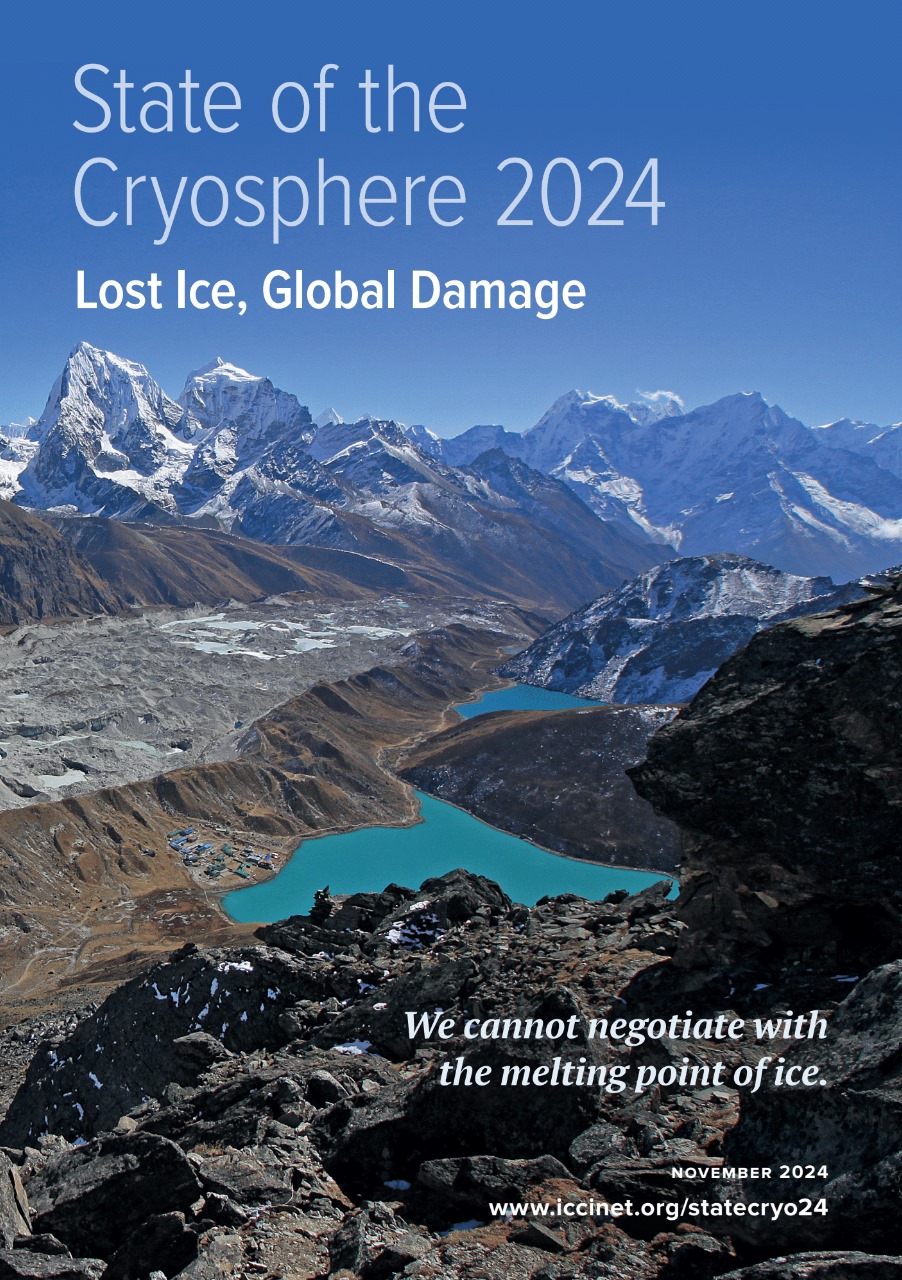
Lost Ice, Global Damage
In the State of the Cryosphere 2024 – Lost Ice, Global Damage report, over 50 leading cryosphere scientists warn of vastly higher impacts and costs to the global economy given accelerating losses in the world’s snow and ice regions. Current climate commitments, leading the world to well over 2°C of warming, would bring disastrous and irreversible consequences for billions of people from global ice loss.
Based on the most recent cryosphere science updates from 2024, the authors underscore that the costs of loss and damage will be even more extreme, with many regions experiencing sea-level rise or water resource loss well beyond adaptation limits in this century if our current level of emissions continues – leading towards a rise of 3°C or more. Mitigation will also become more costly due to feedbacks from thawing permafrost emissions and loss of sea ice.
For the first time, the report notes a growing scientific consensus that melting Greenland and Antarctic ice sheets, among other factors, may be slowing important ocean currents at both poles, with potentially dire consequences for a much colder northern Europe and greater sea-level rise along the U.S. East Coast.
Reviewed and supported by over 50 leading cryosphere scientists, this is the latest report in the State of the Cryosphere series, which takes the pulse of the cryosphere on an annual basis. The cryosphere is the name given to Earth’s snow and ice regions and ranges from ice sheets, glaciers, snow and permafrost to sea ice and the polar oceans – which are acidifying far more rapidly than warmer waters. The report describes how a combination of melting polar ice sheets, vanishing glaciers, and thawing permafrost will have rapid, irreversible, and disastrous impacts worldwide.
Energy efficiency, the forgotten tool for dealing with climate change

How to keep warm when budgets are squeezed.
Sub-zero temperatures are hitting the UK just as gas and electricity prices have risen for millions of households. Energy bills are about 50% higher than pre-Covid levels,
leaving many struggling to cover the cost alongside other financial
demands.
So what can you do to stay warm while keeping costs down? Before
having an argument between family or flatmates about the heating, try
touring the property to work out how to save energy. That may include
turning off radiators in unused rooms, switching lights off when they are
not needed, and not leaving electrical appliances on standby. Curtains
should be open during the day, then drawn at dusk. Manage your draughts by
putting a black bag with scrunched up paper up an unused chimney, or try
limiting other draughts around the home. You can easily make your own
draught excluders. Cold, hard floors can be covered by a rug if you have
one. Layer up with clothes, safely use a hot water bottle, and make sure
you have warm nightwear.
BBC 3rd Jan 2025
https://www.bbc.co.uk/news/articles/cd6084l4zx6o
TODAY. The polar playground for a suicidal species?
https://theaimn.net/the-polar-playground-for-a-suicidal-species/ 7 January 25
Where to begin on this mind-boggling story about epic changes on a very small planet?
Well, let’s begin on the fun part. The Australian Antarctic Program encourages some pretty innocuous recreational activities, plus of course, encouragement for tourists to come, and to learn about the polar world. So that’s OK, I suppose. But lately, in the news, there is growing concern that tourists, Australians in particular, are taking such a playful attitude to Antarctica, that they are risking their personal safety.
Interesting that the video above puts the blame on TikTok for encouraging the fun and danger. But tourism itself is good for increasing education about Antarctica. As long as individuals personally behave safely, that’s fine, isn’t it?
But what about planetary safety?
What Australians, and most of the world, learn about Antarctica, is that it’s pretty, and has penguins, Oh, and the ice is melting a bit, too. And that’s about it. The media does not trouble our complacent little minds with information about the thermohaline ocean circulation, the atmospheric circulation patterns, the carbon-sequestration of krill, the polar vortex…. Much too hard for us, in this cricket-tennis season.
Right now, Northern Europe and parts of the USA are experiencing extreme cold weather. No doubt some people would say that this disproves global heating, climate change. Alas, these extremes, emanating from the Arctic, by the polar vortex, are exacerbated by global heating. The polar vortex is a complex system, difficult to grasp, for the average news reader, so it is part of the whole poorly known, global climate system.
Antarctica is at the other end of the world – not connected to all this? Well, not if you ignore the global thermohaline circulation, among other things like sea level rise.
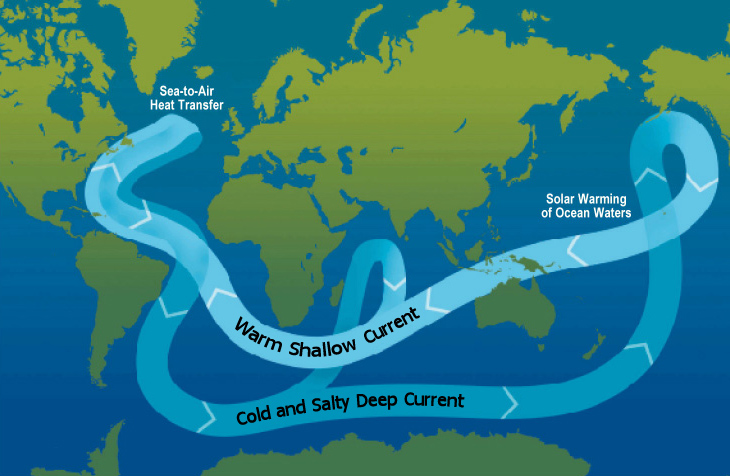
Global thermohaline circulation
Professor Elisabeth Leane, Professor of Antarctic Studies at the University of Tasmania says – What happens in Antarctica doesn’t stay in Antarctica. Its future will shape the future of the planet
Which brings me to the question of safety in relation to Antarctica – planetary, not just personal.
And here’s what the University of Tasmania says about it – Antarctica’s tipping points threaten global climate stability.
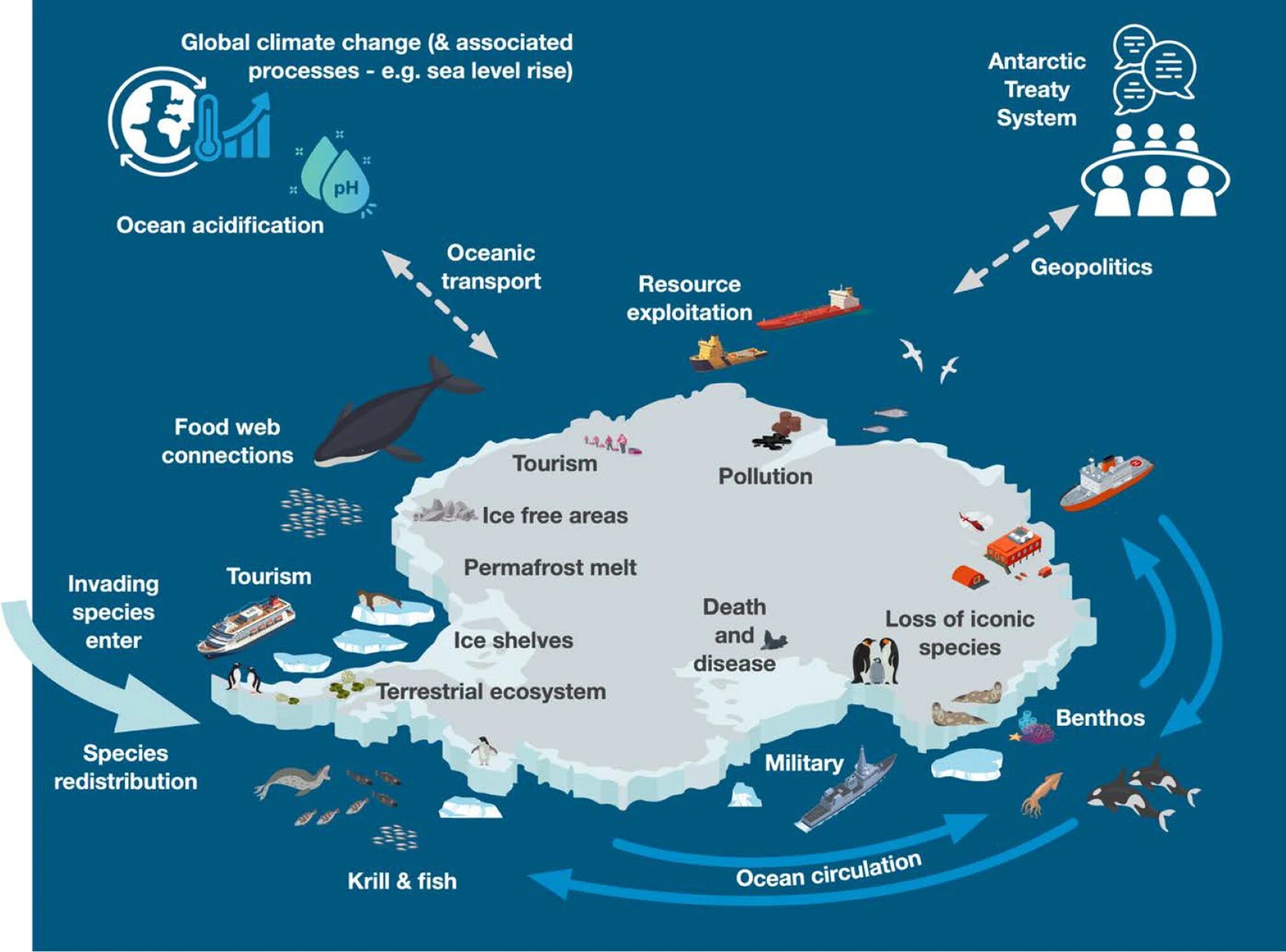
The map above is from the University of Tasmania’s report by international climate scientists . It identifies the various cascading tipping points and their interactions and pressures on the ecosystem.
For those who care about the climate change issue, and about Australia and the Antarctic, I would urge them to watch, and persist with, this brilliant report by climate researcher Paul Beckwith – https://www.youtube.com/watch?v=6WccDhnM8R8
Beckwith explains the potential tipping points identified by the study and their interrelationships , and adds the issue of sea ice loss. Critical issues are ice sheets, ocean acidification, ocean circulation, species redistribution, invasive species, permafrost melting, local pollution, chemical impacts, social impacts, local pollution and the Antarctic Treaty System. He goes on to explain with excellent graphics, the global thermohaline circulation, and then, in-depth, the records on sea ice, and then on to his detailed study on the tiny krill or light shrimp, and their global importance. Finally, Beckwith outlines the politics, the various national claims in the Antarctic Treaty System. The scientists’ conclusion – the urgent need for action on climate. Heavy stuff. Fascinating stuff. He finishes with a reminder of the unique role of that amazing critter the krill.
If you want a more concise discussion of the University of Tasmania’s December remarkable workshop of international marine scientists – go to Radio Ecoshock – World-changing Tipping Points – In Antarctica !
The “mainstream media” rarely covers climate change in any depth. For decades, the public has been informed very superficially on this life and death matter for our survival. The dedicated scientists produce their research results, but the media seem to find these too difficult, or too “political” to bother to report on them properly. The December 2024 “emergency summit” of international polar scientists in Tasmania barely got a mention in the Australian or international press.
You have to go to alternative media, to get any real insight into what is happening to the climate of our planet home. For decades now, Paul Beckwith has being producing his highly informative and wonderfully illustrated videos, on Youtube. Meanwhile Alex Smith has been doing the same sort of thing on radio and podcast, and print, – on Radio Ecoshock, which is heard in Australia on Community Radio 3CR.
In 2025, it is ever more urgent for people to wade through the morass of “social” media, and corporate media, and “alternative” media, to find the facts on climate change. Paul Beckwith and Radio Ecoshock are two examples of a rare and endangered human species – journalists who do their homework on climate change.
An overlooked Supreme Court case could decide the future of nuclear power

Miles Mogulescu, 6 Dec 24, https://beyondnuclearinternational.org/2025/01/05/a-double-edged-sword-of-damocles/
Although barely mentioned in the mainstream media, in granting cert to Interim Storage Partners, LLC v. Texas, a case about the storage of spent radioactive fuel from nuclear power plants, the U.S. Supreme Court may have taken on potentially the most consequential case of its new term.
SCOTUS will decide whether or not to uphold a Fifth Circuit decision that the Nuclear Regulatory Commission (NRC) does not have the legal power to license a private corporation to construct an off-site storage facility to hold deadly radioactive waste from nuclear power plants.
Depending on the legal rationale for SCOTUS’ decision, it could further enhance the power of courts to overturn decisions of regulatory agencies.
The case could determine whether artificial intelligence companies like Microsoft and Google can build a new generation of nuclear power plants to service the voracious hunger of artificial intelligence for electricity. Depending on its rationale, it could also impact the ability of regulatory agencies to function efficiently without being second guessed by courts.
The issues in the case have brought together an unlikely coalition of environmentalists, Texas Republicans, New Mexico Democrats, and the oil and gas industry against an equally unlikely grouping of the Biden administration, the nuclear power industry, and AI tech companies like Microsoft and Google.
The Legal Substance Issues
The environmental and legal issues in the case have a long history. The nuclear power industry has accumulated nearly 100,000 metric tons of radioactive waste that need to be deposited in a place that could be safe for millions of years. Most of the waste is now stored in temporary facilities adjacent to the power plants that create them, but such sites are running out of space and may not be safe long-term. During the 1980s Congress passed and amended the Nuclear Waste Policy Act providing for a permanent waste site and then designating Yucca Mountain, Nevada as the sole site. But plans for the site were abandoned due to environmental and political opposition, leaving no permanent site for disposable nuclear waste.
In response, for the first time the Nuclear Regulatory Commission began to grant licenses for “interim” storage facilities which were off-site (and often hundreds of miles away) from the power plants which generated the waste, claiming authority under the Atomic Energy Act. One such license was for an off-site storage facility in the Permian Basin, Texas. Texas Republican Attorney General Ken Paxton and a private oil and gas company sued, claiming that the federal government lacked the statutory authority to issue a license for interim off-site storage.
The conservative Fifth Circuit agreed with the plaintiffs, opining “Texas is correct. The Atomic Energy Act does not confer on the commission the broad authority it claims to issue licenses for private parties to store spent nuclear fuel away-from-the-reactor. And the Nuclear Waste Policy Act establishes a comprehensive statutory scheme for dealing with nuclear waste generated from commercial nuclear power generation, thereby foreclosing the commission’s claim of authority.”
The Fifth Circuit vacated the license. The U.S. Supreme Court just granted cert and will hear the case this term. Its decision will likely be highly consequential, both for environmental and AI development reasons, and for legal reasons.
Environmentally, the building of new nuclear power plants has been stalled for decades, both because of cost and because of environmental catastrophes like Three Mile Island, Chernobyl, and Fukushima and anti-nuclear films like Mike Nichols’ Silkwood starring Meryl Streep.
The Role of High-Tech Companies in Expanding Nuclear for AI
But largely under the radar, the voracious demand for electricity to power AI is leading top high-tech companies like Microsoft and Google to reinvigorate nuclear energy. Goldman Sachs analysts say it takes nearly 10 times the energy to power a ChatGPT than a Google search—data center power center demand will grow by 160% in the next five years. Morgan Stanley projects global data center emissions to accumulate 2.5 billion metric tons carbon-dioxide equivalent by then.
Microsoft has contracted for the currently mothballed Three Mile Island plant to reopen and access its entire output for Microsoft’s data centers. The operator is seeking hundreds of millions in tax breaks from the federal government under President Joe Bidens’s Inflation Reduction Act, which it says are necessary to make the reopening economically feasible. Energy Secretary Jennifer Granholm has said in the past that federal subsidies could cut the cost of bringing a new plant online by as much as half.
In March an Amazon affiliate purchased a nuclear-powered data center in Pennsylvania for $650 million.
It will be highly consequential if SCOTUS simply upholds the Fifth Circuit’s result, which would greatly slow high tech’s attempts to kick start nuclear power without time to reexamine the environmental dangers.
Google has already announced that it will support building seven small nuclear-power reactors in the U.S., to help power its growing appetite for electricity for AI and jump-start a U.S. nuclear revival.
The tech companies claim that reviving nuclear power will decrease CO2 emissions and help with global climate change. But they ignore the long-standing warnings of environmentalists of the potentially catastrophic dangers of nuclear power.
If SCOTUS upholds the Fifth Circuit decision outlawing the licensing of off-site nuclear waste dumps, it could considerably slow the renewed push for nuclear power, particularly by high-tech companies. That might give more time to evaluate the potential dangers of widespread renewal of nuclear power.
But depending on the legal rationale for SCOTUS’ decision, it could further enhance the power of courts to overturn decisions of regulatory agencies.
The Fifth Circuit used several rationales to block the license of temporary off-site nuclear waste facilities. The first, and least concerning, is its statutory holding that the Atomic Energy Act is “unambiguous” and “nowhere authorizes issuance of a materials license to possess spent nuclear fuel for any reason, let alone for the sole purpose of storing such material in a standalone facility.” If SCOTUS upholds the Fifth Circuit purely on statutory interpretation grounds, it would create few problematic precedents for regulatory agencies in general.
The Major Questions Doctrine
But the Fifth Circuit unnecessarily went further, holding that “even if the statutes were ambiguous, the [government’s] interpretation would not be entitled to deference by the courts” pursuant to the Chevron Doctrine, under which for previous decades, until recently rejected by the Roberts Court, judges deferred to the expertise of regulatory agencies when reasonably interpreting ambiguous statutes.
The Fifth Circuit cited SCOTUS’ precedent-setting 2022 decision in West Virginia v. EPA, in which, for the first time, a conservative majority of SCOTUS justices relied on the “major questions” doctrine to overturn a major Environmental Protection Agency rule. Under the newly invented “major questions” doctrine, SCOTUS ruled that courts should not defer to agencies on matters of “vast economic or political significance” unless the U.S. Congress has explicitly given the agencies the authority to act in those situations.
Citing West Virginia v. EPA, the Fifth Circuit held that “[D]isposal of nuclear energy is an issue of vast ‘economic and political significance.’ What to do with the nation’s ever-growing accumulation of nuclear waste is a major questions that—as the history of the Yucca Mountain repository shows—has been hotly contested for over half a century.”
It’s questionable whether the Fifth Circuit needed to reach the issues concerning the major questions doctrine in order to block the waste depository. It had already decided that the statutes were “unambiguous” and therefore it was not necessary to decide what would happen if they were “ambiguous,” which is the only situation in which the major questions doctrine might arguably apply. If SCOTUS wants to affirm the Fifth Circuit’s result, it can simply agree that the statutes were unambiguous and treat the parts of the decision involving the major questions doctrine as mere dicta. That would set no additional precedent for when courts can question the expertise of regulatory agencies.
What Party Has the Right to Sue?
There’s also a procedural issue in the case, that depending on SCOTUS’ rationale, could set precedent allowing a wider range of entities to legally challenge regulatory agency decisions. Under the Hobbs Act, a “party aggrieved” by an agency’s final order may seek judicial review in a federal appeals court.
The NRC argued, however, that the plaintiffs were not parties aggrieved by the NRC’s licensing order because they were not parties to the underlying administrative proceeding. The Fifth Circuit cited its own precedent asserting that the Hobbs Act contains an “ultra vires” exception to the party aggrieved requirement when the petitioner attacks the agency action as exceeding its authority and therefore the plaintiffs had a right to sue.
In granting cert SCOTUS agreed to rule on two questions. First is the substance issue on whether the government exceeded its authority in granting the off-site nuclear storage license. The second is the procedural issue of whether an allegation of ultra vires can override statutory limitations on jurisdiction, as the Fifth Circuit held. If SCOTUS rules that the Fifth Circuit was wrong to grant jurisdiction to the plaintiffs, the likely result would be that the licenses for off-site nuclear waste facilities would go forward and expand.
It will be highly consequential if SCOTUS simply upholds the Fifth Circuit’s result, which would greatly slow high tech’s attempts to kick start nuclear power without time to reexamine the environmental dangers. At the same time, if SCOTUS also rules that the plaintiffs had an ultra vires right to sue, it could further cripple the ability of regulatory agencies to act to protect the public interest under broad grants of power.
Miles Mogulescu is an entertainment attorney/business affairs executive, producer, political activist and writer.
Could AI soon make dozens of billion-dollar nuclear stealth attack submarines more expensive and obsolete?
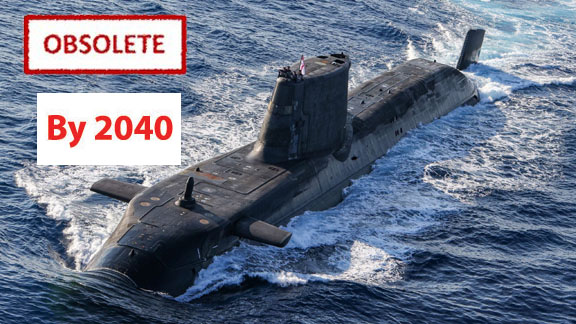
By Wayne Williams, 5 Jan 25, https://www.techradar.com/pro/could-ai-soon-make-dozens-of-billion-dollar-nuclear-stealth-attack-submarines-more-expensive-and-obsolete
Artificial intelligence can detect undersea movement better than humans.
AI can process far more data from a far more sensors than human operators can ever achieve
But the game of cat-and-mouse means that countermeasures do exist to confuse AI
Increase in compute performance and ubiquity of always-on passive sensors need also be accounted for.
The rise of AI is set to reduce the effectiveness of nuclear stealth attack submarines.
These advanced billion-dollar subs, designed to operate undetected in hostile waters, have long been at the forefront of naval defense. However, AI-driven advancements in sensor technology and data analysis are threatening their covert capabilities, potentially rendering them less effective.
An article by Foreign Policy and IEEE Spectrum now claims AI systems can process vast amounts of data from distributed sensor networks, far surpassing the capabilities of human operators. Quantum sensors, underwater surveillance arrays, and satellite-based imaging now collect detailed environmental data, while AI algorithms can identify even subtle anomalies, such as disturbances caused by submarines. Unlike human analysts, who might overlook minor patterns, AI excels at spotting these tiny shifts, increasing the effectiveness of detection systems.
Game of cat-and-mouse
AI’s increasing role could challenge the stealth of submarines like those in the Virginia-class, which rely on sophisticated engineering to minimize their detectable signatures.
Noise-dampening tiles, vibration-reducing materials, and pump-jet propulsors are designed to evade detection, but AI-enabled networks are increasingly adept at overcoming these methods. The ubiquity of passive sensors and continuous improvements in computational performance are increasing the reach and resolution of these detection systems, creating an environment of heightened transparency in the oceans.
Despite these advances, the game of cat-and-mouse persists, as countermeasures are, inevitably, being developed to outwit AI detection.
These tactics, as explored in the Foreign Policy and IEEE Spectrum piece, include noise-camouflaging techniques that mimic natural marine sounds, deploying uncrewed underwater vehicles (UUVs) to create diversions, and even cyberattacks aimed at corrupting the integrity of AI algorithms. Such methods seek to confuse and overwhelm AI systems, maintaining an edge in undersea warfare.
As AI technology evolves, nations will need to weigh up the escalating costs of nuclear stealth submarines against the potential for their obsolescence. Countermeasures may provide temporary degree of relief, but the increasing prevalence of passive sensors and AI-driven analysis suggests that traditional submarine stealth is likely to face diminishing returns in the long term.
First Nations chiefs shouldn’t be duped by ‘nuclear-is-green’ deception
Commentary
by William Eric Altvater, January 6, 2025, : https://nbmediacoop.org/2025/01/06/first-nations-chiefs-shouldnt-be-duped-by-nuclear-is-green-deception/
Some First Nation Chiefs are victims of shenanigans, not unlike the swindle behind the purchase of Manhattan. The federal government needs the support of Indigenous peoples to expand nuclear power generation capacity in Canada.
For millennia, the cornerstones of the Indigenous people that inhabit Turtle Island, now known as North America, held all that is essential to life, in reverence. Every decision considered the next 7 generations. These cornerstones are crumbling.
Newcomers, armed with the Colonizing tool, “The Doctrine of Discovery” and their mentality of superiority, invaded the land of those they called “Savages,” almost totally exterminating Skicinuwok, People of The Earth.
Determined to bestow Christianity and civility to this wild untamed population, old growth forests were cut, rivers and streams were dammed to power sawmills, roads and railroads were built, bridges erected. All to create an infrastructure for capitalism, a system to make a profit, that morphed into greed, a word of foreign root. This unbridled desire for progress has ruined what was once called Paradise.
Now most water is not fit to drink, clean air is scarce, deforestation is rampant, biodiversity loss out of control, plants genetically modified, food manufactured with unpronounceable chemicals, caged fish starved of oxygen while being fed chicken feathers and pig parts, cancer cases in the millions, the list goes on.
As the population increased over this continent the available sources for power generation have not been able to satisfy the insatiable desires of the “bigger, better, faster, more is never enough” mentality. Some have finally acknowledged the fact that fossil fuels are not the golden egg they were once deemed to be.
So-called “Green Energy” is required to slow the blind drive to extinction of man; man, who is considered by some to be the most intelligent creature to ever roam Earth. Unfortunately, the lure of riches and the corruption of self-serving purposes have led man to stray from practices that nurture everything required to sustain life on this tiny blue marble floating through the universe.
Nuclear power is now being touted as being “Green.” It is not. Big money corporations are lobbying legislators to convince them and the public that it is. They are also lobbying to convince the public that they should foot the bill in the form of taxes and rate hikes, for a process that pollutes from the day it starts. Water is life. As soon as uranium is mined from the earth it begins to contaminate the water in surrounding aquifers.
When the uranium is processed sufficiently, it is used as fuel for reactors where it generates heat while delivering electricity, not just for essential needs, but also for many things once considered luxuries. This fission generated heat is then dumped into nearby waters where it kills thousands, if not millions of small beings that form the basis of life itself.
After this radioactive fuel is depleted, it is stored in various containers where it will stay radioactive for eons. Indigenous Grandmothers have labelled it “Forever Dangerous.”
The power generated during the fission process benefits only those who exist today as the process occurs, not those born tomorrow or next week or next month. All the radioactive waste and the inherent danger it creates is left to future generations, kicking the can down the road.
What better place to dump this waste than in an area with a population that has witnessed Newcomers enrich themselves for hundreds of years? Yes, what better place than a population that has been targeted for assimilation, suffered theft of lands, witnessed the taking of naturally bestowed rights? A population that has been subjected to racial Indian Act legislation essentially stripping away all that sustained this population for thousands of years.
Yes, let us give the Indians some more shiny beads and trinkets so that they willingly agree to care for our radioactive garbage. How do we do this? Let’s talk to the Chief and Council. Let’s wine and dine them. Let’s give them some money, take them to dinner, buy some drinks and make them feel all festive and most of all make them think we are looking out for their best interests. Some Chiefs have taken the bait.
Egregious as it may be, this is exactly what is happening in some Indigenous communities contrary to the will of the majority. Elected Chiefs are continuing the deception as they are blinded and professing the “Nuclear is Green” mantra. They have lost connection with the Spirit of Ancestors and traditional values. They need to have a serious introspection and realize that looking forward, we need only look back at what has sustained us to this point in time. We need not do any more than that.
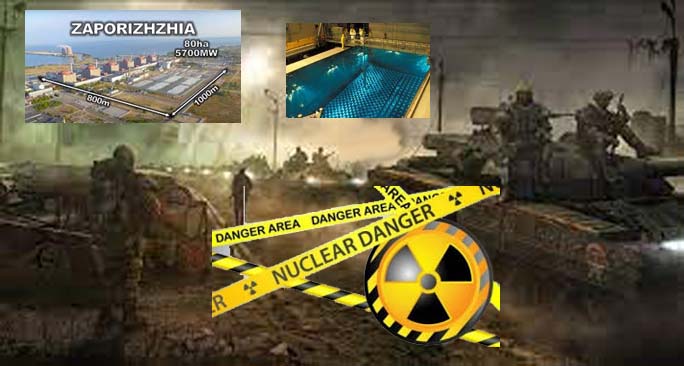
International Atomic Energy Agency (IAEA) staff reported hearing loud blasts near Ukraine’s Zaporizhzhya Nuclear Power Plant (NPP)
IAEA 5th Jan 2025,
https://www.iaea.org/newscenter/pressreleases/update-269-iaea-director-general-statement-on-situation-in-ukraine
International Atomic Energy Agency (IAEA) staff reported hearing loud blasts near Ukraine’s Zaporizhzhya Nuclear Power Plant (NPP) today, coinciding with reports of a drone attack on the plant’s training center, marking yet another threat to nuclear safety at Europe’s largest NPP, according to Director General Rafael Mariano Grossi.
The IAEA Support and Assistance Mission to Zaporizhzhya (ISAMZ) team stationed at ZNPP reported hearing two loud explosions coming from outside the perimeter of the site at approximately 12:45 and 15:45. For now, the IAEA has not yet been able to confirm any impact. The IAEA team also reported hearing machine gun fire coming from the site on multiple occasions.
The IAEA is aware of reports of an alleged attack by a drone at the ZNPP training center today, just outside of the site’s perimeter. Reports state that there were no casualties and no impact on any NPP equipment.
The ISAMZ team has reported that the intensity of military activities in the vicinity of Europe’s largest NPP – including multiple explosions at various distances from the site – has increased over the last 24 hours. “An attack on any nuclear power plant is completely unacceptable,” Director General Grossi stated. “In light of the increased military activity at ZNPP, I once again call for maximum restraint to avert the clear danger to its safety, and for the strict adherence to the five concrete principles established by the IAEA at the United Nations Security Council to protect the facility and the seven indispensable pillars of nuclear safety during an armed conflict also defined by the IAEA”.
Faslane Peace Camp warns of growing nuclear risks amid rising tensions
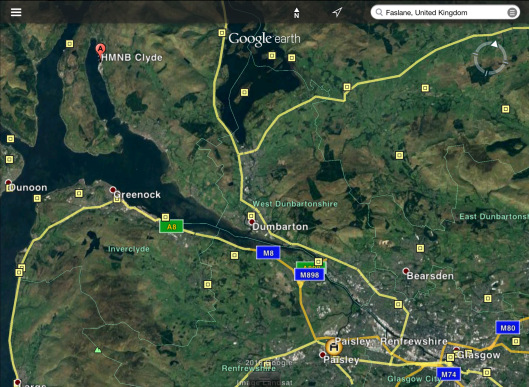
SCOTLAND is on the front line of a new international arms race spurred on
by a rise in frosty nuclear rhetoric. Just last month, the UK was declared
to be “directly involved” in the Ukraine war, meaning HM Naval Base
Clyde at Faslane – only 25 miles outside Glasgow – could be seen as a
“legitimate target”.
For the occupiers of Faslane Peace Camp,
site-sitting over the festive period, action and awareness are needed now
more than ever to pull us back from the brink of a nuclear winter just one
year before the 80th anniversary of the Hiroshima and Nagasaki bombings.
Acknowledging the risk of dealing in nuclear currency, Pete Roche, director
at Edinburgh Energy and Environment Consultancy, advocates for an energy
system throughout Scotland and the UK that runs entirely on renewables. The
previous Greenpeace campaigner said: “It is perfectly feasible to run
Scotland and the UK’s energy system on 100% renewables. This could save
well over £100 billion by 2050 compared to business as usual.”
The National 4th Jan 2025
https://www.thenational.scot/news/24832799.faslane-peace-camp-warns-growing-nuclear-risks-amid-rising-tensions/
A new year – but old policies

Renew Extra 4th Jan 2025
Given the UK’s tight economic situation, there were some concerns about backsliding on renewables and watering down plan to fully decarbonise the power grid by 2030 after PM Starmer said, at the end of last year, that the target was now to have ‘at least 95%’ clean power generation by that year, i.e. lots more renewables plus some new nuclear, but not totalling 100%.
………………..Net Zero Secretary Ed Miliband said nuclear power was vital, and that led some to speculate that Labour might condone higher power bills to pay for Small Modular Reactors, although he didn’t go quite as far as the Tony Blair Institute report which pushed new nuclear hard and said that the impacts of Chernobyl and Fukushima, ‘while serious, have been significantly overestimated’. The report was dismissed as ‘mostly tosh’ by Johnathon Porritt.
Certainly it did feel a bit backward looking, whereas, according to Emma Pinchbeck, one time head of Energy UK and now chair of the Climate Change Committee, private investors were keen to see ambitious new approaches to energy and climate change being backed by the government.
It is true that some ‘big tech’ companies like Amazon, Microsoft and Google, may be looking at Small Modular Reactors and some other nuclear techs, but the bulk of global funding for new energy tech is still going to renewables- and the big IT companies investment in SMRs/AMRs may just be a speculative, but possibly doomed, side bet.
………………………overall, the government does seem to be trying to get it right on pushing ahead rapidly with renewables, even if it is still a bit trapped in what some see as a nuclear dead end and also by its arguably misplaced optimism about CCS. Certainly Dr Doug Parr, Greenpeace UK, said ‘any money earmarked for carbon capture and storage- which is expensive, impossible to make zero carbon and fails to detach electricity prices from the volatile international gas market – would be better spent on the renewables, grid and storage infrastructure that will actually deliver clean power’.
………………………………………………………..based on a Royal Society study last year, it was concluded that, although the UK would need a lot of energy storage capacity, ‘a system based entirely on wind and solar, supported by large-scale hydrogen storage, and a possible mix of other storage options……….. would not be expensive.’
And more recently Dale Vince, Labour-supporting Ecotricty founder, said ‘we can secure a cleaner, cheaper energy future without nuclear’. He noted specifically that the cost of Hinkley Point C had ‘ballooned to £46bn’ after it was ‘originally priced at £18bn’ and argued that ‘if Hinkley Point C is anything to go by, Sizewell C really should have rigorous financial scrutiny.’ Certainly Hinkley Point is running late. It is now scheduled to be complete in 2031, after EDF’s former chief executive Vincent de Rivaz had originally said it would come online by Christmas 2017.
…………………..Clearly he feels we would do better to get on with the new green energy technologies. He is not alone. Hopefully 2025 will see more of that, and less backsliding. https://renewextraweekly.blogspot.com/2025/01/a-new-year-but-old-polices.html
Short nuclear news round-up -week to 5 January 2025

Some bits of good news – 86 Stories of Progress from 2024 ,
A 12-year-old schoolgirl has designed a solar-powered blanket for the homeless. ALSO AT https://nuclear-news.net/2025/01/04/1-a-12-year-old-schoolgirl-has-designed-a-solar-powered-blanket-for-thehomeless/
TOP STORIES
2025, Iran is back in the U.S. crosshairs for regime change.
Japan, US to communicate on possible use of nuclear weapons.
Arms control is essential to prevent the total devastation of nuclear war.
Protect your girls: We show that biological sex IS a factor in radiation outcomes, WIDELY.
JIMMY CARTER: Commemorations by nuke watchdogs
Climate. A snapshot of climate devastation’: Study claims 2024’s biggest climate disasters cost $200bn – ALSO AT https://nuclear-news.net/2025/01/01/2-b1-a-snapshot-of-climate-devastation-study-claims-2024s-biggest-climate-disasters-cost-200bn/ Skiing in France is slowly dying ALSO AT https://nuclear-news.net/2024/12/31/2-b1-skiing-in-france-is-slowly-dying/deal for Ukraine ?
Noel’s notes. Iran and the “right to have nuclear weapons“. Is it realistic for Donald Trump to boast of a quick peace deal for Ukraine?
AUSTRALIA. The $80 billion question buried in Dutton’s nuclear power plan. The Coalition’s coal-keeper plan. Can true nuclear independence be achieved without ending the US Alliance? More Australian nuclear news at https://antinuclear.net/2024/12/31/australian-nuclear-news-30-december-6-june/
NUCLEAR ITEMS
| ECONOMICS. Sizewell C faces calls for more scrutiny of costs ahead of Final Investment Decision. Government urged to review Sizewell C nuclear plant over ballooning cost. Armed with Canadian taxpayer support, AtkinsRéalis and Westinghouse are competing to export nuclear reactors. Which one will prevail? -ALSO AT https://nuclear-news.net/2025/01/04/1-b1-armed-with-canadian-taxpayer-support-atkinsrealis-and-westinghouse-are-competing-to-export-nuclear-reactors-which-one-will-prevail/ |
| ENVIRONMENT. Some Types of Pollution Are More Equal than Others.Radiation is normal at Cesar Chavez Park, but it’s a different story underground, tests show. |
| ETHICS and RELIGION. The Moral Bankruptcy of the West. |
| EVENTS. Petition: Scrutinise Sizewell C |
| HEALTH. Where is the ‘mature debate’ about the health impacts of nuclear power? – ALSO AT https://antinuclear.net/2025/01/03/where-is-the-mature-debate-about-the-health-impacts-of-nuclear-power/ Cellphone radiation warning as researchers reveal new risk factor. |
| MEDIA. Examining Annie Jacobsen’s “Nuclear War: A Scenario”. BBC staffers reveal editor’s ‘entire job’ to whitewash Israeli war crimes. |
| PERSONAL STORIES. Toshiyuki Mimaki: Let’s save humanity from nuclear weapons. One Week in the Carter Presidency: Brokering Peace and a Nuclear Crisis -ALSO AT https://nuclear-news.net/2024/12/31/2-b1-one-week-in-the-carter-presidency-brokering-peace-and-a-nuclear-crisis/ |
| POLITICS.Nuclear power had a strong year in 2024, but uncertainty looms for 2025. No change in Iran’s nuclear doctrine, top security official says. US relaxes green hydrogen rules in race to boost nuclear sector -ALSO AT https://nuclear-news.net/2025/01/04/2-b1-us-relaxes-green-hydrogen-rules-in-race-to-boost-nuclear-sector/ |
| POLITICS INTERNATIONAL and DIPLOMACY. Iran says ready to enter talks soon with the West to agree on a new nuclear deal. Next nuclear talks between Iran and three European countries due on Jan 13.With successful Syrian regime change, will US set sights on Iran regime change 2.0? – https://nuclear-news.net/2024/12/31/2-b1-with-successful-syrian-regime-change-will-us-set-sights-on-iran-regime-change-2-0/ A Trump-Putin Deal Over Ukraine Does Not Look Good for Europe.Can Trump Trump China (or Vice Versa)? |
| RADIATION. Improved way to gauge radiation doses developed for Fukushima, (they studied only 30 people) |
| SAFETY. Incidents. The Time Navy Lt. Jimmy Carter Was Lowered Into A Partially Melted-Down Nuclear Reactor |
| SECRETS and LIES. EU officials will claim ignorance of Israel’s war crimes: a leaked document shows what they knew. |
SPACE. EXPLORATION, WEAPONS. The Quiet Crisis Above: Unveiling the Dark Side of Space Militarization
Departing Air Force Secretary Will Leave Space Weaponry as a Legacy.
TECHNOLOGY. Here comes Yakutia, Russia’s newest nuclear icebreaker.
WASTES. WIPP’s Legacy Transuranic Waste Disposal Plan Demonstrates DOE’s Broken Promises. Decommissioning: Pickering A nuclear power plant bites the dust!
| WAR and CONFLICT. Biden discussed plans to strike Iran nuclear sites if Tehran speeds toward bomb. Syrian minorities under threat as security forces carry out raids against ‘remnants of Assad militias’. |
| WEAPONS and WEAPONS SALES. Trump Wants Greenland to Deploy Medium-Range Missiles Aimed at Russia . US Has Given Israel $22 Billion in Military Aid Since October 2023. Biden spending last month shoveling billions to get more Ukrainians killed for nothing. Biden Administration Announces Nearly $6 Billion in New Ukraine Aid. Canada’s atomic legacy |
Can Trump Trump China (or Vice Versa)?
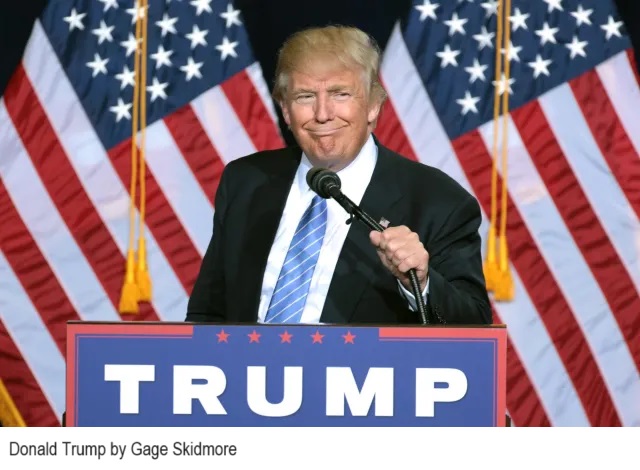
When Washington granted diplomatic recognition to China in 1979, it “acknowledged” that Taiwan and the mainland were both part of “one China” and that the two parts could eventually choose to reunite. The U.S. also agreed to cease diplomatic relations with Taiwan and terminate its military presence there.
For decades, one president after another reaffirmed the “one China” policy while also providing Taiwan with increasingly powerful weaponry.
the bind Trump will inevitably find himself in when it comes to Taiwan this time around.
Trump Confronts a Rising China
Can He Manage U.S.-China Relations Without Precipitating World War III?
By Michael Klare, December 17, 2024, https://scheerpost.com/2024/12/19/trump-confronts-a-rising-china/
Gaza, Haiti, Iran, Israel, Lebanon, Russia, Syria, Ukraine, and Venezuela: President-elect Donald Trump will face no shortage of foreign-policy challenges when he assumes office in January. None, however, comes close to China in scope, scale, or complexity. No other country has the capacity to resist his predictable antagonism with the same degree of strength and tenacity, and none arouses more hostility and outrage among MAGA Republicans. In short, China is guaranteed to put President Trump in a difficult bind the second time around: he can either choose to cut deals with Beijing and risk being branded an appeaser by the China hawks in his party, or he can punish and further encircle Beijing, risking a potentially violent clash and possibly even nuclear escalation. How he chooses to resolve this quandary will surely prove the most important foreign test of his second term in office.
As Waltz and others around Trump see it, China poses a multi-dimensional threat to this country’s global supremacy. In the military domain, by building up its air force and navy, installing military bases on reclaimed islands in the South China Sea, and challenging Taiwan through increasingly aggressive air and naval maneuvers, it is challenging continued American dominance of the Western Pacific. Diplomatically, it’s now bolstering or repairing ties with key U.S. allies, including India, Indonesia, Japan, and the members of NATO. Meanwhile, it’s already close to replicating this country’s most advanced technologies, especially its ability to produce advanced microchips. And despite Washington’s efforts to diminish a U.S. reliance on vital Chinese goods, including critical minerals and pharmaceuticals, it remains a primary supplier of just such products to this country.
Fight or Strike Bargains?
For many in the Trumpian inner circle, the only correct, patriotic response to the China challenge is to fight back hard. Both Representative Waltz, Trump’s pick as national security adviser, and Senator Marco Rubio, his choice as secretary of state, have sponsored or supported legislation to curb what they view as “malign” Chinese endeavors in the United States and abroad.
What such a deal might look like is anyone’s guess, but it’s hard to see how Trump could win significant concessions from Beijing without abandoning some of the punitive measures advocated by the China hawks in his entourage. Count on one thing: this complicated and confusing dynamic will play out in each of the major problem areas in U.S.-China relations, forcing Trump to make critical choices between his transactional instincts and the harsh ideological bent of his advisers.
Trump, China, and Taiwan
Of all the China-related issues in his second term in office, none is likely to prove more challenging or consequential than the future status of the island of Taiwan. At issue are Taiwan’s gradual moves toward full independence and the risk that China will invade the island to prevent such an outcome, possibly triggering U.S. military intervention as well. Of all the potential crises facing Trump, this is the one that could most easily lead to a great-power conflict with nuclear undertones.
When Washington granted diplomatic recognition to China in 1979, it “acknowledged” that Taiwan and the mainland were both part of “one China” and that the two parts could eventually choose to reunite. The U.S. also agreed to cease diplomatic relations with Taiwan and terminate its military presence there. However, under the Taiwan Relations Act of 1979, Washington was also empowered to cooperate with a quasi-governmental Taiwanese diplomatic agency, the Taipei Economic and Cultural Representative Office in the United States, and provide Taiwan with the weapons needed for its defense. Moreover, in what came to be known as “strategic ambiguity,” U.S. officials insisted that any effort by China to alter Taiwan’s status by force would constitute “a threat to the peace and security of the Western Pacific area” and would be viewed as a matter “of grave concern to the United States,” although not necessarily one requiring a military response.
For decades, one president after another reaffirmed the “one China” policy while also providing Taiwan with increasingly powerful weaponry. For their part, Chinese officials repeatedly declared that Taiwan was a renegade province that should be reunited with the mainland, preferably by peaceful means. The Taiwanese, however, have never expressed a desire for reunification and instead have moved steadily towards a declaration of independence, which Beijing has insisted would justify armed intervention.
As such threats became more frequent and menacing, leaders in Washington continued to debate the validity of “strategic ambiguity,” with some insisting it should be replaced by a policy of “strategic clarity” involving an ironclad commitment to assist Taiwan should it be invaded by China. President Biden seemed to embrace this view, repeatedly affirming that the U.S. was obligated to defend Taiwan under such circumstances. However, each time he said so, his aides walked back his words, insisting the U.S. was under no legal obligation to do so.
The Biden administration also boosted its military support for the island while increasing American air and naval patrols in the area, which only heightened the possibility of a future U.S. intervention should China invade. Some of these moves, including expedited arms transfers to Taiwan, were adopted in response to prodding from China hawks in Congress. All, however, fit with an overarching administration strategy of encircling China with a constellation of American military installations and U.S.-armed allies and partners.
From Beijing’s perspective, then, Washington is already putting extreme military and geopolitical pressure on China. The question is: Will the Trump administration increase or decrease those pressures, especially when it comes to Taiwan?
That Trump will approve increased arms sales to and military cooperation with Taiwan essentially goes without saying (as much, at least, as anything involving him does). The Chinese have experienced upticks in U.S. aid to Taiwan before and can probably live through another round of the same. But that leaves far more volatile issues up for grabs: Will he embrace “strategic clarity,” guaranteeing Washington’s automatic intervention should China invade Taiwan, and will he approve a substantial expansion of the American military presence in the region? Both moves have been advocated by some of the China hawks in Trump’s entourage, and both are certain to provoke fierce, hard-to-predict responses from Beijing.
Many of Trump’s closest advisers have, in fact, insisted on “strategic clarity” and increased military cooperation with Taiwan. Michael Waltz, for example, has asserted that the U.S. must “be clear we’ll defend Taiwan as a deterrent measure.” He has also called for an increased military presence in the Western Pacific. Similarly, last June, Robert C. O’Brien, Trump’s national security adviser from 2019 to 2021, wrote that the U.S. “should make clear” its “commitment” to “help defend” Taiwan, while expanding military cooperation with the island.
Trump himself has made no such commitments, suggesting instead a more ambivalent stance. In his typical fashion, in fact, he’s called on Taiwan to spend more on its own defense and expressed anger at the concentration of advanced chip-making on the island, claiming that the Taiwanese “did take about 100% of our chip business.” But he’s also warned of harsh economic measures were China to impose a blockade of the island, telling the editorial board of the Wall Street Journal, “I would say [to President Xi]: if you go into Taiwan, I’m sorry to do this, I’m going to tax you at 150% to 200%.” He wouldn’t need to threaten the use of force to prevent a blockade, he added, because President Xi “respects me and he knows I’m [expletive] crazy.”
Such comments reveal the bind Trump will inevitably find himself in when it comes to Taiwan this time around. He could, of course, try to persuade Beijing to throttle back its military pressure on the island in return for a reduction in U.S. tariffs — a move that would reduce the risk of war in the Pacific but leave China in a stronger economic position and disappoint many of his top advisers. If, however, he chooses to act “crazy” by embracing “strategic clarity” and stepping up military pressure on China, he would likely receive accolades from many of his supporters, while provoking a (potentially nuclear) war with China.
In January 2018, the first Trump administration imposed tariffs of 30% on imported solar panels and 20%-50% on imported washing machines, many sourced from China. Two months later, the administration added tariffs on imported steel (25%) and aluminum (10%), again aimed above all at China. And despite his many criticisms of Trump’s foreign and economic policies, President Biden chose to retain those tariffs, even adding new ones, notably on electric cars and other high-tech products. The Biden administration has also banned the export of advanced computer chips and chip-making technology to China in a bid to slow that country’s technological progress.
Accordingly, when Trump reassumes office on January 20th, China will already be under stringent economic pressures from Washington. But he and his associates insist that those won’t be faintly enough to constrain China’s rise. The president-elect has said that, on day one of his new term, he will impose a 10% tariff on all Chinese imports and follow that with other harsh measures. Among such moves, the Trump team has announced plans to raise tariffs on Chinese imports to 60%, revoke China’s Permanent Normal Trade Relations (also known as “most favored nation”) status, and ban the transshipment of Chinese imports through third countries.
Most of Trump’s advisers have espoused such measures strongly. “Trump Is Right: We Should Raise Tariffs on China,” Marco Rubio wrote last May. “China’s anticompetitive tactics,” he argued, “give Chinese companies an unfair cost advantage over American companies… Tariffs that respond to these tactics prevent or reverse offshoring, preserving America’s economic might and promoting domestic investment.”
But Trump will also face possible pushback from other advisers who are warning of severe economic perturbations if such measures were to be enacted. China, they suggest, has tools of its own to use in any trade war with the U.S., including tariffs on American imports and restrictions on American firms doing business in China, including Elon Musk’s Tesla, which produces half of its cars there. For these and other reasons, the U.S.-China Business Council has warned that additional tariffs and other trade restrictions could prove disastrous, inviting “retaliatory measures from China, causing additional U.S. jobs and output losses.”
As in the case of Taiwan, Trump will face some genuinely daunting decisions when it comes to economic relations with China. If, in fact, he follows the advice of the ideologues in his circle and pursues a strategy of maximum pressure on Beijing, specifically designed to hobble China’s growth and curb its geopolitical ambitions, he could precipitate nothing short of a global economic meltdown that would negatively affect the lives of so many of his supporters, while significantly diminishing America’s own geopolitical clout. He might therefore follow the inclinations of certain of his key economic advisers like transition leader Howard Lutnick, who favor a more pragmatic, businesslike relationship with China. How Trump chooses to address this issue will likely determine whether the future involves increasing economic tumult and uncertainty or relative stability. And it’s always important to remember that a decision to play hardball with China on the economic front could also increase the risk of a military confrontation leading to full-scale war, even to World War III.
And while Taiwan and trade are undoubtedly the most obvious and challenging issues Trump will face in managing (mismanaging?) U.S.-China relations in the years ahead, they are by no means the only ones. He will also have to decide how to deal with increasing Chinese assertiveness in the South China Sea, continued Chinese economic and military-technological support for Russia in its war against Ukraine, and growing Chinese investments in Africa, Latin America, and elsewhere.
In these, and other aspects of the U.S.-China rivalry, Trump will be pulled toward both increased militancy and combativeness and a more pragmatic, transactional approach. During the campaign, he backed each approach, sometimes in the very same verbal outburst. Once in power, however, he will have to choose between them — and his decisions will have a profound impact on this country, China, and everyone living on this planet.
JIMMY CARTER: Commemorations by nuke watchdogs
January 2, 2025, https://beyondnuclear.org/jimmy-carter-1924-2024-nuke-watchdog-commemorations/
Given his very extensive involvement in key nuclear issues, president Jimmy Carter’s death, at age 100, on December 29, 2024, elicited response from nuclear watchdogs. (See Peter Baker and Roy Reed’s New York Times obituary, here.)
Tom Clements, Savannah River Site (SRS) Watch director, published a tribute: “Thank you, Jimmy Carter, for your monumental environmental and non-proliferation decision in 1977! South Carolina and the nation owe you a debt of gratitude.”
Clements focused on Carter’s decision to halt commercial reprocessing in the U.S., which led to the cancellation of the Barnwell, South Carolina reprocessing facility near the border with Georgia, in the same town as a leaking “low-level” radioactive waste dump “serving” several dozen states for decades on end. Rural Barnwell, South Carolina is majority African American, with low-income challenges. It is also the birthplace of musician James Brown. It is nearby not only the SRS nuclear weapons complex, but also the Vogtle nuclear power plant on the Georgia side of the Savannah River, the largest in the country by both number of reactors (four), as well as nuclear mega-wattage-electric (more than 4,000).
Bob Alvarez of Institute for Policy Studies (IPS), former senior advisor to the Energy Secretary during the Clinton administration, added that “Carter, as Governor of [Georgia], stopped the [Atomic Energy Commission] plan to dig a 15-foot diameter shaft and dispose of 80 million gallons of high-level radioactive wastes at the Savannah River Plant beneath the region’s primary ground water supply.”
Glenn Carroll, Nuclear Watch South coordinator, celebrated Carter’s appointment of Tennessee Valley Authority chair S. David Freeman (pictured above, with the president in the Oval Office), who cancelled nine proposed atomic reactors.
As Carroll pointed out, “Jimmy Carter’s stand against [commercial] reprocessing not only halted the U.S. reprocessing endeavor but largely chilled the technology globally.”
This came at a crucial time. Argentina and Brazil, as well as South Korea and Taiwan, followed Carter’s lead and banned commercial radioactive waste reprocessing. Each country was a military dictatorship at the time, embroiled in cross-border tensions with their geopolitical neighbors, and were flirting with the idea of becoming nuclear weapons powers. Commercial irradiated nuclear fuel reprocessing would have provided them with a pathway to obtaining weapons-usable Plutonium-239.
In 1974, India followed just such a pathway to nuclear weapons status, using a Canadian CANDU research reactor, and U.S. reprocessing technology. This sparked a nuclear arms race with rival Pakistan.
Ian Fairlie echoed Carroll’s observation, saying:
“…[Carter’s] non-proliferation efforts extended beyond the US, e.g. he twisted the IAEA’s arm to establish its International Fuel Cycle Evaluation (INFCE) program (https://www.iaea.org/sites/default/files/22204883033.pdf) in order to stop (commercial) reprocessing world-wide.”
Fairlie added:
“In my lectures, I sometimes highlight the fact that there have only been 2 political leaders in the West who questioned their nuclear establishments, and both were well versed in nuclear physics. Carter, a nuclear chemist, and Angela Merkel the former German Chancellor, who was a theoretical quantum physicist.”
As previously mentioned above, Carroll also shared that:
“Dave Freeman and Arjun Makhijani’s Time to Choose report on renewable energy inspired Carter to appoint Dave to the TVA board where Dave distinguished himself by cancelling nine reactors on order and launched a public power career in which he saw goals of the [1974] report becoming real. Despite nuclear industry hype we see the present day colossal success of wind and solar energy as nuclear continues to lose momentum.”
Freeman, nicknamed “The Green Cowboy,” headed up the Ford Foundation’s Energy Policy Project in the early 1970s. Freeman hired Makhijani to co-author the A Time to Choose: America’s Energy Future report.
Makhijani went on to found the Institute for Energy and Environmental Research (IEER), where he serves as president. In August, 2007, Makhijani authored Carbon-Free and Nuclear-Free: A Roadmap for U.S. Energy Policy, which he dedicated to Freeman, as well as to Beyond Nuclear’s founding president, Helen Caldicott.
Carroll also commented that: “Jimmy Carter cast a long shadow! His example of wearing a sweater and turning down the thermostat resulted in flat energy demand growth for at least two decades.”
Carroll also shared a Mother Jones article, by Kai Bird, published on Dec. 29, 2024, “The Bold Environmental Vision of President Jimmy Carter: He protected Alaska’s wilderness and promoted solar energy before it was cool.”
Carter was also famous for installing solar panels on the White House. The New York Times has published an article entitled “What Happened to Carter’s White House Solar Panels? They Lived On. The panels, removed under Ronald Reagan, found new homes from Maine to China. And their legacy still reverberates.”
(In a later presidential administration, Steven Strong of Solar Design Associates was hired to install solar panels in the White House swimming pool area. After Ronald Reagan’s “solar sabotage” decades earlier, Strong joked he installed the solar panels extra well, so they would be very difficult to remove. Steven Strong, and his wife Marilyn Strong, were Beyond Nuclear Launch Partners in 2007 when we were founded, and continued to serve and support us for years thereafter.)
Jimmy Carter also established a key radioactive waste policy task force during his administration. Its final report laid much of the groundwork for the Nuclear Waste Policy Act of 1982, as Amended.
Carter, who won the Nobel Peace Prize in 2002, also attempted to hammer out a key nuclear arms reduction treaty — SALT II, Strategic Arms Limitation Treaty II — with the Soviet Union. He effectively succeeded, even though the U.S. Senate never ratified the treaty. As reported by the U.S. State Department:
“…On June 17, 1979, Carter and [Soviet leader] Brezhnev signed the SALT II Treaty in Vienna. SALT II limited the total of both nations’ nuclear forces to 2,250 delivery vehicles and placed a variety of other restrictions on deployed strategic nuclear forces, including MIRVs [Multiple Independent Reentry Vehicles].
However, a broad coalition of Republicans and conservative Democrats grew increasingly skeptical of the Soviet Union’s crackdown on internal dissent, its increasingly interventionist foreign policies, and the verification process delineated in the Treaty. On December 17, 1979, 19 Senators wrote Carter that “Ratification of a SALT II Treaty will not reverse trends in the military balance adverse to the United States.” On December 25, the Soviets invaded Afghanistan, and on January 3, 1980, Carter asked the Senate not to consider SALT II for its advice and consent, and it was never ratified. Both Washington and Moscow subsequently pledged to adhere to the agreement’s terms despite its failure to enter into force. Carter’s successor Ronald Reagan, a vehement critic of SALT II during the 1980 presidential campaign, agreed to abide by SALT II until its expiration on December 31, 1985, while he pursued the Strategic Arms Reduction Treaty (START) and argued that research into the Strategic Defense Initiative (SDI) adhered to the 1972 ABM [Anti-Ballistic Missile] Treaty.”
Jimmy Carter’s Nobel Peace Prize had to do with his use of the Office of the President of the United States as a mere stepping stone. Carter, a highly skilled carpenter himself, made Habitat for Humanity a household name, thanks to his decades of volunteer home-building for low-income families. The Carter Center in Atlanta, under the former president’s leadership, pursued such noble causes as international peace negotiations, overseas election observation, and disease eradication.
(As reported in the New York Times obit linked at the top of this post:
“While his presidency was remembered more for its failures than for its successes, his post-presidency was seen by many as a model for future chief executives. Rather than vanish from view or focus on moneymaking, he established the Carter Center to promote peace, combat disease and tackle social inequality. He transformed himself into a freelance diplomat traveling the globe, sometimes irritating his successors but earning the Nobel Peace Prize in 2002…
…Long pilloried by Republicans as a model of ineffectual liberal leadership and shunned by fellow Democrats who saw him as a political albatross, Mr. Carter benefited in recent years from some historical reappraisal, reinforced by a visit to Plains by Mr. Biden in 2021 and a gala celebration of the Carters’ 75th wedding anniversary three months later. Several recently published books argued that his presidency had been more consequential than it was given credit for.
In “His Very Best: Jimmy Carter, a Life,” published in 2020, Jonathan Alter called him “perhaps the most misunderstood president in American history,” one who was ahead of his time on the environment, foreign policy and race relations.
Similarly, Kai Bird maintained in “The Outlier: The Unfinished Presidency of Jimmy Carter” (2021) that the traditional view of Mr. Carter as a better former president than president was belied by the historical evidence. “The record of these achievements is not to be lightly dismissed,” he wrote.
And Stuart E. Eizenstat, Mr. Carter’s domestic policy adviser, insisted in “President Carter: The White House Years” (2018) that the former president was a thoroughly decent, honorable man who had been underrated. While he may have been miscast as a politician, Mr. Eizenstat wrote, Mr. Carter’s accomplishments, measured against those of other presidents, made him “one of the most consequential in modern history…“)
The First Lady served as his co-equal partner is many of these pursuits, just as she had done in the White House years. At the time of her death, Eleanor Rosalynn (née Smith) Carter, also born and raised in Plains, GA, had been married to Jimmy Carter for 77 years. She trail-blazed her own advocacy path as First Lady, including on mental health issues, promoting childhood reading, etc.
Despite Jimmy Carter’s positive and praiseworthy record summarized above, throughout his career, including while president of the United States, some of his actions re: nuclear power and weaponry were more troubling.
Of course, as president and commander in chief, Carter oversaw the U.S. nuclear weapons arsenal. This included full-scale nuclear weapons testing on Western Shoshone land, at the Nevada Test Site, from 1977 to 1981. Although such testing was conducted underground during that time period, under the requirements of the Atmospheric Test Ban Treaty, an estimated one-third of underground tests in the U.S. were vented to the atmosphere anyway, either accidentally, or intentionally.
Along with First Lady Rosalynn Carter ((August 18, 1927 – November 19, 2023), Jimmy Carter toured the Three Mile Island nuclear power plant, just days after Unit 2 had a 50% core meltdown. An element of the staff at the U.S. Nuclear Regulatory Commission (NRC) was, at that moment, still concerned a dangerous hydrogen explosion could occur.
The Carters’ TMI-2 tour was an attempt to downplay concerns about the worst reactor meltdown in U.S. history. Its significance still unfolds to this day. (See, for example, Beyond Nuclear’s coverage at the 35th annual commemoration in 2014. Also see Nuclear Information and Resource Service (NIRS) coverage at the 25th annual commemoration in 2004.)
The Carters’ tour of TMI led to a spoof by Saturday Night Live entitled “The Coca-Cola Syndrome.”
However, TMI-2 was not Jimmy Carter’s first close encounter with a serious reactor disaster. In 1952, as a young U.S. Nuclear Navy officer, Carter was sent to Chalk River, Ontario, Canada, to help deal with the aftermath of the first known reactor disaster in world history. (See a Jan. 4, 2025 New York Times article about Carter’s role at the Chalk River reactor meltdown disaster recovery mission.)
Jimmy Carter, a Naval Academy graduate (Class of 1946), also served in high posts in Admiral Hyman Rickover’s Nuclear Navy, including coordinating the pre-operational deployment of a very early nuclear submarine. As mentioned in the Times article immediately above, Carter was certified as among the very first “Atomic Submariners” in U.S. Nuclear Navy history.
As John D. Miller detailed:
“[Carter] was the precommissioning commanding officer of the ship that I later served as a nuclear engineering officer on for 30 months, the USS SEAWOLF (SSN575), the world’s second oldest nuclear submarine.”
And as reported in the New York Times obit linked at the top of this post:
“…In October 1952, Lieutenant Carter went to work for Capt. Hyman Rickover, who was well along in developing the Navy’s first nuclear-powered submarines and ships. After going back to school to study nuclear engineering, Lieutenant Carter became the executive officer in a crew that would build and prepare the first nuclear submarine, the Nautilus. By the winter of 1953, he was dreaming of commanding his own sub…”
After leaving office, former President Carter spoke at the dedication of a nuclear-powered, and -armed, attack submarine named after him.
Although Rickover had offered Carter a very high-ranking command position in the Nuclear Navy, Carter instead chose to return to his tiny hometown of Plains, Georgia to carry on the family’s peanut farming, after his father’s death. (Carter’s father had also served in the Georgia state legislature.) Jimmy Carter then later served on the Sumter County school board, and was eventually elected to the Georgia state legislature, the Georgia governorship, and the U.S. presidency.
While campaigning for president in New Hampshire in 1976, Jimmy Carter got in hot water with the groundbreaking anti-nuclear power movement there — the Clamshell Alliance — which was battling against the Seabrook nuclear power plant. As documented by Green Mountain Post Films in the 1978 documentary film “The Last Resort,” Carter referred to nuclear power as just that:
Candidate Jimmy Carter comes to New Hampshire in 1976 and calls nuclear power “the last resort”; Tony and Louisa Santasucci, angry Seabrook residents whose land borders the plant site: “We don’t need a monster like that!”.
1 This Month

of the week – Shut Down Drone Warfare!


Tell the Ukrainian Government to Drop Prosecution of Peace Activist Yurii Sheliazhenko

Petition to revoke the licensing of the Near Surface Nuclear Disposal Facility (NSDF) at Chalk River. https://www.ourcommons.ca/petitions/en/Petition/Details?Petition=e-7247
To see nuclear-related stories in greater depth and intensity – go to https://nuclearinformation.wordpress.com
-
Archives
- April 2026 (19)
- March 2026 (251)
- February 2026 (268)
- January 2026 (308)
- December 2025 (358)
- November 2025 (359)
- October 2025 (376)
- September 2025 (257)
- August 2025 (319)
- July 2025 (230)
- June 2025 (348)
- May 2025 (261)
-
Categories
- 1
- 1 NUCLEAR ISSUES
- business and costs
- climate change
- culture and arts
- ENERGY
- environment
- health
- history
- indigenous issues
- Legal
- marketing of nuclear
- media
- opposition to nuclear
- PERSONAL STORIES
- politics
- politics international
- Religion and ethics
- safety
- secrets,lies and civil liberties
- spinbuster
- technology
- Uranium
- wastes
- weapons and war
- Women
- 2 WORLD
- ACTION
- AFRICA
- Atrocities
- AUSTRALIA
- Christina's notes
- Christina's themes
- culture and arts
- Events
- Fuk 2022
- Fuk 2023
- Fukushima 2017
- Fukushima 2018
- fukushima 2019
- Fukushima 2020
- Fukushima 2021
- general
- global warming
- Humour (God we need it)
- Nuclear
- RARE EARTHS
- Reference
- resources – print
- Resources -audiovicual
- Weekly Newsletter
- World
- World Nuclear
- YouTube
-
RSS
Entries RSS
Comments RSS
 nuclear-news