Open source vs. closed doors: How China’s DeepSeek beat U.S. AI monopolies
By Gary Wilson, Struggle/La Lucha, January 28, 2025, https://gpja.org.nz/2025/01/28/open-source-vs-closed-doors-how-chinas-deepseek-beat-u-s-ai-monopolies/
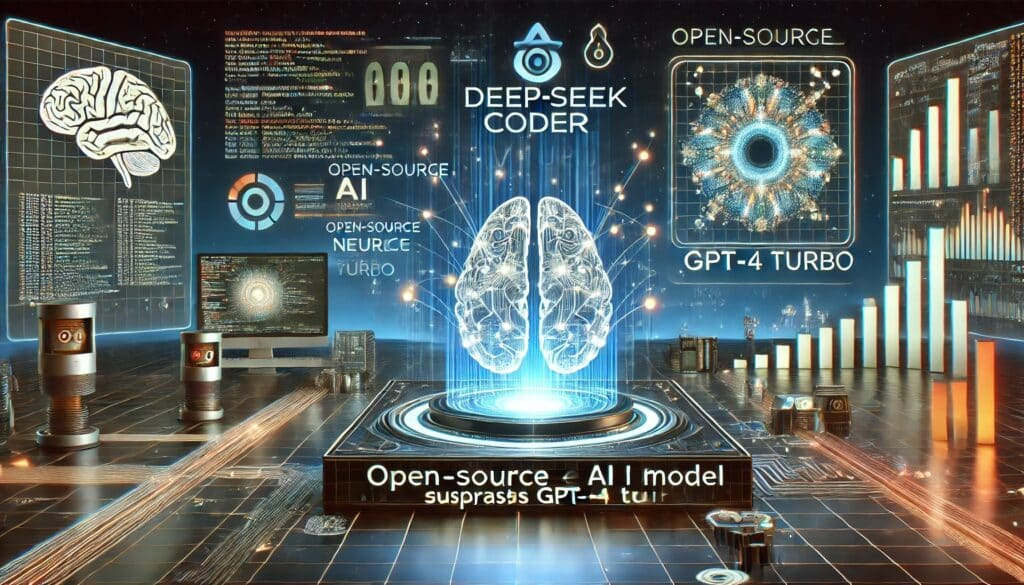
China’s DeepSeek AI has just dropped a bombshell in the tech world. While U.S. tech giants like OpenAI have been building expensive, closed-source AI models, DeepSeek has released an open-source AI that matches or outperforms U.S. models, costs 97% less to operate, and can be downloaded and used freely by anyone.
While the U.S. tried to monopolize AI with economic sanctions on China and embargoes on semiconductor technology to China, China’s technologically adept workforce quietly worked around these barriers.
While the Trump administration was busy constructing a $500 billion AI boondoggle called Stargate, DeepSeek engineered a technological breakthrough that exposed the entire expensive Stargate charade as another giveaway to the wealthy.
DeepSeek’s model outperformed OpenAI’s best, using less data, less computing power, and a fraction of the cost. Even more remarkable, DeepSeek’s model is open-source, meaning anyone can use, modify, and build on it. This stands in stark contrast to OpenAI’s closed, profit-driven approach.
Corporate rulers want AI to monitor workers, lower wages, bust unions, or shift work to machines altogether, leading to cutbacks and layoffs. The World Economic Forum famously predicted that AI would replace millions of “useless” human workers by 2030.
Unlike U.S. tech companies seeking monopoly control, DeepSeek treats AI like electricity or the Internet — a basic tool that should be accessible to everyone.
The ability to offer a powerful AI system at such a low cost and with open access undermines the claim that AI must be restricted behind paywalls and controlled by corporations. In contrast to monopoly capitalism, this approach offers an alternative that fosters innovation and benefits society in general.
AI, as a public utility, can be used to complement human labor, improve safety, reduce drudgery, and create better-paying jobs rather than eliminate them.
Beyond mere manufacturing, China has methodically built technological ecosystems that now dominate global markets: Huawei’s telecommunications, BYD’s electric vehicles, CATL’s next-generation battery technologies, and Tongwei Solar’s advanced photovoltaic systems.
In just 15 years, the technological landscape has changed dramatically. From the United States dominating 60 out of 64 technologies between 2003 and 2007 to China leading in 52 technologies by 2022 — a complete reversal of global technological supremacy.
No comments yet.
1 This Month


Tell the Ukrainian Government to Drop Prosecution of Peace Activist Yurii Sheliazhenko

Petition to revoke the licensing of the Near Surface Nuclear Disposal Facility (NSDF) at Chalk River. https://www.ourcommons.ca/petitions/en/Petition/Details?Petition=e-7247


of the week – STOP SMALL MODULAR REACTORS IN CANADA
To see nuclear-related stories in greater depth and intensity – go to https://nuclearinformation.wordpress.com
-
Archives
- March 2026 (204)
- February 2026 (268)
- January 2026 (308)
- December 2025 (358)
- November 2025 (359)
- October 2025 (376)
- September 2025 (258)
- August 2025 (319)
- July 2025 (230)
- June 2025 (348)
- May 2025 (261)
- April 2025 (305)
-
Categories
- 1
- 1 NUCLEAR ISSUES
- business and costs
- climate change
- culture and arts
- ENERGY
- environment
- health
- history
- indigenous issues
- Legal
- marketing of nuclear
- media
- opposition to nuclear
- PERSONAL STORIES
- politics
- politics international
- Religion and ethics
- safety
- secrets,lies and civil liberties
- spinbuster
- technology
- Uranium
- wastes
- weapons and war
- Women
- 2 WORLD
- ACTION
- AFRICA
- Atrocities
- AUSTRALIA
- Christina's notes
- Christina's themes
- culture and arts
- Events
- Fuk 2022
- Fuk 2023
- Fukushima 2017
- Fukushima 2018
- fukushima 2019
- Fukushima 2020
- Fukushima 2021
- general
- global warming
- Humour (God we need it)
- Nuclear
- RARE EARTHS
- Reference
- resources – print
- Resources -audiovicual
- Weekly Newsletter
- World
- World Nuclear
- YouTube
-
RSS
Entries RSS
Comments RSS
 nuclear-news
Leave a comment