Nuclear- not good vibrations in France
Renew Extra 25th Jan 2025, https://renewextraweekly.blogspot.com/2025/01/nuclear-not-good-vibrations-in-france.html
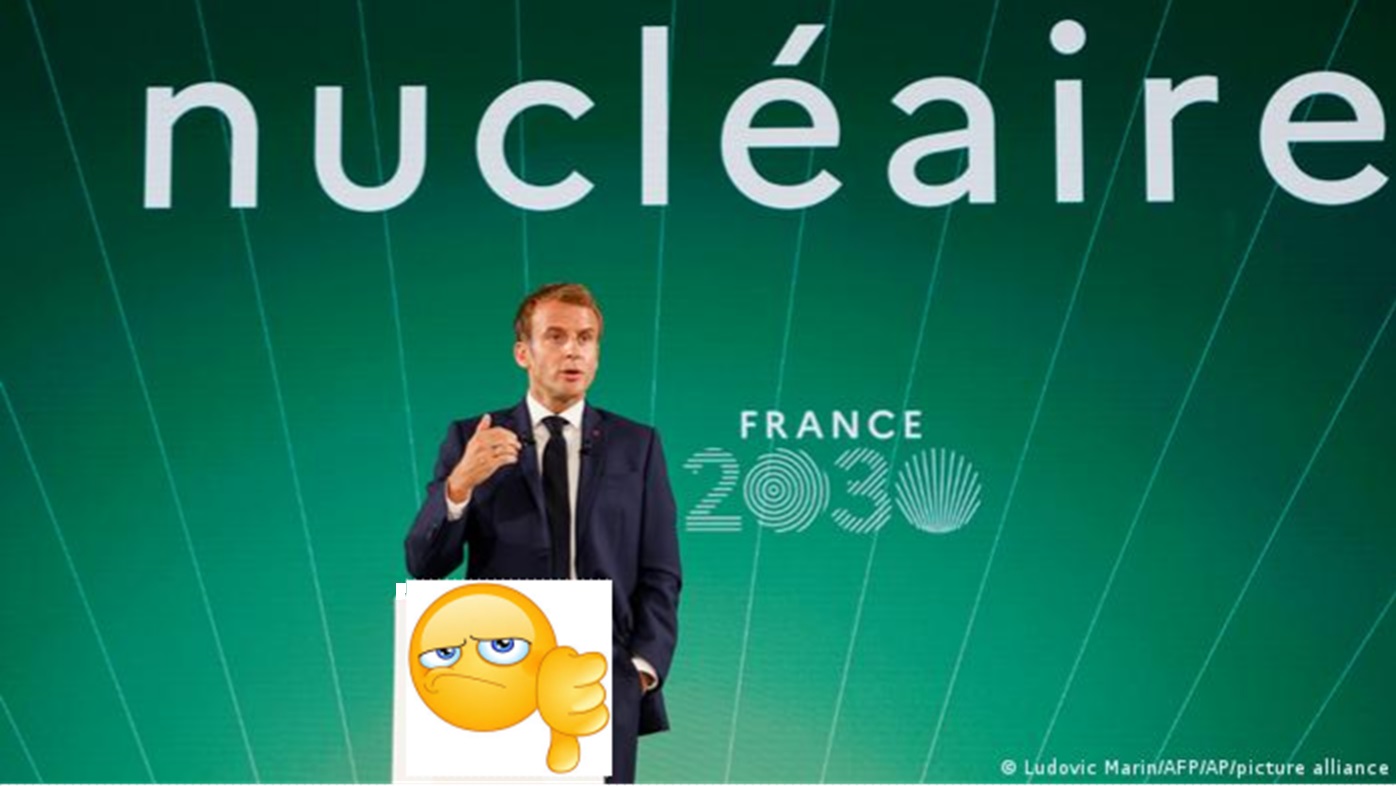
France is having problems with nuclear power. It was once the poster child for nuclear energy, which, after a rapid government funded build-up in the1980s based on standard Westinghouse Pressurised-water Reactor (PWR) designs, at one point supplied around 75% of its power, with over 50 reactors running around the country. Mass deployment of similar designs meant that there were economies of scale and given that it was a state-run programme, the government could supply low-cost funding and power could be supplied to consumers relatively cheaply.
But the plants are now getting old, and there has been a long running debate over what to do to replace them: it will be expensive given the changed energy market, with cheaper alternatives emerging. At one stage, after the Fukushima disaster in Japan in 2011, it was proposed by the socialist government to limit nuclear to supplying just 50% of French power by 2025, with renewables to be ramped up.
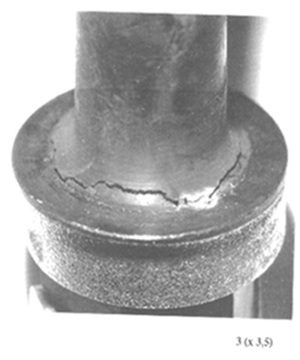
That began to look quite sensible when, in 2016, faults were found with the steel forgings of some of the old PWR plants. There was an extensive programme of reactor checks, with some units having to be shut down for the duration. But the industry, though chastened by stories about cover-ups, survived, and, with a new government in power led by Macron, the 50% limit was delayed. Indeed, proposals were made for significant expansion, based in part on an upgrade European Pressurised-water Reactor (EPR) design.
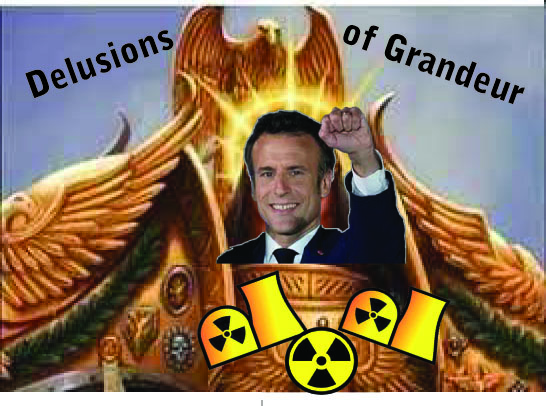
Macron said ‘Our energy & ecological future depends on nuclear power; our economic and industrial future depends on nuclear power; and France’s strategic future depends on nuclear power’:
The first EPR in France has been built at Flamanville on the Normandy coast, but all did not go well. It was 12 years late and four times overbudget. And new vibration problems could mean that it may not be able to run at full power. In addition, more problems (this time with stress corrosion) have been found with some of the old plants.
With at one stage, 28 of them shut down for tests and/or repairs, EDFs financial situation became increasingly weak. And, it has got worse. With, in 2024, the French government and economy also being in some disarray, it looked as if plans for more projects might have to be reconsidered, their being reports that ‘in the absence of financial commitment from the State, EDF (is) raising the possibility of halving the investments planned in the EPR2 program in 2025.’

It was the same for EDFs programme of building more EPRs in the UK- with one at Sizewell in Suffolk being proposed to follow on from the part-built one at Hinkley Point in Somerset. Indeed, the French Court of Auditors has just recommended ‘not approving a final investment decision for EDF in Sizewell C before obtaining a significant reduction in its financial exposure in Hinkley Point C’.
So what next? The somewhat beleaguered French government evidently wants the European Commission to revise EU renewable energy directive to also provide support for new nuclear! But back home, it is arguably ‘far from ready’ for a new nuclear expansion programme. And, with nuclear costs rising, the idea of treating it as ‘low risk’ compared with renewables in EU plans is being resisted. Then again EDF evidently think some new nuclear options are too risky- it has pulled out of work on its initial design for a Small Modular Reactor, so it is no longer a contender for the UK SMR competition.
What does all this mean for the UK? Well, although its overall finances are not good, up until recently, EDF has done quite well out of the UK, still running its fleet of old AGRs and its single PWR, with the UK’s funding subsidy schemes providing support for French profit-making via surcharges on UK consumers bills – in the case of the proposed new RAB scheme for Sizewell C, in advance of project completion. Indeed, some might say EDF’s exploitation of the UK has been overdone and not helpful!
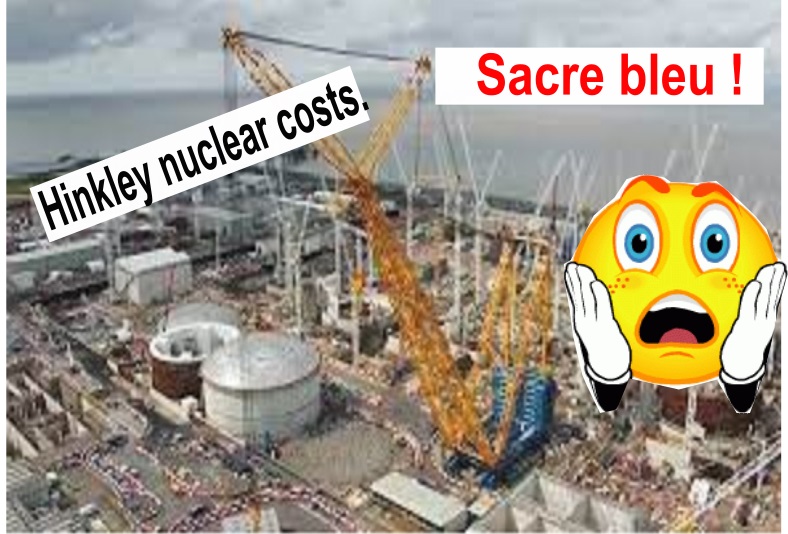
Certainly, EDF’s current troubles add to the increasing level of uncertainty about Sizewell C. China had provided some backing for Hinkley, but, with there being growing concerns about security, the UK government decided that China could not be allowed to back Sizewell. So the hunt was on for new backers. However, it has proven to be hard, and with talk of the bills for these projects ballooning, allegedly to £46bn for Hinkley, the opposition lobby is getting more assertive. Hinkley Point C was originally meant to start up in 2017, but may finally get going in 2031 or so. It is a giant project, impressive in a way, but arguably not what is needed, with renewables getting so much cheaper. Same for Sizewell C- it’s getting increasingly hard to justify it.
EDF do seem to be having it tough with nuclear of late, but although the costs of the EPRs may be disputed, whatever they turn out to be, it’s far from clear if the French EPRs will be value for money. The UK has done quite well so far with renewables, which have helped it get its emissions down by a half between 1990 and 2022, compared to a 23% reduction in France, where nuclear is still predominant and renewable are, so far, less developed. Time for a change everywhere? Certainly, back in 2021, the IEA and RTE Agency in France produced a study asking if it was technically possible to integrate very high shares of renewables in large power systems like that in France. It concluded that, if coupled with adequate storage and system balancing, for renewables to supply 85-90% of power by 2050 and 100% by 2060. However, it would be expensive. But then so would continuing with nuclear, maybe more so.
Nuclear Proliferation and the “Nth Country Experiment”

“Do-it-yourself” Project Produced “Credible Nuclear Weapon” Design from Open Sources
Experimenters Developed a Plutonium Weapon Design with Potential for High Explosive Yield.
NATIONAL SECURITY ARCHIVE, Washington, D.C., January 23, 2025 – Today, the National Security Archive publishesnewly declassified information on a secret mid-1960s project in which a handful of young physicists at Lawrence Livermore Laboratory produced a design for a “credible nuclear weapon” based only on unclassified, open-source information and in just three years. One of the participants described the experiment as “truly a do-it-yourself project,” according to one of the recently declassified records. Begun in the spring of 1964, before China had conducted its first bomb test, the “Nth Country Experiment” concluded that a government with nuclear-weapons aspirations and limited resources could develop a “credible” weapon.
This new Electronic Briefing Book includes the relatively limited declassified literature on the project, including the 1967 “Summary Report on the Nth Country Experiment,” a document first released to the National Security Archive in the 1990s and that was the subject of an Archive press release in 2003. Today’s posting also includes a recently declassified, if massively redacted, Livermore report on “Postshot Activities of the Nth Country Experiment” that summarized classified briefings that two of the participants in the Experiment gave around the country to U.S. government officials. Also included is a State Department internal announcement of a forthcoming briefing on the “Nth Country Experiment” noting that “three young PhD physicists, working part-time, succeeded in achieving a workable nuclear weapons design in a period of about three years.”
……………………………….When the Experiment began in 1964, U.S. intelligence had been analyzing the problem of the potential spread of nuclear weapons capabilities for years. Before the term “nuclear proliferation” became widely used during the 1960s, however, analysts with the CIA and other intelligence organizations had thought in terms of a “4th country” problem: Which country was likely to join the U.S., the U.K., and the Soviet Union as the fourth country with nuclear weapons capabilities? After France tested its first bomb in early 1960 and became the fourth country, analysts began to think in terms of the “Nth country problem”—that some indeterminate number of countries might develop nuclear weapons capabilities. What concerned think tankers and academic experts was that Nth countries would create a more unstable and perilous world where the United States would have less influence and its interests would be under greater threat.[1] Consistent with this, during a 1963 press conference, President John F. Kennedy warned of the possibility of a world where, by the 1970s, there were 15 or 20 nuclear powers that posed the “greatest possible danger and hazard.”[2]
………………………………………..The Department of Energy’s reviewers massively excised the two reports on the Experiment on the grounds that they include “restricted data” (RD) relating to the design of nuclear weapons. The Experiment involved RD from the beginning, with the junior physicists involved receiving Q clearances; any nuclear weapons design information they created would, under the law, be considered secret and “born classified.” Thus, the DOE reviewers completely withheld all discussion and bibliographical entries related to the unclassified and open-source publications that the Experimenters consulted.
……………………………………………………………………………………………………………………………………………………. Future declassifications by the Department of Energy may lead to the release of more information about the “Nth Country Experiment” and its inception.
The Documents…………………………………………………………………………………………………..
UAE’s nuclear company seeks to capitalise on AI-induced energy demand in US

Enec’s CEO says it plans to expand overseas after rapid growth in its home market
Malcolm Moore in Abu Dhabi, Ft.com 26 Jan 25
The United Arab Emirates wants to build and consult on nuclear projects around the world, with the US as the fastest-growing market, the head of the country’s state-owned nuclear company has said.
Emirates Nuclear Energy Company has become a major player since it was established in 2009. It completed the four reactors of its Barakah nuclear power plant, the first in the Arab world, in under 12 years, and on budget. The project was developed in partnership with Korea Electric Power Corp.
The company, known as Enec, has built up investment and research and development teams to explore opportunities beyond the UAE, chief executive Mohamed Al Hammadi told the Financial Times. AI is set to drive a surge in demand for electricity to power data centres.
………………………………………………………Enec has been in discussions to invest in the UK’s Sizewell C project but Al Hammadi declined to comment on whether the company would proceed, only saying that negotiations had “been going through different cycles in the last year”.
The UK has pushed back the final investment decision on Sizewell, which was expected last year, to after the next government spending review expected in the spring, while the estimated cost of the project has doubled from less than five years ago.
Al Hammadi suggested that the US is seeing the fastest growth in demand for nuclear power because of the boom in AI computing. …………………………………………………………………………………. https://www.ft.com/content/f949780a-3eb2-44f2-9db1-f69ce16161b7
The Changing Goal Posts of Nuclear Wastes Crazily Earmarked for “Geological Disposal”

The following letter was sent today to Millom Town Council, 25 Jan 25
The Changing Goal Posts of Nuclear Waste Geological Disposal
Lakes Against Nuclear Dump is a Radiation Free Lakeland campaign with a Facebook group of almost 1000 many of whom live in the Millom area.
We would like to thank Millom Town Council for voting to pull out of the so called “Community Partnership” with Nuclear Waste Services. The developer NWS has one aim and that is to deliver a “Geological Disposal Facility.” Nuclear Waste Services are proving to be the very worst of developers. We all know of developers who put in an application for works to get initial approval knowing full well the goal posts are to be changed later down the line. The latest being to bury 140 tonnes of plutonium. The US is looking to bury a far smaller stockpile of plutonium at WIPP, this has generated criticism from the Bulletin of Atomic Scientists and others concerned with nuclear safety, We assume the burial of plutonium was a NDA decision rather than a “Community Partnership” decision.
This is all a far cry from the 1990s NIREX days. The nuclear wastes slated for burial then on what is now the Wasdale Mountain Rescue Centre at Longlands Farm, Gosforth were low and intermediate. A long public inquiry involving multiple scientists and geologists found the NIREX plan for burial of low and intermediate level nuclear wastes to be ultimately flawed and dangerous to public health. The nuclear dump mission creep now includes plutonium. Deep burial and abandonment of long lived nuclear wastes is not a safe option given the shortfalls in the technical and scientific knowledge of permanent containment. The wastes should be constantly monitored and repackaged when necessary. The push for burial in a very large, very deep (and earthquake inducing) sub-sea mine is a purely political choice in order to justify new nuclear wastes.
We believe you will be ratifying your decision on January 29th and we look forward to others including Friends of the Lake District, taking Millom Town Council’s lead and pulling out of the Geological Disposal Facility “Community Partnerships”. of South and Mid Copeland.
Yours sincerely
Marianne Birkby
Lakes Against Nuclear Dump – a Radiation Free Lakeland campaign
Risks of geologic disposal of weapons plutonium
By Cameron Tracy | January 13, 2025https://thebulletin.org/premium/2025-01/risks-of-geologic-disposal-of-weapons-plutonium/
1 This Month

18 March Webinar @ 1 PM EST: An Assessment of SMR Projects: The Case of Canada
register for the zoom:
https://us02web.zoom.us/webinar/register/WN_o8BIIOUvQ2ONJR1nta65DQ#/registration

of the week – STOP SMALL MODULAR REACTORS IN CANADA
To see nuclear-related stories in greater depth and intensity – go to https://nuclearinformation.wordpress.com
-
Archives
- February 2026 (256)
- January 2026 (308)
- December 2025 (358)
- November 2025 (359)
- October 2025 (376)
- September 2025 (258)
- August 2025 (319)
- July 2025 (230)
- June 2025 (348)
- May 2025 (261)
- April 2025 (305)
- March 2025 (319)
-
Categories
- 1
- 1 NUCLEAR ISSUES
- business and costs
- climate change
- culture and arts
- ENERGY
- environment
- health
- history
- indigenous issues
- Legal
- marketing of nuclear
- media
- opposition to nuclear
- PERSONAL STORIES
- politics
- politics international
- Religion and ethics
- safety
- secrets,lies and civil liberties
- spinbuster
- technology
- Uranium
- wastes
- weapons and war
- Women
- 2 WORLD
- ACTION
- AFRICA
- Atrocities
- AUSTRALIA
- Christina's notes
- Christina's themes
- culture and arts
- Events
- Fuk 2022
- Fuk 2023
- Fukushima 2017
- Fukushima 2018
- fukushima 2019
- Fukushima 2020
- Fukushima 2021
- general
- global warming
- Humour (God we need it)
- Nuclear
- RARE EARTHS
- Reference
- resources – print
- Resources -audiovicual
- Weekly Newsletter
- World
- World Nuclear
- YouTube
-
RSS
Entries RSS
Comments RSS
 nuclear-news