World’s climate fight needs fundamental reform, UN expert says: ‘Some states are not acting in good faith’

Nina Lakhani, climate justice reporter, Guardian 7th Jan 2025
The international effort to avert climate catastrophe has become mired by misinformation and bad faith actors, and must be fundamentally reformed, according to a leading UN climate expert.
Elisa Morgera, the UN special rapporteur on climate change, said the annual UN climate summits and the consensus-based, state-driven process is dominated by powerful forces pushing false narratives and by tech fixes that divert attention from real, equitable solutions for the countries least responsible and most affected.
“The current climate regime was built in a way, maybe unconsciously, that locked in an ineffective approach that is blind to the disproportionate harms of climate change – and increasingly climate solutions – and the disproportionate benefits that the current situation is accruing to very few states and very few individuals,” said Morgera, in an exclusive interview with the Guardian.
“We can observe that some states are not acting in good faith in very clear ways, which is the basis of any international regime. There is widespread disregard for the rule of international law, and also a very clear pushback on the science, and shrinking of civil spaces at all levels. Basically, the truth is out of the conversation. That is the problem – there is no space at Cop for the truth,” said Morgera.
“Fundamental reform is possible, if there is a willingness by the states and the secretariat, but it’s hard to see that at the moment.”
Special rapporteurs are independent human rights experts appointed by the UN to investigate, report on and advise on specific themes or countries.
The annual UN climate summit, known as the conference of the parties, or Cop, is where states who are signed up to the principal climate treaty, the United Nations Framework Convention on Climate Change (UNFCCC), come together to make consensus-based decisions on climate action. The 2015 Paris agreement, negotiated at Cop21, requires all states to reduce greenhouse gas emissions to help curtail global heating.
But Cop has limited scope for Indigenous experts or ordinary people with lived experience and evidence of climate effects and culturally driven local solutions to participate in the negotiations in any meaningful way – which Morgera argues is among the major weaknesses that could be fixed.
She said: “The dominating assumption in the current process assumes that mass behavioral change is the solution, that this is as much a consumer issue as a production issue – which is a misrepresentation of the causes and the solutions. We’re still not looking at deep, systemic inequalities as the root causes, while also entrenching inequities and worsening negative human rights impacts of climate change – and climate solutions.”
Morgera, a professor of global environmental law at the University of Strathclyde in Glasgow, said: “This is not a blanket condemnation of the whole regime, but if the experiences and evidence of what climate change is doing around the world and how it is affecting people in differentiated ways is not made central to the decision-making, then it’s really hard to see how this process can meaningfully contribute.”
Open sessions should be the norm at Cop – and Indigenous people, UN agencies and others from civil society with different knowledge systems and evidence should be able to make textual suggestions for states to consider in real time, Morgera says. The UNFCCC could also ensure total transparency over corporate interests including the thousands of fossil-fuel, big ag and plastics lobbyists who participate in the annual climate summits, she argues.
After almost three decades, the UN climate summits have failed to come up with a meaningful, fair agreement or plan to transition away from oil, gas and coal – despite overwhelming scientific evidence that this must be done to avoid climate catastrophe. As fossil-fuel expansion continues apace, hopes of keeping global heating to below 1.5C above pre-industrialization levels have been all but crushed…………………………………………………………………………………………………………. https://www.theguardian.com/environment/ng-interactive/2025/jan/07/climate-change-reform-elisa-morgera
No comments yet.
1 This Month
To see nuclear-related stories in greater depth and intensity – go to https://nuclearinformation.wordpress.com/
12 February – Webinar The Big Push: New Nuclear Projects in Canada
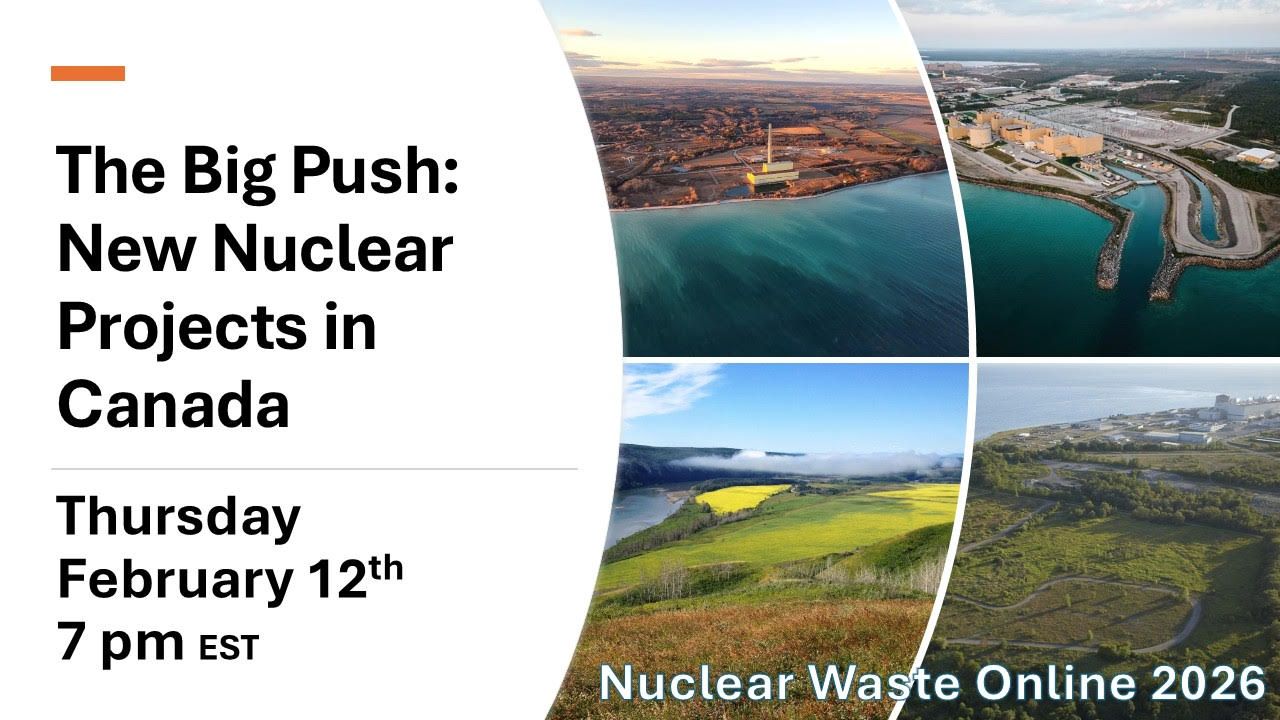
Thursday, February 12, 7 pm Eastern | 2nd of 4 sessions in the 2026 Nuclear Waste Online webinar series
Join a webinar on the push for new nuclear generation in Canada. Go to Northwatch.org to register or use the registration link https://us02web.zoom.us/webinar/register/WN_ZfWOf1GITqSRIZX8CB-A9w
-
Archives
- February 2026 (115)
- January 2026 (308)
- December 2025 (358)
- November 2025 (359)
- October 2025 (376)
- September 2025 (258)
- August 2025 (319)
- July 2025 (230)
- June 2025 (348)
- May 2025 (261)
- April 2025 (305)
- March 2025 (319)
-
Categories
- 1
- 1 NUCLEAR ISSUES
- business and costs
- climate change
- culture and arts
- ENERGY
- environment
- health
- history
- indigenous issues
- Legal
- marketing of nuclear
- media
- opposition to nuclear
- PERSONAL STORIES
- politics
- politics international
- Religion and ethics
- safety
- secrets,lies and civil liberties
- spinbuster
- technology
- Uranium
- wastes
- weapons and war
- Women
- 2 WORLD
- ACTION
- AFRICA
- Atrocities
- AUSTRALIA
- Christina's notes
- Christina's themes
- culture and arts
- Events
- Fuk 2022
- Fuk 2023
- Fukushima 2017
- Fukushima 2018
- fukushima 2019
- Fukushima 2020
- Fukushima 2021
- general
- global warming
- Humour (God we need it)
- Nuclear
- RARE EARTHS
- Reference
- resources – print
- Resources -audiovicual
- Weekly Newsletter
- World
- World Nuclear
- YouTube
-
RSS
Entries RSS
Comments RSS
 nuclear-news
Leave a comment