Schneider Electric warns of future where datacenters eat the grid.
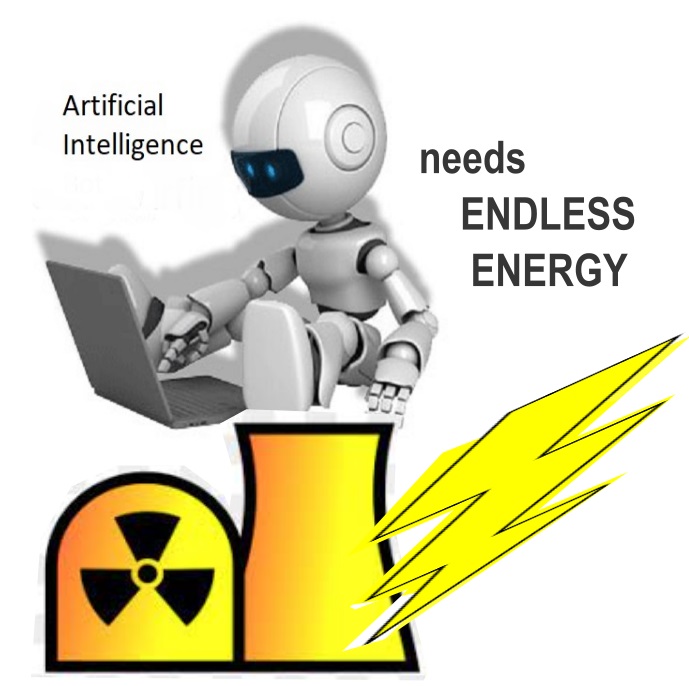
Report charts four scenarios from ‘Sustainable AI’ to ‘Who Turned Out The Lights?’
The Register, Dan Robinson, Thu 2 Jan 2025
Policymakers need to carefully guide the future consumption of electricity by AI datacenters, according to a report that considers four potential scenarios and suggests a number of guiding principles to prevent it from spiraling out of control.
The research published by energy infrastructure biz Schneider Electric follows the IEA Global Conference on Energy & AI last month. Titled Artificial Intelligence and Electricity: A System Dynamics Approach, it looks at the emerging schools of thought relating to AI and the associated impact on electricity consumption.
Much has already been reported on the rise of AI, and especially generative AI, which has led to huge investment in high-performance and power-hungry infrastructure for the purposes of developing and training models.
As the report notes, existing datacenter infrastructure requires significant energy to function, and will need extra resources to support the anticipated growth in AI adoption. This has already been causing concerns about the potential strain on electricity grids and the possible environmental impact if energy demand to power AI continues to rise at its current rate.
Schneider has modeled four distinct scenarios, which it has labeled as: Sustainable AI; Limits To Growth; Abundance Without Boundaries; and Energy Crisis. All four forecast a general upward trend in energy consumption for the period 2025 to 2030, but diverge notably after this based on the assumptions underpinning each one.
Sustainable AI looks at the potential outcome of prioritizing efficiency while energy consumption steadily increases, whereas Limits To Growth outlines a constrained path where AI development hits natural or human-related limits. Abundance Without Boundaries considers the potential risks of unchecked growth, while the Energy Crisis scenario examines how mismatched energy demand and generation would potentially lead to widespread shortages…………………………………….
The Abundance Without Boundaries scenario indicates that the rapid and unrestrained development of AI systems poses the risk of a continual arms race towards bigger and more powerful infrastructure, outpacing the capacity for sustainable resource utilization.
Schneider forecasts total AI energy consumption to rise enormously from the 100 TWh in 2025 to 880 TWh by 2030, continuing on an upwards trajectory and reaching a staggering 1,370 TWh in 2035.
This scenario displays the Jevons Paradox, where improvements in AI efficiency paradoxically lead to increased overall energy consumption. It forecasts that AI and datacenters will expand without barriers, as techno-optimists drive rapid AI deployment across all sectors, believing that AI advances will solve any resource constraints.
Finally, the Energy Crisis model foresees the rapid growth of AI leading to its energy demands conflicting with other critical sectors of the economy. This triggers various negative outcomes, including economic downturns and severe operational challenges for AI-dependent industries…………………………………………………………………………
…………………………… The overall message is that governments and industry leaders need to strategically plan to balance AI growth with environmental and economic sustainability. Whether they do so is another matter. https://www.theregister.com/2025/01/02/schneider_datacenter_consumption/?fbclid=IwY2xjawHq2YVleHRuA2FlbQIxMQABHVfvIFP2K80qCEymVUJTwNLMHze1xPomN5JWt_BJUqcjsnJ4ok3ufW7j4A_aem_xPDDvZ99rni2Twb5uri1Tg
—
No comments yet.
1 This Month
To see nuclear-related stories in greater depth and intensity – go to https://nuclearinformation.wordpress.com/
12 February – Webinar The Big Push: New Nuclear Projects in Canada
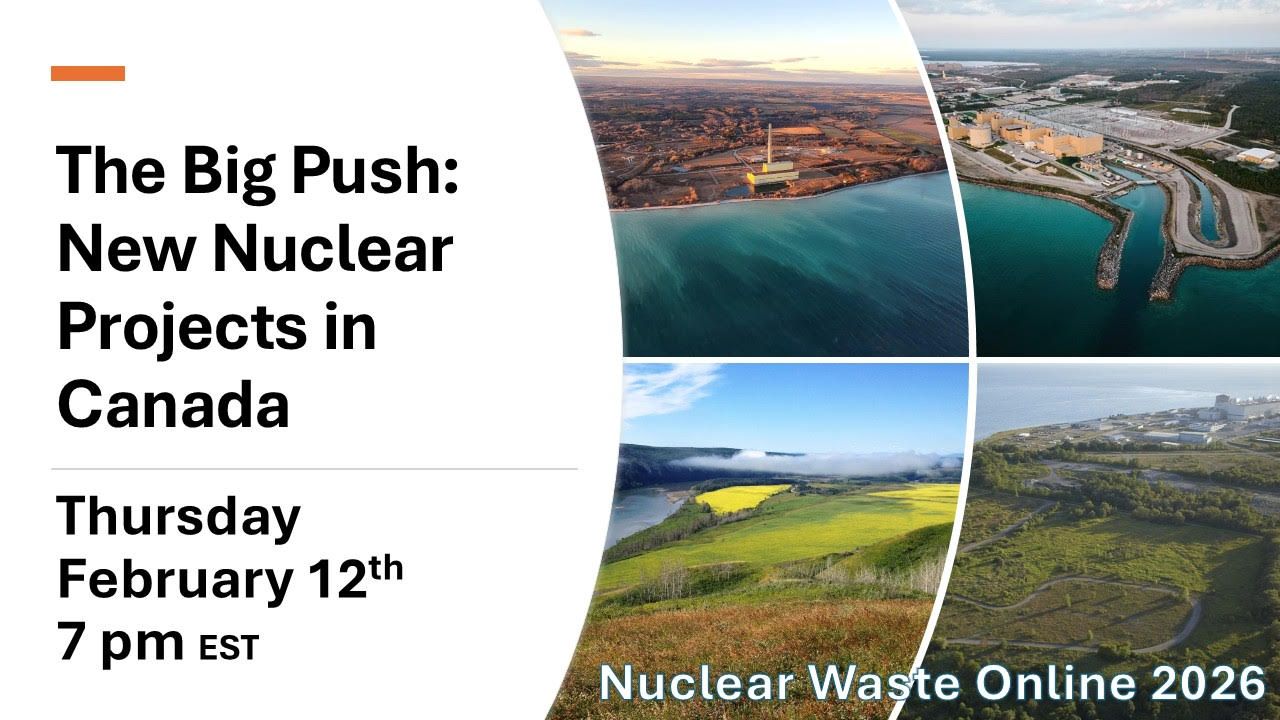
Thursday, February 12, 7 pm Eastern | 2nd of 4 sessions in the 2026 Nuclear Waste Online webinar series
Join a webinar on the push for new nuclear generation in Canada. Go to Northwatch.org to register or use the registration link https://us02web.zoom.us/webinar/register/WN_ZfWOf1GITqSRIZX8CB-A9w
-
Archives
- February 2026 (115)
- January 2026 (308)
- December 2025 (358)
- November 2025 (359)
- October 2025 (376)
- September 2025 (258)
- August 2025 (319)
- July 2025 (230)
- June 2025 (348)
- May 2025 (261)
- April 2025 (305)
- March 2025 (319)
-
Categories
- 1
- 1 NUCLEAR ISSUES
- business and costs
- climate change
- culture and arts
- ENERGY
- environment
- health
- history
- indigenous issues
- Legal
- marketing of nuclear
- media
- opposition to nuclear
- PERSONAL STORIES
- politics
- politics international
- Religion and ethics
- safety
- secrets,lies and civil liberties
- spinbuster
- technology
- Uranium
- wastes
- weapons and war
- Women
- 2 WORLD
- ACTION
- AFRICA
- Atrocities
- AUSTRALIA
- Christina's notes
- Christina's themes
- culture and arts
- Events
- Fuk 2022
- Fuk 2023
- Fukushima 2017
- Fukushima 2018
- fukushima 2019
- Fukushima 2020
- Fukushima 2021
- general
- global warming
- Humour (God we need it)
- Nuclear
- RARE EARTHS
- Reference
- resources – print
- Resources -audiovicual
- Weekly Newsletter
- World
- World Nuclear
- YouTube
-
RSS
Entries RSS
Comments RSS
 nuclear-news
Leave a comment